

Crypto World
Anchorage Digital launches AI banking for autonomous payments



Crypto bank Anchorage Digital has introduced an agentic banking service that allows AI systems to access and move funds across traditional and crypto payment rails without human intervention.
Summary
- Anchorage Digital has launched an agentic banking service that lets AI agents access and move funds across crypto and traditional payment rails.
- CEO Nathan McCauley said the system assigns AI agents verified identities, spending limits, and audit controls to meet compliance requirements.
- The rollout includes a Google Cloud partnership, as firms like Coinbase and the Solana Foundation expand tools for AI-driven payments using stablecoins.
According to Anchorage Digital co-founder and CEO Nathan McCauley, the new infrastructure equips AI agents with direct access to financial rails while operating under predefined controls designed for institutional use.
In a recent X post, McCauley said that the system enables agents to transact across both fiat-linked systems and blockchain networks.
Anchorage stated that each AI agent will be assigned a verifiable identity, along with spending limits, permissions, and policy controls that govern how funds can be used. Auditability features have been built into the system to ensure compliance with regulatory standards, particularly as institutions begin to test automation across treasury and payment functions.
McCauley noted that existing financial systems were not designed for non-human actors, even as companies increasingly automate operational workflows. Meanwhile, he has previously described agentic finance as a major growth area.
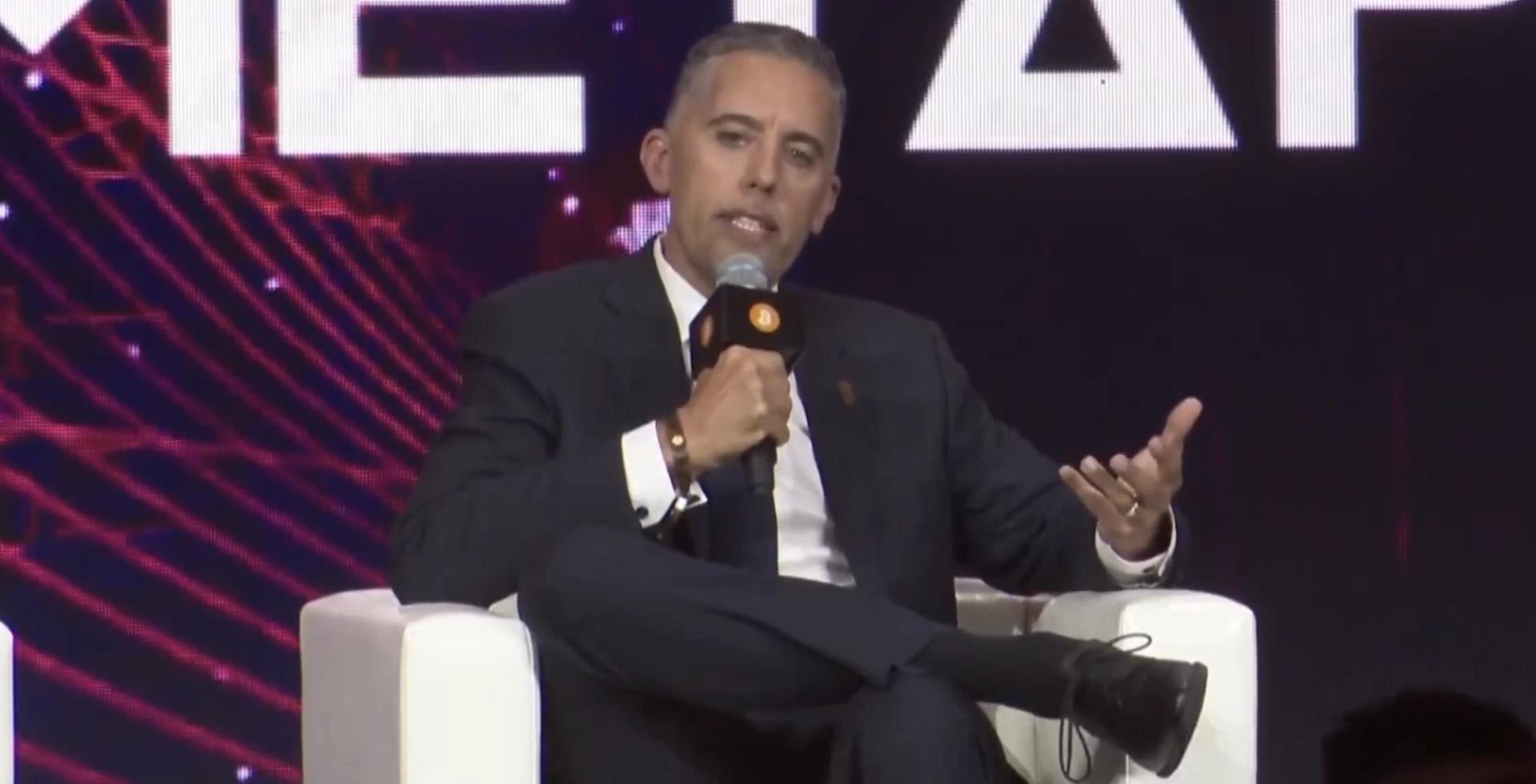
“This is, in my view, set to be a trillion-dollar industry where we are going to have agents paying each other, agents paying merchants, and agents getting paid,” he said during his appearance at the Consensus 2026 conference in Miami.
The rollout includes a partnership with Google Cloud, which provides the intelligence layer for agent interaction. Anchorage said this layer allows AI agents to discover services, negotiate terms, and coordinate transactions with other agents in real time.
Recent developments across the crypto sector show similar efforts to enable machine-driven transactions. The Solana Foundation has launched a gateway service with Google Cloud that allows AI agents to pay for APIs using stablecoins on the Solana network, expanding payment use cases beyond human-driven activity.
Earlier, Coinbase introduced Agentic.market, a platform where AI agents can discover and pay for services using USDC through the x402 protocol. Coinbase reported that the protocol has already processed about 165 million transactions across more than 480,000 agents, indicating that machine-to-machine payments are already operating at scale.
On April 30, Oobit, backed by Tether, launched a Visa-supported virtual card that allows AI agents to make online purchases using USDT. The company said the cards are funded directly from Tether’s treasury, allowing continuous use of capital without requiring fiat conversions or manual top-ups.
Anchorage’s move builds on its earlier focus on infrastructure tied to institutional risk management. In March, the bank took a strategic stake in Immunefi and acquired its IMU token, linking regulated custody services with on-chain security programs aimed at reducing smart contract vulnerabilities.


Key Takeaways
- AST SpaceMobile’s stock climbed approximately 17% on renewed enthusiasm for satellite-to-smartphone connectivity
- Rocket Lab achieved record highs following its Q1 2026 earnings, climbing over 400% year-over-year
- Redwire shares leaped more than 22% riding broader industry tailwinds
- SpaceX IPO anticipation and a Starship test mission fueled widespread space sector optimism
- Major wireless carriers AT&T, Verizon, and T-Mobile revealed plans for a satellite collaboration, strengthening the direct-to-device market outlook
The space industry is capturing renewed attention from Wall Street. Following an extended period of cautious investor sentiment, businesses specializing in satellite technology, orbital launch platforms, and space-related infrastructure are experiencing significant upward momentum.
Three companies have emerged as frontrunners: AST SpaceMobile, Rocket Lab, and Redwire. Each posted substantial gains in recent trading sessions, offering investors distinct exposure to the expanding commercial space marketplace.
Much of the sector enthusiasm stems from growing speculation surrounding a potential SpaceX public offering. The company shared IPO-relevant information and successfully executed another Starship test mission within a similar timeframe, directing market attention squarely toward space-focused investments.
While the Starship trial produced varied results — including both anticipated achievements and certain setbacks — market participants responded favorably to the demonstration of ongoing technological advancement in launch capabilities.
AST SpaceMobile’s Direct-to-Smartphone Strategy
AST SpaceMobile has emerged as a focal point in the current space stock momentum. The enterprise is constructing a satellite constellation engineered to communicate directly with standard mobile devices — eliminating the need for specialized equipment.
This approach distinguishes the company from conventional satellite communications providers. Rather than marketing proprietary terminals or antenna systems, AST pursues partnerships with wireless network operators to expand service availability in regions beyond terrestrial tower coverage.
The carrier partnership strategy received validation when AT&T, Verizon, and T-Mobile unveiled their intention to establish a satellite-focused collaboration targeting U.S. coverage deficiencies. Given AST’s pre-existing agreements with both AT&T and Verizon, market observers interpreted the development as confirmation of legitimate demand for direct-to-device satellite services.
Shares appreciated roughly 17% during the recent sector rally. However, significant challenges remain. The company requires additional satellite deployments, regulatory clearances, and demonstrated commercial revenue generation to validate its business approach.
Rocket Lab’s Momentum and Diversified Operations
Rocket Lab has delivered exceptional performance for shareholders. The company’s stock reached unprecedented levels this month following a substantial 40%-plus spike in just several trading sessions after releasing Q1 2026 financial results.
During the trailing twelve-month period, shares had appreciated more than 400% at that juncture, per Investing.com data.
Rocket Lab initially established itself as a launch service provider but has systematically expanded into spacecraft manufacturing, defense contracting, and space infrastructure development. This diversified operational profile positions it as considerably more than a single-service launch operator.
Market participants view Rocket Lab as among the most transparent pathways to gaining exposure to commercial space activities through publicly traded securities. Its demonstrated operational history and expanding contract pipeline provide legitimacy that many developmental-stage space ventures lack.
A successful SpaceX IPO commanding premium valuations could create positive spillover effects for Rocket Lab through sector comparison, potentially channeling increased capital toward publicly accessible space companies.
Redwire Gains on Infrastructure Expansion
Redwire manufactures subsystems, mission-critical hardware, and specialized technology deployed in spacecraft, satellite platforms, and defense applications. The company represents a distinct category within space stocks — emphasizing infrastructure rather than the launch or connectivity models of AST or Rocket Lab.
Company shares surged beyond 22% in recent sessions despite the absence of significant company-specific announcements. The Motley Fool observed that the appreciation derived primarily from sector-wide enthusiasm following Redwire’s quarterly business update.
Such price action illustrates how rapidly smaller-capitalization, growth-oriented stocks can move when their sector attracts concentrated investor interest.
Redwire is positioned to capitalize on expanded government, defense, and commercial space spending. Yet like comparable smaller space-focused enterprises, it experiences heightened volatility and remains substantially dependent on contract awards and funding schedules.



Cardano's Developer Experience Initiative has been ratified following a closely watched treasury vote, according to AdaStat data. The proposal, a treasury withdrawal request tied to developer tooling and onboarding, received 67.90% Yes support against 32.10% No votes. Approximately ₳3.72 billion in… Read the full story at The Defiant


TeraWulf (WULF) surged 13% early Tuesday as the company unveiled plans for a new large-scale AI and high-performance computing (HPC) campus in Kentucky.
The company said it acquired a hyperscale development site capable of supporting more than 1 gigawatt of AI and HPC infrastructure over time. The so-called Muskie Data Campus is expected to deliver an initial 500 megawatts starting in the second half of 2028, with another 500 megawatts targeted by 2030.
The firm said the Kentucky project underscores how access to electricity and transmission infrastructure has become one of the key battlegrounds in the AI boom.
“The defining constraint in this market is no longer computing hardware,” Prager said. “It is power, transmission infrastructure, and execution certainty.”
The rally also tracked the broader strength in AI-linked stocks, including bitcoin miners that have increasingly repositioned themselves as data center and AI infrastructure operators. The sector has become one of the hottest corners of crypto-linked equities over the past year as investors bet that the massive power needs of AI models could create a more lucrative long-term business line beyond mining tokens.
Hut 8 (HUT) climbed 7%, while Keel Infrastructure (KEEL), formerly known as Bitfarms, rose 6.5%. IREN (IREN) gained nearly 5%, and Cipher Mining (CIFR) advanced 5.5%.
Memory chipmaker Micron (MU) jumped 15% to fresh record highs above $870, as global investment bank UBS lifted its target to $1,625 citing strong AI demand for memory, while Advanced Micro Devices (AMD) gained 5%, also reaching new highs.


Markets have been rugged numerous times over the past weeks on supposed Middle East peace deals, but President Trump’s Saturday announcement of a coming agreement for the moment continues to have legs.
Oil prices and bond yields are sharply lower in response, and that’s helping stocks, where the Nasdaq has surged 1.4% in Tuesday morning trade.
Crypto, though, is watching from the sidelines as traders shovel capital into AI-related trades and await mega-IPOs like SpaceX and OpenAI.
After briefly attempting to rally, bitcoin (BTC) is changing hands at $76,800, down nearly 1% over the past 24 hours. Ether (ETH), solana (SOL) and XRP (XRP) are down similarly.

Binance has disclosed a formal market-entry initiative in the Philippines, aligning with fintech partner BlockShoals Technologies to pursue operations through local partnerships and regulatory engagement. The arrangement positions BlockShoals as an approved local intermediary under the Philippine Securities and Exchange Commission’s StratBox framework, with Binance providing technology, security, operations, and compliance support. According to Cointelegraph, the effort signifies Binance’s intent to pursue a compliance-first pathway into a market where direct access has historically been restricted.
A Binance spokesperson told Cointelegraph that the company is pursuing a compliance-oriented market approach in collaboration with local stakeholders. “This represents Binance’s first formal market entry approach in the Philippines through local partnerships and regulatory engagement,” the spokesperson said.
The StratBox-based plan is designed to unfold in phases, with the sandbox portion expected to commence in the second half of 2026 and run for at least two years under the SEC framework. The initiative comes as Binance remains blocked in the country, a status tied to licensing concerns and regulatory action by local authorities.
Key takeaways
- BlockShoals Technologies is an approved StratBox participant, designated to operate as the local intermediary for Binance under the Philippines’ regulatory sandbox framework.
- The StratBox sandbox is slated to begin in H2 2026 and extend for a minimum of two years, reflecting a structured, regulator-led pathway for market access.
- Binance’s ongoing access restrictions in the Philippines persist, tied to licensing and registration requirements; regulators have historically directed or mandated access limitations on unregistered platforms.
- The Philippines’ regulatory regime has evolved through a series of public advisories and enforcement actions targeting unregistered crypto platforms, illustrating a high-risk environment for cross-border exchanges operating without local authorization.
- The development highlights a broader trend toward formalized, compliance-driven market entry strategies for international exchanges seeking a regulated foothold in Southeast Asia.
Formal market-entry strategy through StratBox
The Philippines’ StratBox framework, described by Binance as an approved sandbox, is intended to enable a controlled, supervised pilot of digital-asset activities through locally licensed intermediaries. In this structure, BlockShoals will act as the approved operator within the regulatory perimeter, while Binance supplies the behind-the-scenes technology, security controls, and ongoing compliance oversight. The approach aligns with a broader demand from regulators for direct oversight over market participants, particularly in areas touching securities law and investor protections.
From a practical standpoint, the model reduces immediate exposure to blanket, cross-border access while establishing a clear line of sight into local consumer protections, anti-money laundering (AML) and know-your-customer (KYC) controls, and licensing requirements. The market-entry plan underscores an emphasis on governance, risk management, and regulatory reporting, with the sandbox design intended to allow regulators to observe, assess, and steer operations before broader permissioning is granted.
Regulatory backdrop: enforcement history and current posture
The regulatory narrative in the Philippines around Binance has been marked by a sequence of warnings, blocking actions, and ongoing licensing considerations. The Securities and Exchange Commission first warned the public against Binance in November 2023, stating that the platform was not authorized to sell or offer securities in the country due to the absence of the required registration and license. This initial advisory underscored the SEC’s stance that unregistered platforms pose compliance and investor-protection risks.
In March 2024, the SEC indicated it had requested the National Telecommunications Commission to block access to Binance and related pages, citing the absence of a Philippine-registered operating license. Local internet-service providers subsequently restricted access in alignment with the regulator’s directive. The episode illustrated the interplay between securities regulators and communications regulators in enforcing market access constraints against unlicensed platforms.
The regulatory emphasis on licensing and registration broadened in 2025, when the SEC issued an advisory against a group of crypto exchanges, including OKX, Bybit, KuCoin, and Kraken, warning that their activities may expose Filipino investors to heightened risks. The advisory reflected a willingness to pursue sanctions or enforcement measures against platforms lacking proper local authorization, signaling a tighter risk posture for overseas exchanges seeking Philippine operations.
Further signals emerged in April 2025, when the regulator named several platforms—dYdX, Aevo, gTrade, Pacifica, Orderly, Deriv, and Ostium—in an investor alert, stating that these entities were not registered with the SEC but appeared to be offering investments to the public. The action illustrated a continued effort to deter unregistered platforms from marketing to Philippine investors and to standardize expectations around registration, licensing, and compliance practices for digital-asset participants.
These enforcement milestones collectively shape the regulatory environment in which Binance’s StratBox plan operates. They indicate a persistent risk that access to Philippine markets remains contingent on regaining licensed status or establishing an authorized local intermediary under a regulator-approved framework. The evolving regime places a premium on formal licensing, registration, and ongoing compliance, with regulators signaling readiness to impose access restrictions on non-compliant platforms.
Regulatory and market-structure implications for cross-border operators
Binance’s attempt to re-enter the Philippine market through a regulator-approved intermediary marks a notable shift in how large, international exchanges may pursue access in jurisdictions with stringent licensing regimes. The StratBox pathway embodies a hybrid model that balances local oversight with international technology and risk-management capabilities. For exchanges, this approach could become a template for navigating disparate regulatory landscapes where outright market access is blocked or revoked absent a local license or licensed intermediary.
From a policy perspective, the Philippines’ evolving framework aligns with broader regional and international trends toward formalizing digital-asset markets. The emphasis on sandbox experimentation, intermediary licenses, and phased market access mirrors regulatory moves seen in other jurisdictions that favor structured pilots before granting broad licensing. The regulatory emphasis on AML/KYC, investor protection, and clear licensing requirements has direct implications for exchanges and market participants seeking to avoid sanctions and ensure compliance with local law.
For financial institutions and banks interfacing with crypto platforms, the Philippine experience reinforces the importance of due diligence and compliance readiness in cross-border payments and custodial arrangements. Banks and payment facilitators are increasingly attuned to the regulatory status of crypto platforms operating within their ecosystems, given the potential reputational, legal, and operational risks associated with unregistered or unlicensed entities. In this sense, the StratBox model could influence how banks assess counterparties, conduct audit trails, and implement cross-border AML controls in collaboration with regulators and local partners.
Broader policy and regional context
The Philippines’ regulatory trajectory sits within a global milieu of enhanced crypto oversight, where frameworks such as the EU’s Markets in Crypto-Assets Regulation (MiCA) and corresponding U.S. enforcement priorities shape cross-border operations. Policymakers are increasingly expecting robust licensing, transparent disclosures, and verifiable compliance programs as prerequisites for market access. In this context, StratBox and similar sandbox avenues may serve as pragmatic mechanisms to harmonize innovation with risk management, providing clear benchmarks for registration, reporting, and supervisory review.
For market participants, the evolving landscape also underscores a need to monitor cross-border regulatory differences, potential licensing harmonization efforts, and the degree of regulatory certainty that may emerge from sandbox-based pilots. As regulators balance investor protection with the benefits of fintech innovation, the Philippines’ experience may inform policy discussions on licensing timelines, interim safeguards, and the role of approved intermediaries in overseeing digital-asset activities.
Closing perspective
The Binance-BlockShoals StratBox initiative reflects a deliberate, regulation-aligned strategy to gain a regulated foothold in the Philippines. While the sandbox offers a clear pathway to market access, the ongoing licensing and access constraints illustrate the prudence regulators exercise to balance innovation with investor protection. As the two-year-plus sandbox unfolds, observers should watch for how the framework addresses registration hurdles, supervisory expectations, and the practical implications for institutions seeking to participate in a regulated Philippine digital-asset market. The outcome will likely influence how other international exchanges craft compliant market-entry plans in similarly regulated jurisdictions.
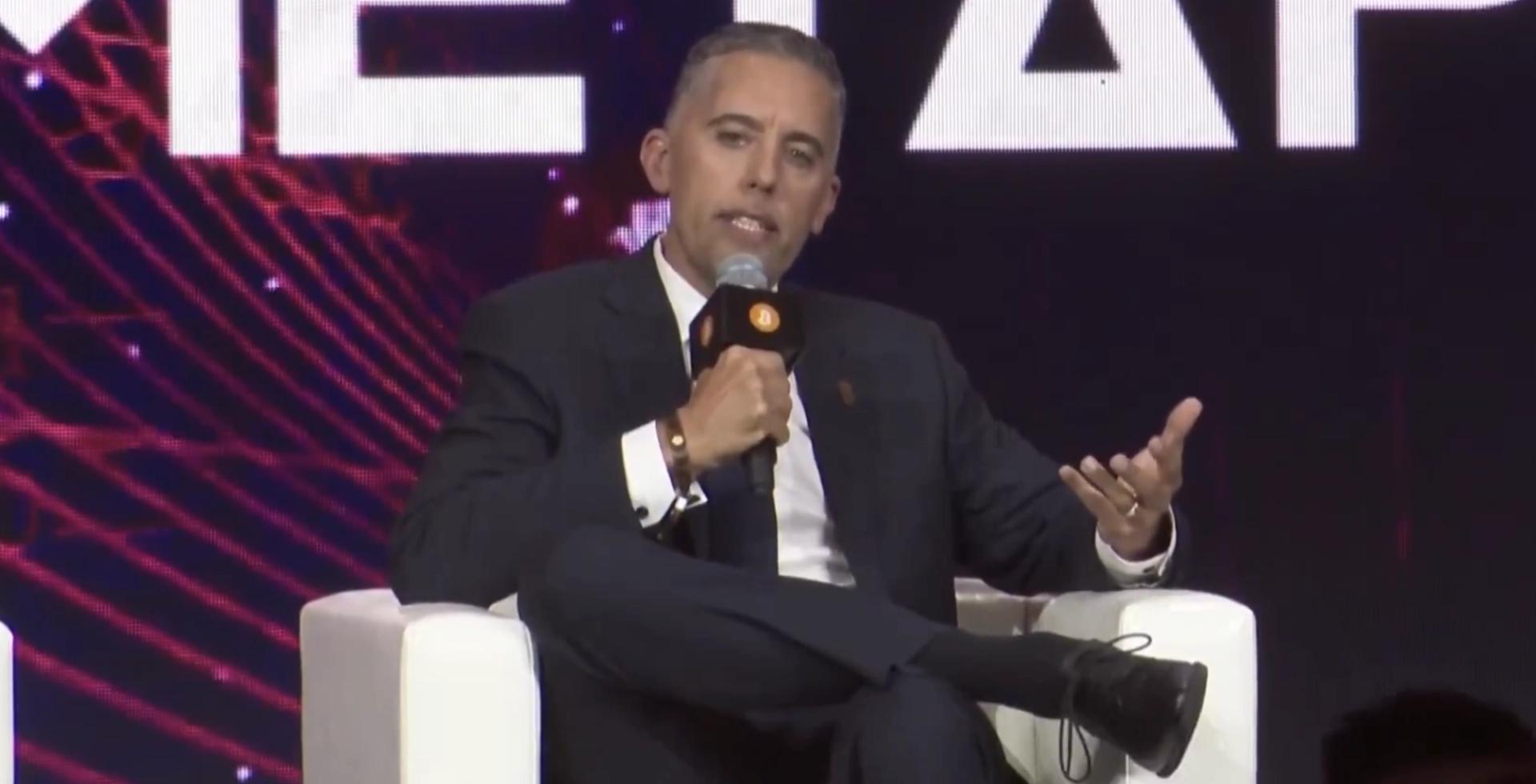
Strive (ASST) purchased 1,109 bitcoin at an average price of roughly $76,989 per coin in the four days ended May 22, according to a Tuesday filing.
The latest acquisition brings the company’s total bitcoin holdings to 16,500 BTC, up from 15,391 BTC. Strive is now the seventh-largest publicly traded company holding bitcoin.
Alongside the increase in bitcoin holdings, Strive also reported higher cash and cash equivalents, which rose to $93.3 million from $87.3 million. The company’s holdings of Strategy Inc.’s STRC preferred stock also increased slightly in value to over $50 million.
The company also disclosed it is evaluating a refresh of its at-the-market programs tied to both its Class A common stock and SATA preferred stock, signaling additional flexibility for future capital raises and bitcoin purchases.
Shares of ASST have surged 133% over the past three months, dramatically outperforming other bitcoin treasury firms, though they remain lower by more than 90% from their 2025 high.
ASST is higher by 3% premarket alongside bitcoin’s rise back to $77,000 over the weekend.


BNB Plus has raised $4.1 million in new convertible preferred stock to bulk up its digital-asset treasury and “explore” AI infrastructure, effectively asking public investors to fund a levered bet that the on‑chain plus AI narrative still has legs.
Summary
- The Nasdaq-listed digital-asset treasury firm is issuing Series B‑1 and B‑2 convertible preferred shares, led by Comstock Multichain Fund and other crypto-native funds.
- Proceeds will lift BNB Plus’s cash and digital-asset holdings to more than $16.4 million, making this financing material relative to its existing balance sheet.
- The company explicitly links its digital-asset reserves to “AI infrastructure development,” leaning into a reflexive market narrative that investors keep rewarding despite its vagueness.
BNB Plus Corp., a Nasdaq-listed digital asset treasury company trading under the ticker BNBX, said it has secured initial commitments for $4.1 million in Series B‑1 and B‑2 convertible preferred stock, with expectations to lift the total to $5 million. According to the company’s statement, investors include the Comstock Multichain Fund, an investment vehicle managed by Silvermine Capital Advisors, and other crypto-native institutional backers such as Off the Chain LP that specialize in “the monetization of undervalued assets.”
The financing is structured as two tranches of senior convertible preferreds that sit ahead of common equity and can convert 1‑for‑1 into BNBX shares, with obligations guaranteed by the company’s digital-asset treasury subsidiaries. The Series B‑1 preferred stock is priced at $1.05 per share, representing a 176% premium to BNB Plus’s May 22 closing price, carries an 8% annual dividend and a 1.5x liquidation preference, and comes with warrants giving investors the right to buy additional common shares at an exercise price of $0.76 for three years.
A small balance sheet chasing a big story
For a company of BNB Plus’s size, the absolute dollar amount matters more than the headline. With this round, the firm says it expects to hold “over $16.4 million” in cash and digital assets, valued as of May 23, meaning the $4.1 million (and potentially $5 million) raise is material relative to its existing treasury rather than a token top‑up.
BNB Plus positions itself as a specialist “digital asset treasury” operator, offering institutional-grade access to the Binance ecosystem while still carrying legacy biotech operations from its previous incarnation as Applied DNA Sciences. In its latest materials, the company says the new capital will “bolster the Company’s digital asset treasury” and provide working capital to support a “comprehensive strategic review” of both its digital-asset and biotechnology businesses, a phrase that usually signals future portfolio pruning, asset sales, or a rebrand that leans harder into the hotter narrative—in this case crypto plus AI.
The announcement explicitly ties proceeds not just to building reserves but to “explore opportunities for AI infrastructure development,” though it offers no concrete detail on whether that means direct investment in GPUs, co-investment in data centers, or essentially buying equity in other people’s AI hardware. That vagueness is precisely what makes this a pure narrative trade: the company is small, the capital is modest, and “AI infrastructure” is doing more work as a buzzword than as a defined capex plan.
Reflexive capital chasing on‑chain plus off‑chain risk
In isolation, a $4.1 million preferred round would barely register in a market obsessed with multibillion‑dollar ETFs and layer‑1 valuations. But BNB Plus’s raise fits neatly into a pattern where listed, niche balance‑sheet players are raising fresh equity and preferred capital on the promise of blending volatile on‑chain exposure with off‑chain AI compute and infrastructure bets.
The reflexivity is obvious. BNB Plus’s market cap sits in the low single‑digit millions, yet it is now offering investors a structure where they hand over cash in return for senior claims on a digital-asset treasury that itself is supposed to appreciate, while management promises to “review” strategy and maybe invest into AI hardware that is also being chased by every other public company with a pulse. If crypto prices rise, the treasury looks smarter; if AI infrastructure multiples stay inflated, the story looks smarter; in both cases, the company can raise again on the back of that mark‑to‑market.
The danger is that this becomes less about genuine treasury management and more about stacking layers of correlated risk—crypto tokens on one side, AI infrastructure valuations on the other—inside thinly capitalized vehicles that retail investors can trade on Nasdaq. For now, investors seem willing to reward any vehicle that promises exposure to both themes at once; BNB Plus’s financing shows that even tiny balance sheets are learning to speak that language fluently.


The UK government today designated Huobi Global S.A, the Panama-registered entity operating Justin Sun-advised crypto exchange HTX, under its Russia sanctions regime.
The move targets entities accused of supporting Russia’s financial sector and enabling sanctions evasion through cryptocurrency channels.
Escalating Pressure on Global Exchanges
Announced on May 26, 2026, as part of a broader package cracking down on Russian crypto networks, the designation adds Huobi Global S.A. alongside other platforms like EXMO Exchange.
UK authorities cited ongoing concerns over P2P trading and facilitation that could help Russia bypass Western restrictions.
Justin Sun, Tron founder and HTX’s prominent Global Advisor with significant ownership ties, remains unlisted personally.
However, the action directly impacts the exchange he publicly promotes and strategically influences.
What UK Sanctions Mean for HTX Users and Partners
Designated entities face strict UK asset freezes and prohibitions on dealing in funds or economic resources.
British individuals and businesses must immediately cease transactions with HTX and report any exposure to the Office of Financial Sanctions Implementation (OFSI).
Violations risk severe civil and criminal penalties.
This compounds existing FCA enforcement against HTX for illegal financial promotions to UK consumers, including court actions and app/social media blocks.
Crypto markets have grown sensitive to geopolitical sanctions as exchanges navigate compliance in a fragmented global landscape.
HTX, once among the top platforms by volume, now faces heightened scrutiny that could limit liquidity, user access in key regions, and institutional partnerships.
HTX may accelerate geo-restrictions or compliance overhauls, while global exchanges monitor UK and allied moves.
Investors should review exposure, prioritize regulated platforms, and watch for official sanctions list updates on GOV.UK.
The case highlights tightening oversight in 2026, potentially reshaping how major players operate amid Russia-related risks.
The post UK Sanctions Justin Sun’s HTX Crypto Exchange Over Russia Ties appeared first on BeInCrypto.
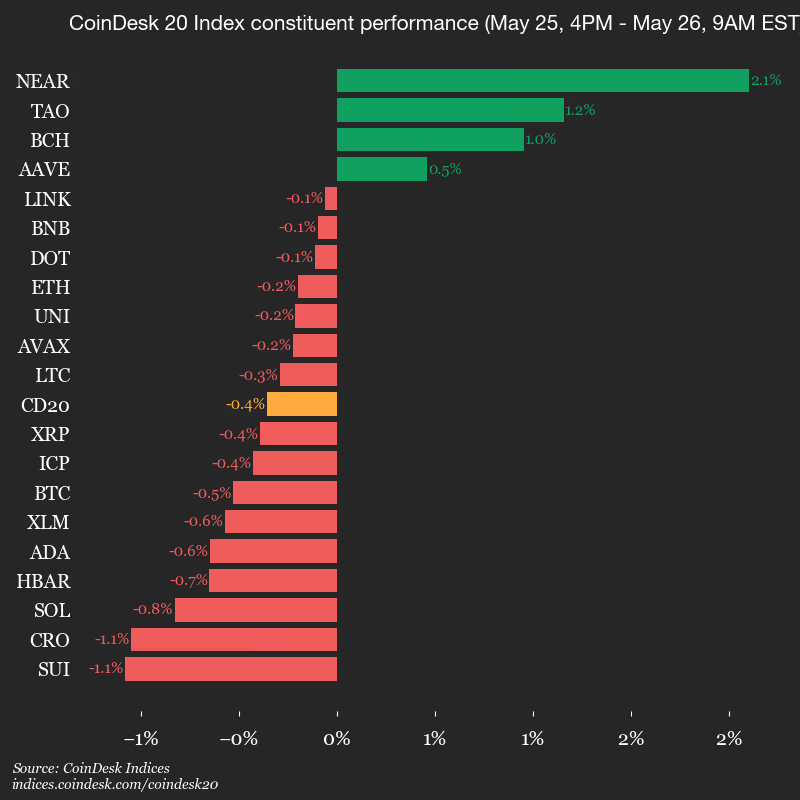
CoinDesk Indices presents its daily market update, highlighting the performance of leaders and laggards in the CoinDesk 20 Index.
The CoinDesk 20 is currently trading at 2066.65, down 0.4% (-7.39) since 4 p.m. ET on Monday.
Four of the 20 assets are trading higher.

Leaders: NEAR (+2.1%) and TAO (+1.2%).
Laggards: SUI (-1.1%) and CRO (-1.1%).
The CoinDesk 20 is a broad-based index traded on multiple platforms in several regions globally.


BitMine Immersion Technologies now controls 5,390,404 ETH—around 4.47% of Ethereum’s total supply—after quietly accelerating its “5% Alchemy” accumulation strategy to within striking distance of its self-imposed goal.
Summary
- BMNR reports holding 5.39 million Ethereum (ETH) at an average entry of $2,134, plus $444 million in cash, for combined crypto, cash and “moonshot” assets of $12.3 billion.
- The company says it has staked roughly 4.71 million ETH—worth about $10.1 billion at recent prices—with expected annual staking income of $276 million at a 2.75% annualized yield.
- One listed corporate treasury now controls a low-single-digit slice of Ethereum’s supply and an even larger share of its active validator set, raising uncomfortable questions about network governance and consensus capture.
As of May 25, BitMine Immersion Technologies says its treasury has reached 5,390,404 ETH held at an average acquisition price of $2,134, representing 4.47% of Ethereum’s roughly 120.7 million coin supply. According to the company’s latest release, that stash sits alongside 203 BTC, $200 million in Beast Industries equity, $95 million in Eightco Holdings “moonshot” exposure and $444 million in cash, bringing total crypto, cash and moonshot assets to $12.3 billion.
BMNR frames this as progress toward what chairman Tom Lee has branded the “Alchemy of 5%”—a plan to acquire roughly 5% of all ETH in existence, then pivot from accumulation to harvesting protocol-level yield through an internal staking stack called MAVAN. Earlier disclosures show how aggressively the position has ramped: in December 2025 the firm reported holding 4.11 million ETH (about 3.41% of supply), rising to 4.66 million ETH (3.86% of supply) by late March and 4.80 million ETH in early April as it kept buying into the low $2,000s.
A single treasury is turning into an ETH mega-validator
The more important number is not just how much ETH BitMine owns, but how much it has already staked into Ethereum’s consensus layer. Recent materials indicate that the company has staked approximately 4.71 million ETH, with earlier data showing 3.14 million ETH staked as of March 23 and 4.71 million ETH associated with MAVAN and partner validator operations as it moved closer to its 5% target. Using a 7‑day annualized staking yield of roughly 2.75%, BitMine estimates that its staked ETH can generate around $276 million in yearly rewards at current prices, with some earlier projections putting the fully scaled MAVAN revenue closer to $282 million at a 2.78% yield.
That makes BMNR not just a whale, but arguably Ethereum’s most important corporate validator operator in the making. A January analysis of BitMine’s strategy noted that the company had already accumulated more than 4.2 million ETH, around 3.48% of total supply, and explicitly highlighted trader anxiety about what happens when “the largest purchaser” of ETH finishes buying and flips into a pure staking-and-yield posture. The same piece flagged that BitMine was already staking about 1.84 million ETH at that point and planned to deepen partnerships with third-party staking providers while rolling out MAVAN as a dedicated validator network.
Concentration risk, governance leverage and the politics of “5%”
On paper, 4.47% does not sound like control, but in practice a single listed corporation that owns and stakes a low-single-digit percentage of Ethereum’s entire supply is a structural fact for the network. Staking is already dominated by a handful of liquid staking protocols and centralized exchanges; dropping another multi-million‑ETH block into a unified treasury that answers to a board and equity shareholders adds a visibly political actor to Ethereum’s validator set.
This is exactly the concern raised in recent coverage that asked whether Ethereum’s price and security model become more fragile once BitMine reaches its 5% goal and stops being a one-way buyer. The “toll booth for programmable money” language surrounding the Alchemy of 5% strategy, echoed in investor materials and Binance Square posts, is not subtle: BitMine wants to own a systemically important slice of the base asset, run validators at scale, and skim protocol yield at volumes that rival mid-cap public companies’ operating profit.
From a decentralization standpoint, this is a regression disguised as sophistication. Where early Ethereum culture pretended to fear miners and exchanges, the network is now sleepwalking into a regime where a handful of branded, compliant, fully KYC’d mega-validators can credibly threaten to coordinate around contentious forks, censorship of sanctioned addresses, or political pressure from regulators. BitMine does not need to “attack” Ethereum to change it; it only has to exist at this scale and behave like every other large, risk-averse public company.
The market’s complacent response so far—treating BMNR’s accumulation as bullish “institutional adoption”—misses the point. A future in which one treasury controls and stakes 5% of ETH may be good for BitMine’s shareholders, but it makes Ethereum’s consensus and politics meaningfully more legible, more captured, and easier to pressure from the outside.

Silver linings: Should you cash in your silver jewelry?

Why ‘UFO’ clouds were spotted over North East this Bank Holiday

Turpaz Industries acquires Phoenix Flavors & Fragrances

US brings back mandatory military draft registration

Steven Gerrard disagrees with Gary Neville over ‘shock’ Chelsea and Arsenal claim | Football

Register Renaming | Hackaday

TRUTH REVEALED About GOLDMAN SACHS DUMPS ALL XRP & SOLANA ETFs! 13F Filing

Tom Lee & Raoul Pal :”Important Warning To All Small Bitcoin & Crypto Investors” (New Prediction)

Ghostiefruit Accidentally lets Zakarious in Money SMP!
-

 Crypto World5 days ago
Blockchain.com files with SEC for U.S. IPO
-

 Fashion4 days ago
Holiday Weekend Open Thread – Corporette.com
-

 Business4 days ago
Dell Technologies DELL Stock Surges 15% on AI Server Momentum and Analyst Upgrades in 2026
-
 Crypto World4 days ago
Bitcoin Accumulation Weakens as BTC Realized Losses Hit $600M
-
 Crypto World4 days ago
Space X IPO Is ‘Bad News’ for Tech Stocks: But What About Bitcoin?
-

 Politics4 days ago
Makerfield: a tale of two social-media histories
-

 Crypto World3 days ago
Robinhood crypto COO Tanya Denisova exits
-

 Business2 days ago
NYT Strands Answers May 24 2026 Revealed for Puzzle No. 812 Theme Summer Essentials
-
 Crypto World5 days ago
MicroStrategy’s Saylor Says Miners No Longer Set Bitcoin Price, Another Force Has Taken Over
-

 Crypto World4 days ago
AI infrastructure race heats up as IREN pitches full-stack strategy, WhiteFiber lands $160M deal
-

 Tech5 days ago
WhatsApp ads could make Irish debut after discussions with DPC
-
 Tech4 days ago
A 0.12% parameter add-on gives AI agents the working memory RAG can’t
-

 Tech5 days ago
You Can Now Add ChatGPT To PowerPoint
-

 Business4 days ago
Trump Invests $1M-$5M in Kura Sushi USA Chain With 27 California Locations
-
 NewsBeat5 days ago
Charity run by Reform leader Malcolm Offord accused of ‘law breaking’ over Scottish registration
-

 Sports5 days ago
2026 CJ Cup Byron Nelson leaderboard: Brooks Koepka finds putting stroke in Round 1
-

 Crypto World6 days ago
Exa Labs raises $250 million in funding led by a16z
-
Business4 days ago
Goldman Sachs reinstates Ageas stock coverage with neutral rating
-
 Crypto World4 days ago
Verus Bridge Hacker Returns $8.5M ETH, Keeps $2.8M as Bounty
-

 Tech1 day ago
Microsoft’s quiet Claude Code retreat and the real cost of enterprise AI
You must be logged in to post a comment Login