
Crypto World
Ansem’s new website branded ‘vibe-coded Pump Fun wrapper’ by dev



Crypto influencer Zion “Ansem” Thomas launched a website on Monday that facilitates crypto transactions. By Wednesday, a developer was warning of unpatched vulnerabilities and accusing Ansem of giving “zero consideration” to his developers.
Ansem quickly responded to the allegations, calling them “not true” and “baseless.”
The accusations were made by a pseudonymous developer known as “bleep,” who claimed to have ran developer relations within Ansem’s Discord server.
Bleep is building a separate, Ansem-adjacent project called Bullpad that uses Ansem’s memecoin as a quote token.
He told Ansem that he’d “spent significant time and money building a platform that you explicitly told me you were interested in.”
Ansem denied any agreement with bleep and characterized their communications as infrequent and informal.
Read more: Crypto clout chasers arrested after Punch the monkey stunt
‘A pump fun wrapper’
A day earlier, bleep claimed, “Ansem doesn’t have a team. He has a vibe-coder. Ansem created a pump fun wrapper. That’s something anyone can do in a night.”
Ansem responded on Wednesday, saying that bleep “built something on your own and have been putting out baseless accusations ever since because I didn’t give you the recognition you wanted.”
He also disclaimed any endorsement of third-party platforms, including Bullpen, Bulltoshi, and Kimji.
The feud escaped containment on Wednesday when another influencer posted, “REMOVE ALL FUNDS FROM ANSEMS LAUNCHPAD AND DISCONNECT YOUR WALLET,” inaccurately claiming whoever “vibecoded ansem’s launchpad in a week” never got paid.
Ansem tries to defend his new website
Proposed Community Notes on that X post dispute the vibe-coding claim.
Fact-checkers note that bleep built Bullpad, not the official Ansem.io website, and never published any specific vulnerability. As of Wednesday, none of the notes had earned enough ratings to be shown publicly.
CoinGecko’s tracker estimates that Ansem’s memecoin, ANSEM, makes up 94% of the ecosystem’s $100 million value.
The six launchpad coins that CoinGecko tracks from ansem.io held a combined market value of a mere $7 million on Wednesday.
ANSEM has also lost half its value over the past month, closing yesterday’s session at $0.22 today after marking an all-time high of $0.44 on July 6.
Got a tip? Send us an email securely via Protos Leaks. For more informed news and investigations, follow us on X, Bluesky, and Google News, or subscribe to our YouTube channel.



A French couple has been kidnapped from their home in Rion-des-Landes in an alleged crypto extortion attack that left the man injured and led to two arrests.
Summary
- Two residents were allegedly taken from their home during the night of Aug. 10–11.
- The attackers reportedly sought access to a large amount of Bitcoin and other cryptocurrencies.
- The man was found naked and injured, while the woman was recovered in another department.
- Two men were arrested as the Bordeaux specialized jurisdiction took charge of the investigation.
Actu Landes reported on Aug. 20 that several people entered the couple’s home at around 4 a.m. and allegedly threatened them while seeking access to their Bitcoin and other crypto holdings.
The Bitcoin kidnapping began with an early-morning home invasion
According to the local news outlet, the attackers initially held the two residents inside their home in Rion-des-Landes, a town in the Landes department of southwestern France. The group allegedly tried to force the victims to hand over what the report described as a large amount of Bitcoin and other digital assets.
After the confrontation inside the property, the assailants allegedly removed both victims from the house and transported them to separate locations. Actu Landes did not report whether any cryptocurrency was transferred, how the attackers identified the couple, or how long the two residents remained in captivity.
The man was later found in Solférino, about 20 kilometers from Rion-des-Landes. According to the report, he was naked and had several cuts when authorities located him. No information was provided about the seriousness of his injuries or whether he required hospital treatment.
Several kilometers away, investigators found the woman inside a vehicle in another French department, the outlet reported. Authorities did not disclose the location where she was recovered, her physical condition, or the circumstances that led officers to the car.
Details about the couple have also remained limited. Their names, professions and estimated crypto holdings were not released, while the report did not establish whether either victim worked in the digital asset sector or had publicly discussed owning cryptocurrency.
Two suspects were arrested after a large police response
Shortly after the reported abduction, French gendarmes deployed across the area and began stopping vehicles on the road connecting Rion-des-Landes and Lesperon, according to witnesses cited by Actu Landes.
The operation involved a large number of officers, with the road controls apparently intended to locate the victims and identify vehicles connected to the attack. Investigators returned to the couple’s home the following day to preserve evidence, examine the property and collect fingerprints.
Two men were arrested soon after the incident, the report said, although officials have not released their identities, ages, or suspected roles. Authorities have also not said where the arrests occurred, whether the suspects remain in custody, or whether officers recovered weapons, vehicles or digital devices.
Contacted by the outlet, France’s National Anti-Organized Crime Prosecutor’s Office, known as PNACO, confirmed that the Specialized Interregional Jurisdiction in Bordeaux was handling the case. The Bordeaux office had not responded to the publication’s questions when the report was released.
French authorities assign specialized interregional jurisdictions to complex organized crime cases that may require work across several departments. PNACO’s involvement and the transfer to the Bordeaux jurisdiction indicate how prosecutors have classified the investigation, but neither office has publicly announced charges against the two arrested men.
No official statement has confirmed the value of the cryptocurrency allegedly sought, whether the attackers obtained wallet credentials, or whether investigators traced any transactions. The available account also does not establish a link between the two suspects and any other crypto-related attacks in France.
France has recorded 77 crypto-linked violent cases in 2026
The Landes incident follows a series of kidnappings, home invasions, and extortion attempts involving French crypto holders and their relatives.
As crypto.news reported in July, Interior Minister Laurent Nuñez said France had recorded 77 kidnappings, unlawful detentions, extortion cases or attempted offenses connected to the crypto sector during 2026. Authorities recorded 45 comparable cases in 2025.
Nuñez also said that about 200 people had been arrested after attacks or during operations intended to prevent them. During a June 30 address to the Association for the Development of Digital Assets, the minister said 724 industry participants had registered with rapid-identification platforms used to help authorities respond when someone considered at risk contacts police.
The Interior Ministry’s security plan included more intelligence sharing, coordination with the digital asset industry group Adan, and cooperation with countries where suspected organizers may be located. Nuñez said some people directing the attacks appeared to operate from outside France, while lower-level recruits carried out the violence.
A separate Chainalysis report found that France recorded 30 publicly known violent crypto incidents through the first half of 2026, up from 19 during all of 2025. The analytics company used a narrower dataset than the French government, which explains why its public-incident count differs from the 77 cases cited by Nuñez.
According to Chainalysis, criminals stole more than $30 million through successful physical attacks worldwide during the first half of 2026. The company counted 12 successful attempts among 46 documented incidents through late June, producing a 26% success rate compared with 49% in 2025 and 67% in 2024.
Home invasions represented 37% of documented attacks through mid-2026, up from 14% in 2025, while kidnappings remained the most common category. Chainalysis said family members or other people connected to crypto holders accounted for around 25% to 30% of known incidents by early 2026.
Within France, more than 40% of cases involved a relative or associate rather than the identified holder, according to the firm. Local residents made up 93% of French victims whose residency was known, a pattern Chainalysis linked to advanced research using leaked information, social media activity, blockchain records, or knowledge supplied by insiders.
The company cited an alleged 2024 theft of French tax records containing names, addresses, holdings, telephone numbers and tax information associated with wealthy crypto owners. It also referred to crypto tax platform Waltio’s January disclosure that unauthorized access had affected information tied to around 50,000 users, while noting that no direct connection had been established between either exposure and a specific attack.
US cases show similar home-invasion tactics
Physical attacks against crypto holders have also resulted in federal prosecutions in the United States, where Chainalysis said home invasions have accounted for a larger share of incidents than in many other countries.
In May, a US wrench attack case involved three Tennessee men accused of targeting cryptocurrency holders in San Francisco, San Jose, Sunnyvale, and Los Angeles. Federal prosecutors alleged that the defendants posed as delivery workers to enter or attempt to enter homes before using firearms, duct tape, and zip ties to restrain victims.
According to the U.S. Department of Justice, one victim was forced at gunpoint to sign in to cryptocurrency accounts, allowing an alleged accomplice to transfer about $6.5 million in digital assets to a wallet controlled by the group.
The indictment was filed on March 31 and unsealed after the arrests of Elijah Armstrong, Nino Chindavanh, and Jayden Rucker. The Justice Department said the charges were allegations and that each defendant remained presumed innocent unless proven guilty in court.

Grayscale Research sees the SEC’s proposed Regulation Crypto Assets as a potential reset for U.S. token-based fundraising. The framework could give issuers new capital routes while directing more activity toward established public blockchain networks. Ethereum, Solana, and BNB Chain could benefit if companies move token launches back into the United States.
Ethereum Could Gain From Expanded Token Issuance
Ethereum could capture additional network activity because many token projects already use its infrastructure for issuance and settlement. Grayscale identified Ethereum among the major networks positioned to benefit from renewed U.S. token fundraising. More domestic offerings could increase transactions, smart-contract use, and applications built around Ethereum’s existing ecosystem.
The SEC proposed Regulation Crypto Assets on August 18 and targeted certain investment contracts involving newly issued crypto assets. The proposal creates two exemptions from standard Securities Act registration requirements for qualifying token offerings. One exemption allows issuers to raise to $5 million during four years.
The second exemption would permit eligible issuers to raise to $75 million in any 12 months. However, those issuers would face financial statement requirements and continued reporting obligations under the proposed framework. Federal antifraud and market-manipulation requirements would also continue to apply to offerings made under the exemptions.
Solana Could Attract New Fundraising Activity
Solana could also gain activity because its network supports token launches, payments, decentralized applications, and other blockchain services. Grayscale included Solana among networks that could receive additional usage if U.S. fundraising rules become clearer. More token issuance could therefore create new demand for transactions and applications operating through the Solana network.
The proposed regulation focuses on newly issued crypto assets rather than blockchain representations of existing securities. That distinction separates Reg Crypto from tokenized stocks, which link digital assets with shares already issued elsewhere. Instead, the SEC wants a dedicated framework for companies raising capital through certain crypto-related investment contracts.
The SEC also proposed a conditional safe harbor addressing when crypto assets remain linked to investment contracts. An issuer could qualify after completing or permanently ending the essential managerial work originally promised under the contract. Qualified assets would then fall outside investment-contract treatment under federal securities definitions covered by the proposal.
BNB Chain Could Benefit From More U.S. Token Launches
BNB Chain represents another major network that Grayscale believes could gain from expanded token-based capital formation. The network already hosts applications, digital assets, and decentralized finance services requiring frequent blockchain transactions. New U.S. token offerings could therefore expand network use if issuers select BNB Chain for distribution.
Reg Crypto follows years of uncertainty surrounding U.S. token offerings after the initial coin offering boom. That uncertainty pushed many projects toward overseas structures or offerings that excluded participation from the United States. The SEC said its proposal aims to reduce incentives for issuers to establish and operate offshore.
The framework still requires completion of the SEC rulemaking process before issuers can use its proposed exemptions. The SEC opened a 60-day public comment period following publication of the proposal in the Federal Register. Meanwhile, Congress continues work on broader digital asset legislation that could further define federal market oversight.
The NPT, also known as the Nuclear Non-Proliferation Treaty, is an international agreement aimed at stopping the spread of nuclear weapons.
The Islamic Republic of Iran signed the treaty in 1968 and ratified it in 1970, committing as a non-nuclear-weapon state not to manufacture or acquire nuclear weapons.
Trump has repeatedly cited preventing Iran from obtaining a nuclear weapon as a justification for U.S. military action
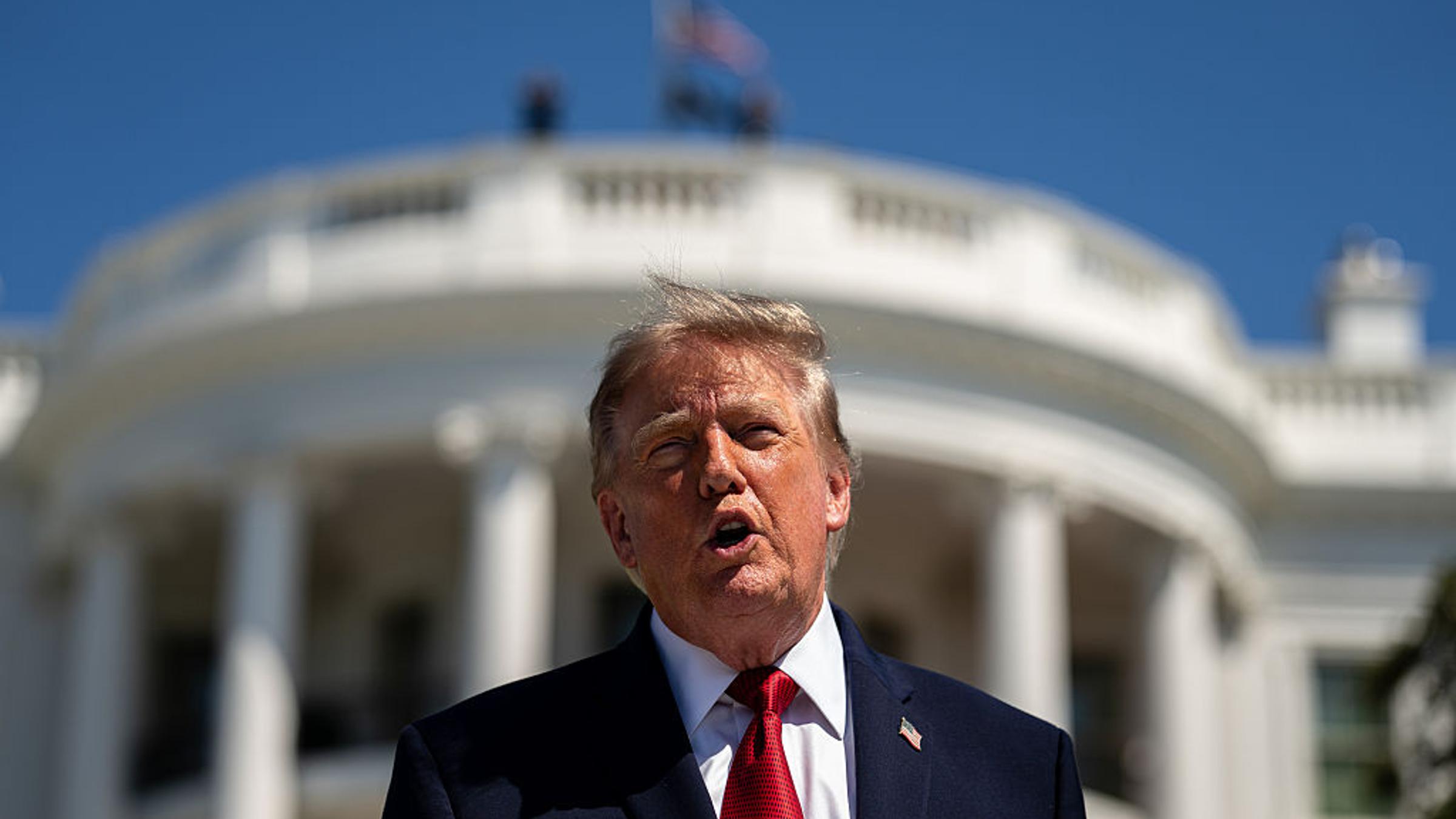
“They have to get rid of it completely. They have to get rid of nuclear weapons. Iran cannot have a nuclear weapon,” Trump repeated Wednesday during the unveiling of the new White House helipad.
Where U.S.-Iran negotiations stand
Trump’s renewed economic threats come as negotiations between Washington and Tehran appear to have stalled amid disagreements over the Memorandum of Understanding (MOU), signed by both countries on June 17.
The document outlined commitments aimed at ensuring the full, toll-free reopening of the Strait of Hormuz, and established a 60-day cease-fire intended to allow technical talks to take place, including over Iran’s nuclear capabilities. Before the war, roughly a fifth of the world’s global petroleum liquids consumptions passed through the waterway.

In the interview, Harry said the decision to withdraw from public duties and move to California was both due to the amount of tabloid press scrutiny and harassment, as well as a lack of support from “The Firm.”
Tabloid headlines focused on Meghan have included descriptions of the Duchess as “gangster royalty” and coming from a “crime-ridden neighborhood.”
In 2023, Harry published his memoir, Spare, outlining details of Royal life. In his book, the Duke revealed how he learned of his grandmother’s death, Queen Elizabeth II, via the BBC, and how his father, Charles, did not hug him following the death of his mother, Princess Diana, in 1997.
While in the U.S., the couple have launched a number of business ventures, including several with Netflix. In December 2022, the couple released a six-episode docuseries on Netflix detailing more details about the early days of their relationship, as well as discussions around racism and stereotypes experienced by the Duchess since the start of their relationship.

BTC broke above $70,000 after a fast recovery on August 20, with experienced trader Sykodelic putting $67,000 as the mark that bulls need to defend.
The idea is straightforward: a close above $67,000 for a week may be a sign of bottoming out for Bitcoin, allowing bulls to target $74,000.
Bitcoin Clears Levels That Analysts Have Watched
Bitcoin first reclaimed $69,000 and then started a determined move upward that, at the time of writing, had taken it above $72,000, leading to Sykodelic’s comment. In a post on X, he wrote “Hold above $67,000 this week, and $74,000 comes fast,” while adding that $60,000 had been “a strong low.”
Before that, the trader had posted, explaining why $67,000 and $69,000 matter to his setup. The latter is Bitcoin’s previous 2021 all-time high and the current cost basis for short-term holders. That cost basis represents the average price paid by recent buyers, and Bitcoin holding above it would leave many short-term holders in profit.
The analyst also compared the current move with previous bear markets, with Bitcoin historically needing several attempts to hold this area before a lasting bottom formed. He explained that the current attempt would be the third.
Another technical signal that Sykodelic noted was Bitcoin’s closing of its first daily candle above the 200-day simple moving average since November 2025. He claimed every previous break above that average in the cryptocurrency’s history coincided with the end of a bear market. However, he still wants to see the weekly close before declaring victory.
“As long as we are above $67,000, we are golden,” he wrote.
A view that fit Sykodelic’s argument came from trader Nik. While responding to a question from an X user on how to read a chart with “absolutely no structure,” they said they see no resistance until $74,000, with the next major wall around $80,000 to $83,000, and identified $65,000 to $67,000 as the more important support zone.
However, neither trader treats the move as a straight path higher, and Nik specifically warned that Bitcoin could see more “fuckery” before reaching higher levels.
Bitcoin’s run to $70,000 also came with heavy forced selling, described as its largest short-liquidation candle on record, with more than $1.2 billion in leveraged positions liquidated within an hour, $1.14 billion of that being shorts.
Crypto Market Grows By More Than $200 Billion
At the time of writing, BTC was still making huge strides, up more than 11% in 24 hours to put it above $72,000. Other timeframes were also similarly green, with the asset gaining over 12% in seven days and more than 10% in two weeks, while its one-month jump was 8%.
Nonetheless, it’s still in the red across one year at almost 37% and sits 43% below its all-time high.
The broader market has moved with the OG cryptocurrency, adding about $200 billion within 24 hours, as CryptoPotato reported. Ethereum briefly jumped past $2,300, and HYPE gained around 25% to $74, with several other large tokens turning green alongside them.
The post Bitcoin Eyes $74K After Rally as Analyst Flags $67K Support appeared first on CryptoPotato.


The CLARITY Act has stalled ahead of a Sept. 15 procedural vote requiring 60 senators, as Senate Banking Committee Chairman Tim Scott accused Elizabeth Warren’s team of trying to drive crypto activity from the United States.
Summary
- The Senate will hold a Sept. 15 cloture vote on whether to begin considering H.R. 3633.
- Scott accused Warren’s team of repeatedly changing its demands during negotiations.
- Republicans need Democratic support because advancing the bill requires at least 60 Senate votes.
- Ethics rules, stablecoin rewards and financial-crime provisions remain unresolved.
SALT Conference footage from the Wyoming Blockchain Symposium showed Scott blaming Warren and her allies for holding up the Digital Asset Market Clarity Act during his Aug. 18 appearance.
“Elizabeth Warren’s team wants to run Bitcoin and crypto out of the country,” Scott said.
Addressing the remaining negotiations, the South Carolina Republican also accused Democrats of repeatedly moving the “goalposts” for political reasons. Scott argued that the bill would not advance unless Republican lawmakers applied direct pressure and forced a Senate vote.
His remarks place Warren, the Banking Committee’s ranking Democrat, at the center of the dispute over the most extensive digital asset market structure proposal considered by Congress. Warren and other Democrats have sought stronger investor safeguards, financial-crime controls and restrictions covering crypto businesses tied to elected officials.
Scott’s criticism came one day before Democratic Sen. Ruben Gallego warned that taking the bill to the floor too quickly could damage bipartisan negotiations. Gallego, one of two Democrats who supported the Banking Committee’s version, said lawmakers still needed to resolve several parts of the proposal before a vote.
CLARITY Act faces a 60-vote Senate test
Senate Majority Leader John Thune filed cloture on the motion to proceed to H.R. 3633 before the Senate began its August recess, according to the Senate Daily Press.
The cloture motion will ripen at 2:15 p.m. on Sept. 15, one day after senators return to regular business. Approval would allow the chamber to begin formally considering the legislation, but it would not constitute final passage.
Senators could still debate the proposal, offer amendments, and vote on the resulting text. Any Senate version that differs from the measure approved by the House would also require further action from the lower chamber before reaching President Donald Trump.
Supporters need at least 60 votes to overcome the Senate’s cloture threshold. Republicans cannot reach that number alone, leaving Scott dependent on Democrats and independents even as he criticizes Warren’s role in the negotiations.
The House passed its version in July 2025 by 294 votes to 134, with 78 Democrats joining Republicans. In May, the Senate Banking Committee advanced its section of the legislation by 15 votes to nine.
Democratic Sens. Gallego and Angela Alsobrooks supported the committee measure. Their votes gave Scott a bipartisan result but fell well short of the Democratic support needed on the Senate floor.
The Sept. 15 proceeding would therefore measure whether negotiators have secured enough support to open debate. As crypto.news previously reported, Solana Policy Institute CEO Miller Whitehouse-Levine placed the bill’s chance of passing before the November midterms at 10%, while prediction markets remained somewhat more optimistic.
Polymarket traders assigned about a 20% probability to the bill becoming law during 2026 as of Aug. 19. Whitehouse-Levine’s estimate covered passage before the midterms, while the Polymarket contract allows lawmakers until Dec. 31.
What the CLARITY Act would change
H.R. 3633 would divide authority over digital assets between the Securities and Exchange Commission and the Commodity Futures Trading Commission.
Under the proposal, the CFTC would receive primary authority over spot markets for qualifying digital commodities. The SEC would continue regulating securities and certain investment contracts, while both agencies would receive responsibilities tied to registration, disclosure, and market conduct.
Crypto exchanges, brokers, and dealers covered by the legislation would have to register under new federal rules. The bill also contains provisions addressing customer asset protection, anti-money laundering requirements, and disclosures for digital asset businesses.
Developers of certain non-custodial software could receive protection from being treated as money transmitters solely because they publish or maintain software. Law enforcement groups previously objected to parts of the language, arguing that it could limit investigations involving decentralized finance.
Several organizations later changed their positions after lawmakers revised the relevant provisions. The National Fraternal Order of Police, which represents more than 382,000 members, endorsed the updated language in July after concluding that it preserved authorities used in digital asset investigations.
A separate coalition of police chiefs also backed the revised proposal, while other prosecutors and enforcement organizations continued seeking changes. The disagreement has made the developer provisions one of several issues that senators must manage before securing enough floor votes.
Lawmakers released a 616-page merged draft in late July, combining work completed by the Banking and Agriculture committees. Each committee oversees different parts of the proposed regulatory structure because the SEC falls under Banking jurisdiction and the CFTC falls under Agriculture jurisdiction.
Ethics and stablecoin rewards divide negotiators
Restrictions involving elected officials and their crypto interests remain among the hardest issues for senators to settle.
Democrats have sought rules addressing digital asset ventures connected to the president, senior officials, and their families. Their concerns include Trump-linked crypto businesses and whether a sitting president should be allowed to issue, promote, or profit from digital assets while influencing federal policy.
Republican Sen. Thom Tillis has worked on a bipartisan ethics proposal intended to address some of the objections. Industry executives have also pointed to negotiations with the White House as a possible route to an agreement, but lawmakers had not released a final compromise as of Aug. 20.
Stablecoin rewards have created another divide. Banks have pushed for restrictions preventing crypto platforms from paying yield or rewards on payment stablecoins, warning that such products could draw deposits away from regulated financial institutions.
Crypto companies argue that a sweeping restriction could limit competition and extend beyond the rules Congress adopted for stablecoin issuers. Negotiators have not publicly confirmed final language that satisfies both groups.
Financial-crime controls and the treatment of decentralized protocols also remain under discussion. Warren and aligned Democrats have pressed for stronger measures covering illicit finance and national security, while crypto advocates have warned against applying obligations designed for financial intermediaries to software developers who do not control customer funds.
A July report on the Senate’s delayed vote found that disputes over ethics, DeFi protections and stablecoin rewards persisted even after major law enforcement groups supported revised provisions.
Scott’s criticism meets Democratic resistance
Scott presented the dispute in Wyoming as a choice between passing federal rules and allowing crypto businesses to leave the country. His accusation against Warren’s team went further than earlier Republican appeals for bipartisan cooperation.
Warren has argued that digital asset legislation must contain sufficient consumer protections and prevent public officials from using their positions for personal financial gain. Democrats aligned with her have also questioned whether the current enforcement provisions would adequately cover money laundering and national security risks.
Not every Democrat opposing an immediate vote has rejected market structure legislation. Gallego said on Aug. 19 that rushing the process could weaken the chance of reaching a bipartisan deal, according to a recent report.
Gallego also said the White House had not supplied detailed feedback on bipartisan ethics language sent by Senate negotiators. Along with the ethics dispute, he identified stablecoin rewards and unresolved Agriculture Committee provisions as matters requiring further work before the legislation advances.

A Wall Street analyst initiated coverage of SiTime (SITM) stock with a buy rating, calling the timing-chip specialist a “technology disruptor.” Benchmark analyst Gary Mobley gave SiTime stock a positive report Thursday and set a price target of 850. In late morning trades on the stock market today, SiTime stock slid more than 3% to 598.29. Semiconductor stocks in general…
Copyright ©2026 Investor’s Business Daily, LLC. All rights reserved. 87990cbe856818d5eddac44c7b1cdeb8

Since bottoming out in April 2025, Relay Therapeutics (RLAY) shares have skyrocketed by as much as 1,074%. Now the biotech firm has a fresh breakout in its sights. With its 10-week moving average continuing its long ascent, the Cambridge, Mass.-based company earns a coveted blue dot in MarketSurge, a clear indication of stock market leadership. Biotech Taps AI And Machine…
Copyright ©2026 Investor’s Business Daily, LLC. All rights reserved. 87990cbe856818d5eddac44c7b1cdeb8


Cointelegraph is committed to providing independent, high-quality journalism across the crypto, blockchain, AI, and fintech industries.
All news, reviews, and analyses are produced with full journalistic independence and integrity. For more details on our standards and processes, please read our Editorial Policy.
The Commodity Futures Trading Commission has prepared digital asset market structure proposals that could move forward even if Congress does not pass the CLARITY Act.
Summary
- CFTC Chair Michael Selig said crypto market structure would proceed regardless of the bill’s outcome.
- The CLARITY Act faces a Senate procedural vote on Sept. 15 and needs 60 votes to advance.
- CFTC advisers are discussing digital assets, artificial intelligence and prediction markets on Aug. 20.
- The agency has separately requested public input on derivatives tied to artificial intelligence computing capacity.
Whale Insider reported on Aug. 20 that Selig said the CFTC already had regulatory proposals prepared, giving the agency a route to continue its crypto agenda if lawmakers fail to complete the legislation.
“Crypto will get market structure regardless of bill,” Selig said, according to the report.
Selig’s statement did not identify which proposals the agency has finished drafting, when it could publish them, or how much of the planned framework could be created under the CFTC’s current legal powers. Congress would still need to act before the regulator could receive the full spot-market authority contemplated by the CLARITY Act.
CFTC crypto rules could proceed under existing powers
The CFTC currently oversees derivatives markets, including futures, options, and swaps tied to digital assets. Its enforcement authority also covers fraud and manipulation in spot commodity transactions, but the agency does not have the same routine supervisory power over crypto spot exchanges that it exercises over registered derivatives platforms.
Without legislation, any CFTC proposals would have to remain within the authority already provided by the Commodity Exchange Act. Rules covering registered derivatives venues, intermediaries, disclosure requirements, or crypto futures could therefore move independently, while a complete federal framework for spot digital commodity trading would require action from Congress.
For U.S. investors, the distinction affects which regulator supervises the platforms where they trade. The CLARITY Act would create a registration framework for certain digital commodity exchanges and divide responsibility for digital assets between the CFTC and the Securities and Exchange Commission.
The bill would generally place qualifying digital commodities under CFTC oversight while preserving the SEC’s authority over crypto assets treated as securities. Lawmakers have continued negotiating the treatment of decentralized finance, ethics restrictions, and rewards offered on stablecoin balances.
As previously reported, an expansion of the CFTC’s duties would also raise questions about staffing and resources. The commission is designed to have five members but currently has one confirmed commissioner, Selig, while its workforce has fallen from its fiscal 2025 level.
Staffing constraints would become more important if the agency had to supervise spot crypto trading alongside its existing work in derivatives, prediction markets, and enforcement. The CLARITY Act could assign the CFTC primary oversight of a large part of the U.S. digital asset market, requiring the regulator to review registrations and monitor companies that are not presently under its routine supervision.
CLARITY Act faces a 60-vote Senate test
Senate Majority Leader John Thune filed cloture on the motion to proceed to the CLARITY Act before lawmakers left Washington for their August recess. Under the Senate schedule, the procedural vote is set to ripen on Sept. 15 after senators return.
Cloture requires 60 votes, meaning Republican support alone may not be enough to move the bill forward. Even if the Senate invokes cloture, the vote would only allow the chamber to begin considering the measure. Senators could still debate or amend the text before voting on final passage.
The House approved its version of the CLARITY Act in July 2025, while the Senate Banking Committee advanced its text in May 2026. Any Senate version that differs from the House bill would require additional congressional action before the legislation could reach the president.
Negotiations have remained difficult as lawmakers debate ethics requirements for public officials and restrictions involving stablecoin rewards. The bill’s chances of passage have also weakened in prediction markets, with Polymarket pricing its probability of becoming law in 2026 below 20% by mid-August after showing odds of 82% in February.
President Donald Trump urged lawmakers during an Aug. 19 White House event to pass what he called a “fair version” of the legislation. Trump described the proposal as bipartisan and said federal law was needed to preserve the administration’s digital asset policies beyond his presidency.
Representatives from Coinbase, Gemini, Ripple, Kraken, Chainlink Labs, Anchorage Digital, Grayscale and OKX attended the event, along with executives from prediction-market and artificial intelligence companies. The White House meeting took place one day before the CFTC’s first Innovation Advisory Committee session.
CFTC committee is examining unresolved crypto questions
The CFTC scheduled the inaugural Innovation Advisory Committee meeting for Aug. 20 from 1 p.m. to 4 p.m. EDT in Washington. Its agenda covers digital assets, artificial intelligence in financial markets, and prediction markets.
During the crypto session, committee members are expected to examine customer protection, market integrity and the CFTC’s ability to use its present statutory authority. The discussion also covers how agency action could complement legislation passed by Congress rather than replace the additional powers contained in the CLARITY Act.
Committee members include executives and specialists from crypto companies, traditional financial institutions, market infrastructure providers, and technology businesses. The advisory body can make recommendations but cannot adopt binding regulations or expand the CFTC’s legal jurisdiction.
Members of the public can submit written statements related to the meeting through Aug. 27. The commission will publish accepted materials as part of the committee record, although the meeting itself does not include a vote on a crypto market structure proposal.
At the same time, the SEC has been developing separate rules for crypto offerings and tokenized securities. Securitize President Brett Redfearn said the securities regulator pulled back a planned innovation exemption because of concerns surrounding the Sept. 15 CLARITY Act vote.
Redfearn expects the innovation exemption to return after the Senate vote, possibly in early October. The proposal would provide a tailored regulatory route for companies seeking to issue and trade tokenized securities while keeping the products within the SEC’s jurisdiction.
The SEC also canceled an Aug. 14 open meeting at which commissioners had been scheduled to consider a separate offering framework for certain investment contracts involving crypto assets. The agency cited an unforeseen scheduling issue and did not publicly connect the cancellation to the CLARITY Act.
CFTC seeks rules for artificial intelligence compute markets
Outside digital assets, the CFTC requested public comments on Aug. 19 about derivatives linked to artificial intelligence computing capacity. The 19-page consultation covers liquidity, reference prices, manipulation risks, customer safeguards, and the possible listing of perpetual compute futures.
“America cannot win the AI race without a robust derivatives market for compute,” Selig said in the agency’s announcement. He described the consultation as the first step toward setting rules for U.S. compute markets.
A compute contract could track the cost of renting a particular graphics processor, such as Nvidia’s H100 or Blackwell B200, or reference access to a specified amount of AI inference capacity. The request does not approve any contract, create a final rule, or authorize an exchange to start trading the products.
Public comments will remain open for 60 days after the consultation appears in the Federal Register. As of Aug. 20, the document had not been published in the register, leaving the final submission deadline unset.
CME Group has targeted Oct. 5 for two futures contracts based on daily GPU rental benchmarks supplied by Silicon Data. Both planned products remain subject to regulatory review, and the proposed launch date does not guarantee that the CFTC’s review will be completed by then.

French couple kidnapped in alleged Bitcoin extortion plot

Sue Gray Describes Working In Keir Starmer’s No.10 As ‘Unbearable’

Arthur Okonkwo: Charlton Athletic sign Wrexham goalkeeper on loan





-

 Fashion6 days ago
Weekend Open Thread: Ann Taylor
-
 Sports7 days ago
This U.S. Amateur is a glimpse into golf’s future in more ways than you think
-

 Tech6 days ago
11 Ways to Rank Your Videos
-

 Sports6 days ago
Birmingham 2026: Day 6 Timetable for Irish Athletes
-
 NewsBeat5 days ago
Myanmar says over 300,000 Rohingya refugees verified for repatriation as exodus enters ninth year
-

 Politics5 days ago
SEQ Code: The Three Letter Boarding Pass Code That Could Give You The Worst Seat
-

 Tech7 days ago
DeepSeek Harness launches as open source rival to Claude Code, alongside V4-Pro on API with higher prices
-

 Tech3 days ago
Qwen3.8-27B runs frontier-class coding agents and reasoning locally, no cloud API required
-

 Crypto World6 days ago
Pi Network Protocol 27 endgame: last upgrade before what?
-

 Business2 days ago
SMA Solar Technology AG (SMTGY) Q2 2026 Earnings Call Transcript
-

 Crypto World3 days ago
OCC Greenlights Trump Family Crypto Firm for Trust Charter
-

 Tech5 days ago
Every fusion startup that has raised over $100M
-

 Business6 days ago
15 Ways to Make Money From Your Phone (2026 Guide)
-
 Entertainment6 days ago
10 Netflix Shows That Quietly Became Modern Classics
-

 Fashion6 days ago
Weekly News Update, 8.14.26 – Corporette.com
-
 Entertainment5 days ago
Marvel Studios Reveals New X-Men Cast Including Adam Driver and Sadie Sink
-

 News Videos12 hours ago
Don’t Leave Your Financial Future To Chance | August 19, 2026
-

 Business5 days ago
Facebook Down Now? Users Report Login And Loading Problems As Outage Trackers Monitor Ongoing Issues
-

 Fashion6 days ago
Silver bangles for women – Newbridge Silverware
-
 Business5 days ago
Monarch Mutual Fund set to enter MF space with maiden overnight fund; files draft with Sebi
You must be logged in to post a comment Login