

Crypto World
apxUSD Loses Dollar Peg as Bitcoin Slide Squeezes STRC-Backed Collateral

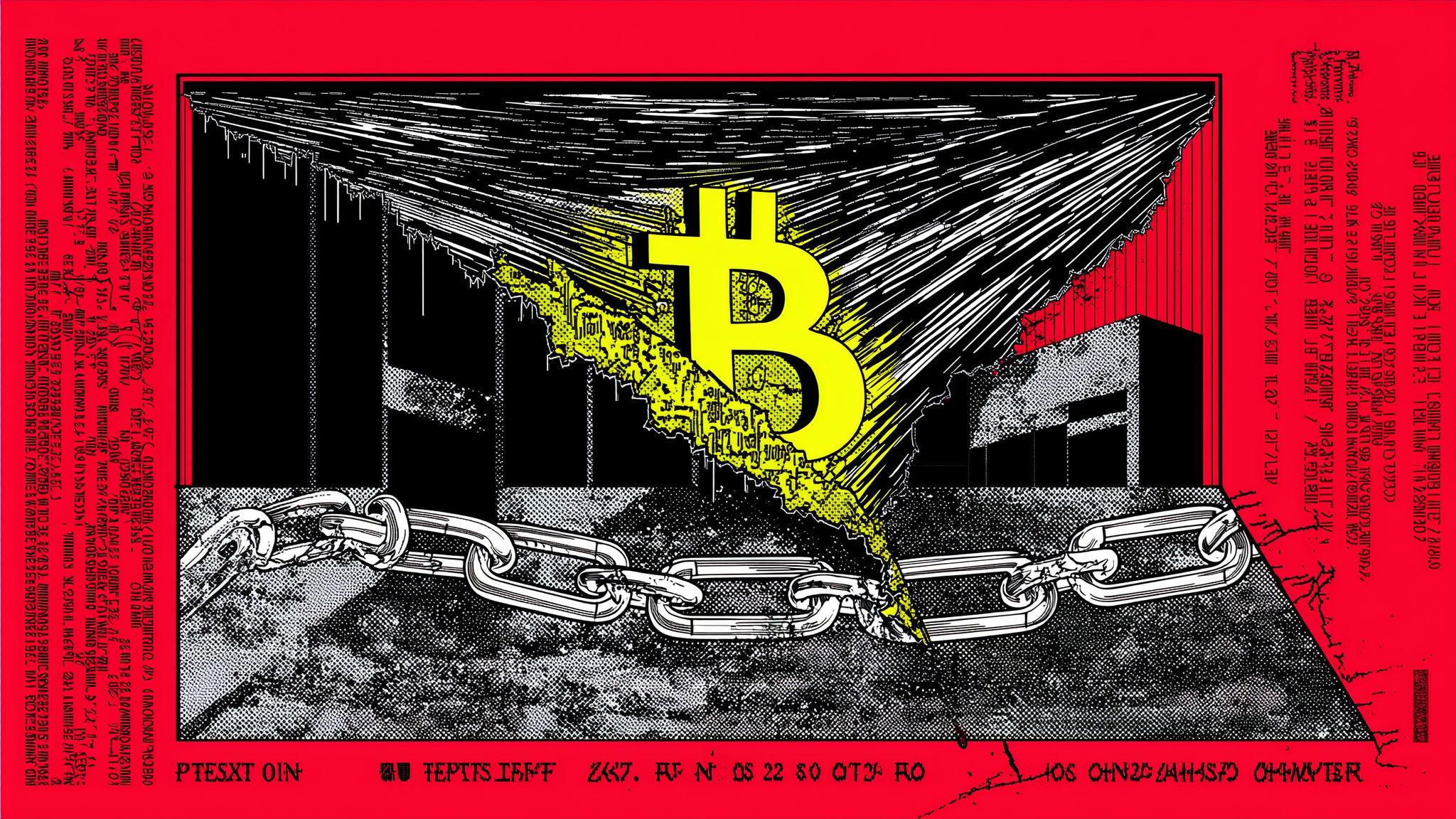
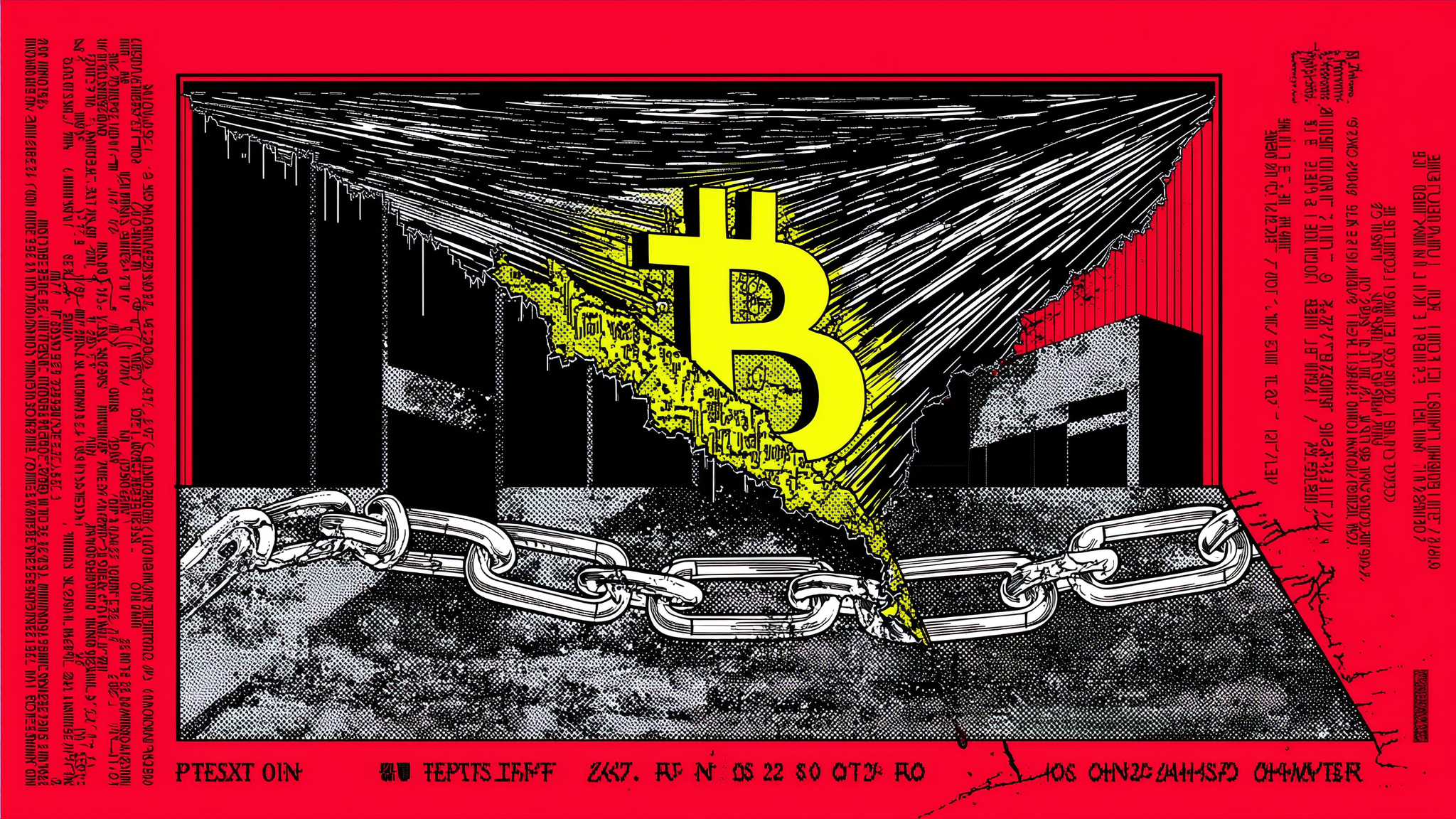
Apyx's apxUSD, a dividend-backed stablecoin collateralized largely by the preferred shares of bitcoin-treasury companies, broke its $1 peg this week, falling to about 92 cents as Strategy's STRC preferred stock dropped below par and bitcoin extended a steep selloff. The stablecoin slipped to… Read the full story at The Defiant

Crypto World
Strategy Buys 1,587 Bitcoin for $100M Below Its Blended Cost Basis, Lifting Stack to 846,842 BTC


Michael Saylor's Strategy bought 1,587 bitcoin for about $100 million last week, its first purchase disclosed since the firm broke a multi-year buying streak with a small sale in late May. The latest coins came in well below the average price Strategy has paid to build the largest corporate bitcoin… Read the full story at The Defiant

Bipartisan negotiations on the CLARITY Act fractured on two fronts simultaneously last week. A closed-door ethics session collapsed Tuesday without agreement, and a White House-convened law enforcement meeting on Section 604 ended Wednesday with no resolution.
According to Fox Business correspondent Eleanor Terrett, the July 4 passage deadline is logistically dead. With only 31 Senate session days remaining before the August recess and a 60-vote threshold still to clear, the bill now faces a structural coalition problem.
The CLARITY Act cleared the House and the Senate Banking Committee 15–9 on May 14, making it the furthest-advanced piece of crypto regulation in this Congress. That progress masked two fault lines that were never actually closed at the committee stage.
Discover: The Best Crypto to Diversify Your Portfolio
Ethics Enforcement Mechanism Collapses as White House Pulls Back
Senators Kirsten Gillibrand, Ruben Gallego, Bernie Moreno, and Cynthia Lummis met on Tuesday alongside White House Crypto Council Executive Director Patrick Witt. It is reported that they negotiated a provision that would have authorized state attorneys general to initiate civil actions against the DOJ.
Republicans and Witt withdrew support for that mechanism and offered a substitute limiting enforcement authority to the U.S. Attorney General. It’s an offer Democrats rejected as functionally circular, given that the AG serves at the president’s pleasure. Republicans also floated impeachment as a remedy for presidential ethics violations, which Democrats likewise declined.
The provision was a direct response to Trump crypto exposure: Trump family ventures, including World Liberty Financial and associated token issuances, have generated an estimated $2.3 billion across holdings per widely cited public disclosure estimates.
— Crypto Rover (@cryptorover) April 14, 2026
 BREAKING:
 Democrat Rep. Jamie Raskin Introduces Bill to Invoke 25th Amendment Against Trump pic.twitter.com/xhKv3GBQUu
The White House’s reversal on the state AG enforcement clause reflects a judgment that any provision creating a litigation pathway through state-level Democratic attorneys general carries open-ended political liability regardless of how narrowly it is drafted.
This collapse directly reopens the fault line left unresolved during the May 14 markup, when a Van Hollen amendment barring the president, vice president, and members of Congress from issuing or promoting digital commodities failed 13–11 on party lines.
Senators Gallego and Angela Alsobrooks, the two Democrats whose committee votes produced the bill’s nominal bipartisan margin, have both conditioned their floor support on strong ethics provisions, a bar that Tuesday’s walkback made harder to clear, not easier.
Discover: The Best Token Presales
Passage Window Narrows Toward Clarity Act Closure

Eleanor Terrett confirmed that the bill cannot logistically pass Congress by July 4 because it still requires 60 Senate votes, House-Senate reconciliation, and a presidential signature. Coverage tracking the CLARITY Act’s escalating timeline pressure heading into this week underscored how quickly the political window was narrowing.
Prediction markets had previously priced passage above 70%; estimates have since dropped to 45%. The stablecoin yield dispute was previously resolved via a Tillis-Alsobrooks deal, but the ethics and Section 604 tracks remain live and are now fractured simultaneously.
If neither resolves before the August recess, the practical window for 2026 crypto regulation passage may close entirely. The pattern of regulatory deadline pressure is not unique to the Senate: MiCA’s July 1 compliance deadline illustrates how compressed regulatory timelines routinely force markets to price in binary outcomes with limited runway for correction.
Discover: The Best Token Presales
The post CLARITY Act July 4 Deadline Dead as Ethics and Section 604 Talks Collapse appeared first on Cryptonews.

Ripple’s cross-border token continues to make headlines today, as its price has been on a consistent uptrend that lasted hours and peaked at almost $1.30 minutes ago.
The latest more bullish development came earlier today when a major crypto exchange listed the company’s stablecoin, which also includes a pair against XRP.
XRP’s Bullish Move
CryptoPotato listed several reasons earlier today why the popular altcoin took the market-wide revival by storm. At the time, the asset had climbed to just $1.20 on the heels of the new deal between the US and Iran announced by US President Donald Trump, which is supposed to be signed officially by the end of the week.
The other notable reasons included a substantial shift in exchange deposits as Korea emerged as a winner, and the continuous net inflows into the spot XRP ETFs.
Gate.io, one of the largest and most popular cryptocurrency exchanges, added fuel to the bullish fire earlier today by listing RLUSD, Ripple’s other token. Moreover, it added support for XRP/RLUSD on its platform, thus combining both of the company’s assets.
$RLUSD is now live on @Gate_io.$XRP / $RLUSD spot trading pairs are available today, unlocking real interoperability and capital efficiency for digital asset markets worldwide. https://t.co/HHQnfhcMFc
— Ripple (@Ripple) June 15, 2026
Strong Support Continues
The analytics company Santiment also weighed in on XRP’s impressive performance, indicating that today’s surge came after the asset’s sentiment had fallen to multi-month lows. As the analysts have noted countless times in the past, such instances usually offer the most solid trend reversal opportunities.
Furthermore, they explained that the cross-border token continues to benefit from receiving support from its largest holders.
“Our on-chain data indicates that wallets holding at least 1M XRP now hold 74.1% of the entire supply and have accumulated an additional 1.53B coins in just the past six months,” they added.
The analysis also highlights “Ripple’s expanding institutional payment network and growing tokenization initiatives on the XRP Ledger, both of which have helped maintain long-term confidence despite recent price weakness.”
They concluded that when the aforementioned factors align, the price revivals are typically rapid and impressive.
The post Major Ripple Adoption News Sends XRP’s Price Flying to $1.3 appeared first on CryptoPotato.


The majority of the Ripple USD stablecoin is on Ethereum, the top competitor to Ripple’s XRP Ledger.
Indeed, $879 million of the roughly $1.63 billion worth of tokens in circulation sits on Ethereum versus $760 million on the XRP Ledger, a 53-to-47 split in Ethereum’s favor.
Ripple markets its dollar-pegged stablecoin as a flagship of the XRP Ledger’s enterprise readiness, yet an entirely different blockchain minted the majority of the supply.
RLUSD launched in December 2024 with an impressive-sounding New York State Department of Financial Services license.
Unable to fulfill its launch on just the XRPL, Ripple issued tokens natively on two blockchains, pitching XRP as the “home” venue even though Ethereum has hosted the majority of the tokens.
By October 2025, roughly 88% of RLUSD supply lived on Ethereum, with just $91 million on XRPL.
Although Ethereum has ceded some of its dominance to XRPL over the past eight months, XRPL remains in second place.
By the end of 2025, Ethereum’s share was still 81%, roughly $1 billion against $235 million on XRPL. Today, after 18 months of work, XRPL has worked itself up to a 47% share.
Ethereum has the users
On Ethereum, Ripple USD is useful on DeFi applications that dwarf comparable DeFi on XRPL.
For example, Ripple put RLUSD into the Aave V3 lending market in April 2025, where users may deposit it for yield or borrow it for a fee collateralized by other Ethereum-based digital assets.
By late 2025, nearly two-thirds of all RLUSD had been deposited into Aave. RLUSD once ranked as the largest single asset in the protocol’s institutional Horizon market.
Curve and Morpho, other DeFi platforms, also vault hundreds of millions more of Ethereum-based RLUSD.
The transaction record also points to the success of Ripple USD on Ethereum.
RLUSD transfer volume hit a record $18.4 billion in the first quarter of 2026, most of which was not XRPL transactions. Instead, Ethereum provided a larger, wealthier community of DeFi users with deeper liquidity pools.
XRP, the token that fans of XRPL can purchase, captures almost none of the value of RLUSD dominance slowly transitioning away from Ethereum.
Every RLUSD transfer on the XRP Ledger burns a fee of approximately one hundred thousandth of 1 XRP, an amount worth less than $0.0001.
Despite Ripple’s marketing of RLUSD as an institutional settlement token with its home on XRPL, XRP tokenholders enjoy a reduction of supply measured in fractions of fractions of a cent for those settlements.
Read more: Years of hype but still no deal: SWIFT sidesteps XRP again
Ripple’s multi-chain success story for Ethereum
Of course, Ripple CEO Brad Garlinghouse has long argued that finance will run across many blockchains. The company even enlisted the Wormhole cross-blockchain bridge to push RLUSD onto Ethereum layer-2 networks like Coinbase’s Base.
Reserves for the stablecoin are blockchain agnostic, sitting off-chain with the Bank of New York Mellon, which Ripple named as a primary custodian in July 2025.
As of writing time, XRP is trading at $1.27, down 31% from where it started 2026 and 41% over the last year.
The clearest growth story in Ripple’s orbit is a stablecoin whose largest home is Ethereum, the network XRP had hoped to displace.
Got a tip? Send us an email securely via Protos Leaks. For more informed news and investigations, follow us on X, Bluesky, and Google News, or subscribe to our YouTube channel.
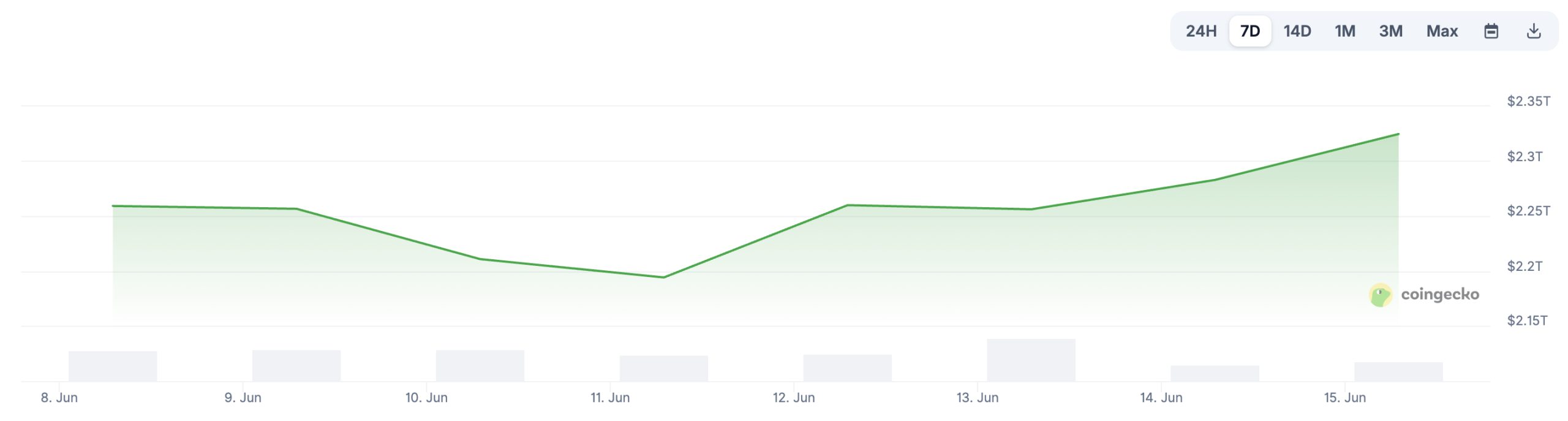
XRP price is moving again, and this time, prediction and volume back it up. The token has run 10% in the past 24 hours, pushing through a sequence of resistance levels that had capped the price for weeks, as the total crypto market cap presses toward $2.4 trillion in a risk-on session.
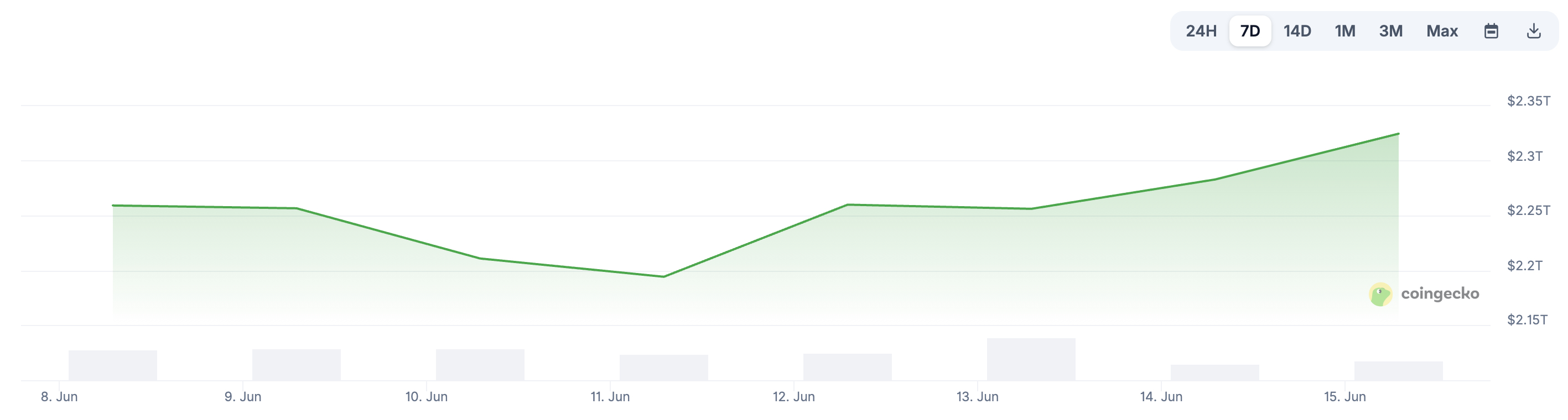
The bullish structure is forming on the XRP chart, and this is something that makes us reassess upside targets that seemed aggressive just days ago.
The breakout was not subtle. XRP climbed from $1.14 to $1.24 today, with volume spiking to 107.6 million XRP at 21:00 UTC. It’s the strongest print since the early-June washout. South Korea’s Upbit accounted for 31% of XRP wallet-flow dominance by June 14, up sharply from 13% a week earlier, showing concentrated Asian demand driving the initial thrust.
#XRP IS GOING BIZZARE IN SOUTH KOREA! — ᴛᴏᴍ ʟᴀʀᴇꜱᴄᴀ | ᴄʀʏᴘᴛᴏ ᴠɪᴄᴇ

Upbit just recorded $1.94 BILLION in XRP volume in a single hour!
BULLISH !!!! pic.twitter.com/XpO7pVJkA6
 (@cryptovicetom) June 15, 2026
Simultaneously, the cumulative net inflows into XRP ETF products have now reached approximately $1.4 billion since launch. Can XRP sustain the volume? Is XRP price prediction getting bullish now?
Discover: The Best Crypto to Diversify Your Portfolio
XRP Price Prediction: $3.00 Soon?
XRP is trading around $1.24 with a 10% daily gain. Intraday highs during the latest surge touched the $1.25 range. The run above the resistance is characteristic of a market that was underpositioned on the long side. Those who tried to catch short got squeezed, and the cascade accelerated the move.
Technically, the key structural shift came when XRP cleared $1.2 on heavy volume, confirming a bull-flag breakout and flipping what had been overhead supply into near-term support.
Immediate support zones now sit at $1.2, with deeper structure at $1.18 on higher timeframes. Resistance bands to clear are $1.3–$1.32 first, then the more significant $1.5 zone that would confirm a larger trend reversal rather than just a relief rally.

Discover: The Best Token Presales
Bitcoin Hyper Targets Early Mover Upside as XRP Trying to Break Resistance
XRP’s 10% run is real, but at a $77 billion market cap, the math on a 10x from here requires a thesis most institutions aren’t ready to rubber-stamp yet. Traders hunting asymmetric upside are increasingly scanning earlier-stage infrastructure plays where the valuation hasn’t already priced in success.
Bitcoin Hyper ($HYPER) is one project drawing attention in that context. It’s positioning as the first Bitcoin Layer 2 with Solana Virtual Machine (SVM) integration, targeting the core limitations holding Bitcoin back: slow throughput, high fees, and the absence of programmable smart contracts.
The architecture delivers sub-second finality and low-cost execution while preserving Bitcoin’s underlying security model through a Decentralized Canonical Bridge for BTC transfers.
The presale has raised $32 million at a current token price of $0.0136, with staking available for early participants.
Research Bitcoin Hyper at the official presale page before the presale ends.
The post XRP Price Prediction: Ripple Jumps 10% as Crypto Total Market Cap Closing $2.4T appeared first on Cryptonews.

BitMine Immersion Technologies has continued adding to its Ethereum position despite a persistent downturn in crypto markets. In a report filed on Monday, the crypto treasury company said it purchased 76,881 ETH over the prior week, further lowering (or at least supporting) its overall cost basis as Ether moved in a volatile range during that period.
The acquisition brings BitMine’s total holdings to 5,620,754 ETH, with an average purchase price of $1,718. While the company has been steadily accumulating through bearish conditions, the scale of its exposure means the treasury remains deeply sensitive to ETH price swings—especially as its strategy relies on both asset ownership and staking-related yield.
Key takeaways
- BitMine bought 76,881 ETH in the last week, bringing holdings to 5,620,754 ETH at an average cost of $1,718.
- At around Monday’s reported market price of $1,843.69, BitMine’s ETH portfolio is valued near $10.2 billion, with an estimated unrealized loss close to $9 billion.
- BitMine controls about 4.66% of ETH’s circulating supply and is moving closer to its stated 5% target (based on 120.68 million circulating ETH).
- The company has staked more than 4.1 million ETH, generating recurring rewards that can continue even when spot prices weaken.
- Ethereum’s environment is under strain not only from price performance but also from structural concerns around layer-2 economics and Ethereum Foundation departures.
BitMine keeps accumulating as ETH trades below prior levels
According to BitMine’s Monday disclosure, the treasury added 76,881 ETH over the preceding week. The purchases took place during a period when Ether briefly dipped below $1,600, according to Cointelegraph’s reference to price action. The broader point, as emphasized by the company’s ongoing behavior, is that accumulation has continued regardless of whether ETH is rebounding or falling.
As of the latest reporting, BitMine’s average acquisition price stands at $1,718. At the time CoinMarketCap data was referenced (Ether trading at $1,843.69 on Monday), the company’s ETH stash was estimated at roughly $10.2 billion.
That figure also highlights the trade-off inherent in a long-duration treasury approach: DropsTab data cited in the report indicates BitMine is sitting on an unrealized loss of nearly $9 billion at current prices. For investors watching large-ETH holders, this matters because it illustrates how treasury strategies can be simultaneously yield-oriented (through staking) and mark-to-market exposed when market conditions deteriorate.
Approaching a “large holder” milestone—while staking supplies yield
BitMine’s latest purchases bring it closer to a stated ambition: owning 5% of Ethereum’s total circulating supply. Based on the cited circulating figure of 120.68 million ETH, the company controls approximately 4.66% after the most recent acquisition.
Just as important is the company’s staking footprint. The report notes that BitMine has staked more than 4.1 million ETH, worth about $8.1 billion at current prices at the time of writing. Staking allows the treasury to earn protocol rewards by helping secure the Ethereum network, creating a more stable stream of yield compared with holding un-staked assets.
In practice, that means BitMine’s economics are not tied purely to whether ETH spot rises or falls. Even during weaker price periods, staking rewards can partially offset losses—though they do not remove the underlying exposure to ETH’s market price.
ETFs face outflows as Ethereum’s broader fundamentals come under scrutiny
BitMine’s accumulation is unfolding amid a wider backdrop that has been difficult for Ethereum-related products. The article links the treasury’s pressure to this year’s selloff in digital asset prices, pointing to spot Ether exchange-traded funds (ETFs) that recorded four consecutive days of net outflows “last week.” It also notes that selling pressure has persisted since early May, with daily net outflows exceeding $60 million on several occasions.
In the US market, BlackRock’s iShares Ethereum Trust ETF (ETHA) is cited as the largest US-listed ETH ETF, with net assets of $4.75 billion. The filing is described as representing 2.36% of crypto’s circulating supply, with its trend referenced via SoSoValue charts.
The key tension for readers is that large-scale accumulation by a treasury entity does not automatically translate into improved ETF demand or stronger near-term flows. ETF outflows can signal that many investors remain focused on risk reduction or wait-and-see positioning, even as some participants continue adding to long-term holdings.
Beyond price: layer-2 fee dynamics and Ethereum Foundation turnover
While spot performance and fund flows matter, the report argues that Ethereum also faces structural uncertainties. One concern raised is the effect of Ethereum’s layer-2 scaling strategy. As more transaction activity moves to layer-2 networks, the Ethereum mainnet captures less transaction-fee revenue and burns less ETH. Since parts of Ethereum’s monetary narrative are tied to fee burning, reduced burn could weaken deflationary dynamics relative to prior expectations.
Separately, the article points to internal changes at the Ethereum Foundation. It says that at least nine senior leaders, researchers, and core contributors have departed the nonprofit so far this year—described as one of the largest waves of talent attrition in its history. The departures are framed as coinciding with an organizational overhaul and renewed community debate over Ethereum Foundation governance, strategic direction, and its long-term role in the ecosystem.
For market participants, this type of organizational churn can matter less for day-to-day price moves and more for expectations around development priorities and execution risk—especially in a period where scaling, fee capture, and long-term network economics are already being debated.
What to watch next
BitMine’s next disclosures will be important to monitor for changes in acquisition pace and how much of its growing ETH exposure remains staked. At the same time, Ethereum investors should keep an eye on ETF flow trends and the evolving debate around layer-2 economics—alongside any further transparency around Ethereum Foundation staffing and governance—as these factors collectively shape confidence in the network’s longer-run trajectory.

TLDR:
- Zebec launched enterprise payroll on Stellar with support for stablecoin salary distributions globally.
- European institutions have entered final testing for payroll, benefits, and contractor payment workflows.
- Workers can access salaries instantly through wallets, payment cards, or local currency conversions.
- XLM gained over 22% in 24 hours as Stellar ecosystem activity and trading volumes increased.
Zebec has launched its enterprise payroll platform on Stellar, extending blockchain-based salary payments to one of the industry’s largest payment-focused networks. The deployment introduces real-time payroll capabilities for employers managing global teams and contractor networks.
Companies can now distribute salaries in stablecoins while workers gain instant access to funds through digital wallets and payment cards. The rollout comes as Stellar’s native token records heightened market activity and a sharp rise in trading volume.
Zebec Payroll on Stellar Targets Global Enterprise Payments
The launch introduces Zebec’s payroll infrastructure directly onto the Stellar network. According to information shared by Stellar, employers can stream salaries and contractor payments in stablecoins through the platform.
Employees can receive funds instantly in supported digital wallets. They can also spend balances using Zebec’s Mastercard-powered cards or convert digital dollars into local currencies.
The company also unveiled a redesigned enterprise dashboard. The interface targets HR departments managing large international workforces and contractor networks.
Several European institutions and multinational employers have entered final testing stages, according to details released by Zebec. These organizations are evaluating salary distribution, contractor payments, and employee benefits workflows.
The testing phase represents one of the first large-scale evaluations of Zebec’s payroll infrastructure on Stellar. The deployments focus on real-world payment operations rather than experimental blockchain applications.
Zebec stated that the rollout builds on its existing relationship with Stellar. The company highlighted Stellar’s growing role in blockchain-based payment infrastructure and cross-border financial services.
Stellar Ecosystem Growth Coincides With XLM Market Activity
The payroll deployment arrives during a period of increased activity across the Stellar ecosystem. Stellar highlighted the launch through its official social media channels, emphasizing instant payment capabilities for workers and contractors.
The network has attracted attention through payment-focused initiatives connecting traditional financial services with blockchain infrastructure. Zebec referenced Stellar’s work in remittances and institutional blockchain adoption as part of the broader collaboration.
The launch also supports Zebec’s wider multichain expansion strategy. The company continues to deploy payment and payroll infrastructure across multiple blockchain networks while focusing on enterprise compliance requirements.
Market activity surrounding Stellar has also accelerated. According to data from CoinGecko, XLM traded around $0.22 after gaining more than 22% over the previous 24 hours.
Trading volume climbed above $813 million during the same period. The token also moved within a daily range between approximately $0.18 and $0.23.
The payroll announcement arrived alongside that increase in trading activity. While the launch and price movement occurred during the same period, the available data does not establish a direct relationship between the two developments.
The deployment adds another enterprise-focused use case to Stellar’s payments ecosystem as organizations continue evaluating blockchain-based payroll operations.

The US Commodity Futures Trading Commission (CFTC) has hired a new chief data innovation officer with deep experience in blockchain forensics in what could be seen as the regulator’s move toward greater focus on the technology.
In a Monday notice, CFTC Chair Michael Selig said that Donald Battle, an adviser to the US Securities and Exchange Commission (SEC) crypto task force, would be the commission’s chief data innovation officer. Battle was appointed as an SEC crypto task force adviser in January 2025 with the incoming Trump administration, and previously worked as a blockchain data adviser for the CFTC and crypto enforcement specialist with the Treasury Department’s Financial Crimes Enforcement Network.
Source: CFTC
Selig cited Battle’s experience in “data science, blockchain forensics, programming interfaces, and cutting-edge AI solutions” among his reasons for his pick.
The appointment signaled the agency moving closer to addressing crypto regulation and enforcement at a time when Congress is seeking to overhaul the CFTC’s and SEC’s roles with a digital asset market structure bill, the CLARITY Act.
The CFTC chair remains the sole commissioner at the financial agency responsible for many aspects of digital asset regulation and enforcement. Under Selig, the CFTC has claimed exclusion jurisdiction over regulating prediction market platforms like Kalshi and Polymarket, resulting in many lawsuits against state-level authorities seeking to crack down on what they called illegal gambling.
Related: Kraken rolls out perpetual futures for US traders through CFTC-regulated venue
Public comment period opens for proposed CFTC framework on sports event contracts
The CFTC last week released a proposed rule that could distinguish sports event contracts offered on platforms like Kalshi and Polymarket from what it called “games of random chance,” referring to gambling. The public has 45 days to comment on the draft rule that could influence how the financial agency addresses regulation of sports events contracts and betting at the state and federal levels.
Magazine: Bitcoin, the ‘canary in the coal mine,’ XRP transaction demand falls 91.5%: Market Moves
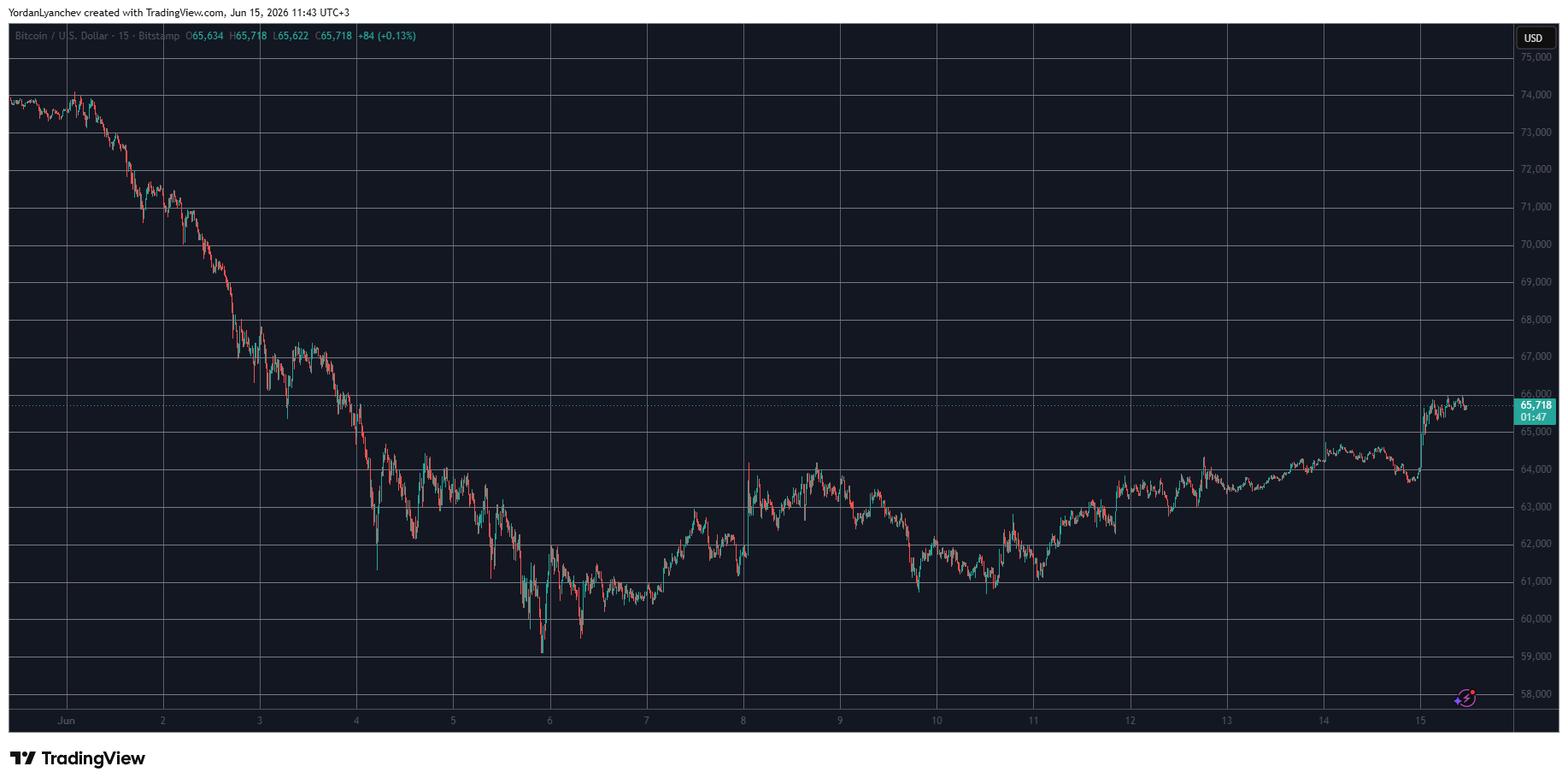
After a relatively quiet weekend, bitcoin’s price rose on Sunday evening to $66,000 for the first time in almost two weeks, following US President Donald Trump’s announcement that the deal with Iran is essentially complete.
The total crypto market cap has added over $50 billion daily, going past $2.330 trillion on CG, as many alts have produced impressive gains.
BTC Touched $66K
Bitcoin crashed and burned at the start of June, dropping from $73,000 to a multi-month low of $59,100 before it finally found some support and began its gradual recovery. The following week was somewhat more positive, as BTC jumped toward $64,000 on several occasions but was stopped at each attempt to break through.
The subsequent rejections, driven mostly by macro factors like new attacks in the Middle East, resulted in price dips to $61,000. Nevertheless, that support level held, and BTC rebounded toward the upper boundary of its sideways channel.
The past weekend was quite sluggish, even though Trump promised on Saturday that the US and Iran would announce a permanent deal on Sunday, but there were more attacks from Israel against Lebanon on that day. On Sunday evening, though, came the long-anticipated announcement, with Trump stating on Truth Social that the deal was essentially complete.
BTC reacted with an immediate price pump, going to $66,000 earlier this morning for the first time since June 3. It has lost a few hundred dollars since then, but it’s still 2% up on the day. Its market cap has surged to $1.315 trillion, while its dominance over the alts remains above 56.5% on CG.
Alts Rebound
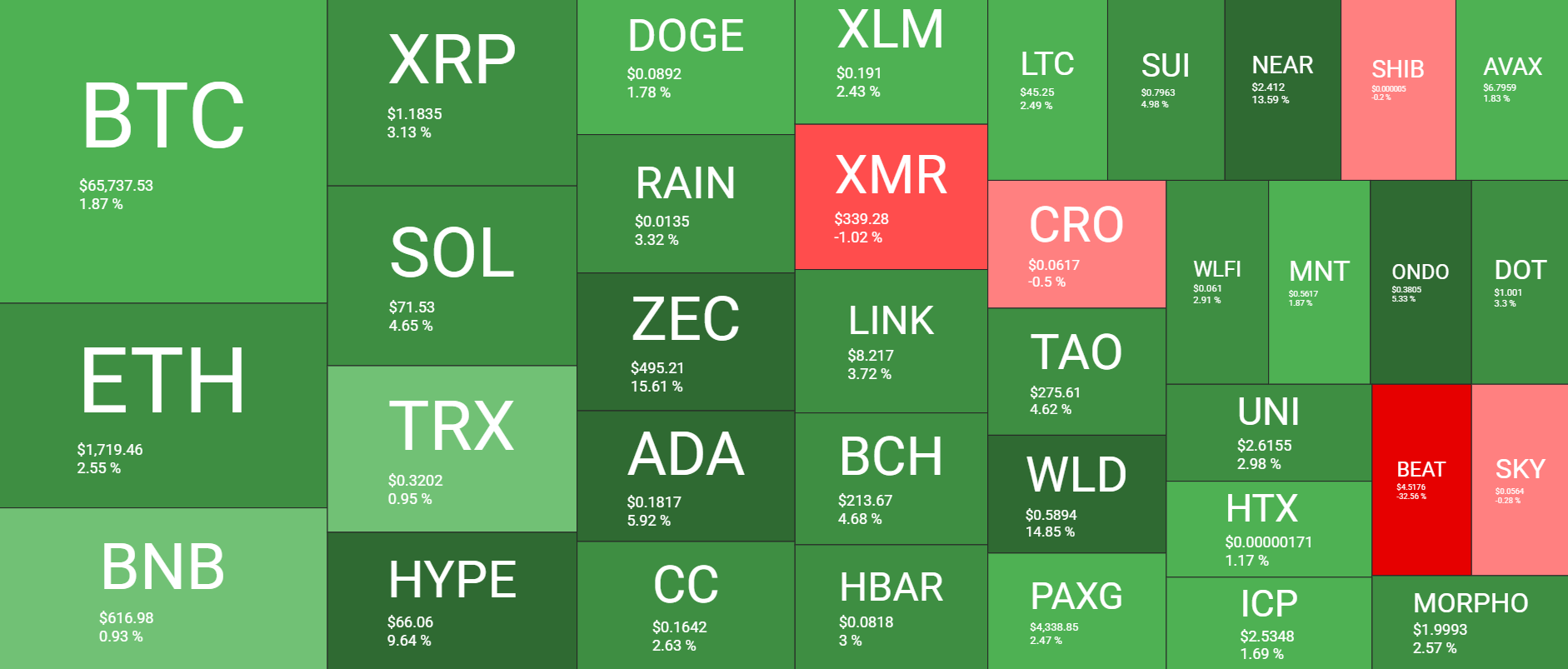
Most larger-cap alts are well in the green today. Ethereum has reclaimed the $1,700 level after a 2.5% increase. BNB is close to $620, while XRP has exceeded $1.18. SOL is well above $70, while ADA has pumped by 6%.
HYPE is up by almost 10%, and ZEC has risen the most from the top 100 alts. The privacy coin has gained 16% and trades close to $500. WLD follows suit, as a 15% increase has driven it to $0.59. NEAR and JUP complete the double-digit price gainers club.
The cumulative market cap of all crypto assets is up by just over $50 billion daily to $2.330 trillion as of now on CG.
The post HYPE, ZEC Explode After Peace Deal Announcement, BTC Taps 12-Day High: Market Watch appeared first on CryptoPotato.


The Commodity Futures Trading Commission has appointed SEC crypto task force adviser Donald Battle as chief data innovation officer as lawmakers continue debating the future of U.S. digital asset regulation.
Summary
- CFTC appoints SEC crypto task force adviser Donald Battle as chief data innovation officer.
- Battle brings experience in blockchain forensics, AI, data science, and crypto enforcement.
- The appointment comes as the CFTC defends prediction markets and Congress debates the CLARITY Act.
According to a Monday announcement from CFTC Chair Michael Selig, Donald Battle will serve as the agency’s new chief data innovation officer.
Battle most recently advised the Securities and Exchange Commission’s crypto task force and previously held roles at the CFTC and the Treasury Department’s Financial Crimes Enforcement Network.
In the announcement, Selig pointed to Battle’s background in data science, blockchain forensics, application programming interfaces, and artificial intelligence as factors behind the appointment.
Battle joined the SEC crypto task force in January 2025 after the Trump administration took office and has worked on cryptocurrency-related investigations and analytics across multiple federal agencies.
The hire comes as lawmakers in Washington continue work on the CLARITY Act, legislation that would redefine the responsibilities of the SEC and CFTC in overseeing digital assets. While Congress debates those jurisdictional boundaries, the CFTC has remained deeply involved in both crypto-related enforcement and prediction market regulation.
CFTC expands focus on digital asset oversight
Responsibility for many of the agency’s digital asset activities currently rests with the CFTC, which, under Selig, has taken an active role in disputes involving federally regulated event contracts and prediction markets.
Court filings cited by the commission show the agency recently sued New Mexico after state officials attempted to apply local gaming laws to contracts listed on prediction market platform Kalshi. The lawsuit names Gov. Michelle Lujan Grisham, Attorney General Raúl Torrez, and other state officials.
According to the complaint, the CFTC argues that federally regulated event contracts fall under its authority and cannot be governed by state gambling rules.
The case followed allegations from New Mexico authorities that Kalshi was operating without a required license and allowing participation by users younger than the state’s legal gaming age of 21.
Federal regulators have made similar arguments in other disputes involving prediction markets, maintaining that contracts listed on platforms operating under CFTC oversight should be regulated at the federal level.
Sports contract proposal enters public review
At the same time, the commission has opened a public consultation process on a proposed framework covering sports event contracts.
According to the CFTC, the draft rule seeks to distinguish sports event contracts offered by platforms such as Kalshi and Polymarket from what the agency described as games of random chance.
The proposal could play a key role in determining how federal regulators treat sports-related prediction markets and how those markets interact with state gaming laws.
The commission said the public will have 45 days to submit comments on the proposal before regulators consider next steps.
Battle’s arrival places a veteran blockchain investigator inside the agency’s data leadership team as the commission navigates overlapping debates involving crypto markets, prediction platforms, and the future division of authority between federal regulators.
With Congress still considering market structure legislation, the CFTC continues to play a central role in several of the industry’s most closely watched regulatory battles.

“Why I Cried After Man of the Match Performance vs Spain” – 40-Year-Old Cape Verde Goalkeeper Vozinha

Meta’s new ‘AI Mode’ on Facebook pulls from public info across its platforms

Jo Cox’s sister explains why she wants to talk about killer being right-wing fascist neo-Nazi for first time


-

 Business1 day ago
No Jackpot Winner as $257 Million Prize Rolls Over to $269 Million Monday Draw
-

 Crypto World4 days ago
Oppenheimer backs SpaceX as $70 billion retail frenzy builds
-

 Crypto World4 days ago
Markets Rally as SpaceX IPO Looms Amid Iran Tensions and Inflation Surge
-

 Fashion3 days ago
Weekend Open Thread: Tuckernuck – Corporette.com
-
Crypto World21 hours ago
Zimbabwe Requires Crypto Businesses to Register Annually Under New FIU Regulations
-

 Entertainment6 days ago
The Ryan Gosling True Crime Thriller On Netflix That Gets Even Stranger, Stream It Now
-
 Sports6 days ago
Bangladesh beat Australia after 20 years in ODIs, register only their second win over six-time world champions | Cricket News
-

 Tech3 days ago
NanoClaw integrates JFrog registries to secure AI agent downloads
-

 Tech3 days ago
This Week In Security: Microsoft On Microsoft, Register Your Domains, Linux On ARM, And FreeBSD Joins The File Cache Club
-

 Crypto World3 days ago
Bitget enters Argentina’s regulated crypto market through PSAV registration
-
 Tech4 days ago
Dutton Ranch star claims they ‘didn’t see any disruption’ on set following Chad Feehan’s exit from Yellowstone spinoff fueled by Taylor Sheridan clash rumors
-

 Politics4 days ago
Politics Home | Healey Resignation Is “Colossal Failure Of Government”, Says Former Labour Defence Secretary
-

 NewsBeat4 days ago
El Nino has formed in the Pacific and could set records, forecasters say
-

 Tech6 days ago
‘This is Seattle’s position on AI’: City Council votes unanimously to pause big new data centers
-
 Entertainment4 days ago
Donnie Wahlberg & More Heat Up Las Vegas at Circa’s Barry’s Downtown Prime
-

 Sports4 days ago
First Time Since 1971: Australia Register Historic Low In ODI Cricket
-
 Tech4 days ago
Opendoor Ends India Operations, Fueling a Bigger Conversation About AI and Outsourcing
-

 Politics4 days ago
Belfast burns, while Met chief points finger at Iran and Russia
-

 Business6 days ago
Thailand Ranks Second Worldwide for AI Adoption Growth, Microsoft Reports
-

 NewsBeat3 days ago
FBI searches office of Ohio voter registration group
You must be logged in to post a comment Login