Connect with us

Crypto World

Arbitrum watchdog seeks permanent ban for three grant abuse cases

Published

on

Arbitrum watchdog seeks permanent ban for three grant abuse cases

Arbitrum’s Watchdog Committee has proposed permanently excluding three DeFi projects from future DAO programs after flagging cases involving 457,553 ARB, valued at roughly $76,000.

Summary

  • Good Entry, Limitless, and APX Finance face separate permanent-ban votes.
  • The committee identified alleged misuse involving a combined 457,553 ARB.
  • Projects have until Sep. 10 to respond and return any disputed funds.
  • Any ban would restrict future DAO participation without freezing wallets or protocols.

Arbitrum grant cases involve three different findings

The Sep. 3 governance proposal said Good Entry, Limitless, and APX Finance, formerly ApolloX, had been linked to what the Watchdog Committee classified as high-severity misuse of DAO funds.

According to the committee, high-severity cases involve large and deliberate misuse of money allocated by ArbitrumDAO. Examples can include fabricated work and theft, although the findings differ across the three projects under review.

Advertisement

The cited amounts add up to 457,553 ARB, worth about $76,000 at the valuation used in the proposal’s coverage. However, the total does not represent one confirmed theft or a single balance owed to ArbitrumDAO. It combines separate findings involving distributions to ineligible accounts, funds moved away from Arbitrum, and grant tokens that were allegedly left unused or distributed late.

Good Entry received 200,000 ARB through the first round of Arbitrum’s Short-Term Incentives Program. On-chain analysis reviewed by the committee found that 142,839 ARB went to 1,032 users deemed ineligible during and after the incentive period.

Wallets connected to the Good Entry team also showed signs of self-farming, according to the proposal. When investigators sought an explanation, the committee said the project refused to cooperate. Good Entry has since stopped operating, so any approved ban would apply to its founders rather than an active team.

Advertisement

Arbitrum has used community funding for several years to attract users and developers. In November 2023, three funding programs allocated a combined 500,000 ARB through retroactive funding, matching grants and prizes for grant-related tools.

Limitless allegedly moved its entire grant to Base

Limitless faces a separate finding tied to the Long-Term Incentives Pilot Program. The project received 75,000 ARB but later exchanged the full grant for the USDC stablecoin and transferred the funds to Base, according to the Watchdog Committee.

Investigators classified the case as suspected theft because the conversion and cross-chain transfer removed all the grant money from the Arbitrum ecosystem. The committee said it could not contact any Limitless team members for an explanation or to recover the funds.

Limitless also appears to have stopped operating since its participation in the incentive program. Under the proposed enforcement policy, a permanent ban would therefore apply to its founders.

Advertisement

The committee has not said that transferring assets to another blockchain is automatically improper. Its findings center on the alleged use of funds assigned for an Arbitrum incentive program and the team’s failure to explain or return the money.

Base is an Ethereum layer-2 network incubated by Coinbase, while Arbitrum operates as a separate Ethereum scaling ecosystem. Moving the grant to Base placed the assets outside the network they had been provided to support, according to the proposal.

APX Finance faces overlapping concerns over 239,714 ARB

APX Finance received approval for 525,000 ARB under the Long-Term Incentives Pilot Program, but the watchdog’s findings concern 239,714 ARB rather than the entire award.

On-chain analysis found that a large share of the grant remained in APX Finance treasury addresses instead of moving to distribution contracts. Investigators also identified transfers to distributor contracts after the required period and a suspected Sybil cluster connected to team addresses.

Advertisement

Sybil activity generally involves one operator controlling several wallets to obtain a larger share of incentives intended for separate users. The committee described APX Finance’s case as a combination of unreturned funds, late distributions and suspected self-Sybil activity.

Investigators were unable to reach APX Finance team members for clarification or recovery, according to the filing. APX later combined with Astherus, with the merged platform adopting the Aster brand.

Unlike Good Entry and Limitless, the proposed language could cover more than APX Finance’s founders if the DAO considers the project or its successor operation active. The committee’s proposed ban on an operating project includes founders, current team members, and affiliated contributors.

Aster’s operations have become more closely associated with BNB Chain since the merger, while the disputed incentive allocation relates to APX Finance’s earlier participation in an Arbitrum program.

Advertisement

Separate votes would decide each Arbitrum ban

Each named project has been given one week from the proposal’s publication to answer the findings in the governance forum. The committee set Sep. 10 as the tentative response deadline, though the published timeline remains subject to change.

If an explanation does not satisfy the committee and the relevant funds are not returned within the same period, ArbitrumDAO will hold three separate Snapshot votes. Token holders will be able to vote for a ban, oppose it, or abstain in each case.

No project has been banned at this stage. The committee has proposed individual votes because the evidence, amounts, and operating status differ among Good Entry, Limitless, and APX Finance.

Snapshot voting will seek social agreement from the DAO without executing a blockchain transaction. As no on-chain action is required, an approved ban would not freeze project wallets, remove deployed smart contracts, or prevent users from trading related tokens. It would make the affected people and projects ineligible for future ArbitrumDAO programs.

Advertisement

Arbitrum created the Watchdog Program to encourage reports backed by evidence and improve oversight of ecosystem grants. As of Sep. 2, the program had received 90 reports, recovered about 532,000 ARB, and distributed roughly 268,000 ARB in rewards to reporters.

The figures indicate that the program has recovered more ARB than the combined amounts cited across the three cases, although each investigation uses its own findings and recovery status.

U.S. investors have indirect exposure through Robinhood

For U.S. investors, the proposed bans carry no stated trading restrictions or changes to access. Their more direct relevance lies in how ArbitrumDAO controls treasury programs and infrastructure tied to companies serving the American market.

Nasdaq-listed Robinhood uses Arbitrum’s Orbit software for Robinhood Chain. As crypto.news reported in July, chains covered by the Arbitrum Expansion Program send 10% of net protocol revenue back to the ecosystem, with eight percentage points going to the DAO treasury and two funding the Arbitrum Developer Guild.

Advertisement

Robinhood Chain had generated more than $2 million in cumulative revenue after its July 1 launch, sending about $200,000 to the Arbitrum ecosystem under that arrangement. The revenue link gives shareholders of a U.S.-listed company an indirect reason to monitor how ArbitrumDAO governs treasury money and handles alleged misuse.

DAO governance can also raise legal questions for U.S. participants. A recent DAO governance explainer noted that the Commodity Futures Trading Commission’s Ooki DAO case established that governance participants can face liability for a DAO’s conduct under certain circumstances.

The pending Arbitrum measures differ in scope because they seek eligibility restrictions through off-chain votes. The proposal does not announce a referral to the CFTC, Securities and Exchange Commission, Justice Department, or any other U.S. authority.

Advertisement

Source link

Continue Reading
Click to comment

You must be logged in to post a comment Login

Leave a Reply

Crypto World

Tether pushes into private credit with $400 million fund with Fasanara

Published

on

Tether (USDT) says it selected a 'big four' firm for its first audit


The USDT issuer will help source lending opportunities and provide stablecoin payment infrastructure for Fasanara’s private credit network.

Source link

Continue Reading

Crypto World

Hunter Biden’s Laptop Controversy Reborn as $XB Memecoin

Published

on

Hunter Biden’s Laptop Controversy Reborn as $XB Memecoin

[Update, Sept. 9, 3:45 p.m. UTC: Updates with pricing information in the first paragraph.]

Hunter Biden’s LAPTOP memecoin fell 95.7% in its first hour of trading on Wednesday, as the son of former US President Joe Biden officially entered the market for politically themed cryptocurrencies.

The token, issued on Ethereum layer-2 network Base, traded at $2.0977 at 3:45 pm UTC, after opening at $199.50, according to CoinGecko data. It recorded more than $13.4 million in trading volume.

Most of the top holders are wallets funded in the past 10 days, according to onchain data visualization platform Bubblemaps.

Advertisement

“The symbol they used to try to end me is now a symbol of resilience, redemption and recovery,” Biden said in an X post on Wednesday, responding to public backlash.

Biden also said he understood the cynicism around memecoins, called President Donald Trump’s token a “grift” and warned buyers not to expect him or anyone else to make LAPTOP more valuable.

The memecoin is promoted as an attempt to reclaim the “laptop narrative,” which centers on a MacBook that Biden reportedly left at a Delaware repair shop in 2019. The New York Post published emails and other files purported to have come from the device before the 2020 presidential election. Trump allies used the material against Hunter Biden and his father, then-presidential candidate Joe Biden.

Related: Joe Biden’s son to launch memecoin, will send to TRUMP holders: WSJ

Advertisement

On Monday, Biden teased LAPTOP on X with a post showing the token’s ticker, accompanied by a montage of media coverage of the laptop.

The announcement drew criticism from the likes of digital investigator Stephen Findeisen, known as Coffeezilla, who called LAPTOP a “shitcoin” and urged his followers not to buy it. X account “scupytrooples” told Biden there was “still time to walk this back.”

Base founder Jesse Pollak said in an X post that the project had contacted his team, but Base made a “conscious decision” not to help with the token’s design or promotion.

Biden did not respond to Cointelegraph’s query before publication. 

Advertisement

LAPTOP disclosures set 2% of token supply for TRUMP token losers

Biden’s earlier criticism of the Trump family’s crypto ventures also gave traders a ready-made hypocrisy argument. 

In an Aug. 21 post, Biden accused World Liberty Financial of using political influence, centralized controls and leverage to benefit its founders, while saying the crypto industry deserved better. 

He has now launched a memecoin built around his own political identity, with founders allocated a chunk of the supply.

Related: California Senate passes bill to ban memecoin issuance by public officials

Advertisement

The project’s disclosures describe LAPTOP as a digital collectible with no utility, ownership rights, voting rights, yield or profit-sharing rights. The token has a fixed supply of 1 billion, with 350 million tokens circulating at launch.

Founders, including Biden, are allocated 300 million tokens, or 30% of the supply. Those tokens are locked for six months and then vested monthly over the following 24 months. Another 30% is tied to political, cultural and crypto predictions, with tokens burned when specified outcomes occur and released to charity if they do not.

The disclosures also outline airdrop figures, with the initial round representing 10% of the total supply. Of those, 2% is reserved for wallets that lost money on TRUMP and 8% for eligible subscribers to Biden’s “Where’s Hunter” Substack newsletter.

A separate 10% future airdrop is to be distributed at the foundation’s discretion. That means 20% is allocated to airdrops overall, while the specific TRUMP-loss allocation is capped at 2%.

Advertisement

Magazine: Is Bitcoin too volatile to risk your retirement on?

Source link

Continue Reading

Crypto World

XRP Price Prediction: Whales and Retail Traders Are Taking Opposite Sides

Published

on

XRP holds near $1.42 as whale accumulation diverges from retail activity. XRP price prediction, key levels, ETF inflows, and CLARITY Act.

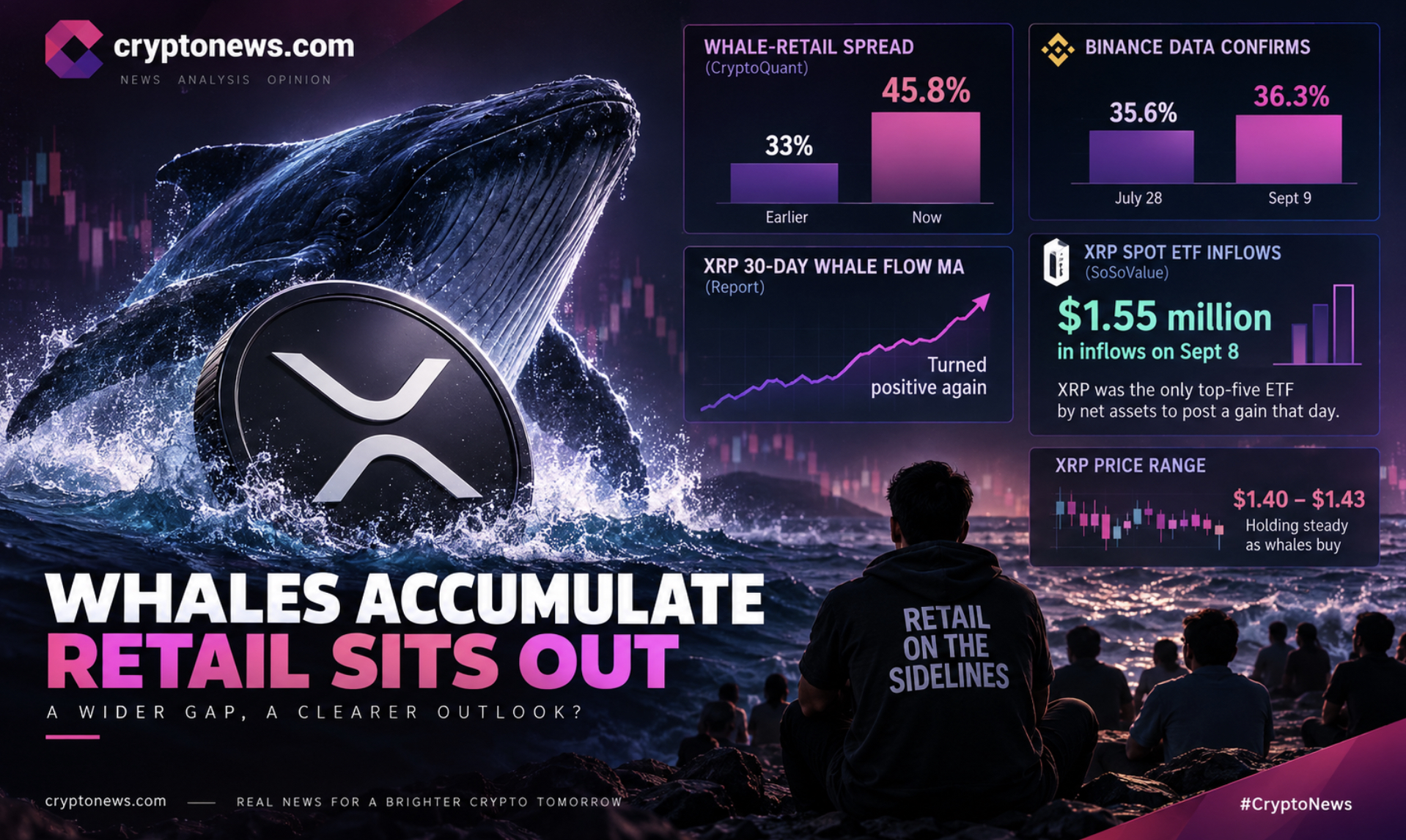
XRP whales are accumulating while retail sits on the sidelines, and the split is what’s our price prediction is based. On-chain data from CryptoQuant shows XRP’s whale-retail spread jumping from 33% to 45.8%. This means that large transactions are dramatically outpacing small ones.

Binance data confirms the trend, with the spread there climbing from 35.6% on July 28 to 36.3% by September 9. A recent report also flagged that XRP’s 30-day whale flow moving average has turned positive again. Whales are buying even as the spot price stays glued between $1.40 and $1.43.

XRP holds near $1.42 as whale accumulation diverges from retail activity. XRP price prediction, key levels, ETF inflows, and CLARITY Act.

Adding to the picture, SoSoValue data shows XRP spot ETFs pulled in $1.55 million in inflows on September 8, making XRP the only top-five ETF by net assets to post a gain that day.

This accumulation is happening despite deteriorating odds on the CLARITY Act, with prediction markets now pricing just a 15% chance of passage in 2026. That’s the tension driving this week’s setup, and it sets up a broader question about what happens when regulatory clarity meets thinning retail conviction.

Discover: The Best Token Presales

Advertisement

XRP Price Prediction: Hit $1.55 This Week?

XRP is consolidating just above the $1.40 psychological floor, with 24-hour trading confined to a $1.38–$1.45 range and a 7-day range of $1.31–$1.48. Volume has been unremarkable with no signs of a breakout push yet. The immediate support sits at $1.35–$1.38; a clean break below there risks a retest of sub-$1.30 levels last seen in August.

Upside is capped near $1.55–$1.60, the first meaningful resistance band. A confirmed close above $1.55 opens a path toward $1.68, and further strength past $1.86 could put $2.19 in play.

Xrp (XRP)
24h7d30d1yAll time

The bull case hinges on whale accumulation eventually pulling retail back in ahead of the September 11 XRPL 3.3.0 upgrade and the September 15 Senate vote. The base case is more of the same, sideways chop until one of those catalysts breaks the deadlock.

Advertisement

The bear case sees a CLARITY Act failure combined with a hawkish Fed on September 16, which could send XRP back toward $1.35 support fast.

Traders watching the Ripple ecosystem news cycle should treat this week as binary; the range breaks one way or the other.

Earn $50 and Enter $300K Prize Draw on EdgeX

Maxi Doge Targets Early Mover Upside as XRP Tests Key Levels

Advertisement

Whale accumulation validates the long-term XRP thesis, sure, but let’s be honest about the math: a token with XRP’s market cap needs enormous capital inflows to double from here. That’s not a knock on XRP, it’s just the reality of investing at scale.

Traders looking for asymmetric upside are increasingly rotating a portion of capital into early-stage plays where the entry price hasn’t been arbitraged away yet.

That’s the pitch behind Maxi Doge ($MAXI), a meme token built around leverage-trading culture. Think a 240-lb canine mascot channeling 1000x-leverage energy, backed by a community that runs holder-only trading competitions with leaderboard rewards.

Advertisement

The presale has raised $4.8 million so far, with tokens priced at $0.0002838 and a huge 60% APY staking live for early participants. A Maxi Fund treasury backs liquidity and partnerships, and the marketing leans hard into gym-bro humor rather than empty hype.

Research Maxi Doge before the next presale price tier kicks in and APY rewards drop.

Trade Crypto on Bybit and Get a Chance to Win Our $1,000 USDT Airdrop

The post XRP Price Prediction: Whales and Retail Traders Are Taking Opposite Sides appeared first on Cryptonews.

Advertisement

Source link

Continue Reading

Crypto World

Are Altcoins Really Beating Bitcoin? This Test Says No

Published

on

A crypto trader has challenged the idea that altcoins are broadly outperforming Bitcoin after comparing prices on August 22 and September 9, when BTC was near the same level on both dates.

The comparison found that most large altcoins had barely moved, while a smaller group posted clearer gains.

Analyst Tests Altcoin Performance Against Bitcoin

Denis Liu, who goes by “VirtualBacon” on X, said in a post on September 9 that claims of widespread altcoin outperformance often come with a long list of examples, but that a simpler test gives a different picture.

The trader compared altcoin prices on two dates when Bitcoin was trading at almost the same level. The OG cryptocurrency was at $78,313 on August 22 and $78,440 on September 9, leaving it almost unchanged over the 17-day period.

Advertisement

Against that baseline, Ethereum (ETH) was down 1%, Ripple’s XRP fell 2%, Dogecoin (DOGE) declined 2%, Tron lost 1%, and Cardano (ADA) was down 3%. Avalanche (AVAX) was the exception among the larger names, gaining 2%.

VirtualBacon pointed out that six of the nine largest altcoins were within a few percentage points of their August 22 levels, with the argument being that these tokens moved higher when Bitcoin rose, then gave back much of those gains when BTC stalled.

“A coin that only moves louder than Bitcoin is still following Bitcoin,” the trader added.

However, he noted there were exceptions, with Solana gaining 10% across the comparison, BNB rising 9%, and Chainlink climbing 5%.

Still, those gains came with a catch, with the market watcher arguing that traders needed to have owned those coins before the narratives became widely discussed. Waiting for the story to spread can mean entering after much of the move has already happened. That is why Liu said he was holding BTC rather than chasing the stronger-performing altcoins.

Advertisement

“I’m sitting in Bitcoin and waiting,” he wrote. “Not because altcoins are finished, I do not think that at all. It is because ‘altcoins are outperforming’ turned out to mean two or three of them did.”

The Bullish Case Still Making the Rounds

The pushback comes as a competitive narrative is circulating, including from analyst Matthew Hyland, who claims more than 100 top altcoins are outperforming Bitcoin across multiple timeframes.

He kicked things off in July, arguing that altcoins are set up for years of outperformance because macro-risk indicators are turning bullish for the first time since the 2016-2017 and 2020-2021 cycles.

Additionally, he flagged several altcoin gauges, including Total 2, Total 3, and OTHERS, breaking multi-year downtrends, and floated the idea that the “largest altcoin bull run of all time” was loading, with altcoin perpetual futures open interest overtaking Bitcoin’s for the first time since December 2024.

Whether that setup plays out is a separate question from what VirtualBacon’s price check actually shows: over a flat two and a half weeks for Bitcoin, most of the market’s biggest alts barely moved at all.

Advertisement

The post Are Altcoins Really Beating Bitcoin? This Test Says No appeared first on CryptoPotato.

Source link

Continue Reading

Crypto World

US Treasury's $6 Billion Bond Buyback: Why Markets Didn't Buy the Hype

Published

on

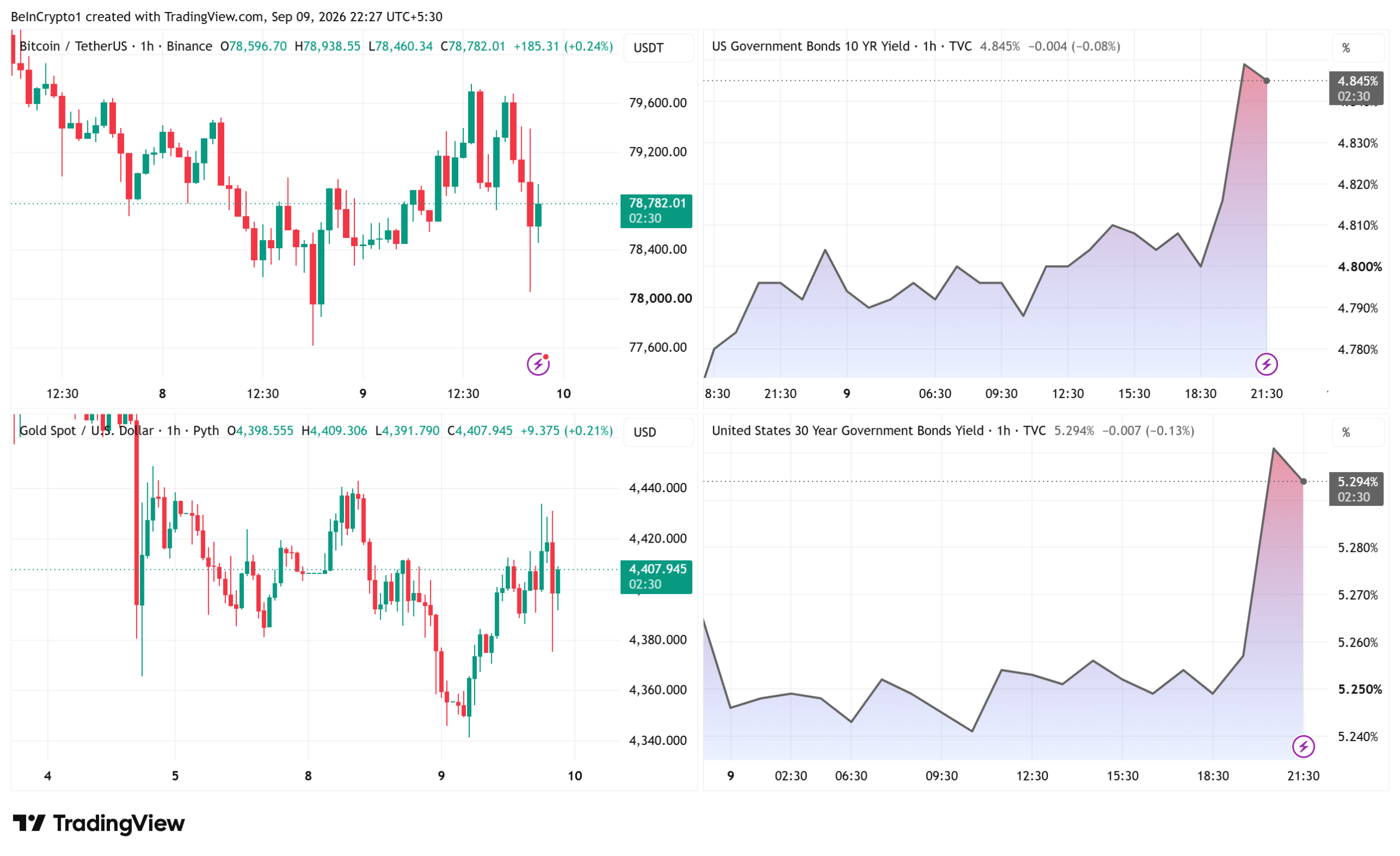
Bitcoin, Gold, and US Treasuries Performances. Source: TradingView

The US Treasury walked into the bond market on Wednesday with $6 billion. It was triple its usual size, and the biggest such offer in years. The market took one look and sold.

While yields were supposed to fall, they rose, because within hours, one bond manager had shrunk the whole plan down to a single sentence.

The Bond Market Was Not Impressed

Citing Mark Spindel, chief investment officer at Potomac River Capital, CNBC referred to 2008, when a Treasury secretary needed an act of Congress to turn markets around. Scott Bessent has no such firepower.

“Hank Paulson’s bazooka this is not,” said Spindel.

The treasury’s tool is a buyback, just as a company would normally repurchase its own shares. For the treasury, however, they use cash to lift older, hard-to-trade bonds off dealers’ books.

Advertisement

It pays down none of the $40 trillion national debt. It is not quantitative easing, where a central bank creates money to buy bonds. Washington funds it by selling more short-term IOUs. As that is the entire machine, the size was the story.

On August 19, Bessent promised to at least double the standard $2 billion operation. Traders began whispering about $8 billion, even $10 billion. He came back with $6 billion.

The Market Called the Bluff

The 10-year Treasury note hit 4.84%. The 30-year added five basis points to 5.307%, back through a line traders watch closely. A basis point is one hundredth of a percentage point.

Advertisement
Bitcoin, Gold, and US Treasuries Performances. Source: TradingView

Hard assets stayed cold, with the gold sitting near $4,407 an ounce. Bitcoin (BTC) dipped toward $78,000 as yields spiked, then crawled back to $79,084. Three weeks ago, the same announcement sent both flying.

Washington announced it was buying its own debt, and its debt got more expensive. Long-term bonds are already limping out of their worst decade since 1803.

BeInCrypto saw it coming. A week ago it reported Pantera Capital’s Dan Morehead calling the plan a bluff that had already backfired.

“Governments defending prices against fundamentals always lose. The only variable is how much they spend before conceding,” said Stanley Druckenmiller, who once mentored Bessent.

Thursday’s buying window lasts 20 minutes and shuts at 2 p.m. ET. If yields are still climbing once the $6 billion is spent, Druckenmiller’s line stops being an opinion.

The post US Treasury's $6 Billion Bond Buyback: Why Markets Didn't Buy the Hype appeared first on BeInCrypto.

Advertisement

Source link

Continue Reading

Crypto World

Coinmint CEO accused of misappropriating 448 BTC in lawsuit

Published

on

Coinmint CEO accused of misappropriating 448 BTC in lawsuit

An amended complaint filed by Mintvest Capital against Energy & Compute, LLC (formerly Coinmint) alleges that the firm’s chief exec, Ashton Soniat, misappropriated BTC from the firm’s mining operations.

It also broadly alleges securities fraud and Racketeer Influenced and Corrupt Organizations Act (RICO) offences.

Specifically, the lawsuit claims that “on each occasion when new machines were added, Mr. Soniat told investors that production started on a later date than it actually did.”

“During the gap periods — between the actual start up and the announced startup — Mr. Soniat redirected all BTC Coinmint produced to his personal BTC wallet.”

Advertisement

The lawsuit alleges that, in total, “Mr. Soniat stole… 448.7193 BTC.”

Read more: Bitcoin mining industry mostly uninterested in spam controversy

To increase his take, Soniat allegedly “extended these ‘testing’ periods for weeks or months, taking all proceeds that should have been distributed.”

The suit further alleges that Coinmint was unable to provide financial reporting to investors, a pattern it claims is related to a “systematic failure to maintain proper financial records” that “appears deliberate, designed to obscure self-dealing transactions and prevent outside oversight.”

Advertisement

Mintvest, an equity holder in Coinmint, claims that Coinmint “has generated profits exceeding $570 million” and argues its 18.2% equity holding means that it’s entitled to $104 million.

Read more: How major Bitcoin mining pools calculate pay-per-share

Furthermore, the suit alleges that when New York Digital Investment Group (NYDIG), another named defendant, acquired Coinmint, it “did not compensate Mintvest as the agreement and plan of merger provides.”

This would effectively mean that NYDIG was working to exclude Mintvest from its ownership stake in Coinmint.

Advertisement

Mintvest, in its prayer for relief, requests “compensatory damages of at least $104 million,” representing what it claims are withheld profits, as well as “compensatory damages of at least $47.1 million for the BTC stolen,” as well as other punitive and statutory damages.

This amended complaint is related to an earlier suit that had been dismissed without prejudice.

Coinmint has previously been engaged in other legal disputes, including a suit against Katena Computing and DX Corr related to a $150 million purchase of BTC mining rigs.

Protos has reached out to NYDIG for comment and will update this piece if we hear back.

Advertisement

Got a tip? Send us an email securely via Protos Leaks. For more informed news and investigations, follow us on XBluesky, and Google News, or subscribe to our YouTube channel.

Source link

Advertisement
Continue Reading

Crypto World

Bitcoin Avoids a Retest of $80,000 as Oil Returns Above $100 per Barrel

Published

on

Bitcoin Avoids a Retest of $80,000 as Oil Returns Above $100 per Barrel

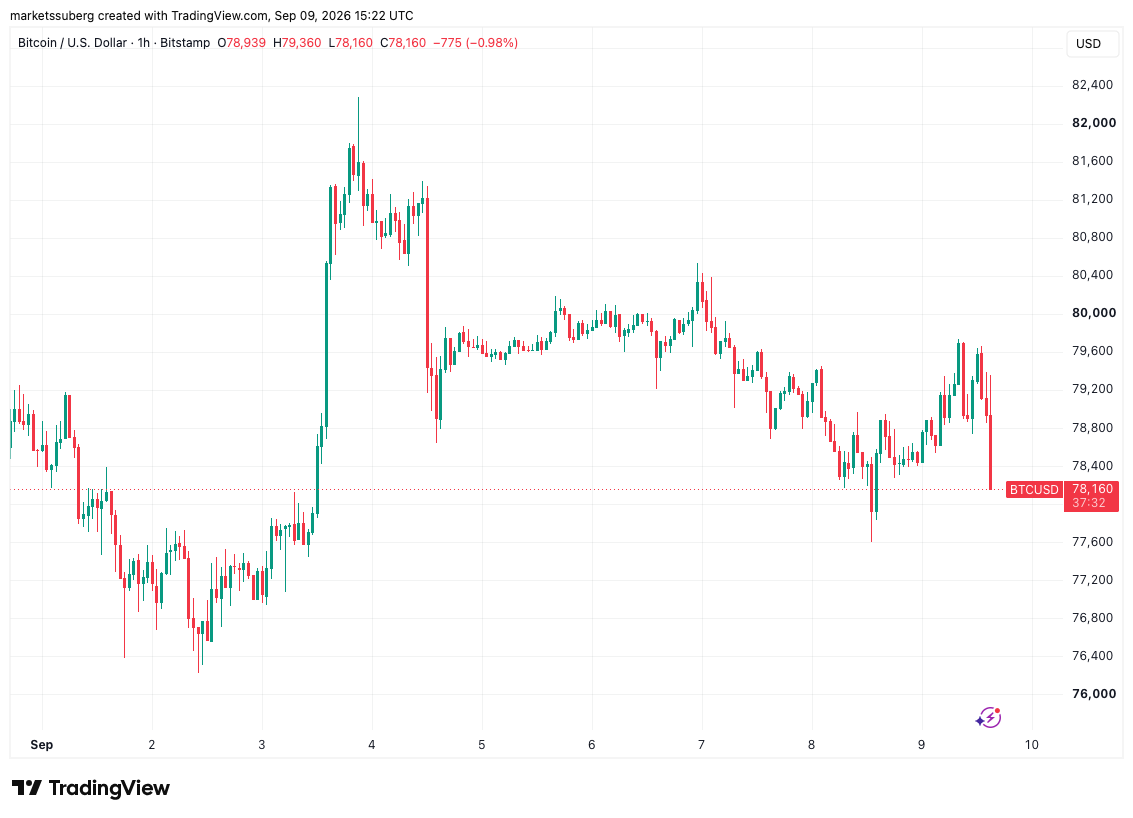
Bitcoin (BTC) struggled below $80,000 on Wednesday as attention refocused on the Japanese yen.

Key points:

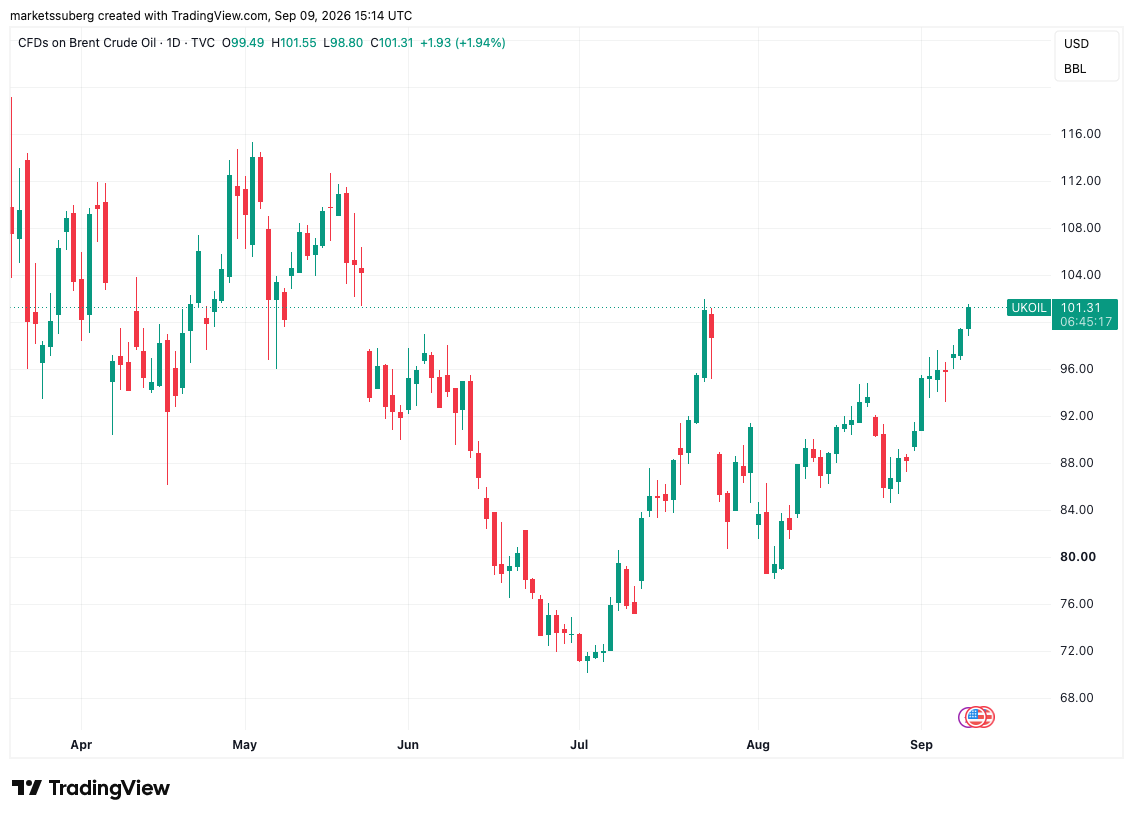
  • Bitcoin saw further macro headwinds as US-Iran strikes pushed Brent crude oil above $100 per barrel.
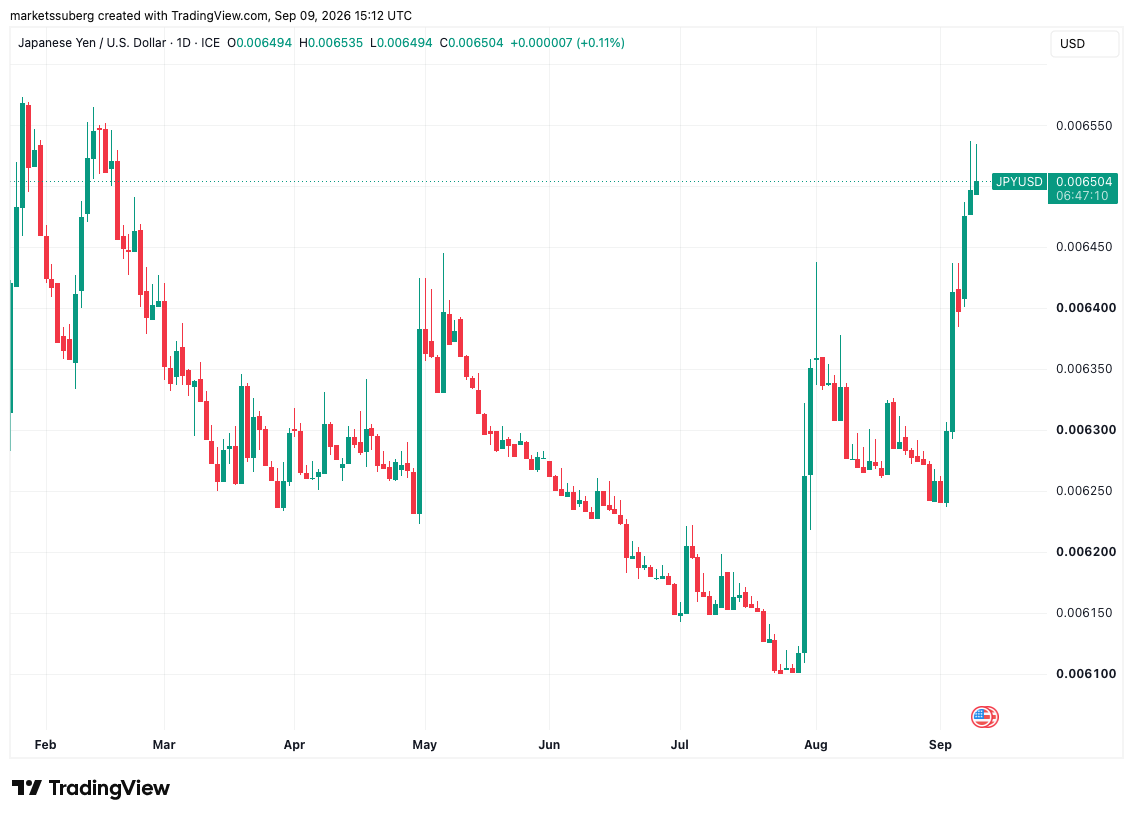
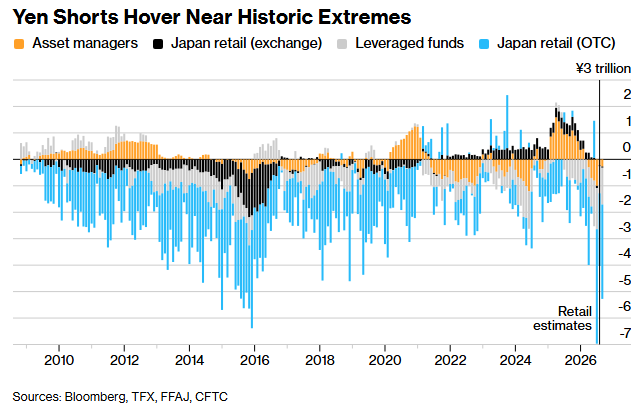
  • The Japanese yen continued to trade around 153 per dollar, its highest levels since February as yen shorts stayed near record highs.
  • US Treasury Secretary Scott Bessent hinted at further interventions in yen currency markets to come.

Bitcoin lacks momentum as Iran strikes sour risk-asset mood

Data from TradingView showed the local upside in the BTC/USD pair reversing as it attempted to revisit the $80,000 mark. BTC is currently down by around 0.4% on the day. 

BTC/USD one-hour chart. Source: Cointelegraph/TradingView

US stocks also drifted lower at the Wall Street open, fueled by fresh US strikes on Iranian oil tankers. The tensions helped send oil prices to new three-month highs, building on gains from the day prior

Advertisement

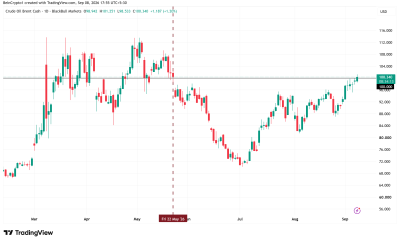
At the time of writing, WTI crude traded above $96 per barrel, while Brent crude surged above $101 per barrel for the first time since late July.

CFDs on Brent crude oil one-day chart. Source: Cointelegraph/TradingView

Traders also eyed fresh developments in the yen as Japan’s currency hit its highest levels against the dollar since February. It is currently at $0.0065, up 6.5% since the start of August.

JPY/USD one-day chart. Source: Cointelegraph/TradingView

Advertisement

Previously, Cointelegraph reported on repeated joint interventions in foreign exchange markets by Japan and the US, which resulted in the rapid strengthening. The yen’s gains continued despite speculation that Washington may keep Japan from selling US Treasuries as part of future interventions.

Yen short interest lingers near record highs

Citing data from Bloomberg on Wednesday, Barchart flagged record yen short positioning at the start of September, with the total hovering above 5 trillion yen. 

Related: Bitcoin SOPR metric sees longest profit run of 2026 as new analysis challenges bear market

Japanese yen short positioning. Source: Barchart on X.com

Advertisement

In subsequent commentary, Charu Chanana, chief investment strategist at Saxo, told Reuters that the yen’s continued strength would have implications for these shorts as part of an unwinding of the yen carry trade. The USD/JPY pair is key for liquidity conditions that could ultimately impact crypto markets.

“The carry trade is vulnerable because this unwind is happening before the BOJ has even delivered its expected hike,” she said. 

“Some yen shorts have already been cut, but positioning still looks sizeable, so further yen strength can turn a gradual reduction in leverage into a much faster, self-reinforcing unwind.”

The risk was exacerbated by the Bank of Japan’s anticipated 0.25% interest-rate hike at its next meeting on Sept. 28.

Advertisement

Last month, US Treasury Secretary Scott Bessent suggested that the door was open to future yen intervention operations. This week, he doubled down on those hints, appearing to dare short traders to bet against central banks.

“When we intervene with the Japanese yen, I have pretty good insight into what the Bank of Japan is going to do, what Japanese policymakers are going to do. I have asymmetric information. I am the house now,” he said in an event at Southern Methodist University in Texas on Tuesday, quoted by the Financial Times. 

Source link

Advertisement
Continue Reading

Crypto World

Is Your Step Count Too Low? Try Walking Faster

Published

on

Is Your Step Count Too Low? Try Walking Faster

You don’t need to take 10,000 steps a day to improve your health. Studies have shown that much smaller step counts can substantially reduce the risk of cardiovascular disease and death. Now, researchers have found that the intensity of your walk matters just as much, and that walking quickly—even for brief periods—lowers a person’s risk of death about as much as walking more slowly for a longer period of time. 

What’s the best step count and walking speed?

In this study, the researchers drew on data from participants in the UK Biobank, a long-term project that monitors the health of half a million people in the U.K. in hopes of uncovering the roots of disease. They aimed to fill a particular gap in the literature, says Borja del Poro Cruz, a professor at Universidad Europea de Madrid and an author of the study. “The vast majority of the body of evidence had looked at the volume of daily steps and health outcomes,” he says. “Few studies have isolated and looked at cadence.”

The team looked at participants’ step counts measured by wearable fitness trackers, how many steps they took per minute, and their likelihood of dying over the next few years. They uncovered a relationship: For people who walked fewer than 5,000 steps a day, keeping a quicker pace—about 100 steps a minute—meant a drop in their risk of death compared to people who walked the same number of steps more slowly. 

Advertisement

At the same time, people who walked more slowly but for longer—5,000-7,500 steps a day—saw a similar drop in their risk. 

This suggests that “someone who is below 5,000 steps per day, which is considered somewhat sedentary, might want to incorporate whatever they do in a more intense way,” del Poro Cruz says. “They can then maximize the benefits of what they do.” 

The results are not surprising, says Dr. Shaan Kurshid, a cardiac electrophysiologist at Massachusetts General Hospital who was not involved in the study, but they clarify the relationship between steps and exercise intensity in a way that may be useful to physicians guiding people toward healthier habits. “The steps concept is important because it can resonate with people” he says, “and so I think that improving our understanding of that metric and how to best use it is important.”

How can you tell if you’re walking fast enough?

Advertisement

It’s not always obvious. “If you say you’re supposed to get 2.5 hours a week of moderate-to-vigorous physical activity”—which is what U.S. federal guidelines recommend—“people then will naturally ask, ‘Well, what counts as moderate-to-vigorous activity?’” says Kurshid. It’s an “abstract concept.” 

Here’s one way to estimate it:  “If you go with someone and try to keep up a conversation, keeping up that conversation is not easy,” says del Poro Cruz. “Or, if you are by yourself and you are walking, if you try to sing a song, and you find that difficult, that means you are probably looking at 90-100 steps per minute, which is where we see the peak benefits.”

Source link

Advertisement
Continue Reading

Crypto World

Apple Stock Falls On iPhone 18 Launch

Published

on

Apple Stock Falls On iPhone 18 Launch

Consumer electronics giant Apple (AAPL) on Wednesday introduced a refreshed lineup of premium smartphones, the iPhone 18 Pro and Pro Max. But Apple stock slid. The company held its fall product launch event, dubbed “Surprise and shine,” at its Cupertino, Calif., headquarters. The event was the first to be led by new Chief Executive John Ternus, who replaced retiring CEO…

Copyright ©2026 Investor’s Business Daily, LLC. All rights reserved. 87990cbe856818d5eddac44c7b1cdeb8

Source link

Continue Reading

Crypto World

Kalshi has filed to launch gold and silver perps

Published

on

Kalshi valuation hits $22bn after $1bn Series F

Kalshi has filed to list two dollar-settled perpetual futures tied to gold and silver, extending its no-expiry contract lineup beyond 18 cryptocurrencies for eligible U.S. traders.

Summary

  • GOLDPERP and SILVERPERP are scheduled to begin trading on Sept. 9.
  • Both contracts use Pyth Network prices and settle in U.S. dollars.
  • Kalshi filed the products through the CFTC’s self-certification process.
  • The contracts will trade around the clock without fixed expiration dates.

Kalshi’s Sept. 9 regulatory filings with the Commodity Futures Trading Commission show that the company plans to list GOLDPERP and SILVERPERP through its registered derivatives exchange.

Under the proposed terms, each product would give traders exposure to changes in the relevant metal’s spot price without requiring delivery of physical gold or silver. Both contracts would settle in U.S. dollars and remain open indefinitely, according to the filings.

Advertisement

The company submitted the contracts under CFTC Regulation 40.2(a), which allows a designated contract market to certify that a new product follows the Commodity Exchange Act and the regulator’s rules. Unlike a formal approval proceeding, self-certification does not necessarily involve an affirmative vote by the commission on each contract.

Kalshi gold and silver perps will use Pyth prices

According to the contract terms, GOLDPERP will track the spot value of one troy ounce of gold in U.S. dollars. SILVERPERP will follow the corresponding U.S. dollar spot price for silver.

Kalshi identified Pyth Network as the price source for both products. Pyth publishes market data supplied by trading firms, exchanges, and financial institutions, which decentralized applications and trading platforms use to price assets.

Advertisement

Rather than ending on a set date, the contracts will use regular funding payments to keep their traded prices close to their reference markets. Depending on how a contract trades against its spot benchmark, traders holding long positions may pay traders holding short positions, or the payment may flow in the opposite direction.

The structure removes the need to move a position from an expiring futures contract into a later one. Traditional futures traders often conduct that process, known as rolling, when they want to maintain exposure beyond a contract’s settlement date.

In its filing, Kalshi said a perpetual structure could reduce rollover costs for market participants that keep long-running gold exposure. The company identified potential users, including financial institutions, refiners, bullion dealers, and companies that use the metal in their operations.

Because both products settle in cash, traders will not receive bars, coins, or other physical metal. The filings also state that contract holders cannot demand delivery from Kalshi when closing or settling a position.

Advertisement

Round-the-clock trading removes the usual expiry cycle

Under the submitted specifications, GOLDPERP and SILVERPERP will operate 24 hours a day and seven days a week. Kalshi’s proposed schedule includes weekends and holidays, when major U.S. commodity futures markets are normally closed.

The filed schedule goes beyond an earlier plan for 24-hour trading on five days each week. Around-the-clock access would allow eligible customers to adjust positions while standard U.S. metals venues are closed, although liquidity and price differences may vary outside regular market hours.

Perpetual contracts also introduce costs and risks that do not apply in the same way to unleveraged ownership of physical metal. Kalshi’s product design uses funding payments, while leveraged positions may face liquidation if the market moves far enough against the trader.

For U.S. investors, the contracts offer regulated derivatives exposure without requiring ownership of gold, silver or shares in a metal-backed exchange-traded fund. They also provide a different structure from listed options and dated futures, since neither contract requires the holder to select a monthly or quarterly expiration.

Advertisement

Kalshi said its silver filing accounts for conditions in the physical market, including supply deficits reported over several years and constrained availability during 2026. Since SILVERPERP cannot be converted into physical silver, the company said the contract would not permit holders to demand metal or place delivery pressure on its reference market.

Kalshi has expanded its perpetual futures lineup

The metal filings follow Kalshi’s rapid addition of cryptocurrency perpetuals. On Sept. 4, the company added five crypto perps tied to BNB, Cardano, Worldcoin, Aave, and Venice Token.

According to the platform’s product information, the five contracts are margined and settled in U.S. dollars, permit long and short positions, and carry different leverage limits. Maximum leverage reaches approximately 4.5 times for BNB and 1.9 times for Venice Token.

Including Bitcoin, Kalshi now lists perpetual futures connected to 18 cryptocurrencies. Its existing products include Ether, XRP, Solana, Hyperliquid, and Zcash, allowing users to trade their prices without holding the underlying tokens.

Advertisement

In June, the company also introduced an XRP perpetual after filing it under the same self-certification rule. The XRP contract filing specified a cash-settled product with no maturity date and a reference rate supplied by CME CF Benchmarks.

Kalshi took a different route with its first Bitcoin perpetual. The CFTC approved BTCPERP in May following a formal review, creating a regulated path for eligible U.S. traders to access a product that had previously been associated mainly with offshore cryptocurrency exchanges.

By June, Kalshi’s perpetual futures had generated more than $5.5 billion in trading volume, according to company data cited in previous reporting. Later that month, Cboe Global Markets was considering whether to convert its long-dated Bitcoin and Ether futures into perpetual products after Kalshi’s contracts recorded more than $8.5 billion in volume.

CME’s lawsuit challenges the CFTC’s treatment of perps

Kalshi’s expansion into metal-linked contracts comes while the legal treatment of U.S. perpetual futures remains contested. CME Group sued the CFTC in the U.S. District Court for the District of Columbia on June 18, challenging the regulator’s decision to treat Kalshi’s Bitcoin perpetual as a futures contract.

Advertisement

CME argued that BTCPERP should be regulated as a swap, which would place it under a different legal framework. The exchange operator also claimed that the CFTC’s decision created a competitive disadvantage for established futures venues.

In September, the regulator sought the case’s dismissal, arguing that CME had not shown a concrete injury required to establish standing. The CFTC said CME could seek to list comparable perpetual futures through the same regulatory framework available to Kalshi.

The regulator also cited CME’s Bitcoin and Ether futures activity, arguing that the exchange’s volumes in June and August exceeded their May levels. According to the CFTC’s motion, the figures did not support CME’s claim that Kalshi’s Bitcoin contract had caused a measurable competitive loss.

CME may contest the regulator’s position in subsequent filings. The federal court has not ruled on the dismissal request or decided whether cryptocurrency perpetuals should be legally classified as futures or swaps.

Advertisement

Source link

Continue Reading

Trending

Copyright © 2025