

Crypto World
Australia risks missing out on $17B crypto boom, researchers warn

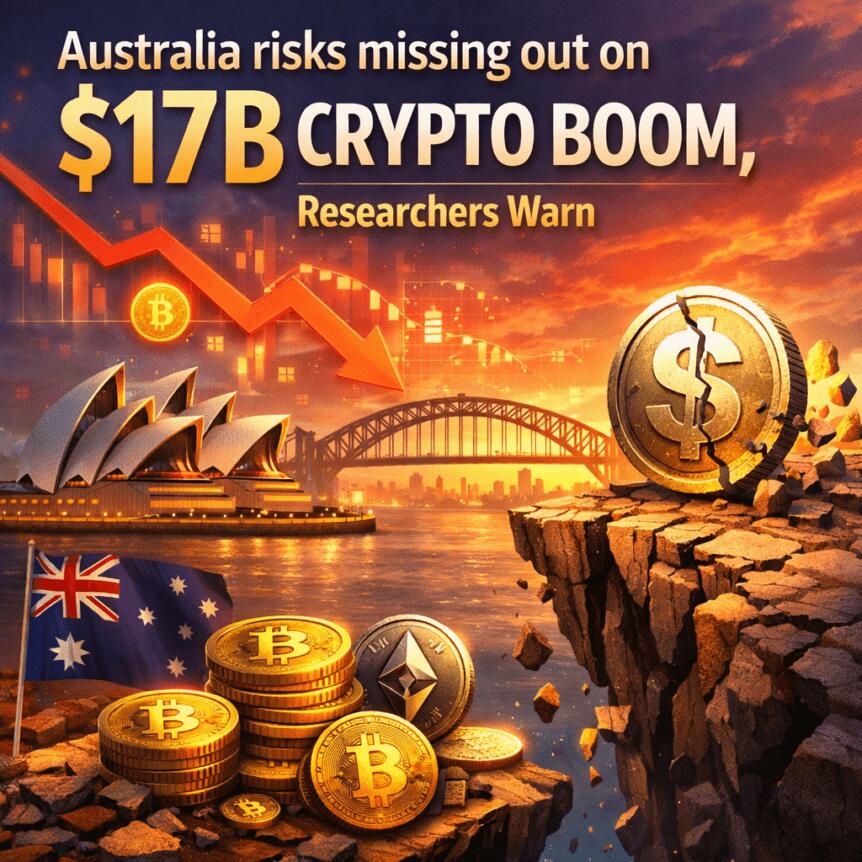
Australia could unlock 24 billion Australian dollars ($17 billion) annually from advances in tokenized markets and digital assets, but only if lawmakers move forward with regulation. A new study by the Digital Finance Cooperative Research Centre (DFCRC) outlines regulatory uncertainty, coordination hurdles, and a limited pathway for pilots as the primary constraints. The research argues that a well-designed sandbox for testing tokenized financial market use cases could catalyze ongoing collaboration between regulators and industry players, help refine licensing frameworks, and accelerate real-world adoption of tokenized rails for markets, payments, and collateral management.
Key takeaways
- The DFCRC projects up to A$24 billion in annual economic gains from tokenized markets and digital finance if regulatory frameworks are clear and supportive.
- A dedicated sandbox for testing tokenized financial market use cases is recommended to foster regulator–industry collaboration and to mature licensing for institutional participants.
- Tokenized instruments, including government bonds and CBDCs, could underpin the growth of tokenized markets, enabling more efficient collateralized lending, settlement, and cross-border payments.
- Without a more predictable regulatory regime, the projected gains could shrink significantly; the study cautions that gains depend heavily on the pace and scope of policy reform.
- The report notes the project was launched in collaboration with the Digital Economy Council of Australia and financed by OKX, highlighting industry interest and the potential role of private partners in advancing a regulatory-ahead regime.
Tickers mentioned:
Sentiment: Bearish
Market context: The findings reflect a broader global push toward regulated tokenized finance, with sandbox approaches and pilot programs shaping how markets, settlements, and collateral management could evolve as liquidity and interoperability improve across digital assets.
Why it matters
The Australia study frames tokenization not merely as a technology upgrade but as a foundational shift in how capital markets, payments, and asset ownership operate. By linking regulatory clarity with technical experimentation, the DFCRC argues that tokenized markets could unlock liquidity that today remains constrained by legacy infrastructures and custodial frictions. In practical terms, tokenization could widen investor access to a broader set of instruments, improve market depth, and facilitate faster settlement cycles—benefits that, in turn, could widen the pool of available capital and deepen secondary markets.
More specifically, tokenized money—encompassing stablecoins and central bank digital currencies (CBDCs)—could streamline cross-border and domestic transactions by diminishing reliance on traditional correspondent banking rails, which can carry high fees. The DFCRC notes that tokenized rails promise greater transparency, traceability, and resiliency, with smart contracts automating processes such as collateral management, margining, and settlement. In this vision, assets become not only more liquid but more programmable, enabling new forms of automated lending, repo arrangements, and invoice financing that could reduce transaction costs and expand financing options for businesses and institutions alike.
Crucially, the report emphasizes the distribution of gains across three core areas—collateralized lending, repo, and invoice financing—where tokenized rails could yield the most measurable improvements. In such ecosystems, smart contracts handle collateral evaluation, threshold triggers, and settlement on a continuous basis, reducing counterparty risk and improving capital efficiency. If regulators provide a clear, interoperable framework, these gains could translate into tangible improvements for the broader economy, from faster settlement times to lower financing costs for infrastructure projects and small-to-medium enterprises.
The authors acknowledge that projected gains are contingent on regulatory unfoldings. The report highlights that, absent substantial regulatory reform, Australia could see far more modest economic benefits. If the current trajectory persists, DFCRC estimates that crypto-related economic gains may plateau at around A$1 billion by 2030, well short of the aspirational A$24 billion. Kate Cooper, chief executive of the crypto exchange OKX, underscored this view, stressing that robust regulation is a prerequisite for material gains, as uncertain rules can choke investor confidence and slow the deployment of tokenized services. The media release accompanying the study reiterates that the most significant upside emerges from well-defined licenses and infrastructure built to institutional standards. For readers seeking the full economic analysis, the DFCRC Economic Impact Report is available here: https://dfcrc.s3.ap-southeast-2.amazonaws.com/260303_DFCRC_Economic+Impact+Report_V7_Single.pdf.
The discussion sits within a broader international context where policymakers are balancing innovation with consumer protection, market integrity, and systemic risk concerns. While Australia contemplates a regulatory path, the underlying message is consistent with global trends: for tokenized markets to scale, regulators and industry participants must co-create frameworks that reduce friction without sacrificing safeguards. The DFCRC’s partnership with the Digital Economy Council of Australia and its funding from OKX signal both a public and private appetite for experimentation—paired with a clear-eyed recognition that policy design will ultimately determine the speed and scale of adoption. The study’s emphasis on three pillar areas also resonates with other research suggesting that tokenized collateral and automated settlement can transform capital markets by unlocking liquidity and reducing operational risk.
As the authors point out, the estimated gains could be higher or lower depending on regulatory outcomes, and the direction of policy evolution will shape both the pace and the geographic footprint of any rollout. The report’s cautions aside, the proposed sandbox model offers a concrete pathway to de-risk experimentation, offer a platform for pilots, and create license-ready infrastructure that could invite institutional participants to participate in tokenized markets at scale. In the near term, observers will watch how regulators respond to proposals for pilot projects, licensing regimes, and pilot-friendly capital-raising mechanisms that could accelerate the transition from theory to practice in tokenized finance. The collaboration behind the report reflects a broader industry push for practical regulatory reform that can foster innovation while preserving market integrity.
References to the DFCRC and its associated documents appear in links within this article, including the economic impact report and related materials that discuss tokenization and CBDCs in the Australian context. The broader ecosystem benefits described by the DFCRC align with ongoing discussions about how tokenized assets could reshape payments, lending, and collateral management, underscoring the importance of clear, institutionally aligned frameworks as Australia contemplates the next era of digital finance.
What to watch next
- Regulatory progress in Australia: any new guidelines or licensing reforms that enable sandbox participation by banks and non-bank financial institutions.
- Launch of tokenized-government-bond pilots or wholesale securities pilots within a sandbox framework.
- Deployment and testing of CBDCs in controlled environments to support settlement, collateralization, and cross-border flows.
- Announcements of further collaborations between regulators, industry groups, and crypto firms to evolve licensing standards for institutional players.
Sources & verification
- Digital Finance Cooperative Research Centre Economic Impact Report PDF: https://dfcrc.s3.ap-southeast-2.amazonaws.com/260303_DFCRC_Economic+Impact+Report_V7_Single.pdf
- OKX media release on the DFCRC economic impact collaboration: https://dfcrc.com.au/wp-content/uploads/2026/03/Economic-impact-report-media-release-digital.pdf
- Tokenization explained overview: https://cointelegraph.com/explained/tokenization-explained
- CBDCs overview for beginners: https://cointelegraph.com/learn/articles/what-are-cbdcs-a-beginners-guide-to-central-bank-digital-currencies
- Stablecoins market cap and growth data: https://cointelegraph.com/news/stablecoins-300-billion-market-cap-47-growth-ytd
- Additional reference: Australian crypto industry perspectives and related policy discussions: https://cointelegraph.com/news/australia-crypto-adoption-regulation-smsf-growth-2026
Unlocking Australia’s $24 Billion Digital Finance Opportunity
The DFCRC’s analysis positions tokenization as a potential lever for widening participation in capital markets and for improving the efficiency of financial plumbing through programmable assets. A well-structured sandbox could serve as a bridge between high-level policy goals and the day-to-day realities of banks, fintechs, and asset managers exploring tokenized markets. By enabling controlled experiments with tokenized government bonds, collateralized lending, and cross-border settlement, Australia could build a scalable blueprint for modernizing its financial infrastructure while maintaining robust investor protections. The study emphasizes that gains are not just about faster settlements or better liquidity; they hinge on a broader regulatory architecture that supports innovation without compromising financial stability. If policymakers can align on licensing standards, interoperability, and risk controls, the country could position itself as a measured, forward-looking hub for digital finance at the regional level and beyond.



Ark Invest has added more shares of Coinbase and Robinhood across its exchange-traded funds on Tuesday as crypto equities dipped in response to geopolitical concerns.
Summary
- Ark Invest bought 22,452 Coinbase shares and 158,587 Robinhood shares across its ARKK, ARKW and ARKF exchange-traded funds.
- Coinbase shares were down 1.55% while Robinhood shares had dropped over 3.4%.
The Cathie Wood-led firm has acquired a total of 22,452 shares in Coinbase through its ARKK, ARKW, and ARKF exchange-traded funds. The total investment amounted to a little over $4 million.
On top of this, the company picked up 158,587 shares of Robinhood, with the investment valued at $12.06 million based on the stock’s March 2 closing price of $76.07.
Coinbase shares were down 1.55%, while Robinhood stock had also dipped by over 3.4%. Crypto-linked equities have been pressured over the past few sessions as shareholders reacted to growing concerns surrounding the U.S.-Iran war.
Major cryptos like Bitcoin and Ethereum have also felt the pressure of the recent selloff and remain suppressed below key resistance levels. Recent breakout attempts for both assets have failed as capital remains sidelined.
Ark Invest, however, has capitalized on these recent dips by continually rebalancing its portfolio and, on many occasions, increasing its exposure to several crypto-facing companies.
As previously reported by crypto.news, the company added over $32 million worth of Robinhood shares across two of its exchange-traded funds earlier this month. Around the same time, the company also acquired positions in Coinbase, alongside crypto exchange Bullish and stablecoin issuer Circle.
After the latest purchase, Coinbase and Robinhood are the company’s sixth and seventh-largest holdings within its ARKK fund as of March 4. Meanwhile Robhinhood stands as the fifth-largest holding within the ARKW fund, and Coinbase stands at the eighth position.
Ark’s investment strategy limits any individual holding to about 10% of a fund’s portfolio. Coinbase and Robinhood stocks currently account for between 3% and 6% across its ETFs.
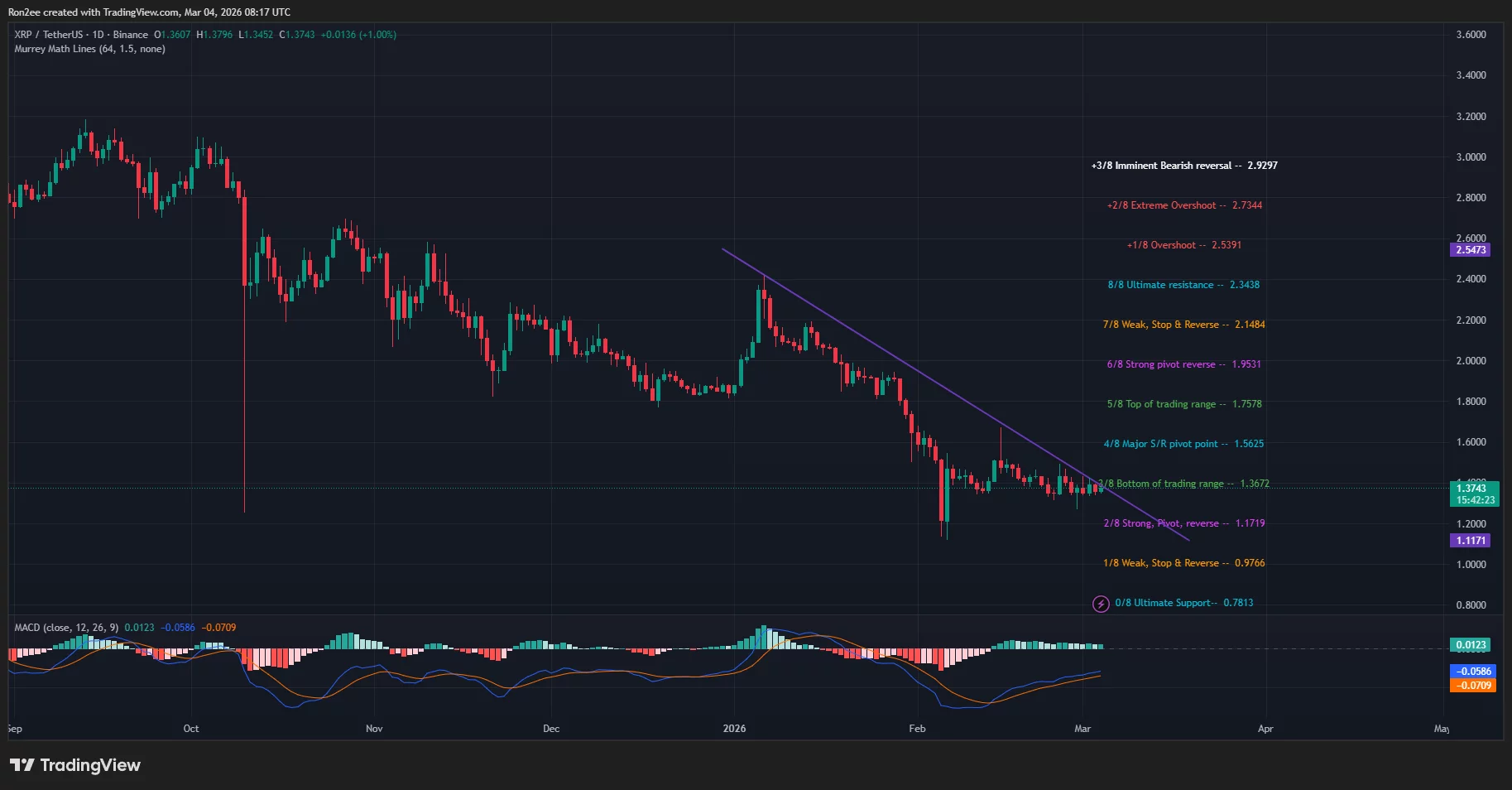
XRP price is close to confirming a breakout from a multi-week descending trendline that could potentially kickstart an uptrend over the coming sessions.
Summary
- XRP price has fallen 43% from its yearly high amid a sector-wide downturn.
- XRP is close to breaking above a descending trendline resistance on the daily chart.
XRP (XRP) price has dropped nearly 17% from mid-February and nearly 43% from its year-to-date high of $2.39.
XRP has mirrored Bitcoin’s recent move lower, as the bellwether slipped beneath several key support levels while investor appetite for risk assets remained subdued amid rising macroeconomic and geopolitical uncertainty.
XRP price has also been in a downtrend as funding rates softened, while the forced unwinding of leveraged long positions accelerated the drop beyond what spot selling alone would have caused.
The lack of institutional inflows since the beginning of this year also played a part in dampening investor demand for the token this year. SoSoValue data shows that the U.S. spot XRP ETFs drew in $88 million over the past three months, far under the $1.16 billion recorded in the November to December period.
On the daily chart, XRP price is close to breaking out from a descending trendline that has been acting as a dynamic resistance level since early January. A successful breakout from the pattern has historically been followed by significant bullish momentum.
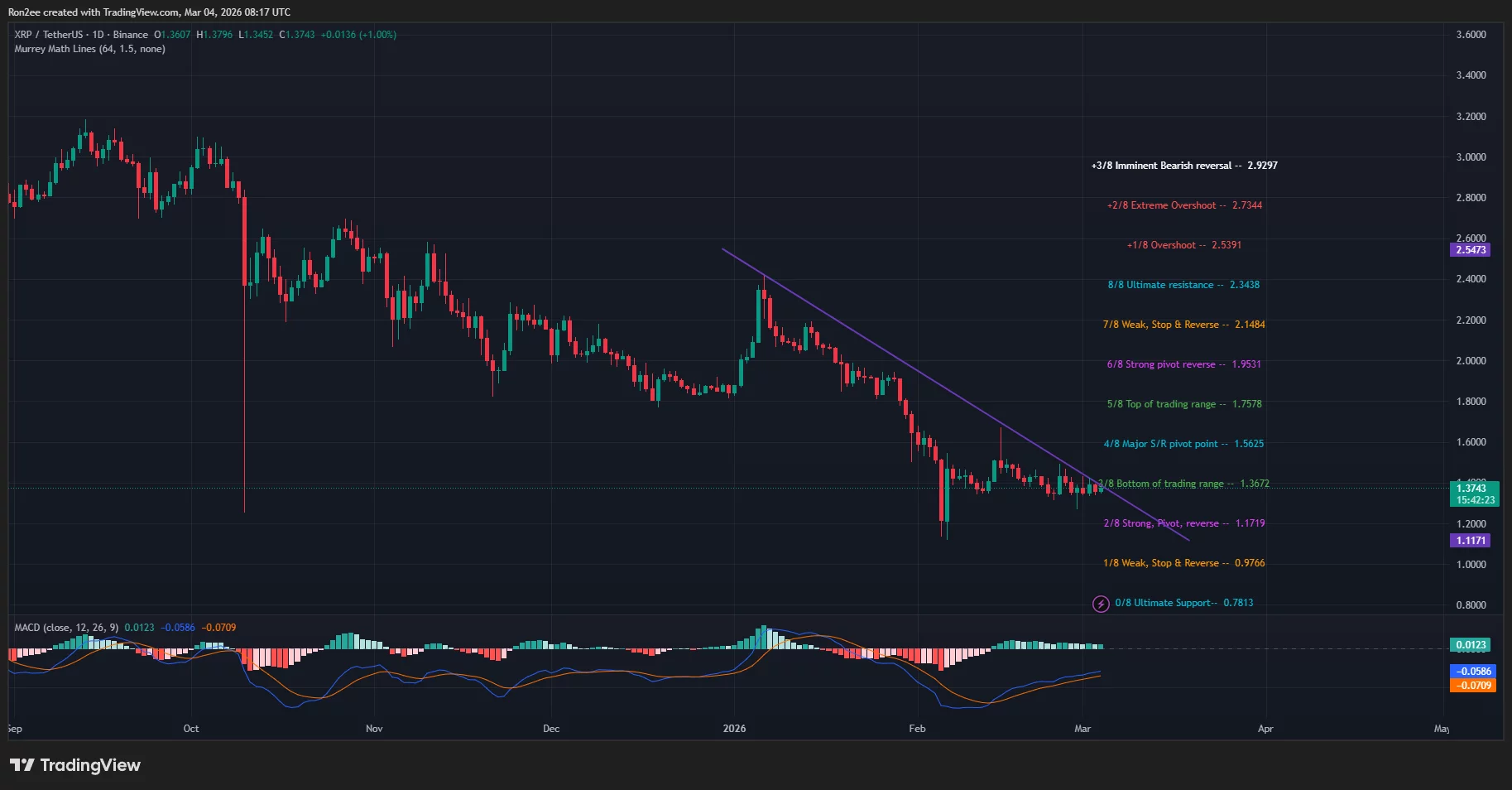
At press time, XRP price was trading at $1.36, close to breaking out of the pattern. Notably, $1.36 also marks the bottom of the trading range in Murrey Math lines. The line is considered a key support level for price reversals.
A breakout from this key psychological level could trigger a sharp rally to $1.75, where the top of the trading range for Murrey lines lies, or even to the strong pivot reverse point at $1.95.
On the contrary, failure to break the resistance could extend the downtrend over the coming weeks, potentially towards the strong pivot reverse of the Murrey lines at $1.17, where bulls could look to re-establish a floor.
Nevertheless, concerns tied to the situation in the Middle East remain a key factor weighing on risk appetite at the moment. Although the volatility seen over the weekend has eased somewhat over the past 48 hours, traders are still likely to stay cautious until clearer signs of de-escalation begin to emerge.
Disclosure: This article does not represent investment advice. The content and materials featured on this page are for educational purposes only.


The US military strike on Iran over the weekend intensified global tensions and investor anxiety. Yet, Matt Hougan, Chief Investment Officer at Bitwise, stated that it also highlighted the important role of crypto and on-chain markets.
With major stock exchanges closed, on-chain markets stepped in as the primary venue for global price discovery.
US Strike on Iran Exposed a Structural Gap That Only Crypto Markets Could Fill
In a recent memo titled “The Weekend That Changed Finance,” Hougan noted that when President Trump announced a military strike on Iran at 2:30 a.m. ET on Sunday, global markets were closed. Stocks, futures, forex, and exchanges across Europe and Asia had all gone dark for the weekend.
The only traditional markets still running were small Middle Eastern exchanges in Saudi Arabia and Qatar. Hougan suggested that on-chain markets were the only venues that responded in real time. Thus, they filled a structural void left by closed traditional exchanges.
“In years past, if a major geopolitical shock hit on a Sunday morning, investors would wait until the U.S. futures markets opened at 6 p.m. ET on Sunday to find out what the impact would be. But as this weekend showed, they now have an alternative: They can turn to crypto-based rails, which trade 24/7/365, globally. And this weekend, they did,” he said.
BeInCrypto also reported that the impact of the attacks was quickly evident in the crypto market, with Bitcoin (BTC) dropping on the news. According to Hougan, for most of that Sunday, “on-chain finance was the center of the financial world.”
He noted that Hyperliquid, a decentralized perpetual exchange, became a “focus.” Hyperliquid’s HIP-3 decentralized exchanges allowed traders to trade synthetic perpetual futures contracts tied to traditional assets.
BeInCrypto reported that HIP-3’s open interest exceeded $1 billion. Overall, the platform saw over $11.5 billion in trading volume across Saturday and Sunday, according to DeFiLlama data.
Follow us on X to get the latest news as it happens
Meanwhile, tokenized gold also drew a rush of investor interest. Tether’s XAUT logged more than $300 million in 24-hour trading volume as demand spiked. At the same time, activity on Prediction markets like Kalshi and Polymarket also surged.
“Sunday’s attacks put the spotlight on markets that never close. Don’t expect traders to forget it,” Hougan remarked.”It was the first time I remember crypto-enabled markets being ‘the market,’ full stop.”
The executive also shared that the weekend’s activity has prompted him to lower his projection of when finance would move on-chain.
“I thought that crypto-enabled markets would grow up along the edges—that, for the next 5-10 years, they would mostly serve crypto natives and others who don’t fit cleanly into the traditional financial system…The shift to onchain finance is inevitable. After this weekend, I’m convinced that shift is coming sooner than any of us had imagined,” he mentioned.
Hougan, in his analysis, also wrote that hedge funds, banks, or any other investors must now adapt to compete in global, real-time markets.
“If you are a hedge fund, bank, or any other investor who wants to trade competitively, you no longer have a choice: You have to set up a stablecoin wallet and learn how to trade on Hyperliquid. You need to understand XAUT. You need to read about tokenized stocks. Because even if you don’t, everyone else will,” he claimed.
Thus, the weekend of the US-Iran strikes showed that always-on financial markets may be moving from the margins to the mainstream, and investors are now paying attention.
The Core Team also indicated that the next big step should be completed by PiDay.
Just a few weeks after going to protocol version 19.6, the Core Team has announced the completion of the subsequent upgrade, which is now one step away from v20.
Aside from going into detail on what those Pi updates might indicate for the community, we will check the latest price action from the underlying token in this article.
V19.9 Is Here
CryptoPotato reported on February 21 that the protocol v19.6 migration was successfully completed, which meant that v19.9 is the last one left before v20. Hours ago, the team took it to X to indicate that the 19.9 migration is officially completed as well, and all eyes have now turned to v20.2. According to the team, it could be done by March 14 – the day known as PiDay in the Pi Network community.
Network Update: Protocol v19.9 migration successfully completed. Next up is v20.2 — Aiming to complete before Pi Day 2026. Node operators should make sure they’re upgraded and stay tuned for further instructions: https://t.co/mnbwVzhaD9
— Pi Network (@PiCoreTeam) March 4, 2026
As with all previous updates on the protocol front, the team reminded that all node operators have to ensure they have upgraded to the current version; otherwise, they risk being disconnected from the network.
The explanatory blog post from the team noted once again that Pi Nodes are the “fourth role” in the Pi ecosystem. They have to run on laptops and desktops instead of mobile phones. While there are some similarities with other blockchain networks, such as having the same responsibilities in terms of validating transactions, there are also several key differences:
“Unlike most other crypto projects, the Pi Node will continue to follow the philosophy of user-centric design. Instead of requiring deep technical knowledge to set up a node, everyday people will be able to do that by installing a desktop application on their computers. Through this computer application, Pioneers can switch the node software on/off to make their devices available/unavailable for serving as a node.”
PI Price Update
After bottoming out at $0.1312 on February 11, which became the latest all-time low, Pi Network’s native token began a strong rebound that drove it to over $0.20 at one point days later. However, it was stopped there, and the market volatility brought it south to under $0.16 by the end of the month.
You may also like:
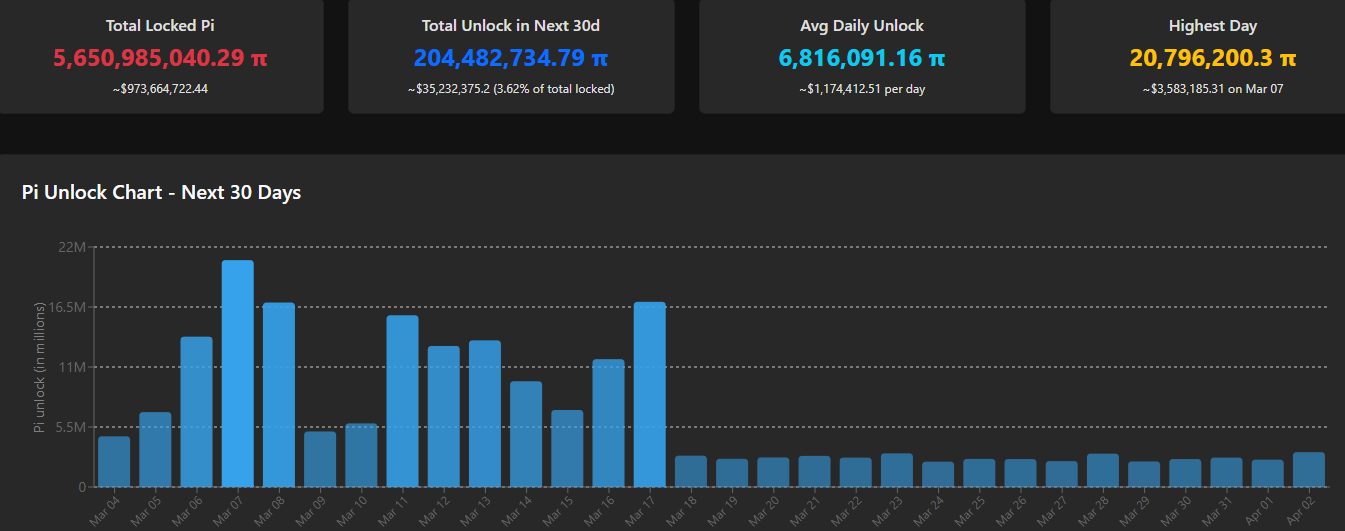
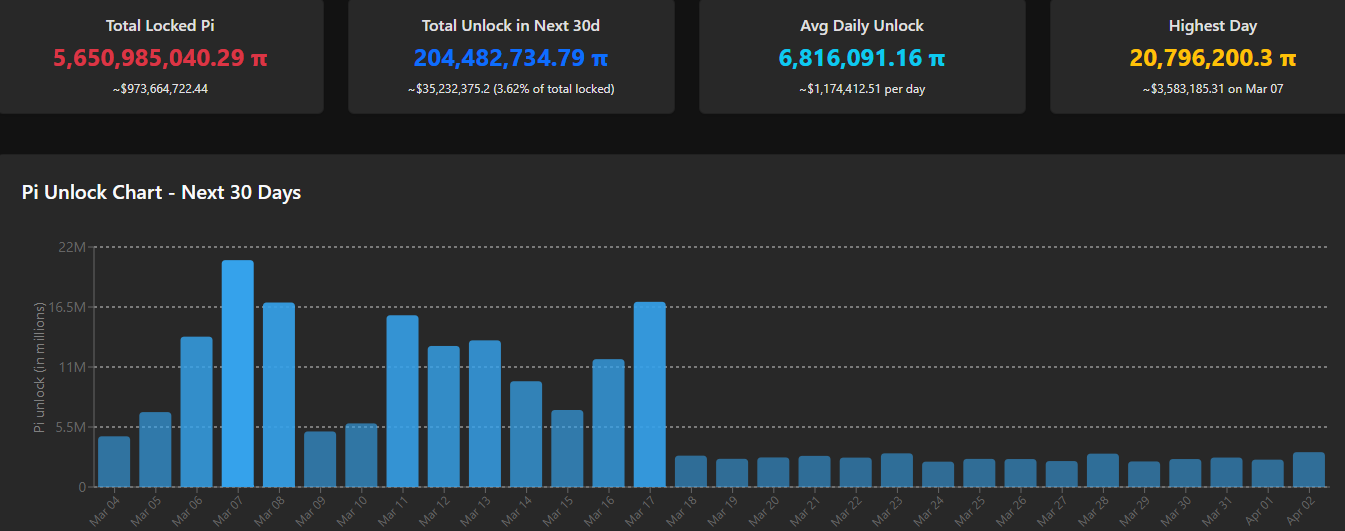
Nevertheless, it reacted well and now sits above $0.172, which means a 12% monthly increase. PiScan data shows a somewhat worrying trend for the next couple of weeks in terms of daily token unlocks. Although the average number is at 6.8 million for the next month, there are a few days with over 15 million. March 7 will see the most unlocks, with almost 21 million tokens set to be released.
These unlocks do not guarantee sell-offs, but increase the chances for a price correction, as many investors have been waiting for years for their assets.
Binance Free $600 (CryptoPotato Exclusive): Use this link to register a new account and receive $600 exclusive welcome offer on Binance (full details).
LIMITED OFFER for CryptoPotato readers at Bybit: Use this link to register and open a $500 FREE position on any coin!
Disclaimer: Information found on CryptoPotato is those of writers quoted. It does not represent the opinions of CryptoPotato on whether to buy, sell, or hold any investments. You are advised to conduct your own research before making any investment decisions. Use provided information at your own risk. See Disclaimer for more information.


South Korean police have arrested a series of individuals believed to be acting as hired agents committing what authorities describe as “private revenge” attacks, which have involved vandalism and threatening behavior directed at private residences.
Summary
- Multiple suspects in “private revenge” vandalism have been arrested by police in Gyeonggi Province.
- Investigators say the suspects were paid in cryptocurrency and acted on instructions via Telegram.
- Police are pursuing higher-level coordinators as part of the ongoing investigation.
South Korean police arrest agents in series of “private revenge” vandalism cases
According to reports, the most recent arrest was carried out on March 1 by the Suwon District Court, which issued a warrant for a man in his 20s identified only as Im on charges of property damage and criminal trespass.
Prosecutors allege that on the evening of February 22, the suspect entered an apartment building in Dongtan New City, Gyeonggi Province, where he allegedly sprayed red lacquer on the front door of a resident’s home and scattered trash on the floor.
Police say the suspect also distributed dozens of leaflets defaming the alleged victim and broadcasted excrement at the scene.
Police say they are pursuing leads on the person or network believed to have instructed the group through the encrypted messaging app Telegram, suggesting an organized effort behind the vandalism. All of the suspects arrested so far reportedly told investigators that they were paid between 500,000 and 1,000,000 won (about $380 – $760) in cryptocurrency for carrying out the acts.
Earlier arrests include another man in his 20s detained after entering a multi-family home in Sanbon-dong, Gunpo City on February 24 and spraying the front door with lacquer while leaving threatening materials.
Prosecutors said the suspect’s behavior and materials suggested coordination with others giving instructions.
Authorities are also reviewing a December incident in Pyeongtaek involving similar criminal behavior. Police have linked that case and the recent ones to overlapping methods and are continuing to investigate possible connections and higher-level coordinators.
Officials say the crimes illustrate how social media and encrypted platforms can be misused to organize and incentivize harassment, and they have pledged to track down those orchestrating the campaign.
Ethereum (ETH) has traded sideways around $2,000 since the beginning of the year. This price action has strengthened accumulation sentiment and encouraged investors to store assets off exchanges. The latest data shows multiple new records in ETH withdrawals, reflecting investor confidence in the asset.
Meanwhile, Ethereum co-founder Vitalik Buterin has called for building Ethereum into a comprehensive sanctuary technology ecosystem amid rising geopolitical instability.
Investors Withdraw Over 31 Million ETH From Exchanges in the Past Month
According to a report from Lookonchain, the wallet address gammafund.eth withdrew 9,000 ETH ($17.86 million) from Binance today.
Earlier, on March 2, BitMine executed a significant acquisition. The firm purchased 50,992.8 ETH, increasing its total holdings to 3.71% of Ethereum’s total supply.
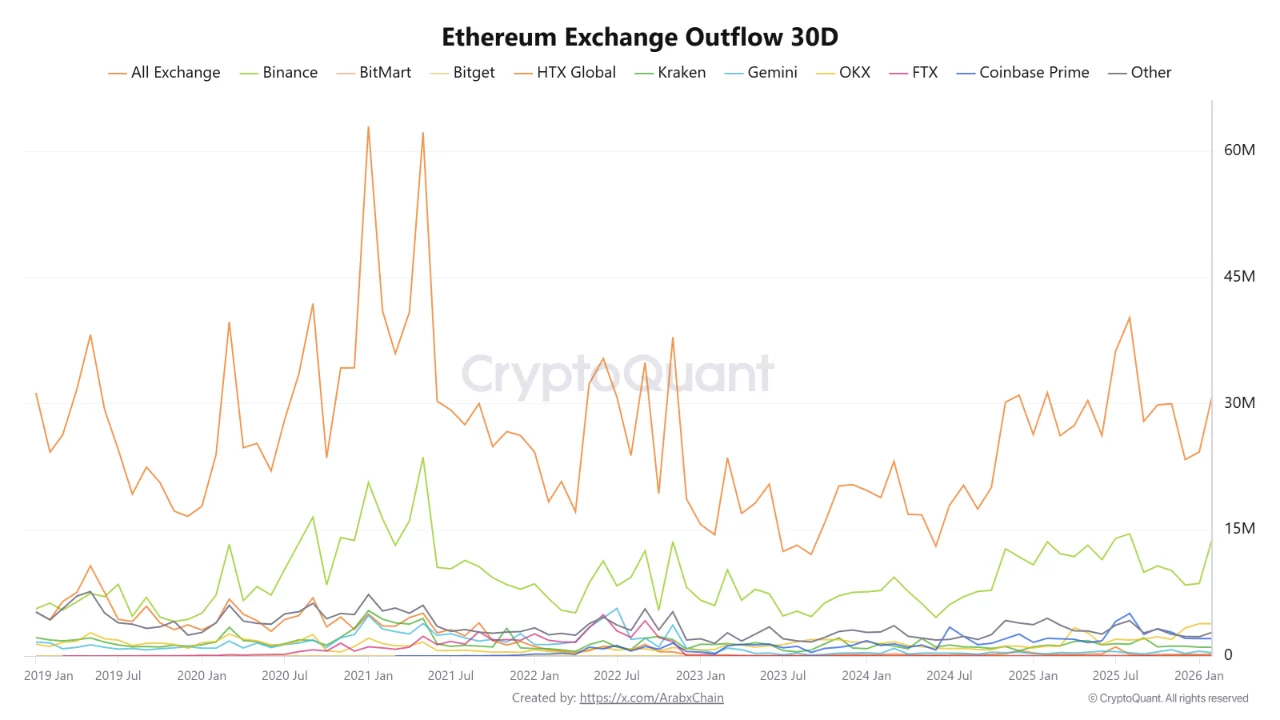
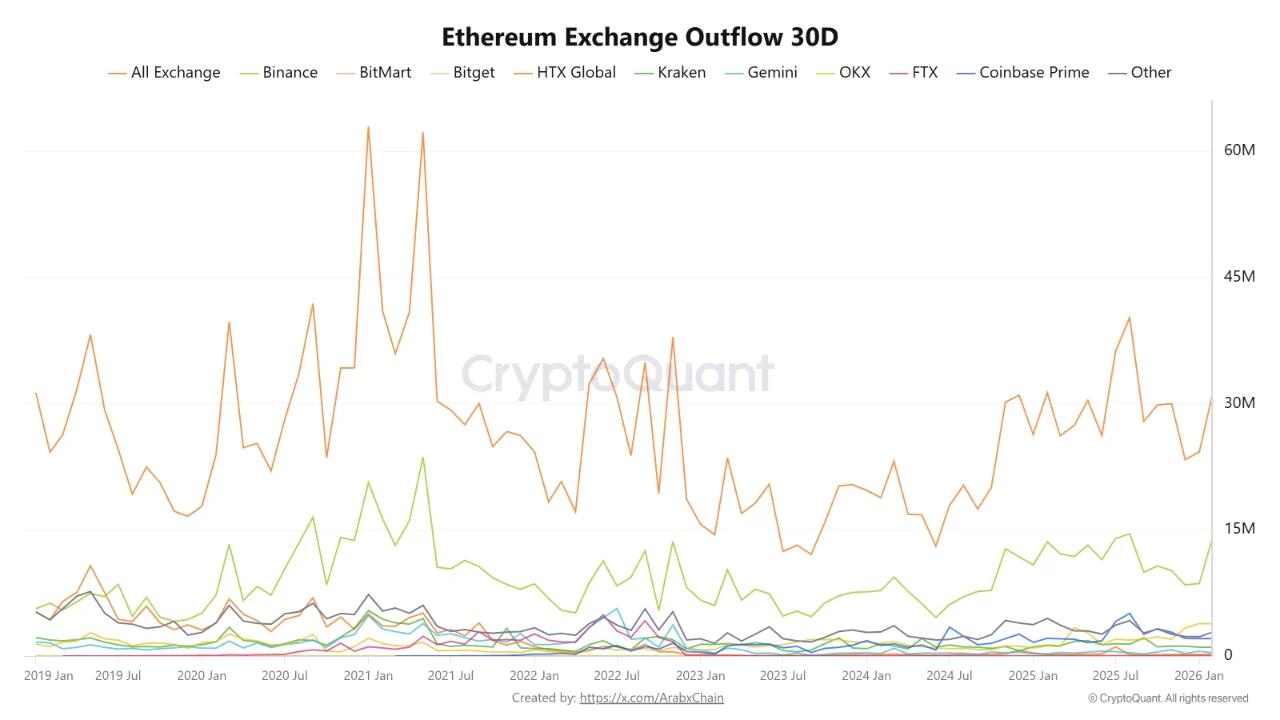
Data from CryptoQuant shows that ETH withdrawals from exchanges reached approximately 31.6 million ETH in February. This marked the highest level since November last year.
Among exchanges, Binance led with around 14.45 million ETH withdrawn, accounting for nearly half of the total outflows. Other exchanges such as OKX (3.83 million ETH) and Kraken (1.04 million ETH) also recorded significant outflows.
This trend has continued into early March. It reflects investor behavior of moving assets away from centralized exchanges. Investors appear to expect ETH to rise in the medium- to long-term. As a result, they prefer holding ETH in private wallets rather than keeping it on exchanges.
The wave of ETH withdrawals has occurred while ETH fluctuates around $2,000. The price remains 60% below last year’s peak.
“When such movements coincide with sensitive price levels, they may reflect either increased long-term holding conviction or a strategic reallocation of positions,” commented analyst Arab Chain.
As a result of this withdrawal wave, ETH exchange reserves fell to a record low in March, according to CryptoQuant.
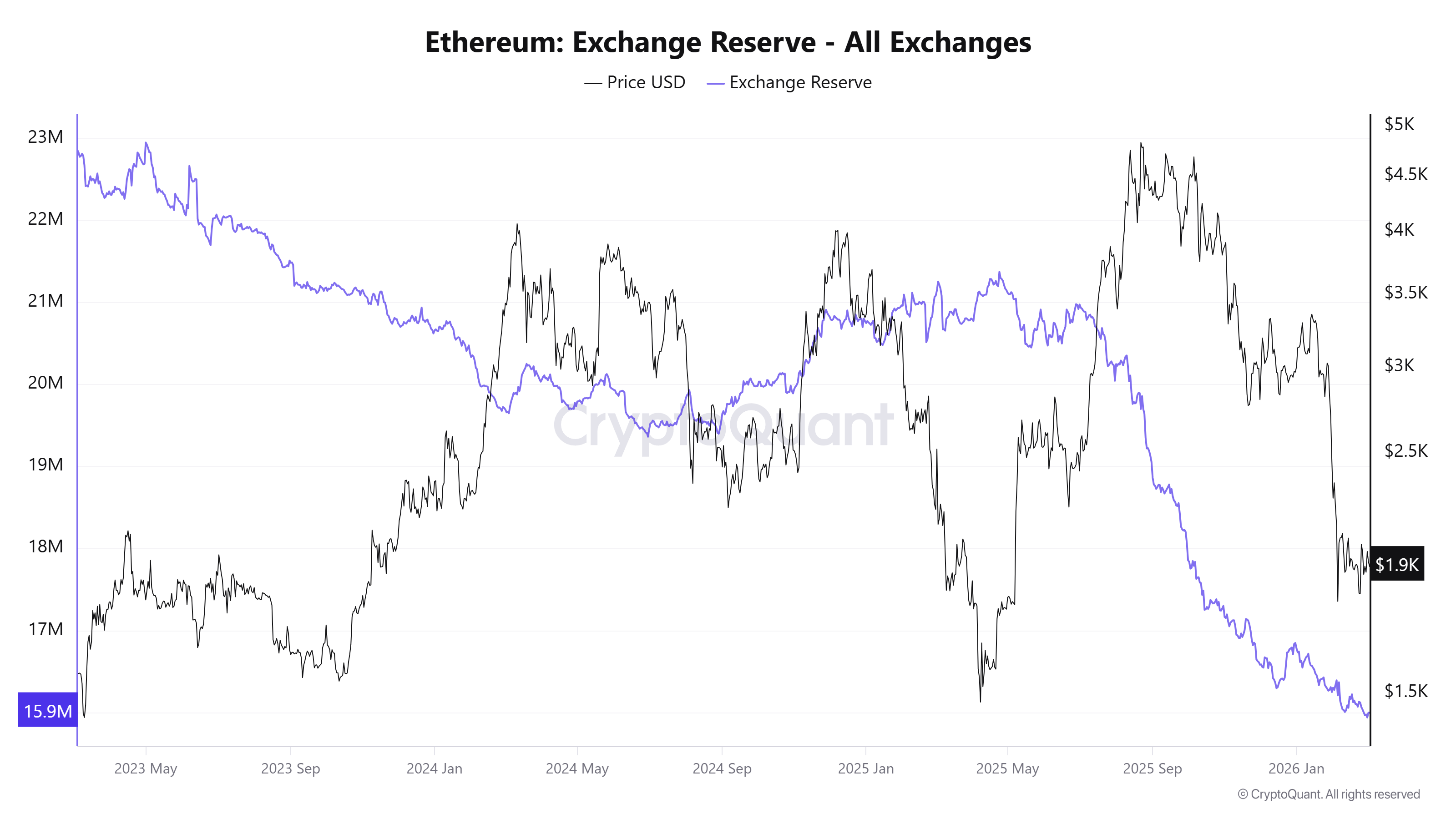
The chart shows that since the beginning of the year, ETH balances on exchanges have declined from 16.8 million ETH to 15.9 million ETH. The reserves reached an all-time low on March 2.
Recent escalations in military conflicts have not triggered any panic selling. Instead, investors appear to have responded in the opposite direction. They have accumulated even more aggressively.
Vitalik Buterin Calls for Building “Sanctuary Technologies” for Ethereum
In his latest post, Vitalik Buterin emphasized the current global context. He pointed to increasing government and corporate control and surveillance, ongoing wars, and the concentration of power.
In that context, he stated that Ethereum has not yet made a meaningful contribution to improving people’s real lives.
He proposed that Ethereum position itself within an ecosystem that builds what he calls “sanctuary technologies.”
He explained that these technologies should be free and open source. They should help people live, work, communicate, manage risks and assets, and cooperate toward shared goals. They should remain sustainable under external pressures, such as those from governments, corporations, and censorship. The ultimate goal is to reduce the severity of power conflicts and prevent systems from being weaponized.
His vision may still be distant. However, following the early March test, investors are currently betting on ETH as an asset they want to hold during instability. They are willing to tolerate unrealized losses to maintain their positions.
Meanwhile, another analyst explained where’s bitcoin most likely bottom.
Bitcoin’s price went through some intense volatility in the past week or so, especially since the attacks between Israel and the USA on one side, and Iran, on the other began on Saturday morning. Within this timeframe, the asset tried to reclaim the coveted $70,000 level on a couple of occasions, but to no avail.
The last such example was on Monday when it skyrocketed by $5,000 in minutes, going from $65,200 to $70,150. However, the bears intercepted the move and pushed the cryptocurrency to under $66,400.
Although it has recovered some ground and is close to $69,000 as of press time, popular analyst CW believes there’s a massive obstacle in its path.
Citing data from Coinglass, they indicated that bitcoin whales are forming sell orders at just over the current levels, which is “holding down the price.” Bitcoin could move higher “when these sell orders disappear,” they added.
$BTC whales are forming sell orders and holding down the price.
When these sell orders disappear, the next move will occur. pic.twitter.com/RsLIajaxpM
— CW (@CW8900) March 4, 2026
Fellow analyst Ali Martinez also weighed in on BTC’s recent performance, and more specifically on its expected bottom during this bear cycle. He noted that the asset has historically bottomed somewhere between the 1.0 and 0.8 MVRV Pricing Bands.
The Market Value to Realized Value Metric is calculated by dividing the former by the latter. Higher levels typically mean that the underlying asset could be overvalued, and vice versa.
You may also like:
If history is any indication, bitcoin’s bottom might not be in yet. Instead, Martinez’s graph shows that it could be somewhere between $43,600 and $54,500.
Over the past decade, Bitcoin $BTC has consistently bottomed between the 1.0 and 0.8 MVRV Pricing Bands. pic.twitter.com/bETaOvRPNN
— Ali Charts (@alicharts) March 4, 2026
Binance Free $600 (CryptoPotato Exclusive): Use this link to register a new account and receive $600 exclusive welcome offer on Binance (full details).
LIMITED OFFER for CryptoPotato readers at Bybit: Use this link to register and open a $500 FREE position on any coin!
Crypto World
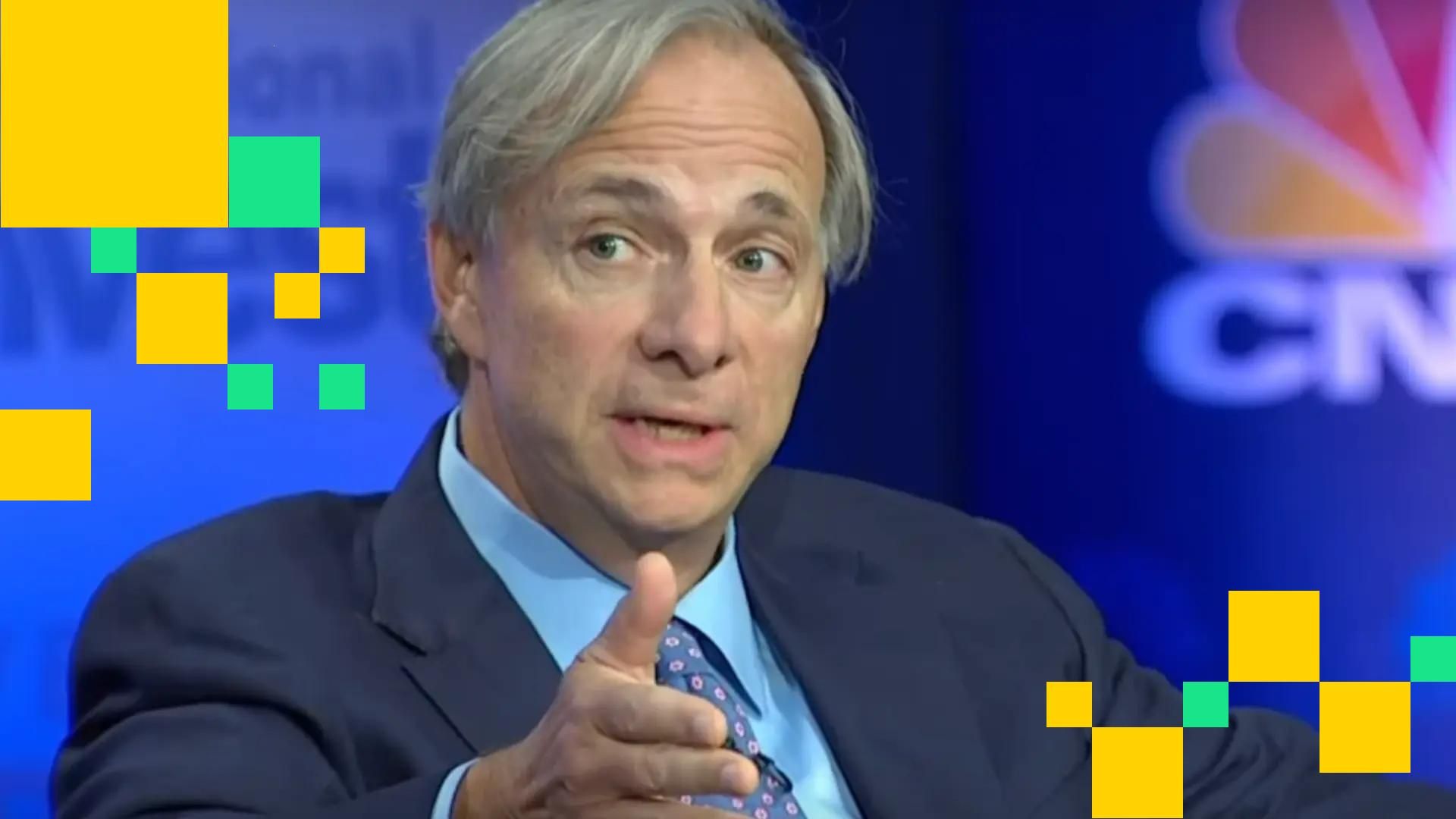
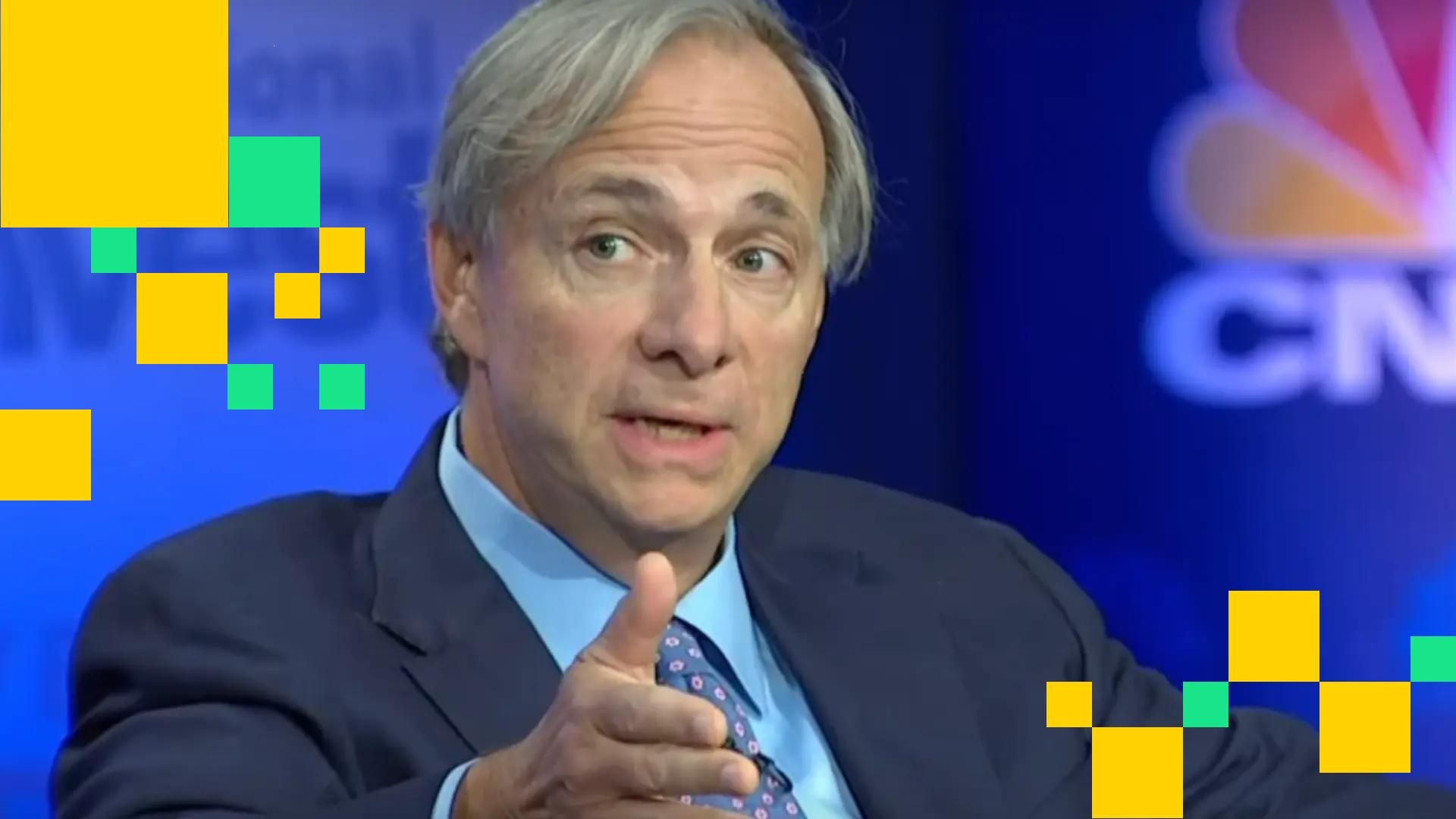
Ray Dalio says ‘there is only one gold’ even as bitcoin holds up better during Iran crisis
Ray Dalio picked an interesting week to trash bitcoin.
The Bridgewater Associates founder said on the popular All-In Podcast on Tuesday that investors should stop comparing bitcoin to gold, arguing that the largest cryptocurrency lacks central bank support, has no privacy, and faces long-term threats from quantum computing.
“There is only one gold,” Dalio said. “Gold is the most established money” and the second-largest reserve currency held by central banks.
The timing undermined the thesis, however. On the day Dalio made those comments, gold dropped $168 to $5,128, a 3% decline, while bitcoin fell just 0.7% to $68,700. Five days into the U.S.-Iran war, the asset Dalio prefers was getting hit harder by exactly the kind of crisis he says it’s supposed to protect against.
The decoupling isn’t new. Bitcoin and gold moved together from July through early October, until the broader crypto crash in October wiped out $20 billion in leveraged positions. Since then the two assets have gone in opposite directions. Bitcoin is down over 45% from its October peak. Gold rallied 30% to over $5,100 in the same period.
Gold spiked on Saturday’s initial strikes, then gave back those gains as the conflict widened and oil disruption became the dominant concern. Bitcoin sold off on Saturday, bounced on Sunday after Iran supreme leader Khamenei’s death, got rejected at $70,000 on Tuesday, and has since settled in the mid-$67,000s.
That shows neither asset has fully operated as a safe haven this week. Both have been volatile. Bitcoin has just been less volatile, which isn’t the outcome Dalio’s framework predicts.
Dalio’s specific criticisms aren’t new either. He flagged bitcoin’s transparency, noting that “any transaction can be monitored and directly, perhaps, controlled.” He questioned whether central banks would ever accumulate an asset that runs on a public ledger. And he raised quantum computing as a longer-term existential risk.
He’s not entirely bearish. Dalio holds roughly 1% of his portfolio in bitcoin for diversification and recommended a 15% allocation to bitcoin or gold in July, calling it the “best return-to-risk ratio” given America’s debt trajectory.
Dalio warned last month that the “World Order” led by the U.S. had “broken down” and that investors needed to rethink how they protect wealth. Whether gold is still the only prescription is the part the market is actively debating, and this week’s price action hasn’t made his case any easier to make.

TLDR
- Bridge, now owned by Stripe, is partnering with Visa to bring stablecoin-enabled payment cards to over 100 nations by late 2026
- Users can make purchases at 175 million Visa-accepting merchants using crypto wallets including MetaMask and Phantom
- Stablecoin transactions through Visa reached an annualized volume of $4.6 billion by December 2025
- Direct onchain settlement is now operational through Lead Bank’s participation in the program
- Bridge secured conditional national bank charter approval from US regulators in February 2026
The partnership between Visa and Bridge, Stripe’s recently acquired subsidiary, is set to deliver stablecoin-connected payment cards to consumers in more than 100 nations before 2026 concludes. Initially launched across Latin American markets in 2025, the service currently operates in 18 countries.
These innovative cards enable consumers to complete everyday transactions using digital currency stored in their cryptocurrency wallets. Compatible wallets include popular options like MetaMask and Phantom. Businesses receiving payments get funds in their local fiat currency, maintaining the familiar transaction experience.
The geographic rollout will encompass European nations, Asia-Pacific territories, African markets, and Middle Eastern countries. All 175 million merchant locations within Visa’s established network will support these payment cards.
Stripe completed its $1.1 billion acquisition of Bridge, which has subsequently expanded its stablecoin operations and pursued US banking authorization.
Regulatory approval came from the Office of the Comptroller of the Currency in February 2026, granting Bridge conditional authorization. This regulatory green light permits Bridge to hold cryptocurrency, create stablecoins, and oversee stablecoin reserve management.
The payment system accommodates four distinct stablecoins: Circle’s USDC, the euro-backed EURC, PayPal USD, and Paxos’s Global Dollar. These digital currencies operate on four different blockchain platforms: Solana, Ethereum, Stellar, and Avalanche.
Stablecoin Settlement Goes Onchain
A significant enhancement to this initiative allows transactions to complete directly using stablecoins. Bridge’s collaboration with Lead Bank, a commercial banking institution participating in Visa’s experimental program, makes this possible.
Previously, Bridge’s system required converting stablecoin holdings to traditional currency before finalizing transactions. The updated infrastructure enables settlement to occur entirely onchain through Visa’s network.
Cuy Sheffield, who leads Visa’s cryptocurrency division, explained that the payment giant is positioning itself where commerce is increasingly happening—which now includes blockchain networks.
By December 2025, Visa’s stablecoin settlement activity had achieved an annualized processing volume of $4.6 billion.
Custom Stablecoins Enter the Picture
Visa is exploring compatibility with Bridge-created stablecoins. These are proprietary digital currencies that companies design and operate using Bridge’s platform, offering an alternative to established issuers like Tether or Circle.
Zach Abrams, serving as Bridge’s CEO, indicated this capability would empower companies to integrate their own branded stablecoins into card payment programs.
Mastercard has similarly entered this market segment. The competing payment network recently activated stablecoin card functionality within the United States through MetaMask’s non-custodial wallet service.
Stripe is simultaneously working with investment firm Paradigm on Tempo, a blockchain network designed specifically for payment processing. The GENIUS Act, landmark US legislation addressing stablecoin regulation, has been enacted and is encouraging traditional financial institutions to explore this technology space.
Bridge’s conditional banking charter approval from US regulators in February 2026 represents the latest milestone in this evolving narrative.
Key Takeaways
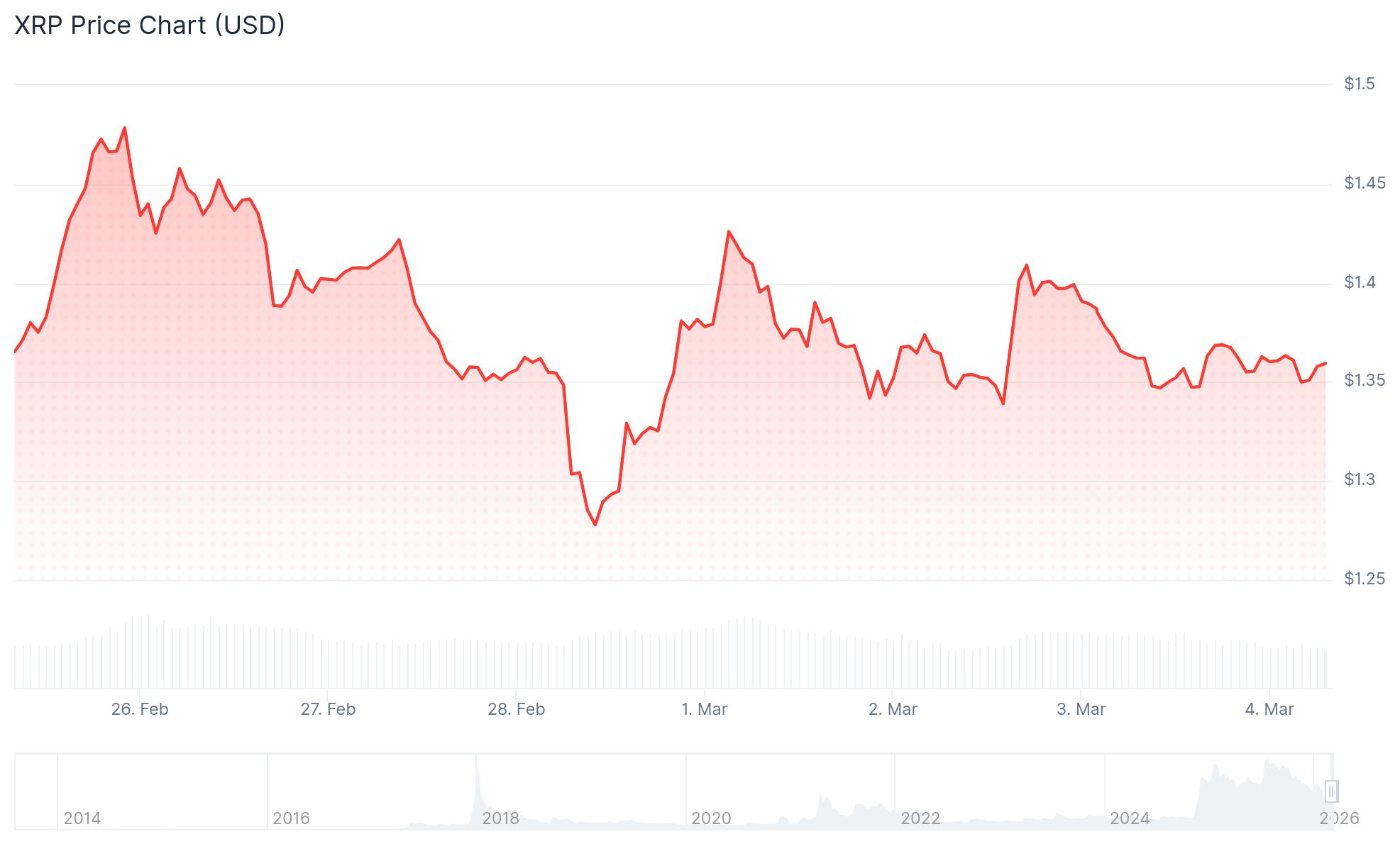
- XRP declined 2.4% over a 24-hour period, settling around $1.36 with trading activity between $1.34 and $1.40
- Market-wide selloff intensified due to Middle Eastern geopolitical tensions pushing oil prices upward
- Ripple announced integration of stablecoin capabilities, including RLUSD, into its payment infrastructure
- Technical analysis shows crucial support at $1.3320 with resistance positioned at $1.3880
- Market observers note RLUSD could potentially rival XRP’s traditional bridge currency function within Ripple’s network
On Tuesday, March 3, 2026, XRP experienced a 2.4% decline over 24 hours, settling near $1.36 based on CoinGecko market data. The digital asset fluctuated within a $1.34 to $1.40 price corridor throughout the trading day.
The token maintained a market capitalization hovering around $83 billion. Trading volume reached approximately $3 billion within the same 24-hour timeframe.
The price decline mirrored a wider retreat across risk-sensitive assets. Market participants attributed the selloff primarily to intensifying U.S.-Israel military operations targeting Iran.
“The market is concerned that the US is getting pulled deeper into this conflict,” said Tim Ghriskey, senior portfolio strategist at Ingalls & Snyder.
Bitcoin experienced a parallel downturn, declining 1.35% to $68,496 during the identical period. Data from Chainalysis revealed significant cryptocurrency withdrawals from Iranian trading platforms, totaling $10.3 million between Saturday and Monday.
Ripple Unveils Enhanced Payment Infrastructure
Tuesday brought Ripple’s announcement regarding the expansion of its Ripple Payments platform to accommodate both conventional fiat currencies and stablecoin assets. The firm is strategically positioning RLUSD, its dollar-backed stablecoin, as a primary instrument alongside XRP within the enhanced platform.
“Success in this space requires enterprise-grade infrastructure, extensive licensing, and deep liquidity,” said Monica Long, Ripple’s president.
Throughout the previous year, Ripple has strategically transformed itself into a stablecoin infrastructure provider. This transformation included the $200 million acquisition of Rail, a stablecoin payment solutions company, and the subsequent RLUSD launch following the Genius Act’s passage, which established clearer regulatory guidelines for stablecoins.
Implications for XRP’s Market Position
Historically, XRP has functioned as the primary bridge currency within Ripple’s international payment infrastructure. RLUSD now presents an additional option operating within the identical ecosystem.
Certain market analysts contend this development presents complications for XRP’s value proposition. Financial institutions utilizing XRP for transaction settlements typically execute conversions almost instantaneously, generating minimal sustained buying pressure.
RLUSD introduces a stable, regulatory-compliant alternative that may prove more attractive to banking institutions and financial service providers.
From a technical analysis perspective, XRP is currently positioned beneath its 100-hourly Simple Moving Average. A descending trend line has established itself with resistance concentrated near $1.3880 on the hourly timeframe.
Should the price breach $1.3880, subsequent resistance levels appear at $1.40 and $1.4320. On the downside, support levels are identified at $1.3320, followed by $1.3085.
XRP reached peak values approaching $3.50 in late 2025 before entering a correction phase. The token has remained below $1.50 since that downward adjustment.
As of Tuesday’s close, XRP was valued at roughly $1.36.

Opinion: No AI uprising, but data risks remain

Ark Invest adds Coinbase and Robinhood shares as crypto equities slide

Iga Swiatek and Coco Gauff inspired by Alysa Liu’s journey from teen burnout to Olympic gold

Smart energy pays enters the US market, targeting scalable financial infrastructure

Why Israel is blocking foreign journalists from entering

Bitcoin: We’re Entering The Most Dangerous Phase

Judge Hears ‘Bad Character’ Evidence Argument Over Kouri Richins’ Financial Records

How to Earn money with Pinterest in Mobile | Pinterest Affiliate Marketing (Step By Step)

Is the S&P 500 still a good investment?! #money #finance #financialfreedom #invest #stockmarket
-

 Politics5 days ago
ITV enters Gaza with IDF amid ongoing genocide
-

 Politics1 day ago
Alan Cumming Brands Baftas Ceremony A ‘Triggering S**tshow’
-

 Fashion5 days ago
Weekend Open Thread: Iris Top
-

 Tech3 days ago
Unihertz’s Titan 2 Elite Arrives Just as Physical Keyboards Refuse to Fade Away
-

 NewsBeat6 days ago
Cuba says its forces have killed four on US-registered speedboat | World News
-
Sports4 days ago
The Vikings Need a Duck
-
 NewsBeat4 days ago
Dubai flights cancelled as Brit told airspace closed ’10 minutes after boarding’
-
 NewsBeat6 days ago
Manchester Central Mosque issues statement as it imposes new measures ‘with immediate effect’ after armed men enter
-

 NewsBeat3 days ago
‘Significant’ damage to boarded-up Horden house after fire
-
 NewsBeat4 days ago
The empty pub on busy Cambridge road that has been boarded up for years
-

 NewsBeat3 days ago
Abusive parents will now be treated like sex offenders and placed on a ‘child cruelty register’ | News UK
-

 Business6 days ago
Discord Pushes Implementation of Global Age Checks to Second Half of 2026
-

 Entertainment2 days ago
Baby Gear Guide: Strollers, Car Seats
-

 Business5 days ago
Only 4% of women globally reside in countries that offer almost complete legal equality
-
 Tech5 days ago
NASA Reveals Identity of Astronaut Who Suffered Medical Incident Aboard ISS
-
Politics3 days ago
FIFA hypocrisy after Israel murder over 400 Palestinian footballers
-
 NewsBeat3 days ago
Emirates confirms when flights will resume amid Dubai airport chaos
-

 Crypto World5 days ago
From Crypto Treasury to RWA: ETHZilla Retreats and Relaunches as Forum Markets on Nasdaq
-

 NewsBeat2 days ago
Is it acceptable to comment on the appearance of strangers in public? Readers discuss
-

 Tech3 days ago
Viral ad shows aged Musk, Altman, and Bezos using jobless humans to power AI