
Crypto World
Avalanche price eyes 90% rally as tokenization demand lifts AVAX – CoinJournal


Key takeaways
- AVAX surged nearly 50% in one week, reaching an eight-month high of $10.82 on Sunday.
- Institutional tokenization developments involving ICE, New York Life Investment Management, Aave and Janus Henderson have boosted sentiment.
- Avalanche’s Helicon upgrade is scheduled for Sept. 22 and will reduce the minimum staking period from 14 days to 48 hours.
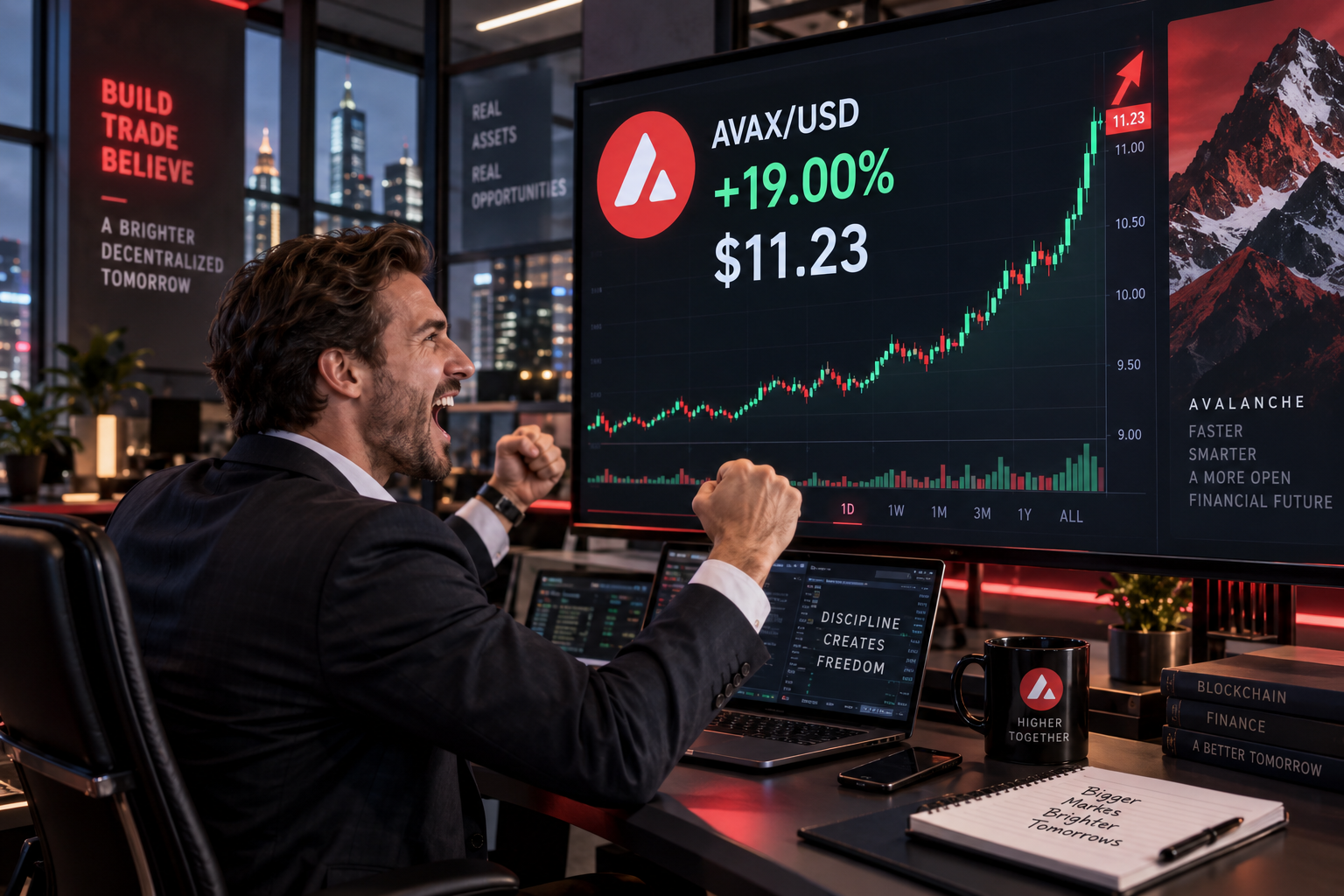
Avalanche’s AVAX token has climbed nearly 50% over the past week, reaching an eight-month high of $10.82 on Sunday as institutional tokenization developments renewed demand for the cryptocurrency.
One of the rally’s leading catalysts involves Intercontinental Exchange, the parent company of the New York Stock Exchange. ICE has reportedly spent about a year testing Avalanche as it explores infrastructure for round-the-clock trading of tokenized U.S. stocks and exchange-traded funds.
ICE has not selected Avalanche or announced a commercial partnership. However, Ava Labs President Charley Cooper said the company remains actively engaged with the network.
The development has strengthened expectations that Avalanche could play a role in bringing traditional financial assets onchain.
New York Life plans tokenized fund on Avalanche
New York Life Investment Management provided another institutional catalyst by announcing plans to launch its first tokenized fund on Avalanche through Centrifuge.
The offering will bring the firm’s U.S. High Yield Corporate Bond Strategy onchain, giving eligible investors access to exposure tied to high-yield corporate debt.
Other financial companies are also expanding their involvement with Avalanche. Aave is developing an institutional real-world asset lending market on the network, while Paxos has added support for AVAX and USDC.
Asset manager Janus Henderson has also joined Avalanche as a validator, further strengthening the network’s institutional credentials.
Together, these developments reinforce Avalanche’s positioning as a blockchain for tokenized funds, credit products and other real-world assets.
Avalanche’s upcoming Helicon upgrade provides an additional potential catalyst for AVAX.
Scheduled for Sept. 22, the upgrade will reduce the minimum staking lockup period from 14 days to 48 hours. The change could make staking more flexible by allowing participants to commit their tokens for substantially shorter periods.
Helicon will also modify validator requirements and reward structures. Lowering the time commitment may encourage more users to participate in network validation, although the full impact will depend on how validators respond to the revised economics.
The timing of the upgrade, alongside growing institutional interest, has added momentum to AVAX’s recovery.
Falling wedge points to $19–$20 target
AVAX’s weekly chart is showing a potential long-term recovery setup after the price rebounded from the lower boundary of a large falling wedge that has developed since its 2021 peak.
Falling wedges are generally viewed as bullish reversal patterns when the price rebounds from the lower trendline and eventually breaks above descending resistance.
The latest recovery started around the $5.80–$6.50 region, a historical support zone that has repeatedly attracted buyers. AVAX subsequently climbed above its 20-week Exponential Moving Average near $7.97, strengthening the case for a broader recovery within the wedge.
If the rebound continues, the next major upside target lies between $19 and $20. The wedge’s descending upper trendline is converging in this area with the 0.236 Fibonacci retracement level near $19.86.
A move from approximately $10.50 to that resistance zone would produce an estimated gain of 85%–90%.
Before AVAX can approach $19, it must overcome resistance around its 50-week EMA. A rejection from this moving average could slow the recovery or send the token back toward lower support levels.

The broader bullish setup would weaken if AVAX loses the wedge’s lower trendline and falls decisively below $5.80. That level currently serves as the primary invalidation point for the recovery thesis.
AVAX’s outlook therefore remains constructive while it holds above the reclaimed 20-week EMA and maintains the wedge’s lower support.
However, the projected move toward $19–$20 remains conditional on the token clearing intermediate resistance and sustaining institutional-driven demand.


Crypto markets are demonstrating robust resilience to start the week, with bitcoin approaching the $84,000 threshold, for the time being at least shrugging off the immediate hawkish sentiment from last week’s Federal Reserve rate hike, which pushed the benchmark target to 4.00%.
The macro calendar centers on midweek U.S. jobless claims and housing and durable goods figures. Meanwhile, cross-asset markets continue to digest the policy path following recent rate decisions from the Bank of Japan and Bank of England.
On the market structure front, attention centers on the SEC opening its tokenized securities pilot framework.
What to Watch
(All times ET)
- Crypto
- Sept. 22: The SEC’s conditional 5-year exemption window opens, allowing select institutional venues to begin pilot trading of tokenized stocks directly on public blockchains.
- Macro
- Sept. 24, 8:30 a.m.: Canada Retail Sales MoM for August est. -0.8% (Prev. 0.6%)
- Sept. 24, 8:30 a.m.: U.S. Initial Jobless Claims for period ending Sept. 19 est. 201K (Prev. 196K)
- Sept. 24, 10:00 a.m.: U.S. New Home Sales for August est. 700K (Prev. 739K)
- Sept. 25, 8:30 a.m.: U.S. Durable Goods Orders MoM for August est. -0.3% (Prev. 1.1%)
- Sept. 25, 10:00 a.m.: U.S. Michigan Consumer Sentiment Index Final for September est. 47.8 (Prev. 51.7)
- Earnings
Token Events
- Governance votes and calls
- Lido DAO is voting on a proposal to authorize a contingent LDO centralized-exchange liquidity market-making mandate—budgeting up to $1.5 million in recallable LDO and 480,000 USDC, to maintain orderbook depth and prevent potential exchange delistings. Voting ends Sept. 21.
- Uniswap Governance is holding a temperature check on extending its protocol fee collection and UNI burn infrastructure to Arc, an L1 network built by Circle. Voting ends Sept. 23.
- CoW DAO is voting on a redesign of its solver quote competition, setting aside a dedicated quote reward budget equal to 10% of protocol revenue to improve price routing and order conversion. Voting ends Sept. 25.
- Unlocks
- Token launches
- No confirmed major token launches.
Conferences

But Nolen said that before the state troopers arrived, an ICE agent had shot a man, and upon the troopers’ arrival, they treated the driver of the Toyota Corolla.
Austin-Travis County EMS received notification from city police of a shooting around 12:56 p.m. CT, according to its chief Rob Luckritz. They identified a man who sustained a gunshot wound to the torso, with Austin Police Chief Lisa Davis adding that preliminary information pointed to a “small foot pursuit” happening before the shooting.
Authorities then added that the man was transferred to the Dell Seton Medical Center in stable condition.
What do we know about the people involved?
Kate Lincoln-Goldfinch, an Austin immigration lawyer who said she had been hired to represent the man who was shot and his wife, identified the man who was shot as a 28-year-old Venezuelan named Wilber Rafael Garces Perez.
The Tribune reported, citing Lincoln-Goldfinch, that Perez had a work permit and had entered the U.S. legally. According to Lincoln-Goldfinch, Perez was delivering for DoorDash when the shooting occurred.
Paimon Finance’s pPOLY has become the first token selected for PancakeSwap’s Pre-Access program, opening a $4.8 million subscription campaign at $15.50 per token on Sept. 21 before trading starts Sept. 24.
Summary
- pPOLY is priced at $15.50 with a $4.8 million total offering through PancakeSwap’s Pre-Access campaign.
- Subscriptions run for 72 hours before claims, refunds and pPOLY trading begin officially September 24.
- Binance Wallet provides technical access while PancakeSwap and third parties control campaign operations and settlement.
- pPOLY offers indirect private-market exposure without granting direct Polymarket shares, voting rights, or dividend rights.
- Users need at least $100 per deposit and may subscribe using U or USDC only.
Binance Wallet said the 72-hour campaign runs from Sept. 21 at 9:00 a.m. UTC until Sept. 24 at 9:00 a.m. UTC on BNB Smart Chain, with pPOLY claims, returns of unallocated funds and trading scheduled to begin when the subscription period ends.
The announcement identifies Paimon Finance as the token issuer and PancakeSwap as the provider of the Pre-Access campaign. Binance Wallet provides eligible users with a route to the event through its self-custodial Keyless Wallet interface but says it does not issue pPOLY or operate the sale.
pPOLY opens PancakeSwap’s first Pre-Access campaign
PancakeSwap introduced Pre-Access on Sept. 20 as a time-limited subscription system designed to provide indirect tokenized exposure to selected private companies before a possible public listing. Its official announcement said third-party providers arrange the underlying exposure while PancakeSwap hosts the campaign and subscription process.
The first project was not named when the portal was announced. One day later, PancakeSwap revealed pPOLY, a token issued by Paimon Finance, as the inaugural campaign. The official portal is now the campaign access point.
For pPOLY, Binance Wallet set the subscription price at $15.50 and the total offering size at $4.8 million. The $4.8 million figure describes the amount offered through the campaign; it should not be treated as pPOLY’s market capitalization or as a valuation of Polymarket.
Paimon Finance operates a private-market tokenization platform covering private credit and private-company exposure. Its official website describes its Pre-Access products as structures designed to give users economic exposure to private-market assets through tokenized arrangements.
The product is being presented as Paimon Polymarket SPV Token, linking its reference exposure to Polymarket. The available campaign materials do not make pPOLY an official Polymarket token, and no evidence reviewed shows that holding it places a buyer directly on Polymarket’s shareholder register.
Binance Wallet sets $100 minimum for subscriptions
Participation through Binance Wallet requires a Binance Keyless Wallet. In a second Sept. 21 post, the wallet provider said users can reach the campaign through either its homepage banner or Discover section.
Participants can deposit either U, issued by United Stables, or USDC on BNB Chain. The minimum amount is $100 for each deposit, and a participant must select one of the two supported subscription assets.
The pPOLY allocation formula places weight on the user’s Binance Alpha Points tier at the time of the campaign announcement and the user’s bStocks on-chain activity tier. For bStocks, Binance Wallet is measuring holdings and trading activity, including Stock Memes, during the 15-day period from Sept. 6 at 00:00 UTC through Sept. 20 at 23:59:59 UTC. Higher qualifying tiers can unlock larger subscription quotas.
Users holding Alpha Points are eligible to subscribe without having those points deducted, according to the campaign announcement. A subscription does not guarantee that a participant receives the entire amount requested because allocations remain subject to the campaign rules and available offering size.
Binance’s general Pre-Access FAQ says oversubscribed campaigns can result in allocations being reduced, prorated, rejected, delayed or canceled under the relevant PancakeSwap rules and smart-contract processes.
Ascrypto.news reported when Pre-Access was introduced, Binance Wallet serves as a technical access point while PancakeSwap and third-party providers control subscriptions, allocation rules, claims, refunds and settlement.
pPOLY does not give holders Polymarket shares
The Pre-Access label requires a distinction from a conventional initial public offering. Binance’s FAQ says these third-party tokens can provide contractual, synthetic or indirect economic exposure to a private company or related asset, but they do not constitute direct ownership of the underlying company’s shares, fund units or SPV interests.
Holders therefore do not automatically receive voting rights, dividend rights, shareholder information rights, governance rights or a direct legal claim against the referenced private company.
Binance Wallet placed a similar warning directly in its pPOLY announcement, stating that Pre-Access tokens are supplied by third parties and “do not represent equity or IPO rights.” It further cautioned that neither a future IPO nor investment returns are guaranteed.
A future public listing would not automatically turn pPOLY into listed Polymarket stock. Binance’s terms say a Pre-Access token may continue trading separately after a target company goes public and could trade at either a premium or discount to the listed shares. Conversion or another settlement mechanism may be delayed, restricted or never become available.
Polymarket itself has been linked to capital-raising discussions, but a financing round should not be confused with an IPO filing. Polymarket was reportedly pursuing approximately $1 billion at a $21 billion valuation, with 1789 Capital expected to contribute around $300 million. The reported transaction was a private funding round.
No public registration statement establishing an imminent Polymarket IPO was identified in the materials reviewed for this report. Binance Wallet’s language consequently describes pPOLY as exposure ahead of a potential public listing, not a confirmed IPO.
September 24 starts pPOLY claims and trading
The subscription window remains open for 72 hours, ending at 9:00 a.m. UTC on Sept. 24. PancakeSwap’s Pre-Access design resolves campaigns after the subscription period, when eligible users receive their allocated tokens or applicable refunds under the campaign terms.
For pPOLY, Binance Wallet says three processes begin at the Sept. 24 deadline: participants can claim their pPOLY allocations, unallocated subscription funds start being returned, and pPOLY trading opens.
No verified pPOLY secondary-market price exists from the official campaign before trading begins. The $15.50 figure is the subscription price, and Binance warns that it can differ materially from any subsequent market, redemption, conversion or settlement value.
The same rules leave liquidity dependent on product terms and available third-party markets. Tokens may face transfer restrictions, lockups, counterparty issues, regulatory requirements or smart-contract risks, while redemption and conversion mechanisms are not guaranteed.
Paimon’s general legal disclosures state that its tokenized private-market products have not been registered under the U.S. Securities Act and may not be offered or sold in the United States or to U.S. persons unless registration or an applicable exemption is available. Its disclosures impose separate eligibility restrictions in other jurisdictions.
Binance Wallet says it does not independently guarantee the campaign price, third-party performance, future liquidity, settlement or recovery if the underlying exposure cannot be delivered. The pPOLY campaign is scheduled to close at 9:00 a.m. UTC on Sept. 24, when PancakeSwap is due to begin allocations, refunds and secondary trading.
Evernorth Holdings has agreed to issue $30 million of convertible debt that may fund additional XRP purchases and XRP ecosystem activity, subject to the completion of its proposed business combination with Armada Acquisition Corp. II.
Summary
- Evernorth agreed to issue $30 million of 4% convertible senior PIK notes due in 2031.
- NH Investment & Securities serves as trustee for the private investment trust purchasing Evernorth’s notes.
- Proceeds may fund XRP purchases and other XRP ecosystem activities after the Armada merger closes.
- Armada shareholders will vote September 30 on business combination required before the convertible note issuance.
- Evernorth expects at least 473 million XRP in treasury when the planned business combination closes.
The SEC filing dated Sept. 17 shows that Evernorth signed the note purchase agreement on Sept. 11 with NH Investment & Securities Co., acting as trustee of Kyobo AIM Corporate Finance General Private Investment Trust No. 3, as the purchaser. The notes carry a 4% payment-in-kind interest rate and mature in 2031.
The filing therefore differs slightly from reports describing the transaction as an already completed $30 million raise. Payment for the notes and their issuance are scheduled to occur concurrently with Evernorth’s business combination closing. Evernorth says the transaction is “expected to close during the fourth quarter of 2026,” making the financing conditional at this stage.
Evernorth plans to direct funding toward XRP
Evernorth told the SEC that the approximately $30 million of proceeds, before company transaction expenses, can be used for general corporate purposes, including acquiring XRP and funding other activities tied to the XRP ecosystem.
The language gives Evernorth flexibility over how much of the financing ultimately goes into direct XRP purchases. The filing does not commit the entire $30 million exclusively to buying the token, so describing the agreement as a fixed $30 million XRP purchase would go beyond the disclosed terms.
Evernorth is already structured around an XRP treasury strategy. Its latest registration materials state that the combined company expects to hold at least 473,276,430 XRP at closing, sourced through direct purchases and commitments from parties involved in the transaction.
Part of that total includes 84,365,876.3625 XRP that Evernorth bought for $214 million in November 2025 at an average price of $2.53657058 per token. Ripple contributed another 126,791,458 XRP under transaction agreements disclosed in the S-4.
Evernorth’s XRP treasury structure includes roughly 473 million tokens and more than $1 billion in committed capital. The company’s investors include Ripple, SBI Group, Arrington Capital, Pantera Capital, Kraken and GSR.
NH Investment acts as trustee in the $30M agreement
The SEC filing identifies NH Investment & Securities Co. as trustee, not as the manager of the underlying private investment fund. The purchaser named in the agreement is NH Investment & Securities acting in that trustee capacity for Kyobo AIM Corporate Finance General Private Investment Trust No. 3.
The notes will rank as Evernorth’s senior unsecured obligations alongside its other unsubordinated unsecured debt. Interest accrues at 4% annually from the transaction’s effectiveness date and is paid in kind, meaning the amount is added to principal instead of being paid as regular cash interest.
The note agreement says PIK interest compounds semiannually until conversion, maturity or an investor put event. The scheduled maturity falls on the fifth anniversary of the effectiveness date unless the notes are converted, redeemed or repurchased earlier.
Holders receive conversion rights starting one year after the effectiveness date. The initial conversion rate is 98.03921 Evernorth Class A shares per $1,000 of note principal, equivalent to an initial conversion price of approximately $10.20 per share.
Settlement can occur through cash, shares or a combination at the holder’s election. The agreement places a cap on conversion value equal to four times the original $30 million principal amount.
Security clauses cover major digital asset losses
The financing agreement contains terms specifically addressing risks associated with Evernorth’s digital asset treasury.
An event of default can occur after certain losses or unauthorized transfers of company digital assets valued above $30 million, or above 10% of Evernorth’s digital asset holdings where that threshold is higher. Ordinary treasury and yield-generation transactions are excluded from that provision.
Separate default provisions cover certain hacking incidents or security breaches affecting digital assets or private keys held by Evernorth, its subsidiaries or its custodians. The filing covers regulatory actions, some debt defaults, bankruptcy events, delisting circumstances and failures to settle note conversions as further potential defaults.
If qualifying default events occur, the holder can require Evernorth to redeem all of the notes under an investor put right. The redemption structure is designed to provide an 8% annual yield to put on the original principal when combined with payments previously received.
Cash payment defaults carry a 7% annual default interest rate for the period of delay. Evernorth itself does not have a general option to prepay or redeem the notes before maturity under the terms disclosed in the filing.
Nasdaq deal must close before Evernorth receives funds
Armada Acquisition Corp. II shareholders are scheduled to vote on the proposed business combination at a special meeting on Sept. 30, 2026. The SEC declared Evernorth’s Form S-4 effective on Aug. 27, clearing the registration statement needed for shareholders to consider the transaction.
As crypto.news reported after the SEC clearance, the Sept. 30 shareholder vote remains one of the final conditions before Evernorth can complete its planned Nasdaq transaction. Completion still depends on shareholder approval, other closing conditions and Nasdaq requirements for the planned XRPN listing.
Evernorth amended the transaction structure in August after XRP fell from the $2.36 price used when the original business combination was signed. The revised structure adjusts the number of shares issued at closing based on XRP’s volume-weighted average price, with the company saying investors representing more than 95% of committed capital accepted the amended terms.
The revision did not change Evernorth’s disclosed XRP holdings or treasury strategy. The company continues to state that it plans to use treasury operations, XRP ecosystem participation and capital-market activity to increase XRP per share after becoming public.
XRP traded near $1.41 on Sept. 21, gaining roughly 1.6% over 24 hours, according to CoinGecko, with a daily range between $1.37 and $1.44. The market data do not establish that Evernorth’s financing agreement caused the move.
If Armada shareholders approve the combination and the remaining conditions are satisfied, the note purchase is scheduled to close concurrently with the business combination. The combined company is expected to trade on Nasdaq under XRPN, while the $30 million note proceeds would then become available for Evernorth’s disclosed corporate purposes, including XRP purchases and XRP ecosystem activities.
Crypto World
In Europe, Today’s Children Will Live Through More Fire Weather Than Their Grandparents

Each additional degree of global warming by the end of the century adds around 272 days of extreme fire weather to the life of a Portuguese child born in 2025. A child born in Greece can expect to see 473 additional days of exposure to extreme fire weather during their lifetime, while children in Spain and Italy will see 448 days.
Exposure to wildfire smoke comes with a number of immediate health impacts, including stinging eyes, wheezing, coughing, and shortness of breath. Over time, long-term exposure can cause and exacerbate diseases in the lungs, and heart, and has been shown to lead to cognitive impairment and memory loss. Long-term exposure to wildfire smoke is also associated with higher risk of death.
The study notes that rapid measures to reduce emissions could reduce exposure in all regions. If we limit warming to 1.5°C by the end of the century, “a lot of exposure could be avoided,” says Pietroiusti. “While younger people will be more exposed than older generations under all pathways, every fraction of a degree of warming counts, and every fraction of a degree of avoided warming can reduce the hazard that we’re exposing young people to during their lives.”
MultiversX has come under formal trading review at Upbit after the South Korean exchange flagged EGLD on Sept. 21 following a mainnet security incident that forced the network to stop progressing.
Summary
- Upbit designated EGLD for trading caution after MultiversX confirmed a VM-level atomicity exploit attempt Saturday.
- EGLD deposits and withdrawals remain suspended, with Upbit planning to reopen withdrawals before deposits later.
- MultiversX paused network progression after invalid state changes and prepared a fix for shadow-fork testing.
- Upbit will review EGLD through October 19-23 before deciding whether trading support should continue thereafter.
- Kraken placed EGLD trading pairs in cancel-only mode while deposits and withdrawals remained paused there.
Upbit’s official notice designated EGLD/KRW, EGLD/BTC and EGLD/USDT as trading caution markets after the exchange said an unresolved security incident involving the blockchain could have caused, or could potentially cause, user losses.
Upbit had already suspended EGLD deposits and withdrawals at 5:47 p.m. KST on Sept. 19. When transfers eventually resume, the exchange said withdrawals will return first. Deposit support will require a separate announcement after the trading caution review begins.
MultiversX exploit triggered the Upbit warning
The warning follows a confirmed attempt to exploit a virtual-machine-level atomicity issue on the MultiversX mainnet.
MultiversX initially disclosed on Sept. 19 that it was investigating a potential mainnet issue and prioritizing user safety and stable network operation. As crypto.news previously reported, the project’s first statement did not classify the event as an exploit or disclose any confirmed financial loss.
A later project update said an actor had “attempted to exploit a VM-level atomicity issue.” The attempt produced invalid state changes, prompting developers to stop network progression while engineers worked on a repair.
The team prepared a software fix for testing through a shadow fork, allowing developers to reproduce mainnet conditions without immediately applying changes to the live network.
MultiversX said deployment would proceed “subject to successful testing” and would require coordination with validators, exchanges and infrastructure providers. No firm restart deadline appeared in the public updates reviewed.
Security tracker SlowMist separately recorded the incident as an attempted VM-level atomicity exploit involving invalid on-chain state changes. Its public database did not list a confirmed loss amount.
EGLD withdrawals remain blocked across exchanges
Upbit’s action came as several exchanges restricted MultiversX transfers following the network disruption.
Bithumb suspended EGLD deposits and withdrawals on Sept. 19 after MultiversX block production stopped. The exchange said transfer services would remain unavailable until it confirmed network stability.
Bithumb had restored EGLD deposits and withdrawals only three days earlier following a scheduled network upgrade, according to its Sept. 16 service notice.
Kraken took a different approach. Its public status page placed EGLD trading pairs into cancel-only mode, allowing users to cancel existing orders while preventing new trades. Deposits and withdrawals remained unavailable.
Coinbase separately reported delayed EGLD sends and receives beginning Sept. 19 because of a MultiversX network issue. Buying, selling and fiat services were not affected by the transfer disruption.
MultiversX told users not to submit or rebroadcast transactions and advised against moving EGLD or ESDT tokens through exchange deposit and withdrawal routes or cross-chain bridges until the project issues an all-clear.
Upbit can extend the warning or end EGLD trading
The Upbit designation does not immediately remove EGLD from the exchange.
Under its digital asset trading-support termination policy, Upbit will review whether the reasons behind the caution notice have been fully resolved before deciding whether to lift the warning, extend the review or end trading support.
The current review period runs from Sept. 21 through the fourth week of October, with Upbit identifying Oct. 19-23 as the expected decision window.
The exchange said the review can be extended if further investigation is required. A failure to fully resolve the underlying security concerns could lead to termination of EGLD trading support.
Deposits made after publication of the caution notice cannot be credited normally and fall under Upbit’s return process. Since transfer services were already suspended, users remain unable to use standard EGLD deposits or withdrawals.
Upbit cited Article 17(1)(e) of South Korea’s Virtual Asset User Protection Act Enforcement Decree when explaining the designation.
The exchange said its decision considered whether a security incident affecting a wallet, distributed ledger or other infrastructure used to issue, transfer or store virtual assets remained unexplained or unresolved.
EGLD weakened as network restrictions spread
EGLD declined while the network issue and exchange restrictions developed.
CoinGecko historical data show EGLD closing at $4.14 on Sept. 18, before falling to $3.87 on Sept. 19 and $3.78 on Sept. 20. The move represented a decline of roughly 8.7% from the Sept. 18 close.
Trading activity increased during the disruption. CoinGecko recorded approximately $10.18 million in EGLD volume on Sept. 20, compared with roughly $3.35 million on Sept. 18.
The timing places the price decline alongside the security incident and exchange restrictions, though the market data alone do not establish that the exploit attempt caused every part of the move.
The episode came shortly after MultiversX activated its Supernova mainnet upgrade, which reduced targeted block time from six seconds to 600 milliseconds and shortened cross-shard settlement.
No MultiversX statement reviewed has connected the VM-level atomicity exploit attempt to Supernova, so the upgrade and security incident should not be treated as causally linked without further technical evidence.
MultiversX plans recovery before releasing full report
MultiversX said engineers were evaluating a targeted recovery procedure designed to preserve finalized legitimate transaction history while correcting invalid state changes linked to the incident.
The project has not yet published the exact recovery method or identified which transactions, smart contracts or account states require correction.
Its official status page has shown several services, including the Public API, xPortal, Explorer, Wallet, Bridge and xExchange, as experiencing degraded performance during the incident response.
Gateway and Index services were listed as operational in the same status update. MultiversX said a full technical incident report would be published after investigators finish the response and finalize their findings. Upbit, Kraken and other exchanges are meanwhile keeping EGLD transfer restrictions in place pending further network recovery updates.

Hana Bank issued a $100 million digital bond through Euroclear’s blockchain settlement platform, completing the transaction the same day, the Yohnap Agency reported Monday.
This was the first time a Korean financial institution directly used the international depository’s distributed ledger infrastructure, the bank said, ranked second in South Korea with nearly $500 billion in client assets under management. Euroclear is a Brussels-based financial services company and one of the world’s largest central securities depositories (CSDs).
It shows how tokenization could make capital markets faster and more efficient. In this case, a traditional multi-day bond settlement process was replaced with same-day settlement on a distributed ledger.
“The $100 million digital bond issuance and implementation of T+0 settlement represent a significant step beyond simply diversifying our funding channels, as they bring blockchain technology into the capital market,” a Hana Bank official said, according to the Korea Herald. “We will continue to adopt advanced infrastructure and explore innovative funding solutions that meet the needs of global investors.”
Hana Bank and Euroclear did not immediately respond to a CoinDesk request for information.
Ethereum price is trading at $2,650, up by more than 3% on the day, after six consecutive green sessions dragged it out of a month-long chop zone, shifting its prediction bullish. That streak alone is notable as ETH hasn’t strung together this many up-days since before the summer stall. Now, is $3,000 realistic before September closes out?
The rally has been fueled by cooling macro pressure, a broad risk-on tilt across equities, and a wave of short liquidations that accelerated the move once $2,600 gave way. Renewed spot ETF inflows followed three straight sessions of withdrawals, adding fresh institutional bid underneath the bounce.

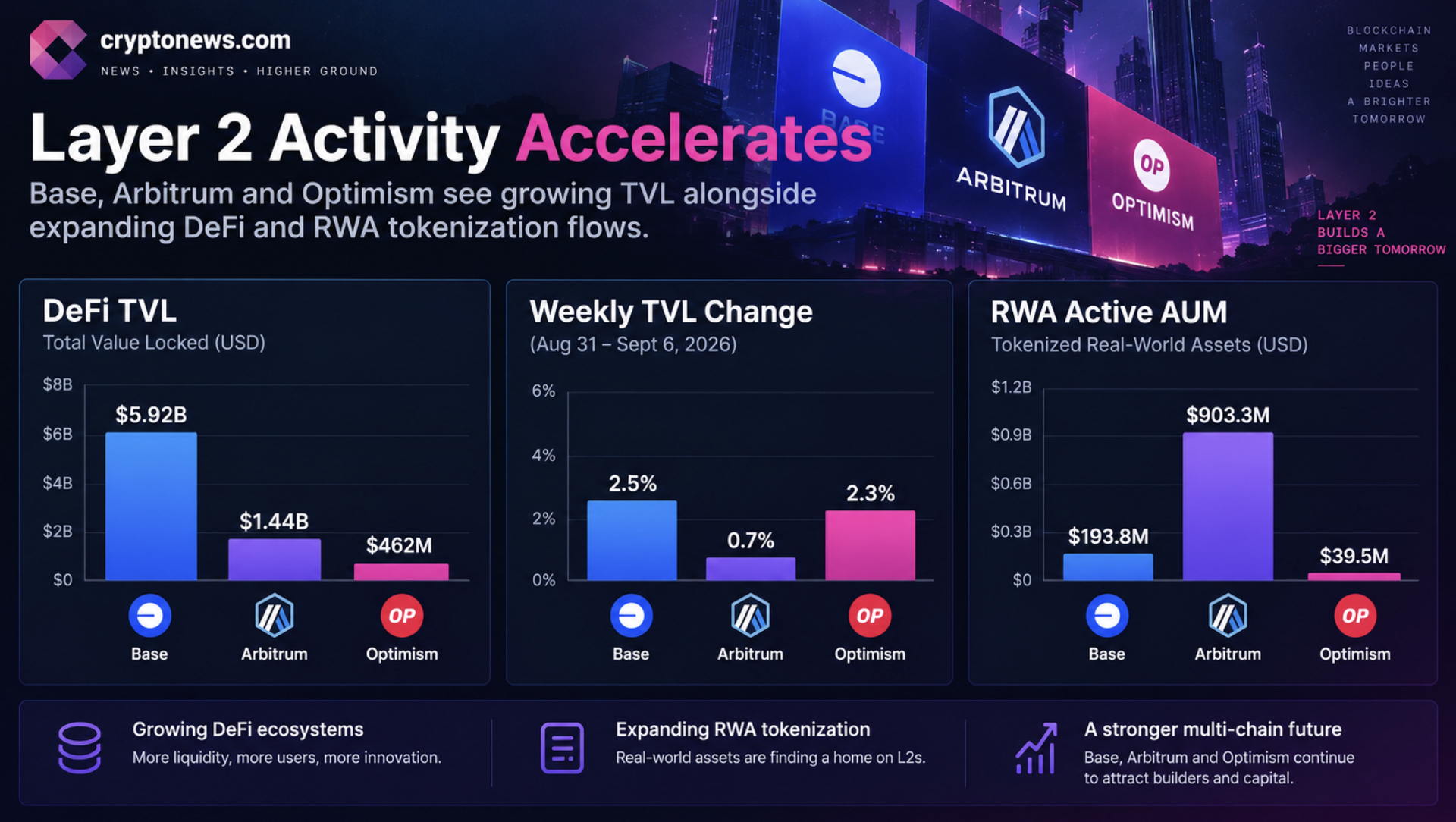
Those are not all. Layer 2 activity on Base, Arbitrum, and Optimism has also picked up, with TVL climbing alongside expanding DeFi and RWA tokenization flows.
Bitcoin, meanwhile, is rallying just below $82,000, and that is also pushing rotation capital into ETH. The ETH/BTC pair has staged a visible rebound off its bottom. This dynamic matters.
Earn $50 and Enter $300K Prize Draw on EdgeX
Ethereum Price Prediction: Can ETH Hit $3,000 This Week?
ETH sits at $2,6550, 3% higher on the day, with 7-day gains north of 6%. Volume has picked up meaningfully during the breakout, consistent with genuine demand rather than thin-book drift. The immediate technical hurdle is the Fibonacci 0.382 resistance near $2,800, a dense overhang zone where break-even holders and short-term profit-takers tend to cluster.
Support has formed around $2,570–$2,600, with a deeper floor near $2,400 if momentum fails. Our analysts point to a confirmed breakout above $2,700 as the trigger for continuation toward $2,800, then $3,000.

- Bull case: A clean close above $2,800 opens a direct path to $3,000 on continued ETF demand.
- Base case: Consolidation between $2,600–$2,800 while the market digests recent gains.
- Bear case: A rejection at $2,700 sends ETH back toward the $2,400 support, invalidating the near-term breakout thesis.
Whether $3,000 prints this month likely hinges on ETF flow consistency more than any single technical trigger. Worth tracking closely.
Trade ETH on Bybit and Get a Chance to Win Our $1,000 USDT Airdrop
LiquidChain Targets Early Mover Upside as Ethereum Tests Key Levels
A move to $3,000 would confirm the bullish structure everyone’s been waiting on, but at Ethereum’s current market cap, doubling from here isn’t a weekend trade; it’s a multi-month campaign. Traders chasing outsized returns are increasingly looking past majors toward earlier-stage infrastructure plays that haven’t already priced in years of adoption.
LiquidChain ($LIQUID) is one of those plays. It’s a Layer 3 infrastructure project fusing Bitcoin, Ethereum, and Solana liquidity into a single execution environment. Liquid is a genuinely rare pitch in a market saturated with single-chain scaling stories.
The King. — LiquidChain (@getliquidchain) September 19, 2026
 ⟁https://t.co/vqvBcdSQYC pic.twitter.com/TDTxXzjhRu
The presale is priced at just $0.014957, with $970K raised so far. Core features include a Unified Liquidity Layer, Single-Step Execution, Verifiable Settlement, and a Deploy-Once Architecture, letting developers build once and reach BTC, ETH, and SOL ecosystems simultaneously.
Research LiquidChain before the raise progresses further.
Discover: The Best Token Presales
The post Ethereum Price Prediction: Can ETH Break $3,000 This Month? Here’s Why It Could appeared first on Cryptonews.
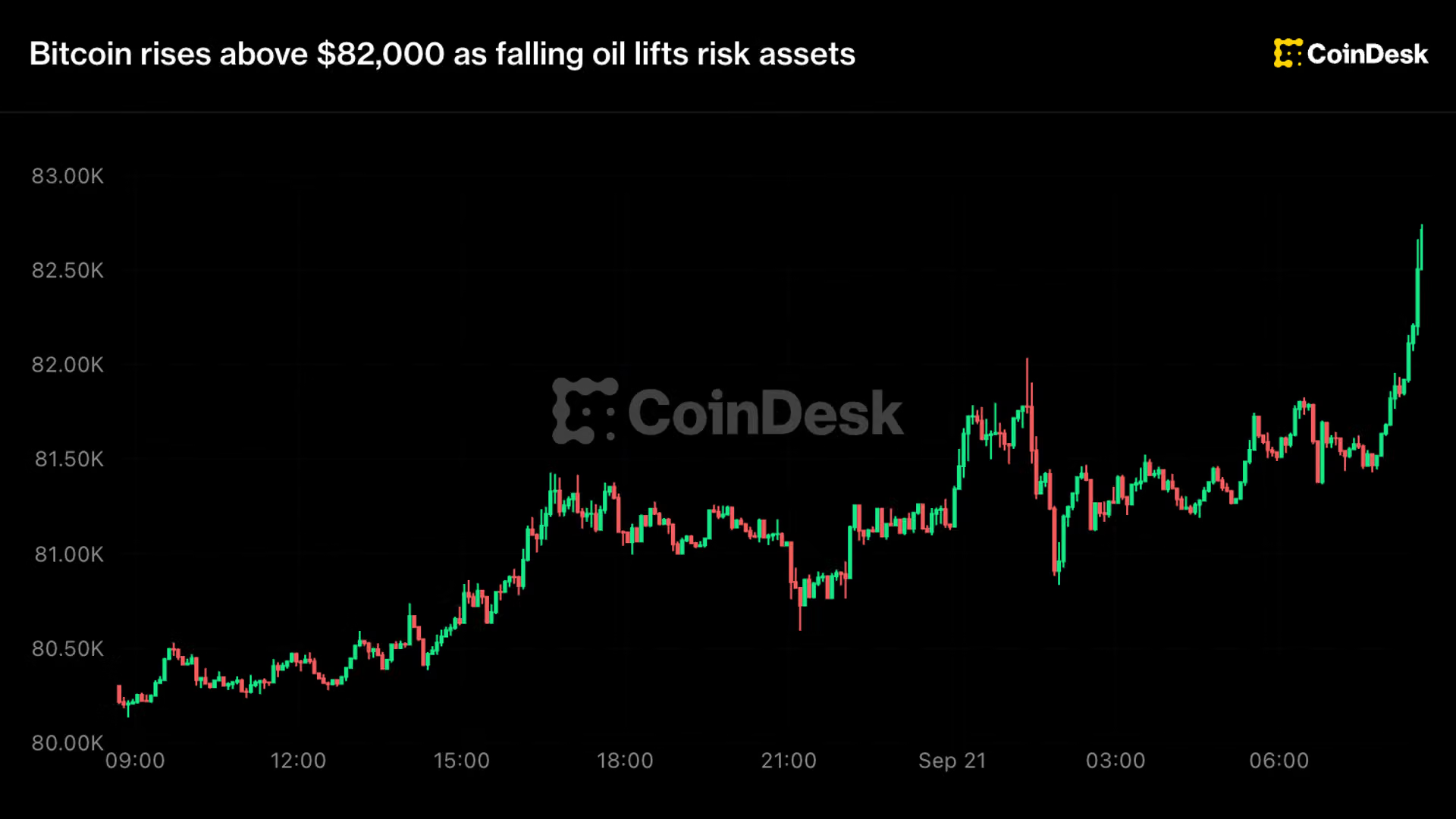
Bitcoin traded just under $84,000 on Monday, up nearly 2% over 24 hours and extending the climb it began late last week, CoinDesk data show.
Monero’s XMR was the standout among larger tokens, up 13% to nearly $588, though it gave back 4% of that in the past hour. DOGE added 5% and XRP 4% to just above $1.45. Ether, SOL and HYPE each rose about 3%, while BNB and ZEC picked up 2%. TRX was the laggard at under 1%.
Risk assets rose broadly. S&P 500 futures were up more than half a percent and Nasdaq 100 contracts nearly 1%, with technology shares leading across regions. Treasuries climbed across the curve and European bonds outperformed. The dollar was flat.
Oil did most of the work. Brent fell for a fourth straight session, its longest losing run in three months, as traders tracked diplomatic efforts to ease tensions between Washington and Tehran and restore Middle East crude shipments. President Donald Trump told Fox News he would “probably” be open to meeting Iranian President Masoud Pezeshkian at the U.N. General Assembly this week.
Cheaper energy eases the inflation picture that has kept the Federal Reserve hawkish, and traders are also positioning ahead of a Trump-Xi summit later this week.

Hyperliquid has generated $429.04 million in revenue from Jan. 1 through Sept. 15, placing the perpetual futures platform first in CoinGecko’s adjusted ranking of crypto revenue generators for 2026.
Summary
- Hyperliquid generated $429.04 million through September 15, leading CoinGecko’s adjusted 2026 crypto revenue ranking overall.
- Hyperliquid captured 12.62% of the $3.40 billion revenue pool used for CoinGecko’s project comparison dataset.
- Pump.fun ranked second with $322.21 million, leaving Hyperliquid ahead by more than $106 million overall.
- CoinGecko excluded Tether, Circle and Grayscale from rankings to improve comparisons among crypto-native revenue models.
- Hyperliquid routes trading fees toward community mechanisms, including automated HYPE purchases through its Assistance Fund.
CoinGecko’s Sept. 17 study calculated Hyperliquid’s share at 12.62% of the $3.40 billion comparison pool. Pump.fun followed with $322.21 million, while Axiom Pro ranked third among the projects included in the final table.
The ranking uses data through Sept. 15 and should be read as a fixed year-to-date snapshot. CoinGecko excluded Tether and Circle because their scale would overwhelm the comparison, while Grayscale was removed because its $154.14 million came from asset-management sponsor fees instead of a usage-based crypto protocol model.
Hyperliquid leads 2026 crypto revenue ranking
Hyperliquid finished more than $106 million ahead of Pump.fun at the Sept. 15 cutoff. CoinGecko said the two projects together generated $751.25 million, equal to 22.10% of the revenue pool used in the study.
Pump.fun’s $322.21 million came mainly from token creation and trading fees tied to its Solana memecoin launchpad. Axiom Pro followed at $132.09 million, Sky posted $129.87 million and GMGN generated $126.03 million.
Polymarket ranked sixth with $115.48 million. World Liberty Financial followed at $95.37 million, while Paxos recorded $87.93 million. edgeX generated $84.37 million and Titan Builder completed the top 10 at $83.47 million.
CoinGecko classified the projects across several business models, including perpetual futures, trading terminals, prediction markets, stablecoins, real-world assets and MEV infrastructure. The researcher described its sector labels as a best-effort classification instead of a formal industry taxonomy.
Perpetual trading feeds Hyperliquid’s revenue engine
Hyperliquid earns fees from perpetual futures and spot activity on its exchange infrastructure. Its official fee documentation uses volume-based maker and taker tiers, with separate schedules for perpetual and spot markets.
Higher-volume traders receive lower fees, while users staking HYPE can qualify for further discounts. Hyperliquid says its fee structure does not reserve the proceeds primarily for a company or insider group, with funds instead directed toward HLP, the Assistance Fund and eligible market deployers.
The Assistance Fund automatically converts eligible trading fees into HYPE through Hyperliquid’s L1 execution. Hyperliquid’s current documentation says HYPE acquired by the fund is burned, permanently removing those tokens from total and circulating supply.
Hyperliquid separately states that its platform is processing billions of dollars in daily trading volume and that more than $1 billion in annualized fees are being directed toward programmatic HYPE purchases. Fees and CoinGecko’s revenue figure are not identical accounting measures, so the two numbers should not be treated interchangeably.
As crypto.news previously reported, Hyperliquid’s Assistance Fund has become a central part of HYPE’s token structure because trading activity creates recurring purchases of the token. Earlier reporting placed cumulative fund spending above $1.3 billion, though that figure covers buybacks since launch and is separate from CoinGecko’s 2026 revenue ranking.
Pump.fun and trading terminals fill the next positions
CoinGecko’s ranking shows that revenue has not been concentrated in a single crypto sector. Pump.fun represents token launchpads, while Axiom Pro and GMGN are trading terminals that make on-chain markets easier to access.
Axiom integrates Hyperliquid for perpetual futures trading, creating some overlap between the activity surrounding the two projects even though CoinGecko records them as separate revenue-generating businesses. GMGN centers more heavily on Solana memecoin trading, linking its activity to the same trading segment that supports Pump.fun.
Shorter reporting periods can produce different leaders. In August, Pump.fun briefly moved ahead of Hyperliquid on a 30-day revenue measure after generating more than $10 million of protocol fees during the week of Aug. 3-9.
CoinGecko’s longer Jan. 1-Sept. 15 measurement produced a different result, with Hyperliquid retaining the full-year lead despite shorter periods in which competitors generated more revenue.
The top 15 projects accounted for 56.02% of the $3.40 billion pool used for the ranking. Beyond the top 10, Collector Crypt recorded $72.82 million, Phantom $60.05 million, Aave $56.81 million, fomo $54.66 million and Aerodrome $54.31 million.
CoinGecko exclusions change how the table should be read
CoinGecko deliberately excluded Tether and Circle from the top-project ranking because both stablecoin issuers generate revenue at a scale the researcher said would obscure differences between the remaining businesses. Their omission does not mean CoinGecko regarded their revenue as invalid.
Grayscale would have ranked third at $154.14 million, ahead of Axiom Pro, but CoinGecko excluded the asset manager because its revenue is derived from AUM-based sponsor fees. Aerodrome, which would otherwise have ranked 16th, consequently entered the displayed top 15.
CoinGecko uses on-chain revenue as its main inclusion criterion but acknowledged that not every project in the list earns money directly from blockchain transaction fees. Paxos and World Liberty Financial, for example, derive substantial revenue from interest earned on reserves, according to the study.
Monthly crypto revenue has remained below last year’s average. Across all projects tracked in CoinGecko’s second dataset, which does include Tether and Circle, monthly revenue averaged $1.08 billion from January through August 2026. The figure was 11.68% below the $1.22 billion monthly average recorded during 2025.
September was left out of the monthly-average comparison because CoinGecko had only 15 days of data when the study was compiled. Its revenue rankings still include activity through Sept. 15, meaning later September revenue will not appear in the published $429.04 million Hyperliquid figure.
HYPE trades near record levels after revenue growth
HYPE has remained close to record territory while Hyperliquid’s fee activity stays elevated. CoinGecko data on Sept. 21 placed HYPE around $94.02, up approximately 2.7% over 24 hours and 18.1% during the previous seven days, with a market capitalization close to $20.9 billion.
Historical CoinGecko data show HYPE closed at $76.92 on Sept. 15 before rising to $85.06 on Sept. 17 and $92.54 on Sept. 18. The token closed Sept. 20 at $93.64, while daily trading volume stood above $1 billion.
Crypto.news reported that Hyperliquid and Pump.fun accounted for nearly 90% of tracked crypto token buybacks during 2026. The report distinguished annual buybacks from Hyperliquid’s cumulative Assistance Fund purchases, which span multiple years.
Hyperliquid’s own documentation now lists maker rebates reaching negative 0.003% for qualifying high-volume market makers, while its highest published staking tier provides a 40% trading-fee discount to accounts linked with more than 500,000 HYPE staked.

This what I would do | 50K Plan – Starting from Scratch

Aran Murphy on playing ‘badass icon’ Sharon Horgan’s son in new HBO Max show Youth

‘Wharfie mobile’ to private jets: Freo Dockers fans mobilise




-

 Fashion3 days ago
Weekend Open Thread: Talbots – Corporette.com
-

 Tech11 hours ago
Researchers escape OpenAI Codex sandbox to run commands on host
-

 Crypto World6 days ago
Revolut Attackers Warn of Ongoing Daily Customer Data Leaks
-

 Crypto World2 days ago
Circle launches Arc Studio AI agent for building onchain apps
-
 NewsBeat2 days ago
Trump says US has reached an agreement to take permanent control of Greenland’s security
-

 Crypto World6 days ago
Kraken Lets xStocks Holders Earn Yield Through DeFi
-

 Crypto World6 days ago
Robinhood engineers charged over $50K crypto scheme
-

 Crypto World2 days ago
Bitcoin price breaks channel as RSI climbs to 63
-

 Crypto World5 days ago
What Is the Status of the U.S.-Iran Peace Talks? Here's What Both Sides Are Saying
-

 Crypto World4 days ago
US Charges Robinhood Engineers Over Crypto Listing Trades
-

 Crypto World7 days ago
Elon Musk Drops a Bombshell: Grok 5 Could Be the AGI Breakthrough
-
 NewsBeat7 days ago
‘Sick conspiracy’: Trump says only guardrails AI needs is ‘a strong and smart (High IQ!) president’ in all-caps rant
-
Business7 days ago
SK Hynix ADRs Fall More Than 6% as Memory Rally Breaks on Fears of Slower AI Spending
-
 Crypto World6 days ago
NVIDIA Analysis: Attempted Rising Wedge Breakout Amid Pressure on the AI Sector
-

 Tech5 days ago
Webb’s IC 348 Mosaic Includes Two-Jupiter Dwarfs, Twin Jets, and a Nursery Still Making Worlds
-
Crypto World6 days ago
Can Circle’s Arc Repeat Robinhood Chain’s Meme Coin Boom?
-

 Crypto World3 days ago
Silver prices recover quickly, hitting weekly high today
-

 Crypto World6 days ago
DOJ Seeks to Seize $61M in Iran Oil Funds From Binance Accounts It Vouched For
-

 Crypto World2 days ago
World Money launches in 150+ countries with Stripe
-
 NewsBeat3 days ago
US was ‘on brink of war’ with China over false AI report of nukes moving in Middle East
You must be logged in to post a comment Login