
Crypto World
Binance Rolls out Prediction Markets for App Using Predict.fun

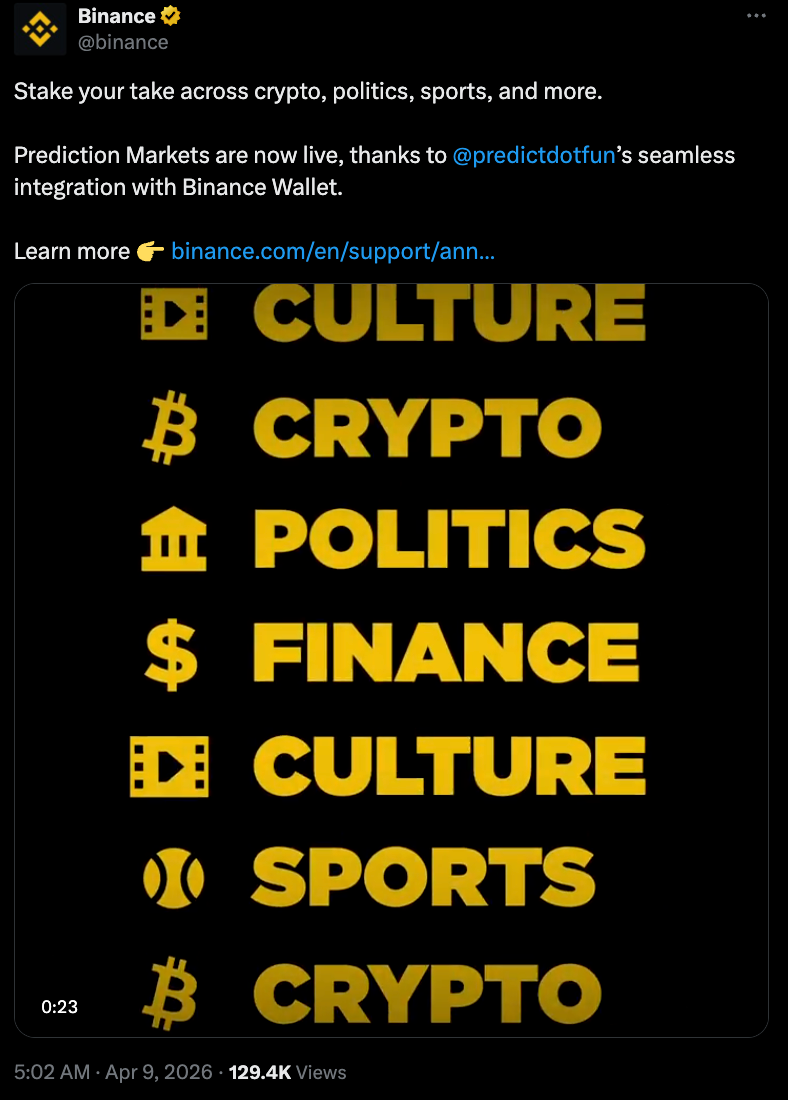
Binance Wallet has integrated prediction market features into its app, saying it will cover all trading and settlement transaction fees for users as it make a play for a piece of the $20 billion market.
In a Thursday notice, Binance said it will launch probability-based markets as a feature on the company’s app through an integration with third-party platforms, starting with Predict.fun. According to the crypto exchange, the integration will be “gasless,” with the company sponsoring fees for trades and settlements on the BNB Smart Chain.

Prediction market platforms like Kalshi and Polymarket offer users the chance to take a position on the outcome of events in a variety of topics, including politics and sports. The latter has put those platforms in the sights of multiple US state authorities who have filed lawsuits for allegedly violating state gaming laws by offering sports bets.
Binance’s integration is the latest example of a crypto platform moving deeper into prediction markets despite some of the more controversial bets on the platforms. Polymarket, for example, has offered users contracts on events related to US-Israeli military actions against Iran.
Related: DOJ and CFTC seek halt to Arizona action against Kalshi
According to data from TRM Labs, the monthly transaction volume across prediction markets platforms reached $20 billion in January — a twenty-fold increase from levels seen in early 2025.
Kalshi co-founder denies Trump son is influencing US regulators
While state-level gaming authorities pursue the platforms in court, the US Commodity Futures Trading Commission (CFTC) has claimed it has “exclusive jurisdiction” to oversee prediction markets. Amid challenges by federal regulators to state actions, ties between some of the companies and the current US administration have stoked concerns among industry leaders and lawmakers about conflicts of interest.
In an Axios interview released on Thursday, Kalshi CEO Tarek Mansour and co-founder Luana Lopes Lara addressed questions about conflicts due to hiring US President Donald Trump’s son as a strategic adviser shortly before his father took office.
“We have never asked for any favors […] and he has never done anything, any regulatory ask, nothing like that,” said Lara, referring to Donald Trump Jr. using his connections to the US government.
Magazine: Anger grows over Polymarket bets on Iran war: ‘Dystopian death market’

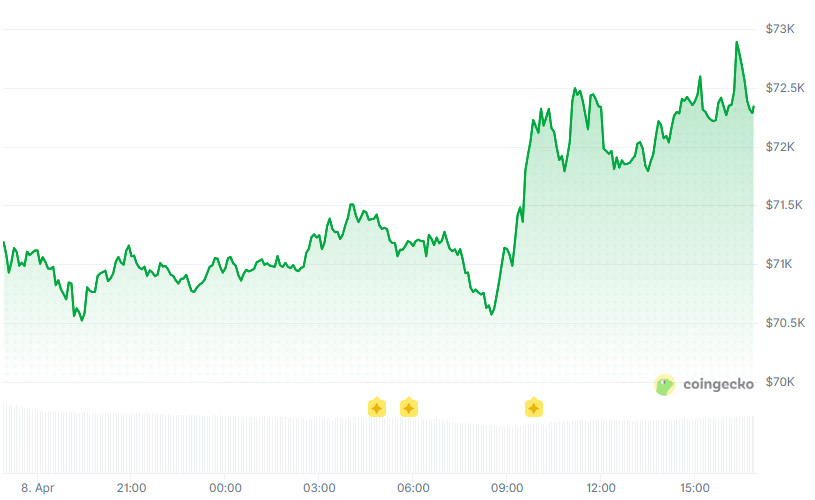
BTC clung to a three-week high as the Iran truce lifted risk assets, but doubts about the deal’s durability capped upside.
Bitcoin held above $72,000 on Thursday, consolidating near its highest levels in three weeks as crypto markets digested a fragile ceasefire between the United States and Iran.
BTC was changing hands at $72,285, up 1.5% over the past 24 hours and 8% on the week, according to CoinGecko. Ethereum rose 0.6% to $2,210, also up 7.2% over the past seven days. XRP gained 0.6% to $1.36, BNB edged up 0.2% to $607.25, and Solana climbed 2% to $84, bringing its weekly gains to 6.6%.

The gains followed a sharp ceasefire-driven short squeeze that sent BTC to its highest level since mid-March.
President Donald Trump said on Truth Social Thursday that all U.S. military assets would remain in place around Iran until the ceasefire is “fully complied with,” warning that failure could lead to renewed conflict. Meanwhile, Iran continued to restrict traffic in the Strait of Hormuz and proposed a $1-per-barrel fee on transiting oil, drawing criticism from the EU and the United States.
Total crypto market capitalization stood at approximately $2.53 trillion, per CoinGecko, up from $2.43 trillion at the start of the week.
Morgan Stanley’s MSBT Debuts
Morgan Stanley’s spot Bitcoin ETF, MSBT, kicked off trading as expected on Wednesday on NYSE Arca. The fund saw $30.6 million in net inflows on its first day.
The fund carries a 0.14% expense ratio, the lowest in the U.S. spot Bitcoin ETF market, undercutting BlackRock’s IBIT at 0.25% and Grayscale’s Bitcoin Mini Trust at 0.15%. Bloomberg
Despite MSBT’s strong debut, the broader U.S. spot BTC ETF complex saw $124 million in net outflows on Wednesday, excluding MSBT, per SoSoValue. Total AUM across U.S. spot Bitcoin ETFs stood at $91.9 billion, or about 6.43% of Bitcoin’s overall market cap.
The outflows followed a $471 million single-day inflow on April 6, when spot Bitcoin ETFs recorded their strongest daily inflows since February, despite ongoing geopolitical tensions
ZEC Leads Altcoins
Zcash was the standout performer this week. ZEC surged another 15% to $371 on Thursday, leading the broader market. The token has gained over 65% in the past 30 days, fueled by a risk-on rotation, a pending decision on the Grayscale spot ZEC ETF, and Foundry’s institutional mining pool launch.

On the downside, World Liberty Financial’s WLFI token fell roughly 10% to an all-time low of $0.0885. On-chain data showed WLFI deposited 5 billion of its own tokens as collateral to borrow stablecoins.
Looking Ahead
The two-week ceasefire window is set to expire around April 21, with peace negotiations expected to begin Friday in Islamabad. Whether the rally extends depends on the truce’s durability.
Fed minutes released Wednesday showed officials believe inflation may fall slowly toward 2%, while oil risks add pressure. Policymakers signaled room for either hikes or cuts depending on conditions, a hawkish undertone that adds another headwind for risk assets already contending with geopolitical uncertainty.

The US Treasury’s Office of Cybersecurity and Critical Infrastructure Protection (OCCIP) launched a program to share real-time cyber threat intelligence with eligible digital asset firms at no cost.
The initiative gives qualifying crypto companies access to the same security briefings that traditional banks and financial institutions have received for years.
Why This Matters Now
The announcement arrives after a devastating 2025 for digital asset security. Crypto platforms lost approximately $3.4 billion to hacks last year, according to Chainalysis data.
North Korean state-backed actors alone accounted for $2.02 billion of that total.
Treasury officials cited the growing frequency and sophistication of attacks as the primary driver behind the program.
Cyber threats targeting digital asset platforms are growing in frequency and sophistication. This initiative expands access to actionable threat information that helps firms strengthen defenses, reduce risk, and respond more effectively to incidents,” read an excerpt in the announcement, citing Cory Wilson, Deputy Assistant Secretary for Cybersecurity.
Ties to the GENIUS Act
The effort also advances a recommendation from the President’s Working Group on Digital Asset Markets.
Tyler Williams, Counselor to the Secretary for Digital Assets, linked the program to the Guiding and Establishing National Innovation for US Stablecoins (GENIUS) Act, signed into law in July 2025.
The FDIC approved a separate GENIUS Act implementation framework on April 7, covering cybersecurity standards for stablecoin issuers.
Together, both actions signal an accelerating push to fold crypto firms into the federal financial security apparatus.
The post US Treasury’s Secret Weapon Against Crypto Hackers Is Now Available For Free appeared first on BeInCrypto.

Melania Trump stepped into the spotlight on Wednesday with a rare and direct statement addressing Jeffrey Epstein. This surprising statement raises a key question inside Washington: Why now?
Speaking at the White House, the First Lady denied any personal connection to Epstein or Ghislaine Maxwell.
“I never had any relationship with Jeffrey Epstein,” she said. “He did not introduce me to my husband.” She also dismissed a reported 2002 email to Maxwell as “casual correspondence” and called ongoing claims “false and damaging.”
However, the timing of the appearance stands out. Melania Trump has largely avoided political controversy during her time in public life.
Epstein Files Continue to Cause Political Chaos in the US
Her decision to speak now comes as scrutiny around the Epstein files intensifies and internal tensions inside the administration spill into public view.
Earlier this week, the Justice Department confirmed that former Attorney General Pam Bondi would not comply with a congressional subpoena tied to the Epstein document release.
Days before that, President Donald Trump removed Bondi from her role following criticism over how the files were handled.
At the same time, lawmakers continue to question whether key materials were withheld. Allegations tied to previously undisclosed FBI interviews have added pressure, even as officials warn that some claims in the files remain unverified.
Against this backdrop, Melania Trump’s statement appears less like a routine denial and more like a response to mounting political risk.
She also urged Congress to focus on victims, stating that “innocent people should not be harmed by lies.”Yet shortly after her remarks, Donald Trump told reporters he did not “know anything about” her statement. That response adds another layer of uncertainty.
The post Melania Breaks Silence as Epstein Pressure Hits Trump, But Why Now? appeared first on BeInCrypto.
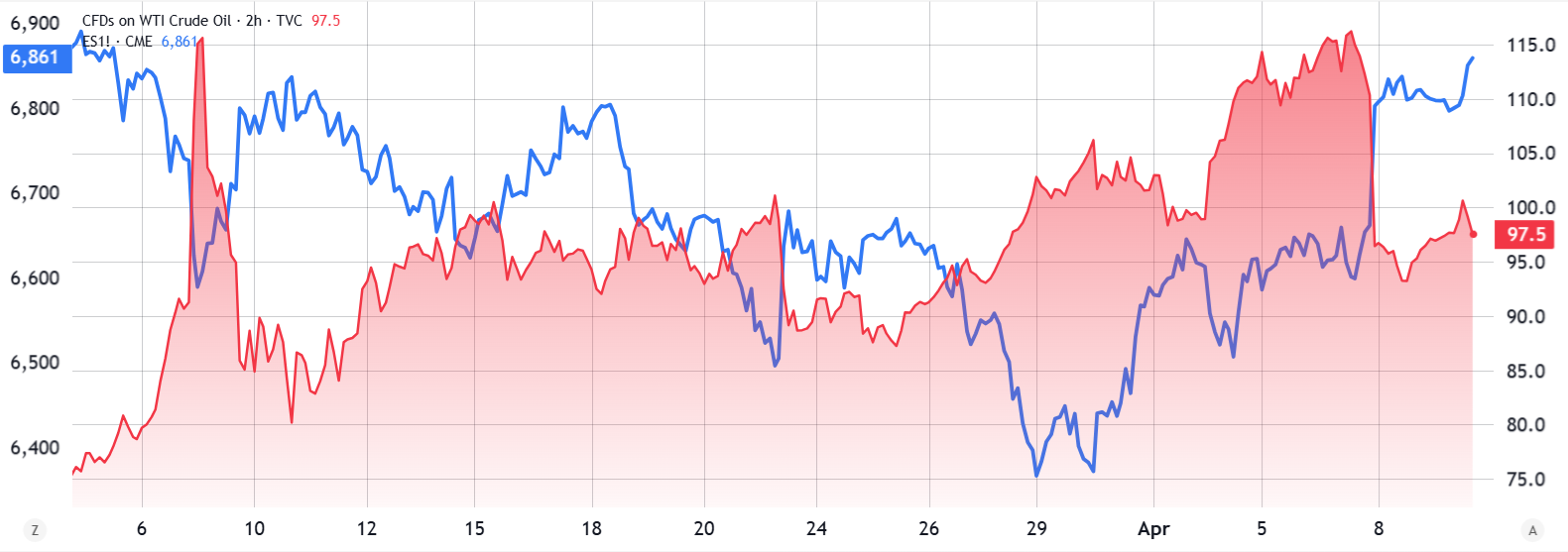
Key takeaways:
-
Bitcoin climbed to $72,000 as rising recession odds and a weak US dollar boosted the appeal of scarce financial assets.
-
Rising oil prices and a wobbly truce with Iran threaten to reverse Bitcoin’s recent gains.
Bitcoin (BTC) reclaimed the $72,000 level on Thursday despite data showing rising inflation and weak economic growth in the United States. Crude oil prices jumped back to $97 after senior Iranian leaders claimed that the US and Israel had violated the ceasefire. Traders now fear that risk markets could react negatively, potentially sending Bitcoin price back below $68,000.

The inverse relationship between oil prices and risk markets became increasingly evident. Shortly after US President Donald Trump announced a ceasefire on Wednesday, the S&P 500 index futures jumped to their highest levels in 30 days, while WTI crude oil prices dropped below $100. Hence, Bitcoin traders fear that the fragile truce between the US and Iran could lead to bearish outcomes.
Fragile ceasefire with Iran and weak US economic data limit Bitcoin upside
Iranian parliamentary speaker and former Islamic Revolutionary Guard Corps (IRGC) general Mohammad Bagher Ghalibaf, who has emerged as a leading voice within the regime, said that Israel’s continued campaign in Lebanon against Hezbollah, the illegal entry of military drones in Iranian airspace and the denial of uranium enrichment violate the ceasefire negotiations, according to Yahoo Finance.
Inflation data reported by the US Bureau of Economic Analysis on Thursday likely helped to lift traders’ spirits. The core Personal Consumption Expenditures (PCE) index rose by 0.4% in February over the previous month. In parallel, the US fourth quarter gross domestic product was revised down to a 0.5% annualized rate. Overall, data points to increased recession risks.

Although counterintuitive, the higher odds of economic stagnation amid sticky inflation have led traders to become less risk-averse, as the US government will likely be forced to inject liquidity to support markets. Reduced confidence in the US Federal Reserve’s ability to avert a recession without causing inflation has led to a weaker US dollar, when measured against a basket of foreign currencies.
AI infrastructure and private credit risks are not an imminent concern
While the correlation between Bitcoin and the US stock market is far from perfect, traders tend to seek protection when fixed income returns relative to the inflation expectations are diminished. Regardless of whether Bitcoin is far from being perceived as a reliable alternative to fiat currency debasement, weakness in the US dollar tends to favor scarce assets.
Related: Fed minutes crack door to further rate cuts amid Iran war

The S&P 500 index traded a mere 2% away from its all-time high on Thursday, a clear indication that investors do not fear issues in private credit markets or the surging debt cost protection for AI infrastructure companies.
Ultimately, Bitcoin seems to have merely followed investor expectations regarding the war in Iran rather than reacting to weak US macroeconomic data.
For now, recession risks favor scarce assets; hence, there is little reason to believe that inflation or job market perspectives could act as a sell-off trigger.
This article is produced in accordance with Cointelegraph’s Editorial Policy and is intended for informational purposes only. It does not constitute investment advice or recommendations. All investments and trades carry risk; readers are encouraged to conduct independent research before making any decisions. Cointelegraph makes no guarantees regarding the accuracy or completeness of the information presented, including forward-looking statements, and will not be liable for any loss or damage arising from reliance on this content.

Bitcoin traded around $71,000 as U.S. markets opened on Thursday, kissing a level that reflects a cautious, data-driven stance after inflation readings aligned with expectations. The market’s gaze shifted quickly to Friday’s CPI print, which many see as a potential catalyst for the next leg in bitcoin’s range-bound narrative, particularly given ongoing geopolitical and oil-market tensions.
U.S. inflation data near-term offered some relief for risk assets. The Bureau of Economic Analysis reported that the Personal Consumption Expenditures (PCE) price index—the Fed’s preferred inflation gauge—cooled in February. Year-over-year core PCE stood at 3% while the monthly core reading came in at 0.4%, underscoring a softer inflation backdrop that investors have been hoping will ease policy pressures.
The market’s interpretation, however, was nuanced. Traders noted that the PCE data may not yet reflect the full impact of the ongoing U.S.–Iran tensions and related oil-supply dynamics, which could feed into the upcoming CPI scenario. The Kobeissi Letter, a market commentary on X, framed the February PCE release as the last inflation datapoint before potential Iran-war effects filter through the numbers, suggesting investors should expect a fresh wave of volatility when CPI arrives.
Beyond the data, sentiment remained tethered to expectations for Federal Reserve policy. The CME Group’s FedWatch Tool continued to indicate that financial markets do not anticipate rate cuts in 2026, reinforcing a cautious stance among traders who weigh macro pressure alongside crypto-specific catalysts. In parallel, veteran investor Mohamed El-Erian underscored the CPI release as a critical moment, noting that while PCE is widely cited as the Fed’s yardstick, the March CPI data could carry more immediate implications for the trajectory of inflation and policy—and, by extension, for crypto markets that often trade on macro cues.
Key takeaways
- U.S. PCE inflation data for February cooled as expected, helping to stabilize Bitcoin’s intraday volatility and keep the price hovering around the $71,000 level.
- The February PCE figures may not yet capture the full effect of the U.S.–Iran conflict on energy markets, making Friday’s CPI release a pivotal follow-up data point for traders.
- Despite the softer inflation signal, market participants largely expect the Fed to maintain a restrictive stance in 2026, with rate cuts not priced in for the year, according to CME’s FedWatch probabilities.
- Analysts see a potential upside path for BTC if support holds and the market unlocks upside liquidity; targets around $80,000 remain in view for some traders, contingent on continued range stability.
PCE data steadies risk assets, but oil and CPI loom
On the price action front, Bitcoin demonstrated muted reaction to the latest inflation release. After topping near $73,000 the day before, BTC cooled into the U.S. session, with volatility subdued as market participants parsed the guidance from PCE data. The BEA’s figures reinforced a theme that has dominated crypto markets this year: inflation softness helps stocks and digital assets alike, but a clear path for policy remains uncertain until further data arrives.
Analysts point to the macro backdrop as the primary driver of the next move in Bitcoin. El-Erian’s comments highlighted a broader view: while PCE is central to Fed thinking, the CPI outcome—particularly given broader oil-market dynamics and geopolitical risk—could exert a more immediate influence on risk assets in the near term. As noted in prior coverage, CPI tends to respond to oil-price swings and energy-related volatility, a factor now squarely in focus as the Iran situation persists.
Market anatomy: where BTC could go next
Traders continue to dissect order-book liquidity and price structure to gauge BTC’s next potential breakout. A market note from the pseudonymous trader LP_NXT highlighted that while some upside liquidity around 73,000 and above the 76,000 region has been cleared, substantial liquidity remains on the upside near the 73,000 mark. On the downside, liquidity begins to accumulate around 69,000 and 64,000, suggesting a broad range in which price could consolidate before the next directional impulse.
With price still range-bound, both sides remain in play. If the 69–68K level holds, price is likely to push higher and target the remaining upside liquidity around 73K.
Meanwhile, Michaël van de Poppe offered a more bullish read, suggesting that as long as Bitcoin maintains the current ranges, an upward leg could materialize toward the $80,000 area. His assessment aligns with a segment of traders who view the range as a springboard for a renewed rally, provided macro and liquidity conditions cooperate.
What to watch next for BTC and the crypto market
The confluence of Friday’s CPI print, ongoing geopolitical tensions, and evolving liquidity dynamics will shape the immediate path for Bitcoin. The market’s sensitivity to energy prices, policy expectations, and macro surprises remains high, and traders are wary of a scenario where inflation data diverges from expectations or where the Iran situation intensifies energy-market stress. If the CPI print strengthens the case for persistent inflation or prompts a hawkish tilt in near-term policy expectations, Bitcoin could test the upper end of its recent range; if it cools more than anticipated, a retest of the lower bound could occur.
For now, the $80,000 target persists as a psychological and technical milestone for bulls, but it will require sustained demand and a favorable macro backdrop to become a reality. Investors should monitor the CPI release timing, oil-price trajectories, and any shifts in Fed expectations, as these elements will likely dictate Bitcoin’s next major move in the current macro regime.
As the week unfolds, readers should keep an eye on the broader market interplay between inflation data, energy risk, and macro policy signals, all of which continue to exert outsized influence on crypto pricing and liquidity.


The USPS crisis reached Congress in mid-March when Postmaster General David Steiner testified before the House Oversight Subcommittee on Government Operations that the agency will run out of cash in less than 12 months at its current rate and may be forced to stop delivering mail.
Summary
- Steiner told lawmakers directly: “At our current rate, we’ll be out of cash in less than 12 months,” adding that “less than a year from now, the Postal Service will be unable to deliver the mail if we maintain the status quo”; pressed for a specific date, he said USPS could exhaust funds as early as October 2026 if it pays all obligations on schedule, or February 2027 if it continues deferring some payments
- USPS lost $9 billion last fiscal year, $9.5 billion in 2024, and $1.3 billion in just the first quarter of 2026; it has posted annual losses almost every year since 2007 as traditional mail volume has fallen by nearly 50 percent over the past 20 years
- The agency is asking Congress to increase its borrowing limit with the Treasury Department and to allow higher stamp prices; it is also exploring options including cutting delivery from six days to five or three days per week, closing post offices, and raising first-class stamp prices from the current 78 cents to $1 or more
Federal News Network reported that USPS has since taken one unilateral step to conserve cash: suspending contributions to the Federal Employees Retirement System, a move that could free up to $15 billion by delaying required pension payments through September 2030. The Postal Regulatory Commission granted a waiver allowing the deferral. That buys time but does not fix the structural problem.
USPS does not receive tax dollars for operating expenses. It funds itself through stamps and service fees. As email, texts, and online payments have replaced letters and check-mailing, first-class mail, the agency’s most profitable product, has collapsed in volume. Amazon, USPS’s largest package customer, has announced plans to cut the volume it sends through the agency by as much as two-thirds by September.
The practical consequences of a USPS cash failure extend well beyond mail delivery delays. Approximately 6 percent of diabetes prescriptions in the US are delivered by mail. Roughly 3.7 million Medicare enrollees live in areas where pharmacy access is limited and rely on postal delivery for medications. Rural communities, which are legally entitled to the same delivery service as urban areas under USPS’s universal service obligation, would be disproportionately exposed if service is cut. The Government Accountability Office released a report alongside the Steiner testimony calling the USPS business model “unsustainable” and stating that “urgent action” is needed.
What Congress Is Being Asked to Do
Steiner’s ask to Congress has three parts: raise the borrowing limit with the Treasury so USPS can access more capital, allow the agency to set prices more freely by removing the current once-per-year rate increase cap the Postal Regulatory Commission imposed through 2030, and give USPS flexibility on its universal service obligation. Republican committee members pushed back, questioning whether USPS had exhausted all internal cost-cutting options before asking for a bailout. Committee chair Rep. James Comer noted that Congress had already passed the Postal Service Reform Act in 2022, which saved USPS $107 billion in total costs.
What Happens to Mail If Nothing Changes
As crypto.news has reported, the federal legislative calendar in 2026 is under severe pressure from the Iran war, the CLARITY Act negotiations, and midterm positioning; a USPS rescue bill would compete for floor time against all of those priorities. As crypto.news has noted, disruptions to government-dependent services, including postal delivery of financial documents, checks, and regulatory notices, carry spillover effects into markets that rely on physical document flows. Steiner told lawmakers simply: “The mail will stop” if the agency cannot meet its obligations, including delivery of prescription drug packages.

Changpeng Zhao, known as CZ, offers a memoir about the founding of Binance and the broader arc of the crypto industry. Freedom of Money blends personal history with a builder’s view of how a global crypto platform emerged during a period of rapid innovation. The book covers the early days, the pressures of scaling a global business, regulatory scrutiny, and CZ’s personal experiences, including a four-month U.S. prison sentence. It also reflects on money, technology, and responsibility and the evolving idea of financial freedom. The title becomes available globally on Kindle and Paperback starting 08th April 2026.
Key points
- Freedom of Money is CZ’s memoir detailing the founder’s journey and Binance’s rise in the early crypto era.
- Global availability begins 08th April 2026 on Amazon Kindle and Paperback.
- English and Chinese editions will be published, with additional translations under consideration.
- All proceeds from CZ’s authorship will be donated to charity.
Why it matters
Freedom of Money provides a personal window into the era when Binance grew rapidly amid evolving rules, offering context on the pressures of scaling a global platform and the balance between innovation and accountability. For readers, builders, and investors, the memoir presents a founder’s perspective on how early decisions and personal risks intersect with the development of the crypto ecosystem and the ongoing discussion about financial access and responsibility.
What to watch
- Global release date on 08th April 2026 for Kindle and Paperback.
- English and Chinese editions; additional translations under consideration.
- Proceeds from the authorship donated to charity.
Disclosure: The content below is a press release provided by the company or its PR representative. It is published for informational purposes.
CZ Releases Freedom of Money: Memoir on Binance and Crypto Rise
CZ Releases Freedom of Money, a Memoir Reflecting on the Rise of Crypto and the Story Behind Binance
Dubai, April 9, 2026 – Few figures have been as closely associated with the rise of the cryptocurrency industry as Binance co-founder Changpeng Zhao (CZ). In his new memoir, Freedom of Money, A Memoir of Protecting Users, Resilience, and the Founding of Binance, CZ offers a candid account of the early days of crypto, the rapid explosion of Binance, and the personal consequences of building at the centre of one of the fastest moving industries in modern finance.
Available globally from 08th April 2026 on Amazon Kindle and Paperback, Freedom of Money traces CZ’s journey from his early life and unconventional path into technology through the founding and rapid growth of Binance during a period when the cryptocurrency industry was expanding at unprecedented speed.
Part memoir and part reflection on the evolution of digital assets, the book offers readers a builder’s perspective on what it was like to grow a global platform in a new industry where the rules were still being written.
“While many people congratulated me on being number one, something else gave me more satisfaction,” CZ writes in the book. “I was getting messages from users all around the world thanking us for providing them with financial access or even financial freedom.”
The memoir also reflects on the challenges that came with building at such speed, including the pressures of scaling a global company, regulatory scrutiny as the industry matured, and CZ’s personal experience serving a four month sentence in a U.S. federal prison.
“This memoir is not a sanitized corporate story,” CZ said. “It reflects on what it was like to build during a time when the crypto industry was still taking shape – the successes, the mistakes, and the lessons that came from both.”
Alongside the events that defined CZ’s career, Freedom of Money explores broader themes of money, technology and responsibility, and how his views on financial freedom have evolved over time.
Reflecting on a Defining Period in Crypto
Over the past decade, Binance has played a significant role in the growth of the digital asset ecosystem, helping support the development of infrastructure used by millions of users globally.
Freedom of Money provides CZ’s personal perspective on that period of rapid innovation and expansion in the cryptocurrency industry.
Richard Teng, Co-CEO of Binance, said: “The story of Binance is closely tied to the early evolution of the crypto industry. Freedom of Money offers a founder’s perspective on the challenges and opportunities that shaped digital assets during their formative years.”
Yi He, Co-Ceo of Binance, added: “The early days of crypto were fast, unpredictable and often misunderstood. This book captures what it was like to build during that time and how the industry has evolved since.”
Availability
- Freedom of Money is available globally on 08 April 2026 on Amazon Kindle and Paperback.
- The book is published in English and Chinese, with additional translations under consideration.
- All proceeds from CZ’s authorship of the book will be donated to charity.
About Binance
Binance is a leading global blockchain ecosystem behind the world’s largest cryptocurrency exchange by trading volume and registered users. Binance is trusted by more than 310 million people in 100+ countries for its industry-leading security, transparency, trading engine speed, protections for investors, and unmatched portfolio of digital asset products and offerings from trading and finance to education, research, social good, payments, institutional services, and Web3 features. Binance is devoted to building an inclusive crypto ecosystem to increase the freedom of money and financial access for people around the world with crypto as the fundamental means. For more information, visit: https://www.binance.com.

It’s about 16 years since cryptocurrency first became a thing, and yet it’s still viewed as something new, especially by those within the industry. It may be steadily moving closer to the financial mainstream, integrated into several major institutions, but it continues to be positioned as a space for the unconventional, the young, the highly tech-literate, and those with little regard for risk. The difficulty with that narrative is that in reality, crypto’s most important users don’t fit that description at all. They’re over 35. They have stable careers, are risk-averse, and take financial planning seriously. And while they’re comfortable with technology, they’re not immersed in it. What’s more, they also control the majority of investable capital. So, why aren’t crypto platforms doing more to serve them?
The investors making crypto viable
The 35-54 demographic is the obvious target for crypto. This is the group in their peak earning years, and they know what it takes to be financially responsible. They don’t have masses of disposable income, but what they do have, they want to use wisely. That alone makes them natural investors. But beyond that, they have an understanding of the space. They’ve moved into maturity, with crypto as a background. They’ve lived through major economic cycles, from the dot-com boom and bust to the damning impact of the 2008 financial crisis, so they understand volatility and risk, and the impact of both. So, for them, crypto isn’t speculation; it’s a way to diversify their assets and potentially gain a hedge.
In addition to all of that, they also have patience. While younger users typically chase rapid gains, people in their 30s, 40s and 50s are more comfortable with long-term positioning. They don’t need constant updates or validation but are instead willing to wait and let strategies unfold over time. And that’s what makes them such a valuable customer base.
Built for someone else
And yet, as valuable as this demographic might be, most crypto platforms target a very different audience. Gamification, urgency, and slang dominate. Engagement is prioritised over understanding. And support is limited. Many platforms still rely heavily on chatbots or community forums, with few options for escalation. For anyone accustomed to traditional financial services, where accountability, compliance, and support are expected, this doesn’t feel innovative. It feels like carelessness verging on negligence, and that can only negatively impact trust. The problem for platforms is that failing trust will naturally translate into failing user numbers, because this is the generation that has learnt that actions are more powerful than words, so funds will be withdrawn, and users may leave the crypto space entirely.
The cost of inattention
Serving your core customer base is basic business practice. Yet in crypto, it often feels like an afterthought. The industry continues to see itself as youthful, fast-moving, and in constant need of new participants. But what crypto platforms are failing to realise is that attention doesn’t get you very far if it doesn’t lead to capital. Younger users may be highly engaged. They may open accounts, follow markets, and contribute to the culture. But the vast majority lack the financial capacity to participate at scale. They provide visibility, near endless amounts of it. But they don’t provide the stability that platforms and the industry require.
At the opposite end of the spectrum is the 35+ cohort. They’re visible, less reactive, and far less vocal, but they hold the capital and the intent that the market needs to thrive. Ignoring them no longer feels like a simple oversight; it’s a strategic error that could end up setting the industry back a very long way.
What maturity actually looks like
If crypto is serious about becoming part of the financial mainstream, it needs to evolve structurally. The tech is already there; the innovation is built-in. It’s the design that is significantly wanting. With the emphasis on cleverness, newness, and novelty, clarity is almost entirely absent. Usability is rarely even an afterthought. Even the choice of language alienates instead of informing. As for customer service, it’s as close to non-existent as it is possible to be without deliberate choice. What’s needed now is investment in real customer support: clear processes, defined accountability, and accessible human assistance. Chatbots are fine for a first point of contact, but there is never a circumstance in which they should be the entire service provision.
We all know that innovation is at the heart of crypto, and no one is saying that that needs to change. But it is no longer enough. It’s time for the industry to invest in infrastructure that supports its users, rather than simply trying to attract newcomers.
Today’s 35-year-olds may not fit the image the industry likes to project, but they are the users who give the crypto space legs. Many were there at the beginning, so they understand it. But more importantly, they are the group that will drive the space forward. Not just because they have capital today, but because the younger audience being courted so aggressively will eventually expect the same things when they have money to invest: stability, clarity, support, and trust.
And if those needs continue to be overlooked, the genuine investors will quietly take their money elsewhere.
Peter Curk, CEO of ICONOMI

Binance Wallet is embracing the prediction-market craze, announcing that it will bring probability-based markets to its app through an integration with Predict.fun. The exchange said it will cover all trading and settlement fees for users, making the experience effectively gasless on the BNB Smart Chain. The move signals Binance’s intent to capture a share of a rapidly expanding segment that the market data suggests is moving billions of dollars in volume each month.
In a notice issued this week, Binance said the new feature will be delivered via a third-party integration with Predict.fun, with the initial rollout focusing on probability-based markets. By underwriting the costs of trades and settlements, the company frames the service as a frictionless entry point for users seeking to speculate on outcomes in politics, sports, and other topics—without the typical gas fees that can erode returns on decentralized networks.
Key takeaways
- Binance Wallet will offer probability-based markets via Predict.fun, with gasless trading and Binance-funded fees on the BNB Smart Chain.
- The development reflects growing appetite for prediction markets, which have surged in activity and user interest over the past year.
- Industry momentum comes with regulatory headwinds: US agencies have pursued actions against prediction-market platforms over alleged gaming-law violations, even as the CFTC contends it has exclusive jurisdiction over such markets.
- TRM Labs data point to a broader market expansion, with a January estimate of around $20 billion in monthly volume across prediction markets—a sharp rise from early 2025 levels.
Binance’s foray into prediction markets
The Binance announcement frames the integration as a way to widen access to prediction markets for everyday users. By partnering with Predict.fun, Binance is tapping a platform that offers contracts tied to event outcomes—ranging from political developments to other real-world occurrences—while removing traditional cost barriers through sponsor-funded trading and settlement fees on the BNB Smart Chain.
The “gasless” headline is central to the offer. If trades are executed and settled on the BSC network, Binance says it will cover the associated costs, effectively lowering the user’s friction to engage with probability-based bets. While the initial phase centers on Predict.fun, the arrangement positions Binance as a gateway for a broader audience to participate in market-based sentiment around events beyond standard crypto trading.
Beyond the technical convenience, the move signals a broader strategic push by major crypto platforms to explore more specialized markets. Prediction markets, which allow participants to place bets on the probability of future events, have grown in popularity as a way to hedge information or express views on uncertain outcomes. The Binance integration comes amid a broader industry trend of large exchanges taking a more active role in prediction-market ecosystems, sometimes inviting scrutiny from regulators and lawmakers alike.
Momentum, scale, and the regulatory backdrop
Industry data illustrate a market that has accelerated rapidly. According to TRM Labs, monthly transaction activity across prediction-market platforms reached about $20 billion in January, representing roughly a twentyfold increase versus early 2025. The rebound underscores growing user interest in event-based contracts and the potential for new participants to experiment with these markets through mainstream platforms.
However, the regulatory environment remains complex and unsettled. The US Commodity Futures Trading Commission has argued it holds exclusive jurisdiction over prediction markets, even as several state-level authorities have pursued enforcement actions against platforms offering such bets, particularly in the sports betting domain. The legal tension reflects broader questions about whether and how prediction markets fit inside traditional gambling frameworks and financial regulation.
Within this context, Kalshi and Polymarket—two notable players in the space—have faced ongoing legal scrutiny and regulatory maneuvering. Kalshi, which has repeatedly argued for a clear regulatory pathway, has encountered actions from state gaming authorities while federal regulators push back on some state-level actions. The CFTC’s stance on jurisdiction has been a recurring theme in industry discussions about what governance looks like for prediction-market ecosystems in the United States.
Amid these dynamics, industry leaders have weighed in on relationships with policymakers and the potential for perceived conflicts of interest. In an Axios interview published this week, Kalshi executives Tarek Mansour and Luana Lopes Lara addressed questions about ties to political figures and potential regulatory leverage. Lara stated that Kalshi has not solicited favors and that leadership has not sought regulatory changes in exchange for advantages, while noting that claims of influence over policy are not part of the company’s operating reality. The interview highlighted the broader industry sensitivity around connections in Washington and the importance of maintaining a clear separation between business activity and regulatory advocacy.
Why this matters for investors, users, and builders
For investors, Binance’s entry into prediction markets could unlock new liquidity channels and user engagement metrics. A gasless, fee-subsidized model lowers the barrier to experimentation with event-based contracts, potentially drawing in traders who might not participate in more traditional crypto derivatives. If the model proves sustainable, it could create a competitive dynamic among exchanges to offer similar prediction-market access, reinforcing network effects in user acquisition and retention.
For builders and developers, the Binance-Predict.fun collaboration demonstrates how major platforms are willing to strand- test cross-domain integrations—combining on-chain infrastructure, third-party markets, and user-friendly interfaces. The approach could spur further partnerships, more standardized interfaces for event-based contracts, and clearer product roadmaps that marry traditional finance-style clarity with crypto-native flexibility.
From a risk perspective, the ongoing regulatory scrutiny around prediction markets means participants should remain mindful of jurisdictional differences and potential policy shifts. While the CFTC has asserted its jurisdiction in this space, state actions and evolving enforcement priorities could shape the available landscape for US users. As more platforms experiment with prediction-based products, market participants should watch for changes in compliance requirements, licensing, and potential restrictions on specific contract topics or venues.
Ultimately, Binance’s move to integrate probability-based markets with gasless trading marks another step in the sector’s maturation. It highlights both the appetite for accessible, event-driven financial instruments and the friction points that come with regulatory complexity. As the year unfolds, observers will be watching not only user adoption and volume but also how regulators, platform operators, and industry groups negotiate a path forward for prediction markets within the broader crypto economy.
Readers should keep an eye on how the integration with Predict.fun performs in practice, what contract types gain traction, and whether other major players accelerate similar offerings. The coming quarters could define whether prediction markets become a standard feature in mainstream crypto wallets or remain a niche segment with uneven regulatory clearance.
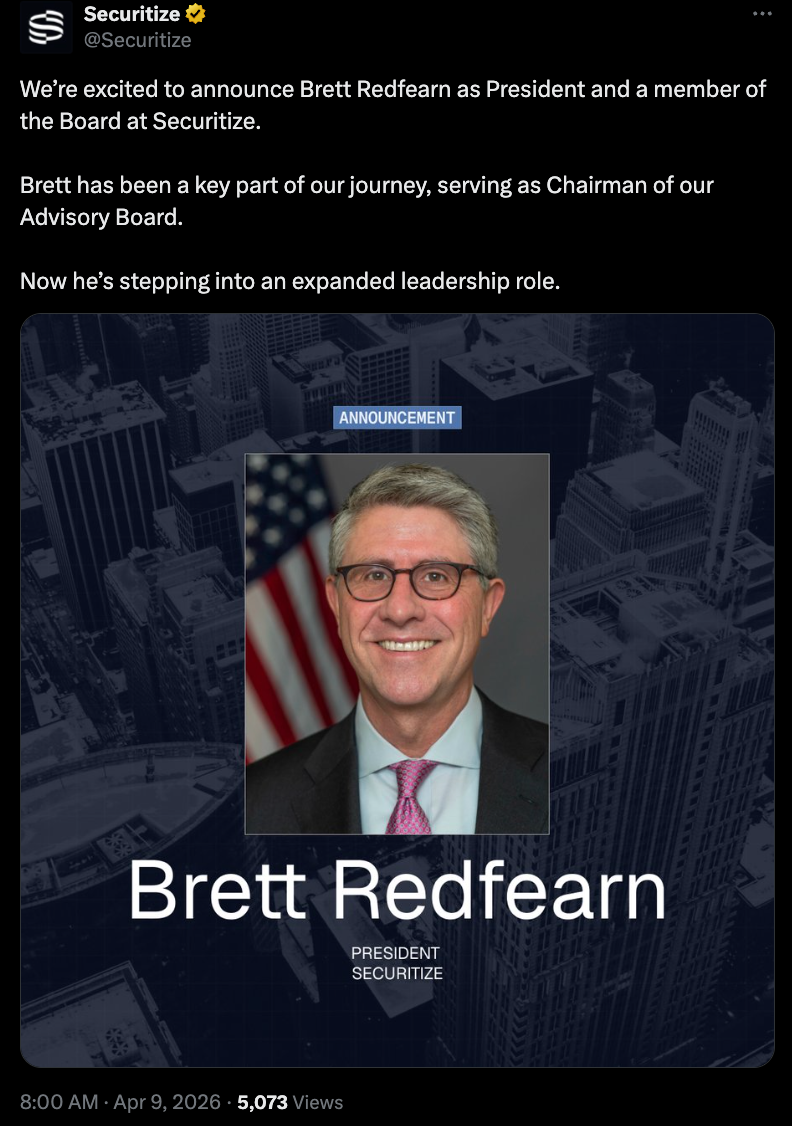
Newly appointed company president Brett Redfearn briefly worked as Coinbase’s head of capital markets and served for more than three years at the SEC.
Tokenization platform Securitize has named Brett Redfearn as president, with the former official at the US Securities and Exchange Commission (SEC) also joining its board of directors.
Securitize’s Thursday notice said Redfearn previously served as the SEC’s director of its division of trading and markets, worked as Coinbase’s head of capital markets and held various roles over a decade spent at JPMorgan. He most recently has been a member of Securitize’s advisory board.
Redfearn is the latest former government official who has moved into the crypto industry, highlighting questions about their roles overseeing digital assets while in office. Caroline Pham, who served as a commissioner and acting chair of the US Commodity Futures Trading Commission (CFTC), left the agency in December to join crypto payments infrastructure company MoonPay.

Related: Crypto exchanges chase TradFi commodities market as pricing gaps persist
He joins Securitize as the tokenization of real-world assets (RWA) has seen increasing demand in the crypto industry. According to data from analytics platform RWA.xyz, the company had $3.85 billion in distributed asset value in March, at a time when tokenized stocks surpassed $1 billion in total value onchain.
SEC gets new enforcement chief, but questions loom over crypto cases
On Wednesday, the SEC announced that David Woodcock would become the director of its Division of Enforcement starting on May 4, replacing acting head Sam Waldon.
Several US lawmakers are calling for answers from SEC Chair Paul Atkins regarding the departure of former enforcement director Margaret Ryan. Members of Congress questioned whether Ryan left due to the SEC’s decision to drop several crypto-related enforcement cases, including one against Tron founder Justin Sun.
Magazine: Asia Express: Phantom Bitcoin checks, China tracks tax on blockchain

Tia Mowry Is Spotted With Alleged New Boo, Social Media Reacts

Don’t Take Financial Advice Online Until You Watch This
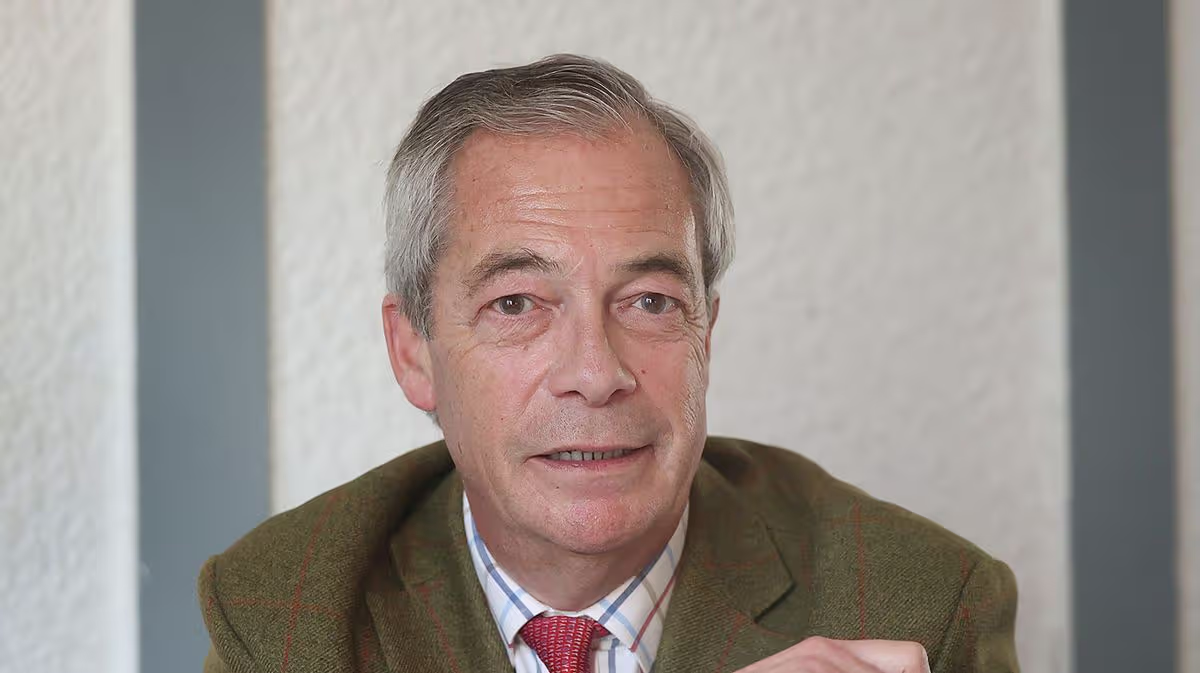
Unusual location, ‘political virgins’ and a gift from Dubai: Behind the scenes of Nigel Farage’s visit to Bolton


-

 Business7 days ago
No Jackpot Winner and $194 Million Prize Rolls Over
-

 Fashion6 days ago
Weekend Open Thread: Spanx – Corporette.com
-

 Business4 days ago
Three Gulf funds agree to back Paramount’s $81 billion takeover of Warner, WSJ reports
-

 Business6 days ago
Expert Picks for Every Need
-

 Sports5 days ago
India men’s 4x400m and mixed 4x100m relay teams register big progress | Other Sports News
-

 Tech2 days ago
How Long Can You Drive With Expired Registration? What Florida Law Says
-
Business5 days ago
No Jackpot Winner, Prize to Climb to $231 Million
-

 Fashion4 days ago
Massimo Dutti Offers Inspiration for Your Summer Mood Board
-
Politics6 days ago
Wings Over Scotland | The quality of mercy
-

 Fashion2 days ago
Let’s Discuss: DEI in 2026
-

 Business5 days ago
Akebia Therapeutics, Inc. (AKBA) Discusses Pipeline Progress and Strategic Focus on Kidney Disease Treatments at R&D Day – Slideshow
-

 Crypto World1 day ago
Bitcoin recovers as US and Iran Agree a Ceasefire Deal
-

 Politics7 days ago
East Jerusalem Palestinian families eviction orders
-

 Politics7 days ago
Why so many children are now classified as ‘disabled’
-

 Crypto World11 hours ago
Canary Capital Files SEC Registration for PEPE ETF
-

 Politics6 days ago
The UK should not pay a penny in slavery reparations
-

 Politics7 days ago
Nuclear rockets, moon bases and NASA’s Mars plan
-

 Tech7 days ago
The Threadless Ball Screw Never Took Off, But Don’t Write It Off
-
 Business7 days ago
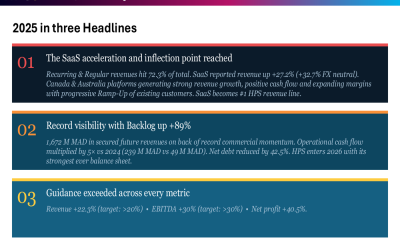
HPS FY 2025 slides: SaaS inflection drives 22% revenue growth
-

 Fashion7 days ago
Tory Burch’s Spring 2026 Campaign Goes on a Getaway
You must be logged in to post a comment Login