
Crypto World
Bitcoin back above $77,500, XRP leads majors as Fed hike odds slide to 62%

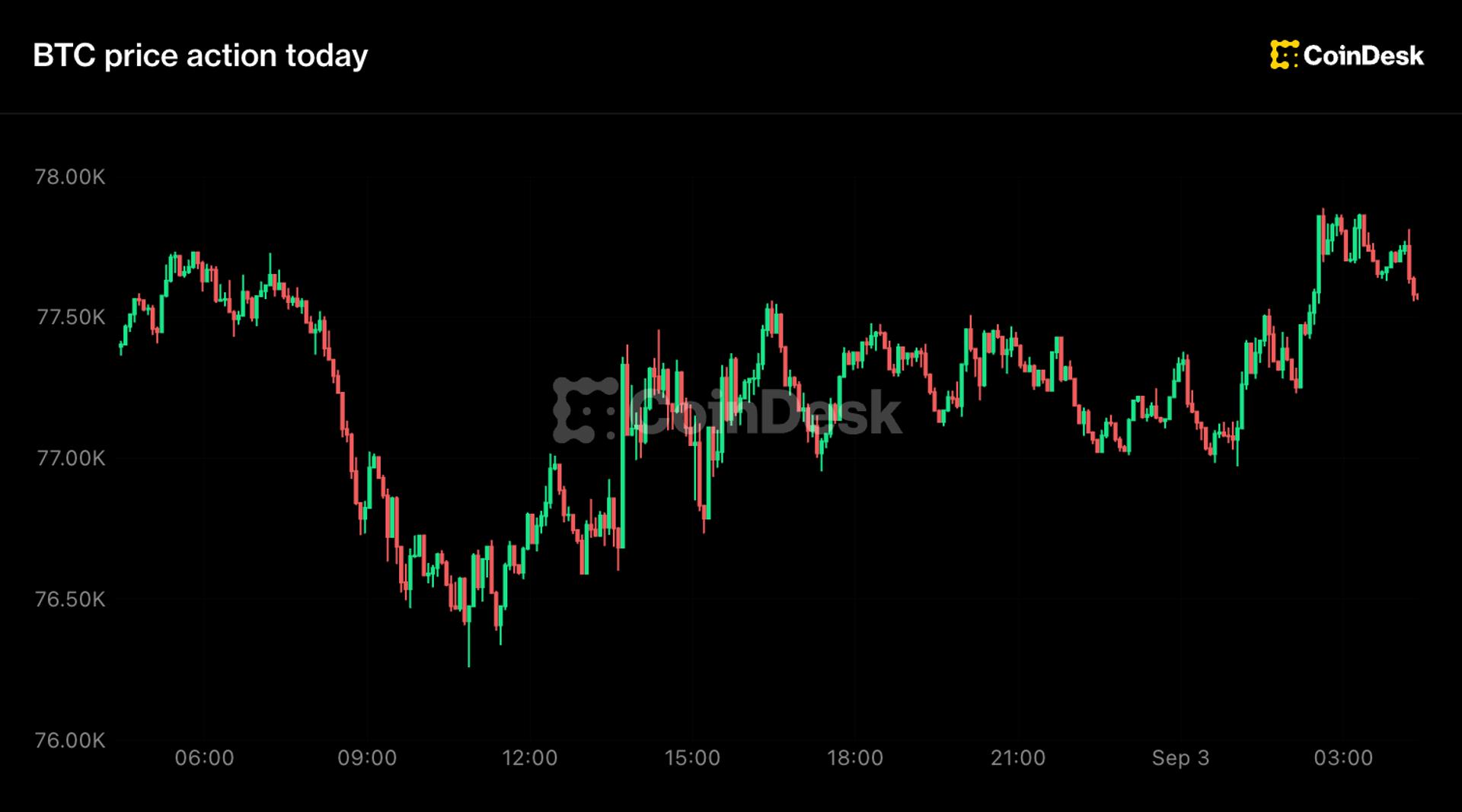
Every major token is green over 24 hours, though only zcash and hyperliquid are holding gains on the week.

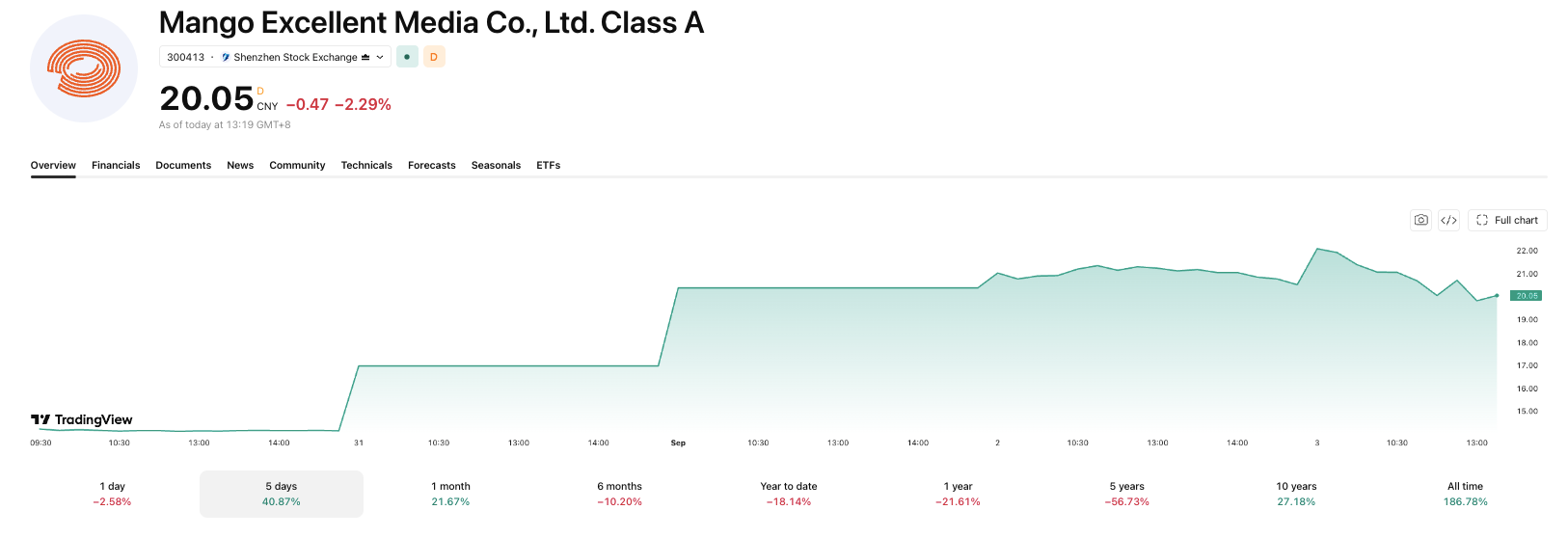
Investors piled into Mango Excellent Media this week. Shares of the Chinese broadcaster jumped as much as 64%, its biggest weekly gain since January 2015.
The rally made Mango the top performer on the MSCI Asia Pacific Index. That benchmark tracks large and mid-cap stocks across the region.
A Debut That Triggered a Buying Spree
The surge traces back to Aug. 31. That’s when Mango TV premiered “The Later Journey to the West,” billed as China’s first fully AI-generated long-form television drama.
The show also launched under a new “review-while-broadcasting” model. The regulatory framework lets producers submit episodes for approval in phases, rather than finishing an entire season first. That gives creative teams room to adjust later episodes based on audience feedback as a series airs.
The premiere’s impact spread beyond Mango’s own stock. Shares of Kunlun Tech and China Literature also climbed. Traders are betting that AI-made content could become the industry’s next growth engine.

The reaction echoes a broader pattern this year, as sudden investor enthusiasm has repeatedly followed breakthroughs in Chinese AI stocks.
Analysts Flag a Bigger Opportunity
State broadcaster China National Radio reported that roughly 128,000 micro-dramas hit the market in the first quarter. Micro-dramas are short, vertical video series popular with Chinese audiences. Of those titles, 95% were AI-generated.
Morgan Stanley analyst Rebecca Xu and colleagues framed the regulatory shift as a tailwind for streaming platforms.
“We see the policy shift as positive for platforms such as Mango and iQIYI amid rising competition from AI-enabled content and platforms.”
iQIYI is one of Mango’s main rivals in Chinese video streaming.
Citigroup analyst Brian Gong and colleagues took a different angle. They argued investors are overlooking the near-term commercial upside in China’s AI video models themselves.
ByteDance’s Seedance, which generates video from text prompts, remains the industry benchmark for quality, the analysts said.
However, rivals are carving out their own niches. MiniMax Group’s H3 model, a competing text-to-video system, offers near-premium output at a lower cost. Kuaishou Technology’s Kling has built a large global user base and is pushing to challenge the leaders.
Whether the rally holds may depend on how the show performs with audiences beyond its opening week.
The post Investors Can't Get Enough of AI-Created Dramas: Chinese Broadcaster Mango Up 64% appeared first on BeInCrypto.
SEC Chairman Paul Atkins is framing the agency’s newly proposed Regulation Crypto Assets as a deliberate attempt to win back the crypto companies that left the United States over the past four years.
Atkins has cast the plan’s two capital-raising exemptions as only part of a broader argument he has made for months. Heavy-handed enforcement, not unclear rules, pushed crypto builders overseas, he says.
Blaming Years of Regulation by Enforcement
Atkins blamed years of aggressive enforcement for choking off legitimate crypto fundraising. Clear guidance, not court fights, was what founders needed, he argued.
He argued the old approach forced crypto assets to comply with securities rules dating to the 1930s. Those rules, he said, were never built with tokens in mind.
“In fact, in the past, it actively undermined capital formation with regard to this asset class in the form of regulation by enforcement and disingenuous offers to ‘come in and register.’”
Paul Atkins, SEC Chairman, in a statement
‘We Can’t Fool Ourselves’ on Where Investors Put Their Money
Atkins told Fox Business the new proposal is meant to reassure founders his agency chased away. He said the past administration’s four-year run pushed innovators to develop products and raise money abroad.
His core argument is practical rather than nationalistic. Investors can already move money across borders with a few clicks. Blocking them from doing that legally at home only pushes activity further away.
“We can’t fool ourselves. American investors in the age of the internet can send their money anywhere. So we need to make sure that they can do it here in the United States under United States law.”
Paul Atkins, SEC Chairman, to Fox
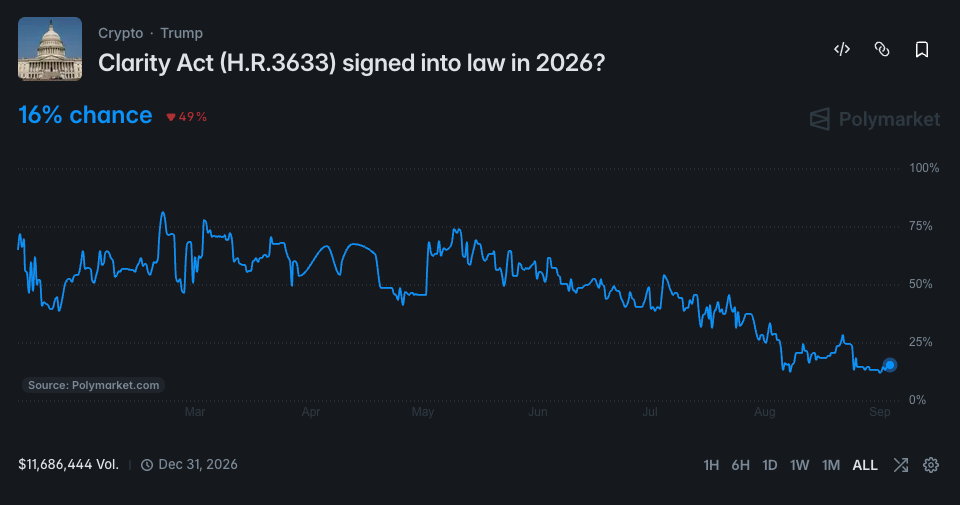
Still Pressing Congress for the CLARITY Act
Atkins says rulemaking alone will not settle the matter. He wants Congress to pass the CLARITY Act. That bill would divide crypto oversight between the SEC and the Commodity Futures Trading Commission (CFTC). Only legislation, he argues, can lock in durable rules that a future SEC cannot simply reverse.

Whether Congress or the SEC’s own rulemaking moves first, Atkins is not choosing. He frames both as part of the same push to bring capital home.
The post SEC Chair Explains How New Rules Entice Crypto Firms Home appeared first on BeInCrypto.


The U.S. Commodity Futures Trading Commission asked a federal court on Sept. 2 to dismiss CME Group’s lawsuit challenging the regulator’s treatment of cryptocurrency perpetual contracts as futures.
Summary
- CFTC asked a federal court to dismiss CME’s lawsuit challenging regulated cryptocurrency perpetual futures classification.
- Regulator argues CME lacks standing because it can list comparable perpetual contracts on its exchange.
- CME says Kalshi’s Bitcoin perpetual should be regulated as a swap, rather than traditional futures.
- CFTC argues reclassification would not prevent rival venues from offering economically similar products to traders.
- CME must respond by October 2 before the court considers dismissal and the underlying claims.
The CFTC argued that CME lacks legal standing because the exchange could list perpetual futures under the same regulatory policy it is challenging. The agency characterized part of CME’s claimed competitive disadvantage as resulting from its own decision not to offer comparable products.
CME filed the case in the U.S. District Court for the District of Columbia on June 18. It seeks to overturn the CFTC’s approval of Kalshi’s Bitcoin perpetual contract and a related agency policy statement.
The dismissal request represents the regulator’s position. The court has not ruled on the motion or decided whether cryptocurrency perpetual contracts should legally be treated as futures or swaps.
CFTC says CME created its alleged disadvantage
To establish standing in federal court, a plaintiff generally must show a concrete injury linked to the defendant’s conduct. It must also demonstrate that a favorable court ruling would likely address that injury.
CME claims the CFTC’s decision gave newer exchanges an unfair competitive advantage by allowing them to offer perpetual contracts under the futures framework. The exchange says those products should instead face the rules applying to swaps.
The CFTC disputes the claimed injury. It argued that CME is also a designated contract market and can seek permission to list perpetual futures under the same process available to Kalshi.
According to the regulator, any disadvantage arising from CME’s decision not to list the contracts is therefore “self-inflicted.” The agency said a party cannot establish standing by declining to use the same regulatory opportunity available to its competitors.
The CFTC also pointed to CME’s own trading figures. It said the exchange’s Bitcoin and Ether futures volumes in June and August exceeded their May levels, when the Kalshi approval was issued.
Those figures form part of the regulator’s argument that CME has not shown a concrete competitive loss caused by the approval. CME may challenge that interpretation when it responds to the motion.
Reclassification may not resolve CME’s alleged harm
The CFTC raised a second standing argument involving redressability. Even if the court classified perpetual contracts as swaps, the regulator said competing venues could still offer economically similar products.
A ruling in CME’s favor would therefore change the regulatory category without necessarily removing the competition CME claims is harming its business.
The CFTC said CME is not challenging the agency’s general authority to approve the product. Instead, the lawsuit focuses on whether the Kalshi contract fits the legal definition of futures or swaps.
The regulator also argued that CME’s competitive interests do not fall within the “zone of interests” protected by the Commodity Exchange Act provisions cited in the lawsuit. This test asks whether the interests a plaintiff seeks to protect relate to the purposes of the statute allegedly violated.
CME has presented the dispute as an issue involving regulatory consistency and investor protection. The CFTC’s motion frames it as a competitor attempting to use litigation against products it could offer itself.
CME says perpetual contracts are swaps
Perpetual contracts give traders continuing price exposure without a predetermined expiration date. They commonly use recurring funding payments to keep contract prices aligned with the referenced asset.
Traditional futures usually have fixed expiration and settlement dates. CME argues that the lack of an expiration date places perpetuals within the swap definition established under the Dodd-Frank Act.
The CFTC disagrees. It maintains that a futures contract does not require a fixed expiration date under the Commodity Exchange Act or existing regulatory interpretations.
The dispute began after the regulator approved Kalshi’s BTCPERP contract on May 29. The Bitcoin-linked product trades through KalshiEX, a CFTC-registered designated contract market.
As previously reported, the CFTC’s decision opened a regulated U.S. venue to Bitcoin perpetual futures after the products had largely remained on offshore cryptocurrency exchanges.
CME sued the regulator several weeks later. Its complaint seeks to vacate the Kalshi approval and the broader policy statement supporting the treatment of perpetual contracts as futures.
The central dispute concerns whether perpetual contracts legally qualify as futures or swaps. Each classification carries different registration, trading and oversight requirements.
CFTC defends its review of Kalshi’s contract
The CFTC reviewed Kalshi’s application under Regulation 40.3, which allows a designated contract market to request formal approval before listing a new product.
The agency concluded that the contract complied with the Commodity Exchange Act and CFTC rules. It also said perpetual designs may not be suitable for every asset and could require individual review.
CFTC Chair Michael Selig later rejected several criticisms directed at the decision. He said regulated perpetual contracts remain subject to domestic leverage, margin and customer protection requirements.
In related coverage, Selig argued that U.S. law does not require futures to carry fixed expiration dates. That interpretation now forms part of the broader legal dispute.
CME CEO Terry Duffy has criticized the approval process and warned that perpetual products could encourage excessive speculation. Kalshi has rejected that criticism and described the lawsuit as an effort to limit competition.
The companies’ statements represent opposing positions in active litigation. The court has not determined whether the CFTC followed the correct process or adopted the correct interpretation of the law.
CME response is due October 2
CME must file its opposition to the dismissal motion by Oct. 2. The CFTC has also requested an oral hearing, although the court will decide whether one is necessary.
The judge can dismiss the case on standing or other procedural grounds without resolving whether perpetual contracts are futures or swaps. Such a decision would leave the CFTC’s existing policy and Kalshi approval in place.
If the court finds that CME has standing, it could proceed to examine the substantive legal claims. Those claims include allegations that the agency misread the Commodity Exchange Act and acted arbitrarily under federal administrative law.
The case may also influence future applications from exchanges seeking to list perpetual contracts tied to cryptocurrencies, equities or commodities. Kalshi is reportedly preparing additional products, including a perpetual contract linked to WTI crude oil.
For now, Kalshi’s Bitcoin perpetual remains available under the futures framework. The CFTC’s dismissal motion begins the next stage of the case but does not settle the classification dispute.


A Michigan court has ordered Kalshi to keep sports event contracts unavailable in the state under a preliminary injunction that carries fines of $500,000 per day for violations.
Summary
- A Michigan court ordered Kalshi to continue blocking sports event contracts for residents under a preliminary injunction.
- Kalshi could face fines of $500,000 per day for violating the court’s geofencing requirements.
- Michigan sued Kalshi in March, alleging its sports contracts amounted to unlicensed sports betting.
- The injunction replaces a temporary restraining order issued in June and will remain until a final ruling.
- Kalshi faces similar legal challenges over sports contracts across multiple US states.
The Michigan Attorney General’s Office said Wednesday that Ingham County Circuit Court Judge Rosemarie E. Aquilina signed the order on Sept. 1, extending restrictions that have applied to the prediction market platform since a temporary restraining order was issued in June.
Under the injunction, Kalshi cannot offer, list, execute or settle sports-related contracts for people located in Michigan. The restrictions cover products functionally similar to internet sports betting, including moneyline markets, parlays, over-under contracts, in-game betting and proposition bets.
Kalshi must use a third-party geolocation provider licensed by the Michigan Gaming Control Board and capable of meeting the regulator’s geofencing requirements. The court set a $500,000 daily fine for any day it finds the company failed to comply with those requirements.
The injunction will remain in place until the court enters a final order in the case.
Michigan court keeps Kalshi sports contracts blocked
Michigan Attorney General Dana Nessel sued Kalshi in March on behalf of the state and in collaboration with the Michigan Gaming Control Board, alleging that the company violated the Michigan Lawful Sports Betting Act by offering sports event contracts without state approval.
The complaint argues that Kalshi enables residents to engage in sports betting while presenting the transactions as event-contract trading. Michigan has maintained that the products fall within its gambling laws even though Kalshi operates as a federally regulated derivatives exchange.
Nessel initially sought an order declaring the operation a common-law nuisance along with permanent injunctive relief preventing Kalshi from offering or advertising the products in Michigan.
The legal fight moved between state and federal court after Kalshi attempted to remove the lawsuit to the U.S. District Court for the Western District of Michigan. The federal court granted Michigan’s request to remand the case, returning it to Ingham County Circuit Court.
In late June, Aquilina granted a temporary restraining order that barred Kalshi from offering or facilitating sports event contracts in Michigan. As crypto.news previously reported, the original order imposed potential fines of $120,000 per day for noncompliance and required the company to meet state geolocation rules.
The new preliminary injunction replaces the temporary order while the underlying lawsuit continues.
“Kalshi long attempted to pass itself off as a legitimate gaming operation in our state, and I am relieved that this order further protects Michigan residents from its predatory, unlicensed practices,” Nessel said.
Kalshi has faced conflicting Michigan orders
The Michigan case previously created a separate dispute between state restrictions and federal derivatives oversight.
After the state court ordered Kalshi to stop its Michigan sports operations, the Commodity Futures Trading Commission directed the exchange to continue operating its federally regulated market.
The CFTC order involving Michigan came after Kalshi had begun unwinding sports event positions held by users in the state to comply with the court restrictions.
Kalshi told the federal regulator that the Michigan order prevented it from continuing to accept trades from state residents. The company argued that following both directives placed it between conflicting state and federal requirements.
The disagreement stems from Kalshi’s position that event contracts traded on its federally registered exchange fall under the Commodity Exchange Act and the CFTC’s exclusive jurisdiction. Michigan contends that sports-related products can still be regulated under its gambling laws when offered to people inside the state.
Aquilina’s latest order requires Kalshi to provide copies of the injunction within three business days to futures commission merchants that make sports contracts processed through its exchange available to their customers.
The order states that Kalshi will not be held responsible for an FCM’s customers when information about their locations remains in the possession of the intermediary and outside Kalshi’s control.
State fights over Kalshi sports markets continue
Michigan is one of more than a dozen states where regulators, attorneys general or other authorities have challenged prediction markets over sports contracts.
The disputes have produced different results as courts consider whether federal derivatives law prevents states from applying their gambling rules.
On Aug. 28, Kalshi lost its Nevada appeal after the Ninth Circuit upheld the state’s ability to apply gaming laws to its sports contracts. The ruling rejected Kalshi’s attempt to prevent Nevada from requiring state gaming approval.
New Jersey has taken the opposite side of a split in the federal appeals courts to the U.S. Supreme Court. The state filed a petition seeking review after the Third Circuit found that federal law prevented New Jersey from regulating Kalshi’s sports event contracts under its gambling regime.
Elsewhere, Connecticut opened another state-level front last week.
Connecticut Attorney General William Tong, Department of Consumer Protection Commissioner Bryan T. Cafferelli and Gov. Ned Lamont sued Kalshi over sports contracts on Aug. 26, seeking an injunction to stop the company from offering the products without a state sports wagering license.
Connecticut regulators had previously ordered Kalshi, Robinhood and Crypto.com to stop offering or promoting sports event contracts in December 2025. State officials raised concerns involving licensing, the state’s minimum sports betting age and consumer protections required of approved operators.
Kalshi challenged that enforcement action in federal court, maintaining that its contracts are governed by federal commodities law.
The CFTC later joined the jurisdictional fight by suing Connecticut and other states over attempts to regulate federally registered prediction markets. The regulator has argued that contracts listed on designated contract markets fall under the Commodity Exchange Act and cannot be prohibited by states simply because their outcomes involve sporting events.
State authorities have continued pursuing their own cases. Baltimore sued Kalshi and Polymarket in August over alleged unlicensed sports betting, with its Kalshi complaint naming Coinbase, Robinhood and Webull over their distribution of sports event contracts.
Kentucky filed similar lawsuits in June against Kalshi and Polymarket, while cases and enforcement actions have reached New York, Washington, Massachusetts and other jurisdictions.
In Michigan, the Sept. 1 injunction leaves the restrictions in place while Nessel’s March lawsuit proceeds toward a final ruling.
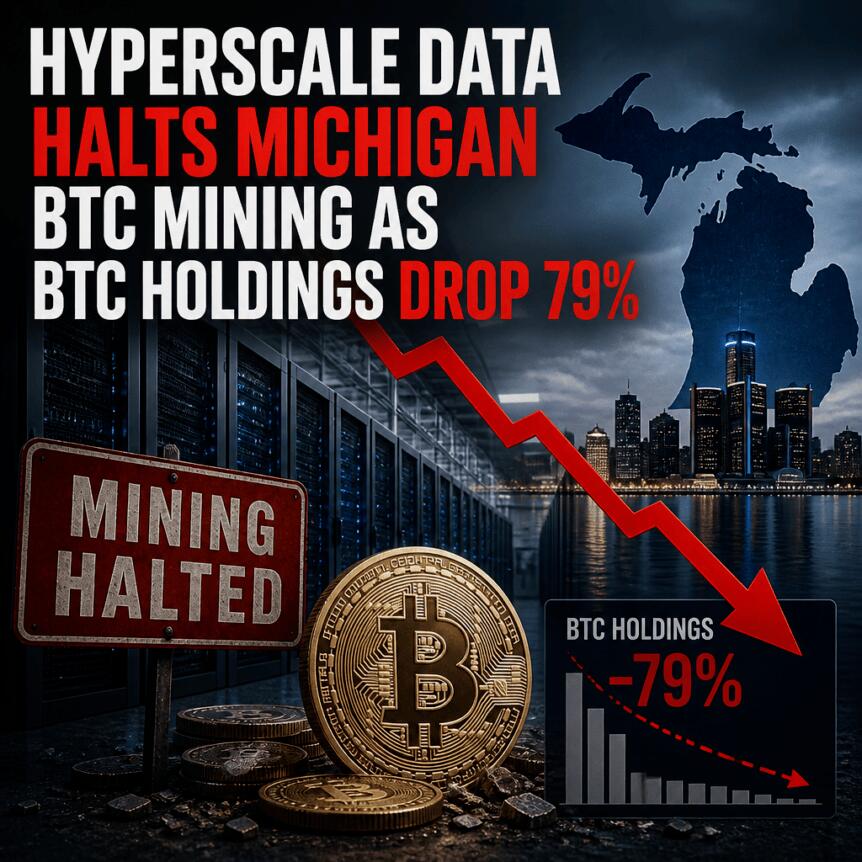
Hyperscale Data has shut down all Bitcoin mining at its Michigan facility as it moves forward with plans to repurpose the site for an artificial intelligence (AI) data center customer. The company said the change follows an inspection tied to the customer’s requirements, and it plans to sell the mining hardware once the transition is complete.
In the same period, Hyperscale has also been drawing down its Bitcoin holdings to fund the buildout. Shares, meanwhile, slid to a record-low level on Wednesday after a recent reverse stock split.
Key takeaways
- Hyperscale Data ended Bitcoin mining at its Michigan site to fulfill requirements for an AI data center agreement.
- The company said miners were switched off after an inspection by an unnamed California-based neocloud provider.
- Hyperscale expects the AI master services agreement to generate more than $1.2 billion over up to 20 years, with upside if additional capacity is taken.
- The firm cautioned that expansion economics depend on financing, approvals, and the customer exercising extension and capacity options.
- Hyperscale shares fell sharply to a split-adjusted record low following a one-for-five reverse split that became effective Aug. 25.
From mining to AI compute at the Michigan campus
Hyperscale Data said Wednesday that it has ceased Bitcoin mining operations at its Michigan facility and switched off all miners. The company tied the step to an inspection conducted for its AI data center master services agreement requirements, with the inspection carried out by an unnamed California-based neocloud provider, as described in its statement carried by PR Newswire.
According to Hyperscale, the firm intends to sell the mining equipment associated with the facility’s halted operations. The shutdown is part of a broader shift in which Hyperscale is converting the Michigan site from a mining-focused setup into AI infrastructure. It also indicated that the AI effort is being funded through proceeds from Bitcoin activity under its “Bitcoin treasury.”
The AI master services agreement: capacity, term, and revenue range
Hyperscale said the AI customer has contracted for 20 megawatts (MW) of computing capacity under a 10-year master services agreement. The deal includes two optional five-year extensions, giving the arrangement a possible 20-year maximum term.
In its estimate, Hyperscale projected that the agreement could generate more than $1.2 billion over the maximum 20-year period. The company also said an additional 32 MW option could push the potential revenue above $3 billion. On the infrastructure side, Hyperscale stated the facility is expected to support up to 340 MW, leaving room for scaling beyond the initial contracted capacity.
Importantly, Hyperscale emphasized that its expansion plans remain preliminary. The company said realized revenue figures depend on multiple conditions—specifically financing, approvals, and other risks that could affect how the project progresses. In addition, it noted that the $1.2 billion estimate assumes the customer exercises both extension options, while the higher $3 billion scenario requires the customer to take the additional capacity option.
Stock slump follows reverse split as Bitcoin holdings shrink
Alongside the operational shift, Hyperscale’s equity performance reflected investor skepticism about the pace and certainty of the AI transition. According to Yahoo Finance data, the company’s shares closed at $0.1984 on Wednesday, down about 17%, after trading as low as $0.1932 intraday. The close marked a split-adjusted record low for the NYSE American-listed stock.
Hyperscale’s decline came shortly after it completed a one-for-five reverse stock split. The SEC filing referenced in the report indicates the split-adjusted shares began trading on Aug. 25.
Hyperscale has also reduced its Bitcoin holdings while funding the Michigan buildout. Earlier coverage noted that as of July 30, the company held about 1,006 Bitcoin and had sold 100 BTC, while arranging a BTC-backed credit facility for the Michigan campus (as described in prior reporting on Cointelegraph).
More recently, Hyperscale said in a PR Newswire update that it sold about 65 BTC for roughly $5.1 million during the week ending Aug. 30, with proceeds intended to provide additional capital for the Michigan development. BitcoinTreasuries.NET now lists Hyperscale as holding 215 BTC, worth about $16.7 million—down roughly 79% from the amount cited in July, according to the listing.
Why the mining shutdown matters for investors
The immediate takeaway for shareholders is the tradeoff Hyperscale is making between steady-state mining revenue and long-duration AI infrastructure economics. By switching off mining and directing resources toward compute services, the company is effectively betting that contracted AI capacity will provide a more valuable path forward than ongoing Bitcoin production.
However, the company’s own revenue range highlights the uncertainty embedded in that bet. Hyperscale’s estimates are conditional on customer decisions (exercising extensions and taking additional MW capacity) and on execution factors such as financing and approvals. That means the timeline and realized profitability of the AI transition may diverge from the optimistic projections depending on how those conditions play out.
Meanwhile, the stock’s reaction following the reverse split underscores that investors are watching not only the operational shift but also whether the company can translate Bitcoin-treasury wind-downs into credible, funded, and approved construction milestones.
Going forward, market participants will likely focus on whether Hyperscale can convert its contracted 20 MW into the full extension and additional-capacity scenarios it cited—and whether financing and permitting stay on track, especially as Bitcoin holdings continue to fall in support of the AI buildout.


Backpack US appointed Multicoin Capital cofounder Kyle Samani to its board of directors on Sept. 2 as the company expands its regulated financial services in the United States.
Summary
- Backpack US appointed Multicoin Capital cofounder Kyle Samani to its board of directors on Wednesday.
- Samani stepped back from Multicoin in February while retaining an advisory relationship with the firm.
- He remains chairman of Forward Industries, a publicly traded company pursuing a Solana treasury strategy.
- Backpack says the appointment will support its expansion across regulated U.S. and onchain financial markets.
- Backpack reports serving users across 150 countries and processing more than $450 billion in volume.
Samani is an early Solana investor and a longtime supporter of blockchain based capital markets. He stepped back from managing Multicoin Capital in February 2026 but retained an advisory relationship with the venture firm.
The appointment gives Samani a governance role at Backpack US rather than an executive position. Backpack did not disclose his term, compensation, committee assignments or specific responsibilities.
Backpack CEO Armani Ferrante said Samani’s experience with decentralized networks and crypto regulation made him a suitable adviser. Ferrante said Samani understands the company’s plan to connect traditional financial markets with blockchain infrastructure.
Samani brings Solana and venture capital experience
Samani cofounded Multicoin Capital in 2017 and helped establish the firm as an early institutional investor in Solana. Multicoin has also backed projects focused on decentralized finance, blockchain infrastructure and crypto trading.
Samani announced his departure from Multicoin’s daily management in February. He said he planned to explore other areas of technology while continuing to advise the firm.
He also remains chairman of Forward Industries, a publicly traded company pursuing a Solana treasury strategy. Forward adopted the strategy after completing a $1.65 billion private placement led by Multicoin, Galaxy Digital and Jump Crypto in 2025.
The strategy is designed to increase the company’s exposure to SOL and expand its SOL holdings per share. Those objectives are corporate targets rather than guaranteed results.
Samani’s Forward Industries position gives him experience overseeing a public company with a digital asset treasury. It also connects him closely to the Solana ecosystem, which remains central to several Backpack products.
Backpack did not explain how it would address potential conflicts involving Samani’s roles at Forward and Multicoin. The company also did not disclose whether he would be excluded from decisions involving Multicoin portfolio companies.
Backpack US focuses on regulated financial products
Backpack describes itself as a financial services group connecting crypto markets with traditional finance. Its products include a crypto exchange, a self custody wallet and Backpack Securities.
The company says Backpack Securities combines a regulated brokerage with a tokenization platform. Its stated objective is to provide access to conventional securities and blockchain based asset distribution within one product environment.
Backpack did not identify the U.S. licenses held by each group entity in its appointment announcement. It also did not provide registration numbers or explain which entity would handle brokerage, custody, tokenization and trade execution.
Companies providing securities brokerage services in the United States generally must register with the Securities and Exchange Commission and become members of the Financial Industry Regulatory Authority unless an exemption applies. Specific registrations should therefore be confirmed against official regulatory records as Backpack expands its services.
The company has already followed a regulated expansion strategy in Europe. Backpack acquired FTX EU and assumed responsibility for returning funds to eligible former customers. The company later addressed questions surrounding its purchase of FTX EU.
Backpack subsequently launched its European exchange through a Cyprus based entity operating under the Markets in Financial Instruments Directive framework. That expansion gave the company a regulated route for offering crypto derivatives to eligible European customers.
Equity trading supports Backpack’s broader strategy
Backpack said Samani’s appointment followed the launch of continuous trading for several equity products. It named SpaceX, Micron, SanDisk and SK Hynix among the assets available through its services.
The company described its offering as trading in “real” equities alongside a growing range of tokenized stocks. However, the announcement did not provide a complete explanation of the execution venues, custody structure, settlement system or shareholder rights attached to each product.
Those distinctions matter because traditional shares, tokenized shares and price tracking instruments do not always provide identical rights. Depending on the structure, investors may not receive direct voting rights, dividend claims or ownership of the underlying security.
Other crypto platforms are developing similar services. Kraken recently introduced more than 7,000 traditional U.S. stocks for eligible European customers alongside its tokenized xStocks products.
Kraken has also allowed eligible traders to use certain tokenized stocks as collateral for futures and margin positions. The development reflects growing competition among crypto companies seeking to combine securities exposure with blockchain based trading systems.
Samani said the future of capital markets involves combining “institutional risk controls with onchain efficiency and transparency.” His comment represents his assessment of the market’s direction, not a confirmed outcome for Backpack’s products.
Board appointments support Backpack’s U.S. expansion
Samani joins a board that also includes former acting SEC chairman Michael Piwowar, whom Backpack appointed earlier in 2026. The appointments add venture capital, public company and securities regulation experience to Backpack’s governance structure.
Backpack said its leadership additions would support the creation of regulated infrastructure connecting traditional and digital assets. It has not announced new product approvals or regulatory licenses resulting from Samani’s appointment.
The company reports serving customers in more than 150 countries and regions and processing over $450 billion in trading volume. These figures come from Backpack and were not accompanied by an independently audited breakdown in the board announcement.
Backpack has not provided a fixed schedule for expanding its U.S. equity or tokenized asset services. It also has not disclosed whether Samani’s appointment is connected to a specific product launch, acquisition or licensing application.
The next relevant updates will involve Backpack’s U.S. registrations, customer eligibility rules and product structure. Further disclosures may clarify which entities handle securities execution, custody and token issuance.
Until then, the appointment represents a governance step supporting Backpack’s stated U.S. strategy. It does not by itself confirm regulatory clearance for additional securities or tokenized asset products.


Hyperscale Data stopped all Bitcoin mining operations at its Michigan facility on Sept. 1 as it began preparing the site for an artificial intelligence computing customer.
Summary
- Hyperscale Data stopped all Bitcoin mining at its Michigan facility effective September 1, 2026, completely.
- Company plans to sell mining equipment while preparing the site for AI computing operations now.
- Bitcoin holdings fell about 79% from 1,006 BTC in July to approximately 215 BTC recently.
- Customer contracted 20 MW for ten years with two optional five year extensions available later.
- GPUS shares closed Wednesday at $0.1984, falling 17% after reaching a record intraday low earlier.
The company switched off the facility’s mining equipment after an inspection by an unnamed California based neocloud provider, according to a Sept. 2 announcement. Hyperscale intends to sell the servers previously used to mine Bitcoin.
The shutdown completes the first operational step in converting the Michigan property from a Bitcoin mine into an AI data center. Hyperscale has also sold most of its Bitcoin treasury to provide capital for the project.
Its holdings have fallen approximately 79% from about 1,006 BTC on July 30 to 215 BTC at the end of August. The remaining Bitcoin was worth approximately $16.7 million when the company published its latest treasury update.
Hyperscale Data redirects Michigan power toward AI
Hyperscale said its customer contracted for 20 megawatts of critical AI computing capacity under a master services agreement. The initial term runs for 10 years and includes two optional five year extensions controlled by the customer.
The company estimates that the contract could produce more than $1.2 billion in revenue over 20 years. However, that figure assumes the customer exercises both extension options. It is not guaranteed revenue under the initial contract term.
The customer also has an option to take another 32 MW of computing capacity. Hyperscale estimates that total revenue could exceed $3 billion if the customer exercises that option within two years and retains the capacity through both extensions.
The larger projection therefore depends on several future decisions by the customer. Hyperscale has not disclosed the contracted revenue expected from the initial 10 year term alone.
Hyperscale said the Michigan facility could eventually support approximately 340 MW of power. A full 52 MW deployment under the current agreement would consume about 20% of that expected capacity, leaving the remainder available for other customers.
The 340 MW target remains a development plan. The company cautioned that the additional capacity depends on financing, engineering work, power availability, approvals and commercial demand.
Bitcoin treasury sales help finance construction
Hyperscale has reduced its Bitcoin treasury as it redirects money toward engineering, equipment procurement and other costs at the Michigan facility.
The company reported selling approximately 65 BTC for $5.1 million during the week ending Aug. 30. It said the proceeds would provide additional capital for the data center project.
The sales left Hyperscale holding approximately 215 BTC. BitcoinTreasuries.NET ranks the company 84th among the public businesses tracked by its database.
Hyperscale held approximately 1,006 BTC in late July, meaning it disposed of about 791 BTC within roughly one month. The company has not published one consolidated breakdown showing the price and proceeds for every sale during that period.
Its decision reflects a broader shift among Bitcoin miners seeking to use existing power connections and data center infrastructure for AI computing. Recent coverage noted that miners are redirecting infrastructure toward AI as demand for high performance computing capacity grows.
Bitcoin mining and AI workloads both require access to power, cooling equipment and data center buildings. However, converting a mining site does not automatically make it suitable for AI customers, which can require different networking, backup systems and computing infrastructure.
Mining equipment will be sold after the shutdown
Hyperscale said it expects to record additional gains from selling the Bitcoin mining servers removed from the Michigan operation. It has not disclosed the number of machines, their models, book value or expected sale proceeds.
The value of mining equipment can depend on Bitcoin prices, network difficulty, energy efficiency and demand from other operators. The company’s expectation of gains remains forward looking until the equipment is sold and the final proceeds are recorded.
The shutdown applies specifically to Hyperscale’s Michigan facility. The announcement did not say that the company had ended every Bitcoin related activity across the wider corporate group.
Hyperscale also continues to hold Bitcoin through its treasury. Its longer term corporate plan calls for separating Ault Capital Group through a divestiture expected in 2027, after which Hyperscale would focus on data center operations and digital asset holdings.
The divestiture remains subject to the exchange process involving the company’s Series F preferred stock. Only investors who surrender those shares under the planned offer would receive shares in Ault Capital Group.
Hyperscale Data stock falls after reverse split
Hyperscale Data shares closed at $0.1984 on Sept. 2, falling about 17% during the session. The stock traded as low as $0.1932 and reached an intraday high of $0.3012, according to market data.
The closing price represented a split adjusted record low. Trading volume exceeded 117 million shares, considerably increasing activity around the announcement.
GPUS began trading on a split adjusted basis on Aug. 25 after Hyperscale completed a one for five reverse stock split. The company confirmed the effective date through an SEC filing.
A reverse split reduces the number of shares outstanding while proportionally increasing the price assigned to each share. It does not by itself increase the company’s total market value.
CEO William Horne said he believed shareholders would benefit as the Michigan conversion advances and Hyperscale’s market valuation moves closer to those of other data center companies. This is management’s expectation and is not assured.
The next measurable milestones will include preparing the initial 20 MW for the customer, selling the mining equipment and disclosing revenue under the initial contract term. Investors will also need updates on construction costs, financing and the timing of capacity deployment.


Hyperscale Data has ended all Bitcoin mining operations at its Michigan facility as it prepares the site for an artificial intelligence data center customer.
On Wednesday, the company said that all Bitcoin miners at the facility were switched off following an inspection by the unnamed California-based neocloud provider. Hyperscale said it intends to sell the associated mining equipment.
Hyperscale said the customer has contracted for 20 megawatts (MW) of AI computing capacity under a 10-year master services agreement with two optional five-year extensions. The company estimated that the agreement would generate more than $1.2 billion over the maximum 20-year term. An additional 32 MW option could lift potential revenue above $3 billion, while the site is expected to support 340 MW.
The shutdown marks a further step in Hyperscale’s conversion of its Michigan facility from Bitcoin mining to AI infrastructure, a project it is also funding through sales from its Bitcoin treasury.
Hyperscale also cautioned that its expansion plans remain preliminary and subject to financing, approvals and other risks. The $1.2 billion estimate requires the customer to exercise both extension options, while the $3 billion projection also depends on it taking the additional capacity.
Hyperscale Data stock slides to record low
According to Yahoo Finance data, Hyperscale Data shares closed at $0.1984 on Wednesday, down about 17%, after touching an intraday low of $0.1932. The closing price marked a split-adjusted record low for the NYSE American-listed stock.
The decline came shortly after Hyperscale completed a one-for-five reverse stock split. Its shares began trading on a split-adjusted basis on Aug. 25, according to a filing with the US Securities and Exchange Commission.
Related: Bitcoin ETFs notch best month of 2026 as BTC gains 25% in August
Hyperscale has also reduced its Bitcoin holdings sharply while funding the AI buildout. On July 30, the company held about 1,006 Bitcoin and had sold 100 BTC while arranging a BTC-backed credit facility for the Michigan campus.
On Tuesday, the company said that it sold about 65 BTC for $5.1 million during the week ending Aug. 30. Hyperscale said the proceeds would provide additional capital for the Michigan development.
BitcoinTreasuries.NET now lists Hyperscale as holding 215 BTC, worth about $16.7 million. This represents a decline of about 79% from the amount cited in July and leaves it ranked 84th among public companies tracked by the platform.
Magazine: BTC will hit $1M by 2030… but Arthur Hayes is buying ETH instead


Full Sail, a decentralized exchange, is winding down on Sui (SUI) after an attacker drained roughly $91,000 from three of its vaults on August 29.
The closure makes the DeFi protocol the latest 2026 casualty of a security failure rather than weak demand.
Follow us on X to get the latest news as it happens
Full Sail Winds Down After $91,000 Exploit
Full Sail said the attacker exploited Switchboard production code that governs who can sign oracle price updates. The attacker then added a key they controlled to a live oracle.
Once the network accepted that key, false prices appeared valid. The attacker pushed prices to roughly 100 times below market and deposited into the affected vaults. Restoring the prices then allowed a withdrawal worth more than the deposit.
“This was not a Full Sail admin key compromise,” the team added.
Direct liquidity pool positions escaped the attack. Full Sail paused the deposits and withdrawals after confirming the incident on August 29.
Virtue separately reported about $455,000 in losses tied to the same Switchboard incident. Switchboard, meanwhile, said contributors halted its network on Aptos, Sui, Iota, and Movement.
Full Sail added that Switchboard had not supplied the technical details it requested as of September 1, nor committed funds toward compensation. Mysten Labs also reportedly declined a request for financial support.
“All remaining protocol owned liquidity is going to users, and the team will absorb the shortfall so community depositors are compensated first,” Full Sail noted. “We will follow with a detailed incident report and a separate reflection on what led to the decision to wind down.”
Hacks Keep Closing Crypto Projects in 2026
Full Sail joins a lengthening 2026 list of teams that closed after a breach rather than a funding squeeze. Decentralized Finance (DeFi) platform Summer.fi wound down after a $6 million exploit hit its Lazy Summer Protocol.
Radiant Capital ended DAO operations in June, 18 months after losing more than $50 million. Step Finance and SolanaFloor closed in February following a treasury hack.
The pattern is now visible in the totals. RootData counts 204 crypto projects that shut down, went dark, or entered bankruptcy in 2026.
Subscribe to our YouTube channel to watch leaders and journalists provide expert insights
The post Full Sail Becomes 2026's Latest Protocol to Close After a Hack appeared first on BeInCrypto.
Crypto World
Dogecoin becomes only losing bet for Japan-listed firm as it sells altcoins for bitcoin
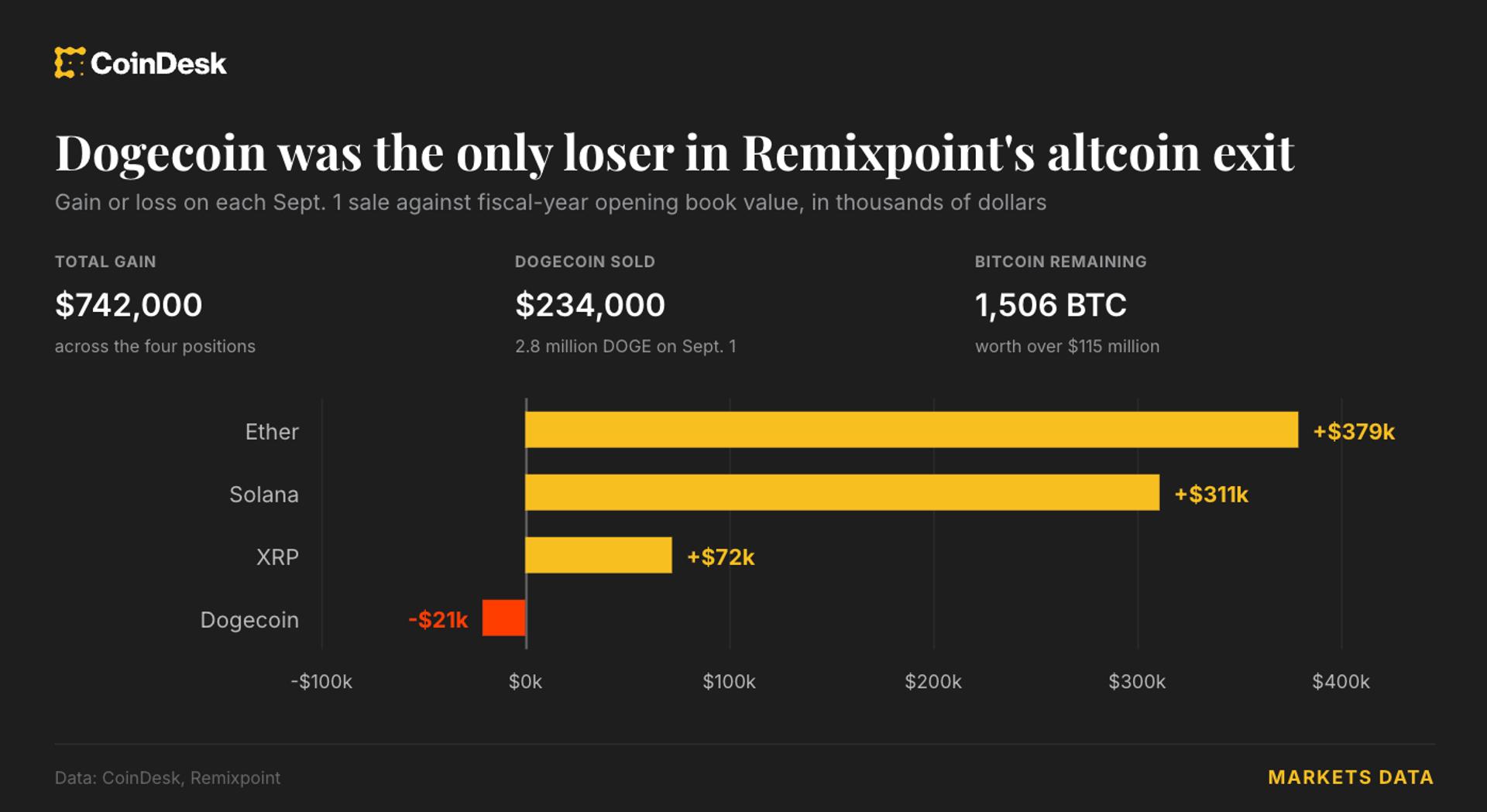
Remixpoint booked gains on ether, solana and XRP, but sold DOGE below its fiscal-year opening value as it concentrated its crypto holdings in bitcoin.

Family of Manchester teacher and partner killed in Lisbon funicular disaster in ‘living hell’ as moving tributes issued
Japan services sector posts five-month activity high

Investors Can't Get Enough of AI-Created Dramas: Chinese Broadcaster Mango Up 64%





-

 Fashion6 days ago
Weekend Open Thread: Maeve – Corporette.com
-

 Crypto World6 days ago
Bitcoin’s 22% rally now needs real demand to outlast Treasury liquidity boost
-

 Business6 days ago
Apple Confirms September 9 Keynote and Reveals Its Full Pre-Order Schedule
-

 Business6 days ago
Salesforce Stock Soars 19% as Blowout Earnings and Agentforce AI Growth Silence Software Skeptics
-

 Business5 days ago
Onto Innovation Stock: AI’s Next Bottleneck Is Yield (NYSE:ONTO)
-

 Crypto World5 days ago
Bitcoin price tests $82K resistance as Brandt stays long
-
 Tech4 days ago
Hugging Face built a $4.5 billion empire on free AI models. Now Nvidia is buying it for $12.9 billion
-

 Business6 days ago
iPhone 18 Pro Pre-Orders Could Shift to Saturday as Apple Reportedly Avoids September 11 Anniversary
-

 Crypto World6 days ago
Truflation calls for Fed rate cut after PCE forecast
-

 Crypto World6 hours ago
CLARITY Act could advance within weeks, Atkins says
-

 News Videos4 days ago
Charlie Munger on Robinhood: No one should believe that Robinhood’s trades are free
-

 Tech5 days ago
PaperCut releases second emergency patch for exploited flaws
-
 Business7 days ago
AI Assistant Startup Instinct Rockets to $2.5 Billion Valuation in Weeks Amid Investor Feeding Frenzy
-

 Tech6 days ago
The fix for the AI agent that hijacked a company’s DNS: it can propose the change, but it can’t approve it
-

 Tech4 days ago
Tamagotchi Ring Takes the 30-Year Digital Pet and Places it on Your Finger
-
 Entertainment6 days ago
‘Adults’ Creators Break Down Season 2’s Most Shocking Moments and Tease a Potential Season 3
-

 Tech4 days ago
As the influencer economy drives retail sales, Seattle startup raises $22M to play matchmaker
-
 NewsBeat4 days ago
Trump posts AI video of ‘Lake America’ being protected by an army of bequiffed ‘Donald Ducks’
-
 Entertainment3 days ago
Taylor Swift Reportedly ‘Frustrated’ With Travis Kelce After ‘Short’ Honeymoon
-
 Business1 day ago
Oil Price Today (September 2): Crude oil nears $97 as war tensions escalate. Will it hit $100 again?
You must be logged in to post a comment Login