
Crypto World
Bitcoin Climbs to 11-Week High as US Treasury Expands Debt Buybacks


Bitcoin climbed to its highest level since early June as trading picked up during the Wall Street open and US markets reacted to a government liquidity plan. By the time of writing, BTC was up roughly 6% on the day and trading above $69,700 on Bitstamp, pushing it to about $69,749—its strongest point since June 2, according to TradingView data.
The catalyst was a US Treasury announcement that aims to expand the size of certain debt buyback operations, a move that eased pressure in bond yields and encouraged broader risk appetite. But crypto-specific liquidity signals also suggest the rally may face friction: Bitfinex highlighted that stablecoin liquidity on exchanges has been shrinking, which it argues can leave upside “unfunded.”
Key takeaways
- Bitcoin rose about 6% to $69,749, its highest level since June 2, as the Wall Street session coincided with a shift in US bond yields.
- The US Treasury plans to at least double the maximum size of some debt buybacks to $4 billion per operation starting Sept. 9, supporting liquidity in longer-dated nominal debt.
- Following the announcement, the US 30-year yield fell to around 5.19% at the time of writing (down 9 basis points), helping lift risk assets.
- Bitfinex warned that declining stablecoin supplies on exchanges—down $14 billion since May—could cap the durability of Bitcoin’s rebound.
- CryptoQuant data shows stablecoin liquidity tightening recently, with its Stablecoin Supply Ratio rising further since the end of June.
US Treasury buyback plan cools yields, lifts risk appetite
US stock markets opened higher after the US Treasury Department said it would increase the maximum size of government debt buybacks to at least $4 billion per operation, up from $2 billion. The Treasury stated this applies to operations beginning on Sept. 9.
In the bond market, the yield on the US 30-year note—previously pushed higher and described in earlier coverage as reaching its highest level in nearly 20 years—dropped immediately on the news. At the time of writing, the 30-year yield was around 5.19%, down 9 basis points, according to the report’s TradingView reference.
In a press release, the Treasury said larger buyback sizes reflect its goal of providing more liquidity support in longer-dated nominal sectors where it receives consistently strong participation in such operations. The filing frames the change as a liquidity enhancement rather than a straightforward reduction in debt.
One point of emphasis from financial commentary was that scaling buybacks does not equal debt paydown. Peter Boockvar, chief investment officer at One Point BFG Wealth Partners, was quoted by CNBC saying it is “just a rearrangement of the maturity schedule of Treasuries.”
Meanwhile, the broader context remains that US national debt continues to trend upward toward the $40 trillion mark, with interest costs also climbing—an issue highlighted by trading resource The Kobeissi Letter using data it said came from Bank of America, forecasting rising interest payments if rates stay steady.
Why bond-market liquidity can matter for Bitcoin
Bitcoin’s sensitivity to macro liquidity is not new, and the timing of this move—during the Wall Street open—underscores how quickly changes in US rates can spill into crypto positioning. When yields ease, investors often rotate toward risk assets, while improved market liquidity can help shorten the time it takes for speculative capital to reach higher-beta markets.
Still, the mechanism here is indirect: the Treasury announcement concerns government debt operations, while Bitcoin trades based on a mix of macro flows and crypto-native liquidity conditions. That is where the next layer of the story becomes important.
Stablecoin liquidity shrinks, raising questions about rally “fuel”
While the macro tailwind helped lift BTC, Bitfinex pointed to an internal constraint within crypto markets. In comments shared on X, the exchange argued that the rally remains “unfunded” until stablecoin supply on exchanges starts to improve.
Bitfinex said stablecoin liquidity on exchanges has decreased by $14 billion since May. It described stablecoin supply as “dry powder” waiting on the sidelines—liquidity that can be deployed into cryptoassets when conditions are right. If that liquidity continues to leave exchanges, the exchange suggested there may be less capacity for sustained buying pressure even if headlines in traditional markets look supportive.
Bitfinex’s message matters because stablecoins often function as the immediate bridge between fiat or offshore liquidity and crypto trading activity. When stablecoin reserves decline on exchanges, traders may find less readily available collateral or less immediate inventory for new positions, which can dampen follow-through after an initial price pop.
To quantify the trend, the article cited CryptoQuant’s Stablecoin Supply Ratio (SSR) indicator, which compares Bitcoin’s market cap relative to the aggregate stablecoin market cap. According to the referenced data, stablecoin liquidity tightening has been most visible over the last six weeks.
The SSR rose as stablecoin liquidity moved away from exchanges: since June 30, the indicator increased from 9.82 to 11.69. The source also noted that the highest SSR reading in 2026 was 12.83 on Jan. 14, offering a benchmark for how elevated liquidity pressure has become during earlier parts of the year.
What to watch next: whether liquidity returns to exchanges
Bitcoin appears to have captured a macro-driven bid, but the durability of the move may hinge on whether stablecoin liquidity continues to contract—or stabilizes and starts returning to exchanges. Traders and investors watching the next leg of price action may want to track not just bond yields, but also exchange stablecoin balances and CryptoQuant’s stablecoin liquidity indicators for signs that the “dry powder” Bitfinex referenced is either missing or beginning to reappear.



The consent orders ended the CFTC’s case against two former crypto executives after FTX and Alameda agreed to $12.7 billion in disgorgement and restitution payments in August 2024.
Crypto World
Despite sell-off pressure, XRP network activity surges 24%; how holders can turn the tide and earn $10,000 daily

Disclosure: This article does not represent investment advice. The content and materials featured on this page are for educational purposes only.
XRP’s increased network activity contrasts with weak price momentum as EX DeFi promotes cloud mining as an alternative way for holders to seek passive income.
Summary
- XRP activity rises 24% as weak momentum pressures prices, prompting holders to explore passive income via cloud mining.
- XRP faces selling pressure near $1 as activity climbs, while investors seek passive returns through EX DeFi cloud mining.
- Rising XRP network activity contrasts with weak price action, driving interest in EX DeFi as a passive income option now.
XRP’s price momentum has recently slowed, hovering around the $1 mark; however, a surge in network activity — specifically a more than 24% increase in active addresses — has helped bolster investor sentiment.

As traders continue to close out positions, XRP faces persistent selling pressure, keeping the asset’s price near recent lows.
With market momentum waning and short sellers gaining dominance due to XRP’s lackluster price performance, investors are increasingly seeking more sustainable ways to generate returns from their holdings without frequent trading or exposure to high market volatility.
Against this backdrop, the EX DeFi cloud mining platform offers XRP holders a new avenue to earn passive income without having to sell their digital assets. Whether someone is a novice or a seasoned investor, they can easily participate and earn up to $10,000 in passive income.
XRP active addresses jump 24.1% in 24 hours; network activity heats up
According to the latest on-chain data, the number of active XRP addresses rose from 27,665 to 34,318 within a 24-hour period — an increase of approximately 6,653, or 24.1%. Despite this growth in daily active addresses, the price of XRP remained largely unaffected.
Daily active addresses on the XRP Ledger have recently surged to nearly 50,000 — a two-month high. Given the market’s focus on the divergence between price performance and network activity, XRP remains a key point of interest for investors.
How long until XRP returns to $2?
After recently dipping below the $1 mark, XRP’s price has continued to fluctuate around this critical level, raising concerns among some holders regarding its future trajectory.
However, in contrast to the sluggish price action, XRP’s network activity remains robust. The rapid increase in active addresses indicates that, even amidst cautious investor sentiment, a significant number of users continue to actively engage with the XRP network. If network usage remains high and translates into actual demand, it could provide support for future price performance. For long-term XRP holders, rather than simply waiting for the price to rise above $2, an increasing number of investors are seeking more diversified ways to generate yield from their digital assets.
EX DeFi: Another yield-generating avenue for XRP investors
Amidst heightened market volatility, more XRP investors are turning to EX DeFi. They aim to boost the returns on their XRP holdings by participating in diversified passive income streams through cloud mining.
Compared to high-volatility investment methods like leveraged trading, cloud mining offers XRP holders a way to participate that significantly reduces management costs associated with electricity and equipment maintenance. Users can easily earn passive income by selecting cloud mining contracts tailored to their needs, without the burden of purchasing mining hardware or covering maintenance expenses.
About EX DeFi
Headquartered in the UK, EX DeFi operates in strict compliance with European regulatory frameworks such as MiCA and MiFID II, continuously enhancing its transparency, operational standards, and user protection mechanisms.
The platform employs a multi-layered security architecture, featuring:
- Annual financial and security compliance audits by PwC.
- Digital asset custody insurance from Lloyd’s of London.
- Enterprise-grade network protection from Cloudflare and McAfee® security systems;
- Multi-layer encryption, AI-driven risk control, and 2FA authentication.
- The platform supports a wide range of mainstream digital assets — including XRP, BTC, ETH, USDT, BNB, USDC, DOGE, LTC, ADA, and SOL — offering users greater flexibility.
Affiliate Program Rewards
EX DeFi offers an affiliate program that allows users to earn referral commissions of 3% + 2% (up to $50,000) by inviting friends, enabling them to generate passive income with zero initial investment.
How to earn passive income with XRP?
1. Register an Account
Sign up for a free account on the official EX DeFi website; new users receive a $17 trial bonus.
2. Deposit Cryptocurrency
Deposit XRP or other popular cryptocurrencies into an account (minimum deposit: $100).
3. Select a Mining Package
Choose a cloud mining contract that suits a particular budget and preferred duration, then start mining with a single click.
4. Start Earning Returns
Once the contract is activated, earnings are automatically settled every 24 hours. Users can choose to withdraw their earnings or continue investing at any time.
Popular Earning Contracts:
BTC (Beginner Trial Contract): Investment $100, Duration: 2 days, Daily Return: $4, Total Profit: $100 + $8
DOGE (Golden Shell Mini-Doge Pro): Investment $500, Duration: 6 days, Daily Return: $6.5, Total Profit: $500 + $39
BTC (Canaan-Avalon-A1466): Investment $1,000, Duration: 10 days, Daily Return: $13.4, Total Profit: $1,000 + $134
LTC (Bitmain Antminer L7): Investment $5,000, Duration: 20 days, Daily Return: $73.5, Total Profit: $5,000 + $1,470
BTC (Bitmain S19K-Pro): Investment $10,000, Duration: 30 days, Daily Return: $161, Total Profit: $10,000 + $4,830
Click here to visit the official EX DeFi website and view more earning contracts.
Summary
Although XRP’s price has recently hovered around the $1 mark, network activity has seen a significant rebound. This indicates that investor usage of XRP remains high, providing a level of support for future price appreciation.
In this volatile market, long-term XRP holders are increasingly focusing on generating stable cash flow via the EX DeFi cloud mining platform as an alternative to simply waiting for price increases.
Visit the EX DeFi cloud mining platform today and start easily earning $10,000 in passive income.
Disclosure: This content is provided by a third party. Neither crypto.news nor the author of this article endorses any product mentioned on this page. Users should conduct their own research before taking any action related to the company.

US President Donald Trump renewed his push for passage of the Digital Asset Market Clarity (CLARITY) Act as the Senate remains in recess, urging lawmakers to advance what he described as a “fair version” of the bill to keep the United States “ahead of China.” The proposal, which passed the House of Representatives in July 2025, has been stuck in the Senate for months amid disputes over how certain tokenized products and incentives should be treated, as well as concerns about potential conflicts of interest.
Speaking at a Wednesday press conference alongside leading crypto executives—including Coinbase CEO Brian Armstrong and Gemini co-founders Cameron and Tyler Winklevoss—Trump framed the effort as a competitiveness issue and linked it to broader US regulatory credibility. Armstrong, who spoke after Trump and heads of US regulatory agencies, argued that the bill would provide long-lasting policy certainty for the industry.
Key takeaways
- Trump urged Congress to pass a “fair version” of the CLARITY Act while the Senate is in recess, positioning the legislation as a way to maintain US leadership.
- CLARITY passed the House in July 2025 but remains stalled in the Senate amid concerns including tokenized equities, stablecoin rewards, and ethics-related conflict of interest questions.
- Coinbase CEO Brian Armstrong said the bill could gain “more than 60 votes” if the Senate addresses a cloture motion expected on Sept. 15.
- Sen. Ruben Gallego criticized the idea of presidentially driven “limits,” arguing regulatory thresholds must be set by Congress and the White House, not by the president unilaterally.
- Meanwhile, regulators appear to be moving without waiting for CLARITY—both the SEC’s proposed safe-harbor approach and upcoming CFTC discussions point to continued rulemaking activity.
Trump presses for CLARITY despite Senate recess
At the center of the Wednesday remarks was the CLARITY Act, a market-structure proposal that cleared the House in July 2025. Trump emphasized urgency, telling reporters that members of Congress should act to keep US policy “ahead of China.” His comments came after he previously pushed lawmakers toward CLARITY in July, shortly after the death of Senator Lindsey Graham, which Trump cited as a reason to advance the measure.
Trump’s call also referenced a belief that the bill is politically broad. After Armstrong’s remarks, Trump said it was “very bipartisan” and added that “Lot of Democrats support.”
Armstrong, responding to the president and regulatory leadership, argued the legislation would help make crypto rules durable over time. He characterized CLARITY as something that could remain effective for “decades and decades to come,” rather than producing short-lived regulatory patchwork.
Armstrong’s vote-count expectations and the Sept. 15 cloture clock
Armstrong’s remarks offered the most specific legislative pathway in the briefing. He suggested that CLARITY could ultimately command significant Senate support—speculating the bill could have “more than 60 votes”—if senators address the cloture motion scheduled for Sept. 15.
That framing matters for market participants because cloture is often the key procedural hurdle for bringing controversial legislation to the floor. If senators are willing to move through cloture, the bill’s prospects can change quickly from a stalled, committee-level dispute to a potentially binding floor vote.
Even so, the broader political question remains unresolved: the bill’s pace and potential amendments appear tightly linked to contested areas in the text.
What’s been holding CLARITY up
According to the coverage of the bill’s status, CLARITY has stalled in the Senate for months. The underlying reasons include concerns about tokenized equities, stablecoin rewards, and ethics provisions—particularly worries that the Trump family’s business interests could create conflicts of interest with aspects of the crypto industry.
Those ethics concerns resurfaced in response to Trump’s Wednesday framing. According to Senator Ruben Gallego, the debate should not be reduced to what the president thinks is “fair.” At the Wyoming Blockchain Symposium, Gallego said that limiting language or regulatory thresholds is not something the president should unilaterally determine.
“The president is agreeing to some limitation. It’s not his place to agree. It’s the place of the Congress, the Senate and then the White House […] the president doesn’t just get to decide what level of regulation he gets.“
Gallego’s position underscores a core tension around the bill: while industry leaders and the White House are pressing for certainty, critics argue the political negotiation must be grounded in legislative authority and ethics safeguards rather than executive preferences.
Trump has previously brought crypto executives to the White House, including a summit focused on regulation in March 2025 and a separate signing ceremony tied to legislation described in earlier coverage as the GENIUS stablecoin bill in July 2025.
Regulators keep moving as CLARITY waits
While CLARITY waits for Senate action, regulatory activity has not paused. The Wednesday press conference occurred one day before the Commodity Futures Trading Commission was scheduled to hold an Innovation Advisory Committee meeting. CFTC Chair Michael Selig said at the time that the agency would explore moving forward on crypto regulations at the meeting, noting that Congress would not return to session for another month.
At the same time, the Securities and Exchange Commission has been working on its own rulemaking direction. Earlier coverage described the SEC as proposing crypto rules designed to provide companies a safe harbor from tokens being treated as “investment contracts,” along with certain exemptions for token issuance. The timing suggests that, even if CLARITY stalls, regulators may still pursue workable compliance pathways through separate legal theories and regulatory frameworks.
For investors and exchanges, the key takeaway is that policy uncertainty may not be resolved by CLARITY alone in the near term. Instead, the US regulatory landscape could evolve through overlapping approaches: market-structure legislation moving procedurally in Congress, and agency rulemaking continuing through SEC and CFTC initiatives.
In practical terms, that means market participants may need to plan for both possibilities at once—preparing compliance strategies that can function under existing frameworks while watching how CLARITY’s stalled provisions could be amended to address the disputes currently slowing the Senate.
With a Sept. 15 procedural step potentially shaping CLARITY’s legislative momentum, and regulators scheduled to continue acting independently, the coming weeks will likely show whether Washington can align on a unified framework—or whether the US ends up with parallel, partially overlapping rule tracks until Congress finally settles the core disagreements.
Crypto World
South Korea Was Given No Notice Before Trump Announced Drill Cut, Foreign Minister Says

Trump said in the Oval Office on Monday, following his order to the Pentagon, that he had spoken with Kim Jong Un about a scheduled conversation. Kim Yo Jong said on Wednesday, however, that she was “unaware” and knew “absolutely nothing” about recent communication between Trump and Kim Jong Un.
On Wednesday, Trump said that he would meet with Kim Jong Un this year, but did not elaborate further.
“He has 57 very powerful nuclear weapons,” Trump said to reporters on the White House grounds, referring to North Korea’s arsenal. “Should have never allowed it to happen, they should never have allowed it. If I were president, I never would have allowed it.”
Trump, who met Kim Jong Un face-to-face three times during his first term, has maintained a friendly relationship with the North Korean leader throughout his presidencies. “I have a great relationship with Kim Jong Un,” Trump said in August of last year. “I hope it stays that way, I think it will. I have a very good relationship. I understand him.”
Update (Aug. 19, 8:27 pm UTC): This article has been updated to clarify that Lois Frankel won the Democratic primary in Florida’s 23rd congressional district and not re-election.
Four of the five candidates supported by ads funded by the cryptocurrency-aligned political action committee (PAC) Fairshake won their primaries or otherwise advanced on Tuesday, potentially a bellwether for the industry’s influence in the 2026 midterm elections.
On Tuesday, Democratic and Republican candidates supported by media funded by the Fairshake-affiliated PACs Protect Progress and Defend American Jobs, respectively, notched wins across three US states. Altogether, the PACs spent about $3.6 million on House and Senate races in Alaska, Florida and Wyoming.
Democrat Lois Frankel won her primary in Florida’s 23rd congressional district after Protect Progress spent more than $150,000 on supportive media. Defend American Jobs also spent a combined $1.5 million on ads to support Republican Nick Begich in Alaska’s at-large congressional district, Republican candidate Sydney Gruters in Florida’s 16th congressional district and Representative Harriet Hageman for the US Senate in Wyoming. Gruters and Hageman won their primaries, while Begich is expected to advance in Alaska.
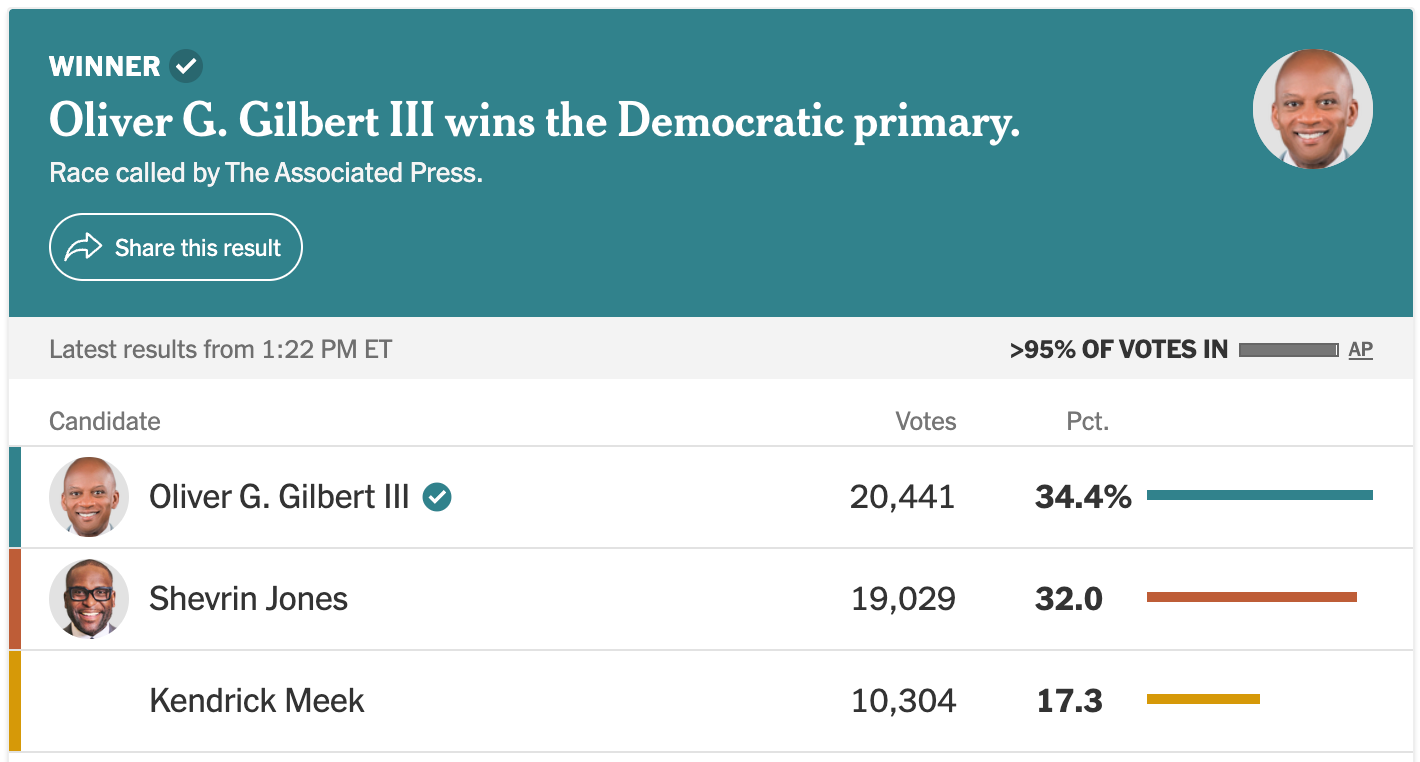
All four candidates will likely go on to face challengers in the 2026 midterms in November, but a Democrat in Florida’s 24th district also won despite being the target of more than $2 million worth of negative ads funded by Protect Progress. Oliver Gilbert defeated challengers Shevrin Jones and Kendrick Meek with 34.4% of the vote, in a race that addressed the potential influence of the crypto industry.
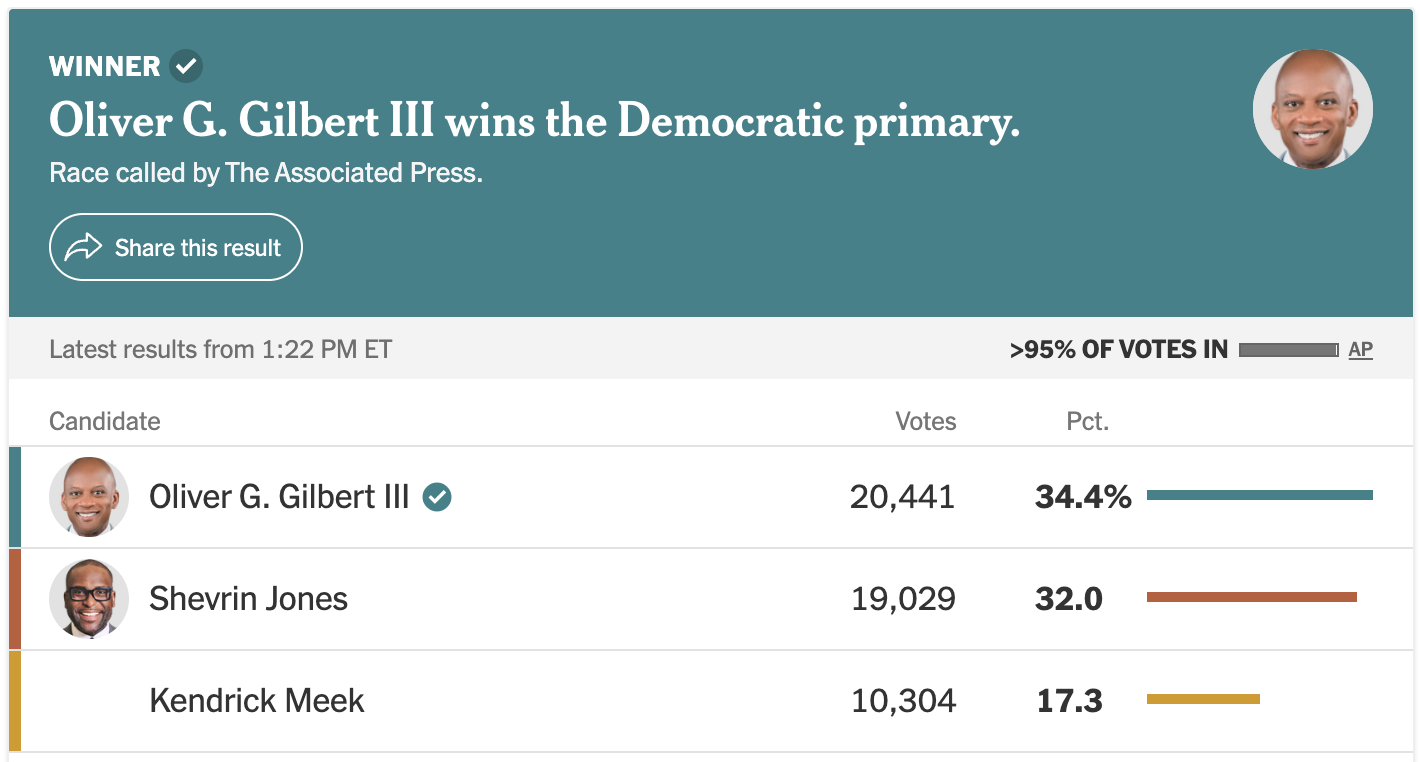
Florida’s 24th congressional district results for Democratic primary. Source: The New York Times
According to an Aug. 12 Miami Herald report, Gilbert said “[Donald] Trump’s tech billionaire buddies” were behind the “crypto con artists trying to buy a Democratic primary” through the Protect Progress ads. The news outlet said the ads included fake Miami Herald headlines misrepresenting Gilbert’s policy positions, though a spokesperson for the PAC claimed that “the underlying facts in our ad are true.”
The Fairshake PAC, which reported holding a $193 million war chest as of January, was responsible for funding more than $130 million worth of ads supporting candidates it considered pro-crypto in the 2024 election cycle and opposing many who spoke negatively about the industry or voted against its interests. As of June, the committee had spent more than $82 million on races ahead of the 2026 midterms.
Related: UK authorities continue probe into Nigel Farage’s crypto ‘gifts’ after by-election win
Gilbert did not mention the crypto industry or the ads in his Tuesday night acceptance speech. Fairshake spokesperson Geoff Vetter said that the PAC was “just getting started building the largest pro-crypto Congress in history” following the three state primaries and other candidates winning in 2026.
Makeup of next Congress to impact crypto market structure law?
Both the US Senate and House of Representatives are on recess until September, when the former is scheduled to address a cloture motion on the Digital Asset Market Clarity (CLARITY) Act, a bill expected to establish comprehensive regulations for digital assets. Although the legislation passed the House with bipartisan support in July 2025 on a 294-134 vote, many Senate Democrats have been pushing for stronger ethics provisions related to the Trump family’s crypto investments.
Following the 2026 elections, the US Congress could shift from a Republican to Democratic majority depending on the outcome of key races potentially influenced by PACs like Fairshake. Lawmakers elected in November could advance or stymie legislation affecting the crypto industry, including CLARITY, if the current session does not address the bill before 2027.
Magazine: 200,000 fake AI ‘victims’ deployed to scam bait online fraudsters

“Her nomination is another alarming step in Trump’s plan to weaponize every part of the federal government to restrict abortion nationwide,” Timmaraju continued.
Anti-abortion organizations, meanwhile, threw their support behind Overton.
“We believe Dr. Overton has an opportunity to help strengthen restrictions on the chemical abortion regimen,” Sarah Zagorski, senior director of public relations and communications for the anti-abortion group Americans United for Life, said in a statement.
Kennedy has praised her
In a post on X on Wednesday, Kennedy said that he was “confident” that he and Trump “chose the best person for the job” at the FDA. He said that he has witnessed Overton “challenge assumptions, demand excellence, and turn bold ideas into meaningful results.”
“At the @FDA, she will make our food supply safer, modernize drug approvals, unleash American medical innovation, accelerate access to lifesaving treatments, bring greater transparency and accountability to the agency, and restore Gold Standard Science as the foundation of every decision,” Kennedy said.

The Financial Accounting Standards Board (FASB) has proposed new guidance that would help clarify when certain stablecoins can be classified as “cash equivalents” under US generally accepted accounting principles (GAAP). The move targets long-running inconsistencies in how companies account for digital assets, especially those used in treasury management or day-to-day payments.
In a notice released Tuesday, the FASB said it is seeking public comment on an update that would add illustrative examples to the existing cash-equivalents definition without changing the core definition itself. The proposal is designed to give companies a clearer framework for evaluating whether specific stablecoins meet the standard required for cash-equivalent treatment.
Key takeaways
- FASB’s proposal would add examples to GAAP cash-equivalents guidance while keeping the definition unchanged.
- To qualify, a digital asset would generally need an on-demand redemption right and reserves held in short-term, highly liquid assets on at least a one-to-one basis.
- Active secondary market trading alone would not be sufficient if holders cannot redeem directly from the issuer for a known amount of cash.
- Companies would still decide whether to present qualifying items as cash equivalents and must consider applicable laws and regulations.
- The proposal would increase annual disclosure requirements, including major cash-equivalent components and their amounts.
What FASB is proposing for cash-equivalent classification
FASB said the proposed Accounting Standards Update would enhance clarity around the “cash equivalents” evaluation for certain digital assets, including stablecoins. According to the filing, the cash-equivalents definition for a qualifying digital asset would require, among other conditions, an on-demand contractual redemption right.
The proposal outlines additional redemption and reserve requirements. Specifically, it would require:
- a direct redemption right with the issuer for a known cash amount, and
- segregated reserves held at least on a one-to-one basis, comprised of short-term, highly liquid assets.
While these conditions aim to make the evaluation more consistent, the FASB emphasized that the change would not automatically classify every dollar-pegged token as a cash equivalent. In other words, a stablecoin’s price peg would not be the only determinant—its contractual redemption terms and the quality of its reserves would be central.
Why redemption rights and reserves matter more than “being pegged”
A key element of the proposed examples is that classification depends on the holder’s ability to convert the token to cash under defined terms, not merely on market activity. One example in the proposal indicates that an active secondary market would not qualify a stablecoin if the holder lacks a direct issuer redemption right.
Similarly, the guidance suggests that reserve composition can disqualify a token even if it appears stable in practice. In another example, the proposal indicates that reserves made up of a mix of crypto assets and gold would fail the cash-equivalent test because valuation risks could undermine the “highly liquid” expectation embedded in the definition.
This distinction is important for investors and reporting teams because stablecoins can vary widely in contractual redemption structure and in how issuers allocate and manage reserves. If a company uses stablecoins for treasury operations—such as parking funds temporarily—the question becomes whether those assets behave like cash in both timing and certainty of conversion.
Disclosure requirements would expand for cash equivalents
Beyond classification, the proposal would change what companies disclose. It would require annual disclosure of the significant components of cash equivalents and the related amounts. That list could include items such as Treasury bills, commercial paper, stablecoins, and money market funds.
FASB said the proposed disclosure obligations would apply to all entities that present cash equivalents, regardless of whether they hold digital assets. That means even companies not using stablecoins directly could still face the new component-level transparency requirements for their cash equivalents mix.
How the proposal connects to US stablecoin regulation
FASB’s accounting update comes after the passage of the GENIUS Act, which earlier created a federal regulatory framework for payment stablecoins in the United States. According to earlier coverage cited in the article, the law—signed in July 2025—established requirements for permitted issuers, including maintaining one-to-one reserves in assets such as dollars and short-term Treasurys, publishing monthly reserve details, and setting redemption procedures.
That regulatory backdrop may affect how companies evaluate stablecoin structures for accounting purposes, but it does not replace the cash-equivalent test. The FASB proposal is aimed at the GAAP definition and how to apply it consistently, including whether reserves meet the “short-term, highly liquid” condition and whether redemption rights are direct and contractual.
For market participants, this linkage matters because accounting treatment can influence balance-sheet presentation, internal treasury policies, and how auditors evaluate risk. A stablecoin that satisfies the GENIUS Act’s reserve and redemption concepts could be better positioned to meet the cash-equivalent framework—though the proposal still leaves room for judgment and scenario-specific analysis.
What happens next for companies using GAAP
FASB is accepting public comments on the proposed update until Nov. 19. After reviewing feedback, the board will set an effective date.
Companies that hold stablecoins for treasury or payment-related purposes may want to start reviewing their arrangements now—especially the contractual redemption terms available to holders and the actual reserve structure behind the token. Even with improved illustrative examples, the filing underscores that not every stablecoin will automatically qualify as a cash equivalent.
Until FASB finalizes the update, investors and stakeholders should watch for how issuers and auditors interpret the on-demand redemption and segregated reserve standards, and whether companies adjust their reporting processes ahead of any new effective date.
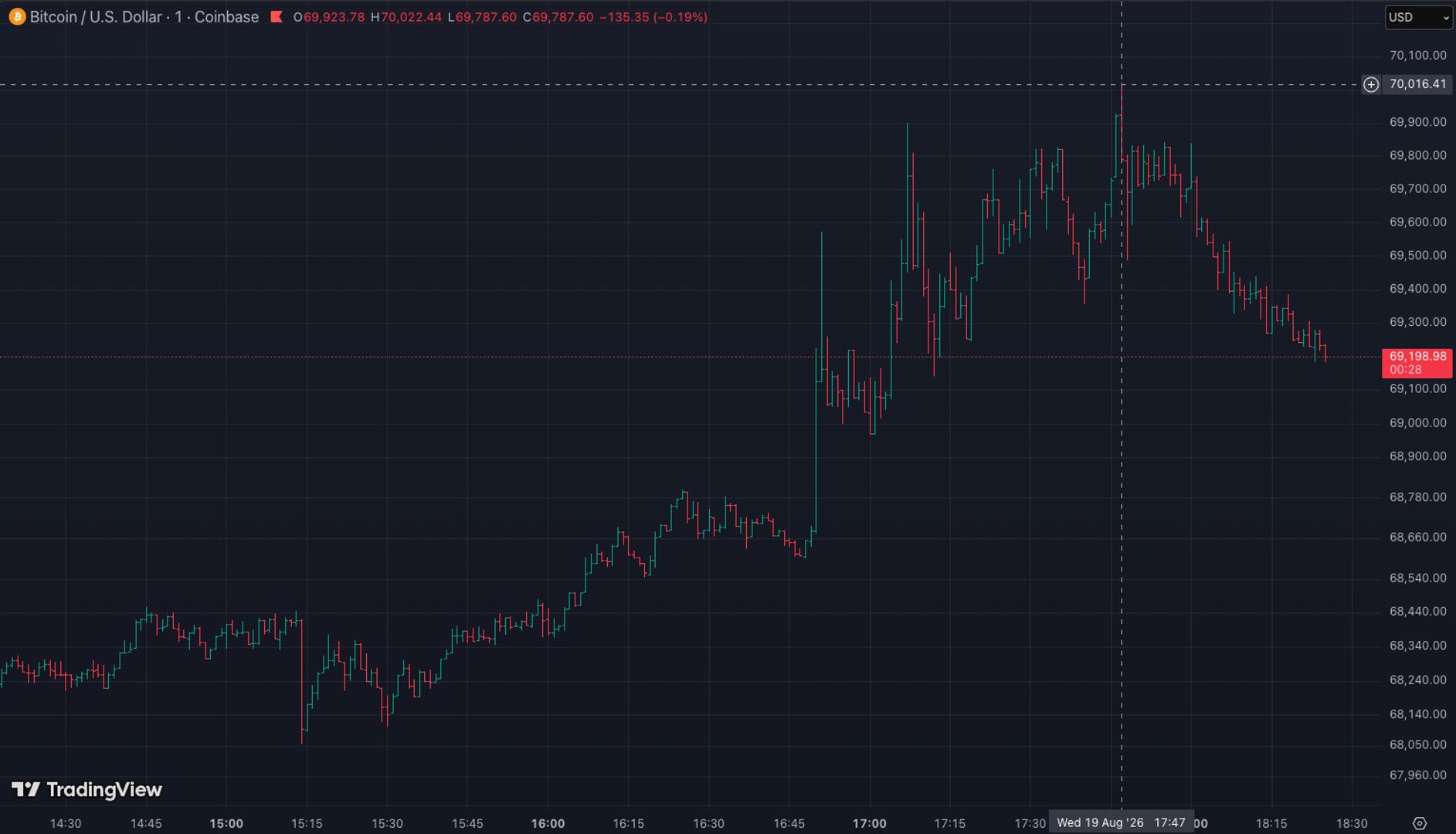
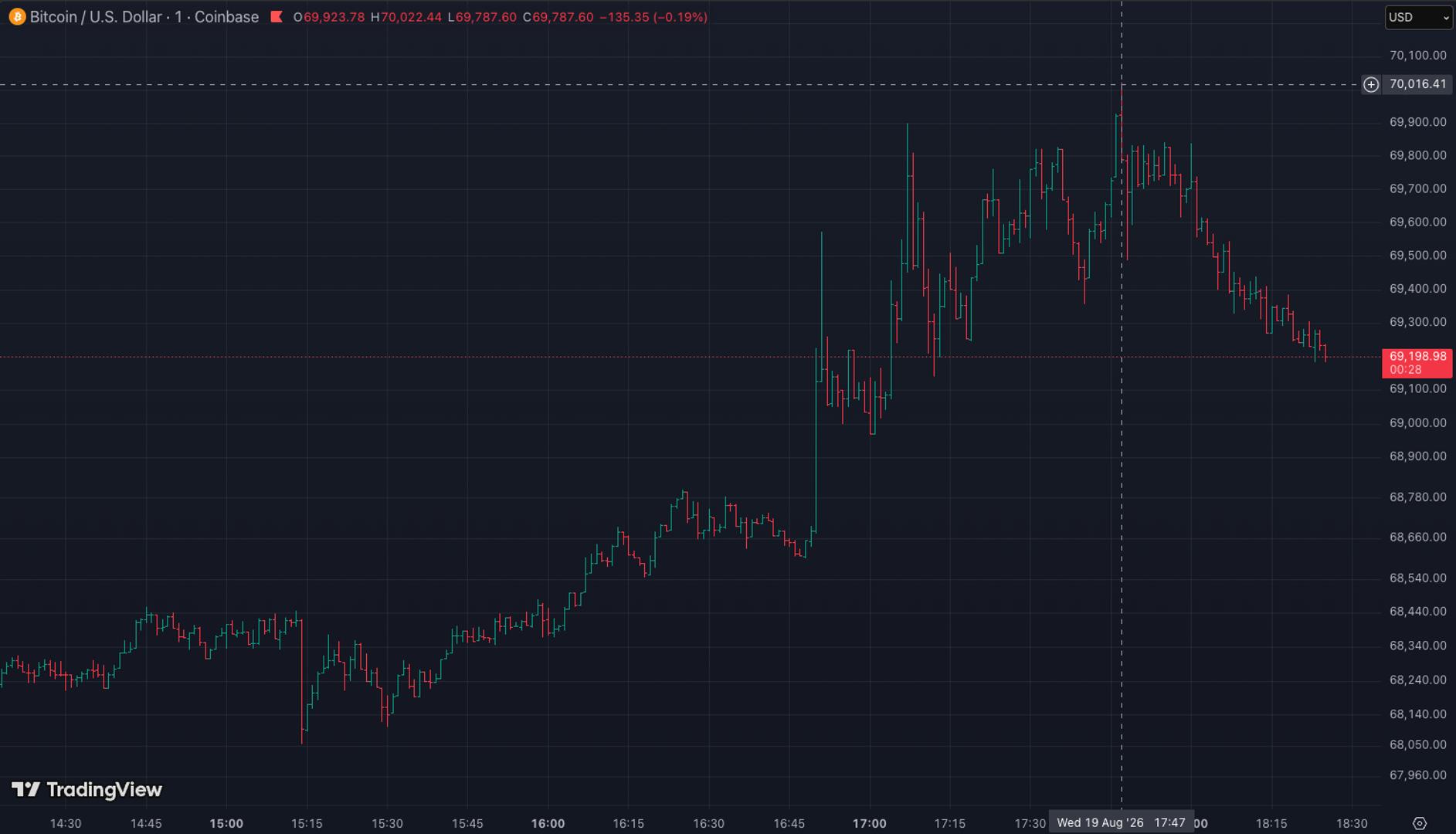
The largest crypto asset rose more than 7% on Wednesday after several catalysts sent crypto-related assets higher.
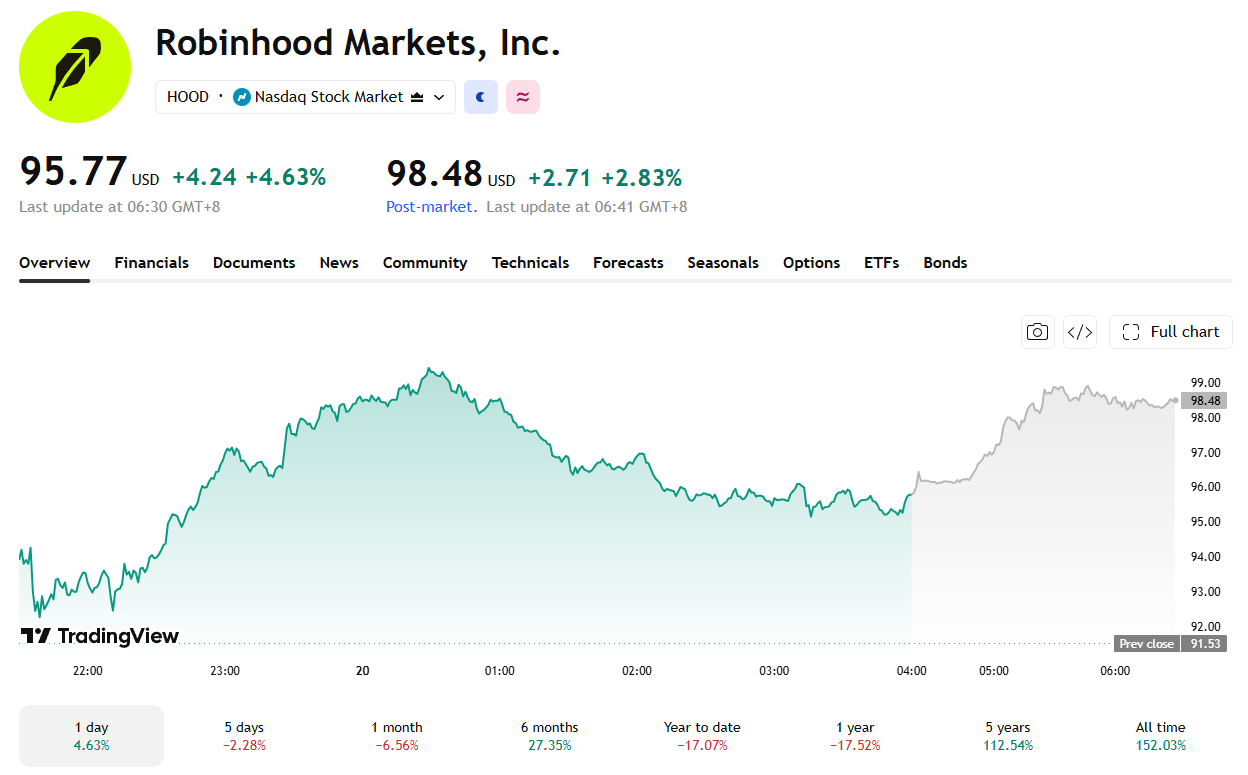
Fundstrat’s Tom Lee updated his top stock ideas for 2026. He added JPMorgan and Arista Networks to his core list, but named Robinhood a stock to avoid.
His Investment Committee pushed back almost immediately. Panelists argued the call misreads a company that has become one of crypto’s favorite stocks.
Why Tom Lee’s Committee Pushed Back
Speaking on CNBC, Kevin Simpson, founder and chief investment officer of Capital Wealth Planning, disagreed most directly with Lee.
“I couldn’t disagree more.”
— Kevin Simpson, CNBC
He pointed to Robinhood’s second-quarter results. Revenue rose 32% year-over-year to a record $1.31 billion. Diluted earnings per share climbed 48% to $0.62. Net deposits hit a record $22 billion, up 28% on an annualized basis.
Simpson said Robinhood has outgrown its early, pandemic-era reputation. He pointed to its purchase of a registered investment adviser and its in-house custodial platform.
Brenda Vingiello, chief investment officer at Sand Hill Global Advisors, sold her Robinhood shares in June, citing a breakdown in the stock’s momentum. Still, she disagreed with Lee’s broader call.
She said a crypto market recovery could lift the stock again, since Robinhood still tracks digital asset sentiment closely.
A Growing Crypto and Blockchain Footprint
Robinhood’s own crypto trading business is shrinking. Crypto transaction revenue fell 38% year-over-year to $100 million in the second quarter, the company said.
Robinhood has redirected its crypto ambitions toward infrastructure instead. In July, it launched Robinhood Chain, its own layer-2 blockchain built on the Arbitrum network. The chain is designed for tokenized stocks, decentralized lending, and round-the-clock trading.
Robinhood Chain’s total value locked has topped $550 million, according to DefiLlama. Tokenized stocks and other real-world assets account for about a quarter of that total.
Stablecoins make up a much larger share of Robinhood Chain’s total value. USDG, Robinhood’s dollar-backed stablecoin, accounts for more than half of that stablecoin pool, per DefiLlama data.
One Robinhood-branded token even triggered a 100 percent meme coin rally after listing on the chain. It’s unclear yet whether tokenized stocks or crypto speculation will define the chain’s future.
Arista and JPMorgan Get the Nod
Lee’s other additions drew less debate. Arista Networks has benefited from accelerating AI networking demand, while JPMorgan earned praise amid a recovering IPO market.
Robinhood shares traded near $96, giving it an $86 billion market cap. Whether Lee’s other stock picks age well may depend on Robinhood’s crypto side, not its brokerage growth.

The post Tom Lee Says Avoid Crypto Favorite Robinhood Stock Despite Record Q2 Growth appeared first on BeInCrypto.


The integration expands access to USDU, the UAE’s first central bank-registered US dollar stablecoin, as it builds distribution beyond institutional channels.

Invited media briefly detained at California Space Force base

Travis Kelce Teams Up with Publicis to Tame the College NIL Scramble

US commodities regulator imposes 5-year trading ban on ex-Alameda, FTX execs





-

 Fashion5 days ago
Weekend Open Thread: Ann Taylor
-
 Sports6 days ago
This U.S. Amateur is a glimpse into golf’s future in more ways than you think
-
 Tech6 days ago
11 Ways to Rank Your Videos
-
 NewsBeat5 days ago
Myanmar says over 300,000 Rohingya refugees verified for repatriation as exodus enters ninth year
-

 Sports5 days ago
Birmingham 2026: Day 6 Timetable for Irish Athletes
-

 Politics5 days ago
SEQ Code: The Three Letter Boarding Pass Code That Could Give You The Worst Seat
-

 Tech6 days ago
DeepSeek Harness launches as open source rival to Claude Code, alongside V4-Pro on API with higher prices
-

 Crypto World2 days ago
OCC Greenlights Trump Family Crypto Firm for Trust Charter
-

 Tech2 days ago
Qwen3.8-27B runs frontier-class coding agents and reasoning locally, no cloud API required
-

 Fashion7 days ago
The Details Do the Dressing
-
 Entertainment6 days ago
10 Netflix Shows That Quietly Became Modern Classics
-

 Fashion5 days ago
Weekly News Update, 8.14.26 – Corporette.com
-
 Entertainment5 days ago
Marvel Studios Reveals New X-Men Cast Including Adam Driver and Sadie Sink
-
 Tech4 days ago
Every fusion startup that has raised over $100M
-

 Business5 days ago
Facebook Down Now? Users Report Login And Loading Problems As Outage Trackers Monitor Ongoing Issues
-

 Business1 day ago
SMA Solar Technology AG (SMTGY) Q2 2026 Earnings Call Transcript
-

 Business6 days ago
15 Ways to Make Money From Your Phone (2026 Guide)
-

 Crypto World6 days ago
Robinhood Chain Approaches $1B TVL as Uniswap Integration Boosts Liquidity
-

 Fashion5 days ago
Cart Confidential Vol. 44 – Julia Berolzheimer
-
 Business5 days ago
Monarch Mutual Fund set to enter MF space with maiden overnight fund; files draft with Sebi
You must be logged in to post a comment Login