

Crypto World
Bitcoin faces a miner reward problem, Avalanche founder warns



Avalanche founder Emin Gün Sirer has warned that Bitcoin may face a long-term security issue as miner rewards continue to fall after each halving.
Summary
- Emin Gün Sirer says Bitcoin’s future risk may come from falling miner rewards.
- Up to 20% of Bitcoin miners may be unprofitable.
- The debate centers on whether fees can replace shrinking Bitcoin block rewards.
Sirer argued that Bitcoin’s reward model could become a larger concern than quantum computing or rival tokens. His view centers on whether miners will still earn enough to secure the network when block rewards keep shrinking.
Bitcoin’s security budget faces fresh debate
Bitcoin miners secure the network by using computing power to validate blocks. They earn block rewards and transaction fees for that work.
The problem is that block rewards fall by half during each Bitcoin halving. Over time, transaction fees may need to carry more of the cost of keeping miners online.
Crypto.news recently reported that CoinShares estimated 15% to 20% of the global Bitcoin mining fleet may be unprofitable under current conditions. Older machines and miners with high power costs face the most pressure.
The same report said Q4 2025 was the hardest quarter for Bitcoin miners since the April 2024 halving. CoinShares also said hashprice fell near five-year lows, while listed miners’ average cash cost to produce one Bitcoin reached about $79,995.
Sirer points to a possible technical path
Sirer suggested Bitcoin could use a pre-consensus layer to reduce the load on the base network. He argued that such a design could help Bitcoin process activity more efficiently.
That idea may face resistance from Bitcoin users who prefer limited changes to the base protocol. Bitcoin’s community has often moved slowly on large technical changes, especially those seen as changing its security model.
Sirer’s warning that shrinking rewards pose a bigger risk than quantum computing remains a debated claim. It depends on future Bitcoin fees, miner costs, hardware gains, and market price.
CZ’s recent comment was also taken out of context by some accounts. He said Bitcoin could only be replaced in theory by better technology, while still calling BTC “global money.”


Key Highlights
- Q1 2026 net loss reached $427M for TeraWulf, significantly higher than the $61.4M loss recorded in Q1 2025.
- High-performance computing lease income surged 117% sequentially to $21M, representing approximately 60% of quarterly revenue.
- Bitcoin mining income declined by half to approximately $13M.
- Cash and restricted cash reserves totaled around $3.1B at quarter end.
- WULF shares declined 2.6% Friday but remain up more than 105% for the year.
TeraWulf’s first quarter 2026 financial results revealed a net loss of $427 million, representing a significant increase from the $61.4 million loss the company reported during the corresponding period in 2025.
Quarterly revenue totaled $34 million. The company’s high-performance computing lease segment generated $21 million — comprising roughly 60% of overall revenue — following a remarkable 117% sequential increase.
Revenue from Bitcoin mining operations, in contrast, plummeted 50% to approximately $13 million amid challenging conditions affecting the broader mining industry.
Shares of WULF declined 2.6% Friday in response to the quarterly report. Nevertheless, the stock has climbed more than 105% since the beginning of the year and has risen over 30% during the past 30 days.
HPC Business Emerges as Primary Revenue Driver
The high-performance computing revenue stemmed from 60 megawatts of active critical IT capacity at the Lake Mariner facility — recognized as among North America’s largest HPC installations — currently under lease to Core42.
TeraWulf is simultaneously managing infrastructure deployment with partners including Fluidstack and Google. Multiple computing facilities, specifically CB-3, CB-4, and CB-5, are scheduled to become operational during the latter half of 2026.
CEO Paul Prager noted that the organization began 2026 equipped with essential contracts, infrastructure assets, and capital arrangements already secured, with leadership now concentrating on transforming these resources into sustainable recurring revenue streams.
During October 2025, TeraWulf finalized a 25-year lease agreement with Fluidstack — supported financially by Google — valued at approximately $9.5 billion in committed revenues. This arrangement built upon a previously announced 10-year commitment.
The Abernathy joint venture, encompassing a 168 MW HPC facility under a 25-year lease structure, continues progressing toward its anticipated Q4 2026 launch.
CFO Patrick Fleury explained that the company’s capital framework is structured to synchronize extended-term financing with contractual cash flows. He noted that predictable AI infrastructure income could mitigate the volatile earnings patterns traditionally associated with Bitcoin mining activities.
TeraWulf concluded the first quarter holding approximately $3.1 billion in combined cash and restricted cash.
Strategic Power Sites Drive Growth Strategy
Beyond the Lake Mariner installation, TeraWulf is developing a nationwide portfolio of power-advantaged locations.
This expansion includes a recently acquired 480 MW facility in Hawesville, Kentucky, a 300 MW development in Lansing, New York, and a 210 MW location in Morgantown, Maryland — with expansion potential reaching 1 gigawatt.
Prager characterized the company’s approach as constructing “a power-advantaged platform” that is becoming increasingly distinct in an industry constrained by electrical capacity access.
TeraWulf’s strategic shift reflects a wider transformation across the sector. Riot Platforms disclosed $167.2 million in total Q1 2026 revenue, with its data center operations generating $33.2 million, partially offsetting declining Bitcoin mining income.
Core Scientific has announced intentions to liquidate over 2,500 Bitcoin to finance AI infrastructure expansion and strengthen cash reserves.
MARA Holdings, Hive, Hut 8, and Iren have each begun transitioning mining capacity into high-performance computing infrastructure designed for AI workload deployment.
For TeraWulf, the completion of CB-3, CB-4, and CB-5 computing facilities represents the company’s primary operational objectives for the remainder of 2026.

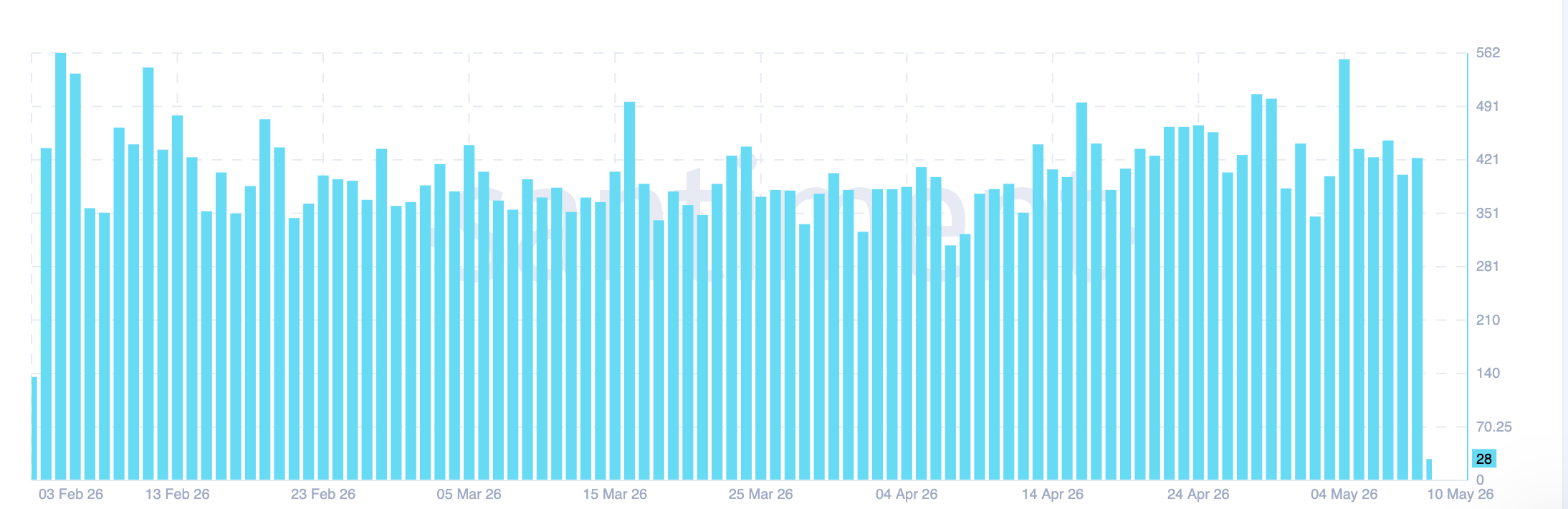
Altcoin season chatter has surged to a 3-month high across social media, but one chart is flashing a clear warning that the rotation may not be as healthy as recent token rallies suggest.
Santiment data shows mentions of “altcoinseason” and “altseason” climbing in early May, while Altcoin Vector argues weak Ethereum (ETH) leadership could undermine the move.
Altcoin Social Volume Hits Multi-Month High
On-chain analytics platform Santiment recorded social volume for “altcoinseason” surging to 544 on May 4, the strongest reading since February 5.
Follow us on X to get the latest news as it happens

Mentions of “altseason” on May 5 also hit their highest level since March 18, signaling renewed retail interest. The buzz follows fresh price action, with several altcoins staging notable rallies that have lifted hopes of a broader rotation away from Bitcoin (BTC).
Together, the data points suggest sentiment is warming up after a stretch of muted retail engagement.
Why the ETH/BTC Chart Is Flashing a Warning
Despite the optimism, Altcoin Vector flagged a structural problem in how the rally is unfolding. The OTHERS/BTC ratio, which tracks the total altcoin market cap excluding the top 10 coins relative to Bitcoin, has started to recover.
However, the ETH/BTC ratio remains weak. This breaks the standard rotation playbook, in which Ethereum (ETH) typically leads altcoins higher before capital flows down the risk curve into smaller tokens.
“That divergence tells us alts may be front-running a potential rotation, skipping the usual ETH leadership phase. A healthy rotation usually starts with ETH,” the post read.

Whether the current altcoin push converts into a sustained rotation now hinges on Ethereum reclaiming relative strength against Bitcoin.
If ETH/BTC stays compressed, Vector’s warning suggests the gains across smaller altcoins could unwind quickly on any Bitcoin weakness.
Subscribe to our YouTube channel to watch leaders and journalists provide expert insights
The post Is Crypto Entering an Altcoin Season? Social Buzz Hits a 3-Month High appeared first on BeInCrypto.


Michael Saylor has moved to clarify Strategy’s position after recent comments raised questions about whether the company could sell part of its Bitcoin holdings.
Summary
- Saylor says Strategy may sell Bitcoin but remain a net buyer over time.
- Strategy holds 818,334 BTC after reporting a $12.54 billion Q1 loss.
- Dividend costs and Peter Schiff’s Ponzi claims keep pressure on Strategy’s model.
The Strategy co-founder said his well-known “never sell your Bitcoin” line was less precise than the company’s actual policy. He said the clearer position is that Strategy should never become a net seller of Bitcoin.
Strategy may sell BTC to buy more later
Saylor said any Bitcoin sale would not mark a retreat from the company’s treasury plan. Instead, he argued that a limited sale could support a larger accumulation strategy.
“Even if we were to sell one Bitcoin, we’d be buying 10 to 20 more Bitcoin,” Saylor said.
The claim suggests Strategy could sell small amounts while still increasing its total BTC holdings.
Crypto.news recently reported that Strategy posted a $12.54 billion net loss for Q1 2026 and held 818,334 BTC as of May 3. The company’s Bitcoin was acquired at an average price of $75,537.
The same report noted that Strategy’s preferred stock products carry about $1.5 billion in annual dividend obligations. That has fueled debate over whether Bitcoin sales may be needed to support payouts.
Schiff renews criticism of Saylor’s model
Peter Schiff has again criticized Strategy’s Bitcoin-linked structure, claiming the model could face stress if Bitcoin weakens or dividend pressure grows.
Saylor rejected that view. He said critics who do not accept Bitcoin as “digital capital” are unlikely to accept financial products built around it. Strategy’s core message remains that Bitcoin is its main treasury asset, even if limited sales become part of its funding approach.
Key Takeaways
- Ethereum maintains a market capitalization of approximately $281 billion compared to Solana’s roughly $54 billion
- Onchain stablecoin value strongly favors Ethereum at $164.1 billion versus Solana’s $15.45 billion
- Solana demonstrates superior user engagement with 1.67M active addresses and temporarily dominated DEX trading during Q1 2026
- The Solana Foundation partnered with major payment processors including Mastercard, Worldpay, and Western Union for its new developer platform
- Ethereum faced analyst skepticism when Citigroup reduced its 12-month price projection due to declining user engagement
The two dominant smart-contract blockchain platforms beyond Bitcoin are Ethereum and Solana. Determining which represents the superior investment opportunity today requires examining your investment profile and risk tolerance.
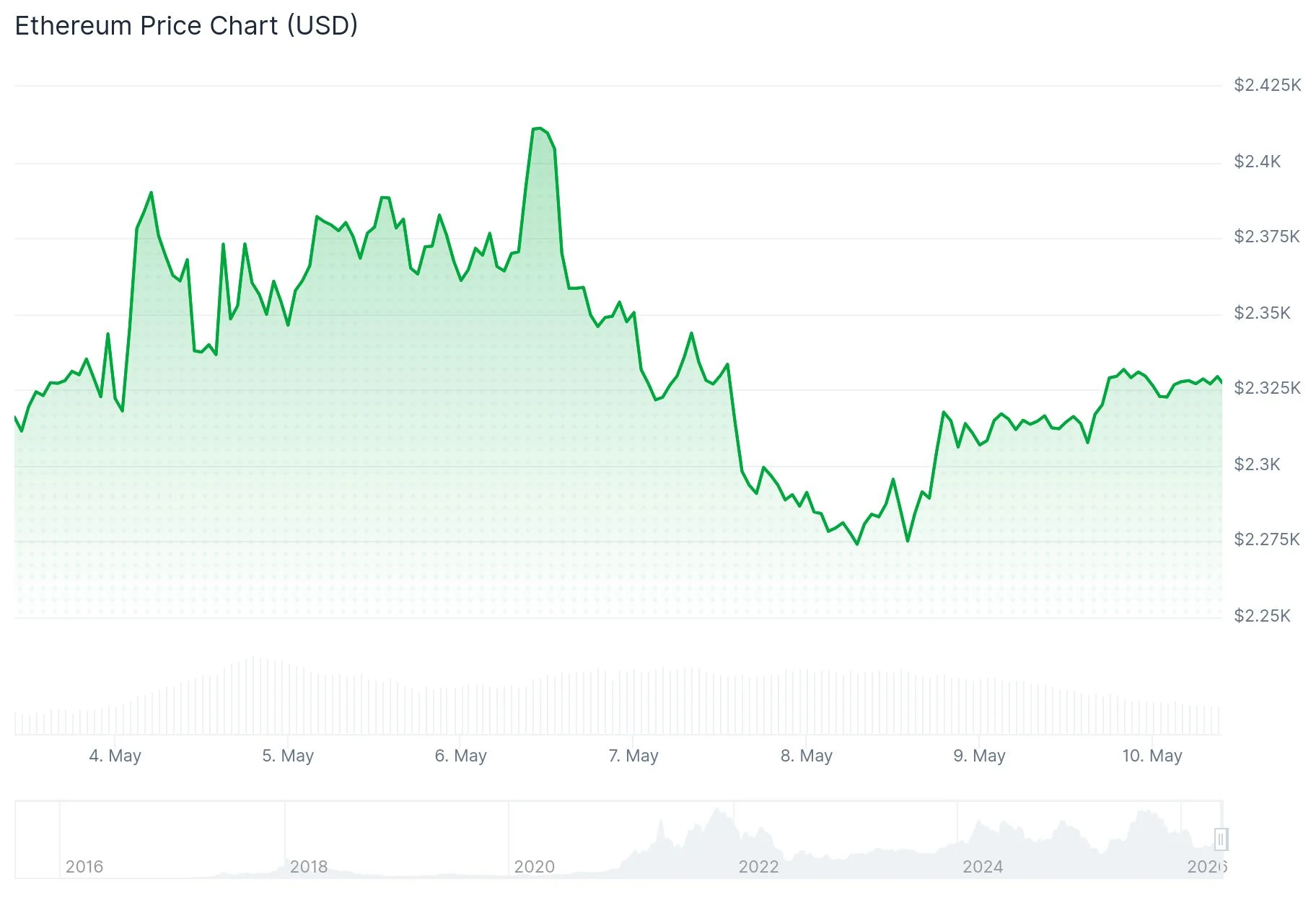
According to CoinGecko data, Ethereum commands a market valuation near $281 billion, while Solana maintains approximately $54 billion. This substantial differential reflects market confidence in long-term sustainability.
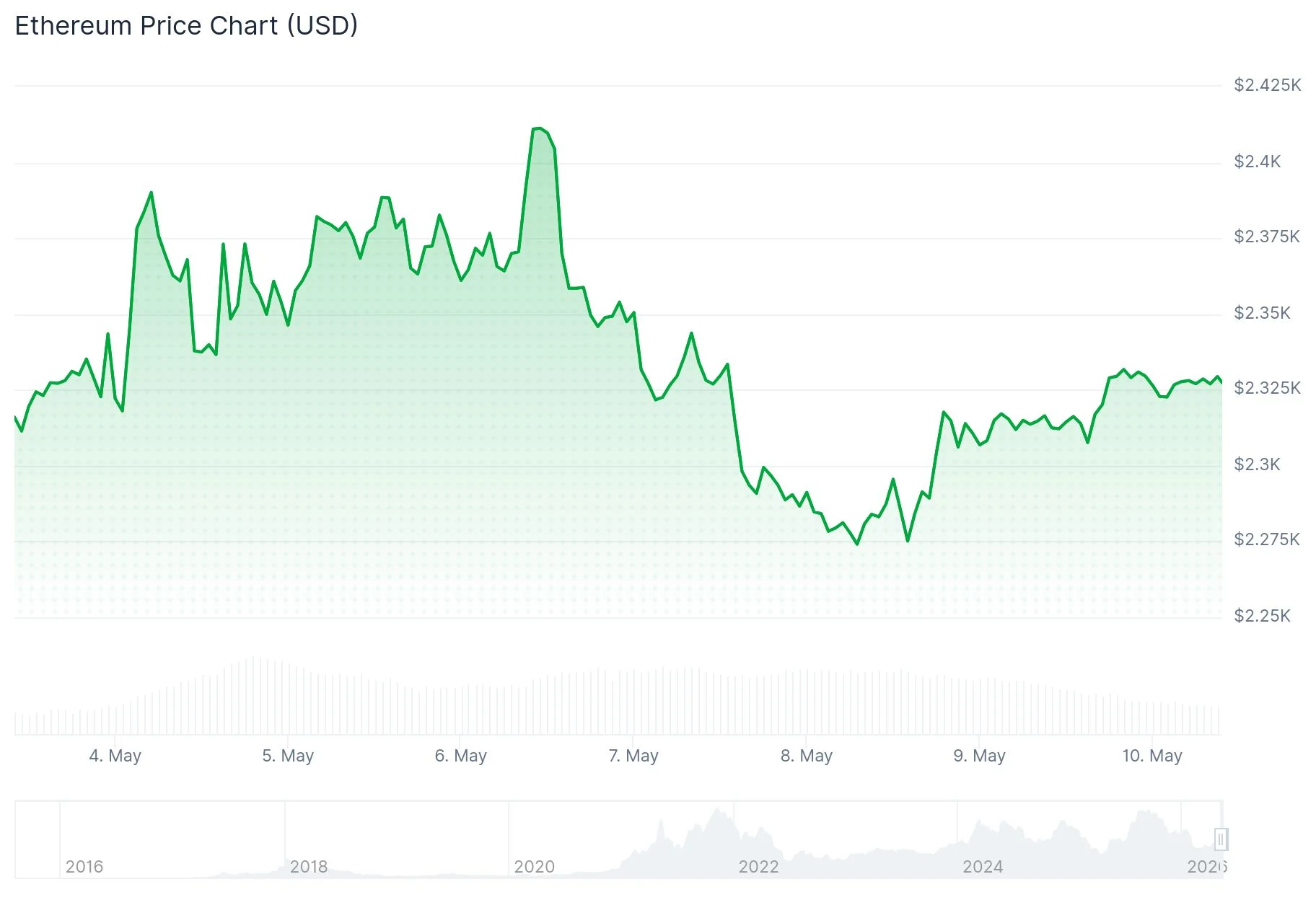
Ethereum hosts $164.1 billion worth of stablecoins across its network, according to DefiLlama. The platform registers more than 565,000 active addresses daily alongside $1.343 billion in derivatives trading volume. These metrics demonstrate substantial, institutional-grade financial operations.
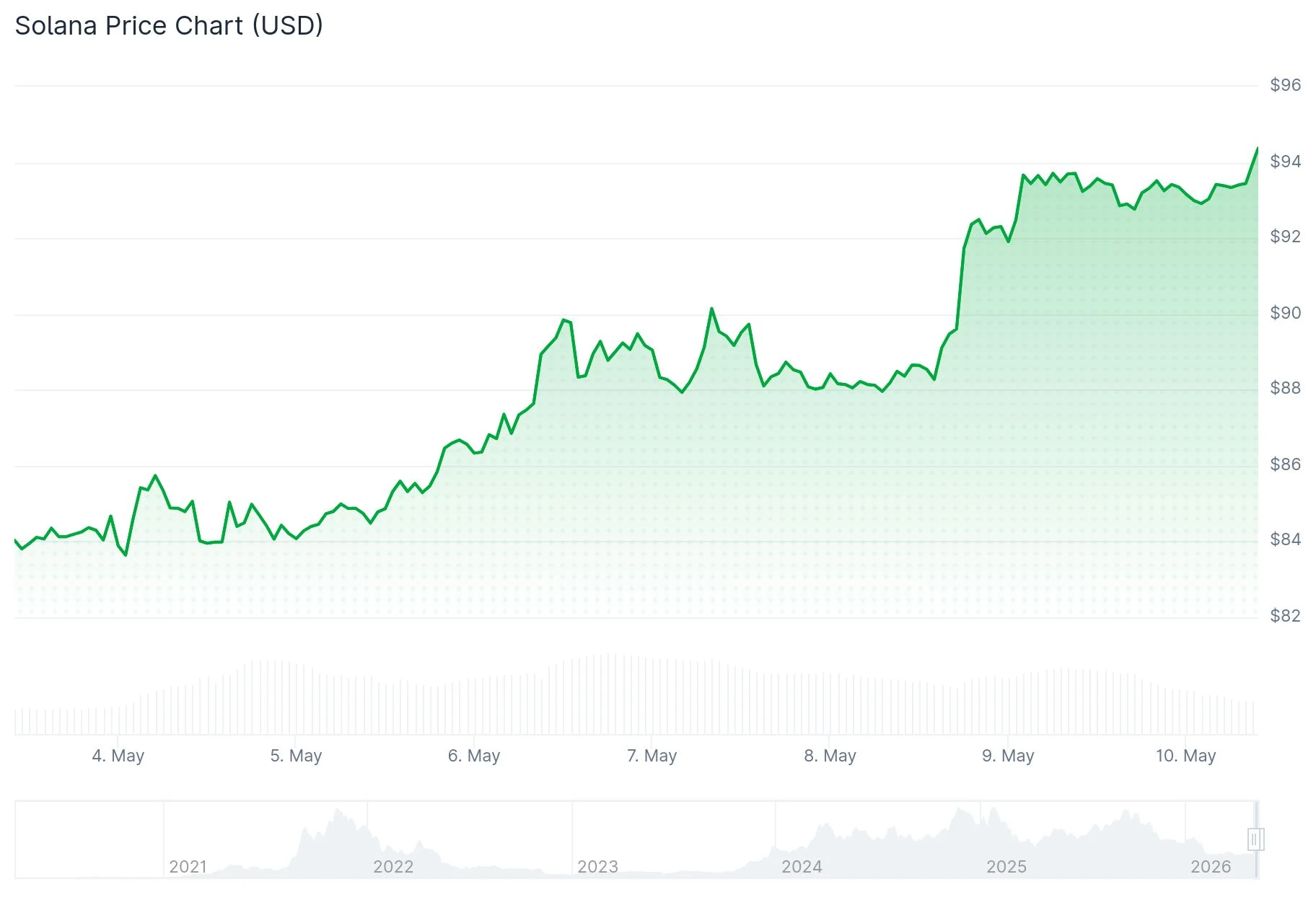
Solana presents contrasting statistics. The network processes activity from 1.67 million active addresses with $1.392 billion in daily decentralized exchange volume. While user participation exceeds Ethereum’s, the total capital deployed remains significantly lower.
Continuous Development Defines Ethereum’s Strategy
Ethereum development continues advancing rapidly. The Ethereum Foundation announced its Pectra upgrade successfully doubled blob capacity, increased maximum validator stakes, and accelerated validator onboarding processes. Fusaka has entered production deployment, with Glamsterdam and Hegotá scheduled for later in 2026.
These technical improvements enhance transaction processing efficiency, staking mechanisms, and overall network scalability. They reinforce Ethereum’s position as the infrastructure leader.
Ethereum’s development timeline demonstrates commitment to sustainable network optimization. This approach appeals to institutional investors and large capital allocators prioritizing stability and reliability.
Solana Targets Enterprise Adoption
Solana has strategically evolved beyond its identity as a high-speed, low-cost retail blockchain. The Solana Foundation unveiled its Developer Platform in March, offering API-based infrastructure designed specifically for enterprise clients and financial institutions.
Initial platform adopters include payment industry leaders Mastercard, Worldpay, and Western Union. The infrastructure supports tokenized deposits, stablecoin operations, real-world asset management, payment processing, and trading applications.
This roster of enterprise partners signals Solana‘s ambition to capture institutional financial infrastructure contracts rather than merely facilitating retail speculation.
During Q1 2026, Solana captured the leading position for spot decentralized exchange activity with 30.6% market share, according to CoinGecko. Ethereum regained dominance in March, securing 27% versus Solana’s 26%.
Solana excels at capturing short-term user enthusiasm. Ethereum consistently attracts capital when infrastructure reliability becomes paramount.
Understanding the Risk Profile of Each Network
Citigroup analysts reduced their 12-month Ethereum price forecast in March. The downgrade cited concerning user activity trends, though analysts acknowledged continued strength in stablecoins and tokenization use cases.
Solana presents a distinct risk configuration. The platform exhibits greater price volatility, maintains a declining inflation schedule, and requires sustained momentum to justify valuations.
Ethereum faces the risk of lagging performance during strong altcoin market cycles. Solana confronts the possibility of severe corrections when market sentiment deteriorates.
Investment Conclusion
Investors seeking elevated upside potential who accept increased volatility should consider Solana the more aggressive opportunity. Those prioritizing superior liquidity depth, extensive institutional support, and proven operational history will find Ethereum remains the stronger choice. Both cryptocurrencies carry meaningful risks, and neither guarantees profitable returns.
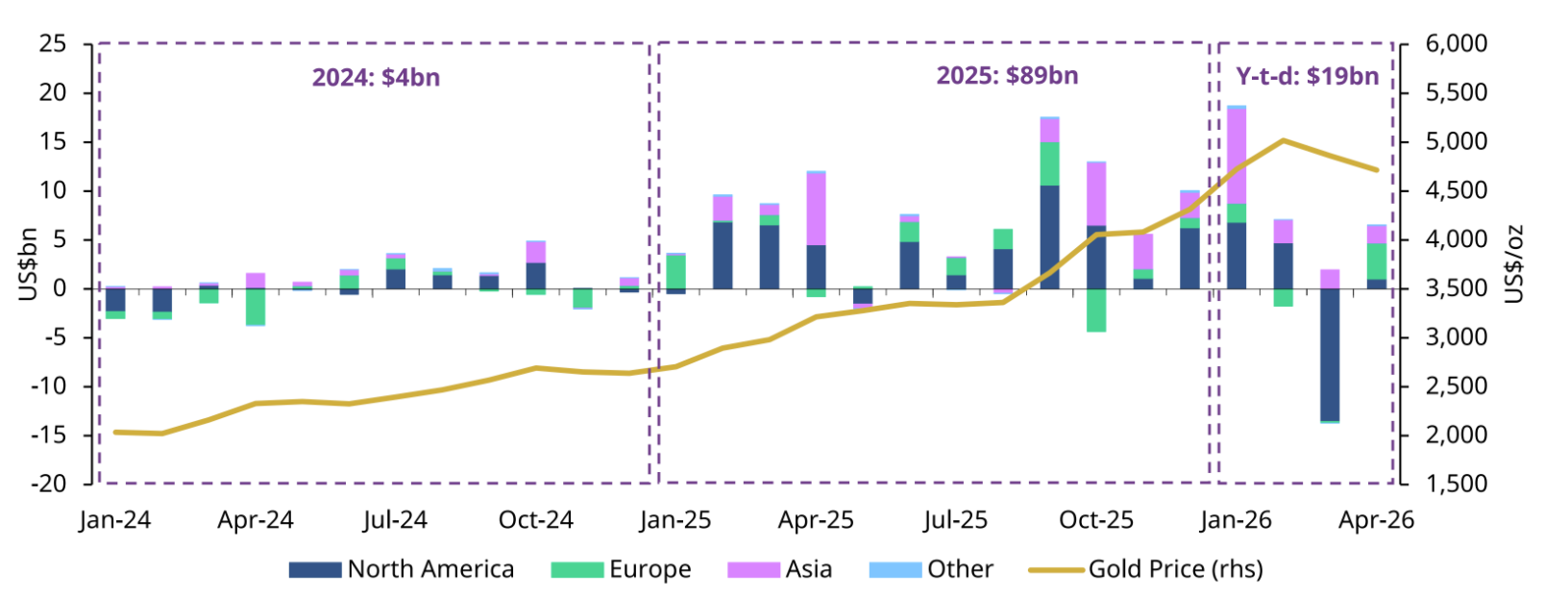
Global physically backed gold exchange-traded funds (ETFs) drew $6.6 billion in April, reversing March’s heavy outflows.
A record $12 billion drained from global gold ETFs in March, the steepest monthly outflow ever, as US-Iran tensions weighed on bullion. But as the chart below shows, investments rotated back into gold in April, with Europe and Asia bringing more capital into the market.

Gold Flows Reverse Course in April
The return of inflows came as gold prices stabilized. Bullion slipped 1.12% in April after plunging 13% in March, its sharpest monthly decline since 2008.
Year-to-date, global gold ETFs have recorded $19 billion in net inflows. Total assets under management rose 1% month over month to $615 billion, while collective holdings increased by 45 tonnes to 4,137 tonnes, the third-highest level on record.
The flow reversal coincided with a much shallower price drop. The bullion edged down just 1.12% during the month, compared with March’s 13% rout. That marked the steepest monthly decline since 2008.
All regions contributed to April’s recovery. European funds added $3.7 billion, Asian funds $1.8 billion, and North American funds $1 billion. Year-to-date, global gold ETFs have pulled in $19 billion.
Those inflows lifted total assets under management by 1% month over month to $615 billion. In addition, combined gold holdings climbed 45 tonnes to 4,137 tonnes, the third-highest level on record.
Follow us on X to get the latest news as it happens
China’s Steady Bullion Bid
Meanwhile, China has remained a consistent gold buyer even through the war-driven volatility. The People’s Bank of China (PBoC) added over 8 tonnes of gold in April, extending its buying streak to 18 consecutive months.
The PBoC’s April purchase was its largest monthly addition since December 2024, taking total holdings to roughly 2,322 tonnes.
The April figure follows 5 tonnes added in March. Together, the two months represent China’s largest two-month accumulation since the first quarter of 2025, per The Kobeissi Letter.
“Year-to-date, China’s central bank has bought +15 tonnes of gold, on track for its biggest annual purchase since 2023. Since 2022, the country has officially increased its gold holdings by +372 tonnes, or +19%, making China one of the strongest gold buyers in the world. China is buying the dip in gold,” the post added.
Thus, the April rebound suggests gold’s role as a portfolio anchor has not faded. Whether the recovery holds depends on Middle East tensions and expectations for Federal Reserve rate hikes.
Subscribe to our YouTube channel to watch leaders and journalists provide expert insights
The post Gold ETFs Rebound With $6.6 Billion Inflows After Record Selloff appeared first on BeInCrypto.
Key Takeaways
- On May 14, the U.S. Senate Banking Committee examines the CLARITY Act, legislation that could establish regulatory frameworks for digital assets
- The stablecoin rewards provision remains contentious, with traditional banks advocating restrictions while crypto companies seek operational freedom
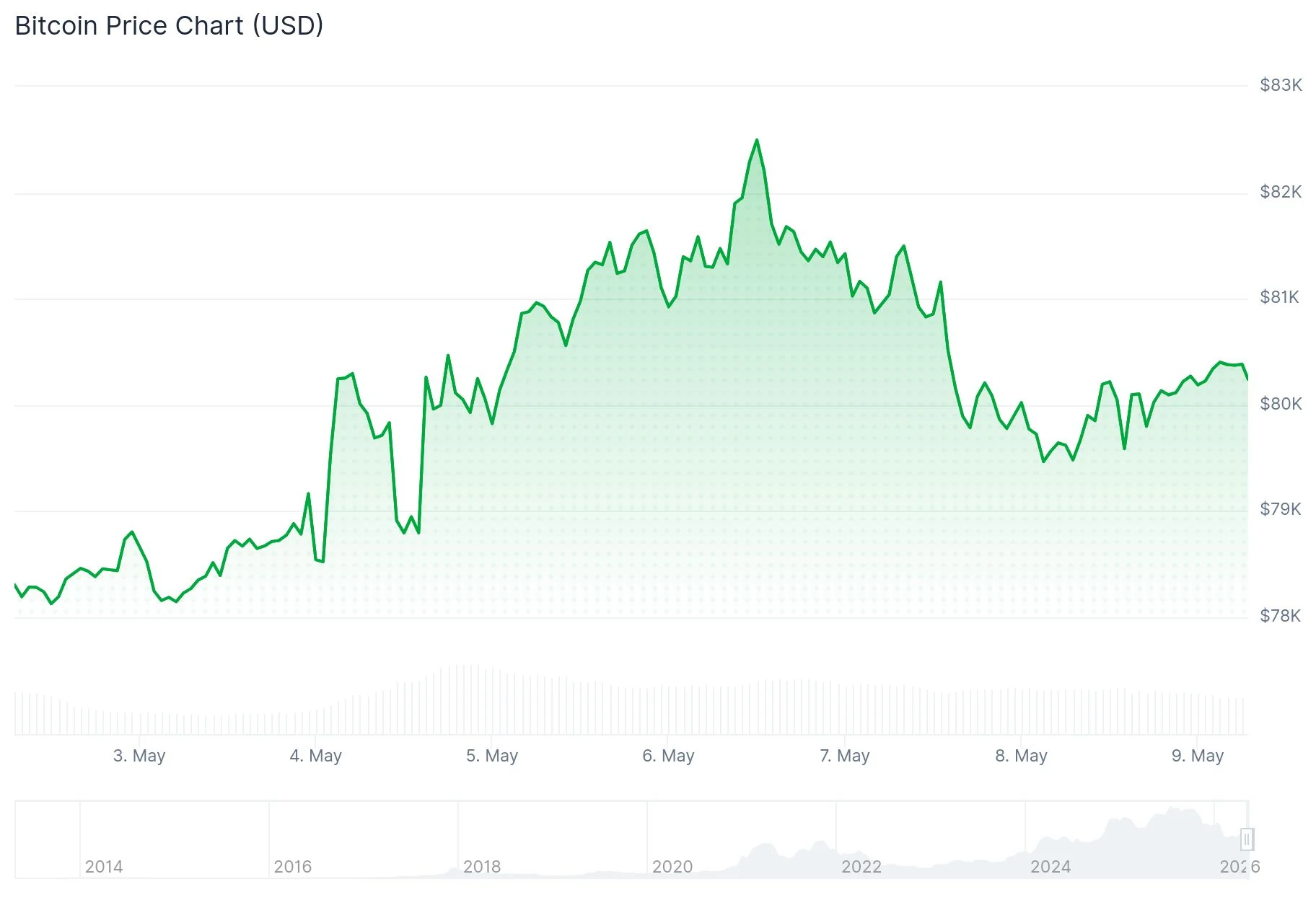
- Bitcoin maintains support above the $80,000 threshold but encounters significant resistance between $81,000 and $83,000
- While Bitcoin ETF inflows show recent improvement, they haven’t offset the substantial outflows recorded from late 2025 through early 2026
- Coinbase reported consecutive quarterly losses, with revenues declining from $2.03 billion to $1.43 billion compared to the previous year
Multiple significant developments converge this week that could influence cryptocurrency market trajectory. Regulatory proceedings, Bitcoin’s technical positioning, ETF capital flows, and major exchange financial results are simultaneously demanding investor attention.
The U.S. Senate Banking Committee has scheduled a review of the CLARITY Act for May 14. This proposed legislation seeks to establish clear distinctions between securities and commodities classifications for digital assets. Additionally, it would delineate distinct regulatory jurisdictions for the SEC and CFTC in supervising cryptocurrency markets.
Among the bill’s most controversial elements are provisions governing stablecoin rewards. According to Reuters reporting, the legislation would permit rewards connected to transaction activity while prohibiting yields on dormant stablecoin balances. Cryptocurrency companies are advocating for operational flexibility in offering payment-based incentives. Meanwhile, traditional banking institutions seek restrictions on any mechanism resembling deposit interest.
This debate carries significant implications since stablecoins underpin trading operations, payment systems, and decentralized finance applications. Establishing clear legal parameters could enable companies to develop products with reduced regulatory uncertainty. Conversely, restrictive outcomes might compel exchanges and issuers to restructure their user reward programs.
Bitcoin Maintains $80,000 Support While Testing Upper Boundaries
Bitcoin climbed beyond the $80,000 threshold last week, partially fueled by upward momentum in Asian equity markets. Market analysts suggest that confirming a stronger bullish structure requires breaking through the $81,000 to $83,000 zone, as Barron’s reported.
Should Bitcoin sustain current price levels while ETF demand remains consistent, retail participation could accelerate. However, if price action stalls near resistance levels, market participants may adopt more conservative positioning following the recent upward move.
ETF capital movements form a critical component of this analysis. Demand for Bitcoin exchange-traded funds has strengthened in recent weeks. Nevertheless, CoinDesk noted that this recovery hasn’t completely compensated for the substantial withdrawals observed from November 2025 through February 2026.
This week’s daily flow data will provide crucial insights into whether institutional investors continue accumulating exposure. Robust inflows would validate the recovery narrative. Conversely, weak or negative flows would challenge the sustainability of the recent rebound.
Coinbase Reports Consecutive Quarterly Deficit
Coinbase announced another quarterly loss amid declining trading volumes. Revenue contracted to $1.43 billion from $2.03 billion year-over-year. Transaction-related revenue decreased 40% to $756 million, according to Reuters.
As a prominent publicly-traded cryptocurrency platform, Coinbase serves as a key barometer for crypto trading demand. Diminished trading metrics on the exchange often mirror reduced retail engagement throughout the broader digital asset market.
Alternative cryptocurrencies are also drawing attention. When Bitcoin price action consolidates, investors frequently shift capital into Solana, Ethereum, and XRP seeking amplified returns. This week, narratives surrounding stablecoins, regulatory developments, and tokenization are expected to influence interest in associated tokens.
Alternative cryptocurrencies demonstrate heightened sensitivity to market sentiment fluctuations. Should Bitcoin falter near resistance zones or ETF flows underperform, smaller-capitalization tokens could experience accelerated downward pressure relative to the broader market.
The May 14 CLARITY Act review represents this week’s most significant singular event. Its conclusions could impact cryptocurrency exchanges, stablecoin issuers, and digital asset valuations across the entire sector.
Crypto World
PUMP Token Burns 36% of Supply as Platform Revenue Crosses $1B and Multi-Chain Expansion Grows

TLDR:
- PUMP has permanently burned $370M worth of tokens, removing 36% of circulating supply via an irreversible smart contract.
- Fifty percent of all platform revenue auto-executes buybacks and burns through a locked, coded smart contract mechanism.
- PumpSwap recorded a single-day volume of $1.28B in January 2026, marking a record high for the Solana-based exchange.
- PUMP holds roughly 70% of Solana token launch market share while expanding actively to Ethereum and Monad blockchains.
PUMP token has removed 36% of its circulating supply through a permanent burn mechanism, positioning itself as one of the more structurally deflationary assets on Solana.
The token currently trades at under $0.01, sitting 82% below its all-time high of $0.01214. With over $1 billion in lifetime platform revenue and expanding blockchain presence, PUMP is drawing renewed attention from the crypto community heading into mid-2026.
Burn Mechanism and Tokenomics Drive Deflationary Structure
Approximately $370 million worth of PUMP tokens have been permanently removed from circulation. The burn is coded directly into a smart contract, making it irreversible by design. This removes any reliance on team promises or future governance votes.
The protocol directs 50% of all platform revenue into a locked smart contract that automatically executes buybacks and burns.
With a fixed maximum supply of one trillion tokens and zero inflation, each burn cycle reduces available supply permanently. This structure creates consistent downward pressure on circulating tokens over time.
Crypto analyst Crypto Patel noted on X that the burn mechanism is “coded, not promised,” pointing to the contract-level execution as a key differentiator.
The absence of inflationary supply expansion adds further weight to the deflationary thesis for long-term holders watching on-chain activity.
Platform Revenue and Expansion Signal Operational Maturity
PUMP became the first Solana-based platform to cross $1 billion in lifetime revenue, a milestone that reflects real product usage rather than speculative activity.
PumpSwap, its native decentralized exchange, recorded a single-day volume of $1.28 billion in January 2026. That figure represents organic trading demand at scale.
The platform currently holds approximately 70% market share of all new token launches on Solana. That dominance translates directly into fee revenue, which feeds the buyback-and-burn contract on a continuous basis. The revenue loop is self-sustaining as long as launch activity remains active.
Beyond Solana, PUMP has expanded to Ethereum and Monad, broadening its addressable user base across chains. Additionally, a $3 million “Build in Public” hackathon is actively funding new developers building on the protocol.
These moves suggest a platform focused on long-term ecosystem growth rather than short-term price performance.
The token is currently trading around 42% above its earlier accumulation zone of $0.0014–$0.0016, according to Crypto Patel’s post.
Despite that recovery, it remains well below previous highs, leaving a wide gap between current price and prior peak levels.


Consensys attorney Bill Hughes said the CLARITY Act could help bring more crypto activity back to the United States by giving companies clearer rules.
Summary
- Bill Hughes says clear crypto rules could shift trading activity back to US-based platforms.
- Banks are pushing back over stablecoin yield language in the bill.
- HarrisX found 52% voter support as Senate lawmakers prepare for a key markup vote.
Hughes said the U.S. dollar remains the world’s largest fiat on-ramp for crypto, with more than $2.4 trillion in volume between July 2024 and June 2025. Still, he said much of the trading tied to that demand happens outside U.S.-based exchanges.
Hughes pointed to exchange market share data to show how far crypto trading has moved offshore. He said Binance handled more than 38% of centralized exchange trading volume in December 2025, while Coinbase was the only U.S.-based platform in CoinGecko’s top 10 exchange list.
That gap has become a key argument for supporters of the CLARITY Act. They say clear rules could make it easier for firms to build, list assets, and serve users inside the United States.
Senate faces tight timeline
The Senate Banking Committee is expected to review the bill on May 14, according to Reuters. The measure aims to define when digital assets fall under securities or commodities rules.
Hughes warned that lawmakers have only a narrow window before the August recess and the 2026 midterm campaign season. He said the next broad chance for market structure legislation may not come until 2030 if Congress misses this window.
Banking pushback
Crypto.news reported that banking groups are trying to slow the bill over Section 404, which deals with rewards tied to stablecoin holdings. The groups argue that some rewards may look like deposit interest under another name.
Senator Cynthia Lummis pushed back, saying the revised text reflects a compromise on yield. Senator Thom Tillis also warned that some traditional finance groups may oppose any version of the bill.
Hughes said the CLARITY Act would help “reshore” the crypto industry. That claim depends on whether the final bill passes, how regulators apply it, and whether major firms choose to move more activity back to the U.S.
A HarrisX poll found that 52% of registered U.S. voters support the bill, while 11% oppose it. Crypto.news also reported that prediction markets place passage odds above 60%, while Galaxy’s Alex Thorn estimated the odds near 50-50.
Trump Media & Technology Group posted a $405.9 million net loss in the first quarter of 2026, up from $31.7 million a year earlier, amid growing unrealized losses on its crypto holdings.
The parent company of Truth Social booked $244 million in unrealized losses on its Bitcoin position and a further $108.2 million in investment losses tied mostly to equity securities, with nearly $370 million of the quarter’s total losses stemming from digital asset and equity markdowns, according to a recent filing with the Securities and Exchange Commission (SEC).
The losses mostly trace back to Bitcoin purchases made at last summer’s market peak. Trump Media bought roughly 9,500 Bitcoin at an average cost of around $108,519 per coin. By March 31, the company held 9,542 Bitcoin with a cost basis of $1.13 billion but a fair value of just $647 million, a gap of nearly $500 million. The position has since recovered somewhat, now worth around $770 million with Bitcoin trading above $80,000.
The company also holds 756 million Cronos (CRO) tokens, purchased for $113.9 million as part of a Crypto.com deal last year, which were worth just $53 million at quarter-end. Of the firm’s Bitcoin holdings, 4,260 BTC is pledged as collateral for convertible notes and another 2,000 BTC is held against covered call options to hedge against price swings.
Related: UAE firm bought 49% of Trump-linked crypto startup for $500M
Cash flow stays positive despite mounting crypto losses
Despite the losses, Trump Media still generated $17.9 million in operating cash flow during the quarter, helped by selling options tied to its pledged Bitcoin. Total financial assets reached $2.1 billion, three times the level from a year ago.
Revenue came in at $871,200, up just 6% from $821,200 in Q1 2025, with media revenue of $810,100 and $61,100 in management fees from Truth.Fi ETF offerings.
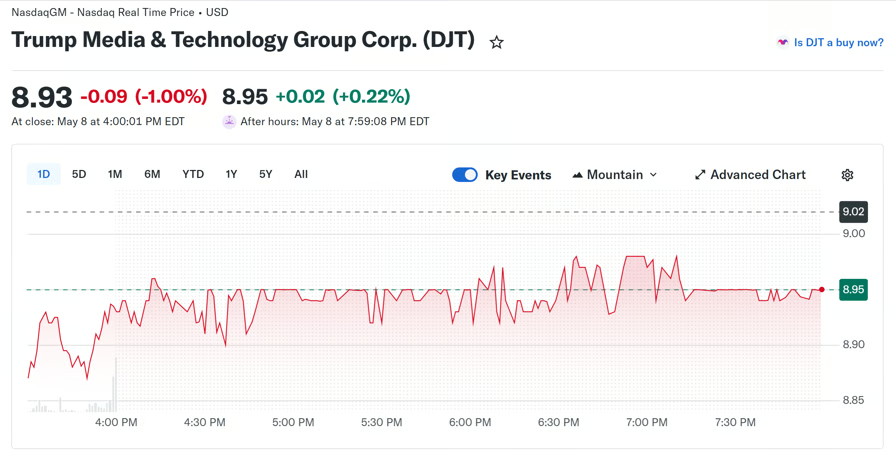
The results arrive after a turbulent stretch for the company. CEO Devin Nunes stepped down on April 22, and the stock has lost more than 90% of its value since peaking at $97.54 in early 2022, last changing hands around $8.93.

Trump Media shares. Source: Yahoo! Finance
Related: Trump-linked American Bitcoin energizes 11,298 new ASICs
American Bitcoin posts $82 million quarterly loss
As Cointelegraph reported, American Bitcoin, the crypto mining company co-founded by Eric Trump and backed by Donald Trump Jr., posted an $81.7 million net loss in the first quarter of 2026, narrowing from a $100.6 million loss a year earlier.
Revenue came in at $62.1 million, a 400% jump from $12.3 million in Q1 2025 but a step down from $78.3 million in the prior quarter, missing analyst estimates by 17%. The company also reported a loss of 8 cents per share, well above Wall Street’s estimate of 1 cent.
Despite the miss, American Bitcoin mined a record 817 Bitcoin during the quarter, up from 783 in Q4 2025.
Magazine: Trump’s crypto ventures raise conflict of interest, insider trading questions


Seven major Bitcoin mining pools have joined the Stratum V2 working group as the industry seeks a common open standard for communication between pools and miners.
Summary
- Seven mining pools joined Stratum V2 to improve pool communication and miner choice.
- Foundry and AntPool control a large share of global Bitcoin mining hashrate.
- Crypto.news reported that up to 20% of Bitcoin miners may be unprofitable.
The new members include AntPool, Block Inc., F2Pool, Foundry, MARA Foundation, SpiderPool, and DMND. The group will work on wider adoption of Stratum V2, a protocol built to improve how mining pools share work with individual miners.
Stratum V2 aims to improve mining efficiency
Stratum V2 is designed to make Bitcoin mining pool communication faster and more secure. It can also give miners more control over block template selection instead of relying only on pool operators.
The timing matters because mining remains highly competitive. The Stratum V2 announcement said, “Bitcoin mining is competitive and fragmented by design.” That claim fits the current market, but the real benefit will depend on how widely pools and miners adopt the protocol.
Foundry and AntPool are among the largest Bitcoin mining pools by hashrate. Their role gives the working group more market weight than earlier protocol efforts.
Foundry controls nearly 30% of global pool hashrate, while AntPool controls about 17.7%, according to Hashrate Index data cited in recent reports. Their participation could help Stratum V2 move from technical work toward broader use.
Miners remain under pressure
Crypto.news reported that CoinShares estimated 15% to 20% of the global Bitcoin mining fleet may be unprofitable under current conditions. The pressure is strongest among miners using older machines or paying higher electricity costs.
CoinShares also said Q4 2025 was the hardest quarter for miners since the April 2024 halving. Hashprice fell near five-year lows, while the average cash cost to produce one Bitcoin among listed miners reached about $79,995.
Moreover, Bitcoin mining difficulty is also expected to rise again in May. Higher difficulty means miners need more computing power to earn the same block rewards.
That leaves miners searching for small efficiency gains. Stratum V2 may help reduce delays and improve coordination, but it will not remove the broader cost pressure from energy prices, hardware costs, and Bitcoin price swings.

Sandisk: Beware The FOMO Rally
TeraWulf (WULF) Stock: Q1 2026 Results Show AI Revenue Surge Despite $427M Loss

Only These 8 ‘90s Action Movies Can Be Considered True Masterpieces

Manchester United reach agreement with Casemiro over contract clause amid transfer speculation

US brings back mandatory military draft registration

Steven Gerrard disagrees with Gary Neville over ‘shock’ Chelsea and Arsenal claim | Football


-
 Crypto World2 days ago
HarrisX Poll Found 52% of Registered Voters Support the CLARITY Act
-

 NewsBeat7 days ago
Channel 5 – All Creatures Great and Small series 7 new post
-

 Crypto World3 days ago
Upbit adds B3 Korean won pair as Base token gains Korea access
-

 Fashion2 days ago
Weekend Open Thread: Marianne Dress
-

 Tech6 days ago
Image AI models now drive app growth, beating chatbot upgrades
-
 NewsBeat3 days ago
NCP car park operator enters administration putting 340 UK sites at risk of closure
-
 Business22 hours ago
Ignore market noise, India’s long-term story intact, say D-Street bulls Ramesh Damani and Sunil Singhania
-

 Business7 days ago
Winning Numbers Drawn as Jackpot Resets to $20 Million
-

 Politics1 day ago
Politics Home Article | Starmer Enters The Danger Zone
-

 Entertainment6 days ago
Olivia Wilde Reacts To Viral ‘Corpse’ Comparison
-

 Crypto World7 days ago
BlackRock Buys $284M In Bitcoin On May 1 As The Best Crypto To Invest In For 2026 Sits Below A Pending Binance Listing
-

 Sports6 days ago
Inter Milan Win Serie A Title After Victory Over Parma
-
 Sports7 days ago
IPL 2026: Gujarat Titans opt to bowl vs Punjab Kings; Nishant Sindhu handed debut | Cricket News
-

 Sports7 days ago
Kofi Kingston and Xavier Woods reportedly released by WWE along with others
-

 Crypto World5 days ago
UAE Free Zone Deploys Blockchain IDs to Verify Registered Firms
-
 Sports6 days ago
Every word of Arne Slot’s heated rant after Manchester United win vs Liverpool
-

 Politics7 days ago
The Devil Wears Prada 2 Cast: How Do Their Premiere Looks Compare To The Original?
-

 Business7 days ago
Can LeBron James Lead LA Past OKC Without Injured Luka Doncic?
-

 Entertainment7 days ago
Other Bennet Sister Love Triangle Cast: Ella Bruccoleri, Donal Finn
-
Entertainment6 days ago
Jennifer Lawrence’s Mary Jane Sneakers Are Spring’s It-Girl Shoe
You must be logged in to post a comment Login