
Crypto World
Bitcoin Jumps to $64K as Gold Rallies and Oil Rebounds

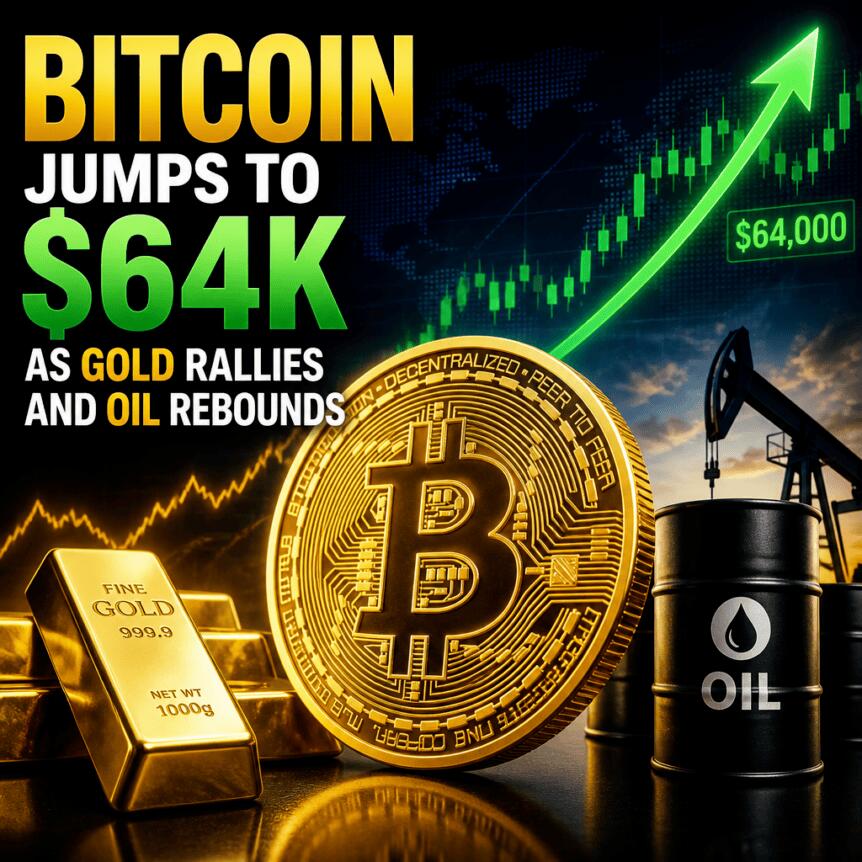
Bitcoin rebounded after Monday’s Wall Street open, returning to the $64,000 area as traditional markets rotated away from equities and toward commodities. The move followed a weekly close earlier in the weekend session, with BTC/USD recovering more than 2% on the day according to TradingView.
At the same time, geopolitical noise around the US–Iran standoff spilled toward Oman, raising renewed questions about the Strait of Hormuz shipping route—though oil prices appeared largely unmoved in early trading. Derivatives data also pointed to a crowded long trade, with Bitcoin funding rates reaching levels not seen since late 2024.
Key takeaways
- BTC/USD climbed more than 2% on Monday after rebounding from Sunday’s weekly close, with price returning to roughly $64,000.
- US–Iran ceasefire concerns and Trump’s comments related to Oman fed risk headlines, but WTI crude stayed near $82.35 per barrel.
- CryptoQuant data shows Bitcoin funding rates hitting 20-month highs of 0.022 as long positions build within the current range.
- QCP Capital said BTC remains near the lower end of its recent range, warning that sustained moves beyond the range would carry more signal than day-to-day fluctuations.
BTC tracks a shift from equities to commodities
TradingView data showed Bitcoin up over 2% on Monday, rebounding from the prior weekly close. The move coincided with softer US equity sentiment: the S&P 500 was down about 0.5% from its Thursday all-time high around the time of writing, as stocks gave way to gold as investors searched for alternative havens.
Geopolitical headlines added volatility to the broader macro picture. With an agreed 60-day ceasefire between the US and Iran set to expire, Trump told Fox News he would consider military action if Oman “gets in the way” amid a dispute linked to reopening the Strait of Hormuz oil route. Despite the rhetoric, oil markets appeared calm, with WTI crude trading flat around $82.35 per barrel at the time.
Gold showed more movement than oil at the start of the week. Safe-haven demand lifted XAU/USD by just over 1%, reaching a daily high of $4,427 per ounce. Cointelegraph previously reported that a mix of retail participation and government interest helped push gold to multiweek highs.
Data tracked by Bytetree, which monitors the 30-day change in inflows to gold-backed exchange-traded funds (ETFs), placed 30-day inflows at nearly $12 billion through Aug. 13. In an Investing.com piece that quoted a Bank of America strategist, Michael Hartnett argued that “long gold remained the trade,” framing it as a hedge amid concerns around currency debasement, bond stress, and inflationary pressures.
Investors keep BTC near a familiar range—until positioning shifts
In a Monday bulletin, QCP Capital said Bitcoin’s ability to withstand macro pressures without a major breakdown suggested the market is not yet signaling a decisive trend change. The firm emphasized that focusing on single price levels may miss the bigger picture.
Instead, QCP Capital pointed to range behavior: it described BTC as still sitting close to the lower end of its recent trading band and argued that a sustained move outside the range would reveal more meaningful information about market positioning than relatively contained intraday moves.
This framing matters for traders because it implies that catalysts may be more important than incremental price changes. Earlier coverage referenced expectations that a return to the $61,000 area could prompt an unwinding of BTC long positions—an observation tied to how leverage can amplify downside when levels break.
On Monday, liquidation activity appeared contained as BTC moved back toward the $64,000 region. CoinGlass data cited in the report put 24-hour cross-crypto liquidations at approximately $180 million, suggesting that the rebound occurred without a large liquidation-driven panic on the day.
Funding rates surge: long exposure is getting crowded
Beyond spot price, derivatives positioning offered a more pointed signal. CryptoQuant data showed Bitcoin funding rates reaching 20-month highs of 0.022 on Aug. 14. The analytics firm characterized derivatives sentiment within the current BTC price range as positive, adding that most traders were taking long positions.
When funding rates rise while price holds relatively stable, it can indicate that market participants are piling into the same side of the trade. That can be constructive if momentum extends—but it also increases the risk that a reversal could trigger crowded unwinds, depending on how price reacts at the edges of the prevailing range.
The report also cited CryptoQuant’s earlier observation that futures activity on Binance was outweighing spot markets by nearly eight times. While this metric alone doesn’t predict direction, it supports the broader theme: derivatives are playing a large role in how leverage and sentiment develop around Bitcoin’s current trading boundaries.
What to watch next amid macro and leverage signals
For now, Bitcoin is rebounding, but the underlying positioning looks increasingly one-sided as funding rates climb and longs become more crowded. Investors and traders should watch whether BTC can sustain moves beyond its recent range—since QCP Capital suggested that only a sustained breakout would meaningfully clarify market positioning—while keeping an eye on funding rate changes and liquidation levels for signs that leverage is either being rewarded or set up for a sharper unwind.


Curve Finance founder Michael Egorov has taken a swipe at Solana-based Pump.fun and criticized the platform’s role in the meme coin market.
His comments add to the scrutiny Pump.fun has faced as it has grown into one of the biggest venues for launching new meme coins.
Token Failures and Controversies
Egorov criticized Pump.fun and called it “a casino of scams called meme coins.” ClawPump co-founder Tomas Oliver, however, pushed back and asserted that the platform simply provides a service and users choose how to use it. Oliver added that meme coin activity would exist elsewhere if Pump.fun did not dominate the market.
The Solana-based launchpad has faced controversy before, particularly over the way its platform has been used.
In November 2024, its livestream feature drew heavy backlash after users began using it for extreme and disturbing stunts linked to their token prices. Some streams involved threats of self-harm, violence, and harm to family members. In one case, a user threatened to end their life if a token failed to reach a $25 million market cap. Another incident reportedly involved a couple using their child as part of a campaign to boost a token.
The backlash led Pump.fun to halt livestreams. The feature returned in April 2025, but with stricter moderation rules.
It also faced legal pressure during this period. A proposed class-action lawsuit accused Pump.fun of offering unregistered securities and alleged that it had collected nearly $500 million in fees. The case was brought by a trader who said he lost money on three tokens – FWOG, FRED, and GRIFFAIN.
Growth Paradox
Concerns over the tokens themselves have also continued. A May 2025 report from blockchain analytics firm Solidus Labs found that 98.6% of Pump.fun tokens it analyzed showed characteristics of pump-and-dump schemes or rug pulls. More recently, a CoinGecko analysis of 18.67 million tokens found that more than 68% recorded their final trade on the same day they launched. Only 4.55% remained active for more than 90 days.
Despite this, the platform has also become a major source of revenue on Solana. In fact, it was among seven Solana applications that generated more than $100 million in revenue in 2025. According to the latest newsletter by pseudonymous Pump.fun co-founder Sapijiju, the launchpad surpassed Hyperliquid in revenue measured over 30 days.
The post Pump.fun Under Fire Again: Curve Finance Founder Calls It a ‘Casino’ for Meme Coins appeared first on CryptoPotato.
Fireblocks has appointed former U.S. Securities and Exchange Commission Acting Chairman Elad Roisman as its chief regulatory and policy officer and general counsel for regulatory affairs.
Summary
- Roisman will oversee Fireblocks’ regulatory strategy, policy engagement, and legal work involving regulation.
- The former SEC commissioner will act as the company’s main contact with regulators and standards bodies.
- Fireblocks said its platform has secured more than $14 trillion in digital asset transactions.
- The appointment takes effect immediately, with Roisman joining the leadership team in Washington, D.C.
Roisman will lead Fireblocks’ regulatory work
Fireblocks said in an Aug. 17 press release that Roisman will direct its regulatory strategy and policy engagement while handling legal matters tied to financial rules. Based in Washington, D.C., he will also represent the company in discussions with regulators and organizations that set industry standards.
Joining the company’s leadership team immediately, Roisman arrives as governments in the United States, Europe, Asia, and the Middle East develop separate rules for stablecoins, tokenized assets, and digital asset services. Fireblocks said such requirements affect the banks, payment providers, and asset managers using its platform to build blockchain-based products.
The company described stablecoins as an established settlement tool for institutions, while tokenized products such as money market funds and private credit have started moving from tests into live financial services. According to the release, banks and asset managers are increasingly placing traditional instruments on blockchain networks, creating additional compliance demands for the infrastructure providers supporting them.
Roisman will serve as Fireblocks’ main point of contact during regulatory discussions affecting those services. His remit covers policy communication as well as legal issues, giving him responsibility for both the company’s engagement with public agencies and its response to rules applied across different markets.
Fireblocks co-founder and CEO Michael Shaulov said experience inside regulatory agencies could help the company communicate with policymakers and support customers as new requirements take effect.
“Having people who understand the mindset and missions of regulators enables us to help inform policymakers and support our clients as rules come into place.”
Referring to stablecoin payments and tokenized real-world assets, Shaulov added that Roisman’s experience as both a regulator and an adviser to financial institutions would help Fireblocks adjust its infrastructure as customers enter regulated areas of digital finance.
Former SEC official brings government and private-sector experience
Before joining Fireblocks, Roisman co-led the digital assets practice at Cravath, Swaine & Moore, where the company said he advised financial institutions and financial technology firms on digital asset regulation. He also testified before Congress on proposed legislation covering the structure of U.S. crypto markets.
During his time at the SEC, Roisman served as a commissioner and acting chairman. The release said he voted on more than 100 rulemaking matters and over 1,000 enforcement actions, while representing the agency before Congress and international organizations.
His international work included engagement with the International Organization of Securities Commissions and the Financial Stability Board, according to Fireblocks. Both organizations participate in discussions concerning financial supervision and the coordination of regulatory standards across national markets.
Prior to joining the SEC, Roisman worked as chief counsel for the U.S. Senate Committee on Banking, Housing and Urban Affairs. He also held a chief counsel role at NYSE Euronext, giving him experience across Congress, a federal market regulator, and a major securities exchange operator.
Roisman said lawmakers and regulators are devoting more attention to rules intended to support activity in the digital asset sector. His work at Fireblocks will include engaging with policymakers as financial institutions develop services under recently adopted and pending laws.
“The work now is engaging with these policymakers on the rapidly evolving digital asset environment and supporting institutions as they build and grow the next phase of the financial system under the new regulations and laws.”
U.S. crypto rules add weight to the appointment
In the United States, Fireblocks has added Roisman while Congress and federal regulators continue to address how digital assets should be issued, traded, and supervised. The company cited federal stablecoin legislation and ongoing negotiations over crypto market structure as two policy areas affecting its institutional customers.
The Digital Asset Market Clarity Act passed the U.S. House by a 294–134 vote in July 2025. According to recent crypto.news coverage, the Senate Banking Committee advanced the legislation by a 15–9 vote in May 2026, but the bill had not received a Senate floor vote before lawmakers left for their August recess.
If enacted, the legislation would define the respective roles of the SEC and the Commodity Futures Trading Commission in digital asset markets. It would give the CFTC authority over spot digital commodity trading while leaving digital asset securities under SEC supervision.
Separate regulatory work is also underway inside the SEC. In July, the agency placed three digital asset projects on its 2026 rulemaking agenda, covering crypto offerings, broker-dealers, and market structure, according to an earlier regulatory report. The planned work includes possible exemptions or safe harbors for certain digital asset offerings and potential rule changes for exchanges and alternative trading systems.
Roisman’s role gives Fireblocks a former SEC official as its lead representative during those policy discussions. His previous work before Congress on market structure legislation also places him close to a debate that could determine which federal agency oversees various tokens, trading platforms, and intermediaries.
Stablecoins form a large share of Fireblocks activity
Fireblocks’ regulatory focus also covers stablecoin infrastructure, an area that the company said now accounts for much of the activity handled through its platform. Stablecoins represented 69% of all digital asset transaction volume on Fireblocks during the second quarter of 2026, while USDC had become its leading stablecoin earlier in the year, July reporting showed.
Institutional projects using the platform include a MiCA-compliant euro stablecoin being developed by Qivalis and a group of 12 European banks. The banks selected Fireblocks to provide tokenization, wallet, and lifecycle-management systems, with a launch targeted for the second half of 2026 pending approval from De Nederlandsche Bank, according to April project details.
Fireblocks said the euro project will also use its tools for identity checks and sanctions screening. The group includes banks such as BBVA, BNP Paribas, ING, and UniCredit, while Qivalis plans to operate as an electronic money institution under Dutch supervision.
The company currently supports stablecoin payments, settlement, custody, tokenization, trading, accounting, and compliance reporting across more than 150 blockchain networks. Fireblocks said thousands of organizations use its platform, including Worldpay, BNY, Galaxy, and Revolut, and that it has secured more than $14 trillion in digital asset transactions.


World Liberty Financial has received preliminary OCC approval to establish a national trust bank that would issue USD1, manage its reserves, and provide digital asset custody across the United States.
Summary
- World Liberty Trust must satisfy OCC requirements before it can begin banking operations.
- The proposed Florida-based bank would take over USD1 issuance and reserve assets from BitGo.
- Elizabeth Warren and nine senators have introduced legislation targeting bank ownership by presidents and their families.
- Lawmakers have also questioned a reported $500 million UAE-linked investment in World Liberty.
World Liberty bank cannot open until conditions are met
The Office of the Comptroller of the Currency said in its Aug. 14 decision that it had granted preliminary conditional approval for World Liberty Trust Company, National Association. The proposed bank would operate from Bay Harbor Islands, Florida, as a wholly owned subsidiary of Delaware-registered WLTC Holdings LLC.
Preliminary approval permits the company to organize the bank but does not allow it to start operations. The OCC said World Liberty Trust must complete its preopening requirements and obtain final authorization under federal banking law before conducting business.
Until final approval is issued, the regulator can modify, suspend, or withdraw its decision if new information raises concerns. World Liberty Trust must also apply for stock in a Federal Reserve Bank, maintain at least $20 million in eligible capital, and receive the OCC’s written confirmation that all opening conditions have been met.
Under its proposed business plan, World Liberty Trust would issue and redeem the dollar-backed USD1 stablecoin for institutional clients across the country. The bank would also maintain reserves, offer custody services, and let custody customers convert approved stablecoins into USD1 using assets already held with the institution.
World Liberty Trust would not operate as a standard commercial bank. Its proposed charter does not cover ordinary retail deposits or conventional lending, with the business instead limited to trust, custody, reserve, and related payment services.
Citing the National Bank Act and the GENIUS Act, the OCC said national trust banks may provide digital asset custody and issue payment stablecoins. The agency also reported that uninsured national trust banks under its supervision held $7.2 trillion in assets under administration as of March 31, including $1.7 trillion in custody and safekeeping accounts.
USD1 operations would move from BitGo
Once authorized to open, World Liberty Trust plans to replace BitGo Bank & Trust as the exclusive issuer and custodian of USD1. The OCC said the proposed bank would acquire the token’s reserve assets and assume the liabilities tied to them.
Federal rules governing transactions between banks and their affiliates could apply to the transfer. However, the agency approved an exemption from certain limits, collateral rules, and restrictions on low-quality assets under Regulation W as part of its review of the new institution.
BitGo will remain responsible for USD1 issuance and custody until the proposed bank completes the OCC’s conditions. World Liberty Trust would need additional regulatory clearance if the final structure of the reserve transfer triggers other federal bank merger requirements.
For American institutions using USD1, an operating national trust bank would place issuance, reserve management, and custody under direct OCC supervision. Federal status would also let the bank provide its approved services nationwide under one regulator instead of securing separate state permissions.
World Liberty Chairman and President Zach Witkoff said the structure would put USD1’s main functions under the same federal supervisor.
“A national trust bank brings USD1 issuance, custody, and reserve management together under OCC supervision, examined on the same standards that have governed banks for generations.”
Witkoff also said the company welcomed “continuous scrutiny from federal regulators.”
World Liberty has joined several crypto companies pursuing federal trust structures. The OCC conditionally approved applications involving Circle, Ripple, BitGo, Fidelity Digital Assets, and Paxos in December 2025, while Coinbase, Crypto.com, and Stripe-owned Bridge later received similar decisions.
Circle completed its preopening requirements and obtained final authorization for its national trust bank in July. The process shows that conditional approval alone does not permit a proposed institution to begin banking operations.
Trump family ties trigger a Senate bill
Political scrutiny has followed the application because President Donald Trump and his three sons are affiliated with World Liberty. The company’s website has said that a Trump family-linked entity controls about 38% of its equity interests.
Trump nominated Comptroller Jonathan Gould in 2025, leading several Democratic lawmakers to question whether the regulator could review the application independently. Before the decision, Senator Elizabeth Warren asked the OCC to delay its review until Trump gave up his financial interest in the company.
As crypto.news reported in June, Warren challenged Gould during a Senate Banking Committee hearing and argued that the application presented conflict-of-interest and national security concerns. Gould said the agency would follow its legal duties and handle the review through a nonpartisan process.
Addressing the issue in its approval, the OCC said, “the Comptroller and staff acted consistently with their statutory duties and ethical obligations with respect to the Application.” Career agency employees reviewed the filing, while nonpolitical examiners would supervise the bank, according to the decision.
The OCC also disclosed that it received seven comments from four commenters. Two questioned whether the proposed activities fit the legal powers of a national trust bank, while three argued that the public lacked enough information or time to comment.
Agency officials rejected both objections. The decision said World Liberty submitted the required public and confidential information on time, and the comment period complied with federal rules.
After the approval, Warren and nine other senators introduced the Ending Presidential Corruption in Banking Act. The proposal would prevent a president, vice president, their spouses or their children from owning or controlling a bank.
Senate Banking Committee Democrats said the measure would require federal agencies, within 60 days of enactment, to review banking applications approved after Jan. 20, 2025. Regulators would have to terminate an approval issued while a person covered by the bill owned or controlled the applicant.
“This is the most brazen act of self-dealing our financial system has ever seen — and Congress cannot allow it to stand,” Warren said.
The legislation is backed by Senators Chris Van Hollen, Angela Alsobrooks, Chris Murphy, Bernie Sanders, Richard Blumenthal, Jack Reed, Andy Kim, Tammy Duckworth, and Ruben Gallego.
UAE investment remains under congressional review
Congressional questions also cover World Liberty’s foreign investors and its transactions involving USD1. An Abu Dhabi company backed by UAE National Security Adviser Sheikh Tahnoon bin Zayed Al Nahyan reportedly purchased a 49% interest in World Liberty for $500 million through an agreement signed in January 2025.
In June, five Democratic senators requested congressional hearings into the transaction. Their letter asked whether the investment affected subsequent Trump administration decisions involving UAE arms sales and access to advanced artificial intelligence chips.
The OCC said it considered public comments about World Liberty’s non-US investors. Its decision found that the foreign investors were not principal shareholders of the proposed bank, while several investors signed agreements promising not to control or influence its operations.
StringZ Holdings, DT Marks SC, and AMGUS made those commitments in July. Under the agreements, the investors cannot appoint bank employees, seek board seats, obtain material nonpublic information, or influence management decisions, pricing, personnel, and operations.
Eric Trump signed the commitment for DT Marks in his role as president of the Trump family-linked entity. Any voting interest of 10% or more must remain an investment, while voting power above 9.9% would be exercised through a proxy using the same proportion as votes cast by other shareholders.
Separate scrutiny has centered on MGX, another Abu Dhabi entity chaired by Sheikh Tahnoon. MGX used $2 billion in USD1 for an investment in Binance in May 2025, helping increase the stablecoin’s circulation.
A February report on USD1 cited Arkham Intelligence data showing that Binance-controlled wallets and customer accounts held about $4.7 billion of the token, equal to nearly 87% of its $5.4 billion supply at the time. Binance said exchanges commonly hold large amounts of listed assets, while World Liberty and the exchange denied having an improper relationship.
President Trump later pardoned former Binance CEO Changpeng Zhao. A White House spokesperson has repeatedly rejected allegations that Trump’s investments create conflicts, saying his assets are held in a trust managed by his children and that administration decisions are made independently of family business activities.


BitMart’s official Chinese-language X account has publicly demanded that founder Sheldon Xia explain the whereabouts of user funds and produce a repayment plan by Wednesday.
The account said in a Monday post that some users remained unable to withdraw funds and that some employees had not received their final salary or compensation, while calling on Xia to disclose BitMart’s wallets, assets, liabilities and available reserves, according to a machine translation of the post.
The post said if Xia does not provide a verifiable asset disclosure and repayment plan by the deadline, it would continue to submit evidence to regulators, law enforcement, lawyers and the media.
It was unclear who authored Monday’s post or whether the account remained under the company’s control. Cointelegraph contacted BitMart for comment but did not immediately receive a response.
BitMart announced on July 26 that it would wind down its exchange as its BMX token plunged and users reported withdrawal delays. The company said trading on the platform will end on Aug. 26 and operations will cease on Jan. 31.
The exchange has stopped accepting new deposits and registrations as part of the shutdown and warned that some withdrawals could face additional compliance and security reviews.
Related: BitMart withdrawals appear to slow following wind-down announcement
Claims on official account called “fabricated”
Xia responded in an X post on Monday, calling the claims in the post “fabricated rumors” and saying evidence had been preserved, according to a machine translation.
“We have collected full evidence of the content on X, all of which is fabricated rumors. During daytime US time, we will file a police report and send a lawyer’s letter to X, demanding technical and data forensics,” Xia said.
Xia also said employees were not being prioritized over customers in the handling of assets, adding that “everyone is a client” and there were no privileges.
He previously denied that BitMart had misappropriated user assets. On Aug. 8, Xia told users not to believe unverified claims or screenshots purportedly provided by current or former employees.
Wallets attributed to BitMart by Arkham held about $36.5 million in crypto assets as of Monday, down from roughly $71 million on July 26 and $102 million on July 6.
The tracked wallets may not represent all assets controlled by BitMart, and it is unclear how much of the decline reflects customer withdrawals, asset consolidation or transfers to other wallets.
This is a developing story.
Hodler’s Digest: Data of 54,000 wallet users leaked, CLARITY odds just 10%


Crypto influencer Zion "Ansem" Thomas opened ansem.io on Aug. 17, a site where token teams pay for his promotion by giving supply to holders of his memecoin. The trade replaces the standard influencer deal, in which a team pays social media influencers, known as Key Opinion Leaders, in cash or… Read the full story at The Defiant
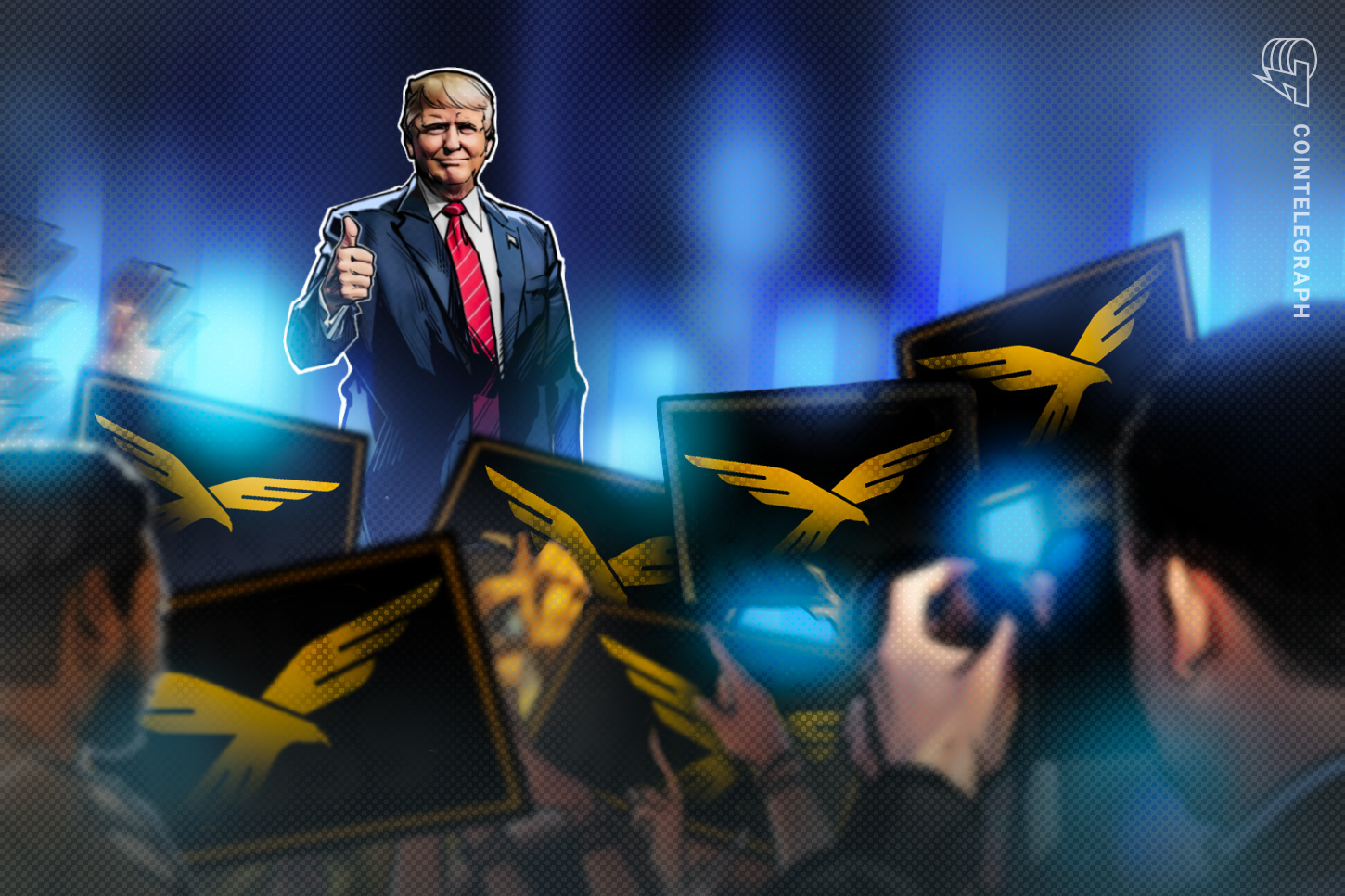
Amid scrutiny and accusations of conflicts of interest from many lawmakers, the US Office of the Comptroller of the Currency (OCC) gave conditional approval for World Liberty Financial’s application for a national trust bank.
In a Friday notice, the OCC said the conditional approval for World Liberty’s charter application, subject to certain regulatory and policy requirements, would allow the company to operate under the title World Liberty Trust Company, National Association. According to its application, the World Liberty bank proposed issuing US dollar-backed stablecoins and custodying digital assets related to the company’s USD1 token.
The OCC approval came amid concerns about potential conflicts of interest between World Liberty and US President Donald Trump’s family. The president and his three sons are affiliated with the company, and the head of the OCC, Jonathan Gould, was nominated by Trump in 2025. World Liberty’s website also said a Trump family entity controlled 38% of the company’s equity interests.
According to the agency, “the Comptroller and staff acted consistently with their statutory duties and ethical obligations with respect to the Application.” Gould previously said that the application would be reviewed in an “apolitical and nonpartisan process” following a letter from Senator Elizabeth Warren.
In response to the approval, Warren said on Friday that she had introduced legislation “to stop this kind of unprecedented corruption,” calling the OCC’s move “the most brazen act of self-dealing our financial system has ever seen.” She and nine senators introduced the Ending Presidential Corruption in Banking Act following the approval.
Related: OCC Comptroller says WLFI charter review will remain apolitical
Under the Trump administration and Gould, the OCC has approved or conditionally approved multiple applications from crypto companies seeking trust charters to expand their services in the US. In December, the agency approved applications from Circle, Ripple Labs, Crypto.com and Coinbase following passage of the GENIUS stablecoin bill in Congress.
World Liberty’s UAE ties under scrutiny in US Congress
Amid the OCC approval, many lawmakers are continuing to call for investigations into World Liberty’s ties to foreign entities potentially influencing US policy through Trump.
An Abu Dhabi investment company backed by Sheikh Tahnoon bin Zayed Al Nahyan, the United Arab Emirates’ national security adviser, reportedly purchased a 49% stake in World Liberty in January 2025 for $500 million. Another UAE entity, MGX, used World Liberty’s USD1 stablecoin to invest $2 billion in crypto exchange Binance. Trump later issued a presidential pardon for former Binance CEO Changpeng Zhao.
A White House spokesperson has repeatedly said that there were “no conflicts of interest“ with Trump’s investments.
Magazine: El Salvador’s Bitcoin experiment turns 5: ‘It was for us, not them’
Crypto World
Crypto investors should not judge seed startups by recurring revenue, Truth Ventures CEO says


Truth Ventures CEO Varun Datta has urged crypto investors not to demand recurring revenue from seed-stage companies, as RootData has listed 99 crypto projects that closed, entered bankruptcy, or became inactive in 2026.
Summary
- RootData listed 99 crypto projects as closed, bankrupt, or inactive by late July.
- Galaxy recorded $4 billion across 355 crypto venture deals in the first quarter.
- Datta said seed startups should be assessed through founder knowledge and their path to a viable business.
- US-based companies received 70.2% of crypto venture capital during the first quarter.
RootData listed 99 crypto projects that had announced closures, entered bankruptcy, or remained unavailable for long periods by late July, according to a recent crypto.news report. The database includes several types of inactivity, meaning its total should not be presented as 99 insolvencies.
As companies disappear from several parts of the market, investors are examining whether crypto products can retain users and support operating costs without depending on rising token prices. Datta told crypto.news that such tests may be suitable for established businesses but could produce the wrong assessment when applied to companies at the start of their development.
“The market shakeout is evident, but the lessons we are learning primarily apply to established companies. It is unfair to expect a new team to show recurring revenue. They are simply too early in their journey for those metrics.”
His comments draw a distinction between accepting an unworkable business and recognising that a new company may not have had enough time to build recurring income. Applying revenue standards designed for a later funding round to a pre-seed company, he said, could prevent investors from examining the qualities that matter at its current stage.
Crypto investors are putting more money into mature companies
Galaxy Research reported that venture firms invested about $4 billion across 355 crypto and blockchain deals during the first quarter of 2026. Funding declined 50% from the previous quarter, while the number of deals fell 16%.
According to Galaxy, the difference between the two declines resulted mainly from a reduction in large, later-stage financings after a strong fourth quarter. Smaller seed and early-stage deals continued, although later-stage companies received 57% of invested capital, leaving 43% for younger businesses.
Pre-seed rounds accounted for 19% of completed deals, while later-stage transactions rose to one-quarter of the total. Galaxy said the increase in the later-stage share indicated that parts of the crypto industry were maturing, even as new projects continued to secure funding.
Available capital is also concentrated in a small number of business categories. Trading, exchange, investing, and lending companies collected about $2.6 billion, close to three-fifths of all crypto VC money deployed during the quarter.
Infrastructure companies completed 56 deals, the second-highest total by category. Web3, NFT, decentralized autonomous organization, metaverse, and gaming companies followed with 39 transactions, while payment and rewards businesses recorded 33.
April data offered another example of capital concentration. As fundraising figures showed, centralized finance companies raised about $606 million of the approximately $860 million disclosed across 55 crypto funding events that month. Infrastructure companies secured $105 million across 14 deals, while DeFi businesses raised $90 million across 19.
Seed startups require a different investment test
For Datta, early-stage investors should begin with the founder’s knowledge of the problem rather than revenue figures that may not exist. Product design and the value delivered to users, he said, provide more suitable evidence when a company has only recently begun operating.
“At the seed stage, the real indicator of success has never been revenue. It stems from the founder’s profound understanding of the problem at hand.”
Products must solve a genuine problem instead of using a token as the main fundraising tool, according to the venture capitalist. He attributed the failure of many crypto projects to attempts to replace a working commercial model with speculation around their tokens.
Datta described such failures as problems of vision rather than proof that early-stage investing itself is defective. In his view, protecting seed companies from unsuitable revenue tests does not require investors to overlook weak products or teams.
“This isn’t about protecting weak businesses,” he said. “It reminds investors not to use growth-stage criteria for brand-new startups.”
Under the approach outlined by Datta, investors would examine how a product could gain users before its available capital runs out. They would also assess whether the founders have identified a route from initial product development to a company capable of supporting itself.
Reviewing an existing revenue statement would be easier, he said, but venture firms backing new companies must evaluate an unproven plan with limited operating data. Datta described the process as an essential part of early-stage venture investing.
Crypto venture funds are competing for limited allocations
Galaxy also found that crypto-focused venture firms raised about $1.1 billion across eight new funds during the first quarter. The number of newly raised funds was the lowest recorded since the third quarter of 2020.
Fundraising conditions remained difficult because AI companies, spot crypto exchange-traded products, and digital asset treasury businesses competed for institutional allocations, according to the research firm. If the first-quarter pace continued for a full year, crypto venture funds would raise about $4 billion in 2026, below the $8.75 billion raised in 2025.
Competition for capital has not removed investor interest in companies serving a specific commercial market. In a separate interview, Moon Pursuit Capital founder Utkarsh Ahuja said investors should separate scientific progress from a business model that customers will pay to use. The infrastructure funding discussion covered security, cryptography, and quantum-readiness companies, but Ahuja said such businesses still require an adoption plan that does not depend on a rapid technical breakthrough.
Galaxy found that the median crypto deal exceeded $4.5 million in the first quarter, its highest recorded level. However, the research firm cautioned that valuation information was available for only 12% of completed deals and leaned heavily toward later-stage companies.
US crypto startups captured 70% of invested capital
US-headquartered companies received 70.2% of all crypto venture capital deployed during the first quarter, according to Galaxy. American companies also accounted for 43.5% of completed deals, followed by the United Kingdom at 5.3% and Singapore at 4.5%.
The US figures indicate that decisions over seed-stage requirements could have a particularly large effect on American crypto founders seeking institutional backing. Galaxy’s data does not show which individual screening standards investors applied, but it establishes that most capital flowed to companies based in the United States.
Datta said early investors should focus on companies building toward sustainable models across Web3 and AI. Truth Ventures invests from pre-seed through later Series rounds, according to the CEO, with an emphasis on founders developing products around identifiable problems.
The firm’s stated investment focus includes Web3 infrastructure, decentralized applications, and digital financial systems. Datta said Truth Ventures is accepting pitches from infrastructure founders while working with companies from their initial ideas through subsequent growth rounds.

Bitcoin investor and Ego Death Capital co-founder Jeff Booth has said that Strategy’s long-term survival comes down to one condition: BTC has to work as an actual currency, not just sit on a balance sheet as an asset.
Booth made the case in a wide-ranging interview with Scott Melker, and it ties the fate of the world’s largest corporate Bitcoin holder directly to whether BTC itself moves beyond being just another financial holding.
Why Strategy Needs Bitcoin to Become Money
Booth told Melker on The Wolf of All Streets that Strategy needs Bitcoin’s development as a currency to happen alongside its growth as an asset. Without that shift, he believes the company could face a very different outcome.
“For Strategy to do well long term, the yin and yang has to happen together,” he said. “Bitcoin needs to be a currency.”
He argued that if BTC remains only a financial instrument, Strategy could eventually face government intervention because its value would be tied primarily to the underlying asset. He acknowledged that such an outcome is uncertain, but said Bitcoin’s emergence as a currency provides another path.
“If Bitcoin emerges as a currency, then Strategy becomes one of the most valuable companies around, because they went early,” he said.
The comments came during a discussion about Bitcoin treasury companies and whether their models can work over long periods. Melker recalled being pitched investments in nine BTC treasury companies at Bitcoin Vegas, arguing that many appeared to have no clear business plan beyond accumulating the cryptocurrency.
Booth’s criticism goes further. He believes companies should generate cash inside the existing economy and then save part of that cash in Bitcoin. In his view, simply creating a company to buy BTC misses the original logic of holding the asset.
That concern also applies to Bitcoin yield products. The investor argued that offering high interest rates in exchange for users giving up self-custody can recreate the financial structure Bitcoin was intended to challenge.
Strategy’s Recent Bitcoin Moves
While Booth was making his case, Strategy’s own numbers kept shifting. On August 10, the company sold 1,690 BTC for $108.6 million and used the proceeds to buy back 1.15 million STRC preferred shares, and separately sold 6.59 million MSTR shares to raise $653.1 million for its cash reserve, which now sits above $4.6 billion.
Total holdings have fallen to 840,447 BTC, bought for $63.36 billion at an average price of $75,385.
CEO Phong Le said on August 12 that Strategy plans to resume Bitcoin purchases by the end of the year, describing the recent sales as a pause rather than a change of direction. The firm has bought around 175,000 BTC in 2026 and sold roughly 7,000, which Le called a 25-times net buyer.
STRC, the preferred share tied to those sales, has climbed back from lows near $75 but remains under its $100 par value, closing near $95 last Friday.
The post Strategy’s Future Hinges on Bitcoin Becoming a Real Currency: Jeff Booth appeared first on CryptoPotato.


Deel said on Aug. 17 that its DLUSD stablecoin wallet is live in more than 80 countries, 11 weeks after a launch limited to Argentina. The expansion routes a payroll platform that processes $22 billion a year into distributing dollar balances to contractors in markets where local banks make dollar… Read the full story at The Defiant
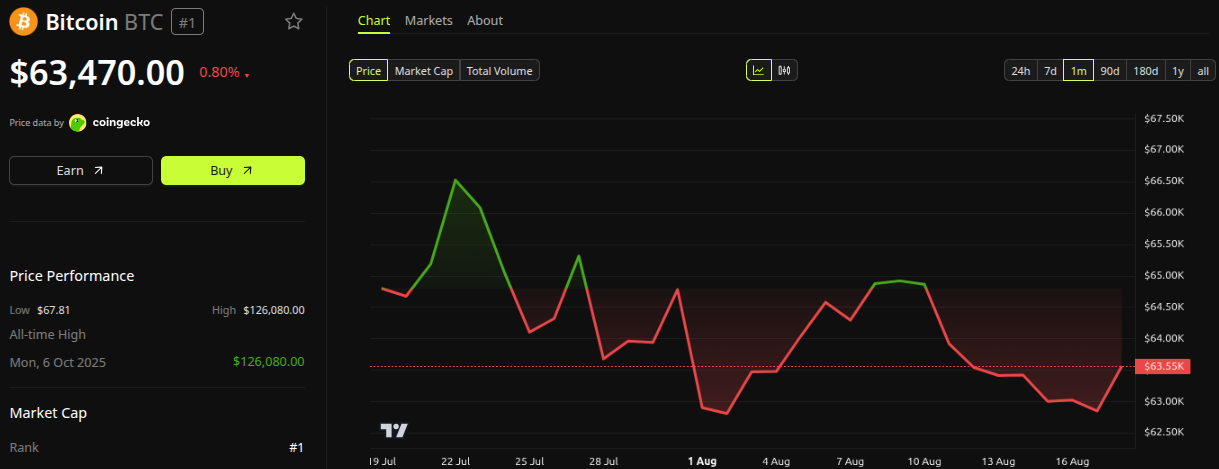
The US private credit market, valued at over $2 trillion, is flashing stress signals not seen since 2017, raising the question of what deteriorating loans could mean for Bitcoin.
The connection runs through liquidity and risk sentiment rather than any direct exposure between the two markets.
The Stress Signals Building in US Private Credit
Non-accrual loans are credits in which the borrower has stopped making payments or in which default is likely. That metric just hit a multi-year high.
The Financial Times reported the figures, based on Solve data. Non-accrual loans reached a median of 2.8% of cost across the twenty largest listed US Business Development Companies during the second quarter.
That level compares with late March, when the same measure sat near 2%. It marks the highest reading in nearly a decade, comparable to stress triggered by the 2017 oil price collapse.
Redemption pressure compounds the picture. Some funds received withdrawal requests reaching 40% of net asset value, though most gates limit quarterly redemptions to 5%.
“…In the old days a bad loan slid in plain sight. 100 cents, then 95, then 90, then 70. Everyone saw it coming. Now there is no warning. A loan is marked at 100 one month and zero the next. Lights out. That is why the redemptions are starting. Investors are finally asking what they actually own. And because this is where all the marginal credit in the economy now flows, if it seizes, the crunch does not stay contained…,” Jeffrey P. Snider noted on X.
Follow us on X to get the latest news as it happens.

Payment-in-kind arrangements are also expanding. That structure lets borrowers pay interest with more debt rather than cash, often signaling underlying repayment strain.
Fitch data adds another layer. Default rates touched recent highs, with stress concentrating in software, which is vulnerable to AI disruption, and healthcare.
Elevated US interest rates and a still-resilient domestic economy form the backdrop. Regulators have not flagged any imminent systemic risk, and several managers continue to publicly downplay the episode.
Why This Could Cut Both Ways for Bitcoin
Private credit stress does not directly affect Bitcoin. The impact comes through market risk and liquidity.
If defaults rise and investors become nervous, they may sell liquid assets to raise cash. Bitcoin can be hit quickly because it trades 24/7 and is easy to sell through both crypto markets and ETFs. That makes worsening credit stress a short-term risk for BTC.
The picture can change if the problem becomes serious enough to slow the US economy. A broader credit crunch could push the Federal Reserve toward rate cuts or other measures that increase liquidity.
That would generally be more supportive for Bitcoin.

So the key takeaway is simple. Worsening private credit stress could pressure BTC first. If it later forces the Fed to ease monetary policy, the same stress could become a positive catalyst for Bitcoin.
The post US Private Credit Stress Hits 2017 High: Why It Matters for Bitcoin? appeared first on BeInCrypto.

Eala feels it’s too early to line her up beside PH legend, but accepts similarities in their paths

Using Starlink’s Satellites To Study Earth’s Upper Atmosphere

Barry-Murphy goes wild and jumps into crowd as Cardiff City boss given new name


![Tom Lee: "Ethereum to $40,000 At This Date" [SUPER REALISTIC $40,000 Prediction for Ethereum]](https://wordupnews.com/wp-content/uploads/2026/08/1787004356_maxresdefault-80x80.jpg)


-

 Fashion3 days ago
Weekend Open Thread: Ann Taylor
-
 NewsBeat6 days ago
Communication cards help banking customers access services or report scams
-
 Business7 days ago
Oil Price Today (August 11): Crude oil rises to $88 after Trump’s compensation demand dents Hormuz opening. Here’s why
-

 Crypto World7 days ago
Revolut wins French banking licence, creates second EU banking hub
-
 Sports4 days ago
This U.S. Amateur is a glimpse into golf’s future in more ways than you think
-
 Crypto World7 days ago
Why Did Nvidia Stock Fall on Monday Despite a $500 Billion Wall Street AI Deal?
-

 Sports3 days ago
Birmingham 2026: Day 6 Timetable for Irish Athletes
-
 NewsBeat3 days ago
Myanmar says over 300,000 Rohingya refugees verified for repatriation as exodus enters ninth year
-

 Politics2 days ago
SEQ Code: The Three Letter Boarding Pass Code That Could Give You The Worst Seat
-
 Entertainment5 days ago
Keke Palmer Subtly Hints At Sean Evans Drama With Cryptic Post
-
 Entertainment7 days ago
57 Years Later, the Best Sitcom Ever Made Still Deserves a Reboot
-

 Fashion6 days ago
Coffee Break: The Fonteyn Jane Flat
-

 Tech6 days ago
Zoom Screen-Sharing Bug Let People Fully Take Over Other Devices On A Call
-

 Crypto World7 days ago
Bitcoin's BIP Editors Remove Luke Dashjr Two Days After BIP-110 Fork Stalled
-

 Fashion6 days ago
Should you refinance your debt? Pros, cons, and real numbers
-

 Fashion6 days ago
Claire Life: Kicking Off MVAAFF With the C Suite Luncheon Featuring Phylicia Rashad, Letoya Luckett, and More!
-
 Crypto World6 days ago
XRP bridge drained after software mistook fake deposits for real ones
-

 Sports5 days ago
DeQuan Jones in ‘high spirits’ after successful leg surgery
-
 Tech7 days ago
Zuck rekindles open weights Llama drama with Muse Glimmer
-

 Fashion7 days ago
How to Mix Diamond Rings With Gold & Silver Jewelry
You must be logged in to post a comment Login