

Crypto World
Bitcoin miners are selling: is capitulation here?



Public miners have dumped Bitcoin at a record pace, hashprice has collapsed to post-halving lows, and older machines are switching off. That is the textbook definition of capitulation. The harder question is whether it marks a bottom or the start of a deeper shakeout.
Summary
- Publicly traded Bitcoin miners sold more than 32,000 BTC in the first quarter of 2026, a single-quarter record that exceeded their combined sales for all of 2025 and topped the roughly 20,000 BTC sold during the Terra-Luna collapse in 2022.
- The pressure is economic: hashprice, the revenue a miner earns per unit of computing power, fell to post-halving lows in the high-$20s per petahash per day by mid-2026, well below the roughly $35 breakeven for older machines, putting a large share of the industry underwater.
- Network hashrate has started to fall as older hardware powers down, the classic signature of a miner capitulation, in which the least efficient operators stop mining at a loss.
- The bull reading is that capitulation has historically marked bottoms, because it clears weak capacity, lowers difficulty, and rewards the survivors. The bear reading is that this squeeze is structural, with heavy debt, record ETF outflows, and even Strategy turning seller removing the usual counterweight.
- Whether this is a bottom or a way station depends on whether Bitcoin can reclaim miner production cost, estimated by some near $80,000, against a price sitting closer to $58,000.
Bitcoin miners are supposed to be the market’s most committed holders, the operators who spend real money to produce coins and who have every incentive to keep them. So when miners start dumping Bitcoin at a record pace and switching off machines, the market pays attention, because it usually means something has broken in the economics of production. That is exactly what has happened through the first half of 2026. Public miners have sold more Bitcoin than in any prior quarter on record, hashprice has fallen to lows not seen since the last halving, and network hashrate has begun to slip as older rigs go dark.
This piece works through what is driving the selling, what capitulation actually means, and the real disagreement underneath it: whether a miner capitulation at these levels marks the bottom, as it often has, or whether this cycle is different. The signal matters because miners sit at the production edge of Bitcoin, where price, power costs, difficulty, debt, and treasury strategy meet. It also lands at a moment when Bitcoin sentiment is already washed out, making every capitulation signal easier to overread.
The record selling
The headline number is stark. Publicly traded mining companies, including MARA, CleanSpark, Riot Platforms, Cango, Core Scientific, and Bitdeer, collectively sold more than 32,000 Bitcoin in the first quarter of 2026, according to industry trackers. That figure set a single-quarter record. It exceeded what those same companies sold across all four quarters of 2025 combined, and it surpassed the roughly 20,000 Bitcoin they offloaded during the second quarter of 2022, the depths of the bear market that followed the Terra-Luna collapse.
When miners sell more in three months than they did in a full prior year, and more than during one of the worst crises in crypto history, the signal is hard to ignore. The individual disclosures fill in the picture. Riot Platforms sold 3,778 Bitcoin in the first quarter at an average price near $76,626, generating about $289.5 million, while producing only 1,473 coins in the same period, meaning it sold far more than it mined. Core Scientific liquidated roughly 1,900 Bitcoin worth about $175 million in January alone. Cango sold 2,000 Bitcoin in March for approximately $143 million, using the proceeds to retire Bitcoin-backed loans.
In a single week, MARA, Genius Group, and Nakamoto Holdings revealed combined sales of more than 15,000 coins, with the largest share from MARA. These were not routine sales of freshly mined coins to cover the power bill; they were drawdowns of treasury reserves the companies had previously chosen to hold. The trend shows up in the aggregate data too. The total Bitcoin held by miners, a metric some analysts call the miner reserve, has been declining since 2023, falling from more than 1.86 million coins at the end of that year toward roughly 1.8 million by mid-2026.
Selling that once looked like occasional balance-sheet management has become a sustained drawdown, and the pace accelerated as prices fell. The question is what forced it. The answer begins with mining economics, but it does not end there.
Why miners are selling
The answer is a profit squeeze that has been building since the last halving. The central metric is hashprice, which measures the daily revenue a miner earns per unit of computing power. Hashprice has been sliding since mid-2025, and by the first half of 2026 it had fallen to record post-halving lows, dropping into the high-$20s per petahash per day on some trackers, down roughly two-thirds from the October 2025 peak. The breakeven level for many miners running older equipment sits near $35 per petahash per day.
With hashprice well below that line, a large share of the industry, estimated at around a fifth at points earlier in the year, has been operating at a loss. Several forces compounded to produce that squeeze. The April 2024 halving cut the block reward in half, instantly halving the Bitcoin miners earn for the same work. Network difficulty has climbed relentlessly since, sitting roughly 10 times higher than in 2021, which means far more computing power now competes for that smaller reward.
Energy costs rose as Middle East conflict pushed oil higher and pressured power prices. Bitcoin itself fell, dropping toward a 21-month low near $58,000, so the coins miners produce are worth less at the moment they most need the cash. Taken together, mining profitability has compressed by close to an order of magnitude from its peak. Debt turned the squeeze into forced selling.
Aggregate miner debt surged over the past year, rising from around $2.1 billion to roughly $12.7 billion as companies borrowed to fund expansion, buy more efficient rigs, and diversify. Debt has to be serviced regardless of price, so when revenue collapses, miners with loan obligations have little choice but to sell coins or, in some cases, sell coins specifically to repay Bitcoin-backed loans. Some estimates put the all-in cost to produce a single Bitcoin near $80,000, well above the current price, which means the least efficient operators are now mining at a loss on every coin. That is the condition that forces capitulation.
What capitulation actually means
Capitulation is a loaded word, so it helps to define it precisely. In mining, capitulation is the point in a cycle where revenue falls below what a meaningful share of the network costs to run, and those operators power down their machines rather than keep mining at a loss. It is not a crash or a malfunction. It is the market clearing, the mechanism by which the least efficient capacity leaves the network when it can no longer pay for itself.
The signature of capitulation is a falling hashrate, and that is now visible. As unprofitable machines switch off, the total computing power securing the network declines. By mid-2026, a meaningful slice of older hardware had gone offline, and the 30-day average network hashrate had fallen by several % from its highs, after earlier swings in which difficulty dropped sharply and then rebounded as miners reconnected. When hashrate falls and stays down, Bitcoin’s built-in difficulty adjustment eventually lowers the bar, making it cheaper and more profitable to mine for the operators who remain.
That self-correcting loop is what distinguishes a mining capitulation from a permanent decline. Analysts track this through indicators built on hashrate momentum, which flag when short-term hashrate falls below its longer-term trend, historically a marker of miner stress and, often, of a market bottom forming. The pattern moves through recognizable stages: revenue falls below cost, weak operators power down, hashrate and difficulty drop, and the survivors, who sit on cheaper power and more efficient machines, absorb the share the leavers gave up and become more profitable. The shakeout is loud and it photographs like a collapse, but the underlying mechanism is orderly.
Whether that orderly clearing is bullish or bearish for the Bitcoin price is where the disagreement begins. For miners, capitulation is an industry sorting event. For traders, it is a possible bottom signal. Those are related, but not identical.
The bull case: capitulation marks bottoms
The optimistic reading rests on history. Miner capitulations have consistently preceded recoveries rather than endings. The logic is mechanical, not hopeful. When high-cost operators power down, network difficulty falls, which lowers the cost to mine for everyone still online.
The efficient survivors, running new machines on cheap power, then capture a larger share of a reward that has become cheaper to earn, so their margins expand even if the price does not move. The capitulation sorts the industry on a single variable, cost per hash, and consolidates it around its lowest-cost producers. For the price, the argument is that miner capitulation tends to coincide with peak seller exhaustion. Miners are a persistent source of supply, selling coins into the market to fund operations.
When the highest-cost miners give up and switch off, that stream of forced selling thins out, removing pressure that had been weighing on the price. Historically, the crossover in hashrate momentum indicators that signals capitulation has aligned with attractive long-term entry points, because it marks the moment the weakest hands, on the production side, have been washed out. The recovery mechanism has proven fast in the modern, industrialized mining sector. Earlier in 2026, a difficulty drop of around 11% was followed within two weeks by a record upward adjustment near 15% as miners reconnected the moment conditions eased.
That speed is the point: surviving operators are committed and well-capitalized enough to scale back up quickly when hashprice recovers. In this reading, the record selling and the falling hashrate are not a warning but a washout, the part of the cycle where the field clears before the next leg up. The bull case does not deny the pain. It argues that the pain is how the reset finishes.
The bear case: this squeeze may be structural
The skeptical reading argues that the usual capitulation-marks-a-bottom pattern assumes a market backdrop that no longer holds. The first difference is debt. The mining sector carries far more leverage than in past cycles, with aggregate debt having climbed toward $12.7 billion, which means capitulation now involves not just idle machines but the risk of defaults, forced liquidations, and distressed asset sales that can overhang the market longer than a simple hashrate reset would. The second and larger difference is who is buying.
In past capitulations, miner selling was absorbed by a mix of retail and, more recently, institutional demand. In 2026, the marginal buyer has turned into a seller. U.S. spot Bitcoin ETFs recorded their worst month on record in June, with roughly $4.5 billion in net outflows, removing the very demand channel that had absorbed supply on the way up. Even Bitcoin treasury companies, long the reliable counterweight to miner selling, have wobbled: the largest corporate holder made its first Bitcoin sale in years to fund a dividend and has come under pressure over its financing structure.
When miners sell into a market where ETFs are bleeding and the corporate bid is faltering, the supply has fewer places to go, and the price can keep falling even as capitulation runs its course. The third concern is duration. Capitulation clears quickly only if price recovers to pull survivors back and thin the selling. If Bitcoin remains stuck well below the estimated production cost for an extended period, held down by a hawkish Fed and tight liquidity, the squeeze can grind on, pushing even mid-cost operators toward the exit and turning a healthy shakeout into a prolonged contraction.
In this view, the capitulation signal is real, but the conditions that historically turned it into a bottom, rebounding demand and easing macro, are absent, so the pattern may not repeat on its usual schedule. This is also where Strategy’s balance sheet matters, because the market’s biggest corporate Bitcoin buyer is no longer treated as an unconditional bid. The bear case is not that miner capitulation does not exist. It is that capitulation may not be enough when the buyers are missing.
The AI pivot: capitulation or reinvention
There is a third storyline that complicates the simple capitulation frame, and it is specific to this cycle. Many miners are not simply powering down; they are repurposing. The same data centers, power contracts, and cooling infrastructure that mine Bitcoin can, with investment, host the computing demand of artificial intelligence and high-performance workloads, which command far higher and more stable revenue than mining at current hashprice. Several operators have pivoted hard in that direction, converting capacity or striking deals to serve AI customers instead of mining coins.
That pivot muddies the read on hashrate and selling. Some of the machines going dark are not distressed operators giving up but companies reallocating capacity to a more profitable use, and some of the Bitcoin being sold is funding that transition instead of covering losses. For those firms, selling coins and reducing mining is a strategic reallocation, not a capitulation in the traditional sense. It is a rational response to a world where a unit of power and compute is worth more pointed at AI than at a halved block reward.
The implication cuts both ways for Bitcoin. On one hand, the AI pivot means some hashrate decline reflects opportunity rather than distress, which is less bearish for the price and could permanently shrink the pool of forced sellers. On the other hand, it means the mining industry’s most valuable operators may increasingly treat Bitcoin as a secondary business, weakening the reflexive commitment that made miners such steadfast long-term holders. A sector that once mined and held because it believed in the asset is becoming a sector that mines, or computes, wherever the margin is best.
That shift also connects miners to the broader class of Bitcoin treasury companies, where balance-sheet Bitcoin is no longer always sacred. Coins can be collateral, reserves, working capital, or transition funding. In a tight market, that difference matters. It means miner selling is not always panic, but it is still supply.
The divergence that matters
Underneath all of it sits one divergence worth watching more than any single figure. On the supply side, miners are selling into weakness while their reserves shrink and their hashrate falls. On the demand side, the buyers who absorbed that supply on the way up have stepped back, with ETFs posting record outflows and the flagship corporate holder turning seller. In prior cycles, miner capitulation coincided with new demand stepping in at low prices, which is what turned the washout into a floor.
This time, the demand side is thinner precisely when the supply side is capitulating. That is why the capitulation signal, on its own, is not enough to call a bottom in 2026. The historical pattern is real, and the mechanics that clear weak capacity and reward survivors still function. But the pattern completed into a recovery in past cycles because demand returned to meet the reduced supply.
The open question now is whether a new source of demand, renewed ETF inflows, a macro shift toward easier policy, or a return of the corporate bid, arrives to meet the capitulating miners. Until it does, the cleaner read is that miners are doing exactly what they do at cycle lows, while the buyers who usually meet them there have not yet shown up. That makes this capitulation signal important, but incomplete. It is a setup, not a confirmation.
The same distinction applies to corporate Bitcoin holders. A company can hold Bitcoin and still create supply pressure if it sells, or demand if it accumulates. The market does not care which category a holder belongs to; it cares whether they are adding or removing coins from available supply. Right now, the supply-side pressure is visible, and the demand-side recovery has not yet proven itself.
What to watch
For anyone trying to judge whether this capitulation marks a turn, a handful of signals matter more than the daily price. The first is hashprice: a sustained recovery back above the roughly $35 per petahash breakeven would ease the forced selling at its source, while a further slide would deepen it. The second is hashrate and difficulty: a stabilization in network hashrate, followed by a downward difficulty adjustment, would confirm the clearing is working and would improve economics for the survivors. Momentum indicators built on hashrate crossing back above their longer-term trend have historically flagged the completion of a capitulation.
The third is the demand side, which this cycle makes decisive. A return of net inflows to spot Bitcoin ETFs would signal that the marginal buyer is back, and a resumption of corporate treasury accumulation would restore the counterweight to miner selling. The fourth is the price relative to production cost: Bitcoin reclaiming and holding above the estimated all-in cost to mine a coin would pull the economics back into profitability and remove the pressure driving the sales. Until those turn, the record miner selling and the falling hashrate tell a consistent story of an industry clearing its weakest capacity, with the crucial question, whether fresh demand arrives to complete the pattern, still unanswered.
That is the disciplined read. Miner capitulation can mark a bottom, but it does not create one by itself. It needs confirmation from price, hashprice, ETF flows, and corporate demand. Without that, capitulation remains evidence of stress, not proof of recovery.
Frequently asked questions
Why are Bitcoin miners selling so much Bitcoin?
Miners are selling because their economics have collapsed. Hashprice, the revenue earned per unit of computing power, fell to post-halving lows in the high-$20s per petahash per day by mid-2026, below the roughly $35 breakeven for older machines. The 2024 halving cut rewards, difficulty rose about 10 times from 2021, energy costs climbed, and Bitcoin fell toward a 21-month low, forcing miners with heavy debt to sell coins to cover costs.
How much Bitcoin did miners sell in 2026?
Publicly traded miners including MARA, CleanSpark, Riot, Cango, Core Scientific, and Bitdeer collectively sold more than 32,000 Bitcoin in the first quarter of 2026. That set a single-quarter record, exceeding their combined sales for all of 2025 and topping the roughly 20,000 Bitcoin sold during the 2022 Terra-Luna bear market. The total Bitcoin held by miners has fallen from about 1.86 million at the end of 2023 toward 1.8 million. The pace of selling shows miners treating reserves as working capital in a stressed market.
What is miner capitulation?
Miner capitulation is the point in a cycle where mining revenue falls below what a meaningful share of the network costs to run, so those operators power down instead of mining at a loss. Its signature is a falling network hashrate as unprofitable machines switch off. It is a market-clearing mechanism: weak capacity leaves, Bitcoin’s difficulty adjustment lowers the bar, and the efficient survivors become more profitable. It is painful for the sector but can improve economics for the miners that remain.
Does miner capitulation mean the price has bottomed?
Historically, miner capitulation has often preceded recoveries, because it clears weak capacity, lowers difficulty, and thins the forced selling that weighs on price. But that pattern completed into a bottom in past cycles because new demand stepped in at low prices. In 2026, ETFs have posted record outflows and even the largest corporate holder turned seller, so the usual demand counterweight is thinner, making the signal less reliable on its own. Capitulation is a bottoming condition, not a guaranteed bottom.
What is hashprice and why does it matter?
Hashprice is the daily revenue a miner earns per unit of computing power, typically quoted per petahash per second per day. It combines the Bitcoin price, network difficulty, and transaction fees into a single profitability measure. When hashprice falls below a miner’s cost to operate, roughly $35 per petahash for older machines, that operator loses money on every coin, which is what drives capitulation and forced selling. A recovery in hashprice would be one of the clearest signs the pressure is easing.
Are miners capitulating or pivoting to AI?
Both are happening, which complicates the read. Some miners are genuinely distressed and powering down, while others are repurposing their data centers, power contracts, and cooling infrastructure to serve artificial intelligence and high-performance computing, which pays more than mining at current hashprice. That means some hashrate decline reflects strategic reallocation instead of distress, and some coin sales fund the transition instead of covering losses. The result is a sector that is both stressed and reinventing itself.
How does this capitulation compare to past cycles?
The mechanics are familiar, but the backdrop differs in two ways. Miner debt is far higher, having climbed toward $12.7 billion, so capitulation now carries default and forced-liquidation risk. The demand side is weaker too, with spot ETFs recording their worst month on record in June and the flagship corporate buyer turning seller. Past capitulations resolved into bottoms partly because fresh demand met the reduced supply, which is less certain now.
What signals would show the capitulation is ending?
Watch four things: hashprice recovering back above the roughly $35 breakeven, network hashrate stabilizing followed by a downward difficulty adjustment, a return of net inflows to spot Bitcoin ETFs and corporate treasury buying, and Bitcoin reclaiming the estimated production cost near $80,000. Hashrate momentum indicators crossing back above their longer-term trend have historically marked the completion of a miner capitulation. In this cycle, ETF inflows may be the most important confirmation because they show the marginal buyer has returned.
Disclaimer: This article is for information and educational purposes only and does not constitute financial, investment, or trading advice. Cryptocurrency prices and mining economics are highly volatile, and historical patterns do not guarantee future outcomes. Nothing here is a recommendation to buy or sell any asset. Always do your own research and consider consulting a licensed professional before making financial decisions. Figures are accurate as of July 2, 2026, and will change.

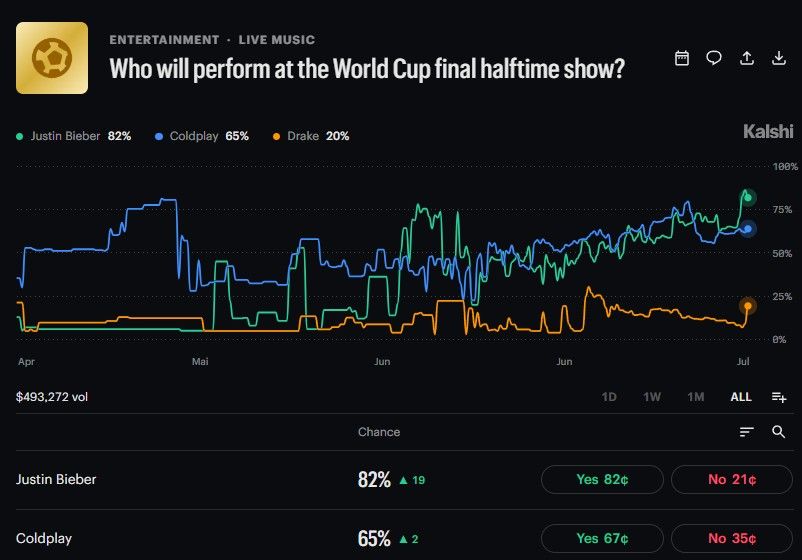
FIFA President Gianni Infantino has teased an unnamed “super-mega top global artist” for the FIFA World Cup halftime show on July 19. Prediction markets already treat Justin Bieber as the clear favorite for the secret slot.
Madonna, Shakira, and BTS will headline the first halftime show in World Cup history at MetLife Stadium. Coldplay frontman Chris Martin curates the Global Citizen production.
The stage matches the stakes. MetLife Stadium holds 80,663 fans, and FIFA expects up to five billion TV viewers. Attendance has already passed the 1994 record, with more than 5.3 million stadium visitors so far.
Bieber Dominates FIFA World Cup Halftime Show Odds
Infantino dropped the tease, promising one more act for the FIFA lineup. Traders reacted immediately.
On Kalshi, Bieber contracts last traded at 82 cents, an implied probability of 82%. Polymarket prices him at 70%, with more than $213,000 wagered across the event.
Coldplay ranks as the clear second favorite at both venues. Martin curates the lineup, so traders expect extra songs from his band. Meanwhile, traders treat confirmed headliner Shakira as a near lock after she opened the tournament and co-wrote its official song, Dai Dai.

Among the wildcards, Bad Bunny stands out as the strongest dark horse, ahead of Drake and The Weeknd. Peso Pluma and Camila Cabello also draw steady interest, while Kalshi lists everyone from AC/DC to Zach Bryan. Consequently, the frenzy keeps producing new prediction market platforms.
Taylor Swift remains a long shot on Polymarket despite her global reach. Instead, bettors have poured millions into wedding markets tied to her engagement with Travis Kelce.
Billions Flow Into World Cup Prediction Markets
The mystery-artist market is a sideshow within a record wave of trading. Kalshi and Polymarket handled $5.4 billion in World Cup volume during the tournament’s first week alone Forbes reported.
Kalshi’s $2.9 billion that week topped both March Madness and the Champions League. Moreover, its total World Cup volume has since climbed to $14.6 billion.
Traditional bookmakers expected a surge as well. Research firm Eilers & Krejcik Gaming projected $4.4 billion in US online sportsbook wagers for the tournament, up from $1.8 billion in 2022.
Who Will Win the $50 Million FIFA Prize Money?
On the pitch, France holds a commanding 34% implied probability to lift the trophy on Kalshi. Defending champion Argentina follows near 21%, well ahead of Spain and England. The champion collects $50 million in FIFA prize money along with the title.
Both venues had backed France early when the knockout rounds opened. However, upsets in a single-elimination bracket can reprice the entire board within minutes.
The tournament keeps generating trades far beyond football, from an unlikely Tinder rally in Match Group stock to Kalshi’s World Cup partnership with ADI Predictstreet. Whether the mystery act justifies Infantino’s superlatives will become clear in East Rutherford on July 19.
The post Prediction Markets Reveal Odds for FIFA’s Mystery ‘Super-Mega Top Global Artist’ appeared first on BeInCrypto.

XRP climbed roughly 5% over the past 24 hours, which helped the token reclaim the $1.10 level. Despite the short-term recovery, it remains down more than 50% compared with its value a year ago.
Fresh on-chain data suggests the prolonged decline has pushed key holder metrics to historically extreme levels.
Lower-Risk Buying Window
According to Santiment, XRP holders are experiencing some of the weakest average returns in the asset’s history. Its 30-day MVRV has fallen to -45%, while its 365-day MVRV stands at -47%, which signals that both short-term and long-term holders are deeply underwater.
For the first time in XRP’s nearly 12-year history, both short- and long-term holders are facing record-low average returns, which demonstrates that fear and frustration have reached unusually high levels. Santiment said this does not rule out the possibility of further price declines if the broader crypto market remains under pressure.
However, from a risk-reward perspective, it believes buying or increasing exposure to XRP now carries less risk than usual because much of the downside has already been absorbed by existing holders, a condition that has historically coincided with stronger market setups.
Meanwhile, crypto analyst Ali Martinez said the SuperTrend indicator has flashed its first buy signal on XRP since mid-June. He explained that the previous buy signal was followed by a 14% rally, while the indicator also successfully identified the last two major declines of 19% and 16%.
XRP’s network activity has also picked up, according to his earlier analysis. Daily active addresses have increased from 23,000 on June 14 to nearly 40,000, indicating stronger on-chain participation.
Inflows After Brief Pullback
On the institutional side of things, US-based spot XRP ETFs attracted more than $59 million in net inflows throughout June. After two consecutive days of outflows, the funds returned to positive territory on July 3, bringing in $6.55 million.
Data from SoSoValue revealed that Bitwise’s ETF accounted for the largest share of the day’s inflows.
The post This XRP Signal Has Never Looked Worse, But is That the Setup? (Analyst) appeared first on CryptoPotato.


Alibaba has banned employees from using Anthropic’s Claude Code in workplace environments from July 10 over alleged security concerns involving embedded backdoors, according to a person familiar with the decision.
Summary
- Alibaba will block employees from using Claude Code in workplace environments from July 10 over alleged security concerns.
- The reported restriction comes weeks after JPMorgan and Goldman Sachs limited access to Anthropic’s Claude models in Hong Kong.
- Anthropic recently restored its newest AI models after U.S. authorities lifted export restrictions and approved new safety measures.
According to a source familiar with the matter, the restriction will apply across Alibaba’s internal work environments and takes effect on July 10. The person said the company reached the decision because of alleged security risks linked to embedded backdoors in the coding assistant.
As of publication time, Alibaba has not issued an official statement, and no further details about the alleged security concerns or the scope of the restriction were disclosed.
Claude faces another enterprise setback
The latest development comes just weeks after Anthropic’s Claude models lost access to another major enterprise customer group in Hong Kong. In June, the Financial Times reported that JPMorgan had stopped employees in Hong Kong from selecting Claude models from the bank’s approved list of large language models because of Anthropic’s licensing terms governing where the models could be used.
The report said Goldman Sachs had previously introduced a similar restriction after determining that Anthropic’s terms of service excluded use across Greater China, including Hong Kong. Anthropic later told the Financial Times that Claude had never been officially supported in Hong Kong, while JPMorgan declined to comment.
Those restrictions added to concerns among some financial institutions in Hong Kong as advanced AI tools become more deeply integrated into software development, research, and financial services workflows, according to the Financial Times.
Anthropic recently restored its newest models
The Alibaba decision also follows a turbulent few weeks for Anthropic’s latest AI systems. On July 1, the company restored public access to its Claude Fable 5 and Mythos 5 models after U.S. authorities lifted export restrictions that had forced Anthropic to suspend them in June.
Anthropic said it resumed deployment after what it described as productive discussions with U.S. officials and added new classifiers designed to detect and block more cybersecurity-related tasks. The company said the additional safeguards addressed government concerns over possible misuse through jailbreak techniques.
While defending its technology, Anthropic argued that the reported jailbreak involved a limited method rather than a universal bypass of the models’ safety protections. The company also announced expanded cooperation with the U.S. government on model testing, safety evaluations, misuse tracking, and information sharing related to jailbreak risks.
This Friday, we examine Ethereum, Ripple, Cardano, Binance Coin, and Hyperliquid in greater detail.
Ethereum (ETH)
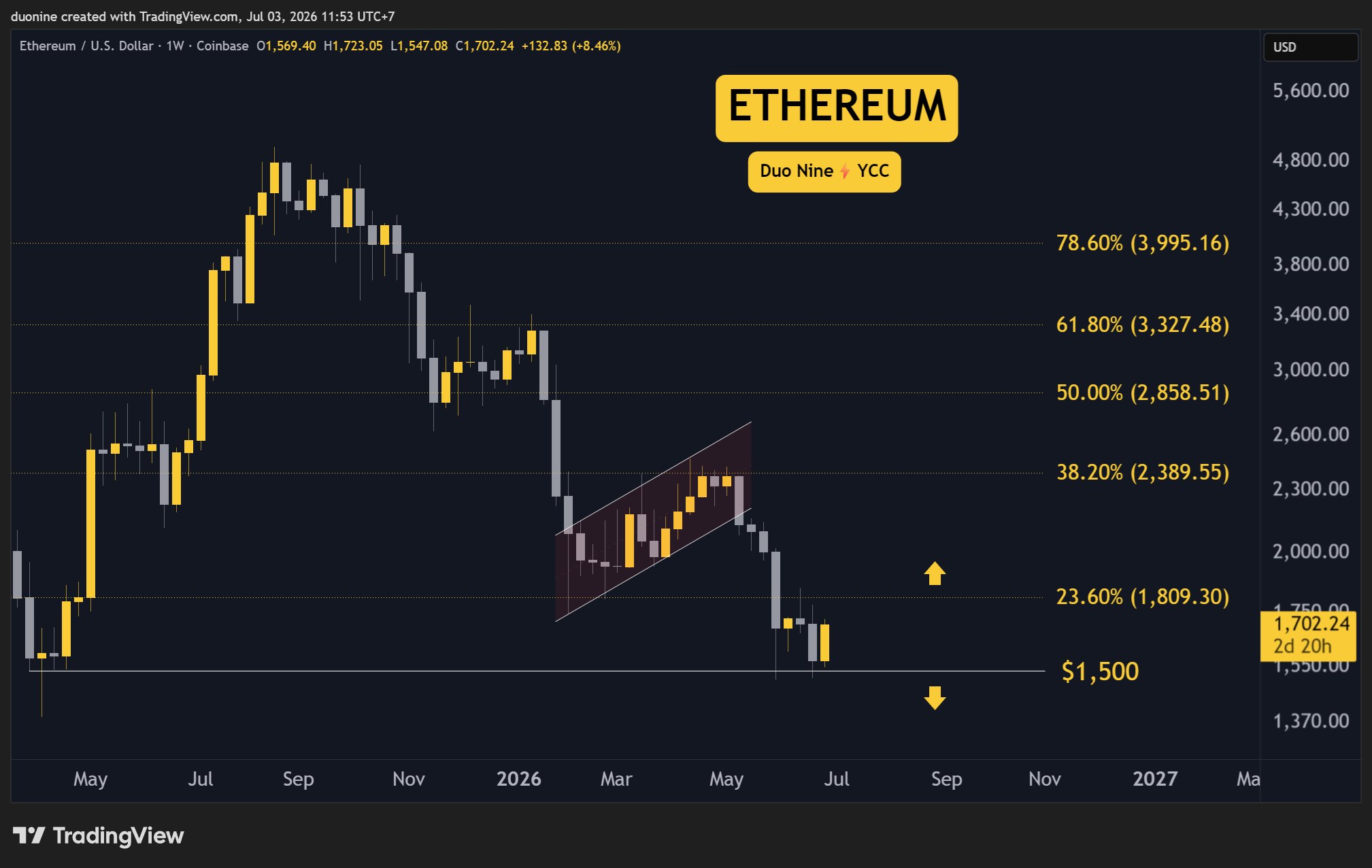
Ethereum managed to bounce off support at $1,500 and recovered last week’s losses. This is also why it closed the week with an impressive 10% rally, as buyers regained control of price action.
To be confident in a sustained recovery, the price will need to eventually break the current resistance at $1,800. Anything less than that would only be a short relief before sellers return to dominate.
Looking ahead, Ethereum has a real chance here to set a local bottom and attempt a rally. The question is if buyers have the volume and strength to sustain it and break the key resistance in the days and weeks to come.
Ripple (XRP)
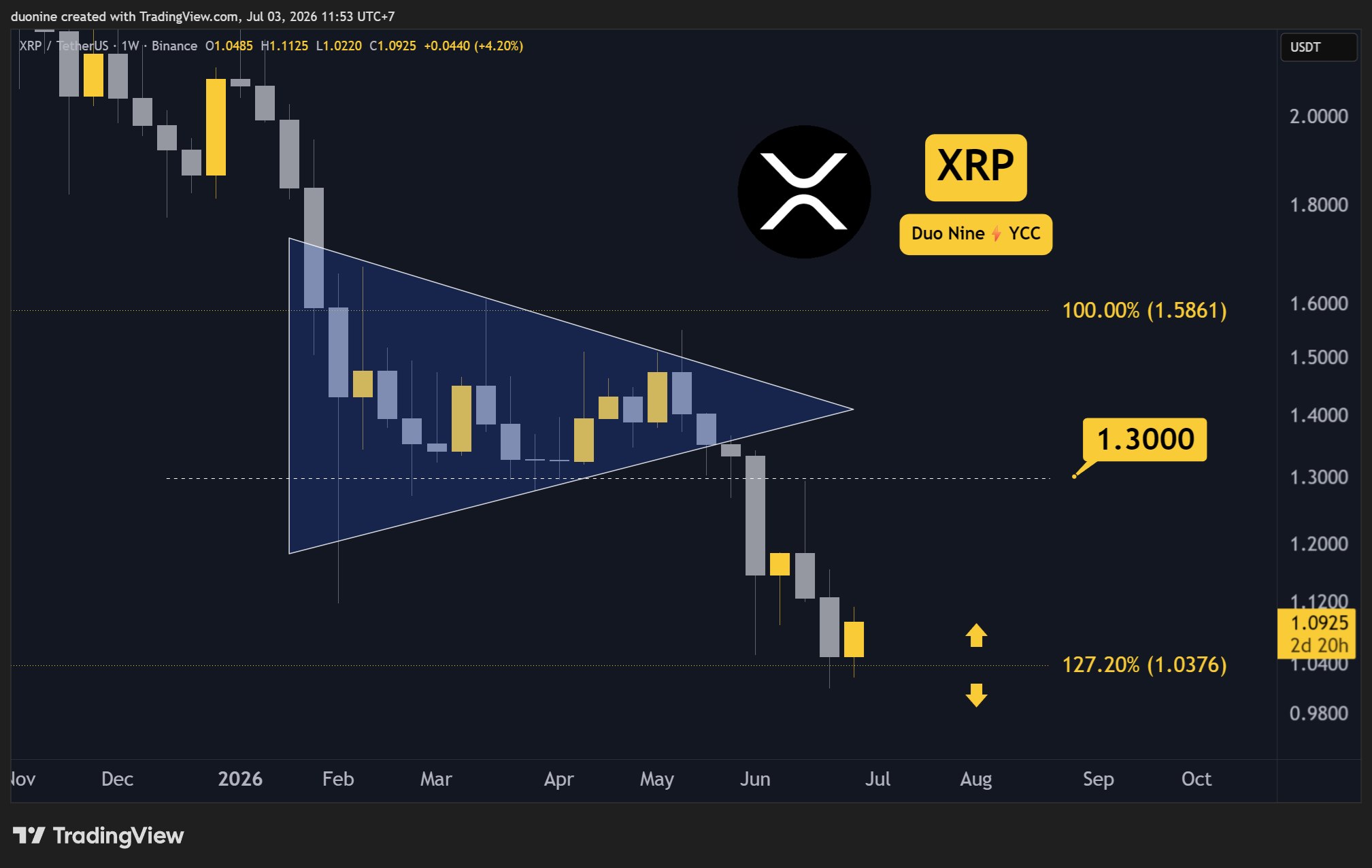
This week, buyers managed to defend $1, sending the price 6% higher. However, there is resistance at $1.1, which has managed to hold off the bulls, at least as of this post.
Similarly to Ethereum, XRP needs to make the best of this bounce and turn it into a sustained rally if it wants to break away from its current downtrend. Even if the $1.1 resistance falls, the price still has to claim $1.3 to confirm a breakout.
Looking ahead, the price reaction at $1 was somewhat expected since it’s a key psychological level. If buyers fail to capitalize on this in the coming days and weeks, then sellers will likely return to put pressure again.
Cardano (ADA)
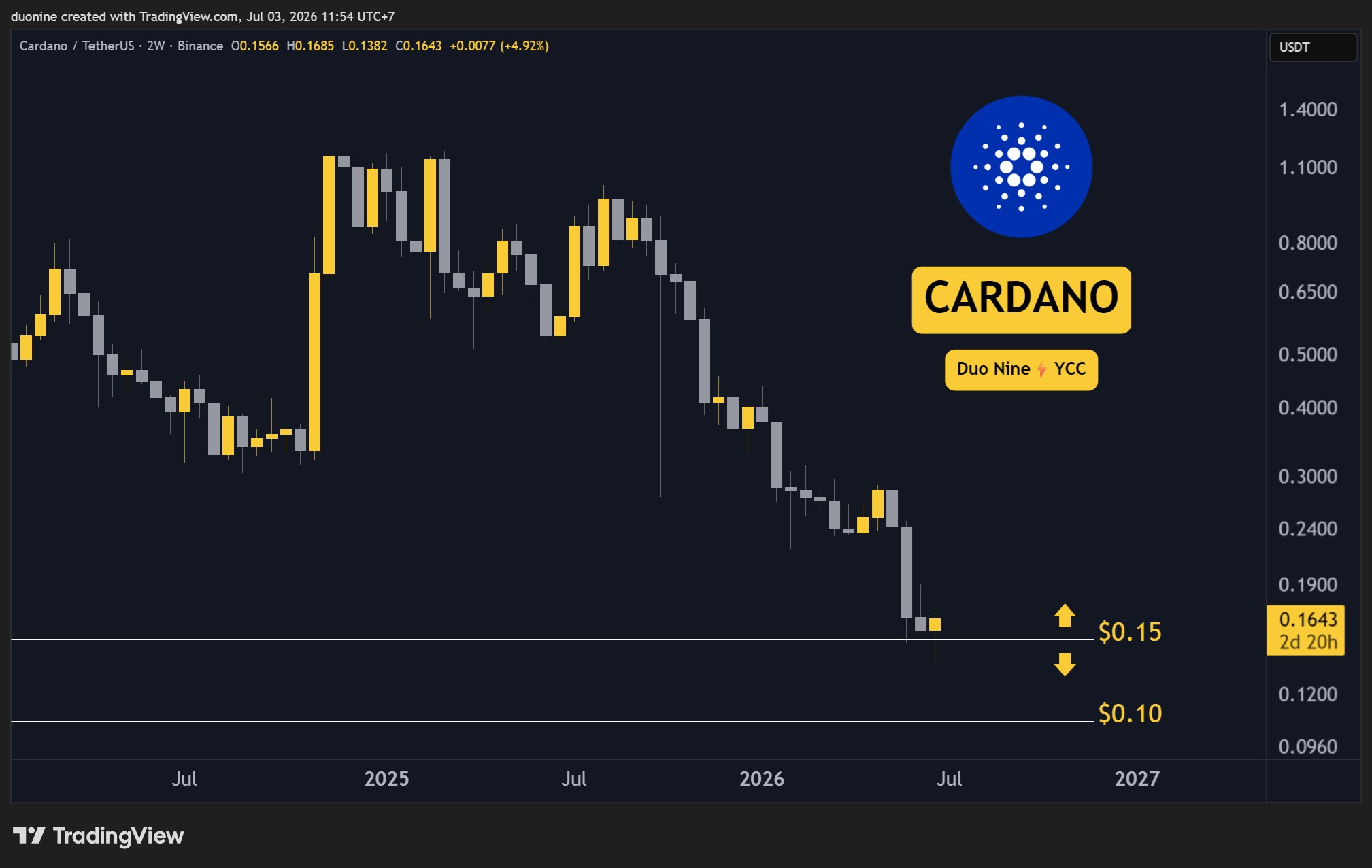
This week, ADA impressed with a 16% bounce after the price briefly fell under the $0.15 support. With the support secured, this cryptocurrency has a good shot at moving higher. However, as of this post, the price formed a lower high.
To be confident in a sustained recovery, Cardano will have to move beyond its previous high of 19 cents. Anything less than that would make this a bearish bounce, eventually leading to ADA falling lower.
Looking ahead, sentiment across the crypto market has improved with the start of July, but the month is only just beginning, and it is too early to say whether the current price action will be sustained. At a macro level, ADA remains bearish.
Binance Coin (BNB)
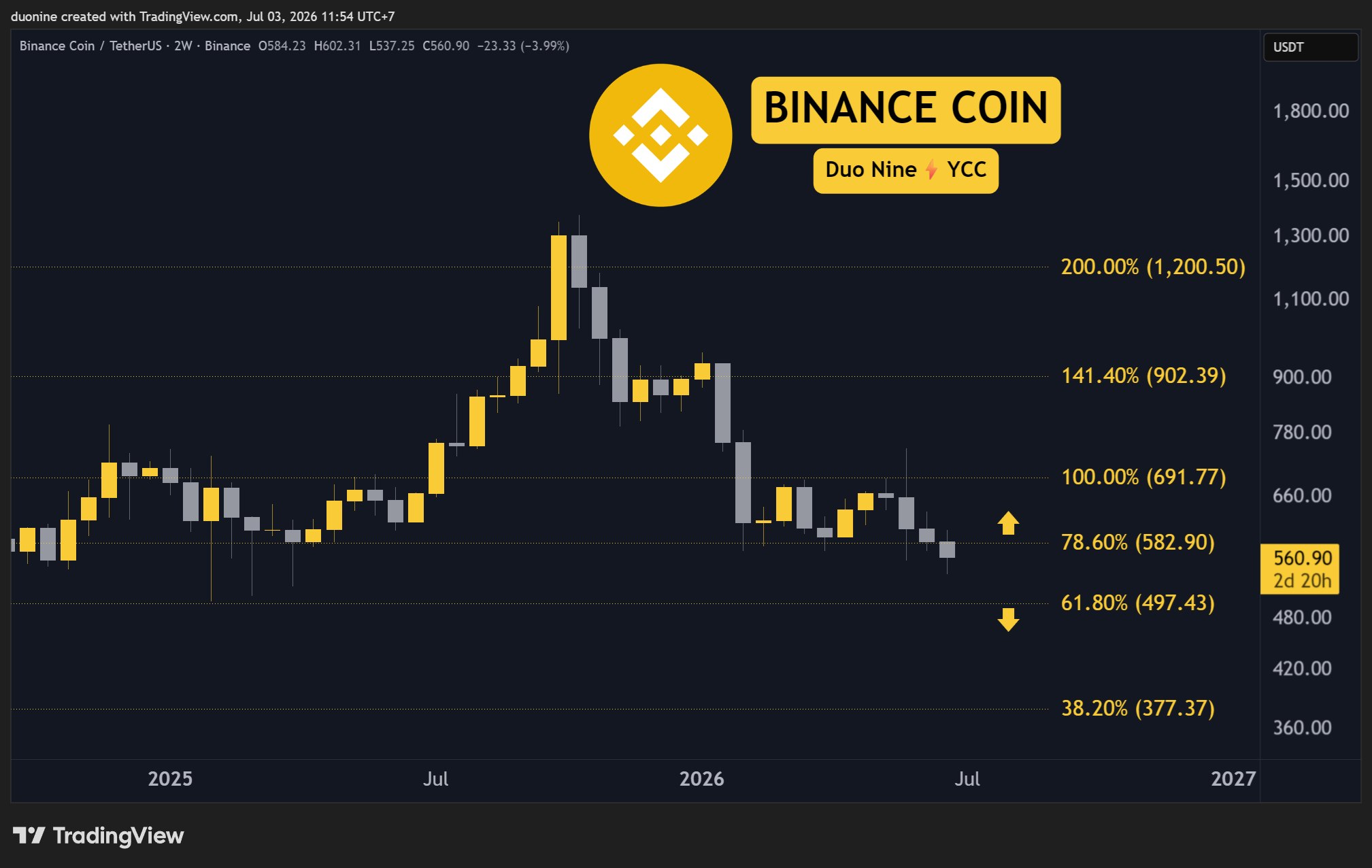
Compared to the other coins on our list, Binance Coin remained flat this week. This is atypical and rather bearish because the price failed to reclaim its support at $580. Because of that, sellers retain the upper hand and may aim for $500 next.
The $500 support hasn’t been tested yet, but it’s the next major level if bears continue to dominate the chart. Moreover, Binance failed to secure a MICA license in the EU at the start of July, which made it lose a key market to competitors.
Looking ahead, any weakness for Binance, the exchange, will likely translate to its token, BNB. The current chart seems to confirm this, as it remains in a bearish trend with no bounce or recovery in sight.
Hype (HYPE)
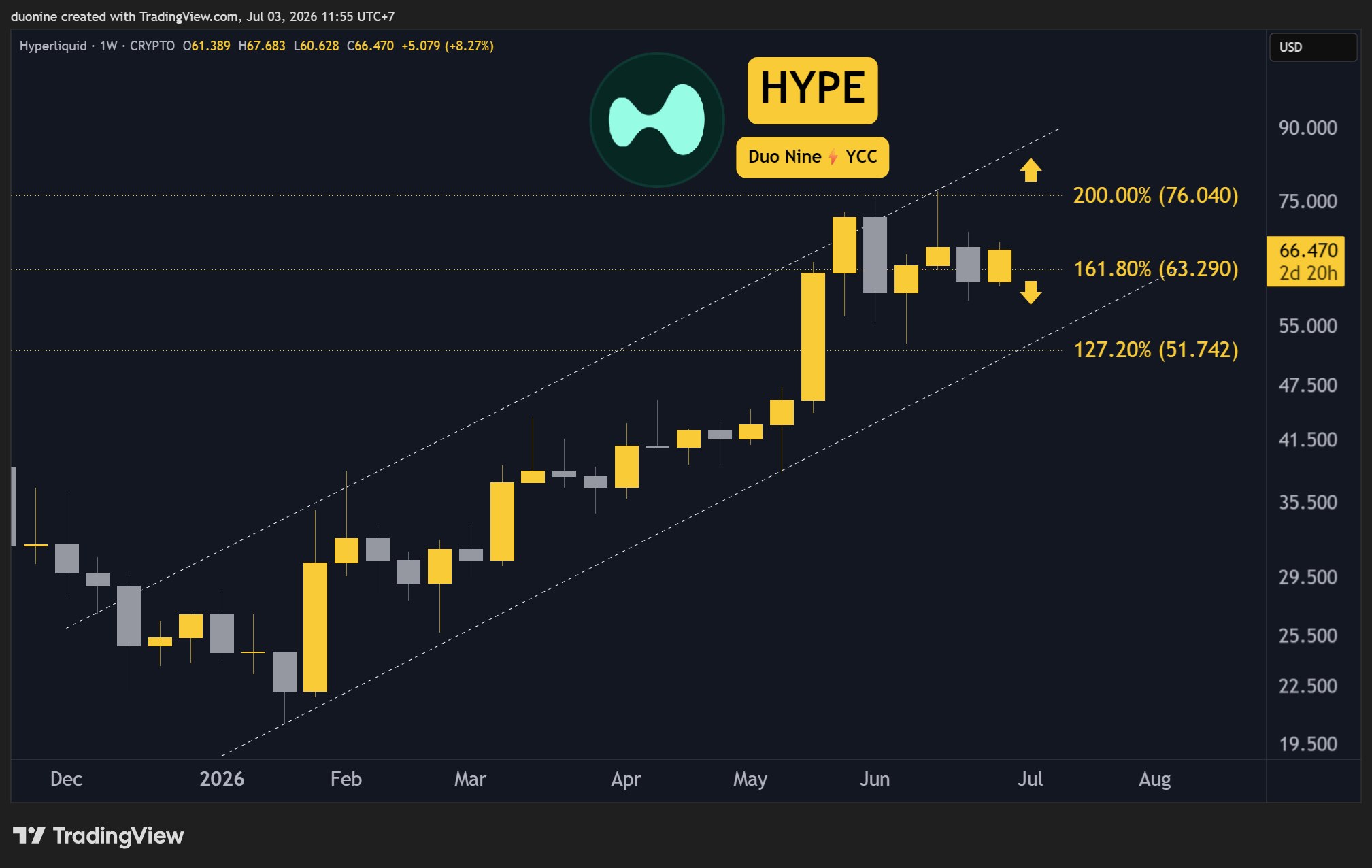
HYPE found good support above $60 and bounced by 6% this week. This has placed it in flat price action since early June. This consolidation is also forming a large pennant. Once that is resolved, we will know where this cryptocurrency is headed next.
When a pennant forms, the price tends to respect the underlying trend, which, in this case, is bullish. Therefore, the higher probability is for the price to break away and aim for new highs.
Looking ahead, HYPE will have to secure $68 as a key support and hold above it if it wants to challenge the current all-time high at $77. Anything less than that, or a break below $60, would be a bearish signal with lower lows likely.
The post Crypto Price Analysis July-03: ETH, XRP, ADA, BNB, and HYPE appeared first on CryptoPotato.


Humanity Protocol has confirmed it is repositioning toward enterprise artificial intelligence products after a $36 million exploit accelerated an internal strategic overhaul that had already been under discussion for months.
Summary
- Humanity Protocol has shifted its focus toward enterprise AI following a $36 million security breach.
- The project has begun a new token rollout while continuing compensation efforts and law enforcement investigations.
- Founder Terence Kwok said the move to enterprise AI had been under discussion before the hack accelerated the transition.
During a recent interview, Humanity Protocol founder Terence Kwok said the company had been reconsidering its long-term direction for the past six to nine months and that the June security breach pushed those plans forward sooner than expected.
Enterprise AI takes priority after hack
Rather than continuing to present itself primarily as a blockchain identity platform, Kwok said Humanity Protocol will increasingly focus on building products and services for enterprise AI customers. He explained that digital identity remains an important part of the company’s work because AI systems will require stronger methods of verifying people and credentials.
Kwok said the team has already been testing products designed for AI companies and plans to introduce additional enterprise-focused offerings. Humanity Protocol previously developed a proof-of-personhood blockchain supporting credentials for employment, assets, and credit scoring, including work with Mastercard on proof-of-assets applications.
According to Kwok, the platform has registered around 10 million users, with a couple of million completing their credentials.
The strategic change follows one of the project’s biggest setbacks. Humanity Protocol lost roughly $36 million after attackers gained access to critical private keys, triggering a sharp collapse in the H token and forcing the project into recovery mode.
Recovery efforts continue as token migration moves ahead
Discussing the aftermath of the attack, Kwok said the chances of recovering the stolen funds are “pretty low,” adding that the team’s attention has instead turned to rebuilding the ecosystem. He compared the situation with Bybit’s unsuccessful efforts to recover approximately $1.4 billion worth of ether stolen in a separate attack last year.
As part of the recovery process, Humanity Protocol has issued a replacement token and distributed it to a range of addresses, including major cryptocurrency exchanges. Kwok said discussions are continuing around snapshot dates, suspended deposits and withdrawals, liquidity pools and custodian arrangements, while investigators work to identify every transaction that took place after the breach before completing compensation claims.
Law enforcement agencies in multiple jurisdictions, beginning with Hong Kong alongside authorities in the United States, have also been contacted as investigations continue, according to Kwok.
Earlier findings released by Humanity Protocol and security firm Quantstamp attributed the exploit to compromised private keys stored on a developer device rather than vulnerabilities in the project’s smart contracts.
The June investigation concluded that attackers obtained control of production systems after malware infected a developer machine containing backups of several critical keys, allowing them to authorize legitimate-looking transactions that drained about 141 million H tokens from the Ethereum bridge before additional tokens were minted on BNB Smart Chain. Humanity Protocol and Quantstamp said the attack bore characteristics associated with North Korea-linked threat actors.
The breach wiped out most of the H token’s value within hours, with on-chain analysts estimating losses of more than $32 million at the time and the token falling roughly 89% as the attacker minted and sold tokens across multiple chains. Kwok said monitoring systems quickly detected unusual token movements after the compromise, although determining the full extent of the incident required several days of forensic analysis across the project’s infrastructure.
Meta CEO Mark Zuckerberg said AI agent development at the firm is progressing more slowly than expected, even as technology and crypto firms continue pouring resources into the nascent technology.
In a company meeting on Thursday, Zuckerberg said the “trajectory of the agentic development over at least the last four months hasn’t really accelerated in the way that we expected,” according to Reuters, which reviewed a recording of the call.
The bet on agent adoption hasn’t “come to fruition yet,” Zuckerberg said, adding that executives made an aggressive push into agentic infrastructure in January in part because of fears they weren’t moving “fast enough.”
Despite the slower progress, Zuckerberg said he expects the firm’s AI investments to start paying off within the next three to six months.
Zuckerberg’s comments offer a reality check for technology and crypto firms betting that autonomous agents will soon become major users of blockchain payments. Meta, along with several crypto firms, has bet big on agentic AI, with many pivoting their business models to cater to autonomous AI agents.
In May, Meta cut roughly 10% of its workforce and reassigned about 7,000 employees to AI-focused teams — a restructuring Zuckerberg acknowledged was not as clean as it could have been, with executives miscalculating the timing.
Meta expands AI agent feature on three platforms
Zuckerberg’s concerns come as Meta expanded its Meta Business Agent globally for businesses on Instagram, Messenger and WhatsApp on Thursday.
The Business Agent can respond to customer inquiries, make product recommendations and close sales without human intervention, Meta said.
Zuckerberg also revealed in March that he was building a personal AI agent designed to support his decision-making as CEO.
The crypto industry has been a keen adopter of the technology, with Coinbase CEO Brian Armstrong and Circle CEO Jeremy Allaire among the executives predicting that AI agents will become the dominant users of blockchain-based payments in the coming years.
Several notable integrations advancing AI agent-driven stablecoin spending have emerged in recent months, including one by Amazon Web Services in May, when it integrated Coinbase’s x402 payments protocol into Amazon Bedrock AgentCore, allowing agents to transact in the USDC (USDC) stablecoin.
Related: OKX launches AI marketplace for autonomous agent economy
In April, crypto wallet startup Oobit launched a Visa-supported virtual card for AI agents to make online purchases in USDt (USDT) on behalf of businesses.
AI agent payments adoption lagging
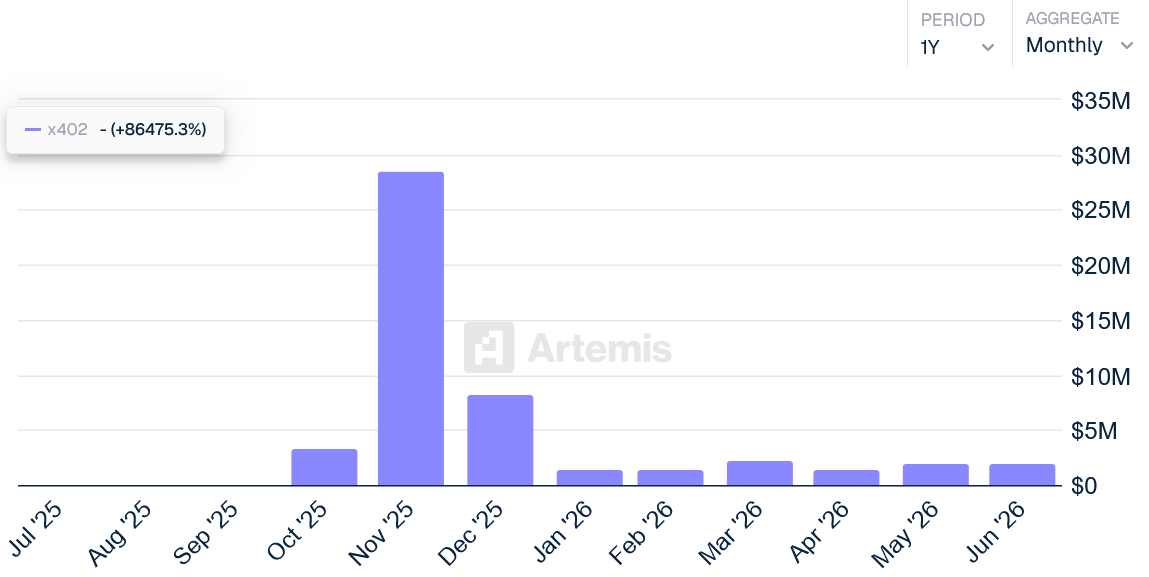
Despite the integrations, data shows that AI-agent transaction activity on the blockchain remains relatively small, with Artemis data showing that only $2 million in trading volume has been facilitated through the AI agent-supported x402 protocol over the past 30 days.
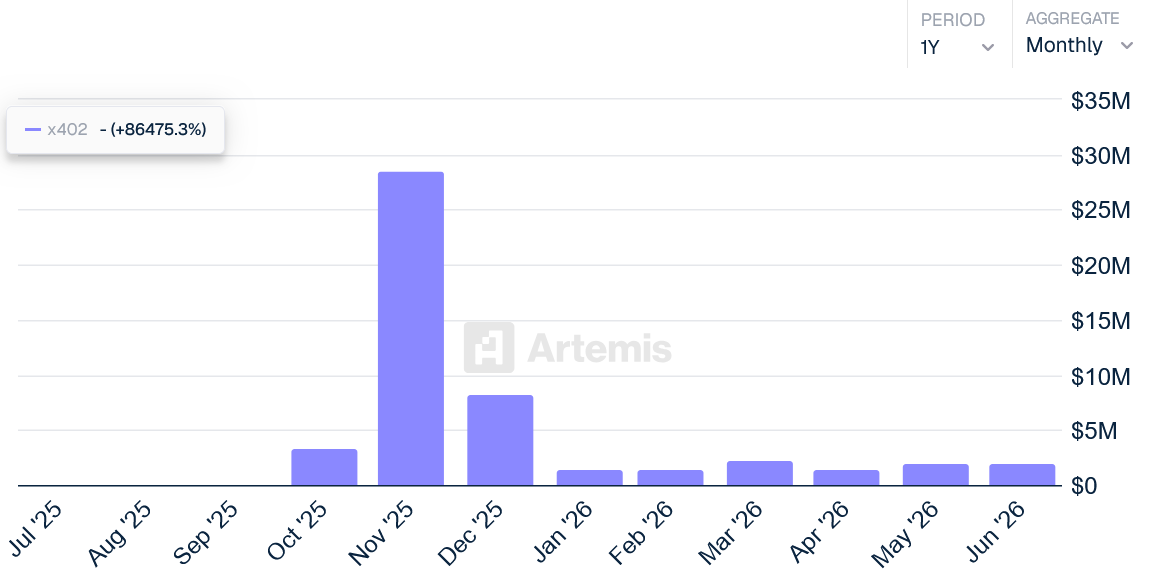
Monthly change in x402 transaction volume over the past 12 months. Source: Artemis
Magazine: The end of anonymity? AI could unmask crypto’s hidden identities

A teenager suspected of involvement with the “Scattered Spider” hacking group has been extradited to the US over his alleged role in an $8 million crypto ransom.
The US Justice Department said on Wednesday that Peter Stokes, a 19-year-old dual US-Estonian national, was arrested in Finland in April on an Interpol Red Notice and extradited to the US last week to appear in a Chicago federal court on Tuesday.
A criminal complaint unsealed in court accused Stokes and others of breaching a luxury jewelry retailer’s computer system in May 2025 to steal data and demand a ransom payment of $8 million in crypto. The retailer managed to evict them from the network and did not pay the ransom, but suffered $2 million in disruption damages, according to the complaint.
Stokes is one of the few arrests that authorities have tied to Scattered Spider, which often uses crypto ransoms. Ransomware actors received more than $820 million in payments last year, an 8% decline from 2024, even as attacks rose by 50%.

An image the FBI took from Stokes’ Snapchat account shows him wearing a necklace that says “Hack the Planet,” a quote from the 1995 cult film “Hackers.” Source: US Department of Justice
Alleged hack started with phishing call
According to the complaint, the hack against the jewelry retailer started with several phishing calls to the company’s technology help desk, with Stokes and others allegedly pretending to be employees requesting a reset of login credentials.
Authorities alleged the hackers managed to compromise three employee accounts in as little as two hours, two of which belonged to company IT administrators, who had access to higher-privilege accounts that were also breached and used to access the company’s systems,
After a few days, Stokes and others allegedly sent a ransom note from a compromised company email account to demand funds or they would publish credit card and payment information.
However, the complaint said the company repelled the intrusion and that the intruders later contacted the company separately to demand $8 million, which the company did not pay.
Stokes allegedly involved in “numerous intrusions”
The complaint accused Stokes, who uses the online nicknames “Bouquet” and “Jordan,” of being a “Scattered Spider member who has engaged in numerous intrusions, or assisted in them” on multiple unnamed companies.
Authorities claimed that a search of a storage device allegedly linked to Stokes showed it contained downloads from a virtual private server that Microsoft had identified as being used to carry out intrusions on companies.
The complaint alleged that it also “contained exfiltrated records from multiple victim-companies.”
Related: Taiko reopens bridge after $1.7M exploit, says users made whole
The complaint claimed that Stokes’ Snapchat account shows “substantial wealth for a person his age” and alleged that he used the account to boast “about his international travel and wealth, and sent media regarding apprehended Scattered Spider members.”
The Justice Department said that Scattered Spider, also known as “Octo Tempest,” “UNC3944,” and “0ktapus,” has been involved in over 100 network intrusions, resulting in more than $100 million in ransom payments and millions of dollars in damages.
Stokes was charged with six counts related to hacking, cyber extortion, fraud and conspiracy.
Magazine: Crypto scammers face death, Aussie CGT makes Asian hubs attractive: Asia Express


Roughly 10.83 million BTC are currently held at a loss, meaning their holders paid more than today’s price, against 9.22 million still in profit, according to Glassnode data. It is the first time loss-making supply has overtaken profitable supply since the current cycle began and reflects how deep the correction from bitcoin’s $109,000 January peak has cut.
Historically, these crossovers have landed near periods of peak financial stress and capitulation among newer buyers. They have also marked the point at which coins migrate from weaker hands to stronger ones, since only holders with high conviction tend to sit on losses rather than sell. Long-term holder accumulation and rising wallet-cohort balances across several size brackets have run alongside this latest deterioration in profitability.
Bitcoin traded at $61,361 on Thursday, up 0.7% on the day and 2.5% on the week, still roughly 44% below January’s all-time high, per CoinDesk data. Ether added 4.2% to $1,702, and Solana led the majors at 18.6% on the week to $80.44, with volume running above $3.6 billion.
Whether the supply crossover marks a bottom depends on what follows. In 2018-19 and 2022, similar readings preceded months of basing before a sustained recovery. The chart does not resolve on its own. ETF flows returning and macro pressure easing are what convert the accumulation signal into a price signal.

Japanese investment firm Metaplanet continued its corporate Bitcoin buildout in the second quarter, adding 2,823 BTC at an average price of about 12.71 million yen (roughly $78,850 at current exchange rates). The purchase pushed the company’s total holdings above 43,000 Bitcoin, while slightly lowering its average acquisition cost.
Separately, the story also highlights a contrasting trend among some smaller treasury-focused companies. South Korean firm K Wave Media exited its Bitcoin treasury strategy after selling its remaining BTC to address debt, while France-based Sequans Communications previously said it would monetize its remaining holdings over time.
Key takeaways
- Metaplanet bought 2,823 BTC in Q2, bringing its total to more than 43,000 BTC and reducing its average cost per coin.
- The latest tranche was acquired at an average price of about 12.71 million yen per BTC, lowering Metaplanet’s average acquisition cost to roughly $95,117.
- Metaplanet reported about $10.95 million in quarterly revenue linked to Bitcoin income-generation strategies involving options premiums and related yield methods.
- K Wave Media sold its last 88 BTC to repay debt, ending its Bitcoin treasury approach after earlier plans to expand holdings.
- Not every corporate treasury is expanding: Sequans Communications previously signaled that it would monetize its remaining Bitcoin holdings over time.
Metaplanet expands holdings and refines its cost base
According to a Thursday announcement from Metaplanet, the company acquired 2,823 Bitcoin during the second quarter at an average price of about 12.71 million yen per BTC. That figure matters because it was below Metaplanet’s prior average purchase price, enabling the firm to reduce its blended cost basis.
The acquisition lowered Metaplanet’s average acquisition cost to about $95,117 per BTC, down from approximately $96,258 previously. Metaplanet’s total Bitcoin holdings now stand at 43,000 BTC acquired for an aggregate value of about $4.1 billion, based on the figures in the company’s announcement.
Beyond accumulation, Metaplanet also disclosed quarterly performance tied to its Bitcoin income strategy. The company reported around $10.95 million in revenue from Bitcoin-related activities during the quarter. The approach, as described in the announcement, centers on earning premiums by selling cash-secured options and deploying other Bitcoin yield tactics.
For investors, the combination of spot purchases and options-based income generation is a key part of how treasury-style Bitcoin companies attempt to justify their equity valuations. When Bitcoin’s price is volatile, these revenue mechanisms can, in theory, partially offset drawdowns—though the net effect depends on execution, market conditions, and counterparty or strategy risks (none of which are detailed in this particular excerpt).
Shares move, but the broader performance picture remains uneven
Metaplanet’s equity performance reflected modest market optimism around the filing. The company’s shares closed Thursday up 3.5%, though the stock remains down about 48% year-to-date, according to the linked market page cited in the source text.
That underperformance also stands out against Bitcoin itself, which the source notes fell 31% over the same year-to-date period. The contrast underscores a persistent reality for corporate Bitcoin holders: even when a company keeps buying and building a large BTC position, investors may still reprice the stock due to factors like equity dilution risk, funding costs, valuation assumptions, or the market’s perception of how sustainable treasury income is.
The Metaplanet update comes during an ongoing push by several corporate buyers—yet the story is not purely one-directional, as other firms are trimming exposure.
Treasury strategies: K Wave Media exits after selling remaining BTC
While Metaplanet added Bitcoin, K Wave Media—an Nasdaq-listed company in South Korea—went in the opposite direction. The company sold its remaining 88 BTC to repay $6 million in debt, exiting its Bitcoin treasury strategy, according to a Tuesday filing with the U.S. Securities and Exchange Commission.
The SEC filing indicates a sharper reversal than what the company had previously communicated. Earlier coverage referenced in the source text describes K Wave Media’s July 2025 announcement that it secured $1 billion in capital capacity to drive its Bitcoin treasury strategy and aimed to expand holdings to 10,000 BTC. Exiting after holding only 88 BTC suggests the original plan ran into constraints—whether financial, operational, or strategic—though the excerpted material does not specify the reasons.
This kind of turnaround is important for readers because it highlights a mismatch risk that can exist in treasury models: plans premised on sustained capital access, favorable volatility, and consistent BTC purchase economics may not survive changing market conditions or debt obligations.
Other companies continue to monetize rather than accumulate
The source also points to Sequans Communications, a France-based semiconductor company that said in May it would monetize its remaining Bitcoin holdings over time. At the time of that announcement, Sequans reported holding 658 BTC, and its shares reportedly rose about 14.5% after the disclosure.
Taken together with K Wave Media’s decision to exit, the broader takeaway is that corporate Bitcoin strategies are diverging. Some companies are doubling down through additional spot buying and structured income strategies, while others are winding down exposure, using Bitcoin holdings to address liabilities, or planning to gradually convert BTC into cash.
Even within the same sector, these choices can produce very different investor outcomes depending on each firm’s balance sheet, debt profile, and how its equity market values the “BTC treasury” thesis.
Looking ahead, investors should watch whether Metaplanet can sustain its Bitcoin income-generation revenue while continuing to manage its cost basis, and whether other treasury-focused firms follow K Wave Media and Sequans toward monetization or debt reduction. The key uncertainty across all these cases remains whether corporate models that rely on both holding BTC and generating yield can hold up as market conditions and financing access evolve.


The National Organization of Black Law Enforcement Executives (NOBLE) endorsed the Digital Asset Market Clarity Act (CLARITY Act) in a letter to Senate leaders John Thune and Chuck Schumer.
Notably, NOBLE has become the first major law enforcement group to formally back the bill. The endorsement lands as the bill faces hurdles over ethics and illicit finance concerns.
NOBLE Endorses CLARITY Act
The letter was signed by NOBLE National President Reneé Hall. Hall, a former Dallas police chief, said the bill gives law enforcement new capabilities while preserving longstanding criminal enforcement authorities.
In its letter, the group pointed to expanded regulatory obligations across the digital asset industry, stronger forfeiture authorities, new compliance expectations, and added oversight of crypto kiosks.
“Collectively, these provisions have the potential to improve investigative visibility and provide law enforcement with additional tools to combat financial crime,” the letter reads.
The group also emphasized that the bill does not modify existing federal criminal authorities used to prosecute offenses such as money laundering, unlicensed money transmission, conspiracy, sanctions violations, and related crimes.
Follow us on X to get the latest news as it happens
A Break From Other Law Enforcement Groups
The position sets NOBLE apart from other police and prosecutor organizations. The National District Attorneys Association, the National Association of Assistant US Attorneys, the International Association of Chiefs of Police, and the National Sheriffs’ Association previously raised concerns regarding the bill.
Their objections center on Section 604. A coalition of Catholic sisters also asked Senate leadership to reexamine the lack of provisions on illicit finance, anti-money laundering, and accountability.
Despite the opposition, industry advocates keep pressing for floor time. Stand With Crypto urged supporters this week to lobby their senators.
The bill still needs 60 votes on the Senate floor, meaning seven Democrats must cross over. Whether a law enforcement endorsement softens resistance to Section 604 may become clearer once senators return.
Subscribe to our YouTube channel to watch leaders and journalists provide expert insights
The post First Major Law Enforcement Group Endorses CLARITY Act in Letter to Senate appeared first on BeInCrypto.

Coronation Street confirms Megan’s fate as star exits for good | Soaps

Sandip Sabharwal calls IT a tactical trade, stays bullish on autos

Prediction Markets Reveal Odds for FIFA’s Mystery ‘Super-Mega Top Global Artist’

No Jackpot Winner as $257 Million Prize Rolls Over to $269 Million Monday Draw

Renter of Home in Anne Heche Crash Denies Settlement With Son

Weekend Open Thread: Staud – Corporette.com

Prayer to Remove Financial Blockages #affirmations #prayer #financialfreedom #financialmiracle

How to Look Like You’re Getting Money Before You Actually Are

Krypto Kaufphase hat offiziell begonnen (klare Aussagen, mit Zahlen)
-
 Fashion7 days ago
Weekend Open Thread: Staud – Corporette.com
-

 Crypto World3 days ago
Strategy authorizes up to $1.25B in Bitcoin sales under new capital plan
-

 News Videos5 days ago
MAJOR BITCOIN & MARKET UPDATE!!!! (MUST WATCH ASAP!!!)
-

 Tech3 days ago
Anonymous researcher drops 0-day ‘exploitarium’ repo
-

 Crypto World6 days ago
Coinbase, Circle Deepen Crypto Stock Losses Despite Resilient S&P 500
-

 Business3 days ago
Australia treasurer says alleged access of prime minister’s bank data ’incredibly concerning’
-

 Crypto World6 days ago
Kraken's xStocks Opens Bending Spoons IPO Registration to EEA Retail
-

 Sports6 days ago
FIH Pro League: India defeat Pakistan 7-1, register biggest win of campaign | Other Sports News
-

 Tech5 days ago
Bluekit phishing kit adopts browser-in-the-middle for login theft
-

 Tech6 days ago
Russian hackers now target Signal backup recovery keys
-
 Crypto World7 days ago
Hyperliquid Named on Singapore MAS Investor Alert Register
-

 Crypto World7 days ago
RTX holders must register wallets before token distribution begins
-

 Tech5 days ago
Claude Code turned every engineer into three. Now companies need more product thinkers
-

 Sports2 days ago
Broncos roster: OL Ben Powers (No. 74) entering final year of contract
-
 Business4 days ago
The AI boom won’t burst all at once. It will pop in ‘rolling bubbles’: Macquarie
-
 Crypto World7 days ago
SpaceX Called a Market Top Signal Just 2 Weeks After Its $86 Billion IPO
-

 Tech6 days ago
Silicon Valley paid to kill AI regulation, now it wants the rules back
-

 NewsBeat2 days ago
Presenter Caroline Flack’s brother Paul Flack dies aged 55
-

 Crypto World1 day ago
Binance stock trading tops $1B in first month after launch
-
 NewsBeat24 hours ago
New exhibition reflects five decades of movement between island of Ireland and GB
You must be logged in to post a comment Login