
Crypto World
Bitcoin News: Bond Stress and Regulation Shape Armstrong’s $400K BTC Prediction


Brian Armstrong, Coinbase’s CEO, said Bitcoin reaching $400,000 by 2030 is a reasonable target, and described the $300,000-$400,000 range as very likely to be hit within that window, in a CNBC Squawk Box Asia segment. The call is Armstrong’s personal read on where Bitcoin’s price could land, not a formal Coinbase corporate forecast or a consensus market call.
Armstrong is the CEO of the largest U.S. crypto exchange, and his outlook carries weight because it’s grounded in policy developments he’s directly involved in shaping, not a spreadsheet model he’s publishing for Coinbase clients.
In the clip, Armstrong walked through the CLARITY Act and what greater regulatory clarity could mean for the crypto industry as a whole, tying the legislation to the pace at which institutional capital moves into digital assets. He also said he believes the Bitcoin trade has already bottomed and expects upside as pressure continues to build in global bond markets.
That bond-market framing is the more interesting piece for traders parsing his logic. Armstrong is effectively arguing that stress in sovereign debt markets pushes capital toward scarce, non-sovereign assets, a thesis long-time Bitcoin holders have made for years.
Coinbase itself sits at the center of that flow, and Armstrong’s comments arrive as the exchange continues pushing regulators toward a clearer rulebook for digital assets, a topic covered in more detail in our look at how regulatory clarity could unlock institutional capital.
Neither the CNBC segment nor Armstrong’s remarks lay out a specific valuation model, a probability weighting, or a precise timeline for the bottom he says has already formed; the forecast is directional conviction.
Discover: The Best Token Presales
Why Regulatory Clarity Keeps Coming Up
The CLARITY Act has become shorthand in these conversations for the broader push to define how digital assets get regulated in the U.S. Armstrong’s decision to lead with it signals where he thinks the real re-rating catalyst sits.
— Coin Bureau (@coinbureau) September 10, 2026
 JUST IN: Coinbase CEO Brian Armstrong says crypto wins no matter how the CLARITY Act vote turns out.
“If it passes, we get legislation,”
“If it doesn’t pass, the SEC and CFTC are ready to issue rules.”
Armstrong said the Sept. 15 Senate vote will bring regulatory clarity… pic.twitter.com/A38qUeLF7d
His argument, as framed in the CNBC segment, links clearer rules directly to wider institutional adoption. The logic being that large allocators need defined jurisdiction and compliance guardrails before committing larger positions to Bitcoin meaningfully.
That’s a familiar setup for anyone who traded through prior Bitcoin price prediction cycles tied to ETF approvals: the asset doesn’t need the legislation to pass to rally, but sustained institutional flow tends to follow policy certainty rather than lead it.
Earn $50 and Enter $300K Prize Draw on EdgeX
What Happens Next for Bitcoin?
Armstrong’s comments don’t reference a specific pending vote or implementation deadline, so traders shouldn’t treat passage of any legislation as imminent based on this interview alone. The more relevant variable in the near term is whether Bitcoin can confirm the bottom Armstrong referenced.

Until regulatory outcomes firm up, Armstrong’s $400,000 figure functions as a directional marker rather than a tradable price level, the kind of long-dated target that shapes positioning sentiment more than it dictates entries.
Whether it holds up depends less on Coinbase’s own roadmap and more on how quickly institutional capital and policy clarity actually materialize over the next several years.
Trade Crypto on Bybit and Get a Chance to Win Our $1,000 USDT Airdrop
The post Bitcoin News: Bond Stress and Regulation Shape Armstrong’s $400K BTC Prediction appeared first on Cryptonews.



A software engineer built talking copies of Elon Musk, Sam Altman, Mark Zuckerberg, and Dario Amodei. Then he put all four in one chat room and told them to debate.
It did not take long to turn personal. In real life, none of the four men knew it was happening.
The Ghosts in the Room
Kun Chen was a senior engineer at Meta, Microsoft, and Atlassian. He now builds AI assistants. The builder reportedly fed a machine everything he himself had said in public and told the AI to think like him. He calls this distillation.
Chen did the same to four men: Elon Musk, Sam Altman, Dario Amodei, and Mark Zuckerberg. The AI personas debated as they would in real life; they agreed on almost nothing.
Chen reveals feeding their Senate testimony, interviews, and years of posts into Grok, the chatbot built by xAI. He gave them one instruction.
“hey guys, i know you aren’t all friends but unfortunately you are now in this room together for a heated debate on who’s going to win the AI race,” Kun Chen wrote in the published transcript.
The Fight Nobody Won
The Altman copy went first. It said the hard science of human-level AI is finished. The Amodei copy tore that apart in one reply. Elon Musk’s copy went for the throat.
“I created OpenAI as a non-profit. If it had not been mostly stolen, it would be a trillion dollar contribution to charity,” the Musk bot allegedly said.
Altman’s copy refused to take the bait. It later admitted it had overclaimed.
The last fight was over open source, meaning AI anyone can download and run at home. Zuckerberg’s copy called it the only safe future. The other three refused, and his line was cut.
Here is the uncomfortable part. The argument sounded right. Four men were convincingly faked from their own public words, and nobody needed their permission.
BeInCrypto reported a version of that worry in April, when OpenAI warned that superintelligence could concentrate power in too few hands.
The post AI Clones of Musk, Altman and Zuckerberg Turned on Each Other appeared first on BeInCrypto.


MoneyGram is following rival Western Union’s lead, rolling out a Visa stablecoin debit card as it expands blockchain-based payments.
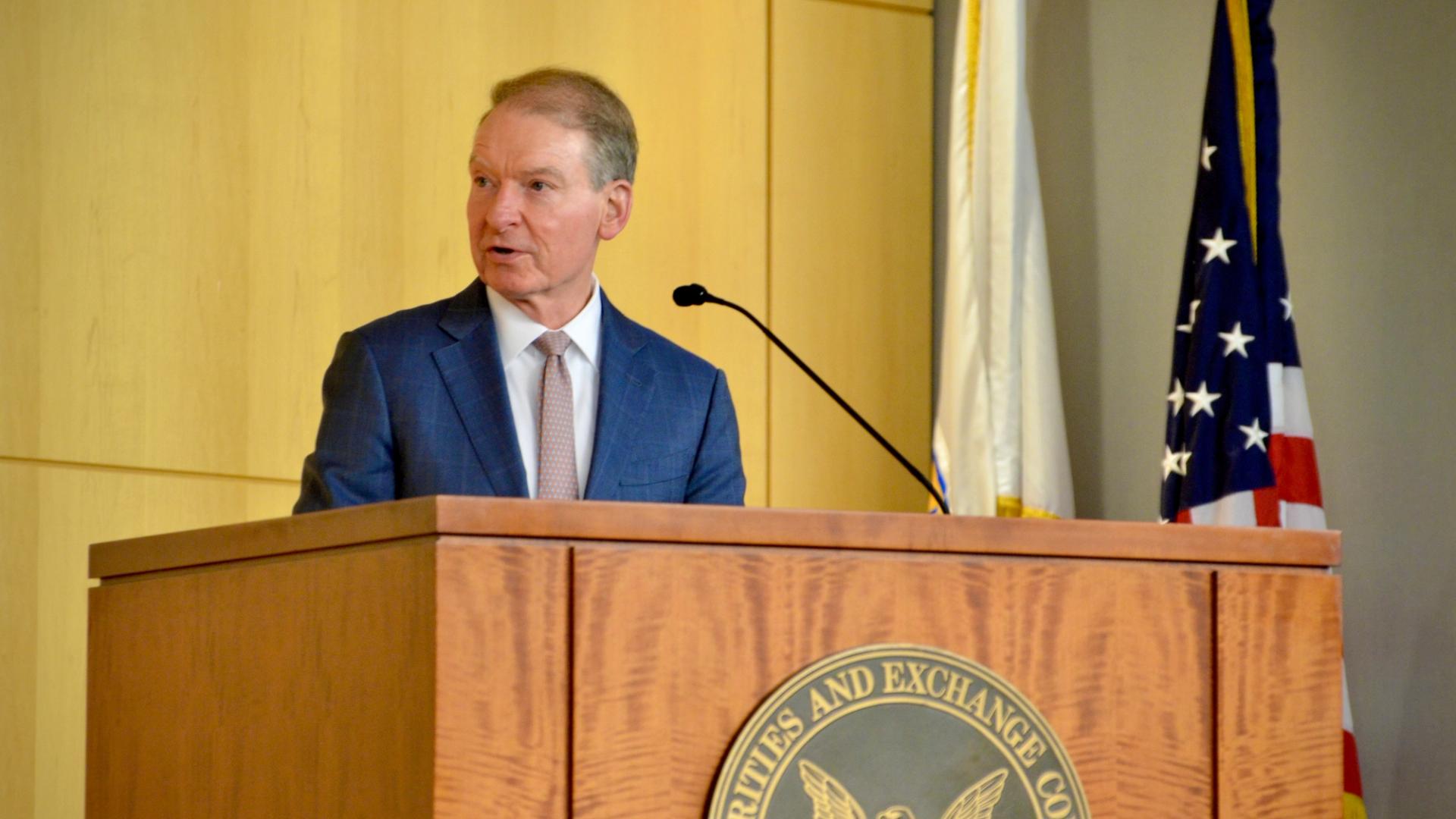
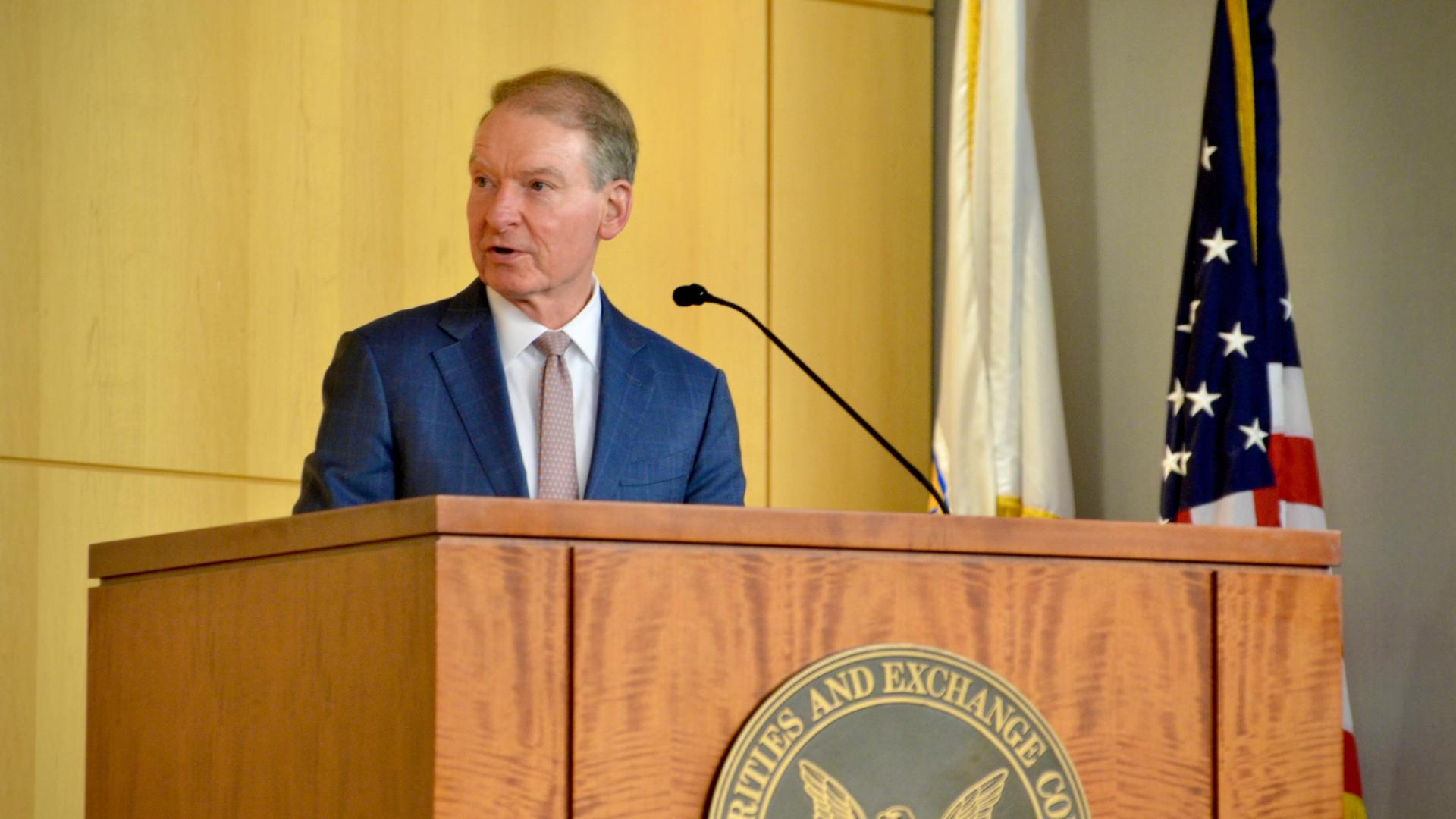
The SEC’s new proposal to overhaul transfer-agent rules could eliminate duplicate offchain shareholder records, reducing reconciliation costs and legal uncertainty for tokenized securities.

Pay close attention to a spot that appears suddenly; changes in size, shape, or color; becomes raised; or starts itching, bleeding, crusting, or refusing to heal. Dufner also recommends using the “ugly duckling” rule: If one spot simply looks different from all of its neighbors, it deserves professional attention.
“If your eye keeps being drawn to a spot because something about it seems different or unfamiliar, it’s worth having it examined,” Ilyas says. Dermatologists can inspect it with a dermatoscope, which reveals patterns and features that aren’t visible to the naked eye. If necessary, they can biopsy it.
How to fade age spots at home
Once a dermatologist has confirmed you’re dealing with harmless age spots, you can try fading them at home. Just prepare to be patient: Topical treatments are “a slow game—think months, not days,” Dufner says.
Prescription retinoids and azelaic acid are among the strongest topical options, she says. Over-the-counter products containing vitamin C, niacinamide, kojic acid, arbutin, glycolic acid, tranexamic acid, or thiamidol may also gradually lighten the spots. Hydroquinone can be effective, but it’s best used under a dermatologist’s supervision; prolonged overuse can cause a difficult-to-treat blue-black discoloration called exogenous ochronosis.

Coinbase CEO Brian Armstrong has backed the CLARITY Act once again ahead of its September 15 Senate vote.
He argued that the bill could give US crypto markets a clearer framework and help bring institutional capital and tokenized assets into the country.
Armstrong Lays Out His Case for a Yes Vote
Speaking on CNBC’s Squawk Box Asia on September 10, Armstrong described the CLARITY Act as “ready to get a yes vote” and told viewers that people he had spoken with in the Senate were on board.
“Law enforcement groups are now on board. Many banks are on board. The crypto companies are on board,” he said, while also pointing to hundreds of pages of input from both Republicans and Democrats.
The Coinbase chief also noted that his company had previously raised concerns about the bill but now believes the issues it considered non-negotiable changes have been sorted.
“All of those must-have issues that we raised our hands on last time have now been resolved,” he said.
As CryptoPotato reported in August, Senate Majority Leader John Thune filed cloture before the lawmakers went on recess, setting September 15 as the date for the procedural vote. The measure needs 60 votes, meaning Republicans cannot pass it without support from at least seven Democrats or independents.
The political negotiations also include ethics provisions covering digital-asset holdings and projects linked to elected officials, including President Donald Trump.
Armstrong characterized the White House proposal as containing “very strong” ethics provisions, while Democrats have sought additional measures, including divestiture. He added that the discussions appeared to be close to a solution, calling the issue one of the last pieces to fall into place.
The crypto executive also drew a link between regulatory clarity and institutional adoption. Pointing to the GENIUS Act, he noted that more than 150 large companies integrated stablecoins within three months of its passage.
In his view, CLARITY could act as a regulatory “checkbox” for institutional investors and help bring tokenized equities and perpetual contracts to the US. According to Armstrong, even if the bill doesn’t pass, the alternative is already taking shape through the SEC and CFTC.
Last month, he predicted that clarity would arrive through either congressional action or agency rules, after CFTC Chairman Michael Selig had earlier outlined how the agency could use its existing authority to establish a crypto trading framework if Congress stayed deadlocked. Armstrong therefore framed September 15 as a decision point rather than the only route to new rules.
Bitcoin to $400,000 by 2030
He also connected the regulatory debate to broader financial conditions, arguing that excessive government spending can push investors toward Bitcoin “almost like gold.” Furthermore, he pointed to regulated stablecoins as structural buyers of US government debt, creating demand for Treasury bills and potentially helping lower rates.
On Bitcoin itself, Armstrong maintained that $400,000 by 2030 remains a reasonable target. He believes the cryptocurrency’s one-year downturn may have already reached its bottom, noting that the next halving is about a year and a half away and that previous market run-ups have tended to come right before those events.
“I think the next year or two is going to be good for Bitcoin,” he stated.
The post Coinbase CEO Backs CLARITY Act to Secure ‘Yes’ Vote on September 15 appeared first on CryptoPotato.


So-called digital arrest scams use false claims of authority to pressure victims virtually into making rapid digital payments, including cryptocurrency transactions, writes Moody’s Rich Graham.
Crypto World
Nasdaq, Boerse Stuttgart, others ask EU to remove or increase cap in tokenization trial


The coalition warned that the current limit is too low, noting some existing European projects already exceed it.

When Dominic Lopes—an aesthetics professor at the University of British Columbia—first read about the Hugging Face incident, he responded not with panic, but wonder. For one, he has become more skeptical that individuality requires embodiment. And interesting art, he says, requires sociality. “So when I saw this, I thought, ‘Oh, well, there’s another box checked off,’” he says. Now, what we saw was rudimentary and opportunistic—not yet “true sociality,” he says. “But it’s coming.”
Soon, any human community will be able to bring into existence a machine counterpart. Picture cultures of AI lawyers, consultants, terrorist cells—working together, what monuments might 10,000 agents create in honor of some beloved K-pop star? And machine communities may well arise of their own accord, organizing around ideas hard to predict.
We make art for all sorts of reasons: to express ourselves, exchange meaning, impress one another. We tell stories—like The Odyssey—to encode and share sets of cultural values. Though the mediums may differ, agents in machine cultures are poised to do the same. Being alive may not be necessary for self-expression.


The UK House of Lords backed an amendment requiring the government to develop a digital asset strategy, in a 194–138 vote on Wednesday, despite the Labour government’s opposition to the measure.
The amendment was added to the Financial Services and Markets Bill during its Report Stage on Wednesday. The bill is progressing through Parliament and would make broader changes to the UK’s financial services regulatory framework.
Amendment 88, introduced by Conservative peer Baroness Neville-Rolfe, would require the Treasury to prepare, publish and consult on a digital asset strategy within 12 months of the Financial Services and Markets Bill becoming law.
The strategy would cover cryptoassets, stablecoins and tokenized securities, while addressing issues including innovation, consumer protection and firms’ access to banking, payment and settlement services.
The vote follows months of debate over the UK’s approach to digital assets. During a July debate, Treasury’s Minister for Investment, Lord Stockwood, pushed back on calls for a statutory framework, saying the government believed it already had a digital asset strategy and was executing it.
The ruling Labour party opposed the amendment because they believed it did not adequately address the rapid development of digital assets and the need for a cohesive regulatory framework.
The UK Cryptoasset Business Council, which said it worked with lawmakers on the amendment, welcomed the vote on Thursday, highlighting Lord Chris Holmes’ question of whether the UK is “simply regulating digital assets” or “building a digital assets economy.”
The bill must still return to the House of Commons, where lawmakers can accept, amend or reject the Lords’ changes.


Almost every large crypto token fell through the overnight sessions and into Thursday's U.S. open, as an oil shock drove long-dated Treasury yields to multi-year highs and traders raised the odds of a Federal Reserve rate increase next week to 64%. Traders put a quarter-point September increase at… Read the full story at The Defiant

When a Dragon gives you a helping hand

AI Clones of Musk, Altman and Zuckerberg Turned on Each Other

Sues N.O.R.E. For Alleged 1999 Sexual Assault


-
 Tech2 days ago
Memory prices are slowing because buyers ran out of money
-

 Business17 hours ago
Micron Stock Climbs Above $1,031 as AI Memory Crunch and a $50 Billion Outlook Fuel the Rally
-

 Crypto World2 days ago
Bitcoin price risks $76K drop as $78K support weakens
-

 Business19 hours ago
AMD Stock Climbs After Management Lifts 2027 Data Center Outlook Toward $70 Billion in AI Sales
-

 Crypto World2 days ago
Ethereum price stalls below $2,500 as ADX drops to 11
-

 Crypto World2 days ago
Robinhood Stock: How To Take Advantage With Reduced Risk
-

 NewsBeat2 days ago
What went right this week: an ‘historic’ fall in violent crime, plus more
-

 Crypto World20 hours ago
Bitcoin price risks $70K if $78K neckline breaks
-
 Crypto World1 day ago
Bitcoin price holds near $79K as cycle drawdowns narrow
-
 Sports2 days ago
Phones confiscated, players sent home: Pakistan’s England tour turmoil revives memories of Mohammad Amir, Salman Butt and Mohammad Asif’s 2010 Lord’s spot-fixing scandal | Cricket News
-
 Business2 days ago
Meta debuts long-awaited personal AI agent, Muse
-

 NewsBeat2 days ago
England up in reading, maths and science rankings as Scotland and Wales dip
-
 Crypto World2 days ago
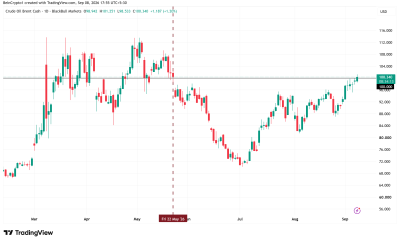
Brent Crude Oil Moves Above $100 for the First Time in 3 Months
-
 Crypto World2 days ago
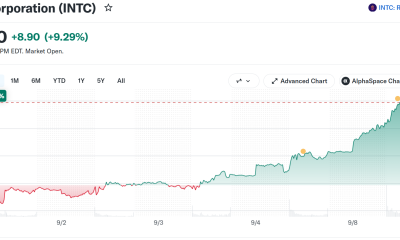
Intel Stock Jumps 9% on Chip Price Hike Report, US Stake Gains $36 Billion
-

 Crypto World2 days ago
Pump Fun and Kraken delete Hunter Biden $LAPTOP promotion
-
 Tech2 days ago
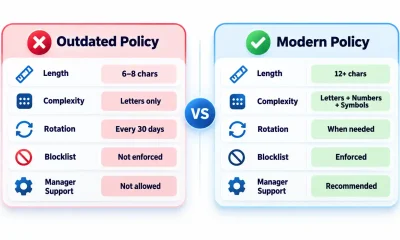
Strong Password Policy and Password Manager Guide
-

 Crypto World2 days ago
Visa expands stablecoin card network to 160 programs
-

 Business2 days ago
Egyptian TV Presenter Sarah Khalifa, 11 Others Sentenced To Death In Major Drug Trafficking Case In Cairo
-

 Business2 days ago
ServiceTitan, Inc. (TTAN) Q2 2027 Earnings Call Transcript
-
Business2 days ago
Xometry at Goldman Sachs Communacopia + Technology Conference 2026: growth, AI and Siemens
You must be logged in to post a comment Login