
Crypto World
Bitcoin Price Prediction for September 2026: What Follows a $3.5 Billion ETF Month?

Bitcoin price rose 24.95% in August, and still trades 9.62% below where it started the year. The month was bought almost entirely by funds.
Everyone else was selling into it.
Why Did the Price Rise 25% in August?
US spot Bitcoin ETFs took in $3.52 billion during August, per SoSoValue data. Only five of 21 sessions saw money leave.
Want more token insights like this? Sign up for Editor Harsh Notariya’s Daily Crypto Newsletter here.
That single month outweighs everything before it. Across January to July, the same funds lost a net $5.30 billion. August did not just beat the year, it reversed it.

The problem is what months like this have preceded.
Will the Price Crash in September 2026?
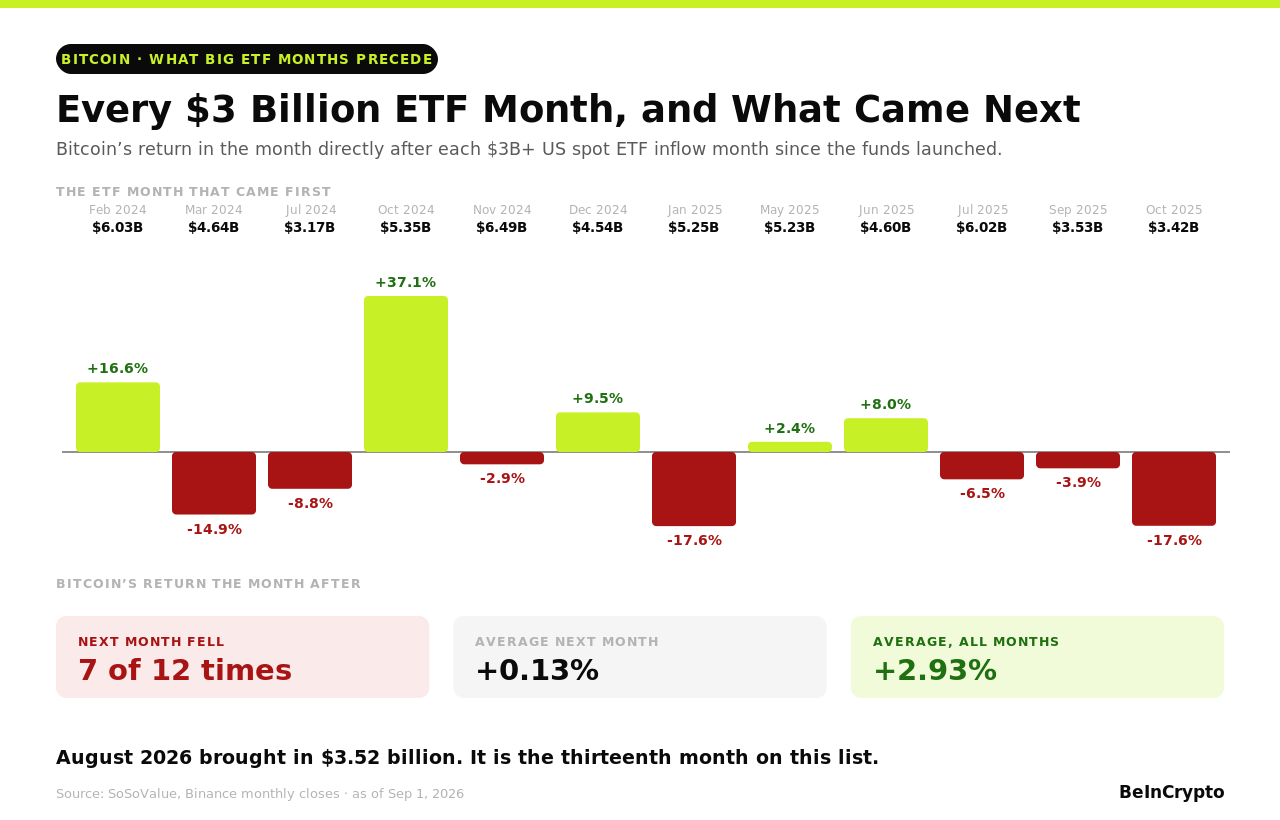
Twelve months since these funds launched have drawn $3 billion or more. Bitcoin fell in the month straight after seven of them. The average return in those following months is 0.13%, against 2.93% for an average month.
Seasonality points the same way. Bitcoin has closed August green only two times since 2020 (before this year), and on both the occasions, September fell 7.30% and 7.96%.

One thing argues back. The last three Septembers all finished higher, so September’s reputation as Bitcoin’s worst month is out of date.
Who Was Selling While BTC Surged?
Hodler Net Position Change, which measures whether long-term holders are adding coins or releasing them, stayed negative for the whole rally. It turned red on August 2 and stayed there for four weeks.

Then it flipped. August 31 printed the first green bar since July, at 2,044 BTC.
Large wallets did the same thing and have not reversed it. Addresses holding more than BTC fell from 1,963 on July 31 to 1,908, a loss of 55 wallets during a 25% rally.

So the rally was funds buying what holders and whales were handing over. That matters, because it means the selling side was working through supply rather than reacting to bad news.
Are Big Traders Still Betting Big?
Their futures book says yes. Bitcoin’s positioning divergence score sits at 21.2, with top traders holding 111 points more long exposure than the average account.

The reading is specific to Bitcoin. XRP scores 2.7, meaning no meaningful gap between top-traders and everyone else.

That confidence is also the risk. Binance alone carries $3.00 billion in long liquidation leverage below the price against $1.80 billion in short leverage above it.

Therefore, a small BTC price drop could hurt the price prediction more going into September, as it might trigger a long flush.
Bitcoin Price Prediction: The Levels That Decide September
Bitcoin trades near $79,108. Everything rests on $77,057, the floor this range has held since the breakout, because losing it removes support all the way to $62,207.

Upside needs proof. A daily close above $82,656 opens $91,719, and only a move through that level would argue the bull phase is back, with $100,782 beyond it. Volume has to come with it, and buying volume only began recovering between August 29 and 31.
Analyst’s View: The pattern says funds buy late, and August’s money arrived after a 25% move in a year Bitcoin is still down. Against that, holders stopped selling on the final day of the month and the largest traders are positioned long. Which side wins in this Bitcoin price prediction war will be decided by the tussle between the historical bearishness and the current bullishness.
The post Bitcoin Price Prediction for September 2026: What Follows a $3.5 Billion ETF Month? appeared first on BeInCrypto.


Polymarket is reportedly preparing a major new funding push that would significantly deepen its backing from politically connected capital. According to the Wall Street Journal, 1789 Capital—where Donald Trump Jr. is a partner—is set to invest around $300 million in the blockchain-based prediction market as part of a broader $1 billion fundraising round.
The same report says the round could value Polymarket at $21 billion. If it closes as described, 1789 Capital’s participation would be large enough to move the firm into one of Polymarket’s most prominent investors.
Key takeaways
- 1789 Capital is reportedly planning an approximately $300 million investment in Polymarket within a $1 billion round.
- The reported round would value Polymarket at about $21 billion, potentially reshaping the company’s investor cap table.
- ICE is still Polymarket’s largest disclosed investor, with $1.6 billion invested in preferred shares reported in an ICE 10-Q filing.
- Polymarket’s fundraising momentum is unfolding amid growing US and international regulatory pressure on prediction markets.
What 1789 Capital’s reported entry could mean
Money matters in prediction markets because it funds liquidity, infrastructure, and the ability to scale participation across event categories. A $300 million commitment—if confirmed—would represent a substantial injection of risk capital at a time when the sector is trying to expand while regulators scrutinize how these markets function.
The Wall Street Journal report also indicates that 1789 Capital is already invested in Polymarket, bringing its total exposure to about $500 million. That would position the firm among Polymarket’s largest backers once the additional investment is completed, potentially increasing its influence in governance discussions that often accompany major rounds.
Cointelegraph says it reached out to both 1789 Capital and Polymarket for comment, according to the article text provided.
Valuation questions and how the funding fits prior fundraising efforts
Polymarket’s reported funding strategy appears to be evolving alongside competition in US prediction-market offerings. Earlier coverage cited in the source notes that Polymarket reportedly began talks in April to raise $400 million at a potential $15 billion valuation—lower than the valuation of Kalshi, Polymarket’s main competitor at the time, which was referenced at $22 billion.
By contrast, the new reported valuation in the Wall Street Journal—$21 billion—would reflect a different pricing environment than the earlier fundraising attempt. Whether that shift signals improved traction, investor sentiment, or simply negotiation dynamics remains unclear from the provided information, but the reported numbers suggest Polymarket is aiming for a materially higher valuation than what it sought months earlier.
Investors watching similar rounds often focus on whether valuation increases coincide with clearer compliance pathways or deeper liquidity partnerships—especially in a sector where regulatory outcomes can change quickly.
ICE’s disclosed stake highlights how concentrated backing is
Even with new entrants, Polymarket’s ownership remains dominated by large institutional investors. In a July 30 10-Q filing, ICE reported that it invested a combined $1.6 billion in Polymarket preferred shares.
ICE’s filing further states that the holdings had a carrying value of approximately $2 billion as of June 30. It also says the preferred shares represented about 22% of outstanding shares, or 14% on a fully diluted basis.
These figures illustrate a key structural point for readers: while new capital can increase the total funding available to Polymarket, the largest disclosed backer—ICE—already holds a significant portion of equity-linked exposure. Any incoming round will likely be interpreted against that backdrop, particularly when assessing how much ownership and control different investors retain after issuance.
Regulatory pressure remains the central risk as capital seeks a path forward
The funding headlines arrive during a period of intensified scrutiny of prediction markets. The provided source recounts that on Aug. 14, JPMorgan Chase reportedly ended a banking relationship with Polymarket over regulatory concerns, though it said it remains interested in potentially providing underwriting support if Polymarket seeks to go public.
On the legal front, the source says that more than a dozen US states have filed actions against Polymarket, Kalshi, or both over sports event contracts. It also notes that authorities in several countries have blocked or restricted access to Polymarket, citing gambling-related concerns—an escalation that reinforces why banks, platforms, and corporate partners may be cautious.
This regulatory pressure is relevant to fundraising for a straightforward reason: capital providers tend to price regulatory uncertainty, because outcomes can affect revenue models, user access, and the feasibility of future listings or partnerships. In that sense, Polymarket’s reported push for a high-value round is not occurring in a vacuum—it is happening while multiple jurisdictions test legal boundaries for prediction and event-contract products.
Where things stand next
If 1789 Capital’s reported $300 million commitment and the overall $1 billion round come to pass, Polymarket’s investor base would grow further at a time when the firm’s operating environment is still contested. Market participants should watch for confirmation of the deal terms, any changes to the regulatory strategy being pursued, and whether banking and compliance hurdles ease enough to support sustained growth.
Five equity-backed notes issued through Luxembourg’s ORO II fund will trade against dollars, USDT and Bitcoin for eligible non-US investors.


Binance launched stock options on Sept. 1, giving eligible users access to physically settled contracts linked to selected U.S.-listed stocks and exchange-traded funds.
Summary
- Binance launched physically-settled options on selected U.S.-listed stocks and exchange-traded funds for eligible users globally.
- Buyers can purchase calls or puts but cannot write contracts or open short options positions.
- Exercised contracts settle through underlying shares held by Alpaca Securities for Binance users in custody.
- Phase one supports limit orders only, with maximum buyer losses capped at premiums paid upfront.
- Most contracts trade during regular U.S. market hours from 9:30 a.m. until 4:00 p.m. Eastern.
The product allows users to buy calls, which provide the right to purchase shares at a specified strike price, and puts, which provide the right to sell shares. Each contract has a fixed expiration date, according to the announcement.
The exchange is offering the service through Nest Trading Limited as the introducing broker. U.S.-regulated Alpaca Securities acts as the clearing broker and holds shares delivered through exercised contracts on behalf of Binance users.
Binance stock options use physical settlement
Physically settled options deliver the underlying shares when qualifying contracts are exercised. This differs from cash-settled derivatives, which close by paying the difference between a contract’s strike price and the asset’s settlement value.
For a call option, exercise gives the buyer the right to acquire the underlying shares at the strike price. A put gives the buyer the right to sell shares at that price, subject to the platform’s exercise, funding and position requirements.
Shares resulting from settlement are held in custody by Alpaca Securities. Binance users can monitor the resulting positions through the platform’s stock trading interface and Funding Account.
The exchange did not publish a complete list of supported stocks and ETFs in its general announcement. Users must open a stock’s price page and check whether an Options tab appears. Available expiration dates and strike prices are displayed through the relevant options chain.
The contracts represent conventional securities options rather than tokenized stocks or crypto perpetual futures. They follow U.S. market schedules and settle into underlying shares instead of blockchain tokens.
Long-only trading limits losses to premiums
The initial product is long-only. Users can buy calls and puts but cannot write options or create uncovered short positions. This removes the open-ended risk associated with selling certain options without holding the underlying asset.
For buyers, the maximum direct loss is limited to the premium paid for the contract. A contract can expire without value if the market price does not move sufficiently beyond its strike price before expiration.
Defined losses do not make options low-risk products. Contract values can fall quickly because they depend on the underlying share price, remaining time before expiration, expected volatility and interest rates.
Users must complete an options suitability questionnaire and sign a disclaimer before trading. Customers who have not activated Binance’s stock service can open the stock and options products through the same onboarding process.
Only limit orders are supported during phase one. Traders must specify the maximum price they are prepared to pay rather than submitting market orders that execute at the best available price.
The exchange has not disclosed when it might add other order types, options writing or multi-leg strategies. The phase-one label indicates that the product could change, but no additional rollout schedule was announced.
Nest and Alpaca divide the brokerage roles
Nest Trading acts as the introducing broker, providing the interface through which eligible Binance users submit orders. Alpaca Securities handles the U.S. brokerage functions behind execution, clearing and custody.
Alpaca describes itself as a regulated, self-clearing broker-dealer. It previously partnered with Binance when the exchange launched direct access to U.S. stocks and ETFs in June.
Nest Trading is authorized by the Financial Services Regulatory Authority of Abu Dhabi Global Market. Its permissions cover activities including arranging investment transactions, dealing as an agent and arranging custody.
The structure keeps securities execution and custody within regulated brokerage entities while allowing customers to access the service from a Binance account. The exchange itself is not described as the U.S. clearing broker.
In related coverage, crypto.news reported that ETFs reached 25% of Gen Z equity trading volume on Binance during early August. Binance noted that its direct-equities data covered a short period and did not establish a lasting investment trend.
Trading follows regular U.S. options hours
Most supported stock options trade between 9:30 a.m. and 4 p.m. Eastern, matching regular U.S. market hours. Certain ETF and exchange-traded note options can remain open until 4:15 p.m.
The product generally does not support pre-market or after-hours trading. Binance stops accepting new orders when the relevant options market is closed, although users can cancel existing orders.
Unfilled orders remain on the order book during closures but cannot match until trading resumes. U.S. holidays, early closes, exchange halts and other market events can also change availability.
Users can fund the service through their Funding Account, Spot Account or Flexible Earn holdings. Supported assets include USDC, USDT, USD1, U and BNB, although the final securities transactions are processed through the brokerage arrangement.
The announcement does not provide a complete list of eligible countries. Binance warned that the product may be unavailable in some regions, meaning account access and local restrictions must be checked before trading.
The next developments to watch are the addition of more underlying securities, broader order support and any expansion beyond long-only contracts. Binance has not set deadlines for those changes.


Strategy has formally opposed MSCI’s proposed screening rules for companies with large non-operating asset holdings, arguing that the methodology unfairly targets digital asset treasury firms and could push companies including Strategy out of major global equity indexes.
Summary
- Strategy called MSCI’s proposed screening rules discriminatory and argued they unfairly target digital asset treasury companies.
- Companies with operating assets below 50% of total assets would face five additional tests, with four failures potentially making them ineligible for MSCI indexes.
- A May simulation identified Strategy, Metaplanet and Yellow Cake for possible deletion under the proposed methodology.
- Strategy said MSCI’s operating and non-operating asset distinction is not defined under U.S. GAAP, IFRS or existing U.S. securities law.
- MSCI is accepting feedback until Sept. 30, with a decision expected by Oct. 16 and any changes taking effect in December.
In a Monday letter signed by Executive Chairman Michael Saylor and CEO Phong Le, Strategy called MSCI’s proposal “discriminatory, arbitrary, and misguided” and asked the index provider to withdraw it.
“If adopted, the proposal would have no meaningful impact on Strategy’s business, but it would profoundly harm MSCI’s reputation as a reliable and neutral index provider,” Strategy wrote.
Strategy says MSCI proposal targets digital asset treasury firms
MSCI opened its latest consultation in August, proposing a new method for identifying companies whose balance sheets contain large amounts of assets it considers non-operating.
Companies whose operating assets account for less than 50% of total assets would face five additional financial-ratio tests under the proposed system. Triggering at least four of the five conditions could classify a company as non-operating and make it ineligible for the MSCI Global Investable Market Indexes.
The methodology examines operating asset intensity, expenses, operating cash flow, fair value changes tied to assets considered non-operating and dependence on financing to accumulate those assets.
Strategy argued that the proposal effectively revives MSCI’s earlier attempt to address digital asset treasury companies through a different screening process. The company described the latest methodology as a “pretext” for targeting DATs and challenged MSCI’s distinction between operating and non-operating assets.
MSCI considered a separate framework last year that could have removed companies with digital assets accounting for 50% or more of their total assets. Following industry opposition, the index provider kept crypto treasury firms in its indexes in January while it prepared a new review covering companies with substantial non-operating assets, as crypto.news previously reported.
Strategy opposed that earlier proposal as well, arguing that holding a large amount of Bitcoin should not make an operating company equivalent to an investment fund.
The new framework has since expanded beyond a crypto-specific threshold, though Strategy maintains that its practical effect remains concentrated on digital asset treasury companies.
MSCI simulation puts Strategy and Metaplanet at risk
The possible impact became clearer when a simulation based on May 2026 data identified Strategy, Metaplanet and U.K.-listed uranium investment company Yellow Cake as companies that would face deletion under the proposed methodology.
The MSCI simulation identified Strategy with a free-float-adjusted market capitalization of $23.93 billion, while Yellow Cake stood at $1.81 billion and Metaplanet at $654 million.
SharpLink, Center Laboratories and Lydia Holding were placed on a watchlist in the simulation because MSCI proposes different treatment for existing constituents. Under the proposed methodology, current index members would need to fail the applicable screening test in two consecutive annual reviews before removal.
Strategy challenged the basis of the screening process, saying MSCI’s use of “operating” and “non-operating” does not match established accounting definitions.
The company said neither U.S. generally accepted accounting principles nor International Financial Reporting Standards provides the distinction MSCI proposes to use. Strategy argued that existing U.S. securities law does not provide an equivalent test either.
Bitcoin is central to Strategy’s objection. MSCI treats the cryptocurrency on Strategy’s balance sheet as a non-operating asset, while Strategy reports its Bitcoin treasury as an operating segment.
According to the company, gains and losses related to its Bitcoin holdings are recorded as operating expenses following discussions with the U.S. Securities and Exchange Commission.
Strategy said MSCI would therefore be applying an index-level classification that differs from the accounting treatment used in its financial statements.
The company questioned why similar treatment would not apply to other businesses whose balance sheets contain large pools of assets. Its letter cited real estate investment trusts, timber businesses and energy infrastructure companies as examples of asset-heavy firms that could remain eligible under the proposed methodology.
Strategy argued that the difference would concentrate the effects of the test on digital asset treasury firms even though MSCI has presented the proposal as a company-wide screening framework.
Strategy wants MSCI to define its asset test
If MSCI proceeds with the proposal, Strategy asked the index provider to base any final methodology on recognized accounting or legal standards.
The company wants the rules applied only to financial filings released after the methodology has been finalized, preventing companies from being assessed retrospectively against a classification that did not exist when earlier filings were prepared.
Strategy requested a published record of the consultation process and asked MSCI to explain why the screening method is needed.
It wants the index provider to set objective criteria separating operating assets and activities from those considered non-operating, instead of relying on classifications that Strategy said lack established definitions.
The current dispute follows months of uncertainty over how major index providers should treat companies that use their balance sheets to hold Bitcoin and other digital assets.
When MSCI paused its earlier DATCO exclusion in January, Strategy shares rose as the immediate risk of removal from MSCI indexes eased.
The earlier debate had raised concerns about potential passive selling if companies were removed from benchmarks followed by index-tracking funds. JPMorgan estimated at the time that exclusion from MSCI indexes alone could lead to roughly $2.8 billion in selling of Strategy shares, with potential outflows reaching $8.8 billion if other index providers followed.
The estimate related to MSCI’s previous crypto-specific proposal and was not a forecast for the methodology currently under consultation.
MSCI is accepting comments on the latest proposal until Sept. 30 and plans to publish the outcome by Oct. 16. Any changes adopted following the consultation are expected to take effect in December.
Strategy continues building its Bitcoin position
The MSCI dispute comes as Strategy continues operating the world’s largest corporate Bitcoin treasury.
Strategy shares gained 4.42% on Monday to close at $132.94. On the same day, the company said it purchased 4,603 BTC during the previous week at an average price of $80,318 per Bitcoin.
Its capital structure has changed considerably during 2026 as the company has balanced Bitcoin purchases with cash reserves, preferred dividends and share issuance.
In June, Strategy added another 520 Bitcoin for roughly $35 million at an average price of $67,068 per coin, taking its holdings at the time to 847,363 BTC. The same filing showed the company had increased its U.S. dollar reserve by $300 million to $1.4 billion.
Treasury activity later moved in the opposite direction as Strategy used Bitcoin sales and equity financing for capital management.
By late July, the company had begun directing proceeds from common-share issuance toward its dollar reserve instead of immediately using the funds for additional Bitcoin purchases. One weekly filing showed Strategy raised $544.5 million by selling nearly 5.43 million MSTR shares while making no Bitcoin purchase during that period.
The company said the cash reserve could be used to cover preferred dividend obligations and other corporate needs.
Strategy later resumed Bitcoin purchases, including the 4,603 BTC acquisition disclosed Monday, while MSCI’s consultation determines whether companies with balance sheets dominated by assets it classifies as non-operating should remain eligible for its global equity indexes.
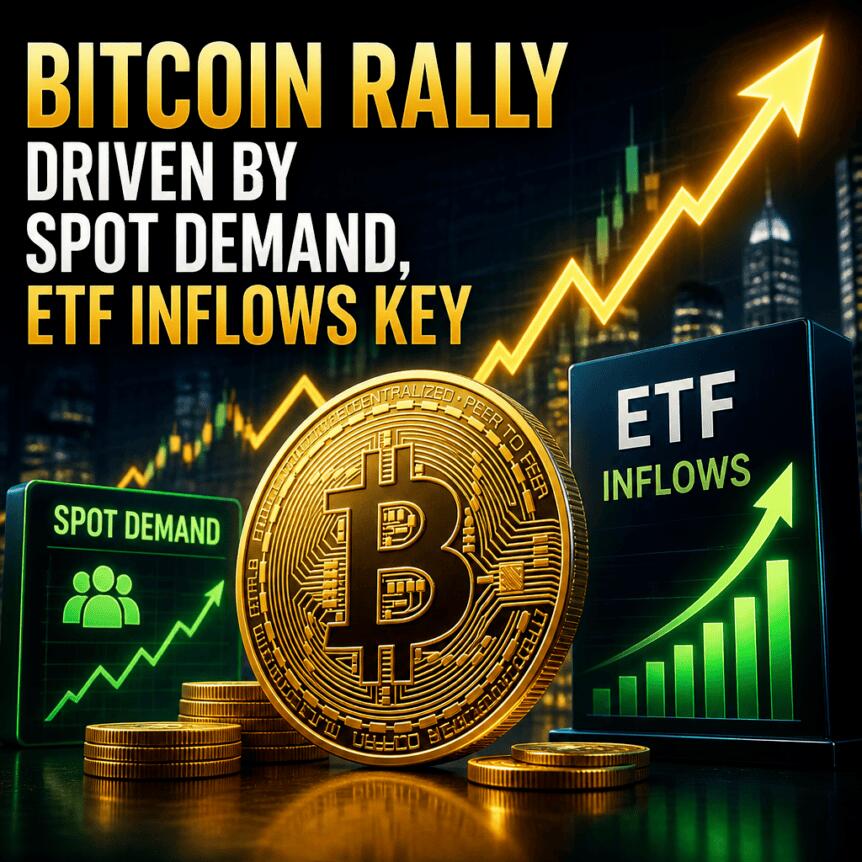
A Bitfinex market report has said Bitcoin’s latest rally relied primarily on spot demand, not excessive leverage. Analysts believe this puts the market in a favorable position to absorb selling pressure if conditions become less conducive.
The analysts highlighted sustained ETF demand as key to counter a rate hike by the Federal Reserve in September.
Spot Demand Fueling Bitcoin Rally
According to the report, sustained spot demand and manageable leverage levels indicate the market is not overheating. CoinMarketCap data shows BTC trading around $78,731, up almost 1% in 24 hours, but down 2.32% over the past seven days. The flagship cryptocurrency has seen a resurgence, reclaiming $80,000 for the first time since May and briefly crossing $81,000. The rally was driven by sustained ETF demand, short covering, and Treasury buybacks.
However, the rally lost momentum after hitting resistance at higher levels. Federal Reserve Chair Kevin Warsh’s comments that interest rates could increase also added pressure, pushing the price to a low of $76,587.
Bitfinex analysts added that the derivatives market has not seen a rapid build-up of leverage typically observed with overheated rallies. Coinglass data shows Bitcoin open interest is currently $54.02 billion, significantly higher than at the beginning of August. However, the increase has been gradual, with basis levels remaining on the lower side. The analysts said in the report:
“We are in a market driven by spot buying and, notwithstanding large short liquidations, open interest has only gradually increased, while basis has remained relatively low and at healthy levels historically.”
Bitfinex identified $77,100 as an important support level, adding that sustained spot demand indicates a balanced market.
Bitcoin ETF Data
Spot Bitcoin ETFs have recorded just over $3 billion in inflows over nine consecutive sessions between August 17 and August 27. However, the inflow streak snapped on Friday, with the ETFs recording $201.9 million in outflows. ARKB registered $114.9 million in outflows, followed by BITB ($49.7 million) and IBIT ($33.4 million). Inflows turned positive on Monday, with spot Bitcoin ETFs recording $216.7 million in net inflows. The ETFs recorded $924.5 million in net inflows last week despite Friday’s outflow.
Institutional interest in BTC has also registered a sharp uptick and absorbed Bitcoin sold by large holders. According to Bitfinex, whale addresses with 1,000 and 10,000 BTC have sold 50,500 BTC since June, while institutional holdings associated with ETF platforms and exchanges have increased by 59,100 BTC. The analysts also said custodial balances rose by 31,500 BTC during the recent rally.
“While whales took profits during the rally, institutional demand absorbed that supply, indicating that assets moving into these regulated vehicles may be less prone to sudden liquidation based on short-term macroeconomic news.”
Focus On Federal Reserve Rate Hike
BTC’s recent price action could face pressure from a Federal Reserve rate hike. Fed Chair Warsh’s comments at Jackson Hole implied an increased likelihood of an interest rate hike. CME-implied odds of a rate hike rose from 39.9% to 57% following Warsh’s comments. The two-year Treasury yield also rose to 4.31%, while the dollar reached a two-week high.
Analysts flagged stubborn inflation as a key reason for the Fed’s restrictive monetary policy. Headline Personal Consumption Expenditures Inflation is at 3.7%, while core inflation is at 3.3%. According to Jeff Mei, Chief Operating Officer of BTSE, Warsh’s comments could dampen sentiment around Bitcoin because an interest rate hike could reduce liquidity.
“For a sustained rally, we need a few things to happen. First, ETF demand has to stay strong across all ETF products, and not just BlackRock’s IBIT ETF. Second, we need better inflation data for the Fed to back off and keep rates steady.”
$80,000-$83,000 Key Levels For Bitcoin
One of the key drivers of Bitcoin’s rally was the Federal Reserve doubling Treasury buybacks. The decision pushed bond yields and the dollar lower, while traders had taken short positions against Bitcoin. According to Jeff Ko, chief analyst at CoinEx, the short squeeze has largely played out, and spot demand has become a key factor.
“Treasury buybacks pushed yields and the dollar lower, and that impulse collided with crowded short positioning to produce the squeeze. What matters from here is whether spot buyers keep absorbing supply around $80,000.”
Ko believes the $80,000-$83,000 zone is key because it could show if retail buyers can substitute the buying pressure created by the forced short covering.
“It is a major supply zone, and the point at which the rally stops being a short squeeze and becomes a test of real capital allocation.”
Upcoming Economic Data
Market attention now turns to a slew of upcoming releases before the Federal Reserve’s September meeting. ISM Manufacturing and JOLTS data will be released on Tuesday, followed by ADP employment figures and the Federal Reserve’s Beige Book on Wednesday, and ISM Services on Thursday.
However, Ko believes the August payroll report, due on Friday, is the most crucial data set before the Fed’s September FOMC meeting. July payrolls fell by 23,000 against an estimate of 80,000, while May and June figures were revised lower by 103,000 jobs. The current unemployment rate is at 4.1%. Meanwhile, the August inflation report is due on September 11.
Disclaimer: This article is provided for informational purposes only. It is not offered or intended to be used as legal, tax, investment, financial, or other advice.
On 25 August, Wolfe Research analysts raised their price target for Netflix shares from $84.00 to $95.00. According to Wolfe Research, the company’s weak second-quarter subscriber and engagement figures were driven by the timing of content releases rather than a decline in demand. Previous seasons of shows returning in the third quarter generated 1.3 billion hours viewed in the top 10, compared with 765 million hours for second-quarter releases. Based on this, Wolfe Research expects stronger results in the second half of the year and a solid outlook for 2027.
Technical Analysis of Netflix
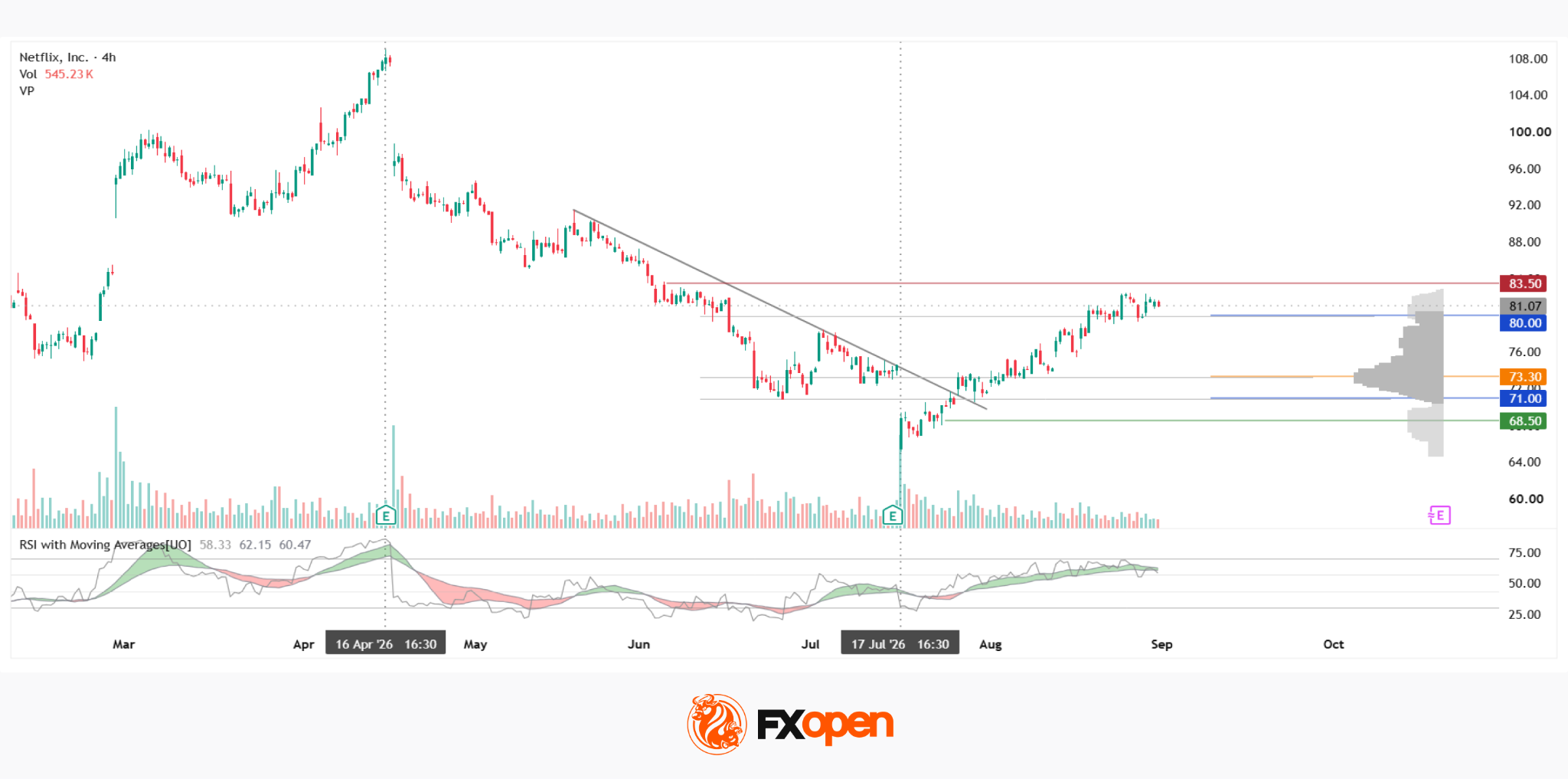
The four-hour NFLX chart shows a short-term downtrend, within which a descending trendline had formed. On 17 July, the final bar of the trend was accompanied by a pronounced spike in vertical volume, prompting an upward reversal that was followed by a breakout above the trendline.
The stock is now trading above the upper boundary of the current market profile at $80.00, potentially setting the stage for further tests of higher levels. The nearest significant resistance is around $83.50.
If the market reverses or the price is rejected at the red resistance level, Netflix could move back into the market-profile range. Before attempting to break below the profile, however, the price would need to overcome a substantial cluster of levels, including the POC at $73.30 and the lower profile boundary at $71.00.
Immediately below this cluster lies the green support level around $68.50.
The RSI + MAs indicator currently shows readings of 58, 62 and 60. The oscillator and both moving averages remain above the neutral zone and continue to display bullish signals. Notably, RSI has not entered overbought territory at any point during the rebound.
Key Takeaways
The move above the market profile, combined with the bullish RSI + MAs readings, could indicate that the previous downtrend has come to an end. The surge in volume at the trend low also marked a potential structural reversal point.
The stock’s further performance may depend not only on the technical setup but also on whether upcoming content releases validate analysts’ expectations for stronger results in the second half of the year.
Buy and sell stocks of the world’s biggest publicly-listed companies with CFDs on FXOpen’s trading platform. Open your FXOpen account now or learn more about trading share CFDs with FXOpen.
This article represents the opinion of the Companies operating under the FXOpen brand only. It is not to be construed as an offer, solicitation, or recommendation with respect to products and services provided by the Companies operating under the FXOpen brand, nor is it to be considered financial advice.
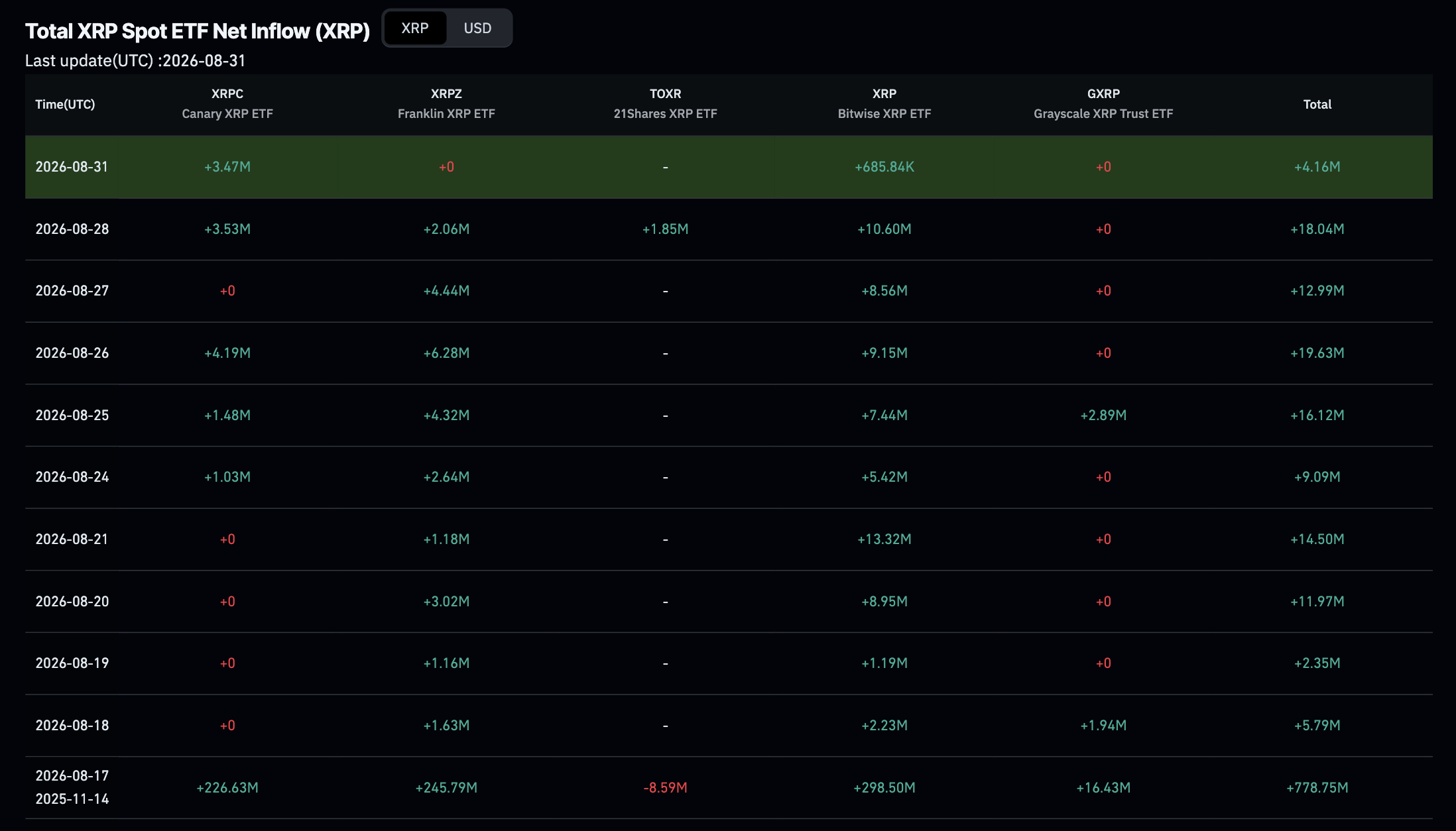
XRP price trades at $1.37 as of this writing, moving slightly upward in the past 24 hours, a quiet number that belies the bigger bullish analysis beneath the surface. Spot XRP ETFs have now strung together ten straight days of net inflows, and the streak appears headed for double digits.

What’s driving cash into these products while the token itself sits nearly 9% off its weekly high? That’s the question worth unpacking before deciding where XRP goes next.
The funds pulled in $26.2 million on Aug. 28 alone, pushing cumulative inflows to more than $1.5 billion since launch. Bloomberg Intelligence analyst James Seyffart called the flow pattern “surprisingly resilient”, noting money has moved almost entirely in one direction. It’s an unusual dynamic, given XRP’s chart hasn’t exactly cooperated.
Goldman Sachs just became the #1 institutional holder of Spot XRP ETFs $87M+ exposure, up $83M this quarter — 𝗕𝗮𝗻𝗸XRP (@BankXRP) August 31, 2026

Wall Street is loading up on XRP. https://t.co/9AvNFpxyLU pic.twitter.com/r5aONSbXS0
Goldman Sachs leads institutional holders with about $87.4 million in exposure, per Q2 13F filings, followed by Jane Street and Millennium Management. The disconnect between ETF demand and spot price weakness is the crux of the current setup. Institutional buyers are accumulating via regulated wrappers even as retail leverage is being fleshed out.
Discover: The Best Crypto to Diversify Your Portfolio
XRP Price Analysis: Hit $2 This Week?
XRP’s current range puts it squarely in consolidation territory, hovering between $1.35 and $1.39 after last week’s leverage unwind tested the rally. The token is still up roughly 38% over the past 14 days, so this pullback reads more like digestion than reversal, for now.
The $1.35–$1.38 zone is the level to watch; a clean hold there keeps the near-term structure intact, while a break below opens room toward $1.20.

On the upside, resistance stacks at $1.55–$1.60, then $1.68, with $1.86 as the next meaningful ceiling. Bulls point to sustained ETF demand and a possible retest of $1.98 if resistance clears in sequence. The bear case centers on the Sept. 1 Ripple unlock of 1 billion XRP, a supply event traders are already pricing in.
However, the most likely scenario sees a choppy consolidation until the unlock clears and flow data confirms direction. Worth tracking closely.
Agree with Hayes’ take? Trade ETH on Bybit and Get a Chance to Win Our $1,000 USDT Airdrop
LiquidChain Targets Early Mover Upside as XRP Tests Key Levels
Ten straight days of inflows into a mature, $85 billion asset class is impressive, but it also underscores a ceiling. XRP’s market cap is large enough that even sustained institutional buying only moves the needle so much.
Traders chasing outsized returns are increasingly looking earlier in the cycle, and that’s where infrastructure plays like LiquidChain ($LIQUID) enter the conversation.
The ceremony starts with a single word. — LiquidChain (@getliquidchain) August 31, 2026

 pic.twitter.com/vudkt5bEzI
LiquidChain is a Layer 3 infrastructure project fusing Bitcoin, Ethereum, and Solana liquidity into one execution environment. It is a “deploy-once” architecture meant to let developers build across all three ecosystems without rewriting contracts per chain.
The presale has raised $960K to date, with tokens priced at as low as $0.014951. Core features include a Unified Liquidity Layer, Single-Step Execution, and Verifiable Settlement.
Research LiquidChain directly before the presale ends.
Discover: The Best Token Presales
The post XRP Price Analysis: ETF Inflow Positive for 10 Straight Days appeared first on Cryptonews.


Cronos has resumed block production after validators halted the network during an exploit targeting Tectonic and restored the chain state to a point before the attack.
Summary
- Cronos resumed block production after validators halted the network during an exploit targeting the Tectonic protocol.
- The chain was restored to its state before the exploit, with block production restarting from block 90,896,189.
- Cronos remains under observation, while some protocols, RPC providers, explorers and bridges may take longer to return.
- A full postmortem covering the Tectonic exploit and the network’s response will be released soon.
Cronos Network said the blockchain was fully back online after the validator set coordinated an emergency halt designed to protect users while the Tectonic incident was being contained. The restart followed a rollback of the network state, effectively returning Cronos to its condition before the exploit.
Block production resumed at 23:49:01 UTC on Aug. 30 from block 90,896,189. Node operators have been instructed to restart using Cronos v1.7.8 and the latest mainnet snapshots dated Aug. 31 at 09:52 UTC.
The network remains under observation while operators check its stability. Cronos warned that some protocols, RPC providers, blockchain explorers and bridges may take longer to restore their services as individual operators complete their own checks.
“We will be releasing a full postmortem soon,” Cronos said.
Cronos network restart follows emergency validator halt
The shutdown came after an exploit hit Tectonic, a decentralized lending protocol built on Cronos. Tectonic told users on Aug. 30 that it was investigating an incident and asked them not to interact with the protocol until its team confirmed that it was safe.
Cronos validators subsequently stopped block production, preventing transactions from being processed across the network while the incident was investigated.
Onchain researcher Weilin Li estimated that the exploit affected roughly $75 million after initially identifying approximately $66 million connected to the attack and later finding another attacker-controlled address holding close to $8 million. Tectonic and Cronos have not confirmed the estimated loss, making the figure provisional until the promised postmortem provides a full accounting.
Li linked the incident to manipulation of TONIC, Tectonic’s governance token. According to his analysis, the attacker drove TONIC’s price roughly 100 times higher within around 20 minutes and then supplied the inflated tokens as collateral to borrow other assets from Tectonic.
Tectonic’s lending parameters allowed TONIC to be used with a 20% collateral factor. Li identified approximately 364.6 trillion TONIC in the attack position, which would have required the tokens to carry an inflated value of roughly $375 million to support around $75 million in borrowing.
Only a portion of the assets had left Cronos before validators stopped the network. Li estimated that around $6 million had been bridged to Ethereum, leaving most of the assets linked to the exploit on Cronos when block production stopped. Neither Cronos nor Tectonic has independently confirmed that estimate.
Crypto.com CEO Kris Marszalek said the company’s app and exchange were not compromised by the Tectonic incident. Crypto.com’s security team was assisting with the investigation, while Marszalek said the exchange and app continued operating normally.
Chain state has been restored to before the Tectonic exploit
Instead of restarting Cronos from the state at which validators stopped producing blocks, the network restored its state to a point before the Tectonic attack.
Cronos described the halt as a “validator-consensus emergency action” taken to protect users. Restoring the earlier state meant transactions recorded as part of the exploit after the selected restoration point would no longer form part of the restarted chain’s history.
The network has not yet published the technical details behind the restoration, including the exact process validators followed to agree on the earlier state. Its postmortem is expected to provide more information about the exploit, the response and the subsequent restart.
Cronos previously upgraded its infrastructure to cut gas costs by around 90% and bring block times below one second, while daily transactions had risen roughly fourfold at the time of the upgrade, crypto.news previously reported. The network had recorded more than 100 million transactions since launch and had more than 500 developers building across its ecosystem as of November 2025.
Tectonic has long been one of the main decentralized finance applications operating on Cronos. Earlier Cronos ecosystem data identified Tectonic alongside VVS Finance, Orby Network and Veno Finance among the network’s prominent protocols.
Before the exploit, Tectonic held approximately $121.7 million in total value locked and around $82.7 million in active loans, according to data cited by The Block.
Cronos restart comes after other recent emergency chain halts
The Tectonic response follows several emergency blockchain shutdowns linked to security incidents in recent weeks.
On Aug. 25, Cosmos EVM chains were advised to request validator halts while Cosmos Labs investigated a security incident affecting users of its EVM module. KiiChain reported that more than 148.3 million KII had been drained through 18 attacks, while TAC said validators halted its network after one account was drained.
MANTRA had stopped its own network several days earlier while investigating a separate incident, freezing transactions and preventing assets from moving across the Layer 1 blockchain. Its engineering and security teams investigated the issue with external partners before the network later resumed block production.
Cronos has continued developing its network infrastructure while maintaining close links with Crypto.com. A 2025 roadmap outlined plans for tokenized equities, real estate, commodities, funds and other assets, alongside lending and decentralized finance integrations. The roadmap placed Crypto.com integration at the center of distribution plans through the exchange’s user base.
More recently, Trump Media, Crypto.com and Yorkville Acquisition Corp. terminated their planned CRO treasury venture on Aug. 7. The proposed company had originally been designed around a multibillion-dollar CRO treasury, but the parties cited prevailing market conditions and changing business and stakeholder priorities when ending the transaction.
For the Tectonic incident, Cronos has not yet provided a final figure for affected assets or published the root cause of the exploit. Its forthcoming postmortem is expected to document the attack and the network’s response after validators halted the chain and restored its pre-exploit state.


Disclosure: This content is provided by a third party. Neither crypto.news nor the author of this article endorses any product mentioned on this page. Users should conduct their own research before taking any action related to the company.
Bitcoin yield has moved beyond lending BTC to a centralized platform and collecting interest. In 2026, holders can choose from self-custodial staking models, lending protocols, managed DeFi vaults, exchange-embedded strategies and wrapped-Bitcoin staking systems.
Summary
- Bitcoin holders can earn yield through staking, lending and managed DeFi vaults, with custody and risk varying significantly between strategies.
- Stacks BTC Staking targets about 3% annualized yield in native BTC while keeping Bitcoin under the holder’s keys on Bitcoin L1, although the product has yet to reach mainnet.
- Zest offers around 1% in sBTC, while Kraken and Lombard currently offer roughly 1.4% and 2% through lending and managed DeFi strategies.
- Starknet and Babylon pay rewards in their native tokens, while Babylon keeps BTC on Bitcoin L1 but introduces slashing risk.
Investors need to know where yield comes from, whether Bitcoin remains under their control, and whether returns depend on real economic activity or token emissions.
This ranking compares seven leading Bitcoin yield opportunities using the same framework: protocol track record, yield source, custody model, smart-contract exposure, liquidity, sustainability and onchain verifiability. Much of the comparative risk framework and current rate data comes from BitcoinYield. Rates can change quickly, so the figures below should be treated as snapshots rather than fixed returns.
1. Stacks BTC staking
Stacks BTC Staking is designed for Bitcoin holders who want native BTC yield without giving up custody of their coins. The product has not yet reached mainnet, but its proposed structure places it at the low-custody end of the market.
Under the current design, participants lock BTC directly on Bitcoin Layer 1 using a standard timelock mechanism and pair the position with STX worth approximately 5% of the BTC value. The Bitcoin remains under the holder’s keys rather than moving through a bridge, wrapper or centralized custodian.
The target yield is approximately 3% annualized in native BTC. That return comes from Proof of Transfer, or PoX, the Stacks consensus system. Stacks miners commit BTC to compete for the right to produce blocks, and that BTC funds rewards for participants. Stacks says PoX has distributed more than 4,200 BTC since January 2021.
The model does not depend on new reward-token emissions, recycled deposits or unsecured lending. Instead, returns come from miner expenditure tied to network operation.
BTC is designed to enter an approximately six-month bonding cycle. Holders can exit early and recover principal, but they forfeit remaining rewards for that cycle. The structure does not include slashing risk.
For investors prioritizing capital preservation, the planned model stands out because custody remains user-enforced on Bitcoin L1. The key risk is execution: Bitcoin Staking was still in private-testnet testing in July 2026, so its mainnet performance remains unproven.
2. Zest Protocol
Zest Protocol offers Bitcoin-linked yield through a live lending market and targets users comfortable with DeFi infrastructure.
The protocol has built one of the strongest operating records in Bitcoin DeFi. Zest reports around 800 BTC deposited, more than 1,500 liquidations with zero bad debt and a historical peak above $100 million in total value locked.
Current yield is around 1% in sBTC, a Bitcoin-backed asset on Stacks. The return comes mainly from Dual Stacking, a mechanism connected to PoX rewards, with a smaller contribution from lending interest. At launch, participating Stacks entities redirect part of their own PoX rewards to users of the Dual Stacking system.
That gives the yield a real economic source, but it also creates more dependencies than the Stacks BTC Staking design. Users rely on sBTC infrastructure, the signer set controlling access to underlying BTC, lending contracts and the continued operation of Dual Stacking.
Zest’s next major product, Bitcoin Collateral Vaults, aims to let holders lock BTC directly on Bitcoin L1 and borrow stablecoins on EVM networks. The structure could reduce one of the largest barriers facing institutions that want to use Bitcoin as productive collateral without transferring custody.
Zest best suits investors who understand lending risk and want a live protocol with a measurable track record.
3. Kraken Bitcoin vault
Kraken Bitcoin Vault packages an onchain Bitcoin yield strategy inside a familiar centralized exchange interface. Users deposit BTC through Kraken, while the underlying strategy is handled by specialized infrastructure operating behind the scenes.
The vault currently offers a variable yield of roughly 1.4%. Deposited BTC is converted into kBTC, Kraken’s wrapped Bitcoin asset, before being deployed through a collateralized DeFi strategy. Veda provides the vault infrastructure, while external credit markets, including Morpho, form part of the underlying yield process.
The return comes from real lending and credit-market activity rather than token emissions. That gives the strategy a more defensible economic basis than products whose rewards rely entirely on newly issued tokens.
Convenience is the main advantage. Users do not need to interact directly with multiple DeFi protocols or manage each underlying position themselves.
The trade-off is a broader trust and execution surface. Depositors rely on Kraken as the user-facing platform, the kBTC wrapping mechanism, Veda’s vault contracts and the external markets where capital is deployed. Users hold a claim on the vault rather than maintaining direct control of the underlying Bitcoin throughout the strategy.
Kraken Bitcoin Vault therefore fits investors who prioritize simplicity and are comfortable accepting exchange, wrapper and smart-contract dependencies in return for managed access to Bitcoin yield.
4. Lombard Bitcoin earn
Lombard Bitcoin Earn takes a different approach by spreading capital across multiple DeFi strategies rather than relying on a single lending market.
Users deposit supported Bitcoin assets and receive BTCe, a receipt token representing their position in the vault. Capital is then allocated across whitelisted strategies through Veda’s vault infrastructure.
Current yield is roughly 2%, although returns vary with market conditions and portfolio allocation. The strategy has included money-market positions and liquidity provisioning, with part of the capital sometimes remaining unallocated while managers assess available opportunities.
The yield comes from real DeFi activity rather than protocol token emissions. However, returns depend heavily on how effectively the vault allocates capital and how the underlying markets perform.
That creates a different risk profile from Kraken’s exchange-embedded product. Lombard users face exposure to the vault contracts, the LBTC infrastructure beneath the product and every DeFi strategy receiving an allocation. Diversification can reduce dependence on one market, but it also creates more points where technical or economic problems can occur.
Users also hold BTCe rather than directly controlling the underlying Bitcoin. The yield path is visible through onchain strategies, but assessing the full position requires monitoring the vault manager’s allocation decisions.
Lombard Bitcoin Earn is therefore better suited to investors who want diversified Bitcoin yield exposure without manually managing multiple DeFi positions and who accept the additional complexity that comes with an actively allocated vault.
5. Hermetica hBTC
Hermetica’s hBTC vault targets users willing to accept strategy risk in exchange for actively managed BTC-denominated returns.
The vault takes deposited BTC exposure and deploys it through DeFi strategies. A typical structure uses Bitcoin-linked collateral to borrow stablecoins, places those stablecoins into yield-generating positions and converts the resulting profits back into BTC.
Current yield is around 1.4%, although Hermetica has marketed potential returns of up to 8% under favorable strategy conditions. Rates vary because returns depend on lending costs, market spreads and underlying strategy performance.
Withdrawals back to native Bitcoin are permissionless, positions and transactions are visible onchain, and strategy limits are set in advance rather than left to discretionary manual trading.
The risk profile is broader than direct staking. hBTC depends on sBTC and its signer set, smart contracts, off-chain keepers, and several connected DeFi positions. Hermetica has completed multiple audits and uses predefined leverage, delta and interest-spread controls, but those safeguards reduce rather than eliminate execution risk.
This option suits experienced DeFi users who want BTC-denominated yield while remaining comfortable with managed onchain strategies.
6. Starknet BTC staking
Starknet BTC Staking allows holders of wrapped Bitcoin assets such as WBTC, LBTC, SolvBTC and tBTC to participate in network security.
Current yield is roughly 2.4%, but rewards are paid in STRK rather than BTC. The nominal APY therefore depends on both the staking rate and the market value of STRK when rewards are sold.
The yield comes from token emissions, not external economic activity. If STRK prices fall or staking incentives decline, the real value of returns can shrink.
Custody also depends on the chosen Bitcoin wrapper. Each asset introduces its own custodian, federation or signer-set assumptions before funds reach Starknet. Smart-contract exposure then extends across the wrapper, bridge and staking system.
This option may appeal to users already active in the Starknet ecosystem, but it is less suitable for investors seeking native BTC yield or minimal infrastructure risk.
7. Babylon
Babylon offers one of the largest native Bitcoin staking systems by total value committed. Users lock BTC on Bitcoin L1 and use it to help secure external Proof-of-Stake networks.
The custody design is strong. Bitcoin stays inside a Script-governed UTXO under the holder’s keys rather than moving to a wrapped asset.
The trade-off is slashing. BTC supports Finality Providers that help secure connected networks, and misbehavior can put the staked Bitcoin at risk.
Current BTC-only yield is around 0.04%, paid in BABY rather than Bitcoin. Co-staking BABY can increase the rate, but returns still rely on native-token emissions rather than miner fees, lending activity or another external revenue source.
Babylon therefore offers robust self-custody but a weaker yield source for investors primarily seeking BTC-denominated income.
Conclusion
For holders focused on self-custody and principal protection, Stacks BTC Staking presents the cleanest planned structure because BTC remains on Bitcoin L1, rewards come from miner expenditure and there is no slashing. The main limitation is that the product has not yet launched on mainnet.
For DeFi-native investors, Zest and Hermetica provide live alternatives with transparent onchain activity and BTC-linked returns. They carry more smart-contract and custody dependencies, but they also offer greater composability.
Kraken and Lombard prioritize simplicity by packaging complex strategies behind managed interfaces. Starknet offers a higher headline rate but pays rewards in STRK, while Babylon preserves native BTC custody at the cost of slashing risk and a very low emissions-based return.
The best Bitcoin yield strategy is not necessarily the highest APY. The key questions are whether the yield source is durable, the custody model is acceptable and the failure modes are clear enough for the holder to evaluate.
Find your Bitcoin yield strategy by comparing the return source, custody structure and risk profile before deploying capital.
FAQ
What is the best way to earn yield on Bitcoin?
The answer depends on risk tolerance. Self-custodial staking may suit holders focused on capital preservation, while DeFi lending and managed vaults can offer different return profiles for users comfortable with smart-contract and execution risk.
How can holders earn yield on Bitcoin?
The three main routes are staking, lending and yield vaults. Staking rewards users for supporting a network or protocol mechanism. Lending generates interest from borrowers. Yield vaults deploy BTC-linked assets across DeFi strategies.
What is the safest way to earn Bitcoin yield?
Structures that keep BTC on Bitcoin L1 under the holder’s keys reduce custody risk. Stacks’ proposed BTC Staking model follows that approach and avoids slashing, although mainnet performance still needs to be proven.
How does Bitcoin staking yield compare with DeFi yield?
Bitcoin staking can offer a simpler custody structure and fewer moving parts, while DeFi strategies may provide more flexible or higher returns. The trade-off is additional exposure to smart contracts, wrappers, lending markets, managers and other infrastructure layers.
Disclosure: This content is provided by a third party. Neither crypto.news nor the author of this article endorses any product mentioned on this page. Users should conduct their own research before taking any action related to the company.


Ripple and SettleMint announced a strategic partnership on Sept. 1 that combines institutional digital asset custody with tools for issuing and managing tokenized assets.
Summary
- Ripple and SettleMint partnered to combine institutional custody with tokenized asset lifecycle management capabilities regionally.
- The initial offering targets regulated financial institutions across Asia Pacific before possible expansion elsewhere globally.
- SettleMint DALP manages issuance, compliance, settlement, custody and servicing through one governed platform for institutions.
- Ripple Custody uses configurable controls, approval workflows and institutional key management infrastructure for assets securely.
- The partnership announcement provided no named customers, implementation dates, pricing or transaction volumes initially publicly.
The companies said the initial offering would target regulated financial institutions in Asia Pacific. It integrates Ripple Custody with SettleMint’s Digital Asset Lifecycle Platform, known as DALP, according to the official announcement.
The integration is intended to give banks, financial market operators and other regulated institutions one foundation for custody, issuance, compliance, settlement and post-issuance servicing. Ripple and SettleMint said they had begun offering the combination in Asia, although they did not identify participating institutions.
Ripple Custody will secure assets managed through DALP
Ripple Custody provides infrastructure for holding and transferring cryptocurrencies, stablecoins and tokenized real-world assets. The platform supports configurable access controls, policy enforcement and approval workflows intended for institutional environments.
Ripple describes the product as self-custody technology that institutions can install within their own infrastructure. In that deployment model, the institution retains control of its private keys instead of outsourcing control to Ripple.
The platform supports hardware security modules and multi-party computation for key management. Ripple also lists FIPS 140-2 Level 4 certification, ISO 27001 certification and SOC 2 Type II compliance among its security credentials on its official custody page.
SettleMint’s DALP covers another part of the process. It allows institutions to design, issue and manage tokenized financial products while applying compliance, permissioning and governance rules throughout an asset’s lifecycle.
Connecting the two products is intended to reduce the need for separate custody, token creation, settlement and asset-servicing providers. Whether it removes every external integration will depend on each institution’s regulatory structure, chosen blockchain and existing technology.
SettleMint integration covers more than token issuance
Tokenization involves more than creating a blockchain token representing a bond, fund, security or other asset. Institutions must also control investor eligibility, ownership records, corporate actions, transfers, settlement and redemptions.
SettleMint said DALP acts as a governed control layer for those processes. The platform covers issuance, compliance, custody coordination, settlement and servicing after a token launches.
Under the partnership, Ripple Custody handles the storage and governance of digital assets while DALP manages the broader lifecycle. The companies said this arrangement could help institutions move from tests into production without assembling multiple disconnected products.
The announcement did not disclose which blockchain networks the joint service will support. It also did not state that institutions must use the XRP Ledger, XRP or Ripple’s RLUSD stablecoin. The partnership therefore does not establish direct demand for XRP.
No customer names, contract values, projected revenue or production dates were announced. Claims about faster deployment and lower operational complexity remain company expectations until institutions publicly document live use.
Ripple expands its institutional custody network
The SettleMint agreement follows several additions to Ripple Custody. Ripple acquired wallet and custody company Palisade in November 2025 to add wallet-as-a-service infrastructure for payments, treasury operations and high-frequency transactions.
Ripple later announced partnerships with Securosys and Figment in February. Securosys added cloud-based hardware security module support, while Figment introduced institutional staking capabilities. A Chainalysis integration added transaction monitoring and compliance tools.
These services address different parts of institutional asset management. Palisade supports wallet operations, Securosys provides key protection, Figment handles staking and Chainalysis supports risk screening. SettleMint now adds a system for managing tokenized assets after issuance.
Ripple has also started testing its custody infrastructure with financial institutions in Asia. In related coverage, crypto.news reported that Kyobo Life began testing tokenized Korean government bond settlement using Ripple Custody.
That project remains a pilot and has no disclosed transaction volume or commercial launch date. It nevertheless provides a regional example of the type of bond lifecycle that the SettleMint integration could support.
Asia Pacific becomes the first deployment market
Ripple and SettleMint said the combined offering had started in Asia and could expand to other regions as institutional demand develops. They did not provide a country-by-country rollout schedule.
Asia Pacific already contains several regulated tokenization programs involving banks, asset managers and market infrastructure providers. Singapore has supported institutional experiments covering tokenized funds, stablecoin settlement and programmable collateral.
As previously reported, DBS paired a tokenized money market fund with RLUSD through an arrangement involving Franklin Templeton and Ripple. Future phases were expected to examine lending and repurchase transactions using tokenized fund units as collateral.
Ripple and SettleMint cited a Boston Consulting Group forecast to explain the market opportunity. The May 2026 report estimated that tokenized real-world assets could reach $88 trillion by 2035 under its progressive scenario, equal to roughly 16% of global investable assets.
The $88 trillion figure is a forecast rather than a current market measurement or company-confirmed target. BCG estimated that publicly visible tokenized real-world assets were worth approximately $30 billion when it produced the report.
The next measurable development will be the disclosure of participating financial institutions, supported networks and production deployments. Until those details emerge, the agreement establishes a technical and commercial integration rather than evidence of completed institutional issuance.

Global Bond Yields Surge as Oil Prices Fuel Inflation Worries

1789 Capital, linked to Trump Jr., reportedly leads Polymarket’s $1B round

ADL CEO Reportedly Pushed To Cancel Galliano Met Gala





-

 Crypto World6 days ago
SpaceX stock could rise 75% to $240, JPMorgan says
-

 Fashion4 days ago
Weekend Open Thread: Maeve – Corporette.com
-

 Crypto World4 days ago
Bitcoin’s 22% rally now needs real demand to outlast Treasury liquidity boost
-

 Crypto World6 days ago
Warsh Jackson Hole keynote puts financial innovation first
-

 Business4 days ago
Salesforce Stock Soars 19% as Blowout Earnings and Agentforce AI Growth Silence Software Skeptics
-

 Crypto World5 days ago
Elon Musk Grok Bot Promise: We Will Make You Whole if AI Loses Your Money
-

 Business4 days ago
Apple Confirms September 9 Keynote and Reveals Its Full Pre-Order Schedule
-

 Crypto World6 days ago
Did Trump Just Move SpaceX Stock With One Truth Social Post?
-

 Business3 days ago
Onto Innovation Stock: AI’s Next Bottleneck Is Yield (NYSE:ONTO)
-

 Business6 days ago
Walmart takes aim at younger shoppers with new fashion brand
-
 NewsBeat6 days ago
Lindsay Clancy jury braces for closing arguments as judge tells court: ‘You’ve heard all the evidence’ – Live updates
-

 Crypto World3 days ago
Bitcoin price tests $82K resistance as Brandt stays long
-

 Business6 days ago
Thailand’s Eastern Economic Corridor Capital City (EECiti): Key Developments and Investment Opportunities
-

 Crypto World5 days ago
NVIDIA revenue hits $96.2B as AI demand doubles
-

 Business4 days ago
iPhone 18 Pro Pre-Orders Could Shift to Saturday as Apple Reportedly Avoids September 11 Anniversary
-

 NewsBeat6 days ago
Trump’s trade truce with China faces test with Iran effort
-
 Crypto World6 days ago
Nvidia Q2 Earnings Reveal $96.2 Billion Beat, So Why Is NVDA Falling?
-

 Tech5 days ago
Claude Cowork gets its own browser that doesn’t touch your tabs, bookmarks, or saved passwords
-
 Tech3 days ago
Hugging Face built a $4.5 billion empire on free AI models. Now Nvidia is buying it for $12.9 billion
-

 Crypto World4 days ago
Truflation calls for Fed rate cut after PCE forecast
You must be logged in to post a comment Login