

Crypto World
Bitcoin Reaches $65.5K as Surprise US Inflation Data Lifts BTC to 3-Week High

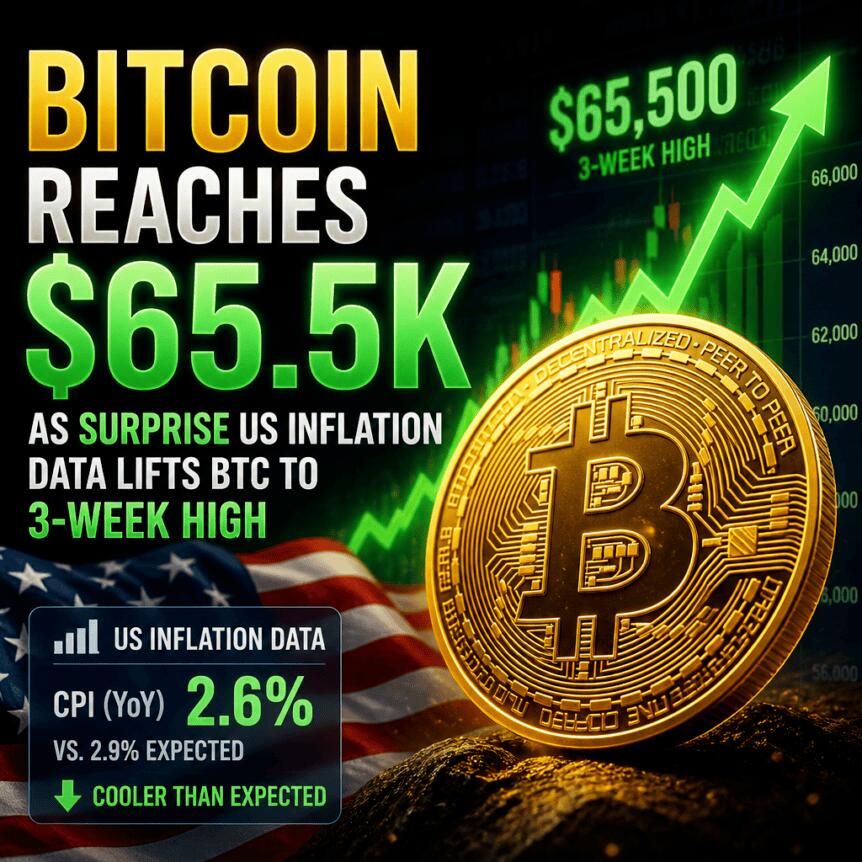
Bitcoin pushed to a fresh three-week high on Wednesday, riding a wave of relief after US inflation data cooled for a second straight session. The move brought BTC/USD to $65,500—its highest level since June 22—while risk assets strengthened as traders recalibrated expectations for Federal Reserve policy.
The rally, however, has not erased caution among market participants. Traders highlighted nearby liquidity hurdles and pointed to historical price behavior around key moving-average levels, suggesting Bitcoin could face renewed selling pressure if it fails to hold above critical zones.
Key takeaways
- BTC/USD traded up to around $65,500, the highest since June 22, after US Producer Price Index (PPI) data came in cooler than expected.
- The improving inflation picture supported a more favorable tone for risk assets and reduced certainty around near-term Fed rate hikes, according to CME Group’s FedWatch Tool.
- Despite the breakout attempt, traders emphasized tight order-book liquidity levels around $65.6K and $67.2K that could determine whether the move extends.
- Analysts noted Bitcoin is nearing a 50-month exponential moving average (EMA), a technical area that has previously corresponded with rejection during bear-market-style setups.
Bitcoin’s move tracks a cooler inflation print
Price action accelerated after the latest US Producer Price Index reading for June. Per data from the Bureau of Labor Statistics (BLS), the year-on-year PPI rate for final demand was 5.5%, following a 0.3% monthly decrease.
In the BLS release, the agency explained that the June movement in the index for final demand reflected price changes across goods and services: “the index for final demand goods… fell 1.4 percent,” while “the index for final demand services moved up 0.2 percent.” The PPI report is available via the BLS official news release.
The PPI data followed Tuesday’s Consumer Price Index (CPI) surprise to the downside, which had already lifted Bitcoin. As earlier coverage noted, CPI came in weaker than expected despite macro pressures, including the US-Iran conflict and its knock-on effects on oil prices.
Market participants interpreted the combination of PPI and CPI softness as further evidence that inflation pressures are easing, which in turn can influence expectations for how quickly—and how aggressively—the Fed will tighten or hike rates. Economist Mohamed El-Erian described the PPI results as “much better-than-expected” and suggested the numbers could boost equities and temper expectations for further interest-rate hikes, in a post on X: elerianm’s update.
Fed expectations shift as traders reprice rate odds
Beyond Bitcoin-specific dynamics, Wednesday’s strength aligns with a broader shift in interest-rate expectations. CME Group’s FedWatch Tool indicated changes to probability assumptions for the September FOMC decision, showing that a 0.25% hike was no longer the single most likely scenario.
That repricing matters for crypto because Bitcoin frequently trades like a high-beta macro asset during periods when funding conditions are expected to loosen or tightening risks appear to fade. When traders perceive a lower likelihood of additional hikes, appetite for risk tends to improve—often translating into more aggressive bids in liquid assets like BTC.
Additional commentary pointed to falling inflation expectations. The Kobeissi Letter referenced bets tracked via Polymarket’s prediction activity, arguing that inflation expectations continued to decline, based on the service’s users’ outlook.
Order-book levels and moving-average resistance in focus
Even with the upside momentum, traders appeared reluctant to declare the rally fully confirmed. Much of the near-term debate centered on whether Bitcoin can clear immediate liquidity pockets and hold them long enough to trigger sustained buying.
Trader Daan Crypto Trades emphasized that liquidity above the current area sits around the $65.6K region and, more importantly, at $67.2K, describing those levels in an X post: Daan Crypto Trades. In the same update, the trader argued that breaking above the $67.2K liquidity zone could convert the move into “a bigger move,” potentially reopening the path toward the $70K-plus area—positioning Bitcoin inside the middle of its commonly referenced $60K–$80K range.
On the technical side, Rekt Capital highlighted that BTC was approaching its 50-month exponential moving average (EMA). In past market cycles, such moving averages can act as inflection points; the argument, tied to “bear-market history,” is that if price behaves similarly, it may face rejection at or near the EMA rather than continuing cleanly higher.
That caution was echoed by trader Killa, who referenced a statistical pattern from the prior 12 months and suggested BTC could “derisk for the remainder of the month” and potentially push back down if the historical behavior repeats.
What to watch next for confirmation or reversal
For traders, the immediate question is whether Bitcoin can build acceptance above the liquidity zones highlighted by market participants—particularly around $67.2K—and whether it can avoid rejection as it tests the 50-month EMA area noted by analysts. With rate expectations still sensitive to incoming data and Fed messaging, the next inflation or central-bank headline could quickly shift the balance again.

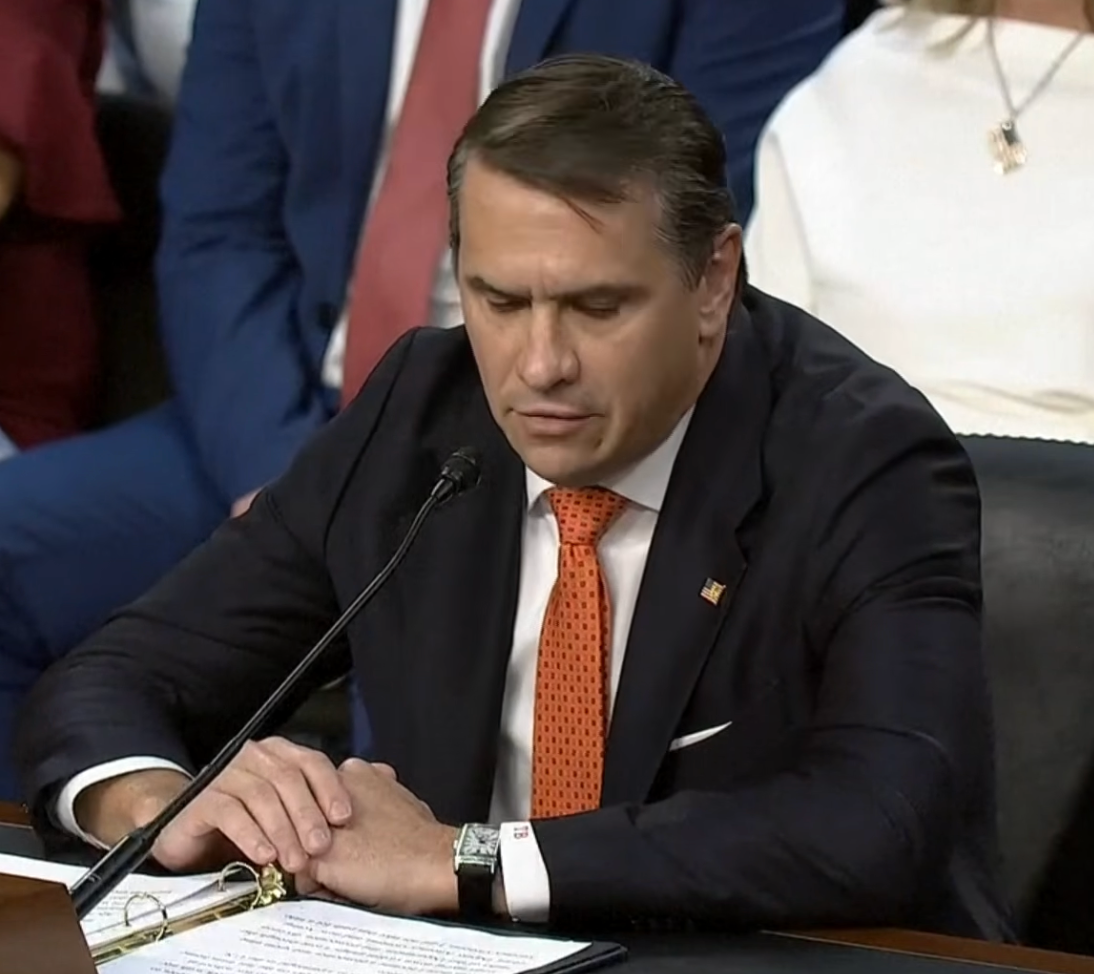
Acting US Attorney General Todd Blanche faced backlash Wednesday over the Justice Department’s (DoJ) enforcement of crypto-related crimes and other actions as President Donald Trump’s former personal attorney appeared before a Senate hearing considering his nomination to lead the agency.
The ranking Democrat, Senator Dick Durbin, used part of his opening statement at the Senate Judiciary Committee hearing to criticize Trump’s AG pick for what he described as “dismantling DoJ’s enforcement team and shutting down ongoing criminal investigations of the crypto industry.”
Blanche was reportedly behind the disbanding of the Justice Department’s crypto enforcement unit in April 2025 as deputy attorney general.
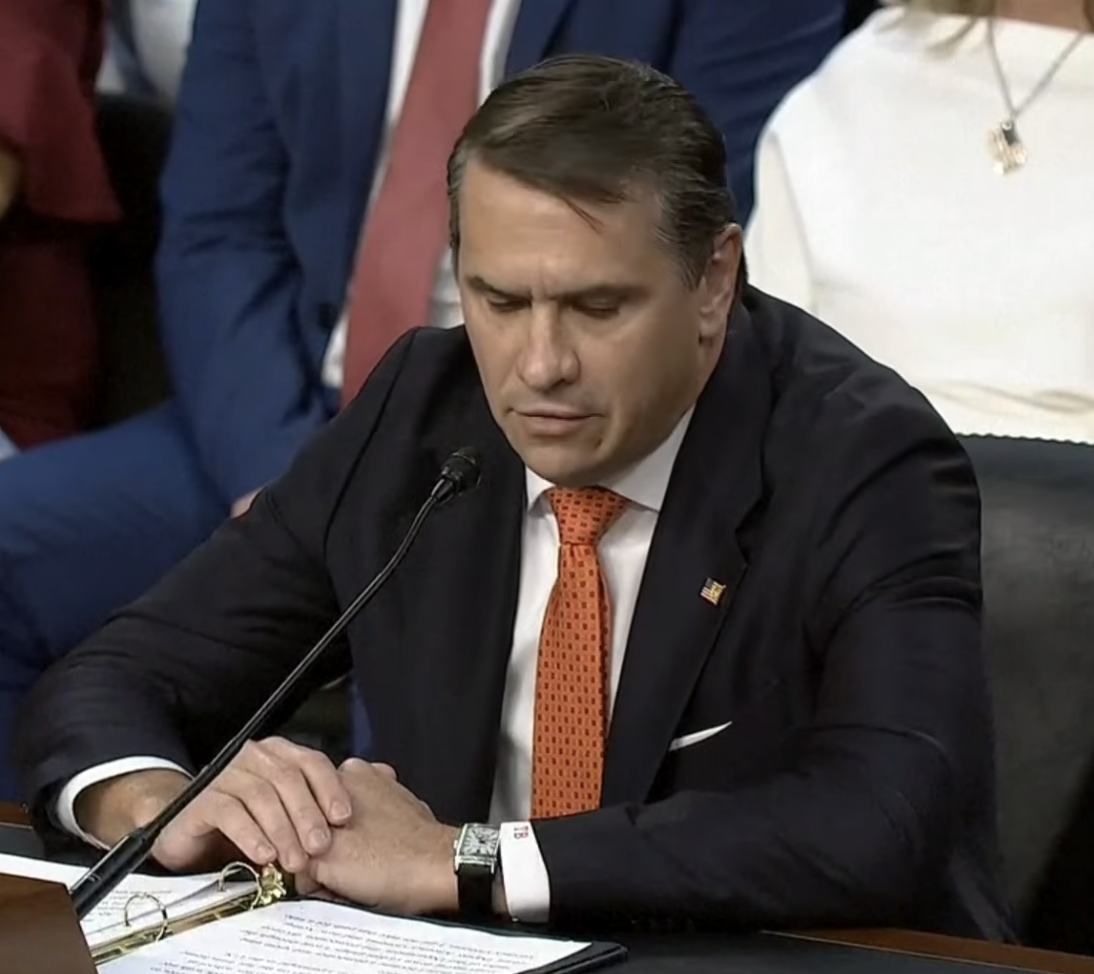
Todd Blanche speaking at his confirmation hearing before the Senate Judiciary Committee on Wednesday. Source: Associated Press
The Illinois lawmaker said that Blanche’s order dismantling the DoJ’s crypto unit enable Trump to earn $1.4 billion from his ties to the industry, including his family’s business World Liberty Financial.
He also accused former Binance CEO Changpeng “CZ” Zhao of “broker[ing] a deal to channel $2 billion” into World Liberty, which led to a presidential pardon. The former CEO agreed in 2023 to plead guilty to one felony charge related to the Anti-Money Laundering (AML) regime at the exchange.
“Every smarmy, suspect deal in this administration has cryptocurrency behind the curtain,” said Durbin.
Senate Republicans need a simple majority of lawmakers present to confirm Blanche as AG should his nomination advance in the judiciary panel. With Senator Mitch McConnell still hospitalized after what his team described as a fall that led to pneumonia, the party has a slim 52-47 margin to confirm Blanche, who faces pushback over the DoJ’s actions on immigration and its crypto policies, claims that he would facilitate Trump’s attacks on perceived enemies and the handling of the Jeffrey Epstein files.
Related: Three US senators oppose CLARITY Act on ethics grounds with vote expected soon
Blanche also faced crypto-related questions from Republican Senator Thom Tillis who said he was “concerned that the Binance CEO got pardoned.” Blanche said that he would review the pardon process if confirmed.
Blanche signals DoJ shift on pursuing coders
The Trump AG pick was behind a 2025 memo “ending regulation by prosecution” in the crypto industry and previously held at least $159,000 worth of digital asset-related investments before divesting them to his children and grandchildren.
He has been serving as acting US Attorney General since Pamela Bondi’s firing in April, telling crypto holders shortly after his appointment that officials would not pursue cases into blockchain developers who were not responsible for illicit activity on platforms.
”[I]f you are developing software, if you are a coder, if you are part of that process and you are not the third-party user, and you are not helping and knowing the third party is using what you developed to commit crimes, you are not going to be investigated and not going to be charged,” Blanche said at the Bitcoin 2026 conference.
The department still has ongoing cases against developers behind platforms allegedly used for illegal activities. Federal prosecutors are expected to retry Tornado Cash co-founder Roman Storm later this year after a jury failed to reach a verdict on two charges in 2025.
Magazine: Will the crypto lobby’s $189M campaign get CLARITY over the line?
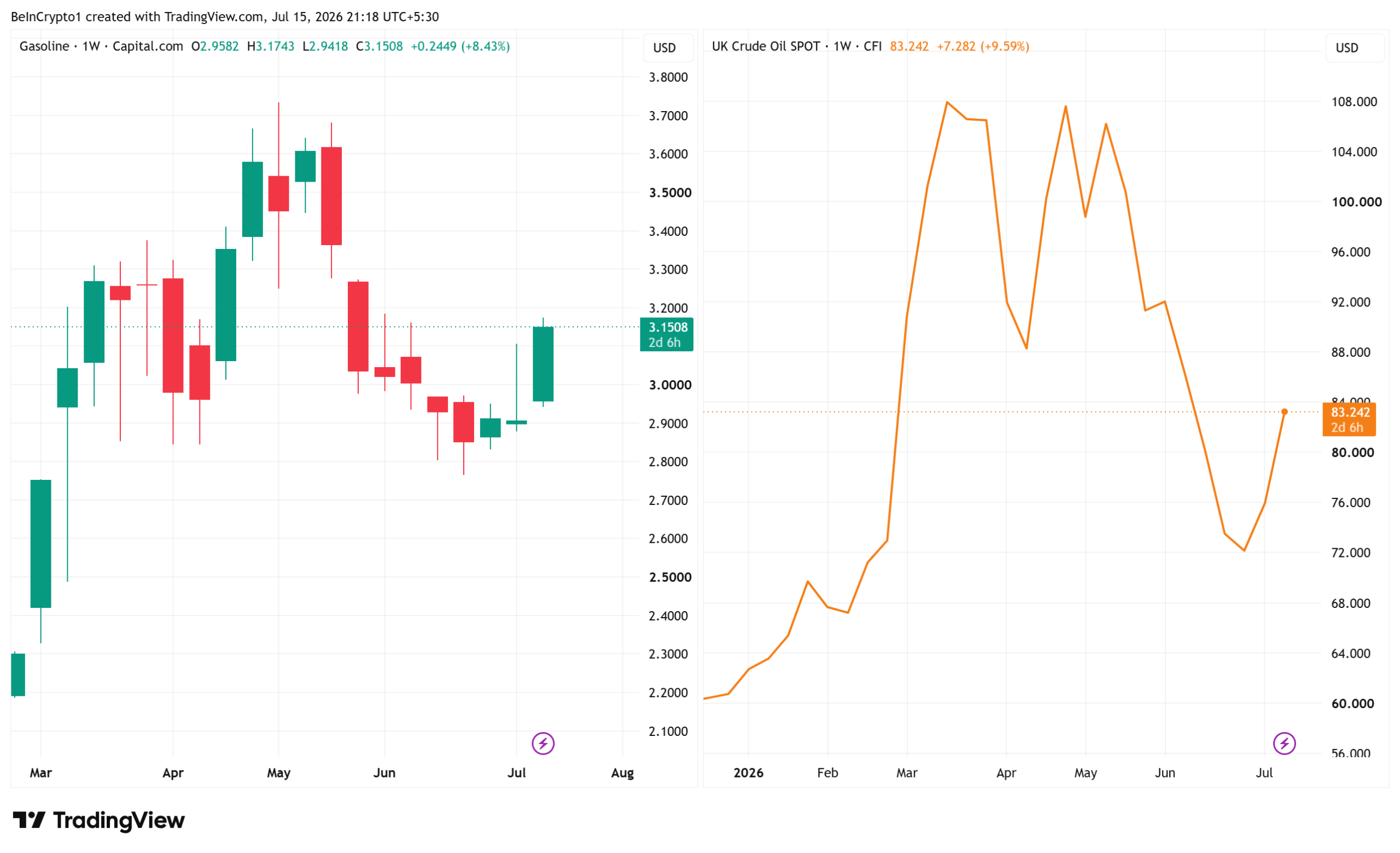
June’s inflation slowdown came largely from one source: cheaper fuel. Gasoline prices fell 12% during the month, helping pull both producer and consumer prices lower. But that relief may already be fading. Brent crude has risen 18% in one week since the Strait of Hormuz blockade returned.
The producer price index fell 0.3% in June, while consumer prices dropped 0.4%. Both figures benefited heavily from lower energy costs, which renewed fighting between the US and Iran is now reversing.
How Gasoline Drove June’s Price Decline
Gasoline’s 12% drop accounted for almost two-thirds of the 1.4% fall in prices for final demand goods. Without cheaper fuel, producer prices would have increased slightly.
The decline spread further through the supply chain. Prices for processed goods used by businesses fell 1.2%, according to the Bureau of Labor Statistics. Unprocessed materials dropped 4.1%.
Services remained more resistant to price declines. Trade margins rose 0.4%, while core producer prices increased 0.2% from the previous month.
Much of the energy relief followed the Islamabad Memorandum, a June 17 ceasefire that paused the US-Iran war. Brent crude had surged 63% during the first month of the conflict and reached $118 in late March.
By July 1, it had fallen back to $70, wiping out its wartime gains. The latest escalation is now pushing prices higher again.

Follow us on X to get the latest news as it happens
The Hormuz Blockade Rewrites the Energy Math
That foundation cracked on July 8, when the truce collapsed after Iran allegedly struck commercial ships. President Donald Trump then announced a reinstated naval blockade on Monday.
US Central Command said the blockade took effect at 4 p.m. ET on Tuesday. Brent rose 9.6% on Monday alone and traded above $85 by Wednesday.
The strait carries roughly a fifth of the world’s oil. MarineTraffic recorded 57 transits from Friday through Sunday, down more than 50% from the prior week. Before the war began in February, Hormuz handled roughly 130 transits a day.
Washington disputes the shortage story. The Department of Energy said 8.5 million barrels crossed the strait on Sunday with military assistance, matching typical flows.
However, the usual shock absorber is missing this time. The Strategic Petroleum Reserve sits at its lowest level since 1983. Sparta Commodities analyst June Goh warns the remaining buffer is nearly empty.
“The mini-glut of oil has now evaporated, with a fresh eye of a potential of disruptions from the Bab el-Mandeb Strait if Houthis are joining the attacks,” she noted.
Governments have few cushions left. A G7 discussion earlier this year weighed releasing up to 400 million barrels during a previous spike. Meanwhile, TD Securities strategist Bart Melek sees $100 oil as possible if physical shortage risks become real.
What It Means for the Fed
Fed Chair Kevin Warsh, in office since May, told Congress this week that he will not tolerate persistently elevated inflation. Markets currently price an 87.7% chance of a July 29 hold.
A renewed oil shock could revive the Fed hike bets that faded after this week’s soft data. The base effect cuts the same way. Gasoline remains nearly 43% higher than a year ago, so June’s relief came off an elevated base.
“There’s no near-term pressure on the Fed, but oil is in the driver’s seat over the longer term. Energy saved the day in June, but that might become ancient history if the Strait of Hormuz doesn’t open soon,” said David Russell, global head of market strategy at TradeStation, via AP
The July prints will settle the question. If Hormuz stays closed, the disinflation that crushed hike odds may prove a truce artifact, not a trend.
The post US Inflation Fell on Cheap Gas, But That Relief is Already Fading appeared first on BeInCrypto.
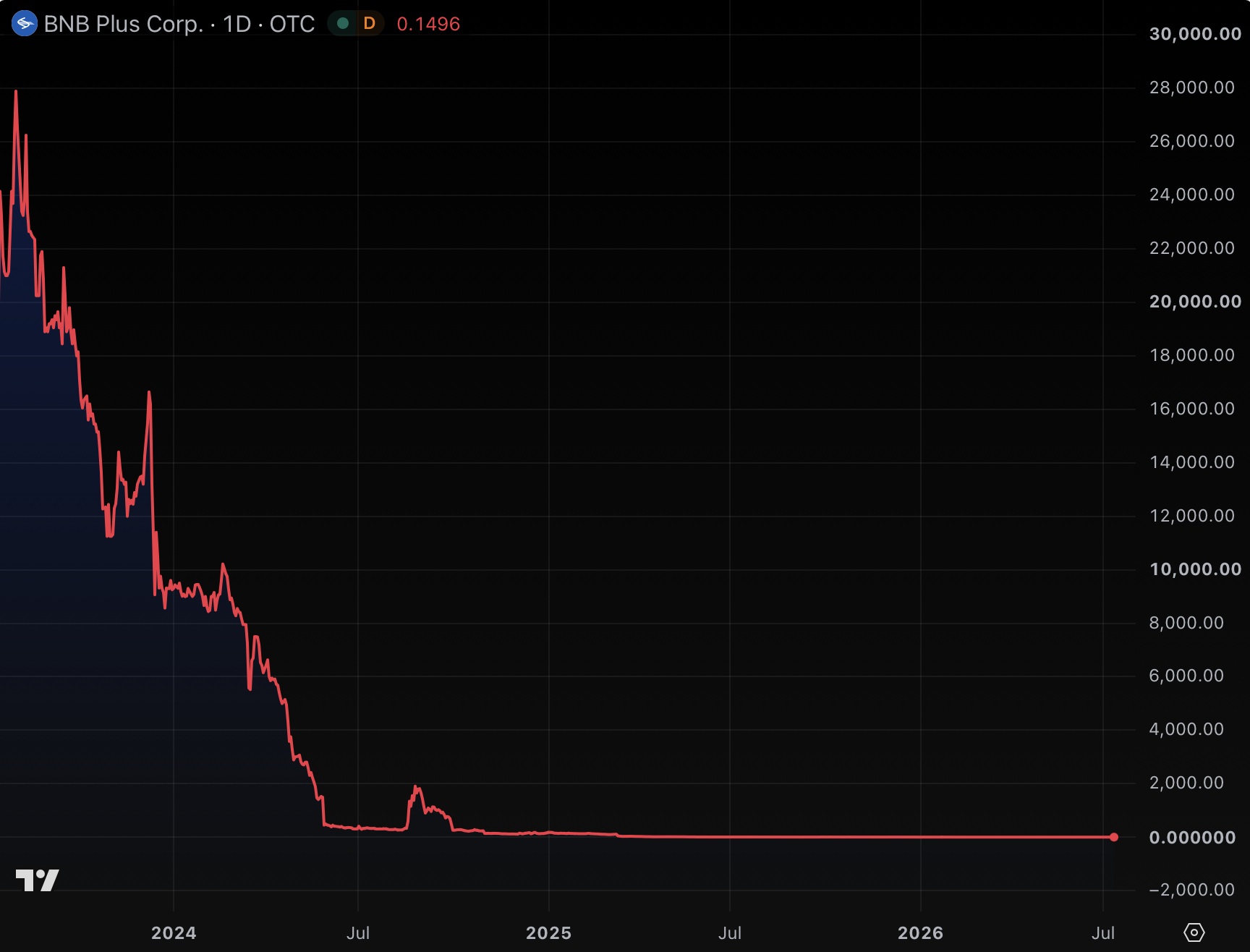
Nasdaq has suspended trading in BNB Plus, a digital asset treasury (DAT) company that burned shareholders on the dream of making money on Binance’s blockchain.
The stock closed its final session at $0.16, down 99.99% on a split-adjusted basis in three years.
Its reinvention from a biotech stock to a BNB-holding DAT lasted less than 10 months and cost common shareholders nearly everything.
Shares are now downlisted onto OTC Markets Group’s venture tier, under the same ticker symbol. It plans to appeal the delisting via Nasdaq’s Listing and Hearing Review Council, but the suspension is immediate while that appeal is underway.
Not embarrassed, BNB Plus’s delisting announcement stubbornly describes its continued intention to pursue “sophisticated DeFi yield generation with Binance-native opportunities, unlocking access to high-performance digital assets.”
The opportunities that its operations are excluded from now includes the Nasdaq stock exchange.
Read more: After crashing 99.9%, this BTC treasury stock crashed 99.9% — again
‘Innovation is in our DNA’
BNB Plus was formerly known as Applied DNA Sciences. It spent years selling DNA tags that authenticated textiles and other products in supply chains.
James Hayward, its chief executive of two decades, retired in June 2025 with a $450,000 separation payment. Days later, the company cut 27% of its workforce.
By late September, the company announced $27 million in financing to amass a BNB treasury. Investors paid in cash, stablecoins, and trust units in exchange for new shares and warrants.
SkyBridge Capital founder Anthony Scaramucci signed on as an advisor. Multi-year service deals promised asset manager Cypress LLC fees on BNB Plus’s assets and a cut of its assets, while a second deal handed Cypress Management LLC stock warrants over nearly a tenth of the company.
New CEO Clay Shorrock said at the time, “We’re proud to integrate our digital asset treasury strategy with our best-in-class PCR-based nucleic acid production solutions to accelerate growth and deliver long-term shareholder value.”
Needless to say, those two businesses failed to complement one another. Surprising no one, BNB has almost nothing to do with DNA.
The BNB treasury strategy was obviously an attempt to capitalize on a momentary fad for DATs that peaked in early summer 2025.
For a brief moment, investors were bullish about the bizarre pivot. Shares surged more than 50% the day before the formal announcement in late September 2025, then jumped another 70% once the press release landed.
Late to the party, its stock price soon settled back near where it started and then continued its downward slide.
Five reverse splits couldn’t prevent a Nasdaq delisting
After its BNB-focused financing placement closed in October, the company assembled about 15,500 BNB in tokens and trust units.
It swapped its ticker from APDN to BNBX in October, putting BNB front and center. It renamed to BNB Plus Corp by November. By December, it deployed an additional $3 million into BNB.
The price drifted lower. By March, BNBX had spent weeks below $1, and Nasdaq issued a deficiency notice, per the company’s own disclosure.
The fall below $1 was in spite of years of efforts by the company to manufacture a share price above $1. In fact, Applied DNA has reverse split five times: 1:60 in 2014, 1:40 in 2019, 1:20 in 2024, 1:50 in March 2025, and 1:15 in June 2025.
Even after all those adjustments, it last traded below $0.15 anyway.
BNB Plus’s mNAV: 0.09x
DAT companies grade themselves on a so-called multiple-to-Net Asset Value or “mNAV,” the ratio of their market capitalization to the value of their crypto holdings.
At an mNAV above 1x, investors are paying a premium for the company relative to its treasury. Below 1x, they are bearish on the company’s ability to grow.
BNB Plus’s own dashboard shows roughly 18,700 BNB and $3.9 million in cash against a market cap near $814,000, grading itself an embarrassing mNAV of 0.09x.
In April 2026, its board launched a strategic review contemplating another pivot to AI. In May, the company secured commitments for $4.1 million of convertible preferred financing to keep the lights on while it decides.
The company’s X account has been silent since January 5. Its bio still promises that “$BNBX is built to outperform simple BNB buy-and-hold strategies, delivering investors more BNB tokens over time.”
Got a tip? Send us an email securely via Protos Leaks. For more informed news and investigations, follow us on X, Bluesky, and Google News, or subscribe to our YouTube channel.

Ostium, a decentralized perpetual futures exchange, has been hacked on the Arbitrum network via a suspected private key compromise of its oracle signer.
A number of crypto security firms flagged suspicious outflows, with estimates loss estimates ranging from $18 to over $23 million.
Ostium’s official X account confirmed an “issue” with its OLP vault shortly thereafter.
Read more: Supra patched oracle on 11 other chains before $9M Hedera exploit
Ostium allows for trading perpetual futures of stocks, commodities, and forex, and held approximately $63 million of assets, pre-hack, according to DeFiLlama data.
Its OLP vault acts as the protocol’s settlement layer, into which users deposit USDC to open trades on the platform.
Decurity, highlighting an example transaction, explained that “the attacker fed self-signed favorable prices to open and immediately close trades at a profit, draining ~11.86M USDC from the OstiumVault.”

Read more: Cap ‘stabledrop’ U-turn sees cUSD drop $23M, founder denies self dealing claims
DeFi dangers
The loss comes just four days after $9 million was lost from Bonzo Finance on the Hedera network, also due to an exposed price oracle.
Supra, the firm behind the vulnerable oracle had previously patched deployments on 11 other chains in the days leading up to the exploit.
Last week, Summer Finance was hacked, also via a price manipulation attack, losing $6 million. It’s announced today that it will not be able to recover from the incident and will be winding down.
Read more: DeFi platform Summer Finance loses $6M in vault exploit
In the first half of 2026, the DeFi sector has seen over $900 million lost in 87 incidents, with over 80% of the losses caused by compromised private keys or bridge hacks.
Of these, two incidents make up the majority, Drift Protocol and LayerZero/KelpDAO. Following the latter, the contagion threat led Arbitrum’s Security Council to step in and freeze over $70 million of stolen funds.
It remains to be seen whether Ostium’s loss warrants a similar reaction.
Got a tip? Send us an email securely via Protos Leaks. For more informed news and investigations, follow us on X, Bluesky, and Google News, or subscribe to our YouTube channel.
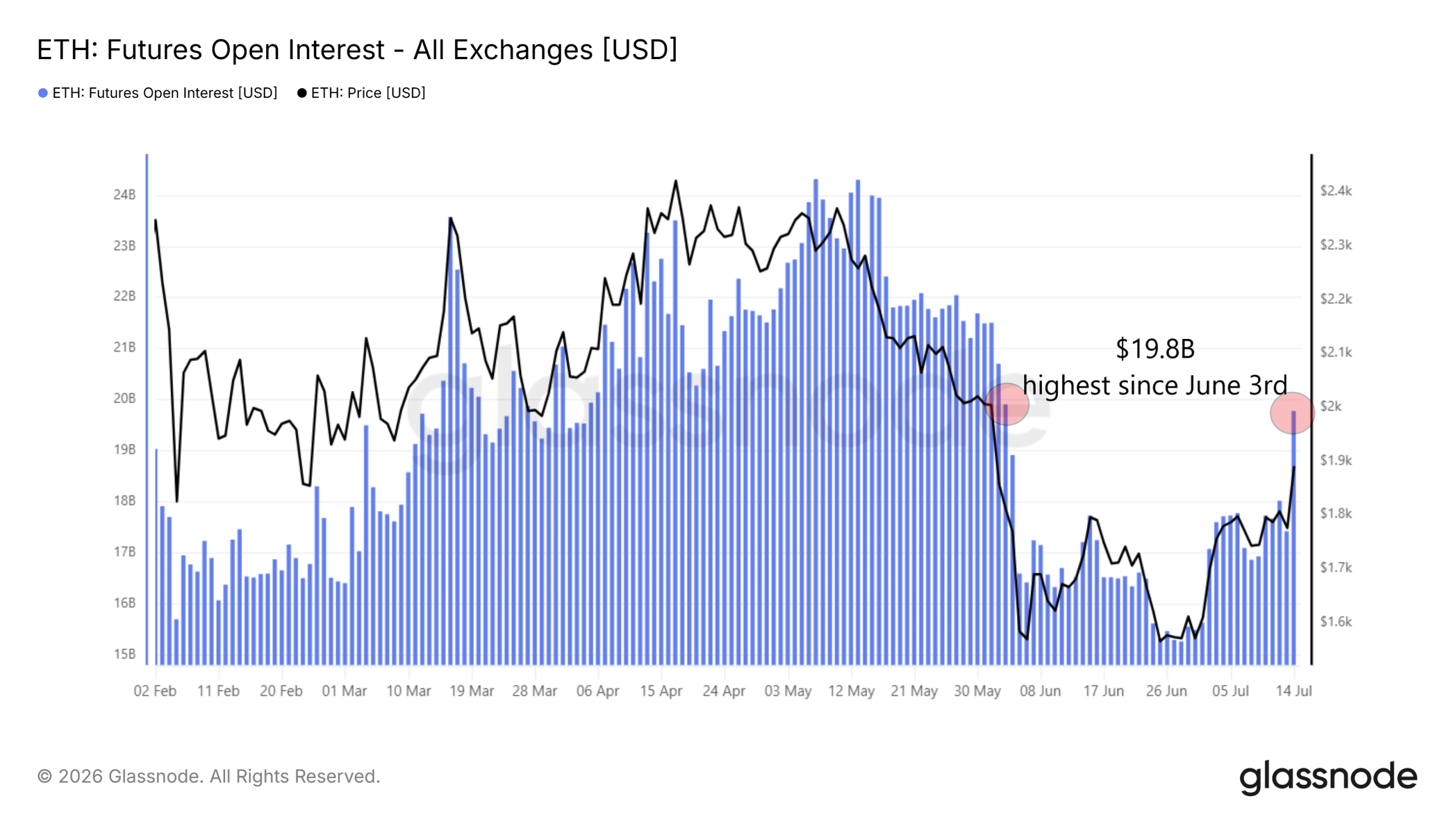
The Ethereum (ETH) price broke out of a descending trendline that had capped it since the all-time high, while futures open interest climbed to $19.8 billion. ETH trades near $1,928, up 5.2% in the last 24 hours.
Derivatives positioning, liquidation data, and long-term chart structure now point in the same bullish direction. However, one missing ingredient still keeps the breakout unconfirmed.
Futures Traders Return as Open Interest Nears $20 Billion
Glassnode data shows Ethereum futures open interest across all exchanges spiked to $19.8 billion on July 14. That is the highest reading since June 3, when a market-wide deleveraging event reset positioning.
Open interest measures the total value of outstanding futures contracts. Rising open interest alongside a rising price suggests new capital is entering the market rather than shorts simply covering.

The metric had collapsed to approximately $15.5 billion in late June. Its sharp recovery indicates traders are returning to ETH derivatives with conviction. Elevated positive funding on Ethereum supports the same reading.
Whale trader Machi Big Brother reportedly opened a $24.3 million ETH long at 25x leverage, with liquidation set at $1,833.
A drop back below the June range would flip this signal and suggest the new positioning was short-lived.
Long Liquidations at a Yearly Low of 4% Point to a Short Squeeze
The composition of recent liquidations strengthens the bullish case. Ethereum futures long liquidations dominance fell to 4%, its lowest level in a year, according to Glassnode.
In plain terms, only 4% of liquidated positions were longs. The remaining 96% were short traders forced out as the price pushed higher.

Still, squeeze-driven rallies carry a caveat. Forced short covering can exaggerate upside moves, as the June 3 liquidations cascaded to exaggerate the downside. Spot demand must follow for the move to hold.
A return of dominance above 50% would indicate that longs are absorbing damage again and would weaken the momentum signal.
Ethereum Price Holds the Trendline From the 2022 Bottom
The weekly chart shows why the current level matters so much. An ascending trendline drawn from the June 2022 bottom, respected throughout the previous bull market, held near $1,600 once again.
The bounce also occurred inside a long-term green demand zone that has served as support four times since early 2023. Moreover, the area coincides with the 0.786 Fibonacci retracement of the entire cycle at $1,754.

This triple confluence of trendline, horizontal support, and Fibonacci level makes the zone a structural line in the sand. The next major resistance sits far above, at the 0.618 Fibonacci retracement of $2,438.
ETH Price Prediction as the $2,000 Test Looms
On the daily chart, Monday’s 6.5% green candle broke above a descending trendline in place since the all-time high. That line had rejected the ETH price five times before this breakout.

The daily Relative Strength Index (RSI) confirms the shift in momentum. It broke out of its own descending trendline, drawn from July 2025, and now sits just below 65.

One warning sign remains. Volume has been declining during the recovery, so the breakout lacks confirmation from participation. Analysts watching the ETH/BTC ratio see early signs of a broader Ethereum comeback that could fill the missing demand.
Immediate resistance lies between $1,900 and $2,000. A confirmed daily close above that zone on rising volume could open the way toward $2,438, nearly 30% above the current price.
On the downside, $1,754 is the critical support. Losing it would expose the trendline near $1,600, and a weekly close below that level would invalidate the bullish structure entirely.
Either volume arrives to validate the breakout, or ETH returns to the zone that has saved it four times already.
The post Ethereum Breaks Key Resistance Toward $2,000: How Far Will ETH Rally? appeared first on BeInCrypto.

Solana has developed into a high-throughput network recognized for rapid transaction processing and minimal fees. Here, Claude AI predicts an explosive Solana price rally that could drive notable price increases by the end of 2026.
Recent on-chain data shows Solana maintaining high levels of activity, with weekly transaction volumes reaching record figures and strong participation in decentralized exchanges. Memecoin trading has contributed significantly to this activity, drawing both retail users and increased liquidity into the network.
Analysts have published various projections for Solana in 2026, including scenarios where the price could reach $500 under favorable conditions such as greater institutional adoption and continued technical improvements. These outlooks are based on Solana’s existing infrastructure advantages and its role in supporting fast and low-cost applications.
Don’t Miss Out on Our $1,000 USDT Airdrop on ByBit
Solana’s Ecosystem and What Claude AI Predicts
Solana processes thousands of transactions per second at very low cost. This technical profile has supported strong activity in memecoins. One recent example is The Black Bull (ANSEM), which recorded a nearly 20,000% increase in seven days during late June 2026 and later reached a market capitalization above $95 million.
Claude AI predicts that the combination of network performance and ongoing memecoin activity could contribute to further price momentum through the remainder of the year. Claude AI also predicts that Solana’s established advantages in speed and cost may continue to attract users and developers as market conditions evolve.

Current analyst projections for Solana in 2026 show a range of possible outcomes. Some models place SOL between $75 and $500 by the end of the year, with the higher end representing a bullish scenario that would require sustained institutional inflows, wider payments adoption, and successful delivery of network upgrades such as Alpenglow. From recent trading levels near $75–$85, reaching $500 would represent a substantial increase driven by continued ecosystem growth.
Discover: The Best Token Presales
Bitcoin Hyper Combines Bitcoin Architectures with Solana Throughput
Bitcoin Hyper is a Bitcoin Layer 2 solution that uses Solana’s Virtual Machine for execution. It aims to provide faster and lower-cost transactions on a Bitcoin-secured base layer through zero-knowledge proofs and settlement on Bitcoin Layer 1. The project supports use cases including payments, decentralized applications, and memecoins.
As of today, the presale is currently active. Participants can purchase HYPER tokens through easy steps. Hold SOL or another accepted asset in a compatible wallet.
Visit the presale page, connect the wallet, select the purchase amount, and complete the transaction. A buy-and-stake option is also available at a huge 35% APY. Card payments are also supported as an alternative method.
Token allocation includes 30% for development, 25% for treasury, 20% for marketing, 15% for rewards, and 10% for exchange listings. Over $32 million has been raised to date. The presale remains open but is subject to change based on demand.
Claude AI predicts that projects built on high-performance infrastructure may see increased relevance if market conditions improve, as outlined in recent analyses.
Research Bitcoin Hyper at the official presale page.
Discover: The Best Crypto to Diversify Your Portfolio
The post The Most Powerful Claude AI Model Predicts Explosive Solana Price Rally appeared first on Cryptonews.
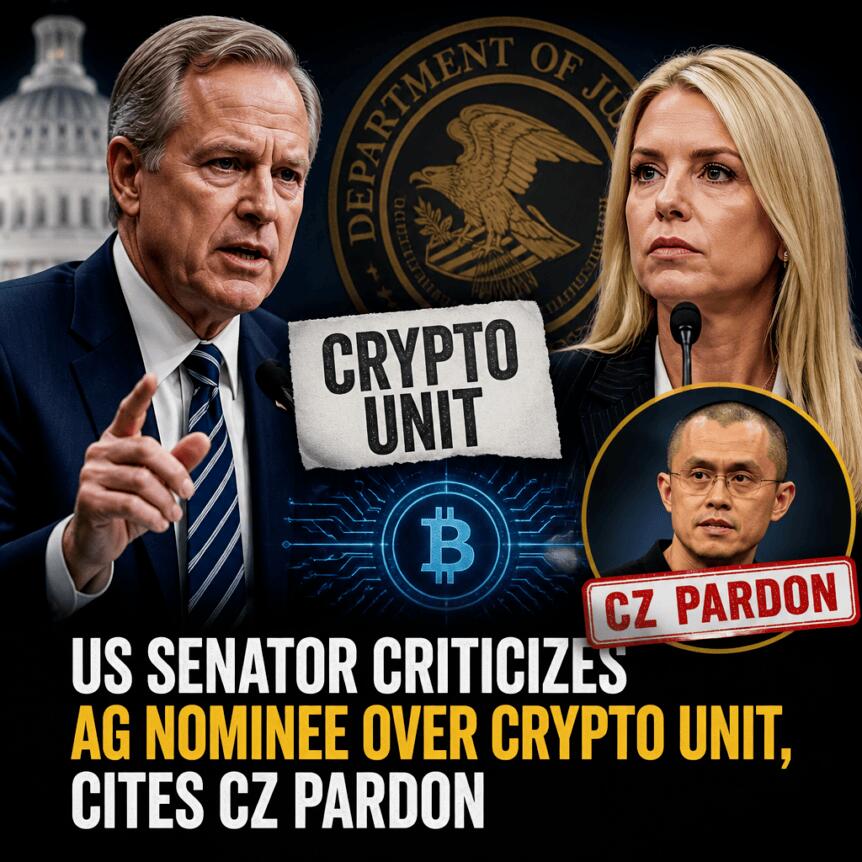
Acting U.S. Attorney General Todd Blanche faced sharp criticism at a Senate Judiciary Committee hearing on Wednesday as lawmakers weighed his nomination to lead the Justice Department. The backlash centered on how the department has pursued— or deprioritized—crypto-related enforcement, particularly in cases involving the broader developer ecosystem.
Senator Dick Durbin, the ranking Democrat on the committee, used portions of his opening statement to accuse Blanche of weakening DOJ’s crypto enforcement capacity. Durbin referenced Blanche’s reported role in dismantling a DOJ crypto enforcement unit in April 2025 while he was deputy attorney general, arguing that the move left ongoing investigations effectively “shut down” during the Trump administration’s push toward different enforcement priorities.
Key takeaways
- Durbin’s criticism ties Blanche’s prior DOJ actions to a broader shift in crypto enforcement, including alleged “dismantling” of the department’s crypto unit.
- Questions from Republicans—including concerns about Changpeng “CZ” Zhao’s presidential pardon—highlight ongoing political scrutiny of crypto outcomes.
- Blanche signaled a framework that aims to avoid charging developers who are not implicated in third-party wrongdoing.
- The committee vote math remains tight, with the confirmation process dependent on the Senate session’s practical majority rules.
Durbin’s attack on Blanche’s crypto enforcement record
At Wednesday’s hearing, Durbin argued that Blanche’s decisions as deputy attorney general enabled President Donald Trump to benefit financially from ties to the crypto industry. Durbin referenced reports that Blanche helped disband DOJ’s crypto enforcement unit in April 2025, citing Fortune’s reporting on the restructuring.
Durbin also alleged that Trump’s business interests, including family-linked World Liberty Financial, were connected to deals involving cryptocurrency. He further accused Binance’s former CEO Changpeng “CZ” Zhao of “broker[ing] a deal to channel $2 billion” into World Liberty—an accusation Durbin tied to Zhao’s later presidential pardon. The hearing remarks referenced Zhao’s 2023 agreement to plead guilty to a felony charge related to the exchange’s Anti-Money Laundering (AML) compliance.
Blanche’s nomination comes as the political stakes around DOJ leadership and enforcement priorities remain high. In addition to crypto policy, Republicans and Democrats are also disputing DOJ’s broader approach to issues such as immigration enforcement and how the department is handling sensitive political matters.
Confirmation dynamics: narrow path in the Senate
Blanche’s path depends on committee progress and then a Senate confirmation vote if his nomination advances. As of the hearing, the Senate Republican leadership, including Senator Mitch McConnell, faced an operational challenge: McConnell was still hospitalized after a fall described by his team as resulting in pneumonia. That uncertainty contributes to a slim margin in the Senate—described as 52-47 in favor of Republicans—meaning procedural details about attendance could become decisive for confirmation.
While Republicans hold the majority needed for a confirmation if a simple majority of lawmakers present supports the nominee, the nomination also faces targeted scrutiny. The hearing record suggests that lawmakers are not only debating the technical enforcement posture toward crypto, but also broader concerns about whether DOJ leadership will align with the administration’s political goals.
Blanche’s response: avoiding cases against “coders” not tied to wrongdoing
In addition to the political debate, Blanche addressed how DOJ intends to treat crypto software developers. According to a DOJ memo referenced at the hearing and later described in related coverage, the administration’s approach was framed as moving away from enforcement that “regulates by prosecution,” with the memo focused on shifting how the DOJ engages with the crypto sector. The memo was published by DOJ (see this DOJ document).
Blanche told crypto holders shortly after taking the acting role that officials would not pursue cases into blockchain developers who were not responsible for illicit activity on platforms. In remarks carried during industry coverage—specifically at the Bitcoin 2026 conference—Blanche indicated that DOJ would not investigate software developers when the developer is not a third-party user and is not knowingly helping someone commit crimes.
As quoted in the underlying reporting, Blanche described the distinction as follows: if someone is developing software or coding as part of the process, and is neither a user nor knowingly enabling third parties who commit crimes, then DOJ would not investigate or charge them. That is a notable signpost for developers and open-source contributors, because it suggests DOJ’s enforcement posture may be more carefully calibrated around scienter and direct involvement rather than broader theories that could sweep in peripheral actors.
What remains uncertain: ongoing prosecutions and “platform” cases
Even with Blanche’s emphasis on limiting charges against uninvolved coders, the department is not abandoning crypto enforcement altogether. The reporting around the hearing notes that DOJ still has ongoing cases against developers tied to platforms allegedly used for illegal activities. In other words, the line Blanche drew in public comments appears designed to narrow where DOJ looks for culpability, rather than eliminate enforcement.
Federal prosecutors are also expected to retry Tornado Cash co-founder Roman Storm later this year after a 2025 jury failed to reach a verdict on two charges. That procedural detail matters because it indicates that core enforcement actions connected to sanctioned or laundering-linked services are continuing through the courts, even as lawmakers debate whether the DOJ’s approach to developers is shifting.
For readers, the next watchpoint is whether Blanche’s confirmation will lead to measurable changes in charging decisions—especially how prosecutors apply intent and involvement standards to developers. The hearing made clear that political conflict and enforcement strategy will run in parallel, but the real test will be in the cases that move forward and those that get narrowed or dismissed.

Solana (SOL) joined the broader crypto rebound after cooling US inflation data, climbing back toward $80.
According to some analysts, this could be the beginning of a more substantial rally that might push the price well beyond the psychological level of $100.
SOL Turns Bullish
The renowned analyst Ali Martinez claimed that the Average True Range (ATR) stop has flipped below price, marking the first SuperTrend buy signal on Solana since October 10.
He believes that if buying pressure continues to build, SOL could surge toward $96 and even $121. At the same time, Martinez paid close attention to the $60 level, noting that a drop below that support would invalidate the bullish setup.
Michael van de Poppe also chipped in, suggesting that the asset is at an important crossroads. He thinks that if SOL manages to keep its current valuation at around $77, it may trigger a much more substantial upswing. On the other hand, he warned that a drop below $73 could trigger a retest of the lows in the coming weeks.
Bloomberg’s James Seyffart pointed to a key regulatory development that may swing momentum toward the bulls. He revealed that Wall Street giant Morgan Stanley has filed updated documents to launch a Solana ETF with the ticker MSOL and a 0.14% fee. An eventual introduction of such a financial vehicle could draw additional investors into Solana’s ecosystem and benefit the price.
It is important to note that Morgan Stanley wouldn’t be the only behemoth offering that kind of a product, as Bitwise, Fidelity, Grayscale, VanEck, Franklin Templeton, Invesco, 21Shares, and Canary Capital have already jumped on the bandwagon. The cumulative net inflow into spot SOL ETFs to date has reached almost $1.15 billion.
Another Positive Factor
The prolonged bear market and unmet ecosystem expectations have recently pushed Solana’s fear, uncertainty, and doubt (FUD) to its highest level for 2026.
This means that sentiment among market participants is extremely negative, and most weak-hand investors have already exited. The development could be interpreted as bullish, since the price often reverses when fear peaks, suggesting that the cycle’s bottom might have been formed.
The post Key Solana (SOL) Indicator Finally Flashes a Buy Signal: Can Bulls Push to $120? appeared first on CryptoPotato.
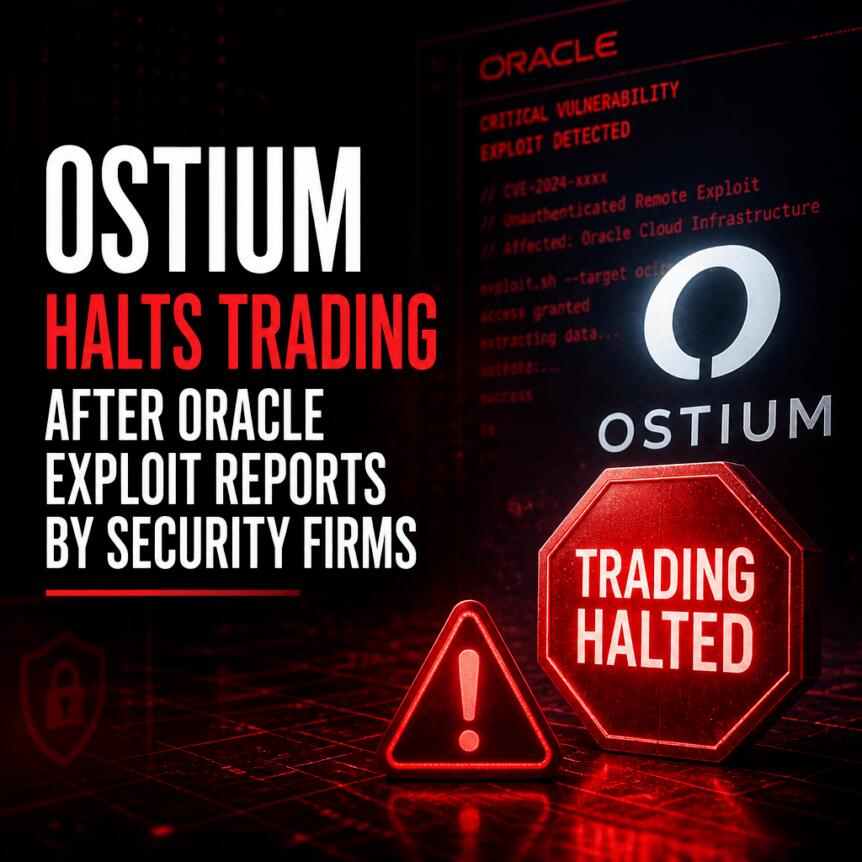
Ostium, a decentralized perpetuals trading protocol built on Arbitrum, has paused all trading after security firms reported what they described as an exploit tied to the protocol’s OLP liquidity vault. Blockaid and CertiK both said the incident appeared to stem from a compromise of Ostium’s oracle infrastructure, which feeds external price data into the platform.
Blockaid estimated losses at around $18 million, while CertiK put the figure closer to $22 million. Ostium said it identified an issue affecting the vault and is investigating, but it has not yet confirmed the cause or independently verified the loss estimates.
Key takeaways
- Ostium paused trading after reporting an issue in its OLP liquidity vault.
- Two security firms diverged on losses: Blockaid estimated ~$18M; CertiK estimated ~$22M.
- The suspected root cause is oracle compromise, according to Blockaid and CertiK.
- Ostium urged users to revoke approvals for its contracts while it investigates.
Trading halted and user action requested
On X, Ostium announced it was pausing all trading after identifying a problem affecting the vault. In a subsequent update, the protocol recommended that users temporarily revoke approvals for its contracts “until we can further investigate the recent incident,” framing the guidance around user security.
Ostium’s statements indicate the team has not concluded what happened. The protocol also said it is still investigating the matter and has not confirmed the precise cause behind the exploit or the size of the losses referenced by external security firms.
For traders and liquidity providers, these steps matter because approval management can be directly relevant to how funds could be moved or accessed by smart contracts. Until the protocol provides a more detailed technical assessment, users are essentially operating on partial information—security firm analysis on one side and Ostium’s ongoing review on the other.
Security firms point to oracles, not just smart-contract bugs
Blockaid and CertiK attributed the apparent incident to a compromise of Ostium’s oracle system. Oracles are the mechanism that translates external data—commonly asset prices—into onchain inputs. When an oracle is manipulated or fails, it can distort how a protocol prices assets or calculates settlement conditions, potentially enabling exploits even when core smart contracts are functioning as designed.
Blockaid’s estimate of roughly $18 million in losses and CertiK’s estimate of about $22 million underline that there may be uncertainty in how the damage is measured—particularly in DeFi incidents where attackers can move funds across multiple steps and venues before or after the exploit is detected.
The gap between the estimates also signals why protocols tend to pause operations quickly: with incomplete visibility, the safest near-term action is to stop new trading activity while the affected contracts and oracle pathways are examined.
What Ostium offers—and why the vault issue is central
Ostium is an onchain perpetuals platform for leveraged trading, offering exposure to 75 trading pairs across categories that include stocks, ETFs, commodities, indices, foreign exchange, and cryptocurrencies. Its deployment on Arbitrum places it within the broader wave of offchain-scale improvements offered by Ethereum-compatible networks, but security remains a cross-chain concern: the protocol’s onchain design still depends on offchain components such as oracle data.
The reported issue is specifically linked to Ostium’s OLP liquidity vault. Liquidity vaults are typically used to manage pooled assets that can back trading positions and related settlement flows. If an oracle compromise leads to incorrect accounting—such as mispricing, liquidation logic manipulation, or unfair transfers—vaults can become the conduit through which value is extracted.
DeFi hacks keep targeting infrastructure
The Ostium halt is another reminder that DeFi incidents continue to be persistent even as the industry invests in security tooling and formal best practices. DeFiLlama data cited by Cointelegraph indicated that crypto hacks caused nearly $630 million in losses during April, the highest monthly total since February 2025. DeFi protocols accounted for the majority of that figure, with exploits at KelpDAO and Drift Protocol contributing more than 80% of the April total.
In recent research and commentary, security observers have argued that the threat focus is shifting. Instead of only exploiting weaknesses in smart contracts directly, attackers increasingly go after offchain infrastructure—particularly oracle systems, privileged access controls, and key management processes. That pattern aligns with the Ostium incident as described by Blockaid and CertiK.
Concerns extend beyond immediate technical risk. The repeated occurrence of these incidents has fed questions about whether DeFi is ready to support institutional participation at scale. Earlier coverage highlighted that bridges and other connecting components remain a major security challenge for the sector, and that scaling DeFi for broader adoption requires more than yields—it requires credible operational resilience.
There are also economic constraints. As Cointelegraph previously reported, shrinking DeFi yields can make security costs harder to justify, and institutions may struggle to quantify hack risk versus expected returns. In a May conversation cited by Cointelegraph, the CEO of smart contract security firm Statemind and Symbiotic co-founder Misha Putiatin said institutions increasingly find it difficult to price hack risk, which can reduce appetite for sector exposure despite rising interest in blockchain-based finance.
What to watch next
Investors and users should monitor whether Ostium releases a fuller incident report that clarifies how the oracle system was compromised, which contracts or components were affected, and whether user funds remain recoverable. Equally important will be whether the protocol updates its oracle design or control mechanisms to prevent recurrence—and how quickly trading and liquidity operations can safely resume.
South Korea plans to include crypto under a new National Asset Basic Act, a sweeping law that will modernize how the state manages roughly 1,400 trillion won in assets.
The reform, the first in 76 years, treats digital assets as long-term national wealth rather than a risk.
The National Asset Basic Act Redefines State Wealth
The National Asset Basic Act is a proposed South Korean law that expands the definition of state assets to include cryptocurrencies, virtual assets, and intellectual property.
The Ministry of Economy and Finance unveiled the plan on July 15 during a policy briefing in Seoul. The announcement formed part of the government’s economic strategy for the second half of 2026.
The legislation will replace a management system anchored in the State Property Act of 1950. That framework focused almost entirely on real estate and preservation, leaving no room for emerging asset classes. Officials described the current rules as outdated for a modern digital economy.
Follow us on X to get the latest news as it happens.
The scale involved is enormous. The law will govern about 1,400 trillion won in state holdings, equivalent to nearly $940 billion. According to the ministry, the new model prioritizes value creation over simple custody of public property.
The government also plans to tokenize state-owned real estate through security tokens, allowing citizens to invest and share returns. A pilot for tokenized government bonds linked to the Bank of Korea’s CBDC infrastructure is scheduled for 2027.
What Does the Law Mean for Korea’s Crypto Market
The proposal marks a philosophical shift. Previous crypto rules in the country concentrated on investor protection and exchange oversight.
Recognizing digital assets as national property integrates them into the country’s long-term financial infrastructure rather than treating them as pure speculation.
The context amplifies the signal. South Korea handles an estimated 15% to 20% of global crypto trading volume, with more than 18 million local participants. Few governments manage a retail base of that size anywhere in the world.
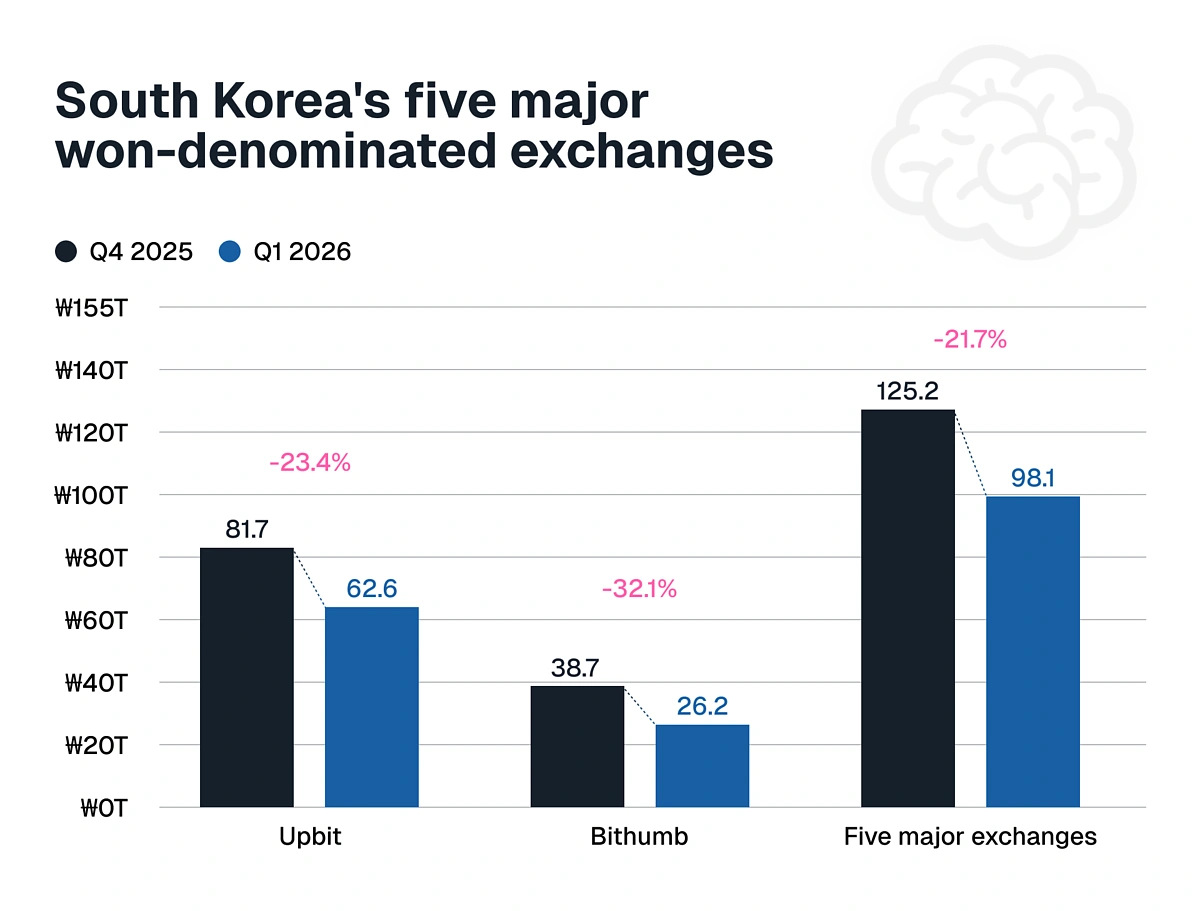
According to CoinGecko data, average monthly trading volume in KRW fell by 21.7% from Q4 2025 (125.2 trillion won) to Q1 2026 (98.1 trillion won). This doesn’t mean capital is leaving the market; it’s simply rotating. Funds are shifting away from retail speculation and toward institutional settlement infrastructure.
Subscribe to our YouTube channel to watch leaders and journalists provide expert insights.

The measure also arrives within a broader digital agenda. Authorities are advancing the Digital Asset Basic Act, which will set rules for won-pegged stablecoins, and reviewing Capital Markets Act amendments to enable the first spot crypto ETFs.
A legal basis for cross-border stablecoin transactions is also in the works, easing international payments with digital assets.
Implementation details remain pending, including how the state would acquire, custody, or value its future digital holdings over time.
Still, the direction seems clear. One of the world’s most active crypto markets now wants its government balance sheet to speak the same language.
The post South Korea Moves to Treat Crypto as National Wealth Under New Law appeared first on BeInCrypto.

Social Security 2027 COLA projected at 3.8% amid rising inflation

US Senator Blasts AG Nominee for ‘Dismantling’ DOJ Crypto Unit, Trump’s CZ Pardon
Every “Harry Potter” and “Fantastic Beasts” movie, ranked from Howler-worthy to heavenly


-

 Fashion6 days ago
Loro Piana Fall 2026 Enters Houston’s Art Scene
-

 Fashion5 days ago
Weekend Open Thread: Nutriplenish Leave-In Conditioner
-
 Sports6 days ago
2026 Genesis Scottish Open Thursday TV coverage: Round 1
-

 Sports5 days ago
Super Eagles star Moses Simon opens up on Liverpool transfer regret
-

 Tech6 days ago
Character.AI enters the microdrama arena with its own productions, but there’s a twist
-

 Politics7 hours ago
Young campaigners urge incoming PM to act on outdoor junk food ads
-

 News Videos24 hours ago
XRP BOMBSHELL… XRP OMBOARDED FOR TRANSACTIONS!!!
-

 Tech2 days ago
Get Your ESP32 Sunny Side Up With This Solar Dev Board
-

 Tech23 hours ago
Dark Secrets Emerge When Jailbreaking LLMs
-

 News Videos7 days ago
Crypto Just Entered Its Most Important 6-Month Candle (Could Decide Everything!)
-

 Tech6 days ago
Level Infinite Launches Gangstar Mirage City in India with Pre-Registrations
-
 NewsBeat6 days ago
Major update after Huntingdon train attack as man enters plea
-

 News Videos2 days ago
how to make coin bank box with cardboard #scienceproject #money #diy #shorts
-
 Tech2 days ago
Cloudflare Precursor Watches Your Mouse and Keyboard To Decide If You Are Human
-
 Entertainment2 hours ago
Disney’s Most Ambitious Failed Star Wars Attraction Is Coming to SDCC
-

 Tech7 days ago
Entra passkey enrollment vishing targets Microsoft 365 users
-
 Crypto World7 days ago
DeFi Dashboard Zapper to Shut Down After 7 Years
-
Crypto World1 day ago
Ripple, Coinbase, Circle Join Linux x402 Foundation to Help Shape AI Payments
-
 Crypto World7 days ago
Mark Cuban-Backed DeFi Dashboard Zapper Shuts Down After 7 Years
-

 Tech6 days ago
Claude’s New Reflect Dashboard Wants To Help You Log Off Of Claude
You must be logged in to post a comment Login