

Crypto World
Bitget Launches Third Year of Anti-Scam Month with New Report on Multi-Asset Fraud


Bitget, the world’s largest Universal Exchange (UEX), has launched the third year of its Anti-Scam Month initiative with the release of its Anti-Scam Report 2026 titled “The Evolution of Fraud in the Multi-Asset Era”, developed in partnership with blockchain security firm SlowMist. As digital finance expands across cryptocurrencies, tokenized assets, stocks, CFDs, wallets, and AI-powered investment tools, the report examines how fraud is adapting to changing investor behavior and increasingly interconnected financial ecosystems.
The report finds that changes in user behavior are reshaping how fraud campaigns are designed and deployed across digital finance. According to Bitget Research, the share of active users participating across two or more asset classes grew from under 1% in mid-2025 to more than 10% by May 2026. As users move across a wider range of products and platforms, fraud campaigns are increasingly blending multiple narratives, social engineering tactics, AI-generated content, and multiple communication channels within a single operation.
Drawing on Bitget Research and investigations conducted by SlowMist, the report found that many successful scams no longer rely on a single point of compromise. Fraud operators guide victims through a sequence of interactions spanning social media platforms, messaging applications, investment communities, phishing infrastructure, and wallet activity before assets are ultimately stolen. Between July 2025 and June 2026, Bitget’s security infrastructure intercepted more than 150 million malicious requests, identified over 13,000 high-risk malicious IP addresses, handled 18,135 user protection cases, and supported the recovery of $32.3 million linked to security incidents and fraudulent activity.
“Security challenges evolve alongside markets. As more users participate across crypto, stocks, tokenized assets and AI-powered products, fraud campaigns are becoming sophisticated in how they build trust and influence decision-making. Understanding those risks is an important step toward protecting users and strengthening confidence across the broader ecosystem,” said Gracy Chen, CEO of Bitget.
The report identifies several trends shaping the current fraud environment, including AI-generated investment personas, deepfake-enabled scams, voice-cloning attacks, synthetic investment communities, wallet-draining operations, malicious smart contracts, and increasingly sophisticated phishing campaigns. Among the cases examined are a deepfake investment scam impersonating Cypriot President Nikos Christodoulides, an AI-generated investment advertising campaign that reportedly defrauded thousands of Swedish investors, the Truman Show synthetic community scam involving approximately 90 fabricated investor identities, and the Rublevka Team wallet-draining operation documented in early 2026.
Beyond examining how scams operate, the report explores victim psychology, common scam entry points, post-theft asset movement, and recovery challenges. It also outlines practical measures users can take to strengthen account security, recognize AI-enabled deception, evaluate investment opportunities more effectively, and respond to security incidents.
Since launching Anti-Scam Month in 2024, Bitget has worked with security researchers, ecosystem partners, and industry organizations to improve awareness around emerging threats and promote stronger user protection practices. Throughout June, Bitget’s Anti-Scam Month campaign will feature educational content, security awareness initiatives, and collaborations with industry partners aimed at helping users identify emerging threats and strengthen their ability to protect digital assets.
For more information, please read the report here.
About Bitget
Bitget is the world’s largest Universal Exchange (UEX), serving over 125 million users and offering access to over 2M crypto tokens, 500+ tokenized stocks, ETFs, commodities, FX, and precious metals such as gold. The ecosystem is committed to helping users trade smarter with its AI agent, which co-pilots trade execution. Bitget is driving crypto adoption through strategic partnerships with LALIGA and MotoGP™. Aligned with its global impact strategy, Bitget has joined hands with UNICEF to support blockchain education for 1.1 million people by 2027. Bitget currently leads in the tokenized TradFi market, providing the industry’s lowest fees and highest liquidity across 150 regions worldwide.
For more information, visit: Website | Twitter | Telegram | LinkedIn | Discord
The post Bitget Launches Third Year of Anti-Scam Month with New Report on Multi-Asset Fraud appeared first on BeInCrypto.


TLDR
- Singapore’s Monetary Authority of Singapore added Hyperliquid to its Investor Alert List.
- The listing includes the Hyper Foundation website and Hyperliquid trading application.
- MAS clarified that inclusion on the list does not mean a ban or enforcement action.
- Hyperliquid stated it has never claimed to be licensed or regulated by MAS.
- The platform said its permissionless infrastructure remains unchanged despite the listing.
Singapore’s financial regulator has added a decentralized exchange to its public warning list. The move names Hyperliquid and related platforms in a consumer advisory update. The listing clarifies that inclusion does not mean a ban or enforcement action.
Hyperliquid appears on MAS Investor Alert List
The Monetary Authority of Singapore has placed Hyperliquid on its Investor Alert List. The entry includes the Hyper Foundation website and the Hyperliquid trading application.
MAS uses this list to flag entities that may appear licensed or regulated. However, the regulator states that listing does not confirm any legal violation.
Hyperliquid responded to the update through an official statement. The platform said it has never claimed authorization from MAS at any time.
It added that its permissionless infrastructure remains unchanged. The team stated it will continue engaging with regulators across different jurisdictions.
“The Hyperliquid ecosystem remains committed to engaging collaboratively with regulators,” the platform said in its X post. The statement also supports clear frameworks for onchain finance.
Singapore expands oversight on crypto firms
Singapore authorities have increased scrutiny on digital asset platforms over recent years. The regulator continues to enforce licensing requirements across the sector.
In May 2025, MAS directed firms serving overseas clients to obtain licenses or stop operations. The directive addressed firms operating from Singapore without local approvals.
MAS explained that the move reflects an existing policy stance. The regulator said it had communicated this requirement consistently since 2022.
The directive also closed a gap that allowed firms to avoid licensing by targeting foreign users. As a result, firms had to adjust operations or exit the market.
The regulator linked these actions to stronger consumer safeguards. It also aligned the framework with anti-money laundering and counter-terrorism financing standards.
MAS continues to publish updates through its alert list and regulatory notices. The agency maintains its focus on transparency and compliance within the crypto sector.
Market context and exchange rankings
Hyperliquid operates as a decentralized perpetual exchange within the crypto market. The platform currently ranks among the leading decentralized exchanges by trading activity.
According to CoinGecko, Hyperliquid stands as the ninth-largest decentralized exchange by volume. The ranking reflects current market data across trading platforms.
DefiLlama estimates the platform holds about $5.7 billion in total value locked. This figure tracks assets secured within its protocol ecosystem.
Other exchanges also appear on the MAS Investor Alert List. These include Bybit, KuCoin, and Bitget, based on earlier entries.
MAS added Bybit to the list on June 17 as part of ongoing updates. The regulator continues to monitor platforms that operate without local authorization.
The alert list remains publicly accessible for users and institutions. It provides updated information on entities that may appear regulated in Singapore.

Crypto World
Tesla (TSLA) Stock Analysis: Can Musk’s 2027 Robotaxi Vision Justify Current Valuations?

Key Takeaways
- Elon Musk projects Robotaxi and unsupervised Full Self-Driving revenue to become “material in a significant way” by 2027
- TSLA currently commands a price-to-earnings multiple of approximately 344, with shares hovering near $373
- Several institutional funds expanded their Tesla holdings during the first quarter of 2026
- Wall Street analysts maintain a “Hold” rating with a consensus target price of $403.07
- The company is navigating a wrongful-death lawsuit and federal investigation related to an Autopilot/FSD-involved fatality in Texas
Tesla (TSLA) shares are currently changing hands around $373, placing the electric vehicle pioneer’s market capitalization at approximately $1.41 trillion with a P/E multiple of 344. This sky-high valuation metric reveals investor sentiment clearly — the market is pricing Tesla not as a traditional automaker, but as a technology platform centered on artificial intelligence and autonomous transportation.
During Tesla’s first-quarter 2026 earnings conference call held in April, CEO Elon Musk projected that revenue from unsupervised Full Self-Driving capabilities and the Robotaxi service would achieve “material” significance throughout 2027. Musk further indicated the company aims to launch Robotaxi operations across approximately twelve states before year-end 2026.
Presently, the Robotaxi service operates autonomously in three Texas cities: Austin, Dallas, and Houston. However, revenue generation from this autonomous fleet remains essentially insignificant at this juncture.
Tesla reported 1.28 million active supervised FSD subscriptions as of the end of March. Assuming every subscriber pays the standard $99 monthly fee, this generates approximately $1.5 billion on an annualized basis — a modest figure when measured against last quarter’s total revenue of $22.39 billion.
The company’s Q1 2026 earnings per share registered at $0.41, surpassing Wall Street’s consensus forecast of $0.39. Revenue climbed 15.8% compared to the prior year period, though it fell short of the $22.96 billion analyst projection.
For perspective, Musk’s prediction accuracy deserves scrutiny. According to research conducted by The New York Times, the Tesla chief executive meets his own stated timelines approximately 19% of the time.
Big Money Continues Accumulating Shares
RFG Advisory LLC expanded its Tesla stake by 29.4% during Q1, purchasing an additional 6,367 shares to reach a total position of 28,020 shares valued at approximately $10.4 million. OP Asset Management initiated a fresh position worth roughly $201.9 million. Assenagon Asset Management increased its holdings by 78.2%, accumulating more than 1.7 million additional shares. Institutional ownership now represents 66.2% of outstanding TSLA stock.
This represents substantial confidence from sophisticated investors, particularly given current valuation levels.
On the positive development front, Tesla revealed an energy infrastructure collaboration with Sunrun and Renew Home designed to aggregate over 16 gigawatts of distributed residential power capacity. Meanwhile, the company’s German Gigafactory is reportedly working toward a production target of 7,500 vehicles weekly by October.
The current presidential administration has floated regulations that would eliminate brake pedal requirements for autonomous vehicles, a regulatory shift that could significantly accelerate Tesla’s Robotaxi deployment if enacted.
Ongoing Legal Challenges and Analyst Perspectives
Tesla confronts a wrongful-death legal action stemming from a fatal Texas collision connected to its Autopilot/FSD technology. The National Transportation Safety Board has initiated an investigation into the incident, introducing both legal liability and brand reputation concerns to its driver-assistance technology segment.
Insider trading patterns warrant attention as well. Board member Kathleen Wilson-Thompson divested 26,409 shares on April 30 at $378.11 per share. Chief Financial Officer Vaibhav Taneja sold 2,606 shares on June 8 at $402.20. Aggregate insider dispositions over the previous 90 days total 57,824 shares with a combined value exceeding $21.6 million.
Regarding analyst sentiment, Deutsche Bank and Sanford C. Bernstein both upgraded to “Buy” ratings in early June. Cantor Fitzgerald and Roth MKM similarly maintain bullish stances. Conversely, HSBC and JPMorgan continue with “Hold” recommendations.
The aggregated view across 45 covering analysts stands at “Hold,” with a mean price objective of $403.07. The stock has traded within a 52-week band spanning from $288.77 to $498.83.
Sell-side consensus anticipates full-year 2026 earnings per share of $1.19.
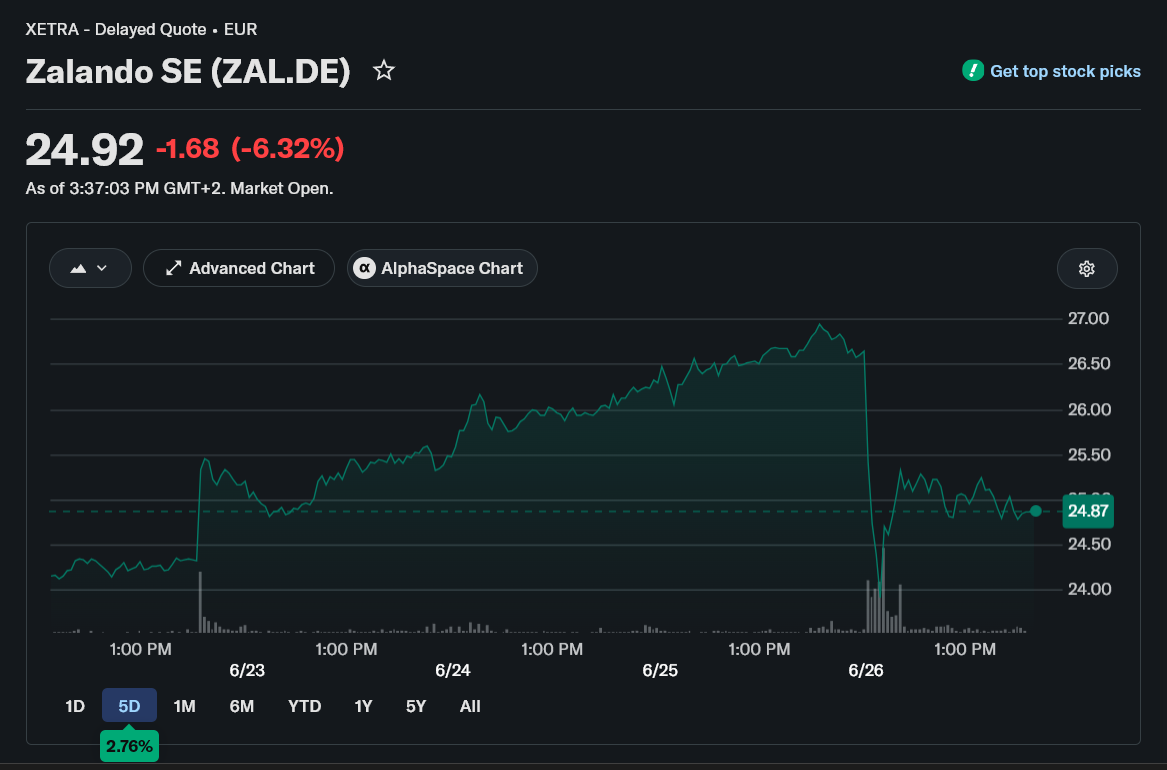
Popular fashion giant Zalando’s shares fell about 7% on June 26 after Germany’s financial regulator, BaFin, opened a formal review of the company’s 2025 financial statements.
The investigation is linked to Zalando’s acquisition of ABOUT YOU, the German online fashion retailer it bought in 2025 for about €1.2 billion. BaFin said there are signs that Zalando may have failed to include required information about a related-party transaction in its financial notes.

A Small Disclosure Issue Spooks Investors
A related-party transaction usually means a deal involving people or companies connected to the business. These disclosures matter because they help investors understand whether a company has been transparent about important financial relationships.
BaFin said the investigation does not mean Zalando has done anything wrong. Its auditors will review the accounts and publish the result once the process is complete.
The announcement still hit investor confidence. Zalando shares dropped as much as 8% in early trading before recovering slightly. By the close, the stock was down around 7%, trading near €24.72.
Zalando pushed back against the concern. The company described the issue as “purely formal and materially insignificant” and said it is in “close and constructive dialogue with BaFin.”
It also said the relevant acquisition details were already publicly available through the official takeover process, which finished in July 2025.
The timing is awkward for Zalando. The company posted a net loss of €87.6 million in the first quarter of 2026, compared with a profit a year earlier. Costs linked to the ABOUT YOU deal and restructuring weighed on results.
Still, revenue rose 23.8% year-on-year to €2.99 billion, and Zalando kept its full-year guidance unchanged.
For now, the main issue is uncertainty. Investors will watch BaFin’s review closely, even if the company says the matter is minor.
The post Zalando Shares Fall 7% After BaFin Launches Accounting Probe appeared first on BeInCrypto.


A blue-check account on X falsely claimed to be a freshly fired Coinbase product manager, earning nearly 200,000 views within hours. The meme fit perfectly into crypto investors’ predispositions yesterday with irresistible confirmation bias.
Yesterday, bitcoin and ether hit 52-week lows. Base, Coinbase’s blockchain, was down for roughly two hours. Everything was going down.
The account jokingly explained that Coinbase fired Ravi Riley as “a non-technical PM on the Base sequencer team and my first PR got merged to prod at noon.” Multiple trackers confirmed the roughly two-hour outage, even though it was not caused by Riley, who was never a Coinbase employee.
The memetic implication was that a new hire had crashed Base and then was marched out.
It is, after all, too easy to dunk on Coinbase. The company is the largest publicly traded crypto company and probably has the largest US customer base on social media.
Another Coinbase outage after Brian Armstrong fired workers
Yesterday’s meme traces its origin to at least May 5.
Early in the morning on that day, founder Brian Armstrong cut 700 workers, or roughly 14% of his staff. He revoked access on the spot, before most employees started work in the morning, “Coinbase system access has been removed today. I know this feels sudden and harsh, but it is the only responsible choice given our duty to protect customer information.”
Within two days, the Coinbase website went down altogether. Although the headcount reduction was probably unrelated to that outage, it didn’t matter for many critics on social media.
Attempting to blame the layoffs on something positive, Armstrong framed the cuts as an AI-driven rebuild. Tens of millions of dollars in restructuring charges would somehow improve the business with a nebulous benefit of AI.
Layoffs, then a service outage. Armstrong’s memo had spawned a meme. “Today I was fired from Coinbase” became an instant hit.
The most popular variants claimed absurd job accomplishments, especially Coinbase operations that crypto traders hated: issuing 1099s, freezing accounts, implementing the 4H chart, and website cacheing.
As with any meme on social media, people remake it in endless variations to make Coinbase the punchline of layoffs that never literally happened as a way to make fun of Coinbase’s shortcomings.
Base outage ends, but Coinbase memes continue
Yesterday, Base resumed normal block production within about two hours. Block production stalled at 16:03 UTC after a malformed block was sequenced.
That consensus failure stopped the chain after block 47806542, according to the network’s status incident. Deposits, withdrawals, and on-chain activity all queued behind the bad block.
The official Base account said only that “Base Mainnet is currently halted while the team works on an issue with block production.” It stressed that funds were secure.
Read more: Hot air at AWS causes Coinbase outage
The timing was awkward. The stall hit hours before Base’s scheduled Beryl upgrade, set for 18:00 UTC that same day.
Anyway, the incident revived a familiar criticism. Base relies on a Coinbase-operated sequencer, so one bad block can stall the entire network. A key sequencer also caused a chain halt in August 2025, the network’s last major stall prior to yesterday.
In other words, it was easy to point a lazy finger at Coinbase for the outage. That’s what happened.
A repeat jokester makes Coinbase the punchline
Riley is a former Chainlink engineer. His post about getting fired from Coinbase mimicked the now-standard layoff-confessional format, complete with vanished Slack access and a wistful note about reflecting.
Riley is a jokester on social media and has posted another fake layoff confessional in the past.
A Community Note on X dismantled Riley’s claim: “Ravi Riley was never employed at Coinbase, as confirmed by his X bio and LinkedIn profile listing only Brookwell as current and no prior Coinbase role.” The Community Note added that his post mirrored his earlier fake firing claim about a company called Delve.
His Delve post collected 3.8 million views, a satirical jab tied to the Delve compliance scandal. His Coinbase remix kept that general format.
Despite its obvious fake content and a pending Community Note, Riley’s post remained live by early morning today.
Got a tip? Send us an email securely via Protos Leaks. For more informed news and investigations, follow us on X, Bluesky, and Google News, or subscribe to our YouTube channel.
The Monetary Authority of Singapore (MAS) has added Hyperliquid—an exchange platform focused on perpetual trading—to its Investor Alert List, a consumer-protection tool used to flag entities that the public may mistakenly perceive as being licensed or authorized by the regulator.
MAS stated that the new entry covers the Hyper Foundation website and the Hyperliquid trading app. MAS previously expanded the same alert list to other crypto trading platforms, underscoring Singapore’s approach to reducing regulatory confusion and strengthening investor safeguards.
Key takeaways
- MAS added Hyperliquid and the related Hyper Foundation website/app to the Investor Alert List as a potential source of public misunderstanding about regulatory status.
- Inclusion on the Investor Alert List is not a ban and does not, by itself, indicate an enforcement action by MAS.
- MAS has recently tightened oversight of crypto firms that serve overseas customers, emphasizing licensing requirements and AML/CFT alignment.
- Hyperliquid says it has not represented itself as MAS-licensed or authorized and argues that its permissionless infrastructure has not changed.
What MAS’s Investor Alert List signals
MAS’s Investor Alert List is designed to protect consumers by identifying entities that may be wrongly viewed as licensed or regulated by the central bank and financial regulator. The regulator has repeatedly clarified that being listed does not automatically equate to prohibited activity under Singapore law.
MAS’s decision to include Hyperliquid specifies both the ecosystem’s website and the trading app. This level of detail matters for compliance teams and institutional counterparties that may perform due diligence using public regulatory signals—because alert-list entries often trigger internal review of marketing, representations, and risk controls tied to a platform’s perceived regulatory status.
MAS’s process also reflects a broader supervisory challenge in crypto: decentralized or non-traditional trading services can be difficult to categorize in conventional licensing frameworks, and customers may assume legitimacy based on branding, accessibility, or geographic association.
Hyperliquid’s response and the compliance angle
Hyperliquid said it has never claimed to be licensed or authorized by MAS. The platform added that nothing about its permissionless infrastructure has changed following the alert-list update.
From a regulatory monitoring standpoint, the statement is significant because it addresses a core risk highlighted by the Investor Alert List: whether public-facing material could lead users to believe that a platform is supervised by MAS.
For institutions—such as banks, payment providers, wealth managers, and regulated intermediaries—the practical question is not only whether a platform is “approved,” but how it is marketed and how counterparty engagements are documented. An investor alert can influence counterparty risk assessments, onboarding decisions, and ongoing third-party monitoring, particularly where customer communications or operational integration could create regulatory perception risk.
Singapore’s tightening crypto oversight: licensing and AML/CFT alignment
MAS has increasingly applied licensing and compliance expectations across the crypto sector. In May 2025, MAS ordered crypto companies serving overseas customers to either obtain licenses or cease operations. MAS described the step as consistent with its longstanding regulatory position, rather than a new shift in policy.
According to MAS, the directive closed a previously exploited gap where some Singapore-based firms avoided licensing by focusing on overseas customers. MAS said it had communicated its position since 2022 and moved to end a transition period for firms that continued operating without the required authorization.
MAS also framed its measures as part of strengthening consumer protection and aligning Singapore’s framework with international standards on Anti-Money Laundering (AML) and Countering the Financing of Terrorism (CFT). This emphasis is relevant for regulated entities assessing cross-border services, because crypto businesses may operate across jurisdictions while still relying on global infrastructure and customer access.
For compliance officers, these developments reinforce a key point: supervisory expectations can apply even where services are not marketed as being Singapore-centric, particularly when a firm’s Singapore footprint, corporate presence, or operational arrangements create regulatory reach.
Related regional context and unresolved distinctions
The use of an investor alert list, rather than immediate enforcement, highlights an important regulatory distinction in Singapore’s approach: MAS appears to differentiate between consumer-perception issues and licensing/authorization determinations. While alert-list inclusion is not itself an enforcement action, it can function as an early-warning mechanism that signals how MAS views the likelihood of public misunderstanding.
This also leaves several issues for ongoing clarification in the broader ecosystem. For example, decentralized or permissionless trading structures may challenge conventional definitions of “licensed activity,” particularly when users access the service through applications or websites tied to identifiable organizational entities. Regulators across multiple jurisdictions have grappled with how licensing obligations apply to decentralized finance interfaces, especially when consumer access is straightforward.
Separately, MAS’s enforcement posture on licensing for firms serving overseas customers suggests that jurisdictional boundaries may not shield entities from Singapore’s regulatory reach where licensing obligations attach through corporate structure or operational presence.
What to watch next
Hyperliquid’s alert-list addition is unlikely to settle questions about licensing classification or the regulatory treatment of permissionless services, but it does raise near-term compliance considerations for institutions engaging with or referencing the platform. MAS’s broader enforcement direction—especially around licensing obligations and AML/CFT expectations—will remain the key factor shaping how similar platforms are assessed in future regulatory updates.

Michael Saylor broke his public silence on June 26 with a post on X reaffirming Strategy’s commitment to Bitcoin, as the company faces a securities investigation and widening pressure across its capital structure.
Rosen Law Firm launched the probe, examining whether Strategy executives made materially misleading statements across five linked securities. The company has issued no formal response.
Saylor Doubles Down on Bitcoin Focus
On X, Saylor offered no direct comment on the probe. Instead, he framed volatility as a structural test. He signaled continued commitment to credit quality and long-term value creation.
The statement is notable for what it omits. It makes no mention of the class action interest gathering around the firm or the sharp declines across Strategy’s preferred securities. Saylor focuses on capital discipline, a message directed at both equity holders and creditors.
Strategy holds 847,363 Bitcoin (BTC), more than 4% of all Bitcoin that will ever exist. Its average acquisition cost sits near $75,500 per coin, well above current prices. That gap compressed the MSTR premium investors once paid for leveraged Bitcoin exposure. It also sharpened scrutiny on how the company continues to fund new purchases.
Strategy built much of that position through multiple classes of publicly traded preferred stock. Those instruments now sit under pressure as Bitcoin prices weaken and investor confidence in the dividend model erodes.
Market Pressure Tests That Conviction
The day before Saylor posted, critic Peter Schiff escalated his criticism of Strategy’s declining market performance.
He argued MSTR has fallen 84% from its all-time high. Schiff also noted that STRC dropped 25% from par, now carrying an implied yield of 15.3%. Saylor’s post served as an indirect rebuttal to those attacks without addressing them directly.
Questions about STRC’s long-term sustainability have grown sharper. The preferred stock’s dividend structure costs an estimated $1.2 billion annually. Strategy disclosed a $1.4 billion cash reserve on June 22, barely a year of cover at current rates.
Whether Saylor’s reaffirmation steadies investor confidence or the probe escalates into a formal complaint may define Strategy’s near-term trajectory.
The post Michael Saylor Reaffirms Bitcoin Bet Amid Strategy Legal Pressure appeared first on BeInCrypto.
Crypto World
Binance tells EU users it will no longer provide services after failing to secure MiCA license


Binance, the world’s largest crypto exchange by trading volume, told customers in the European Union (EU) it is suspending some services because it will not have a Markets in Crypto-Assets (MiCA) license in place by July 1.
Users were emailed to notify them the exchange was no longer able to accept new registrations and would restrict services, a spokesperson for the Abu Dhabi-based company told CoinDesk. “Your assets remain safe and secure, and will remain accessible at all times,” the email said.
On Thursday, the company said it withdrew its license application in Greece and would seek authorization in another EU country.
“Our ambitions in Europe remain the same, and we are confident we will secure a MiCA licence in the coming months,” Binance said in a statement to CoinDesk.
The exchange intends to approach France instead, the Financial Times reported Friday, citing people familiar with the company’s plans.
The emails to clients in France, Italy, Poland and Spain come days before a June 30 deadline. Crypto firms must have a MiCA license from at least one EU member state by July 1 to provide services across all 27 member states. Unlicensed firms must wind down their EU activities.
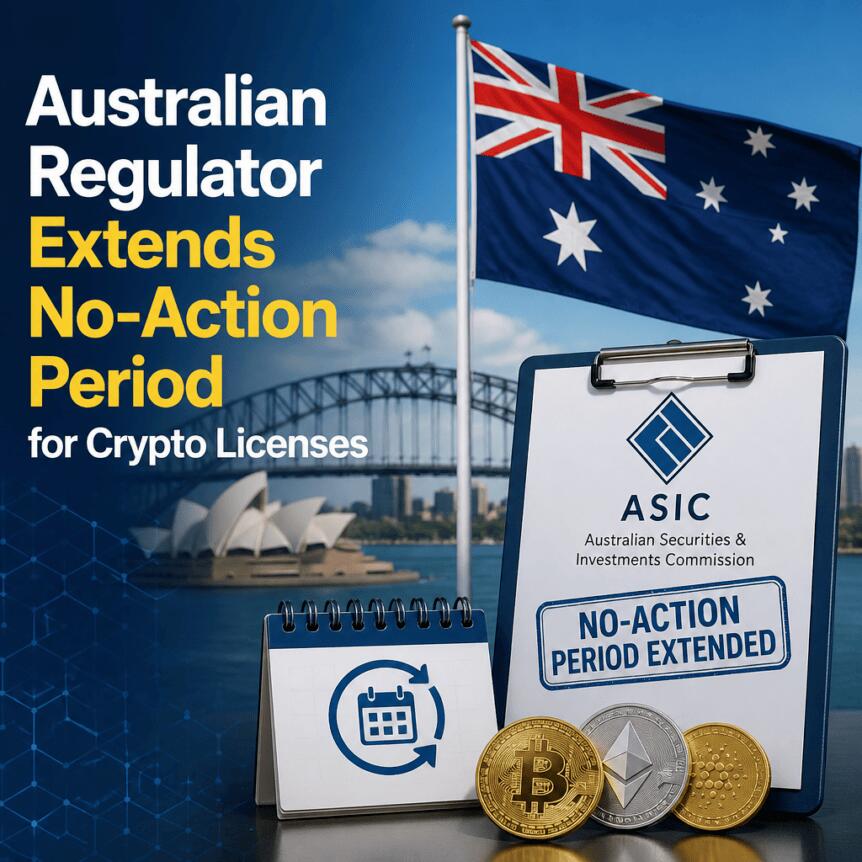
Australia’s corporate regulator has extended a key compliance transition for digital asset businesses, giving firms more time to apply for licenses under updated guidance. The Australian Securities and Investments Commission (ASIC) said the temporary “no-action” position against enforcement will last until September 30, 2026, after being pushed back from an earlier June 30, 2026 deadline.
The extension covers companies seeking an Australian Financial Services (AFS) license, as well as digital asset firms that may require market or clearing and settlement authorizations. ASIC also broadened the relief to include businesses that operate through authorized representatives or via intermediary arrangements with already licensed entities.
Key takeaways
- ASIC extended its digital asset no-action protection to September 30, 2026 for firms applying under updated licensing guidance.
- The relief applies not only to AFS license applicants, but also to companies that may need market and clearing and settlement approvals.
- ASIC widened eligibility to cover digital asset activities carried out through authorized representatives or intermediary arrangements with licensed firms.
- ASIC said it has received around 30 license applications since it updated its digital asset guidance in October 2025.
ASIC pushes the clock back for licensing applications
ASIC’s update provides additional runway for digital asset businesses working through Australia’s financial services licensing expectations. In a statement, the regulator said the no-action stance that shields eligible firms from enforcement will continue through Sept. 30, 2026, giving applicants more time to prepare submissions and meet licensing requirements tied to ASIC’s approach to digital asset products.
Under the extension, firms that need AFS licensing can remain within the protected period while they apply. ASIC’s scope is also broader than simple trading-platform licensing: it extends to situations where a business may require additional market structure permissions, including market authorizations, and clearing and settlement authorizations.
The regulator said it has also seen activity around the guidance it issued, noting it has received about 30 license applications since the update in October 2025. For industry participants, that figure is a useful signal: demand for formal licensing is moving forward, but the regulator appears to be acknowledging that processing, preparation, and regulatory readiness take longer than the initial timetable.
How INFO 225 shaped the licensing pathway
The latest extension builds on earlier regulatory work. ASIC had previously introduced the no-action position after updating Information Sheet 225 (INFO 225), clarifying how Australia’s existing financial services laws apply to digital asset activities. ASIC’s central point is that many digital asset products can fall within Australia’s definition of financial products, meaning providers may need to hold an AFS license depending on how their offerings are structured.
ASIC has consistently framed its approach as technology-neutral, arguing that the legal definitions are broad enough to cover digital assets. The regulator said its interpretation was recently reinforced by the High Court’s Block Earner ruling, which concluded that the company’s former crypto yield product was a financial product under the Corporations Act.
That High Court outcome matters beyond one case, because it strengthens the legal basis for ASIC’s view that some crypto-linked revenue models—such as yield products—can be regulated under existing securities and financial services frameworks. For businesses, it raises the stakes around product classification: even if a firm believes its activity is “new” or “digital-native,” the legal analysis can still lead back to traditional licensing duties.
What comes after the transition: the Digital Asset Framework
The no-action relief is not the end state. ASIC’s temporary approach runs alongside Australia’s broader legislative track: the Digital Asset Framework, which passed Parliament in April and is currently scheduled to commence on April 9, 2027.
ASIC has warned that the incoming framework will bring digital asset platforms and tokenized custody platforms under the financial services licensing regime in a more formal, dedicated structure. Importantly for existing licensees and applicants, ASIC noted that approvals obtained under the current INFO 225-based route may not fully cover future requirements once the new regime begins.
In a May announcement, ASIC said many digital asset firms that apply for a licence based on INFO 225 will also need to add Digital Asset Platform (DAP) and Tokenized Custody Platform (TCP) authorizations once the new framework commences. That distinction creates a two-stage compliance picture for the industry: first, secure the licensing status that fits current guidance, and then prepare for additional authorizations required under the forthcoming regime.
For investors and customers, the practical implication is straightforward: licensing and oversight for crypto services in Australia may become more granular over time. Firms that focus only on the near-term INFO 225 transition could face additional operational and compliance work after April 2027.
Why the extension matters for builders and market participants
Extending the deadline reduces immediate pressure on applicant pipelines and may allow businesses to align governance, risk controls, and regulatory compliance processes with ASIC’s expectations. It also acknowledges that the licensing journey is broader than submitting paperwork—firms must demonstrate capability across key areas such as client protections, arrangements, and ongoing compliance obligations that regulators typically expect from AFS-licensed entities.
The extension’s inclusion of authorized representative and intermediary arrangements is particularly relevant for distribution models. Digital asset firms often operate through partnerships or regulated intermediaries; by clarifying that no-action relief can extend to those structures, ASIC is signaling that compliance can be achieved through legitimate regulated channels rather than forcing every participant to build an entirely standalone licensing footprint immediately.
Still, the timeline remains tight relative to the next legislative phase. With the Digital Asset Framework scheduled to start in April 2027, the period granted by ASIC now serves as a bridge: enough time to get initial applications in, but not enough to avoid future licensing upgrades if firms will ultimately need DAP and TCP authorizations.
As ASIC continues processing applications and as the April 2027 commencement date approaches, the next items to watch are how many applicants ultimately secure AFS licenses and what proportion need additional DAP/TCP approvals. That will offer the clearest indication of how quickly Australia’s crypto regulatory regime is moving from guidance-based classification to the dedicated structure set out in the new framework.
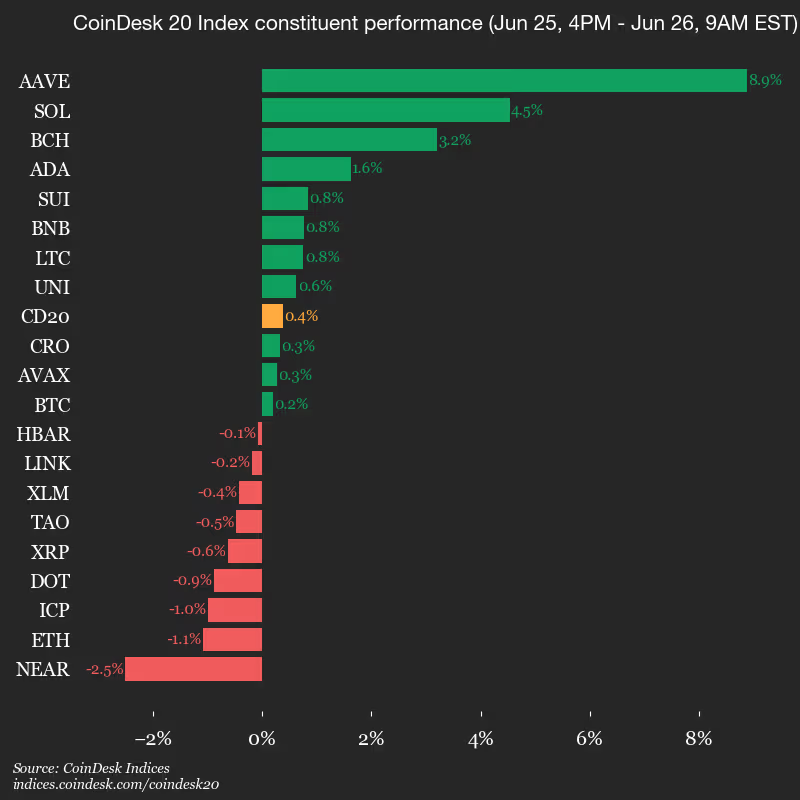
CoinDesk Indices presents its daily market update, highlighting the performance of leaders and laggards in the CoinDesk 20 Index.
The CoinDesk 20 is currently trading at 1595.41, up 0.4% (+5.99) since 4 p.m. ET on Thursday.
Eleven of 20 assets are trading higher.

Leaders: AAVE (+8.9%) and SOL (+4.5%).
Laggards: NEAR (-2.5%) and ETH (-1.1%).
The CoinDesk 20 is a broad-based index traded on multiple platforms in several regions globally.


The pullback marks a sharp reversal from expectations at the start of 2026, when many industry executives anticipated a wave of crypto listings following successful IPOs by Circle (CRCL) and CoinDesk’s owner Bullish (BLSH).
Crypto investors also worry that this year’s blockbuster AI-related IPOs are siphoning capital away from digital assets. The successful listing of SpaceX SPCX), along with expectations for additional high-profile AI and technology offerings, has given institutional investors another destination for growth capital at a time when crypto markets have struggled to regain momentum.
Market participants say that rotation has weighed on tokens, crypto-linked equities and the appetite for new crypto IPOs
Snider said the pickup in public listings reflects improving confidence among both corporate executives and equity investors. The key question, is whether the surge signals the kind of market euphoria typically seen at the peak of an asset bubble.
He sees some familiar warning signs. Equity valuations remain elevated, investor confidence is strong, and AI has become a dominant investment theme, echoing the technology-driven optimism that characterized previous market peaks.
But the strategist argued one critical metric tells a different story: the number of IPOs. The U.S. has averaged roughly 100 IPOs a year over the past quarter century, close to the current pace. That compares with more than 250 IPOs in 2021 and nearly 400 during the height of the dot-com boom in 1999.

‘I’ve worked in the same place for 40 years and this is one of the best parts of my job’

Cognition Therapeutics: Clearer FDA Path, But Potential Dilution Risks Remain
Hyperliquid Named on Singapore MAS Investor Alert Register

No Jackpot Winner as $257 Million Prize Rolls Over to $269 Million Monday Draw

Blockchain.com files with SEC for U.S. IPO

Weekend Open Thread: Miami – Corporette.com

Bitcoin Perps Are Finally Legal In The US – What You Need To Know

Ethereum Running Out Of Money For Development!? Iran: ‘Strait Of Hormuz Is Closed’ … US Responds

Major Financial Irregularities Worth Billions Exposed | 12PM Headlines GeoNews (26 June 2026)
-
 Fashion7 days ago
Weekend Open Thread: Miami – Corporette.com
-

 Entertainment6 days ago
Renter of Home in Anne Heche Crash Denies Settlement With Son
-
 Sports3 days ago
Two goals and an assist by sheer aura: Cristiano Ronaldo just entered the World Cup chat
-

 Tech4 days ago
Microsoft accidentally kills epic Outlook email threads
-

 Business6 days ago
Soccer-U.S. defends Iran World Cup travel restrictions, says discussions ongoing
-

 Politics8 hours ago
The House | Manchesterism won’t survive the painful trade-offs unless it gets citizens on board
-

 Politics12 hours ago
Potential 2028er World Cup attendee leaderboard
-

 Politics6 days ago
Andy Burnham and the meaning of Makerfield
-

 NewsBeat7 days ago
Keir Starmer Allies Question His Chances For No 10
-

 Tech19 hours ago
A Look At A Gaggle Of Transputer Boards
-
Crypto World2 days ago
Bitcoin (BTC) Dips Below $62K, Ethereum (ETH) Plunges 6% Daily: Market Watch
-

 Crypto World2 days ago
Securitize Wraps Roubini's SEC-Registered ETF as Dubai VARA Digital Security
-
 Crypto World21 hours ago
Dell (DELL) Shares Tumble Over 5% Following Analyst Downgrade to Hold
-
Business3 days ago
Entergy settles forward sale agreements, raises $672 million in cash proceeds
-
 Business6 days ago
Wall Street Week Ahead: Investors see Micron earnings as pulse check of AI rally momentum
-
 Crypto World6 days ago
Can Charles Hoskinson Really Rescue Cardano?
-

 Entertainment6 days ago
Jose Alvarado Wants Taylor Swift at More Knicks Games
-

 Crypto World6 days ago
HIVE shares jump as $220M AI deal speeds Bitcoin mining pivot
-

 Crypto World6 days ago
Jake Chervinsky accuses CME of protecting derivatives monopoly
-

 Sports1 day ago
India vs Bangladesh LIVE Score, Women’s T20 World Cup: Bangladesh Opt To Bat; India Enter ‘Do-Or-Die’ Stage As Semi-Final Race Heats Up
You must be logged in to post a comment Login