
Crypto World
BitMart Founder Rumors Fade as Binance bTokens Lead in Asia


BitMart’s founder Sheldon Xia is facing fresh public pressure as the exchange’s official Chinese-language X account demanded he explain the status of user funds and lay out a verifiable repayment plan. The dispute escalates amid claims of halted withdrawals and concerns that employees have not received final pay or compensation.
Separately, the tokenized-stock market continues to reshuffle as Binance bStocks overtook xStocks to become the second-largest tokenized stock issuer by value less than two months after launch. Across the industry, banks and regulators are also pushing into crypto rails—ranging from new stablecoin distribution in Hong Kong to mandatory crypto tax reporting in Singapore—while other stories highlight custody moves, tokenization pilots, and ongoing legal fights.
Key takeaways
- BitMart’s account demanded founder Sheldon Xia provide a verifiable asset disclosure and repayment plan, warning it will continue presenting evidence to regulators, law enforcement, lawyers, and media.
- Xia rejected the allegations as “fabricated rumors” and said he will pursue police reporting and technical/data forensics after collecting evidence of the posts.
- Binance bStocks surpassed xStocks to become the second-largest tokenized stock issuer, reaching about $624M versus xStocks’ roughly $579M on Aug. 3, based on Token Terminal data.
- Singapore finalized rules requiring crypto firms to report user transactions to the tax department, with timing that starts for new users in 2027 and continues for existing users later in 2027.
- Israel’s Bank Leumi plans to offer trading in Bitcoin, Ether, and Solana via Galaxy Digital’s platform from early 2027.
BitMart demands answers on user funds as Xia pushes back
BitMart’s official Chinese-language X account said some users are unable to withdraw funds and claimed that some employees have not received their final salaries or compensation. It directed Sheldon Xia to explain where user funds are and to produce a repayment plan by a stated deadline.
The account also warned that if Xia does not provide a verifiable disclosure and repayment plan, it will continue submitting supporting evidence to regulators, law enforcement, lawyers, and the media. The thrust of the message is that the exchange wants actionable accountability rather than general statements—particularly where withdrawals are reportedly affected.
Xia responded by calling the accusations “fabricated rumors.” In his reply, he said BitMart had “collected full evidence” of the content posted on X and vowed to file a police report during U.S. daytime hours and send a lawyer’s letter, seeking technical and data forensics.
What to watch in the BitMart dispute
This back-and-forth is more than a public argument; it centers on practical investor questions: whether funds are identifiable, whether withdrawals are genuinely blocked, and what repayment mechanism could be verifiable to affected users. Until there is independent disclosure or a documented plan that can be checked against on-chain activity, custodian reports, or other evidence, both sides’ claims will likely remain difficult for outsiders to validate.
Readers should watch for two key developments: (1) whether regulators or law enforcement filings are made public, and (2) whether any asset disclosure includes details that can be corroborated by third parties.
Tokenized stock market: Binance bStocks climb past xStocks
In a separate thread shaping market infrastructure, Token Terminal data shows Binance bStocks overtaking xStocks to become the second-largest tokenized stock issuer by value. According to the figures cited, bStocks reached about $624 million as of Aug. 3, moving ahead of xStocks at roughly $579 million.
Ondo Finance remained larger in the same snapshot, with total value tracked at about $927 million, according to Token Terminal. Still, the relative ranking change is notable because it happened quickly—less than two months after bStocks began operating.
Rapid growth—and the shifting ranks—behind tokenized equities
The tokenized stock sector appears to be moving faster than many early entrants expected. The same Token Terminal data referenced in the report indicates that a year earlier xStocks led with about $40.7 million, Robinhood-related issuance tracked around $37.2 million, and Ondo was far smaller at roughly $65,000. In contrast, the overall value tracked by Token Terminal has risen sharply from around $80 million to about $2.7 billion.
For investors and traders, these numbers matter because issuer size often correlates with liquidity expectations, listing stability, and integration into trading venues. However, market participants should also treat tracked “value” as a metric that depends on how specific tokens are issued, redeemed, and accounted for on-chain—so it’s worth monitoring methodology as tokenized asset ecosystems evolve.
Banks, stablecoins, and regulation push forward
Israel: Bank Leumi, described as Israel’s largest bank, announced a partnership with Galaxy Digital to let customers trade Bitcoin, Ether, and Solana via the bank’s investment platform beginning in early 2027. The plan is to make these assets available through a dedicated section of the Leumi Trade app, including buy, hold, and sell functions, including through Pepper, Leumi’s mobile banking arm.
Singapore: Singapore finalized regulations that require crypto firms to report user transactions to the tax department. The rules implement the OECD’s Crypto-Asset Reporting Framework into domestic law. The schedule takes effect from Jan. 1, 2027 for new users, while existing users are given time until Dec. 31, 2027.
Hong Kong: In Hong Kong, HashKey Exchange began beta distribution of HKDAP, described as a Hong Kong dollar-backed stablecoin regulated in the territory. HashKey Exchange is positioned as an authorized distributor, with initial retail access limited and early focus placed on institutions as the local stablecoin market continues to develop. The report also noted that the Securities and Futures Commission reportedly identified 65 fraudulent websites impersonating HashKey.
Ongoing industry friction: legal battles and tokenization experiments
There’s also continued legal and operational uncertainty in parts of the market. Binance and RedotPay are disputing whether a Singapore case connected to their nearly $473 million Hong Kong legal battle is nearing an end. RedotPay told Cointelegraph it expects Binance to discontinue the Singapore proceedings and will seek legal costs; Binance, in turn, said it is not abandoning its claims and has informed the court and RedotPay accordingly. The underlying Hong Kong allegations center on whether RedotPay diverted more than 470,000 Binance Card users by using Binance Pay funds for stablecoin top-ups outside a commercial agreement.
Meanwhile, tokenization experimentation continues. In Korea, Shinhan Asset Management signed a memorandum of understanding with Plume to develop a proof of concept for a Korean won-denominated tokenized fund. The stated aim is to test overseas use of won-denominated financial products onchain, an ecosystem that has so far been dominated by dollar-denominated assets.
Across these developments, the next signal to watch is whether regulators and institutions can translate new rules and bank/stablecoin rollouts into clear, verifiable user outcomes—especially where withdrawals, custody, and reporting obligations are at stake. For now, BitMart’s dispute and the rapid ranking changes in tokenized equities both suggest the industry is entering a phase where accountability and execution will increasingly matter as much as product launches.



Jane Street disclosed a $990 million bitcoin (BTC) exchange-traded fund (ETF) position in a Securities and Exchange Commission (SEC) filing. The filing, dated June 30, shows its largest stake in BlackRock’s iShares Bitcoin Trust (IBIT).
The filing landed the same week Jane Street confirmed a $15 billion trading loss in July. The quantitative trading firm and major market maker called it its worst month in about a decade.
The Jane Street Bitcoin ETF Filing Is Just a Snapshot
The $990 million figure comes from a Form 13F. That filing only captures long ETF positions as of a single date, in this case six weeks ago. It says nothing about what Jane Street holds today.
However, Jane Street is not a directional Bitcoin investor. The firm operates primarily as a market maker and authorized participant across several spot Bitcoin ETFs.
Meanwhile, that pattern has precedent. Jane Street cut its IBIT stake by 71% in the first quarter of 2026. It built up an ether ETF position over the same stretch. That swing looks more like rotating inventory than conviction investing.
Historically, large swings in a market maker’s 13F holdings often reflect hedging flow, not sentiment. A big position can mean client demand for ETF shares just as easily as a bullish view on bitcoin.
BTC traded near $64,000 on Tuesday, up 1.6% over 24 hours, according to BeInCrypto data.
A Rough Month, A Record Year
Reuters traced the loss mainly to Jane Street’s stake in Situational Awareness, an artificial intelligence hedge fund. Margin calls forced Situational Awareness into a fire sale of its stock portfolio in late July. Weak bets in Asian equity markets added to the damage.
In contrast, Jane Street has still posted more than $40 billion in trading revenue this year. That already tops the $39.6 billion record it set in all of 2025.
Whether Jane Street’s position has grown, shrunk, or disappeared since June 30 won’t be clear until its next 13F filing. That filing is due in November. Therefore, the $990 million figure is only a data point right now. It isn’t proof that Wall Street’s biggest market maker is turning bullish on bitcoin.
The post Jane Street Discloses Nearly $1 Billion Bitcoin ETF Position After $15 Billion Loss appeared first on BeInCrypto.
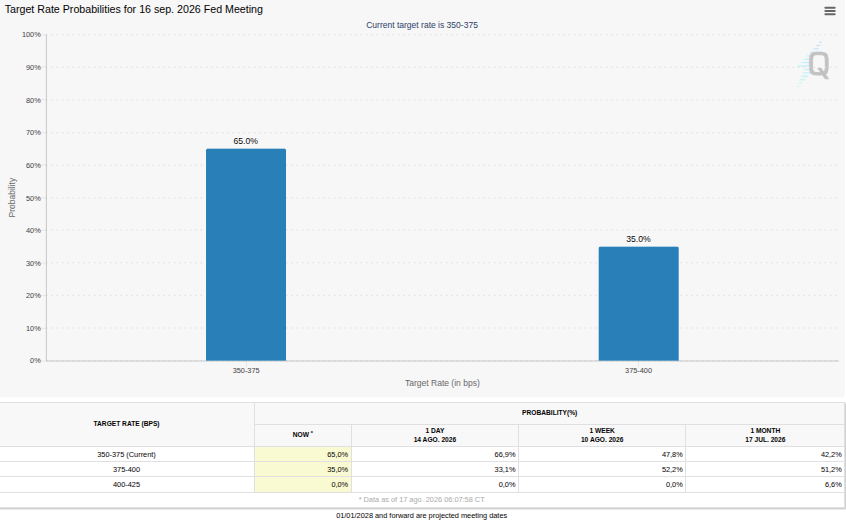
The S&P 500 closed down 0.52% on Monday while Bitcoin surged past $64,000, a sharp divergence just two days before the Federal Reserve releases its July meeting minutes.
Markets are now in a holding pattern, with every asset class waiting for a single document to set the direction.
Why S&P 500 Fell While Bitcoin Rallied
Bitcoin moved in the opposite direction entirely. The token gained roughly 2%, climbing from the weekend’s close near $62,800 to $63,000, with a move toward levels above $64,000.
Capital rotation into alternative risk assets helps explain that strength. Traders also priced in the possibility that the minutes would lean dovish, or at least avoid an overtly hawkish tone.
Bitcoin’s correlation with equities has stayed inconsistent throughout 2026. This session, it functioned more like a relative haven while stocks absorbed profit-taking.
Follow us on X to get the latest news as it happens.
FOMC minutes are the detailed record of a Federal Reserve policy meeting, published three weeks after the decision itself. Wednesday’s release covers the July 28-29 gathering. That meeting kept rates unchanged at 3.50% to 3.75%, but the vote split 9-3. Three members dissented in favor of a 25-basis-point hike.
The S&P 500 pulled back from last week’s record highs near 7,800, closing at 7,745 points. Several pressures converged on the same session.
Oil prices climbed on renewed US-Iran tensions, reviving inflation concerns across markets. The 30-year Treasury yields simultaneously reached levels unseen since 2007.
Retail data added further weight. July retail sales fell 0.6%, and investors now await earnings from Home Depot and Walmart to confirm consumer weakness.
What the Fed Minutes Could Change Next
Wednesday’s document carries genuine weight for both markets. A more hawkish internal debate, emphasizing persistent inflation and the risk of a September tightening, would likely pressure the S&P 500 further.
Rate-sensitive sectors like technology would likely decline. Bitcoin has historically reacted with volatility to shifting monetary policy expectations, too.
Markets currently price September hike odds near 35%. A minutes-driven repricing higher would likely weigh on both stocks and crypto simultaneously. A balanced tone would shift that calculus considerably. Focusing on slowing labor market growth or softening consumption could instead support a rebound in both assets.

Context matters for perspective. The S&P 500 has still gained more than 13% year-to-date, driven by solid corporate earnings throughout the period. Bitcoin, by contrast, remains well below its 2025 highs despite Monday’s rally. The gap between the two trajectories underscores how differently investors are positioning right now.
Attention over the coming hours centers on how the minutes interact with corporate earnings and unfolding geopolitical developments. The divergence itself reflects a market stuck in waiting mode.
Selective, nervous, and ready to react sharply to any clear signal from the Federal Reserve, caution remains the dominant strategy across both equities and digital assets right now.
Subscribe to our YouTube channel to watch leaders and journalists provide expert insights.
The post S&P 500 Falls, Bitcoin Surges as Traders Await the Fed Minutes: What Next? appeared first on BeInCrypto.
BitMart’s Chinese-language account has demanded answers from founders Sheldon Lee and Yi Li over frozen user funds and unpaid employee salaries, giving them until August 19 to respond publicly.
The statement also calls for verifiable asset disclosures and a detailed repayment plan as questions grow over what happened to funds held on the exchange.
BitMart Faces Questions Over User Funds and Withdrawals
In a post published on August 17, the account said many users still cannot withdraw their funds, while some employees have yet to receive their final salaries or compensation.
“This isn’t some business dispute that can be brushed off with a single ‘ceasing operations’ statement,” it wrote.
The statement demanded evidence showing BitMart’s current wallets, assets, liabilities, and usable reserves. It also asked management to explain who restricted withdrawals, when the decision was made, and when executives first knew users could no longer withdraw normally.
The account further questioned whether BitMart continued encouraging deposits or trading after management became aware of withdrawal problems. It called for an investigation into affiliated accounts, related companies, trusts, and other arrangements involving BitMart-related funds. The statement also raised questions about accounts allegedly linked to Yi Li that may have held tens of millions of dollars and recorded batch withdrawals.
However, the account stressed that the allegations had not been proven and said that potentially criminal conduct should not be alleged before the evidence is complete. It nevertheless demanded explanations about the source and destination of funds if the accounts existed.
Employee compensation was another focus, with the post contending that rank-and-file workers did not decide how company funds were managed or when operations would end; thus, salaries and outstanding compensation should be paid in full.
The August 19 deadline also covers a repayment plan detailing remaining assets, total liabilities, expected user recoveries, repayment order, start and completion dates, oversight arrangements, and potential independent audits.
Sheldon Lee responded, saying the material cited by the Chinese account consisted of “fabricated rumors.” According to him, BitMart had collected evidence and would file a police report during US daytime hours, alongside a lawyer’s letter to X seeking technical and data forensics.
Blockchain investigator ZachXBT questioned why BitMart would not simply return the funds if it had sufficient liquidity. He also criticized the lack of transparency around users’ access to their money.
But in a later update, Lee claimed that the account had been hacked and the issues raised had not been posted by current employees.
Shutdown Timeline Adds Pressure
The dispute comes shortly before BitMart’s planned shutdown, with a July 26 notice informing users that the exchange would discontinue trading services on August 26, and its official shutdown is scheduled for January 31, 2027.
That announcement placed BitMart alongside other crypto platforms preparing to close during a difficult market period, including BitMEX, which told its customers on July 23 that it would stop operations by September 23. According to analysts like Ran Neuner, the exchange shutdowns are part of a broader market clean-up.
The post BitMart Account Demands Answers Over Frozen User Funds and Unpaid Salaries appeared first on CryptoPotato.
Jim Cramer says four memory chip stocks still have room to climb, even after posting some of 2026’s biggest gains. The Mad Money host argues Micron, SanDisk, Seagate, and Western Digital have broken their old boom-and-bust pattern.
AI data centers have created a persistent memory chip shortage. Elon Musk has called memory the key bottleneck to data center growth, and Cramer says that shortage, not hype, separates this rally from prior cycles.
Micron (MU)
Cramer’s Charitable Trust bought Micron last week during a pullback tied to South Korean peers’ selloff. He calls the stock more of a growth name than its rivals.
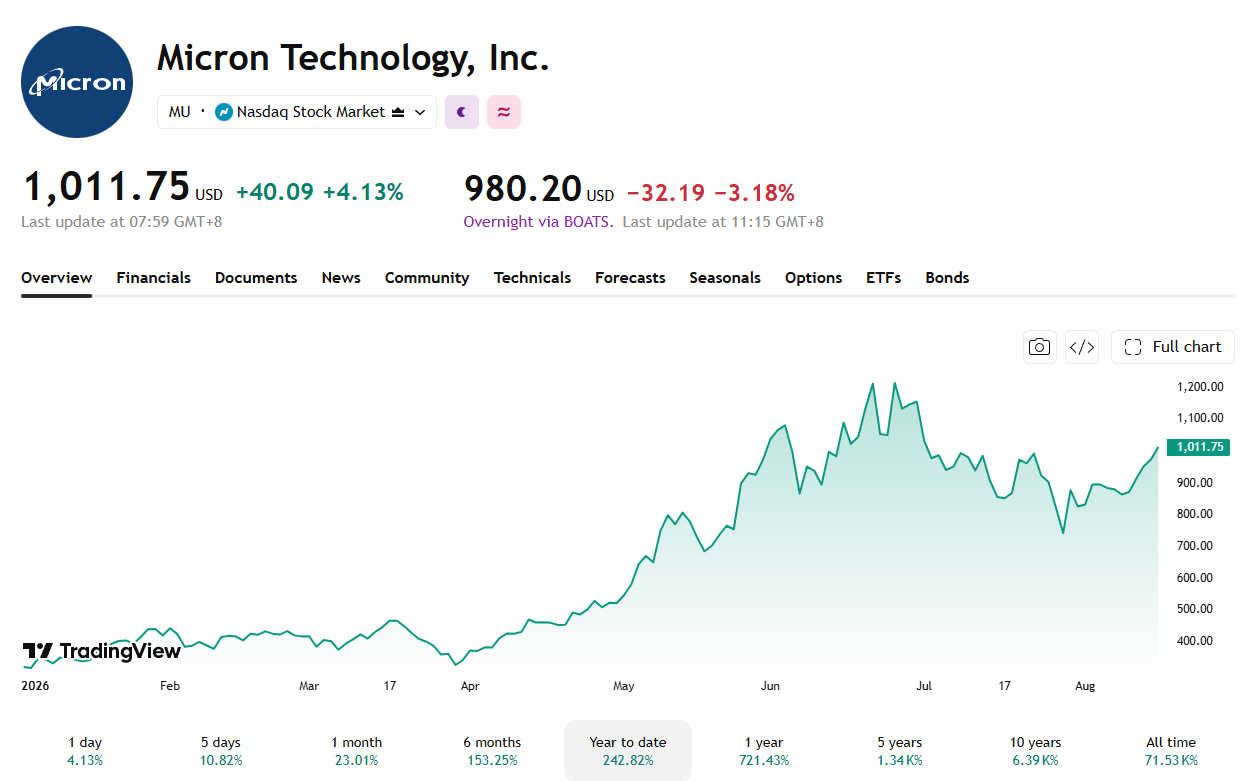
Micron has gained 242% this year, and gross margin jumped from 39% to 85% year over year. Shares trade near seven times fiscal 2027 earnings estimates.

Cramer said Micron could double again if data center demand holds, and he plans to visit the company’s Idaho research facility this week to interview CEO Sanjay Mehrotra.
SanDisk (SNDK)
SanDisk has climbed 631% in 2026, and is one of the best preforming stocks thus far. The company authorized a $15.5 billion buyback and posted an 85% gross margin, up from 26% a year earlier. Shares trade near eight times fiscal 2027 earnings estimates.

Seagate (STX)
Seagate is up 252% this year. It authorized a $5 billion buyback last year and posted a record 52% gross margin, up from 37%. The stock trades around 17 times fiscal 2028 earnings estimates.

Western Digital (WDC)
Western Digital has gained 202% in 2026. The company approved a $4 billion buyback and lifted gross margin to 54% from 41%. Shares trade near 16 times fiscal 2028 earnings estimates. Only Micron has skipped a buyback so far, a gap Cramer called curious given the other three companies’ payouts.
Multiyear supply agreements underpin those margins. BeInCrypto previously reported multiyear customer agreements worth $93.9 billion across eight clients, including three US hyperscale data center operators, cited by Evercore ISI as the basis for a bullish SanDisk rating.
The case is not one-sided. BeInCrypto has covered supply glut fears hitting these same names, and Cramer warned three weeks ago that the AI trade echoed the dot-com bust.
Cramer said the biggest risk is Samsung ramping new capacity to flood the market, but he does not expect that to happen soon since new fabs take years to build.
The post 4 Memory Stocks Cramer Says Could Avoid an AI Bust and Keep Climbing appeared first on BeInCrypto.


Payward, the parent company of cryptocurrency exchange Kraken, joined Anthropic’s Project Glasswing on Aug. 17 and gained restricted access to Claude Mythos 5 for defensive cybersecurity work.
Summary
- Payward joined Anthropic’s Project Glasswing and gained restricted access to the Claude Mythos 5 model.
- The company plans to scan all Payward environments for software vulnerabilities within the coming weeks.
- Payward says validated third party findings will be shared with relevant open source project maintainers.
- Anthropic limits Mythos 5 access to vetted organizations because its cybersecurity capabilities carry misuse risks.
- Mythos 5 usage requires customers to accept thirty day data retention for Anthropic safety monitoring.
The company plans to use the artificial intelligence model to scan its software environments for vulnerabilities over the coming weeks. Findings will enter Payward’s existing security review process rather than automatically producing software changes.
Payward also said it intends to disclose validated vulnerabilities affecting third party open source projects to their maintainers. The company did not identify its first scanning targets, publish a deployment schedule or disclose the cost of its Mythos 5 access.
Payward will scan its software environments
Payward said Claude Mythos 5 will examine all company environments for software weaknesses. Its infrastructure supports digital asset trading, custody and settlement services that remain available continuously.
The announcement does not specify whether Mythos 5 will receive access to production systems, isolated copies of source code or controlled testing environments. Payward also did not describe how its security team will validate findings before approving fixes.
False positives remain a practical concern when artificial intelligence systems review complex software. A model may identify unreachable code, duplicate an existing report or misunderstand how a component operates in production. Human review is therefore required before teams classify an issue as a vulnerability.
The Ethereum Foundation reached a similar conclusion while testing AI security agents. As crypto.news reported, its researchers found that AI generated vulnerability reports still required independent human validation, particularly when agents examined complex protocol code.
Payward cochief executive Arjun Sethi said AI could change the imbalance between attackers and defenders by reading code at greater scale.
“A model can read every line of code the way an attacker would, at machine scale, so we find the flaw before anyone can build the exploit,” Sethi said.
The statement describes Payward’s intended defensive advantage. The company has not yet published results showing how many valid flaws Mythos 5 found within its systems.
Project Glasswing restricts access to vetted partners
Anthropic launched Project Glasswing in April 2026 to give selected infrastructure providers and software maintainers early access to its strongest cybersecurity models.
Initial participants included Amazon Web Services, Apple, Cisco, CrowdStrike, Google, JPMorganChase, Microsoft, Nvidia, Palo Alto Networks and the Linux Foundation. Anthropic later expanded the initiative to approximately 150 organizations across more than 15 countries.
The company says participating organizations must meet security requirements before receiving access. Mythos 5 is not generally available because the same capabilities used to identify vulnerabilities can also help produce working exploits.
As previously reported, Anthropic restored Mythos access only to vetted U.S. organizations after the U.S. government lifted temporary export restrictions. The safeguarded Claude Fable 5 model returned to wider availability.
Payward said its access followed the U.S. decision allowing Mythos 5 to reach organizations that operate and defend critical infrastructure. Anthropic’s official model page confirms that access was restored for a set of U.S. organizations following government approval.
Neither Anthropic nor the U.S. government has publicly designated every digital asset platform as critical infrastructure. Payward’s statement that such platforms “belong on that list” represents the company’s position rather than a formal government classification.
Claude Mythos 5 carries defensive and offensive risks
Anthropic describes Claude Mythos 5 as its most capable model for cybersecurity and biology research. The model can inspect code, identify weaknesses, suggest patches and assist approved researchers with testing exploit paths.
Project Glasswing’s earlier Mythos Preview reportedly found more than 10,000 flaws classified as high or critical severity across widely used software. Anthropic’s coordinated disclosure dashboard showed 1,596 vulnerabilities reported across 281 open source projects as of May 22.
Those figures are Anthropic’s measurements and do not mean every initial model finding was valid. Its dashboard recorded a 90.8% true positive rate among 1,900 candidates reviewed by external security firms.
Anthropic said independent human triage remains the limiting stage. Only 97 listed findings had been patched upstream at the time of the dashboard update, while 88 had received a public advisory identifier.
The model can also create exploit components and combine them into attack chains. Anthropic cited this dual use capability when explaining why Mythos 5 remains limited to approved partners.
In related coverage, researchers found that Mythos class models could turn software flaws into working exploit chains. Wider access would therefore give attackers some of the same capabilities available to defenders.
Open source findings will go to maintainers
Payward said vulnerabilities discovered in shared third party code will be sent to the relevant project maintainers. It presented that process as a way to protect other organizations using the same software.
The company did not publish a coordinated disclosure policy for the initiative. Important unanswered details include how long maintainers will have to patch flaws, which findings Payward may disclose publicly and how it will handle projects that do not respond.
Responsible disclosure normally requires researchers to verify a vulnerability, contact the maintainer privately and allow time for remediation before releasing technical information. Premature publication can expose users before a patch becomes available.
Payward has previously faced disputes over security research. As crypto.news reported, Kraken patched a deposit flaw that researchers used to withdraw nearly $3 million. The exchange later recovered the funds following a public disagreement with CertiK.
That episode was unrelated to Project Glasswing, but it shows why clear testing and disclosure rules matter. AI scanning can increase the number of reported findings, creating additional work for security teams and maintainers.
What happens next for Payward’s AI security rollout
Payward plans to begin scanning its environments within weeks. The next verifiable updates would include confirmed vulnerabilities, completed patches or public disclosures coordinated with affected open source projects.
No performance targets were announced. Payward did not say how frequently Mythos 5 will scan its systems or whether the model will review new code before deployment.
Anthropic requires Mythos 5 customers to accept thirty day data retention for safety monitoring. Payward has not explained what code or system information will be submitted, how sensitive data will be separated or whether customer information falls outside the scanning process.
For now, the confirmed development is Payward’s admission to Project Glasswing and planned use of Claude Mythos 5. Whether the model improves the company’s security will depend on the quality of its findings, human verification and the speed of subsequent patches.


Anthropic’s annualized revenue run rate reached $65 billion at the end of July, roughly $25 billion above OpenAI’s, according to people familiar with the figures.
The company shared the number in a routine investor update as it prepares for a public listing. Bloomberg reported that the debut could come as soon as this fall.
Anthropic Revenue Run Rate Expands 622% Since Late 2025
Annualized revenue run rate is an estimate of how much revenue a company would generate over a full year if its current revenue pace continued unchanged. Anthropic crossed roughly $9 billion at the end of 2025 and $47 billion in May, Bloomberg reported.
That path works out to a 622% expansion across seven months. The May-to-July stretch alone added $18 billion, a gain of about 38%.
Meanwhile, the AI firm’s preliminary second-quarter revenue topped $11.5 billion, against $787 million in the same quarter a year earlier. Quarterly revenue also more than doubled from $4.73 billion in the first quarter.
Anthropic posted positive adjusted operating income for the period. The company reportedly generated about $10 billion in total revenue throughout 2025, according to financial figures cited by CNBC.
Follow us on X to get the latest news as it happens
OpenAI Trails at $40 Billion While Listing Date Stays Open
Bloomberg reported last week that rival OpenAI is on track for a run rate above $40 billion. That figure roughly doubles its level at the end of 2025.
Neither number came from the companies themselves. Both trace to people familiar with the matter, and the two firms may not calculate the metric the same way.
Anthropic filed a confidential prospectus with the Securities and Exchange Commission (SEC) in June and has since held preliminary investor meetings.
According to Bloomberg, Anthropic is expected to make its Wall Street debut as soon as this fall. Financial Times reported that investors are expecting it to “float at a valuation of $2 trillion.”
Subscribe to our YouTube channel to watch leaders and journalists provide expert insights
The post Anthropic Run Rate Hits $65 Billion and Leaves OpenAI $25 Billion Behind appeared first on BeInCrypto.


Cointelegraph is committed to providing independent, high-quality journalism across the crypto, blockchain, AI, and fintech industries.
All news, reviews, and analyses are produced with full journalistic independence and integrity. For more details on our standards and processes, please read our Editorial Policy.


Stripe has reportedly finalized an agreement to acquire AI model-routing platform OpenRouter for more than $7 billion, months after the startup was valued at $1.3 billion in its latest funding round.
Summary
- Stripe has reportedly agreed to acquire OpenRouter for more than $7 billion.
- OpenRouter was valued at $1.3 billion after raising $113 million in May.
- The platform provides access to more than 500 AI models from over 80 providers through a single interface.
- Stripe has been expanding its infrastructure for AI agents and machine initiated payments.
Bloomberg reported on Sunday that Stripe had reached a deal to buy OpenRouter, citing people familiar with the matter, while TechCrunch later reported the transaction and noted that Stripe had not formally announced the acquisition.
A Stripe spokesperson declined to confirm the deal, telling TechCrunch that the company “does not comment on rumors or speculation.” The reported agreement therefore remains unconfirmed by Stripe or OpenRouter despite multiple reports that negotiations have concluded.
OpenRouter gives developers a single interface for accessing hundreds of artificial intelligence models from providers including OpenAI, Anthropic, Google and DeepSeek. Developers can move workloads between models without rebuilding their integrations, while its system also manages billing, routing and fallback providers when services become unavailable.
The model has turned OpenRouter into a fast-growing layer between AI developers and the companies supplying the underlying models. OpenRouter currently lists more than 500 models and over 80 providers under its paid plans, according to its website.
CEO Alex Atallah has previously described the service as the “Stripe for AI,” comparing its single integration for multiple AI providers with Stripe’s role in simplifying access to payment infrastructure. Axios reported the comparison in July as Stripe was already discussing a possible takeover of the startup.
OpenRouter acquisition follows rapid growth in AI usage
OpenRouter’s reported sale price comes less than three months after a major financing round that placed a much lower value on the business.
The company announced in May that it had raised $113 million in Series B funding led by CapitalG, Alphabet’s independent growth fund. NVentures, ServiceNow Ventures, MongoDB Ventures, Snowflake Ventures, Databricks Ventures, AMP PBC and Pace Capital participated alongside existing investors Andreessen Horowitz and Menlo Ventures.
TechCrunch reported at the time that the financing valued OpenRouter at about $1.3 billion on a post-money basis. A $40 million Series A completed in June 2025 had put its estimated valuation at about $547 million, meaning the reported Stripe agreement would value the startup at more than five times its May level.
Usage increased at a similar pace. OpenRouter said in May that weekly processing volume had reached 25 trillion tokens, equivalent to about 100 trillion tokens per month, compared with 5 trillion tokens per week six months earlier. The company described the increase as fivefold growth in processing volume.
OpenRouter was already serving more than 400 models across over 60 providers by June 2025, when Menlo Ventures said the platform had more than 2.5 million developers. The company has since expanded the number of models and providers available through its interface.
OpenRouter’s role in AI infrastructure has also extended into decentralized computing. A June io.net development covered by crypto.news identified the decentralized GPU network as one of the inference providers using OpenRouter, with io.net reporting more than 4 billion inference tokens processed each day at the time.
Stripe has expanded into AI agent payments
Stripe’s reported OpenRouter deal comes as the payments company builds infrastructure designed for transactions initiated by AI software.
During July talks over a possible acquisition, Axios cited an earlier Stripe statement saying that as tokens become more interchangeable with money, real-time streamed payments would form an important part of the company’s economic infrastructure for AI.
Stripe has already entered machine-to-machine payments through Coinbase’s x402 protocol. As reported in May, Stripe launched x402 payments on Base that allow AI agents to pay for APIs, data and computing resources with USDC.
The protocol lets software agents make payments for online services without relying on the account and checkout systems built around human customers. Coinbase has positioned x402 as a payment standard for services including data access, API calls and other machine-readable products.
Stripe is also among the companies supporting the x402 Foundation. Google, Microsoft, Amazon Web Services, American Express, Mastercard, Visa, Circle and other technology and payments companies have backed the standard as autonomous software begins handling more commercial tasks.
By April, Coinbase had also launched Agentic.market, a service where AI agents can find and purchase online services through x402. Its agent services marketplace included providers covering inference, data, media, infrastructure and trading, with OpenAI among the named inference services available at launch.
A later Keyrock study found that AI agents had settled more than $73 million across 176 million transactions during a 12-month period, with USDC accounting for 98.6% of payments tracked in the report. The findings placed Stripe, Coinbase, Google, Visa and American Express among companies developing different approaches to machine payments.
Stripe could control model routing and transaction infrastructure
OpenRouter would give Stripe infrastructure at another part of an AI agent’s workflow if the reported transaction closes.
OpenRouter handles the model-selection side by giving applications access to different AI systems through one API. Its documentation says customers can use a unified interface and billing system while taking advantage of provider fallbacks, allowing requests to move between available providers when required.
Stripe, meanwhile, supplies payment infrastructure used by internet businesses and has been expanding its work around stablecoins, AI billing and autonomous payments. The Wall Street Journal reported in July that OpenRouter already used Stripe to accept payments from its customers, meaning the companies had an existing commercial relationship before acquisition talks emerged.
The Journal reported on July 23 that Stripe was discussing an OpenRouter purchase that could value the company at roughly $10 billion, although negotiations had not been completed and other companies had shown interest. The reported price under the finalized agreement is now more than $7 billion.
OpenRouter’s model-neutral approach remains central to its product
OpenRouter has built its service around giving developers access to competing AI models without requiring separate integrations with every provider.
Its current pricing page lists more than 500 models from over 80 providers, while features include automatic routing and the ability for customers to select preferred vendors. OpenRouter says underlying provider prices are passed through without a model-level markup, while the platform charges customers when they purchase credits.
The structure allows developers to select models based on factors including price, capabilities, and availability instead of committing an application to one AI company.
Researchers have also used OpenRouter’s traffic to study AI adoption. A study released this year by researchers from OpenRouter and Andreessen Horowitz analyzed more than 100 trillion tokens of real-world interactions across different models, tasks and locations, finding substantial use of open-weight models as well as increased agent-based inference.
Stripe has not disclosed whether OpenRouter would continue operating independently, become part of its existing developer products, or be integrated with its AI payment infrastructure if the reported acquisition is completed. No public announcement from either company has detailed product changes for OpenRouter users following the reported agreement.

In this photo illustration, the stock market information of Synchrony Financial displayed on a smartphone while the logo of Synchrony Financial seen in the background.
Igor Golovniov | Lightrocket | Getty Images
Editor’s note: A previous version of this story, based on information provided by a Synchrony Financial executive, mischaracterized the collaboration between Synchrony and OpenAI. Details, quotes and characterizations attributed to Synchrony and the executive have been removed. A corrected version is below.
Synchrony Financial, the credit card issuer for brands including Amazon, Walmart and Lowe’s, on Monday announced a collaboration with OpenAI allowing the artificial intelligence company’s models to power the card company’s consumer portals.
“AI is creating an opportunity to reimagine the entire commerce experience, from how customers discover products to how they pay, earn rewards, and build loyalty,” said Kaylin Voss, vice president of Americas and Industries at OpenAI, in a press release.
“Synchrony is approaching that opportunity from both sides: bringing OpenAI into the experiences it creates for customers and partners, while deploying our most advanced models and tools across its own enterprise,” she said.
By using OpenAI’s models, Synchrony hopes it can remain relevant in a future where AI agents help to research and purchase items. The partnership, which is in its early stages, is a step toward enabling Synchrony customers to have smoother online shopping experiences.
Separately, Synchrony said it is launching a ChatGPT plugin that lets consumers browse its marketplace deals, promotional financing and partner offers, and that it is deploying OpenAI’s latest models internally to speed up product development.
The moves come as OpenAI prepares for its massive potential initial public offering, adding pressure on the company to turn ChatGPT into a broader platform for online commerce.


The People’s Bank of China has added eight commercial banks to its digital yuan operating network, taking the number of e-CNY service operators to 30 as the central bank continues expanding access to its state-backed digital currency.
Summary
- China’s central bank has added eight banks to the digital yuan network, taking the number of operators to 30.
- The new banks will begin offering e CNY services after completing business and technical preparations.
- The expansion follows changes allowing verified digital yuan wallets to earn interest from January 2026.
- China has also increased cross border e CNY trials, including a July payment between China and Singapore.
According to an Aug. 17 statement from the People’s Bank of China, Ping An Bank, Hengfeng Bank, China Bohai Bank, Bank of Shanghai, Bank of Hangzhou, Huishang Bank, Bank of Changsha and Guangxi Beibu Gulf Bank have been approved as banking institutions permitted to operate digital yuan services.
The eight banks have also been connected to the central bank-side digital renminbi system, putting the technical link needed for them to provide e-CNY services in place. Customer-facing operations will begin after each institution completes its remaining business and technical preparations, the PBOC said.
With the additions, the number of authorized digital yuan operators has risen from 22 to 30. The central bank said it will continue bringing more institutions into the system under market-oriented and rule-based principles while seeking an open and fair competitive environment for digital renminbi services.
Digital yuan operator network has expanded rapidly in 2026
The latest additions come just over four months after the PBOC approved another group of banks to provide digital yuan services.
On April 2, the central bank added 12 institutions, including China CITIC Bank, China Everbright Bank, Hua Xia Bank, China Minsheng Bank, China Guangfa Bank, Shanghai Pudong Development Bank, China Zheshang Bank, Bank of Ningbo, Bank of Jiangsu, Bank of Beijing, Bank of Nanjing and Bank of Suzhou.
That round increased the number of banking operators to 22, according to the PBOC announcement at the time. The newly approved institutions were similarly required to complete business and technical preparations before commencing digital yuan operations.
Adding another eight banks in August has taken the network to 30 operators within the same year, extending participation to institutions including national joint-stock banks and several city and regional commercial banks.
The PBOC tied the latest expansion to China’s 15th Five-Year Plan for 2026–2030, which calls for the steady development of the digital renminbi. The central bank said the additional operators are intended to improve access to e-CNY services and respond to demand for payment options that are secure, convenient and efficient.
China has been developing the digital yuan through a two-tier structure in which the central bank controls the underlying currency and infrastructure while approved commercial institutions handle services for users. Earlier PBOC documentation described commercial banks as a key part of the distribution model, allowing the central bank to use existing financial infrastructure instead of serving every retail user directly.
Digital yuan now operates more like a bank deposit
The expansion of the operator network follows a major change to how digital yuan balances are treated within China’s banking system.
Beginning Jan. 1, 2026, banks were allowed to pay interest on verified digital yuan wallets after the PBOC changed the framework governing e-CNY balances.
As crypto.news previously reported, verified digital yuan balances became eligible for interest under the same self-regulatory arrangements used to determine rates on conventional deposits. The balances also received protection under China’s national deposit insurance system.
Before the change, the e-CNY had primarily operated as a digital form of cash. Under the revised structure, commercial banks can manage eligible digital yuan balances within their asset-liability operations, while non-bank payment firms must keep customer reserve funds in digital yuan at a 100% reserve ratio, according to the PBOC framework.
Official figures cited when the changes were announced showed that the digital yuan had processed 3.48 billion transactions by November 2025. Chinese authorities have continued testing new uses for the currency after years of domestic pilot programs involving retail payments, public services and commercial transactions.
The addition of more commercial banks gives the PBOC another route to extend e-CNY services through institutions that already maintain customer relationships and payment infrastructure across different parts of China.
Cross-border digital yuan use has also advanced
Alongside domestic banking changes, Chinese institutions have continued testing digital yuan infrastructure for cross-border payments.
In July, the Shanghai branch of the Industrial and Commercial Bank of China and ICBC Singapore completed the first China-Singapore payment through the upgraded Digital Currency Express comprehensive settlement platform, known as CBETS.
The transaction covered nearly 10 million yuan in import shipping costs for a subsidiary of a centrally owned enterprise. Funds were settled entirely in digital renminbi and reached the recipient in Singapore on the same day, according to Mobile Payment Network.
CBETS was developed by the International Operation Center for the digital renminbi under the guidance of the PBOC’s Digital Currency Research Institute. The upgraded infrastructure combines earlier cross-border payment, blockchain service and digital asset systems while supporting ISO 20022 messaging standards used across international financial networks.
ICBC has also established digital yuan payment and collection links involving Singapore and Laos through the system, while its Inner Mongolia branch completed a 220 million yuan transfer to Hong Kong through the multilateral CBDC bridge, according to the same July report.
Guangdong is seeking more digital yuan payment trials
Regional authorities have also included e-CNY expansion in financial policy proposals for the 2026–2030 period.
Earlier in August, Guangdong published a draft development plan proposing more cross-border e-CNY trials within the China (Guangdong) Pilot Free Trade Zone. The consultation document called for additional digital yuan use cases alongside cross-border financial products, offshore finance, green finance, asset management and fintech testing.
The Guangdong proposal also called for larger cross-border digital yuan payment programs and further development of the Cross-boundary Wealth Management Connect scheme. Public consultation on the draft is scheduled to remain open until Sept. 5.
According to the same proposal, financial institutions in the free trade zone could also be encouraged to develop cross-border supply chain finance products and intellectual property pledge financing, while authorities intend to continue trials involving cross-border credit asset transfers and multi-currency integrated accounts.
The upgraded international digital yuan platform had signed direct participant agreements with an initial group of 26 financial institutions by June, including ICBC Asia, Bank of China Hong Kong, Standard Chartered China and ICBC branches operating in Singapore, Thailand, Laos, Macau and Qatar.

Strong earnings propel mid- and small-cap stocks to a significant rally on D-St

Jane Street Discloses Nearly $1 Billion Bitcoin ETF Position After $15 Billion Loss

Bold and Beautiful 2-Week Spoilers Aug 17-28: Electra’s Savage Jab & Katie Seethes with Anger!


-

 Fashion3 days ago
Weekend Open Thread: Ann Taylor
-
 NewsBeat6 days ago
Communication cards help banking customers access services or report scams
-
 Sports4 days ago
This U.S. Amateur is a glimpse into golf’s future in more ways than you think
-
 NewsBeat3 days ago
Myanmar says over 300,000 Rohingya refugees verified for repatriation as exodus enters ninth year
-

 Sports3 days ago
Birmingham 2026: Day 6 Timetable for Irish Athletes
-

 Politics3 days ago
SEQ Code: The Three Letter Boarding Pass Code That Could Give You The Worst Seat
-
 Entertainment6 days ago
Keke Palmer Subtly Hints At Sean Evans Drama With Cryptic Post
-

 Fashion6 days ago
Coffee Break: The Fonteyn Jane Flat
-

 Fashion6 days ago
Should you refinance your debt? Pros, cons, and real numbers
-

 Tech6 days ago
Zoom Screen-Sharing Bug Let People Fully Take Over Other Devices On A Call
-

 Fashion7 days ago
Claire Life: Kicking Off MVAAFF With the C Suite Luncheon Featuring Phylicia Rashad, Letoya Luckett, and More!
-
 Crypto World6 days ago
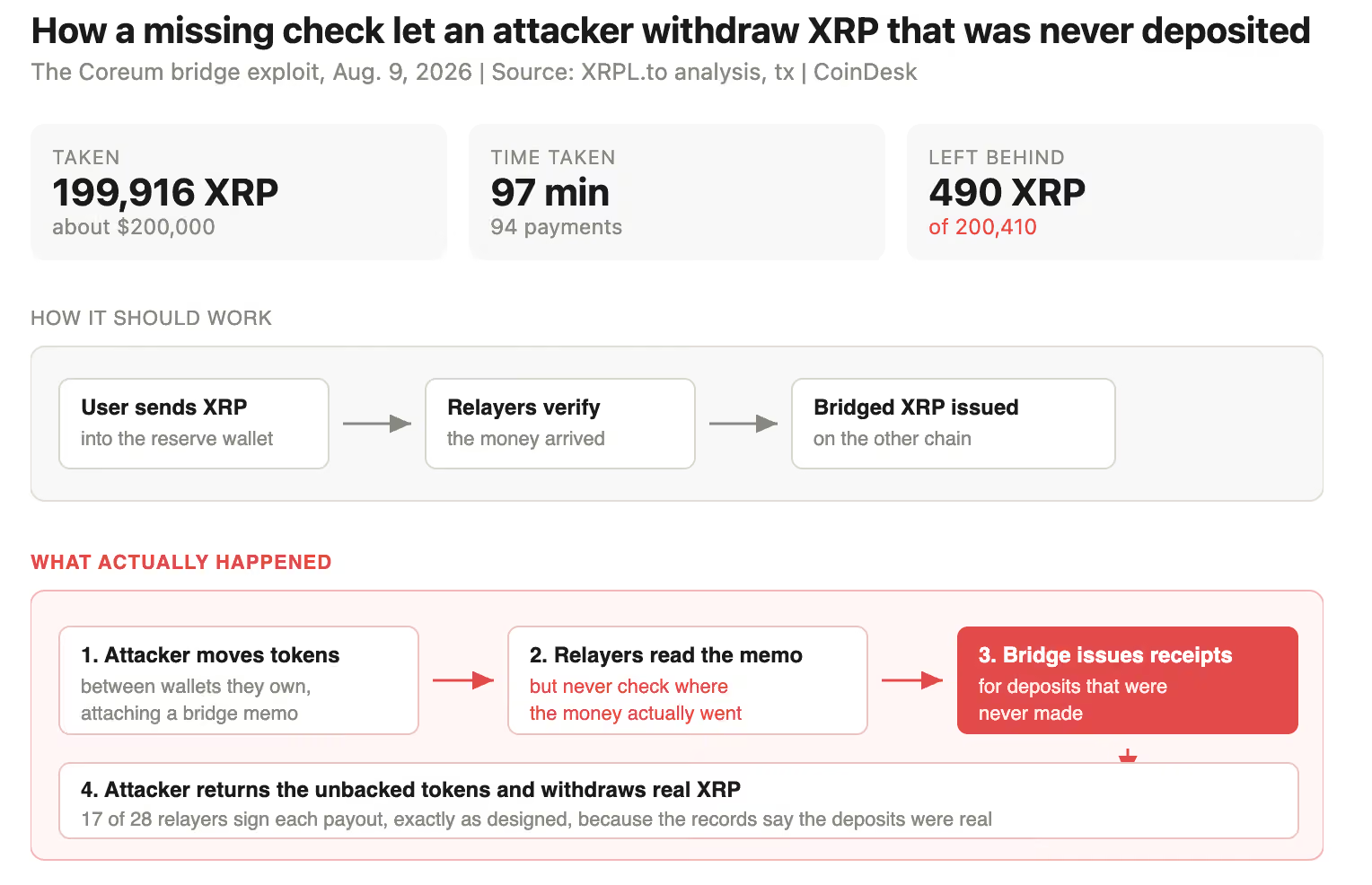
XRP bridge drained after software mistook fake deposits for real ones
-

 Sports5 days ago
DeQuan Jones in ‘high spirits’ after successful leg surgery
-

 Business7 days ago
(VIDEO) Emirates Unveils 2.4-Meter Arsenal Crest Sculpture Built From Recycled A380 And Boeing 777 Jet Parts
-

 Fashion7 days ago
French Rose Gown with Cape Sleeves
-

 Tech4 days ago
DeepSeek Harness launches as open source rival to Claude Code, alongside V4-Pro on API with higher prices
-
 Tech4 days ago
11 Ways to Rank Your Videos
-
 Entertainment7 days ago
Star Wars Officially Continues ‘The Last Jedi’ With a New Spin-Off
-

 Politics6 days ago
In the Chris Kaba case, the police watchdog capitulated to the mob
-
 Crypto World6 days ago
Perplexity AI Predicts an XRP Scenario Few Analysts Are Discussing
You must be logged in to post a comment Login