
Crypto World
Bitwise Debuts First Lighter (LIT) ETP in Europe


Bitwise Asset Management has launched an exchange-traded product (ETP) in Europe tracking Lighter, giving traditional investors a way to bet on one of Hyperliquid’s emerging rivals without buying its token directly.
On Wednesday, Bitwise said its Bitwise Lighter Staking ETP (BLIT) had launched on Deutsche Börse Xetra, making it the first exchange-traded product tracking LIT, the native token of decentralized derivatives platform Lighter.
The product is fully backed by LIT held in cold storage and carries a 0.85% annual expense ratio. European investors can buy the ETP through a regular brokerage account without buying or holding LIT directly.
Despite its name, BLIT isn’t generating staking rewards yet. Bitwise said staking will begin once the product reaches enough assets under management to make the process efficient. Until then, the ETP will track LIT’s price without generating staking returns.
The Lighter product follows Bitwise’s launch of a Hyperliquid staking ETP in Europe in April, as the asset manager expands its lineup to include tokens tied to some of the largest decentralized derivatives platforms.
Lighter is an Ethereum-based decentralized exchange focused on perpetual futures, using zero-knowledge proofs to verify trades while allowing users to retain control of their assets rather than depositing them with a centralized exchange. The platform also offers zero-fee trading for retail users, part of its effort to compete with established decentralized derivatives platforms such as Hyperliquid.
Lighter recorded nearly $1.8 billion in trading volume over the past 24 hours, according to CoinGecko data.
Related: Bitcoin will get ‘lift’ from Hyperliquid, Robinhood in next crypto bull market: Bitwise exec
Lighter takes on the perp market leader
Lighter gained a major distribution channel in July when Robinhood integrated the exchange into Robinhood Chain, its Ethereum layer-2 network. Eligible Robinhood Wallet users can trade perpetual futures through Lighter, with trades settled using Lighter smart contracts on Robinhood Chain.
Hyperliquid remains the much larger player. Unlike Lighter, which operates as an Ethereum layer-2, Hyperliquid runs on its own layer-1 blockchain. It controlled more than 61% of decentralized perpetual futures trading, according to data cited by The Motley Fool, and has continued to expand through its own partnerships.
In May, Circle announced a deal to expand USDC usage on Hyperliquid, including deeper liquidity and easier transfers of the stablecoin across blockchains. At the time, roughly $5 billion in USDC was held on Hyperliquid, according to Coinbase.
Magazine: HYPE price could suffer as Binance takes its revenue: Alice Liu


Ethereum Price Prediction, September 23: Ethereum (ETH) trades at $2,735, down a marginal 0.61% over the past 24 hours, a pause, not a reversal, after a week that saw the token gain 15% and reclaim territory it hadn’t touched since October.
US spot ETH ETFs pulled in roughly $270 million on Monday, the largest single-day inflow since October, extending a two-day streak worth $413.8 million that erased the prior three days of outflows.
Yesterday was a strong day for US spot crypto ETFs.$BTC led with $714.75M inflows, while $ETH added another $162.31M. — Suzzy | DeFi
And the inflows continued across the altcoins, with $ZEC at $32.81M, $SOL at $28.87M and $XRP at $20.02M. pic.twitter.com/Q0vEw5POW0
 (@SuzzyDefi) September 23, 2026
Treasury firm BitMine Immersion added 12,500 ETH to its stack, building on last week’s 27,562 ETH purchase and pushing total holdings to 5.983 million ETH, worth a jaw-dropping $16.5 billion at time of writing.
Chairman Thomas Lee called Q3’s ETH outperformance “a prelude to a potentially stronger up move” in Q4, citing institutional underweighting of crypto relative to AI stocks this year.
The rally has held despite a Fed rate hike, Houthi advance and a stalled Clarity Act in the Senate, arguably a sign that flows, not headlines, are driving this leg. ETF inflows and resistance levels now matter more to price than regulatory noise.
Ethereum Price Prediction: Can Ethereum Price Hit $3,000 This Week?
ETH USD price is consolidating near the top of its recent range, with the 24-hour band running $2,716.89 to $2,787.96.
Buyers have consistently defended the $2,710–$2,720 zone, the former breakout level that’s now acting as near-term support.
Resistance sits at $2,750–$2,800, a level ETH is actively probing after ETF inflows accelerated.

(Source – TradingView, ETH USD)
Bull case: a clean break above $2,800 opens the door toward $3,000, a target chartist Ali Martinez has flagged from a triangle breakout pattern, with Messari’s base case extending to $3,200–$3,800 by December.
Base case: ETH grinds sideways between $2,700 and $2,800 while the market digests BitMine’s accumulation and awaits the Glamsterdam upgrade’s October 6 testnet launch.
Bear case: a slip below $2,400–$2,405 invalidates the current structure entirely. Prediction markets currently assign just a 38% probability to ETH closing September above $2,750 — a reminder that conviction here is thinner than the chart suggests.
Don’t Miss Out on Our $1,000 USDT Airdrop on ByBit
LiquidChain Targets Early Mover Upside as Ethereum Tests Key Levels

Anyone holding ETH since the June lows is sitting on solid gains, and the ETF flow data validates the position. But here’s the uncomfortable math: at a $330 billion-plus market cap, ETH needs enormous capital inflows to deliver the kind of multiples early-stage tokens can post off a fraction of that volume. That’s the gap presale plays are built to fill.
LiquidChain (LIQUID) is a Layer 3 infrastructure project built to fuse Bitcoin, Ethereum, and Solana liquidity into a single execution environment, a “deploy-once” architecture where developers build once and access all three ecosystems rather than fragmenting liquidity across chains.
The presale is priced at $0.014958 with $971,680.17 raised so far. Core features include a Unified Liquidity Layer, Single-Step Execution, and Verifiable Settlement.
Presale tokens carry the standard early-stage risk profile, no live mainnet track record yet, so allocation size should reflect that.
Those curious can research LiquidChain directly at liquidchain.com before the round progresses further.
Gain Special Access to Layer 3 Trading Here
Key Takeaways
- ETH holds above $2,700 support; a close above $2,800 could open a path toward $3,000 near-term.
- A break below $2,400–$2,405 would invalidate the current bullish structure and shift momentum bearish.
- LiquidChain’s unified liquidity layer targets cross-chain fragmentation between BTC, ETH, and SOL execution environments.
- The Glamsterdam upgrade’s October 6 testnet launch is the next major catalyst for ETH price action.
The post ETH USD Loses Ground as Ethereum Price Analysis Remains Targeting $3,000 This Week appeared first on Cryptonews.

Crypto’s rougher year didn’t prevent stablecoins from pushing deeper into cross-border payment rails. According to Chainalysis’ 2026 Global Crypto Adoption Index, stablecoin transfers across countries climbed to $220.3 billion in the 12 months ending June 2026, up 77.5% from $124.2 billion in the prior 12-month period—even as total global crypto market capitalization fell 37% to $2.1 trillion.
The data suggests stablecoins are increasingly being used for practical money movement rather than purely speculative trading. Chainalysis summed it up as: “The bear market hit the price-sensitive half of crypto and left the payments half alone.”
Key takeaways
- Cross-border stablecoin flows rose 77.5% to $220.3 billion over the year to June 2026, even as total crypto market cap dropped 37%.
- Transfers remained “trade-like” rather than bursty, averaging around $3,000 per cross-border transfer.
- Activity is concentrated: the top quarter of corridors accounted for 96.1% of measurable cross-border stablecoin value.
- Regulatory frameworks are tightening across major regions, including the US (GENIUS Act) and the EU (MiCA), alongside Hong Kong’s licensing approach.
- Traditional remittance firms are expanding stablecoin options, including card and wallet products linked to USD-backed stablecoins.
Stablecoin usage accelerates even as the market contracts
Chainalysis’ adoption index frames the latest trend as a split inside crypto itself. While investors reduced exposure to price-sensitive assets during the downturn, payment-focused activity continued to expand. In its analysis, Chainalysis connects the resilience of stablecoins to real-world transaction demand—particularly cross-border transfers that resemble everyday business and personal payments.
Over the period studied, cross-border stablecoin flows rose from $124.2 billion to $220.3 billion. At the same time, Chainalysis reported that the total crypto market cap contracted by 37% to $2.1 trillion, highlighting the contrast between speculative markets and payments infrastructure.
Chainalysis also pointed to the behavioral pattern of the transfers: activity increasingly looked consistent and scheduled, routed through wallets at a steady rhythm rather than appearing in short spikes. Philip Gradwell, vice president of economics at Tether, told Chainalysis that this “signature” reflects trade and business activity, not speculation.
From corridors to everyday payments: what the on-chain data shows
Chainalysis tracked 4,708 new cross-border corridors during the reporting period, with a combined cross-border value of $2.64 billion. In this context, each corridor represents a route between an originating and receiving country.
But the index also shows strong concentration. The top quarter of corridors accounted for 96.1% of measurable cross-border stablecoin value. Chainalysis reported that the remaining three-quarters carried $8.66 billion, up from $260 million in the previous period—suggesting more routes are participating, but value is still dominated by established pathways.
Chainalysis’ observation that the typical cross-border transfer is around $3,000 aligns with common use cases described by industry participants. In practice, this scale fits supplier payments, sending money home, and moving savings away from volatile currencies—patterns that don’t depend on crypto price momentum.
Why stablecoins are gaining traction: regulation, redemption, and utility
The index links stablecoin growth to a broader shift toward formal oversight and mainstream financial integration. Chainalysis noted that key jurisdictions have moved toward regulation and licensing, which can make stablecoins easier for institutions and service providers to build with.
In the US, the GENIUS Act was signed into law in July 2025. In Europe, the MiCA framework has brought stablecoin issuers into a clearer regulatory environment. Chainalysis also referenced Hong Kong’s issuer licensing regime as part of the move toward more structured supervision.
Still, regulation isn’t the only constraint. Vincent Chok, co-founder and CEO of First Digital, told Cointelegraph that stablecoins are an additional option when traditional payment structures become fragmented—especially when businesses need to move funds between markets with different banking systems, currencies, and settlement schedules.
Chok cautioned that stablecoins don’t remove the “off-chain” steps. “Onchain settlement is fast, but it doesn’t solve the off-chain parts: converting to local currency, meeting compliance requirements, and moving funds through existing banking rails,” he said. In other words, stablecoin throughput helps, but the surrounding financial plumbing remains a gating factor.
Regional demand differs: settlement needs in Asia and dollar access elsewhere
Stablecoin demand appears to vary by region and by what problem users are trying to solve. Tianwei Liu, co-founder and CEO of StraitsX, told Cointelegraph that in Asia, fragmented currencies and uneven payment infrastructure have created sustained demand for stablecoin settlement.
Liu also suggested that this utility is broadening beyond settlement: stablecoins are increasingly used “behind payment methods people already use,” meaning they can transition from an operational tool into an everyday spending option.
Outside Asia, Liu framed stablecoins as addressing different needs, including dollar access, remittances, and hedging against inflation or capital controls—factors that are especially relevant across parts of Latin America, Africa, and the Middle East.
This distinction matters for investors and builders because it affects how stablecoin products will be adopted. If the main driver is settlement efficiency, then integrations with payment providers and wallet ecosystems become critical. If it’s dollar access and remittance reliability, then partnerships with off-ramps, local currency conversion, and distribution networks may be more important.
Traditional players expand stablecoin cards and wallets
The index’s findings come alongside visible efforts by established money-transfer companies to incorporate stablecoins into consumer workflows. Cointelegraph previously reported that Western Union launched a stablecoin wallet and a Visa-linked card across 37 markets in August, enabling users to hold and spend Western Union’s branded US dollar-backed stablecoin.
In September, MoneyGram announced a similar card initiative, initially targeting Colombia, with additional markets planned later this year. Together, these moves suggest stablecoin adoption is increasingly supported by existing distribution channels—potentially accelerating usage beyond crypto-native audiences.
While these initiatives do not directly explain Chainalysis’ corridor-level numbers on their own, they fit the broader pattern the index highlights: steady, utility-driven transfer behavior that grows even during market downturns.
For what to watch next, the key question is whether stablecoin cross-border activity will keep broadening beyond the top corridors that dominate measurable value. Chainalysis shows the long tail is growing, but concentration remains high—so investors and users should monitor how regulatory clarity, reliable redemption access, and interoperability with local financial systems evolve over the next reporting periods.

KB Securities has signed a three-party agreement with Securitize and the Optimism Foundation to develop tokenized funds for Korean institutional investors, starting with a planned money market fund on OP Mainnet.
Summary
- The first planned product is a tokenized money market fund for institutional clients.
- A fund based on a KB Asset Management strategy is also on the roadmap.
- Stocks, corporate bonds and Korean government bonds could follow as local rules develop.
- Securitize’s NYSE-listed shares give U.S. investors exposure to the tokenization company.
In a Sep. 23 release shared with crypto.news, KB Securities said that the memorandum of understanding covers the development and distribution of tokenized securities in South Korea. Under the proposed arrangement, the brokerage would bring its institutional client base and securities issuance and distribution experience, while Securitize would provide tokenization infrastructure and Optimism would provide blockchain technology.
The companies plan to begin with a money market fund for institutional clients. KB Securities also intends to develop a tokenized fund based on one of KB Asset Management’s flagship strategies, though the release did not name the strategy or give a launch date for either product. The money market fund is planned for OP Mainnet, the Optimism network selected for the first product.
A memorandum of understanding sets out the parties’ planned cooperation; the announcement is not a product launch. KB Securities said later stages could include tokenized stocks and American depositary receipts, corporate bonds and Korean government bonds as the country’s rules permit. It is also exploring whether it can offer existing tokenized funds from global asset managers to institutions in Korea.
KB Securities plans funds before stocks and bonds
The initial focus on funds puts the proposed products close to the first stage of South Korea’s tokenized securities framework. In its three-stage tokenization roadmap, covered by crypto.news on Sep. 4, the Financial Services Commission said selected privately pooled money market funds and institutional bonds would be among the products eligible when amended securities rules take effect on Feb. 4, 2027. Later stages would extend the framework to publicly offered securities and then connect securities settlement with stablecoin-based payments.
The FSC said existing licensed financial firms would be able to handle tokenized securities within the scope of their licenses. It also plans revisions to rules under the country’s capital-markets and electronic-registration laws. For KB Securities, the pace and scope of that work will matter as it moves from planned funds toward publicly offered shares and other instruments.
CEO Kang Jin-doo said the agreement would bring together the companies’ respective capabilities for products serving domestic institutional investors. KB Securities would continue to monitor regulatory and market developments as it works with global partners, he said.
The fund plans sit alongside work by other Korean brokerages on different parts of the transaction. On Sep. 21, Eugene Investment & Securities agreed to test stablecoin settlement with BEATOZ. Their trial will examine whether subscriptions, payments, and settlement for tokenized securities can run through a connected blockchain system. Eugene built a tokenized securities platform in 2024 and took part in a Korea Securities Depository pilot in 2025.
OP Mainnet is slated to host the first product
For Optimism, the agreement places OP Mainnet in a planned institutional securities product rather than a general blockchain trial. The release identifies the network for the first money market fund, while leaving the technical design, issuance structure, and launch timing to be detailed later.
Jing Wang, CEO and co-founder of OP Labs, described KB Securities’ choice of OP Mainnet as “an early signal that this model works beyond the U.S. dollar market.” Her comment points to the Korean focus of the planned products, although the announcement has not specified the currency or assets of the first fund.
Securitize CEO Carlos Domingo said the companies were bringing tokenization infrastructure to Korean capital markets. The proposed division of work would put Securitize between KB Securities’ product and distribution operations and the blockchain network used to record the tokens.
KB Securities is part of KB Financial Group. According to the company figures included in the release, it held 76.5 trillion won in total assets, and 6.9 trillion won in shareholders’ equity as of December 2025. Its operations span six countries, including the United States.
Securitize gives the deal a U.S. market connection
Securitize already operates in U.S. capital markets and trades on the New York Stock Exchange under the ticker SECZ. In July, it tokenized its own common shares on Solana and Avalanche as its stock began trading on the NYSE. Securitize said the blockchain-based tokens represent the same common shares, with the same applicable legal and transfer restrictions, rather than a separate class of stock.
For U.S. investors, SECZ is an existing publicly traded way to hold shares in one of the companies involved in the Korean agreement. The Sep. 23 announcement does not give a revenue estimate, investment amount or other financial terms for the proposed collaboration, so it does not establish a measurable effect on Securitize’s earnings.
The company also works with U.S. asset managers on tokenized funds. Its platform supports BlackRock’s BUIDL tokenized Treasury fund, and Securitize said it managed about $5 billion in assets as of August 2026. In July, U.S. regulatory filings showed that South Korea’s Hanwha Group had built a 9.6% stake in the company through affiliated entities and investment vehicles, making it Securitize’s largest shareholder at the time.
Beyond the two planned funds, KB Securities said any move into tokenized stocks, depositary receipts or bonds would depend on how Korea’s securities framework develops. Its separate review of global asset managers’ existing funds would concern distribution to Korean institutional clients, rather than the creation of another fund under the three-party agreement.
Crypto World
White House adviser defends President Trump’s crypto ties in wake of Clarity Act defeat

“The president agreed to not one but two different ethics provisions that were unprecedented in nature,” Witt said. Apart from an eventual willingness to submit to rules that would have forced Trump to divest crypto interests or place them in a blind trust, the White House was also ready to concede to letting state attorneys general pursue the federal government if it failed to police ethical lapses, he said.
“That is without a doubt the most unprecedented, far-reaching, stringent, restrictive ethics provision that has ever been agreed to by any president,” Witt said.
He said the Democrats accusing Trump of an improper conflict for steering digital assets policy while controlling a crypto empire is “somewhat ironic, given that we’re dealing with a lot of senators on banking committees who hold stocks and actively trade stocks in financial services companies that they regulate.”
Witt’s primary role was to get the Clarity Act into law — a prospect that took a major hit last week when the U.S. Senate failed to advance the bill. He suggested at a CoinDesk Policy & Regulation event on Tuesday that the so-called lame duck congressional session at the end of the year is not a significant focus, saying the core work now is shifting to the federal regulators, such as the Securities and Exchange Commission.
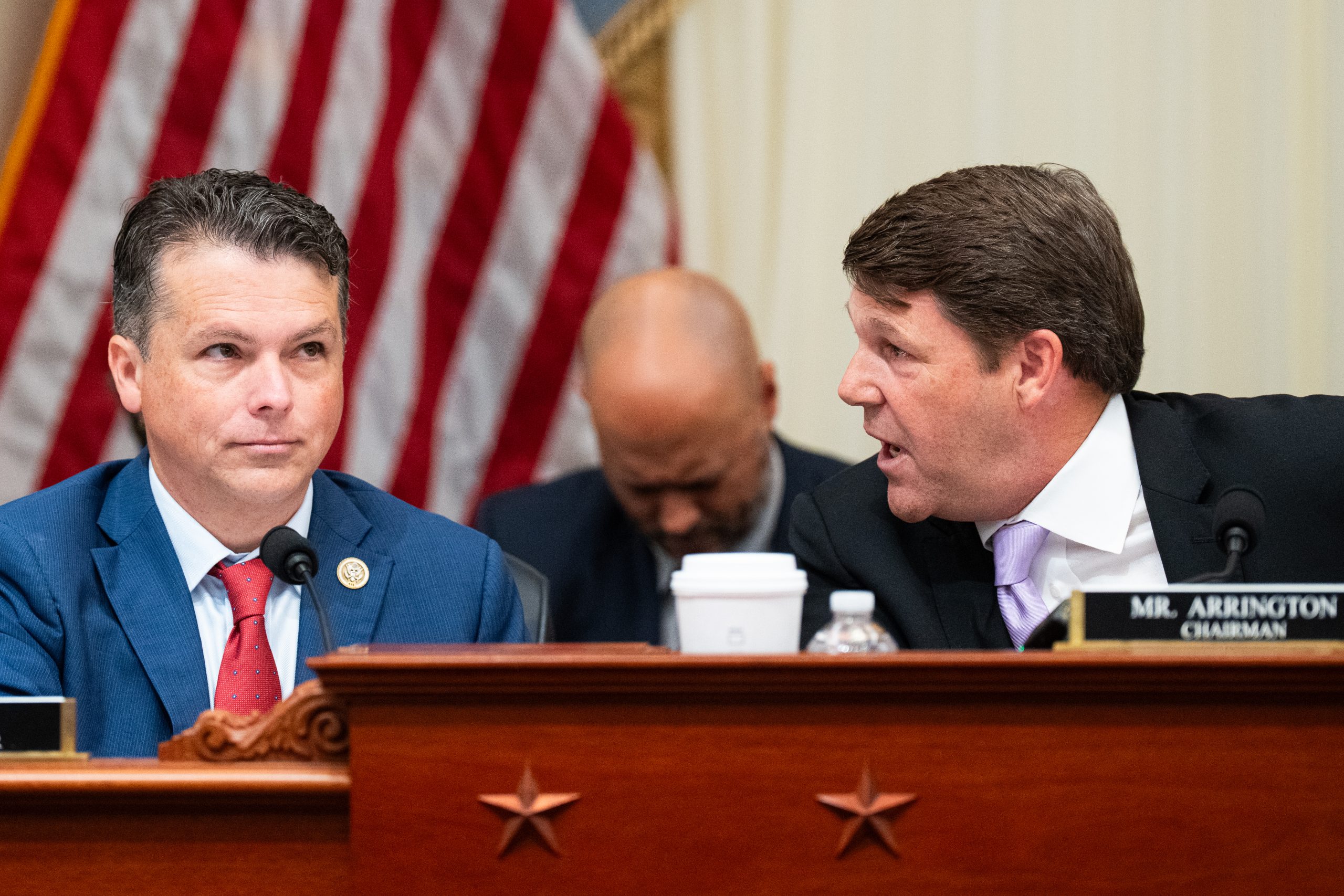
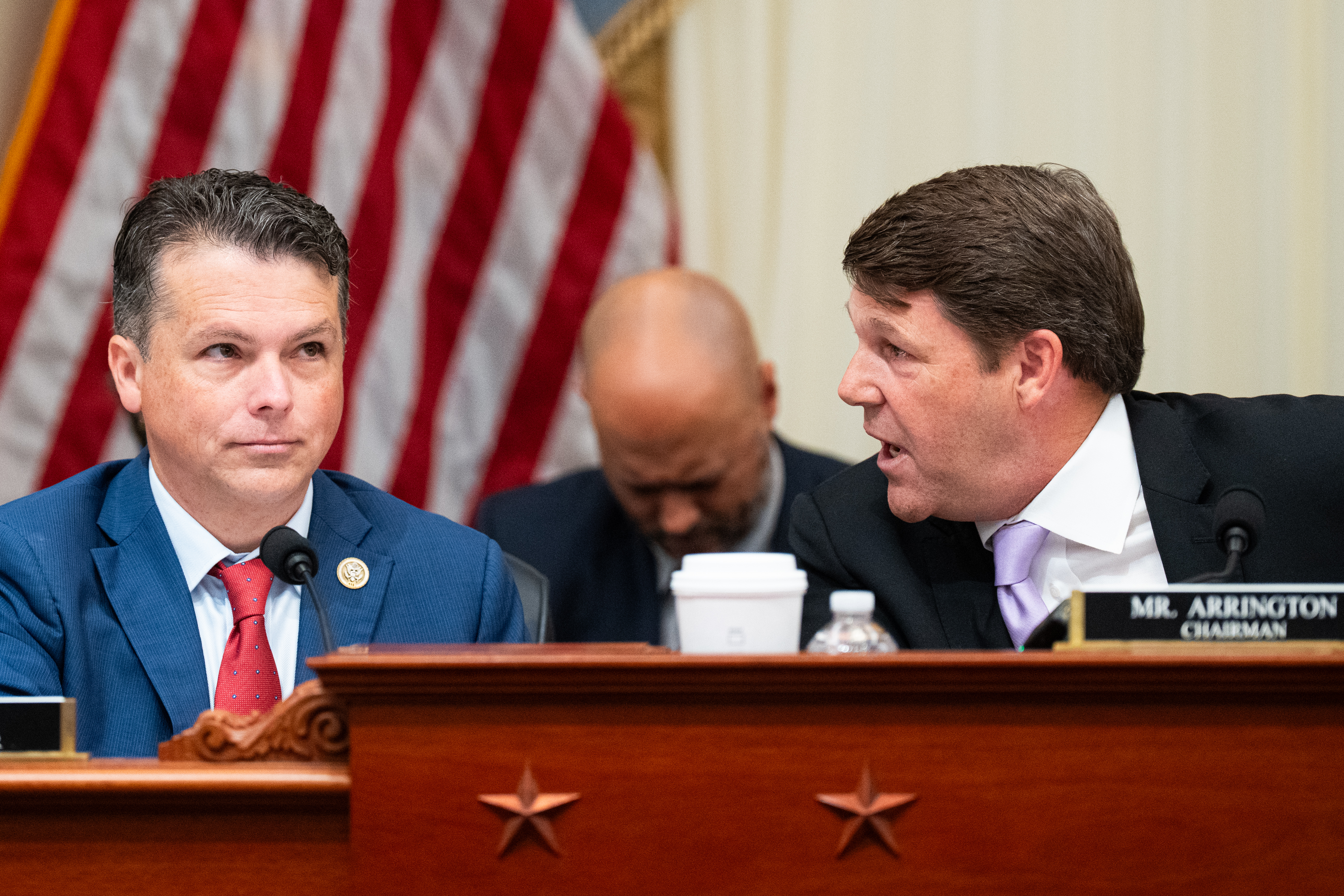
Sometime next year, the U.S. government will hit its debt ceiling again. It’s a moment that often plays out as a high-stakes partisan battle, with lawmakers demanding concessions from the President under the threat of a U.S. default.
If Democrats win control of one or both chambers of Congress, the next debt ceiling vote could yield another standoff. Or, just maybe, it could be an unexpected moment of bipartisanship.
President Trump has repeatedly called for eliminating the debt ceiling, putting him at odds with most of his party, but in line with a significant number of Democrats in Congress. The top Democrat on the House Budget Committee sees an opportunity to finally ditch the mechanism for good.
“I will not vote to simply kick the can down the road again and just raise the debt ceiling for another 18 months,” Rep. Brendan Boyle of Pennsylvania tells TIME in an interview. “My next vote on the debt ceiling will only be to permanently reform it to end the dysfunction around it once and for all.” After nearly a decade in the House, it would be the Philadelphia Democrat’s first time voting against raising the debt ceiling.
Congress last approved raising the debt ceiling in July 2025, by $5 trillion to https://home.treasury.gov/policy-issues/financial-markets-financial-institutions-and-fiscal-service/debt-limit. The Treasury Department is expected to hit that limit some time in 2027, although estimates vary. One projection puts the likely window between late winter and mid-summer. Once the limit is reached, the Treasury can rely on cash reserves and “extraordinary measures” for several more months before reaching the so-called X-date, when it could no longer meet all of the government’s obligations on time.
While lawmakers often frame debt ceiling votes as tests of fiscal restraint, raising the debt ceiling doesn’t actually authorize new spending or determine how much the government borrows in the first place. The debt ceiling caps the Treasury Department’s ability to borrow the money the U.S. government needs to pay for obligations Congress has already approved.
Past debt ceiling fights have led to credit downgrades and major drops in the stock market. Rep. Tim Burchett, a Tennessee Republican who voted for the last increase, subsequently called the debt ceiling “a joke” and “a relic of a bygone era.” Other Republicans, including outgoing Rep. Chip Roy of Texas, continue to argue that the ceiling should be preserved as a negotiating tool.
During Biden’s presidency, Trump urged his party to preserve the debt ceiling so they could use it as leverage in negotiations. Since returning to the White House, however, he has repeatedly called for eliminating the ceiling.
“I am very pleased to announce that, after all of these years, I agree with Senator Elizabeth Warren on SOMETHING,” Trump posted on Truth Social in June. “The Debt Limit should be entirely scrapped to prevent an Economic catastrophe. It is too devastating to be put in the hands of political people that may want to use it despite the horrendous effect it could have on our Country and, indirectly, even the World.”
If Democrats win the House, Boyle is all but assured to be chairman of the House Budget Committee, which oversees the debt limit votes. He sees Trump’s willingness to act on the issue as a golden opportunity. His preferred approach would not abolish the ceiling outright, but largely transfer the responsibility of raising it to the Treasury secretary, who would be able to suspend the debt ceiling for up to two years. Congress would retain the ability to block the suspensions through a joint resolution that would have to be signed by the president.
Boyle says his solution, which he introduced as the Debt Ceiling Reform Act in 2023, has drawn support from members from both parties. “I’ve had a number of House Republicans quietly tell me that they want to see the debt ceiling finally resolved in a manner that I propose because they’re sick and tired of voting on it,” he says.
The White House declined to comment on whether Trump would be open to working with Democrats to eliminate or reform the debt ceiling.
History of debt ceiling fights
For most of its history, the U.S. did not have a debt ceiling. First adopted in 1917, raising the ceiling has become a bigger political headache in recent decades. In 2011, House Republicans used the approaching borrowing limit to force President Barack Obama into an agreement that imposed spending caps and created a bipartisan process for pursuing additional deficit reduction. But the standoff also brought the country close to default and was followed by the first downgrade of U.S. government debt.
Twelve years later, Republicans again used the debt ceiling to extract concessions from a Democratic president. The 2023 agreement negotiated by Speaker Kevin McCarthy and President Joe Biden capped discretionary spending for two years, rescinded more than $27 billion in unspent pandemic aid and $1.4 billion in IRS funding, and tightened work requirements for certain SNAP recipients. In return, Biden secured a suspension of the debt ceiling through the end of 2024, removing the immediate threat of default. The agreement was estimated to reduce deficits by roughly $1.5 trillion over a decade, but it also temporarily spiked short-term borrowing costs and led to another credit downgrade by a different credit agency.
“It is inevitable that the next time there’s a Democrat in the White House and there’s a Republican-controlled Congress, they will do exactly what they did to Barack Obama and exactly what they did to Joe Biden,” Boyle says.
But the situation may be reversed next year, with Democrats potentially controlling one or both chambers of Congress and a Republican in the White House. Some Democrats are already discussing the prospect of extracting concessions from Trump to secure a debt ceiling hike. During a recent retreat of the Congressional Progressive Caucus, Boyle was asked to give a presentation on the issue in order to encourage members to start thinking about the looming topic.
While Boyle hasn’t spoken recently with Minority Leader Hakeem Jeffries about the party’s strategy around the debt ceiling, he notes that Jeffries signed a 2022 letter with him and other House Democrats urging Congressional leaders to “permanently end the threat that the federal debt ceiling poses to our economy and our standing in the world.”
Preparing for a Democratic House and 2028
Boyle has already been laying the groundwork for a broader role on the House Budget Committee. During the current Congress, his office built a district-by-district database tracking the effects of Trump Administration policies on household costs and health coverage. The data played a central role in Democrats’ messaging strategy around healthcare and the 2025 government shutdown, as Democratic offices used the data to show voters in their districts how the expiration of enhanced Affordable Care Act tax credits could affect them.
As chairman, Boyle wants the committee to work to overhaul a congressional budget process that has turned dysfunctional. He also wants to reassert Congress’ constitutional power over federal spending, as the Trump Administration has repeatedly worked to withhold or redirect dollars lawmakers had appropriated. He intends to call Russell Vought, the director of the Office of Management and Budget and a central player in that Administration strategy, to a hearing on the issue. “I think he’s the most dangerous person in America that most Americans have never heard of,” Boyle says of Vought.
The potential chairmanship is also central to Boyle’s own calculation about his future in Congress. As Pennsylvania Sen. John Fetterman has grown increasingly critical of his own party and more comfortable with Republicans, many in the party doubt he could win a Democratic primary if he were to run for another term in 2028. Several House Democrats from Pennsylvania are said to be circling the seat, including Summer Lee, Chris Deluzio, and Boyle. Boyle tells TIME he plans to make a decision after the November elections. He sees the choice partly in terms of where he believes he would have the greatest influence over legislation if Democrats control Congress and the White House—is it better to be a freshman senator or chairman of a House committee that has become a central gateway for major fiscal legislation?
“The prospect of being the chair of the budget committee, if you have a Democratic trifecta and you’re doing reconciliation, that’s the chance to be front and center,” Boyle says. “The quarterback on what could be one of the most significant pieces of legislation in our lifetime.”
For now, with a Republican in the White House, Boyle is focused on the possibility of tackling a problem he has spent years trying to change, even as he acknowledges that the debt ceiling is unlikely to be a major issue for most voters.
“Truly, you know, I leave this place and I’ve done one thing—if you can tell me I’ve left here and I was a major reason why we permanently ended this debt ceiling dysfunction and danger, I’d be very proud of that.”

Last week, Protos reported that a philanthropic organization associated with the effective altruism movement, Manifund, had hired Caroline Ellison, providing the former CEO of Alameda Research her first major job opportunity since being released from prison.
However, the hire caused catastrophic fallout for the organization, and the CEO is now openly wondering if Ellison’s hiring could force it to shut down.
Read more: Read more: FTX’s Caroline Ellison and Gary Wang hit with five-year trading ban
Caroline Ellison’s hiring came with a dire warning
While Manifund CEO Austin Chen took to effective altruism forums to announce the hire as a positive move for the charity, he quickly admitted on X that bringing Ellison onto the team “could blow up quite badly.”
And it has.
As previously reported, many effective altruists were already speaking out against the hire, but now an important name in the movement has made a dire and comprehensive statement about the decision by Chen.
Read more: FTX-funded charity Effective Ventures agrees to return donations
Manifund banned by CEA
The CEO of the Centre for Effective Altruism, Zachary Robinson, responded in an extensive post, stating that Ellison “hasn’t done the work” to earn back the trust of the community.”
He also claimed that Manifund “hasn’t earned the trust that it will be a responsible steward of the community,” and said, “CEA will be refraining from giving Manifund a platform through our programs for the foreseeable future, such as recruiting booths at our events.”
So, seemingly, with one poorly chosen hire, Manifund, a charity that explicitly focused on effective altruism causes, has been nixxed from a key community hub.
Got a tip? Send us an email securely via Protos Leaks. For more informed news and investigations, follow us on X, Bluesky, and Google News, or subscribe to our YouTube channel.

Quick Read
-
Cardano’s 30% weekly surge stems from a single test transaction on x402 and a short squeeze, not proven real-world adoption.
-
XRP already processed 1.4 million AI-agent payments via x402, holds $1.4 billion in U.S. ETFs, and lost 10 fewer percentage points in 2026.
-
Cardano must launch x402 payments on mainnet with real transaction volume soon or risk retracing its entire 30% gain.
-
Just released. Our analysts combed the entire stock market and named the ten best stocks to buy right now. The report is free. Enter your email and see if any of your stocks made the cut.
Cardano (CRYPTO:ADA) rose 29.9% in the week ending September 23, 2026, jumping from $0.20 to $0.25. Meanwhile, XRP (CRYPTO:XRP) rose 22% to $1.58. As Cardano makes headlines with this significant jump, many investors are left wondering whether XRP or Cardano is the better buy.
Despite these gains, both cryptocurrencies are still in the red for 2026. Cardano has dropped 23.5%, while XRP has fallen by 13.9%. Therefore, while a positive week is encouraging, it hasn’t turned around their overall performance this year. Now that Cardano has experienced a 30% surge, which coin offers the better investment opportunity: XRP or Cardano, and what factors could influence this decision?

Cardano’s 30% Surge Rests on an AI Payments Test and a Short Squeeze

The primary driver behind Cardano’s impressive rally is its recent development in payment technology. Cardano has joined x402, an open standard that lets software and AI agents make payments for online services with a simple web request. The Cardano Foundation unveiled this news on September 21. This means AI agents can now pay for data requests with ADA or a Cardano stablecoin without an account or API key.
However, Cardano’s payment system has completed only one transaction on its test network, where the coins have no real value. Developers can start using the feature, but AI agents haven’t yet begun making payments with ADA.
Free Report, Just Released
The Top 10 Stocks To Buy Now
24/7 Wall St has helped investors make money for over two decades, and our top analysts just finished ranking the definitive Top 10 Stocks To Buy Now. Not the ten biggest companies. Not the ten everyone is arguing about. The ten best stocks to buy right now.
The report is free, and you can see why we think each stock is a top investment today.
Enter Your Email and See the Ten →
Cardano’s price surge was also fueled by a short squeeze. Many traders who had bet against ADA were forced to buy back their positions as the price rose, adding further upward pressure. This type of forced buying continues until all short positions are covered.



In the latest TRON news, CoinsBee, a global crypto gift card platform, said USDT on TRON was its most-used onchain payment option over the 90 days ending September 1, 2026, recording roughly 1.8 times as many completed payments as Bitcoin and 1.9 times as many as Ethereum. Meanwhile, in his latest philanthropic move, Justin Sun backed a prize offering up to $1 million for select mathematical and scientific breakthroughs. While looking East, Moscow Exchange’s launch of cash-settled TRX perpetual futures for qualified investors.
USDT on TRON Dominates CoinsBee’s Payment Mix
According to CoinsBee’s data, USDT on the TRON network (TRC-20) accounted for 16.23% of all payments on the platform in 2026 to date, up from 9.92% in 2025 – a 64% increase in share.
The analysis covers successfully paid and delivered orders from June 4 through September 1, 2026, and draws a clear distinction between payment count and turnover: TRC-20 made up 44.6% of USDT payment transactions but generated 64.5% of USDT turnover, implying a higher average purchase value than other USDT networks on the platform.
CoinsBee operates in more than 180 countries, supports over 200 cryptocurrencies and lists products from more than 5,000 brands, serving over 500,000 customers.
It’s worth being precise about scope here: this is platform-specific payment data from a single gift-card marketplace, not an independently audited ranking of global crypto payment volume.
The relevance for TRON is real regardless – stablecoin payment rails increasingly compete on fee and settlement speed, and TRC-20’s low-cost structure is the mechanism behind both the payment count and the turnover skew.
CoinsBee and TRON DAO are running a joint campaign from September 21 through October 5, 2026, offering eligible app users a 2% discount on purchases paid with USDT on TRON via the code USDT-TRC, capped at one use per user and subject to stated terms.
Crypto’s Biggest Philanthropist Justin Sun Backed a New Mathematics and Science Prize

(Source – The Block)
The Block reported that Justin Sun has established a prize offering up to $1 million for selected mathematical and scientific breakthroughs in Geneva.
The so-called ‘Justin Sun Prize’ aims to incentivize work on successful proofs of 66 mathematical problems, with the research team behind OpenAI awarded the first-ever prize of $ 1M, using mathematical work produced by GPT-6 Astra.
MOEX Opens TRX Crypto Exposure to Qualified Investors
The firmer institutional signal comes from Moscow Exchange, which launched cash-settled perpetual futures on BTC, ETH, SOL, XRP and TRX, including a contract designated TRXUSDF..
The contracts reference USD-denominated MOEX crypto indexes, settle profit and loss in Russian rubles, roll daily and do not deliver the underlying tokens – standard structure for regulated crypto perpetual futures aimed at institutional rather than retail flow. Access is restricted to qualified investors only.
First-tier margin requirements vary meaningfully by asset:
- BTC: 22%
- ETH: 35%
- SOL: 38%
- XRP: 43%
- TRX: 30%
MOEX cited more than 72,000 qualified investors and cumulative turnover exceeding 600 billion rubles across its existing digital-asset futures business, framing the new perpetuals as an extension of demand already validated in its dated-futures product rather than an opening of spot access.
The post USDT Dominates, Sun Gives Prize, TRX Lands in Moscow: TRON News Roundup appeared first on Cryptonews.

BNB price has fallen 3.3% to about $761 as Binance has announced that it will start moving crypto balances from Funding Accounts to Spot Accounts on Sep. 29, ahead of a Stocks Account rename in January 2027.
Summary
- BNB price traded near $761 on Sep. 23, while remaining up 7.4% over seven days.
- Binance will begin moving non-stock assets from Funding Accounts to Spot Accounts on Sep. 29.
- The future Stocks Account will support equities, options, and six settlement assets, including BNB.
- Users can move assets with a new button or wait for automatic transfers starting in January.
Binance said in its Sep. 23 announcement that the migration will run from Sep. 29 into January 2027, with dates for individual stages to follow. The exchange will rename the Funding Account after the migration period and reserve it for stock and stock-options settlement.
The price decline and announcement occurred on the same day, but the available data does not establish that the account change drove BNB lower. CoinGecko put BNB’s 24-hour trading volume at about $1.34 billion when checked. Despite the daily fall, the token was still up 7.4% over the previous week.
BNB remains a stock settlement asset
From Sep. 29, Funding Accounts will stop accepting on-chain crypto deposits, according to Binance. Customers will instead use Spot Accounts for regular crypto deposits and withdrawals, while the account being renamed will continue to serve eligible stock and options traders during the transition.
BNB is one of six assets Binance says customers will be able to use for stock and stock-options settlement in the future Stocks Account. The others are USD, USDC, USDT, USD1 and U. Its inclusion means BNB remains part of the exchange’s funding choices for those products, even as other crypto balances move to Spot.
For customers who want to move funds sooner, Binance plans to add a One-Click Migration button to the Funding Account. The feature requires the latest version of its iOS or Android app. Customers who take no action will have remaining eligible assets transferred to Spot automatically in batches beginning in January 2027, the exchange said.
Binance says the transfers will leave users’ total asset balances unchanged and preserve historical transaction records under their original Funding Account labels. The company has yet to give an exact date for the January rename.
Stock trading explains the dedicated account
Binance’s securities service gives eligible users outside the United States access to more than 7,000 U.S.-listed stocks and ETFs, including fractional purchases starting at $5. In June, crypto.news covered Binance’s Alpaca arrangement: Nest Trading acts as introducing broker, while Alpaca Securities handles execution, clearing, settlement and custody. Binance also disclosed a minority stake in Alpaca.
Direct stock positions have since been joined by options. On Sep. 1, Binance introduced physically settled options on selected U.S.-listed stocks and ETFs for eligible users. Customers can buy calls and puts under the initial offering, and exercised contracts settle into shares held through Alpaca Securities. The product follows U.S. market hours for most supported contracts.
The U.S. connection is therefore the underlying securities and brokerage infrastructure, rather than a new offer of Binance stock trading to American customers. Binance says access to its securities products depends on a user’s location. The account rename does not itself change the eligibility rules stated for those products.
Binance also offers bStocks, which follow the prices of U.S. shares but are blockchain-based tokens. Its June bStocks launch covered names including Nvidia, Tesla and Circle. Binance said eligible customers could convert supported direct stock positions into bStocks and trade the tokens on its spot market around the clock. Unlike direct shares, the tokens do not grant ownership of the listed companies’ stock.
Under the migration plan, bStocks held in Funding Accounts will move to Spot, while direct stocks and options remain in the account that becomes the Stocks Account. Newly converted bStocks will also go directly to Spot, according to Binance’s account guidance.
USDC keeps a role after Binance’s Circle deal
USDC’s place among the six settlement assets follows an expansion of Binance’s relationship with its issuer, Circle. On Sep. 22, Binance disclosed a $100 million Circle stake and a five-year commercial agreement concerning USDC use across its platform. The equity purchase involved about 1.24 million Circle shares issued through a private placement.
The settlement list also includes USDT, USD1 and U alongside BNB and U.S. dollars. Binance’s earlier stock-service information identified USDC as a main stablecoin funding choice while allowing eligible users to fund purchases with other supported assets. The future Stocks Account keeps those named assets available for securities transactions, while regular crypto activity moves through Spot.
Pay, Convert and P2P routes change from Sep. 29
Several services will begin sending funds to Spot as the migration starts. Binance says assets received through Pay, Card and Gift Card will be credited to Spot Accounts from Sep. 29. Funding can temporarily remain a Binance Pay payment source, but scheduled sends relying only on it will stop when the exchange removes that option; affected users will need to choose another source.
For Convert, existing unfilled limit orders that lock funds in Funding can remain open. Orders settled or expired after Sep. 29 will return assets to Spot, while new limit orders will lock and settle funds there. Binance advises customers with recurring Convert plans to update any Funding Account selection to Spot. API users referencing Funding have also been advised to change that account reference.
P2P advertisers will continue using Funding for listings and related deposits until Binance introduces a dedicated P2P account in December. Advertisers will then need to move assets tied to their listings; Binance says advertisements left unmigrated after January 2027 will close automatically.

The 10-year Treasury yield hit a 19-year high on Wednesday on strong economic data that has Wall Street betting on two more Fed rate hikes in 2026. Despite the jump in interest rates, the Treasury Department kept a $6 billion ceiling for buybacks of long-term Treasury bonds, signaling no appetite to fight market pressures. The preliminary S&P Global purchasing managers’…
Copyright ©2026 Investor’s Business Daily, LLC. All rights reserved. 87990cbe856818d5eddac44c7b1cdeb8

What’s The Verity Meme All About And Why Are Kids Saying It?

Calls for tighter housing settings
ETH USD Loses Ground as Ethereum Price Analysis Remains Targeting $3,000 This Week




-

 Fashion5 days ago
Weekend Open Thread: Talbots – Corporette.com
-

 Tech3 days ago
Researchers escape OpenAI Codex sandbox to run commands on host
-

 Crypto World5 days ago
Circle launches Arc Studio AI agent for building onchain apps
-
 NewsBeat5 days ago
Trump says US has reached an agreement to take permanent control of Greenland’s security
-

 Crypto World3 days ago
Who Needs CLARITY Anyway? ARB Could See 70X Increase: Hodler’s Digest
-

 Crypto World5 days ago
Trading Bitcoin on Robinhood? Why 2% Spread Has Traders Worried
-

 Crypto World6 days ago
Mortgage and refinance interest rates today, Thursday, September 17, 2026
-

 Crypto World5 days ago
Bitcoin price breaks channel as RSI climbs to 63
-

 Crypto World7 days ago
US Charges Robinhood Engineers Over Crypto Listing Trades
-

 Tech2 days ago
Google’s $899 Googlebook is a bet that you’ll buy a new laptop for Gemini
-

 Crypto World19 hours ago
Goldman Sachs and Deutsche Bank Agree: The S&P 500 Rally Isn't Over
-

 Business3 days ago
Analog Devices (ADI) Bets $1.35 Billion on Chips that Let Machines Think for Themselves
-

 Crypto World3 days ago
Coinbase, Robinhood, Circle Seen as Tokenized-Stock Winners
-

 Crypto World5 days ago
World Money launches in 150+ countries with Stripe
-

 Crypto World5 days ago
Silver prices recover quickly, hitting weekly high today
-

 Tech6 days ago
GPT-6 Astra Reached the Nether in Minecraft, Lost Its Stash to a Creeper, and Farmed Potatoes for Hours
-

 Tech4 days ago
Trump suggests rebranding AI with a new name, says he’s also creating an AI Force
-
 NewsBeat5 days ago
US was ‘on brink of war’ with China over false AI report of nukes moving in Middle East
-

 Entertainment7 days ago
Grey’s Anatomy Showrunner Teases Changes After Cast Exits
-

 Crypto World2 days ago
Bitcoin price holds above $81K as key catalysts line up
You must be logged in to post a comment Login