

Crypto World
BlackRock IBIT sees $1.3B dark pool sale



BlackRock IBIT saw $1.29 billion in shares cross a dark pool Tuesday, one of the largest blocks on record.
Summary
- A 29 million share IBIT block crossed off-exchange at 10:30 a.m. ET, dwarfing every other trade in the session.
- The print extended an eight-day outflow streak and pushed two-week US spot Bitcoin ETF redemptions to $2.26 billion.
- Bitcoin slipped about 1.4% during the flow before extending losses to around $74,800.
BlackRock IBIT saw $1.29 billion in shares cross a dark pool Tuesday, one of the largest blocks on record.
A nearly 29 million share block of the iShares Bitcoin Trust changed hands off-exchange at 10:30 a.m. ET, dwarfing every other IBIT trade of the session. Bloomberg analyst Eric Balchunas confirmed the print on X.
The crossing landed on the same day US spot Bitcoin ETFs lost another $333 million in net redemptions, tracked by SoSoValue. IBIT alone shed $192.4 million.
Why the IBIT block trade matters
“Confirmed.. 29 million share trade ($1.3b) of $IBIT executed at 1030am this morning,” Balchunas said on X. “Price unchanged today so mkt absorbed it well.”
The trade extended an eight-session outflow streak for the fund. Investors have pulled $2.26 billion from US spot Bitcoin ETFs since May 14, according to SoSoValue data.
Dark pools let sellers offload large positions without hitting public order books, masking the full weight of a transaction from the open market. The mechanism limits price impact but signals heavy institutional repositioning.
Bitcoin held near $76,000 immediately after the print but slipped about 1.4% on lower timeframes before extending losses. The asset traded around $74,800 at press time.
How the move fits broader ETF flows
The Tuesday print was not the sharpest single-day exit of the run. IBIT shed $448 million on May 18, when total spot Bitcoin ETF outflows hit $648.64 million.
Crypto.news previously reported that BlackRock-linked Bitcoin sales reached $1.01 billion over the prior week, the firm’s largest weekly disposal since November 2025.
The redemption stretch reverses a six-week inflow streak that pulled $3.4 billion into US spot Bitcoin ETF products through early May, documented at the time.
What traders are watching next
Georgii Verbitskii, derivatives trader and TYMIO founder, said the market avoided a deeper decline because available supply was absorbed rather than because demand had returned.
“The reason the decline was not even deeper is that the market was still able to absorb a substantial amount of supply without a full liquidity breakdown,” Verbitskii said.
Shawn Young, chief analyst at MEXC Research, framed the print as portfolio adjustment rather than panic selling. He said the contained price reaction looked more like a large rebalance than a disorderly exit.
Macro pressure is compounding the flow picture. The CME FedWatch tool now prices a 99% probability the Federal Reserve holds rates at its June 17 meeting, removing a near-term catalyst for risk assets.
The total US spot Bitcoin ETF market still holds more than $98 billion in assets, with IBIT accounting for roughly 62% of the category. The product remains the largest Bitcoin ETF by net assets despite the recent drawdown.
Investor sentiment has also turned. The Fear and Greed Index slipped from 34 to 25, deeper into fear territory, as the dark pool trade and broader outflows reset expectations for the next leg.


After hinting at buying more bitcoin on Sunday, Strategy’s co-founder and former CEO, Michael Saylor, announced on X minutes ago that the firm had acquired another 520 BTC for $35 million. Thus, its total holdings have grown to 847,363 units, currently valued at almost $55 billion.
What’s more interesting about this announcement is the fact that the NASDAQ-listed business intelligence software company increased its USD reserve a lot more than the BTC acquisition.
Strategy has increased its USD Reserve by $300 million to $1.4 billion and plans to continue replenishing it to support the credit quality of its Digital Credit securities. We also acquired 520 BTC for $35 million, increasing our $BTC Reserve to ₿847,363. $MSTR $STRC…
— Michael Saylor (@saylor) June 22, 2026
The Saylor-founded firm made two major bitcoin purchases in the past couple of weeks, both for around $100 million. It also increased its USD reserve by the same amount.
Now, though, the difference is quite significant, as the firm has spent almost 10 times more for its USD reserve than for its bitcoin acquisition.
Perhaps the reason for this is the growing online scrutiny of Strategy’s STRC. Also referred to as Stretch, these shares are supposed to trade at $100, provide a stable yield to investors, and raise funds to buy more BTC.
However, they have deviated from their par price in the past few weeks, going well below $90 at one point. This raised some eyebrows in the community, with some analysts speculating that the company might have to sell more than 50,000 BTC in the next few years to cover expenses and dividend payments.
The post Strategy Buys More Bitcoin but Turns Attention to USD Reserve With $300M Injection appeared first on CryptoPotato.
Crypto World
Trump Calls Stock Buybacks Fake: MicroStrategy Bitcoin Model Shows Another Way to Boost Valuations
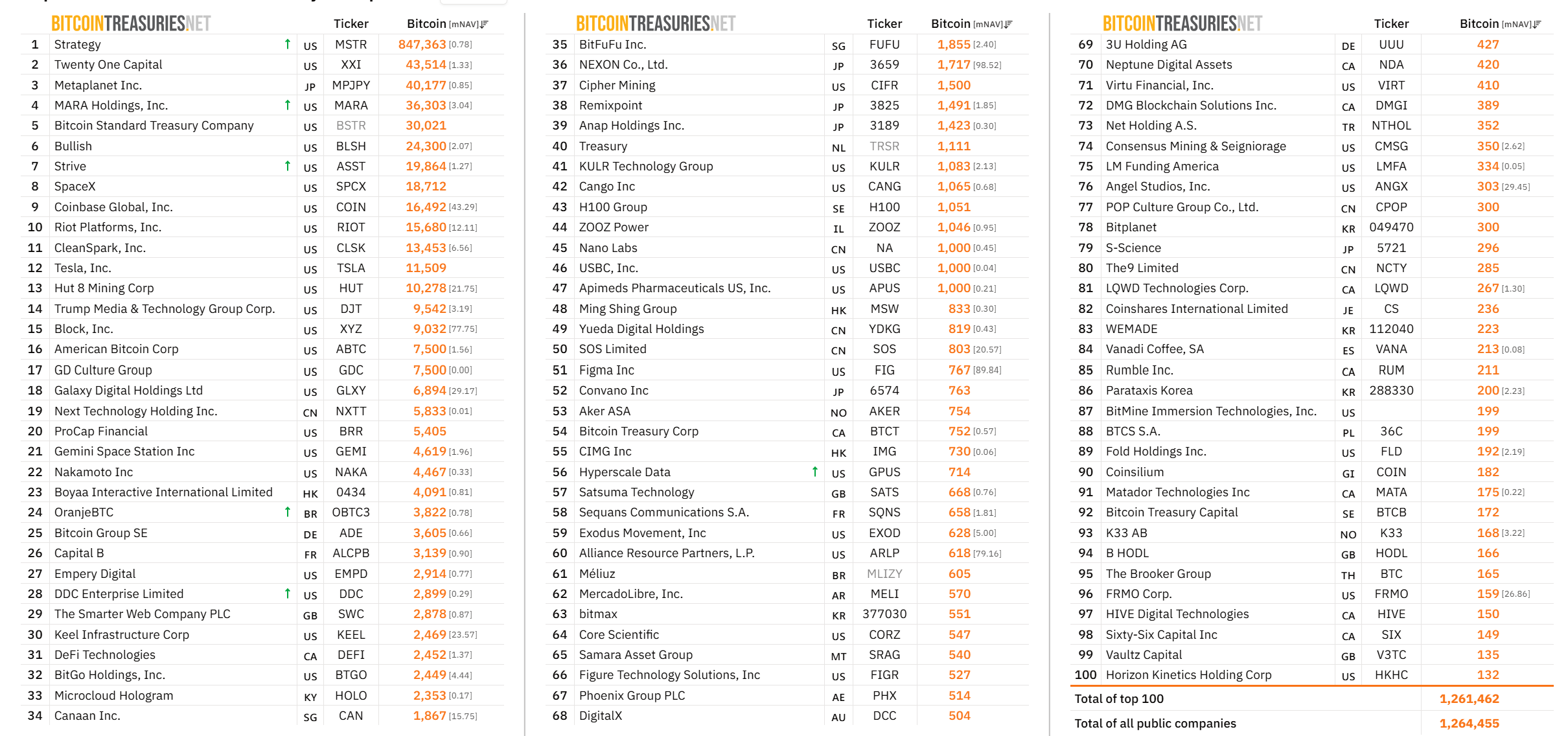
President Donald Trump has again branded stock buybacks a fake way to lift share prices, yet the MicroStrategy Bitcoin model points to a different route to higher valuations, one built on issuing shares rather than repurchasing them.
His latest comments target defense contractors. They also sharpen a wider debate over how companies move their own stock, through buybacks that shrink share counts or through dilution that funds a growing bitcoin treasury.
What Trump Said About Buybacks
Trump has renewed pressure on defense firms over how they use their cash. He signed an executive order in January that bars underperforming contractors from buybacks and dividends until production improves.
His argument is direct. Repurchases inflate share prices without building real capacity, so he wants the money spent on plants, equipment, and faster output.
The policy targets large contractors such as Lockheed Martin, Northrop Grumman, and RTX. Trump has returned to the theme this week, and his buyback comments have rattled defense stocks before.
How the MicroStrategy Bitcoin Model Works
MicroStrategy (now Strategy), takes the opposite path. It does not repurchase common stock. It sells new shares and preferred stock, then spends the cash on Bitcoin.
That dilution and debt approach has built a stockpile of more than 845,000 Bitcoin (BTC), the largest held by any public company.

Michael Saylor frames each raise as a way to grow Bitcoin per share. Those purchases now represent more than four percent of all BTC in circulation.
The company has even bought back debt, repurchasing convertible notes at a discount this year. It has also leaned on preferred stock issuance to keep buying without adding senior loans.
Follow us on X to get the latest news as it happens
Why the Premium Decides Everything
The model works through a flywheel. MicroStrategy issues stock above the value of its coins, buys more bitcoin, and lifts holdings per share, which can support a premium over net worth.
That premium has thinned in 2026. With Bitcoin trading near $64,360, the holdings sit close to the average price MicroStrategy paid.
The stock has fallen by more than half over the past year, and its market value has slipped toward $40 billion.

When the premium fades, new share sales add little value. The same dilution that powered gains now offers thinner support, a pattern visible during the recent Bitcoin sell-off pressure.
Both stories turn on one question. Investors and regulators want to know whether a company builds value or simply moves its share price.
For MicroStrategy, the answer may rest on whether Bitcoin climbs back above its cost and revives the premium.
The post Trump Calls Stock Buybacks Fake: MicroStrategy Bitcoin Model Shows Another Way to Boost Valuations appeared first on BeInCrypto.
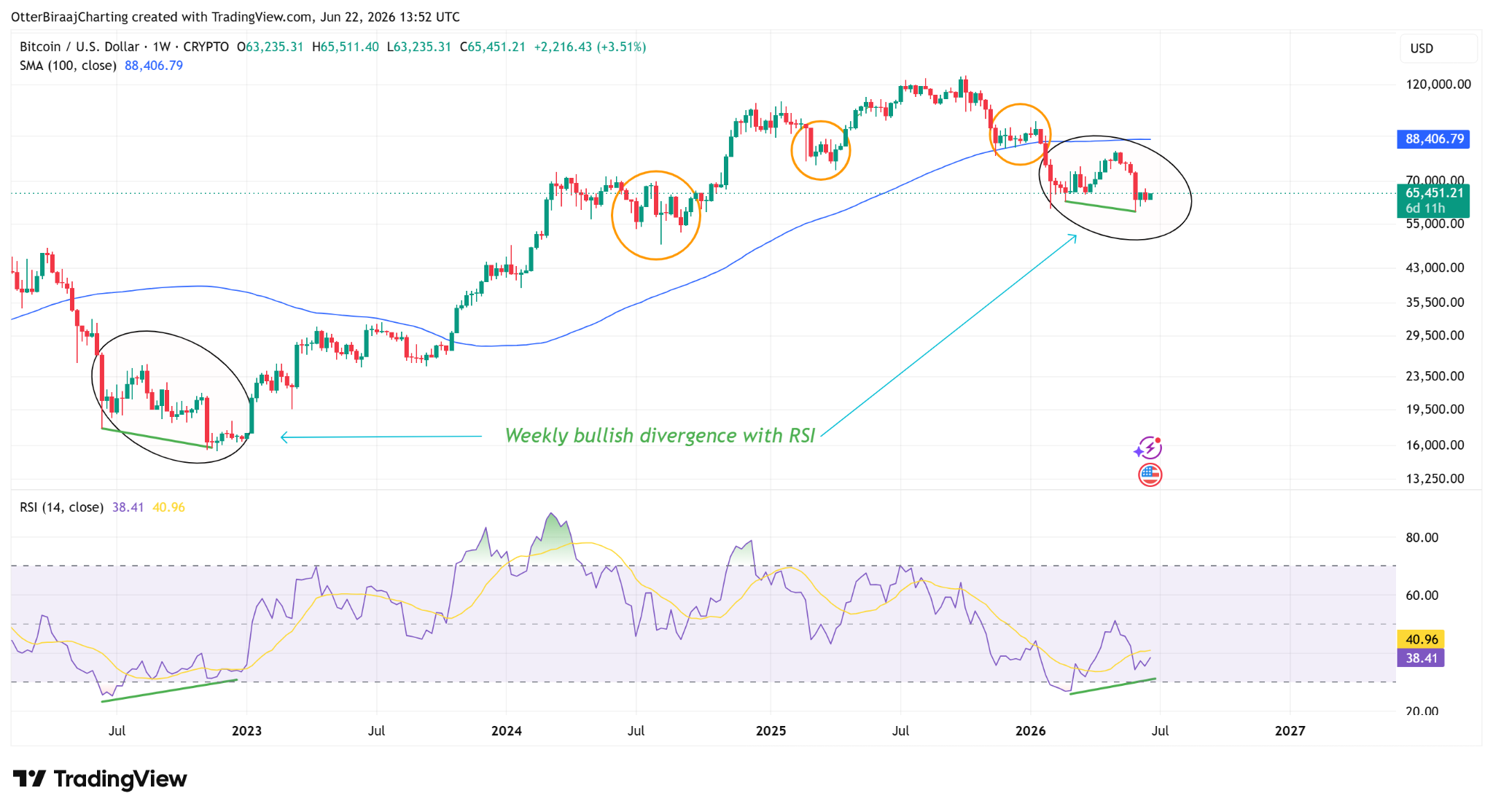
Bitcoin (BTC) continues to exhibit a strong technical setup after holding a weekly close above $63,000 for three consecutive weeks since tagging a new 2026 low near $59,000. This pattern closely resembles a bottom-building phase seen in previous trend reversals in bearish periods.
At the same time, Bitcoin futures open interest has fallen 19.5% from its June peak, funding rates have cooled to 0.02% from 0.1%, and spot Bitcoin exchange-traded fund (ETF) outflows have slowed sharply to $540 million over the past two weeks from $5.5 billion the prior month.
Together, the data points to a market that is shedding excess selling pressure while holding near a key support zone for BTC.
Bitcoin’s weekly chart echoes prior market bottoms
Bitcoin’s recent weekly price action resembles a pattern seen several times since 2023. Once a local bottom is established, the price often trades close to that range for weeks before a sustained uptrend develops. One exception came in November 2025, when the price spent roughly 10 weeks moving sideways above $88,000 before breaking lower to the $60,000 level.
BTC/USD, one-week chart. Source: Cointelegraph/TradingView
The current setup also resembles the price from late 2022 and early 2023. During that period, the weekly relative strength index (RSI) entered oversold territory, recovered, and later formed a higher low, while the BTC price printed a lower low, creating a bullish divergence. That bullish divergence marked a key turning point, preceding the broader uptrend that developed during 2023.
The focus is now on the $63,000 area, where the price has formed a positive RSI divergence. The repeated weekly closes above $63,000, keeps Bitcoin trading above its recent low at $59,000 rather than extending towards it. The behavior fits a range-building phase that has appeared near previous turning points, as identified in the chart.
Related: US dollar strength hits highest since May 2025: Five things to know in Bitcoin this week
BTC futures turn less crowded as ETF sell-pressure eases
Bitcoin derivatives markets have become notably less crowded over the past three weeks. Bitcoin funding rates cooled to 0.02% from 0.1% at the start of June, reducing signs of aggressive long positioning.
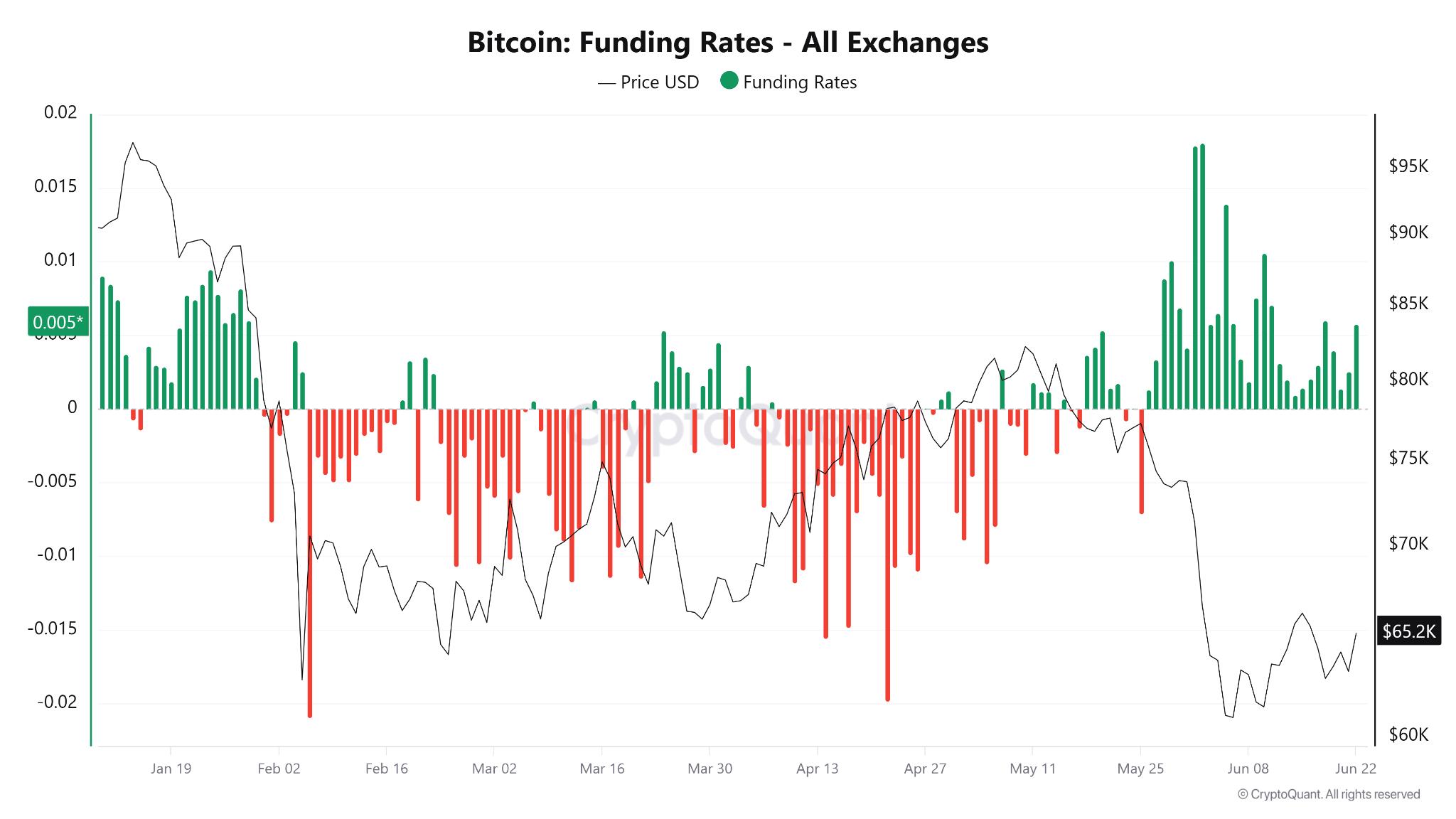
Bitcoin funding rate on all exchanges. Source: CryptoQuant
Crypto analyst Woominkyuu noted that total Bitcoin open interest across exchanges peaked at $25.96 billion on June 1, then fell to $20.89 billion by June 21. The 19.5% decline exceeded Bitcoin’s 11.4% price drop during the same period.
The simultaneous decline in the price and open interest typically signals that existing positions are being closed or liquidated rather than new leveraged bets entering the market. This indicates a significant reduction in excess leverage. It also points to limited evidence of aggressive new short positioning at current levels.
Spot Bitcoin ETF flows show a similar shift with $5.5 billion leaving the spot ETFs between May 15 and June 11. The outflows over the past two weeks total about $540 million, marking a sharp slowdown in selling activity.
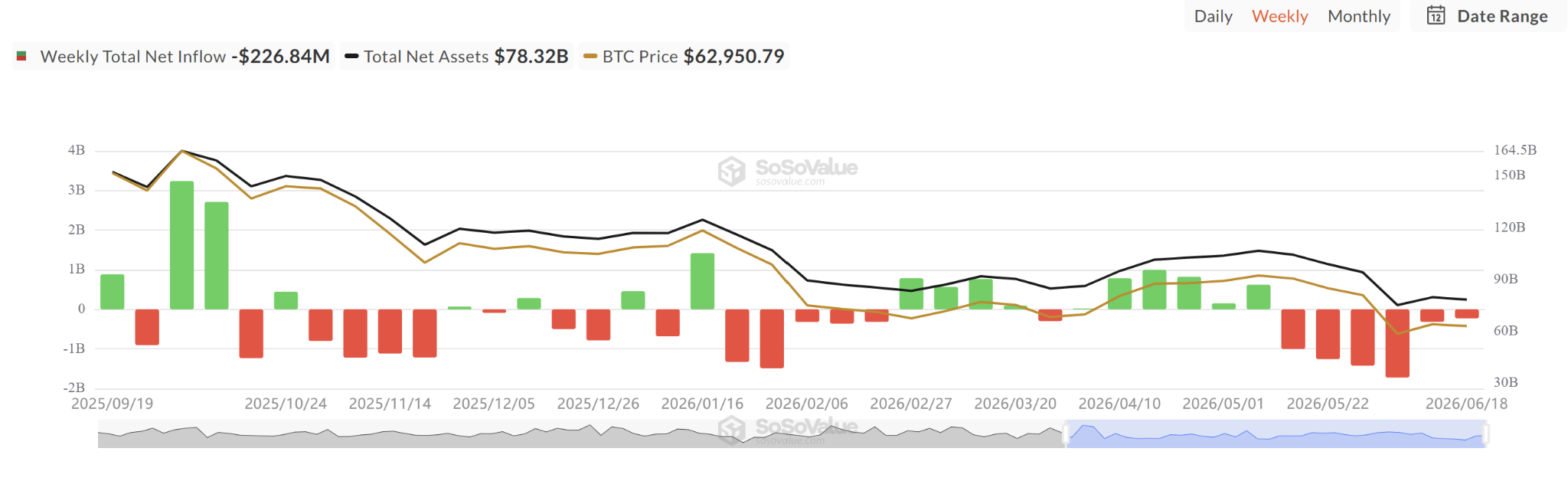
Weekly spot BTC ETF netflows. Source: SoSoValue
Onchain data paints a mixed but constructive picture. Bitcoin researcher Axel Adler Jr. highlighted that long-term holders’ realized supply recently reached 12.42 million BTC, a level associated with supply maturation and coins moving into stronger hands.
At the same time, Bitcoin’s sales pressure metric has stayed inactive for 1,256 consecutive days, the longest stretch on record. The data points to continued supply maturation alongside other signs that Bitcoin may be stabilizing near a potential cycle low.
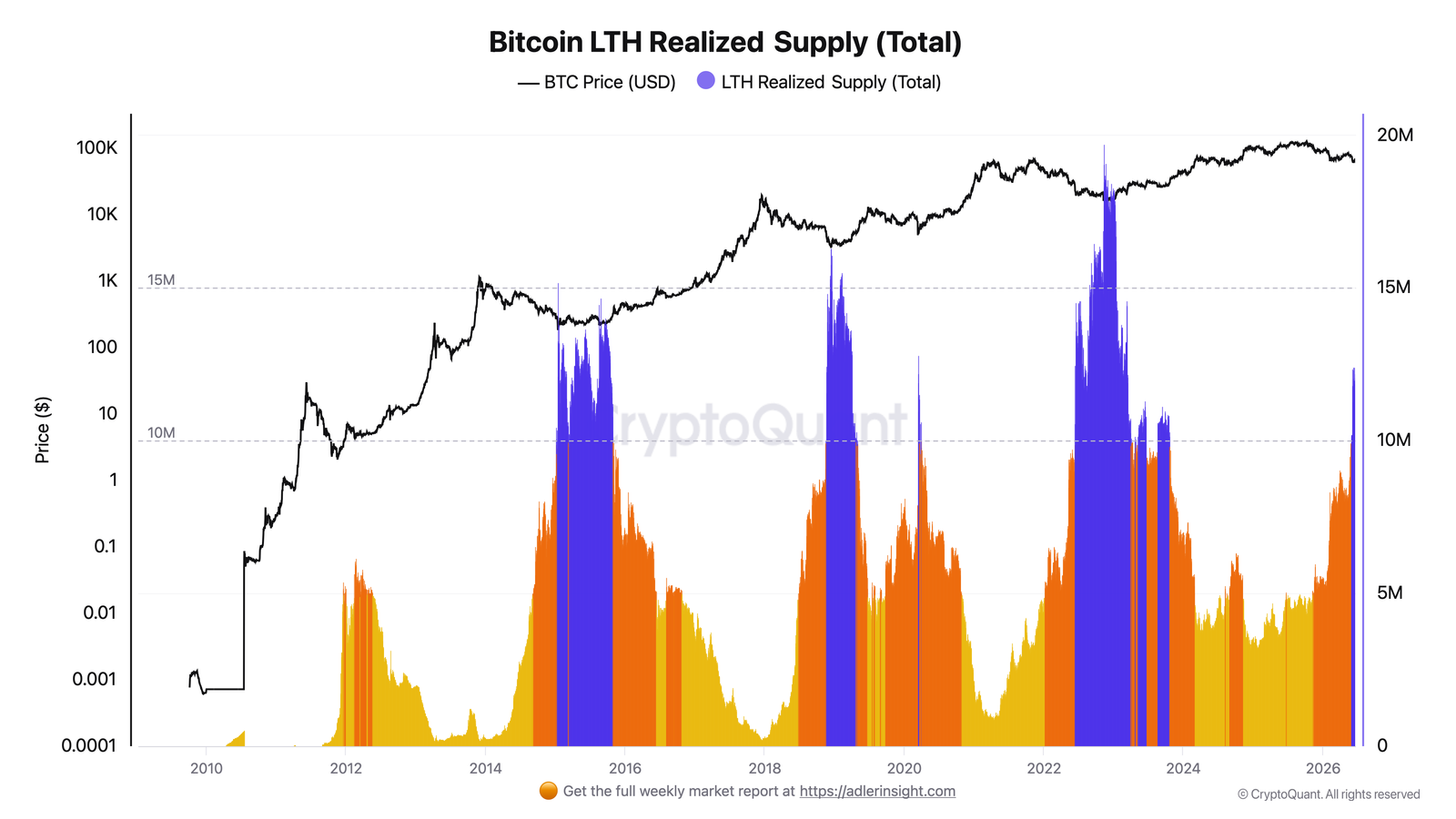
Bitcoin LTH realized supply. Source: Axel Adler Jr.
Related: Strategy adds $300M to USD Reserve, acquires 520 BTC


Key takeaways
- Ethereum (ETH) has rebounded about 4% over the past week, but overall market sentiment remains weak.
- Hawkish signals from the Federal Reserve have reduced expectations for interest rate cuts and increased pressure on risk assets.
Ethereum recovery faces macro headwinds
Ethereum has posted a modest 4% recovery over the past seven days as the broader cryptocurrency market staged a technical rebound.
However, the bounce has done little to improve overall sentiment, which remains under pressure from worsening macroeconomic conditions.
Investor confidence took another hit after recent comments from Federal Reserve Chairman Kevin Warsh signaled a tougher stance on inflation.
His remarks suggested that monetary policy could remain restrictive for longer, fueling concerns that interest rate hikes may still be on the table.
The shift has challenged earlier expectations that the Federal Reserve would begin cutting rates this year, creating a less favorable environment for risk assets such as cryptocurrencies.
Earlier in the year, many analysts expected one or two rate cuts from the Federal Reserve. Those expectations have weakened significantly as inflation continues to run above the central bank’s target.
Warsh’s comments reinforced concerns that policymakers remain focused on controlling inflation, even if tighter monetary conditions weigh on financial markets.
Historically, higher interest rates reduce liquidity and investor appetite for speculative assets, making cryptocurrencies particularly vulnerable during periods of monetary tightening.
Ethereum struggles at key resistance level
Ethereum’s recent recovery stalled near the $1,800 level, an area that previously served as support but has now become a significant resistance zone.
If selling pressure continues and ETH fails to reclaim $1,800, the next major support level sits near the April 2025 low of $1,400.
A move to that level would represent roughly an 18% decline from current prices and further deepen Ethereum’s yearly losses.
Among the largest cryptocurrencies, Ethereum has been one of the weakest performers, even lagging behind competitors such as Solana during the current market cycle.
The Relative Strength Index (RSI) has improved from oversold conditions but remains weak.
Currently hovering around 40, the indicator is approaching levels that could reinforce bearish momentum if selling pressure increases.

From a broader technical perspective, Ethereum’s weekly chart continues to reflect a fragile market structure.
Unless buyers successfully push the price above $1,800, analysts expect the downtrend to remain intact, increasing the likelihood of a retest of lower support zones.

A new Ethereum funding proposal would allow validators to redirect up to 10% of staking rewards toward ecosystem development if a majority of validators agree to the change.
The idea has reopened debate over how Ethereum should pay for public goods as concerns grow around shrinking funding sources for core development.
Proposal Looking to Solve Ethereum’s Funding Problem
The proposition, published by Ethereum contributor Clément Lesaege in a personal capacity, introduced what he called “Validator Redirected Revenue.” The framework would let validators signal both how much of their staking rewards should be diverted and which recipients should receive those funds.
According to him, Ethereum is facing a coordination problem, with infrastructure projects often benefiting the whole network but many people showing little incentive to help pay for them.
Per the motion, if more than 51% of validators support a redirect rate above zero, the selected contribution level would apply to all validators, with Lesaege’s plan capping the amount at 10% of staking rewards while keeping the option to pull the rate back to zero.
It also allows validators to select those they prefer to receive the funding, with execution clients then aggregating those preferences and determining a distribution contract through a voting mechanism. At current levels, we have about 39.8 million ETH staked, and using the proposal’s estimated 1.91% annual staking reward rate, it means that even a 5% redirect would channel approximately 38,000 ETH per year into ecosystem development, while 10% would take that figure to 76,000 ETH.
The proposal did identify cartel formation as its most serious risk, as according to Lesaege, a 51% majority of validators could theoretically vote to redirect the maximum 10% back to themselves. However, he argued that the chances of that actually happening were low because the gains made from such an attack would not be worth the reputational and price consequences that come with it.
Critics Question Governance and Incentives
Fellow developer Micah Zoltu also claimed that unlike existing attack vectors, Lesaege’s idea can create a specific pile of money up for grabs, which is a materially different incentive to attack.
“I’m not aware of any solution to this,” he wrote, calling it the reason other blockchains have not tried this kind of mechanism. But Lesaege responded, pointing out that both Bitcoin and Ethereum already carry theoretical cartel risks that have never materialized and that the social layer, including the ability to fork, was still a meaningful deterrent.
There were also others who questioned whether protocol-level funding was really necessary, with pseudonymous developer señor doggo saying that Ethereum already supports smart contract-based revenue sharing. They argued that any funding mechanism should compete voluntarily instead of becoming part of the protocol.
But some community members supported voluntary contributions, one of them being DeFi builder S. More, who said they would donate part of their staking yield to development groups they support, although they suggested that such donations should remain optional.
The proposal has come at an interesting time, considering comments made recently by former Ethereum Foundation insider Trent Van Epps, warning that the network could face funding pressure within the next few months as existing support programs expire and the Foundation reduces spending.
The post New Proposal Redirects 10% of Staking Rewards to Fund Ethereum Ecosystem appeared first on CryptoPotato.
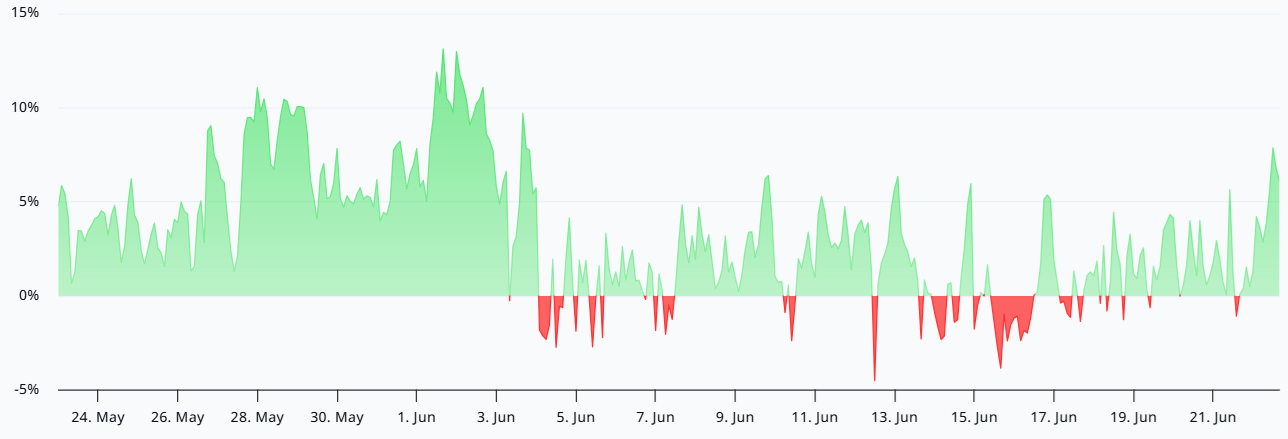
Key takeaways:
- The Bitcoin funding rate climbed to 7%, showing confidence, but spot ETF outflows keep a $70,000 breakout on hold for now.
- Strong order-book bids and lower oil prices helped, but weakness across stocks, bonds, and gold signals a preference for cash.
Bitcoin (BTC) flirted with the $65,500 level on Monday after US Vice President JD Vance said that the Strait of Hormuz remains open amid “encouraging progress” on talks with the Iranian delegation in Switzerland. Bitcoin traders showed signs of optimism through growing demand for bullish leveraged positions, raising the question of whether $70,000 is next.
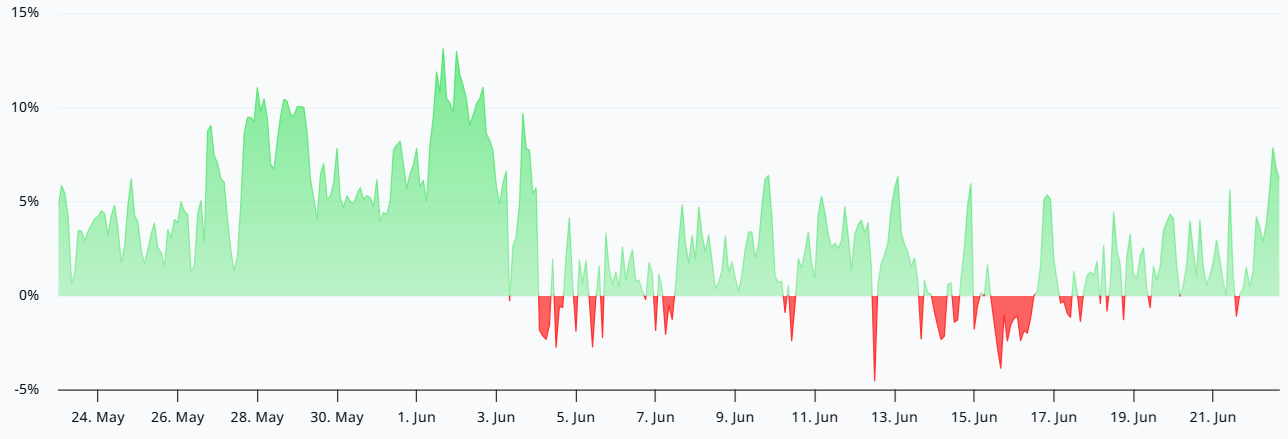
Bitcoin perpetual futures annualized funding rate. Source: Laevitas
The Bitcoin perpetual futures annualized funding rate jumped to 7% on Monday, its highest level in nearly three weeks. Although still within the neutral 6%-12% range, the indicator reflects growing confidence among bulls. Part of the optimism likely stemmed from Brent crude oil prices declining to $77.50, their lowest level since March.
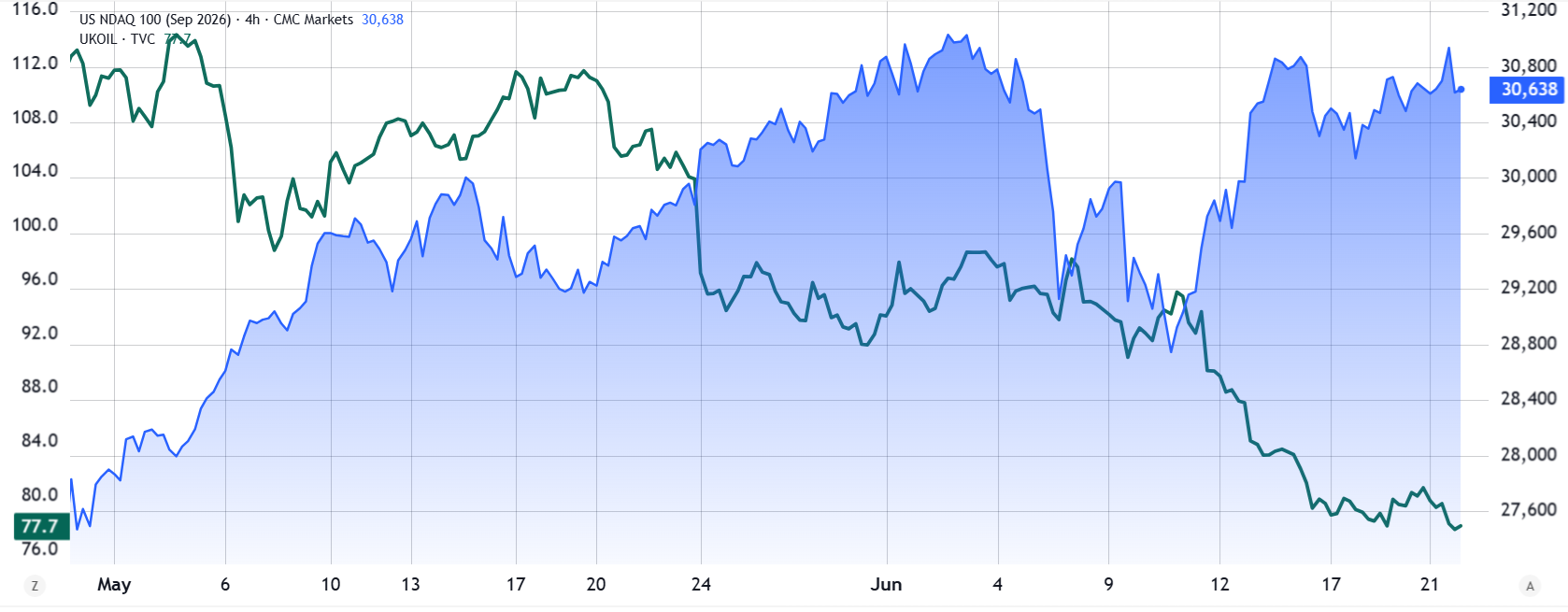
Crude Brent oil, USD (left) vs. Nasdaq 100 futures (right). Source: TradingView
The Nasdaq 100 Index posted a modest 1% decline as artificial intelligence stocks weakened. SpaceX (SPCX US) shares dropped 13% after the company announced plans to raise debt despite holding more than $100 billion in cash. Investors fear the sector will need higher investments for longer before turning profitable.
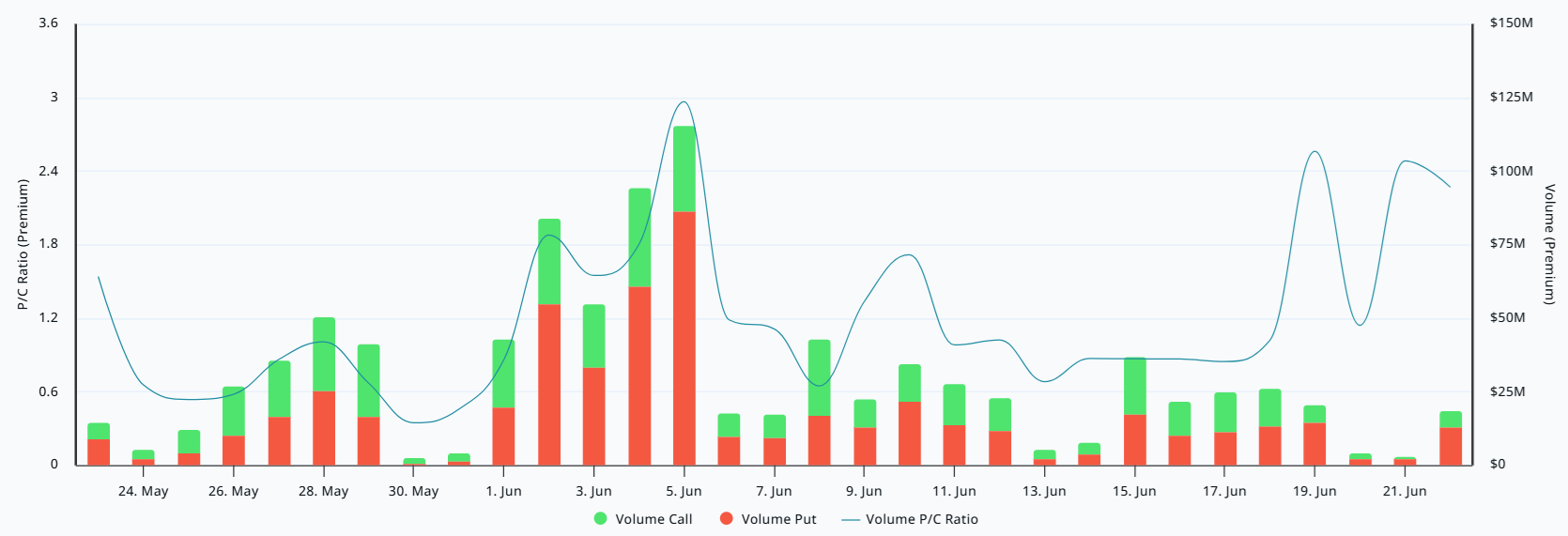
Bitcoin options premium put-to-call ratio at Deribit, USD. Source: Laevitas
Demand for put (sell) options outpaced call (buy) instruments by over two times on Monday, signaling stronger demand for downside price protection. The indicator has leaned toward bearish strategies since Friday, reversing the trend from the prior week.
Strategy eases concerns, but stocks and bonds signal increased risk
Part of traders’ concerns stemmed from weakness in Strategy’s (STRC US) valuation. Shares of Strategy traded 13% below the $64.1 billion cost to acquire BTC 847,363. Despite holding a comfortable $6.75 billion in debt, investors feared the company would need to sell reserves. Those concerns eased somewhat as Strategy announced a $300 billion additional cash position.
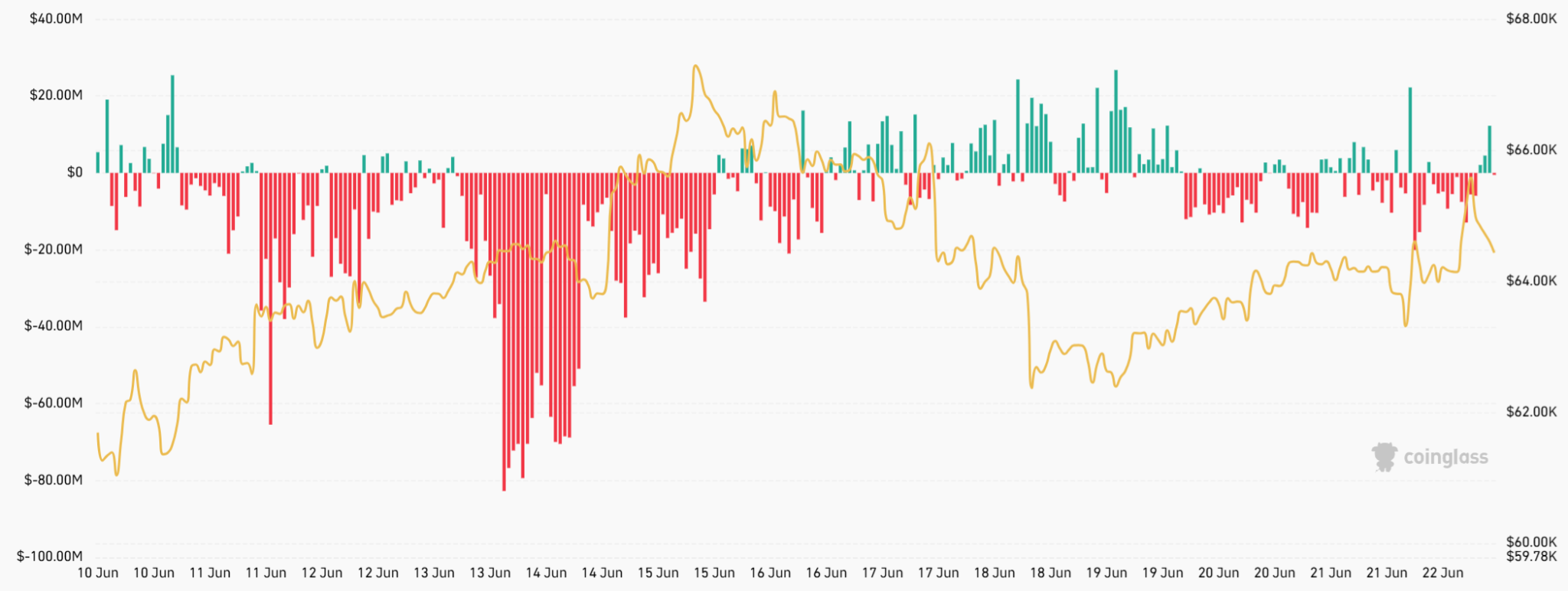
Aggregated Bitcoin orderbook 1% liquidity delta, USD. Source: CoinGlass
Bids on major exchanges’ Bitcoin order books exceeded offers by $12 million on Monday, reversing the weekend trend. Consequently, Bitcoin’s failure to hold the $65,000 level should not signal weakness, especially since gold traded down 0.9% on Monday while investors sold US government bonds.
Related: Bitcoin tipped for $66K top as trader flags ‘suspicious’ BTC price gains
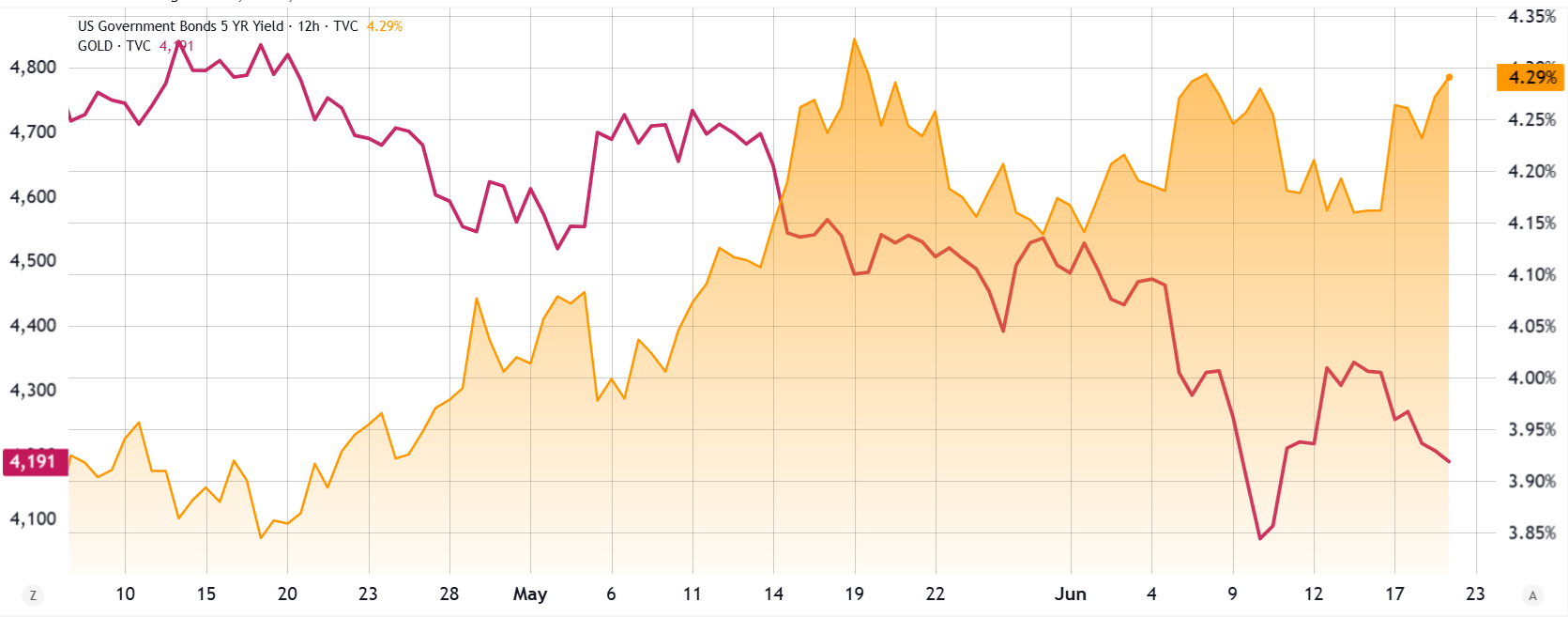
Gold/USD (left) vs. US 5-year Treasury yield (right). Source: TradingView
Higher yields on US Treasuries signal that investors demanded higher returns to hold those bonds, whether driven by inflation or by the anticipation of dilution from rising US government debt levels. The simultaneous weak performance across stocks, bonds, and gold points to a preference for cash positions, creating a cautious backdrop for Bitcoin.
Weak demand for US-listed Bitcoin exchange-traded funds (ETFs) continues to weigh on investor sentiment after six weeks of outflows. Bitcoin spot ETFs saw $228 million in net outflows the prior week, according to CoinGlass data. Consequently, the odds of a short-term Bitcoin rally to $70,000 look limited.


Bitmine has purchased another 52,203 ETH worth about $90 million, bringing its holdings to 4.7% of Ethereum’s total supply.
Summary
- Bitmine purchased 52,203 ETH worth about $90 million, lifting its holdings to 4.7% of Ethereum’s supply.
- Tom Lee said the company remains close to its 5% ETH ownership target despite challenging market conditions.
- Staked ETH has increased projected annualized revenue to $223 million, with potential rewards reaching $268 million.
According to a company update released on Monday, Bitmine’s latest purchase increases its exposure to Ethereum despite continued weakness in the broader crypto market and repeated rejections at key price levels for the asset.
The company said its balance sheet now includes approximately $10.7 billion in crypto assets, cash, marketable securities, and strategic investments, including stakes in Eightco and Beast Industries. With the latest acquisition completed, Bitmine remains one of the largest corporate holders of Ethereum.
Commenting on the company’s outlook, Bitmine chairman Tom Lee said he expects tokenization and advances in artificial intelligence to drive future demand for blockchain networks and digital assets. Lee also reiterated his view that the crypto market remains in the early stages of what he previously described as a “crypto spring.”
Ethereum purchases continue as holdings approach target
Less than a year after launching its Ethereum treasury strategy, Bitmine has accumulated enough ETH to control 4.7% of the asset’s supply, according to the company. The latest purchase leaves the firm roughly 94% of the way toward its publicly stated goal of holding 5% of all Ethereum.
Recent fundraising efforts have helped finance that expansion. Earlier, crypto.news reported that Bitmine’s board approved a cash dividend of $0.1056 per share for holders of its 9.50% Series A Perpetual Preferred Stock, which trades on the New York Stock Exchange under the ticker BMNP.
The company said the dividend will be paid on July 10 to shareholders of record as of June 30.
Introduced in June to support the Ethereum treasury business, the preferred stock offering consisted of 3.5 million shares sold at $80 each on June 10. Bitmine reported net proceeds of approximately $273.8 million after fees and expenses.
At the time of the offering, Lee stated that the proceeds would be used to fund additional Ethereum purchases, while income generated from staking activities would help cover dividend payments.
Staking revenue rises despite unrealized losses
While Bitmine remains underwater on its overall Ethereum position, the company reported that staking has become a growing source of revenue.
According to Bitmine, 4,718,677 ETH valued at more than $8.2 billion at current prices has already been staked. Based on current yields, the company said annualized staking revenue has increased to approximately $223 million.
Providing additional projections, Lee stated that annualized staking rewards could rise to about $268 million once all of Bitmine’s Ethereum is fully staked through MAVAN and its staking partners. He attributed the estimate to a 2.73% seven-day BMNR yield.
The latest figures represent an increase from Lee’s earlier estimate of roughly $219 million in annualized staking rewards, which he discussed when the preferred stock offering was announced.
Bitmine’s accumulation strategy continues to place it among the largest corporate crypto holders. According to the company, only Michael Saylor’s Strategy currently holds a larger overall cryptocurrency treasury.
Strategy disclosed another Bitcoin purchase this week, adding 520 BTC to its reserves, although the acquisition was significantly smaller in dollar terms than Bitmine’s latest Ethereum buy.
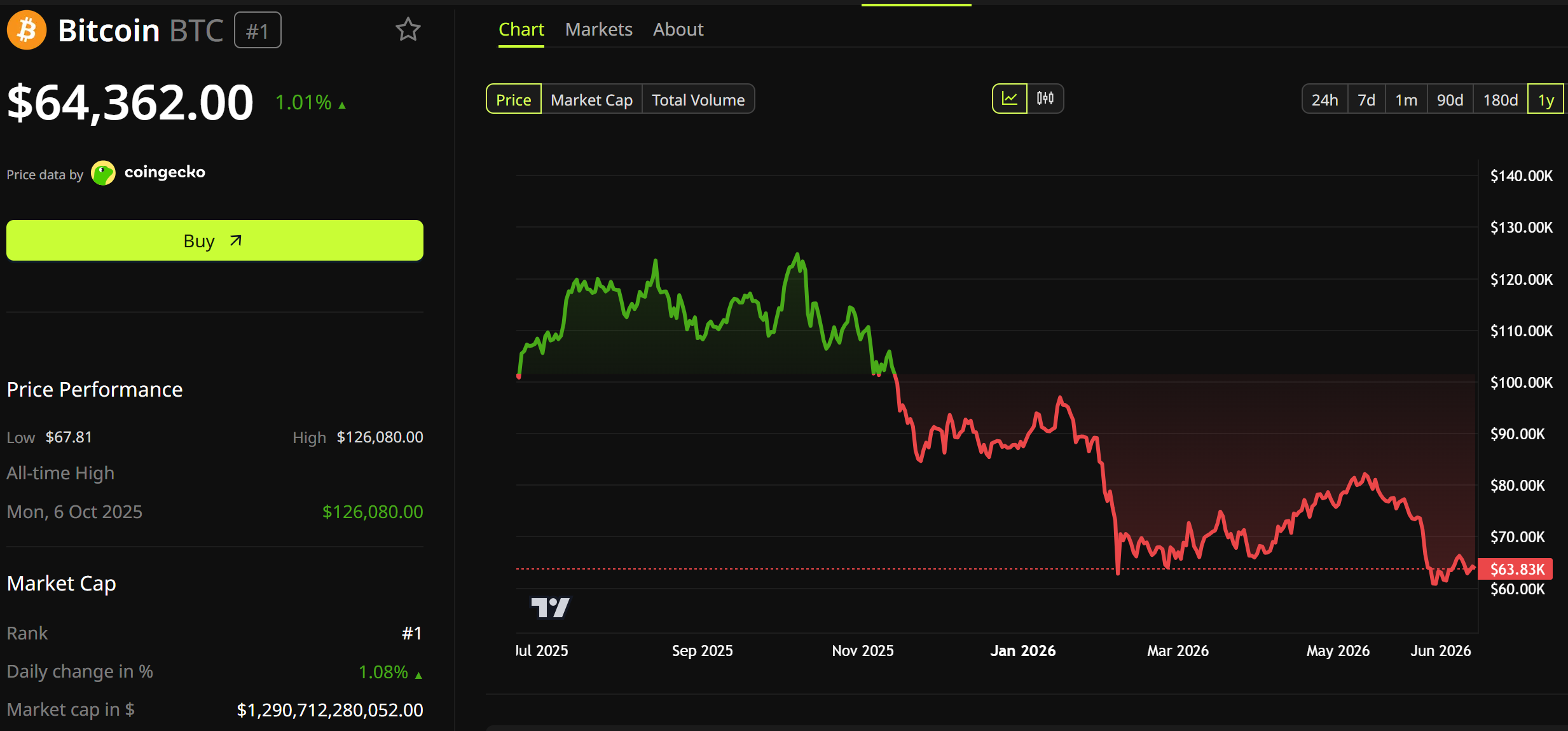
Wall Street’s biggest names disagree over a simple choice, Bitcoin or AI. BlackRock expects fiscal fear to lift Bitcoin (BTC) while JPMorgan’s Jamie Dimon backs an AI-led stock rally.
The split sets up a defining question for the rest of 2026. Investors must decide whether AI momentum or Bitcoin’s macro hedge case wins the next wave of capital.
BlackRock Ties Bitcoin to US Debt Fears
Robert Mitchnick, BlackRock’s head of digital assets, said Bitcoin has lagged because AI absorbed investor attention. He expects that to shift as US deficits return to focus near the midterms.
Bitcoin trades near $64,360, down about 49% from its October 2025 record of $126,080. BlackRock’s iShares Bitcoin Trust anchored that earlier rally as the largest spot Bitcoin ETF.

“And the more fear there is over the borrowing level and the risk of money printing, that is ultimately the most important, I think fundamental driver ahead,” Robert Mitchnick, BlackRock, via Yahoo.
Follow us on X to get the latest news as it happens
Dimon Sees an AI Tsunami
JPMorgan chief Jamie Dimon takes the other side. He points to AI spending on track for roughly $700 billion this year, unemployment at 4.3%, and steady growth.
The S&P 500 cleared 7,600 for the first time in early June, led by AI names.

“We’re in a bull market. It’s like a little tsunami. When that kind of thing happens, it’s very hard to stop,” Jamie Dimon, JPMorgan, via Fortune.
Dimon has long dismissed Bitcoin, once calling it a fraud. He still warned that geopolitical and fiscal risks are building beneath the surface over the next year or two.
Bitcoin or AI for the Next Capital Wave
Research firm NYDIG flagged the strain on Bitcoin demand. Spot Bitcoin ETFs have shed $6.4 billion since May 7, with only two positive flow days since.

Stablecoin balances have also dropped $8 billion since May 22. Those redemptions show where institutional money flows.
Analyst Greg Cipolaro added that Bitcoin’s weakest months historically fall in August and September.
That window arrives before the midterm debate BlackRock is counting on. For now, AI keeps drawing capital that once chased Bitcoin and gold.
The coming months will test both views. If deficits dominate headlines near the November vote, Bitcoin’s hedge case could return. Until then, AI holds the money.
The post Bitcoin or AI? BlackRock and JPMorgan Split Over Where Capital Flows Next appeared first on BeInCrypto.

TLDR:
- Ethlabs was founded by five former Ethereum Foundation researchers focused on core protocol work.
- The nonprofit will research scalability, settlement efficiency, interoperability, and economics.
- Backers include Bitmine, SharpLink, Joe Lubin, Anchorage, Octant, and SNZ contributors.
- Ethlabs says funders will not influence research priorities or technical development decisions.
Ethlabs launched with backing from major Ethereum ecosystem participants, marking a new phase in Ethereum’s research and development landscape.
The nonprofit organization was founded by five former Ethereum Foundation researchers and will focus on advancing Ethereum’s core protocol.
Ethlabs aims to support faster settlement, scalability, interoperability, data availability, and protocol economics as institutional adoption of blockchain technology continues to expand.
The organization stated that research priorities will remain independent, with funders not influencing technical decisions.
Ethlabs Begins Independent Ethereum Research Mission
Ethlabs was officially introduced as a nonprofit research and development organization dedicated to Ethereum’s long-term growth.
The initiative was founded by former Ethereum Foundation contributors Ansgar Dietrichs, Barnabé Monnot, Caspar Schwarz-Schilling, Josh Rudolf, and Julian Ma.
The organization was established with financial backing from Bitmine, SharpLink, Ethereum co-founder Joe Lubin, Anchorage, Octant, and SNZ.
According to the announcement, Ethlabs will operate independently while focusing on critical areas of Ethereum protocol development.
Its research agenda includes settlement efficiency, scalability improvements, cross-chain interoperability, data availability, and protocol economics. These areas are considered central to supporting increased activity across the Ethereum network.
The launch comes as Ethereum continues attracting activity from stablecoins, tokenized real-world assets, decentralized finance applications, and emerging AI-driven commerce systems. Ethlabs stated that its objective is to help prepare Ethereum for growing demand from institutions and developers.
In the official announcement, Ethlabs explained that Ethereum’s position as a neutral and permissionless settlement layer makes it a key infrastructure network for the evolving on-chain economy. The organization plans to contribute to technologies and standards that strengthen Ethereum’s core foundation.
Backers Emphasize Institutional Adoption and Network Growth
Statements from Ethlabs supporters focused on Ethereum’s expanding role in institutional finance and digital asset markets.
Bitmine Chairman Tom Lee said the network could see increasing adoption from institutions and AI agents, creating demand for additional research and technical talent.
SharpLink Chief Executive Officer Joseph Chalom described the formation of Ethlabs as a step toward supporting Ethereum’s next stage of institutional growth. He noted that the founding researchers have contributed to Ethereum development for nearly a decade.
Ethereum co-founder Joe Lubin also commented on the launch. He said Ethereum is entering a new stage where multiple independent organizations can serve as stewardship nodes while helping advance the network’s technology and values.
The announcement noted that Ethlabs emerged as the Ethereum Foundation continues focusing on its core responsibilities while encouraging a broader ecosystem of independent contributors. Ethlabs is expected to operate alongside other organizations working on Ethereum development.
Ansgar Dietrichs, Executive Director of Ethlabs, said Ethereum’s decade-long operational history and commitment to credible neutrality have helped establish trust among users and institutions.
He stated that Ethlabs was created to advance Ethereum’s technology, standards, and infrastructure while supporting the network’s role as a shared foundation for the on-chain economy.
To preserve independence, Ethlabs said funding contributions will pass through an independent grants administrator responsible for screening, valuation, and distribution.
Research priorities and technical direction will remain under the control of Ethlabs leadership, while funders will be provided with transparency through quarterly reporting and annual audits.

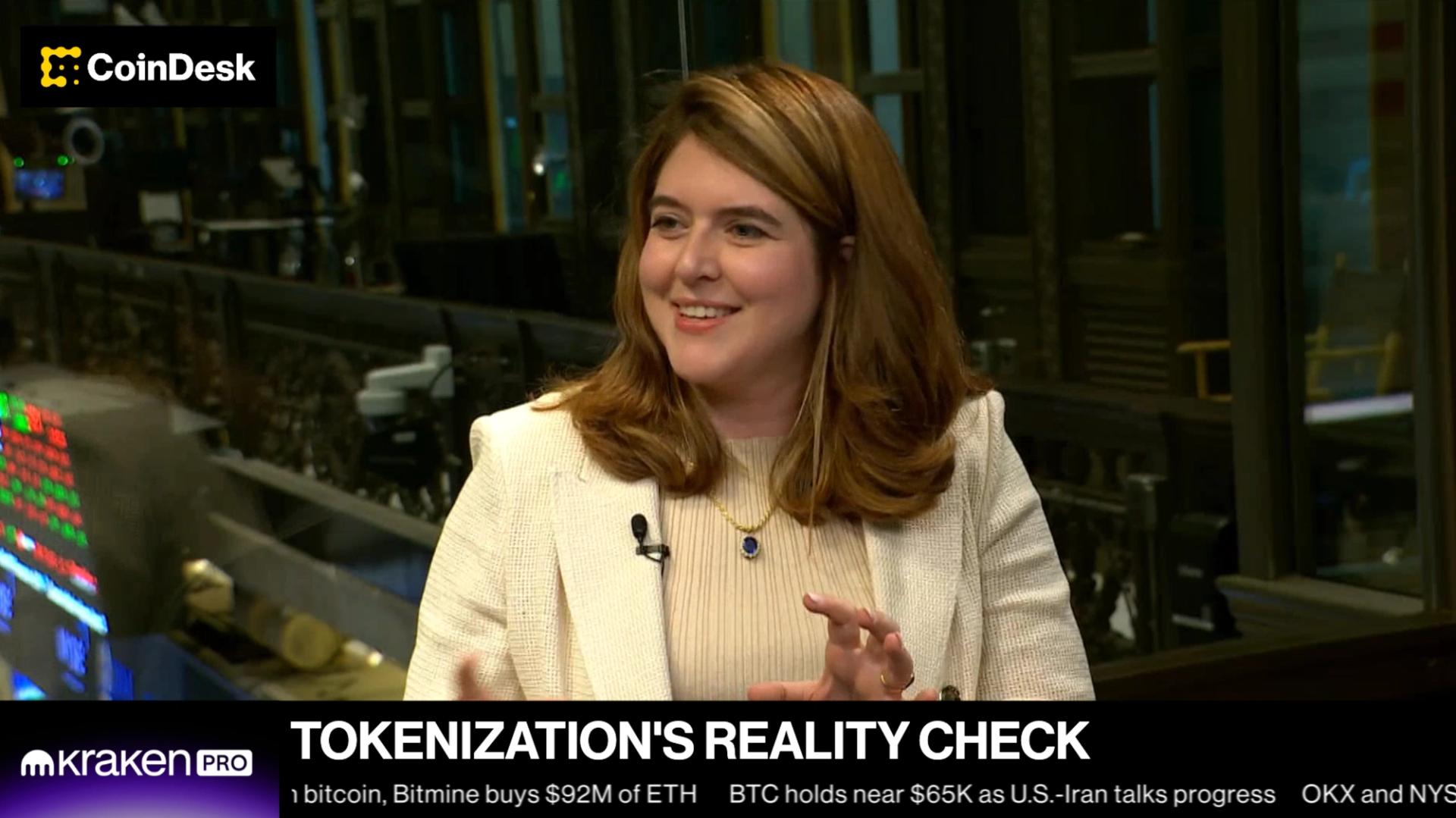
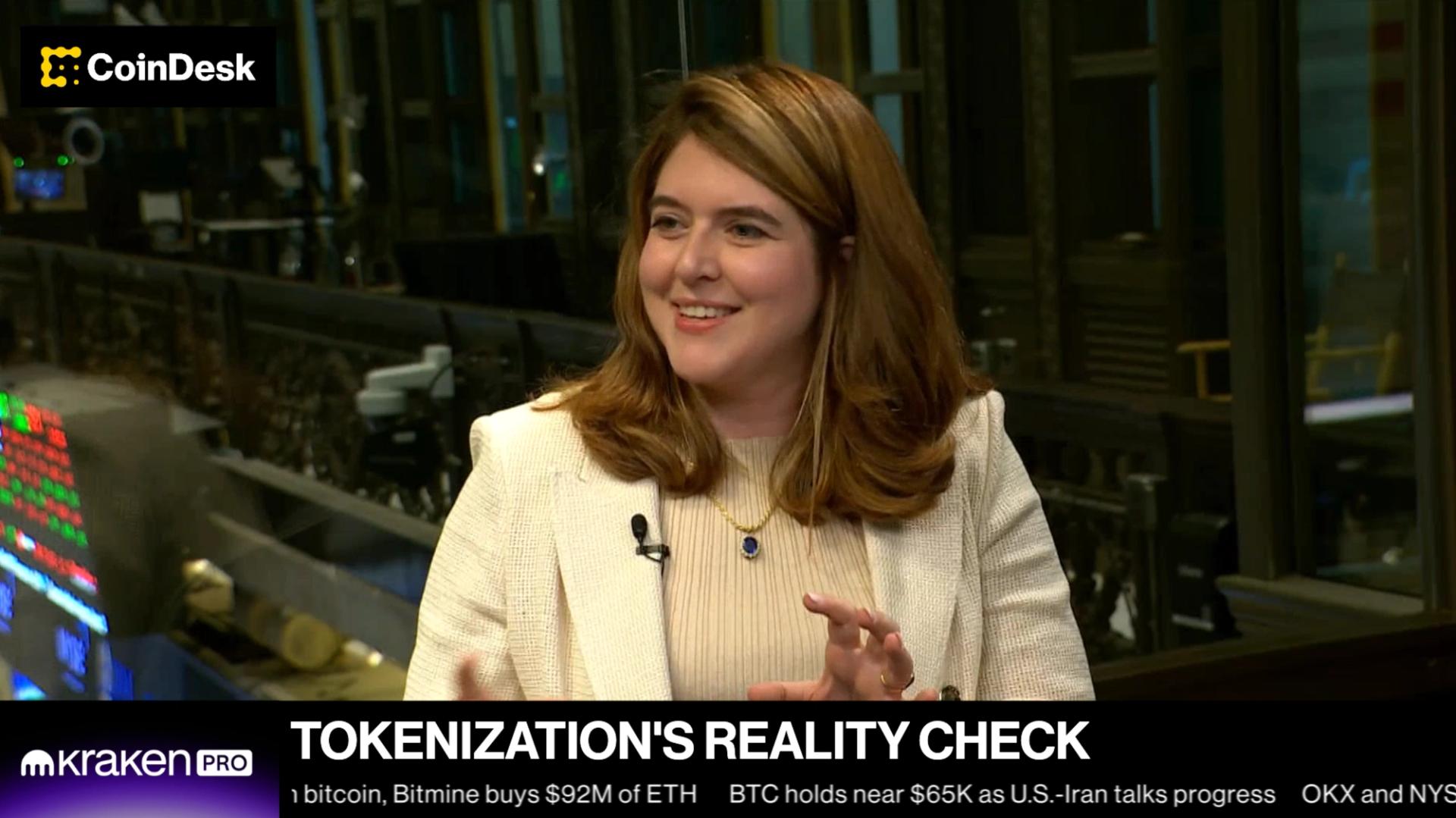
What she’s saying: Former 21Shares co-founder Ophelia Snyder argues that crypto and traditional finance are talking past each other when it comes to tokenization.
- Tokenization solves real problems around settlement rails and moving assets, Snyder said.
- The larger challenge is integrating blockchain-based assets with the systems banks, brokerages and asset managers already use.
- Existing discussions often overlook the operational processes that occur after a trade is executed and before assets are fully settled.
- Snyder joined CoinDesk’s Jennifer Sanasie on Public Keys.
The gap: Snyder said blockchain firms have largely addressed transaction throughput but not the broader operational requirements of financial institutions.
- Questions remain about how tokenized assets fit into books and records systems, compliance workflows and regulatory reporting.
- Financial institutions also must rethink risk management frameworks if tokenized assets can trade around the clock.
- Many firms rely on third-party software providers that have not yet adapted their systems for blockchain-native transactions.
Why it matters: Snyder believes the industry’s biggest challenge is scale, not functionality.
- A tokenization project can work at a limited scale and still struggle to support the volume of U.S. capital markets.
- “A billion dollars is nothing when it comes to traditional financial flows,” Snyder said.
- Moving large amounts of digital bearer assets on behalf of clients requires significantly more oversight and controls than existing book-entry systems.

The Villain in Every Avengers Movie, Ranked

The 500-year-old North Yorkshire pub at the top of the moors

Kevin Durant Embraces Financial Stability and Travel Lifestyle as NBA Career Continues


-

 Fashion3 days ago
Weekend Open Thread: Miami – Corporette.com
-
 Tech6 days ago
The Adder At The Heart Of Intel’s 8087 FPU
-

 Entertainment2 days ago
Renter of Home in Anne Heche Crash Denies Settlement With Son
-

 Tech10 hours ago
Microsoft accidentally kills epic Outlook email threads
-

 Business2 days ago
Soccer-U.S. defends Iran World Cup travel restrictions, says discussions ongoing
-
 Business3 days ago
Wall Street Week Ahead: Investors see Micron earnings as pulse check of AI rally momentum
-

 Politics4 days ago
BBC Reporter Discusses Cross Party Criticism Of Trumps Iran Deal
-

 Tech4 days ago
AWS enters the context layer race with a graph that learns from agents, not manual curation
-

 Crypto World3 days ago
HIVE shares jump as $220M AI deal speeds Bitcoin mining pivot
-

 Crypto World3 days ago
Jake Chervinsky accuses CME of protecting derivatives monopoly
-
 Crypto World3 days ago
Can Charles Hoskinson Really Rescue Cardano?
-

 Tech3 hours ago
Nearly 7,000 fake Amazon domains registered ahead of Prime Day 2026, researchers warn
-

 Sports4 days ago
FIFA World Cup 2026: Canada beat 9-men Qatar 6-0 to register first ever win | FIFA World Cup 2026
-

 Business2 days ago
MHP SE 2026 Q1 – Results – Earnings Call Presentation (OTCMKTS:MHPSY) 2026-06-20
-

 Business4 days ago
Brexit cost 6% of UK economy, Bank of England company data suggests
-

 Politics3 days ago
Andy Burnham and the meaning of Makerfield
-
 Tech1 day ago
Signal’s Meredith Whittaker says AI chatbots ‘are not your friends’ and calls Copilot agents a backdoor
-

 Crypto World5 days ago
Anthropic’s Dario Amodei Urged AI Unity at G7, Even as US Banned His Models
-

 Crypto World7 days ago
Robinhood opens AI-powered trading to all users, sending HOOD stock past $100
-

 Tech5 days ago
Weeks Of In-The-Field Testing And A Verdict
You must be logged in to post a comment Login