

Crypto World
BONK faces $20 million treasury drain after attacker spends $4 million to pass malicious proposal

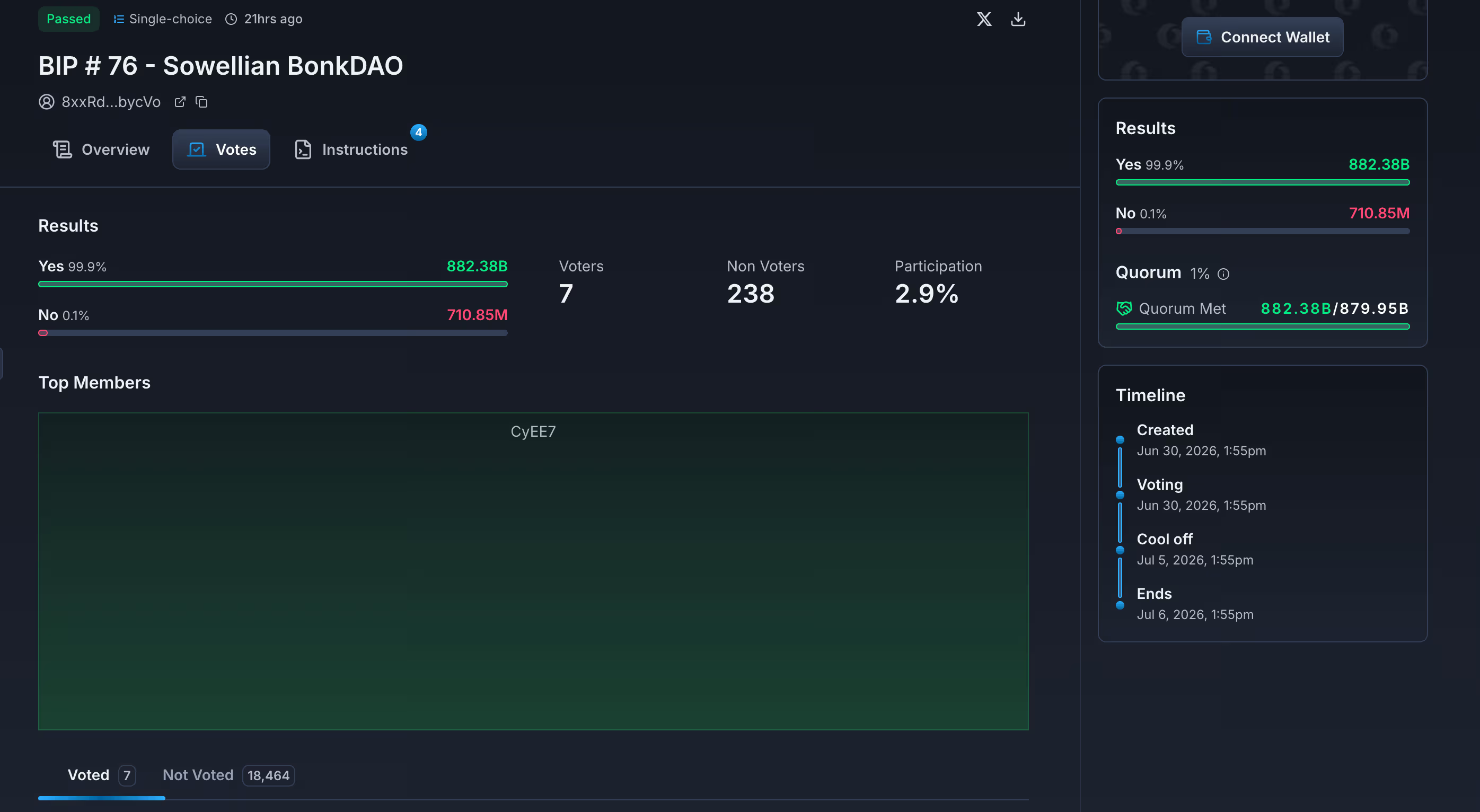
The sequence began on June 30, when an anonymous wallet submitted a proposal to transfer the treasury’s holdings to a wallet it controlled, per Chainalysis. To pass, the proposal needed yes votes equal to 1% of BONK’s supply, the quorum, or minimum participation, required for it to take effect.
Over July 4 and 5, a separate wallet acquired exactly that much, spending about $4.4 million to buy BONK on the exchanges Bybit and Binance and, by one account, borrowing more through DeFi lending platforms, according to Lookonchain.
Titled “BIP #76 – Sowellian BonkDAO,” the proposal passed with just seven wallets voting, against more than 18,000 members who did not, a turnout of 2.9%.
It cleared quorum by the narrowest margin, 882.38 billion BONK in favor against a 879.95 billion threshold, almost exactly the stake the attacker had spent days assembling.
The 99.9% “yes” result was effectively a single voter agreeing with itself. Its written pitch read less like a governance motion than a boast, promising to “rebuild from the ashes, monetize holdings, stop the bleeding,” with a line noting that “all YES voters are eligible to receive tokens.”
Beneath it sat the only instruction that should have turned heads – a transfer of 4.43 trillion BONK to the attacker’s wallet.

By July 6 the voter held just enough. It cast its entire stake in favor, the proposal passed, and about $20 million in BONK automatically moved out of the treasury into the attacker’s wallet.


TeraWulf has signed a 20-year lease with Anthropic for a 401 MW AI data center campus at its Justified Data site in Hawesville, Kentucky, locking in approximately $19 billion in contracted revenue, a figure that exceeds the bitcoin miner’s entire current market cap of roughly $12 billion.
The deal forces a straightforward question onto the table: at what point does WULF stop trading as a BTC proxy and start pricing as an infrastructure REIT?
Shares jumped as much as 19% intraday on July 6 before settling to around a 4% gain at the close. That compression from intraday high to close is worth noting, it suggests the market is discounting execution risk even as it prices in the headline value, which is the correct reflex given the multi-year buildout ahead.
Today, TeraWulf announced two strategic transactions that significantly advance our AI infrastructure strategy: — TeraWulf (@TeraWulfInc) July 6, 2026
 A 20-year lease with @AnthropicAI at our Justified Data Campus The sale of our 50.1% ownership interest in the Abernathy Joint Venture to an investor group led…
TeraWulf CEO Paul Prager told CNBC: “The Anthropic lease validates our strategy and establishes a long-duration revenue stream with one of the world’s leading AI companies.” The Wall Street Journal reported the agreement is underpinned by Anthropic’s strong investment-grade credit rating, which matters structurally, long-duration revenue anchored to investment-grade paper is a fundamentally different asset than hashrate-dependent block rewards.
What the Kentucky Deal With Anthropic Actually Commits TeraWulf To
The Kentucky data center campus will deliver approximately 401 MW of critical IT load for Anthropic’s Claude AI infrastructure in phases, with initial capacity expected online in H2 2027 and full build-out targeted by early 2028.
The Justified Data site sits on a former Century Aluminum facility, giving TeraWulf an existing large-power footprint with roughly 480 MW of available capacity and room to expand. That kind of shovel-ready power access is precisely what AI labs cannot easily replicate on their own timeline.
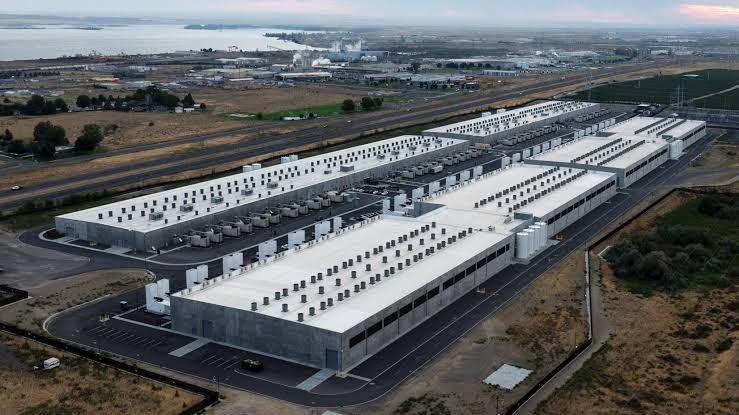
At an industry-standard capex figure of approximately $8–$10 million per MW for HPC-grade infrastructure, the 401 MW buildout implies a capital requirement in the range of $3.2 billion to $4 billion.
That number is not in the headline, the $19 billion contracted revenue figure is, but it is the variable that will determine whether this deal creates or destroys equity value over the next 24 months. TeraWulf has not yet specified its full financing structure for the Kentucky campus.
Anthropic is not the only AI lab moving this aggressively on power. Reports says the company has locked up approximately 3.5 GW of AI compute capacity across multiple deals, and Benzinga notes that IREN has also signed with Anthropic, framing TeraWulf as part of a growing cohort of former Bitcoin miner operators now serving as dedicated AI infrastructure landlords.
The AI infrastructure buildout cycle driving these commitments shows no sign of decelerating.
Capital Recycling and the Abernathy Exit
Running parallel to the Anthropic announcement, TeraWulf confirmed it will sell its 50.1% ownership interest in the Abernathy Joint Venture, a 168 MW AI data center project in Texas formed in 2025, to an investor group led by Fluidstack.
The company said the transaction monetizes its approximately $450 million investment at a premium to invested capital, according to Reuters. That is not a trivial data point: it means TeraWulf is already realizing gains on its crypto mining pivot before a single rack goes live in Kentucky.
The logic of the Abernathy exit is clean. Rather than hold a minority stake in a joint venture it does not control, TeraWulf is recycling capital into wholly owned infrastructure where it captures the full margin profile.
CoinShares has estimated that up to 70% of listed miners’ revenue could eventually come from AI hosting for those that secure long-term agreements, a shift that changes the entire valuation framework for companies like TeraWulf.
The 20-year lease structure itself is the most significant element beyond the dollar figure. For investors previously using WULF as a leveraged bet on bitcoin price cycles, that tenure represents a genuine change in the underlying business.
Long-duration, fixed-revenue infrastructure produces a very different earnings profile than mining, more predictable, less volatile, and increasingly comparable to a data center operator rather than a commodity producer. That is the risk miners like TeraWulf are explicitly choosing to trade away from: direct exposure to BTC price swings and hashprice compression following the halving.
The post TeraWulf’s $19B Anthropic Lease Turns Bitcoin Miner Into AI Landlord appeared first on Cryptonews.


As of 8:19am today in New York, every retail investor who had ever bought shares of Enlivex on the Nasdaq, an arthritis biotech-turned-digital asset treasury (DAT), had lost money.
The company bet its balance sheet on the RAIN crypto token that ZachXBT eventually tied to Moshe Hogeg, an Israeli entrepreneur facing a $290 million law enforcement investigation.
Shares of Enlivex, which have been trading publicly for 12 years, traded to their all-time low of $0.42 this morning. Investors are slowly losing it all.
Hogeg has denied fraud allegations via a spokesperson.
The biotech company spent years developing clinical therapeutics. Bizarrely, it then reinvented itself in November 2025 to what it called the “world’s first prediction markets digital asset treasury strategy.”
That was a world first — and probably last.
The company raised over $200 million through a private placement at $1 per share, funded in dollars and USDT.
It also apppointed a former prime minister of Italy to its board, and spent money accumulating RAIN, a so-called governance token of an Arbitrum-based protocol, calling it “the Uniswap of prediction markets.”
Still today, Enlivex holds about 78.8 billion RAIN worth $1.2 billion, equal to 12% of the token’s circulating supply.
Sadly, even though the token has independently rallied substantially since last year, shares of its largest publicly traded holding company keep falling.
Something is wrong at that company.
Read more: Police want party animal and alleged crypto scammer Moshe Hogeg charged with fraud
ZachXBT flags RAIN, Enlivex, and Moshe Hogeg
On-chain investigator ZachXBT flagged the RAIN token in May of this year. He warned, “You only provide exit liquidity for insiders,” and concluded, “team is tied to a sketchy DAT Enlivex & launchpad Gems[.]vip.”
In a follow-up, he reiterated warnings about RAIN and Enlivex.
Days later, ZachXBT reiterated his RAIN warnings and further traced RAIN’s funding to a blockchain addresses that once moved money for two failed projects, TOMI and Data Ownership Protocol.
TOMI was co-founded by Hogeg, who was behind a string of crypto ventures that lost investors’ money.
ZachXBT alleges on-chain activities link RAIN to Hogeg-connected blockchain addresses.
Despite the mark-to-market value of Enlivex’s RAIN holdings at $1.2 billion, the token is thinly traded and would likely fetch less during a sudden, large sale.
Moreover, its holdings dwarf the company’s actual market capitalization of a mere $118 million which indicates encumbrances over those assets or other serious problems.
Some of its RAIN is pledged as collateral, for example.
The stock has fallen 94% over the past five years, including a 30% year-to-date decline. Even privileged investors who bought within its November placement at $1 have watched their investments halve in value.
In short, Enlivex’s treasury pivot is just another installment in a long series of retail money routed toward Hogeg-linked crypto tokens.
Got a tip? Send us an email securely via Protos Leaks. For more informed news and investigations, follow us on X, Bluesky, and Google News, or subscribe to our YouTube channel.

UK Reform Party leader Nigel Farage has announced he will resign as the Member of Parliament for Clacton and stand in the by-election that could determine whether he remains in the job. Farage said his decision follows what he described as “foul means” used by established politicians, after reports that he received gifts and donations linked to crypto figures and a convicted fraudster.
His move comes amid parliamentary standards scrutiny of the circumstances around those reported transfers. Farage has repeatedly insisted he has done nothing wrong and says the upcoming contest should give voters a direct say on his actions.
Key takeaways
- Farage confirmed he will resign as MP for Clacton and run in the resulting by-election, framing it as a decision for voters rather than a legal verdict.
- Reports cited by UK coverage link alleged gifts to crypto billionaire Christopher Harborne and George Cottrell, a convicted fraudster associated with a crypto casino.
- Farage said he is the subject of two probes by the UK parliamentary standards commissioner.
- Farage has long had ties to the crypto industry, including speaking at Bitcoin 2025 in Las Vegas and being an investor in a London-listed “Bitcoin treasury” company, Stack.
- The UK case lands as US elections approach, with watchdog reporting continued spending by crypto industry groups to influence candidate outcomes.
Farage steps aside from Clacton seat amid standards probe
Farage made the announcement in a Tuesday statement on X. He said he would resign as MP representing Clacton, followed by the formal by-election process. In his message, Farage argued that he has not broken any law or misused public funds, while also pointing to what he described as unfair tactics by political opponents.
According to reporting referenced by Cointelegraph, the renewed attention began after allegations that Farage received millions of dollars’ worth of donations and gifts connected to Christopher Harborne and George Cottrell. The original claims have been discussed alongside an investigation into UK parliamentary standards, with scrutiny focused on whether the nature and receipt of those benefits complied with rules governing MPs.
“Let me be absolutely clear: I have done nothing wrong,” Farage said in an X livestream. “I have not broken the law in any way at all. I have not misused public money.”
What Farage says about the gifts—and why the by-election matters
Farage confirmed he is facing two probes by the UK parliamentary standards commissioner. In comments relayed through the same coverage, he described the reported gifts as being provided “on an unconditional basis.”
He also said he planned to use Harborne’s gift specifically for funding related to his security, citing ongoing threats and attacks. In a separate passage explaining his decision, Farage suggested the by-election would allow constituents to judge whether he should continue representing them.
“I’ve decided that the people of Clacton should be the judges of my actions […] I will be putting my name forward to stand in this by-election.”
Coverage from the London Standard indicated that the by-election outcome could take weeks or months to resolve, largely due to the logistics of stepping down and calling the vote. Farage previously won the Clacton seat with 46.2% of the vote in July 2024, according to the same reporting, edging out Conservative and Labour candidates.
Crypto links predate the current controversy
Cointelegraph reported that Farage had connections to the crypto sector well before the latest set of allegations. That includes his appearance at Bitcoin 2025 in Las Vegas and his role as an investor in Stack, described in earlier coverage as a London-listed Bitcoin treasury company.
In May, when reports first circulated about a claimed $6.7 million “gift” from Christopher Harborne, Farage described it as a “reward” for campaigning for Brexit—the 2016 referendum that led to the UK’s exit from the European Union. Those earlier remarks help explain why the current dispute is not only about alleged donations, but also about how Farage has sought to characterize his relationships with crypto-linked donors.
The latest developments also broaden the conversation beyond crypto money alone. The reported involvement of George Cottrell—described in the cited coverage as a convicted fraudster linked to a crypto casino—adds an additional compliance and reputational dimension that could intensify the scrutiny of how political figures accept benefits and whether disclosure obligations were met.
Pressure on crypto-linked politics extends to the US
While Farage faces UK scrutiny, the question of whether crypto-linked funding can shape elections is not confined to the UK. As November approaches for the US midterms, consumer advocacy group Public Citizen reported in June that the crypto industry spent about $189 million to support candidates viewed as favorable to digital asset policies as part of the 2026 election cycle.
That same broader political backdrop includes criticism directed at US President Donald Trump over his 2025 financial disclosures. Cointelegraph noted that Trump’s filings included reporting $1.4 billion in earnings related to crypto, which has drawn complaints from many lawmakers about possible conflicts and the transparency of his financial ties.
Taken together, the UK by-election dispute and the US election-cycle spending claims reflect a recurring political issue: how regulators, voters, and lawmakers assess the influence of digital asset wealth—especially when potential donors and campaign backers are tied to the industry itself.
What to watch next in Clacton
For voters in Clacton, the immediate variable is straightforward: whether Farage can retain support in the by-election even as parliamentary probes continue. For observers of crypto and politics, the key open question is how the standards commissioner’s findings—once available—will address the substance of Farage’s claims about the gifts, their “unconditional” nature, and what the process will ultimately mean for political fundraising scrutiny.
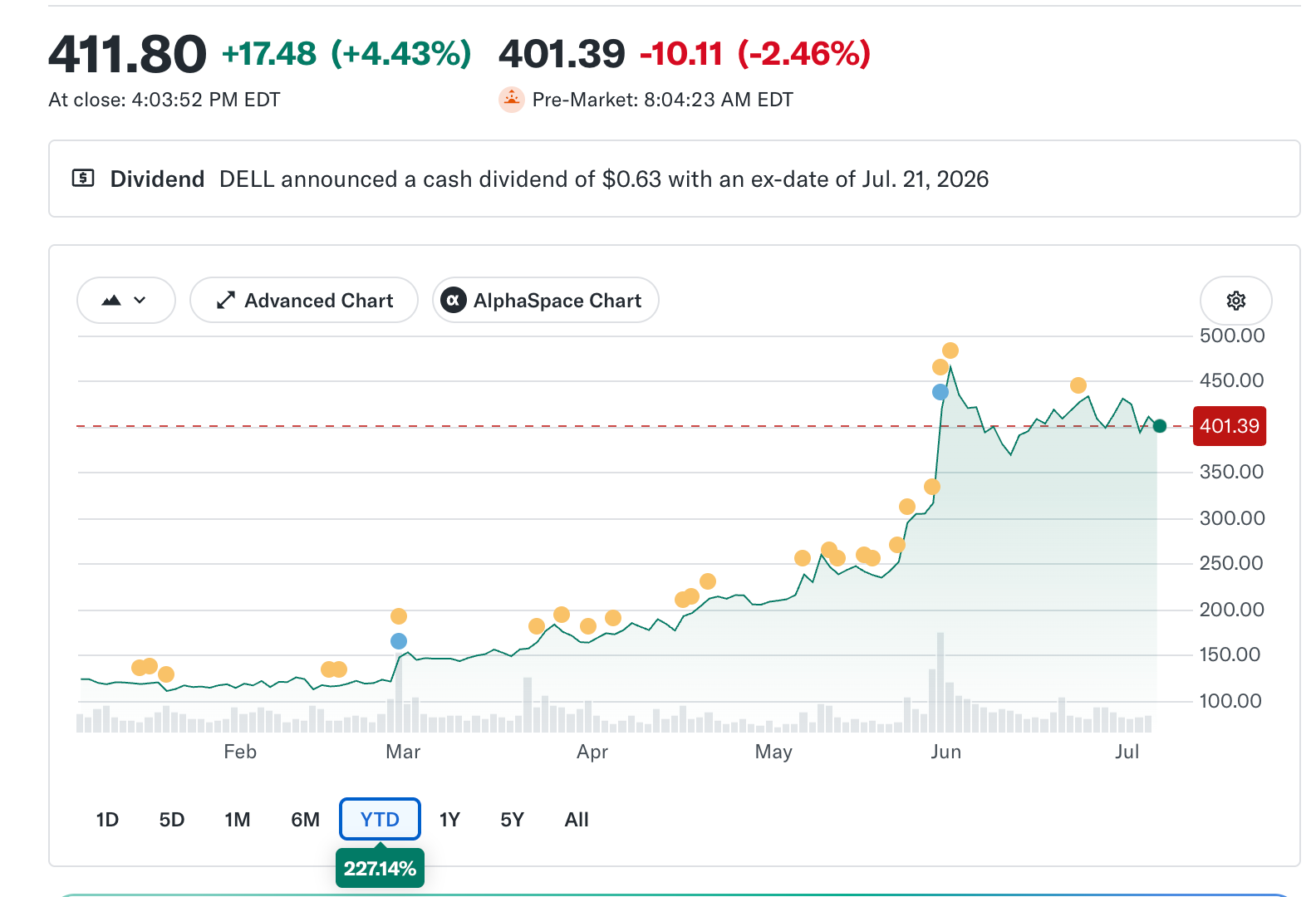
President Donald Trump has urged Americans to buy Dell three times in five months, helping lift Dell (DELL) stock by more than 220% this year.
His latest plug came on Monday. Yet even with the president cheering it on, traders are quietly betting the stock will fall, and a closer look shows why.

Trump’s Third “Buy a Dell” Call in Five Months
Trump made his latest call at a White House ceremony on July 6, and the stock briefly jumped as much as 10%. He had already told people to buy Dell in February and May.
The timing looks awkward. According to government ethics filings, Trump owns between $1 million and $5.1 million in Dell shares, bought about nine days before his first endorsement in February.
Want more insights like this? Sign up for Editor Harsh Notariya’s Daily Newsletter here.
There is a real business behind the hype. Dell now sells huge numbers of AI servers, the powerful computers that run artificial intelligence. That business grew 757% over the past year, and the stock soared 32% on its last earnings report.
Traders are Not Buying the Hype
Here is the part the headlines skip. In the options market, where investors place side bets on where a stock will go, the balance still leans bearish. A put-call ratio above 1 means more money is riding on a fall than a rise.
For Dell, that ratio stayed above 1 through the price surge. The open-interest reading, which counts all standing bets, was 1.11 on July 2 and 1.12 on July 6, even after Trump’s Monday boost.
The daily volume side did slip to 0.40, a sign some traders bought calls to chase the move, but the bigger pool of open bets stayed negative.

The flow of cash is mixed, too. A money-flow gauge called Chaikin Money Flow (CMF), a proxy for institutional flows, reads slightly positive for Dell, near +0.05 over 20 days, so a little money is still coming in.
The same gauge is negative for rivals such as Supermicro, Broadcom, and HP, indicating money leaving them.

So why the doubt when sales are booming? The answer sits inside the machines Dell sells.
Dell Builds the Box, but Nvidia Owns the Value
Dell builds the AI server, but not its most valuable part. Nvidia (NVDA) does. Dell buys Nvidia’s chips and sells the finished computer. This passes most of the chip’s cost to the buyer. So in its latest quarter, a roughly $16 billion AI-server haul was largely Nvidia’s revenue crossing Dell’s books, leaving Dell only a thin slice.
That thin slice shows in the profit. In Dell’s infrastructure arm (ISG), which houses its AI servers, operating margin fell to 8.8% during the ramp of Nvidia’s costly Blackwell chips.
Higher-margin storage sales lifted it back to 14.8%, but as AI-server sales jumped 757% and retook the mix, margin slipped to 10.5%. The faster Dell sells Nvidia-powered servers, the thinner its profit gets. That is the uncomfortable truth.

The pressure is growing. Over the past 20 days, Dell’s stock rose about 4%. Yet, the cost of the memory and storage parts it buys rose about 10%. When costs climb faster than the stock, the profit math gets harder.

There is one more tell. Dell has outrun Nvidia this year, up about 132% over three months, while Nvidia is up about 10%. Yet Dell usually moves the day after Nvidia, not before, so it is riding Nvidia’s demand, not creating its own.
That makes Nvidia the early warning. If Nvidia’s AI demand cracks, Dell tends to feel it the next day and cannot get ahead of trouble at its supplier.

So Trump can move Dell stock for a day. The harder question is what happens after the noise fades. With traders betting against it, thin profits, and a business built on someone else’s chips, the 220% rally may need real earning power to catch up.
The post Trump is Endorsing Dell Stock, But There Is an Uncomfortable Truth You Must Know appeared first on BeInCrypto.

Key Takeaways
- Eli Lilly dominates the weight-loss and diabetes medication sector with Zepbound and Mounjaro, supported by robust research and development
- Abbott Laboratories offers balanced exposure through medical devices, laboratory diagnostics, and nutritional products
- Johnson & Johnson has streamlined operations around pharmaceuticals and medical technology following its consumer division spinoff
- These companies capitalize on demographic shifts and increasing healthcare consumption worldwide
- Market participants are shifting capital from overvalued tech equities toward stable healthcare investments in 2026
As 2026 unfolds, healthcare equities are capturing significant investor attention amid a broader rotation away from elevated technology valuations. Three pharmaceutical and medical device leaders stand out: Eli Lilly, Abbott Laboratories, and Johnson & Johnson.
Eli Lilly
Eli Lilly has emerged as a dominant force in modern pharmaceutical innovation.
The Indianapolis-based giant commands the rapidly expanding obesity and diabetes therapeutic market with its blockbuster GLP-1 medications Zepbound and Mounjaro. Global appetite for these treatments shows no signs of slowing, with market researchers projecting sustained revenue expansion throughout the decade.
Wall Street firms including JPMorgan have maintained bullish ratings on the stock, citing accelerating Medicare coverage and sustained prescription growth for weight management therapies.
Lilly’s innovation extends far beyond metabolic health. The company maintains an impressive development portfolio spanning cancer treatments, neurological disorders, autoimmune conditions, and cardiometabolic diseases. Strategic acquisitions and substantial manufacturing investments position the firm for continued expansion.
While shares command elevated multiples, market analysts argue the premium pricing reflects exceptional earnings growth prospects within the pharmaceutical sector.
Abbott Laboratories
Abbott Laboratories operates with a distinctly different business model compared to traditional drug manufacturers.
This Chicago-based healthcare giant maintains operations across four major segments: medical devices, diagnostic products, nutritional supplements, and generic pharmaceuticals. This diversified structure has enabled consistent performance across varying market environments.
Abbott’s FreeStyle Libre continuous glucose monitoring system represents a breakthrough in diabetes management technology. Meanwhile, its cardiovascular device portfolio and diagnostic testing divisions benefit from global demographic trends and expanding healthcare access.
The company produces dependable free cash flow, funding both product innovation and a progressively increasing dividend payout.
Johnson & Johnson
Johnson & Johnson has refined its strategic direction following the separation of its consumer products division.
The New Brunswick-based corporation now centers exclusively on prescription medicines and medical technology platforms. Its oncology franchise continues expanding, powered by robust demand for Darzalex. Following recent European regulatory clearance, the company is broadening its cancer therapy offerings ahead of quarterly financial disclosures.
Cardiovascular interventional devices and surgical equipment categories are posting solid advancement. Johnson & Johnson’s exceptional track record includes over 60 consecutive years of dividend increases, establishing it as a cornerstone holding for income-focused portfolios.
The Investment Case for This Healthcare Trio
Healthcare equities are attracting capital for compelling fundamental reasons. Demographic aging, escalating demand for breakthrough therapies, and promising pharmaceutical development pipelines collectively support sector momentum throughout 2026.
Eli Lilly represents the highest growth trajectory among the three. Abbott delivers portfolio diversification and operational consistency. Johnson & Johnson merges pharmaceutical innovation with an unmatched dividend growth history.
Collectively, these three holdings provide comprehensive exposure to prescription drugs, medical equipment, diagnostic testing, and resilient healthcare spending patterns.



Reform UK leader Nigel Farage has announced that he will resign as MP and force a local by-election after The Times revealed that he’d failed to declare financial support from long-term aide and convicted criminal George Cottrell.
The Times‘ report details various donations and “gifts” from Cottrell to Farage that appear to be politics-related. Farage was subsequently referred to the Parliamentary Standards Commissioner.
During Farage’s announcement, he claimed that the parliamentary body is “being used as a political tool” and claimed that The Times’ reporting was “wholly inaccurate.”
He maintains he’s done nothing wrong and hasn’t broken the law in any way, and that he’s a victim of unfairly intense media scrutiny.
Read more: Nigel Farage faces probe following crypto aide’s secret support, report
Farage has announced that he intends to run again in the upcoming by-election in Clacton-on-Sea, with many predicting he’ll frame it as a “people versus the establishment” election.
The Reform leader was elected as an MP in Clacton during the 2024 UK general election, where right-wing parties Reform UK and the Conservatives together received over 70% of the vote.
Farage faces scrutiny over crypto links
Farage has become embroiled in numerous crypto scandals over the past few months.
Indeed, crypto billionaire Christopher Harborne was revealed to have given Farage a secret £5 million ($6.6 million) “gift” before he ran for election in 2024.
The Parliamentary Standards Commissioner later launched a probe to determine whether or not the gift breached any rules.
If this probe finds he did break the rules, it would open up the possibility for a petition that could also trigger a by-election.
The Guardian’s Political Editor, Pippa Crerar, also noted that the investigation over the gift from Harborne will be suspended while he’s not an MP.
Crerar added, however, that the investigation will continue if he is re-elected, and that it can also continue even if he isn’t an MP at the discretion of the commissioner.
Read more: Nigel Farage accused of undervaluing Christopher Harborne jet loan by $666K
Farage was also referred to the UK Financial Conduct Authority after he reportedly lobbied the Bank of England to scrap plans for a state-backed stablecoin.
If successful, it would’ve been profitable for Harborne, who holds a 12% stake in multi-billion-dollar stablecoin firm Tether.
Another Parliamentary Standards referral was issued after Farage was accused of under-declaring the value of a private jet trip from Harborne.
Cottrell, a 36-year-old convict with a history of high-stakes gambling who is often pictured by Farage’s side, also plays a key role in Tether.bet, an offshore crypto gambling firm that’s modelled on Tether’s USDT.
He reportedly helped Reform hire multiple staff, including social media political campaigners, organised security, and let Farage stay at his five-storey mansion in London.
Most of this was before Farage’s election in 2024, and none of it was declared under the Register of Interests.
Got a tip? Send us an email securely via Protos Leaks. For more informed news and investigations, follow us on X, Bluesky, and Google News, or subscribe to our YouTube channel.
Crypto World
First Solar (FSLR) Stock Dips Despite Analyst Upgrades From Deutsche Bank and Wells Fargo

Key Takeaways
- Deutsche Bank elevated First Solar (FSLR) from Hold to Buy, increasing the price target from $245 to $272
- Deutsche Bank’s Corinne Blanchard highlighted the company’s $2.1 billion net cash reserve and described it as “fundamentally strong”
- Shares declined 1.6% to close at $229.28 on Tuesday, extending 2026 losses beyond 12%
- An upcoming Section 232 decision regarding foreign polysilicon imports, anticipated by early August, could serve as a major catalyst
- Wells Fargo increased its price objective to $320 while maintaining an Overweight stance, pointing to potential earnings growth from tariff outcomes
Shares of First Solar continued their descent on Tuesday, dropping 1.6% to finish at $229.28, despite receiving an upgrade from Deutsche Bank that elevated the stock to Buy status alongside a price target increase from $245 to $272.
Corinne Blanchard, an analyst at Deutsche Bank, characterized the solar manufacturer as a “fundamentally strong” investment opportunity, emphasizing its substantial $2.1 billion net cash position recorded in the second quarter. She views the current valuation as an attractive entry point for investors with medium- to long-term horizons.
FSLR has tumbled more than 12% year-to-date in 2026, significantly underperforming the S&P 500’s 9.4% gain during the same timeframe.
Blanchard noted that the momentum generated by a clean-energy sector rally in May has dissipated. However, she emphasized that the company’s core investment thesis remains intact.
Trading well below its 52-week peak of $320.95, the stock’s recovery trajectory may depend heavily on developments in the nation’s capital.
Federal Polysilicon Ruling Could Unlock Stock Performance
Blanchard anticipates a positive stock reaction following clarity on the federal government’s Section 232 investigation examining foreign polysilicon imports. The decision, projected to arrive by early August, would enable company leadership to finalize strategic decisions regarding domestic and overseas operations — both currently in a holding pattern.
The solar manufacturer has already begun relocating equipment to domestic facilities after committing to onshore its finishing operations last year. Blanchard forecasts an “acceleration of financial performance” in upcoming quarters, with 2027 positioned to represent a more normalized operational year.
First Solar holds a unique position as America’s sole thin-film solar panel producer. This status provides significant advantages under Section 45X of the Internal Revenue Code, which provides cumulative manufacturing tax incentives for U.S.-based solar production.
This domestic manufacturing footprint has garnered additional attention during the Trump administration’s national security examination of Chinese-manufactured energy inverters. As a producer operating without Chinese technology dependencies, First Solar could gain considerably if domestic content requirements become more stringent.
Wells Fargo Projects $320 Price Point
Wells Fargo joined the bullish chorus, elevating its price target from $255 to $320 while reaffirming an Overweight recommendation. The firm’s analyst pointed to “asymmetric upside” linked to the Section 232 determination, suggesting a positive outcome could elevate domestic solar module pricing and generate substantial earnings growth.
This upgrade came on a day when options trading volume in FSLR was notably elevated at market open, indicating some market participants were positioning themselves ahead of the analyst action.
Broader market strength provided supportive backdrop. The Nasdaq advanced 1.1% while the S&P 500 climbed 0.8% during the session when Wells Fargo released its analysis.
The solar industry has experienced significant headwinds recently. The Zacks Solar sector had plummeted over 23% in the month preceding the Wells Fargo commentary. FSLR’s analyst-driven momentum represented a notable sentiment shift for the industry, albeit temporarily.
Wall Street consensus on the stock tilts decidedly positive. Among 37 analysts monitored by FactSet, 23 assign Buy or Overweight ratings, 11 recommend Hold, and two rate it Underweight. KeyBanc Capital Markets stands alone with a Sell recommendation.
Notwithstanding the recent upgrades, FSLR shares have declined by double-digit percentages since early June. The stock’s next significant movement likely hinges on the timing and substance of the forthcoming polysilicon tariff determination.

Ethereum’s slow and gradual rebound from the $1,500 lows reached recently continues, but the asset is now testing one of the most important resistance lines on its path to recovery.
Analysts are convinced that breaking through this level will open the door for a run to $2,000 and even beyond. For now, though, it remains a mirage.
Can ETH Break Through?
With ETH trading close to $1,800, analyst Ali Martinez noted that this is the key bullish trigger that needs to fall decisively. In a post on X, he explained that its significance stems from the fact that the 0.8 MVRV Pricing Band is positioned there as resistance.
He predicted that a daily close above it, followed by a successful hold as support, would “strengthen the bullish case and could open the door for a move toward Ethereum’s Realized Price at $2,245.” Recall that the altcoin hasn’t traded above $2,000 in a month, and the last time it stood at its Realized Price was in mid-May.
Martinez doubled down on the importance of the $1,800 level, suggesting that the TD Sequential resistance trendline also sits there.
“A break above both $1,796 and $1,816 could trigger a bullish breakout. From a technical perspective, such a move would also increase the probability that ETH breaks through the top of the channel at $1,844 and begins marching toward the $2,245 Realized Price.”
Fellow analyst Ted Pillows shared a similar opinion, noting that ETH recently challenged the $1,820-$1,850 resistance, only to be rejected. The good news is that it continues to trade above $1,750, and Pillows predicted a surge to $2,000 if the aforementioned resistance is reclaimed.
Insane Correlation
Michaël van de Poppe, on the other hand, outlined a rather unexpected correlation that would support the narrative for a bigger Ethereum rally soon. He noted that the “business cycle is often phrased through the copper/gold chart,” which was evident during the 2017 and 2021 cycles. Only the 2024 cycle didn’t see such a positive correlation.
He believes the chart between the precious metals is a “great indicator of market momentum” that has just broken upwards massively, and it has “flipped a 4-year-long downtrend up to an upwards trend.”
“Usually, ETH follows through, although with some lag, as there needs to be more confidence in the markets. A matter of time until the crypto markets are finally picking up momentum,” he concluded.
The post ETH’s Path Beyond $2K Depends on This One Condition: Analyst appeared first on CryptoPotato.
Crypto World
Chip Stock Plunge: Nvidia (NVDA), Micron (MU), and AMD (AMD) Lead Semiconductor Sector Decline

Key Takeaways
- Semiconductor stocks experienced widespread declines as profit-taking swept through the AI chip sector
- SpaceX shares slipped following its Nasdaq-100 addition in a textbook “sell the news” scenario
- Nvidia continued its decline amid reports of DeepSeek developing proprietary AI processors in China
- Micron remained under selling pressure even as AI memory market fundamentals stay robust
- Samsung’s impressive quarterly earnings growth couldn’t reverse negative sentiment in chip equities
Understanding Tuesday’s Semiconductor Sector Weakness
Technology stocks experienced broad-based weakness on Tuesday as market participants secured profits following an extended rally in artificial intelligence-related equities.
Major players including Nvidia, Broadcom, AMD, Intel, and Micron all posted declines, dragging the Philadelphia Semiconductor Index significantly lower.
The selloff wasn’t triggered by any particular catalyst. Rather, market participants seemed to be booking gains after an impressive run that elevated many chip stocks to elevated valuation levels ahead of upcoming quarterly reports.
Data center and AI infrastructure spending by major cloud platforms remains at elevated levels, indicating that underlying demand for semiconductor products continues to show resilience.
Nvidia Faces Mounting China Competition Concerns from DeepSeek
Nvidia captured significant attention during Tuesday’s session following news reports that Chinese artificial intelligence firm DeepSeek is developing its own AI processing chip.
This development sparked renewed worries about competitive pressures in China, which represents a strategically important market for Nvidia’s international operations.
While Nvidia maintains commanding market leadership in the global AI accelerator space, market participants remain vigilant regarding potential threats to this dominance, particularly as China accelerates efforts to develop indigenous chip manufacturing capabilities in response to American export controls.
Near-term business momentum remains supported by sustained purchasing from cloud service providers, enterprise customers, and governmental entities.
SpaceX Stock Retreats Following Index Addition
SpaceX garnered market attention as its shares declined after officially joining the Nasdaq-100 Index.
The pullback caught some market watchers off guard, since index inclusions typically generate purchasing activity from exchange-traded funds and institutional investors. However, traders evidently decided to take profits after several weeks of anticipatory buying pushed shares higher.
SpaceX continues to attract significant investor interest due to its innovations in reusable rocket technology, the expanding Starlink satellite internet service, and lucrative government launch agreements. Industry observers generally view the company as a compelling long-term opportunity in the commercial aerospace industry.
Micron Technology Caught in Sector-Wide Decline
Micron shares also retreated on Tuesday as the semiconductor sector’s broad weakness persisted.
The memory chip manufacturer has emerged as a primary beneficiary of AI-fueled demand for high-bandwidth memory products. However, solid underlying business conditions couldn’t shield the stock from Tuesday’s selling wave.
Micron produces cutting-edge memory components essential for AI server infrastructure, where demand has regularly exceeded analyst projections. Industry experts continue to forecast that memory chips will represent one of the semiconductor industry’s fastest-growing segments in coming years.
Market Shrugs Off Samsung’s Impressive Profit Growth
Samsung announced a substantial jump in quarterly operating profits, yet the positive results failed to energize the semiconductor sector.
Typically, robust financial performance from one of the planet’s largest memory chip producers would provide support for related stocks. Instead, market participants remained preoccupied with valuation concerns and intensifying competition in AI hardware markets.
The muted response illustrates how elevated expectations have become for semiconductor companies following a year of exceptional stock performance. Solid quarterly results alone are insufficient — investors now demand compelling forward-looking guidance as well.
Nevertheless, Samsung’s financial results validate that worldwide demand for advanced memory products utilized in AI infrastructure remains healthy.
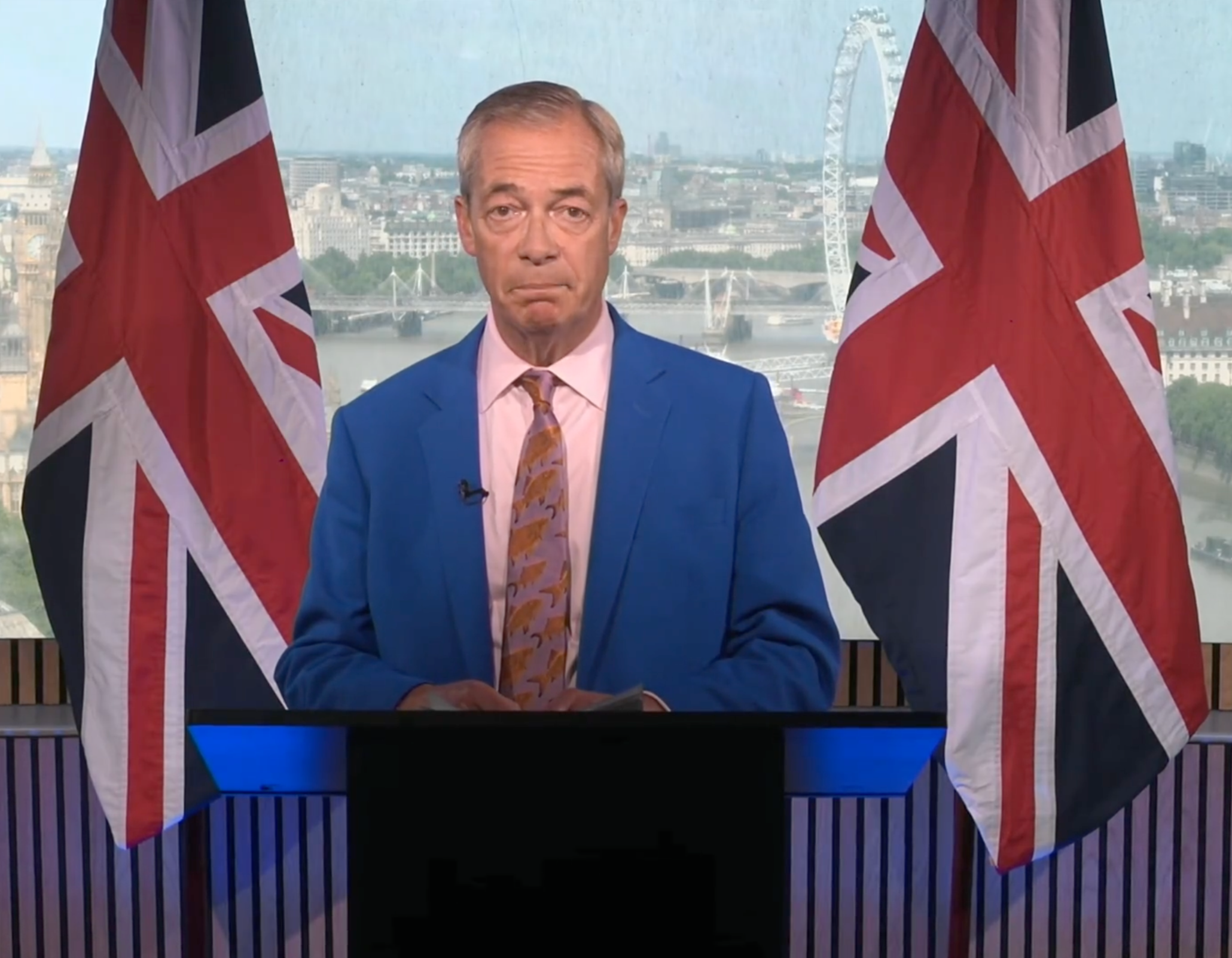
Nigel Farage, the leader of the UK’s Reform party, announced that he would resign as a member of Parliament and stand in the by-election that could replace him.
On Tuesday, Farage announced that he would resign as MP representing Clacton in response to what he called “foul means” by established politicians. The UK lawmaker’s resignation followed reports that he had personally received millions of dollars’ worth of donations and gifts from crypto billionaire Christopher Harborne and George Cottrell, a convicted fraudster linked to a crypto casino.
“Let me be absolutely clear: I have done nothing wrong,” said Farage in an X livestream. “I have not broken the law in any way at all. I have not misused public money.”
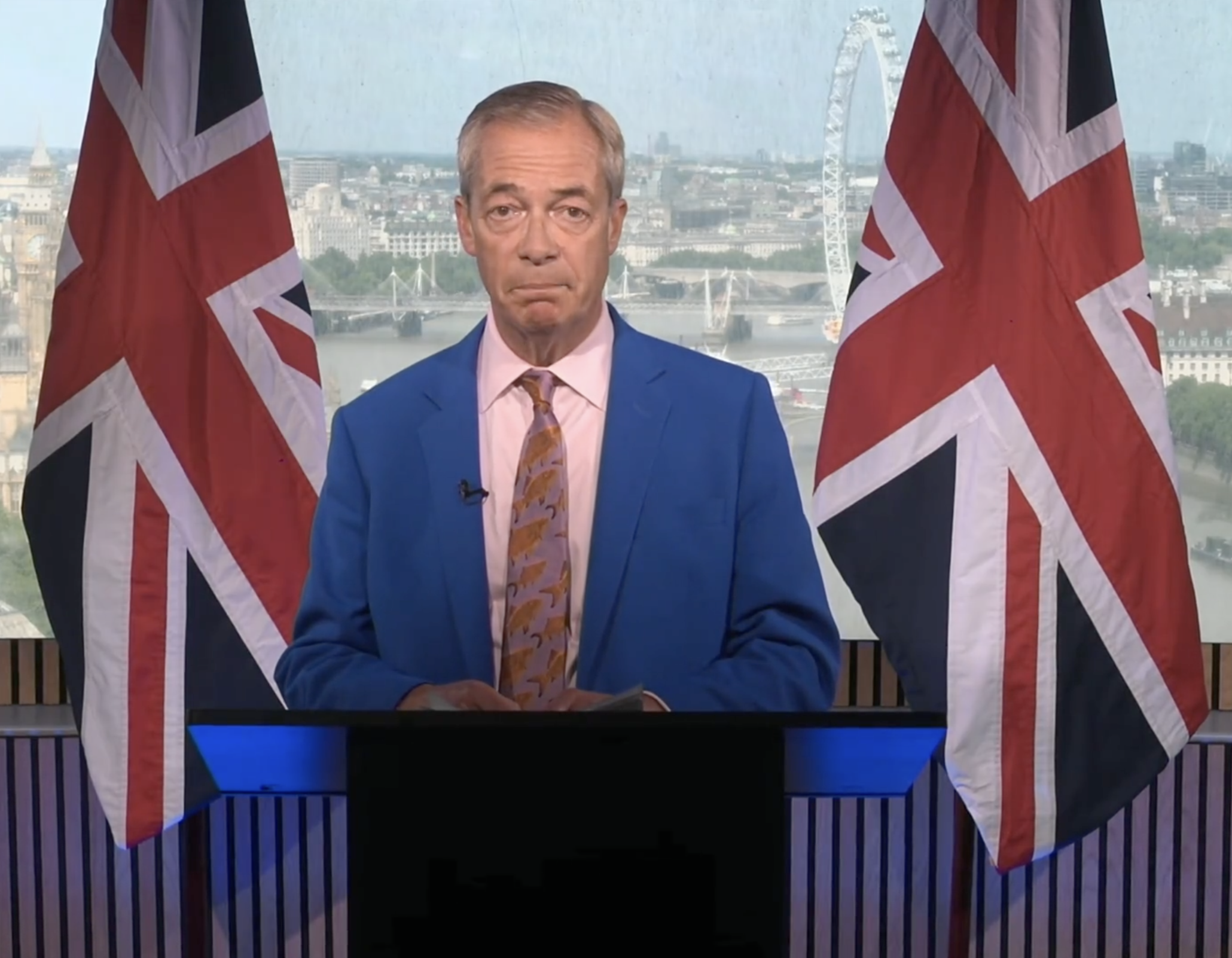
Source: Nigel Farage
Farage already had ties to the crypto industry before reports of the scandal. He spoke at the Bitcoin 2025 conference in Las Vegas and is an investor in London-listed Bitcoin (BTC) treasury company Stack. When reports began circulating in May that the Reform leader had received a $6.7 million gift from Harborne, he initially called it a “reward” for campaigning for Brexit, the 2016 referendum that led to the UK’s exit from the European Union.
Related: Crypto billionaires bankroll Nigel Farage’s pro-crypto party
The UK lawmaker confirmed that he was the subject of two probes by the UK’s parliamentary standards commissioner following reports of what he called “gifts” from Harborne and Cottrell, which he claimed were given “on an unconditional basis.”
He said that he would use Harborne’s gift for funding related to his security, describing threats and attacks, and that the by-election triggered by his resignation would give voters the opportunity to choose whether or not he will continue to represent them:
“I’ve decided that the people of Clacton should be the judges of my actions […] I will be putting my name forward to stand in this by-election.”
According to The London Standard, the election determining Farage’s fate as an MP could take weeks or months given the logistics of his stepping down and calling for a by-election. He won in Clacton with 46.2% of the vote in July 2024 against the Conservative and Labour candidates.
Countdown to US elections with crypto money hanging over candidates
While Farage faces probes in the UK, money from crypto companies and figures tied to the industry could continue to influence US races in November’s midterm elections.
According to a June report from US consumer advocacy group Public Citizen, the crypto industry had spent about $189 million to support candidates considered favorable to digital asset policies as part of the 2026 election cycle. Meanwhile, US President Donald Trump faces criticism from many lawmakers over his 2025 financial disclosures, which included reporting $1.4 billion in earnings related to crypto.
Magazine: Nobody knows if quantum secure cryptography will even work

Illinois Gov. JB Pritzker signs the country’s strongest AI regulation bill

Why More People Are Looking for a Meditation Center in Dubai to Restore Inner Balance
TeraWulf’s $19B Anthropic Lease Turns Bitcoin Miner Into AI Landlord


-

 Fashion4 days ago
Weekend Open Thread: High Hopes
-

 Fashion1 day ago
Open Thread: What Great Books Have You Read Recently?
-
 NewsBeat3 days ago
Taylor Swift and Travis Kelce wedding staffer hilariously struggles to keep her cool while checking in megastars
-

 Politics4 days ago
The House | “Reframing the debate from a binary discussion of winners and losers”: Yuan Yang reviews ‘We Are Not Machines’
-
Crypto World6 days ago
Airdrop Registration Becomes Key Focus For Remittix As RTX Launch Updates Approach
-

 Crypto World4 days ago
Standard Chartered Secures MiCA License as ESMA Adds 37 New Crypto Firms
-

 Business24 hours ago
AXT Shares Jump Nearly 14% as Semiconductor Materials Maker Rebounds on AI-Linked Indium Phosphide Demand
-

 Sports6 days ago
Broncos roster: OL Ben Powers (No. 74) entering final year of contract
-

 Crypto World6 days ago
Binance stock trading tops $1B in first month after launch
-

 NewsBeat7 days ago
Presenter Caroline Flack’s brother Paul Flack dies aged 55
-

 Crypto World6 days ago
Alibaba-affiliate Ant Group enters the humanoid robot market with 12 deals
-
Crypto World23 hours ago
SK hynix (000660.KS) Stock Dips as $28B Nasdaq ADR Offering Drives AI Memory Expansion
-

 Crypto World2 days ago
South Africa proposes crypto tax guidance under existing rules
-

 News Videos1 day ago
Best Time to Enter Small Caps Right Now? Another Bull Run? | Financially Free
-

 Tech2 days ago
Lenovo laptops are now shipping with YMTC SSDs, a sign of Chinese NAND entering the mainstream
-

 Business6 days ago
Meta Platforms Stock Jumps 7% Today as Bloomberg Reports Company Plans to Enter the Cloud Business
-
 NewsBeat5 days ago
New exhibition reflects five decades of movement between island of Ireland and GB
-

 News Videos14 hours ago
Whats Hidden Inside This Cash Register? #treasure #reselling #money
-

 Business5 days ago
What a 10 Percent Drop Means for Buyers, Sellers and Renters
-

 Crypto World5 days ago
Binance Re-Enters Philippines As EU MiCA Rules Restrict Access
You must be logged in to post a comment Login