
Crypto World
Breaking Down the Ending of Spooky in Love



Extraordinary Attorney Woo’s Park Eun-bin and Doona!’s Yang Se-jong star as ghost-whispering hotel heiress Cheon Yeo-ri and ace prosecutor Ma Gang-uk, respectively, in the supernatural romance series Spooky in Love. In the Korean drama, which broadcast domestically on tvN and was distributed globally by Netflix, Yeo-ri and Gang-uk are initially brought together by their shared desire for justice. For Yeo-ri, this takes the form of helping the ghosts she alone can see. For Gang-uk, it means doing a good, by-the-book job as an investigator. But when Gang-uk learns Yeo-ri’s secret, the two grow closer.
While Spooky in Love starts out with a strong, ghost-of-the-week format, the second half of the drama leans more into corporate in-fighting and family drama as context for Yeo-ri and Gang-uk’s romance. When Chairwoman Baek insists that Yeo-ri get engaged in order to secure a more stable future for the hotel and resort company, Yeo-ri side-steps the advances of family friend and fellow chaebol Kang Min-hwan (Ong Seong-wu) to announce she is engaged to Gang-uk. What starts as a fake relationship to keep Yeo-ri’s grandmother off of her back soon develops into the real thing. But can Yeo-ri and Gang-uk’s love survive Min-hwan’s machinations to take control of both Yeo-ri and her company? Here’s everything that happens in the Spooky in Love finale.
Yeo-ri’s supernatural powers, explained

Yeo-ri wasn’t born with the ability to see ghosts. She developed it 12 years prior to the start of the series, when she nearly died in the mysterious yacht accident that killed her boyfriend and Min-hwan’s little brother, Kang Ji-hwan (Kim Min-chul). The condition has ghosts constantly nagging Yeo-ri for help, and also keeps her isolated from the land of the living. If she touches hands with someone else, they will temporarily gain the ability to see ghosts for a month. As a result, she wears gloves constantly, and keeps a physical distance from her friends, family, and co-workers.
The stakes of Yeo-ri’s secret are intensified due to the power her family holds. Yeo-ri is the heir to the Reina Group, a corporate hotel chain that wields immense wealth. Yeo-ri’s grandmother, Baek Kyung-ja (Ye Soo-jung), plans to pass the baton to Yeo-ri—rather than step-daughter Ok Gye-hui (Baek Ji-won) or her adult children, Ha-ri (Cho Hye-joo) and Don-jun (Lee Dal). However, if Chairwoman Baek, or the larger public, finds out that Yeo-ri is haunted by ghosts, it could call her ability to run the family corporation into question.
Still, Yeo-ri’s sense of justice runs deep. In Spooky in Love’s early episodes, Yeo-ri is visited by the ghost of Jang Eun-ju (Yoon Hye-rim), a young woman who was murdered by her boyfriend, Park Seung-jae (Kim Do-wan), after she becomes pregnant with their child. Seung-jae is well-connected. Not only is he a rich pro golfer, but his father is one of the leading contenders in the next presidential race. When he is initially tried for murder, with Gang-uk acting as prosecutor, he is acquitted due to his father’s immense influence. It is only when Gang-uk and Yeo-ri team up that they are able to gather more evidence, and definitively pin the murder on Seung-jae.
What happened on the yacht?
Yeo-ri grew up close to Kang Ji-hwan and Kang Min-hwan, brothers poised to inherit ownership of CL Raymond Group. Though both brothers had feelings for Yeo-ri, Ji-hwan was the first to ask her out. For Min-hwan, this intensified the jealousy he had long felt of his little brother. Jin-hwan, who looked up to his brother, didn’t realize that he was often treated better by some members of the family compared to Min-hwan, who was adopted. When Jin-hwan started dating Yeo-ri, it was the final straw for Min-hwan.
On the day of the accident, the brothers are out on a yacht with their friends, including Yeo-ri and fellow rich kid Park Seung-jae. We learn in the penultimate episode that when the yacht hit a rock and Jin-hwan was thrown over the side, Min-hwan had the chance to pull his brother back onboard, but let the pleading Jin-hwan fall into the water below instead. Jin-hwan dies, and Yeo-ri, who also went overboard in the accident, is rescued from the water. She is wearing a protective pendant gifted to Jin-hwan by his grandmother. He asked her to wear it while they were on the boat, joking that, if something should happen, she should live and he will die.
Later, Yeo-ri and Gang-uk seek out the shaman who made the pendant. The original maker is dead, but her daughter informs them that the power of the pendant changed Yeo-ri and Jin-hwan’s fates. That power, paired with Yeo-ri’s inability to let Jin-hwan move on in the immediate aftermath of the accident, led to Yeo-ri’s ability to see ghosts. The shaman tells Gang-uk and Yeo-ri that, in order for Yeo-ri to stop seeing ghosts, she owes the afterlife a life.
Gang-uk’s connection to Jin-hwan
Gang-uk, who was raised by his grandmother, did not grow up in the same social circles as Yeo-ri, Min-hwan, and the other members of the chaebol class. However, he shares a unique connection to Jin-hwan. When Jin-hwan died, a sick Gang-uk was given Jin-hwan’s heart. The transplant allowed him to live on. Ever since, Jin-hwan and Min-hwan’s mother, Song Hee-won (Kim Seo-ra) has kept tabs on Gang-uk through his grandmother. Though she lost one of her sons, it makes her happy to see Gang-uk doing well.
Min-hwan’s crimes escalate

This truth of Jin-hwan’s death is known only by Min-hwan for more than a decade. Yeo-ri doesn’t remember what happened during the accident and, even if she did, she didn’t witness what occurred between the brothers that day. However, when Seung-jae temporarily gets out of jail to attend his father’s funeral, he happens to stumble upon a camcorder memory card with footage of Min-hwan choosing not to save Jin-hwan. Seung-jae attempts to blackmail Min-hwan with the evidence. When the two meet up in an abandoned warehouse, Min-hwan kills him for it.
Gang-uk finds Min-hwan’s cufflink at the scene of the crime, but Min-hwan counters. He hires someone to hit Gang-uk with a truck. Yeo-ri pushes the man she loves out of the way at the last second, saving his life and putting her own in grave danger. She is hit by the truck, and ends up in a coma. As Yeo-ri’s life hangs in the balance, we see her traverse a beautiful kind of purgatory. The ghosts she has helped in the past 12 years, including Eun-ju, are waiting for her there. They lend her some of their warmth to keep her from crossing to the other side.
Yeo-ri and Jin-hwan balance the scales
Still, Yeo-ri finally does make it to a Styx-like river, a boundary between the world of the living and the world of the dead. Before she can step onto the boat that would bring her across, the ghost of Jin-hwan appears to take her place. The two share a teary conversation in which they process Jin-hwan’s death. Yeo-ri apologizes for living instead of him, but Jin-hwan doesn’t see it that way. He says she still has so much to live for, and that the ghosts she has helped are rooting for her. When Yeo-ri wakes back up, she no longer has the power to see ghosts. Jin-hwan has crossed to the other side; the afterlife has been given the soul it was robbed of 12 years prior.
Min-hwan is brought to justice
Unbeknownst to Min-hwan, Seung-jae has hidden the memory card in a hollow golf ball at the warehouse. When Yeo-ri and Gang-uk are investigating, they find the card and have the evidence to take Min-hwan down. In the most dramatic way possible, Yeo-ri reveals the evidence to Min-hwan’s mother and the other people gathered at Jin-hwan’s memorial service. More than losing his power or going to jail, Min-hwan seems most distraught at the idea of his mother discovering his betrayal. A year later, when she visits her remorseful son in jail, she tells him that after he has finished serving his time, she will be waiting for him. Min-hwan, who always thought his mother’s love for her biological son diminished her love for her adopted son, can perhaps finally see otherwise.
Does Spooky in Love have a happy ending?
Spooky in Love has the happiest of endings. A year following the main events of the series finale, Yeo-ri is announced as the new chairwoman of Reina. Yeo-ri and Gang-uk are happily together. Gang-uk, who had been transferred out of Seoul after reporting internal corruption at the prosecutor’s office, has just received a promotion back in the capital city where Yeo-ri lives. The two visit Siena Hall, the Reina wedding property that symbolizes Yeo-ri’s late parents’ love for one another, and walk together, hand in hand.
When the two first started falling for one another, Yeo-ri had said that her greatest wish was to walk hand-in-hand with the person she liked. Then, she was too afraid to touch anyone, burdened by the certainty she would pass her curse onto them. Now, she does so, unafraid. The simple scene doesn’t just demonstrate the love between Yeo-ri and Gang-uk; it demonstrates the intimacy and warmth Yeo-ri is able to let into her life more broadly. She is no longer alone, and Gang-uk is only one part of that reality.

Analysts at Bernstein are bullish on stablecoin issuer Circle, arguing that a new growth cycle for its USDC stablecoin could provide a significant boost for the company over the next 12 months.
In a research note published Monday, Bernstein said USDC (USDC) is showing signs of what it called “digital dollar reflation” after its supply increased by roughly $2 billion in seven days, reversing a six-month stretch of stagnant or declining growth. The firm maintained an Outperform rating on Circle (CRCL) and a $140 price target, implying roughly 60% upside from current levels. Circle shares have risen roughly 40% over the past month.
Bernstein said the next phase of stablecoin growth could be driven by several factors, including renewed momentum in crypto markets, greater regulatory clarity in the United States, tokenized capital markets and growing adoption of stablecoins for payments. The analysts also pointed to early signs of stablecoin use in payments made by artificial intelligence agents.
Although USDC remains the second-largest dollar-backed stablecoin by market capitalization, well behind Tether’s USDt (USDT), it has gained significant ground in transaction activity. Bernstein said USDC’s share of adjusted stablecoin transaction volume rose from roughly 40% in 2025 to more than 60% so far in 2026, overtaking USDt by that measure.
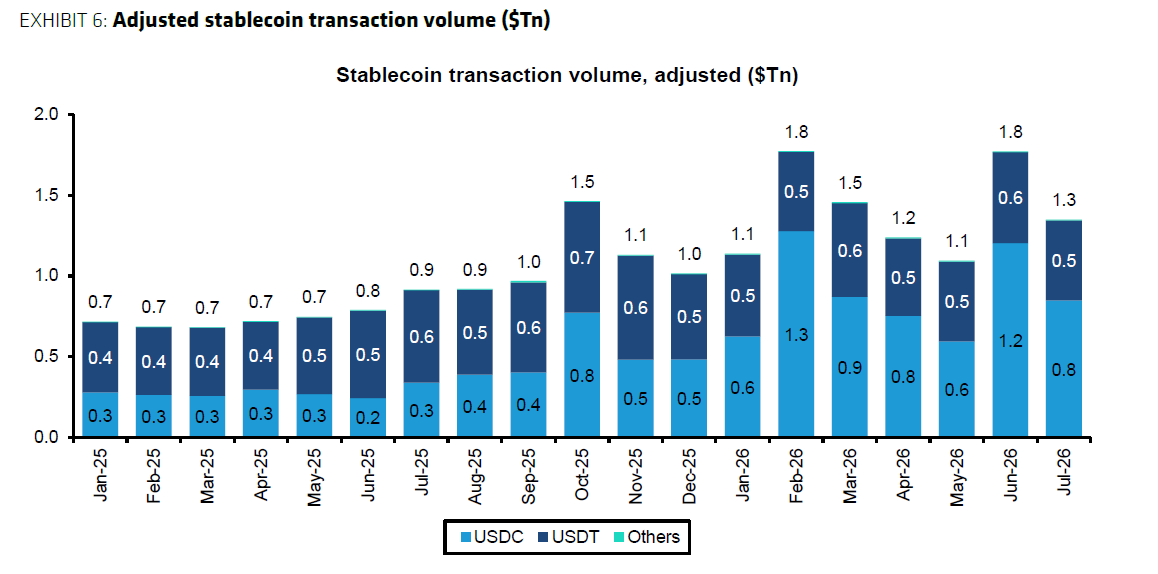
Stablecoin transaction volume has grown significantly this year. Source: Bernstein
Related: MiCA is coming for DeFi vaults, but regulation will be difficult
Circle’s volatile path since its IPO
Circle shares have experienced significant swings since the company went public in June 2025. The stablecoin issuer priced its shares at $31 and raised roughly $1.1 billion in its initial public offering. After surging in the months following its debut, the stock had fallen back toward its IPO price by November 2025 as a broader crypto market downturn weighed on publicly traded companies with exposure to the sector.
In its most recent quarter, Circle reported $701 million in revenue and $48 million in net income, both up from a year earlier.
Related: Western Union brings stablecoin remittances to Visa network with Stablecard
“America has been carrying Canada for decades, but no longer!” Trump said in his post. “The U.S.A. will always be far bigger, richer, and stronger than Canada. Without the United States, Canada couldn’t survive — It’s where they get all of their money and, because of their current bad leadership, primarily Governor Carney, and his Flunky, Ford, they will not be allowed to keep taking advantage of the United States — Their key to survival.”
Trump referred to Ontario Premier Doug Ford, who has been a vocal critic of the tariffs that the Trump Administration has imposed or threatened to impose on Canadian goods. In addition to calling Ford Carney’s “Flunky,” Trump said the Premier was “the less charismatic, intelligent, and overall unimpressive brother of the late, great, Rob Ford,” a former mayor of Ontario’s capital, Toronto.
Tensions between the allied countries have escalated in recent days. Trump claimed earlier last week that, “subject to the finalization of documents,” the two nations had reached a deal, but trade negotiations between the two broke down on Friday, and both sides have pointed the finger at the other.

Six out of 13 firefighter deaths have involved entrapments, the report shows. An average of 17 firefighter fatalities occur each year from wildfires.
Hotter, drier, and windier conditions
Wildfire trackers often use the “30-30-30” rule to identify conditions that can lead to extreme wildfires. The rule refers to when the temperature is at least 30 degrees Celsius (86 Fahrenheit), humidity is at 30% or lower, and wind speeds are at 30 kilometers per hour or more (roughly 19 miles per hour). When combined, these hot, dry, and windy conditions can produce extremely large and destructive fires, as they have this year.
Reno has experienced an average daily high temperature of 92.8 degrees Fahrenheit (33.7 Celsius), 27% humidity, and 18 miles per hour (29 kilometers per hour) daily maximum wind speed over the last 10 days, including the week before the “Hawk” fires began on Saturday and the three days since as the blaze continues.
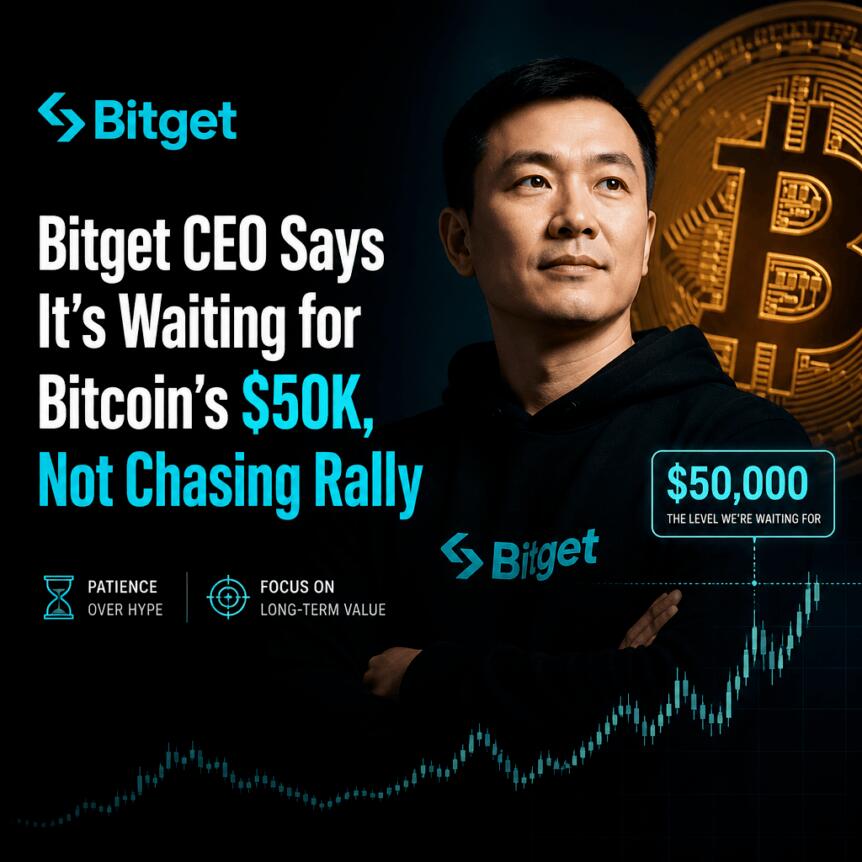
Bitget CEO Gracy Chen says she does not view Bitcoin’s recent surge toward the $79,000 area as proof the bear market is finished. In an interview on Trade Secrets, Chen argued that downside could still be ahead and indicated she is prepared to keep a large portion of her own portfolio in stablecoins while waiting for a better entry level.
Chen said she would personally look to buy Bitcoin again if the market drops by more than $25,000 from current levels—pinning that “buyback” zone around $50,000. She also cautioned that she does not have special insight into Bitcoin’s next move, while acknowledging that traders can still debate where the year ends.
Key takeaways
- Bitget CEO Gracy Chen is keeping a significant share of her portfolio in stablecoins while monitoring for a possible deeper pullback.
- Chen’s personal Bitcoin re-entry level centers around roughly $50,000, rather than assuming the rally marks a lasting floor.
- She does not expect her timing to be perfect and explicitly avoids committing to a specific month for a $50,000 move.
- Chen says most of her portfolio is Bitcoin and the S&P 500, with small allocations to assets like Ethereum and Solana.
- On altcoins, she appears selective—citing Hyperliquid as the one she is currently more bullish on, conditional on regulatory access in the US.
Why Chen isn’t treating $79,000 as the end of the decline
Bitcoin’s climb over the past week has pushed it to levels near $79,000, but Chen’s reaction is cautious. She framed the rally as something that could still be followed by volatility and a meaningful retracement, rather than an automatic signal that the long downturn is over.
In the same interview, Chen described her approach as pragmatic: she is not trying to predict the exact path of an asset known for sharp reversals. Instead, she is watching for a specific kind of opportunity—a pullback she believes could be large enough to justify adding back exposure.
Chen told Trade Secrets that while she is keeping her expectations open, her personal “sort of price” target for a buyback sits around $50,000. She put it in practical terms, saying she could act if Bitcoin falls by more than $25,000 from where it is now.
Importantly, Chen also avoided presenting her view as a broader forecast. She said she lacks any proprietary edge in timing Bitcoin’s unpredictable market and compared herself to an exchange operator rather than an analyst “good at analyzing Bitcoin price,” emphasizing her role in providing a trading venue.
Other traders still see more downside before the next leg
Chen’s caution is not an outlier in crypto circles. The interview surfaced multiple perspectives suggesting that even with Bitcoin up strongly over a short period, deeper drops remain plausible.
Earlier this month, Transform Ventures founder Michael Terpin told Trade Secrets that “we still have more pain to go,” arguing Bitcoin could eventually fall far from its October 2025 all-time high of $126,100. Terpin’s scenario—described in the interview as a potential 66% decline—would imply a move into the “40s.”
Before this week’s rally, veteran trader Peter Brandt similarly pointed to a potential “bottom on Oct. 4,” according to prior coverage cited within the interview.
While these figures differ in magnitude and timing, the common theme is that traders are separating “short-term strength” from “cycle confirmation.” Chen’s stablecoin posture reflects the same idea: wait for price to reach a level that better matches her risk-reward, even if momentum has already improved.
Chen’s Bitcoin plan: no exact date, but an expectation for volatility
Although Chen anchored a buyback area around $50,000, she was careful not to attach a firm timetable to it. She said her own prediction is not meant to be treated as a precise catalyst or schedule.
Chen explained that she does not have a specific month in mind, offering only a range of possibilities—suggesting “later this year might be a good estimate,” but also saying “maybe next year” is possible.
Her stance matters for readers because it highlights a difference between conviction and commitment. Chen’s view is directionally cautious, but she is not claiming certainty on timing—an approach that aligns with how many traders manage uncertainty in a market that can swing quickly.
Portfolio preferences: Bitcoin focus, minimal altcoin exposure
Beyond price levels, Chen’s comments also shed light on how she approaches risk across the broader market. She said that most of her portfolio is split between Bitcoin and the S&P 500, while noting she does not actively trade much because of her responsibilities running a major exchange.
Chen estimated that less than 1% of her portfolio is allocated to Ethereum and Solana combined, reinforcing the idea that her current exposure is relatively concentrated rather than broadly diversified across many major tokens.
She is also openly selective about altcoins. While running a platform that lists many different assets, Chen said she is “not particularly” enamored with altcoins and singled out one asset as currently more compelling: Hyperliquid. She said she is bullish on Hyperliquid (and referenced the HYPE token’s strong move) in the context of a more crypto-friendly regulatory posture toward the network.
The interview further connected Chen’s enthusiasm to a US regulatory development. She stated that if the CFTC finds a way to allow Hyperliquid to enter the US market properly, it would be a major factor in her optimism. The article notes that President Trump indicated this week that CFTC chair Mike Selig was working on allowing Hyperliquid to officially trade in regulated US markets.
Chen also voiced skepticism toward memecoins, saying she believes the market will not repeat a “memecoin season” like in prior cycles because too many retail investors have been burned. Her remark included the idea that “retails are not stupid,” framing her view as a response to investor experience rather than a claim about any one token’s fundamentals.
On the $1M narrative and Bitcoin’s diminishing cycle returns
In addition to short-term trade levels, Chen addressed a longer-running topic on Trade Secrets: whether Bitcoin can realistically reach $1 million by 2030. She said she does not believe it will happen.
Chen referenced Bitcoin’s shrinking returns across its four-year cycles as a central reason. According to her explanation, the ratio between the all-time high in one cycle and the all-time low in that same cycle has been decreasing over time—implying that future cycle rebounds may not scale in the same way as earlier periods.
Her perspective comes alongside broader debate mentioned in the interview, including bullish calls from figures such as Brian Armstrong and Cathie Wood, but Chen’s argument is anchored in a repeated pattern she believes has emerged from past cycles.
For readers, the main takeaway is that even as Bitcoin regains momentum, market participants are still split between “cycle bottom confirmed” and “rally before deeper retracement.” Watch whether Bitcoin can hold above key levels that traders treat as near-term support; just as importantly, pay attention to whether exchanges and regulated access narratives—such as those involving Hyperliquid—continue to shape where liquidity flows across the ecosystem.
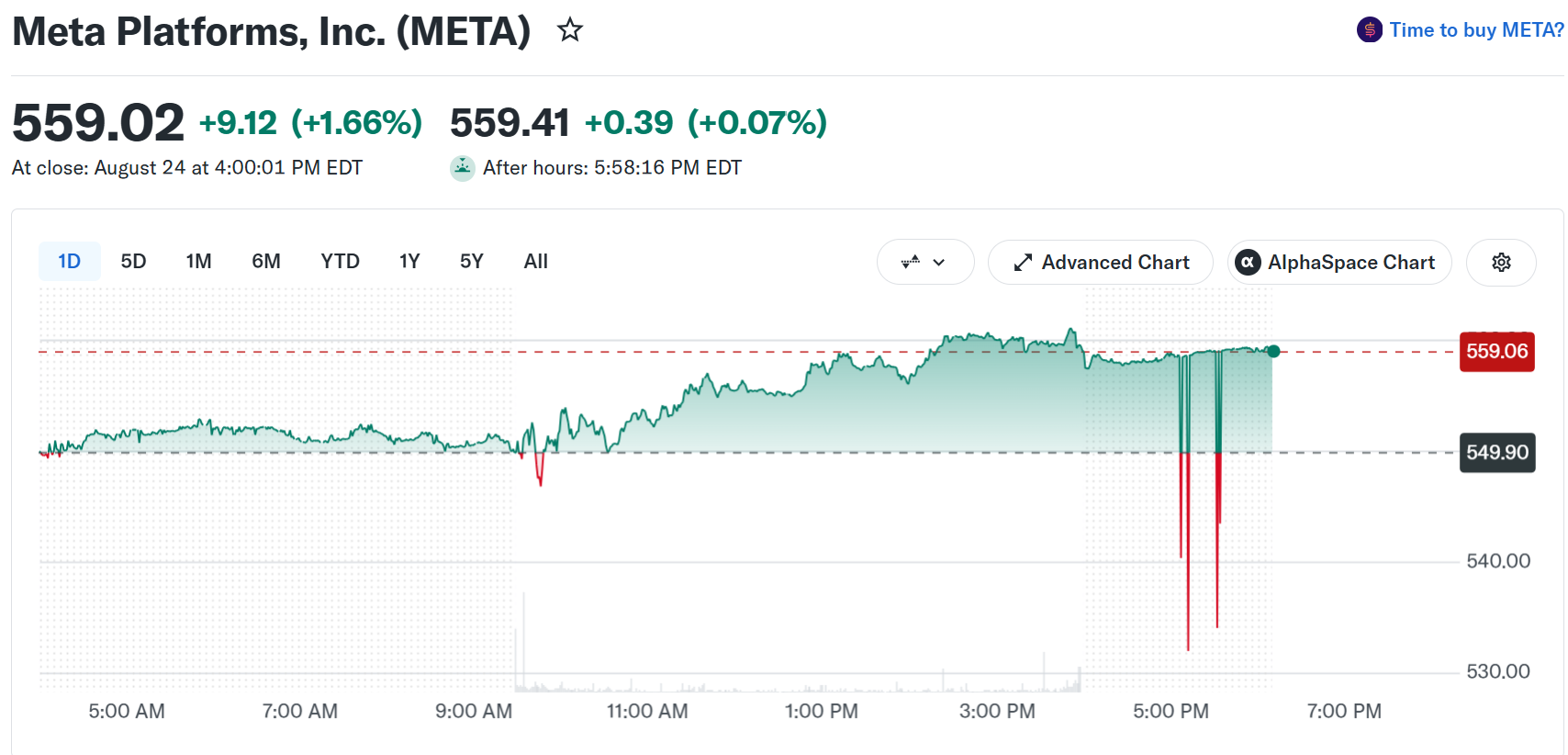
Jim Cramer told investors not to sell Meta Platforms (META) over the youth-safety trial in Oakland, California. He argued the legal pressure is temporary and the shares reward patience.
Meta stock trial risk has weighed on the shares all year. They closed Monday at $559.02, up 1.66%, valuing Meta near $1.42 trillion.

What the Meta Stock Trial Risk Actually Covers
Opening arguments in the case, brought by 29 state attorneys general, began on August 18. The states accuse Meta of designing Facebook and Instagram to be habit-forming for minors, then downplaying the danger.
Judge Yvonne Gonzalez Rogers will decide the outcome, because the jury is advisory only. She has already discarded claims tied to infinite scroll and autoplay.
Meta leans on Section 230, the federal law shielding platforms from liability over user posts. The states attack design, not content.
The $1.4 Trillion Figure Is a Ceiling, Not a Demand
No state has asked for $1.4 trillion. The number is a theoretical maximum, alleged violations multiplied by the fines written into state law.
Meta surfaced the calculation in a July 7 filing and asked the court to reject it. The states’ filings remain sealed, and they have never named a figure.
California Attorney General Rob Bonta accused Meta of promoting the number to make the case look unreasonable. Asked for a fair penalty, he pointed to revenue.
“They generated revenue of $200 billion last year, so, you know, maybe that amount would be appropriate. Maybe more. Maybe less,” Rob Bonta, quoted by NPR on Aug. 18.
New Mexico’s separate case ended in $942 million of penalties, a fraction of the number greeting the landmark youth-safety trial.
Cramer and Wall Street Split on Meta Stock
Cramer made his case on X six days ago, blaming the venue, not the merits.
“Meta trial in the worst possible district for corporate defendants, hence why the stock is being hammered. But the case, while strong enough, might not survive a supreme court review,” Jim Cramer, host of CNBC’s “Mad Money,” in a post.
Bank of America kept its Buy rating and $810 price target, implying roughly 45% upside on 16 times estimated 2027 earnings.
Mizuho is warier, comparing the case to the Big Tobacco fights of the 1990s. Forced product changes would bruise sentiment faster than any fine.
The Inverse Cramer Trade Has a Losing Record
Fading Cramer is a standing market joke, and BeInCrypto covered the latest inverse Cramer episode days ago.
The record does not reward it. Tuttle Capital’s Inverse Cramer Tracker ETF (SJIM) ran from March 2023 to February 2024, losing 15% while the S&P 500 gained 25%.
Quiver Quantitative still tracks the trade, showing a 42.57% win rate and a 17.63% loss over the past year.
Selling Meta because Cramer said hold is therefore a weak thesis. Of 43 analysts tracked by TipRanks, 38 still rate the stock a Buy and none a Sell.
The consensus reads Strong Buy, with an average 12-month target of $752.38. That sits 34.59% above Monday’s close.
Targets run from $580 to $1,000, so even the lowest sits above where Meta trades today.

The stronger bear case sits with Mizuho and the remedies, not with the messenger. Meta’s bill for AI server hardware will test it long before the courtroom does.
The post Jim Cramer Cites Overblown Meta Stock Trial Risk: Is This A Sell Signal? appeared first on BeInCrypto.
The meme coin niche has been one of the biggest beneficiaries of the latest market pump, with Shiba Inu (SHIB) standing out as a prime example.
The price of the self-proclaimed Dogecoin killer has climbed to a three-month peak, and some industry participants believe there is still plenty of room for further growth. However, certain factors suggest the rally may not be as sustainable as the bulls would hope.
Parabolic Jump Incoming?
As of press time, SHIB trades at around $0.000005455 (per CoinGecko), marking a substantial 22% increase on a weekly scale. Its market capitalization has surpassed $3.2 billion, solidifying the token’s position as the second-largest meme coin.
According to Crypto Patel, the latest revival is nothing compared to what might be coming next. The analyst noted that SHIB has completed a 95% macro correction over the years and is now trading within a historical accumulation zone, where the weekly structure is repeating the fractals that preceded previous price explosions. That said, they claimed the coin could be gearing up for a 2,200% rally.
The analyst’s bullish scenario includes a weekly close above $0.000006697, which, combined with a successful retest and rising volume, might trigger the next HTF expansion. At the same time, a weekly close below $0.0000035 would invalidate the current accumulation thesis.
Crypto With Gopal presented an even more optimistic prediction. He opined that SHIB has printed a textbook falling wedge formation and is consolidating inside a long-termsedcending structure, with sellers losing momentum as price compresses near the lower boundary. The analyst assumed that a clean break above the upper trendline could fuel a major rally to as high as $0.00025, or a nearly 5,000% increase from the current levels.
“Bulls are waiting for confirmation – major breakout could be next,” he added.
It is important to note that some popular market observers touched on SHIB prior to the latest market revival. Last week, David Gokhshtein claimed that people writing off DOGE, SHIB, and PEPE “are going to be in a rude awakening.” For their part, Whale News Daily suggested that Shiba Inu’s ignition will be “epic” and that it will start a proper altseason.
The Concerning Signals
Despite the positive performance, certain elements suggest that SHIB may not be completely out of the woods. Data show that Shiba Inu’s burn rate has declined by more than 91% over the past month, meaning the asset’s supply remains enormous after the team and community have scorched only a negligible amount of coins.

Next on the list is Shibarium’s waning activity. Daily transactions processed on the layer-2 scaling solution are in the mere thousands, signaling weak user engagement and potentially undermining investor confidence.

The post Top Shiba Inu Price Predictions as SHIB Soars 22% in a Week appeared first on CryptoPotato.
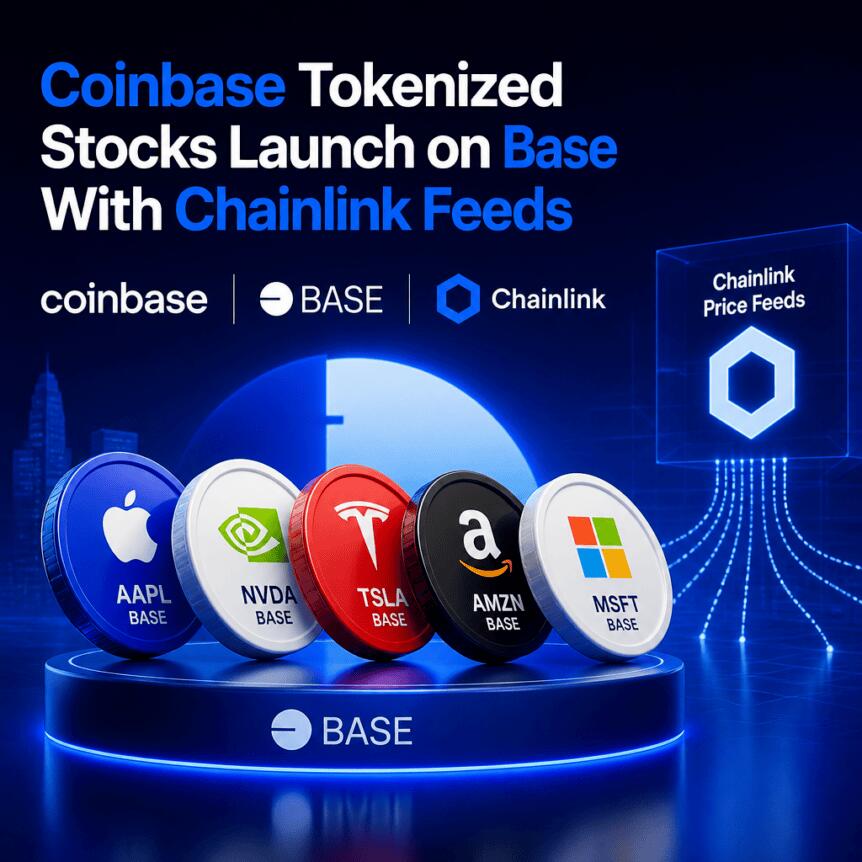
Coinbase has expanded its experiment with tokenized equities by launching tokenized US stocks on Base, bringing additional real-world asset options into Ethereum-compatible DeFi. The rollout also includes an integration with Chainlink Data Feeds designed to supply ongoing price data so decentralized applications can value and use the tokens reliably.
As tokenized stocks continue to attract liquidity and new holders, the Coinbase–Base move underscores a growing push to make regulated, share-backed assets more usable onchain—whether for lending, trading, or structured products.
Key takeaways
- Coinbase’s tokenized US stocks started trading on Base, with Chainlink Data Feeds providing continuous pricing for DeFi integrations.
- The feeds are designed to reflect underlying stock prices while applying a Coinbase multiplier that accounts for dividends and corporate actions.
- Tokens are issued as B20 tokens on Base and are available to non-US users in eligible jurisdictions.
- Each B20 token represents a claim on an underlying share held through a regulated structure involving Alpaca under Abu Dhabi Global Market supervision.
- RWA.xyz data shows tokenized stocks at roughly $2.48 billion in total value, with monthly transfer volume reaching $27.28 billion and holder count above 2.1 million.
Chainlink Data Feeds power onchain pricing for tokenized equities
The tokenized stocks won’t be useful to most DeFi protocols unless they can be priced consistently and updated frequently. That’s the purpose of Chainlink’s Data Feeds for Coinbase tokenized equity products, which the project states will deliver continuous valuation data for the assets.
Chainlink’s documentation describes how the feeds value each token based on the underlying stock price plus a Coinbase-supplied multiplier intended to account for dividends and other corporate actions. The goal is to help DeFi platforms incorporate these assets into critical functions such as collateral valuation, trading, and automated product logic.
Chainlink Data Feeds are intended to cover major equities including Nvidia, Apple, Meta, and Alphabet. With that price feed layer in place, DeFi applications can more directly treat tokenized stocks as composable assets rather than relying on bespoke pricing approaches for each listing.
How Coinbase’s tokenized stocks are structured on Base
Base says the tokenized stocks are issued as B20 tokens on its network. The tokens are designed for broader accessibility: Base indicates they are available to non-US users in eligible jurisdictions rather than serving as a general product for every market.
Each token represents a direct claim on an underlying share that Base says is held through a regulated broker and custodian relationship. Specifically, the underlying shares are managed via a structure involving Alpaca under supervision overseen by the Abu Dhabi Global Market. Base also notes that users can hold the B20 tokens in self-custody wallets and trade them around the clock.
This matters for DeFi because it shifts tokenized equities from a “closed” issuance model toward an actively tradable onchain representation—something that can support continuous market access and integration with decentralized liquidity venues.
DeFi utility: collateral, trading, and structured use cases
Base positioned the launch around real DeFi integrations, highlighting ways tokenized stocks can be plugged into existing infrastructure. The platform points to lending markets where tokenized shares can serve as collateral, as well as decentralized exchanges where tokenized Apple shares, for example, could be supplied for trading or liquidity strategies.
In practice, this type of integration depends on two things working together: the token’s onchain transfer and custody model, and a reliable pricing feed. The Chainlink Data Feeds component is the technical bridge that allows lending platforms to assess collateral value and helps exchanges manage the token’s market-facing price inputs.
Base also indicated additional Coinbase tokenized stocks are expected to launch on Base in the coming weeks. For users and builders, the key watch item will be whether liquidity deepens as new tickers are added and whether DeFi protocols expand their supported collateral or routing logic beyond the initial listings.
Tokenized equities keep expanding, even as DeFi matures
The Base rollout arrives during continued growth in the tokenized stock sector. According to RWA.xyz data, tokenized stocks have reached about $2.48 billion in total value, up 5.2% over the past 30 days. The same dataset shows monthly transfer volume of $27.28 billion and a holder count surpassing 2.1 million.
Those figures suggest that tokenized equities are not just a niche issuance story—they are accumulating participants and circulation. Yet the practical value of the market is increasingly tied to integration depth: whether tokens can be used as collateral in major lending venues, accessed through decentralized trading, and reliably priced via oracle infrastructure.
The Coinbase and Base launch, backed by Chainlink pricing feeds, targets that integration gap directly. It also signals that the competition for RWA liquidity isn’t only about issuing tokenized shares—it’s about making them operationally compatible with DeFi’s core tooling.
What to monitor next
Readers should watch for how quickly new tokenized stocks roll out on Base, whether major DeFi protocols expand collateral support beyond initial assets, and how liquidity and holder growth respond as more tokenized equities become compatible with onchain pricing and lending workflows.


The proposed deal would make Gemini the exclusive venue for crypto event contracts offered through Apex’s FCM, expanding its prediction-market reach to brokerage clients.
The U.S. Treasury Department has launched Operation Economic Outcast to target Iran’s international financial links, including cryptocurrency activity that American officials say supports sanctions evasion and the Islamic Revolutionary Guard Corps.
Summary
- Operation Economic Outcast covers cryptocurrency, technology, gold, aviation, shipping and other financial channels.
- OFAC can sanction people operating in Iran’s crypto sector, regardless of where they are based.
- Treasury says Iran uses digital assets to support transactions linked to the IRGC and government insiders.
- Bitcoin remained near $79,000 after briefly testing the psychological $80,000 level.
Operation Economic Outcast targets Iran’s financial links
The U.S. Treasury Department said President Donald Trump directed officials to begin Operation Economic Outcast as Washington seeks to cut Iran off from financial networks outside the country.
Under the campaign, Treasury plans to pursue people, companies, and intermediaries that it says help Iran sell oil, move money, avoid existing restrictions, or finance groups designated by the United States. Officials said they had already mapped facilitators, financial channels, and other networks used by Tehran.
“Today, in that same spirit, we are launching an economic onslaught against Iran’s financial connections around the globe,” Treasury said in its announcement.
The department presented Iran with two possible outcomes: continued isolation or a route back into the international economy. Reintegration, according to Treasury, would require the Iranian government to change conduct that Washington regards as a threat to the United States and its partners.
For foreign companies, Operation Economic Outcast also carries a warning about maintaining commercial ties with Iran. Treasury Secretary Scott Bessent said businesses and governments that work with the United States could benefit from that relationship, while parties that remain connected to Tehran could face similar isolation.
“Our objective is to sever every economic lifeline that sustains this tyrannical regime until Tehran stands alone.”
The campaign follows his earlier declaration of an “Economic D-Day” against Iran, which he described as the financial endgame of the U.S. campaign. Operation Economic Outcast expands that approach beyond Iran’s domestic institutions by focusing on overseas companies, payment channels and facilitators accused of keeping its economy connected to global markets.
US Treasury puts Iran’s crypto sector under scrutiny
Digital assets form a named part of the campaign because the Treasury says Iranian officials and connected groups increasingly use cryptocurrency to conduct transactions outside traditional banks.
According to the department, Iran has turned to crypto for sanctions evasion and for payments linked to the IRGC and government insiders. Treasury did not identify specific wallets, exchanges or transaction amounts in the campaign announcement, but it said the Office of Foreign Assets Control has authority to sanction people operating in the crypto sector of Iran’s economy, regardless of their location.
A person does not become sanctioned solely because the Treasury has announced the campaign. OFAC would still have to designate the person or entity under the relevant U.S. authority, after which any property under U.S. jurisdiction would generally be blocked.
American individuals and companies are generally prohibited from providing funds, services, or other economic benefits to designated parties. OFAC’s rules can also cover entities owned at least 50% by one or more blocked persons, even when the subsidiary or affiliated company does not appear separately on a sanctions list.
For exchanges, custodians, stablecoin issuers and payment providers, a new designation may require updates to wallet-screening systems and customer controls. Non-U.S. companies may also face sanctions exposure when they knowingly facilitate certain dealings involving blocked Iranian parties.
Other industries named by the Treasury include technology, gold, aviation, and shipping. The department said Iran has used international networks in these sectors to sell oil, receive payments, and obtain goods despite U.S. restrictions.
Earlier actions froze Iran-linked crypto funds
Operation Economic Outcast follows several U.S. actions against Iran-linked exchanges, wallets, and companies during 2026.
On Aug. 7, OFAC sanctioned Shelbit, Aban Tether, and Iranian national Siavash Kayvanpour after alleging that they helped move funds connected to sanctioned parties. As crypto.news reported earlier, the Treasury said IRGC-linked addresses sent more than $1 million in cryptocurrency to Shelbit, while wallets connected to the exchange allegedly transferred more than $2 million to IRGC-controlled addresses.
Treasury also alleged that Kayvanpour-linked wallets sent more than $2 million to Nobitex, Iran’s largest crypto exchange. Shelbit’s former management denied knowingly participating in sanctions evasion, terrorism financing or money laundering and said the company stopped accepting new business in December 2025.
OFAC separately accused Aban Tether of processing funds involving Nobitex, Wallex, Bitpin, and Ramzinex. The four Iranian exchanges had been sanctioned in June after U.S. officials alleged that they helped restricted entities use the digital asset market.
In July, U.S. authorities froze $131 million in USDT held across four Tron wallets linked by the Treasury to Iran’s central bank. Treasury confirmed the freeze but did not publicly explain how the funds had been obtained or what transactions the holders intended to conduct.
An earlier April action resulted in approximately $344 million in USDT being frozen across two Tron addresses that American authorities linked to Iranian networks. Tether enforced the restriction through controls built into the stablecoin, leaving the funds immovable without altering the Tron blockchain.
Centralized stablecoins give issuers a direct way to freeze assets held in named addresses. Bitcoin does not contain the same issuer-controlled function, so blocking BTC generally requires control over private keys, cooperation from a custodian, or an exchange account subject to legal restrictions.
Treasury’s actions have also covered alleged Bitcoin use outside Iran’s exchange sector. On July 29, OFAC sanctioned two insurers after accusing HormuzSafe Marine Services Authority of accepting Bitcoin and other digital assets to avoid restrictions and generate revenue for the IRGC.
The public designation did not include wallet addresses, transaction hashes, or payment totals supporting the allegation. It also did not announce a seizure, criminal charge, or court ruling against customers who may have used the company.
Bitcoin holds near $79,000 after testing $80,000
Bitcoin showed little immediate reaction to the Treasury campaign, trading around $79,000 after reaching an intraday high near $80,000. The level remains a psychological barrier after the cryptocurrency’s recovery from prices below $65,000 earlier in August.
Before the Treasury announcement, BTC had come under pressure as Trump escalated a trade dispute with Canada. The president threatened 50% tariffs on Canadian-made vehicles, auto parts and steel beginning Jan. 1, 2027, while Canada said it would respond with tariffs on U.S. goods.
Currency markets reacted more clearly to the two policy developments. Reuters reported that the U.S. dollar index rose 0.17% to 98.99 after the Iran measures and Canadian tariff announcement, while the Canadian dollar fell 0.61% against its U.S. counterpart. Bitcoin later recovered to approximately $78,993, up about 2.1% during the session.


Strategy, Michael Saylor’s BTC holding company, has been under a lot of pressure, with shares plummeting 73% since July of last year.
However, more importantly, one of Strategy’s dividend instruments, STRC, which pays twice-monthly dividends on $100/share of par value, fell from parity on May 15 and has never returned.
That’s almost 100 days without being able to bring the preferred shares back to parity — and it’s a problem.
Trying to dig itself out of a hole
Despite Saylor, Strategy’s founder and executive chairman, making vague promises that no BTC would be sold (which he later clarified was in relation to his personal stash, not the BTC owned by Strategy), the company has sold almost 7,000 BTC worth nearly half a billion US dollars since June.
These sales have been used to prop up Strategy’s dollar reserves so they can ensure dividends to its preferred share holders.
Read more: Strive bought STRC instead of holding ‘idle cash,’ lost over $4M
Unfortunately, these sales of BTC and repurchases of STRC, while effectively raising STRC from the doldrums of $75/share that it briefly fell to in June, haven’t been enough to actually take STRC back to $100/share.
Phong Le and Saylor, both assured investors that Strategy had the means and intention to do whatever it took to bring STRC to parity during the second quarter earnings call.
It appears the C-suite made promises it can’t keep.
Despite supposedly having the means, STRC remains 5% below parity three weeks after the C-suite made promises it seemingly can’t keep.
Saylor non-stop posting cringe AI nonsense
Since the awkward earnings call and investors questioning executive’s commitment to Strategy’s share price, Saylor has been non-stop posting and retweeting strange and absurd AI videos.
These include one where he’s singing about Strategy using leverage to purchase BTC, to numerous clips where he appears to be in random Japanese locales, speaking Japanese and talking about the importance of BTC.
Read more: No amount of cash can fix STRC’s trust problem
None of it makes sense, none of it explains the clumsy nature of Strategy’s dividend instruments, and, if anything, the rapid pace of the videos Saylor posts comes across as panic and fear in a down market.
Protos will stay abreast of the Strategy and STRC situation, particularly if it’s able to finally bring the preferred shares back to parity.
Got a tip? Send us an email securely via Protos Leaks. For more informed news and investigations, follow us on X, Bluesky, and Google News, or subscribe to our YouTube channel.

18+ Age Ke Baad Ye Financial Mistakes Mat Karna

‘End Game’ on Iran? Bessent Lauds ‘Financial Offensive’ Targeting Tehran’s Oil Trade, Cash Transfers

7,000,000 new coins with King’s face to enter circulation | News UK




-

 Fashion3 days ago
Weekend Open Thread: Madewell – Corporette.com
-

 Business2 days ago
Musk’s Tesla, SpaceX Confirm $16.8 Billion ‘Terafab’ Chip Plant as World’s Largest Building in Texas
-

 Business6 days ago
SMA Solar Technology AG (SMTGY) Q2 2026 Earnings Call Transcript
-

 Crypto World3 days ago
anatomy of crypto’s biggest liquidation event since 2021
-

 Tech7 days ago
Qwen3.8-27B runs frontier-class coding agents and reasoning locally, no cloud API required
-

 Crypto World7 days ago
OCC Greenlights Trump Family Crypto Firm for Trust Charter
-

 Politics2 days ago
6 months on, Irish renters crushed by effects of government housing bill
-
 NewsBeat3 days ago
The ‘Lucky Dip Gang’ causing carnage for clicks: After five thugs were killed speeding in the wrong direction on a motorway, GUY ADAMS investigates a sick new trend… and why police aren’t even allowed to pursue them
-

 Tech6 days ago
GLM-5.3 hits the API at $1.4/$4.4 per million tokens
-

 News Videos5 days ago
Don’t Leave Your Financial Future To Chance | August 19, 2026
-
Tech7 days ago
5 Of The Most Reliable Car Brands To Consider If You’re Buying A Used SUV
-

 Business2 days ago
Mystery AI Model ‘Ox Alpha’ Draws Developers With Free Access as Chinese Lab Origins Remain Debated
-

 Tech7 days ago
Keychron K8 Ultra 8K review: a great value keyboard with comfort issues
-
 Business6 days ago
Stock Market Today: Tech Futures Slide As Treasury Yields Jump; Nvidia, Micron, Sandisk Sell Off
-

 Business5 days ago
Marvell Shares Jump 7% as Google Chip Deal Confirms Custom AI Silicon Partnership, Analysts
-

 Business4 days ago
Five Below: Kids Discount Retailer Reaps Rich Rewards
-
Business7 days ago
Fabrinet (FN) Q4 2026 Earnings Call Transcript
-

 Fashion7 days ago
The Dressier Side of Shorts
-

 Tech6 days ago
Ken Okuyama’s Kode89 Supercar Features Three Pedals and a Choice of V12s
-

 Politics6 days ago
The House Opinion Article | Security means more than military spending
You must be logged in to post a comment Login