

Crypto World
BTC trapped in tight range as growing open interest hints at defensive bets: Crypto Markets Today



Bitcoin traded recently around $70,100, down 0.1% since midnight UTC.
The largest cryptocurrency has been trapped in a tight trading range between $71,700 and $69,000 for the past 48 hours as volatility begins to wane despite continued conflict in the Middle East.
Oil rose back toward $100 per barrel on Thursday after a sixth ship was reportedly attacked by Iran on the Strait of Hormuz, adding to concerns about global energy supply.
The crypto market, however, remains relatively unperturbed; Hyperliquid’s HYPE token continued its ascent toward $40, adding 2.5% since midnight while MORPHO, ETHFI, and XMR all posted gains.
U.S. stock futures continued to show weakness with the Nasdaq 100 and S&P 500 index futures both losing around 0.6% overnight. The Dollar Index (DXY) moved back toward 100 after Wednesday’s CPI figures, putting a stop to any potential rate cuts.
Derivatives positioning
- Crypto futures open interest (OI) has increased by 2% to $102 billion in the past 24 hours.
- OI in bitcoin and ether rose by 2% and 4%, respectively, while annualized perpetual funding rates and cumulative volume delta (CVD) have remained flat to negative. This suggests that the recent build-up in open interest is being driven more by defensive, bearish positioning than by aggressive long-side bets.
- Decentralized exchange Hyperliquid’s HYPE token has gained 9% in 24 hours, extending the recent bull run. The rally, however, has yet to galvanize demand for leveraged bets, as evidenced by futures OI, which remains steady near multimonth lows of about 40 million HYPE.
- Activity in tether gold (XAUT) continues to cool, with futures OI slipping to 93.50 XAUT, the lowest since Feb. 28, and down notably from the March 2 high of 149.72K XAUT. This shows that gold-linked assets are slowly falling out of favor as the rally in spot gold stalls.
- Bitcoin and ether’s 30-day implied volatility indices, BVIV and EVIV, remain steady despite a renewed overnight rally in oil and a decline in U.S. stock futures.
- The steadfastness is a sign traders are not yet seeing a meaningful shift in forward-looking risk or cross‑asset contagion for major cryptocurrencies.
- On Deribit, bitcoin and ether put options, which offer protection against a market decline, continue to trade at a premium to call options. There is notable interest in the $20,000 put option, a bet that BTC’s spot price will plunge to below that level.
Token talk
- The altcoin market continues to show resilience despite a risk-off environment in global markets.
- Decentralized finance (DeFi) token SKY posted a 7.6% gain over the past 24 hours while AI-focused bittensor (TAO) is up by around 4.5%.
- One token that has failed to keep tabs with its peers has been midnight (NIGHT), the privacy token set up by Cardano founder Charles Hoskinson. NIGHT is currently trading at $0.046, having dropped 10% in the past 24 hours after Tuesday’s listing on Binance gave holders an off-ramp to sell.
- The altcoin-heavy CoinDesk 80 (CD80) Index was the best-performing benchmark over the past 24 hours, adding 2.5% while the bitcoin-heavy CoinDesk 5 (CD5) is up by only 0.9%.
- The altcoin market’s next move depends on whether bitcoin can break out of the current range with a move above $74,000, a breakout on convincing volume followed by a consolidation would lead to rotation into more speculative altcoins.



Brian Armstrong says claims Coinbase opposed a Bitcoin de minimis tax exemption in Washington are “totally false.”
Brian Armstrong, CEO of Coinbase, has pushed back against claims that his company’s lobbyists are working to block a Bitcoin (BTC) tax exemption in Washington, calling the allegations “totally false.”
The dispute has drawn in Bitcoin advocates, tax lawyers, and crypto lobbyists, and cuts to the center of a wider debate about who the biggest companies in crypto actually represent when they walk the halls of Congress.
What the Accusations Said
The allegations were made by Truth for the Commoner (TFTC), a Bitcoin-focused media account with nearly 100,000 followers on X, which posted on March 11 that Coinbase had told legislators “no one is using Bitcoin as money” and that a BTC de minimis exemption would be “DOA.”
According to TFTC, Coinbase has a financial motive for opposing the BTC tax exemption. The account claimed that the exchange earned $1.35 billion last year in stablecoin revenue, with almost all the money coming from interest on U.S. Treasuries held in reserves backing USDC.
TFTC also suggested that a de minimis rule that covers BTC but not stablecoins would make the king crypto a more attractive payment option, and that would pull users away from Coinbase’s yield-generating stablecoin ecosystem.
Recall that last year, Wyoming Senator Cynthia Lummis introduced digital asset tax legislation seeking to provide a de minimis exemption for crypto gains taxes on crypto transactions of up to $300. According to TFTC, the House version of the bill caps at $200 and only covers stablecoins.
Armstrong directly responded to the accusations against Coinbase, saying:
You may also like:
“Not sure where you’re getting this misinformation (perhaps you can share?) but it’s totally false. I’ve spent a bunch of time lobbying for Bitcoin’s de minimis tax exemption, and will continue doing so.”
However, TFTC co-founder Mart Bent didn’t back down, telling Armstrong:
“I have sources that say otherwise, not you personally but your team and/or lobbyists.”
He also asked whether the Coinbase chief would walk away from the market structure bill if it failed to have a Bitcoin de minimis exemption, as he had done earlier in the year, when he withdrew support for the CLARITY Act after disagreements over stablecoin yield.
A Policy Debate With Numerous Moving Parts
Meanwhile, tax lawyer Jason Schwartz, known as “CryptoTaxGuy” on X, has tried to offer some context in the exchange between Armstrong and TFTC.
According to him, the discussion might be mixing up four separate policy ideas, which are a personal use de minimis rule, a gas fee exemption, a change in stablecoin reporting, and a plan to consider stablecoin gains and losses as zero.
Schwartz added that different market participants will naturally advocate harder for different provisions, and this alone shouldn’t be seen as one party trying to “kill” another provision.
Binance Free $600 (CryptoPotato Exclusive): Use this link to register a new account and receive $600 exclusive welcome offer on Binance (full details).
LIMITED OFFER for CryptoPotato readers at Bybit: Use this link to register and open a $500 FREE position on any coin!
Crypto World
DeepSnitch AI Presale Launch Date: Traders Gear Up for 100x-300x Returns After Uniswap Listing, HEXY Raises $700K, SUBBD Onboards New Creators

Kalshi made a preemptive strike against Iowa regulators after a meeting switched from tax legislation into an interrogation by the state’s legal team. The company filed suit in Iowa federal court after the Attorney General’s office refused to guarantee it wouldn’t pursue enforcement against Kalshi.
This is the third active lawsuit for Kalshi as prediction markets gain acceptance, but face increased legal scrutiny.
In the trenches, however, the legal drama is nothing but noise. This is especially true for the ICO community, where the DeepSnitch AI presale launch date sparked FOMO for what could be one of the biggest presales in 2026.
Kalshi strikes back
Kalshi filed suit against Iowa Attorney General Brenna Bird and the Iowa Racing and Gaming Commission on March 11, claiming federal law takes precedence over state rules in relation to its contracts.
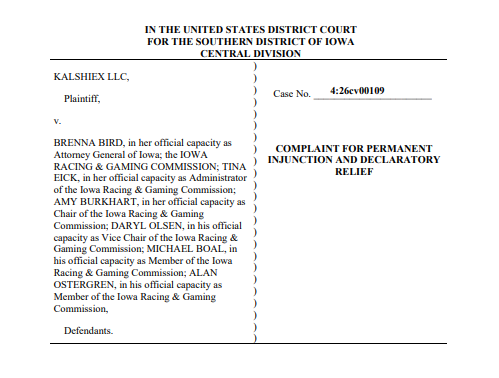
The lawsuit came after a company representative attended what was described as a tax bill discussion, only to face a panel of state attorneys questioning whether Kalshi’s federally regulated products violated Iowa law.
Regulatory certainty in the US is moving, but the results are uneven, to say the least. Projects with confirmed launch dates and completed products are not waiting for the courts to sort it out.
At the same time, retail traders are finding ways to expand their 2026 bags, and DeepSnitch AI presale launch date announcement materialized at exactly the right time to provide the perfect entry point.
Hottest items in the current ICO calendar
1. DeepSnitch AI presale launch date confirmed: March 31 is the last chance to snag DSNT at an affordable price
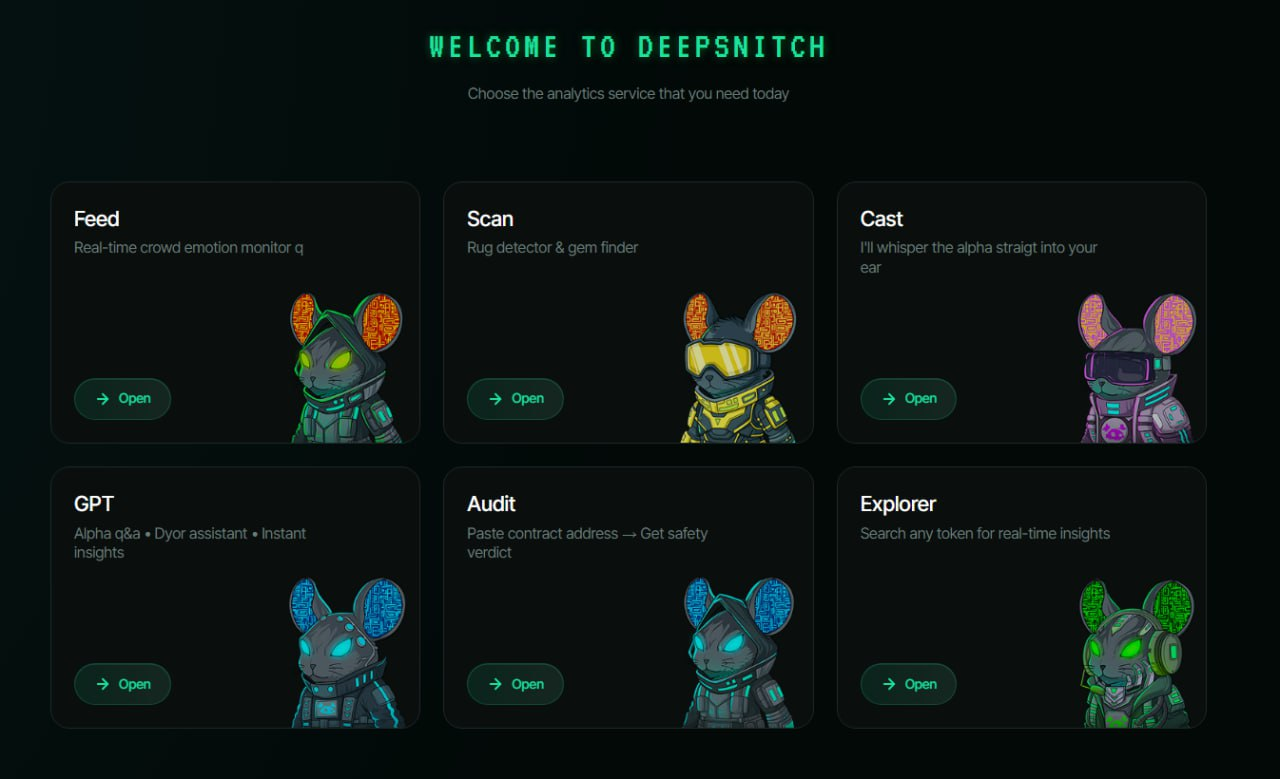
As courtroom drama deepens, presale projects are trucking along. After a series of bullish developmental updates (one of which announced the analytics layer is live), DeepSnitch AI token launch finally received a clear target: 31 March.
With community projections rising to as high as 300x, the hype is undeniable, especially considering the overall DeepSnitch AI presale timeline, which culminated in over $2M being raised, has been focused solely on development and organic community building.
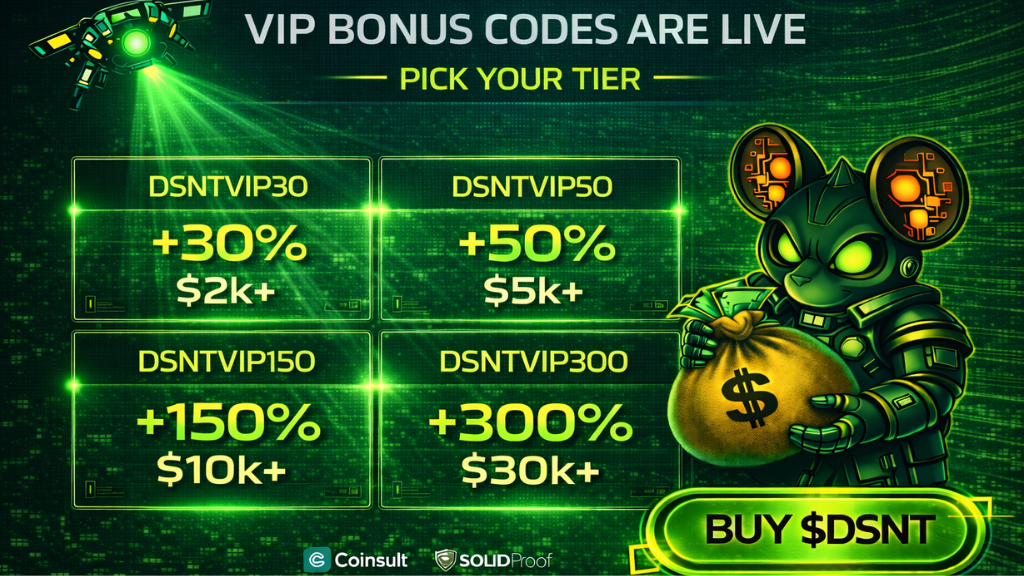
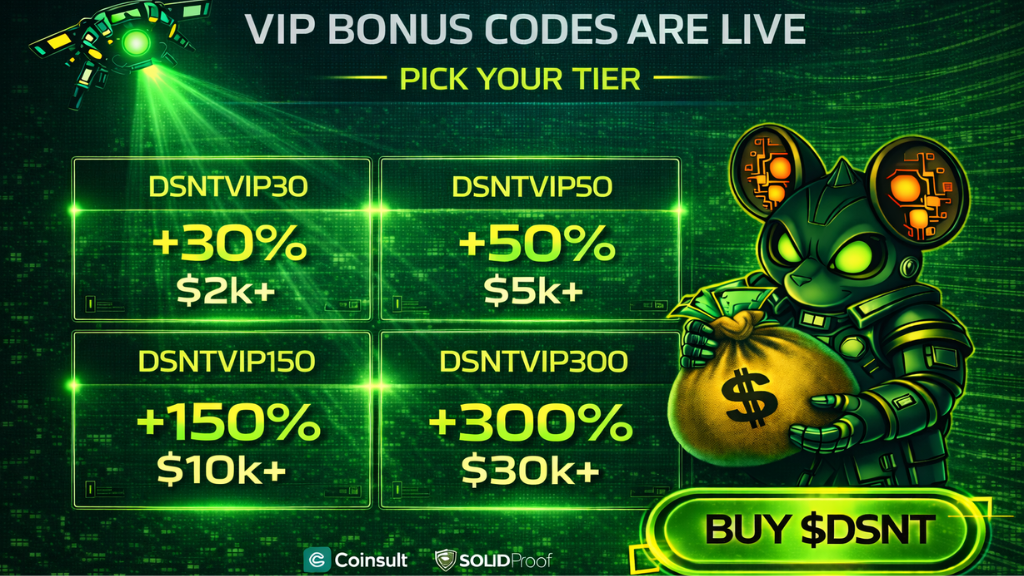
Nevertheless, the DeepSnitch AI presale launch date marks the moment after which holders will receive a 7-day window to claim tokens, bonuses (such as the DSNTVIP300 that unlocks 300% on $30K+ allocations), and staked tokens (41.7M of DSNT is already staked).
DSNT will list on Uniswap, and there will likely be additional listings on major CEXs and DEXs.
That’s just the beginning, though, as the DeepSnitch AI roadmap is also locked in. This includes the deployment of SnitchGPT and SnitchCast – both are dropping in Q2 2026. The segmented approach will keep interest high and ensure that early investors always have new things to look forward to.
2. Hexydog: Is there long-term conviction for HEXY?
As DeepSnitch AI presale launch date will open access to a set of AI tools that traders have always wanted, Hexydog presents a novel concept that no one knew they actually wanted. The $700K raised by Hexydog proves that the interest is there, despite how gimmicky the project may seem.
Targeting the pet care niche, Hexydog will allow traders to pay for pet care services using HEXY tokens, with a portion of the proceeds being donated to animal shelters.
Yet, while the concept seems interesting and offers a nice entry at $0.0059, there’s a possibility that the project won’t be able to retain its growing community unless the conviction grows.
3. SUBBD: Is SUBD a good investment?
In contrast to Hexydog, SUBBD goes for the tried and true approach. Tack creator monetization with blockchain payments and AI tools baked in, SUBBD has already onboarded 2K creators that opened the platform to their 250M followers.
The project also raised $1.48M with an entry of $0.057, meaning that the fundamentals are certainly robust.
In addition to the lack of a clear launch date, SUBBD may also struggle to convert the initial buzz into consistent use, especially considering that many users will likely stick to traditional social media channels instead of jumping into a whole new platform.
Final words: Don’t wait for the FOMO to get to you
Despite the bear market, crypto is as active as ever. Yet, despite all the noise, the DeepSnitch AI presale launch date broke through and sparked massive hype and FOMO.
The reason for this is simple: projects like DeepSnitch AI are a rare sight, and seldom do ICOs provide a full package from the onset. As 100x-300x projections continue to circulate, this launch isn’t something you want to miss, as the price is expected to skyrocket as soon as the Uniswap listing kicks in.
Keep the FOMO at bay by reserving your spot in DeepSnitch AI presale and becoming a part of the community chat on X or Telegram.
FAQs:
1. What happens after the DeepSnitch AI presale launch date on March 31?
Token holders get a 7-day claim window for DSNT, staking rewards, and bonuses, including DSNTVIP300. Uniswap listing follows, with CEX and DEX listings expected after. SnitchGPT and SnitchCast deploy Q2 2026, keeping momentum going post-launch.
2. How does Hexydog compare to DeepSnitch AI as a presale investment?
Hexydog raised $700K targeting the pet care niche at $0.0059. Legitimate concept with real community interest, but the addressable market has natural limits. DeepSnitch AI’s daily-use analytics suite targets every active crypto trader, giving it significantly broader retention potential.
3. Is SUBBD a strong alternative to the DeepSnitch AI presale?
SUBBD’s 2K creators and 250M follower network is a genuinely impressive distribution. However, no confirmed launch date and the challenge of pulling users away from established platforms are real risks.
Disclaimer: This is a Press Release provided by a third party who is responsible for the content. Please conduct your own research before taking any action based on the content.



The pioneering Web3 attendance protocol will stop onboarding new issuers on March 16, as its team turns its attention to building open infrastructure for digital collectibles.
POAP, the blockchain-based platform that turned event attendance into digital collectibles, is entering maintenance mode — ending active development on its current platform after nearly seven years as a fixture of the Web3 community.
In a post on X, POAP co-founder and general manager Isabel Gonzalez announced that starting March 16, 2026, new issuers will no longer be able to create POAPs through the platform’s issuer interfaces. Existing issuers, integrations, and collector-facing tools will continue to function, but the platform itself will no longer receive active development.
“Some operations may also run more slowly as we reduce the resources allocated to the service,” Gonzalez wrote.
The decision, she said, reflects both what POAP accomplished and where its growth ultimately stalled.
“The platform found a clear niche and a group of users who made thoughtful use of it,” she acknowledged. “At the same time, POAP did not expand much beyond that niche.”
From ETHDenver Hackathon to Web3 Staple
POAP’s origins trace back to February 2019, when founder Patricio Worthalter distributed the first digital badges to attendees of the ETHDenver hackathon. Participants claimed the tokens through a link distributed at the event, receiving an ERC-721 NFT that served as a verifiable blockchain record of their attendance.
The idea caught on quickly.
By 2020, POAP migrated to the xDai sidechain — now known as Gnosis Chain — to reduce gas fees and scale issuance. As the crypto ecosystem expanded, POAPs became a popular way for communities to recognize participation and create on-chain memories.
Discord communities, DAOs, DeFi protocols, and metaverse platforms adopted POAPs to reward engagement, gate token drops, experiment with governance, and build loyalty programs.
The platform’s reach soon extended beyond crypto-native communities. Brands including Adidas, Porsche, Johnnie Walker, and TIME Magazine experimented with POAP-based campaigns to engage event audiences and reward participation.
In 2022, POAP raised $10 million in a seed round led by Archetype, with participation from investors including Sapphire Sport, Collab+Currency, Protocol Labs, and MetaCartel Ventures.
By mid-2023, more than 6.7 million POAPs had been minted by over 37,000 unique issuers.
Growth That Hit a Ceiling
Despite that adoption, Gonzalez’s announcement acknowledges the limits of POAP’s model.
The platform successfully carved out a niche — particularly within crypto-native communities — but struggled to evolve into the broader infrastructure for digital collectibles that the team had originally envisioned.
The company had already hinted at sustainability challenges. In April 2023, POAP announced it would begin charging commercial clients for access to its services, ending years of unlimited free minting for all users. At the time, Gonzalez said the change was intended to support the platform’s “long-term sustainability.”
That shift appears not to have generated enough momentum to sustain further expansion.
“Running POAP has made it clear to us that digital collectibles are still an emerging medium,” Gonzalez wrote. “The tools that exist today often reflect the constraints of the systems they were built on, rather than the needs of the communities using them.”
A Pivot, Not a Shutdown
Gonzalez framed the move not as a shutdown but as a strategic shift.
The POAP team is now focusing on building what she described as “a standard for open collectibles” alongside a platform that would offer a canonical implementation — a more permissionless and sustainable foundation for digital collectibles.
“If collectibles are going to become a durable part of how people organize events, recognize participation, and preserve shared moments, they will need better foundations,” she wrote.
The current POAP platform could eventually connect to whatever system the team builds next, though Gonzalez said those details remain undecided.
For existing issuers, the immediate impact is limited. Their drops remain intact, integrations continue to function, and previously minted POAP tokens will remain on-chain.
The main change taking effect March 16 is that new issuers will no longer be able to join the platform.
The End of an Era for Web3 Memory-Making
POAP’s move into maintenance mode marks the end of an important chapter in Web3’s social infrastructure.
For years, a POAP badge was one of the simplest and most recognizable signals in the crypto community — proof, literally, that you were there. Wallets filled with POAPs became a kind of on-chain résumé, documenting conferences attended, communities joined, and moments shared across the crypto ecosystem.
Whether the next iteration of what POAP is building will recapture that cultural significance — and expand it beyond crypto-native communities — remains an open question.
But Gonzalez closed the announcement with a note of gratitude for the community that helped shape the platform.
“Many of the most interesting ideas about digital collectibles did not come from us but from the people experimenting with the tools,” she wrote.
“Thank you to everyone who helped test the limits of what this first version could do.”


ETHDenver 2026 saw side events collapse, prize pools slashed, and AI × crypto dominate the floor, leaving a leaner, builder‑driven conference with prediction markets in focus.
Summary
- Side events dropped from 668 in 2025 to about 215, as timing near Lunar New Year, rival gatherings like WLFI’s Mar‑a‑Lago forum, and tighter budgets cut global attendance.
- AI × crypto became the main story, with Futurllama tracks, Sentient’s Open AGI Summit, and robotics projects making the venue feel closer to an AI expo than a DeFi show.
- The BUIDLathon stayed builder‑centric but with prize pools slashed from roughly $1.03m to $132k, messy judging, and a tilt toward AI‑agent, UX‑heavy and prediction‑market experiments.
ETHDenver 2026 saw side events crater from 668 in 2025 to roughly 215 this year, a brutal 68% drop that signals a tighter, efficiency‑driven market. Timing near Lunar New Year hurt Asian teams, while competing gatherings like the WLFI Forum at Mar‑a‑Lago siphoned OGs and core builders away. The result: ETHDenver remained a North American hub, but with visibly fewer international attendees and reduced global influence.
Public chain ecosystems also pulled back from the old spray‑and‑pray visibility model. Monad and X Layer were relatively active, with Monad hosting three events and X Layer sponsoring the main stage, while Solana limited itself to one small but high‑quality event. Across the board, teams shifted to a minimal, symbolic presence and cost‑effectiveness over sheer volume and hype.
AI × Crypto Becomes the Main Narrative
Onsite, ETHDenver felt less like a pure crypto conference and more like an AI × crypto expo. The venue split into five stages, with the Futurllama track (AI/DePIN and frontier trends) drawing the largest crowds. Parallel AI‑themed gatherings like Sentient’s Open AGI Summit were packed, in some cases busier than official main‑venue areas.
The project mix changed accordingly. Robots, robotic arms, and embodied intelligence plays like PrismaX and Gensyn made the floor look more like CES than a DeFi show. Many teams still wore the Web3 label, but their core story shifted from chains, DeFi, or wallets to agents, chatbots, and application‑layer AI products. One exchange strategy lead said the real opportunity is not building “big models” but embedding AI directly into exchange products, including an in‑exchange LLM that reads real‑time news, recommends trades, and executes them inside a chat interface.
Builder Culture Intact, But Prize Pools Shrink
Despite the AI pivot, ETHDenver remained builder‑centric. The final day’s schedule handed the expo floor entirely to the hackathon and Builder Workshop, while side events from chains like Base were pointed squarely at developers. Base also tested Braindate, a structured social tool where attendees could spin up or join themed sessions instead of aimless networking.
The BUIDLathon format shifted to a front‑loaded model, adding an online hacking phase with topics announced a week early; on‑site days were cut from eight to four, turning Denver into a finishing sprint rather than the starting gun. The money told the harsher story: the prize pool collapsed from 1.03 million dollars last year to 132,000 dollars, with sponsor budgets more concentrated and skewed toward AI‑oriented tracks. Judges rewarded projects that translated AI + crypto into mass‑market use cases, from an “AI girlfriend” with tipping incentives to an AI‑agent ad protocol using on‑chain validators to prove task completion before paying out budgets.
Messy Judging, But Diverse Builders
The hackathon judging process felt improvised. Teams pitched the main track in five‑minute slots to 2–3 judges, favoring projects that could communicate clearly, be memorable, and entertain over pure technical rigor or polish. Sponsor‑track judging, including Base and others, was described as more chaotic, with unclear queues that stressed teams’ ability to navigate on‑site logistics as much as present their work.
Still, the participant base was notably diverse: students, veteran builders, industry lifers, and playful creators, spanning AI, DeFi, GameFi, and hybrid experiments. Newcomers were not locked into “classic” crypto primitives; instead they blended AI, gaming, advertising, and social layers with on‑chain rails as a default assumption.
Prediction Markets and Bear‑Market Resilience
Prediction markets got their own spotlight at a Monad‑hosted Frontier Markets event. Speakers flagged three main structural pain points: liquidity scarcity, constantly expiring markets that fragment and migrate liquidity, and the difficulty of attracting LPs to long‑tail markets versus the perpetual futures model familiar to traditional market makers. Because prediction markets can gap to zero at settlement, leverage, MM design, and risk controls are more complex, further deterring large traditional players.
At the same time, popular markets tend to pull in retail‑heavy liquidity, suggesting the key edge is not another generic prediction DEX but whoever can consistently create compelling markets and wrap them in a better UX. Overall, ETHDenver 2026 reads as a bear‑market snapshot: less euphoria, smaller budgets, but a core of builders, early‑stage investors, and imperfect yet promising business models feeling around for the next crypto cycle.


Retail traders are selling Bitcoin at losses while long-term holders remain inactive, a split analysts say could tighten supply conditions.
Bitcoin is trading near the $70,000 mark, with on-chain data showing a widening gap between retail investors dumping their holdings and long-term holders staying completely still.
That split is drawing attention from analysts who say the pattern could be setting up conditions for a supply squeeze.
Exchange Reserves Are Falling While Small Holders Sell
According to analyst GugaOnChain, since the start of the year, Bitcoin exchange reserves have dropped by around 204,000 BTC, going from 2.99 million to 2.786 million BTC. This means that there are fewer units available on exchanges for selling, even with short-term holders offloading their stash.
The analyst mentioned that a metric tracking whether recent buyers are gaining or losing when they sell, known as the Short-Term Holder Spent Output Profit Ratio (SOPR-STH), is at 0.97. According to them, a reading below 1.0 means that holders are in the red, which could be because they are selling out of panic rather than as part of a strategy.
Meanwhile, long-term whales are not moving, with GugaOnChain pointing out that older coins, most of which are sitting on huge unrealized gains, have not been touched. Per the on-chain technician, selling pressure at this stage is “purely emotional,” driven mostly by newer traders who bought their BTC at higher prices and are now cutting losses.
A market update from fellow CryptoQuant contributor burakkesmeci added a related data point. They wrote that Bitcoin whales who have held the cryptocurrency for less than 155 days are sitting on an average cost basis of about $85,600. And with BTC trading well below that level, it means that those newer whales are underwater.
According to the analyst, Bitcoin’s bull cycles have only resumed once the price reclaims and holds above this group’s cost basis.
You may also like:
“Looking at Bitcoin’s cycles, the pattern is consistent,” they wrote. “When price falls below the STH whale cost basis, bear season begins — when price reclaims and holds above it, bull season follows.”
Apparently, that level was tested in January but held as resistance and subsequently pushed BTC down to the $60,000 level.
Stress Test Passed, But Questions Remain
Last weekend gave the market an unexpected data point when oil prices jumped sharply, but Bitcoin held above $70,000. Fundstrat’s Tom Lee said it was a sign that Bitcoin was “coming back in vogue as a store of value.”
That argument got a brief test yesterday, when the king cryptocurrency whipsawed between roughly $69,000 and $71,200 after U.S. President Donald Trump claimed on social media that there was “nothing left to target” in Iran. Within minutes, his comment added nearly $2,000 to BTC’s price, even though it later retreated.
At the time of writing, price data from CoinGecko showed Bitcoin down 3.7% over the last seven days, underperforming the broader crypto market, which dropped around 1.7% in the same period. Meanwhile, the one-year return is at -15%, with Bitcoin also sitting nearly 45% below its all-time high.
Binance Free $600 (CryptoPotato Exclusive): Use this link to register a new account and receive $600 exclusive welcome offer on Binance (full details).
LIMITED OFFER for CryptoPotato readers at Bybit: Use this link to register and open a $500 FREE position on any coin!

The United States Senate took a clear stance on central bank digital currencies (CBDCs) by attaching a prohibition to the 21st Century Road to Housing Act. In a vote that reflected strong bipartisan skepticism about a government-issued digital dollar, the chamber approved an amendment barring the Federal Reserve from issuing CBDCs through December 31, 2030. The measure, which passed 89-10, would force the Fed to refrain from creating or facilitating a central bank digital currency or any digital asset substantially similar to one, whether directly or through intermediaries. While the amendment imposes a hard stop on CBDCs, it leaves room for private, dollar-denominated digital currencies that are open, permissionless, and private—such as stablecoins.
Beyond the legislative language, the discussion underscored a broader rift over the future of digital money in the United States. Proponents of private digital dollars argue that dollar-pegged, open financial instruments could bolster payment efficiency and resilience, while CBDC skeptics warn of state surveillance and centralized control. The amendment’s language and the surrounding debate reflect a pivotal moment in which lawmakers weigh the balance between financial innovation and constitutional protections.
Key takeaways
- The Senate approved an amendment to the 21st Century Road to Housing Act that would block the Federal Reserve from issuing a central bank digital currency until at least the end of 2030, in a 89-10 vote.
- The amendment prohibits the Board of Governors of the Federal Reserve System or a Federal Reserve Bank from issuing or creating a CBDC, or any digital asset substantially similar to a CBDC, directly or indirectly through a financial intermediary.
- Open, permissionless, and private dollar-denominated digital currencies—such as stablecoins—are explicitly not prohibited by the bill, signaling a preference for private digital dollars over a government-run CBDC.
- Lawmakers framed CBDCs as potential tools for surveillance and control, with a coordinated push from some members to secure a permanent ban rather than a temporary moratorium.
- Prominent voices in the debate, including Representative Ralph Norman and Representative Warren Davidson, criticized CBDCs as threats to economic freedom and privacy, while figures such as Ray Dalio warned of expanded government reach under a CBDC regime.
Market context: The bill arrives amid ongoing national discussions about how to regulate and deploy digital money, balancing innovation with consumer protections and privacy considerations. The stance on CBDCs could influence how the administration and regulators approach digital payments, stablecoins, and potential future policy tools in a rapidly evolving sector.
Why it matters
The amendment’s passage signals a legislative preference for limiting federal influence over the form and reach of digital money in the near term. By barring CBDC issuance through 2030, lawmakers create a period of regulatory ambiguity for the Fed and other federal agencies, potentially slowing any centralized digital-dollar program and shaping private sector experimentation in stablecoins and other dollar-linked instruments. The carve-out for open, permissionless, private digital currencies acknowledges the continued vitality of the private sector in building digital payment rails, while also underscoring that Congress remains wary of government-run monetary infrastructure.
The rhetoric surrounding the bill reflects broader concerns about financial sovereignty. Critics argue that CBDCs could enable pervasive financial surveillance, programmable money, and coercive policy tools, whereas proponents contend that a well-regulated CBDC could modernize payments, increase financial inclusion, and improve monetary policy transmission. The debate has drawn inputs from lawmakers across the spectrum, including a March 6 letter signed by more than 30 representatives urging a permanent CBDC ban rather than a temporary halt. The document frames CBDCs as a potential expansion of governmental power over the private economy, a theme that recurs in the remarks of opponents who emphasize civil liberties and market freedom.
In parallel, notable financial thinkers have weighed in on the implications of CBDCs. Ray Dalio, a prominent investor, has warned that CBDCs could drastically expand governmental control over individuals’ finances, with remarks highlighting concerns about privacy and state reach. These comments have fed into the broader political narrative that a centralized digital dollar would reshape how citizens interact with money and how monetary policy translates into daily life. At the same time, discussions about stablecoins—dollar-pegged instruments issued by private entities—are often cited as a counterpoint to CBDCs, with supporters arguing they offer a market-driven alternative while critics worry about regulatory gaps and systemic risk.
Overall, the Senate’s move to insert a CBDC prohibition into housing legislation places the issue at the intersection of monetary policy, civil liberties, and the evolving infrastructure of digital finance. The amendment’s language draws a bright line around government-issued digital money, while leaving room for private digital currencies to operate under market-driven incentives and existing financial regulations. The contrast between a centrally administered CBDC and privately issued stablecoins represents a central tension in the governance of digital money—a tension that lawmakers will continue to navigate as the policy conversation unfolds.
What to watch next
- Bridge to the House: Monitor whether the House of Representatives adopts a companion provision or different language regarding CBDCs in the ongoing version of the bill.
- Averting amendments: Track any amendments introduced in committee that could alter the CBDC ban’s scope or timing.
- GENIUS Act progress: Follow developments related to the Guiding and Empowering Nation’s Innovation for US Stablecoins (GENIUS) Act and its implications for private digital currencies.
- Fed communications: Watch for forthcoming statements or policy papers from the Federal Reserve that outline its stance on digital currencies and potential future pilots or research.
- Regulatory framework for stablecoins: Expect continued scrutiny of dollar-denominated private digital currencies and any broader regulatory proposals affecting stablecoins.
Sources & verification
- Text of the amendment in the 21st Century Road to Housing Act (PDF MIR26311) from the US Senate.
- Senate vote tally showing the 89-10 passage of the amendment.
- Letter signed by over 30 lawmakers urging a permanent CBDC ban, discussed in public statements and on social media.
- Interviews and remarks cited regarding CBDC surveillance concerns, including comments from investors and policymakers.
- Documentation and analysis related to the GENIUS Act and its relevance to private stablecoins.
Why it matters (expanded)
The legislative stance reflected in the amendment provides a concrete waypoint in the United States’ evolving stance on digital money. If the House and the executive branch align with or diverge from this approach, the policy trajectory for CBDCs could become clearer or more contested. For market participants, the absence of an immediate CBDC program reduces near-term policy risk around central bank digital money while maintaining a focus on the growth and regulation of private digital currencies. For builders and investors, the distinction between a regulated private dollar and a hypothetical government-issued CBDC continues to shape product design, compliance strategies, and the risk calculus around digital payment ecosystems.
Key figures and next steps
Lawmakers cited in the debate emphasize a preference for preserving financial privacy and avoiding centralized tools that could enable monetary controls. While the Senate acted decisively on the amendment, observers say the broader fight over CBDCs and digital dollars will likely persist across committee hearings, floor votes, and regulatory proposals. The coming months could reveal whether the administration decides to pursue a CBDC variant through different channels or to double down on private-sector-led digital currencies as the primary vector for modernization in payments and monetary policy tools.
What this means for users and investors
For users and investors, the latest development signals a continued preference for private, dollar-denominated digital assets over a federally issued CBDC in the near term. It also reinforces the importance of robust regulatory frameworks for stablecoins and other digital instruments that could influence liquidity, settlement speed, and monetary policy transmission in the digital asset space. As lawmakers debate the pros and cons of centralized digital money, the market will likely watch for any shifts in Fed communications, related legislative efforts, or new initiatives aimed at balancing innovation with privacy and financial stability.
Crypto World
Outset Media Index debuts to standardize media analysis as AI answers challenge the old search model


Outset Media Index (OMI) is now in soft launch, introducing what its creators describe as the first standardized system for benchmarking media outlets.
OMI organizes familiar traffic indicators from partner sources such as Similarweb and Moz, adds proprietary research metrics for practical context and turns this data into a single analytical framework that makes analysis repeatable, transparent and adaptable to different workflows.
Teams that run media operations, including advertisers, marketers, PR agencies and publishers, can use OMI to plan campaigns with greater clarity, manage media budgets more deliberately and improve campaign outcomes over time.
Internally, the platform is supported by a broader analytical layer within the Outset PR ecosystem. While OMI focuses on measuring how outlets perform, Outset Data Pulse interprets those signals through research reports that examine media trends and structural changes shaping the industry.
Additional tools help track how coverage circulates after publication. A syndication map follows how articles travel through aggregators and secondary outlets, while an automated parser monitors republications across large numbers of media sites.
Behind the index sits a methodology designed to keep rankings consistent. Before scoring, inputs are reviewed, normalized and consolidated into several weighted parameters that apply across all listed outlets.
Importantly, OMI operates independently from commercial influence. Positions in the index cannot be bought or negotiated. Publications do not pay for placement, and scores cannot be adjusted on request.
Structured intelligence that examines what other monitoring tools miss
Outset Media Index currently tracks over 340 outlets with active crypto coverage, including specific publications and broader fintech portals with dedicated crypto sections, through 37 metrics and two scoring frameworks.
Traffic estimates, SEO visibility, pricing, referral patterns and market knowledge all reveal something, but rarely in one comparable structure. OMI brings those signals together so users can see not just how visible a media outlet looks at a glance, but also how it behaves over time, how audiences interact with it, how the editorial team approaches collaboration and how coverage continues to move after publication.
Some metrics focus on scale and traffic quality. Others show where the readership is concentrated and how well a publication fits regional or language-specific campaigns. The framework also includes indicators designed to capture signals that traffic alone cannot explain.
For example, Unique Score separates outlets with a stable audience from those driven mostly by short bursts of attention. Reading Behavior highlights where people spend time with content and where they simply pass through. Reprints and a corresponding Reprints Score track how original coverage echoes through aggregators and help identify strong syndication networks.
“We also introduced two summary scores,” said Sofia Belotskaia, product lead at Outset Media Index. “The General Score shows how an outlet performs overall, while the Convenience Score looks at the practical side of collaboration – editorial control, turnaround speed, coverage options and price-to-reach alignment. The idea is to make it possible for users to see both the actual performance of a publication and the realities of working with it without having to dig through dozens of separate indicators.”
Among other things, OMI reflects the discovery layer forming around AI, surfacing outlets that receive traffic from LLM-driven interfaces.
If AI answers the question, who clicks the article?
Across the publishing industry, AI-generated answers now appear directly inside search results. Users no longer need to click through to websites for information. The change raises an uncomfortable question: what happens when search stops sending readers?
Some findings suggest referrals from search engines could fall by as much as 43% over the next three years as AI summaries and chat-style tools increasingly answer questions directly on the results page.
The Guardian recently cited data showing that search traffic to news sites has already fallen by roughly a third in the past year, and AI-generated overviews are showing up in about 10% of search results in the United States.
For publishers that spent years building strategies around search visibility, the change is impossible to ignore. If readers no longer need to click through to a story to get information, the click itself becomes a less reliable signal of where attention is actually going.
“Since AI answers started replacing links, the way we look at media performance has had to change as well,” said Mike Ermolaev, founder of Outset Media Index and Outset PR. “That’s the kind of environment OMI is meant to help people navigate.”
When discovery changes, measurement follows
For now, Outset Media Index enters the industry conversation as an early attempt to make sense of ongoing media shifts. The platform offers one way of analyzing how media attention moves today – not only through traffic, but through engagement, distribution and the practical dynamics of working with outlets.
What that approach ultimately becomes will depend on how the system develops from here. The soft launch will reveal how the index may grow into a broader reference point for teams working in a complex, high-cost media landscape where the path between a story and its audience is becoming less direct.
Crypto World
DeepSnitch AI Price Prediction: Dune Gives You Queries, Nansen Gives You Flows; DeepSnitch AI the 1000x Bet if Traders Want the Full Stack in One Place

Crypto just entered America’s retirement accounts, and $10 trillion in long-term capital is now in play. VanEck’s move to embed digital-asset ETPs in 401(k) plans isn’t a headline to scroll past.
Retirement capital is slow, sticky, and recurring, exactly the demand that builds durable price floors over years. With a Trump executive order clearing the regulatory path, this is the opening of a pipeline that could dwarf every ETF inflow record set so far.
But 401(k) exposure to crypto ETPs won’t deliver 100x returns. It’s designed to preserve and grow capital slowly at scale. That’s the institutional trade. The early-stage trade looks different.
DeepSnitch AI has already surged 191% in presale and has a TGE confirmed for March 31st on Uniswap.
As VanEck raises the floor across the board, the highest leverage sits in what that capital hasn’t priced in yet. DSNT is still that asset, and the DeepSnitch AI price prediction looks at 100x returns from now.
VanEck brings crypto ETFs to 401(k) plans
VanEck has made its digital asset ETPs available through Basic Capital, a fintech 401(k) provider, marking one of the first moves to embed crypto-focused products directly into US employer-sponsored retirement accounts.
The development follows a Trump executive order directing federal agencies to expand alternative asset access in 401(k) plans, reversing prior Labor Department guidance that had effectively blocked crypto from retirement accounts.
The scale of the opportunity is substantial. US 401(k) plans hold roughly $10 trillion in assets, and with nearly half of participants increasing contributions in 2024, the pool of potential crypto exposure is enormous.
For crypto markets, this is a structural demand story. Retirement capital is long-term, recurring, and largely passive, precisely the inflow that could provide a durable bid beneath crypto prices over years, not months.
Top 3 cryptocurrencies to own in 2026
DeepSnitch AI price prediction: Analysts expect 100x returns
Here’s what the DeepSnitch AI price prediction case actually rests on. VanEck’s 401(k) integration means retirement capital starts flowing into crypto consistently, as a recurring structural bid.
That raises the floor for the entire market over the years. The assets that benefit most from a rising floor are the ones positioned to catch the demand before it arrives. DeepSnitch AI is at $0.04399 with the TGE on March 31st. Early buyers are already up 191% without a single exchange candle printed.
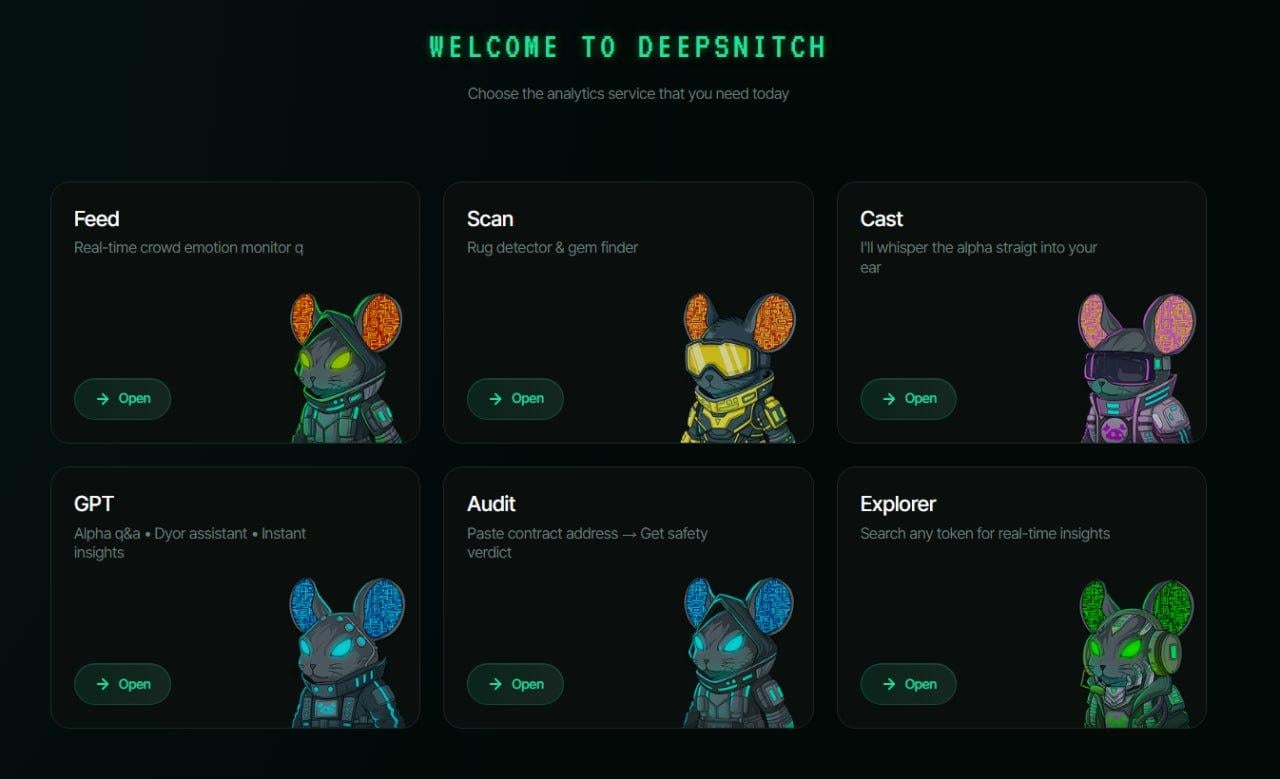
The 100x–300x post-launch DeepSnitch AI price predictions, with some analysts calling 1,000x before year-end, are grounded in a specific logic: a low-cap AI-native platform launching into a market where the total capital pool is structurally expanding. VanEck is opening the pipeline. DSNT goes live before that capital fully flows through it.
The staking program is live, with 42M+ tokens already locked, holders who’ve committed long-term rather than waiting to flip at listing.
Over $2M raised while most top altcoins, and even Bitcoin, bleed confirms the conviction is real. At this price, before the Uniswap listing and tier-1 CEX listings that follow, the entry is still genuinely early-stage. After March 31st, DeepSnitch AI isn’t.
Cardano trades below $0.3 while investors turn bullish
Cardano traded at $0.26 on March 11, up over 5% in three days and closing in on descending trendline resistance between $0.27 and $0.30.
The catalyst matters. Charles Hoskinson’s 2026 funding model proposes using treasury returns to buy ADA on the open market, a structural buyback mechanism that speculative momentum alone can’t replicate.
Derivatives tell a cautious story. Open Interest drops to $410 million. Funding rate flips positive to 0.0075%. Bulls return quietly, without conviction.
The chart sits in the same uncertain middle. ADA trades below the 50-day and 100-day EMAs near $0.29. RSI stays under 50. MACD fades near zero. Close above $0.29, and the recovery gains real traction. Lose $0.24, and this bounce unravels entirely.
Ethereum
Ethereum traded at $2,055 on March 11, holding above the 20-day EMA at $2,024. That level separates cautious optimism from renewed selling pressure.
What makes this setup unusual is the disconnect between network activity and price. Daily active addresses hit a record 2 million in February, double the 2021 bull market peak. Total contract calls surpassed 40 million daily. The network thrives. The price doesn’t.
ETH shed over 50% in four months. CryptoQuant analysts point to the mechanism: realized capitalization growth turned negative, and ETH exchange inflows outpace Bitcoin’s. Capital leaves while usage climbs.
Reclaim $2,108, and $2,389 comes next. Lose the 20-day EMA, and $1,741 arrives fast, with $1,524 and $1,405 waiting beneath it.
Closing thoughts
VanEck is routing retirement capital into crypto, building the structural floor that benefits the entire market over the years. Early DeepSnitch AI investors are already up 191%, without waiting for a 401(k) to do it for them.
The presale closes March 31st, with Uniswap and tier-1 exchange listings to follow. At $0.04399, the entry is still early-stage, with a massive DeepSnitch AI price prediction.
A $30,000 position with the bonus campaign enters launch day worth $90,000 in tokens, and if the 100x projections land, that math rewrites portfolios entirely.
Visit the official website for more information, and join X and Telegram for community updates.
FAQs
What is the DeepSnitch AI price target analysts are projecting ahead of its March 31st launch?
The DeepSnitch AI price predictions range from 100x to 300x post-launch, with some analysts projecting 1,000x before year-end. The case rests on a low-cap AI-native platform launching into a market where VanEck’s 401(k) integration is structurally expanding the total capital pool.
What does the DeepSnitch AI forecast look like heading into Q2 2026?
Bullish. As VanEck’s retirement capital pipeline opens and raises the market floor, the highest leverage sits in pre-listing assets that institutional money hasn’t yet priced in. DSNT is still that asset.
What is the DeepSnitch AI market outlook compared to Cardano and Ethereum right now?
Cardano’s buyback mechanism and Ethereum’s network strength are credible long-term stories. DeepSnitch AI’s March 31st TGE is a fixed, near-term catalyst at $0.04399 with uncapped staking yields and a post-launch price structure that neither large-cap asset can replicate.
Disclaimer: This is a Press Release provided by a third party who is responsible for the content. Please conduct your own research before taking any action based on the content.


The U.S. Securities and Exchange Commission (SEC) is signaling support for streamlined “minimum effective dose” disclosure rules and tightly scoped equity‑tokenization pilots via an innovation exemption, according to new remarks from Chair Paul S. Atkins.
Summary
- Atkins calls for materiality‑focused, scaled disclosure and extending the JOBS Act “IPO on‑ramp” so smaller issuers face lighter reporting as they enter public markets.
- He attacks “comply or explain” governance mandates as “shaming regulation,” arguing board structures and ESG metrics should be set by shareholders, not backdoor pressure.
- On tokenization, he backs an “innovation exemption” that would cap volumes and scope but allow limited trading of tokenized securities to inform a longer‑term rule framework.
The U.S. Securities and Exchange Commission (SEC) is signaling support for streamlined disclosure rules and controlled experiments with equity tokenization, according to a new speech by Chair Paul S. Atkins at the agency’s Investor Advisory Committee meeting.
SEC chair pushes “minimum effective dose” regulation
Atkins focused first on cutting what he called unnecessary disclosure burdens, arguing for a “minimum effective dose” approach to regulation that keeps rules tightly centered on material information and adapts requirements to company size. He also proposed extending the JOBS Act “IPO on‑ramp” regime, giving small and mid-size firms a longer glide path with scaled reporting so that more issuers are willing to go public.
Atkins sharply criticized the SEC’s use of “comply or explain” disclosure mandates in corporate governance, branding them a form of “shaming regulation” that effectively forces companies into preferred governance models by public pressure rather than law. In his view, decisions on board structure, ESG metrics, and related governance questions should remain in the hands of shareholders and directors, not be indirectly dictated through disclosure threats.
Green light for targeted tokenization exemptions
On tokenization, Atkins took a more openly experimental stance, arguing that turning equity securities into digital tokens can improve settlement efficiency, reduce settlement risk, and strip out unnecessary intermediaries. He revealed that the SEC is considering an “innovative exemption mechanism” to allow limited trading of specific tokenized securities, using tightly scoped pilots to build experience for a long-term regulatory framework.
That approach would effectively let tokenized equity projects move forward under controlled conditions, rather than waiting for a full top‑down rule overhaul. For crypto markets, the message is clear: the SEC is not ready to rewrite securities law for tokenization, but it is prepared to grant targeted exemptions that could bring regulated, on‑chain equity settlement closer to reality.
Anchorage Digital has integrated with Puffer Finance to give institutional clients access to Ethereum liquid restaking through its custody platform.
According to Thursday’s announcement, institutions can stake Ether held with Anchorage and receive Puffer’s liquid restaking token, pufETH, directly into their accounts. The token represents a restaked ETH (ETH) position that can be transferred or deployed across supported onchain applications while continuing to earn staking and restaking rewards.
Institutions using the platform can participate in restaking without running validators or managing staking infrastructure themselves.
The integration allows clients to access Puffer’s restaking protocol while keeping assets within Anchorage’s custody and governance framework, avoiding the need to move funds across multiple platforms.
Anchorage said the integration is part of a broader effort to expand institutional access to onchain services through its platform, including staking, restaking, governance and settlement.
Anchorage Digital is a crypto custody company headquartered in San Francisco that operates the first federally chartered crypto bank in the United States.
In January, the company was reported to be seeking between $200 million and $400 million in new funding as it explores a potential initial public offering sometime next year.
Related: Sharplink reports $735M loss in 2025 as Ethereum slumped
Liquid restaking expands across Ethereum ecosystem
Restaking has emerged as a new layer of activity in proof-of-stake networks such as Ether, allowing already staked tokens to be reused to secure additional decentralized services while generating additional rewards.
In liquid restaking systems, staked Ether is represented by a tradable token that can be reused through restaking protocols to help secure additional decentralized services.
Much of the restaking ecosystem has developed around EigenLayer, a protocol launched by Eigen Labs that enables staked Ether or liquid staking tokens to secure additional onchain services beyond the Ethereum network.
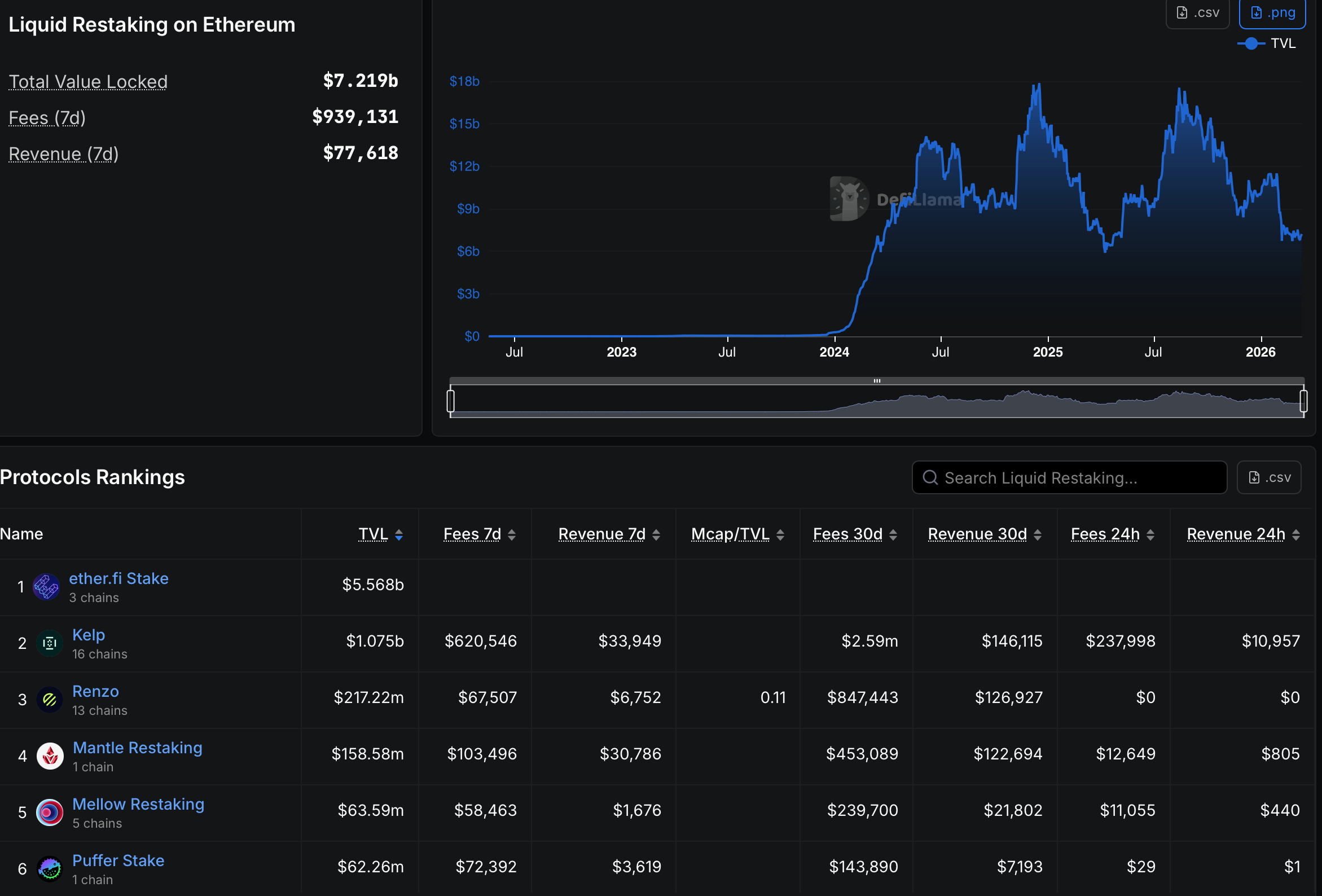
Over the past few years, liquid restaking has grown into a multibillion-dollar sector within the Ethereum ecosystem. According to data from DefiLlama, protocols offering liquid restaking collectively hold about $7.2 billion in total value locked (TVL).

The sector is dominated by ether.fi with around $5.6 billion in TVL, followed by Kelp DAO with about $1 billion and Renzo with roughly $217 million. Puffer Finance, the protocol integrated by Anchorage Digital, currently manages around $62 million in restaked Ether.
Ethereum treasury companies are also increasingly exploring these strategies to generate yield from their Ether holdings. In October, SharpLink Gaming said it planned to deploy $200 million worth of Ether from its corporate treasury across staking and restaking strategies through ether.fi and EigenCloud on Linea.
Magazine: What’s a ‘Network State’ and are there real-life examples? Big Questions

Republicans plan talkathon on voting bill as they face Trump pressure

LARRY KUDLOW: Is John F. Kennedy having a comeback?

Brian Armstrong Denies Lobbying Against Bitcoin De Minimis Tax Exemption


-
Business6 days ago
Form 8K Entergy Mississippi LLC For: 6 March
-

 News Videos3 days ago
10th Algebra | Financial Planning | Question Bank Solution | Board Exam 2026
-

 Fashion6 days ago
Weekend Open Thread: Ann Taylor
-

 Crypto World3 days ago
Paradigm, a16z, Winklevoss Capital, Balaji Srinivasan among investors in ZODL
-
 Tech2 days ago
A 1,300-Pound NASA Spacecraft To Re-Enter Earth’s Atmosphere
-

 Tech2 days ago
ChatGPT will now generate interactive visuals to help you with math and science concepts
-

 Politics6 days ago
Top Mamdani aide takes progressive project to the UK
-

 Business2 days ago
ExxonMobil seeks to move corporate registration from New Jersey to Texas
-

 Sports5 days ago
Three share 2-shot lead entering final round in Hong Kong
-

 Sports5 days ago
Braveheart Lakshya downs Lai in epic battle to enter All England Open final | Other Sports News
-

 NewsBeat1 day ago
Residents reaction as Shildon murder probe enters second day
-

 Entertainment6 days ago
Hailey Bieber Poses For Sexy Selfies In New Luscious Lip Thirst Traps
-

 Business4 days ago
Search for Nancy Guthrie Enters 37th Day as FBI Probes Wi-Fi Jammer Theory
-

 Business2 days ago
Search Enters Sixth Week With New Leads in Tucson Abduction Case
-
 NewsBeat3 days ago
Pagazzi Lighting enters administration as 70 jobs lost and 11 stores close across Scotland
-

 Tech3 days ago
Despite challenges, Ireland sixth in EU for board gender diversity
-

 Business3 days ago
Search Enters 39th Day with FBI Tip Line Developments and No Major Breakthroughs
-

 NewsBeat1 day ago
I Entered The Manosphere. Nothing Could Prepare Me For What I Found.
-

 Business6 days ago
Iran war enters second week as Trump demands ’unconditional surrender’
-

 Sports4 days ago
Skateboarding World Championships: Britain’s Sky Brown wins park gold