

Crypto World
Canadian Teen Scams $13M, Splurges on Lambos, BMWs


A Canadian teen stole more than $13 million in crypto through social engineering scams to pay for an “exotic lifestyle” in Miami and Los Angeles, including buying luxury cars, jewelry and taking private jet trips, US prosecutors say.
In May, US prosecutors charged then-19-year-old Trenton Richard Johnston for a scheme in which he and co-conspirators impersonated Google, Trezor and other crypto firm employees to gain access to victims’ crypto.
On Tuesday, Johnston, now 20, pleaded guilty to conspiracy to commit money laundering, avoiding further charges that could have resulted in a maximum sentence of up to 40 years in prison.

Trenton Richard Johnston’s mugshot. Source: Miami-Dade County
Social engineering attacks, where scammers portray themselves as trusted entities or people to trick victims, have become widespread in crypto, as artificial intelligence tools have boosted the capabilities of attackers to impersonate others.
“This case shows that some of the biggest crypto thefts today are not driven by sophisticated code exploits, but by basic human manipulation,” Cyvers CEO and co-founder Deddy Lavid told Cointelegraph.
“Crypto makes this especially dangerous because transactions are fast and largely irreversible,” he added.
“The attacker only needs to win the victim’s trust once, for a few minutes, and the loss can be permanent.”
According to court documents, Johnston and his co-conspirators started their crypto scam efforts around January 2024. In February, Johnston tricked a victim into believing that his Google email and Coinbase accounts were compromised, allowing them to steal approximately $41,000 in Ether (ETH).
Less than a month later, Johnston and his co-conspirators posed as Google and Trezor representatives to trick another victim in California into believing that someone was attempting to access their cryptocurrency wallet, allowing them to drain the account of about $13 million in Bitcoin (BTC).
Related: Coinbase freezes $3M tied to Southeast Asia crypto fraud networks
About $1.2 million of the stolen crypto was used to fund a lavish lifestyle across Miami and Los Angeles in just two months, according to prosecutors.
With the help of exotic car-rental company owner Brandon Tardibone, who also pleaded guilty to money laundering, Johnston spent most of the money on buying and renting luxury cars, including two BMWs and a Lamborghini Aventador SVJ.

A picture of a Lamborghini Aventador SVJ, a luxury car prosecutors say Trenton Johnston used stolen money to rent. Source: Wikimedia Commons
Stolen funds were also used to rent a private jet, a rental house in North Miami and plane tickets for “two girls from New York.”
Johnston’s run ended in March, when he was pulled over for speeding in a Rolls-Royce and found to be carrying 21 suspected amphetamine tablets. Investigators seized his computer, cellphone and handwritten notes, uncovering his link to the fraud scheme.
He has since turned over approximately 53.16 Bitcoin and 275.23 Ether, worth $3.7 million at current prices. In light of the plea deal and in return for full cooperation, prosecutors have recommended a sentence of 51 to 63 months in prison for Johnston, along with dismissal of the wire fraud charges.
Prosecutors also recommended Tardibone serve a sentence of between 27 and 33 months in prison.
US crackdown on crypto scams
The latest case is another win for US authorities tracking high-profile crypto scammers.
In April, a Californian resident was sentenced to 70 months in prison for his part in a criminal enterprise that stole $263 million in cryptocurrency through social engineering and burglary. Evan Tangeman, 22, pleaded guilty in December for helping the criminal organization launder at least $3.5 million in illicit funds.
In February, a Chinese national was sentenced to 20 years in US federal prison for a global cryptocurrency scam that stole more than $73 million from victims, many of them American investors.
“The industry cannot rely on education alone,” Leddy said.
“Wallets, exchanges, custodians, and banks need real-time, pre-transaction security controls that detect suspicious behavior, risky destination wallets, and laundering patterns before funds leave the account. The key shift is from investigating fraud after the theft to preventing it before execution,” he added.
Magazine: Does ‘Paper Bitcoin’ mean there’s an unlimited supply of BTC?

Crypto World
Quantum Computing Insiders Cash Out: Infleqtion and D-Wave (QBTS) Executives Sell $30M in Stock

Key Takeaways
- Infleqtion’s CTO Pranav Gokhale offloaded 120,000 shares worth approximately $2.1 million on June 4, while keeping more than 2.2 million shares
- D-Wave’s CFO John Markovich executed multiple sales totaling over $10 million throughout late May and early June
- D-Wave’s CEO Alan Baratz liquidated nearly $18 million in company shares on June 8
- Stock sales occurred after May 21 announcement of $2 billion in federal quantum computing funding, which triggered a rally in quantum sector stocks
- Market experts view these transactions as relatively insignificant when measured against total share count and executives’ remaining ownership positions
Senior leadership at two prominent quantum computing firms have liquidated tens of millions of dollars in company stock during recent weeks, capitalizing on price increases sparked by government funding announcements.
Pranav Gokhale, who serves as Chief Technology Officer and co-founder at Infleqtion, disposed of 120,000 shares on June 4 for an average of $17.73 per share, generating approximately $2.1 million in proceeds. Following this transaction, Gokhale maintained ownership of over 2.2 million shares, representing roughly $37.6 million based on the June 4 closing price of $16.95.
The transaction accounted for merely 5.13% of his direct ownership stake. No derivative instruments were part of the transaction, marking his sole public market sale during this timeframe.
Infleqtion completed its public market debut in February with shares priced at $14.25. The stock reached $19.87 on June 2, shortly before Gokhale’s transaction, following a $100 million funding award from the U.S. Department of Commerce announced on May 21.
Infleqtion disclosed first quarter revenues of $9.5 million, representing a 14% increase compared to the prior year period. The company recorded a Q1 net loss of $30.3 million while maintaining $569 million in cash and marketable securities.
D-Wave Leadership Reduces Positions
At D-Wave Quantum, Chief Financial Officer John Markovich divested 328,752 shares on May 22, realizing approximately $9.1 million. On the identical date, he converted restricted stock units into 536,678 common shares. Subsequently, on June 2, he sold another 2,908 shares for slightly more than $90,000.
Markovich executed additional sales on June 8 at a weighted average of $26.24 per share, generating around $1.34 million. Following these combined transactions, his direct holdings stood at 1,388,863 shares, which includes 420,872 unvested restricted stock units.
Chief Executive Officer Alan Baratz of D-Wave sold shares on June 8 at a weighted average of $26.13, collecting close to $18 million in total proceeds. His remaining position after the sale consists of 3,299,771 shares, encompassing more than 1.27 million unvested restricted stock units.
Putting the Sales in Perspective
D-Wave maintains a total share count exceeding 360 million. Infleqtion’s outstanding share count stands at 218 million. The volumes sold by company insiders represent minimal percentages of each firm’s overall float.
These sales occurred in the aftermath of the May 21 disclosure of a $2 billion federal quantum computing initiative, which catalyzed a significant upward movement across quantum technology stocks.
Gokhale’s divestment coincided with Quantinuum’s market debut, which also took place on June 4.
Quantum computing equities remain primarily driven by market sentiment and regulatory developments rather than established commercial revenue streams. Both organizations are currently navigating the nascent phases of commercial market penetration for their quantum technologies.



Amid disruptions in the Strait of Hormuz, India has turned to the United States to meet its gas demand.
According to Kpler data, the US became India’s largest supplier of liquefied natural gas (LNG) and liquefied petroleum gas (LPG) in May.
US Gas Fills India’s Gulf Supply Gap
Washington shipped 630,000 tonnes of LPG to India in May, CNBC reported, citing Kpler. That figure stood roughly 60% above the 380,000 tonnes India received from all Gulf countries combined.
US LNG exports to India reached 900,000 tonnes over the same month. The volume covered more than 40% of total demand and tripled April’s level.
Analysts say the conflict accelerated a shift that was already underway. High freight costs had long kept American cargoes uncompetitive with Middle Eastern supply on a landed-cost basis, according to Rystad Energy’s Manish Sejwal.
Sumit Ritolia, lead research analyst at Kpler, expects the realignment to last.
“Going forward, the India–US energy trade will increasingly focus on gas,” he said.
Follow us on X to get the latest news as it happens
India Counts Its Reserves as the Crisis Drags On
India depended on the Strait of Hormuz for about 60% of its LNG imports and nearly all of its LPG supplies. The key shipping route has faced disruptions since the US and Israeli strikes on Iran began on February 28.
In May, Prime Minister Narendra Modi called on citizens to reduce fuel consumption and encouraged a return to work-from-home arrangements where possible.
Meanwhile, Petroleum Minister Hardeep Singh Puri told CNN-News18 that India could withstand supply disruptions for 30 to 60 days even if traffic through Hormuz remains affected. He said the country holds 76 to 80 days of fuel reserves across strategic storage facilities, refineries, and commercial inventories.
Whether US suppliers keep their new market share will likely depend on how long the disruption persists. Puri also added that India expects a steady increase in gas imports from Mozambique.
Subscribe to our YouTube channel to watch leaders and journalists provide expert insights
The post US Overtakes Gulf as India’s Largest LNG and LPG Supplier appeared first on BeInCrypto.
Crypto World
Trust Wallet Now Supports Tokenized Tesla (TSLA) and Nvidia (NVDA) Through Binance bStocks

Key Highlights
-
Trust Wallet integration enables direct access to tokenized Tesla and Nvidia securities
-
Round-the-clock trading available for bStocks through BNB Chain network
-
Self-custody wallets now support tokenized representations of major US stocks
-
Initial launch features Tesla and Nvidia among five tokenized equities
-
Integration bridges traditional stock markets with decentralized finance protocols
Binance has taken its bStocks initiative into the self-custody realm by integrating tokenized versions of Tesla and Nvidia securities into Trust Wallet. This development provides qualified users with unmediated access to blockchain-based US equity tokens through BNB Chain infrastructure. The integration marks a significant step in Binance’s broader strategy to merge traditional securities with decentralized platforms.
Trust Wallet Integration Opens New Channels for bStocks Distribution
Trust Wallet has incorporated support for bStocks, enabling users to interact with digitized representations of specific American securities. Qualified participants can now obtain these assets directly via the wallet interface without requiring conventional brokerage services. The implementation additionally enables direct token swaps using USDT as the base currency.
The initial asset selection encompasses TSLAB, NVDAB, CRCLB, MUB, and SNDKB. These digital tokens mirror the performance of Tesla, Nvidia, Circle Internet Group, Micron Technology, and SanDisk Corporation respectively. Additional asset classes are scheduled for integration following the completion of this preliminary deployment.
This release builds upon Binance’s ongoing tokenized equity initiative on BNB Chain infrastructure. The company unveiled bStocks on June 10 with comprehensive withdrawal capabilities to non-custodial wallet solutions. Trust Wallet integration now provides users with an additional pathway for direct asset management and utilization.
Major Tech Stocks Enter Non-Custodial Wallet Ecosystem
The bStocks product delivers financial exposure to American equities through blockchain-native token mechanisms. These digital instruments mirror price fluctuations, dividend distributions, and corporate restructuring events from their corresponding securities. All corporate actions execute automatically without requiring manual user intervention.
Binance maintains a one-to-one reserve ratio between each token and its underlying equity through its brokerage infrastructure. The actual shares remain held within an Abu Dhabi-domiciled special purpose vehicle. This framework enables the token mechanism while establishing connectivity between publicly traded companies and BNB Chain.
The arrangement fundamentally alters user engagement with equity instruments. Participants can maintain TSLAB or NVDAB within Trust Wallet alongside cryptocurrency holdings. Additionally, they can execute transactions beyond traditional market operating hours since the tokens function within blockchain infrastructure.
Tokenized Equities Gain Access to Decentralized Finance Protocols
The Trust Wallet integration provides bStocks with immediate connectivity to BNB Chain’s decentralized finance landscape. Users can exchange supported tokens through PancakeSwap and Aster platforms. They can also deploy them across credit protocols including Venus and Lista DAO.
This interoperability distinguishes the offering from traditional brokerage services. Participants can deploy tokenized securities throughout DeFi infrastructure while continuing to receive associated dividend payments. The architecture also maintains custody within user-controlled wallets rather than centralized platforms.
The rollout follows previous tokenized asset developments across BNB Chain. The xStocks platform introduced over 50 tokenized assets to the blockchain in April 2026. Binance separately launched commission-free trading for thousands of American stocks and ETFs for eligible international users.
bStocks now establish a more defined connection between equity markets and blockchain-based financial systems. The initial deployment focuses on five prominent corporations that already command substantial market attention. Future asset additions could significantly expand the function of tokenized securities throughout self-custody and decentralized finance environments.
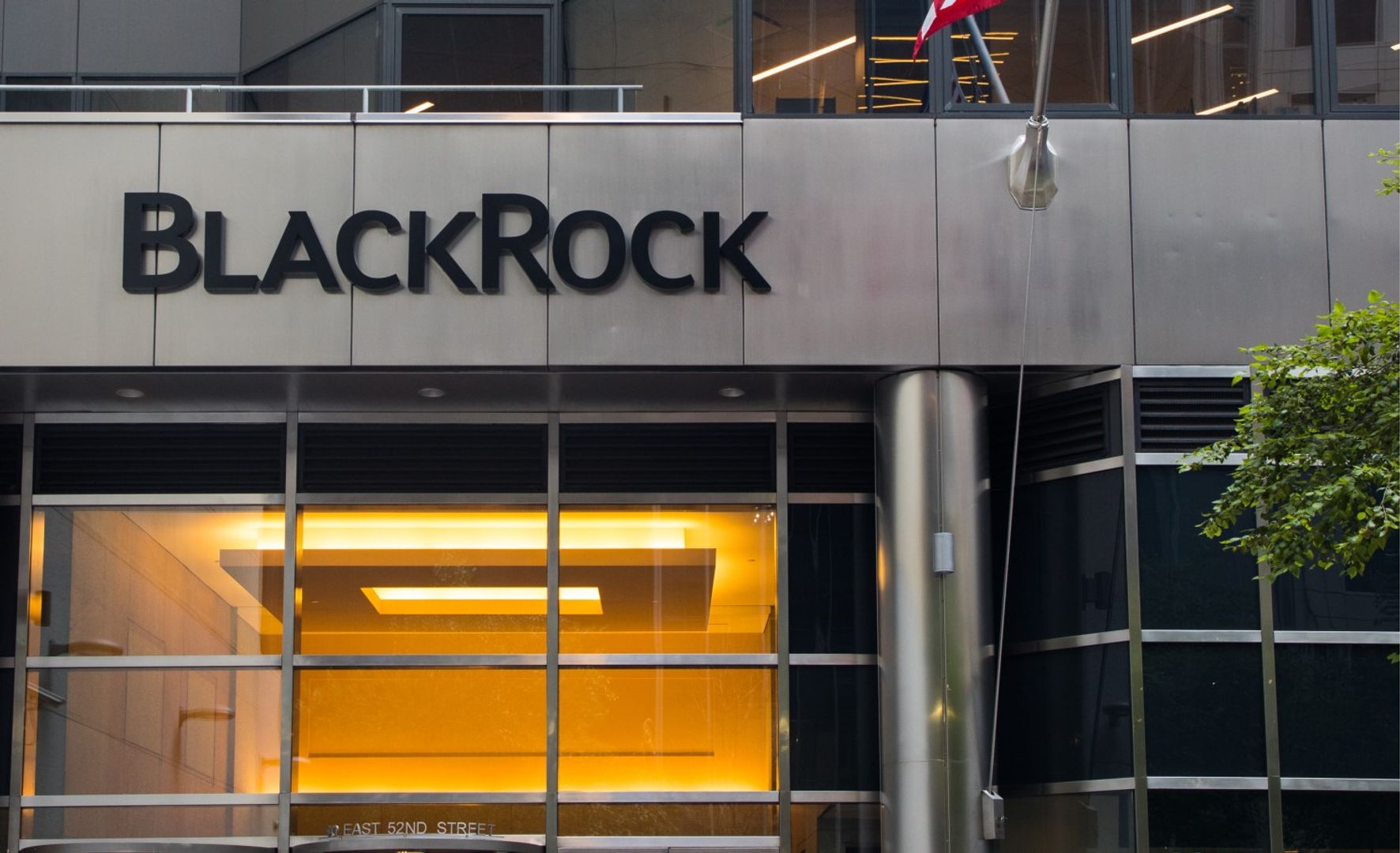
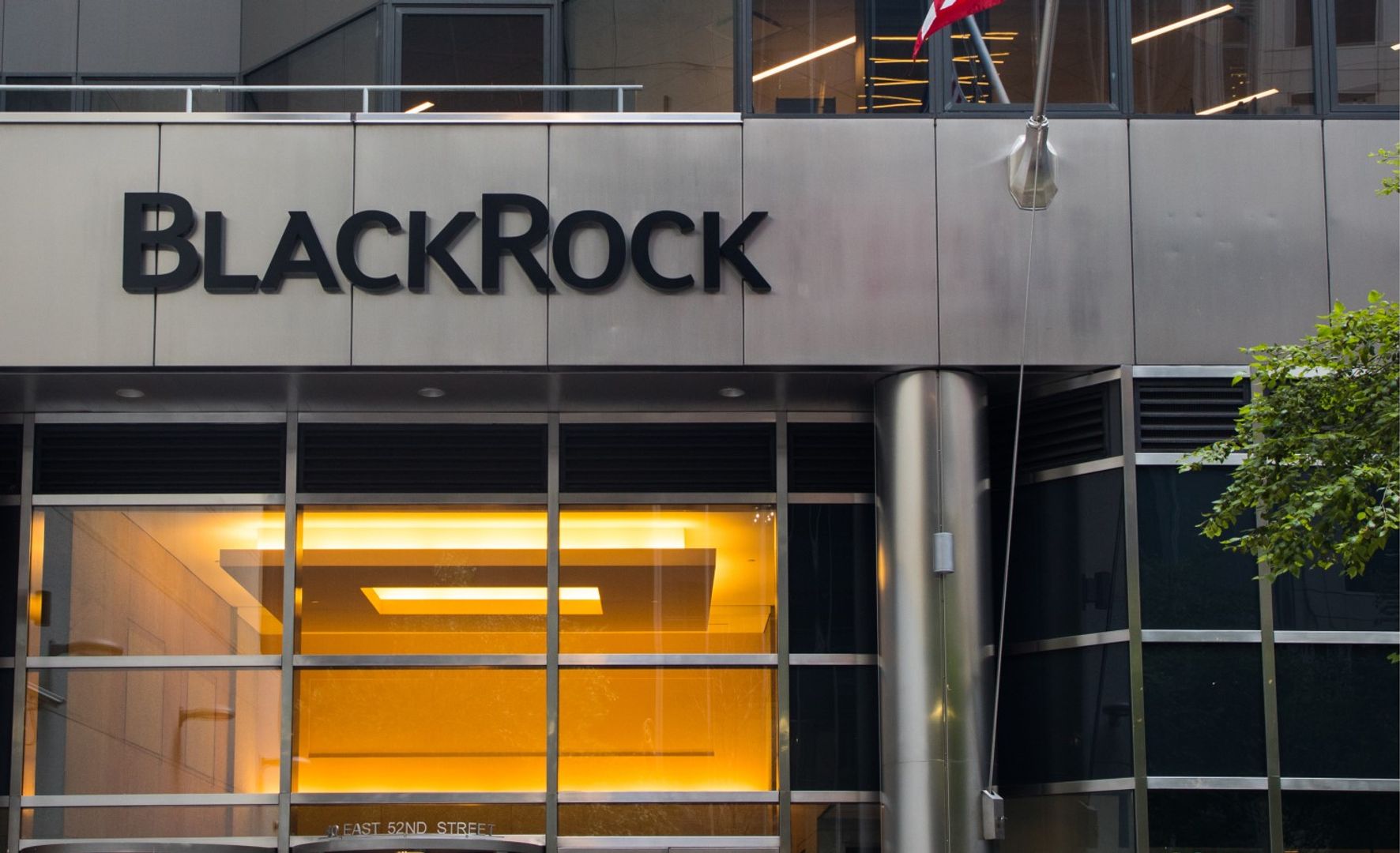
BlackRock took another step toward introducing its bitcoin income exchange-traded fund on Nasdaq, filing a share registration document that often signals an imminent debut.
The world’s largest asset manager filed the Form 8-A for the iShares Bitcoin Premium Income ETF on Thursday, usually one of the last procedural moves before an ETF goes live.
The filing “typically means launch in one week,” Eric Balchunas, an ETF analyst at Bloomberg, wrote on X, adding that he would bet the fund, ticker BITA, starts trading on June 18.
BlackRock filed an 8-A for the Bitcoin Premium Income ETF $BITA. That typically means launch in one week. So if I had to bet I’d say next Thur $BITA goes live. We’ll see tho. pic.twitter.com/jvJY8yhslh
— Eric Balchunas (@EricBalchunas) June 11, 2026
Balchunas said a day earlier that he expected the fund to debut “very soon” and noted BlackRock was racing to beat a competing Goldman Sachs product to market. Goldman’s fund is due to go live around July 1.
BlackRock’s fund will earn income by selling call options on BlackRock’s iShares Bitcoin Trust (IBIT), the largest spot bitcoin ETF, with $49 billion in net assets. Each month, it will write options on a portion of its holdings and collect the premium as income.
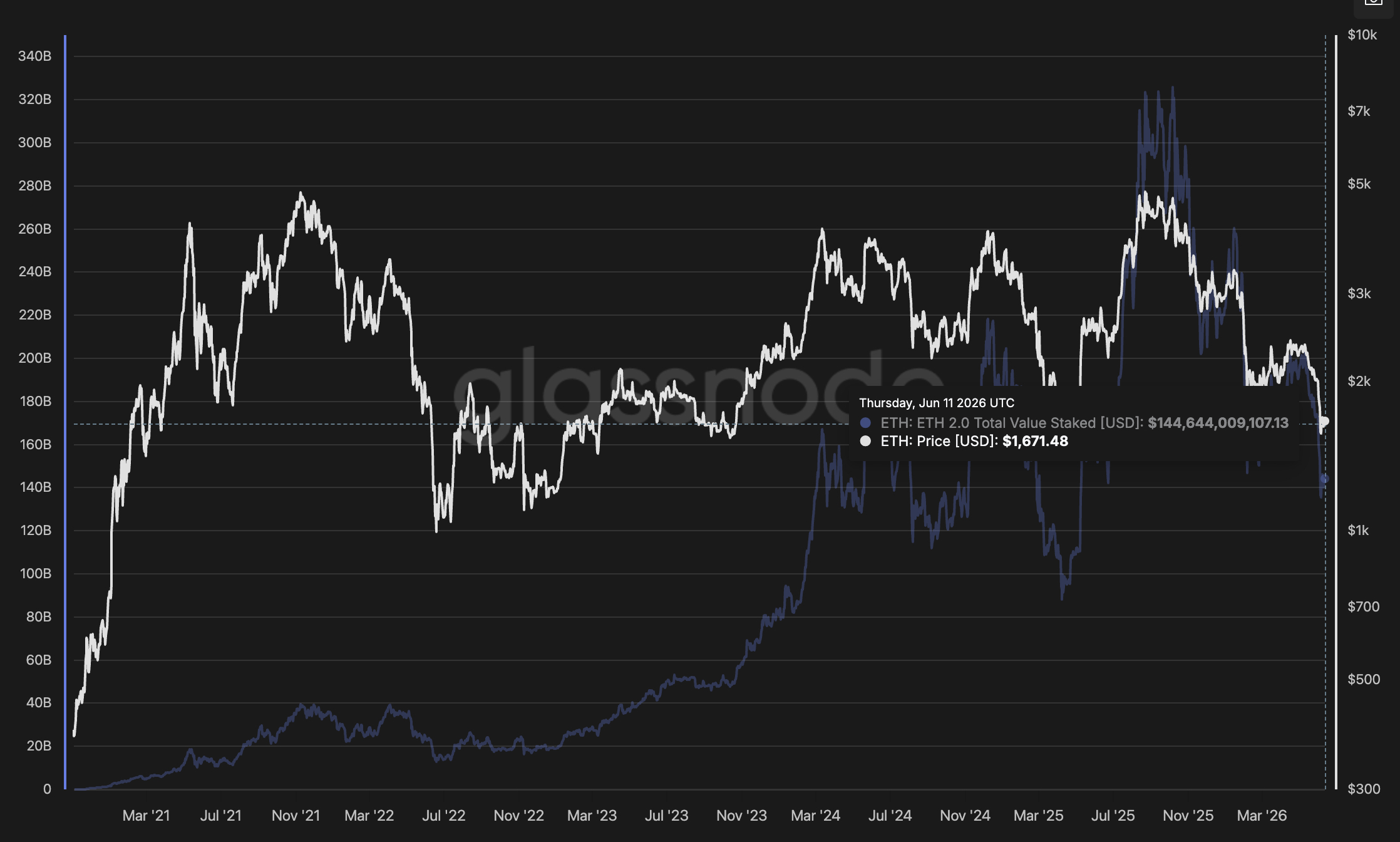
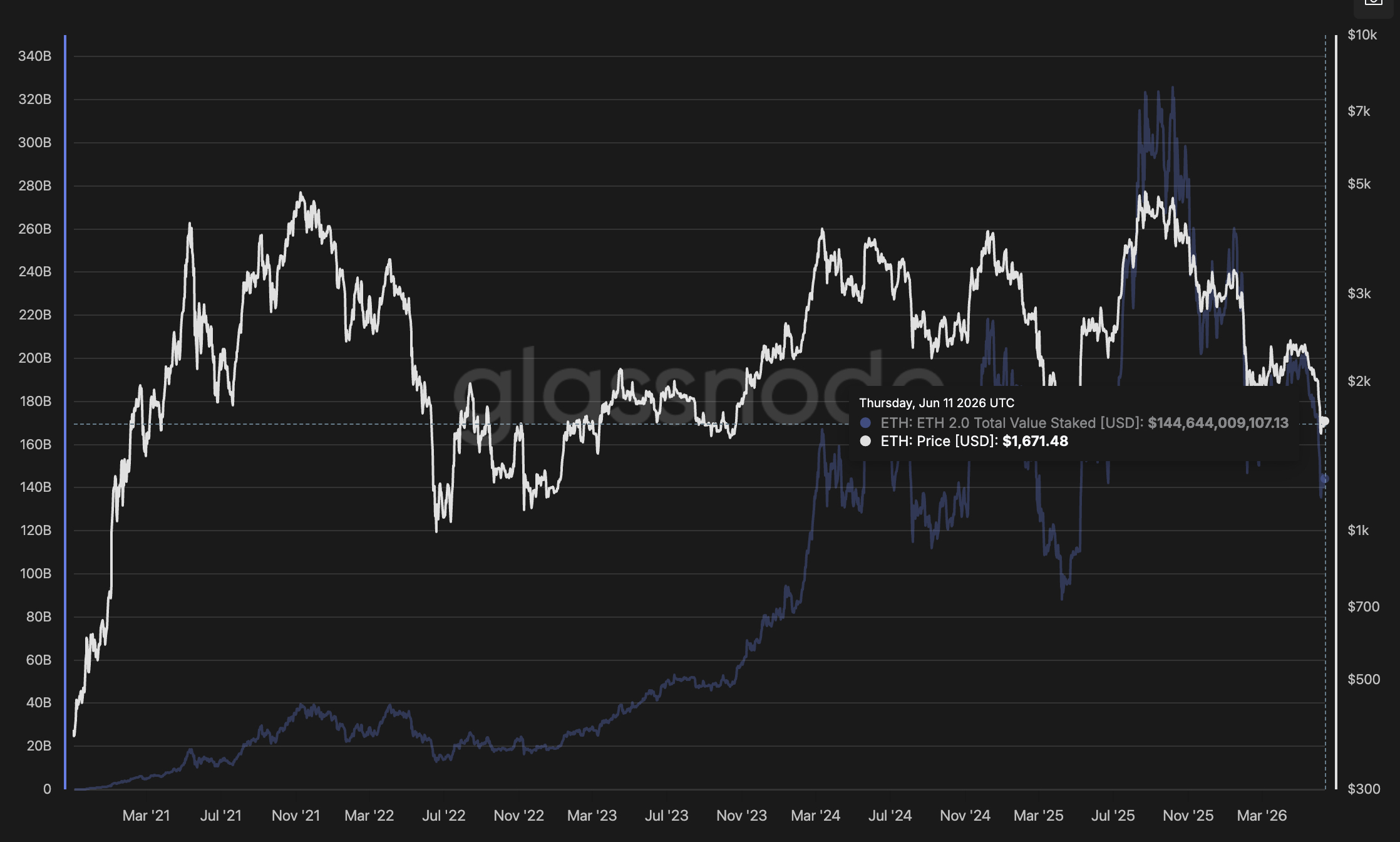
Is nobody leaving Ethereum? A record 36 million ETH is now locked in staking, roughly 29–30% of the circulating supply, and the validator exit queue that spooked markets in September 2025 has effectively returned to zero. Ethereum price prediction is bullish.
According to trackers, staked ETH is now valued at over $144 billion, compressing liquid sell-side supply on exchanges.
In September 2025, the validator exit peak of 2.67 million ETH, the largest recorded wave of validators’ intention to leave the active set; today, that same metric sits near zero. Not just the exit queue that has gone to zero, there are also 3 million ETH waiting to enter the staking protocol.
However, exit queues can spike for mundane reasons, liquidity needs, portfolio rebalancing, and don’t always translate to sustained disengagement.
Discover: The Best Crypto to Diversify Your Portfolio
Ethereum Price Prediction: Up or Down?
ETH is looking constructive, closing at $1,700, with 24-hour price action showing a 1.4% gain, as weakness turns into strength. The $1,500–$1,700 band has emerged as the primary structural support zone, with deeper floors flagged under $1,500. Initial resistance sits at $1,700, then $2,000, with the key higher-timeframe ceiling at $3,450.

Two chart patterns are competing for attention. We identify an inverse head-and-shoulders formation that targets a potential retest of $1,800. Separately, a cup-and-handle pattern is pointing toward a break of $1,700 with extension potential toward $2,400.
With longer-dated ETH price targets already circulating among analysts, the near-term question is simpler: can buyers absorb any macro-driven pressure while the staking supply squeeze tightens?
Discover: The Best Token Presales
LiquidChain Targets Early-Mover Upside as Ethereum Tests Key Levels
ETH’s structural setup looks compelling, but a 2x from here requires an enormous capital inflow. Early-stage infrastructure projects riding the same wave offer a different risk/return profile, and one presale drawing attention in the L3 space is worth examining.
LiquidChain ($LIQUID) is a Layer 3 infrastructure project positioning itself as a cross-chain liquidity layer, fusing Bitcoin, Ethereum, and Solana liquidity into a single execution environment.
The secrets of The Order are within. — LiquidChain (@getliquidchain) June 11, 2026
Are you ready to find out what they are?  ⟁https://t.co/vqvBcdSQYC pic.twitter.com/cKT8nEK5R2
The architecture is built around four pillars: a Unified Liquidity Layer, Single-Step Execution, Verifiable Settlement, and a Deploy-Once Architecture that lets developers write once and access all three ecosystems simultaneously.
The presale is currently priced at $0.01469 per $LIQUID, with $830K raised to date. The thesis is straightforward. As ETH staking tightens supply and cross-chain activity scales, infrastructure that abstracts fragmentation becomes increasingly load-bearing.
Research LiquidChain before committing capital.
The post Ethereum Price Prediction: 3 Million ETH Rushes Into Staking as Sellers Vanish appeared first on Cryptonews.
Key Highlights
- Dutch TTF natural gas futures plummeted more than 5% on Friday, reaching their lowest point in two weeks.
- President Trump announced that a peace agreement between the U.S. and Iran might be finalized this weekend.
- Planned U.S. military operations against Iran were cancelled by Trump, reducing conflict escalation concerns.
- Approximately 20% of the world’s LNG supply passes through the Strait of Hormuz, making it a critical supply route.
- Iranian officials have yet to confirm a finalized agreement, leaving markets in a state of cautious optimism.
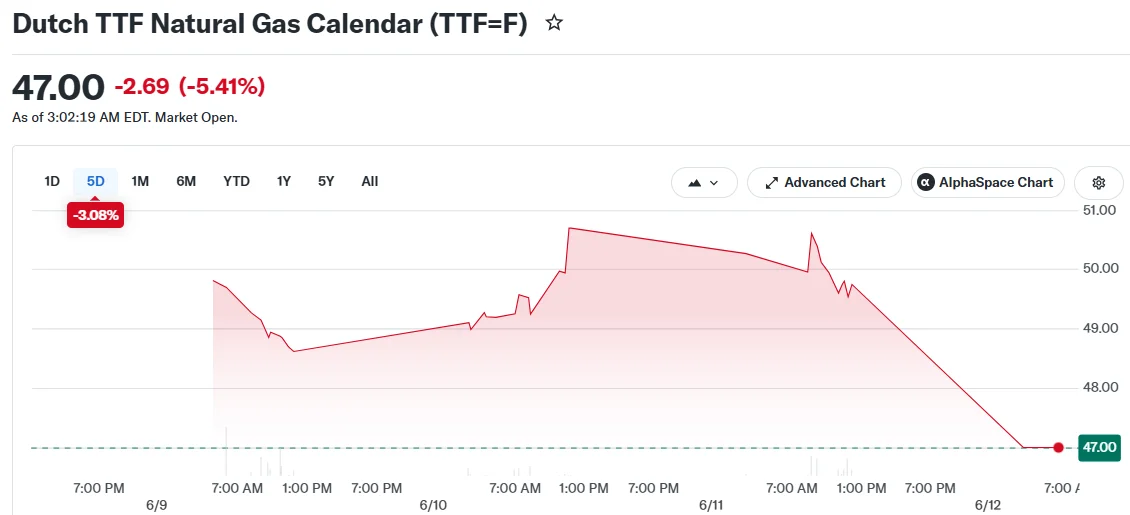
Natural gas prices across Europe experienced a significant decline on Friday following remarks from President Donald Trump suggesting a potential diplomatic resolution with Iran. The Dutch TTF natural gas benchmark contract, Europe’s primary pricing reference, tumbled more than 5% to approximately €47 per megawatt-hour, marking its lowest trading level in a fortnight.
According to Trump’s statements, a comprehensive peace agreement could potentially be executed in Europe within days. The President also revealed that he had called off scheduled U.S. military actions targeting Iran. These developments triggered a rapid selloff in energy commodities as market participants scaled back expectations of imminent supply chain disruptions.
The Strategic Importance of the Strait of Hormuz
The Strait of Hormuz has emerged as a focal point for energy market anxiety throughout recent weeks. This critical maritime chokepoint facilitates the transit of roughly 20% of global liquefied natural gas shipments. Any military confrontation or blockade in this strategic waterway could severely constrain supply flows to European nations and international buyers.
Earlier in the week, Trump had issued warnings about potentially seizing Iran’s Kharg Island and asserting control over Iranian energy infrastructure. These aggressive statements had propelled gas prices toward multi-week peaks and maintained elevated anxiety among market participants as summer approached.
European markets face heightened vulnerability given that current underground gas storage inventories are tracking below previous year levels. Any constriction in global LNG availability could have amplified price increases during the critical summer storage replenishment period.
Qatar, a leading LNG producer, relies on Strait of Hormuz transit routes for its export operations. Although Europe sources considerable gas volumes through pipeline infrastructure and Atlantic basin suppliers, it remains a competitor for spot LNG cargoes in the international marketplace.
Traders Remain Wary Despite Price Decline
Notwithstanding the substantial price correction, market participants maintain skepticism about whether a definitive agreement has been reached. Iranian representatives have not yet publicly acknowledged the existence of a completed framework agreement, though some officials indicated that primary terms have been settled.
The United Kingdom’s natural gas futures contract similarly declined approximately 2% on Friday, briefly touching one-month lows during early trading before recovering modestly by settlement.
Crude oil prices also retreated to two-month lows following the same diplomatic developments. Market analysts characterized Trump’s peace deal statements as the most substantive indication to date of genuine diplomatic progress.
The ICE Dutch TTF futures contract, serving as Europe’s benchmark gas pricing instrument, descended below the €47 threshold, briefly reaching €46.19 during intraday trading. This represents a notable retreat from levels exceeding €50 observed earlier in the trading week.
The geopolitical risk premium that had accumulated throughout weeks of escalating U.S.-Iran confrontation was rapidly being eliminated from market valuations. However, absent formal signatures on a binding agreement, traders are anticipated to maintain vigilance.
Any resumption of hostile actions or breakdown in diplomatic negotiations could swiftly reverse Friday’s price decline and propel European gas futures back toward their recent elevated levels.

Disclosure: This content is provided by a third party. Neither crypto.news nor the author of this article endorses any product mentioned on this page. Users should conduct their own research before taking any action related to the company.
The Digital Asset Market Clarity Act (CLARITY Act), establishing a permanent statutory boundary between federal agencies in regulating digital assets, was formally placed on the U.S. Senate Legislative Calendar. However, its immediate passage faces strong resistance as the bill recently stumbled over crucial hurdles regarding ethics disputes and law enforcement concerns. Prediction market odds on Polymarket for the bill passing have plummeted to 47-48% (down from over 74%), with a few session days left before the August recess to debate the bill alongside competing national security priorities.
Summary
- The SEC and CFTC’s joint token taxonomy classified digital collectibles as non securities, offering regulatory clarity for NFTs as the market shifts toward curated digital art collections.
- Museums across the U.S. are expanding efforts to preserve digital art, with the Museum of Art + Light unveiling a permanent collection that includes blockchain native and AI assisted works.
- The National Lighthouse Museum’s Statue of Liberty Art Show opened on Flag Day as part of America’s 250th anniversary celebrations, featuring works by Hunt Slonem and Selva Ozelli alongside historical imagery of Lady Liberty.
Nevertheless, the Memorandum of Understanding (MOU) issued by the SEC and CFTC and the subsequent joint interpretive release established the first formal five-part token taxonomy, explicitly classifying digital collectibles as non-securities. This provided significant regulatory clarity by confirming that NFTs are not a security. The NFT art market has transitioned away from the speculative frenzy of 2021 into a more consolidated ecosystem with curated, high-end digital art featuring themes of the 250th anniversary of our nation. On Flag Day, celebrated on June 14th, which marks our nation’s first crypto President’s 80th Birthday, many museums are showing their commitment to preserving Digital Art for Future Generations and holding USA 250 themed exhibitions.
The Museum of Art + Light (MoA+L) unveiled its permanent digital art collection, featuring more than 40 works by 15 internationally recognized digital artists. Developed in partnership with Iconic, the collection represents a significant commitment to collecting, preserving, and exhibiting digital art that reflects the breadth, innovation, and cultural significance of digital artistic practice in the 21st century by a contemporary art museum in the US.
“From the beginning, our partnership with the Museum of Art + Light has centered on the belief that digital art deserves the same level of institutional support, preservation, and public engagement as any other artistic medium,” said Chris Cummings, Founder and CEO of Iconic. “We are honored to have collaborated in helping establish a collection that not only celebrates today’s leading digital artists but also creates an important cultural resource for the future.”
Conceived as the first contemporary art museum in the world to showcase immersive, digital, and permanent collections from its inception, the MoA+L has intentionally built a collection that spans generative art, AI-assisted works, digital poetry, blockchain-native artworks, and hybrid physical-to-digital pieces to assemble a collection that captures key voices shaping contemporary digital culture.
“Building a permanent collection dedicated to digital art was never an afterthought for the Museum of Art + Light, it was foundational to our vision,” said Erin Dragotto, Executive Director of the Museum of Art + Light.
“As museums around the world continue to explore how digital art fits within their collections, we have had the unique opportunity to build a collection intentionally from the ground up. These acquisitions ensure that some of the most influential artists working with technology today will be preserved, studied, and shared with audiences for generations to come.”
The National Lighthouse Museum (NLM) on June 14th, Flag Day, the NLM is launching the Statue of Liberty Art Show, which runs until January 2nd, 2027. Curated by Stevie Peters, the art show showcases a historical photo of Lady Liberty when she first arrived at NY Harbor — that is on loan from Victoria Westhead — and oil paintings by award-winning artists Hunt Slonem and Selva Ozelli.
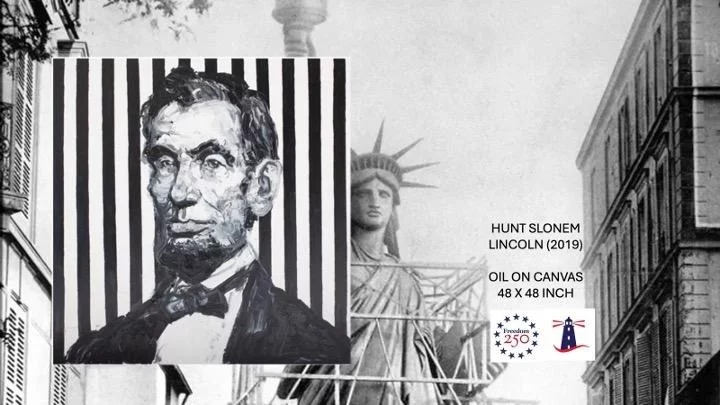
Hunt Slonem joins the Statue of Liberty Art show with his signature “Bunny, Bird and Butterfly” series, which includes a US flag representing abundance, hope, and fertility; his Abraham Lincoln series depicting the timeless icon of American history as a “great soul,” a symbol of law and personal liberty; and his Chandelier series, which reflects his fascination with light and historic grandeur.
“On Marilyn [Monroe]’s desk, she had a picture of her mother and a picture of Lincoln. And she said, ‘I really didn’t know who my father was, so it might as well be Abraham Lincoln.’ I work with diviners and mystics, and one of them started channeling Lincoln in my house, [Lincoln] guided me to paint certain things, like my doves: he wanted me to paint them as a symbol of freedom.”
Selva Ozelli, joins the Statue of Liberty Art Show with her Ocean Lovers-Angel Fish Flag CCL a 20 ft by 13 ft US Flag from her Flag CCL series that represents the seven rays on the Statue of Liberty’s crown, depicting our world’s seven continents, seven seas, and its angel fish inhabitants, which are often regarded as a symbol of hope, peace, and spiritual guidance.
“I am honored to join the Statue of Liberty Art Show along with a historical photo of Lady Liberty and my favorite artist Hunt Slonem with my Ocean Lovers – Angel Fish Flag CCL painting.
For one hundred and forty years, The Statue of Liberty in New York Harbor and hundreds of replicas and models of “Lady Liberty” located around the world ranging from small, historical models in Paris to full-sized or scaled-down copies in cities like Tokyo, Rio de Janeiro, and Las Vegas have become a very important symbol of the global spread of liberty, freedom, democracy, law, hope and inspiration to serve every creature of our world.”

“Whether people have seen Lady Liberty in real life in different cities or only in photographs, whether the people are American or from other nationalities or cultures, the Statue of Liberty, which first served as a lighthouse standing tall in NY Harbor across from our museum has come to symbolize something important for people in their own lives at a very personal level – she represents a certain level of security, constancy, freedom, democracy, the rule of law, hope, and the abolition of slavery serving as a universal beacon of light, liberty and inspiration. We invite everyone who wants to see the Statue of Liberty Art Show or Lady Liberty herself and the largest waterfront spectacle, SAIL 4th 250…Where Light Meets Liberty! that will take place from July 3-8, 2026, in the Port of New York and New Jersey, with the main spectacle, the International Parade of Tall Ships, scheduled for July 4, 2026.
These events are part of America’s Semiquincentennial (250th) anniversary celebration and is expected to be the largest international maritime gathering in U.S. history, with over 30 tall ships from around the world, sailing up the Hudson River. Our museum, which is hosting a July 4 Watch Party Breakfast, will serve as a key viewing spot. For further details or to be an event sponsor, contact www.lighthousemuseum.org,” explained Linda Dianto, Executive Director of NLM.
About the Author:
Selva Ozelli Esq, CPA, is an international digital asset legal expert and author of Sustainably Investing in Digital Assets Globally. Her writings are translated into 45 languages and republished in over 200 global publications. She is recognized as an expert media/TV commentator on global digital asset regulation, tax, and technology matters.
Disclosure: This content is provided by a third party. Neither crypto.news nor the author of this article endorses any product mentioned on this page. Users should conduct their own research before taking any action related to the company.


Metaplanet (3350) acquired Siiibo Securities, a Tokyo-based Type I Financial Instruments Business Operator, in a deal valued at approximately 2.1 billion yen ($13.1 million), the Japanese bitcoin treasury company announced on Friday.
Following the completion of the transaction, Siiibo Securities will become a wholly owned subsidiary, renamed Metaplanet Securities.
The acquisition marks the first major step in Metaplanet’s “Project Nova,” a long-term strategy aimed at building a bitcoin-focused financial ecosystem. The company, which holds 40,177 BTC ($2.6 billion) as of May 31, views bitcoin not only as a treasury asset but also as the foundation for a new generation of financial products and services.
Siiibo Securities specializes in corporate bond issuance and distribution through an online platform and has supported more than 100 bond offerings for over 40 companies. Metaplanet believes the firm’s regulatory licenses, customer base, and securities expertise complement its ambitions in digital assets and tokenized finance.
The companies expect synergies including the development of bitcoin-linked investment products, expanded securities distribution capabilities, and the creation of tokenized financial instruments. Metaplanet also plans to leverage Siiibo’s platform to provide new yield-generating opportunities for investors and strengthen its presence in Japan’s evolving digital asset market.
Binance will support the rebranding of Toncoin to Gram, moving the exchange’s TON markets to the GRAM ticker through a staged process ending in early July.
Summary
- Binance will swap TON to GRAM at 1:1 while removing old spot pairs in stages.
- TON futures, margin, loans, earn, convert and pay services face separate June removal deadlines too.
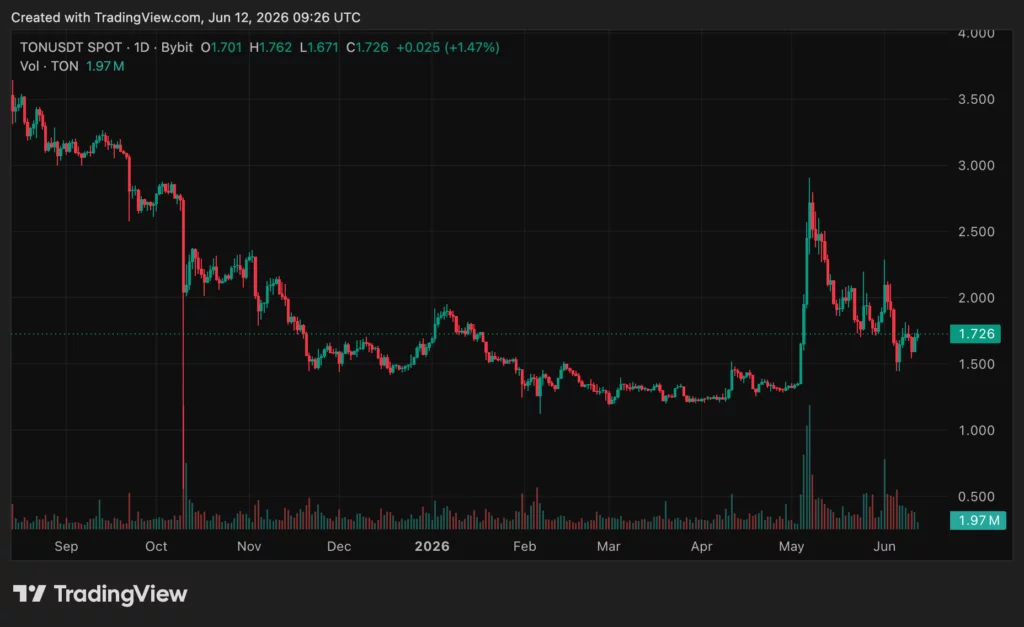
- Toncoin traded near $1.71 as the Gram rebrand kept Telegram-linked market attention active this week.
Binance said it will support the Toncoin rebrand to Gram and handle the technical process for affected users. The exchange will swap TON tokens to GRAM at a ratio of 1 TON to 1 GRAM.
“Binance will handle all technical requirements for users who are involved in this event,” Binance said in its announcement.
The change means users holding TON on Binance do not need to manually complete the swap. The exchange will move eligible balances to the new GRAM ticker after the rebrand process is completed.
Binance old TON pairs will close
Binance will remove all TON spot trading pairs at 03:00 UTC on June 30. The affected pairs include TON/FDUSD, TON/IDR, TON/TRY, TON/U, TON/USD1, TON/USDC, and TON/USDT.
All pending TON spot orders will be canceled when trading stops. Binance will then open GRAM/FDUSD, GRAM/IDR, GRAM/TRY, GRAM/U, GRAM/USD1, GRAM/USDC, and GRAM/USDT at 08:00 UTC on July 2.
Deposits and withdrawals of TON will be suspended at 03:30 UTC on June 30. GRAM deposits and withdrawals will open at 07:00 UTC on July 2, one hour before spot trading begins.
After the process ends, Binance said it will no longer support deposits and withdrawals of TON tokens. Users who move TON to Binance close to the deadline must leave enough time for deposits to process.
Futures and other products face deadlines
Binance Futures will close all TONUSDT USD-M perpetual positions and settle the contract at 09:00 UTC on June 23. Users will not be able to open new orders from 08:30 UTC on that date.
The exchange also warned futures users to monitor open positions during the final hour. Binance said reduced liquidity and market volatility may affect settlement conditions before the contract is removed.
Margin, loans, Simple Earn, Dual Investment, Pay, Gift Card, Convert, and Buy & Sell Crypto services will also face separate deadlines. Binance Margin will remove TON from cross and isolated margin on June 23.
TON Simple Earn products will stop accepting support from June 26. Remaining positions will be redeemed to users’ spot accounts, then resubscribed as GRAM products after the swap where applicable.
Gram rebrand follows Telegram push
The rebrand returns Toncoin to the Gram name used in Telegram’s original blockchain plan. TON will remain the name of the network, while GRAM will become the token ticker on Binance.
As previously reported by crypto.news, Pavel Durov said Gram was the original name of the token in TON’s first white paper. He also said the rebrand does not require a token swap at the network level.
As reported earlier this month, Toncoin rallied earlier in June after the Gram plan revived trader interest. TON traded near $1.71 on June 12, with a 24-hour gain of about 4%, according to crypto.news data.
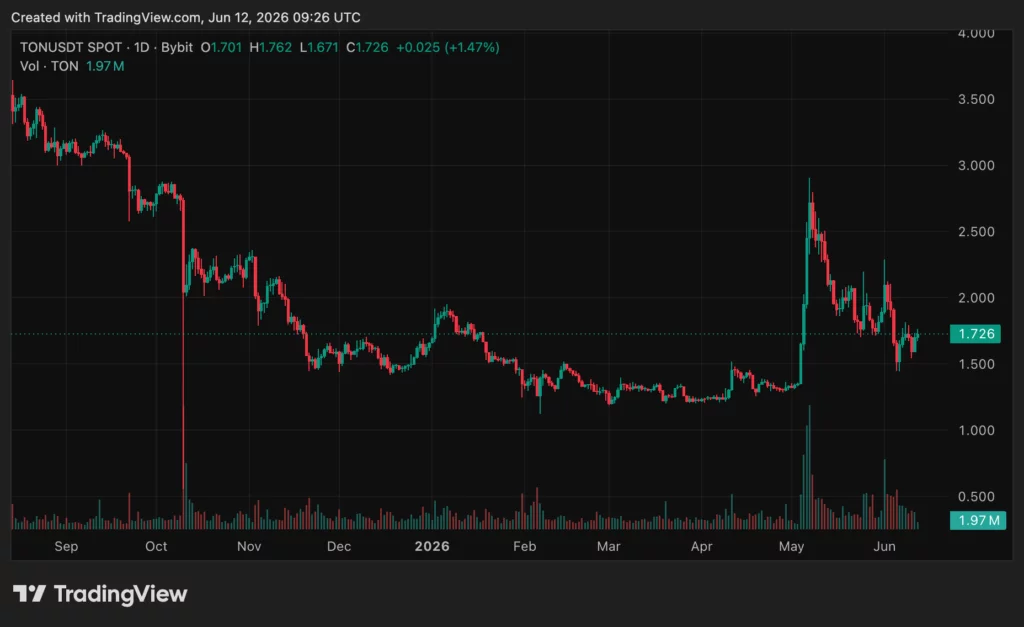
The Binance timeline now gives holders clear exchange deadlines. Spot holders can wait for the automatic swap, while futures, margin, loan, and product users may need to close or adjust positions before the listed dates.

Crypto scammers have set up at least three World Cup-related fraud operations linked to four cryptocurrency addresses as millions of fans prepare to attend the 2026 FIFA World Cup, according to blockchain intelligence firm TRM Labs.
Summary
- TRM Labs identified fake World Cup ticketing sites and a fixed match betting scheme linked to four cryptocurrency addresses.
- U.S. authorities and FIFA have warned fans against buying tickets through unofficial websites as phishing and fraud campaigns increase ahead of the tournament.
- The scams emerged as the 2026 FIFA World Cup opened across the U.S., Canada and Mexico, with about 6.5 million attendees expected.
TRM Labs said it identified two fake ticketing websites and a fixed-match betting scheme that were already targeting football fans as the tournament opened on Thursday across the United States, Canada and Mexico.
FIFA expects roughly 6.5 million attendees during the competition and projects a global economic impact of about $40.9 billion, creating a large market for ticket purchases, travel bookings and betting activity.
“Criminals always look to exploit major events and cultural moments and they don’t wait until kickoff,” Ari Redbord, global head of policy at TRM Labs, told Cointelegraph. Redbord said fraud operators typically establish their infrastructure weeks before a major event and expand their activity once public attention reaches its highest point.
According to Redbord, cryptocurrency transactions also provide investigators and compliance teams with opportunities to trace suspicious activity before losses spread further.
Authorities have already warned of World Cup scams
Weeks before the tournament began, U.S. authorities had already raised concerns about World Cup-themed fraud campaigns.
In a July 4 warning, the Los Angeles County Sheriff’s Department said criminals were promoting fake World Cup tickets, hospitality packages, merchandise offers, streaming subscriptions and sports betting deals through websites and social media accounts designed to resemble legitimate FIFA services.
Law enforcement officials noted that requests for payment through cryptocurrency, wire transfers, gift cards and other hard-to-recover methods often serve as warning signs of fraud. Fans were urged to purchase tickets only through FIFA’s official channels and avoid links distributed through social media posts, text messages and messaging applications.
Security concerns have extended beyond ticket sales. The Sheriff’s Department said attackers were creating websites that closely imitated official FIFA pages in an attempt to collect payment details, login credentials and other personal information.
Separately, the FBI also warned in May that threat actors were spoofing FIFA-related websites ahead of the tournament. According to the agency, those operations were designed to gather personal data, sell counterfeit tickets and carry out additional malicious activity.
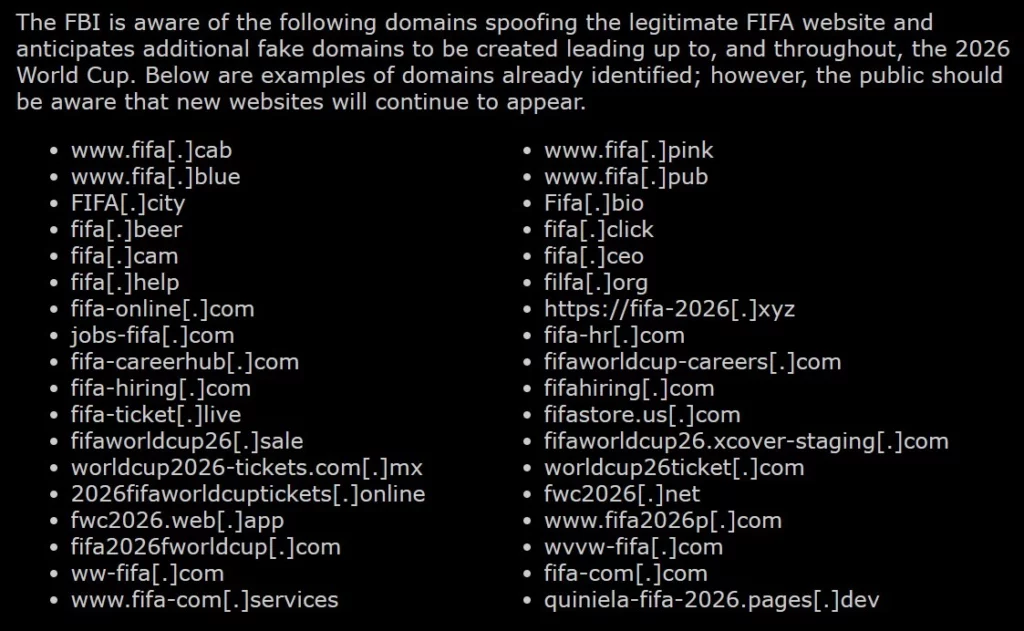
Fake domains impersonating FIFA website. Source: FBI
FIFA has also cautioned supporters against purchasing tickets through unofficial sources. The organization said tickets obtained outside its official platform could be invalidated or cancelled without notice.
Ticket demand has become a focal point as the tournament gets underway.
The Council on Foreign Relations reported that several opening matches in the United States and Canada had not sold out on FIFA’s platform as of Monday. Meanwhile, the Financial Times reported that official resale portals still listed about 176,000 unsold group-stage tickets earlier this week.
While legitimate tickets remain available through official channels, TRM Labs’ findings suggest fraud operators are attempting to capitalize on fan demand through counterfeit sales and betting-related schemes.
The latest warning arrives during a year of rising crypto-related fraud. According to blockchain analytics firm Chainalysis, cryptocurrency theft has already reached $3.4 billion in 2026.

Ex-Millwall and Wolves boss Kenny Jackett dies aged 64 | Football

City centre warehouse conversion deal for MCR Property Group
Quantum Computing Insiders Cash Out: Infleqtion and D-Wave (QBTS) Executives Sell $30M in Stock


-

 Fashion7 days ago
Weekend Open Thread: Evereve – Corporette.com
-
 Entertainment5 days ago
The Best Mystery Series of All Time Is Surging on Streaming 30 Years After It Ended
-

 NewsBeat4 days ago
Alexander Zverev wins the French Open to finally earn a 1st Grand Slam title
-
 Crypto World7 days ago
Jensen Huang Approves Samsung, SK Hynix, and Micron for NVIDIA (NVDA) HBM4 Memory Supply
-

 Crypto World4 days ago
Anatomy of the June crypto crash: Fed, Iran, Saylor
-

 Tech6 days ago
Suspicious Polyfill login prompts pop up on Toshiba, Muji websites
-
Crypto World6 days ago
Senator Cynthia Lummis Calls CLARITY Act the Most Consequential Financial Legislation of This Generation
-

 Tech5 days ago
Microsoft unveils seven homegrown AI models in new bid for ‘long term self-sufficiency’
-
 NewsBeat5 days ago
Alexander Zverev conquers demons and outlasts Flavio Cobolli to win French Open for first major title
-

 Tech6 days ago
Von der Leyen’s AI envoy pick draws conflict-of-interest fire
-

 Business4 days ago
High Stakes for Wembanyama as New York Pushes for 3-0 Lead
-

 Tech6 days ago
Hackers now exploit SolarWinds Serv-U flaw to crash servers
-
 Business5 days ago
The Pain Points Taking a Fragile Tech Rally Down a Notch
-

 Tech7 days ago
Meta steals a tactic from Tesla and builds data centers in tents
-
 Crypto World4 days ago
Eli Lilly (LLY) Stock Surges 4% Following Breakthrough Sleep Apnea Trial Results
-
 Tech4 days ago
Notion restores access to Anthropic after service disruption
-

 Crypto World5 days ago
Trump’s AI Ownership Plan Could Benefit Anthropic at OpenAI’s Expense
-
 Sports3 days ago
Bangladesh beat Australia after 20 years in ODIs, register only their second win over six-time world champions | Cricket News
-
 Business5 days ago
The investment to transform historic St Helen’s ground in Swansea
-

 Tech7 days ago
RCS Messages Between iPhone and Android Get End-to-End Encryption With iOS 26.5
You must be logged in to post a comment Login