

Crypto World
Cardano Active Addresses Surge as ADA Hits Lowest Price Since 2020


TLDR:
- Cardano active addresses have spiked for the second time this month as ADA trades near 2020 lows.
- A Cardano-based wallet protocol was exploited for nearly 129 million ADA, worth roughly $20 million.
- Charles Hoskinson’s warnings and governance disputes have fueled FUD while boosting social dominance.
- Analysts flag a TD Sequential buy signal but warn a bull trap may form near the $0.160–$0.176 range.
Cardano active addresses have spiked sharply even as ADA trades near its lowest price since December 2020. On-chain activity is rising for the second time this month alongside social dominance.
The combination of extreme price pressure and growing community debate has pulled Cardano back into the spotlight. Traders and analysts are now watching closely for what comes next.
On-Chain Activity Rises Amid Price Decline
Santiment data shows Cardano active addresses and social dominance have both surged simultaneously. This pattern has appeared twice before this month, each time preceding a mild relief rally.
The current setup mirrors those earlier instances closely, according to the charting data shared by Santiment Intelligence on X.
Much of the attention stems from statements made by Charles Hoskinson, Cardano’s founder. He recently warned that more Cardano-based projects could fail in the current environment. He also announced a step back from public involvement, which added to broader community uncertainty.
Governance disputes over treasury funding have further divided the Cardano ecosystem. These disagreements have fueled bearish sentiment across social platforms. However, they have also driven increased conversation and engagement around ADA at a critical price level.
Despite the FUD, the spike in daily active addresses points to heightened user engagement. Historically, such setups have preceded short-term price recoveries. Santiment noted that the two previous occurrences of this pattern resulted in at least a mild upward move.
Analysts Flag Bull Trap Risk After Security Breach
A security breach affecting a Cardano-based wallet protocol has added further pressure on ADA. The exploit drained nearly 129 million ADA, valued at roughly $20 million at current prices. This incident came at a particularly vulnerable moment for the broader Cardano ecosystem.
Despite that, Ali Charts flagged a TD Sequential buy signal on ADA’s daily chart. This technical signal typically points toward a near-term price bounce. However, the analyst cautioned that the wider market structure does not support a sustained recovery at this time.
Any relief rally is expected to meet resistance between $0.160 and $0.176. Ali Charts noted that a failure to break above that range could trap buyers and push ADA toward new lows. The $0.176 level is the key level traders should watch for signs of rejection.
The convergence of a buy signal with ongoing negative headlines creates a mixed picture for ADA. Traders are advised to proceed with caution in this environment.
The combination of a security breach, governance tension, and Hoskinson’s withdrawal creates significant headwinds for any recovery attempt.


Coinbase-backed Base returned online after a consensus issue stopped block production for almost two hours on Thursday.
Summary
- Base halted block production after an invalid block disrupted consensus and stopped new block creation.
- The outage came hours before Beryl, a network upgrade aimed at faster withdrawals.
- Jesse Pollak said user funds stayed safe, while calling the network halt unacceptable for Base.
The Ethereum layer-2 network said blocks were again being produced normally after engineers worked through the incident.
Base first reported unhealthy block production on its official status page at 4:03 p.m. UTC. The team later said it had isolated a consensus problem that caused an invalid block to be sequenced. That event stopped new blocks from being created after block 47,806,542.
In a later X update, Base said, “blocks are being produced normally” and that it had verified broad recovery across the ecosystem. The team added that it would continue to investigate the root cause and share a full post-mortem.
The outage marked a rare halt for one of the busiest Ethereum scaling networks. Base supports trading, payments, apps and token transfers for users and builders. A block production pause stops new on-chain activity until the network resumes.
Pollak says funds were safe
Base creator Jesse Pollak said user funds were safe during the outage. In a post on X, he said, “funds are safe,” but added that “a halt is not okay” for a platform trying to support global finance.
The statement aimed to calm users while also acknowledging the seriousness of the halt. Network downtime can affect apps, wallets, exchanges and bridge services that depend on fresh blocks. It can also delay transactions that users expected to settle quickly.
Base said ecosystem node operators needed to restart nodes to recover syncing. The status page also said internal nodes had resumed syncing correctly. That step helped infrastructure providers return to normal after sequencing resumed.
The team did not give a final technical explanation beyond the invalid block and consensus problem. A fuller report is expected to explain how the invalid block entered sequencing, why the chain stopped, and what checks will change.
Beryl upgrade adds timing pressure
The outage happened just before Base completed its Beryl upgrade. The upgrade was scheduled around the same day and later went live after the network recovered. Beryl aims to cut some withdrawal delays and support a new B20 token standard for assets such as stablecoins and real-world asset tokens.
Meanwhile, the Beryl upgrade reduces the standard Base-to-Ethereum withdrawal delay from seven days to five days. It also introduces a native token standard built into Base’s node software rather than only through smart contracts.
As previously reported, Base suffered a 33-minute outage in August 2025 after a sequencer handoff problem stopped block production. That earlier incident also led to infrastructure changes and more testing.
The new halt may renew questions about sequencer design and uptime. Base plays a growing role in Coinbase’s wider product plans. Coinbase has been expanding beyond crypto trading into stocks, lending, payments and AI-linked tools.
Reliability remains key for institutions
Base has also become important for institutional blockchain use. In a previous article, crypto.news discussed JPMorgan launching JPM Coin on Base for faster institutional payments and 24/7 settlement. That kind of use requires strong uptime and clear recovery steps when problems appear.
Base is not the only major network to face downtime this year. Previously, crypto.news explored Sui’s second network stall in May, when block production stopped and the SUI token fell. The Base incident shows that even large networks can face edge-case failures.
For now, Base says block production has recovered. The next test will be the post-mortem. Users and builders will look for a clear cause, a fix, and steps that reduce the chance of another halt.
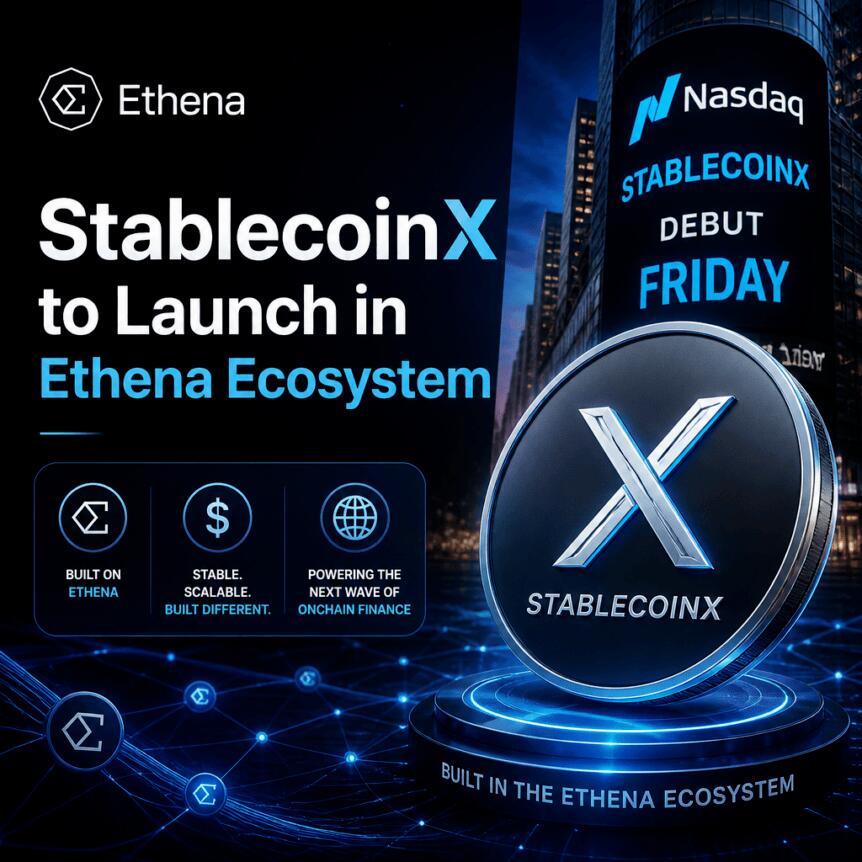
StablecoinX has completed its merger with TLGY Acquisition Corp, a publicly traded SPAC, positioning the stablecoin infrastructure firm to begin trading on Nasdaq on Friday. The company will list under the ticker symbol USDE, according to a statement released Thursday.
The debut marks a major milestone for a business focused on building stablecoin infrastructure for the Ethena ecosystem, including decentralized verifier nodes and supporting software layers. The move comes as the broader crypto market struggles, despite ongoing interest in “digital dollars” as settlement rails for mainstream finance.
Key takeaways
- StablecoinX is set to start Nasdaq trading under the ticker USDE following its merger with TLGY Acquisition Corp.
- The company is branded as an infrastructure provider for Ethena, rather than a direct issuer competitor to dollar-backed stablecoin majors.
- USDe’s $1 peg relies on a derivatives-based, delta-neutral strategy—an approach that can face stress when futures funding rates turn negative.
- USDe supply and market value have declined sharply from its October peak, underscoring a tougher environment for yield-linked stablecoins.
- StablecoinX holds a large ENA treasury position, and the ENA price has fallen dramatically from its April 2024 high—factors investors may want to monitor closely.
Nasdaq listing tied to Ethena infrastructure
StablecoinX describes itself as the first publicly listed stablecoin infrastructure company aimed at supporting the Ethena ecosystem. Its core offerings include decentralized verifier nodes (DVNs)—a function designed to serve as a cross-chain message verifier for Ethena—and a software and distribution set of products.
According to the Thursday statement, the firm will begin trading Friday after completing the business combination. CEO and Chairman Edward Chen framed the rationale around Ethena’s growing role in “the next generation of digital dollars,” signaling that StablecoinX’s market thesis is tied to Ethena’s continued development rather than to broad stablecoin market share alone.
Why USDe’s design matters: synthetic peg and derivatives risk
At the center of StablecoinX’s story is Ethena’s USDe, a yield-bearing, synthetic dollar-pegged stablecoin. Unlike USDt (USDT) or USDC (USDC), which are backed by actual dollars, USDe is intended to maintain its $1 peg through a derivatives strategy.
The system uses crypto collateral in Bitcoin and Ether, paired with short futures positions on the same assets. In normal market conditions, long and short exposure can offset price swings, helping stabilize USDe’s value at approximately $1.
However, the strategy is not “set and forget.” The model is described as delta-neutral in regular trading environments, but it can be vulnerable during periods when futures funding rates go negative. That nuance is important for investors who may view synthetic and yield-linked stablecoins as fundamentally different from fully fiat-backed designs.
USDe shrinking from its peak while stablecoin demand continues
Even with stablecoins generally expanding over recent years, the input data points to a different trend for USDe itself. The article reports that USDe market capitalization has declined by 70% since its October peak, reaching roughly $4.5 billion and placing it sixth among stablecoins. The text also notes that Ethena’s USDe represents only about 1.4% market share—well behind competitors such as Tether and Circle.
The supply trend highlights a key tension in the current stablecoin landscape: demand for dollar-like tokens may be resilient, but the market appetite for specific yield mechanics can fluctuate with broader crypto conditions and market structure (including derivatives funding).
StablecoinX’s treasury exposure and recent capital plans
StablecoinX’s financial positioning is closely tied to Ethena’s native token ENA. The company’s treasury reportedly holds about 3 billion ENA, or roughly 20% of total supply, valued at approximately $275 million based on the information provided.
StablecoinX also announced a $360 million capital raise to purchase ENA on Sunday, as referenced in the article.
But the same source notes that ENA is currently trading at $0.08, down 94% from its April 2024 all-time high. With such a sharp decline, investors may want to consider whether the planned ENA purchases will strengthen treasury alignment with Ethena—or whether valuation compression and market risk remain material.
Infrastructure thesis in a tough crypto market
The Nasdaq move lands during a difficult stretch for crypto and crypto-related capital raising. The article states that crypto SPACs and crypto treasuries have had a challenging year as the broader market has fallen, with $2.3 trillion leaving the space since October and crypto dropping out of favor among investors.
Before the merger, TLGY reportedly fell 6.93% on Thursday in OTC trading, ending at $9.40, according to Google Finance data cited in the article. That backdrop adds context to the risk-reward calculation for investors evaluating StablecoinX as a newly public stablecoin infrastructure platform.
Looking ahead, the main questions for readers are whether USDe’s derivatives-based peg can remain resilient when market conditions shift—especially around futures funding dynamics—and how StablecoinX’s ENA treasury strategy performs as both crypto prices and stablecoin usage evolve.


Bitcoin (BTC) has bounced from overnight lows amid a renewed slide in Asian equity markets.
The leading cryptocurrency by market value traded at around $59,800 as of this writing, up 2.7% from the low of $58,206 hit Thursday, according to CoinDesk data. Still, prices are down over 5% this week and nearly 20% for the month.
“Bitcoin has pulled back into the $50–60K zone, and if history is any guide, this is where buyers step in,” Gabe Selby, head of research at CF Benchmarks, said.
Selby explained that this zone was first established as support in mid-2024, when prices consolidated in this range following the U.S. spot ETF launch rally, and it’s held through everything thrown at it since: the yen carry unwind, the election cycle, and every other high-time-frame retest.
Meanwhile, Asian stocks are under pressure, with South Korea’s Kospi index down 8% and Japan’s Nikkei losing 3%. The losses follow overnight risk aversion on Wall Street where shares in Apple and other Mag7 stocks cratered after announcing price hikes for laptops, tablets and other products citing rising costs.
Crypto World
Alphabet (GOOGL) Stock Slides as Google Finance Launches Major Overhaul With AI Features

Key Takeaways
- Google Finance has completed its beta phase and is now available worldwide following initial testing that started in August 2025.
- The platform debuts a standalone Android application featuring real-time market information, customizable watchlists, breaking financial news, and AI-driven explanations for stock price movements.
- Investors can now aggregate their entire investment portfolio into one unified dashboard through the web interface.
- A new AI-powered research assistant enables users to ask portfolio-related questions using everyday language.
- The iOS application will arrive later in 2026, with mobile versions of portfolio and automated task features rolling out progressively.
At the time of Thursday’s announcement, GOOG shares were down 1.21% to $340.85, while GOOGL declined 1.20% to $341.15.
Google Finance has officially graduated from beta status, bringing with it a substantial suite of enhancements beyond simple cosmetic updates.
The revamped platform unveiled its standalone Android application on Thursday, accompanied by numerous new capabilities for desktop users — all accessible globally from launch day.
The Android application provides users with live market information, personalized watchlists, continuous financial news updates, and an AI-powered feature dubbed “Key Moments” that breaks down the reasons behind specific stock movements in real time.
This represents a direct challenge to established competitors like Yahoo Finance and trading platforms such as Robinhood, positioning Google directly within an increasingly competitive but high-demand market segment.
The company plans to release an iOS version before the end of this year.
Comprehensive Portfolio Management Arrives on the Web
The standout addition to the web platform is comprehensive portfolio management. Investors can now consolidate all their investment holdings in a centralized location, complete with performance metrics and detailed asset allocation visualizations in one streamlined dashboard.
Current Google Finance portfolio data will automatically transfer to the new system. Users can create new portfolios by importing CSV files, PDF documents, or screenshots — or alternatively by verbally describing their investments to the AI assistant.
After configuration, the built-in AI research assistant allows investors to pose questions such as “which market sectors am I lacking exposure in?” or “what impact would increasing my bond allocation have on my portfolio’s long-term performance?”
This represents a significant advancement beyond the rudimentary watchlist capabilities that most users previously relied upon.
Automated AI Briefings and Scheduled Tasks
Google Finance has also introduced an automated task system that operates continuously to provide scheduled market intelligence briefings.
Users configure these tasks using conversational language — such as “deliver a daily pre-market summary focused on technology stocks.” The system then compiles the requested information and sends the digest through the Google app or web interface according to the user’s specified timing preferences.
While seemingly modest, this feature offers practical value for investors seeking curated market intelligence without actively searching for information.
The web-based versions of these portfolio and automated task capabilities are currently available. Mobile applications will receive these features within the next several months, according to Google’s announcement.
Google initially launched testing of the redesigned AI-powered Finance platform in the United States during August 2025, subsequently expanding access to over 100 countries in April 2026 with localized language options.
Thursday’s announcement signifies the conclusion of the testing phase and represents the complete worldwide deployment of the enhanced platform.
TLDR:
- MemeCore $M token dropped 75% in one day, falling from $2.92 to $0.51 with no hack or exploit.
- Arkham data showed zero transfers above $50,000 on its native chain for over two weeks prior.
- Over 90% of $M supply was held by insiders, letting a small float set the price for billions.
- Spot listings on Kraken and Bitget plus futures on Binance and Bybit extended the price distortion.
The MemeCore $M token collapsed 75% in a single day, dropping from $2.92 to $0.51. The crash erased nearly $3 billion in value.
No hack, exploit, or announcement preceded the fall. On-chain data had been flashing warning signs for weeks, and blockchain investigator ZachXBT had flagged concerns as early as April.
A $14 Billion Valuation Built on $100,000 in Liquidity
The MemeCore $M token carried a fully diluted valuation of roughly $14 billion at its peak. Against that figure, Dexscreener recorded under $100,000 in real on-chain liquidity.
Arkham Intelligence showed zero transfers above $50,000 on its native chain for over two weeks. That gap between stated value and actual activity is what analysts call a ghost market cap.
A ghost market cap forms when insiders hold most of the token supply. ZachXBT reported that over 90% of $M supply was concentrated among insiders.
The tiny fraction available for trading set the price for the entire supply. A few parties trading at $3 marked billions in holdings at that same price.
The mechanism is straightforward. When illiquid tokens are priced off a tiny traded float, the market cap becomes theoretical.
Insiders could never sell their positions into a market that small without collapsing the price immediately. The valuation exists on paper but has no corresponding market depth to support it.
This structure is not unique to MemeCore. It is a recurring feature in tokens where teams retain the overwhelming majority of supply. The price remains stable only as long as no one tries to exit at scale. When that changes, the collapse is fast.
Exchange Listings Amplified the Gap Between Price and Reality
MemeCore secured spot listings on Kraken and Bitget before the crash. It also gained perpetual futures markets on Binance and Bybit, where leverage trading was available.
These listings gave the $M token credibility it may not have earned through organic on-chain activity. Centralized order books then became the dominant price-discovery venue.
Once a token trades on major exchanges, the on-chain liquidity becomes secondary. The order book sets the price, and traders reference that figure without examining what sits underneath. That dynamic held until it did not, and the exchange price was eventually dragged toward its on-chain reality.
ZachXBT noted after the crash that the red flags had simply caught up with the token. The warning signs were present for months before the price broke. The question, as he framed it, was only a matter of timing, not outcome.
The MemeCore $M token collapse illustrates how supply concentration and thin liquidity combine to create fragile valuations.
Exchange listings extend the lifespan of such structures but do not resolve the underlying mismatch. When price finally meets on-chain reality, the correction tends to be severe and swift.
-
Power over tokens: Why AI is changing crypto valuations
For a long time, the value of crypto companies was closely tied to traditional indicators such as trading volumes, digital asset holdings, mining income and assets under management.
Investors generally judged these firms by their exposure to Bitcoin, Ether and the broader growth of blockchain technology.
That view now appears to be changing.
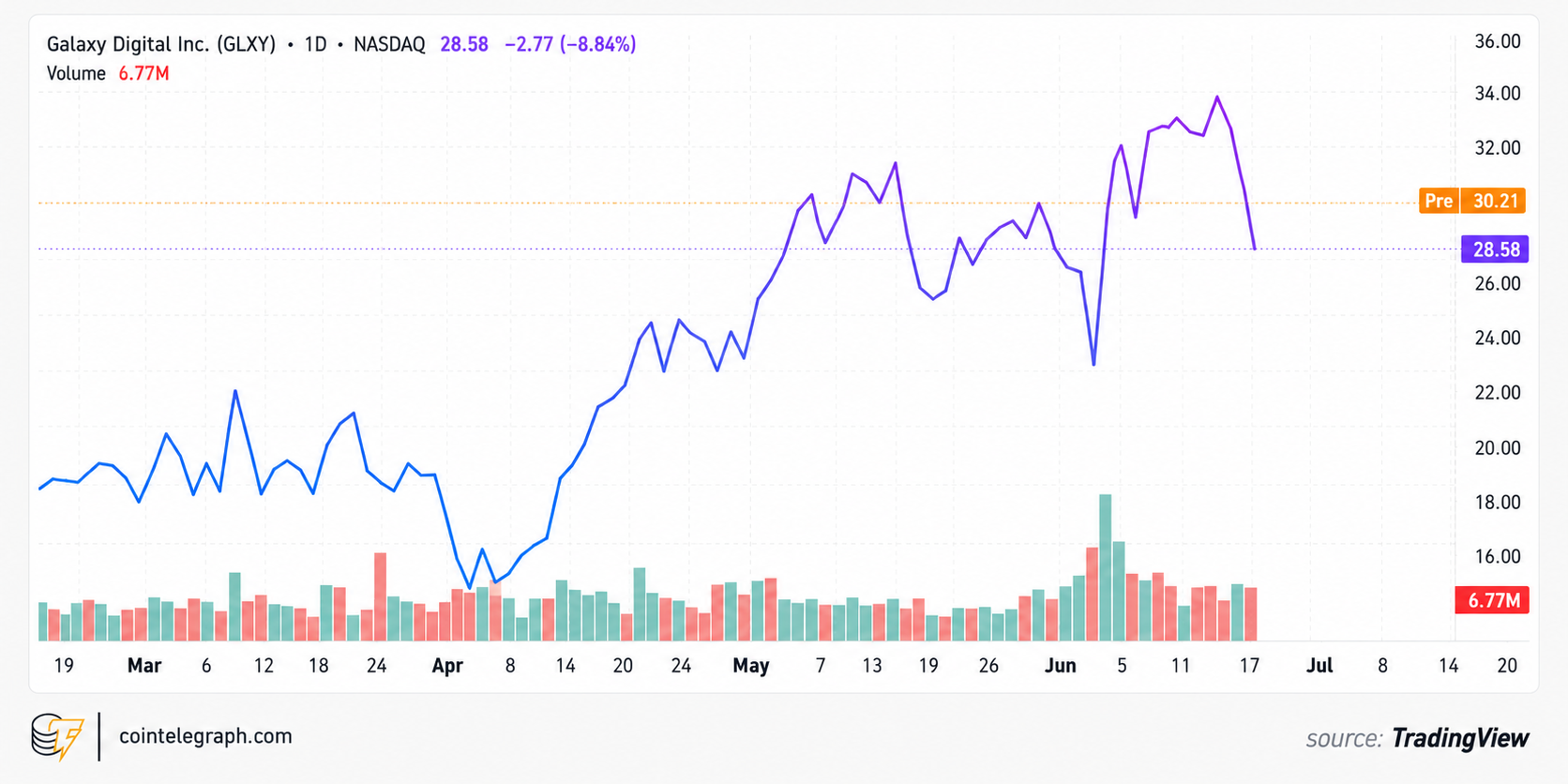
In June 2026, shares of Galaxy Digital rose sharply as investors focused on a different part of the business: artificial intelligence infrastructure. The rally drew attention to a pattern taking shape in public markets. Some crypto companies are finding that Wall Street may value their access to power, land and data centers more than their traditional crypto activities.
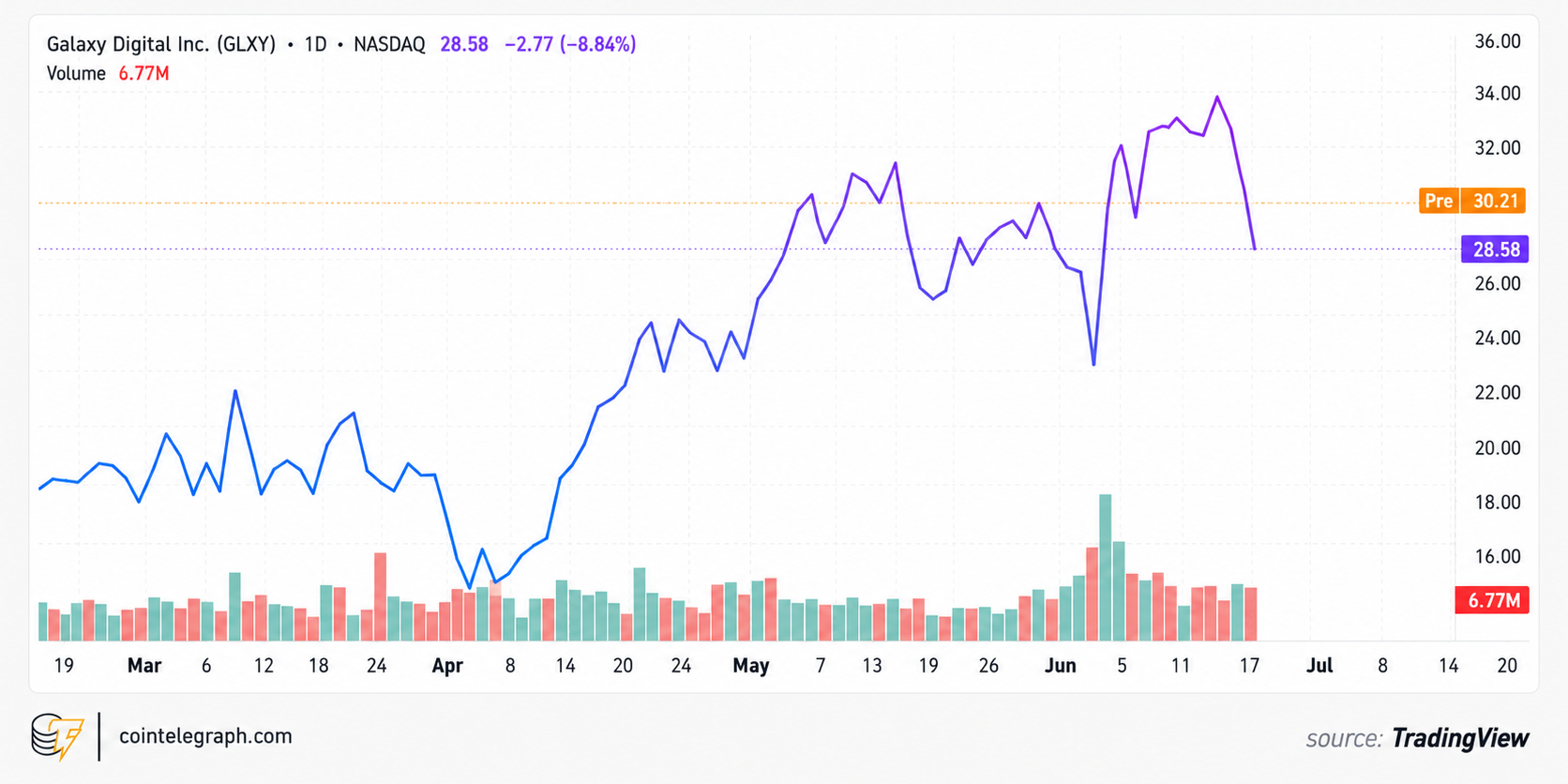
This shift points to a bigger change in financial markets. As demand for artificial intelligence grows, the infrastructure needed to support AI models has become one of the world’s most valuable resources. In some cases, crypto firms already control the exact assets that AI companies want.
-
The Galaxy Digital rally that caught crypto investors off guard
Galaxy Digital has long been a major player in digital assets, with businesses across trading, asset management, venture investments and blockchain infrastructure.
Yet the driver of its recent share price increase was not Bitcoin prices, ETF inflows or wider crypto trading activity.
Instead, investors focused on the company’s Helios campus in Texas. The site is a major data center project being developed for artificial intelligence and high-performance computing.
Comments from Galaxy Digital’s management suggested that Helios could eventually make up a meaningful share of the company’s total value. Market observers appeared to agree. Instead of viewing Galaxy Digital only as a crypto firm, investors began to assess it as an AI infrastructure company.
The rally showed a clear change in how investors value some crypto businesses. A company built on digital assets suddenly gained market attention for its possible role in the AI sector.
Did you know? Bitcoin miners once competed for cheap electricity. Now AI companies are competing for the same resource. In many regions, access to power has become more valuable than access to graphics processing units (GPUs) themselves. Some utilities have reported years-long waiting lists for large AI data center projects seeking grid connections.
-
Why AI infrastructure is now so valuable
The rapid growth of artificial intelligence has created a new bottleneck. The main challenge is no longer just building more advanced AI models. It is also securing enough computing capacity to train and run them.
Modern AI systems need large numbers of GPUs, specialized networking equipment, advanced cooling systems and huge amounts of electricity. Building the sites that house this equipment is now one of the most expensive projects in the technology sector.
As a result, investors are paying more attention to the companies that provide this core infrastructure, not just the companies building AI applications.
Data centers have become essential tools for AI growth.
This explains the strong investor interest in infrastructure-focused companies. Businesses that control power supplies, grid connections and large computing sites hold assets that are difficult and expensive to copy.
To Wall Street, those qualities often point to long-term revenue potential and more stable financial returns.
-
Why some crypto companies are well positioned
Some crypto companies are well positioned because they already share key infrastructure needs with the AI sector.
At first glance, crypto operations and artificial intelligence may seem like completely different fields. Yet both depend on one essential resource: massive computing capacity.
Over time, Bitcoin mining operations and other crypto infrastructure businesses invested heavily in sites built for high power demand. They acquired suitable land, secured power supply agreements, installed advanced cooling systems and connected directly to electrical grids.
These same resources are now attracting interest from AI companies.
An AI data center is not the same as a crypto mining operation. Still, the two share several core requirements, including high electricity use, large physical sites and enough space for specialized equipment. This overlap has created an unexpected opportunity.
In some cases, AI operators can work with existing facilities that were first built for crypto. That can help them avoid the cost and delay of building new sites from scratch.
As a result, some crypto firms now hold valuable assets in the growing AI infrastructure market.
-
Helios and Galaxy Digital’s changing strategy
Galaxy Digital’s Helios campus shows how infrastructure originally tied to Bitcoin mining can be redirected toward AI computing. After acquiring the site from Argo Blockchain in 2022, Galaxy Digital began shifting Helios toward high-performance computing and AI data center services.
That strategy gained more support when AI cloud provider CoreWeave entered into agreements tied to the site. Those deals suggested that major AI companies saw strategic value in the infrastructure.
Long-term AI infrastructure agreements can create steady revenue streams that are easier to forecast than income from crypto trading. Instead of relying on sharp market swings, companies can secure cash flow through multi-year contracts.
That level of stability is attractive to public market investors.
Did you know? Training and running advanced AI models requires huge computing resources. That is pushing developers to search globally for locations with abundant and reliable energy.
-
The rise of crypto-AI hybrid companies
Galaxy Digital’s Helios strategy is not an isolated case. Across parts of North America, several crypto mining and digital infrastructure companies have started pursuing opportunities in AI hosting, cloud services and high-performance data center operations.
This points to a wider change in how financial markets classify these businesses. In the past, crypto companies were often viewed as high-risk businesses tied closely to digital asset prices.
Now, some investors are separating infrastructure assets from direct crypto exposure.
A company that controls hundreds of megawatts of power capacity may attract a different valuation approach than one that depends mainly on trading revenue. This has created a new type of business: the crypto-AI hybrid.
These companies remain active in digital assets, while more of their value comes from infrastructure that can support several industries.
-
Why Wall Street favors AI revenue
The market’s preference becomes clearer when looking at the economics of the two areas. Crypto revenues often vary sharply over time.
Trading volumes rise and fall with overall market sentiment. Asset management fees move with crypto valuations. Mining profits change based on network difficulty and token prices. By comparison, AI infrastructure revenue can look more like revenue from traditional utility or real estate businesses.
Companies sign multi-year contracts. Income becomes easier to predict. Financial forecasts become simpler to prepare. Institutional investors usually value this kind of consistency.
A long-term lease with an AI client often carries lower perceived risk than relying on future crypto market momentum. As a result, businesses tied to AI infrastructure can command higher valuation multiples.
This does not mean investors have turned away from crypto. Instead, they may see AI infrastructure as a more reliable base for future income.
-
Could the market be getting ahead of itself?
Even with the current optimism, there are still reasons to be cautious. The rise of AI infrastructure has created strong excitement, leading some analysts to question whether too much capacity could eventually be built.
Past technology booms offer many examples of early overinvestment. Railroads, telecommunications networks and early internet infrastructure all went through periods of excess development before demand caught up with supply.
AI infrastructure could face a similar risk if capacity grows faster than demand.
If demand grows more slowly than expected, some data center projects may struggle to reach the occupancy levels investors are now expecting.
Execution risks also remain. Converting facilities originally built for crypto into AI-ready sites requires major capital spending and specialized expertise. Not every company will manage that transition well.
Investors must therefore balance real opportunities against the risk of overexcitement.
Did you know? Companies building AI infrastructure are increasingly negotiating energy contracts directly with utilities, renewable power developers and even nuclear operators to secure long-term electricity supplies.
-
What this means for crypto investors
The impact reaches well beyond Galaxy Digital. Investors assessing crypto-related stocks may need to look beyond digital asset exposure.
Factors that once centered mainly on crypto now include infrastructure questions:
- How much power capacity does the company control?
- Does it own land in strategic locations?
- Can its facilities support AI workloads?
- Are major technology firms interested in leasing its infrastructure?
- How diversified are its revenue sources?
In some cases, these factors may matter as much as Bitcoin holdings or trading volumes.
This points to a changing valuation approach, where physical infrastructure carries more weight than digital assets alone.
-
The new reality: Power may matter more than crypto
Galaxy Digital’s share price increase highlighted a clear change in the market.
Wall Street is placing serious value on the infrastructure needed to power artificial intelligence. Data centers, reliable electricity supplies and computing resources have become strategically important assets.
Some crypto companies already control these resources after spending years building them for mining and blockchain operations. As AI demand grows, investors may begin to see these assets as more valuable than traditional crypto businesses.
For companies like Galaxy Digital, the path ahead may no longer depend only on Bitcoin, trading operations or asset management. The bigger source of value could be something more physical: access to power, land and the computing infrastructure needed to support the next wave of artificial intelligence.


StablecoinX has completed its merger with TLGY Acquisition Corp., giving the Ethena-focused stablecoin infrastructure firm a Nasdaq listing under the ticker USDE.
Summary
- StablecoinX reaches Nasdaq as USDe supply sits far below its October peak, testing investor demand.
- The firm holds about $275m in ENA, linking its public-market story directly to Ethena’s token.
- Three planned business lines aim to serve Ethena infrastructure, software access and institutional distribution needs.
The company said its public warrants will trade under USDEW from Friday, June 26, after the business combination closed a day earlier. The move turns a private Ethena infrastructure bet into a listed equity trade for public investors this week.
The listing gives public-market investors a direct route into StablecoinX’s Ethena strategy.
“We believe Ethena has emerged as one of the most important platforms powering the next generation of digital dollars,” said CEO and chairman Edward Chen.
The company now enters public markets while demand for Ethena’s main synthetic dollar has cooled from last year’s peak.
ENA treasury anchors the plan
StablecoinX said it holds about 3.029b Ethena governance tokens, worth about $275m based on the 30-day ENA average used before closing. The holding represents about 20% of ENA’s total supply. The company also has about 24m publicly traded Class A shares outstanding after the transaction.
As previously reported, StablecoinX first outlined a $360m ENA treasury strategy in 2025. The plan later grew through more private financing, making ENA exposure central to the company’s story. That structure ties StablecoinX’s market value closely to Ethena adoption, ENA pricing and demand for USDe-related services.
USDe supply drop tests timing
USDe is Ethena’s synthetic dollar. It aims to hold a $1 value through crypto collateral and hedged futures positions, rather than cash reserves alone. The model can generate yield, but it depends on market conditions. When futures funding rates weaken or turn negative, the return engine can face pressure.
That pressure is visible in supply data. USDe circulating supply has fallen about 70% from its October peak above $14b to roughly $4.5b. Previously, crypto.news explored how USDe saw $1.1b in net outflows as the broader stablecoin market kept growing. The fall gives StablecoinX a tougher opening setup than the one Ethena had during last year’s expansion.
Infrastructure and regulation remain in focus
StablecoinX says its business has three parts. Its live decentralized verifier node checks cross-chain messages for Ethena across supported networks. It is also building Stablecoin Harness, a middleware stack for payment routing, bridging, liquidity access, treasury tools, reporting and compliance needs. Distribution services for institutions are also in development.
In a previous article, crypto.news discussed Coinbase Ventures buying ENA on the open market as Coinbase and Ethena prepared on-chain finance and savings products. As crypto.news reported, Jupiter Lend also added a USDe lending market with Bitwise. These links show Ethena is still building distribution, even as USDe supply has dropped.
StablecoinX’s debut also lands during a wider policy fight over stablecoin yield in the U.S. Yield-bearing stablecoins sit in a different legal area from plain payment stablecoins because they pass returns to holders. In our last update, crypto.news examined how yield-bearing stablecoins work and why the source of yield matters.
The company is entering Nasdaq with a clear Ethena bet, a large ENA reserve and several products still being built. Its early public trading may show whether investors want exposure to stablecoin infrastructure when USDe supply is lower, ENA remains far below its 2024 high and crypto market appetite remains weak.
TLDR:
- Polymarket hack stemmed from a compromised third-party vendor that injected malicious JavaScript into the platform’s frontend.
- Over 11 wallets lost PUSD on Polygon; stolen funds were bridged to Ethereum and swapped into 1,893 ETH.
- Polymarket confirmed the breach within 15 minutes of the first public report and removed the affected dependency.
- Polymarket pledged full refunds to all impacted users while on-chain investigators continue tracking the stolen ETH.
A supply-chain attack hit Polymarket on June 25, 2026, draining close to $3 million from user wallets. Attackers compromised a third-party vendor to inject malicious code into the platform’s frontend.
The script targeted PUSD, Polymarket’s native collateral token on Polygon. At least 11 wallets lost funds before the platform contained the breach.
Polymarket has since removed the affected dependency and pledged full refunds to all impacted users.
How the Attack Reached Polymarket Users
The attack did not target Polymarket’s smart contracts. Instead, attackers breached a third-party vendor that supplied code to the platform’s frontend. That vendor became the entry point for malicious JavaScript delivered directly to users’ browsers.
When affected users connected their wallets, the injected script activated. It prompted them to sign or approve transactions without raising obvious suspicion. Those approvals handed over control of their PUSD holdings to the attacker.
On-chain investigator Specter was the first to flag the activity publicly. His report identified losses of roughly $2.94 million across more than 11 victim wallets. He also named the primary consolidation address: 0xe65b1C586757c5510B60F998Eebb14C1eF71E1eD.
Polymarket confirmed the breach about 15 minutes after Specter’s report. The platform’s public statement read: “This morning we discovered a 3rd party vendor had been compromised, injecting a malicious script into our frontend for some users. We’ve contained it & removed the affected dependency. We’re contacting impacted users & refunding them in full.”
Following the Stolen Funds On-Chain
After the wallets were drained, the attacker moved quickly to obscure the trail. The stolen PUSD was bridged from Polygon to Ethereum shortly after the theft. That cross-chain move is a common step in crypto laundering flows.
Once on Ethereum, the funds were swapped into approximately 1,893 ETH. PeckShield confirmed this detail after amplifying Specter’s initial report. The ETH was then consolidated into the primary wallet flagged by investigators.
Several staging wallets were also identified during the fund movement. These included addresses such as 0xC771A30a, 0xC44F2Ca6, 0x10366AdB, and 0x7BCECe0d. Each one played a role in routing the stolen assets before consolidation.
Despite the volume of stolen PUSD, the token held its peg throughout. CoinGecko data showed it trading near $0.9998 on Polygon after the incident. The theft hit individual wallets rather than the underlying token backing.
What Comes Next for Polymarket
Polymarket has committed to reimbursing every affected user in full. The platform says it is already contacting impacted wallets directly. That pledge covers the losses tied to the supply-chain breach.
This is not the platform’s first perimeter-level security event. In May 2026, a compromised internal ops wallet drained roughly $500,000, though user funds were not touched. Earlier in 2025, comment-section phishing also cost some users funds.
Each of these cases showed that the protocol itself remained intact. The weak points have consistently appeared in the surrounding infrastructure. The June 25 incident follows that same pattern.
The stolen ETH remains traceable on-chain, keeping recovery possible. Investigators continue monitoring the consolidation wallet. The identity of the compromised vendor and the final victim count have not yet been disclosed publicly.
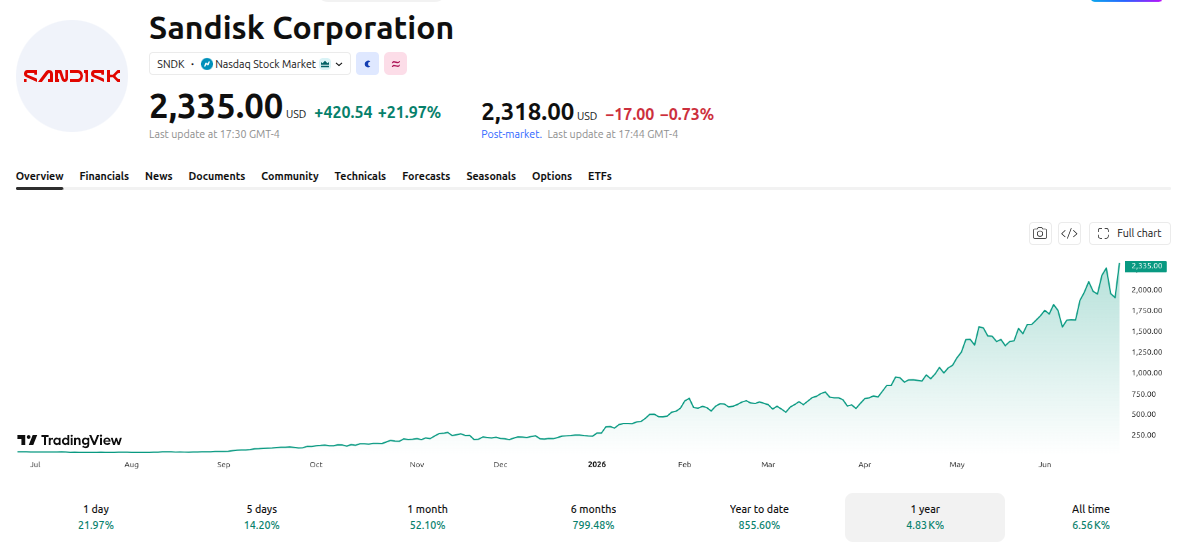
Citi has raised its Sandisk price target to $2,500 from $2,025, sending SNDK shares up roughly 22% in the last 24 hours. The chipmaker has rallied approximately 4,800% over the past 12 months on AI-driven NAND demand.
The upgrade adds fresh institutional firepower behind one of the most explosive Wall Street stories of 2026.
Why Citi Raised Its Sandisk Price Target
A price target is the level an analyst expects a stock to reach over a defined horizon, typically 12 months. Citi analyst Asiya Merchant lifted her Sandisk target by nearly 24%, signaling roughly 30.6% additional upside while keeping a Buy rating on the chipmaker.
The catalyst came from Micron’s blowout fiscal third quarter. Furthermore, NAND bit shipments rose mid-single digits sequentially, while average selling prices surged in the mid-80% range, confirming the depth of the supply tightness now reshaping the entire memory chip industry.
Follow us on X to get the latest news as it happens.
Merchant pointed to a clear structural setup. NAND industry demand is now outpacing supply, with that imbalance expected to persist well beyond 2027. AI workloads, especially in data centers, are driving most of the new demand across enterprise SSDs and adjacent storage products.
Citi also opened a 90-day short-term upside view on Sandisk shares. The bank flagged three near-term catalysts. Industry earnings, the Flash Memory Summit in August, and SanDisk’s investor day during the same month should all further sharpen sentiment across the sector.
Sandisk’s own numbers add weight to the bullish call. The company posted $5.95 billion in revenue last quarter, up 97% sequentially. Moreover, data center revenue alone grew 233% quarter over quarter, while more than one-third of fiscal 2027 bit output is already locked under multi-year contracts.
On the other hand, decentralized exchanges Raydium and Jupiter have added Sandisk to their roster of tokenized stocks. The listing reflects the rising appetite among crypto traders for exposure to the year’s top-performing equities.
What the 4,800% SNDK Rally Tells the Market
Sandisk has emerged as the best-performing stock in the entire S&P500 in 2026. Shares are up roughly 727% year-to-date, while the 12-month run from a low near $40 to recent highs above $2,335 marks an extraordinary 4,800% advance.
The rally tracks a structural shift in NAND economics. AI infrastructure spending has rewritten the demand curve. As a result, data center operators now rely heavily on cost-efficient SSDs to offload workloads, such as KV cache, a use case that did not exist in a meaningful way 18 months ago.
The Wall Street chorus has turned overwhelmingly bullish. Veteran trader Stephen “Sarge” Guilfoyle also raised his own Sandisk target to $2,600 from $2,425. Furthermore, the stock currently has a Strong Buy consensus rating on TipRanks, based on 14 Buy ratings and only 2 Hold ratings.

Risks remain real despite the conviction. SNDK trades at an elevated trailing P/E of 65 to 76 times earnings. Moreover, the stock recently fell 13.64% in a single session during a broader tech selloff tied to the Korean Kospi crash, showing how exposed the name remains to volatility.
For Citi, the bigger picture still favors the upside thesis. Bit supply growth across the NAND industry is projected at roughly 20% for 2026, while Micron itself expects its own supply growth to come in below that figure.
The post Citi Raises Sandisk Price Target to $2,500 as SNDK Rallies 4,800% in 12 Months appeared first on BeInCrypto.
Crypto World
Rosen Law Firm Investigates MicroStrategy Over Michael Saylor’s Alleged Misleading Claims on STRC
TLDR:
- Rosen Law Firm has launched a securities investigation into MicroStrategy over alleged misleading STRC claims by Michael Saylor.
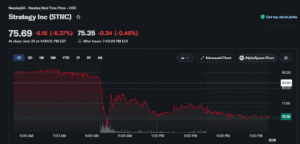
- STRC preferred stock has dropped over 22% from its $100 par value, trading as low as the low $80s in June 2026.
- Strategy’s annualized STRC dividend rate has climbed to 11.50%, adding tens of millions in additional annual payout obligations.
- Strategy sold 32 BTC in late May 2026 to cover dividends, marking its first disclosed net Bitcoin disposal in years.
Rosen Law Firm has opened a formal investigation into MicroStrategy, now rebranded as Strategy Inc., over potential securities claims tied to STRC preferred stock.
The probe follows allegations that co-founder Michael Saylor made misleading promises of guaranteed returns to investors.
STRC has since dropped over 25% from its $100 par value. Shareholders holding MSTR common stock and preferred securities: STRF, STRC, STRK, and STRD are covered under the investigation.
Rosen Law Firm Targets Saylor’s Alleged Misleading Promises to STRC Investors
Rosen Law Firm is preparing a class action to recover losses for affected Strategy investors. The investigation centers on whether Saylor’s public statements on STRC constituted materially misleading business information.
Investors who purchased Strategy securities may be entitled to compensation through a contingency fee arrangement, with no out-of-pocket costs required.
The firm directed affected investors to take immediate action. “To join the prospective class action, go to rosenlegal.com/cases/strategy-inc/join or call Phillip Kim, Esq. toll-free at 866-767-3653 or email case@rosenlegal.com for information on the class action,” the firm stated in its announcement.
Rosen Law Firm has a documented track record in securities class action litigation. The firm ranked No. 1 by ISS Securities Class Action Services for the number of settlements in 2017 and has remained in the top four each year since 2013. It has recovered hundreds of millions of dollars for investors globally, securing over $438 million in 2019 alone.
The investigation comes as MSTR common shares have fallen to a 28-month low in June 2026. Losses on MSTR have far exceeded Bitcoin’s own drawdown over the same period.
This widening gap has drawn fresh scrutiny toward the company’s leveraged Bitcoin acquisition model and Saylor’s public representations to investors.
STRC Preferred Stock Collapse Raises Questions on Strategy’s Sustainability
STRC has traded as low as the low $75s in recent sessions, down more than 25% from its $100 par value target. The preferred stock was originally structured to provide stable, low-cost funding for Bitcoin purchases. That structure has since deteriorated under sustained market pressure throughout June 2026.
Source: YahooFinance
The firm underlined the importance of selecting experienced legal counsel for affected investors. “We encourage investors to select qualified counsel with a track record of success in leadership roles,” Rosen Law Firm noted, adding that many firms issuing similar notices lack comparable experience or meaningful peer recognition.
Under STRC’s contractual terms, when the stock falls below the $95 threshold, the dividend rate increases by 0.5% increments.
The annualized rate currently sits at 11.50%, with effective yields climbing higher due to the discounted trading price. Additional annual payout obligations are now estimated in the tens of millions of dollars.
Strategy’s cash cushion supporting these dividends has narrowed sharply from multi-year coverage to roughly 14 months in some analyst estimates.
The company also sold 32 BTC in late May 2026 to help cover dividend payments: the first disclosed net Bitcoin disposal in years.
Unrealized paper losses on Strategy’s Bitcoin holdings are reported to exceed $10 billion, as questions around capital sustainability and the company’s broader Bitcoin development narrative continue to grow.

FIFA World Cup 2026 Achieves Historic Milestone, Surpasses 2022 Edition In This Record

Retroid Pocket Nova Delivers Snapdragon-Level Power in a $229 Retro Handheld

Una colazione pagata con i conti personali | Money Road


-

 Fashion6 days ago
Weekend Open Thread: Miami – Corporette.com
-

 Entertainment5 days ago
Renter of Home in Anne Heche Crash Denies Settlement With Son
-
 Sports2 days ago
Two goals and an assist by sheer aura: Cristiano Ronaldo just entered the World Cup chat
-

 Tech4 days ago
Microsoft accidentally kills epic Outlook email threads
-

 Business5 days ago
Soccer-U.S. defends Iran World Cup travel restrictions, says discussions ongoing
-

 Politics6 days ago
Andy Burnham and the meaning of Makerfield
-

 NewsBeat7 days ago
Keir Starmer Allies Question His Chances For No 10
-

 Tech10 hours ago
A Look At A Gaggle Of Transputer Boards
-
Crypto World2 days ago
Bitcoin (BTC) Dips Below $62K, Ethereum (ETH) Plunges 6% Daily: Market Watch
-

 Crypto World2 days ago
Securitize Wraps Roubini's SEC-Registered ETF as Dubai VARA Digital Security
-
Business2 days ago
Entergy settles forward sale agreements, raises $672 million in cash proceeds
-
 Business6 days ago
Wall Street Week Ahead: Investors see Micron earnings as pulse check of AI rally momentum
-
 Crypto World6 days ago
Can Charles Hoskinson Really Rescue Cardano?
-

 Crypto World6 days ago
HIVE shares jump as $220M AI deal speeds Bitcoin mining pivot
-

 Entertainment6 days ago
Jose Alvarado Wants Taylor Swift at More Knicks Games
-

 Crypto World6 days ago
Jake Chervinsky accuses CME of protecting derivatives monopoly
-
 Tech5 days ago
Signal’s Meredith Whittaker says AI chatbots ‘are not your friends’ and calls Copilot agents a backdoor
-

 Sports16 hours ago
India vs Bangladesh LIVE Score, Women’s T20 World Cup: Bangladesh Opt To Bat; India Enter ‘Do-Or-Die’ Stage As Semi-Final Race Heats Up
-

 Tech3 days ago
Nearly 7,000 fake Amazon domains registered ahead of Prime Day 2026, researchers warn
-

 Politics3 hours ago
Potential 2028er World Cup attendee leaderboard
You must be logged in to post a comment Login