

Crypto World
Cardano Whales Keep Buying as ADA Crashes 71% in 9 Months

At $0.26, Cardano (ADA) continues to trade significantly below its previous market highs, but large holders of the 11th-largest crypto asset by market cap appear unfazed.
In fact, new data suggests that millionaire-tier Cardano wallets consistently expanded ADA holdings.
Aggressive ADA Buying Spree
According to crypto analytics platform Santiment, wallets holding at least 1 million ADA have steadily increased their share of the supply. These wallets now collectively hold 25.09 billion ADA, which represents 67.47% of the current circulating supply. The accumulation trend has continued even as Cardano’s market cap dropped more than 70% over the past nine months. Santiment said the “millionaire” tier of sharks and whales appears to be taking advantage of lower prices.
Amid continued accumulation by major Cardano holders, crypto analyst Ali Martinez recently pointed to the $0.25 level as a historically important price zone for ADA. According to Martinez, Cardano saw a strong recovery after holding that level in January 2023, as the asset rose more than 88% in the following weeks.
A similar trend unfolded in September 2023 as well, when ADA once again maintained support around $0.25 before later recording a 243% rally. With Cardano currently trading above $0.26, the same support range remains critical for the asset’s price structure.
Based on his analysis, continued strength above the $0.25 zone could support a move toward $0.36, while a broader rally could push ADA toward $0.53. However, he warned that losing the support range could lead to a deeper correction.
Scaling Debate Intensifies
Beyond price, Cardano continues to face criticism over the pace of its development and scaling progress. Responding to those concerns, Cardano founder Charles Hoskinson recently pushed back against claims that the network had “abandoned scaling in favor of governance.”
Hoskinson said Cardano’s scaling research has been ongoing since before the Shelley era and involved years of work across Layer 2 solutions, the extended UTXO accounting model, zero-knowledge technologies, partnerchains, and the Leios protocol. He explained that many of these initiatives required extensive research, scientific publications, and long-term engineering efforts that could not simply be accelerated by adding more developers.
Hoskinson also maintained that the implementation of the Voltaire governance system did not divert resources away from scaling research.
The post Cardano Whales Keep Buying as ADA Crashes 71% in 9 Months appeared first on CryptoPotato.

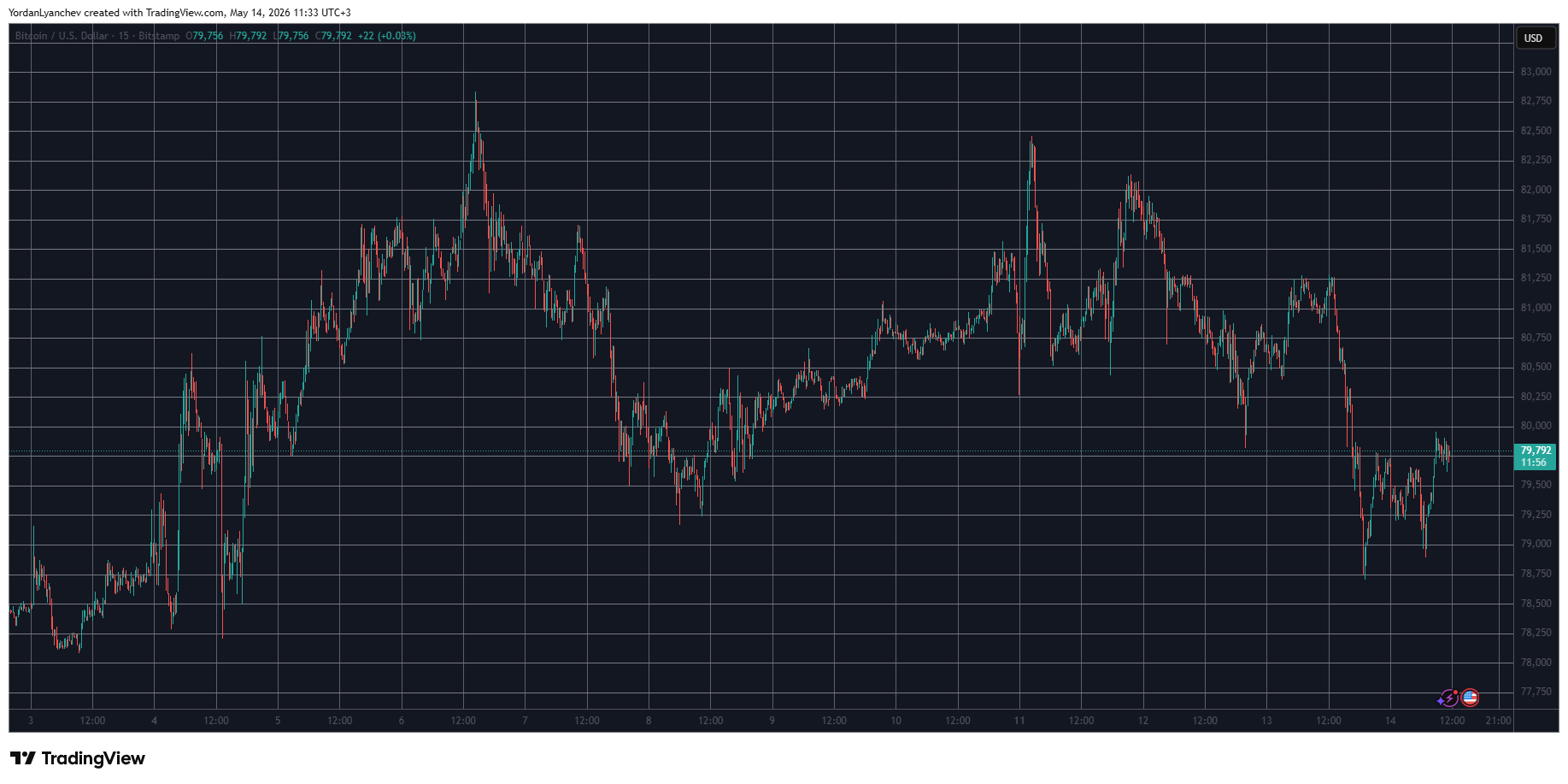
Bitcoin was stopped once again yesterday at $81,000, and it fell by over two grand in a few hours to a 10-day low of under $79,000 before it managed to rebound slightly.
Most larger-cap alts are in the red today, with SOL sliding by more than 4%, UNI dumping by 5%, while ICP has plunged by 9%.
BTC Below $80K
The primary cryptocurrency experienced substantial volatility at the beginning of the previous business week, including a dip to $78,250 before it rocketed to almost $83,000 on Wednesday for the first time in more than three months. However, its progress was halted there, and the asset fell to $79,500 on Friday.
It reacted well and bounced to $80,000 during the weekend. The bulls stepped up on the gas pedal on Monday, initiating an impressive run at $82,500, but the resistance there was too strong. After another failed breakout attempt on Tuesday at $82,000, BTC dived to under $80,000 after the CPI data for April went live.
Nevertheless, it jumped to $81,250 yesterday, where it faced another rejection. This one was even more painful as it pushed the cryptocurrency to $78,750 (on Bitstamp) – its lowest price tag since May 4. Although it has recovered about a grand since then, BTC is still 1.5% down on the day. Its market cap has slipped to $1.6 trillion, but its dominance over the alts remains above 58% on CG.
BNB Overtakes XRP
Binance Coin managed to reclaim the fourth spot in terms of market cap yesterday, but it has only extended its lead over the past 12 hours. BNB has risen by over 9% in the past month, and its market cap is above $90.4 billion, while XRP is up by a more modest 4% and its market cap is at $88.5 billion.
Ethereum has slid by 1.5% to $2,265, while SOL has dropped by over 4%, and it’s barely hanging above $91 as of now. ADA, HYPE, ZEC, LINK, XLM, XMR, and UNI are also deep in the red, and so is ICP, which has dumped by over 9% daily.
The total crypto market cap has shed over $40 billion in a day and is below $2.750 trillion on CG.

The post BNB Pulls Further Ahead of XRP as Bitcoin Falls Below $80K: Market Watch appeared first on CryptoPotato.

Key takeaways
- Pi Network extends losses on Thursday and could dip lower in the near term.
- The technical outlook for PI is mildly bearish as the short-term support is near $0.1687
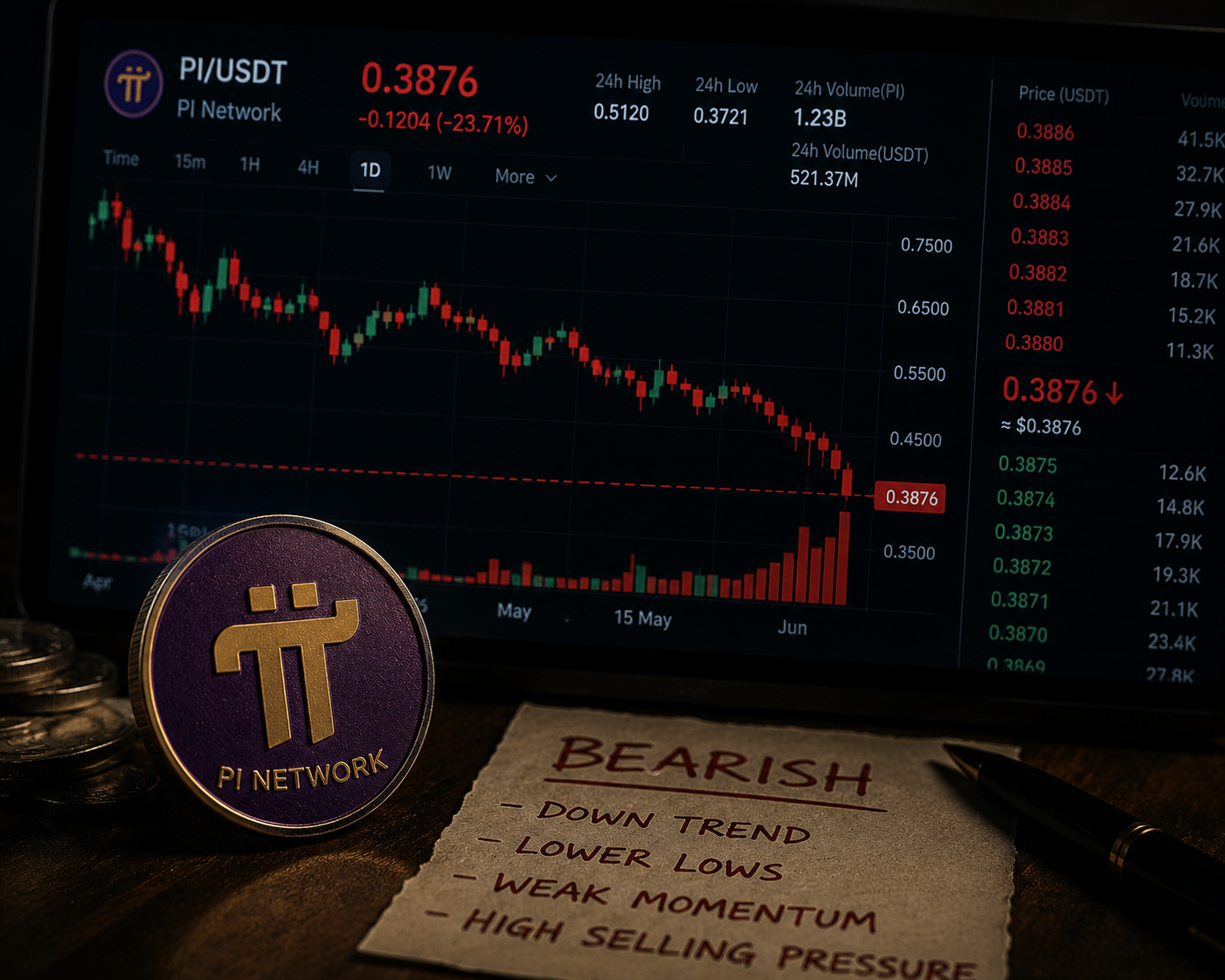
Pi Network (PI) is edging lower on Thursday, threatening a potential bearish breakout below the $0.1700 mark.
The rise in selling pressure is likely linked to renewed mainnet migration activity, with over 1 million PI tokens being deposited on centralized exchanges (CEXs), weighing down on the PI token’s price.
CEX deposits surge amid renewed mainnet migration
Pi Network is experiencing increased selling activity as investors transfer their PI tokens to exchanges after completing their Know Your Customer (KYC) verification.
PiScan data reveals that over 36 million PI tokens were migrated to the mainnet in the past four days, coinciding with the 26.20 million PI tokens unlocked from Pi Core Team wallets.
Simultaneously, Pi-supporting exchanges saw an influx of 1.15 million tokens, indicating that large holders are reducing their exposure amid the option for an exit.
Technical outlook: PI risks deeper correction below $0.1700
The PI/USD 4-hour chart is bearish and efficient. At press time, Pi Network is trading around $0.1700, with a bearish near-term outlook.
The PI token remains well below the 50-period Exponential Moving Average (EMA) at $0.1739 on the 4-hour chart, as well as the 100- and 200-period EMAs, which are clustered between $0.1750 and $0.1767.
These moving averages, combined with the downward trendline, form a dense resistance zone that limits any upward movement.
The price is approaching the May 12 low of $0.1687, which has served as a base for short-term consolidation.
The token is trapped within a descending wedge pattern, indicating that the current structure leans bearish.
Additionally, the Relative Strength Index (RSI) is hovering near 40, slipping below the midline, while the Moving Average Convergence Divergence (MACD) line and its signal line remain marginally below zero, signaling that downside momentum is still in control.
If the bulls regain control, initial resistance lies near the 50-period EMA and the downward trendline break area around $0.1739.

However, if the selloff persists, immediate support is loosely defined around the $0.1700 region, close to the May 12 low at $0.1687.
A clear break below this level could open the door to fresh lows on the 4-hour chart, especially as the broader structure remains capped by the overhead moving averages and trendline resistances.


- The supertrend indicator paints a potential bullish breakout for Cardano (ADA).
- However, the momentum may not materialize, rendering the buy signal invalid.
- ADA could target highs above $0.40 next, although the $0.25 support remains key.
Cardano price has dropped again as broader selling caps the crypto market bounce. ADA is down 3% in the timeframe and near support levels around $0.26, which mirrors the pullback for Bitcoin.
The cryptocurrency bellwether recently rallied to near $83,000, but has pared gains and currently hovers around $79,800 amid macroeconomic headwinds. Cardano’s price trajectory has aligned with the BTC drop.
However, could ADA be about to pump amid fresh buying interest?
Cardano price: daily chart flashes buy signal
Overall, cryptocurrencies are showing weakness, and ADA remains potentially bearish.
Yet, a key trend indicator is flashing bullish on the daily chart, with the SuperTrend indicator turning green.
Prices have fallen since the indicator flipped red in early February, while long-term declines go back to slip below $1 in September 2025.
The SuperTrend indicator held red for several months and coincided with an eventual 70% decline in ADA price.
When it previously flashed green, ADA price rose sharply, reaching above $0.43 earlier in the year.

Analysts say that while Cardano has struggled since falling below $0.30, the correction and lengthy consolidation could give way to a trend reversal.
If this happens, bulls could target crucial resistance at $0.33 and then year-to-date highs above $0.40. A decisive breakout could bring $0.75-$1.00 into play.
Likely to help the bullish perspective is the fact that Cardano’s key stakeholders have slowly accumulated by buying the dip.
According to Santiment, wallets with at least 1 million ADA tokens have added to their bags to about 67% of supply.
That metric hovers at over 25.09 billion ADA, with buying happening despite the asset shedding more than 70% of its market capitalization over the past 9 months.
Cardano price – short-term bearish outlook!
While the SuperTrend indicator suggests a potential bullish breakout for ADA, skeptics warn that imminent momentum might fizzle, invalidating the buy signal altogether.
Supporting this cautious view are other key oscillators.
The daily Relative Strength Index (RSI) is downsloping near the 50 mark, indicating limited buying pressure, while the Moving Average Convergence Divergence (MACD) shows potential bearish crossover.
Should sellers regain control, ADA could first probe the $0.25 support zone before mounting any meaningful recovery.
However, a deeper breakdown below that level might accelerate losses toward $0.23. The potential demand reload zone aligns with the lower boundary of a multi-month channel.
The broader market outlook, including macroeconomic and geopolitical factors, could influence the next path for this altcoin.

After flying past $82,000 at the start of the week, Bitcoin fell below $79,000 at one point yesterday before recovering near $80,000.
According to analysts, that selloff was not random, but rather, it was the result of three different pressures hitting at the same time.
What the On-Chain Data Showed Before the Drop
The warning signs were building way before prices moved, as noted by on-chain technician Easy On Chain, who said that exchange outflows on May 11 had already collapsed to 19,995 BTC. That number is far below the early May range of 28,000 to 35,000 BTC and well under the period’s daily average of 25,600 BTC.
When outflows fall that sharply, it means that there are fewer coins being withdrawn from exchanges, which means the sell-side supply sitting on platforms is growing rather than shrinking. That is what Easy On Chain calls a “positive Netflow,” and it made the market’s ability to absorb downward pressure considerably weaker.
At the same time, the derivatives market was pricing in a decline. Between May 8 and 10, open interest climbed to 1.04 times the analysis period’s average, while funding rates turned negative and kept deepening into May 10.
It means that traders were actively building short positions, betting on a drop, and when the selling pressure finally arrived, it hit a market full of leveraged longs with nowhere to go.
“On May 12 alone, long liquidations reached 11.8 times the short liquidations,” the market watcher wrote. “Over three days (May 11-13), a total of approximately $109.7M in long positions were forcefully liquidated, acting as the primary driver of the crash.”
Finally, there was the release of US CPI and PPI data, which, alongside growing inflation concerns, gave traders the trigger they needed.
Another analyst, Carmelo Alemán, linked the move to concentrated whale selling, saying wallets holding between 1,000 and 10,000 BTC sold some 7,650 BTC during the decline, which was equal to about $616 million at average prices near $80,500.
That period saw Bitcoin drop from around $81,000 to below $79,000 while open interest went up by almost $590 million, a sign that fresh leverage entered the market as prices fell.
Where Bitcoin Stands Now
At the time of writing, BTC was almost 300 bucks below $80,000, after shedding about 2% of its value in the last 24 hours and a similar 2% over the past seven days.
However, across 30 days, the asset is up nearly 7%, although it is still down over 23% year-over-year and stuck more than 36% below its October 2025 all-time high near $126,000.
For now, Easy On Chain says traders should focus on two signals: whether exchange netflows return negative, which would show renewed withdrawals, and whether liquidation pressure in leveraged longs begins to cool. Until then, they claim, Bitcoin’s attempts to reclaim $82,000 may continue running into resistance.
The post Bitcoin’s Drop Below $80K Was Not Random: Here Are the 3 Hidden Triggers appeared first on CryptoPotato.
Fundamental Background
On 13 May, Alibaba Group released its financial results for the fourth quarter of fiscal year 2026. Revenue reached RMB 243.38 billion ($35.28 billion), up 3% compared with the same period a year earlier. The company reported an operating loss of RMB 848 million ($123 million), compared with an operating profit of RMB 28.46 billion in the corresponding quarter last year. The decline was driven by heavy investment in AI infrastructure and subsidies for the Taobao Instant Commerce rapid-delivery service. Non-GAAP net profit fell by 100% to RMB 86 million ($12 million).
The only notably positive segment was cloud computing: revenue from external clients increased by 40%, while AI-related product revenue posted strong growth for the eleventh consecutive quarter, according to the company’s press release.
Technical Picture
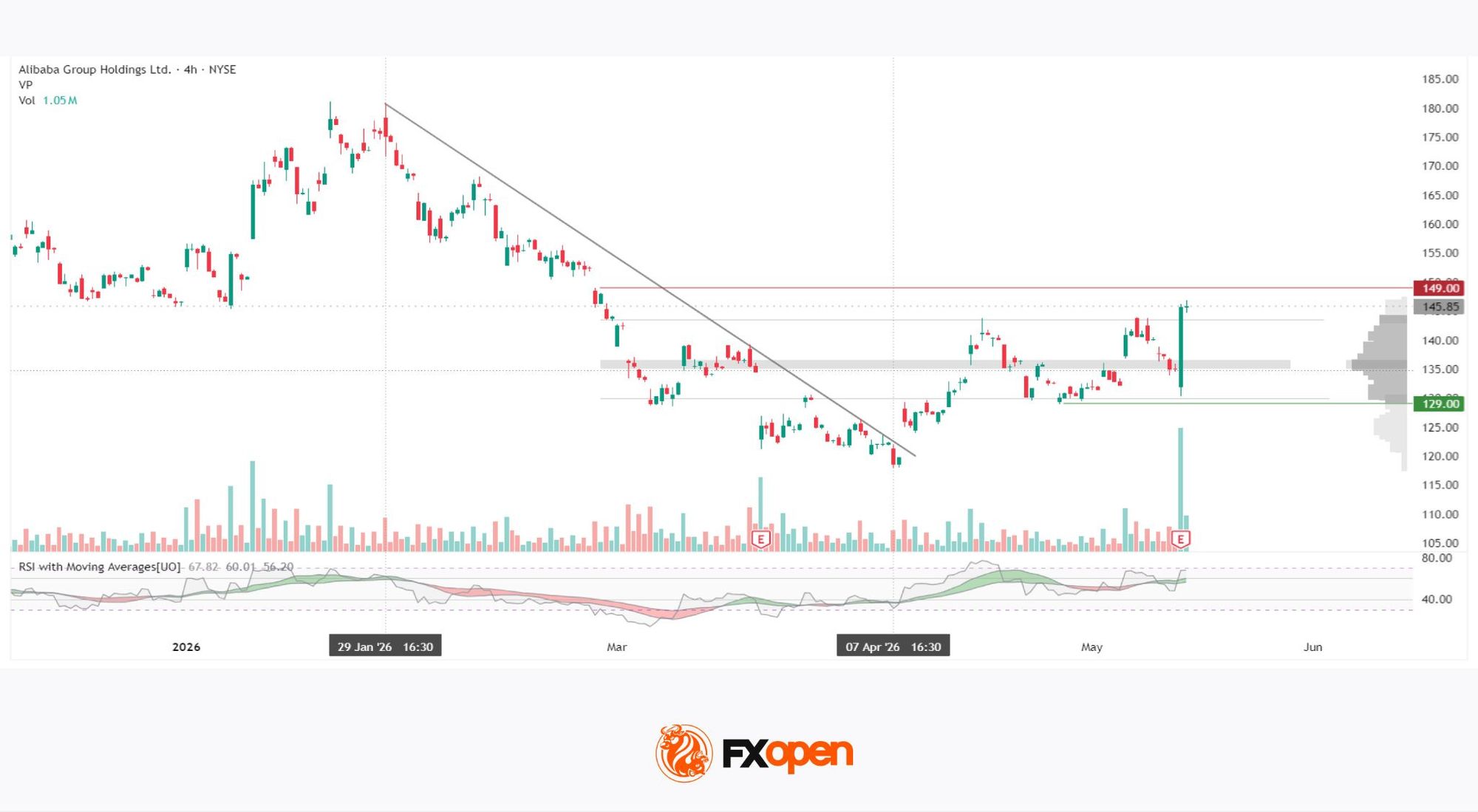
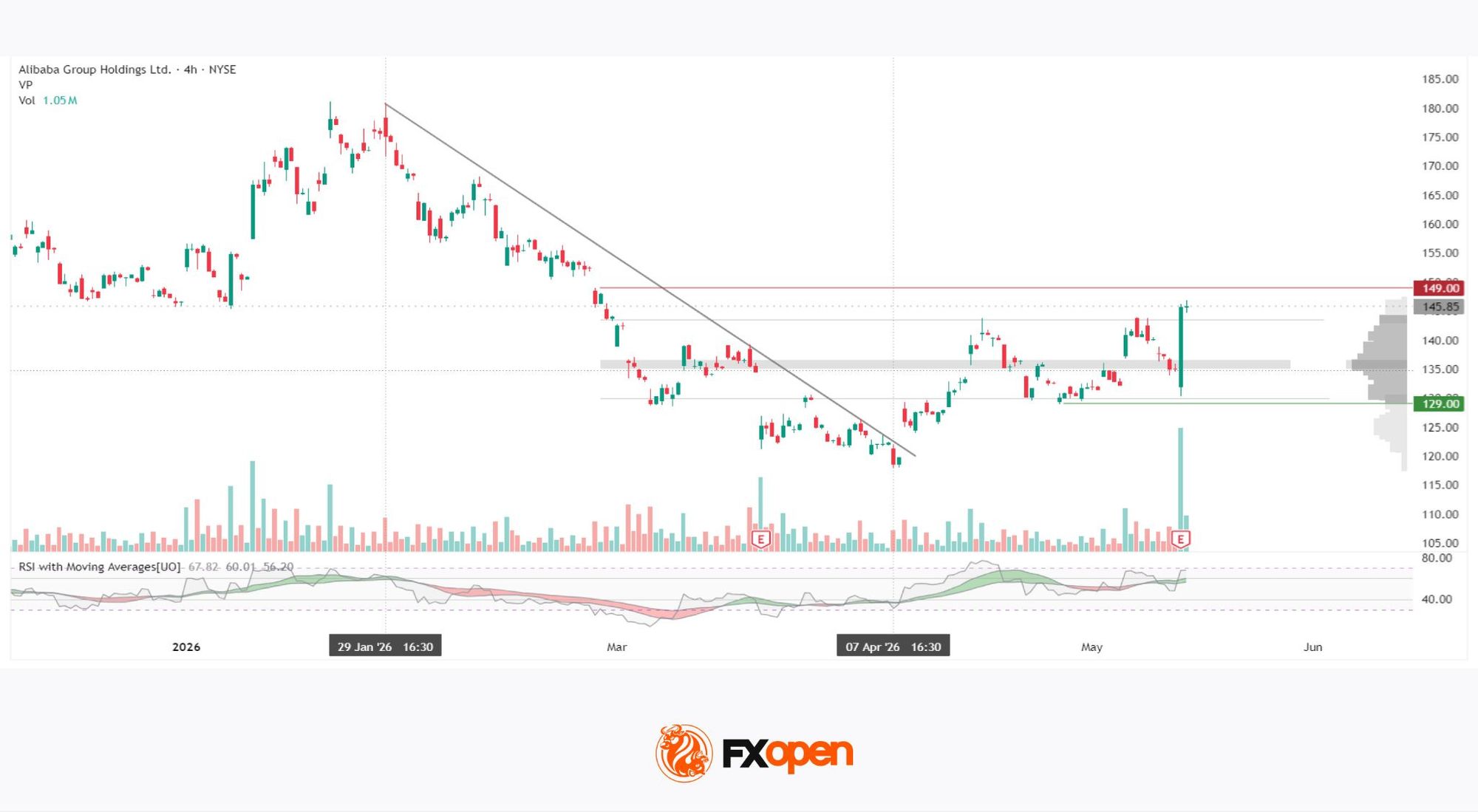
From late January to early April, the shares remained in a downward trend. The local peak on 29 January marked the beginning of a steady decline towards the low recorded on 7 April. After price compression within the $118–$122 range near the lows, the stock sharply broke out of the trend.
During this move, a pronounced volume profile formed within the $130–$143.50 range, with the point of control (POC) concentrated around $135.50–$136. The lower boundary of the profile and the $129.00 level now act as the key support zone for the current range. Resistance at $149.00 coincides with the gap formed on 26 February.
On 13 May, the day of the earnings release, vertical trading volume surged sharply, clearly visible on the histogram. The candle showed an impulsive downside breakout followed by a retreat. The stock is currently trading above the upper boundary of the profile.
The RSI + MAs indicator shows readings of 67, 60 and 56. The RSI line remains above both moving averages, which are also turning higher and remain in positive territory.
Key Takeaways
The latest earnings confirmed the structural contradiction within Alibaba’s investment case: while the cloud and AI businesses continue to gain momentum, aggressive capital spending is weighing on profitability. Future price dynamics will largely depend on how quickly growing AI-related revenue begins translating into profit, as this factor is likely to shape investor sentiment going forward.
Buy and sell stocks of the world’s biggest publicly-listed companies with CFDs on FXOpen’s trading platform. Open your FXOpen account now or learn more about trading share CFDs with FXOpen.
This article represents the opinion of the Companies operating under the FXOpen brand only. It is not to be construed as an offer, solicitation, or recommendation with respect to products and services provided by the Companies operating under the FXOpen brand, nor is it to be considered financial advice.
A New York judge has delayed a decision on Aave’s emergency bid to unfreeze $71 million worth of crypto tied to victims of the $293 million Kelp DAO hack, asking for additional information ahead of a new hearing in June.
Aave has sought to use $71 million in ETH that Arbitrum froze to assist with recovery efforts following the Kelp DAO hack, one of the worst DeFi hacks this year.
However, US law firm Gerstein Harrow LLP filed a restraining notice at the start of May, arguing its clients have a claim to the funds. Aave then filed an emergency motion to get the funds unlocked, arguing that user liquidations and potential DeFi market destabilization could occur if the funds are not unlocked soon.
According to documents filed Wednesday in the Southern District of New York, Judge Margaret M. Garnett said Aave had not adequately outlined how “compounding losses” on user funds could “occur if the restraining notice remains in place” in its filing earlier this month.
Judge requests more information from both sides
Judge Garnett acknowledged that the case is complex and that there are risks for the victims, and called for additional briefings from both sides to further outline their cases.
“The court recognizes the risk of potential near-term harm to Aave LLC and Aave Protocol users. Due to the complexity of the issues raised in the parties’ motions and at oral argument on May 6, 2026, and the extremely abbreviated timeline on which they were briefed, the Court orders the parties to submit supplemental briefing,” Judge Garnett said.
The judge outlined six key points on which the court wants more information, including whether the hacking transactions are governed by New York’s shelter principle; the legal distinction between fraud and theft and what interest hackers have in stolen assets; which law controls creditor priority over the frozen assets; whether a constructive trust would be an appropriate remedy and whether Aave or Arbitrum can identify individual victims to return the assets on a pro rata basis.
Aave and Gerstein Harrow will now have until May 22 to submit their briefs, with the hearing scheduled for June 5.
Related: DeFi can freeze stolen funds, but not everyone agrees it should
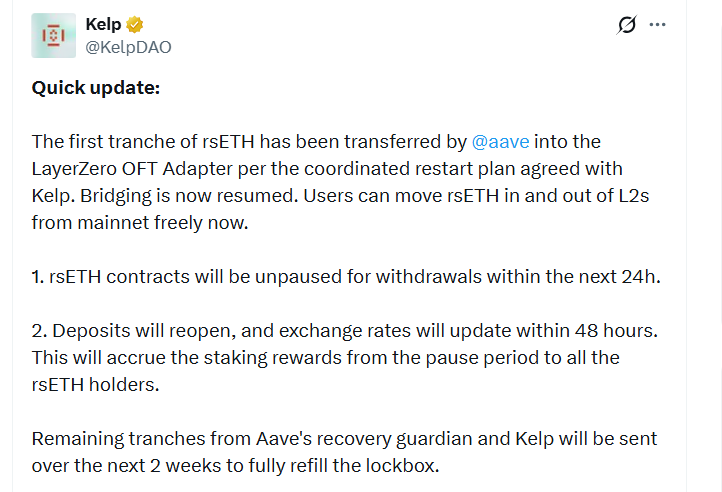
The case comes amid broader Kelp DAO recovery efforts. Kelp and Aave announced Tuesday that they had taken important steps to restore the backing of rsETH.
The hacker’s rsETH have been burned on Arbitrum, while the lost tokens, worth about $278 million, will be restored over the next two weeks via funds from the Aave Recovery Guardian multisignature wallet.
Once the associated smart contracts are reactivated, all rsETH uses will return to normal.

Source: Kelp DAO
Magazine: AI-driven hacks could kill DeFi — unless projects act now


Binance Alpha will remove 20 tokens from its featuring list on May 14 at 06:00 UTC after a recent review.
Summary
- Binance Alpha removes 20 tokens after reviews found they missed platform standards on May 14.
- ATA, FARM, MLN, PHB and SYS will leave Binance spot trading on May 27 UTC.
- Binance delisting push follows community voting and stricter reviews across supported markets globally.
The affected assets are PRAI, COMMON, PINGPONG, TAKER, JANITOR, GATA, KLINK, CORL, SWTCH, ARIAIP, LONG, ZKWASM, GORILLA, ECHO, LITKEY, FIR, GM, DELABS, DONKEY and WHY.
Binance said the tokens “do not adhere to Binance Alpha’s standards.” The exchange did not state a separate reason for each token, leaving the exact issue for every project unclear. It also said users can still withdraw or sell the assets after removal.
Meanwhile, Binance Alpha is used for early-stage tokens, which can carry more trading risk than larger listed assets. Binance warned that Alpha tokens may face “higher than normal risk” and can see high price swings.
The latest cleanup shows Binance is still reviewing tokens after they enter its Alpha channel. For traders, removal from the featured list may reduce visibility and weaken short-term demand, especially for smaller assets with thin liquidity.
Five spot tokens face Binance delisting next
The Alpha removal comes as Binance prepares a separate spot delisting. Binance will delist ATA, FARM, MLN, PHB and SYS from all spot trading pairs on May 27 at 03:00 UTC.
The exchange said it reviews factors such as team commitment, development activity, trading volume, liquidity, network safety, public communication, community engagement and regulatory needs. Deposits for those five tokens will stop being credited after May 28, while withdrawals will remain supported until July 27.
Binance delisting strategy gains speed
As previously reported, Binance moved to give its community more input on listings and delistings. Under that model, eligible users can vote on projects for possible listing or removal, while Binance still applies due diligence before final decisions.
Crypto.news also reported that Binance delisted 14 tokens in April after its first “Vote to Delist” campaign. That earlier cleanup cited reasons such as low trading volume, weak project development, limited community activity and failure to meet platform or regulatory standards.

TLDR:
- Nvidia CEO’s foundation purchased $108.3M in CoreWeave computing time for university and nonprofit AI research.
- Nvidia offered free engineering services to select institutions receiving the CoreWeave computing grant donations.
- Nvidia invested $2 billion in CoreWeave in January, making it the company’s second-largest shareholder at the time.
- Nvidia’s $6.3B CoreWeave deal guarantees chip purchases of unsold cloud capacity, raising circular financing concerns.
The foundation of Nvidia CEO Jensen Huang and his wife, Lori, has purchased $108.3 million worth of computing time from CoreWeave.
The resources will be donated to universities and nonprofit institutions for science and artificial intelligence research.
Nvidia has also offered free engineering services to some grant recipients. The move adds to a growing list of financial ties between Nvidia and CoreWeave.
Huang Foundation Directs Computing Resources to Academic Institutions
A filing released Tuesday confirmed the donation, detailing how the computing time will support AI and science research.
According to the filing, the computing resources will be used for “science and artificial intelligence research.” The grant recipients include universities and other nonprofit organizations working on advanced research programs.
Nvidia stated in the filing that it plans to provide free engineering services to select institutions receiving the grant. The donation reflects Jensen Huang’s continued personal investment in expanding AI research infrastructure.
Beyond charitable giving, however, the move also channels more activity toward CoreWeave, a cloud provider specializing in AI workloads.
CoreWeave relies heavily on Nvidia’s graphics processing units, or GPUs, to serve its customers. The foundation’s purchase of CoreWeave computing time comes as Nvidia deepens its financial relationship with the company.
Reuters reported that in January, Nvidia invested $2 billion in CoreWeave, becoming the company’s second-largest shareholder at the time.
Nvidia’s Broader Financial Relationship With CoreWeave Draws Scrutiny
Nvidia signed a $6.3 billion cloud computing capacity deal with CoreWeave last year. Reuters noted the agreement guarantees that Nvidia “will purchase any cloud capacity not sold to customers.” That arrangement effectively made Nvidia a guaranteed buyer of CoreWeave’s unused computing resources.
CoreWeave raised the lower end of its capital spending forecast last week when it reported results. The company cited higher prices of components as the reason behind the updated forecast. That update came as investors continued to watch the financial ties between the two companies closely.
As Reuters reported, “The chip giant has drawn scrutiny for investing billions of dollars into AI firms including ChatGPT maker OpenAI and neoclouds.”
Investors have raised concerns about potential circular financing, where Nvidia’s capital flows back through companies that purchase its chips. Those concerns continue to grow alongside Nvidia’s expanding investment portfolio in the AI sector.


U.S. Treasury Secretary Scott Bessent waits for the first meeting of U.S. President Donald Trump’s anti-fraud task force convened by U.S. Vice President J.D. Vance at the Eisenhower Executive Office Building on the White House campus in Washington, D.C., U.S., March 27, 2026.
Jonathan Ernst | Reuters
The U.S. can talk to China about AI because “we are in the lead,” U.S. Treasury Secretary Scott Bessent told CNBC, as the countries unveiled a protocol on best practices for the rapidly improving technology.
“The two AI superpowers are gonna start talking. We’re gonna set up a protocol in terms of how do we go forward with best practices for AI to make sure non-state actors don’t get a hold of these models,” Bessent told Joe Kernen on Thursday, on the sidelines of President Donald Trump‘s two-day meeting in Beijing with Chinese President Xi Jinping.
“The reason we are able to have wholesome discussions with the Chinese on AI is because we are in the lead,” he added. “I do not think we would be having the same discussions if they were this far ahead of us,” he said.
U.S.-based Anthropic has alarmed many in Washington and other countries with the Mythos AI model, which is supposed to have powerful cyberattack capabilities. The company said it would initially release it to select business partners.
BEIJING, CHINA – MAY 14: China’s President Xi Jinping (R) and US President Donald Trump pose for a photo at the Temple of Heaven in Beijing on May 14, 2026. Xi warned Trump that the issue of Taiwan could push their two countries into “conflict” if mishandled, a stark opening salvo as a superpower summit set to tackle numerous thorny issues began in Beijing on May 14. (Photo by Brendan Smialowski – Pool/Getty Images)
China Pool | Getty Images News | Getty Images
Bessent told CNBC he anticipates a big “step-function jump” in upcoming large language model releases from Google‘s Gemini and OpenAI.
Washington has also sought to limit China’s AI development by restricting sales of advanced semiconductors, primarily from Nvidia, to the country. The chipmaker’s CEO, Jensen Huang, joined Trump’s delegation to China as a late addition.
When asked about a Reuters report that Washington had cleared sales of Nvidia’s H200 AI chips to several major Chinese technology firms, Bessent said there had been “a lot of back and forth” on the matter.
Trump and Xi wrapped up their first major meeting of this week’s China trip at 12 p.m. local time Thursday. Beijing’s readout said the Chinese leader emphasized that Taiwan is the most important issue for bilateral relations, and warned against mishandling the issue.
Beijing claims that Taiwan, a democratically self-ruled island, is part of its territory.
Bessent also told CNBC that Trump would say more on the issue of Taiwan “in the coming days.”
“Trump … understands the sensitivities around all this, and anyone who’s been saying other otherwise does not understand the negotiating style of Donald Trump,” he added.
Bessent’s week in Asia
Trump’s trip to China this week is the first time a sitting U.S. president has visited the country since 2017, when Trump visited during his first term. The summit kicked off Thursday morning and is due to wrap up Friday.
Ahead of the Trump-Xi meeting, Bessent met with Chinese Vice Premier He Lifeng in South Korea on Wednesday.
China’s Commerce Ministry described the preliminary talks as an effort to resolve trade issues and “further expand pragmatic cooperation,” according to a CNBC translation of the Chinese.
In a brief post on X Thursday morning, Bessent shares a picture of himself with He Lifeng, saying they had discussed “the economic and trade relationship between our nations.”
Digital asset infrastructure company BitGo reported a wider first-quarter net loss as Bitcoin treasury mark-to-market losses and IPO-related expenses outweighed stronger client growth and a year-over-year jump in revenue.
Revenue for the quarter ended March 31 was $3.8 billion, up from $1.8 billion a year earlier, driven by higher digital asset trading activity and growing contributions from its stablecoin business, the company announced Wednesday. Revenue fell 38.7% from Q4 2025’s $6.2 billion, partly due to a shift in client trading from spot to derivatives, a product BitGo launched at the start of the quarter that generated roughly $3 billion in notional volume.
However, net loss widened to $60.7 million from $25.7 million in Q1 2025, hit by a $53.7 million non-cash loss tied to the declining value of the company’s Bitcoin treasury, as well as stock-based compensation from its recent IPO. BitGo said stock compensation costs are expected to normalize going forward.
Adjusted EBITDA (earnings before interest, taxes, depreciation and amortization) swung to a loss of $1.7 million from a gain of $3.9 million a year ago, partly due to a $3 million in one-time legal and professional costs tied to the IPO.
Related: Circle to launch cirBTC wrapped Bitcoin, challenging BitGo and Coinbase
BitGo client base surges 42%
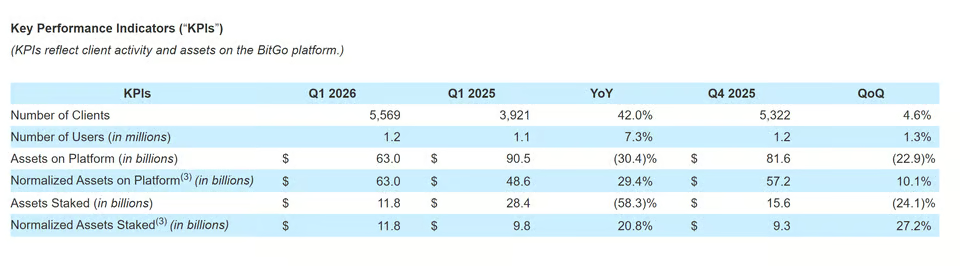
On the platform side, client count grew 42% year-over-year to 5,569. These are institutions like hedge funds, exchanges, fintech companies and other businesses that plug into BitGo’s infrastructure. Users on the platform also grew to 1.2 million, up 7.3% year-over-year.

BitGo KPIs. Source: BusinessWire
Stablecoin-as-a-service revenue jumped 43.6% to $38.2 million, while staking revenue dropped 66.2% to $49.4 million amid lower token prices.
BitGo ended the quarter with $186.6 million in cash and held 2,449 Bitcoin valued at approximately $167.1 million.
BTGO shares slipped 1.09% in overnight trading to $11.78 after the earnings release, according to Yahoo! Finance.
Related: BitGo launches portfolio-based crypto lending platform for institutions
Crypto companies post widening losses in Q1
A string of crypto companies reported deepening losses in the first quarter of 2026 amid the market decline. Coinbase swung to a $394.1 million net loss, missing revenue estimates of $1.5 billion with $1.41 billion. Exodus Movement more than doubled its losses to $32.1 million as revenue dropped 36.8% and active users slid.
Bitcoin miners, including Riot Platforms, Core Scientific, CleanSpark and TeraWulf, all posted widening losses in Q1 2026, with MARA topping the group at a $1.3 billion net loss, roughly $1 billion of which stemmed from non-cash mark-to-market adjustments on Bitcoin holdings.
Magazine: Guide to the top and emerging global crypto hubs — Mid-2026

Will F1 go back to the future with V8 engines?

Changes to PIP payments
BNB Pulls Further Ahead of XRP as Bitcoin Falls Below $80K: Market Watch

Manchester United reach agreement with Casemiro over contract clause amid transfer speculation

US brings back mandatory military draft registration

Steven Gerrard disagrees with Gary Neville over ‘shock’ Chelsea and Arsenal claim | Football


-
 Crypto World6 days ago
HarrisX Poll Found 52% of Registered Voters Support the CLARITY Act
-

 Fashion6 days ago
Weekend Open Thread: Marianne Dress
-

 Fashion3 days ago
Coffee Break: Travel Steam Iron
-

 Fashion3 days ago
What to Know Before Buying a Curling Wand or Curling Iron
-

 Tech4 days ago
Auto Enthusiast Carves Functional Two-Stroke Engine from Solid Metal
-

 Politics3 days ago
What to expect when you’re expecting a budget
-
 Business5 days ago
Ignore market noise, India’s long-term story intact, say D-Street bulls Ramesh Damani and Sunil Singhania
-

 Politics5 days ago
Politics Home Article | Starmer Enters The Danger Zone
-

 Tech3 days ago
GM Agrees To Pay $12.75 Million To Settle California Lawsuit Over Misuse Of Customers’ Driving Data
-

 Politics7 days ago
Simon Cowell Says He Was ‘Horrible’ To Susan Boyle During BGT Audition
-

 Entertainment7 days ago
General Hospital: Ric & Ava Bombshell – Ric’s Massive Secret Exposed!
-

 Entertainment7 days ago
Why David Letterman Called CBS ‘Lying Weasels’
-

 Crypto World4 days ago
CZ says US crypto rivals tried to block Trump pardon
-

 Sports6 days ago
Bayern Munich vs PSG UEFA Champions League SF2 live match time, streaming | Football News
-

 Entertainment6 days ago
YNW Melly Denied Bond Again Ahead Of Double Murder Retrial
-

 Tech3 days ago
GM agrees to $12.75M California settlement over sale of drivers’ data
-

 Politics7 days ago
Euphoria Creator Praises Sydney Sweeney Amid Season 3 Scenes Backlash
-
Entertainment7 days ago
Hantavirus — cause of death for Gene Hackman's wife — at the center of Dutch cruise outbreak
-

 Crypto World5 days ago
PROS explodes 48% as Upbit and Bithumb listings ignite demand
-
Crypto World6 days ago
The Hantavirus Danger: Can a Potential Outbreak Spark a New Meme Coin Frenzy?
You must be logged in to post a comment Login