
Crypto World
CFTC clashes with U.S. soldier over $400K Polymarket bet



The CFTC entered the criminal Polymarket case against U.S. Army soldier Gannon Ken Van Dyke on Aug. 24 after a federal judge granted the regulator permission to file an amicus brief.
Summary
- Judge Margaret Garnett allowed the CFTC to file its contested amicus brief on August 24.
- Van Dyke may answer new CFTC arguments through a ten-page filing due September 9, 2026.
- Prosecutors allege thirteen Polymarket wagers generated approximately $409,881 using classified information before Maduro’s capture.
- The defense argues geopolitical event contracts are bets rather than swaps governed by federal commodities law.
- CFTC civil proceedings remain stayed pending resolution of the related federal criminal prosecution in Manhattan.
Van Dyke’s lawyers had opposed the request. They argued that the CFTC was attempting to defend its regulatory authority through the criminal prosecution while its parallel civil lawsuit remained paused.
Judge Margaret Garnett rejected the request to exclude the brief but said the court would give the regulator’s arguments “appropriate weight.” Van Dyke has pleaded not guilty to charges arising from Polymarket wagers that allegedly generated $409,881.
CFTC can defend its Polymarket interpretation
The CFTC requested permission to address Van Dyke’s argument that the Venezuela-related Polymarket contracts were bets rather than swaps regulated under the Commodity Exchange Act.
The regulator argues that event contracts can qualify as swaps when their value depends on events carrying financial, economic or commercial consequences. The Maduro contracts could have related consequences for Venezuelan bonds, oil prices and the country’s currency, according to the CFTC’s civil complaint.
Van Dyke’s attorneys contend that this interpretation stretches the swap definition beyond its statutory limit. They say the contracts were straightforward geopolitical wagers with no underlying financial product or commercial exposure.
“The CFTC is no sheep ‘friend of the Court’ here,” the defense wrote, describing the regulator as a “regulatory wolf.” The language represents legal advocacy, not a court finding.
The defense also disputes whether CFTC Rule 180.1, which prohibits fraud connected with swaps, can support the commodities fraud charge under the circumstances alleged.
Judge gives Van Dyke until September 9
Garnett added the CFTC’s proposed amicus brief to the criminal record. The order does not decide whether the contracts qualify as swaps or whether the disputed charges will survive.
The judge gave prosecutors and Van Dyke until Sept. 9 to answer any CFTC argument not already addressed in their motion-to-dismiss filings. Each optional response may contain no more than 10 pages.
The deadline makes the regulator’s swap interpretation part of the court’s consideration before it rules on dismissal. A decision against the CFTC’s position could narrow how federal commodities law applies to prediction markets.
Van Dyke’s criminal trial remains tentatively scheduled for Dec. 7. A status conference is expected on Sept. 28, although disputes involving classified evidence or the dismissal motion could alter that schedule.
Soldier allegedly earned $409,881 from 13 bets
The Justice Department alleges that Van Dyke participated in planning and executing Operation Absolute Resolve, the U.S. military operation that captured former Venezuelan President Nicolás Maduro on Jan. 3.
According to the federal indictment, Van Dyke placed approximately $33,934 through 13 Polymarket trades between Dec. 27 and Jan. 2. The markets covered Maduro’s removal, U.S. forces entering Venezuela, a potential invasion and presidential war powers.
Prosecutors allege that the trades produced approximately $409,881 in profit after several contracts resolved in Van Dyke’s favor. They also accuse him of transferring proceeds through a foreign cryptocurrency vault and attempting to conceal accounts linked to the activity.
Those allegations remain unproven. Van Dyke faces charges including commodities fraud, wire fraud, misuse and theft of government information, and conducting a monetary transaction involving allegedly criminal proceeds.
Civil Polymarket case remains paused
The CFTC brought a parallel civil action on April 23, its first insider trading case involving prediction-market event contracts. The regulator is seeking restitution, disgorgement, financial penalties, trading bans and an injunction.
The agency’s complaint invokes the “Eddie Murphy Rule,” which prohibits certain uses of misappropriated government information when trading swaps.
A federal judge has paused the parallel CFTC lawsuit until the criminal proceeding ends. Van Dyke’s lawyers argue that the regulator should defend its legal interpretation in that lawsuit rather than enter the criminal matter.
The dispute reaches beyond one trader. In related coverage, the CFTC has been developing updated federal rules for prediction markets as courts consider whether event contracts fall under federal derivatives law or state gambling regimes.



BNB Chain activated the Pasteur hard fork on BNB Smart Chain mainnet at 02:30 UTC on Aug. 25, introducing three changes focused on bridge security, validator authorization and block capacity.
Summary
- BNB Chain activated Pasteur on BSC mainnet at 02:30 UTC on August 25, 2026, successfully.
- Three proposals strengthen bridge verification, validator authorization and block construction without shortening block times further.
- BEP-682 rejects duplicate validators during cross-chain light-block checks, protecting genuine supermajority approval requirements onchain now.
- QANet benchmarks increased throughput 88% from 1,237 to 2,324 transactions per second under controlled conditions.
- Node operators needed client version 1.7.7 and removal of EnableBAL before mainnet activation began Tuesday.
The network confirmed that Pasteur was live following its scheduled activation. BSC continued producing blocks at its existing 450-millisecond interval, with no major disruption publicly reported immediately after the upgrade.
Pasteur combines BEP-682, BEP-695 and BEP-675 under the broader BEP-673 upgrade plan. The changes had operated on BSC’s Chapel testnet since July 21 before reaching mainnet.
BNB Chain Pasteur strengthens bridge verification
BEP-682 changes how BSC verifies light blocks submitted through cross-chain infrastructure. Before Pasteur, the verification process did not explicitly reject duplicate entries in a submitted validator list.
A crafted request could therefore include the same validator more than once. Counting those entries separately risked making a bridge approval appear to have support from more independent validators than it actually did.
Pasteur rejects repeated validator entries before calculating whether the required voting threshold has been reached. Each approval must now come from a distinct validator for the light block to satisfy the supermajority requirement.
BNB Chain did not report that attackers had exploited the flaw or attributed any previous asset losses to it. The change is a preventive correction to bridge verification rather than a response to a disclosed theft.
Cross-chain infrastructure remains a major security concern across decentralized networks. In related coverage, bridge attacks have caused billions of dollars in cumulative losses through compromised keys, contract flaws and weak message verification.
Old validator keys lose their authority
BEP-695 closes gaps involving validator key rotation, penalties and governance. When a validator replaces its operator key, the previous key now loses its management rights.
The proposal also prevents validators from escaping pending penalties by rotating their keys. Slashing and removal processes remain attached to the validator rather than disappearing when its operator address changes.
Pasteur further blocks restricted addresses from using offchain signatures to participate in governance. BNB Chain already prevented blacklisted addresses from voting directly, but those accounts could potentially sign votes and have another address submit them.
The updated governance contracts check the original signer before counting a delegated vote. If that signer is restricted, the vote is rejected regardless of which account submits it.
New block route reduces repeated execution
BEP-675 introduces an optional route for specialist builders to submit blocks they have already executed. Validators check the proposed block against consensus rules, sign it and broadcast it before completing full execution verification.
The earlier route required both the builder and validator to execute the transactions before the validator signed. That duplication consumed part of BSC’s short block window and could leave blocks below their maximum capacity during periods of heavy demand.
Builders can continue using the previous process. The new route must be enabled through the network’s remote procedure call interface, giving participants time to integrate it.
BNB Chain said the route could fit more transactions into each block, but its published performance figures came from controlled testing rather than mainnet activity.
Tests on QANet, an internal environment designed to reflect geographically distributed validators, increased throughput from 1,237 to 2,324 transactions per second. Average gas consumption per block rose from 46.35 million to 84.15 million while the 100-million gas limit remained unchanged.
Mainnet data will test the 88% capacity gain
Pasteur does not increase the block gas limit or reduce the 450-millisecond block interval introduced by the Fermi upgrade. Its capacity gains depend on builders adopting BEP-675 and submitting fuller blocks.
BNB Chain required node operators to install client version 1.7.7 before activation. Operators also needed to remove the deprecated EnableBAL field because leaving it in the configuration file would prevent the updated client from starting.
As previously reported, BNB Chain warned operators to complete the mandatory Pasteur update before the fork. Operators running incompatible software risked falling out of sync with mainnet.
The next evidence will come from live block utilization, transaction throughput, missed-block rates and validator performance. Those measurements will show whether the QANet capacity improvement carries over to sustained mainnet demand.
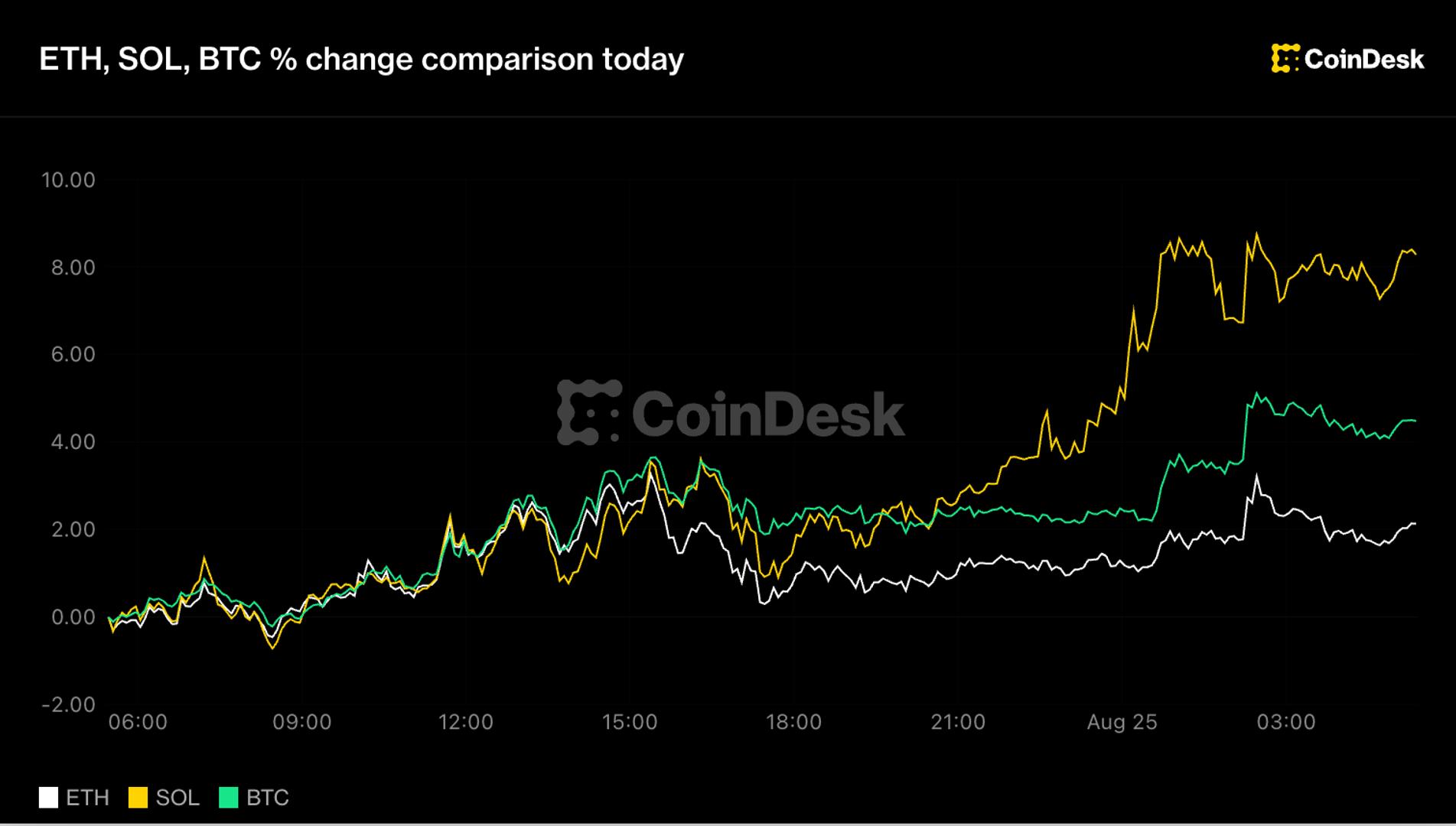
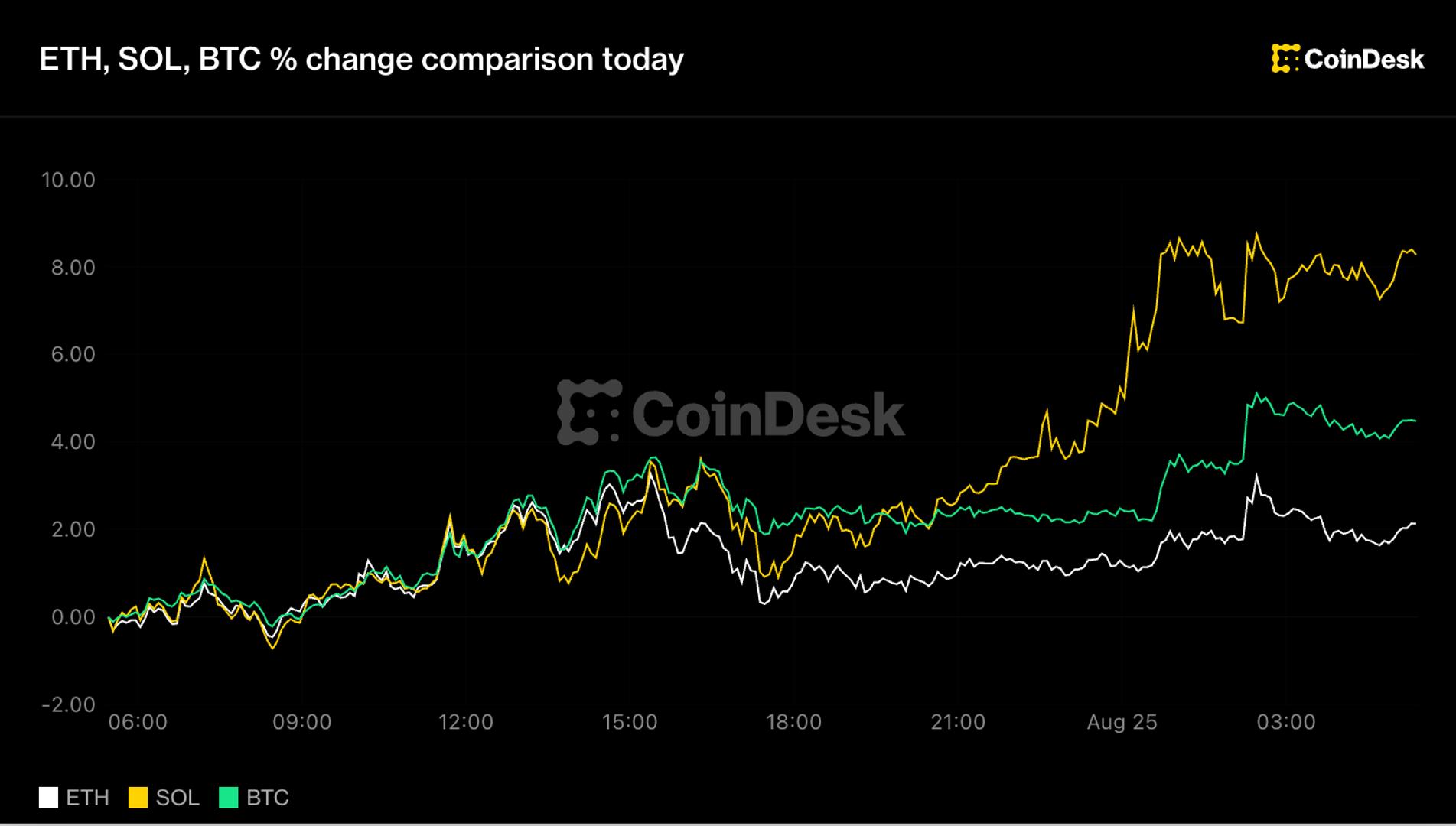
BTC is up more than 25% on the week after Treasury’s bond-buyback expansion sparked a rally, while Solana led majors Tuesday as validators vote on proposals to slow new SOL creation and raise daily burns.
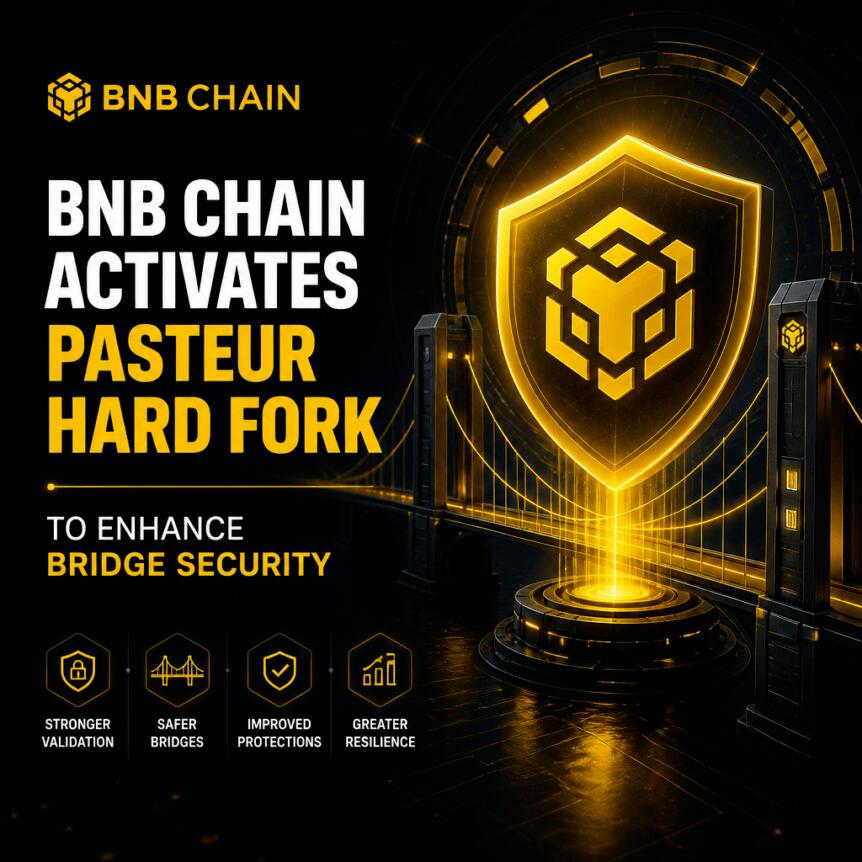
BNB Smart Chain has activated the Pasteur hard fork on its mainnet, completing a set of protocol changes designed to close weaknesses in bridge verification and validator authorization—while also aiming to pack more transactions into each block.
BNB Chain said in a Tuesday announcement that Pasteur is now live, combining three BNB Evolution Proposals (BEPs) without altering BSC’s already established 450-millisecond block time. The upgrade focuses on tighter validator handling for cross-chain operations, safer staking and governance mechanics, and a new approach to block construction during periods of network congestion.
Key takeaways
- Pasteur is live on BNB Smart Chain mainnet, tightening bridge verification and validator authorization to reduce approval and voting ambiguities.
- BEP-682 blocks duplicate validator entries during cross-chain light-block verification, improving bridge approval correctness.
- BEP-695 strengthens protections around validator key rotation, slashing, and governance voting controls.
- BEP-675 introduces a new block-building route that lets builders submit blocks after executing transactions, while validators verify and sign before final execution checks.
- BNB Chain reports an ~88% throughput increase in QANet tests, while average gas per block rose—though the team stresses these are controlled test results, not mainnet measurements.
What Pasteur changes on BSC mainnet
Pasteur brings together three protocol upgrades—BEP-682, BEP-695, and BEP-675—addressing both security and performance bottlenecks.
According to BNB Chain, BEP-682 is designed to prevent validators from being counted more than once during cross-chain light-block verification, a change intended to make bridge approval logic more robust. BEP-695 then targets the security surface around validator lifecycle operations: it updates controls tied to validator key rotation, slashing, and governance voting so that older validator authority cannot be improperly reused.
BNB Chain also said BEP-695 blocks restricted addresses from participating in voting, a targeted governance hardening that can reduce the chance of unauthorized influence during decision-making processes.
The third component, BEP-675, changes how block proposers and validators coordinate around transaction execution. Instead of forcing validators to perform repeated work inside the tight block-production window, the new route is meant to ensure execution can be handled more efficiently without sacrificing consensus verification.
Why the new block-building route matters
Under BSC’s prior block-building approach, the builder carried out transaction execution first and then submitted a proposed block to validators. Validators, before signing, would execute transactions again to confirm the block’s contents—work BNB Chain says can take time away from execution capacity inside BSC’s 450-millisecond block window.
BNB Chain argued that when blocks are hard to assemble within that short interval, blocks can end up underfilled during busy periods. Pasteur’s change is intended to reduce that waste.
BEP-675 allows builders to submit blocks they have already executed. In this flow, validators check the proposed block against consensus rules and then sign and broadcast it. BNB Chain says validators then complete full execution verification afterward—separating consensus validation from the final execution checks to better fit the timing constraints of BSC block production.
Importantly, BNB Chain said the network does not force a single method: builders can still use the older route where validators execute transactions before signing, preserving compatibility for existing operational practices while enabling the new path when it is beneficial.
Throughput gains in QANet tests, with higher block gas
BNB Chain supported the performance motivation for BEP-675 with internal testing on QANet, described by the team as a controlled environment intended to mirror BSC’s geographically distributed validator setup.
In those tests, BNB Chain reported throughput increasing by about 88%, from 1,237 to 2,324 transactions per second when using the updated block-building route. At the same time, average gas used per block rose from 46.35 million to 84.15 million. BNB Chain said the block interval and the 100-million gas limit remained unchanged.
The network team cautioned that these results were generated under controlled test conditions and were not direct mainnet measurements. Still, the pattern is directionally useful for operators and developers: the upgrade is not only about shifting workloads between builders and validators—it’s also about enabling blocks to carry more real transaction load during peak demand.
Pasteur arrives after BSC’s earlier block-time reductions
Pasteur also fits into a broader sequence of BSC upgrades aimed at reducing block times and improving operational efficiency. Earlier changes included the Maxwell hard fork, which BNB Chain says reduced average block time from 1.5 seconds to roughly 0.8 seconds in June 2025. The follow-up Fermi upgrade then brought the network down further to the current 450-millisecond cadence.
With block intervals already compressed substantially, the logic behind Pasteur’s design becomes clearer: when blocks must be produced rapidly, redundant validator-side work can become a limiting factor. Pasteur’s new builder-to-validator execution handoff is aimed at keeping consensus verification within the schedule while still performing full execution checks.
For investors and users, the practical implication is that the chain’s scaling effort is increasingly about operational fit—making the most of a fixed block time—rather than changing core time parameters again.
What to watch next after the fork
With Pasteur now live, the key items for participants are how BSC’s validator set and block-building actors adopt the new route under real network conditions, and whether the observed test gains translate into measurable improvements on mainnet during high-traffic periods. Equally important will be monitoring whether bridge verification and governance participation behave as intended with the new validator authorization and voting restrictions in place.
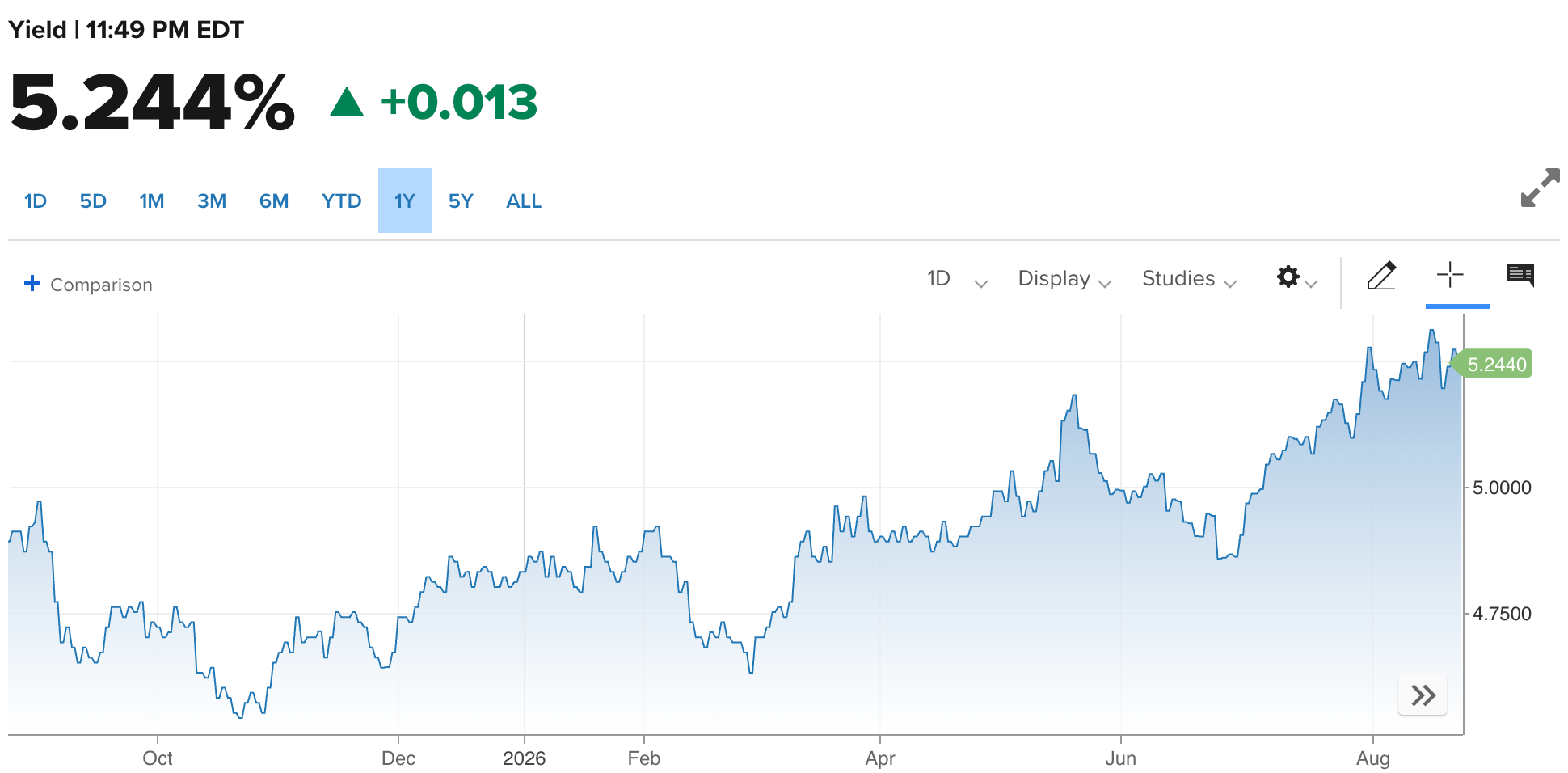
Billionaire investor Stanley Druckenmiller called Treasury Secretary Scott Bessent’s bond buyback plan a mistake. He argued governments that fight market fundamentals always lose.
Druckenmiller mentored Bessent early in his hedge fund career. He made his case in a Wall Street Journal opinion column.
Why Druckenmiller Pushed Back
Druckenmiller was responding to Bessent’s push to expand bond purchases. Treasury said it would at least double its buyback operations. That lifts the ceiling from $2 billion to $4 billion per operation, starting September 9.
“Governments defending prices against fundamentals always lose,” Druckenmiller wrote.
He argued that markets aggregate information no committee can replicate, and that the long-term Treasury yield checks government borrowing. Removing that check, in his view, removes fiscal accountability.

The intervention followed a sharp climb in the 30-year Treasury yield. It touched its highest level in nearly two decades before the buyback announcement. The national debt also surpassed $40 trillion this week.
Bessent has defended the buybacks as routine liquidity operations, not an attempt to suppress rates artificially. He told CNBC the Treasury has “a big toolkit” and could expand purchases further.
Yields Reflect Growth, Not Restriction
Druckenmiller argued the intervention makes little sense given current conditions. He noted the 10-year yield sits near the economy’s nominal growth rate. That, he said, makes financial conditions accommodative rather than restrictive.
“The bond market wasn’t being a vigilante,” Druckenmiller wrote. “It was being a pushover that had finally begun to clear its throat, and Treasury moved to quiet even that.”
The buyback’s early effect faded fast. Yields fell sharply after Wednesday’s announcement. They reversed the next day, with the 30-year climbing back toward its pre-announcement level. Strategists have called the move a temporary patch, not a fix for deeper fiscal pressures. Iran-related tensions have also weighed on bond markets in recent weeks.
The two worked together under George Soros early in their careers. Bessent reportedly spoke with Druckenmiller daily while running his own hedge funds.
Bessent may scale back the buybacks, or expand them further. That could depend on how Federal Reserve Chairman Kevin Warsh addresses long-term rates at his upcoming Jackson Hole remarks.
The post Bessent's Former Mentor Druckenmiller Slams Treasury Bond Buyback Plan appeared first on BeInCrypto.
Bitcoin’s price revival that began last Wednesday culminated, at least for now, a few hours ago when the asset soared past $80,000 for the first time since mid-May and tapped a multi-month peak above $81,000.
Analysts were quick to pick up the move and outline the next short-term targets of up to $88,000. BTC’s surge also led to an increase in liquidated short positions as the total value exceeded $260 million in the past 4 hours.
On a daily scale, the liquidations are up to $650 million, with the lion’s share coming from shorts again. Bitcoin is responsible for half of that amount, according to data from CoinGlass.
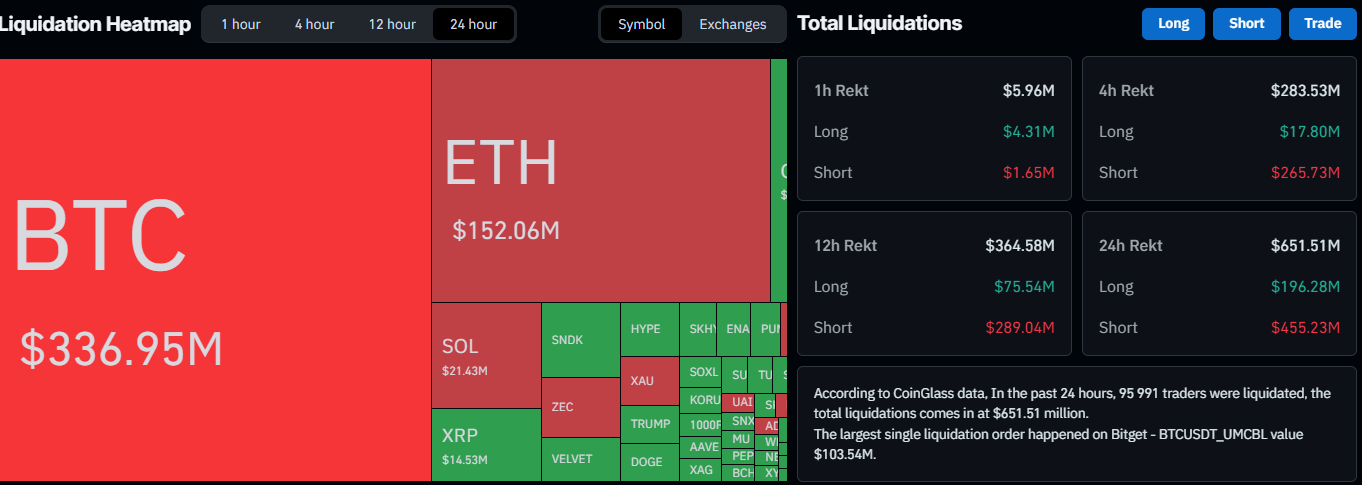
Thus, the primary cryptocurrency gained over $16,000 from its starting point of under $65,000 last Wednesday to just over $81,000 earlier today.
Some of the reasons behind this major resurgence include the US Treasury Department’s announcement from last week, the Crypto Summit in the White House, renewed ETF appetite, and Jim Cramer. Oh, wait, the last one might be a joke.
Some altcoins have followed BTC on the way up today, including ETH, which has neared $2,500 once again. Although the asset has soared by 32% in the past week, the $2,500 barrier appears too strong at the moment. XRP, on the other hand, fights for the $1.50 resistance.
SOL has surged the most from the larger-cap alts today, pumping by over 7.5%. It now trades above $100 for the first time in months as well.
The post Bitcoin Smashes $80K as $260M in Shorts Get Wiped Out: Here Are the Next Targets appeared first on CryptoPotato.


Cosmos Labs confirmed an ongoing security incident affecting users of the Cosmos EVM module. It advised chains in contact with it to ask validators to halt block production.
Three networks have now disclosed impact. KiiChain and TAC froze their chains after attackers drained accounts, while MANTRA restarted its mainnet.
3 Chains Traced Incidents to Cosmos EVM
Three networks disclosed security incidents within days of each other. All three named the Cosmos EVM module, a component that lets Cosmos SDK chains run Ethereum-style smart contracts.
MANTRA was first. BeInCrypto reported that the team halted the chain as a precaution amid a security incident in an upstream dependency. The team said two MANTRA-managed wallets were affected, and user balances were never impacted.
The network later informed users that the vulnerability was in the Cosmos-EVM module and that it had been fixed in version 8.4.0, allowing the network to resume normal block production.
Follow us on X to get the latest news as it happens
KiiChain then disclosed an exploit. The team said that on August 22, an attacker repeated the same technique 18 times, draining 148,326,583.15 KII before validators halted the chain at block 9355723.
“The vulnerability is in Cosmos code, not KiiChain code. It sits in the shared Cosmos EVM module (cosmos/evm), which KiiChain runs unmodified,” the team said.
The chain remains halted. KiiChain said the network will resume through a coordinated binary upgrade at a predetermined block height, with all validators applying the update simultaneously. The process will not require an on-chain governance proposal.
TAC halted the same day at block 24,671,475 after an attacker drained a single account. The team said the defect sits in the shared module rather than in TAC-specific code.
Cosmos Labs has pointed teams with questions to its security contact and said it will publish an incident report once the situation is resolved. It has not yet described the cause.
Subscribe to our YouTube channel to watch leaders and journalists provide expert insights
The post Cosmos Labs Confirms Cosmos EVM Incident as 3 Chains Disclose Impact appeared first on BeInCrypto.


Standard Chartered Bank Hong Kong became the first bank to distribute HKDAP on Aug. 24, giving eligible institutional clients and partners access to Hong Kong’s first live regulated local-currency stablecoin.
Summary
- Standard Chartered became HKDAP’s first bank distributor, extending access to eligible institutional clients and partners.
- Anchorpoint holds one of two stablecoin issuer licences granted by Hong Kong’s regulator in April.
- HKDAP launched through controlled beta access on Ethereum for institutions and professional investors this month.
- Standard Chartered plans tokenized money market fund subscription and settlement services during fourth quarter 2026.
- Anchorpoint reported 522,000 HKDAP circulating as of August 19 during the limited beta rollout period.
Anchorpoint Financial issues HKDAP, short for “HKD At Par,” under licence FRS01 from the Hong Kong Monetary Authority. Standard Chartered is Anchorpoint’s largest shareholder and established the company with HKT and Animoca Brands.
Hong Kong granted two stablecoin issuer licences in April, one to Anchorpoint and another to HSBC. That distinction is important: the regulator licensed two issuers, but HSBC had not publicly launched its stablecoin when Standard Chartered announced its distribution service.
Standard Chartered adds a bank channel for HKDAP
Standard Chartered joins HashKey Exchange and OSL as an authorized HKDAP distributor. HashKey and OSL began offering beta access earlier in August, before Standard Chartered became the first conventional bank to join the distribution network.
Eligible clients can use authorized distributors to convert Hong Kong dollars into HKDAP and redeem the tokens for fiat currency. Access remains limited to institutions, corporate customers and professional investors during the current phase.
As previously reported, Anchorpoint launched HKDAP through a phased institutional rollout. HashKey subsequently completed an initial minting and redemption transaction for approved clients.
HKDAP operates on Ethereum and is intended to maintain a value of HK$1 per token. Hong Kong’s Stablecoins Ordinance requires licensed issuers to maintain adequate reserves, segregate those assets and process redemptions at par.
Anchorpoint’s published figures showed 522,000 HKDAP in circulation as of Aug. 19. That limited supply reflects the project’s controlled beta status rather than broad consumer adoption.
HKDAP will target tokenized fund settlement
Standard Chartered plans to introduce subscription and settlement services for tokenized money market funds during the fourth quarter. The bank said it would work with international and Hong Kong asset managers.
A stablecoin can provide the cash side of a tokenized fund transaction on the same blockchain infrastructure used to record the fund units. This can reduce the timing gap between transferring an investment and completing its payment.
Standard Chartered said the service could support faster settlement, but the bank has not named participating managers or disclosed expected transaction volumes.
The project builds on the bank’s existing tokenization work. Standard Chartered already provides infrastructure for China Asset Management Hong Kong’s tokenized money market fund and previously tested tokenized deposit settlement through the HKMA’s Project Ensemble.
The bank will also test HKDAP for transfers between companies within its group. Further proposed applications include cross-border payments, treasury management and transfers outside conventional banking hours.
Those uses remain pilots or planned services. Standard Chartered has not announced a commercial launch date beyond the Q4 target for tokenized fund subscriptions and settlement.
Hong Kong licensed two stablecoin issuers
The HKMA awarded its first licences to Anchorpoint and HSBC on April 10 after receiving 36 applications. The regulator has said it will remain selective when considering further approvals.
Anchorpoint adopted a business-to-business-to-consumer distribution model. Instead of serving every holder directly, it works with regulated banks, exchanges and commercial partners that provide access and fiat conversion.
In related coverage, HashKey became an authorized distributor for institutional HKDAP access. OSL also provides distribution, liquidity and conversion services during the beta period.
The HKMA has warned investors about unrelated tokens using the HKDAP name. Its April warning said tokens carrying HKDAP or HSBC tickers were circulating without connections to the licensed issuers.
Users must therefore verify contract addresses and access the stablecoin through Anchorpoint’s authorized channels.
Independent review raises contract questions
Security researcher Yajin Zhou published an independent review of HKDAP’s Ethereum contract after its beta launch. The analysis questioned elements of its custom approval, upgrade and access-control architecture.
The review claimed some compliance controls did not operate as expected, but the findings were not an HKMA enforcement determination or confirmed exploit.
No theft or loss was identified in the review. Anchorpoint had not published a detailed public response to the findings at the time of writing.
The next measurable developments will be named asset-manager partnerships, actual fund settlement transactions and updated reserve disclosures. Anchorpoint has also said wider access, including a possible retail expansion, may arrive by the end of 2026, subject to market conditions and regulatory requirements.
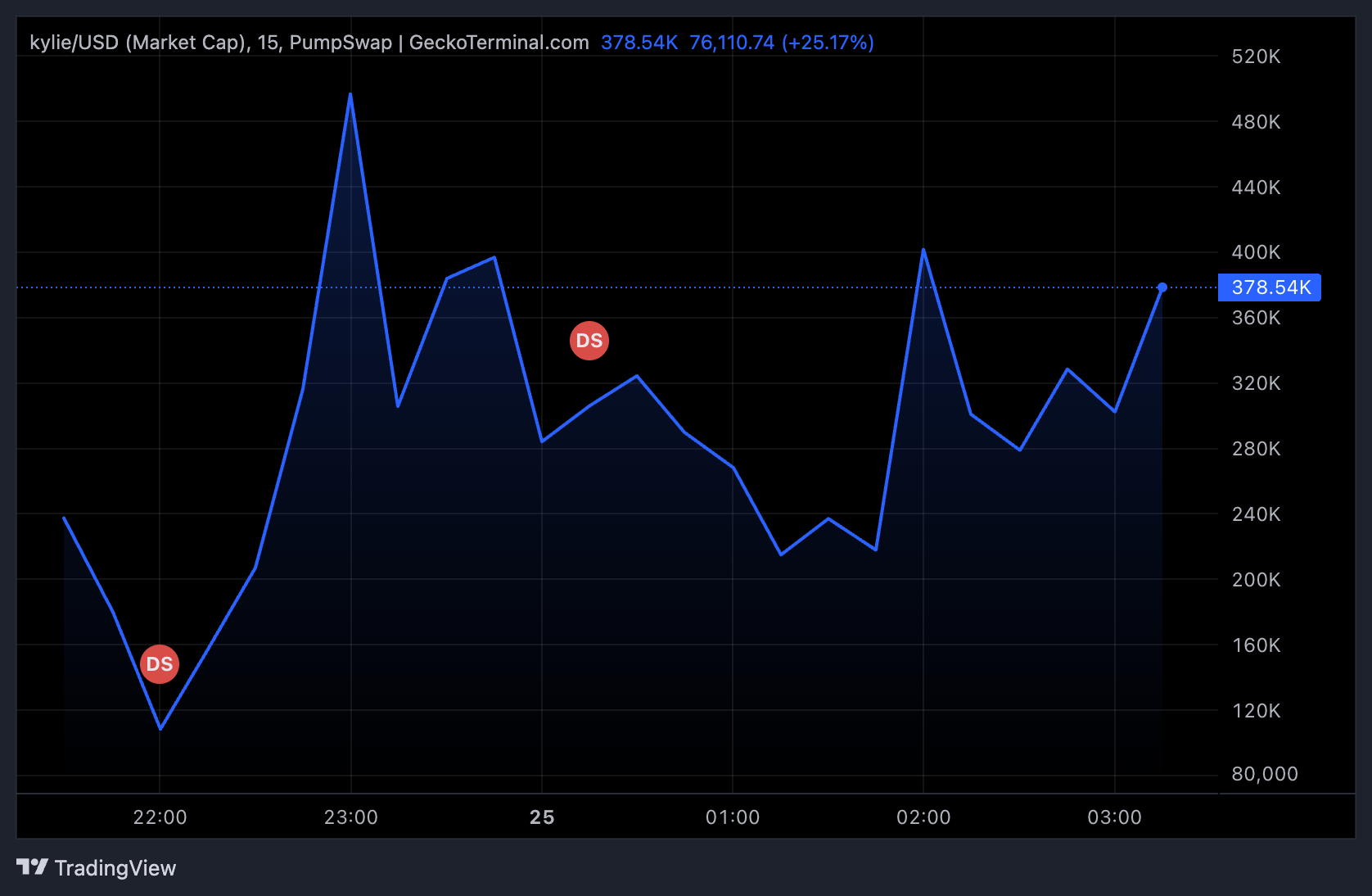
Kylie Jenner’s X account was reportedly hacked and used to promote a meme coin called kylie. The token’s market capitalization peaked at nearly $1.19 million before falling by roughly 68%.
The posts no longer appear on the account, which has 39.5 million followers. Several other kylie tokens are now trading on the Solana (SOL) network, each only a few hours old.
Deleted Posts Sent kylie Token Past $1 Million
The account first posted a casual message about trading, then pointed followers to a Pump.fun profile named cutekjenner. A second post carried the ticker and a contract address.
Follow us on X to get the latest news as it happens
The two posts drew roughly 50,000 and 33,000 views before deletion. Community accounts flagged the abrupt tone as a sign of compromise.
The token climbed to a $1.19 million market capitalization on PumpSwap, according to GeckoTerminal data.
At press time, its market cap stood near $378,500, with $6.1 million in 24-hour trading volume. Liquidity now sits near $58,900, held by roughly 3,700 holders.

Account Hacks Keep Turning Into Meme Coin Rug Pulls
The deleted posts left a trail of imitators behind them. Traders have minted a cluster of rival Kylie-themed tokens on Solana, most of them worth very little.
One rival kylie token, carrying the same profile image, reached a $1.04 million market cap on $6.72 million in trading volume. Others sit between $29,800 and $370,300. None had traded for longer than seven hours at the time of writing.

The playbook mirrors recent takeovers. Attackers used the SpaceX and Starlink accounts in July to push SCATMAN, netting around $125,000.
In late July, Robinhood CEO Vlad Tenev’s account was compromised, and the attacker cleared roughly $1.2 million through Vladhood.
Senator Cynthia Lummis’ compromised account then promoted a fake USA token, while actor Dean Norris disowned a DEAN coin in January 2025.
Subscribe to our YouTube channel to watch leaders and journalists provide expert insights
The post Kylie Jenner's X Account Reportedly Hacked to Push Meme Coin That Crashed 68% appeared first on BeInCrypto.

Strive, the Nasdaq-listed firm known for a corporate Bitcoin treasury program, bought 1,110 Bitcoin for roughly $81.5 million in the week of Aug. 17–Aug. 21, according to a filing with the US Securities and Exchange Commission. The purchases brought its total holdings to 21,356 BTC.
In the same filing, Strive said it paid an average of $73,409 per Bitcoin (including fees and expenses) for the tranche acquired during that period. Cash and cash equivalents increased by $17.1 million to $171.9 million, while its Class A shares outstanding rose by 3.65 million to 79.89 million.
Key takeaways
- Strive added 1,110 BTC between Aug. 17 and Aug. 21, lifting total holdings to 21,356 BTC.
- The company’s average purchase price was $73,409 per BTC (with fees/expenses), versus Bitcoin trading near the $79,000 level on Monday.
- Strive’s latest buying strengthens its position among public corporate Bitcoin holders, moving it into the top tier tracked by BitcoinTreasuries.NET.
- Strive also reported improvements in liquidity (cash up $17.1 million) alongside share growth during the same reporting window.
- Separately, Strive’s SATA preferred shares returned to the company’s $99–$101 target range after trading near $83.30 in late June.
Another tranche adds to Strive’s corporate Bitcoin stack
The latest treasury update underscores how Strive continues to pursue a steady acquisition cadence. The SEC filing details that Strive paid $73,409 per BTC on average for the 1,110 coins purchased between Aug. 17 and Aug. 21.
That average cost was below the approximate $79,000 Bitcoin price level referenced on Monday in the company’s disclosure context, meaning the new buys were made at a discount to the market price at the start of the week. While the filing does not frame the transactions as a hedging strategy, investors generally focus on the relationship between treasury purchase prices and the prevailing spot market as a signal of how aggressively a company is adding during different market regimes.
BitcoinTreasuries.NET ranks Strive among the largest publicly traded corporate holders. Based on that site’s data, Strive moved to the seventh-largest position behind Bullish and ahead of SpaceX.
Why investors track Strive alongside its asset management business
Strive’s corporate treasury is only one part of its broader footprint. The company operates a Bitcoin-focused treasury strategy alongside an asset management business that, according to its own overview page, manages nearly $3 billion across exchange-traded funds and a direct-indexing platform.
The combination matters because it ties the company’s market positioning to both Bitcoin holdings and recurring business activity in capital markets products. For public-market investors, that dual exposure can influence how the equity trades: sentiment about corporate Bitcoin accumulation can amplify interest, while performance expectations for the asset management segment can affect overall valuation.
In addition to Bitcoin, Strive reported holding 505,000 shares of Strategy’s STRC preferred stock valued at $48.6 million as of Aug. 21, reflecting the cross-ecosystem nature of corporate Bitcoin finance. The disclosure also offers a reminder that corporate Bitcoin holders often maintain diversified positions across preferred structures, not just spot-equivalent BTC exposure.
SATA preferred shares return to the $100 target band
Beyond Bitcoin purchases, Strive’s filing and market commentary also draw attention to SATA, the company’s variable-rate perpetual preferred stock. SATA closed at $100.01 on Friday, returning to management’s targeted $99-to-$101 trading range after having fallen as low as $83.30 in late June.
Strive previously narrowed the trading range from $95–$105 to $99–$101 in March. The company also stated that it would not issue SATA through at-the-market or follow-on offerings below $100, a term designed to limit dilution at lower price levels and to support the intended trading band.
The instrument launched in November 2025, initially selling 2 million shares at $80 each for $160 million in gross proceeds. SATA’s structure includes a stated amount and an initial liquidation preference of $100 per share.
Operationally, Strive positions SATA as an income-oriented product, with a variable dividend rate intended to help keep the shares near $100. In April, the firm raised the annualized dividend rate to 13% and began switching from monthly to daily dividend payments starting June 16, per Strive’s SEC filings.
On Monday, SATA performance suggested renewed stability after a period of weakness. That pattern is important for investors who treat preferred shares differently from common stock: preferreds typically attract buyers seeking income characteristics, but their market price still depends on interest-rate mechanics, dividend expectations, and confidence that the issuer will maintain the design guardrails.
Cross-comparison with Strategy’s STRC and its BTC pause
Because SATA is similar to STRC, the variable-rate perpetual preferred stock issued by Strategy, many traders compare their pricing and dividend behavior. Strategy’s STRC was trading near $97 on Monday, below Strategy’s $100 target, while Strategy reported no Bitcoin purchases for the week ended Aug. 23, according to earlier coverage.
That contrast highlights a potential asymmetry in corporate accumulation behavior: Strive continued buying into the Aug. 17–Aug. 21 window, while Strategy’s most recently reported week showed no purchases. Even without making assumptions about future timing, investors typically watch for whether pause periods broaden or remain temporary—especially because accumulation schedules can affect how markets price treasury companies’ future cash flows, dividend capacity, and balance-sheet momentum.
Strive’s SATA returning toward its target band adds another layer to those comparisons. When preferred instruments track toward their $100 reference points, it may reinforce confidence in the issuer’s dividend-setting framework, even as the underlying Bitcoin market fluctuates.
Looking ahead, investors should monitor two things closely: whether Strive’s BTC purchasing pace continues across the next reporting windows, and whether SATA sustains its return to the $99–$101 band as dividend mechanics respond to broader market conditions. The next few filings should also clarify if corporate accumulation and preferred-share stabilization remain aligned—or diverge.


BNB Smart Chain (BSC) activated its Pasteur hard fork on Tuesday, closing bridge verification and validator authorization gaps while introducing a new route intended to fit more transactions into each block.
In a Tuesday post, BNB Chain confirmed that Pasteur was live on the BSC mainnet. The team said the upgrade strengthens the network’s bridge, staking and governance security while giving blocks more capacity without changing its 450-millisecond block time.
The upgrade combines three BNB Evolution Proposals. BEP-682 rejects duplicate validator entries during cross-chain light-block verification, while BEP-695 tightens controls involving validator key rotation, slashing and governance voting. Furthermore, BEP-675 changes how specialist builders submit blocks to validators.
The upgrade prevents validators from being counted more than once in bridge approvals, removes authority from old validator keys and blocks restricted addresses from voting, while aiming to fit more transactions into blocks during busy periods.
Pasteur targets fuller blocks
Under BSC’s previous block-building route, a builder executed transactions before submitting a proposed block, and the validator executed them again before signing it. BNB Chain said the repeated work took time away from builders operating within the network’s 450-millisecond block window, sometimes leaving blocks underfilled.
BEP-675 allows builders to submit blocks they have already executed. Validators check the proposed block against consensus rules, sign and broadcast it, then complete full execution verification afterward. Builders can also continue using the previous route, under which validators execute transactions before signing.
Related: BNB Chain pursues legal action after ex-employee’s memecoin launch
In tests conducted on QANet, an internal environment designed to mirror BSC’s geographically distributed validators, the new route increased throughput by about 88%, from 1,237 to 2,324 transactions per second. Average gas used per block rose from 46.35 million to 84.15 million while the block interval and 100-million gas limit remained unchanged.
BNB Chain cautioned that the figures came from a controlled test workload and were not mainnet measurements.
Pasteur follows previous upgrades centered on reducing block times. BSC’s Maxwell hard fork reduced its average block time from 1.5 seconds to about 0.8 seconds in June 2025, while BNB Chain said the subsequent Fermi upgrade brought it down to 450 milliseconds.
Magazine: MiCA cracks down on USDT in Europe… but no one else cares
Your legal rights if bad weather cancels your flight

Afcons Infrastructure shares rally 4% after receiving Rs 335.5 crore arbitration award

BNB Chain activates Pasteur hard fork on mainnet





-

 Fashion3 days ago
Weekend Open Thread: Madewell – Corporette.com
-

 Business3 days ago
Musk’s Tesla, SpaceX Confirm $16.8 Billion ‘Terafab’ Chip Plant as World’s Largest Building in Texas
-

 Crypto World3 days ago
anatomy of crypto’s biggest liquidation event since 2021
-

 Business7 days ago
SMA Solar Technology AG (SMTGY) Q2 2026 Earnings Call Transcript
-

 Politics3 days ago
6 months on, Irish renters crushed by effects of government housing bill
-
 NewsBeat3 days ago
The ‘Lucky Dip Gang’ causing carnage for clicks: After five thugs were killed speeding in the wrong direction on a motorway, GUY ADAMS investigates a sick new trend… and why police aren’t even allowed to pursue them
-

 Tech6 days ago
GLM-5.3 hits the API at $1.4/$4.4 per million tokens
-

 News Videos5 days ago
Don’t Leave Your Financial Future To Chance | August 19, 2026
-

 Business2 days ago
Mystery AI Model ‘Ox Alpha’ Draws Developers With Free Access as Chinese Lab Origins Remain Debated
-

 Tech7 days ago
Keychron K8 Ultra 8K review: a great value keyboard with comfort issues
-

 Business4 days ago
Five Below: Kids Discount Retailer Reaps Rich Rewards
-

 Business7 days ago
Stock Market Today: Tech Futures Slide As Treasury Yields Jump; Nvidia, Micron, Sandisk Sell Off
-

 Business6 days ago
Marvell Shares Jump 7% as Google Chip Deal Confirms Custom AI Silicon Partnership, Analysts
-

 Tech7 days ago
Ken Okuyama’s Kode89 Supercar Features Three Pedals and a Choice of V12s
-

 Politics7 days ago
The House Opinion Article | Security means more than military spending
-

 Politics7 days ago
Ricky Gervais Denies ‘Snubbing’ BBC’s The Office Anniversary Special
-

 Sports2 days ago
Deshaun Watson fires back at Browns fans after being booed: ‘It’s a disrespectful thing’
-

 Crypto World7 days ago
Compound approves $52M institutional DeFi program
-

 Tech7 days ago
Lock It Up: Android 17’s Latest QPR2 Beta Introduces a Built-In App Lock
-

 Tech7 days ago
This May Look Like Plastic Rods and a Hand Lever, But It’s Acutally a Digi-Comp 1 Mechanical Computer from 1963
You must be logged in to post a comment Login