
Crypto World
Chainalysis Challenges $95M ICE Contract With TRM Labs



Blockchain analytics company Chainalysis has sued the United States government over an Immigration and Customs Enforcement (ICE) decision to award a sole-source contract to competitor TRM Labs.
On July 27, Chainalysis Government Solutions filed the challenge in the US Court of Federal Claims. The relevant motion became publicly accessible through CourtListener’s RECAP archive on Sunday.
A federal award notice values the contract at about $94.6 million and says it covers forensic software and support services for Homeland Security Task Force investigations. The one-year award runs from July 1, 2026, through June 30, 2027.
Chainalysis alleged that ICE’s decision was “arbitrary, capricious, and unreasonable.” It said it had submitted a capability statement in response to ICE’s notice of intent to obtain forensic software and support services from TRM, but that its economic interests would be affected by the decision.
Both companies provide blockchain analytics tools that government agencies use to trace cryptocurrency transactions and investigate crime.
According to the motion, the complaint remains under seal because it contains Chainalysis’ confidential and proprietary information and trade secrets. The court granted Chainalysis permission to maintain the complaint under seal on July 31.
TRM intervened in the case on July 28. The court has scheduled responses from the government and TRM for Friday and oral argument for Sept. 2. The government requested a decision by Sept. 10. The public filings do not detail Chainalysis’s specific objections or requested remedy.
TRM Labs declined to comment. Chainalysis and ICE did not respond to requests for comment before publication.
Magazine: Data of 54,000 wallet users leaked, CLARITY odds just 10%: Hodler’s Digest



The scale of the positioning is easier to see measured in tokens. About 2.77 billion XRP now sits in futures positions, up from closer to 2 billion earlier this summer and nearing the levels last seen when the token was worth several times more.
The ledger is getting busier too. Nearly 50,000 addresses were active over one 24-hour stretch, the most in more than two months, per Santiment, after activity slid close to its 2026 lows in July.
An active address is a wallet that sent or received anything during the period. It shows more wallets are using the ledger, but not whether the people behind them are buying, selling or shuffling tokens between their own accounts.
CoinGlass data shows the long-to-short ratio across all venues at about 0.93 over 24 hours, meaning positioning market-wide is close to balanced. The heavy long bias sits on Binance, OKX and among their bigger accounts.
Watch what happens if XRP breaks below $1, as leveraged longs that run out of collateral get closed by the exchange, which could mean selling into the market.
XRP trades around $1 in Asia morning hours Monday, with bitcoin topping $64,000.


Ethereum co-founder Vitalik Buterin credited Bitcoin developers on Aug. 16 for work on Utreexo while describing a proposed Ethereum scaling direction that could combine UTXO-style state, conventional dynamic state and models between the two.
Summary
- Vitalik Buterin credited Bitcoin developers for Utreexo while outlining Ethereum’s proposed hybrid state scaling strategy.
- Ethereum researcher Toni Wahrstätter proposed native UTXOs that could cut payment state usage roughly 99.8%.
- The proposal keeps Ethereum accounts while moving simple one-shot payments into a lighter UTXO-style model.
- EIP-8141 Frame Transactions, required by the UTXO design, is currently only considered for Hegotá inclusion.
- Vitalik’s recursive-STARK mempool proposal limits proof bandwidth overhead rather than proving unlimited Ethereum transaction throughput.
In an X post, Buterin called it the “current proposed Ethereum scaling strategy,” making clear that the architecture remains under development.
Buterin said the goal is to let most Ethereum activity scale much further without sacrificing decentralization, censorship resistance or ease of running nodes. His comments do not mean Ethereum has decided to replace its account model with Bitcoin’s UTXO architecture. The relevant designs remain research proposals rather than approved protocol changes.
Bitcoin’s Utreexo offers a model for reducing node state
Utreexo was introduced by MIT Digital Currency Initiative researcher Thaddeus Dryja in 2019. Instead of requiring a validating node to locally hold the full Bitcoin UTXO set, the design represents that set with a compact hash-based accumulator. Transaction inputs carry inclusion proofs that allow nodes to verify relevant outputs against that accumulator.
MIT DCI’s original paper says the accumulator grows logarithmically with the underlying set. That addresses the same broad problem Ethereum researchers are examining: increasing network activity without forcing state-storage requirements to rise at the same pace. Utreexo remains a Bitcoin scaling project rather than a feature Ethereum is copying directly.
Ethereum’s native UTXO proposal targets payment state
A July 6 Ethereum Research proposal from Toni Wahrstätter, writing as Nero_eth, proposes adding native UTXO-like payments without removing Ethereum accounts. The model targets one-shot payments that do not require persistent smart-contract state.
The proposal estimates that these workloads could reduce permanent state usage by roughly 99.8%. Rather than storing the full payment object in active state, Ethereum would prove its existence from history while mainly retaining a compact spent-status bit. At one billion entries, the proposal estimates roughly 300 MB of permanent state, compared with about 100 GB to 150 GB for equivalent account or storage entries. Those are design estimates, not measured mainnet results.
The approach fits Ethereum’s wider effort to reduce verification and storage burdens. As crypto.news previously reported, Ethereum’s Lean rebuild places recursive cryptographic proofs at the center of its proposed verification overhaul.
Recursive STARKs solve a different scaling bottleneck
Buterin’s January recursive-STARK mempool research tackles proof bandwidth. His model assumes highly optimized STARK proofs of about 128 kB and proposes that mempool nodes periodically combine validity proofs recursively instead of attaching a separate large proof to every object being propagated.
Using Buterin’s example of eight peers and 500-millisecond aggregation intervals, extra bandwidth would total about 2 MB per second per node and remain constant as more objects enter the scheme. The mempool research and native UTXO proposal address different constraints, although researchers are exploring how such technologies might complement one another.
A community response extrapolated the combination into an architecture capable of settling an “unbounded volume” of UTXO transitions through a compact proof. That is not a confirmed Ethereum throughput target or roadmap commitment. Buterin’s research does not establish unlimited transaction capacity, and the 128 kB figure describes an assumed STARK proof size in his mempool model, not a confirmed future Ethereum block format.
What happens next for Ethereum scaling
The native UTXO proposal assumes EIP-8141, or Frame Transactions, for its preferred spending design. EIP-8141 would introduce programmable transaction frames covering validation, gas payment and execution. The official Hegotá specification currently lists Frame Transactions only as “Considered for Inclusion.” FOCIL, or EIP-7805, remains the only proposal formally scheduled for Hegotá.
Ethereum’s official roadmap places Hegotá in 2027, after Glamsterdam in the fourth quarter of 2026. Native UTXOs are not currently listed as a scheduled Hegotá feature. As crypto.news reported, Hegotá’s 2027 upgrade scope is still being narrowed, with Frame Transactions among the major designs still under consideration.
Buterin’s Utreexo reference therefore signals a research direction rather than a dated Ethereum upgrade. The work points toward a hybrid system in which different types of activity could use different state models, while cryptographic proofs reduce what individual nodes must store or repeatedly verify.


MiCA migration scams are targeting European crypto users after the European Union’s final grandfathering period ended on July 1, forcing unauthorized crypto asset service providers to wind down covered services and move customers toward licensed firms or self-hosted wallets.
Summary
- MiCA’s July 1 deadline forced unauthorized crypto providers to wind down regulated services across Europe.
- ESMA’s late-July register listed 323 authorized providers while VASPnet estimated over 1,700 firms faced exits.
- Regulators warn scammers are impersonating authorities and exchanges, directing migrating users toward fraudulent crypto platforms.
- TRM identified 1,062 operating EEA firms without MiCA authorization in its July 1 market snapshot.
- ESMA advises users to verify providers through its official register before transferring crypto assets elsewhere.
ESMA’s June statement requires unauthorized providers to stop onboarding new EU clients and limit activity to an orderly exit.
The regulator also tells customers to check whether a provider appears in its official MiCA register before moving assets. European watchdogs now say fraudsters are exploiting those genuine migration messages by impersonating regulators and licensed exchanges and directing users to fake websites, wallets or platforms.
MiCA deadline created a new migration attack surface
The scale of the migration is large, but the numbers require qualification. A widely repeated estimate of more than 1,700 unlicensed platforms came from data provider VASPnet, not ESMA. CoinDesk cited that estimate alongside ESMA register data showing 323 authorized crypto companies in a late-July snapshot.
A separate Aug. 7 analysis from TRM Labs identified 1,343 operating EEA crypto providers in its dataset as of July 1. Of those, 281 had MiCA authorization and 1,062 did not. TRM said its figures count firms it could identify as actually providing crypto services, rather than every entry in old national registers, which explains part of the difference between datasets.
Moreover, that distinction also makes “1,700 platforms halted services” too definitive. ESMA’s rules require unauthorized CASPs to stop new onboarding, marketing and new client relationships immediately, while allowing only the services needed to sell, transfer or reallocate assets and close positions during an orderly wind-down. Custody may continue only for as long as necessary to complete that exit.
The claim that as many as 10 million users may need to migrate is likewise a media estimate, not a figure published in ESMA’s wind-down statement. The verified regulatory position is that customers of unauthorized providers do not receive MiCA safeguards and should act promptly if their provider is absent from the register.
Regulators warn scammers are copying real migration notices
The migration creates a useful script for social engineering. CoinDesk reported that France’s AMF had encountered criminals posing as regulator employees and asking victims for upfront administrative fees to recover funds. ESMA separately warns that scammers use its name, logo, counterfeit documents and copied websites to appear legitimate.
The Dutch AFM told CoinDesk that fraudsters may target retail investors searching for replacement licensed providers. Austria’s FMA has advised customers of unauthorized firms to verify providers in ESMA’s register and, where appropriate, transfer assets to an authorized CASP or a self-hosted wallet.
As crypto.news previously reported, European regulators warned that criminals were exploiting the MiCA licensing transition by impersonating regulators and licensed crypto businesses. In related coverage, TRM’s dataset found 1,062 EEA firms without MiCA authorization at the July 1 deadline, showing why customer migration remains a live fraud and compliance risk.
Users should verify the legal entity, not just the brand
For customers, the central check is the specific legal entity serving the account. A global exchange brand may operate through multiple subsidiaries, and a MiCA authorization held by one entity does not automatically cover every affiliate or product. Regulators therefore advise users to verify the provider and permitted services before transferring assets.
The ESMA register remains the authoritative EU source. A third-party CASP tracker launched in August makes the information easier to search, but its operators themselves say final verification should still be completed against ESMA and the relevant national regulator. As crypto.news reported, the new MiCA CASP tracker turns ESMA authorization data into a searchable directory.
Finally, the next phase is enforcement and supervision. ESMA said it and national competent authorities will monitor whether major unauthorized cross-border providers wind down without delay and can take coordinated action where necessary.
Users meanwhile face an ongoing phishing risk while genuine providers continue issuing withdrawal, transfer and account-restriction notices. ESMA says it will “never approach you” to request personal information under the pretext of recovering funds or demand an administrative fee. Any unsolicited migration request asking a user to transfer crypto should therefore be independently verified before assets move.


Sandisk-linked perpetual futures have become the crypto market’s largest equity perpetual trade, with aggregate SNDK open interest reaching $1.73 billion on Aug. 17 across 32 tracked venues.
Summary
- SNDK stock perpetual open interest reached $1.73 billion, ranking first among equity-linked perpetual contracts globally.
- Twenty-four-hour SNDK perpetual volume reached $2.51 billion, nearly eight times Micron’s comparable $320 million volume.
- SKHX open interest climbed to $1.35 billion, narrowing SNDK’s lead from earlier reported comparisons substantially.
- Jane Street disclosed 7.41 million Sandisk shares, representing exactly 5.0% beneficial ownership in July 2026.
- Cboe and MIAX records identify major market makers supporting SNDK-related options across multiple traditional venues.
The position puts SNDK ahead of other stock-linked contracts including SK Hynix and SpaceX as crypto exchanges expand around-the-clock derivatives tied to traditional assets. Loris Tools’ latest data was updated at 02:57 UTC.
Trading activity has accelerated even faster. Aggregate 24-hour SNDK perpetual volume reached $2.51 billion, up 248% from the previous 24-hour period and ranking fourth among all perpetual assets tracked by Loris behind only Bitcoin, Ethereum and Solana. Micron-linked perpetuals generated about $320 million over the same snapshot, meaning SNDK volume was nearly eight times higher.
SNDK open interest leads a fast-changing stock perp market
SNDK’s $1.73 billion in open interest was followed by SKHX at about $1.35 billion and SpaceX-linked SPCX at $967.7 million. Micron stood at roughly $499.6 million. That makes SNDK approximately 1.3 times the size of SKHX and 1.8 times SPCX based on the latest synchronized snapshot.
Those figures update an earlier WuBlockchain Data comparison that placed SKHX around $493 million and SPCX near $928 million. The sharp increase in SKHX means the previously cited claim that SNDK was 3.51 times larger is already outdated, although SNDK remains the largest stock perpetual by open interest. The rapid changes illustrate how quickly leveraged positioning can shift in these markets.
The growth fits a broader trend. As crypto.news previously reported, open interest in perpetuals tied to stocks, commodities and other traditional assets had already climbed above $2 billion by July, after sitting between roughly $350 million and $500 million during spring.
Sandisk’s stock rally adds fuel to derivatives activity
The derivatives surge follows a sharp move in the underlying Sandisk shares. SNDK closed the Aug. 14 U.S. session at $1,641.11, up 7.37% for the day, with roughly 21 million shares traded. That price move preceded the latest weekend increase in crypto perpetual activity. There is no evidence that any single corporate announcement directly caused the rise in perpetual open interest.
Sandisk has nevertheless delivered several major corporate updates this month. The company reported fiscal fourth-quarter revenue of $8.97 billion, up 51% sequentially, with GAAP net income of $6.90 billion. Fiscal-year revenue reached $20.25 billion, while the board expanded its share repurchase authorization by another $14 billion.
At its Aug. 13 investor day, Sandisk said eight new business model agreements now cover approximately 50% of expected fiscal 2027 bit volumes and about two-thirds for fiscal 2028. Management also projected mid-to-high-teens revenue growth for fiscal 2028 through 2030 and said it “expects to return 100 percent of excess cash” after investing in the business. Those longer-term figures are company targets, not guaranteed results.
Jane Street disclosed a 5% Sandisk position
Traditional market makers are also heavily present around the underlying equity and its derivatives. Jane Street Group filed a Schedule 13G on Aug. 5 showing beneficial ownership of 7,409,437 Sandisk shares as of July 30, equal to exactly 5.0% of the company’s common stock. The filing states the securities were not acquired for the purpose of changing or influencing control of Sandisk.
The stake should therefore not automatically be interpreted as a directional investment thesis. Jane Street Capital accounted for 5.89 million of the reported shares, while other affiliated entities held the remainder. Jane Street is also a large electronic market maker across traditional securities and digital asset markets.
Cboe’s current symbol directories identify Susquehanna Securities as the designated primary market maker for SNDK on Cboe Options and IMC Financial Markets for SNDK on EDGX Options. Those assignments establish liquidity-provision roles on the listed-options venues; they do not establish that either firm is making markets in crypto SNDK perpetuals.
MIAX provides another link to the broader SNDK derivatives ecosystem. Its May 26 notice named Citadel Securities as primary lead market maker for options on the T-REX 2X Long SNDK Daily Target ETF, or SNDU.
What happens next for SNDK perpetuals
The immediate metric to watch is whether SNDK can maintain its lead as open interest rotates among equity contracts. SKHX has already closed much of the gap indicated by earlier figures, while SPCX remains close to $1 billion. High open interest also does not indicate whether traders are predominantly bullish or bearish because it measures outstanding positions on both sides.
The contracts also do not represent Sandisk shares. As crypto.news reported in its examination of stock perpetuals moving traditional equity exposure onchain, these instruments provide synthetic price exposure through derivatives rather than voting rights, dividends or ownership in the underlying company. With SNDK now generating $2.51 billion in daily perpetual volume, that distinction becomes increasingly important as crypto and traditional equity markets converge.
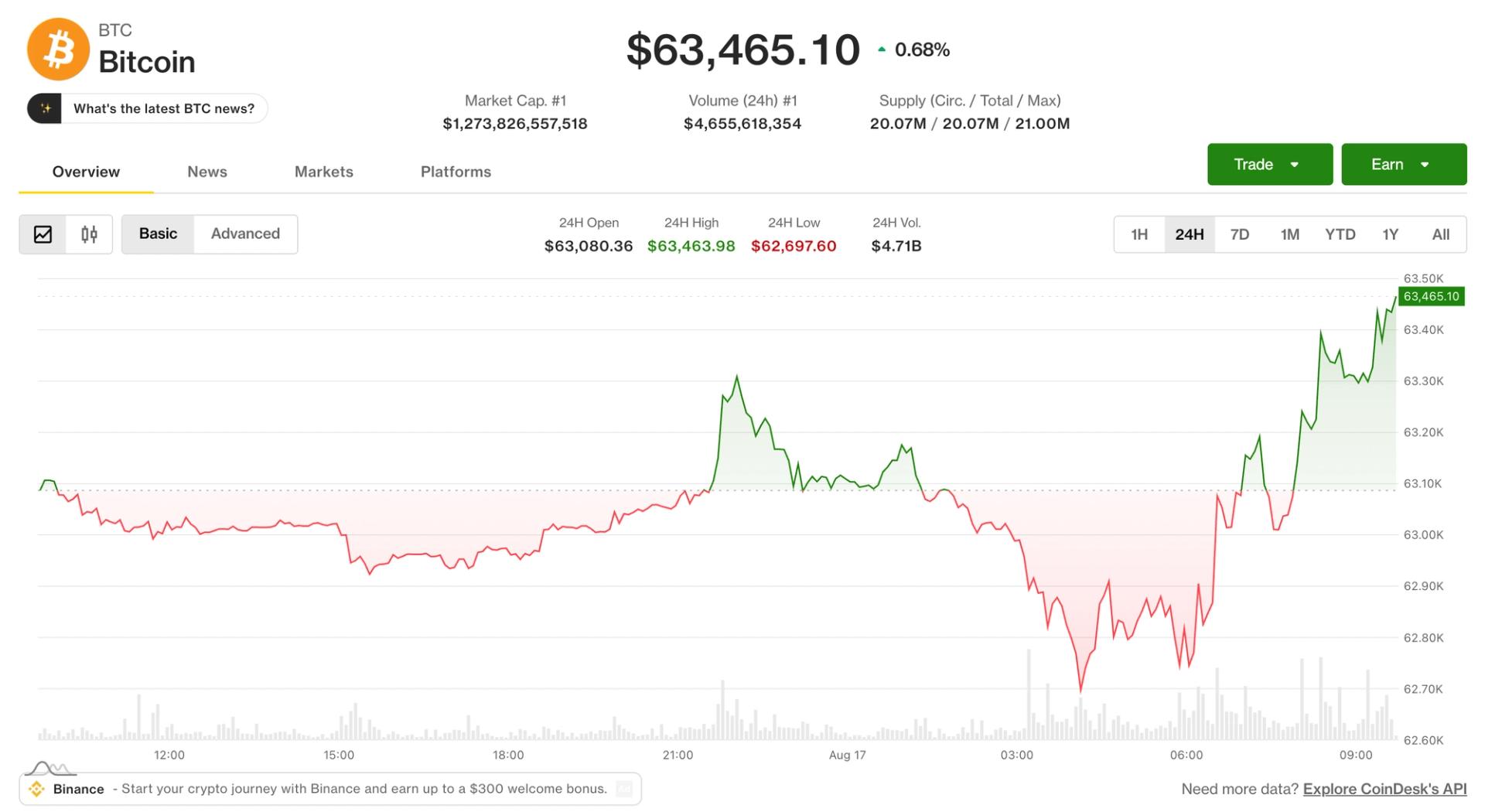
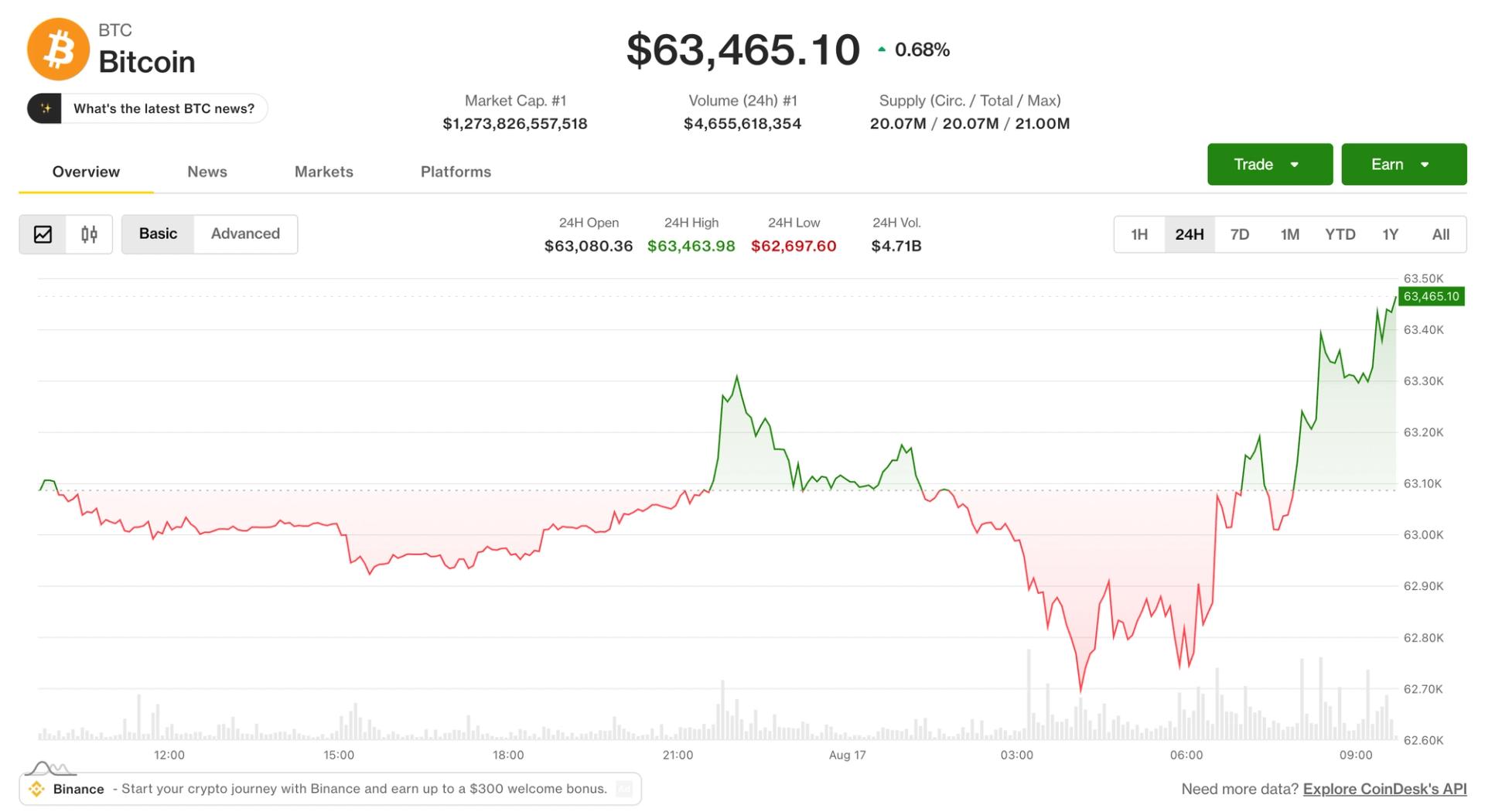
Bitcoin crossed $64,000 in Asian morning hours Monday, up half a percent on the day but down almost 3% over the week, as a softer dollar and fading rate-hike bets failed to lift crypto out of its recent range.
Hyperliquid’s HYPE was the standout, up over 3% to $59 and almost 9% on the week, the only major with a meaningful weekly gain. Ether rose over 1% to just under $1,900 but is down 1% over seven days.
Dogecoin added almost 1% to 7 cents, tron under half a percent to just over 33 cents and XRP marginally to $1, though XRP is down 3% on the week. Solana edged up to just over $75 and is down almost 2% over seven days. BNB slipped marginally to just over $604 and was flat on the week.
The macro backdrop turned friendlier without moving crypto. A Bloomberg gauge of the dollar slipped 0.1% toward a third straight decline and levels last seen in May, while MSCI’s emerging-market currency index hit an intraday record, led by the Taiwanese dollar and Thai baht.

Although the broader landscape around XRP and the ETFs behind it is nowhere near the peaks from last year, some of the most prominent names on Wall Street have not abandoned it.
Just the opposite; the recent SEC filings show that behemoths like Jane Street, Bank of America, Morgan Stanley, UBS, and a few others have reported XRP ETF positions. However, there are significant differences in their exposure.
Jane Street Leads the Pack
In its latest Form 13F filed with the SEC at the end of the previous business week, covering holdings as of June 30, Jane Street Group solidified its spot as a leader in terms of XRP ETF adoption. Data shows that the trading giant held more than 1.2 million shares of the Bitwise XRP ETF alone, alongside exposure to other funds from Franklin Templeton, Grayscale, Canary Capital, and 21Shares.
The Bitwise product exposure is particularly eye-catching because it holds spot XRP, unlike other ETFs tracking the popular altcoin. Bitwise’s product saw the light of day in November, just a few weeks after Canary Capital’s ETF hit Wall Street, and has become the largest of the bunch since.
The document covers the second quarter of the year, as confirmed by the SEC. The filing contains the company’s reportable securities position at the June 30 cutoff.
It’s worth noting that Jane Street’s involvement, since it’s one of the largest market makers and actively trades ETFs and options, should not necessarily be regarded as a simple long-term directional bet on XRP, but the scale is still difficult to ignore. Moreover, it held just 20,605 ordinary Bitwise XRP ETF shares at the end of Q1, meaning that there was a significant increase to the 1.2 million shares reported three months later.
BoA, Morgan Stanley In It
Bank of America also reported in its latest filing cycle that it held 13,260 shares of the Volatility Shares XRP ETF. However, the position is worth just $76,000, nowhere near Jane Street’s exposure. Additionally, the Volatility Shares XRP ETF is not a spot ETF such as Bitwise’s financial vehicles.
Morgan Stanley also disclosed positions in three XRP-related funds at the end of Q2: 6,715 shares of Franklin’s XRP ETF, 255 shares of REX-Osprey’s product, and 567 shares of Bitwise’s counterpart.
These holdings are quite insignificant relative to the behemoth’s overall portfolio, but they add to a growing list of institutions reporting regulated XRP exposure. Additionally, Wolverine Asset Management had nearly 200,000 Bitwise XRP ETF shares, Gallacher Capital Management reported 86,744 Capital XRP ETF shares, while Main Street Group and National Bank of Canada had 5,261 and 3,848 shares of XRP-related products, respectively.
The post Wall Street Is Quietly Loading Up on Ripple (XRP) ETFs: Here’s Who Holds the Most appeared first on CryptoPotato.


Chainalysis Government Solutions has taken the U.S. government to the Court of Federal Claims over a $94.7 million Immigration and Customs Enforcement contract awarded to rival blockchain intelligence company TRM Labs.
Summary
- Chainalysis sued the U.S. government challenging ICE’s $94.7 million sole-source contract awarded to TRM Labs.
- ICE awarded TRM Labs the contract July 1 for Homeland Security Task Force analytical support.
- The Court of Federal Claims sealed Chainalysis’s complaint and entered a protective order in July.
- Chainalysis filed its motion for judgment August 11, while government responses are due August 21.
- Oral arguments are scheduled September 2, with the government requesting a ruling by September 10.
The case, Chainalysis Government Solutions, LLC v. United States, No. 26-1067C, was filed July 27. TRM Labs has intervened on the government’s side. The court’s July 31 order confirms Chainalysis’s complaint was permitted to remain under seal and establishes an expedited briefing schedule.
Chainalysis challenges a $94.7 million sole-source award
Public procurement records show ICE awarded TRM Labs contract 70CMSD26C00000005 on July 1 for analytical support to the Homeland Security Task Force National Coordination Center Cyber Disruption Center. The contract is worth up to $94.66 million and runs through June 30, 2027. Records classify it as not competed, using sole-source procedures with one bid received.
ICE had announced its intention in June to obtain the services from a single source. Its procurement notice said the agency determined that only one source was reasonably available for the required capabilities. Interested companies were given until June 11 to submit capability statements.
Because Chainalysis’s complaint is sealed, its precise claims about why ICE’s procurement violated federal contracting rules are not publicly verifiable from the complaint itself. The public record confirms the challenge and the sole-source nature of the award, but the court has not ruled that ICE acted improperly.
TRM Labs contract covers crypto tracing and cybercrime
ICE’s publicly described requirement goes well beyond a standard software subscription. The work supports scam disruption, cybercrime investigations and sextortion cases. Required capabilities include cryptocurrency transaction tracing, blockchain analytics, open-source intelligence, asset recovery support and criminal-network mapping.
The dispute therefore places two major U.S. blockchain intelligence suppliers in direct competition for a large federal law-enforcement program. As crypto.news previously reported, ICE had already moved to acquire forensic software from both TRM Labs and Chainalysis as federal agencies expanded their ability to trace digital assets.
The technology has become increasingly important to government investigations. In related coverage, blockchain analytics have played a growing role in U.S. sanctions enforcement and crypto asset freezes, including cases involving state-linked wallets and illicit financial networks.
Court puts Chainalysis case on an accelerated schedule
Judge Stephen S. Schwartz ordered the government to produce the full administrative record and set an unusually compressed briefing calendar. Chainalysis’s motion for judgment on the administrative record was due Aug. 11, while the government and TRM Labs must file their cross-motions and responses by Aug. 21.
The latest public docket confirms Chainalysis filed its Aug. 11 motion under seal. That means the company’s detailed arguments and evidence are still unavailable for public review.
Chainalysis must respond to the government and TRM Labs by Aug. 26. Their final replies are due Aug. 31, followed by a joint appendix on Sept. 1.
What happens next
Oral arguments are scheduled for Sept. 2 at 10:00 a.m. EDT at the National Courts Building in Washington, D.C. The government has asked Judge Schwartz to issue a decision by Sept. 10.
Until the briefing becomes public or the court issues its ruling, the central legal questions remain unresolved. The confirmed facts are that ICE awarded TRM Labs a roughly $94.7 million sole-source contract, Chainalysis has challenged the procurement, and no court has yet determined whether the award violated federal acquisition rules.
Europe’s stock market has a reputation problem. Investors have long treated the region as an afterthought next to Wall Street and fast-growing Asian markets, yet its benchmark index has quietly kept pace with, and at times beaten, the S&P 500.
That reputation is not entirely undeserved. Europe has fewer high-growth companies, shallower capital markets, and a long-term earnings outlook that has rarely rivaled the U.S. or Asia’s fastest-growing tech hubs, which is part of why its recent run has gone largely unnoticed.
Europe’s Underappreciated Rally
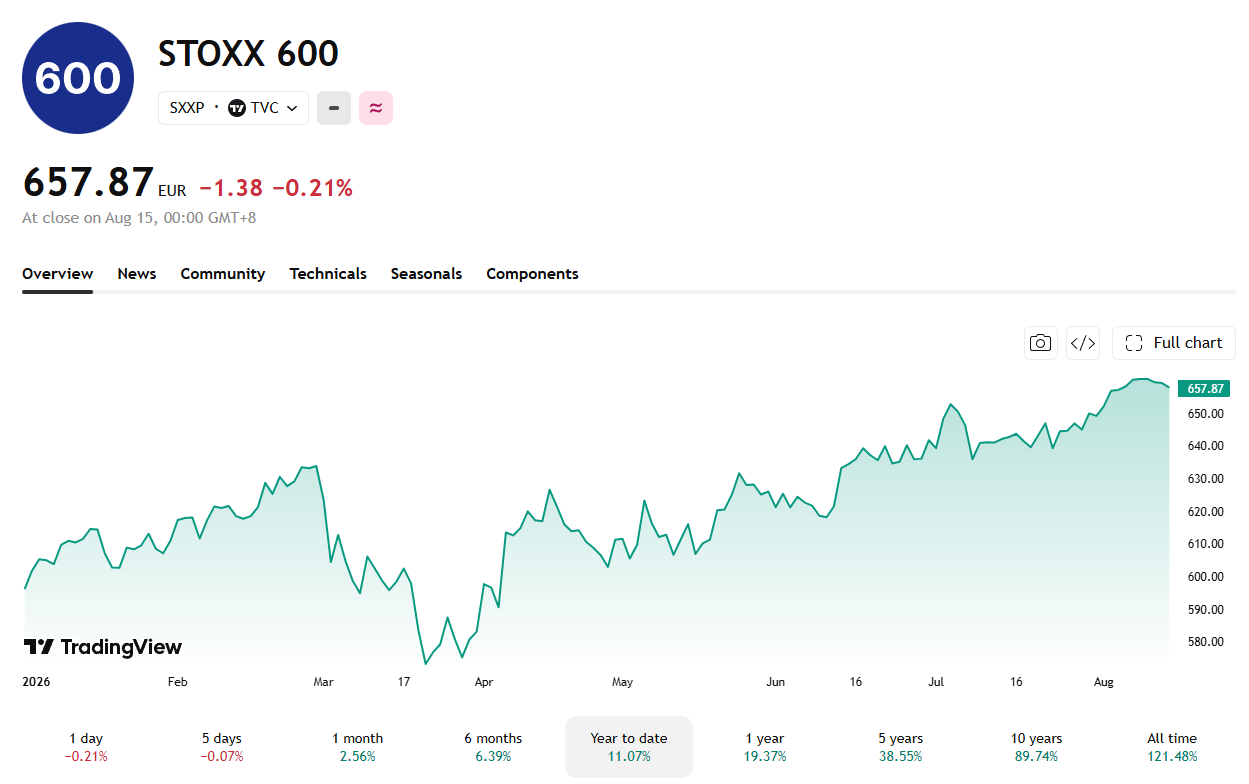
The Stoxx 600, which tracks 600 large, medium and small-cap companies across 17 European countries, is up 11% so far in 2026, trailing the S&P 500’s record run of 13.2% over the same stretch. That figure covers 2026 alone, though.

Widen the lens to include 2025, when a surge in government spending across the continent jolted European markets back to life, and the comparison flips.
Goldman Sachs argued in an Aug. 10 note that the market has misjudged Europe for years on exactly this basis. Since 2022, the bank said, European banks have significantly outpaced the Magnificent Seven, the group of dominant U.S. tech companies including Apple, Microsoft and Nvidia.
And despite a tariff shock and an energy supply crisis, the Stoxx 600 has still come out ahead of the S&P 500 since the start of 2025.
Performance [in Europe] has been far more mixed than the market narrative, or most investors realize.
The bank also pushed back on the idea that Chinese competition threatens European equities broadly. Financials, pharmaceuticals, technology, energy, utilities, telecoms, and aerospace and defense make up the bulk of the index and face little exposure to low-cost Chinese imports.

Autos, the sector most associated with that threat, account for just 1% of Europe’s total market capitalization, though the Stoxx 600 rally has largely bypassed the group. The Stoxx Autos index has fallen 16% this year, with Volkswagen down 27.6% and Stellantis down 51.9%, as slowing electric vehicle demand and higher borrowing costs weigh on the sector.
AI Trade Positions Europe as a Hedge
BNP Paribas sees opportunity precisely where the pain has been sharpest. Sophie Huynh, a portfolio manager and strategist at the firm, told CNBC that Europe is more likely to benefit from artificial intelligence adoption than to develop the technology itself, with autos among the sectors positioned to gain.
It’s about trying to understand when markets are going to start talking about this because you can sit on these deep value sectors for one or two years before the market consensus starts to realize it’s going to work.
Huynh added that strong U.S. consumption is largely priced in already, suggesting American momentum may be cooling just as Europe’s recovery gains traction, a dynamic that has also shaped recent European stock ETF inflows.
Goldman acknowledged Europe lags on data center buildouts and frontier AI model development, risks that could weigh on long-term productivity. Still, the bank framed that gap as a potential hedge for investors wary of AI-related risks, particularly around China, rather than a straightforward weakness.
Whether that lag becomes a lasting advantage may depend on how quickly the market starts pricing in Europe’s AI-adjacent sectors rather than penalizing them.
The post How Europe’s Unpopular Stock Market Is Quietly Beating Wall Street appeared first on BeInCrypto.
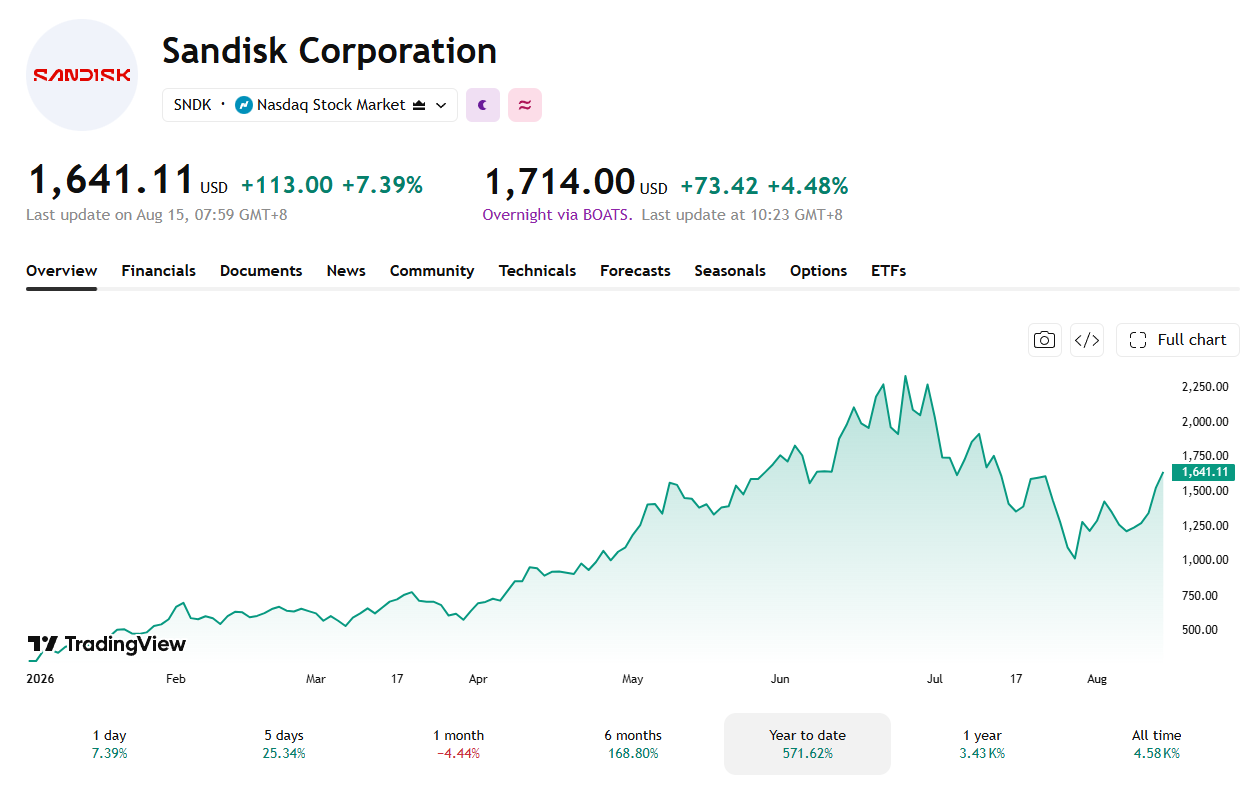
SanDisk (NASDAQ: SNDK) stock rose nearly 14% on August 13 after the company disclosed a $93.9 billion customer backlog and set a target of 80% non-GAAP gross margins through fiscal 2030 at its Investor Day.
Speaking in Manhattan, Chairman and CEO David Goeckeler framed the event as proof that his 18-month turnaround plan is finally paying off, addressing skepticism that had built up after a rough six weeks for the stock.
The Spinoff Behind SanDisk Stock’s AI Boom
SanDisk completed its split from Western Digital in February 2025 and began trading independently in late February, becoming a standalone NAND flash and solid-state drive maker just as artificial intelligence (AI) data centers began driving unprecedented demand for high-speed storage.
The latest news and stock pop comes from customers that have already signed contracts to buy $93.9 billion of SanDisk’s chips over the next several years. This is prompting Goeckeler to target a 80% gross margin, meaning SanDisk aims to keep $80 of every $100 in sales as profit.
The stock is up more than 571% so far this year, even after a sharp July pullback that briefly wiped out much of the SanDisk stock margin target optimism BeInCrypto covered days before this rally.
That surge tracks a broader memory shortage that has also lifted Micron Technology AI demand and partner SK Hynix AI milestone reports, as hyperscalers lock in supply years in advance.

Goeckeler Says the Payoff Is Just Starting
At the Investor Day, SanDisk disclosed $93.9 billion in total contract value from eight customers, with $91.1 billion still to be recognized. Management is targeting non-GAAP gross margins near 80% and operating margins near 75% through fiscal 2030, a structural shift meant to insulate the business from the boom-and-bust pricing cycles that have historically defined NAND flash.
Goeckeler cast the past 18 months as groundwork rather than reward. He told investors on the Investor Day call that he finally feels like he has reached the starting line of where the company’s real value creation will happen.
Sixteen analysts rate the stock a buy, three call it an outperform, and three hold. Their average price target sits roughly 34% above the stock’s closing price after the Investor Day pop, the widest gap on record for the stock.
Not every model agrees the framework justifies that gap. Some analysts argue the valuation already prices in years of sustained 80% margins, leaving little room for error if NAND demand cools.
Whether SanDisk’s new contracts actually smooth out that historical cycle may not be clear until the next industry downturn tests them. For now, the backlog gives investors a rare thing in the memory business, a multi-year revenue floor they can point to.
The post SanDisk Stock Locks In $94B Backlog, Targets 80% Margins by 2030 appeared first on BeInCrypto.
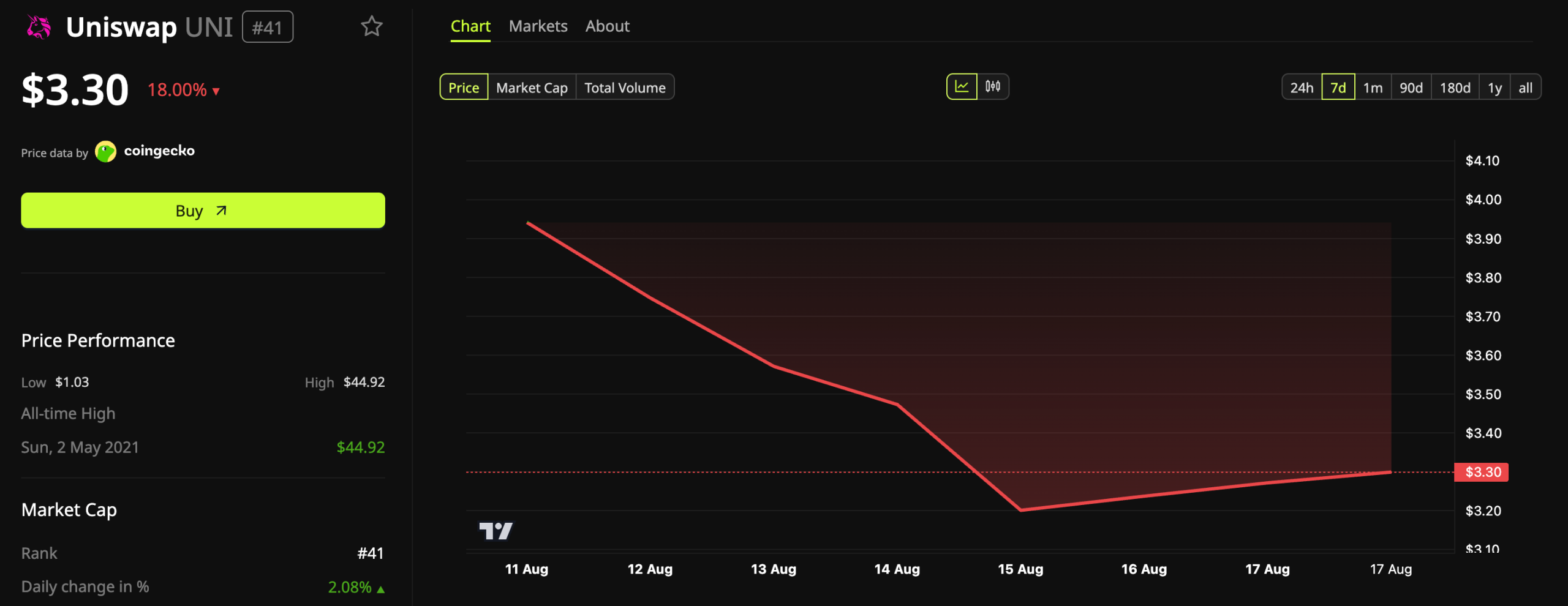
Whales pulled Uniswap (UNI) tokens off Binance at the fastest pace in five years, a sign of conviction among the token’s largest holders.
The price has moved in the opposite direction, with UNI down 18% over the past week. The withdrawals suggest large holders are looking past the slide rather than joining it.
Whales Pull UNI From Binance at Record Pace
Analyst Darkfost tracked the daily outflows generated by the 10 largest transactions on Binance. The monthly average hit 7,300 UNI leaving the exchange each day through those transactions. This marked a five-year high.
“It was notably when UNI’s price recently approached $3 that the average outflow from the ten largest daily transactions on Binance hit record highs,” the post read.
At the same time, an average of 5,600 UNI still move out daily through the same group of transactions.
“Despite a tough environment for altcoins, some are still drawing attention, particularly those being accumulated most aggressively by whales,” the analyst said.
Follow us on X to get the latest news as it happens
Standard Chartered Raised Its Outlook, The Market Did Not Follow
Large holders are buying into a supply story that a major bank has endorsed. Standard Chartered told clients last week that Uniswap burns had roughly doubled.
Geoffrey Kendrick, the bank’s global head of digital assets research, put the pace near $90 million a year. He then lifted his long-term view.
“I fear my 2030 UNI target of USD100 is too low!” he said.
Yet, the market has not followed that confidence. UNI posted the steepest weekly decline among the 100 largest cryptocurrencies by market capitalization. At press time, it traded near $3.3.

Exchange balances point the same way. UNI held across all venues rose from about 103 million on August 11 to 110.3 million, a gain of roughly 7%.

The two readings measure different things. Darkfost tracks the largest transactions on Binance, while the reserve figure covers every exchange CryptoQuant monitors.
That leaves whales and the wider market moving in opposite directions. The next few sessions will show which flow sets the tone.
Subscribe to our YouTube channel to watch leaders and journalists provide expert insights
The post UNI Price Sinks 18% While Whales and Exchanges Move Opposite Ways appeared first on BeInCrypto.

How to safely introduce my dog to another pet at home
Sunshine Biopharma earnings beat by $0.05, revenue topped estimates

What next for Ripple-linked token as bearish chatter rises

Weekend Open Thread: Staud – Corporette.com

Weekend Open Thread – Corporette.com

Weekend Open Thread: Brooks Brothers

No financial literacy & never trust your job like that make sure you have the money already saved up

Crypto Trading LIVE: BTC Live Trading Bitcoin Analysis | 14 AUG #crypto #bitcoin #btc

Is this the most delusional financial audit ever? You have to see this meltdown.
-

 Fashion2 days ago
Weekend Open Thread: Ann Taylor
-
 NewsBeat5 days ago
Communication cards help banking customers access services or report scams
-
 Business6 days ago
Oil Price Today (August 11): Crude oil rises to $88 after Trump’s compensation demand dents Hormuz opening. Here’s why
-

 Crypto World6 days ago
Revolut wins French banking licence, creates second EU banking hub
-
 Sports3 days ago
This U.S. Amateur is a glimpse into golf’s future in more ways than you think
-
 Crypto World6 days ago
Why Did Nvidia Stock Fall on Monday Despite a $500 Billion Wall Street AI Deal?
-

 Sports2 days ago
Birmingham 2026: Day 6 Timetable for Irish Athletes
-
 NewsBeat2 days ago
Myanmar says over 300,000 Rohingya refugees verified for repatriation as exodus enters ninth year
-
 Crypto World7 days ago
Grayscale quietly drops Cardano, Polkadot and Hedera ETF plans
-
 Entertainment5 days ago
Keke Palmer Subtly Hints At Sean Evans Drama With Cryptic Post
-

 Politics2 days ago
SEQ Code: The Three Letter Boarding Pass Code That Could Give You The Worst Seat
-
 Entertainment6 days ago
57 Years Later, the Best Sitcom Ever Made Still Deserves a Reboot
-

 Fashion6 days ago
Can You Wear Double Cloth Gauze Clothing To Your Office?
-

 Fashion5 days ago
Should you refinance your debt? Pros, cons, and real numbers
-
 Crypto World6 days ago
Hormuz Nerves Cost Bitcoin $65,000 Mark Despite Solid Institutional Flows
-

 Crypto World6 days ago
Bitcoin's BIP Editors Remove Luke Dashjr Two Days After BIP-110 Fork Stalled
-

 Fashion6 days ago
Claire Life: Kicking Off MVAAFF With the C Suite Luncheon Featuring Phylicia Rashad, Letoya Luckett, and More!
-

 Fashion5 days ago
Coffee Break: The Fonteyn Jane Flat
-

 Tech5 days ago
Zoom Screen-Sharing Bug Let People Fully Take Over Other Devices On A Call
-

 Fashion6 days ago
How to Mix Diamond Rings With Gold & Silver Jewelry
You must be logged in to post a comment Login