
Crypto World
China is set to kick off its big policy meeting. What will be the key announcements?

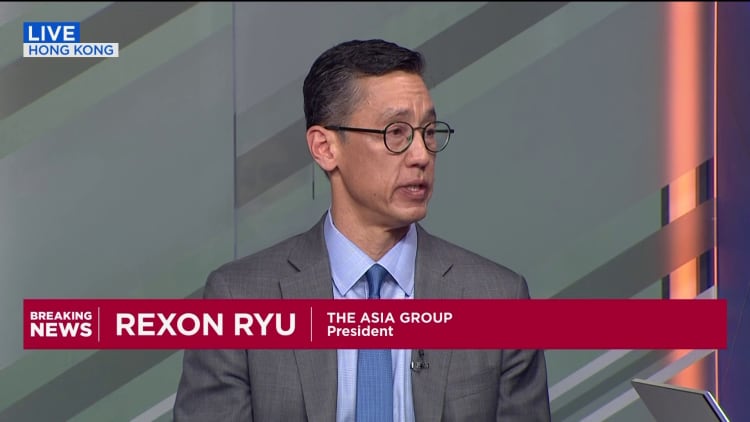
A Chinese People’s Liberation Army (PLA) soldier stands guard in front of the National Museum of China in Beijing on March 3, 2025, ahead of the country’s annual legislative meetings known as the “Two Sessions.”
Pedro Pardo | Afp | Getty Images
BEIJING — China’s top policymakers are due to release growth targets and stimulus plans for the year at an annual parliamentary meeting that kicks off Wednesday.
The gathering, dubbed the “Two Sessions,” consists of a consultative congress that will start later in the day, and a National People’s Congress due to open Thursday. Chinese Premier Li Qiang is set to announce a series of economic targets at the NPC, which had largely been decided at a December meeting.
During the upcoming parliamentary meeting this year, policymakers are also expected to release details of a new five-year development plan, the 15th such program in China’s modern history. Investors will look for clues on how Beijing intends to achieve its domestic tech ambitions.
The goals will mark the penultimate step towards China’s 2035 goals with a focus on achieving technological self-sufficiency.
Senior Chinese leaders including top diplomat Wang Yi and heads of economic and financial ministries typically speak to the press during the Two Sessions. The gathering usually lasts around a week and is expected to conclude on March 11 this year.
Asia Society analysts noted that China’s anti-corruption campaign has reduced the number of delegates participating in the Two Sessions this year.
Here’s what economists are expecting Premier Li to announce Thursday:
GDP growth of around 4.5% to 5%
Several Chinese local governments have already lowered their growth ambitions for 2026, signaling Beijing could follow suit with the national target.
A growth target below 5% would be the lowest on record, according to The Asia Society, and down from “around 5%” in the past three years. China didn’t set a GDP goal in 2020 due to the pandemic.
“A slightly lower target would give policymakers more room to prioritise structural reform and improve data quality,” economists at Economist Intelligence Unit said in a note last week, penciling in a 4.6% growth prediction.
However, Morgan Stanley analysts see a “low probability” that Beijing will set a smaller growth target, adding that policymakers typically set GDP ranges — rather than single-figure targets — for periods of major economic stress. The firm also pointed out that 2026 was the first year of China’s “15th five-year plan,” which requires faster growth to anchor confidence.

Inflation of around 2%
Budget deficit of 4%
Such a target would also match last year’s, which had marked a rare expansion of government spending relative to GDP.
The 4% deficit set in 2025 was the highest on record going back to 2010, according to data accessed via Wind Information. The prior high was 3.6% in 2020.
Deeper challenges
China’s policy announcements will be scrutinized for details on consumer stimulus, such as expanding trade-in subsidies, and any incremental support for the struggling property market. The Two Sessions will likely shed light on Beijing’s thinking about the impact of U.S. trade tensions and the developing conflict in the Middle East.

Subscribe now
The world’s second-largest economy faces persistent challenges at home.
“There is a widening gap between Beijing’s targets (and data measuring economic performance) and the actual capacity of China’s policymakers to support domestic demand with the tools at their disposal,” Logan Wright, partner at U.S.-based research firm Rhodium Group, said in a report Tuesday.
Wright added that China’s financial system was lending heavily to unproductive local government and state-owned enterprises to prevent them from collapsing — and that fiscal spending was largely executed by those same institutions.
“The net result is a declining payoff in terms of investment and economic activity for the same volume of lending or fiscal spending, while private sector investment remains weak,” he said.


The banking sector’s exposure to stablecoins remains modest for now, but analysts say the landscape could tilt as the sector of stablecoins and tokenized real-world assets (RWAs) swells in market size. While adoption is still evolving, the on-chain payments and cross-border use cases are broadening, potentially reshaping how traditional banks compete with a new class of digital assets.
According to Abhi Srivastava, associate vice president of Moody’s Investors Service Digital Economy Group, the stablecoin market capitalization exceeded $300 billion by the end of last year. Cointelegraph’s coverage highlights that figure as a marker of rapid growth, even as everyday usage lags behind headline numbers. (Source: Cointelegraph)
Srivastava noted that the role of stablecoins in payments, cross-border commerce, and on-chain finance is expanding, even as today’s U.S. payment rails remain fast, low-cost, and trusted. He argues that near-term disruption risk to banks appears limited, particularly given policy constraints that currently bar yield-bearing stablecoins from paying yields—meaning they are unlikely to replace traditional deposits domestically in the near term.
Nonetheless, the report suggests that sustained growth in stablecoins and tokenized RWAs could exert pressure on banks over time, potentially driving deposit outflows and constraining lending capacity as more financial assets migrate onto the blockchain or into tokenized forms.
The policy debate around stablecoins has become a focal point for crypto executives and bankers alike, especially as concerns grow that yield-bearing stablecoins could erode traditional banking market share. This tension is playing out in broader regulatory discussions in Washington, where the CLARITY Act—officially the Digital Asset Market Clarity Act of 2025—seeks to deliver a formal taxonomy and regulatory oversight for crypto markets. Source: Cointelegraph.
CLARITY Act stalled, as banks push back on yield-bearing stablecoins
The CLARITY Act aims to establish a comprehensive framework for digital assets, including asset taxonomy and regulatory jurisdiction. It has stalled in Congress after a coalition of crypto companies, led by Coinbase, publicly opposed earlier drafts, citing concerns over open-source software protections and a prohibition on yield-bearing stablecoins. The clash underscores a broader negotiation between the crypto industry and the banking lobby over how far regulators should go in defining and controlling digital-asset activities.
Lawmakers and the White House have pursued negotiations to bridge the gap, but concrete compromises remain elusive. Earlier this month, North Carolina Senator Thom Tillis signaled plans to release an updated draft proposal that could address concerns from both sides; Politico reports the plan exists, though no public draft has been released at this time. Source: Politico.
Analysts warn that a failure to pass a clear regulatory framework could invite renewed or stricter regulatory crackdowns on the crypto sector in the years ahead. With the CLARITY Act at a critical juncture, market participants are watching not only its fate but also how lawmakers weigh stability, innovation, and consumer protection in a rapidly evolving ecosystem. For some observers, the risk is not only about a single bill failing to pass but about the signaling effect of regulatory gridlock on market development and institutional participation.
What to watch next for stablecoins and market structure
As the debate progresses, investors and builders should monitor how stablecoins evolve in payments and cross-border use, and how tokenized RWAs intersect with traditional banking services. The outcome of the CLARITY Act negotiations, along with any new proposals from lawmakers such as Tillis, will influence not just compliance requirements but the pace at which banks and fintechs collaborate or compete with on-chain financial instruments. The broader question remains: will a clear regulatory framework unlock wider institutional adoption of stablecoins, or will it slow the pace of innovation through tighter restrictions?
Readers should stay attuned to updates from Congress and major industry voices, as the balance between fostering innovation and ensuring financial stability will shape the trajectory of stablecoins, RWAs, and the crypto market’s interaction with traditional banking in 2025 and beyond.
What remains uncertain is how quickly a consensus will emerge on yield-bearing stablecoins and related products, and how any new framework will translate into practical rules for exchanges, issuers, and users. The coming weeks could offer critical signals about the sector’s path and the readiness of policymakers to align on a shared approach to digital assets.


New York has some of the most robust press protection laws in the country. These give defendants like the Wall Street Journal (WSJ) the right to challenge a lawsuit early and get it thrown out before it becomes costly and drawn out.
Though the move may seem counterintuitive, it could be entirely deliberate. Binance may be signalling that it welcomes scrutiny and has nothing to hide. The move appears designed to send a clear message to those who hold assets on its platform that the exchange will fight back even at the risk of what a full legal proceeding might expose.
Binance Takes the Wall Street Journal to Court
In February, the WSJ published an investigation claiming that Binance dismissed employees who had raised concerns about more than one billion in crypto transactions linked to sanctions against Iranian actors.
Two weeks later, Binance filed a defamation lawsuit against Dow Jones & Company, the publisher of the WSJ, in the Southern District of New York. The exchange claimed the newspaper had published at least 11 false statements in its February report.
The lawsuit was surprising. In general, defamation lawsuits are extremely difficult to prove. Given that this case involves a public figure like Binance and a respected newspaper like the WSJ, there’s a heightened standard of actual malice.
“For defamation to be shown, it can’t just be that parts of the story were false,” said Khurram Dara, an attorney and former policy advisor at Bain Capital Crypto and Coinbase, in a recent BeInCrypto podcast. “[The WSJ] had to have known at the time of publication that there was false information, or they would have had to have reckless disregard for the truth or falsity of the statement.”
On top of that, New York is one of the least forgiving jurisdictions in the country for this kind of legal action.
Why New York Was a Surprising Choice
New York State has one of the strongest legal provisions against SLAPP laws in the country.
The acronym, which stands for Strategic Lawsuit Against Public Participation, describes a situation in which a powerful entity files a lawsuit not because they genuinely expect to win in court, but because the lawsuit itself is the weapon.
The goal is to exhaust the other side financially and emotionally until they back down.
Anti-SLAPP laws were created specifically as a shield against this tactic. They give defendants, like the WSJ, the right to argue whether a lawsuit of that nature is frivolous. If the paper succeeds in such a scenario, Binance would have to cover all of the legal fees.
“I think it’s really interesting that [Binance] picked New York. I would have picked someplace that didn’t have such robust anti-slap laws,” said Amanda Wick, Head of Americas at VerifyVASP, who previously spent over a decade as an attorney at the US Department of Justice.
She also noted that the exchange’s lawsuit against the WSJ isn’t the first time Binance has used SLAPP tactics.
“[Binance] did tend to go after publications to try to silence them and to shut down unfavorable news stories,” Wick said, adding, “I’m not aware of any other crypto exchanges who have sued the press even when they had enforcement actions.”
In November 2020, Binance filed an almost identical defamation lawsuit against Forbes in New Jersey, only to voluntarily dismiss it three months later without ever going to trial. Notably, New Jersey had no press-protection laws at the time, making it a far more favorable jurisdiction for Binance than the one it chose later.
Yet, given that that’s not the case in New York, if the case does go forward, it could be bad news for Binance.
How Discovery Could Backfire on Binance
In the unlikely scenario that a judge allows the case against the WSJ to proceed, the lawsuit would enter the discovery phase. This stage would involve both parties handing over relevant documents, communications, and records.
For Binance, this would mean giving up internal compliance reports, emails between investigators and management, transaction records, and any communications that speak to what the exchange knew about the Iran-linked flows and when it knew it.
The risk is compounded by the fact that Binance is not operating as a normal company. As part of its 2023 criminal settlement, it agreed to operate under two independent government monitors whose job is to verify that the exchange is genuinely overhauling its compliance program.
“If there’s evidence that… these investigators escalated this and they were ignored, or worse, if they were fired in response while there are two monitorships, that’s going to be really problematic,” Wick said.
Dara, who formerly ran as a Republican candidate for New York Attorney General, argued that winning in court may not be Binance’s primary objective in bringing the case.
The Real Motive Behind the Lawsuit
Binance holds assets for over 300 million users. According to Dara, the reputational damage of a journalistic investigation could present an existential business risk to the exchange.
Unlike traditional finance, crypto operates around the clock across a global, natively online ecosystem where information travels at extraordinary speed and bad headlines can trigger platform flight almost instantly.
He drew a direct parallel to the collapse of Silicon Valley Bank, where a single announcement about a capital shortfall spread through social media so rapidly that customers withdrew $42 billion in a single day.
From that lens, the lawsuit is less a legal maneuver and more a public signal.
As Dara put it: “a bad headline in this space can be very damaging… it would be certainly very damaging for them to see a lot of flight from their platform.”
By filing in the toughest possible jurisdiction, Binance may be signaling that it welcomes scrutiny and has nothing to hide.
The move sends a clear message to those who hold assets on its platform that Binance will fight back even at the risk of what a full legal proceeding might expose.
The post Binance Is Suing a Newspaper in the One Place It Probably Shouldn’t appeared first on BeInCrypto.
Crypto World
Mysterious Crypto PAC Receives Massive Contributions From US Commerce Secretary’s Old Firm


The Fellowship political action committee (PAC), crypto’s newest lobbying player, recently unveiled in its first fundraising disclosure that it received $10 million dollars in contributions from Cantor Fitzgerald.
The news came days after the group publicly endorsed candidates in six separate races ahead of the November midterm elections.
The Tether Ties Fueling Fellowship PAC
The latest disclosure raised eyebrows, given Cantor Fitzgerald’s close connection with Howard Lutnick, the current US Secretary of Commerce. Before assuming office, Lutnick handed off leadership of his financial services firm to his sons.
The contribution also solidified the Fellowship PAC’s close links to tether. Earlier this month, BeInCrypto reported that the committee appointed Jesse Spiro as its Chairman. Spiro is also the Vice President of Regulatory Affairs at Tether US.
Tether and Cantor Fitzgerald also have a tight relationship, as Cantor holds an ownership interest in Tether and is responsible for safeguarding a significant share of its reserve assets.
In addition to the contribution from Cantor Fitzgerald, Fellowship also received $1 million from the US-based institutional crypto platform, Anchorage Digital.
The disclosure marked the PAC’s first real move after seven months of silence since its formation in September. It arrived alongside a wave of endorsements that Fellowship rolled out on social media across six key races ahead of the midterms.
PAC Targets Key Republican Primary Races
On its X account, Fellowship unveiled a list of endorsed candidates, all of them Republicans.
The endorsements spanned congressional, senatorial, and gubernatorial races across Louisiana, South Carolina, Georgia, Kentucky, and Nebraska.
Among those backed were Alan Wilson, the South Carolina governor candidate, and Pete Ricketts, the incumbent seeking to hold his Nebraska Senate seat.
The PAC also threw its support behind Mike Collins for Georgia Senate, Nate Morris for Kentucky Senate, and two Louisiana candidates: Julia Letlow for Senate and Blake Miguez for House District 5.
According to crypto industry researcher Molly White, the Fellowship PAC directed $850,000 toward Nate Morris’ primary challenge against Andy Barr in the Kentucky Senate Republican race and $350,000 toward incumbent Nebraska Senator Pete Ricketts’ re-election bid.
White also flagged that Fellowship PAC funneled $4.5 million to NXUM Group— $3 million for issue advocacy advertising and $1.5 million for the production of ads backing the three campaigns.
NXUM was co-founded by Bo Hines, the former director of Trump’s crypto advisory council, who is now CEO of Tether US.
The post Mysterious Crypto PAC Receives Massive Contributions From US Commerce Secretary’s Old Firm appeared first on BeInCrypto.


A roughly $292 million exploit over the weekend has rattled the crypto industry, exposing vulnerabilities in decentralized finance (DeFi) infrastructure and raising concerns about knock-on effects across lending protocols.
While investigations are still ongoing, early analysis suggests the attack centered on Kelp’s rsETH token — a yield-bearing version of ether (ETH) — and the mechanism used to move assets between blockchains.
The attacker appears to have manipulated that system to create large amounts of tokens without proper backing, then quickly used them as collateral to borrow and drain real assets from lending markets, mostly from Aave , the largest decentralized crypto lender.
The incident is the latest blow to DeFi, happening only a couple weeks after the $285 million exploit of Solana-based protocol Drift, further denting investor trust in the nearly $90 billion crypto sector.
How the attack worked
At a high level, the exploit targeted a LayerZero bridge component — a piece of infrastructure that enables assets to move across different blockchains, Charles Guillemet, CTO of hardware wallet maker Ledger, told CoinDesk in a note.
Bridges typically work by locking assets on one chain and minting equivalent tokens on another. That process depends on a trusted entity — often called an oracle or validator — to confirm deposits.
In this case, Kelp effectively acted as that verifier. According to Guillemet, the system relied on a single-signer setup, meaning just one entity could approve any transactions.
“It seems the attacker was able to sign a message … allowing him to mint large amount of rsETH,” he said. He added that it remains unclear how that access was obtained.
Michael Egorov, founder of Curve Finance, pointed to the same weakness in the system’s configuration.
“Things can happen when you trust one single party — whoever that would be.”
That setup allowed the attacker to effectively create unbacked tokens, even though no corresponding assets were locked on the source chain.
Once minted, the tokens were quickly deployed. The attacker “immediately deposited them in lending protocols mostly Aave to borrow real ETH against,” Guillemet explained.
That maneuver shifted the problem from a single exploit into a broader market issue. DeFi lending platforms are now left holding collateral that may be difficult to unwind, while valuable and liquid assets are already drained.
“Aave was left with rsETH which cannot be really sold and maxborrowed [sic] ETH, so no one can withdraw ETH,” Curve’s Egorov said.
As a result, Aave and other lending protocols may be sitting on hundreds of millions of dollars in questionable collateral and bad debt, he warned, raising concerns of a potential “bank run” dynamic as users rush to withdraw funds.
Aave saw about a $6 billion drop in assets on the protocol as users yanked their assets following the incident. The token associated with the protocol was down about 15% over the past 24 hours’ trading.
What we still don’t know
Key questions remain around how the validator was compromised. The system relied on LayerZero’s official node, raising uncertainty over whether it was hacked, misconfigured or misled.
“Was it hacked? Was it fooled? We don’t know,” Egorov said.
The attacker’s identity is also unknown, though Guillemet said the scale of the attack suggests a sophisticated actor.
“Clearly not some script kiddies,” he said.
Big blow for trust in DeFi
Beyond the immediate losses, the exploit the episode serves as another reminder that as DeFi grows more interconnected, failures in one layer can quickly cascade across the system.
Egorov argued that non-isolated lending models, where assets share risk across pools, amplify the impact of such events.
He also pointed to shortcomings in how new assets are onboarded to lending platforms, saying configurations like Kelp’s 1-of-1 verifier setup should have been flagged earlier.
However, Egorov said there’s a silver lining. “Crypto is a harsh environment which no bank would have survived — yet we are working with that,” he said. “I think DeFi will learn from this incident and become stronger than before.”
Still, even as incidents like this lead to protocol upgrades and redesigns, they also chip away investor confidence in the broader DeFi sector.
“All in all, the trust into DeFi protocols is eroded by this kind of event,” Guillemet said.
“And 2026 will most likely be the worst year in terms of hacks, again,” he added.
Read more: ‘DeFi is dead’: crypto community scrambles after this year’s biggest hack exposes contagion risks
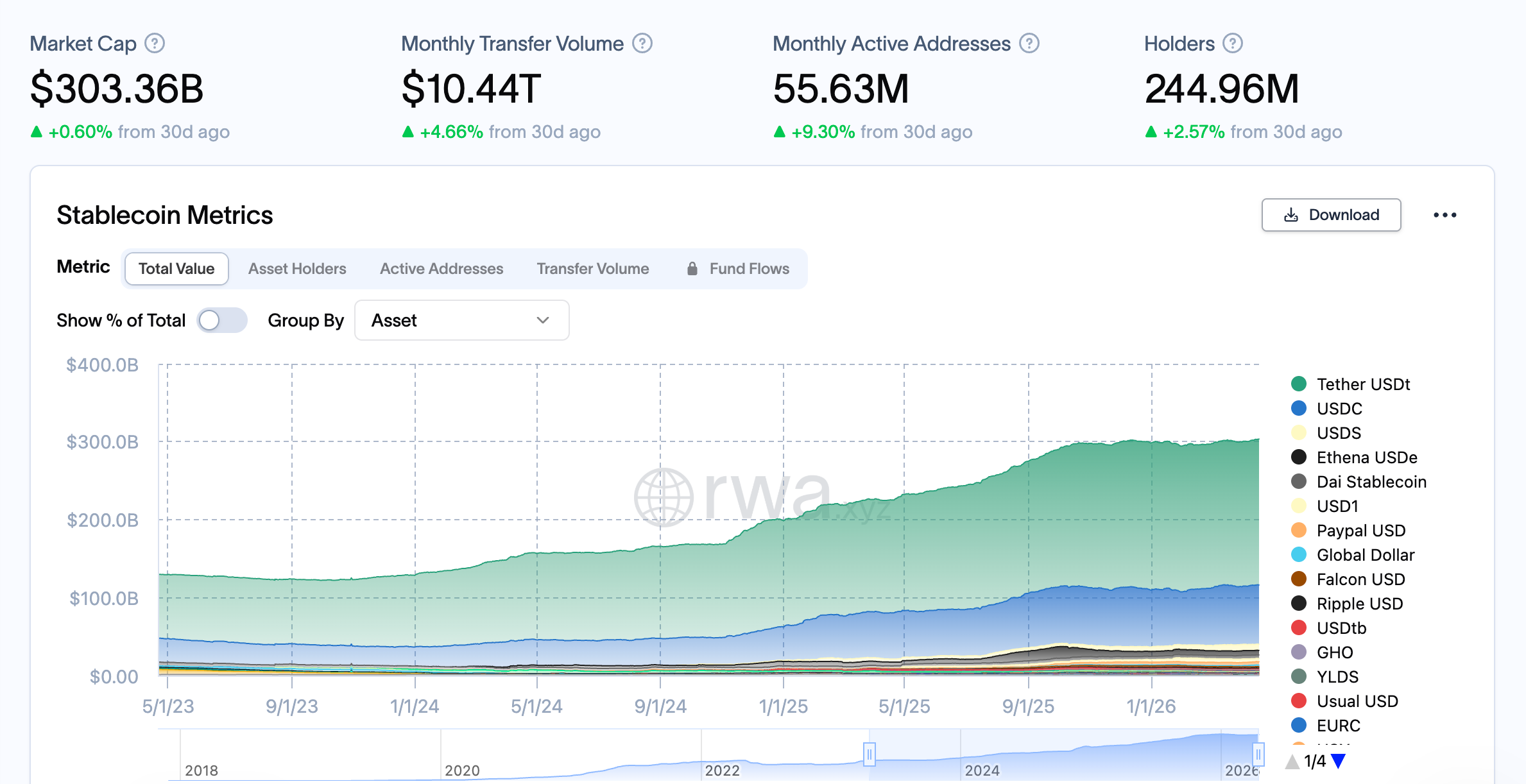
The impact of stablecoins on the banking sector appears “limited” at the current phase of the adoption cycle, but banks could face increasing competition and an erosion of market share as the stablecoin sector and tokenized real-world assets (RWAs) grow in market capitalization.
“So far, the use of stablecoins remains limited, but their market capitalization exceeded $300 billion at the end of last year,” Abhi Srivastava, associate vice president of Moody’s Investors Service Digital Economy Group, told Cointelegraph.

The role of stablecoins in payments, cross-border commerce and onchain finance is “expanding,” despite their currently limited role, Srivastava said, adding that existing payment systems in the US are already “fast, low-cost and trusted.” He said:
“For the banking sector, at this stage, disruption risk appears limited. In the near term, US rules that prohibit stablecoins from paying yield mean they are unlikely to replace traditional deposits at scale domestically.”
However, over time, growing adoption of stablecoins and tokenized RWAs, traditional or physical financial assets represented on a blockchain by a token, could place “pressure” on the banking sector, leading to deposit outflows and reduced lending capacity, he said.
Stablecoin regulatory policy has become a hot-button issue among crypto industry executives and those in the banking sector, with fears that yield-bearing stablecoins could erode banking market share proving to be a stumbling block for the CLARITY crypto market structure bill in Congress.
Related: Stablecoins behave like FX markets as liquidity splits: Eco CEO
CLARITY Act stalled, as banks fight yield-bearing stablecoins
The Digital Asset Market Clarity Act of 2025, also known as the CLARITY Act, is a comprehensive crypto market regulatory framework that establishes an asset taxonomy, regulatory jurisdiction and oversight over the crypto markets.

It is now stalled in Congress after a group of crypto industry companies, led by cryptocurrency exchange Coinbase, publicly stated opposition to earlier drafts of the bill.
A lack of legal protections for open-source software developers and a prohibition on yield-bearing stablecoins were among some of the most contentious issues cited by crypto industry opponents of the legislation.
Several attempts have been made by US lawmakers and the White House to negotiate a bill acceptable to both the crypto industry and the bank lobby.
Earlier this month, North Carolina Senator Thom Tillis said he plans to release an updated draft bill proposal that would be acceptable to both sides; however, the bill has reportedly received pushback, according to Politico, and has yet to be publicly released.
However, other crypto industry executives and market analysts have warned that if the CLARITY Act fails to pass, it could open the crypto industry up to future regulatory crackdowns by hostile lawmakers and officials.
Magazine: Stablecoins will see explosive growth in 2025 as world embraces asset class
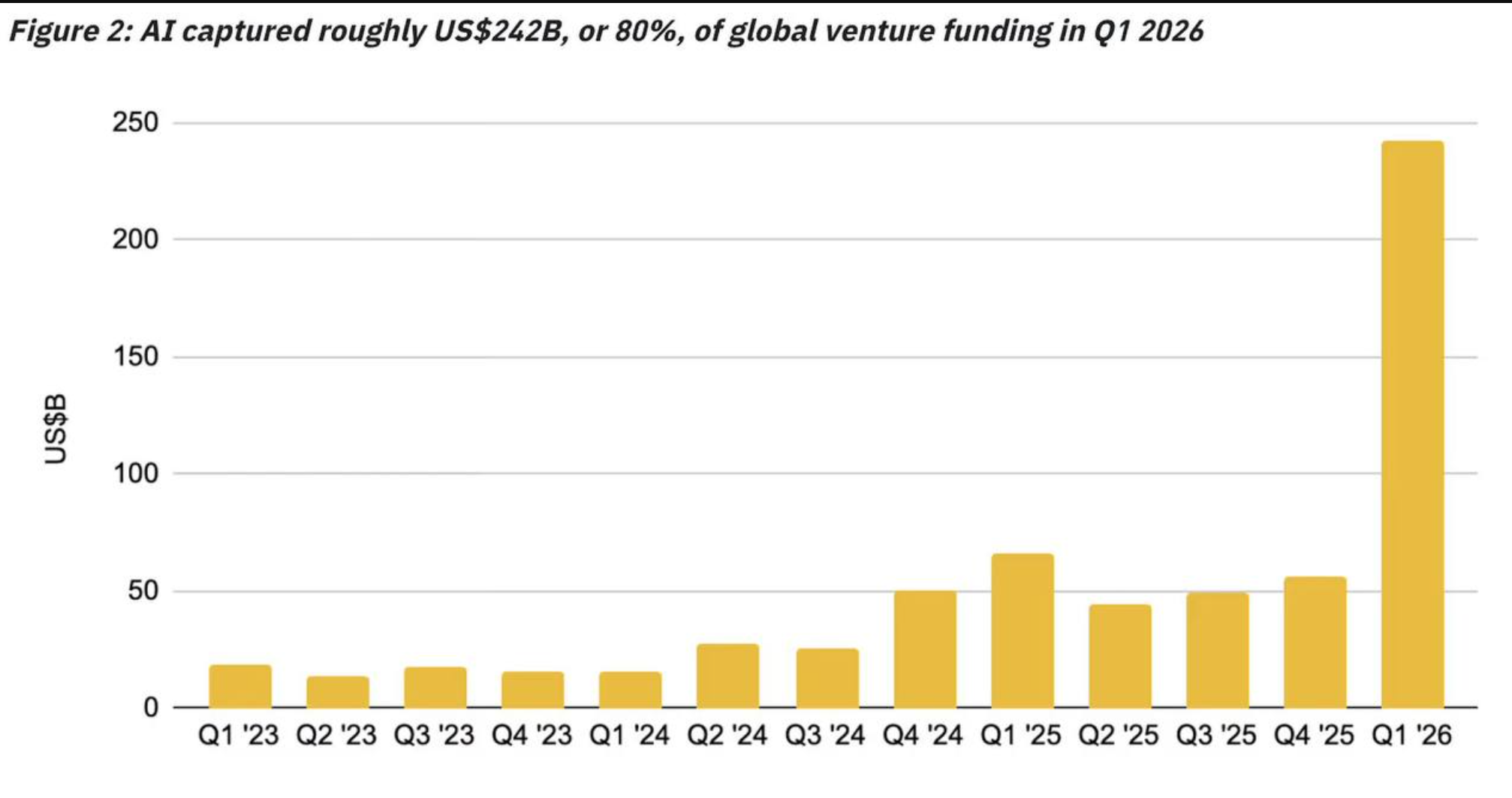
Artificial intelligence captured roughly $242 billion in venture capital funding during Q1 2026, accounting for 80% of all global startup investment in the quarter.
The figures mark a record quarter as total global venture investment reached approximately $300 billion across some 6,000 funded companies.
Mega-Rounds Drive AI Funding Surge
Four deals accounted for 65% of all global venture capital. OpenAI raised $122 billion, Anthropic secured $30 billion, xAI closed $20 billion, and Waymo brought in $16 billion. AI funding in Q1 alone exceeded all of 2025 combined.
However, the capital flood is hitting physical limits. A Bloomberg report found that roughly half of US AI data centers planned for 2026 have been delayed or cancelled.
Transformer shortages, grid strain, and supply chain bottlenecks are limiting the buildout. Only about one-third of the projected 12 GW of new capacity is under active construction.
AI Agents Enter the Workplace
Meanwhile, Coinbase CEO Brian Armstrong revealed the exchange is testing AI agents that operate alongside human employees in Slack and email.
Armstrong suggested Coinbase could eventually have more AI agents than human staff, reflecting a broader corporate shift toward autonomous systems.
The workplace transformation has also reignited political debate. Elon Musk proposed “universal HIGH INCOME” via federal government checks, arguing AI productivity would offset inflation. Andrew Yang echoed the call, urging faster action on AI-funded universal income.
Senator Bernie Sanders pushed back from a different angle, warning that AI firms plan to spend $300 million on 2026 midterm elections.
Sanders called on Democrats to resist industry pressure and confront what he called “the AI Oligarchs.”
The tension between record capital inflows and infrastructure bottlenecks suggests AI’s growth trajectory may face near-term friction even as its economic influence accelerates.
The post AI Absorbs $242 Billion in Q1 Venture Funding, Exceeding All of 2025 Combined appeared first on BeInCrypto.
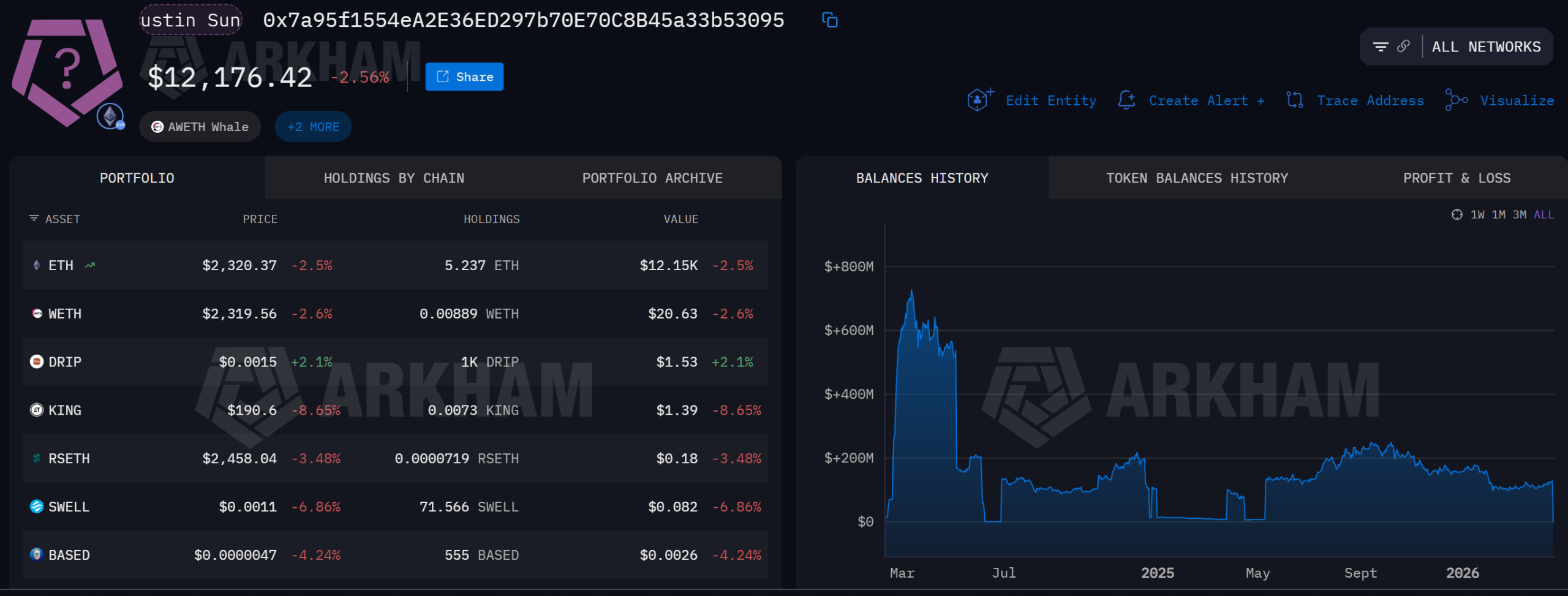
Tron founder Justin Sun publicly called on the KelpDAO bridge hacker to negotiate a return of the stolen funds, warning that a $292 million loss could bring down both Aave and KelpDAO.
Sun’s appeal followed the largest Decentralized Finance (DeFi) exploit of 2026, which drained 116,500 rsETH from KelpDAO’s cross-chain bridge on April 18.
Sun Moves Funds as Aave Takes the Hit
The attacker exploited a flaw in KelpDAO’s LayerZero-powered bridge, forging cross-chain messages to release rsETH without corresponding token burns.
The stolen tokens were then deposited as collateral on Aave V3, where the hacker borrowed large volumes of Wrapped Ether (WETH) against them.
Because the rsETH became unbacked, the positions are effectively unliquidatable, leaving Aave with over $236 million in bad debt.
Aave froze rsETH markets on both V3 and V4 within hours. Aave founder Stani Kulechov confirmed the exploit originated outside Aave’s contracts.
On-chain data shows Sun urgently withdrew 65,584 ETH, worth roughly $154 million, from Aave and deposited it into Spark shortly after.
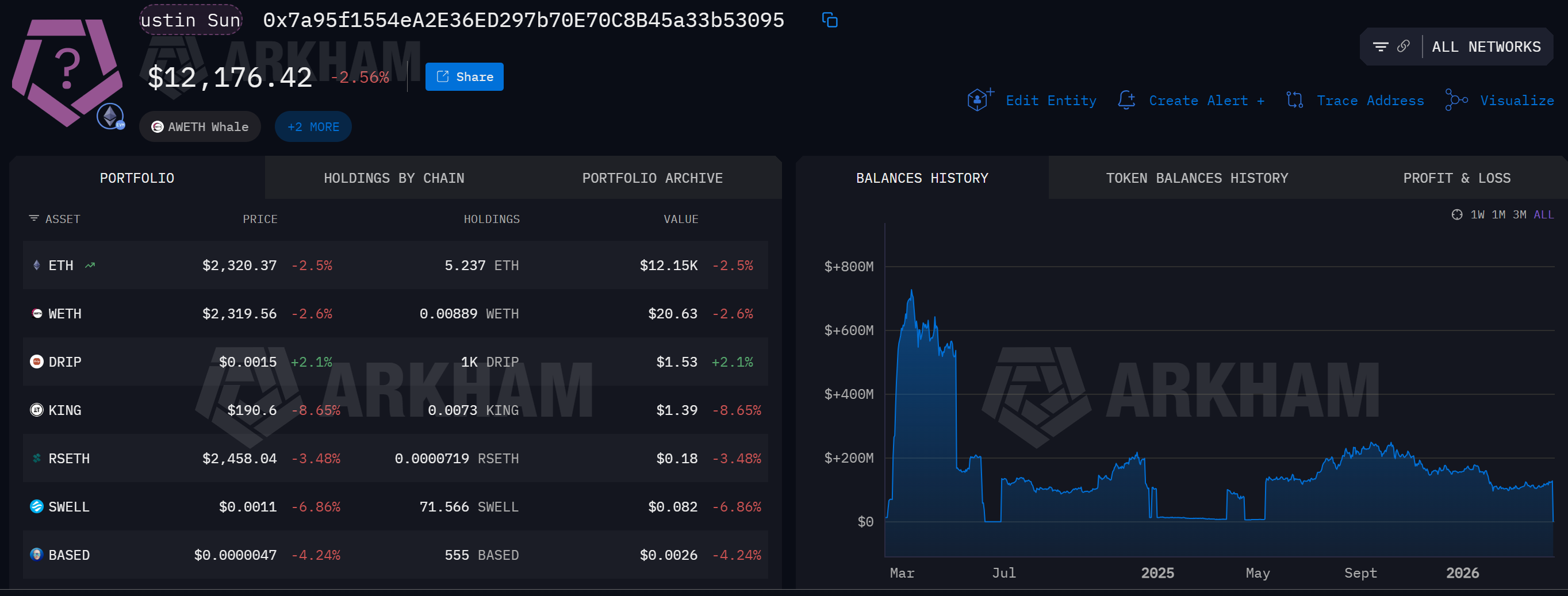
His total Aave exposure has reportedly dropped to $380 million, while his Sky and Spark holdings have risen to $2.13 billion.
“OK — Kelpdao hacker, how much you want? Let’s just talk. With KelpDAO’s help, of course. It’s simply not worth it to sacrifice both Aave and KelpDAO and let them go down over this hack,” wrote Justin Sun in a post.
Interoperability protocol Axelar also responded, expressing solidarity with LayerZero and urging the industry to adopt stronger bridge security standards.
Axelar pointed to the importance of multi-validator configurations, noting that Kelp’s single-validator setup may have enabled the breach.
The exploit overtakes the $285 million Drift Protocol hack from April 1 as the largest DeFi loss this year.
The post Justin Sun Offers to Negotiate With KelpDAO Hacker After $292 Million Exploit appeared first on BeInCrypto.
Crypto World
AI startup Cursor in talks to raise $2 billion funding round at valuation of over $50 billion
The Cursor logo arranged on a smartphone in New Hyde Park, New York, Nov. 20, 2025.
Gabby Jones | Bloomberg | Getty Images
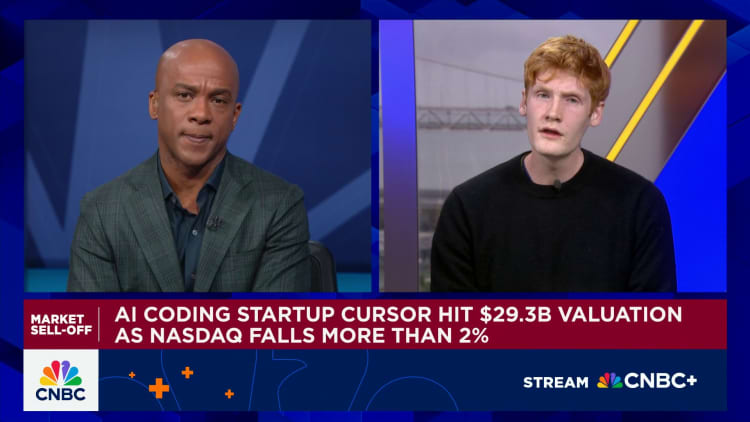
Artificial intelligence startup Cursor is in talks to raise a $2 billion fundraising round at an over $50 billion valuation, which does not include the investment, a source familiar with the matter told CNBC.
Andreessen Horowitz is slated to co-lead the new investment round, in which Nvidia and Thrive Capital are also expected to participate, said the source, who was not authorized to publicly speak on the investment. Those three firms have all previously backed the AI coding startup.
Bloomberg News first reported that Cursor was raising capital.
The funding round underscores the venture capital industry’s enthusiasm for startups specializing in AI coding agents that can complete a range of software development tasks for users. Although Cursor was among the first major startups to focus on AI coding agents, other companies, such as Google, Anthropic and OpenAI, have since debuted similar tools.
Cursor announced in November that it closed a $2.3 billion funding round at a $29.3 billion post-money valuation. That financing came after a $900 million investment round in June.
Among Cursor’s current investors are Accel, DST Global, Coatue and Google, according to a corporate blog post.
The startup released in February various updates intended to help software developers, including giving AI agents the ability to test their coding changes and record their actions via videos, logs and screenshots.
Cursor did not immediately reply to a request for comment.
WATCH: Cursor CEO Michael Truell: We’re seeing success with our AI age, not just demand

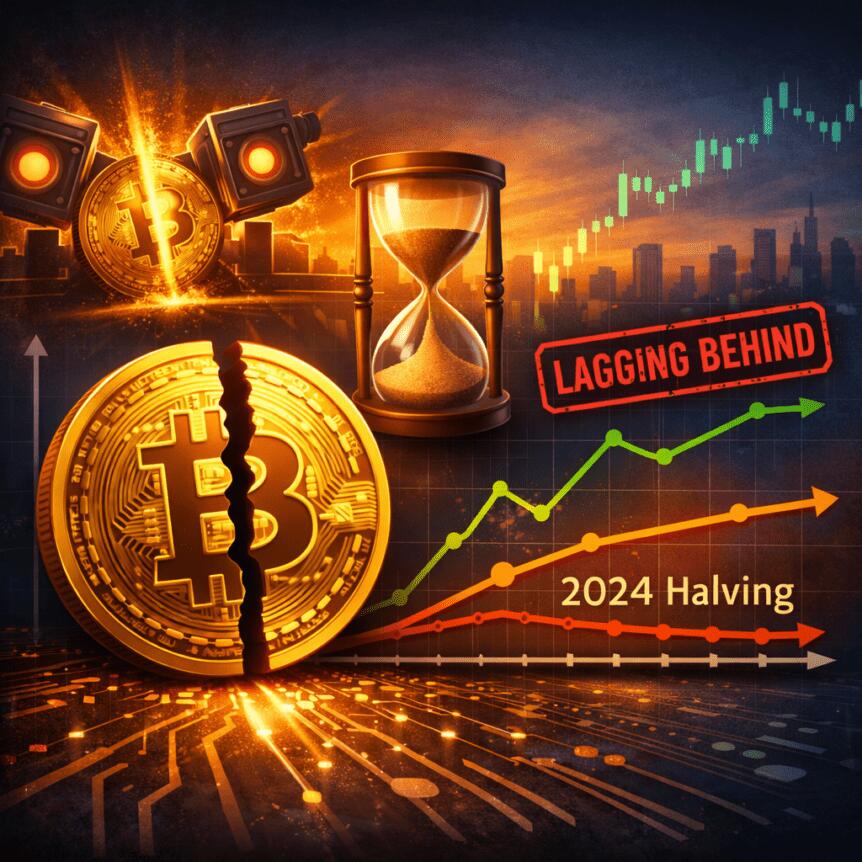
Bitcoin’s current market cycle is broadly viewed as weaker than its three prior halving-driven runs, according to Galaxy’s head of firmwide research, Alex Thorn. By weighing price action since the April 2024 halving against the patterns seen in 2012, 2016 and 2020, Thorn argues that volatility has cooled and upside potential appears more constrained this time around. Notably, the all-time high above $125,000, reached on Oct. 5, 2025, was only about 97% above the 2024 halving price near $63,000, illustrating a markedly tamer peak for the cycle so far.
Thorn’s comparisons hinge on a stark difference in how cycles unfold. The 2012 halving cycle saw a roughly 9,294% price surge to around $1,163; 2016 delivered about a 2,950% surge to near $19,891; and the 2020 halving generated a roughly 761% gain. In Thorn’s view, “Cycle four is dramatically underperforming prior cycles,” a conclusion he shared in an X post that raises a bigger question: is this the new normal, or will the cycle evolve in unforeseen ways?
Beyond price trajectories, the market’s behavioral foundations may be shifting. Thorn notes that volatility has declined with each successive halving, suggesting that BTC’s price could become more influenced by factors outside of the four-year cycle theory traditionally cited by traders. The 30-day Bitcoin Volatility Index has not surpassed 3.11% in the current cycle, with the last reading above that level recorded on Aug. 24, 2024. The latest 30-day figure sits at about 1.75%, according to Bitbo data.
Key takeaways
- Galaxy’s Alex Thorn concludes the current BTC cycle is dramatically weaker than the 2012, 2016 and 2020 halving cycles when comparing price action since the April 2024 halving.
- The all-time high above $125,000 in October 2025 was roughly 97% above the 2024 halving price around $63,000, signaling a much milder top versus prior cycles.
- Volatility has systematically compressed across cycles, with the 30-day BTC volatility staying well below the peaks seen in earlier halvings (latest around 1.75%).
- Market critics point to an early all-time high before the 2024 halving as an anomaly, underscoring that one-off catalysts can distort cycle comparisons.
Market dynamics and the pre-halving anomaly
Another layer of complexity comes from an event-driven impulse that disrupted typical cycle timing. BTC briefly hit an all-time high above $70,000 in March 2024—one month before the April 2024 halving. Analysts have attributed part of the outsized early move to the subsequent approval of spot Bitcoin ETFs in the United States in January 2024, which acted as a catalyst for price acceleration ahead of the halving. This premature peak is frequently cited by critics as a meaningful deviation from the classic halving-driven narrative.
In parallel, Fidelity Digital Assets has observed that Bitcoin’s drawdowns in this cycle have been less severe than in past bear markets. While declines of 80%–90% are not unheard of in older cycles, the drop from the all-time high to later troughs has so far been more contained in this phase. Fidelity’s analysis notes that even a journey back from peak levels remains substantial—BTC pulled back from the late-2021 highs to the roughly $60,000 area, a move just over 50% in magnitude from the peak levels cited by Fidelity’s framework.
Near-term outlook and the long arc
March brought a contrarian take from Jan van Eck, CEO of VanEck, who said BTC is close to bottoming and that a gradual recovery could begin in 2026. While such forecasts hinge on a confluence of macro factors, liquidity conditions, and investor sentiment, they align with a broader sense that BTC may enter a more protracted phase of consolidation after 2025’s peak, rather than repeating the rapid, cycle-driven surges seen in earlier eras.
As of the latest readings, Bitcoin was trading near $74,703, with fresh momentum up modestly over the past week. The price backdrop underscores Thorn’s observation of a more muted cycle, even as headlines around regulatory clarity, ETF developments, and institutional participation continue to influence sentiment.
What to watch next
The immediate question for investors and builders alike is whether this cycle’s subdued volatility and mixed momentum represent a lasting regime shift or a temporary deviation sparked by unique catalysts. Key developments to monitor include how macro conditions interact with BTC’s supply-demand dynamics, any concrete shifts in ETF-related inflows, and whether the market can align around a clearer, more repeatable set of catalysts akin to past halving narratives. As the market evolves, readers should watch for signs that long-run adoption, liquidity depth, and regulatory clarity begin shaping BTC’s trajectory in a way that differentiates this cycle from its predecessors.
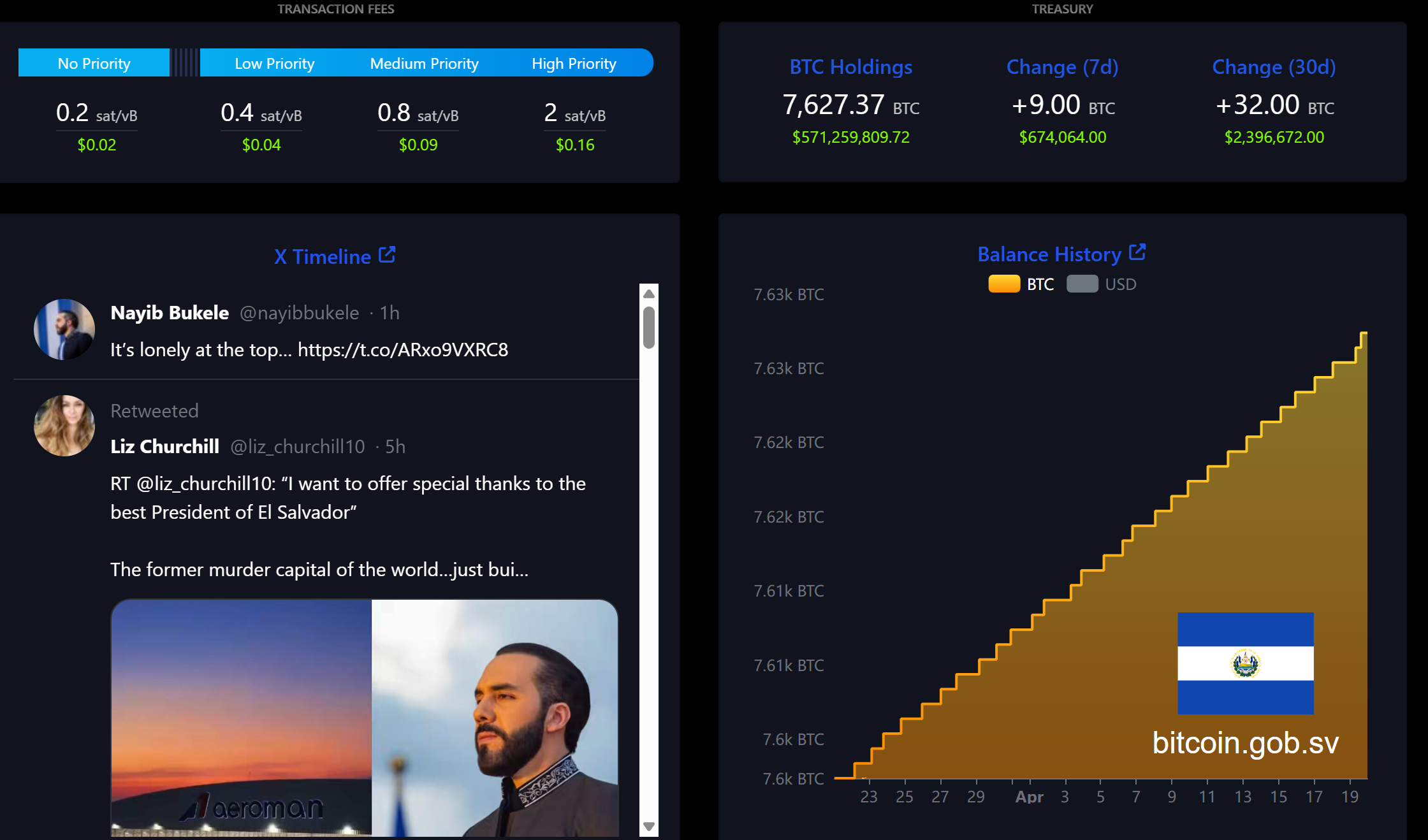
El Salvador President Nayib Bukele sits atop a global leader approval chart with a 94% rating, far outpacing every other head of state on the list.
The ranking measures approval for 26 world leaders. Bukele’s dominance highlights a striking detail for the crypto industry. The president who went furthest on sovereign Bitcoin (BTC) adoption is also the most popular leader on Earth right now.
The Bitcoin President Still Stacks Daily
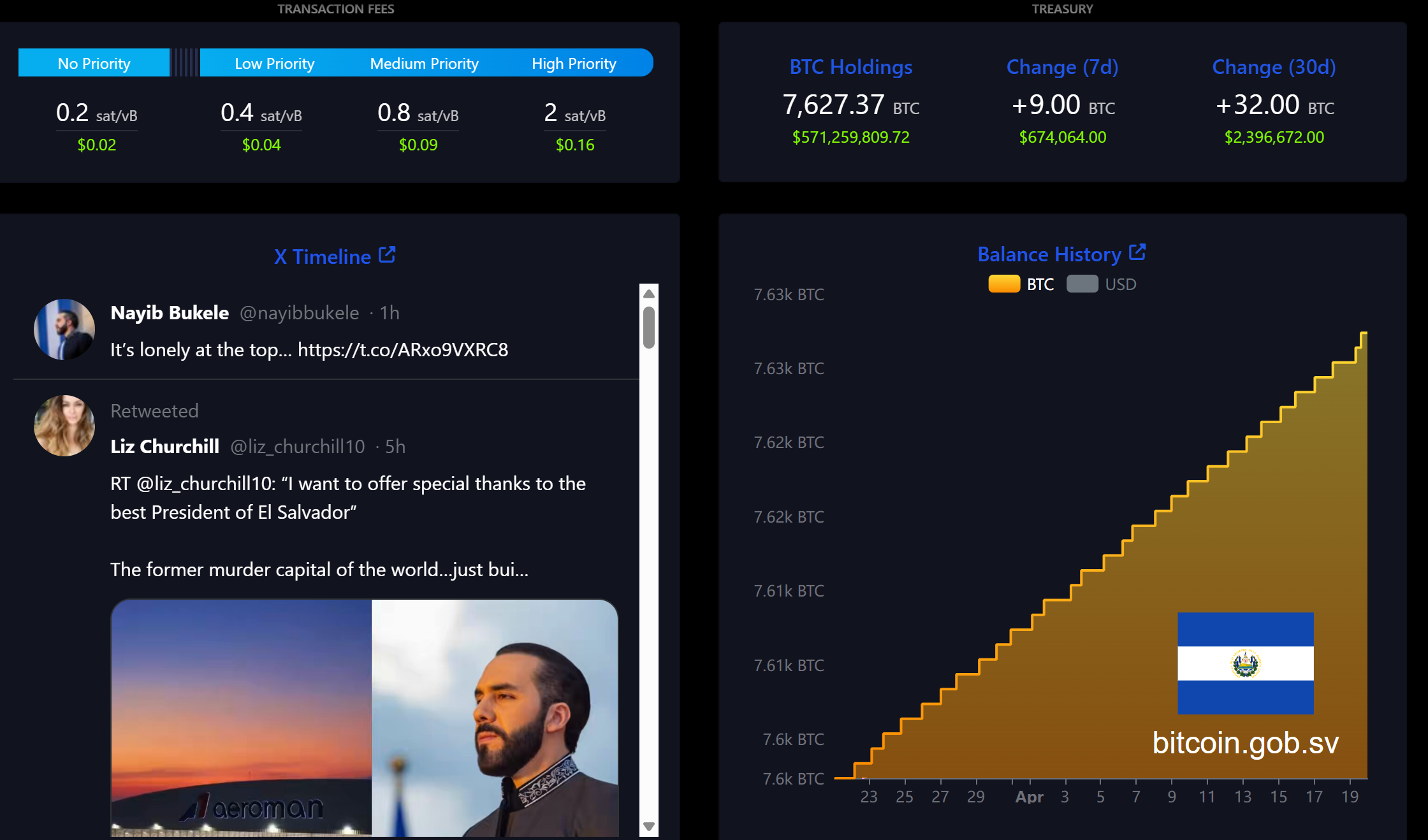
El Salvador became the first country to make Bitcoin legal tender in 2021. The government continues purchasing roughly one BTC per day, pushing its national reserve past 7,600 BTC.
Polls show, however, that security gains from Bukele’s gang crackdown drive his approval far more than the Bitcoin experiment itself.
Only 2.2% of Salvadorans cited BTC as his biggest failure in a recent CID Gallup survey.
Where Other Leaders Stand on Crypto
South Korea’s Lee Jae-myung (63%) has declared crypto a national priority, pledging spot Bitcoin ETFs and a won-pegged stablecoin by 2026.
Javier Milei (48%) championed Bitcoin deregulation in Argentina but saw his credibility damaged after promoting the LIBRA meme coin, which collapsed and cost investors hundreds of millions.
Donald Trump (38%) signed an executive order establishing a US Strategic Bitcoin Reserve funded with seized coins, positioning the country as a future “Bitcoin superpower.”
Most remaining leaders on the list follow standard regulatory frameworks, with several EU heads of state backing stricter oversight through the MiCA regulation.
The chart suggests that bold pro-Bitcoin moves have not hurt leaders politically, even if domestic voters care more about security and the economy than digital assets.
The post The President Who Pushed Bitcoin the Hardest Is Now the Most Popular Leader on Earth appeared first on BeInCrypto.

Man City’s final Premier League fixtures compared to Arsenal’s after title race boost

The next Mac Studio and MacBook Pro releases could be postponed by several months

The insider trading suspicions looming over Trump's presidency


-

 Crypto World6 days ago
The SEC Conditionalises DeFi Platforms to Be Avoided for Broker Registration
-

 Fashion2 days ago
Weekend Open Thread: Theodora Dress
-

 Crypto World6 days ago
SEC Signals Exemption for Crypto Interfaces From Broker Registration
-

 News Videos5 days ago
Secure crypto trading starts with an FIU-registered
-

 NewsBeat6 days ago
Trump and Pope Leo: Behind their disagreement over Iran war
-

 Sports3 days ago
NWFL Suspends Two Players Over Post-Match Clash in Ado-Ekiti
-

 Crypto World6 days ago
SEC Proposes Certain Crypto Interfaces Don’t Need to Register as Brokers
-

 Business9 hours ago
Powerball Result April 18, 2026: No Jackpot Winner in Powerball Draw: $75 Million Rolls Over
-

 Politics2 days ago
Palestine barred from entering Canada for FIFA Congress
-

 Crypto World2 days ago
Russia Pushes Bill to Criminalize Unregistered Crypto Services
-

 Sports7 days ago
NWFL opens Pathway for new Clubs ahead of 2026 Season
-
 Business3 days ago
Creo Medical agree sale of its manufacturing operation
-
 Entertainment6 days ago
Brand New Day’ Footage Reveals the Devastating Impact of ‘Now Way Home’
-

 Politics14 hours ago
Zack Polanski demands ‘council homes not luxury flats for foreign investors’
-

 Crypto World7 days ago
Trump whales load up ahead of Mar-a-Lago luncheon.
-
Business7 days ago
Kering slides after Morgan Stanley downgrade, Gucci woes loom
-

 Tech7 days ago
Google adds E2E encryption to Gmail for iOS and Android enterprise users
-

 Tech7 days ago
Apple glasses won’t go brand shopping like Meta did with Ray-Ban and Oakley
-
Entertainment7 days ago
How Euphoria Season 3 Premiere Paid Tribute to Eric Dane After Death
-
 Entertainment6 days ago
Karol G’s ‘Ultra Raunchy’ Coachella Set Gave ‘Satanic Vibes’
You must be logged in to post a comment Login