

Crypto World
Claude AI Opus Predicts Stunning XRP Price by End of 2026

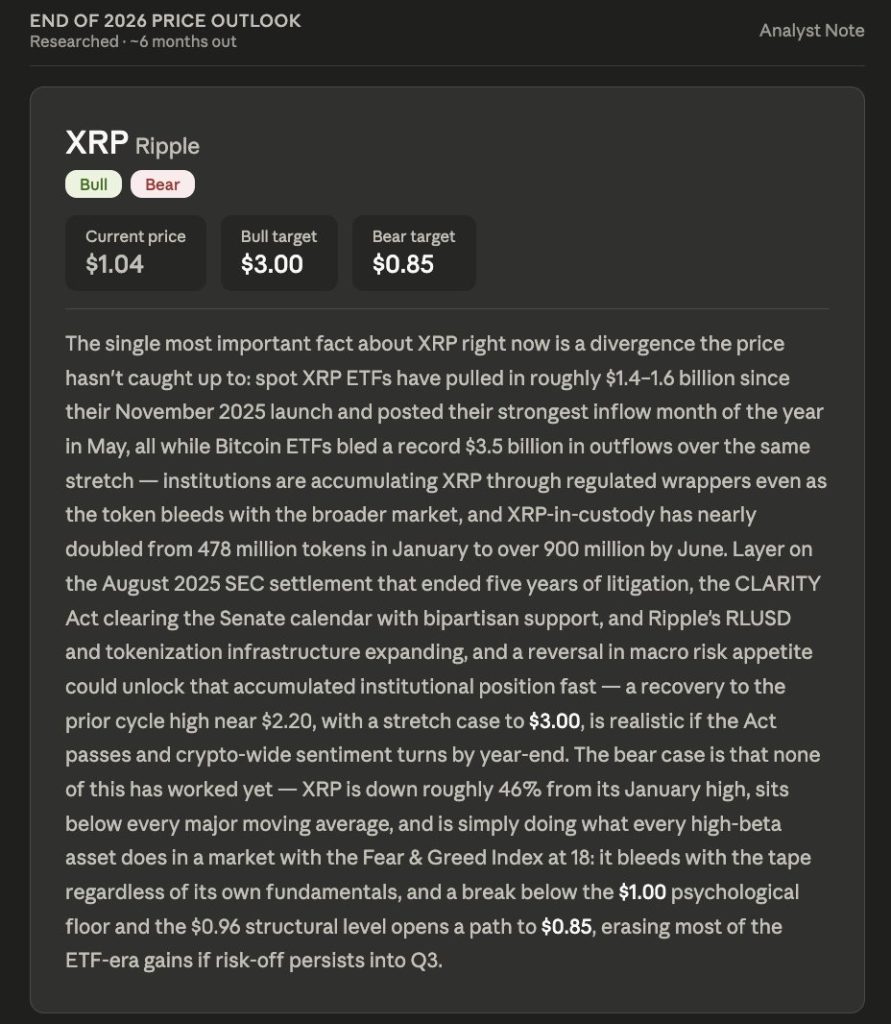
Claude AI Opus 4.8 just zeroed in on a divergence between price action and institutional behavior that most people watching XRP price prediction have completely missed. The model predicts a bull target of $3.00, with a more grounded recovery case sitting near $2.20.
The bull case rests on one core fact that XRP price simply has not caught up to yet. Spot XRP ETFs have pulled in roughly $1.4 to $1.6 billion since their November 2025 launch, and they actually posted their strongest inflow month of the entire year in May, all while bitcoin ETFs were bleeding a record $3.5 billion in outflows over that same stretch.
That kind of divergence matters because it shows institutions are accumulating XRP through regulated wrappers even as the token bleeds alongside the broader market.
XRP price in custody has nearly doubled too, climbing from 478 million tokens in January to over 900 million by June, which is real on chain evidence of accumulation rather than just a headline number.

Layer on top of that the August 2025 SEC settlement that ended five years of litigation, the CLARITY Act clearing the Senate calendar with bipartisan support, and Ripple’s RLUSD and tokenization infrastructure continuing to expand, and you get a fundamental backdrop that looks far stronger than the price chart suggests.
If macro risk appetite reverses, the model sees that accumulated institutional position unlocking fast, with a recovery to the prior cycle high near $2.20 being realistic, and a stretch case toward $3.00 if the Act actually passes and crypto wide sentiment turns more broadly bullish by year end.
The bear case is blunt about where things actually stand today. None of this has worked yet. XRP is down roughly 46% from its January high, sits below every major moving average, and is simply doing what every high beta asset does in a market with the Fear and Greed Index sitting at just 18, meaning it bleeds with the broader tape regardless of its own underlying fundamentals.
A break below the $1.00 psychological floor and the $0.96 structural level beneath it opens a path straight to $0.85, which would erase most of the gains built up during the entire ETF era if risk off conditions persist into the third quarter.

XRP Price Prediction: XRP Sits On A Pile Of Institutional Buying The Chart Refuses To Show
The daily chart shows XRP at $1.04718 after a long, grinding decline from highs above $3.65 set back in July of last year. That slide has been almost uninterrupted, with the steepest leg coming in October when price collapsed from the $2.70 zone down through $1.60 within a matter of weeks.
Since February, price has mostly drifted lower in a series of smaller steps, currently sitting right at the exact $1.00 psychological floor called out as the critical level in this prediction.
That kind of test right at a major round number after such a long downtrend usually marks a real decision point rather than just another stop along the way.
Resistance sits first near $1.40, the level price has failed to reclaim during recent bounce attempts, then a much heavier ceiling near $2.20, which lines up directly with the prior cycle high mentioned as the realistic recovery target.
Support holds right around the current $1.00 to $1.03 zone, with the $0.96 structural level sitting just beneath as the next real test if this floor gives way.
The broader pattern here is a clean series of lower highs and lower lows stretching back nearly a full year, which fits the bear case description of a high beta asset simply bleeding with a weak overall market.
Momentum on the daily candles looks weak and still leaning lower, without much evidence yet of the kind of basing action that typically shows up before a real reversal.
Given how directly current price sits on top of the exact floor named in this prediction, the next move through $1.00 looks like the moment that decides whether this divergence between institutional buying and price finally starts to close.
Don’t Miss Out on Our $1,000 USDT Airdrop on ByBit
Discover: The best crypto to diversify your portfolio with
Here is What Claude AI Predicts For LiquidChain Near Future, Very Bullish
Sitting at resistance is not a strategy. It is a queue.
Bitcoin, Ethereum, and XRP are stuck under the same ceilings. The catalyst is always one print away. The inflows are always next quarter.
Small cap infrastructure plays by different rules. Capital that is noise at Bitcoin’s scale can reshape an undiscovered project entirely. The real asymmetry lives in the gap between what something is worth and what the market has priced it at. That gap closes the moment it gets found.
Cross-chain fragmentation has taxed DeFi since the first bridge launched. Bitcoin, Ethereum, and Solana grew up disconnected. Every transaction crossing those lines pays in fees, slippage, and failures. Bridges were supposed to fix it. They became the toll booth instead.
LiquidChain removes the toll. All 3 networks inside one execution layer. One deployment reaches everywhere. No cross-chain fee, anywhere.
Claude AI flagged it as worth watching. The presale sits at $0.01454 with just over $860,000 raised.
Execution is unproven. Adoption is unknown. Established assets offer a calmer climb toward a ceiling everyone can already see. LiquidChain stays an opportunity only as long as it stays unnoticed.
The post Claude AI Opus Predicts Stunning XRP Price by End of 2026 appeared first on Cryptonews.

Crypto World
Crypto wallet Phantom pushes deeper into perps hiring team behind Hyperliquid’s OpenAI, Anthropic markets
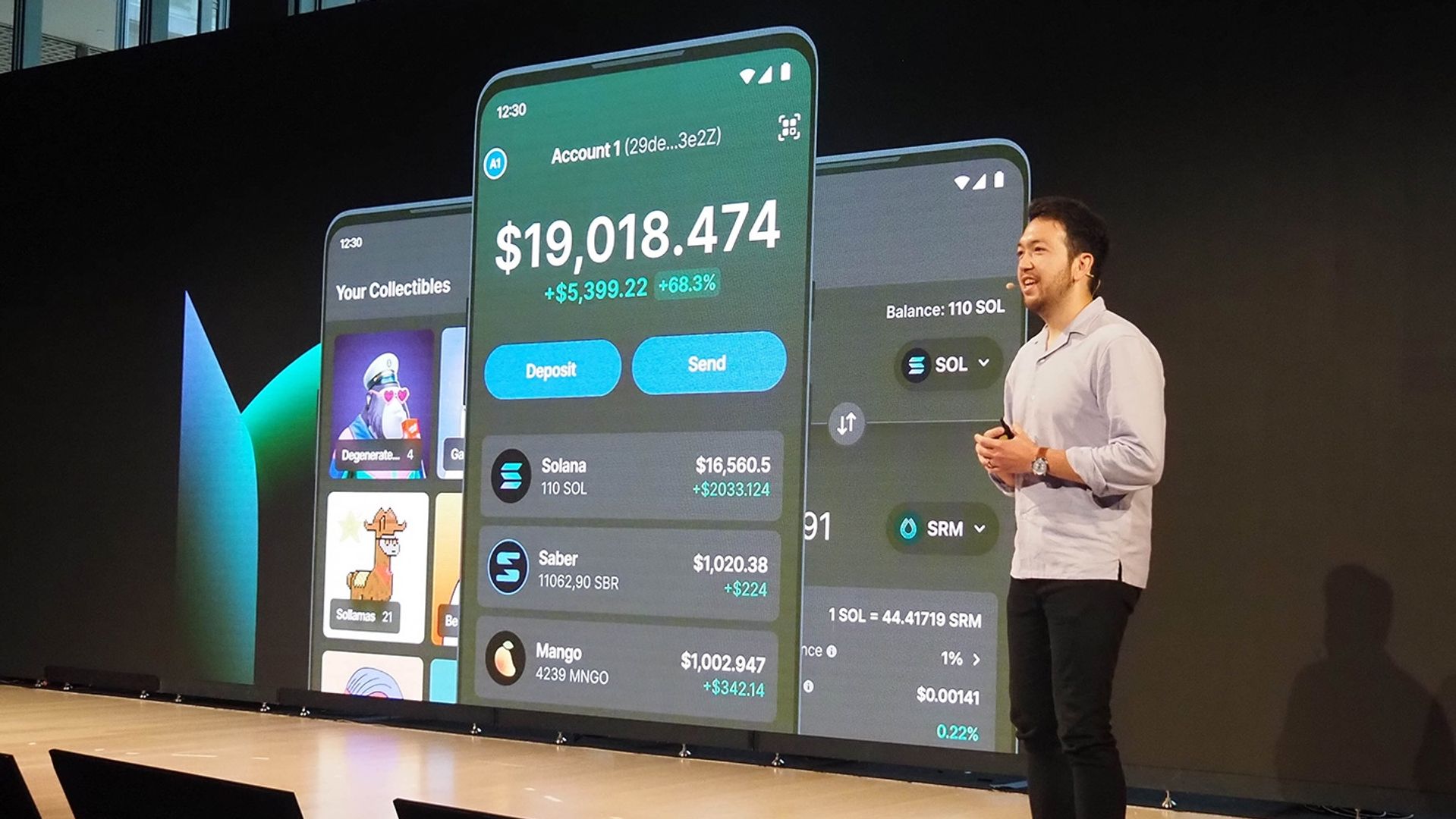
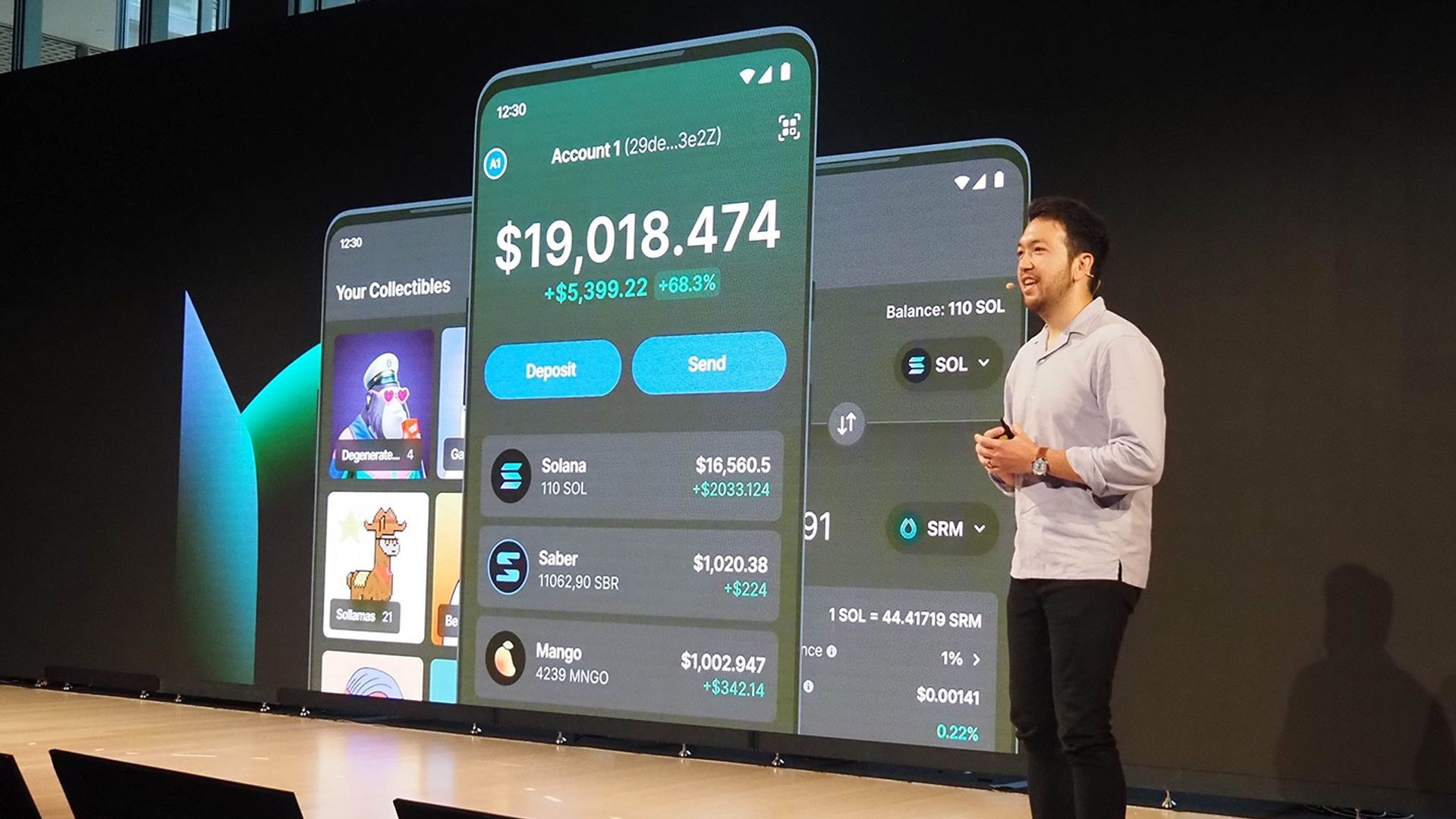
The race is also spreading beyond crypto. Last month, prediction market operator Kalshi launched its own perpetual futures business after regulatory approval, joining exchanges betting that always-on derivatives will become a larger part of financial markets.
For Phantom, the hires are part of a broader push into trading.
Best known as one of crypto’s largest self-custody wallets, Phantom has steadily expanded beyond asset storage into swaps, staking and derivatives as wallets increasingly compete to become full-service financial apps rather than simple interfaces for holding tokens.
The company said it has become the largest distribution partner in the Hyperliquid ecosystem and plans to deepen its focus on perpetual futures.
“Open markets have become a major focus for us,” Millman wrote. “We’ve gone deep on perps, and we intend to go deeper.”
Millman described Hyperliquid as “one of the best examples anywhere of what open markets make possible,” pointing to its global liquidity and transparent onchain infrastructure.
Bringing on the Ventuals team will help Phantom accelerate its efforts to build trading products around the ecosystem, he said.

TLDR
- Strategy introduced a new capital framework that allows potential Bitcoin sales to raise liquidity.
- Strategy stocks MSTR and STRC recorded strong gains before easing in premarket trading.
- Benchmark reaffirmed a Buy rating and said the new model improves capital flexibility.
- Strategy shifted from pure Bitcoin accumulation to a more active balance sheet management approach.
- The company authorized up to $1.25 billion in Bitcoin sales, representing a small portion of holdings.
Strategy drew mixed reactions after unveiling a revised capital framework, even as its stocks posted strong gains. Analysts supported the changes, but some market participants questioned the long-term impact on Bitcoin holdings. The update introduces flexibility, yet it shifts Strategy away from its previous accumulation-only stance.
Strategy Gains Analyst Backing as Stocks Rise
Benchmark Equity Research reaffirmed a Buy rating on Strategy’s Class A stock MSTR with a $570 price target. The firm stated that the revised capital framework improves financial flexibility and strengthens balance sheet management. As a result, Strategy attracted renewed attention from institutional analysts.
Meanwhile, Strategy’s MSTR shares climbed 12.6% to about $92.70 during Monday trading sessions. At the same time, STRC preferred shares rose 12.2% to approximately $83.70, reflecting strong investor response. However, both Strategy stocks moved slightly lower in Tuesday premarket trading activity.
Benchmark analysts stated that Strategy no longer operates as a one-direction Bitcoin accumulator. Instead, Strategy now manages both assets and liabilities through an active capital structure approach.
They added, “Strategy is now an active manager of both sides of its capital structure.”
Strategy authorized potential Bitcoin sales worth up to $1.25 billion under its updated capital framework. This amount equals about 21,082 BTC based on current market prices, according to available data. The allocation represents nearly 2.5% of Strategy’s total holdings of 847,363 BTC.
Previously, Strategy relied mainly on issuing equity or debt to raise capital for operations. However, the new framework allows Strategy to access liquidity through direct Bitcoin sales when required. This shift reflects a broader approach to managing financial obligations and market conditions.
Strategy has executed Bitcoin sales before despite its long-term accumulation narrative. The company sold 32 BTC in May 2026 and previously sold 704 BTC in 2022. Later, Strategy repurchased a similar amount, maintaining its overall exposure to Bitcoin.
Strategy Plan Divides Market Participants
Investor Simon Dedic suggested the update could signal a local bottom for Strategy’s recent market performance. He added that some selling pressure likely reflected preparations for liquidity adjustments ahead of the announcement. His comments indicated partial confidence in Strategy’s revised approach.
Trader Scott Melker acknowledged that Strategy responded to investor concerns by increasing flexibility and cash reserves. However, he stated, “Only time will tell” whether the framework restores confidence in Strategy’s long-term outlook. His remarks reflected uncertainty about the sustainability of the changes.
Arca CIO Jeff Dorman argued that Strategy may need to sell between $2 billion and $3 billion in Bitcoin. He stated that such sales could remove persistent market overhang linked to Strategy’s large holdings.
Meanwhile, Ripple CEO Brad Garlinghouse said, “Financial engineering doesn’t drive long-term value,” criticizing Strategy’s approach.


The U.S. Securities and Exchange Commission is asking market participants to weigh in on how exchange-traded funds should be regulated when they introduce “novel” asset classes or use new investment strategies. The SEC’s request for public comment targets a central question facing modern ETF issuers: whether the agency’s current framework is sufficient for products that don’t fit neatly into traditional categories.
In a filing posted as a Federal Register notice, the SEC said it is evaluating existing rules and whether changes to ETF registration and oversight procedures may be needed as these funds reach the market. The comment window will remain open for 60 days after the notice is published in the Federal Register, giving investors, issuers, and industry groups time to respond before the regulator decides on any potential next steps.
Key takeaways
- The SEC is soliciting feedback on whether current ETF regulations adequately cover products tied to new asset types and investment approaches.
- The consultation also asks whether the ETF registration process itself should be adjusted as issuers launch increasingly customized strategies.
- Regulatory focus comes as ETF assets have expanded quickly, with the SEC citing growth from roughly $4 trillion in 2019 to more than $12 trillion by the end of 2025.
- Newer ETF designs in crypto and beyond—such as staking-, stablecoin-reserve-, and options-based structures—illustrate why the SEC is reviewing fit-for-purpose rules.
- The SEC’s request follows another recent SEC/CFTC consultation aimed at aligning portfolio margin rules across securities and derivatives markets.
Why the SEC is revisiting ETF oversight
According to the SEC, the request for comment is aimed at ETFs that invest in innovative asset classes or rely on strategies that may fall outside the assumptions embedded in existing regulation. The agency’s stated intent is not limited to crypto; rather, it addresses a broader trend in ETF design that increasingly blends traditional market exposure with novel mechanisms.
The SEC’s framing is significant for investors because ETF rule changes typically affect how products are approved, how risks are disclosed, and how far issuers can stretch strategies before triggering additional scrutiny. For issuers, the consultation signals that regulatory expectations may evolve as market offerings become more complex.
The full context is likely to be read alongside the SEC’s broader ETF activity over the past year, including sustained interest in how new fund structures interact with disclosure rules, custody expectations, derivatives usage, and operational controls. While the SEC did not provide specific details in the excerpted report beyond asking the public to address whether and how existing rules should be adapted, the emphasis on “registration” suggests the agency is prepared to consider procedural adjustments—not just interpretive guidance.
Crypto ETF strategies are moving beyond simple tracking
Crypto-related ETFs and ETPs have increasingly diversified beyond price-tracking products, and the SEC’s request arrives at a time when that shift is accelerating. In recent months, issuers have introduced funds tied to staking exposure, stablecoin reserve concepts, and more specialized allocation approaches.
Examples highlighted in earlier market coverage include ProShares’ GENIUS Money Market ETF, described as a Treasury-focused product structured around reserve assets permitted under the GENIUS Act for payment stablecoins. The same period also saw Grayscale launch its Hyperliquid Staking ETP, which seeks exposure to HYPE while targeting staking rewards.
These launches matter because they highlight different regulatory pressure points than straightforward spot exposure. Staking-related approaches raise questions about how rewards are generated, accounted for, and managed over time. Stablecoin reserve-linked structures introduce additional issues around the nature of reserve assets and the mechanics of how those assets are held and valued.
Bitcoin ETFs: options and rules-based income themes
The move toward more elaborate crypto ETF structures is also visible in Bitcoin product filings and proposals, especially those using options strategies or income-style mechanics rather than pure spot replication.
BlackRock proposed an options-based Bitcoin income ETF in January, according to the filing referenced in prior reporting. Goldman Sachs followed with an options-focused Bitcoin income concept that combines spot Bitcoin exposure with covered-call strategies, as noted in earlier coverage.
Earlier this month, Franklin Templeton proposed two ETFs that would systematically reinvest stock dividends into Bitcoin-linked investments. The proposals describe a rules-based Bitcoin allocation and identify multiple possible instruments that could be used to gain Bitcoin exposure, including exchange-traded products, futures, options, and Bitcoin-backed depositary receipts.
From an investor standpoint, these structures can change the risk profile and return drivers of a Bitcoin ETF. Options strategies can affect volatility and how returns behave in different market conditions, while rules-based dividend reinvestment creates a distinct linkage between U.S. equities and Bitcoin exposure. That kind of hybrid design is precisely the scenario the SEC says it wants input on: whether existing ETF rules are built to handle novel approaches consistently and transparently.
Cross-asset ETF experimentation adds to the regulatory challenge
Beyond crypto-only products, ETF experimentation is increasingly cross-asset. Bitwise, for example, launched an actively managed ETF pairing Bitcoin with gold, precious metals, and mining equities.
Blended strategies can complicate the regulatory review process because the ETF’s underlying risks are no longer tied to a single market driver. Instead, investors may be exposed to correlations and dynamics across digital assets, commodities, and equity-linked mining exposure. Regulators reviewing how these funds are registered and monitored may need to consider whether existing frameworks sufficiently address how risks are calculated, disclosed, and managed when multiple asset classes and strategies interact.
And while the SEC’s request is broad, the timing is telling: it comes after the agency and the CFTC sought public feedback on harmonizing portfolio margin rules across securities and derivatives markets. Together, those initiatives point to regulators taking a more coordinated look at how market structure and product design should be handled when ETFs interact with derivatives and non-traditional exposures.
For investors, the next step is straightforward: watch for what the SEC receives during the 60-day comment period—especially arguments about whether ETF registration rules should be updated for funds that mix assets and strategies in ways regulators haven’t previously had to address at scale. The consultation may not immediately change approvals, but it could influence how the SEC evaluates the next wave of innovative ETF structures.
TLDR
- The UK Financial Conduct Authority introduced new crypto rules covering trading platforms, custody, and lending activities.
- The framework requires firms to hold capital based on their risk exposure and conduct annual stress tests.
- The crypto rules extend to stablecoin issuers with reduced capital requirements set at one percent.
- The regulator introduced market abuse controls targeting insider trading and manipulation in crypto markets.
- Firms must apply for full authorization under the new crypto rules before the 2027 deadline.
The Financial Conduct Authority has introduced new crypto rules to position the UK as a global digital asset hub. The framework sets capital standards, market conduct rules, and stablecoin requirements ahead of 2027 enforcement. As a result, the UK aims to balance innovation and oversight through structured crypto rules across the sector.
UK Expands Oversight with Broad Crypto Rules Framework
The regulator now applies crypto rules to trading platforms, custodians, and lending providers across the UK market. In addition, the framework covers staking firms and certain DeFi entities with identifiable control structures. Therefore, the crypto rules extend supervision to most commercial digital asset activities.
Meanwhile, firms must meet prudential standards, including capital buffers tied to their internal risk exposure levels. Each company defines its own risk profile and submits annual stress test results to regulators. As a result, these crypto rules introduce structured financial discipline without mirroring traditional banking requirements.
However, firms will design their own stress scenarios rather than follow centralized models from authorities. This approach gives flexibility, yet it requires firms to justify their assumptions clearly. Consequently, the crypto rules aim to enforce accountability while maintaining operational independence.
Market Abuse Controls and Stablecoin Concessions Take Shape
The framework introduces crypto rules addressing insider trading and market manipulation within digital asset markets. Large trading platforms will monitor activity using industry-led systems instead of strict centralized surveillance mandates. Therefore, the regulator narrows earlier proposals while still enforcing market integrity under crypto rules.
Eligible assets on UK platforms must meet a single 40% net risk requirement and counterparty adjustment standard. This replaces the earlier two-tier classification system proposed during consultations. As a result, the crypto rules simplify compliance requirements for listed digital assets.
At the same time, the regulator eased stablecoin requirements after industry feedback on earlier proposals. The capital coefficient now stands at one percent of issued token value, down from previous levels. Consequently, these crypto rules align more closely with global standards to maintain competitiveness.
Stablecoin issuers can hold up to five percent surplus cash within reserve backing pools for liquidity management. In addition, firms no longer need to forecast redemption levels for backing assets under revised crypto rules. Therefore, the framework reduces operational burdens while maintaining financial safeguards.
Authorization Timeline and Global Competition Intensify
Crypto firms must apply for full authorization under the new crypto rules before the 2027 enforcement deadline. The application window opens in September 2026 and closes in February 2027 for all applicants. Meanwhile, regulators will offer pre-application support meetings to guide firms through compliance requirements.
Existing anti-money laundering registrations will not convert into authorization under the updated crypto rules framework. Therefore, firms must submit new applications regardless of their current regulatory status. This ensures consistent standards across all participants under the new regime.
Until implementation, oversight remains limited to financial promotions and anti-money laundering compliance measures. David Geale said the framework balances certainty with innovation under the new crypto rules.
He stated, “We created a framework that supports innovation while ensuring firms meet consistent standards.”
The UK introduced these crypto rules as global jurisdictions compete to attract digital asset businesses. The European Union enforces MiCA, while the United States advances stablecoin legislation under Donald Trump. Therefore, the UK positions itself as a stable and competitive destination for crypto firms.
Crypto World
Autheo Introduces the Internet Operating System: A Decentralized Coordination Layer for Web, Blockchain, & AI

[PRESS RELEASE – Sheridan, USA / Wyoming, June 30th, 2026]
Five years in the making, Autheo is launching its decentralized operating system on Mainnet — after public testnet adoption surpassed 1.8 million wallets, nearly 1 million smart contracts, and 8.8 million transactions.
Autheo today formally introduced its decentralized operating system to the public: a coordination layer designed to let the traditional Web, blockchain networks, and AI agents interoperate natively as a single system. The company is now launching its Mainnet — the production environment for the network — after more than a year of public testnet activity.
THE COORDINATION LAYER THE INTERNET NEVER HAD
The networking wars of the 1980s and early 1990s settled a principle that has shaped the Internet ever since: interoperability comes from pragmatic, openly deployed protocols, not top-down frameworks. The standards that won — TCP/IP, DNS, HTTP, TLS — succeeded by being practical and deployable, and the modern Internet still rests on them. The blockchain era took a different path: each network optimized for its own internal consistency — its own security model, consensus mechanism, APIs, SDKs, and developer tooling — and the result has been a fragmented landscape of largely siloed chains. The rapid rise of AI agents now amplifies that fragmentation, as a growing population of autonomous actors needs to transact across Web, blockchain, and AI systems that were never designed to coordinate with one another.
Protocols such as IBC, LayerZero, CCIP, Wormhole, and Axelar have made meaningful progress on chain-to-chain messaging and asset transfer — but those efforts operate at the bridging layer. Autheo addresses the problem from a different angle: a shared substrate where Web services, blockchain networks, and AI agents coordinate natively on a common identity, communications, execution, and infrastructure layer, rather than relying on bridges that pass messages between otherwise disconnected systems.
At the same time, approximately three-quarters of business applications today are delivered as SaaS, and identity, storage, compute, payments, and messaging already run as distributed services across the Web. The Internet, in other words, has quietly taken on many of the functions of an operating system. What it has lacked is the layer that lets those services — together with blockchain networks and AI agents — interoperate by default, rather than through one-off, brittle integrations built per partner, per protocol, and per chain.
Autheo’s purpose is to provide that coordination and execution layer. The Autheo OS exposes the standard functions one would expect of an operating system—identity, scheduling, messaging, state, compute, storage, and execution—as open, programmable services that any application, protocol, or agent can call. The objective is an integration substrate on which Web2 systems, Web3 protocols, and AI agents can transact and collaborate without needing to know which environment the counterparty is in. For autonomous AI agents specifically, Autheo is built around an on-chain, quantum-resistant trust and identity layer — designed so agents can hold credentials, sign transactions, and invoke services without depending on external systems or exposing private keys. The two design imperatives behind the project are simple: integration and interoperability.
“We didn’t set out to build just another network,” said Scott Bayless, Managing Director and co-founder of Autheo. “We set out to find the right relation between the ones we already have. A body has many parts. A city is many trades. The Internet today is many systems — each doing its work, none of them moving as one. With Mainnet now live, Autheo is the layer where the web, the chain, and the agent can finally work together.”
FOUNDED BY LONG-TIME COLLABORATORS
Autheo was founded in July 2021 by Todd Mortenson and Scott Bayless, long-time collaborators who have built and operated multiple ventures together over the past two decades.
The founders shared a simple thesis: the next phase of the Internet will be defined less by any single technology — and more by the coordination layer that enables the traditional Web, blockchain networks, and AI to operate as a single system. Much of what ultimately matters in technology tends to begin far from the loudest places — quietly, slowly, by those who would not have been the obvious choices.
Guided by that vision, the founders and engineering leadership spent the project’s first several years researching networks, ecosystems, protocol design, digital identity, post-quantum security, and decentralized coordination before building Autheo from the ground up around four distinct architectural foundations: TheoID — Autheo’s W3C-compliant Decentralized Identifier (DID) implementation — as the native identity primitive for users, services, and AI agents; PQCNet, Autheo’s post-quantum communications and identity framework, built upon NIST-standardized post-quantum cryptography, including ML-KEM (FIPS 203), ML-DSA (FIPS 204), and SLH-DSA (FIPS 205); a sovereign Cosmos SDK Layer 0 with native IBC interoperability; and an integrated EVM-compatible Layer 1 execution environment, operating as a Proof-of-Stake network with delegated staking and licensed validator eligibility, secured by CometBFT block finality (“Proof of Autheo”).
Solidity smart contracts can be deployed natively on Autheo or migrated from existing EVM-compatible chains, providing developers with a familiar development environment while benefiting from native IBC interoperability across the broader blockchain ecosystem.
The research and development underlying the platform has also resulted in an expanding portfolio of patent families covering core architectural innovations, reflecting the team’s long-term intellectual property strategy surrounding decentralized operating systems, digital identity, interoperability, post-quantum security, and related technologies.
Network engineering and Autheo’s post-quantum security architecture are led by Chief Engineering Officer Kenneth Harper, who has overseen the design, architecture, and implementation of the platform through public testnet and into Mainnet launch. Supporting those efforts is a multidisciplinary organization spanning engineering, product, project management, quality assurance, infrastructure, operations, ecosystem development, developer support, business development, partnerships, marketing, global channels, finance, legal, compliance, and intellectual property. Autheo’s broader contributor base spans approximately 100 people across 25 countries — blockchain pioneers, Fortune 500 operators, and researchers from institutions including MIT, Harvard, Stanford, and Caltech. Independent security audits have been completed by Halborn (testnet) and CertiK (Mainnet).
Autheo collaborates with leading infrastructure, security, and ecosystem partners — including Zeeve, InfStones, Hydrex, Halborn, CertiK, TrustSwap, Team.Finance, Utila, Ape Bond, Antier, EVU, among others — across validator and node operations, security audits, custody, token services, and ecosystem development.
TESTNET ADOPTION HAS COMPOUNDED
Autheo’s public testnet went live in 2025 and, over its first twelve months, attracted approximately 350,000 wallets and 60,000 smart contracts as developers stress-tested the network. Following the May 12, 2026, announcement of Mainnet Phase 1, adoption accelerated. In the roughly 45 days since, cumulative wallet addresses have grown more than 5x and smart contracts have grown more than 15x. As of today, cumulative testnet totals stand at:
- 1,812,088 wallet addresses
- 968,502 smart contracts
(Figures per Autheo network data, June 24, 2026. Independently verifiable on the public testnet explorer: testnet-explorer.autheo.com · verified contracts.)
Daily activity over the past month has averaged approximately 30,000 new wallet addresses and 20,000 new smart contracts. The Autheo testnet is now onboarding more wallets and deploying more contracts in a single day than it did across full months of its first year. Contract density at this stage is unusual for a Layer-1 testnet and reflects the breadth of developer use cases the team has supported across the build-out.
“Mainnet is live,” said Todd Mortenson, Managing Director and co-founder of Autheo. “The industry will be racing to retrofit post-quantum security ahead of NIST’s timeline — our developers won’t have to. We built PQC in from the ground up. One interface for Web services, on-chain protocols, and AI agents. One million human developers on-chain within three years. And the AI agents building alongside them? Orders of magnitude more. The coordination layer for that future is live today.”
WHAT’S NEXT
With the testnet validating the architecture and the Mainnet now launching, Autheo’s near-term focus is on expanding partnerships across the Web2, Web3, and AI communities and supporting builders deploying applications, agents, and protocols on the platform.
Developer Access (Mainnet, Live Today):
- Docs: docs.autheo.com
- Mainnet block explorer: evm-explorer.autheo.com
- Chain ID: 2127 (0x84f)
- Public RPC endpoints: rpc1.autheo.com · rpc2.autheo.com · rpc3.autheo.com
- API documentation: evm-explorer.autheo.com/api-docs
- GitHub: Public open-source release is in progress; commercial components remain in compartmentalized private repositories.
Testnet explorer (with verified-contract source): testnet-explorer.autheo.com
For developers seeking an early path into the Mainnet ecosystem, the Core Node and Prime Node tiers remain available at commerce.autheo.com (settlement via ETH on Arbitrum). These programs provide eligibility for long-term THEO token emissions, enabling developers to begin accumulating THEO for building, deploying, and participating in the network as the ecosystem expands. The Sovereign Validator Node program (399 nodes total) has its first 275 slots fully subscribed; the remaining 124 are reserved for enterprise partners and ecosystem customers. A dedicated builder portal at autheolabs.com is anticipated to launch, providing additional THEO token and validator allocations for projects deploying on the network.
THEO is anticipated to become available on Hydrex.fi in early July 2026, with additional exchange access expected to follow.
Additional documentation ecosystem, security, infrastructure, and listing announcements are expected over the coming weeks.
ABOUT AUTHEO
Autheo is building the Internet operating system — a decentralized coordination and execution layer that enables the traditional Web, blockchain networks, and AI agents to interoperate as a single system. The platform utilizes W3C Decentralized Identifiers (DIDs) as its native identity framework and is anchored by PQCNet, Autheo’s quantum-resistant communications and identity infrastructure built upon NIST-standardized post-quantum cryptography, including ML-KEM (FIPS 203), ML-DSA (FIPS 204), and SLH-DSA (FIPS 205). Operating alongside Autheo’s sovereign Cosmos-based Layer 0 and EVM-compatible Layer 1, PQCNet is designed to provide next-generation security for digital identity, communications, authentication, encryption, and trusted interactions across Web, blockchain, and AI ecosystems.
Autheo integrates a sovereign Cosmos SDK Layer 0 with native IBC interoperability and an EVM-compatible Layer 1 execution environment, allowing developers to deploy Solidity smart contracts natively or migrate existing applications from other EVM-compatible networks. Founded in July 2021 by Scott Bayless and Todd Mortenson, Autheo opened its public Testnet in 2025 and launched Mainnet in 2026.
For more information, visit the official website.
The post Autheo Introduces the Internet Operating System: A Decentralized Coordination Layer for Web, Blockchain, & AI appeared first on CryptoPotato.
Binance just expanded its bStocks offering, its tokenized versions of selected US stocks. The exchange now supports Microsoft, Meta, Palantir, Lumentum, and the Invesco QQQ Trust as tokenized 1:1 US securities.
The move arrives as bStocks crossed $100 million in assets only two weeks after launch. The push reshapes how global crypto users access frontier tech equities around the clock.
What the New Binance bStocks Additions Bring
A bStock is a tokenized 1:1 US security issued on Binance through Binance Group affiliate BTech Holdings. The tokens track the price of their underlying stocks. Furthermore, holders can trade them 24/7 and convert them instantly into direct stock positions at no cost.
The latest expansion added five new tickers on June 30. These include Microsoft (MSFTB), Meta (METAB), Palantir (PLTRB), Lumentum (LITEB), and the Invesco QQQ Trust (QQQB). Moreover, all five trade against USDT pairs and unlock new tech and ETF exposure for global users.
Trading on the LITEB/USDT, METAB/USDT, MSFTB/USDT, PLTRB/USDT, and QQQB/USDT pairs went live on June 30 at 13:30 UTC.
Also, Binance is waiving maker fees on all five pairs through August 31 at 23:59 UTC, giving early users a window of zero-cost entry across the new lineup.
Follow us on X to get the latest news as it happens.
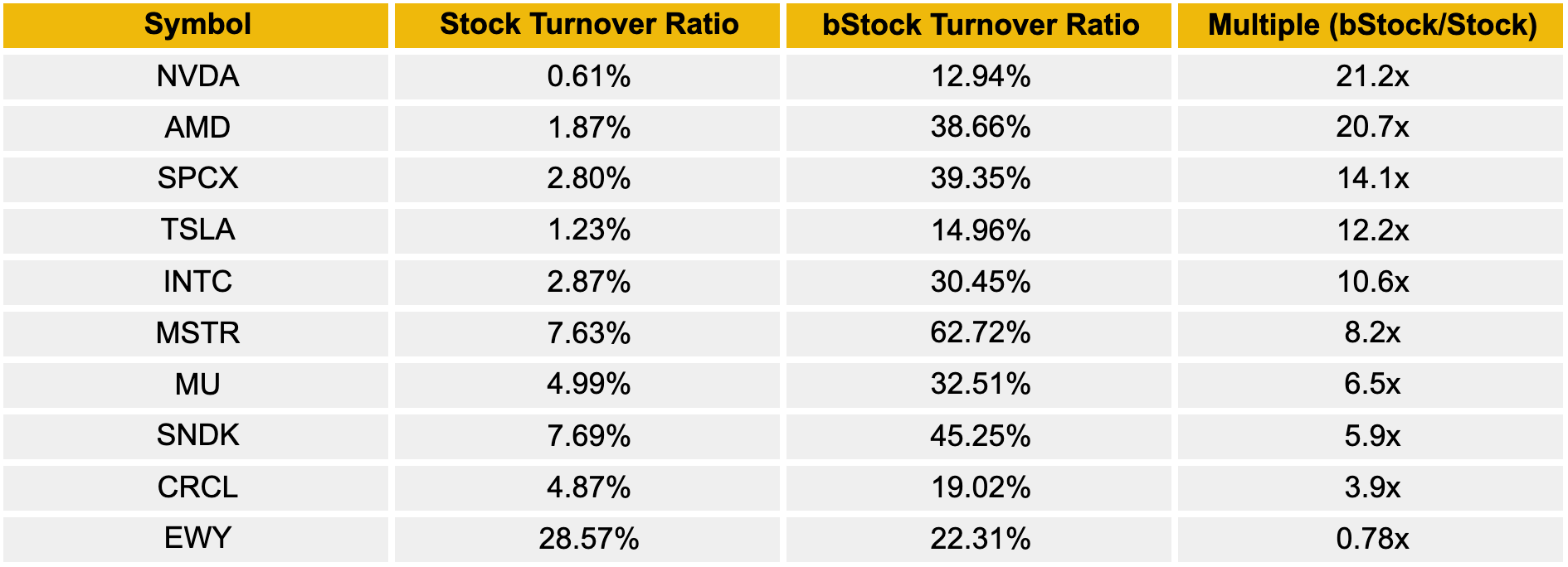
The lineup now spans some of the most followed names on Wall Street. Existing bStocks already include Tesla, NVIDIA, Strategy, SpaceX, Sandisk, Micron, Circle, and an iShares MSCI South Korea ETF. As a result, Binance is rapidly closing the gap with traditional equity brokerages.
The product structure carries important caveats. bStocks do not grant direct ownership, voting rights, or cash dividends from underlying companies. However, dividends are automatically reinvested into additional bStock exposure.
Users also assume full credit and operational risk of the issuer.
bStocks Surges Past $100 Million in Assets Under Management
bStocks growth growth has been explosive. Assets under management crossed $100 million within just 15 days of launch. This marks an 18x jump from 5.6 million on Day 1.
Moreover, cumulative trading volume reached $458 million across the first two weeks.
User behavior tells the deeper story. Around 47% of all trading volume happens outside traditional US stock market hours. Furthermore, 58% of activity came from emerging markets across the first 15 days. Over 80% of all trades are fractional, confirming retail-driven flow.
The numbers behind activity are striking. bStocks turn over 4 to 21x faster than their underlying stocks.
As a result, the tokenized format is unlocking a new pool of demand that traditional markets never effectively reached, especially among crypto-native users worldwide.

The broader context matters enormously. The real-world asset derivatives market now exceeds $347 billion in volume. Moreover, Binance commands 55.7% of global RWA derivatives trading.
Adding Microsoft, Meta, and Palantir reinforces the platform’s lead in the quickly growing tokenized equity sector.
Subscribe to our YouTube channel to watch leaders and journalists provide expert insights.
The post Binance Expands bStocks Offering and Adds Microsoft, Meta and More appeared first on BeInCrypto.
TLDR
- Cardone Capital increased its Bitcoin holdings to over 2,700 BTC during the recent price decline near $59,000.
- The firm funded its Bitcoin purchases using rental income from its real estate portfolio.
- Cardone Capital added 282 BTC earlier this month, valued at roughly $18 million at the time.
- The company holds about $200 million in Bitcoin alongside thousands of residential units and office properties.
- Grant Cardone stated the firm buys more Bitcoin as prices fall and focuses on consistent accumulation.
Grant Cardone accelerated Bitcoin purchases as prices hovered near $59,000, reinforcing his hybrid investment strategy. Cardone Capital increased its holdings beyond 2,700 BTC during the recent downturn. The firm continues to fund acquisitions using rental income from real estate assets.
Cardone Capital Expands Bitcoin Holdings During Market Weakness
Cardone Capital increased its bitcoin exposure as prices declined, and it maintained a steady accumulation pace. The firm added 282 BTC earlier this month, and it valued the purchase near $18 million. Cardone Capital now holds about $200 million in bitcoin alongside a large property portfolio.
Grant Cardone described the approach as disciplined and consistent, and he emphasized buying during price weakness. He said, “We improve property cash flow and buy more bitcoin as it drops.” Cardone Capital uses rental income instead of debt, and it keeps purchases steady across market cycles.
The firm integrates real estate and bitcoin within one LLC structure, and it targets returns between 22% and 32%. Cardone Capital channels recurring rental income into bitcoin purchases, and it avoids equity dilution. This model differs from corporate treasury strategies that rely on capital markets funding.
Hybrid Model Links Property Income With Bitcoin Strategy
Cardone Capital combines income-producing assets with digital assets, and it focuses on long-term accumulation. The firm directs apartment rental cash flow into bitcoin purchases, and it maintains a fixed buying schedule. This method reduces timing risk and supports consistent portfolio growth.
Grant Cardone aims to expand holdings to 3,000 BTC this year, and he targets 10,000 BTC over time. He also plans a publicly traded bitcoin-focused real estate company, and he maintains a 2026 price target. Cardone said bitcoin could reach $189,425, and he linked growth to continued accumulation.
Cardone Capital argues that its structure can outperform traditional REITs, and it highlights steady income flows. The firm avoids reliance on debt maturities, and it reduces exposure to share issuance pressures. Cardone Capital positions rental income as a stable funding source for bitcoin accumulation.
Market Risks Persist Despite Continued Accumulation Strategy
Cardone Capital remains exposed to bitcoin volatility, and price swings continue to affect treasury valuations. Bitcoin recently tested levels near $59,000, and it pressured firms with higher entry points. However, Cardone Capital treats price declines as accumulation opportunities and continues its strategy.
The firm also faces risks from real estate performance, and weaker cash flow could slow bitcoin purchases. Property value declines may impact funding capacity, and broader market conditions could influence outcomes. Cardone Capital continues operations within these constraints and maintains its accumulation model.
Grant Cardone reiterated confidence in the strategy, and he stressed consistent execution during downturns. He said the firm focuses on cash flow strength and long-term asset growth. Cardone Capital continues aligning real estate income with bitcoin purchases and sustains its hybrid investment approach.
TLDR
- Circle stock dropped more than 16% after Open USD was announced.
- Open USD is backed by major firms including Visa, Mastercard, and BlackRock.
- The project introduces a revenue-sharing model that differs from USDC.
- Circle and Coinbase currently earn income from USDC reserve assets.
- Open USD allows users to mint and redeem tokens without fees.
Circle stock declined sharply after a new stablecoin initiative raised competitive pressure on USDC. The market reacted quickly as Open USD entered the sector with strong institutional backing. Consequently, Circle stock faced selling pressure while Coinbase shares also moved lower.
Open USD Aims to Challenge USDC Dominance
Circle stock dropped more than 16% as investors reacted to the Open USD announcement. The new stablecoin project introduced a competing model with broad industry support. As a result, Circle stock reflected concerns about possible market share erosion.
Open Standard leads the Open USD initiative alongside major financial and technology companies. The coalition includes Visa, Mastercard, Stripe, BlackRock, and Bank of New York Mellon. It also includes Coinbase, Google, IBM, and several global banks and crypto firms.
However, Circle, Tether, and PayPal did not join the consortium behind Open USD. This absence highlighted a direct competitive line between existing issuers and the new network. Therefore, Circle stock faced additional pressure as markets assessed this divide.
Open Standard confirmed Open USD will launch later this year with over 140 participating businesses. The project allows users to mint and redeem tokens without fees. Moreover, the model distributes most reserve income to network participants instead of retaining it.
Circle Stock Reacts to Shifting Revenue Dynamics
Circle stock declined as investors evaluated changes to stablecoin revenue structures. Open USD introduces a shared income model that differs from traditional issuer-controlled profits. Consequently, Circle stock reflected concerns about future earnings stability.
USDC currently holds about $73.6 billion in circulation and remains a major stablecoin. Circle and Coinbase share revenue generated from USDC reserve assets. Therefore, Circle stock links closely to stablecoin performance and associated income streams.
Coinbase relies heavily on USDC-related revenue within its subscription and services segment. This segment accounted for 44% of total first-quarter revenue. As a result, Circle stock movements aligned with broader concerns affecting Coinbase.
Circle Chief Executive Jeremy Allaire addressed market concerns following the announcement. He stated, “USDC remains the most trusted, widely adopted stablecoin globally.” He also added that the company welcomes competition in the sector.
Regulation and Institutional Backing Reshape Competition
Circle stock also reflected broader changes in the regulatory landscape supporting new entrants. Lawmakers continue advancing stablecoin legislation to define reserve and licensing requirements. Therefore, Circle stock faced pressure from both competition and policy developments.
The CLARITY Act is progressing toward a Senate vote while the GENIUS Act sets federal standards. These rules favor large institutions with strong compliance systems. Consequently, Circle stock reacted as markets priced in new competitive advantages.
Government officials also supported the Open USD initiative as regulation becomes clearer. Patrick Witt said the launch shows how clear rules unlock value in digital assets. He added that upcoming legislation will expand opportunities across the crypto sector.
USDC and USDT currently dominate about 80% of the global stablecoin market. However, Open USD represents a major coordinated effort to challenge this dominance. As a result, Circle stock continues to reflect shifting expectations across the stablecoin ecosystem.

Open Standard has announced the launch of Open USD (OUSD), a US dollar-pegged stablecoin designed to redirect reserve earnings back to token holders and participating businesses. The project is backed by a broad mix of established payments and major crypto firms, positioning it as a direct competitive bet against the two dominant stablecoins by market value: Tether’s USDT and Circle’s USDC.
In its announcement, Open Standard said more than 140 companies have joined the effort and that OUSD will allow businesses to mint the token “at no cost and with no artificial limits on volume,” while keeping earnings generated by its reserves. Open Standard also stated that OUSD is planned to launch “later this year.”
Key takeaways
- Open USD (OUSD) is structured around reserve earnings: Open Standard says holders and participants receive “all of the earnings” from token reserves.
- High-profile backers signal serious distribution ambitions: Visa, Mastercard, and crypto firms including Coinbase, Ripple, OKX, and Bybit are cited as supporters.
- Potential competitive pressure on USDT and USDC: the project is framed as having a chance to take market share from Tether and Circle’s stablecoins.
- Launch timing ties into a more stable US regulatory outlook: the broader industry expects implementation momentum as US stablecoin rules advance under the GENIUS Act framework.
Why reserve-revenue mechanics matter in stablecoins
The central design point in Open Standard’s Open USD pitch is economics rather than branding. By allowing participants to “receive all of the earnings” from OUSD reserves, the project aims to make stablecoin holding and usage more attractive to businesses that depend on dollar settlement, cross-border payments, or tokenized value transfer.
That matters because stablecoin users do not only care about price stability; they also care about incentives and who captures the value generated by reserve assets. Open Standard’s approach is intended to align reserve revenue with those who mint or hold the coin—an incentive that could differentiate OUSD in a market often perceived as dominated by a small number of issuers.
In commentary attached to the launch, Rhino.fi co-founder and CEO Will Harborne described the model as a potential route to “win share” from USDT and USDC, while also warning that the same incentive can drive fragmentation at scale.
Who’s behind Open USD, and what it signals
Open Standard’s notice lists support from major players across traditional payments and crypto markets. The backing includes financial-services companies such as Visa and Mastercard, alongside crypto firms including Coinbase, Ripple, OKX, and Bybit.
According to Open Standard, this coalition will make it easier for businesses to mint OUSD without costs and without “artificial limits on volume.” The stated goal is not just to launch a new token, but to build an ecosystem where businesses can integrate issuance and access reserve earnings incentives.
Investors and market participants will likely watch whether these partnerships translate into measurable adoption—particularly the volume of OUSD minted and held, and whether regulated on- and off-ramps support frictionless usage across major venues. In stablecoins, distribution often determines survivability as much as technical design.
USDT vs. USDC vs. OUSD: where the competitive pressure could land
Open Standard’s launch announcement explicitly positions OUSD as a challenger. The two leading stablecoins by market capitalization—USDT and USDC—have long served as primary on-ramps for dollar exposure in crypto markets.
The news also landed during a period of sensitivity around issuer performance. The article notes that Circle’s share price reportedly dropped by more than 16% on Tuesday to $63.63, reflecting how investors may react to perceived competitive threats or strategic shifts in the stablecoin landscape.
Circle’s CEO Jeremy Allaire addressed the competitive framing in an X post after the announcement, saying the company welcomed “continued innovation and competition in the space.” Allaire also stated that Circle would soon expand support for dollar-pegged and non-US dollar stablecoins—an acknowledgment that issuers are likely to keep broadening product offerings beyond a single US-dollar token.
Market-watchers should note that new stablecoin initiatives face a high bar: they need trust in reserve transparency and stability, liquidity across exchanges, and operational support for minting and redemption at scale. Open USD’s “reserve earnings” concept provides a clear incentive narrative, but adoption will ultimately depend on how quickly integrations broaden and whether regulatory requirements are met in practice.
Regulation and market growth expectations in the background
Open Standard’s planned rollout is arriving amid a more constructive regulatory backdrop in the United States. The article points to the GENIUS Act—signed into law by President Donald Trump last year—which aims to create a regulatory framework for payment stablecoins. Many experts expect that the legislation will help clarify the path for implementation, potentially making it easier for companies to issue and accept digital assets tied to payments.
Industry growth projections underline why issuers are racing to secure positioning. DefiLlama data cited in the report estimates the stablecoin market at more than $312 billion today, with projections reaching up to $4 trillion by 2030. Those figures suggest that even incremental share gains from USDT and USDC—if OUSD achieves meaningful adoption—could represent material impact.
Still, OUSD’s effectiveness will depend on how regulatory implementation affects minting, custody, disclosures, and compliance processes for reserve-backed tokens. The more the framework supports stablecoin issuance and payment use cases, the more likely it is that initiatives like Open USD can convert partnerships into real-world usage.
For now, the key question for readers is straightforward: will Open USD’s reserve-revenue model and coalition backing translate into sustained minting and liquidity as the “later this year” launch approaches, and how quickly will US regulations and partner integrations enable broad, compliant deployment?

Ethereum is trading at just under $1,580 after falling about 6% over the past week. Despite the price weakness, Bitmine Chairman Tom Lee believes that the decline stems from quarter-end positioning and not changing the company’s Ethereum prediction.
Lee said in his recent interview that the recent weakness resembles classic quarter-end window dressing. According to him, fund managers often trim underperforming assets before reporting periods to improve portfolio appearances. He believes that process, rather than deteriorating fundamentals, has weighed on Ethereum in recent weeks.
Bitmine reinforced that view by maintaining its large Ethereum position instead of reducing exposure. SharpLink Gaming also accumulated ETH during the decline, showing that some institutional investors viewed the selloff as a buying opportunity.
Ethereum is down 22% over the past month, slightly underperforming Bitcoin during the same period. Whether that weakness was driven mainly by quarter-end flows or reflects a deeper trend will likely become clearer as third-quarter trading gets underway.
Discover: The Best Crypto to Diversify Your Portfolio
Ethereum Price Prediction: Reclaim $1,800 and Trigger a Q3 Recovery?
Ethereum is testing a key resistance zone between $1,600 and $1,610, where recent rallies have repeatedly lost momentum. A daily close above $1,610 would strengthen the recovery and could send ETH toward $1,700. If buying pressure accelerates, $1,800 becomes the next upside target.
Initial support sits near $1,560, which has attracted buyers during recent pullbacks. If that level breaks, ETH could revisit $1,500, while $1,450 marks the next major demand zone. A sustained move below $1,500 would weaken the current bullish outlook.

Don’t Miss Out on Our $1,000 USDT Airdrop on ByBit
The most likely scenario is continued consolidation after quarter-end positioning eases. ETH may trade between $1,560 and $1,610 before making a decisive move. A breakout above resistance would favor buyers, while losing support could shift momentum back to sellers.
Meanwhile, Tom Lee continues to view Ethereum as undervalued over the long term. He has projected potential targets between $7,000 and $9,000, with higher valuations tied to tokenization and stablecoin adoption. Those projections remain speculative, although institutional accumulation continues to support the long-term thesis.
Discover: The Best Token Presales
LiquidChain Targets Early Mover Upside as Ethereum Tests Key Levels
ETH’s choppy price action into Q3 highlights a persistent structural problem: liquidity fragmentation across Bitcoin, Ethereum, and Solana ecosystems means capital gets stranded at the chain level, and cross-chain execution remains clunky. That friction is exactly the problem a presale-stage L3 project is being built to eliminate.
Given ETH’s near-term technical uncertainty, some rotation toward earlier-stage infrastructure plays with asymmetric upside is worth examining.
Quiet moves. Big ideas.
That's how new layers begin. ⟁https://t.co/vqvBcdSQYC pic.twitter.com/nCpda1EiYm
— LiquidChain (@getliquidchain) June 28, 2026
LiquidChain is a Layer 3 infrastructure project positioning itself as a unified cross-chain liquidity layer, fusing BTC, ETH, and SOL liquidity into a single execution environment. The architecture centers on four components: a Unified Liquidity Layer, Single-Step Execution, Verifiable Settlement, and a Deploy-Once Architecture that lets developers build once and access all three ecosystems.
The presale is currently priced at $0.01475 with $880K raised to date. That’s a meaningful early-stage figure, but still well below a $1M threshold that typically signals institutional attention at the seed level. If the cross-chain thesis plays out as ETH and SOL ecosystems deepen their institutional footprint, an L3 aggregation layer captures value at the infrastructure level regardless of which chain wins individual market share.
Dig deeper and research LiquidChain before the raise closes.
The post Ethereum Price Prediction: Tom Lee Blames ETH Decline on Q2 Window Dressing appeared first on Cryptonews.

Days of our Lives SHOCKER: Clyde Weston Tied to EJ’s Poisoned Drug Plot?

Boy, 11, dies from rabies after bat landed on his face while he slept but left no visible bite as doctors issue warning
Form 4 La-Z-Boy Inc For: 30 June





-

 Fashion4 days ago
Weekend Open Thread: Staud – Corporette.com
-

 Politics5 days ago
The House | Manchesterism won’t survive the painful trade-offs unless it gets citizens on board
-

 Crypto World19 hours ago
Strategy authorizes up to $1.25B in Bitcoin sales under new capital plan
-

 Politics5 days ago
Potential 2028er World Cup attendee leaderboard
-

 Business5 days ago
Asia stock markets slide as tech shares slump
-

 News Videos2 days ago
MAJOR BITCOIN & MARKET UPDATE!!!! (MUST WATCH ASAP!!!)
-

 Tech5 days ago
A Look At A Gaggle Of Transputer Boards
-

 Crypto World7 days ago
Securitize Wraps Roubini's SEC-Registered ETF as Dubai VARA Digital Security
-
Crypto World7 days ago
Bitcoin (BTC) Dips Below $62K, Ethereum (ETH) Plunges 6% Daily: Market Watch
-
 Crypto World5 days ago
Dell (DELL) Shares Tumble Over 5% Following Analyst Downgrade to Hold
-

 Crypto World3 days ago
Coinbase, Circle Deepen Crypto Stock Losses Despite Resilient S&P 500
-
Business7 days ago
Entergy settles forward sale agreements, raises $672 million in cash proceeds
-

 Crypto World4 days ago
Kraken's xStocks Opens Bending Spoons IPO Registration to EEA Retail
-

 Business18 hours ago
Australia treasurer says alleged access of prime minister’s bank data ’incredibly concerning’
-

 Sports4 days ago
FIH Pro League: India defeat Pakistan 7-1, register biggest win of campaign | Other Sports News
-

 Crypto World5 days ago
Bitcoin Sparks $600M Hourly Liquidations With $65,000 Set To Become Resistance
-

 Tech3 days ago
Bluekit phishing kit adopts browser-in-the-middle for login theft
-

 Tech3 days ago
Russian hackers now target Signal backup recovery keys
-
Crypto World4 days ago
Hyperliquid Named on Singapore MAS Investor Alert Register
-

 Crypto World6 days ago
Ripple and SBI launch RLUSD in Japan after JFSA approval
You must be logged in to post a comment Login