
Crypto World
CME to Launch Regulated Bitcoin Volatility Futures in June

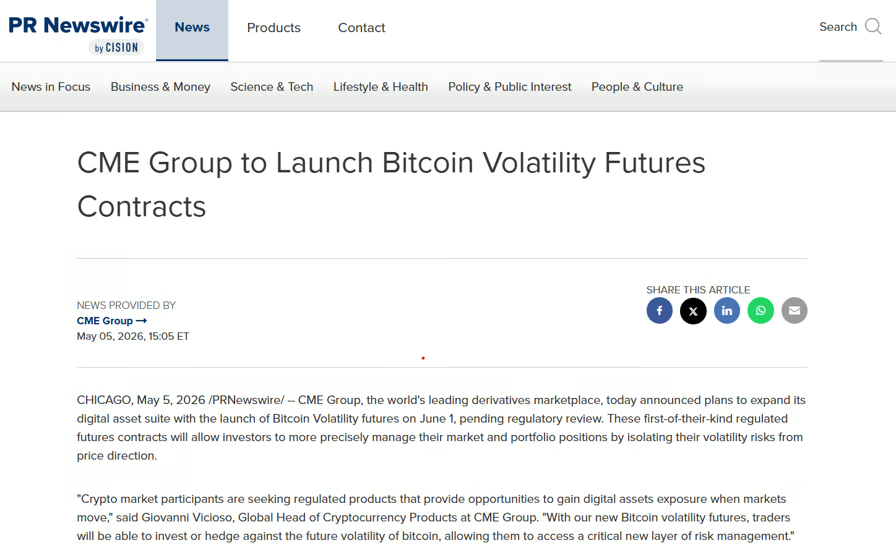
CME Group plans to launch Bitcoin Volatility futures on June 1, pending regulatory review, giving investors a compliant way to trade expected Bitcoin volatility rather than price direction, according to a company release published Tuesday.
The Chicago-based derivatives marketplace said the contracts will settle to the CME CF Bitcoin Volatility Index, a 30-day measure of expected Bitcoin volatility derived from CME options markets.
CME describes the new contracts as Commodity Futures Trading Commission (CFTC)-regulated futures aimed specifically at Bitcoin volatility, extending the existing US regulatory framework that already covers CME’s Bitcoin and Ether derivatives.
Giovanni Vicioso, CME Group’s global head of cryptocurrency products, said in the release that market participants are seeking regulated products that offer exposure to market moves, and that the new futures would let traders invest in or hedge against future Bitcoin volatility.
The launch would give institutions a regulated way to trade Bitcoin volatility in the US directly through CME’s clearing framework, rather than building similar exposure through combinations of Bitcoin options and futures or using offshore venues.
Related: CME CEO Duffy says exchange is exploring issuing its own token
In the same release, Morgan Stanley managing director and head of derivatives sales David Schlageter said the contracts should help market participants manage portfolio risk by trading volatility itself.
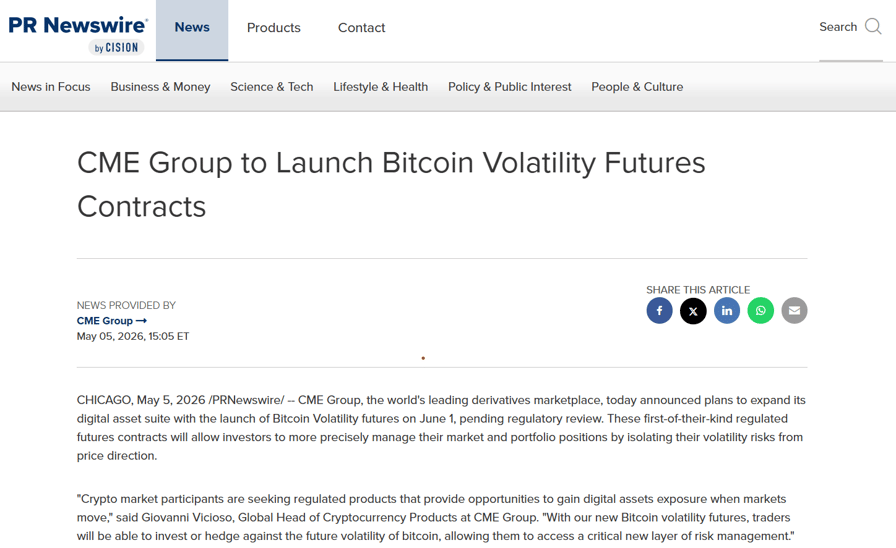
CME Group to Launch Bitcoin Volatility Futures Contracts. Source: PR Newswire.
CME described the contracts as the “first-of-their-kind regulated futures contracts,” distinguishing them from existing crypto-native volatility products offered outside the US-regulated futures framework.
Cointelegraph reached out to CME for additional comment, but had not received a response by publication.
CME’s product keeps Bitcoin volatility trading onshore
Similar products exist elsewhere. Deribit launched BTC DVOL futures in March 2023, tied to its implied-volatility index, while BitMEX introduced its BVOL 30-day historical volatility futures back in January 2015.
CME first introduced cash-settled Bitcoin futures in December 2017 and has since expanded its regulated crypto lineup to include Bitcoin options, Micro Bitcoin futures and options, Ether futures and options and other cryptocurrency contracts.
The group is preparing to move its cryptocurrency futures and options to 24/7 trading from May 29, subject to regulatory review, further aligning its market structure with the always-on nature of digital assets.
That push comes as crypto derivatives continue to dominate trading activity more broadly, with a CoinGlass report estimating 2025 crypto derivatives volume at about $85.7 trillion, and Swiss bank Amina Group finding that derivatives account for roughly three-quarters of all crypto trading.
Magazine: Bitcoin will not hit $1M by 2030, says veteran trader Peter Brandt

Crypto World
Roobet Launches Prediction Markets on May 6, The First Major Crypto Casino to Integrate the Format

[PRESS RELEASE – Los Angeles, United States, May 6th, 2026]
Roobet, the global crypto-first entertainment platform, today announced the launch of its new prediction markets offering, going live on May 6, 2026, at roobet.com/predictions.
With this launch, Roobet becomes the first major crypto casino to offer fully integrated prediction markets, expanding beyond traditional casino and sportsbook experiences into one of the fastest-growing formats in digital entertainment.
The new feature allows players to take positions on real-world outcomes across sports, culture, and major global events, all directly using their existing Roobet accounts.
Seamless Integration for Players
Unlike standalone platforms, Roobet’s prediction markets are built natively into the Roobet ecosystem. Players can participate instantly using their existing accounts and balances, eliminating friction and creating a unified experience across casino, sportsbook, and prediction markets.
This integration enables:
- Immediate access with no additional onboarding
- Use of existing Roobet balances
- A single wallet across all gaming and prediction experiences
Expanding the Future of Interactive Entertainment
Prediction markets have rapidly gained traction as a new way for users to engage with live events, combining elements of trading, gaming, and real-time decision-making. Roobet’s entry into the space reflects its continued focus on innovation and delivering next-generation entertainment to a global audience.
“Bringing prediction markets to Roobet is a natural evolution of our platform,” said Matt Duea, CEO at Roobet. “I’m incredibly proud of the team for getting this feature live. We’re excited to give our players something new that adds another layer of engagement and entertainment to the experience, especially at a time when prediction markets are gaining so much momentum globally.”
Launching May 6
The product will be available to Roobet users starting May 6, with an initial rollout of markets tied to major upcoming global events, followed by continuous expansion across sports, entertainment, and internet culture.
About Roobet
Founded in 2019 by lifelong gamers, Roobet.com is a fully licensed crypto casino and sportsbook growing in global popularity, to become the go-to entertainment brand for the next generation of gamers. With over 7,000 games from world-class iGaming studios, a fully featured sportsbook, prediction markets, original offerings like Crash, Mission Uncrossable, and Plinko, Roobet is pioneering online entertainment and defending fun on the digital frontier.
The post Roobet Launches Prediction Markets on May 6, The First Major Crypto Casino to Integrate the Format appeared first on CryptoPotato.


A key piece of financial infrastructure stitching tokenized assets to traditional banking got a real cross-border test this week.
Ondo Finance said Wednesday it had completed the first near-real-time cross-border redemption of a tokenized U.S. Treasury fund alongside JPMorgan’s blockchain platform Kinexys, payments giant Mastercard, and Ripple.
The transaction settled in under five seconds on the XRP Ledger and involved OUSG, Ondo’s tokenized U.S. Treasury fund built for accredited investors and qualified purchasers.
The pipeline started with Ondo processing the redemption on the XRP Ledger, after which Mastercard’s Multi-Token Network routed the instructions to Kinexys, and JPMorgan delivered the U.S. dollars to Ripple’s Singapore bank account.
The whole sequence happened outside traditional banking windows, the kind of cross-border settlement that typically takes one to three business days through correspondent banks.
“By connecting public blockchain infrastructure with interbank settlement rails, Ondo, Kinexys by JPMorgan, Mastercard, and Ripple are laying the groundwork for 24/7 global markets that never close,” said Ondo President Ian De Bode in a statement.
Markus Infanger, senior VP at RippleX, said the transaction shows institutions can run cross-border tokenized asset moves as a single integrated flow rather than stitching them together through legacy systems.
The pilot lands as the Depository Trust & Clearing Corporation (DTCC) said earlier this week it would launch its own tokenization service later this year. JPMorgan’s Kinexys platform has now processed over $3 trillion in cumulative transactions, with tokenized deposit volumes across major banks moving to billions of dollars over the past year.
XRP and ONDO were down as much as 2% in the past 24 hours alongside a broader pullback across the crypto market.

TLDR
- Ondo Finance completed a near-real-time cross-border redemption of its tokenized U.S. Treasury fund using blockchain infrastructure from JPMorgan, Mastercard, and Ripple.
- The companies processed the transaction in under five seconds on the XRP Ledger, according to their joint announcement.
- Mastercard enabled interoperability between on-chain assets and traditional fiat systems through its Multi Token Network.
- JPMorgan supported the settlement through its Kinexys blockchain platform, which has processed over $3 trillion in transactions.
- XRP traded at $1.42 at the time of reporting, posting a daily gain of about 1% and a monthly rise of around 6%.
Ondo Finance executed a near-real-time cross-border redemption of a tokenized U.S. Treasury fund using blockchain infrastructure from JPMorgan, Mastercard, and Ripple. The companies processed the transaction in under five seconds on the XRP Ledger, according to their joint statement. The pilot connected public blockchain rails with interbank settlement systems and enabled continuous cross-border transfers outside traditional banking hours.
XRP Ledger Powers Instant Cross-Border Treasury Redemption
Ondo used its tokenized U.S. Treasury fund OUSG for the pilot transaction. The fund serves accredited investors and qualified purchasers seeking on-chain exposure to Treasuries. The companies processed the redemption in less than five seconds on the XRP Ledger.
Ripple supported the blockchain layer, while JPMorgan provided its Kinexys platform for settlement integration. Mastercard enabled interoperability between digital assets and fiat currencies through its Multi-Token Network. As a result, the transaction moved across borders and banks in one coordinated flow.
Ondo President Ian De Bode said the transaction marked a first for tokenized Treasuries. He stated, “This milestone represents the first time tokenized U.S. Treasuries have settled across borders and banks in near-real time and outside traditional banking windows.” He added that the collaboration links public blockchain infrastructure with interbank settlement rails.
Markus Infanger, senior vice president of RippleX, addressed the outcome. He said the pilot shows that tokenized assets can move between public blockchains and global banking systems. He stated that institutions can execute cross-border transactions as a single integrated process.
Institutional Platforms Expand Tokenized Asset Infrastructure
JPMorgan operates Kinexys as its blockchain infrastructure platform for institutional clients. The platform has processed more than $3 trillion in total transactions, according to its website. It supports settlement services and correspondent banking network integration.
Mastercard’s Multi-Token Network facilitated the cross-border leg of the redemption. The system connected on-chain tokenized assets with traditional fiat payment channels. This structure allowed both blockchain and banking systems to complete the transfer without delay.
Ondo Finance focuses on bringing institutional-grade financial products on-chain. The company specializes in tokenizing traditional assets, including U.S. Treasuries, for qualified investors. OUSG represents its tokenized Treasury product used in the pilot.
The Depository Trust & Clearing Corporation announced plans to launch a tokenization service later this year. The group disclosed this plan earlier this week. Banks have also expanded tokenized deposit systems, with volumes rising from millions to billions over the past year.
XRP, the native asset of the XRP Ledger, traded at $1.42 at the time of reporting. The token gained about 1% on the day and posted a monthly increase of around 6%. However, XRP remains about 61% below its all-time high of $3.65 reached last July.



Tim Scott said the Senate Banking Committee is nearing consensus and working toward a bipartisan CLARITY Act markup in May, setting the most concrete timeline commitment yet on the long-delayed legislation.
Summary
- Senate Banking Committee Chair Tim Scott said his panel is working toward a bipartisan CLARITY Act markup in May, the firmest timeline commitment yet from the committee chair on the bill.
- Coinbase CEO Brian Armstrong responded publicly with “Mark it up,” and Circle urged the committee to act without further delay.
- Congress breaks for Memorial Day recess on May 21, leaving fewer than four weeks of effective legislative time to advance the bill.
Senate Banking Committee Chair Tim Scott said his panel is “nearing consensus” and working toward a bipartisan CLARITY Act markup in May. The statement is the most concrete timeline commitment yet from the committee chair on the bill, which has missed two previous markup deadlines in 2026.
The news drew an immediate industry response. Coinbase CEO Brian Armstrong posted “Mark it up” on social media, while Circle urged the Banking Committee to move without further delay.
More than 120 crypto organizations have already submitted a joint letter demanding immediate action on the bill, led by the Crypto Council for Innovation and the Blockchain Association.
The CLARITY Act passed the House 294 to 134 in July 2025 and cleared the Senate Agriculture Committee in January 2026. It still requires a Banking Committee markup, a 60-vote Senate floor threshold, reconciliation with the Agriculture Committee version, reconciliation with the House text, and a presidential signature before becoming law.
As crypto.news documented, Congress breaks for Memorial Day recess on May 21, leaving fewer than four weeks of effective legislative time. Senators Cynthia Lummis and Bernie Moreno have both warned that failure before that deadline pushes the next opportunity to 2030.
The Senate Banking Committee is targeting the week of May 11 for the markup, with Chair Tim Scott still working to resolve a holdout from Senator John Kennedy before proceeding.
TLDR
- Solana Company and Jito Foundation formed a partnership to expand institutional staking across Asia-Pacific.
- The companies will jointly deploy and operate Solana validator servers in key APAC markets.
- The validator rollout will use Solana Company’s Pacific Backbone network in four countries.
- The partnership will develop institutional staking products based on JitoSOL for Asian asset managers.
- Solana Company holds about $180 million worth of SOL as part of its treasury strategy.
Solana Company and Jito Foundation have formed a partnership to expand institutional validator and staking infrastructure across the Asia-Pacific. The companies will deploy Solana validators and develop staking products for large financial firms. They aim to strengthen compliant participation and increase Solana adoption in key regional markets.
Solana Company Expands Validator Footprint Across APAC
Solana Company confirmed it will jointly establish and operate Solana validator servers across Asia-Pacific with Jito Foundation. The rollout will anchor on Pacific Backbone, Solana Company’s institutional infrastructure network operating in Hong Kong, Singapore, Japan, and South Korea. The companies stated they will use this network to support secure and scalable validator services for institutional clients.
Through this partnership, both firms will focus on delivering institutional-grade infrastructure and improving staking yield performance. They will integrate Jito’s market layer technology with Solana Company’s regional network and client relationships. Marc Liew, head of APAC at Jito Foundation, said, “We’re creating a stronger foundation to enable scalable, compliant participation in the Solana ecosystem.”
Solana Company operates as a publicly listed digital asset treasury focused on SOL holdings. The company currently owns about $180 million worth of SOL, according to its statement. It plans to use its balance sheet and infrastructure to support validator expansion in the region.
Jito Foundation Advances Institutional Staking With JitoSOL
Jito Foundation will support the initiative by deploying its liquid staking and MEV infrastructure across the new validator network. The organization operates a liquid staking platform and issues the JitoSOL token within the Solana ecosystem. Through this collaboration, the firms will design staking products based on JitoSOL for asset managers and wealth managers in Asia.
The companies said they will tailor these products to meet institutional requirements and compliance standards in regional markets. They will also seek to optimize staking rewards through Jito’s validator and MEV technology stack. The partnership aims to align validator operations with the needs of regulated financial institutions.
Jito Foundation has secured institutional backing to expand its operations. In 2024, Andreessen Horowitz invested $50 million in Jito through a strategic private token sale. The firms confirmed they will begin deploying validators across the Pacific Backbone network in the coming months.
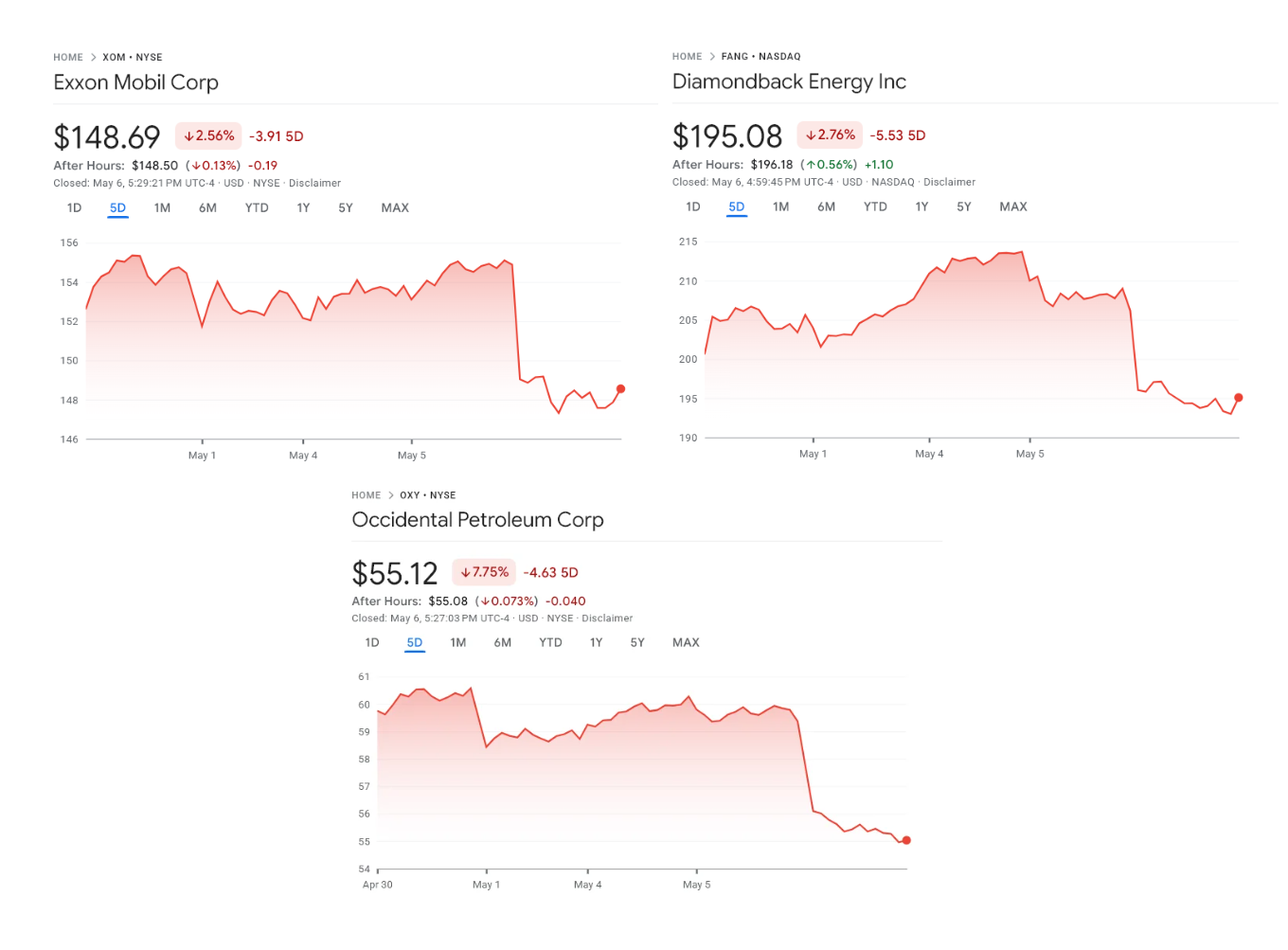
Oil stocks trade at a $40 premium to where JP Morgan thinks 2026 fundamentals settle. The gap is pure geopolitical risk from the US-Iran conflict.
Three names just reported Q1 2026 results this week, each handling the bifurcation differently. One is the diversified hedge. The other is a high-beta upstream bet. And the last one is the most exposed if the premium fades. May 2026 is when each chart picks a side.

ExxonMobil (NYSE: XOM)
ExxonMobil is the most diversified oil stock on this watchlist. The stock corrected from a high of $176.48 to a low of $141.96 as US-Iran de-escalation pulled the geopolitical premium out of oil prices.
Renewed tensions and Project Freedom then triggered a bounce. Currently, XOM trades at $154.88 inside an ascending channel that began on April 17, bounded by two upward-sloping trendlines.
Want more insights like this? Sign up for Editor Harsh Notariya’s Daily Newsletter here.
However, the structure is not yet bullish. It remains a corrective continuation pattern until XOM closes above the upper trendline. The price action from April 17 to May 5 shows clear volume divergence.
The stock trended higher within the channel, while volume trended lower over the same period. Lower volume on a rising trend signals buyers are not fully committed.

The volume signal aligns with the Q1 2026 fundamentals. Despite a 15% EPS beat at $1.16, ExxonMobil’s free cash flow dropped to $2.7 billion in Q1 from $5.6 billion in Q4 2025. The cash conversion weakness mirrors the chart’s hesitation.
The immediate level to watch is $155.67. A daily close above the upper trendline brings the upper trendline into play. Conversely, a break below $147.52 confirms a breakdown, opening the path to $142.48 (0.382 Fibonacci), $138.41 (0.5 Fibonacci), and $134.34 (0.618 Fibonacci) on a deeper correction.
In May 2026, XOM’s recovery channel will resolve in step with the geopolitical premium that drove the original correction and the Project Freedom bounce.
Diamondback Energy (NASDAQ: FANG)
While XOM stays hesitant, FANG is the high-beta oil stock setup. The chart shows two bullish flag-and-pole patterns stacked together.
The first pole ran from January 7 to March 27, resolving with an April 21 breakout. A second, smaller pole began on April 17 and is consolidating now. If the upper trendline of the current flag breaks, followed by a move above $214.58, the setup projects roughly 26% upside potential.
The economic logic hangs on that level. FANG’s Q1 2026 print delivered a 13% EPS beat at $4.23 and raised oil production guidance to 520+ MBO/d.
However, full-year cash capital expenditures were lifted from $3.75 billion to $3.90 billion. The increased spend into a potentially weakening oil tape is why the post-earnings reaction has been cautious. The stock dropped 3.51% on May 6 to $206.18.

Two technical projections stack on the chart, one for each pole, both converging near the $211-$214 zone.
A daily close above $214.58 opens the path to $222.17 and $236.29 next. A break below the $203-$204 level confirms weakness, $192.43 opens a deeper correction, and a break of $187.20 invalidates the latest bullish pattern.
For May 2026, FANG’s chart shows whether the higher 2026 spending plan pays off if oil prices fade. A break above $214 says the bet works; a break below $187 confirms the market’s caution about spending more into weaker oil.
Occidental Petroleum (NYSE: OXY)
While XOM and FANG offer plays on the geopolitical premium holding, OXY is the oil stock pick most exposed if it fades. JP Morgan forecasts Brent crude averaging around $60/bbl in 2026, citing a global supply surplus.
The bearish scenario shows up in OXY’s Q1 2026 print. EPS of $1.06 beat the $0.65 consensus, but free cash flow (FCF) turned negative at -$112 million. The cash burn happened while realized oil averaged $69.91 per barrel, with the geopolitical premium fully active. If oil fades toward $60, OXY’s cash burn deepens.
A bearish head and shoulders has formed on OXY since February 27. The pattern shows a head at $67.48 and a right shoulder forming near $60.79, with the neckline near $51.20. A confirmed breakdown projects 22.75% downside to $40.13.
Project Freedom and renewed tensions in Iran have stabilized prices around the right shoulder.
By escorting commercial tankers through the Strait of Hormuz under US military protection, Project Freedom signals continued US-Iran tensions and keeps oil prices elevated enough to support OXY’s revenue. OXY currently trades at $59.34.

A daily close above $60.79 would open the path to $67.48 and signal fresh Strait of Hormuz pressure. A failure with weak oil sends OXY to $57.13. A break below $51.20 confirms the pattern breakdown toward $40.13.
For May 2026, OXY’s chart is the clearest signal of whether the geopolitical premium fades. A close above $60.79 keeps the right shoulder intact; a break below $51.20 confirms the breakdown to $40.13.
The post 3 Oil Stocks To Watch In May 2026 appeared first on BeInCrypto.

Burn Rate Soars on Resumption of Activity
The burn rate for Shiba Inu has experienced a marked uptick, with a staggering 812% jump within a span of one day as activity levels have resumed. Based on current figures, a total of more than 12 million SHIB tokens have been eliminated from circulation by being sent to dead wallets.
This is a stark turnaround compared to the recent period where burn rates remained consistently low. The rise in the burn rate coincides with renewed activity in the Shiba Inu network. Typically, instances of heightened activity, which could be reflected in greater transactional and wallet movements, often result in high burn rates.
Supply Reduction Approach Gains Momentum
The burning of tokens has become an integral part of the Shiba Inu approach to cutting down on the total supply. It has been shown that burning Shiba Inu tokens is viewed favorably by both developers and participants in the project.
The combination of burning activity and increasing use can bring additional momentum into the trading market for this cryptocurrency. Increased attention is usually paid to projects where the burning process happens in tandem with a rise in user interest, leading to positive supply and demand factors.
Uncertainty Persists Regarding Price Movement
While the rise in burns has been significant, it should be noted that it has not affected the price of Shiba Inu positively. Currently, the coin is being traded at roughly $0.000006302, experiencing a slight downtrend by about 1.24%. It can be seen that investors are still cautious despite the positive development regarding on-chain metrics.
It should be added that Shiba Inu has seen an increase in value over the last month, contributing to investor confidence. This gap demonstrates the intricacy of cryptocurrencies, where many factors affect the price movement.
Burns are analyzed alongside transactions and wallets’ increases by investors looking for changes in momentum.
Engagement of Network Is Exhibiting Slow Recovery
According to recent figures, it seems that the network engagement of Shiba Inu is witnessing gradual improvement. The number of active wallets is increasing, and transaction volumes are increasing after remaining dormant for quite some time.
This improvement suggests that the decrease seen in engagement levels previously could be a temporary issue. Continuous engagement by users is essential for ensuring continued burn activities since increased engagement is likely to lead to token burning.
Future Price Movement Based on Supply and Demand Equilibrium
Going forward, the movement of price in the case of Shiba Inu will depend greatly on how the equilibrium is tilted either way between supply destruction and demand expansion. The continued burn of tokens and rise in network activity could be positive for momentum.
Nevertheless, the impact of market conditions should not be overlooked. The general market environment including trends in cryptocurrency prices, liquidity conditions, and sentiment towards crypto will play an important role in shaping short-term expectations.
For the time being, the Shiba Inu continues to be in the focus of investors, who look at its performance over the next few weeks.
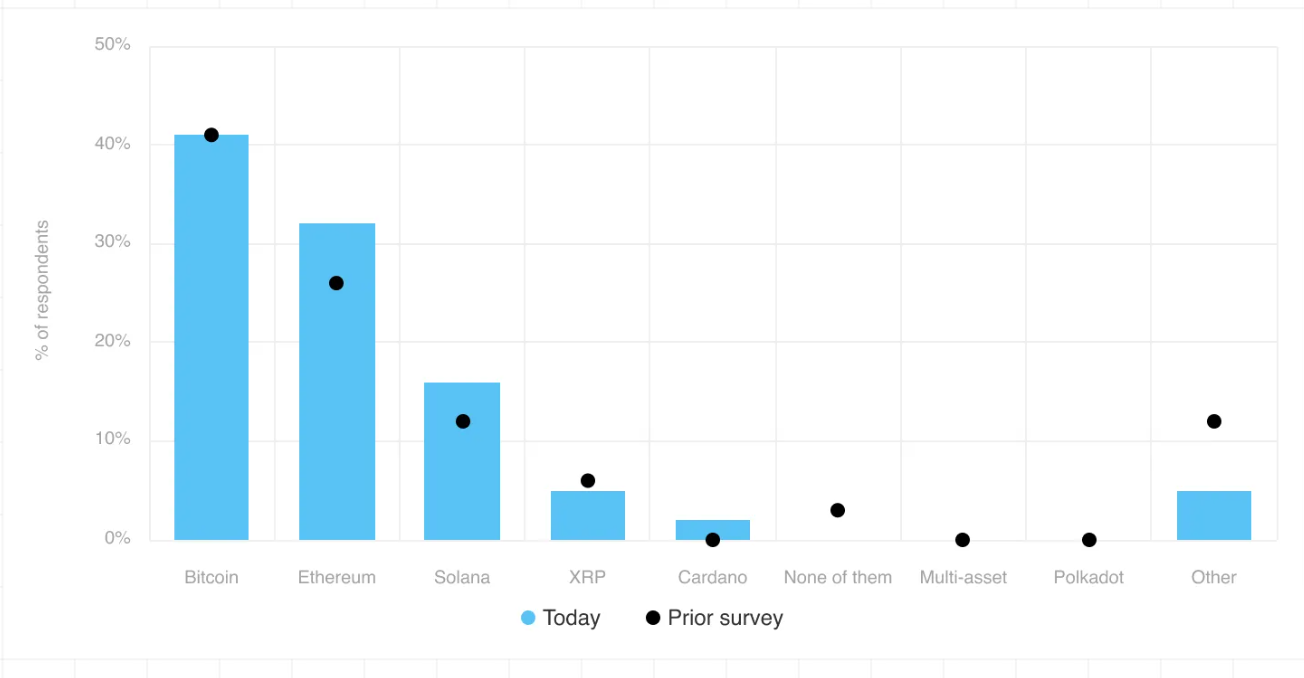
Fund managers covering $1.3 trillion in assets cite diversification and client demand for 63% of their crypto allocations. Speculation sits at just 15%, down sharply from two years ago.
The May 2026 CoinShares quarterly survey drew 26 institutional responses. Together, they point to an asset class defined by fundamentals rather than narrative momentum.
Diversification Replaces Speculation as Allocation Driver
Speculation accounted for the largest share of allocation rationale two years ago. That figure has fallen to 15%. Diversification and client demand jumped from 36% to 63%, according to CoinShares.
“Two years ago, speculation was the leading reason fund managers held digital assets. Today it sits at 15%. In its place: diversification and client demand are now 63% of the allocation rationale,” said James Butterfill, head of research at CoinShares.
The weighted average portfolio allocation slipped to 0.1%, skewed by a heavier institutional sample. The median holding remained at 1%, the typical default entry size for new institutional money.
Bitcoin Leads, Ethereum and Solana Gain
Bitcoin (BTC) still topped the growth outlook rankings. However, sentiment rotated modestly toward Ethereum (ETH) and Solana (SOL) compared with the previous quarterly survey.

BTC and ETH together accounted for 58% of portfolio responses. Legacy altcoins such as Cardano (ADA) and Polkadot (DOT) lost ground in portfolios.
Investors rotated toward Aave (AAVE), Sui (SUI), Tron (TRX) and Decentralized Finance (DeFi) protocols.
Corporate Restrictions Overtake Regulation
Corporate restrictions surged to the top of the barriers blocking deeper allocation, displacing regulation as the main obstacle. Legacy systems at large institutions remain a primary friction point.
Quantum risk continued to surface in client meetings, while reputational concerns and volatility eased but stayed elevated. Most respondents remained undecided on whether the US Federal Reserve has made a policy error.
Allocations climbing beyond the 1% median will likely depend on how fast institutions clear those internal restrictions.
The post 63% of Institutions are Investing in Crypto for Diversification, Report Finds appeared first on BeInCrypto.


Benchmark has cut its 12‑month price target on Bitcoin treasury company Strategy from $705 to $570, keeping a Buy rating but marking its model to a cooler Bitcoin path after a brutal drawdown in both BTC and Strategy’s stock.
Summary
- Benchmark has lowered its 12‑month price target on Bitcoin treasury company Strategy from $705 to $570, according to a new client note cited in market reports.
- The investment bank is maintaining its Buy rating, but is trimming upside assumptions after a sharp drawdown in both Strategy’s share price and Bitcoin.
- The move follows months of volatility in Strategy stock, which Benchmark had previously defended as a sustainable levered play on corporate Bitcoin accumulation.
Benchmark has reduced its target price for Strategy (NASDAQ: MSTR) from $705 to $570, according to market news shared on X and corroborated by recent analyst‑ratings rundowns. The firm is keeping a Buy rating, but the lower target reflects a cooler outlook on near‑term upside after Strategy’s stock slumped alongside Bitcoin from its early‑year highs.
Benchmark had been one of the most bullish houses on Strategy. In multiple notes over the past year, the bank’s analyst, Mark Palmer, reiterated a $705 target anchored to an aggressive Bitcoin path, with at least one Investing.com piece noting that the model assumed BTC would reach $225,000 by the end of 2026. That framework used a sum‑of‑the‑parts approach blending the projected value of Strategy’s Bitcoin holdings, a 10x multiple on the company’s 2026 “Bitcoin dollar gain,” and a residual value for its legacy software unit.
Even as MSTR fell more than 60% from mid‑2025 peaks—dropping from roughly $457 to near $150 in one six‑month stretch—Benchmark repeatedly stuck with the $705 figure, arguing in a widely circulated note that Strategy was still “a bitcoin‑focused treasury company, not a traditional software name,” and that its BTC stash created substantial embedded optionality if the next Bitcoin leg played out.
As of early Q2 2026, third‑party trackers like BitcoinTreasuries estimate that Strategy holds more than 818,000 BTC, making it the largest listed Bitcoin treasury in the world by a wide margin. That balance‑sheet exposure means any recalibration of BTC price targets flows directly into equity valuation, which helps explain why Benchmark is now trimming its own upside band to $570 as the crypto market reassesses cycle extremes.
In an April research piece summarized by MEXC, Benchmark went out of its way to defend Strategy’s STRC perpetual‑preferred funding model, arguing that using perpetual capital to buy Bitcoin is “sustainable” and rejecting critics who likened the structure to a Ponzi scheme. The bank called Strategy “a pioneer, not a pariah, in corporate Bitcoin adoption,” and that broader thesis has not changed even as the headline target moves lower.
For now, the $570 figure still implies substantial upside from current trading levels, but it also signals that even permabulls like Benchmark are beginning to mark their models to a less euphoric Bitcoin path. How that interacts with on‑chain dynamics and ETF flows is a theme crypto.news has been tracking closely in recent coverage, alongside deeper dives into Strategy’s treasury‑driven equity story in a feature and a valuation‑focused analysis.
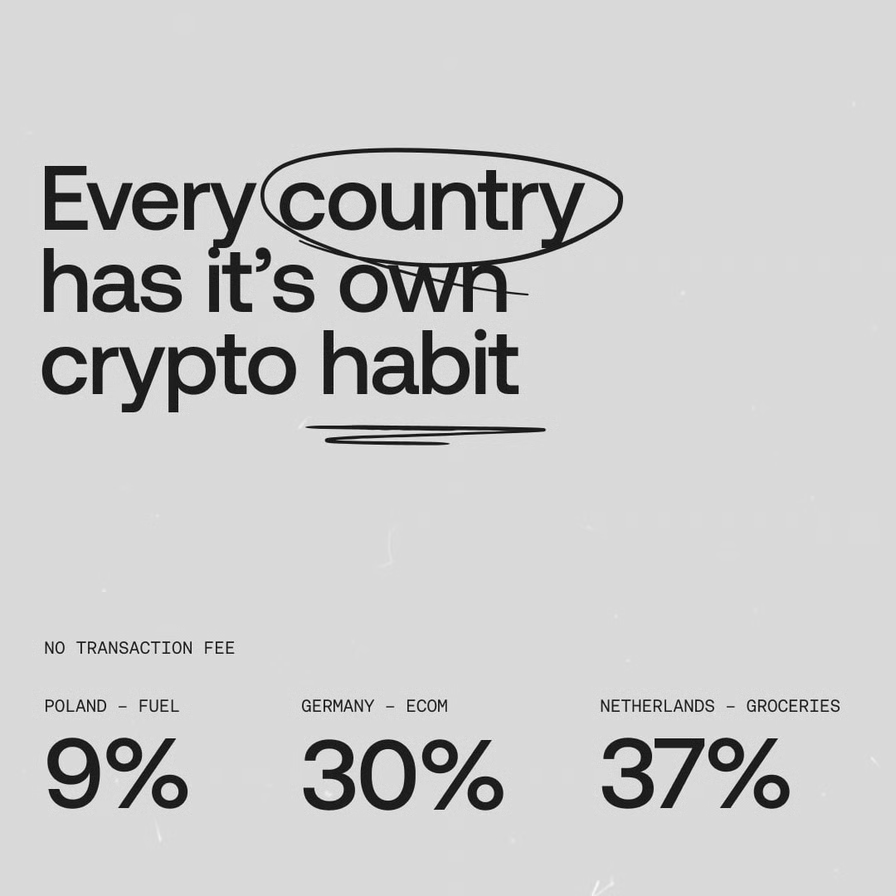
OKX Card users in Europe spent mostly on groceries, restaurants and other routine purchases in the product’s first month, according to transaction data shared Wednesday.
In the first month of use across the European Economic Area (EEA), grocery stores and supermarkets accounted for 26% of all OKX Card transactions, while restaurants and fast food together made up 18%, ahead of travel and online marketplaces, according to the data.
The analysis covers settled purchase transactions made with the OKX Card in the EEA between Jan. 28 and Feb. 26, across the top 20 merchant types by transaction count, volume or unique users, the company said.
A spokesperson from OKX told Cointelegraph the dataset spans all EEA markets where the card is live, and that the snapshot captures the “majority of daily spending behaviors and any high-value outliers,” including categories such as utilities, while excluding peer-to-peer transfers.
OKX’s numbers show distinct national patterns behind the headline averages. In France, for example, bakeries represent 5% of OKX Card transactions compared with 2% across the EEA, highlighting the country’s boulangerie and café culture.
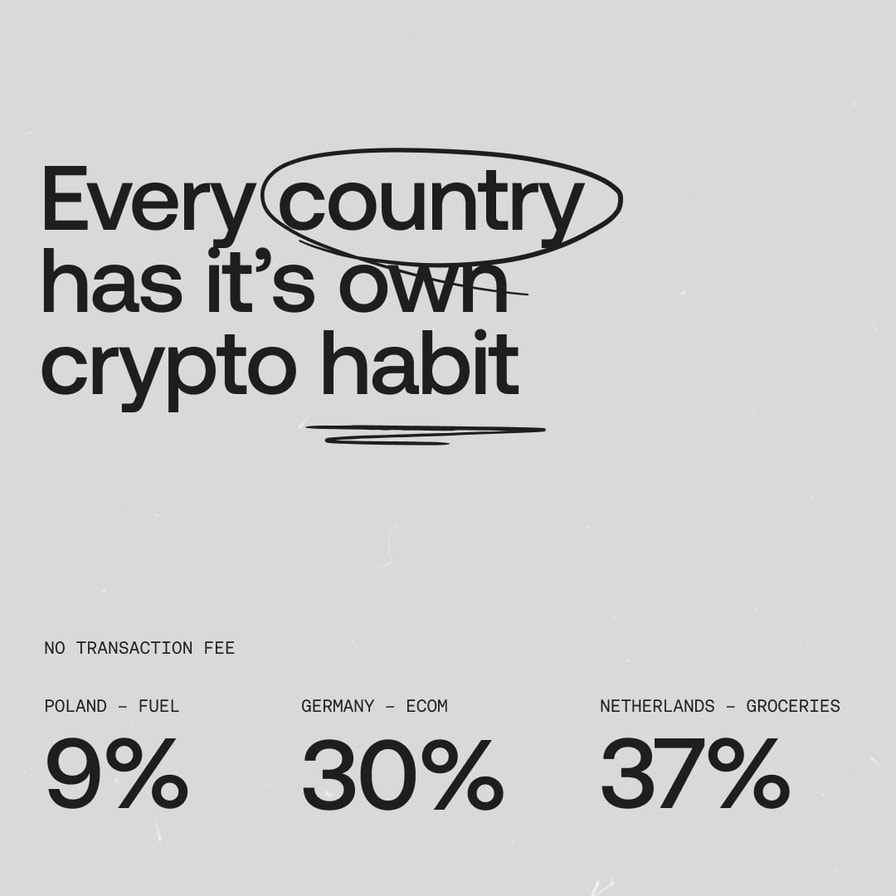
Spending habits by country. Source: OKX
In Germany, 30% of transactions occurred on online marketplaces, more than double the EEA average of 13%, while the Netherlands recorded 37% of transactions in supermarkets, the highest grocery share in the dataset.
Related: OKX launches EU stablecoin payment card via regulated issuer Monavate
Poland stands out for small-ticket, in-person usage, with 16% of OKX Card payments at convenience stores and around 9% at fuel stations, both above the EEA averages.
The spokesperson said that swapping fiat for crypto in everyday payments is a newer behavior, arguing that the data challenges the stereotype of crypto cards being used mainly for luxury items, and instead points to groceries and coffees bought by “everyday people.”
The company said country-level differences largely reflect existing cultural habits, but argued they show stablecoin-funded card payments starting to displace traditional cards in customers’ day-to-day routines, not just in occasional big-ticket purchases.
Part of broader trend in Europe
Broader market data suggests OKX is not alone in its findings, with other crypto card providers in Europe reporting similar patterns of low-value, everyday transactions.
A 2025 Cex.io report found that roughly 45% of crypto card transactions in Europe were for amounts under 10 euros ($11.75) and that around 40% of such card spend happened online, nearly double the euro-area average share of online card payments of about 21%.
Separate Brighty data reported by Cointelegraph in April showed that Spain accounted for about 36% of retail transactions and 25% of total volume in Circle’s euro stablecoin EURC between 2025 and the first quarter of 2026, with an average payment size of around 49 euros ($58), indicating stablecoins are already being used there for everyday purchases and peer-to-peer transfers.
Magazine: How to fix suspected insider trading on Polymarket and Kalshi

China may try ’manoeuvring’ over Taiwan issue at Trump meeting, official says
Roobet Launches Prediction Markets on May 6, The First Major Crypto Casino to Integrate the Format

Forget ‘Chernobyl’ — Prime Video’s 3-Part Political Thriller Is a Near-Perfect Weekend Binge

Manchester United reach agreement with Casemiro over contract clause amid transfer speculation

US brings back mandatory military draft registration

Steven Gerrard disagrees with Gary Neville over ‘shock’ Chelsea and Arsenal claim | Football


-

 NewsBeat3 days ago
Channel 5 – All Creatures Great and Small series 7 new post
-
 Tech5 days ago
Trump’s 25% EU auto tariff breaches Turnberry Agreement that also covers semiconductors and digital trade
-
 Sports5 days ago
Paul Scholes issues Marcus Rashford reality check as agreement emerges over Man United star
-

 Entertainment5 days ago
Met Gala 2026 Rumored Guest List Is Turning Heads
-

 Business6 days ago
Strait of Hormuz Blockade Persists Amid US-Iran Standoff, Sending Oil Prices Soaring
-
Entertainment5 days ago
New on Prime Video in May 2026 — Full List of Movies and Shows
-

 Sports5 days ago
Cavaliers vs. Raptors Game 6 live score, updates, highlights from 2026 NBA playoffs first-round series
-
 Sports5 days ago
David Benavidez responds to team Canelo saying the fight will never happen
-

 Entertainment5 days ago
Kylie Jenner Hit With Second Lawsuit From Ex-Housekeeper
-

 Entertainment5 days ago
Young and the Restless Next Week: Cane Arrested & Matt’s Deadly New Scheme!
-

 Tech6 days ago
Meta ends Sama contract after Kenyan workers report seeing intimate footage from Ray-Ban smart glasses users
-
 Sports5 days ago
IPL 2026: ‘Love you darling’- Hardik Pandya’s reaction to MS Dhoni steals the show |Watch | Cricket News
-
Entertainment4 days ago
New Netflix Movies in May 2026 — My Top 3 Picks to Stream
-

 Tech7 days ago
Mark Zuckerberg Says Meta Is Working On AI Agents For Personal And Business Use
-

 Sports7 days ago
Stalemate in Madrid as resilient Arsenal Blunt Atletico Madrid in semi-final clash – Sports
-

 Business4 days ago
Luka Doncic Injury Update: Doncic’s Hamstring Recovery Slows Lakers’ Hopes Against Thunder: Can He Run Yet?
-

 Sports6 days ago
What Preity Zinta Said After Punjab Kings’ First Defeat Of IPL 2026
-

 Sports5 days ago
Plane crash in Wimberley, Texas kills 5 pickleball players at tournament
-

 Sports5 days ago
LeBron James adds to his legacy as Lakers eliminate dysfunctional Rockets
-

 Sports6 days ago
Bayern won’t hand bottom side Heidenheim ‘gifts’ despite PSG game
You must be logged in to post a comment Login