
Crypto World
Coinbase connects crypto services to 3,000+ U.S. banks



Coinbase has announced a Sept. 16 partnership with Stablecore to embed crypto trading, custody, staking and stablecoin payments into banking systems whose integration footprint reaches more than 3,000 U.S. banks and credit unions.
Summary
- Coinbase and Stablecore will let banks offer crypto trading, custody, staking and stablecoin payments directly.
- Stablecore says its existing technology integrations reach more than 3,000 U.S. banks and credit unions.
- Amarillo National Bank is among institutions already working with the Coinbase and Stablecore partnership program.
- Coinbase provides regulated custody and exchange infrastructure while Stablecore connects existing banking and compliance systems.
- Stablecore’s Verafin integration remains in beta, with wider mutual-customer rollout planned from fourth quarter 2026.
Coinbase said the partnership is already underway with institutions including Amarillo National Bank in Texas, while Stablecore will connect Coinbase’s digital asset infrastructure to the core banking, digital banking and compliance systems used by participating financial institutions.
The announcement does not say that 3,000 banks have signed contracts with Coinbase. Stablecore says its existing integrations reach technology systems used by more than 3,000 U.S. banks and credit unions, giving participating institutions a route to add digital asset products without replacing their existing banking platforms.
Coinbase services will sit inside existing bank platforms
Through the partnership, participating bank and credit union customers could buy, sell, hold, stake and make payments with digital assets through their normal banking experience. Coinbase provides the underlying custody and exchange infrastructure, while Stablecore manages the connection between that infrastructure and each institution’s technology stack.
Stablecore’s role covers orchestration between core banking systems, customer-facing digital banking software and compliance tools. Its platform is designed as a white-label layer, allowing a financial institution to retain its own brand and customer interface while using outside infrastructure for digital asset functions.
Coinbase has not identified the stablecoins or blockchain networks that participating institutions will support. The Sept. 16 announcement does not publish transaction fees, custody charges, staking terms, minimum balances or a general customer launch date.
Alec Lovett, Coinbase’s head of infrastructure business, said “Community banks and credit unions shouldn’t have to choose between staying local and staying current.” Coinbase presents the arrangement as infrastructure for smaller financial institutions seeking crypto services without building their own custody, trading and blockchain systems.
Stablecore CEO Alex Treece said banks should be able to add the products without moving to completely different technology platforms. His company focuses exclusively on regional banks, community banks and credit unions.
Amarillo National Bank is part of the early integration work
Amarillo National Bank appears across several Stablecore projects already moving toward production. In March, Q2 announced that Amarillo National Bank and Bank of Utah were among the early institutions working with Stablecore through Q2 Innovation Studio.
Q2 said the integration can support stablecoin payments and acceptance, digital asset accounts with fiat on- and off-ramps, crypto-backed lending, tokenized deposits and staking rewards. The capabilities can appear inside both retail and commercial digital banking experiences.
By Sept. 9, Q2 reported that Stablecore’s digital asset integration had moved from initial development into production in less than six months. Q2 described it as a native connection inside its digital banking platform.
Coinbase’s Sept. 16 release goes a step further by identifying Coinbase as the provider of underlying custody and exchange infrastructure within Stablecore’s offering. It does not specify which Coinbase services Amarillo National Bank has already activated for end customers.
No public announcement reviewed for this report confirms that Amarillo customers can currently trade crypto, earn staking rewards or send stablecoins through their bank accounts. The companies describe implementation as underway, leaving the exact customer-facing launch stage dependent on the individual institution.
Stablecore is adding crypto monitoring through Verafin
Compliance infrastructure is developing alongside the banking integrations. Stablecore announced a Sept. 15 partnership with Nasdaq Verafin that combines digital asset transaction information with traditional bank customer data for financial-crime monitoring.
Under that structure, Stablecore holds digital asset transaction and position information without storing personally identifiable information. The bank keeps its customer and account records in its core system, while both sets of information flow into Verafin for investigation and risk assessment.
Amarillo National Bank is among the beta customers testing the Verafin integration. Stablecore expects the system to reach mutual customers during the fourth quarter of 2026 and first quarter of 2027, with real-time sanctions screening for recipients of digital asset transfers planned after the initial integration.
William Ware, president of Amarillo National Bank, said “Our customers want access to emerging payment methods” while the bank seeks to maintain visibility across traditional and digital asset activity. The Verafin beta is separate from Coinbase’s custody and exchange role, although both sit within Stablecore’s developing bank technology stack.
U.S. rules allow banks to use third-party crypto providers
Federal banking regulators have clarified several activities relevant to the Coinbase and Stablecore model.
The OCC confirmed in May 2025 that national banks and federal savings associations may provide crypto custody and execute customer-directed purchases and sales. Banks can outsource permissible crypto activities to third parties when they maintain appropriate vendor and risk controls.
Two months earlier, the OCC reaffirmed that national banks may conduct certain stablecoin, distributed-ledger and crypto custody activities. The agency removed an earlier requirement that OCC-supervised banks obtain supervisory non-objection before starting those activities, while retaining normal safety, soundness and compliance expectations.
The Federal Reserve withdrew its separate advance-notification expectation for state member banks in April 2025. Crypto activities now fall within its regular supervisory process, though institutions still have to comply with applicable laws and maintain appropriate controls.
OCC guidance later confirmed that national banks may conduct riskless-principal crypto trades, where the bank facilitates a customer transaction while entering an offsetting transaction instead of keeping the asset in inventory. The December 2025 guidance maintained the requirement for safe and sound operation.
Regulatory permission does not mean every community bank can activate every Stablecore or Coinbase feature automatically. Charter type, state rules, bank policies, customer eligibility and individual product design can change what each institution offers.
Coinbase now has two community-bank distribution deals
The Stablecore agreement follows another Coinbase community-bank partnership announced six days earlier.
As crypto.news reported in its Coinbase-Moov coverage, Coinbase and Moov are working to bring stablecoin acceptance, merchant settlement, payouts and real-time funding to a network of more than 1,000 community banks and credit unions.
The two arrangements cover different parts of banking infrastructure. Moov focuses on payment acceptance, merchant settlement and funding through its payments stack, while Stablecore’s announced product set reaches trading, custody, staking, stablecoin payments and integration with core and compliance systems.
Related coverage of Coinbase’s OCC trust approval reported in April that Coinbase had received conditional approval for a national trust bank charter, with community banking groups objecting to the regulator’s decision. The Stablecore announcement identifies Coinbase as the regulated digital asset infrastructure provider but does not specify which Coinbase legal entity will provide each service to each participating institution.
Stablecore’s March Q2 announcement named Amarillo National Bank and Bank of Utah as early institutions evaluating its infrastructure, while the Sept. 16 Coinbase release names only Amarillo in connection with the new partnership. Neither company has disclosed how many banks have completed Coinbase-enabled deployment, transaction volumes from early implementations or a deadline for opening the full product set to customers.



Charles Schwab is holding a neutral stance on equities. The firm favors commodities over stocks and bonds, according to chief investment strategist Liz Ann Sonders.
Sonders made the comments in a recent interview, pushing back on what she called “cookie-cutter” portfolio advice. She said allocation should hinge on each investor’s time horizon, risk tolerance, need for income, and overall goals.
No Universal Portfolio
“It actually drives me a little crazy when people give a cookie-cutter answer to that,” Sonders said. “There’s no one asset allocation that makes sense right now.”
Schwab oversees $13.4 trillion in client assets, and Sonders pointed to that scale as proof there is no single right answer for every client.
She was responding to a question about the classic 60/40 portfolio, a benchmark mix of 60% stocks and 40% bonds. Other strategists have proposed carving out a bigger slice for commodities instead.
Favoring Commodities Over Bonds
Sonders said Schwab is less favorable on fixed income. The firm is more favorable on commodities, a stance that echoes a broader shift away from the traditional 60/40 mix.
“We’re neutral on equities, which is not a bearish position,” she added. It simply reflects Schwab’s long-term strategic allocation, not a call to sell stocks.
Gold-backed funds pulled in $18 billion in August alone. That was the second-biggest monthly inflow on record, lifting total holdings to an all-time high.
The figure comes from the World Gold Council, an industry group that tracks global gold demand, cited in a related gold ETF surge report.
One specific split floated by other strategists calls for a 60/20/20 mix, with a fifth of the portfolio in commodities. Sonders declined to endorse any fixed ratio.
However, she said the right percentages depend on each investor’s goals, time horizon, and income needs. The interviewer added that age and investor profile matter just as much.
The debate over stock-bond diversification is far from settled. Whether Schwab’s tilt toward commodities proves prescient may depend on the current cycle for gold and other real assets. That cycle will keep playing out in the months ahead.
The post Charles Schwab's Sonders Favors Commodities Over Equities, But Not for All appeared first on BeInCrypto.
XRP Ledger developers have released xrpld version 3.4.0 on Sept. 16, adding two amendment packages that revise proposed native lending functions and harden several transaction paths while asking server operators to upgrade.
Summary
- XRPL version 3.4.0 introduces two amendments covering lending changes plus a bundled protocol-fix package now.
- LendingProtocolV1_1 adds closed-ended vaults and cash-basis accounting, but mainnet activation still requires sustained validator consensus.
- Server operators are urged to upgrade quickly as XRPL Foundation now distributes signed Linux packages.
- fixCleanup3_4_0 hardens vaults, AMMs, MPTs, escrow, signing, credentials, and permissioned trading behavior across transaction paths.
- The new lending amendment depends on XLS-65 and XLS-66, which remain below activation thresholds.
XRPL’s official release says version 3.4.0 introduces LendingProtocolV1_1 and fixCleanup3_4_0, while retiring fixAMMOverflowOffer after its post-amendment behavior became a permanent part of the protocol.
The software release does not mean either new amendment is active on mainnet. XRPL’s amendment process requires a proposal to receive more than 80% support from trusted validators continuously for two weeks before its rules become active.
Lending V1.1 adds closed-ended vaults and cash accounting
XRPL’s 3.4.0 release says LendingProtocolV1_1 changes the design of Single Asset Vaults and the Lending Protocol by introducing closed-ended vaults with defined subscription, investment and redemption periods.
Ripple’s technical documentation says depositors can add or withdraw assets during the subscription phase. During the investment period, deposits and withdrawals stop while assets can fund loans. Redemption begins once the investment period ends, allowing depositors to recover their share after loans mature.
Once LendingProtocolV1_1 becomes active, XRPL’s documentation says new loan brokers can only be attached to closed-ended vaults. Existing loan relationships created under earlier rules receive separate handling so outstanding positions can continue to be managed.
The accounting model changes at the same time. Ripple’s documentation says new vaults would recognize interest only when borrowers actually make payments.
Under the earlier model, all scheduled interest was recognized when a loan originated. Cash-basis accounting leaves unpaid future interest outside vault income until payment arrives, affecting AssetsTotal, loan debt calculations and the accounting treatment of defaults.
The V1.1 rules would not retroactively convert older vaults. Ripple’s documentation says vaults created under the previous accounting method retain that model after V1.1 activation.
As earlier amendment coverage reported, Ripple’s validator had already voted for the underlying SingleAssetVault and LendingProtocol proposals in August, but validator approval remained well below the level required for mainnet activation.
XRPL 3.4.0 packages a large set of transaction fixes
The second amendment, fixCleanup3_4_0, contains fixes covering lending, vaults, Automated Market Makers, Multi-Purpose Tokens, NFTs, escrow, permissioned trading and account authorization.
The official release says one change prevents AMMClawback from burning a holder’s liquidity-provider tokens while recovering zero underlying assets when MPT rounding reduces the calculated recovery amount to zero.
Another fix strengthens MPT invariants. XRPL developers said the ValidMPTBalanceChanges and ValidMPTTransfer checks, which previously generated logs, are enforced under the amendment and continue to apply when transactions fail.
For Single Asset Vaults, the release lists precision and rounding changes across deposits, withdrawals and clawbacks. The rules are designed to keep recorded assets, available assets and outstanding share supply aligned when conversions reach precision boundaries.
Permissioned trading receives several corrections. The package excludes deleted domain offers from one Permissioned DEX invariant, tightens domain checks and corrects how expired credentials are removed when OfferCreate or Payment transactions run.
Signing behavior receives a separate safeguard. The release says version 3.4.0 assigns different signing hash prefixes to counterparty and sponsor signatures so a signature created for one role cannot be replayed as the other.
The release contains lower-level node hardening outside the amendment package. Developers fixed an unbounded database seek through TMGetLedger, capped the size of incoming TMTransactions lists and introduced a fee for transactions that cannot be deserialized.
XRPL developers said version 3.4.0 incorporates phase-one fixes arising from MPT and DEX audit and attackathon findings. The release does not identify those fixes as evidence of an active exploit on mainnet.
In previous upgrade coverage, version 3.3.0 had already introduced code for several separate proposals, including corrected Batch functionality, sponsored fees and confidential MPT transfers, with validator approval still required before activation.
Validator approval still separates release from activation
XRPL’s official amendment rules state that installing software containing an amendment only gives a server the code needed to understand the proposed rules. Validators separately choose whether to vote for activation.
The current XRPLF feature code lists both LendingProtocolV1_1 and fixCleanup3_4_0 as supported while retaining DefaultNo voting behavior. A default-no setting means running the software does not itself cast an affirmative amendment vote when an operator has not configured another choice.
The underlying lending components remain short of activation. A Sept. 17 snapshot based on XRPL Foundation validator-history data showed 16 of 35 trusted validators supporting SingleAssetVault and 13 of 35 supporting LendingProtocol.
Those counts are time-sensitive and come from an independent network tracker, not a fixed figure published in the release notes. The official rule remains more than 80% support maintained for two continuous weeks.
The new V1.1 amendment depends on the underlying lending architecture. The current XLS-66 specification describes fixed-term, uncollateralized lending using funds pooled through Single Asset Vaults, while borrower underwriting and credit-risk assessment remain off-chain.
The same specification remains classified as Draft. No source reviewed for this update showed a mainnet loan executed through the proposed native protocol or an activation date for LendingProtocolV1_1.
Node operators now receive packages from XRPL Foundation
Version 3.4.0 changes the distribution path for Linux server packages. The official release says Debian and RPM packages are now hosted through packages.xrplf.org and signed with an XRPL Foundation key.
XRPL developers urged server operators to install 3.4.0 “as soon as possible” to maintain service continuity. The published DEB and RPM files include SHA-256 checksums so operators can verify downloaded packages before installation.
GitHub now lists 3.4.0 as the latest immutable xrpld release, tied to commit 4a4fded2eba11427c48ce3f24d9c1aea5e7a9d17. The repository says the release tag and version commit carry verified signatures.
The same release retires fixAMMOverflowOffer. Under XRPL’s amendment model, retirement does not reverse the fix. It removes obsolete pre-amendment behavior after the new rules have become established as permanent protocol behavior.
Client support and security review are still developing
Application libraries are moving alongside the server release. XRPLF’s JavaScript client history lists LendingProtocolV1_1 support under the unreleased section following xrpl.js 5.2.0, which shipped on Sept. 11.
The binary-codec history shows version 2.11.0 already contains the role-specific sponsor and counterparty signing prefixes used by fixCleanup3_4_0, along with protocol definitions generated from xrpld 3.4.0.
Security testing of the lending work has continued separately from validator voting. Sherlock said in an Aug. 27 review that Ripple had started an AI-only examination of Lending Protocol V1.1 through its Audit Engine.
Sherlock said it would publish more information after the review finished, but no final V1.1 findings were located in its public materials checked for this report. Earlier testing covered a previous version of the lending system; prior independent audit coverage reported that Halborn’s earlier re-audit found no critical or high-risk issues while identifying one medium, two low and two informational findings.
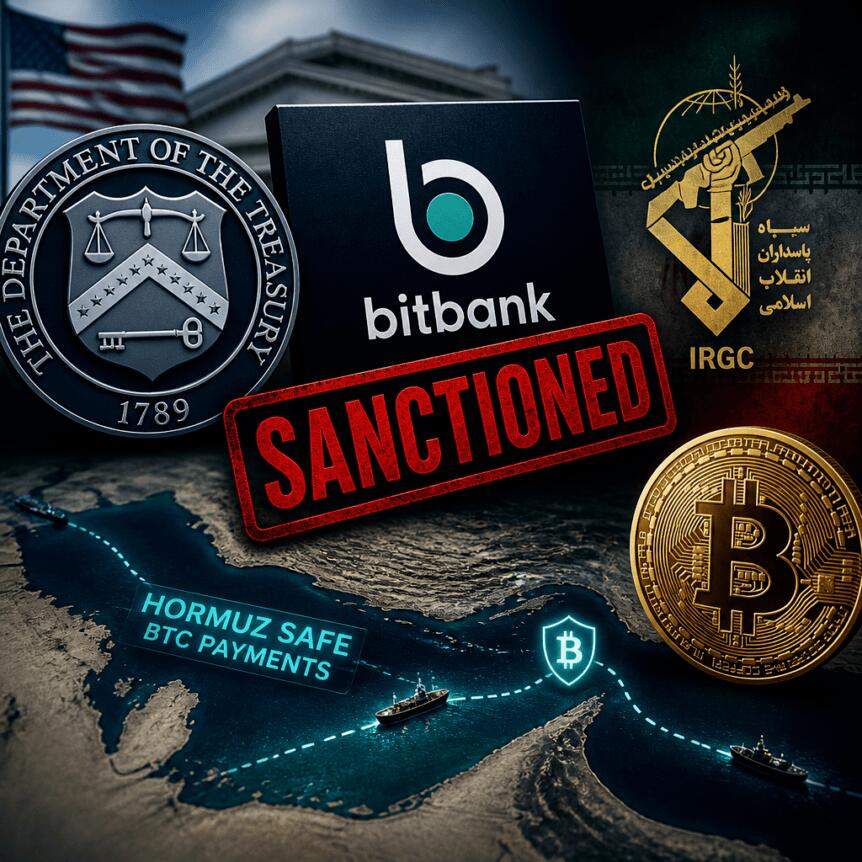
U.S. authorities have announced new sanctions targeting an Iranian cryptocurrency exchange, alleging it was used to process Bitcoin payments tied to maritime traffic through a strategic choke point in the Middle East.
On Thursday, the U.S. Department of the Treasury’s Office of Foreign Assets Control (OFAC) designated BitBank, accusing the platform of helping move cryptocurrency-linked funds connected to vessels transiting the Strait of Hormuz. The action is part of a broader push to restrict Iran’s access to international financial channels, including through digital assets.
Key takeaways
- OFAC sanctioned Iranian digital asset infrastructure tied to BitBank, alleging it facilitated Bitcoin payments connected to Strait of Hormuz shipping.
- Treasury said Hormuz Safe Marine Services Authority transferred funds received to the Islamic Revolutionary Guard Corps (IRGC) using BitBank.
- The U.S. linked the alleged setup to Iranian financier Babak Zanjani, portraying it as part of an IRGC-connected sanctions-evasion architecture.
- OFAC also designated BitBank’s developer, Pishtaz Simorgh Electronic Trade Company, and three associates connected to Zanjani.
- Separately, “Bitbank” is a different entity from a Japan-licensed exchange acquired by SBI Holdings in June, underscoring the importance of distinguishing similarly named platforms.
Why OFAC says BitBank matters
According to OFAC, as of June, the Hormuz Safe Marine Services Authority used BitBank to transfer payments it received to the IRGC. Treasury’s allegation centers on how crypto rails may be used to convert and route funds in ways that can help sanctioned parties avoid traditional banking scrutiny.
OFAC further claimed that the exchange is part of a wider system Treasury described as enabling the movement of hundreds of millions of dollars in Bitcoin associated with Babak Zanjani—an individual previously tied by the U.S. government to Iran-related sanctions evasion.
In its statement accompanying the designations, Treasury Secretary Scott Bessent said the step “make[s] perfectly clear” that attempts to finance the Iranian regime using cryptocurrencies are not beyond OFAC’s reach.
The Hormuz Safe link and the prior insurance scheme allegation
Treasury’s notice also referenced earlier accusations involving Hormuz Safe. In a prior action, OFAC alleged that Hormuz Safe was connected to an IRGC-backed scheme pressuring vessels to purchase maritime insurance for passage. Treasury’s earlier claim included coverage against seizures by Iran itself—an arrangement OFAC said could create a revenue channel that ultimately supports sanctioned entities.
This time, the U.S. moves from describing the insurance or routing mechanism to naming the alleged crypto exchange infrastructure used to transfer funds that stakeholders may receive in the course of that shipping activity.
For investors and industry participants, the practical takeaway is that U.S. sanctions enforcement is increasingly focused on the “plumbing” that can connect off-chain activity—like shipping payments and insurance flows—to on-chain settlement or exchange transfers.
Scope of the sanctions package
OFAC’s designations include BitBank and its developer, Pishtaz Simorgh Electronic Trade Company, along with three associates of Babak Zanjani. Treasury described the group as “key components of the Iranian regime’s digital assets-based sanctions evasion infrastructure.”
The designations add another layer to a series of OFAC moves aimed at isolating Iran from the international financial system, including through sanctions on digital asset businesses.
Cointelegraph reported that it reached out to BitBank for comment, but no response is included in the source material.
Beware name confusion: Iranian BitBank vs. a licensed Japan exchange
Readers should note that the sanctioned “BitBank” referenced by U.S. Treasury is not the same as a separate “bitbank, inc,” a fully licensed crypto exchange founded in Japan in 2014. That Japan-based entity was acquired by SBI Holdings in June, according to earlier coverage (SBI Holdings acquired bitbank).
Treasury’s designation lists “BitBank” as having been established in 2024. The distinction matters because similarly named platforms can create confusion for users, compliance teams, and market participants trying to assess regulatory risk.
Broader U.S. actions targeting Iran and crypto
This sanction comes amid continued U.S. efforts to tighten restrictions around Iran’s crypto activity. Earlier in the year, OFAC sanctioned multiple Iranian digital asset exchanges—actions Treasury framed as attempts to support sanctions evasion.
In August, the U.S. sanctioned two digital asset exchanges—Shelbit and Aban Tether—according to earlier reporting from Cointelegraph. In June, Treasury also sanctioned four crypto exchanges, including Nobitex, as previously covered.
Treasury has also targeted stablecoin holdings connected to Iranian-linked wallets. In July, the U.S. ordered the freezing of more than $130 million in USDt held in wallets linked to Iran, per coverage included in the source material.
Meanwhile, wider financial constraints appear to be driving Iran to adjust tactics. Earlier this month, the Financial Times reported that Iran’s central bank eased foreign currency controls to encourage businesses to bring overseas earnings home, including by using cryptocurrency, amid tightening U.S. sanctions—an approach discussed in prior coverage from Cointelegraph.
With Thursday’s designations, OFAC is again signaling that crypto-related infrastructure used in sanctioned economic activity—especially when linked to strategic regional commerce like Strait of Hormuz shipping—can be treated as enforceable sanctions targets. The next question for market participants is how exchanges, payment providers, and compliance tooling will respond to these designations, and whether further details about the alleged payment pathways emerge as the U.S. continues expanding its Iran-focused enforcement.


Galaxy has expanded its onchain lending business to Solana with two live stablecoin vaults on Kamino, adding separate USDC and USDT strategies managed through Galaxy Curation.
Summary
- Galaxy launched two Kamino vaults offering curated USDC and USDT lending strategies across Solana markets.
- Galaxy applies institutional collateral standards, exposure limits, and market monitoring to both newly launched vaults.
- Galaxy reported a $1.4 billion average loan book and 1,741 total trading counterparties during Q2.
- Kamino reports over $20 billion in originated loans and zero bad debt to lenders historically.
- The USDC vault is available through Yield.xyz, extending distribution beyond users accessing Kamino directly.
Galaxy said on Sept. 17 that its curation team will decide which Kamino lending markets the vaults can enter, control exposure limits and monitor market conditions using the risk framework employed in its institutional lending business.
Separately, Kamino confirmed the launch, describing the products as actively managed lending vaults that generate yield from borrower activity across its Solana credit markets. Neither announcement set a guaranteed return or fixed APY.
Galaxy brings its curation model onto Solana
Galaxy Curation started in July with stablecoin strategies built on Morpho and distributed to institutions through Fireblocks Earn. The Kamino launch puts the same curation model on a second blockchain and introduces direct exposure to Solana lending markets.
Galaxy’s July launch described curation as a system for applying institutional credit controls to onchain lending while keeping deposited assets at the protocol level. Curators decide which lending markets qualify, how much capital can enter each one and when those allocations need to change.
For Kamino, Galaxy has launched one USDT configuration and one USDC configuration. Both are described by Galaxy as moderate-risk strategies, though they have different mandates.
The USDT vault takes the more selective approach. Galaxy says it is designed to prioritize capital preservation through exposure to liquid and established Kamino lending venues.
The USDC vault permits a larger set of collateral markets in pursuit of higher lending yield. Galaxy describes the design as involving expanded collateral exposure and wider market participation, which means its risk profile is not identical to the USDT product.
Galaxy explicitly warns that both products remain exposed to market, smart-contract and liquidity risks. The company does not describe either vault as principal-protected.
Eduardo Bermudez, Galaxy’s director of trading, said the company built the curation business around the view that institutions should not have to change their operating model to use onchain yield products.
“Extending that to Kamino brings the same principle to Solana,” Bermudez said.
Vault rules control where depositor funds can move
Kamino’s vault system lets a curator set eligible reserves, allocation weights and hard exposure caps. Its documentation says users deposit one asset into a vault and receive vault shares whose value changes as interest accrues from underlying lending markets.
The curator does not manually execute every individual movement of capital. Kamino’s infrastructure handles allocation and rebalancing based on the strategy instructions set by the curator, while the resulting activity remains visible onchain.
Galaxy will therefore control the lending mandate, while Kamino provides the smart contracts and execution infrastructure.
Kamino documents controls covering allocation weights, reserve restrictions, management fees, performance fees, minimum deposits and exposure settings. The Galaxy announcement did not publish a fixed vault APY, management fee, performance fee or maximum deposit amount.
Liquidity conditions can affect withdrawals. Kamino’s documentation says vault redemptions first use idle liquidity and funds available from lending reserves. A withdrawal can enter a queue when enough immediately redeemable capital is unavailable.
Michael Weisz, Kamino’s CEO, said Galaxy’s lending experience is being applied directly through the protocol’s infrastructure. He described the arrangement as bringing institutional capital and risk controls into the same onchain system, a company characterization that does not remove the lending and smart-contract risks disclosed for users.
The USDC vault has another distribution route through Yield.xyz. Galaxy said the integration lets users access that strategy beyond Kamino’s own interface, while the USDT vault announcement did not identify a comparable external distribution channel.
Galaxy builds on a $1.4 billion lending operation
Galaxy’s latest reported financial figures provide the basis for the institutional lending experience referenced in the vault announcement.
Its Q2 results showed an average loan book of $1.438 billion for the three months ended June 30, up 1% from the previous quarter. The company served 1,741 trading counterparties, compared with 1,691 in Q1.
Galaxy ended the quarter with $7.1 billion in combined assets under management and assets under stake. Its Global Markets business generated $49 million of adjusted gross profit during the quarter.
The curation expansion follows Galaxy’s July launch of the Galaxy Onchain Financing Rate, or GOFR. That product lets institutional borrowers face Galaxy directly while Galaxy routes financing across several onchain lending protocols.
Galaxy’s GOFR materials list Kamino alongside Aave, Morpho and Spark among the lending venues monitored for the program. Galaxy committed $100 million of its own equity as first-loss capital for GOFR, a structure separate from the new Kamino vaults.
As of Sept. 13, Galaxy displayed indicative GOFR rates of 4.40% for USDC and 4.00% for USDT. Those rates belong to the GOFR financing program and should not be treated as yields for the newly launched Kamino vaults.
The company has been adding other Solana-based institutional products during 2026. As earlier coverage of Galaxy’s Solana fund launch reported, Galaxy and State Street introduced the SWEEP tokenized cash-management fund on Solana in May.
Galaxy has since used Kamino in its onchain financing operations and collateral markets. Recent coverage of institutional tokenized assets noted that tokenized GLXY shares issued through Superstate had already been accepted as collateral on Kamino.
Kamino reports more than $20 billion in originated loans
Kamino describes itself as Solana’s largest credit platform and said in the Galaxy announcement that it had originated more than $20 billion in loans without bad debt to lenders. The protocol said it had processed more than $650 billion in cumulative transaction activity.
Kamino’s figures are company-reported operating statistics. Independent DeFi metrics use different definitions.
Current DefiLlama data tracks Kamino Lend at approximately $1.33 billion in total value locked and just over $1 billion in active loans. The service records roughly $211 million in cumulative protocol fees.
Kamino’s announcement describes its credit platform as having roughly $2 billion in AUM. That figure should not be treated as interchangeable with DeFiLlama’s TVL because platform AUM and the data provider’s locked-value calculation cover different accounting definitions.
The protocol’s institutional activity has expanded beyond conventional crypto-backed loans. Three days before Galaxy’s launch, Kamino introduced lending vaults using tokenized SPY, QQQ and Nvidia shares supplied through Kraken’s xStocks platform.
As recent tokenized-stock market coverage reported, Kamino held approximately $41.7 million of tokenized-stock DeFi deposits in early September, placing it behind Uniswap V4 in that measured category.
Kamino appointed former Yieldstreet co-founder Michael Weisz as CEO on Sept. 15 and announced plans to build a New York operation focused on institutional finance. Coverage of Kamino’s U.S. expansion reported that the company plans to recruit staff across finance, legal, compliance, product and business development.
For the new Galaxy products, the next changes will occur through ongoing curation. Galaxy can modify market allocations and exposure limits as lending conditions change, while Kamino’s infrastructure executes the approved strategy onchain.
Galaxy has not published a target amount for deposits into either vault or a deadline for reaching a specific asset level. Its Sept. 17 announcement states that both the USDC and USDT vaults are already live.



Join Our Telegram channel to stay up to date on breaking news coverage
CFTC staff said on September 17 that providers of passive crypto trading software will not face enforcement for skipping broker registration when they connect users to regulated derivatives markets.
The Commodity Futures Trading Commission’s Market Participants Division issued a no-action position, Release 9300-26, stating it will not recommend action against qualifying providers or their personnel for failing to register as introducing brokers or associated persons. The software must connect users exclusively to CFTC-registered firms and exchanges: futures commission merchants, introducing brokers, or designated contract markets.
What the software may and may not do
Qualifying software can route orders, display market data, and provide the plumbing that lets a user interact with regulated exchanges. It cannot hold custody of assets, generate buy or sell signals, or make trading decisions on a user’s behalf. The relief ends the moment a provider adds trading discretion, custody, or signal generation.
The position spares software companies the costs of introducing broker registration, which includes capital requirements, compliance obligations, and ongoing reporting duties. In practice, the move could make it easier for crypto wallets and apps to offer access to regulated derivatives, including perpetual contracts and prediction markets, without becoming brokers themselves.
Relief broadens a March letter
Release 9300-26 extends relief first granted in March to Phantom Technologies, Inc., a self-custodial crypto wallet software provider, through Staff Letter 26-09. Phantom and the Hyperliquid Policy Center petitioned the CFTC in July for broader protections for non-custodial wallet providers.
The decision arrives two days after the CLARITY Act failed to advance in the Senate, with a cloture motion receiving 49 votes against the 60 needed. CFTC Chair Michael Selig and SEC Chair Paul Atkins said on September 16 that their agencies would continue moving on crypto regulation under existing authority. Atkins wrote in a post on X that “with or without legislation, we will act decisively within the SEC’s statutory authority to deliver certainty for American investors and for the entrepreneurs shaping our technological future.”
The relief is a staff interpretation rather than a rule, and can be modified or withdrawn. It also does not address state-level registration and licensing requirements.
Join Our Telegram channel to stay up to date on breaking news coverage
The U.S. Treasury has sanctioned Iranian crypto exchange BitBank on Sept. 17, alleging that a network linked to financier Babak Zanjani used the platform to transfer hundreds of millions of dollars in Bitcoin to Iran’s Islamic Revolutionary Guard Corps between June and July.
Summary
- OFAC sanctioned BitBank, its developer, and three associates linked to financier Babak Zanjani on Thursday.
- Treasury alleges BitBank transferred hundreds of millions in Bitcoin to Iran’s Islamic Revolutionary Guard Corps.
- Hormuz Safe allegedly used BitBank since June to move maritime payments collected for Iran’s government.
- BitBank and Pishtaz Simorgh were designated under Executive Order 13902 for Iran digital asset activities.
- U.S. persons must block designated property, while certain foreign dealings may create secondary sanctions exposure.
Treasury said the Office of Foreign Assets Control placed BitBank, software developer Pishtaz Simorgh Electronic Trade Company and three Zanjani associates under sanctions as part of Operation Economic Outcast, its current campaign targeting Iranian financial networks and sanctions evasion.
The designations are administrative sanctions actions, not criminal convictions. Treasury’s public announcement does not provide Bitcoin wallet addresses, transaction hashes or a precise total supporting the alleged transfers, leaving the cited “hundreds of millions of dollars” figure attributed to the U.S. government.
BitBank was added to OFAC’s sanctions list
OFAC’s Sept. 17 notice identifies BitBank as an Iran-based financial and insurance business established in 2024. The listing includes the names BitBank and BitBank3, along with bitbank3.com and bitbank.com.
Pishtaz Simorgh Electronic Trade Company was added in the same action. Treasury describes the company as the developer of BitBank’s digital asset software and a subsidiary of Dot One Value Creation Group, another entity previously placed under U.S. sanctions.
The three people designated alongside the companies are Hossein Ali Zaker Hossein, Mohammad Mahdi Zaker Hossein and Seyed Adel Heidari. Treasury identifies all three as executives connected with Zanjani’s Dot One business network.
Mohammad Mahdi Zaker Hossein serves as Pishtaz Simorgh’s chief executive, according to Treasury. Seyed Adel Heidari is vice chairman of Dot One’s board, while Treasury alleges Hossein Ali Zaker Hossein has participated in oil exports and digital asset transactions linked to Zanjani’s sanctions-evasion operations.
BitBank itself was designated under Executive Order 13902 for operating in Iran’s digital asset sector. Treasury expanded its use of that authority in August as part of Operation Economic Outcast, allowing OFAC to target companies and individuals involved in Iran’s crypto industry.
Treasury Secretary Scott Bessent said the action showed that “efforts to finance the Iranian regime using cryptocurrencies are not beyond OFAC’s reach.” His statement accompanied the designation and represents the U.S. administration’s enforcement position.
Treasury alleges Bitcoin moved to the IRGC
Between June and July, Treasury alleges Zanjani used BitBank to transfer hundreds of millions of dollars worth of Bitcoin to the IRGC.
The Sept. 17 release does not identify the wallets involved or break down the transactions by date, amount or counterparty. OFAC’s accompanying SDN entry similarly does not list digital currency addresses for BitBank.
No independent on-chain evidence reviewed for this report confirms the full amount cited by Treasury. The transfer total therefore remains a U.S. government allegation based on information OFAC has not fully disclosed publicly.
Treasury has tied Zanjani to digital asset businesses for months. On Jan. 30, OFAC sanctioned him alongside Zedcex Exchange and Zedxion Exchange, alleging that addresses associated with the exchanges had handled funds connected with IRGC-linked counterparties.
A later July 24 action added four individuals and nine entities linked to his network. Treasury said the businesses covered digital asset trading, transportation, financial services, gold and other activities used to move funds inside Iran and through offshore companies.
BitBank had not been designated during those earlier rounds. Treasury says Zanjani had promoted the exchange publicly since at least 2024 and that several companies within his network listed it as a business partner.
As previous Iran crypto sanctions coverage reported, U.S. authorities have increasingly targeted exchanges and wallet networks that officials say provide Iran with access to international crypto markets despite financial restrictions.
Hormuz Safe allegedly routed payments through BitBank
Treasury tied the latest BitBank designation to another Iran-linked crypto payment operation centered on shipping through the Strait of Hormuz.
Since June, Treasury alleges Hormuz Safe Marine Services Authority has used BitBank to transfer payments it collected to the Iranian government. OFAC had sanctioned Hormuz Safe on July 29.
Hormuz Safe promoted maritime services including insurance, security, traffic management and emergency assistance for vessels crossing the Strait of Hormuz. Treasury said the platform accepted Bitcoin and other digital assets.
U.S. officials described the program as part of an IRGC-linked revenue system. Treasury alleged that some of the risks covered by the maritime insurance arrangement included vessel seizures and other threats associated with Iranian activity in the waterway.
The agency did not publish Bitcoin addresses or transaction hashes when it sanctioned Hormuz Safe in July. Earlier reporting on the Hormuz Safe sanctions noted the absence of public on-chain identifiers and payment totals in OFAC’s initial announcement.
Treasury’s Sept. 17 statement now links those payments to BitBank but still does not provide a transaction-by-transaction trail in its public materials.
The agency says BitBank formed part of the financial infrastructure Zanjani built around the maritime payment system and other sanctioned operations. Treasury has not disclosed how much of the alleged hundreds of millions in Bitcoin came specifically from Hormuz Safe.
U.S. persons must block BitBank-linked property
Following the designation, property and interests in property belonging to BitBank, Pishtaz Simorgh and the three listed individuals must be blocked when located in the U.S. or held by U.S. persons.
OFAC’s 50% rule extends the restrictions to businesses owned directly or indirectly, individually or collectively, 50% or more by blocked parties.
Transactions involving designated people or entities are generally prohibited for U.S. persons unless OFAC issues a license or an exemption applies. Treasury warns that certain foreign institutions and businesses may face sanctions exposure when dealing with blocked Iranian entities.
The Sept. 17 notice labels BitBank and Pishtaz Simorgh as subject to secondary sanctions. The designation therefore extends beyond a simple prohibition on U.S. companies transacting directly with them.
Treasury says civil sanctions violations can be enforced on a strict-liability basis, meaning OFAC can impose penalties without establishing that a party knew it was violating sanctions. Criminal liability involves separate legal standards.
The designations remain subject to OFAC’s administrative removal process. A designated person can petition the agency to be removed from the SDN list by presenting arguments or evidence that the listing no longer has a sufficient basis.
BitBank follows earlier sanctions on Iranian exchanges
The BitBank action extends a series of U.S. sanctions against Iranian crypto platforms during 2026.
In June, Treasury sanctioned Nobitex, Wallex, Bitpin and Ramzinex, accusing the exchanges of helping sanctioned Iranian actors access digital assets. Earlier coverage of the Nobitex action reported that Treasury described Nobitex as Iran’s largest crypto exchange.
OFAC added Shelbit and Aban Tether on Aug. 7. Treasury alleged Shelbit-linked addresses had sent more than $2 million to IRGC-controlled addresses and received more than $1 million from IRGC-linked wallets.
Aban Tether was accused of processing millions of dollars involving previously sanctioned Iranian exchanges. Related coverage of the August designations noted that Shelbit’s former management denied knowingly participating in money laundering, terrorism financing or sanctions evasion.
Operation Economic Outcast began on Aug. 24 and covers crypto, oil sales, shipping, technology, aviation, gold and other financial channels that Treasury says generate or move revenue for Iranian state-linked entities.
As crypto sanctions campaign coverage reported at the time, Treasury said the campaign would use expanded sanctions authority against companies operating in Iran’s digital asset sector, including actors located outside the country.
The Sept. 17 designation formally places BitBank, Pishtaz Simorgh, Hossein Ali Zaker Hossein, Mohammad Mahdi Zaker Hossein and Seyed Adel Heidari on OFAC’s SDN list. Treasury has not announced a related criminal indictment or published the Bitcoin addresses underlying the alleged June-to-July transfers.
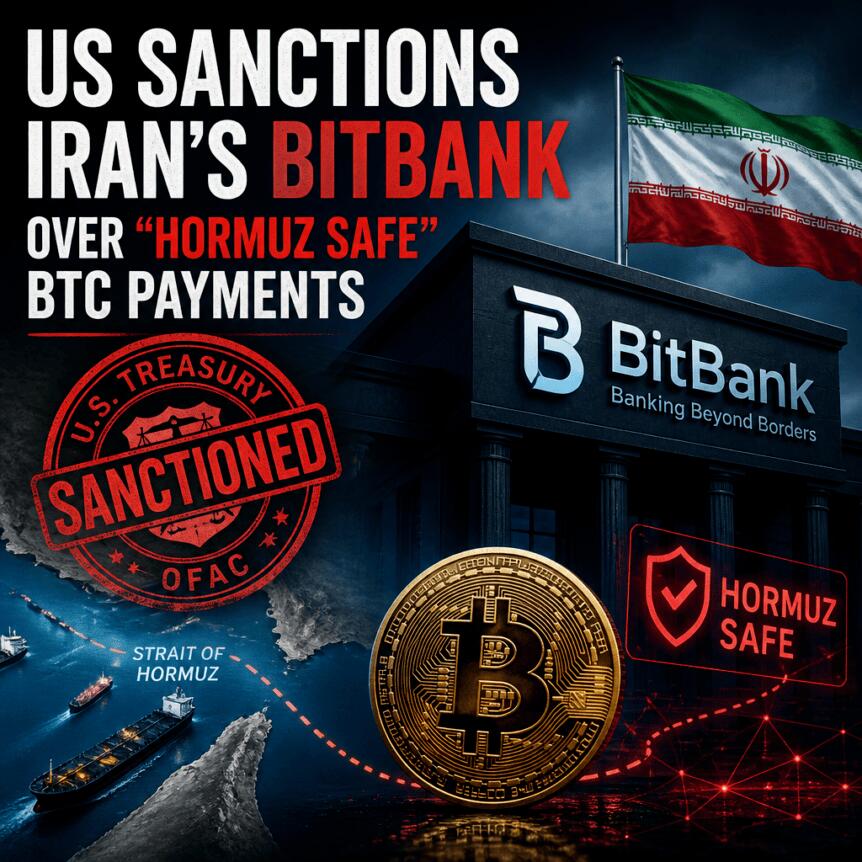
U.S. authorities have announced new sanctions targeting an Iranian crypto exchange known as BitBank, accusing it of helping move Bitcoin payments tied to maritime traffic through the Strait of Hormuz. The U.S. Treasury says the exchange was used to transfer funds received through a Hormuz-related payments authority to the Islamic Revolutionary Guard Corps (IRGC).
In a press release issued by the U.S. Department of the Treasury’s Office of Foreign Assets Control (OFAC), the government described BitBank as part of an alleged sanctions-evasion “infrastructure” associated with Iranian financier Babak Zanjani. OFAC’s action forms part of a broader effort to restrict Iran’s access to the global financial system, including through targeting digital asset service providers.
Key takeaways
- OFAC sanctioned Iranian crypto exchange BitBank, alleging it processed Bitcoin payments connected to ships transiting the Strait of Hormuz.
- The Treasury alleges BitBank transferred funds received by the Hormuz Safe Marine Services Authority to the IRGC.
- OFAC also designated BitBank’s developer, Pishtaz Simorgh Electronic Trade Company, along with three Zanjani associates.
- The U.S. has repeatedly expanded crypto-related Iran sanctions, including actions against exchanges and steps involving USDt-linked wallets.
- There is potential for confusion between the sanctioned BitBank entity and a separate Japan-based exchange, “bitbank, inc,” that was acquired by SBI Holdings in June.
OFAC ties BitBank to payments around Hormuz
OFAC’s announcement states that, as of June, the Hormuz Safe Marine Services Authority used BitBank to transfer payments it received to the Islamic Revolutionary Guard Corps. The implication, according to the Treasury, is that crypto rails were integrated into a system that supports financial flows tied to passage through a strategic chokepoint.
The U.S. also previously alleged that Hormuz Safe is connected to an IRGC-backed scheme involving maritime insurance arrangements for vessel transit—specifically coverage that, in the Treasury’s account, includes risks related to seizures by Iran itself. By linking BitBank to this payments chain, the Treasury is effectively arguing that an Iranian digital asset exchange can function as a conduit for regime-linked funding.
U.S. Treasury Secretary Scott Bessent said the designations underscore that “efforts to finance the Iranian regime using cryptocurrencies” are not beyond OFAC’s enforcement reach.
Why the Treasury’s “digital asset infrastructure” framing matters
OFAC did not only target a single exchange; it also designated BitBank’s developer—Pishtaz Simorgh Electronic Trade Company—and three associates connected to Babak Zanjani. In the filing and related announcement, OFAC described these entities as “key components of the Iranian regime’s digital assets-based sanctions evasion infrastructure.”
For investors, traders, and on-chain analysts, this matters because it reinforces how regulators are moving from broad “crypto used for illicit finance” messaging toward mapping specific operational roles within alleged networks. Instead of treating activity as incidental to sanctions evasion, the U.S. is characterizing certain digital service providers and corporate developers as integral nodes—potentially affecting counterparties, compliance workflows, and the risk assessments of exchanges and custodians that may interact with such entities.
OFAC’s approach also suggests that enforcement risk is not limited to Iranian individuals, addresses, or token transfers alone. It can extend to software vendors, exchange operators, and associates—depending on how the U.S. describes their involvement in the flow of value.
Sanctions pressure aligns with earlier U.S. actions
The BitBank designation comes after a sequence of U.S. measures aimed at tightening Iran’s access to financial tools, including digital assets. In earlier actions, OFAC sanctioned two exchanges—Shelbit and Aban Tether—accusing them of assisting the Iranian regime in sanctions evasion. The Treasury also sanctioned four crypto exchanges in June, including Nobitex, which the U.S. identified as Iran’s largest exchange.
Beyond exchange designations, the U.S. also ordered the freezing of more than $130 million in USDt held in wallets linked to Iran. Taken together, these steps show a multi-pronged strategy: identifying exchange infrastructure, restricting stablecoin-linked funds, and isolating sanctioned entities from activity that could enable cross-border value movement.
The broader political goal remains consistent across these actions—isolating Iran from the international financial system. In the Treasury’s view, digital assets are now part of the mechanism by which the regime can sustain transactions and payments despite increasingly tight constraints.
Entity confusion: sanctioned BitBank vs. “bitbank, inc”
One potential point of misunderstanding for readers is that the sanctioned entity is “BitBank,” which OFAC’s designation reportedly describes as established in 2024. This is separate from “bitbank, inc,” a fully licensed crypto exchange founded in 2014 in Japan and acquired by SBI Holdings in June.
The similarity in names has practical implications: compliance teams, journalists, and market participants should avoid assuming that the Japanese exchange is implicated in the U.S. sanctions simply because of the branding overlap. The U.S. action appears to concern a different organization tied to the Treasury’s alleged Hormuz payment architecture.
Cointelegraph reached out to BitBank for comment, though no response is included in the provided material.
What to watch next
As OFAC continues building out sanctions lists around Iranian crypto infrastructure, market participants should monitor whether related wallets, service providers, and stablecoin pathways are further targeted—especially those connected to maritime-linked payment systems described in the Treasury’s case. The immediate uncertainty is how quickly designated entities can be circumvented and whether enforcement will expand to additional components of the broader network OFAC alleges BitBank helped power.


The Bank of Japan (BOJ) raised its benchmark interest rate by 25 basis points on Friday, lifting it to 1.25%, the highest level in 31 years, as it battles sticky inflation and a chronically weak yen.
The move marks the central bank’s second hike in three months and comes weeks after U.S. Treasury Secretary Scott Bessent publicly pressed Tokyo to tighten faster to support yen. He argued that an orderly yen market benefits Treasury market stability and defended the coordinated yen-buying intervention as serving U.S. interests.
The bitcoin-Japanese yen pair (BTC/JPY) listed on Tokyo-based bitFlyer exchange extended gains by a 0.5% to JPY 12.06 million following the BOJ rate hike. BTC’s dollar-denominated price jumped to $77,400, extending the rebound from the overnight low of $76,200, data from CoinDesk show.
The Japanese yen depreciated against the U.S. dollar, lifting the USD/JPY pair to 156.70 from 156.20.
BOJ rate decisions and yen movements are said to have a bearing on world markets, thanks to a prolonged period of near‑zero interest rates in Japan over the past decade or more that led traders to borrow in yen to fund higher‑yielding investments elsewhere.

The artistic director of Museu de Arte de São Paulo (MASP) in Brazil has broken out by rewriting the curator’s playbook. Pedrosa places art previously dismissed as “outsider” on equal terms with the work of academically trained artists, and eschews chronological storytelling in favor of surveys of art that play on broad themes such as “childhood” or “sexuality.” In 2025, after more than six years of planning and construction, MASP opened a $43 million tower that expanded its exhibition space by 66%. This year, Pedrosa dedicated MASP’s curatorial program to unpacking how the idea of Latin America was created and contested over time. He also defended some MASP exhibitions, including a recent show by the queer artist La Chola Poblete, from right-wing attacks. As competing political factions push fixed views of history, Pedrosa’s exhibits argue that there is no one “correct” way to view art.

Costco Earnings May Disappoint, but There’s a Special Catalyst That Could Lift the Stock

Charles Schwab's Sonders Favors Commodities Over Equities, But Not for All

David Benavidez sums up Ryan Garcia’s ability following Conor Benn KO



-

 Fashion6 days ago
Weekend Open Thread – Corporette.com
-

 Tech5 days ago
The Latest Weird Thing to Play Doom Is the Mapped-Out Brain of a Fruit Fly
-

 Business7 days ago
10 Most-Streamed Songs On Spotify In 2026 So Far, Led By Ella Langley’s Dominant Run On The Charts This Year
-

 Crypto World7 days ago
XAG/USD: Silver’s Short-Term Rally Meets Its Moment of Truth
-

 Crypto World7 days ago
Diesel Tops $6 a Gallon for the First Time as 28 States Set Records
-

 Crypto World3 days ago
Kraken Lets xStocks Holders Earn Yield Through DeFi
-

 News Videos7 days ago
Facing Financial Fears
-

 Crypto World4 days ago
Elon Musk Drops a Bombshell: Grok 5 Could Be the AGI Breakthrough
-

 Crypto World1 day ago
US Charges Robinhood Engineers Over Crypto Listing Trades
-

 Entertainment6 days ago
News Specials, Movies, Shows, More
-

 Crypto World6 days ago
Can AI Build a Startup in 72 Hours? Elon Musk's Team Will Livestream the Test
-

 Business5 days ago
Rivals Sam Altman and Elon Musk Rally Behind Dario Amodei’s Call for a Slowdown in AI Development
-
 NewsBeat4 days ago
‘Sick conspiracy’: Trump says only guardrails AI needs is ‘a strong and smart (High IQ!) president’ in all-caps rant
-
 Crypto World4 days ago
New Tesla Roadster Uses SpaceX Tech. Will It Impact the Stock Price?
-

 Crypto World7 days ago
Bitcoin ETFs Pull $167M as 2026’s Best Inflow Run Slows
-

 Crypto World6 days ago
Robinhood Chain Never Stopped But its Blobs Did Stop Reaching Ethereum For 14 Minutes
-

 Crypto World2 days ago
What Is the Status of the U.S.-Iran Peace Talks? Here's What Both Sides Are Saying
-
 Entertainment6 days ago
New Horror Movie Officially Earns a Rare Stephen King Recommendation
-

 Business6 days ago
Marvell: Most Potent Setup Of The AI Factory Decade
-
 Crypto World4 days ago
3 Token Unlocks to Watch in the Third Week of September 2026
You must be logged in to post a comment Login