
Crypto World
Coinbase Lobbying Hit $1.07M in Q1 on Crypto Laws

Coinbase lobbying activity for Q1 2026 totaled $1.07 million, the company disclosed in a new Lobbying Disclosure Act filing, targeting the Digital Asset Market Clarity Act, the GENIUS Act stablecoin law, and digital asset tax treatment legislation.
Summary
- The filing covers lobbying on the CLARITY Act’s market structure provisions, implementation of the GENIUS Act stablecoin law, and general crypto policy discussions across multiple congressional committees.
- The Q1 spend comes after a turbulent period in Coinbase’s relationship with the CLARITY Act, which began with CEO Brian Armstrong withdrawing support hours before a January markup, followed by a reversal after a Treasury-brokered compromise on stablecoin yield.
- Coinbase derives roughly one-fifth of its total revenue from stablecoin-related activity, making the terms of the CLARITY Act’s yield provisions a direct financial stake rather than a policy preference.
Coinbase lobbying in the first quarter of 2026 reached $1.07 million as the company pressed Congress on the two pieces of legislation most directly affecting its business model. The LDA filing lists multiple specific topics covered, including general discussions on digital asset tax treatment, market structure provisions of the CLARITY Act, and all provisions of the GENIUS Act stablecoin law signed into law as P.L. 119-27.
The filing provides a concrete dollar figure for Coinbase’s Washington engagement during one of the most consequential quarters in US crypto legislative history. The GENIUS Act passed and became law. The CLARITY Act stalled and restarted. Coinbase first killed and then revived its support for the market structure bill within the span of three months.
The company’s relationship with the CLARITY Act in Q1 2026 was the most consequential lobbying story in crypto. Armstrong posted opposition to the bill on X on January 14, hours before the Senate Banking Committee’s scheduled markup, causing the session to be postponed. The central objection was the bill’s treatment of stablecoin yield, which banking industry lobbyists had pushed to restrict.
What the Filing Covers and Why It Matters
The LDA disclosure lists the following subjects: general discussions on digital asset tax and digital asset tax treatment, provisions related to Title I and market structure of the CLARITY Act, all provisions of the GENIUS Act, general discussions on crypto policy and market structure, and discussions on implementing the GENIUS Act. That list covers the full legislative agenda facing the crypto industry in 2026.
The CLARITY Act remains the primary pending legislation. Its market structure provisions would formally define the regulatory division of authority between the SEC and CFTC over digital assets. For Coinbase, which operates the largest US crypto exchange and custody platform, those definitions affect every product it offers. The company’s subsequent reversal on the bill came after Treasury Secretary Scott Bessent published a Wall Street Journal op-ed advocating for a compromise framework on the stablecoin yield question that left room for activity-based rewards while restricting direct interest payments.
The Scale of Coinbase’s Financial Stake
Coinbase reported $355 million in stablecoin-related revenue in Q3 2025. The company derives approximately one-fifth of its total revenue from stablecoin activity, primarily through interest earned on USDC reserves and rewards paid to users. How the CLARITY Act defines permissible stablecoin yield programs determines whether that revenue stream survives in its current form or must be restructured.
The company’s Agentic Market launch on Monday, which routes AI agent transactions through USDC over the x402 protocol, adds a second dimension to its USDC stake. If stablecoin transaction volume from AI agents grows as Armstrong has predicted, the regulatory treatment of USDC’s underlying economics becomes even more valuable to protect. $1.07 million in Q1 lobbying is a modest investment against that exposure.
How the Q1 Spend Compares to the Legislative Outcome
Armstrong reversed his CLARITY Act opposition by March 2026, with Coinbase publicly stating it was “ready to do its part” to get the bill passed. The Q1 lobbying period therefore captures both the opposition and the reversal, along with continued engagement on implementation of the GENIUS Act that was already law. For a company with Coinbase’s revenue base, $1.07 million in quarterly lobbying is a standard operating cost for an industry participant with direct exposure to pending federal legislation. What distinguishes Coinbase’s Q1 from previous quarters is that the legislation being lobbied on was active, consequential, and moving during the period covered.

Crypto World
Bitcoin price climbs to $77,500 on Trump ceasefire extension, Strategy’s $2.5 billion buy


Bitcoin is breaking out of the Iran-headline chop.
Bitcoin traded at $77,541 on Wednesday morning, up 2.2% over 24 hours and 4.3% on the week, after Trump said he would extend the Iran ceasefire indefinitely and Strategy disclosed the purchase of 34,164 BTC for $2.54 billion. Ether rose 2.1% to $2,366, BNB climbed 1.3% to $640, and Solana gained 1.8% to $87. The only red in the top 10 was a trickle of 0.1% declines in stablecoins and Tron.
S&P 500 futures rose 0.5% and Nasdaq 100 futures gained 0.6% after Trump’s extension, though the underlying benchmarks closed lower Tuesday as talks briefly wobbled. Brent crude hovered near $98 a barrel. The MSCI Asia Pacific Index slipped 0.7% as investors weighed how long the Middle East conflict runs.
Trump blamed negotiation collapses on what he called a “seriously fractured” leadership structure in Tehran, and said the US would hold off on fresh attacks while keeping its Strait of Hormuz blockade in place.
Strategy’s buy is the largest bitcoin purchase by the company since November 2024. The 34,164 BTC acquisition at an average $74,395 per coin brings the firm’s holdings to 815,061 BTC, bought for $61.6 billion at an average cost basis of $75,527. With bitcoin at $77,541, the position is now modestly in profit for the first time in months.
Spot flows back the move. Global crypto funds pulled in $1.4 billion last week according to CoinShares, the strongest week of inflows since mid-January. Bitcoin took $1.12 billion, Ethereum $328 million, Chainlink $5 million, and Sui $2 million. XRP saw $56 million in outflows and Solana $2 million, despite both trading higher on price.
Two structural signals point the same direction. Bitcoin is now holding above the realized price of short-term holders at around $69,400 per analyst Darkfost, the level at which recent buyers are sitting on gains rather than losses, which historically reduces the odds of a cascade liquidation if sentiment reverses.
Separately, a Nomura survey found 65% of Japanese institutional investors now hold bitcoin for portfolio diversification, with 31% viewing the market outlook positively and most planning 2% to 5% allocations over the next three years.
Whether bitcoin can hold $77,000 through the European session depends on how markets price the ceasefire extension against continued Strait of Hormuz disruption.
A clean break above $80,000 would confirm the 46-day funding rate compression is flipping into a short squeeze. A reversal below $75,000 would mean the extension already priced in and the rally needs a fresh catalyst.
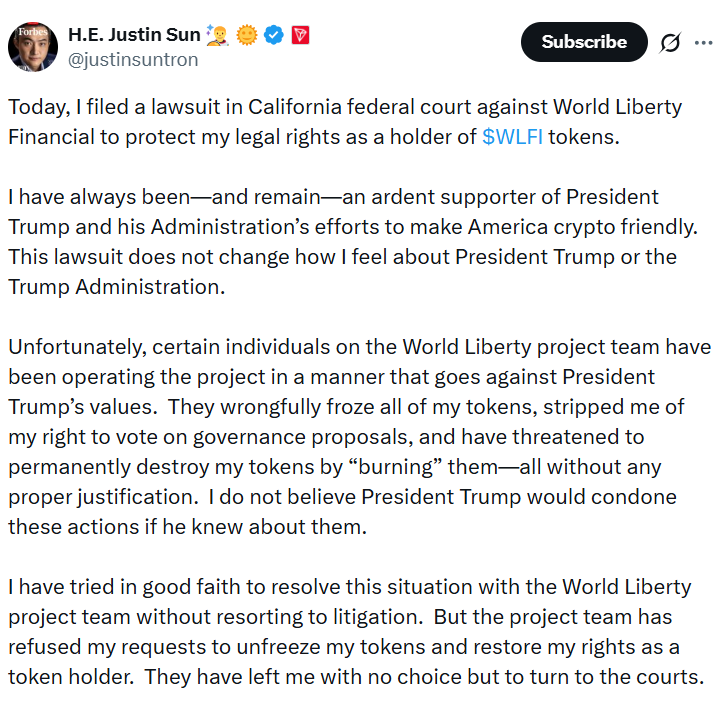
Sun said the lawsuit is to protect his rights as a WLFI token holder and doesn’t change his support of US President Donald Trump and his administration’s efforts to make the US crypto-friendly.
Tron founder Justin Sun said he is suing Trump-family-backed World Liberty Financial for allegedly freezing his tokens and threatening to burn them “without any proper justification.”
In a post to social media on Wednesday, Sun said the suit, filed in a California federal court, was meant to protect his rights as a token holder.
“I have tried in good faith to resolve this situation with the World Liberty project team without resorting to litigation. But the project team has refused my requests to unfreeze my tokens and restore my rights as a token holder. They have left me with no choice but to turn to the courts,” he added.
Sun is the largest individual investor in World Liberty, a project tied closely to the Trump family.

Sun previously threatened legal action earlier this month over lengthy lockup periods for WLFI’s governance token and accused WLFI’s recent governance proposal of lacking transparency, saying more than 76% of the voting tokens came from 10 wallets.
Related: World Liberty burns 47M tokens in bid to pump price as slide continues
At the time, the WLFI project team said on X that the claims were “baseless allegations” and added, “We have the contracts. We have the evidence. We have the truth. See you in court pal.”
Cointelegraph has contacted the Tron and World Liberty Financial teams for additional comment about the lawsuit.
Meanwhile, Sun said on X that the lawsuit doesn’t change his views on President Donald Trump or his administration.
“Unfortunately, certain individuals on the World Liberty project team have been operating the project in a manner that goes against President Trump’s values,” Sun said.
Crypto World
Chinese crypto mogul Li Lin’s private trading arm is set to move into a Hong Kong-listed wealth firm


Chinese crypto billionaire Li Lin’s private trading empire will soon move into a Hong Kong-listed company he controls, in a move designed to cater to growing investor demand for digital assets.
That Hong Kong-listed firm is Bitfire, a wealth management company, where Li is the largest shareholder. Bitfire said Wednesday that it will pay $1.6 million to acquire a trading system and investment team from Li’s own family office Avenir Group, according to Reuters.
While structured as a purchase, the deal effectively transfers part of Li’s in-house crypto operation into a publicly listed vehicle, giving it a clearer path to attract institutional investors.
The timing reflects a broader shift in the region. Mainland China has banned crypto trading since 2021, but Hong Kong is positioning itself as a regulated hub for digital assets, drawing interest from firms looking for a compliant base. Hong Kong recently awarded stablecoin licenses to to HSBC and Standard Chartered.
By acquiring Avenir’s capabilities, Bitfire plans to roll out a bitcoin-focused strategy, “Alpha BTC,” targeting more than 10,000 bitcoins, worth about $760 million, in assets within a year.
The strategy will seek returns through derivatives trading, including options tied to bitcoin and products like the IBIT.
Avenir has built a significant position in bitcoin ETFs, holding 18.3 million shares of IBIT, issued by BlackRock, valued at about $908 million as of the end of 2025, as per the company’s regulatory filing.
Li founded Huobi, now known as HTX, and built it into one of the world’s largest crypto exchanges before selling a controlling stake to Justin Sun for about $1 billion in 2022. He has since focused on managing investments through Avenir.
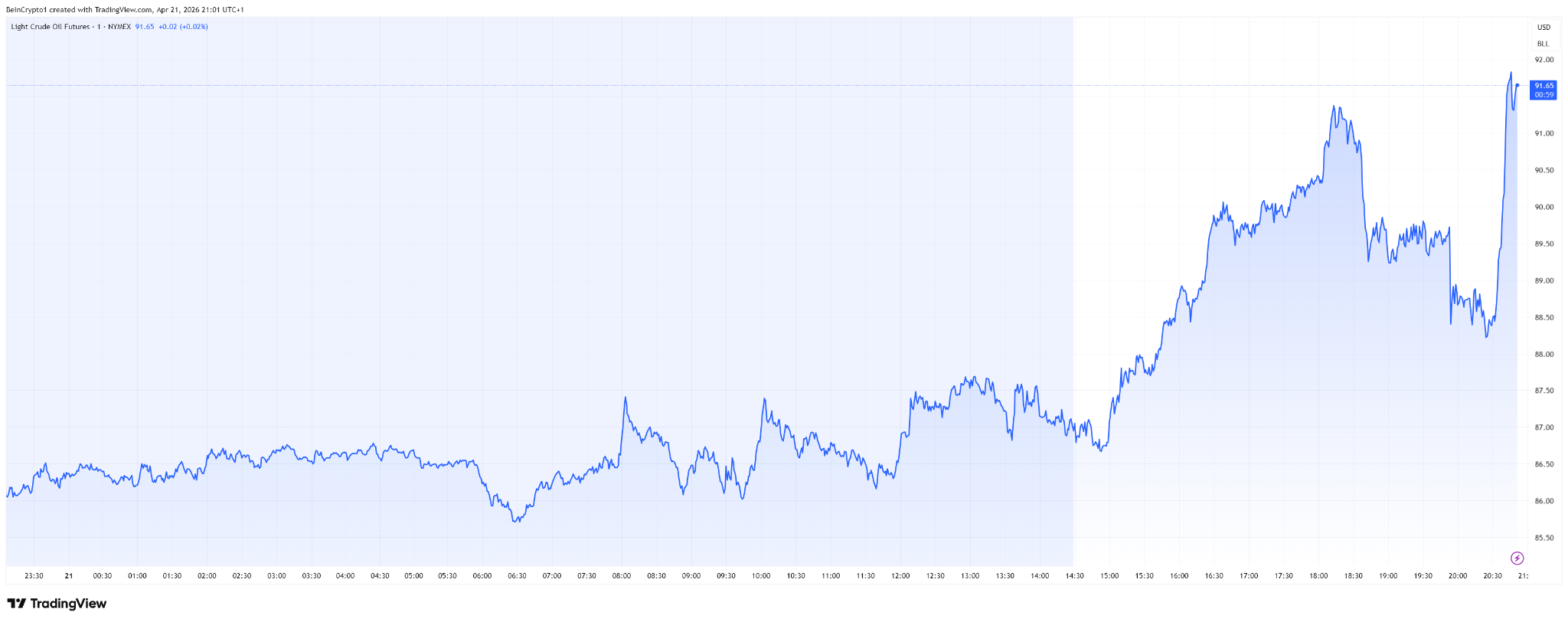
US Vice President JD Vance has called off his planned trip to Pakistan, according to AP, as tensions tied to the US–Iran war escalate again.
The move signals rising uncertainty around diplomatic efforts and comes as markets react sharply to renewed geopolitical risk.
Oil prices jumped immediately following the news, extending gains tied to fears of disruption in the Strait of Hormuz.
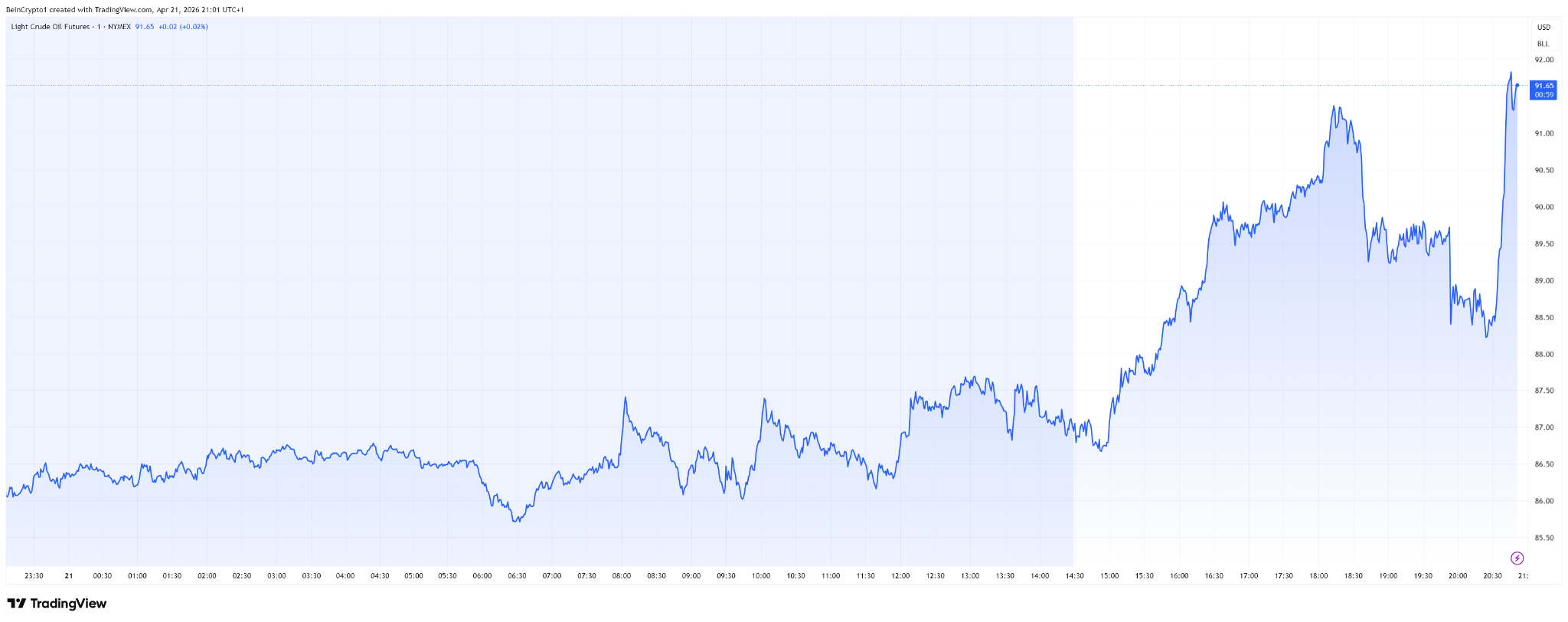
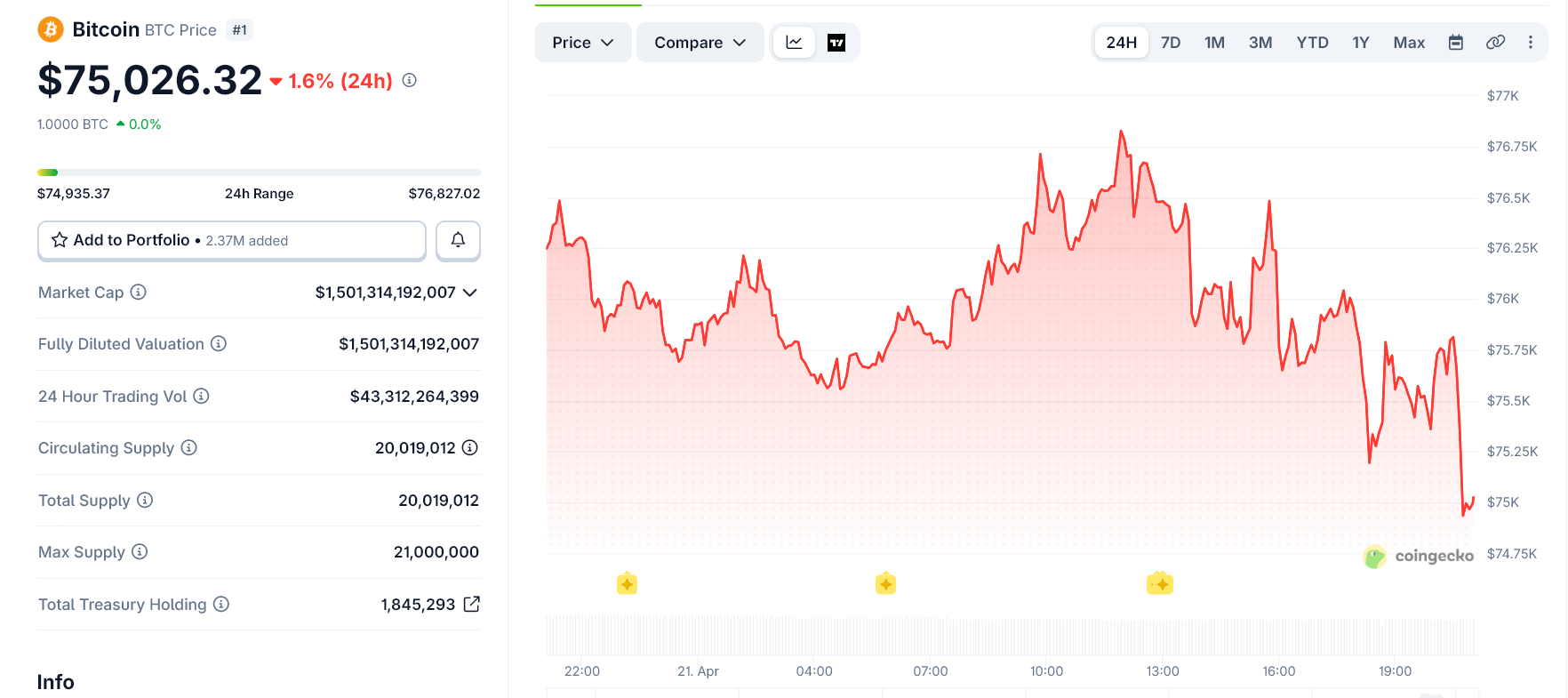
At the same time, Bitcoin fell sharply toward the $75,000 level, while the S&P 500 moved lower on the day, reflecting a broad risk-off shift across global markets.
Crypto derivatives data shows forced selling accelerated the move. Over the past 24 hours, liquidations crossed $250 million, with a large share coming from long positions. This indicates traders were caught offside as sentiment flipped quickly.
The latest reaction fits a pattern seen throughout the past week. Markets have been tightly linked to developments in the US–Iran situation, with oil acting as the primary transmission channel.
Earlier on April 13, the US escalated tensions by moving to enforce a naval blockade near Iran, raising immediate concerns about global energy supply. Oil prices began climbing as traders priced in the risk to shipping through Hormuz.
By April 15, sentiment briefly improved after reports suggested a possible two-week ceasefire window. Stocks rallied sharply, pushing the S&P 500 to fresh highs, while oil pulled back from earlier spikes. Crypto also stabilized during this period.
However, the tone shifted again on April 16 after a US congressional vote failed to advance a war-limiting resolution.
Bitcoin dropped around 4% following the development, reinforcing its role as a macro-sensitive asset rather than a safe haven.
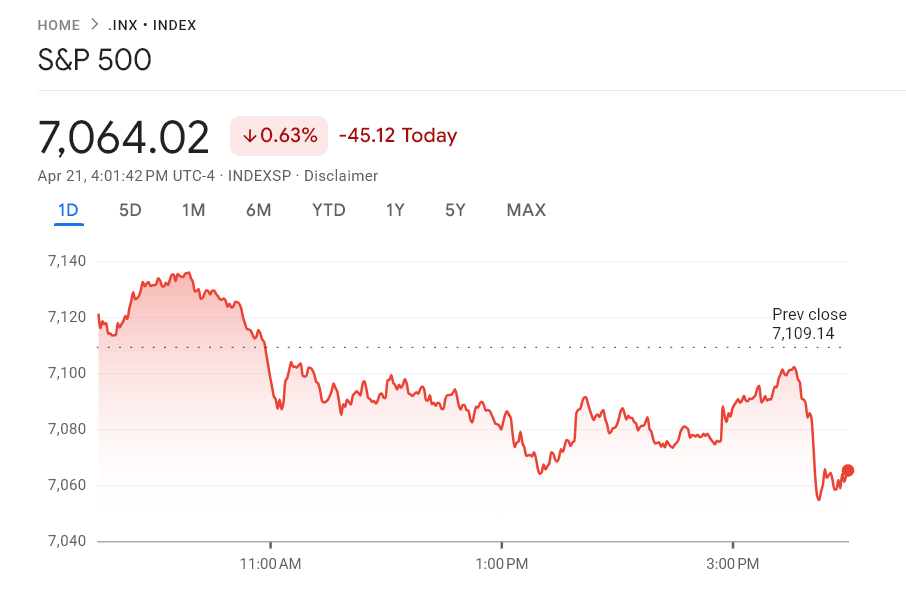
Tensions continued to build over the weekend. Reports of US actions targeting Iranian vessels and Iran’s response in the region kept markets on edge. Oil resumed its upward trend, while risk assets weakened.
By April 20, the divergence became clearer. Oil surged again on renewed conflict risk, while Bitcoin and major altcoins moved lower. The correlation between energy prices and crypto weakness strengthened.
The latest move on April 21 adds to that trajectory. Vance’s canceled trip suggests diplomatic uncertainty at a critical moment, and markets are reacting accordingly.
Overall, the past week shows a consistent pattern. Escalation drives oil higher and pressures both equities and crypto. Temporary de-escalation supports risk assets, but those moves have been short-lived.
The post JD Vance Cancels Pakistan Trip as Iran Tensions Spike, Markets Slide appeared first on BeInCrypto.


Kalshi is preparing to expand beyond prediction markets and enter crypto trading, according to reports published on April 21.
Summary
- Kalshi is preparing crypto perpetual futures, moving beyond event contracts toward direct exchange competition now.
- The reported launch would place Kalshi against Binance, Hyperliquid, Coinbase, and Kraken in derivatives trading.
- U.S. regulatory shifts and Kalshi’s licenses could support onshore crypto perpetual futures for domestic traders.
The company is said to be planning a launch focused on perpetual futures, a product widely used on offshore crypto exchanges.
The reported move would place Kalshi in a more direct contest with firms already active in digital asset trading. It would also mark a shift for the company, which built its name around event-based contracts tied to elections, economics, sports, and other real-world outcomes.
The Information reported that Kalshi wants to begin its crypto push with perpetual futures. These contracts allow traders to bet on price moves without a fixed expiry date. The report said the first products could include crypto assets such as Bitcoin.
Kalshi did not confirm the plan publicly. The company declined to comment, according to the report. Even so, the timing has drawn attention because the exchange already operates under Commodity Futures Trading Commission oversight in the United States.
The report also said Kalshi recently secured a license that allows it to offer margin trading. That step could support a broader product set if the company moves ahead with crypto perpetuals. For now, the reported plan remains unannounced by the company itself.
Kalshi’s current business has centered on binary contracts tied to specific outcomes. A move into perpetual futures would expand that model into a market built around continuous price trading rather than single event resolution.
Perpetual futures remain a major crypto trading product
Perpetual futures are among the most used products in digital asset markets. They let traders maintain exposure without rolling contracts forward, unlike traditional futures. They also often include leverage, which can increase both gains and losses.
The product became widely known through offshore crypto venues such as BitMEX, Binance, and Hyperliquid. Because of regulatory limits in the United States, access to crypto perpetuals has remained limited for many domestic traders.
The report said Kalshi sees an opening as U.S. regulators consider allowing these products onshore. CFTC Chairman Michael Selig said last month that the agency plans to permit such offerings in the United States. That policy direction has added momentum to discussions around regulated crypto derivatives.
A regulated launch from Kalshi could give some traders an alternative to offshore platforms. It could also test whether U.S.-based firms can capture part of a market that has largely developed outside the country.
Rival firms are moving into each other’s markets
Kalshi’s reported plan comes as trading platforms continue to widen their product range. While Kalshi looks at crypto trading, crypto exchanges are also pushing into prediction markets.
Soon after The Information report appeared, Polymarket posted on X that ”perps are coming”. That message added to signs that major players in prediction markets are looking at the same trading category.
Competition is also building outside the United States. Coinbase recently launched perpetual-style futures linked to equities for non-U.S. users. Kraken has also introduced tokenized stock perpetual futures for users outside the U.S.
Kalshi’s reported entry into crypto would arrive as investors keep close watch on regulated trading products. In March, reports from The Wall Street Journal and Bloomberg said the company raised more than $1 billion at a $22 billion valuation, showing strong backing as it considers its next expansion step.

TLDR
- New York Attorney General Letitia James has sued Coinbase and Gemini over alleged illegal gambling on their prediction market platforms.
- The state seeks at least $2.2 billion from Coinbase and $1.2 billion from Gemini in penalties and forfeited profits.
- James claims the platforms allowed users aged 18 to 21 to place sports-related bets, which violates New York law.
- Coinbase argues that prediction markets fall under federal oversight by the Commodity Futures Trading Commission.
- The legal dispute adds to ongoing court battles between the CFTC and several U.S. states over event-based trading platforms.
New York Attorney General Letitia James has filed lawsuits against Coinbase and Gemini over their prediction market platforms. She alleges the companies offered illegal gambling services tied to sports and elections. The state seeks billions in penalties, restitution, and forfeiture of profits.
Coinbase Faces Claims Over Prediction Market Access
James filed the complaint in New York federal court and named Coinbase as a defendant. She claims the company allowed users to place event-based bets through a prediction market platform. The complaint seeks at least $2.2 billion in penalties and forfeited profits.
James said the platform allowed users between 18 and 21 to participate in sports-related contracts. However, New York law requires users to be 21 for mobile sports betting. She stated, “Gambling by another name is still gambling, and it is not exempt from regulation under our state laws and Constitution.”
She also argued that the platform lacked required safeguards under state gaming rules. Therefore, her office seeks restitution for affected users and permanent injunctive relief. The filing asks the court to bar further operations that violate New York gambling statutes.
Coinbase Chief Legal Officer Paul Grewal responded publicly on X. He said, “Prediction markets are federally regulated by the CFTC.” He added that the dispute is now proceeding in New York federal court.
Grewal said Congress intended federal oversight for these markets. He stated that Coinbase will continue to defend that position in court. Earlier this year, Coinbase rolled out nationwide access through its partnership with Kalshi.
Kalshi operates under regulation by the Commodity Futures Trading Commission. Coinbase integrated the offering to expand its event-based trading services. The lawsuit now places that structure under judicial review.
Gemini Also Targeted in State Action
James also sued Gemini over its own prediction market operations. The complaint seeks at least $1.2 billion from the exchange. The state alleges Gemini Titan offered event-based contracts without state authorization.
According to the filing, Gemini allowed participation by users under 21. New York law bars individuals under 21 from mobile sports wagering. James argued that the platform functioned as an unlicensed gambling operation.
She stated that these services exposed young users to addictive platforms without guardrails. Her office claims the companies bypassed state constitutional limits on gambling. The lawsuit demands forfeiture of profits and restitution for users.
The regulatory dispute has expanded beyond New York. CFTC Chairman Michael Selig has said prediction market platforms fall under his agency’s exclusive jurisdiction. However, several states have challenged that view in court.
Earlier this month, the CFTC sued Illinois, Arizona, and Connecticut. The agency claims those states attempted to shut down federally regulated designated contract markets. The New York cases now add to the growing legal conflict over event-based trading platforms.

Crypto World
Silicon Valley’s ‘monitoring the situation’ MTS meme becomes a 24/7 news machine delivered by a16z


a16z is backing “Monitoring the Situation,” a 24/7 X livestream born from Polymarket meme culture, as tech VCs build their own news-industrial complex.
Summary
- Andreessen Horowitz has helped launch “Monitoring the Situation” (MTS), a 24/7 livestream show on X, leaning into crypto-prediction market culture.
- The meme, born from Polymarket’s “Monitoring the situation” bar in D.C., is now the brand for a16z’s latest media play in the always-on news cycle.
- The move shows tech VCs treating live news, prediction markets, and creator streams as an integrated “news-industrial complex” they can fund, own, and weaponize.
Andreessen Horowitz, also known as a16z, the Silicon Valley venture firm that has raised more than $15 billion for new funds, is now backing a 24/7 livestream called “Monitoring the Situation” (MTS) on X, Axios reports. The show takes its name from one of tech’s most viral catchphrases and extends a growing trend of VCs turning memes and niche internet culture into branded news and commentary channels they effectively control.
a16z turns a meme into a media product
“Monitoring the situation” first broke out as a kind of meta‑joke about online news addiction and real‑time crisis posting, before Polymarket leaned into it with a pop‑up bar in Washington, D.C.’s Foggy Bottom neighbourhood themed around its political prediction markets. Now a16z has lifted the phrase for its own live show, effectively knitting together prediction‑market aesthetics, X’s streaming tools, and venture-backed punditry into a single 24/7 product.
The MTS launch is part of a wider pattern in which tech money is moving from merely funding platforms to actively producing, packaging, and distributing news‑adjacent content. Axios frames the shift as Silicon Valley “building its own news‑industrial complex,” where crypto exchanges, prediction markets, and venture funds all operate quasi‑media brands that blur lines between journalism, influence, and marketing.
For crypto, the overlap is obvious. Prediction markets like Polymarket trade on headlines, while X-native livestreams and VC‑funded shows both shape and react to those same narratives in real time, creating a feedback loop between information, sentiment, and price. By minting “Monitoring the Situation” as both a meme and a 24/7 show, a16z is effectively betting that the next phase of online news will be less about written articles and more about infinitely scrolling, always‑live feeds where venture capital underwrites both the infrastructure and the voices that dominate it.
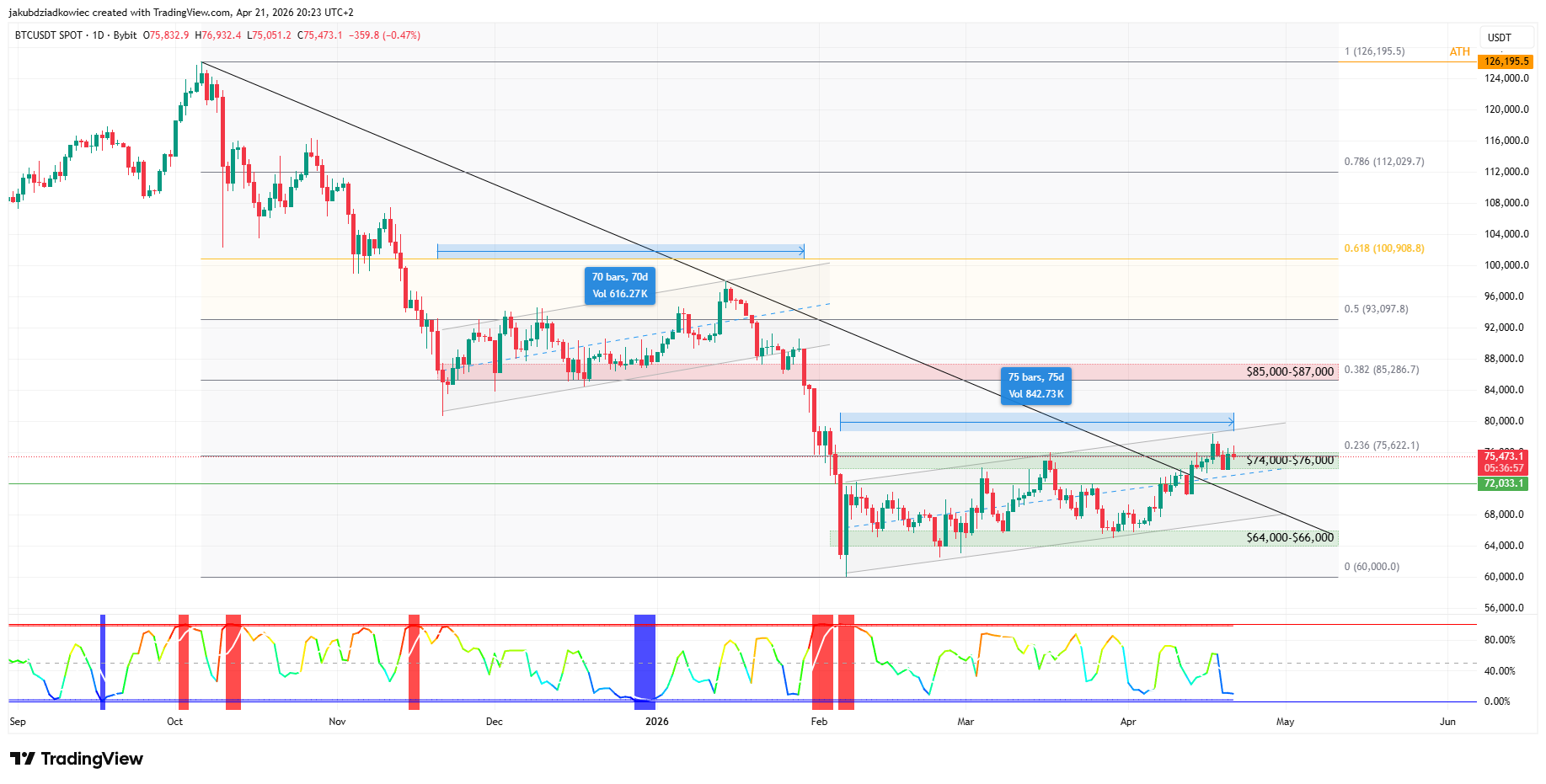
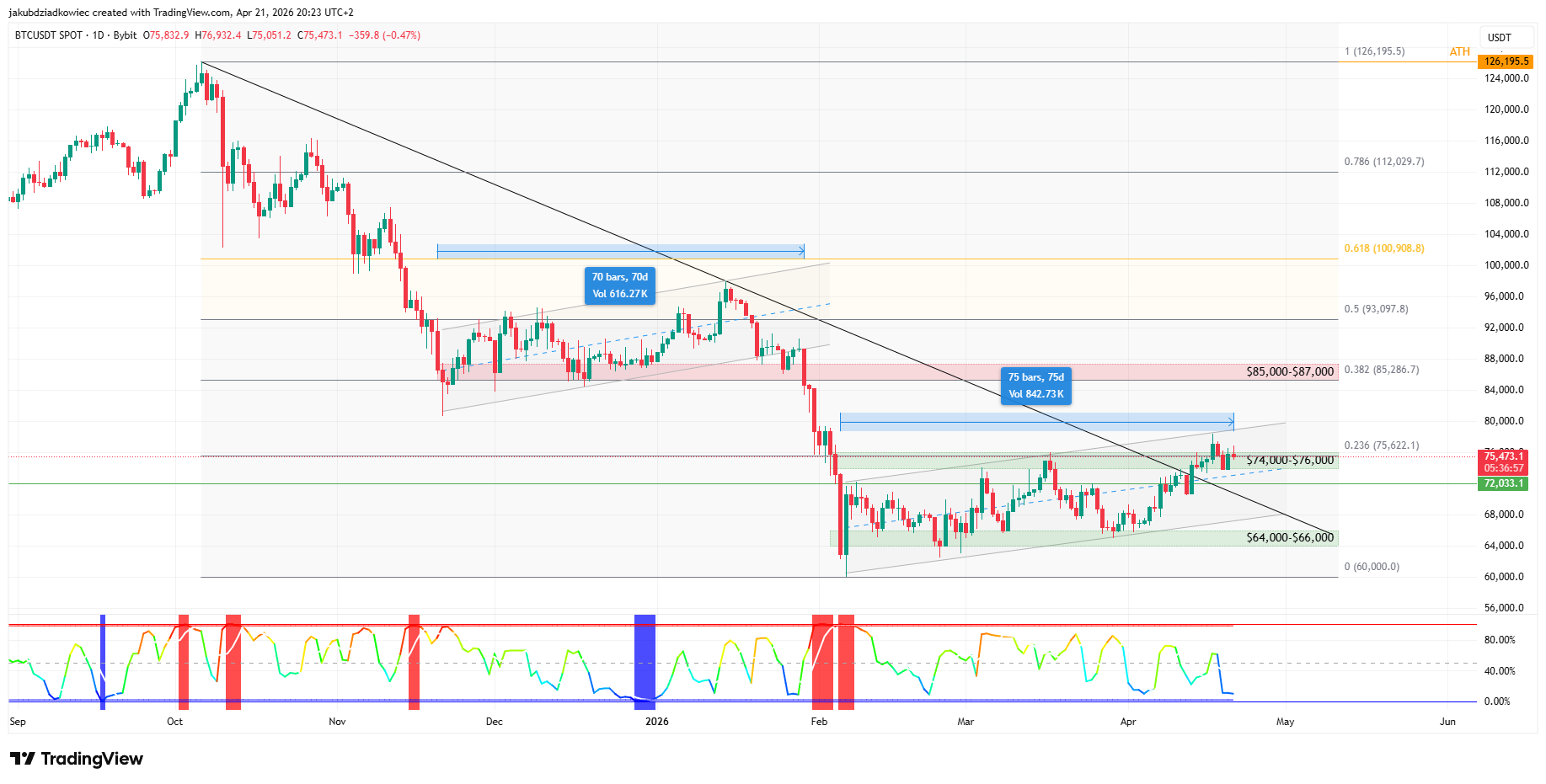
Bitcoin (BTC) is trading near $75,400 after rejecting $78,000 earlier this week. Price sits on the upper rail of an ascending parallel channel that has held for 75 days.
The setup places Bitcoin at a pivotal moment. A daily RSI triangle is compressing, and the 4-hour chart is flashing bearish divergence. A widely shared X post calls this the third rejection zone of the past eight months.
Descending Trendline Break Meets the Channel Top
The daily Bitcoin chart shows a descending trendline from the $126,195 peak set in October 2025. That line connects to the February 2026 cycle low at $60,000. Bitcoin broke above it for the first time this cycle on April 13.
Two ascending parallel channels define the recent structure. The first channel ran for 70 days before breaking down in late January. The current channel has now reached day 75, with price pressing the upper boundary.
The BBWP indicator at the bottom of the chart tracks volatility compression. Readings sit near cycle lows, a classic accumulation footprint that typically precedes a strong directional move.
Bitcoin must defend the $74,000 to $76,000 zone to keep the structure intact. A loss of that range exposes the descending trendline near $70,000 as secondary support. The next demand cluster sits between $64,000 and $66,000. Closest resistance is the 0.382 Fibonacci level between $85,000 and $87,000.
Daily RSI Carves a Tightening Triangle
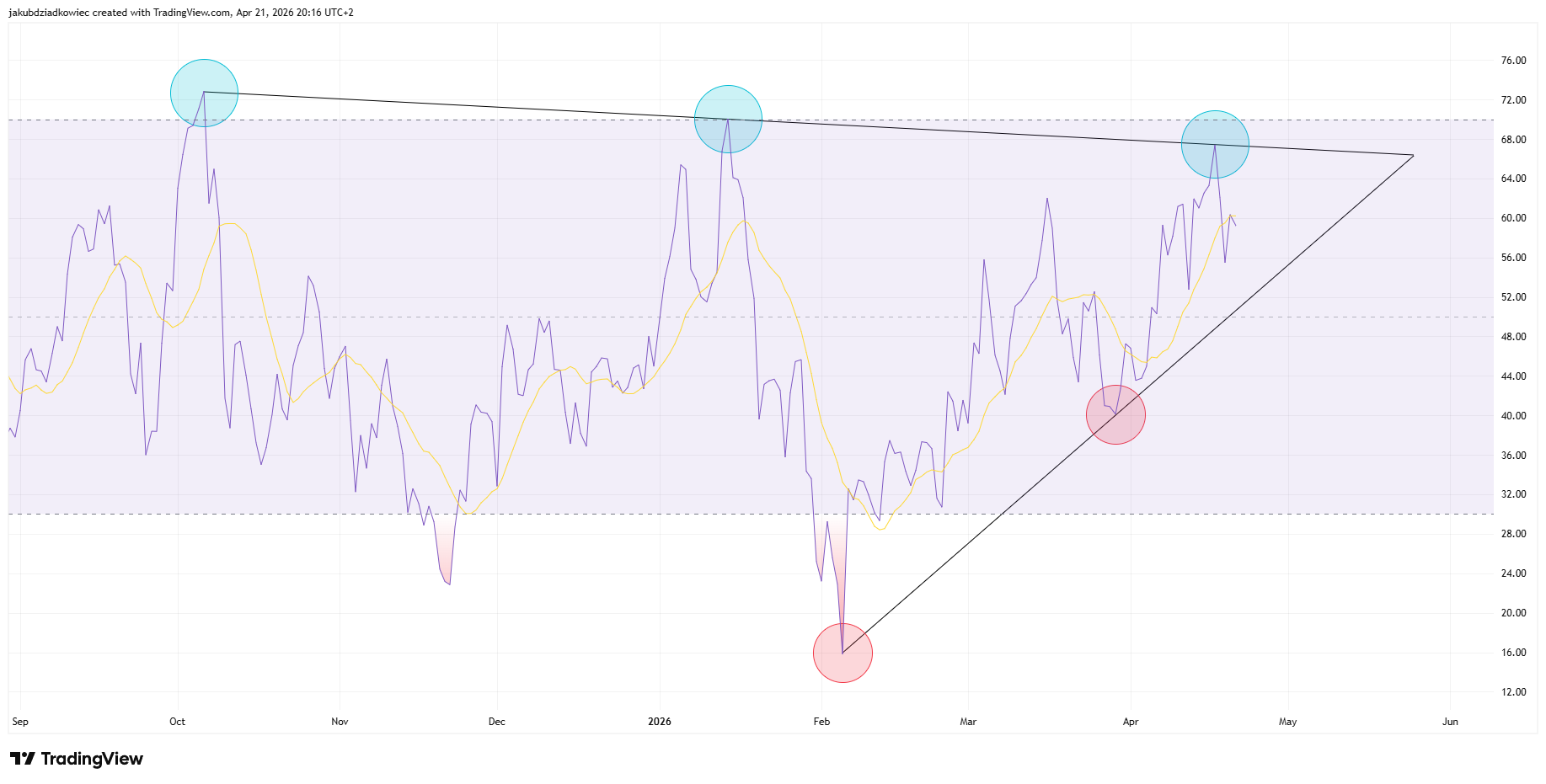
The daily RSI is forming a symmetrical triangle built from three descending peaks and two ascending support tests. The first peak printed deep in overbought territory in October 2025.
The second peak formed in mid-January 2026 with RSI touching 70 before a sharp rejection. The third and most recent peak capped out near 68 earlier this month.
On the support side, RSI collapsed to oversold readings near 15 during the February selloff. A second test near 40 in March held firmly and confirmed the ascending line.
The triangle is now tight. A clean break into overbought territory would validate the bullish continuation scenario. A breakdown through the ascending support would flip the medium-term momentum bearish.
4-Hour Chart Flashes Five-Drive Bearish Divergence
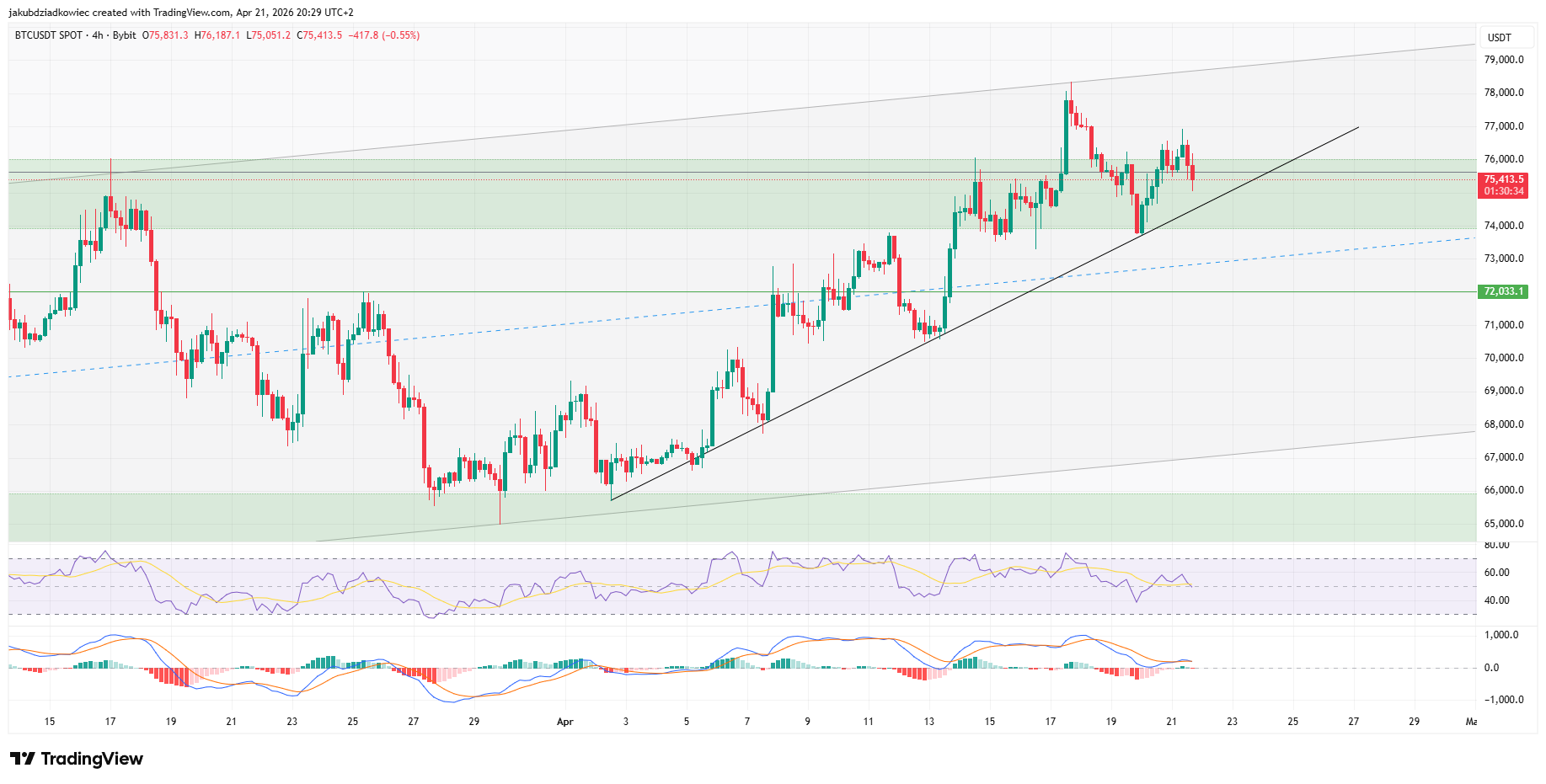
Bitcoin on the 4-hour timeframe shows a short-term uptrend with higher highs and higher lows. The structure has held since late March, bottoming near $65,500, with an ascending trendline connecting those swing lows.
Price rejected the $78,000 zone earlier this week. That level matches the top of the daily parallel channel. Bitcoin now trades near $75,400, sitting directly on the ascending trendline that has guided every bounce since early April.
The 4-hour RSI has been posting slightly lower lows while the price made higher highs. That pattern forms a five-drive bearish divergence, signaling weakening momentum beneath rising prices.
The MACD has crossed below its signal line and is edging toward negative territory. A loss of $74,500 would confirm the short-term momentum shift and expose the daily ascending trendline.
Analyst Flags Third Rejection Zone
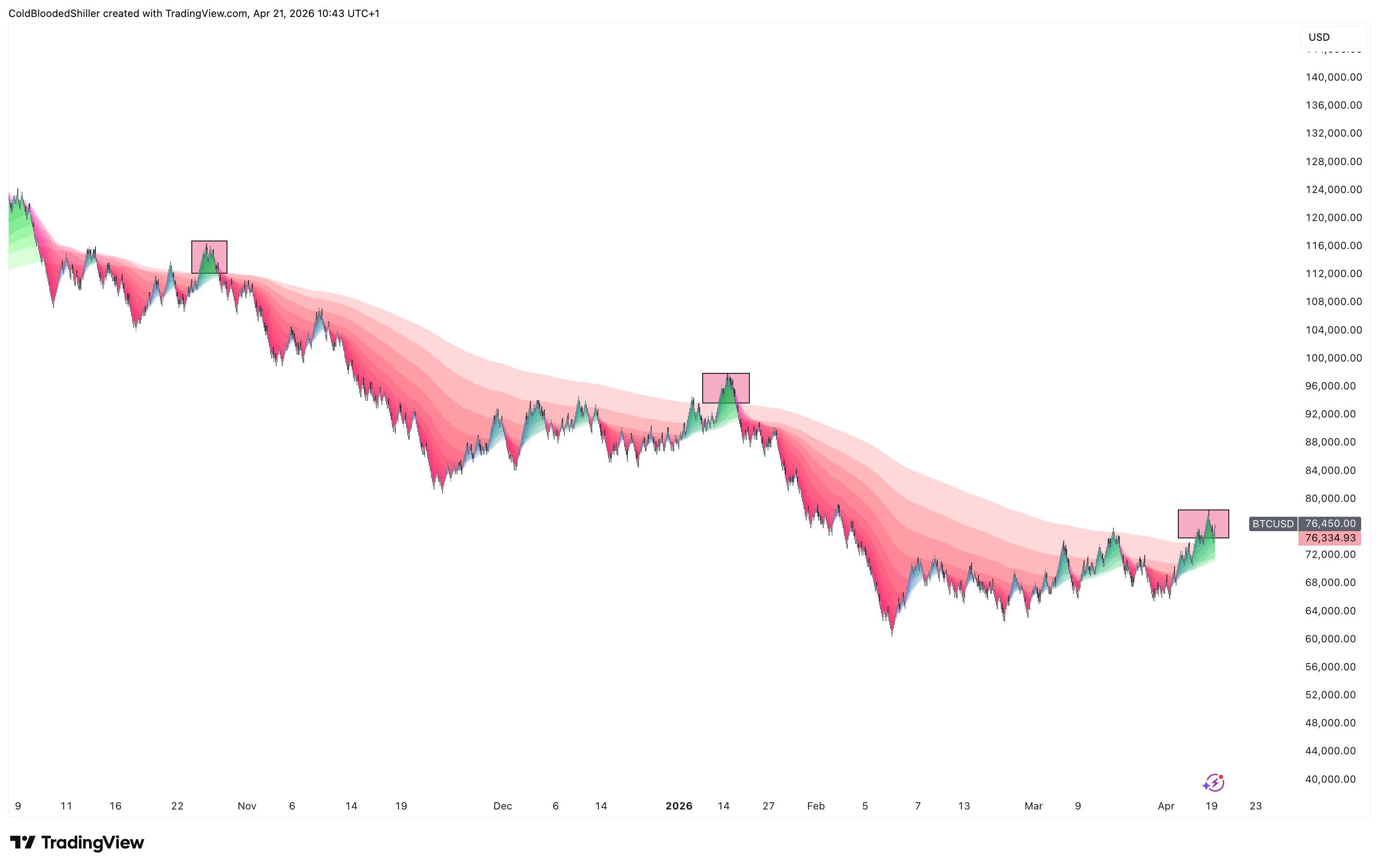
A chart posted to X by analyst ColdBloodedShiller highlights a key rejection zone for Bitcoin. The same band has capped every BTC advance in the past eight months. The three pink boxes mark October 2025 near $116,000, January 2026 near $96,000, and the current level near $76,000.
The trader frames this as the best risk-to-reward short setup currently available. Each prior visit to the upper band produced a sharp reversal. The pattern lines up with the daily trendline break and the 4-hour divergence above.
If this breaks up, it’s the most significant change to the market we’ve seen for the best part of 12 months.
Institutional flows, however, complicate the bearish thesis. Strategy, the largest corporate Bitcoin holder, added roughly $2.54 billion of BTC between April 13 and 19. Its average cost came in near $74,395. Sustained demand at these levels could weaken the recurring rejection pattern.
The next three to five daily candles should settle the dispute between the channel breakout and ColdBloodedShiller’s third rejection setup.
The post Analyst Predicts the Best Bitcoin Short Setup in a Year appeared first on BeInCrypto.
Crypto World
Bitcoin Price Analysis: Pepeto Could Deliver 267x Returns Before the Bitcoin Forecast Plays Out in 2026
Bitcoin price analysis flipped bullish on April 21 as BTC reclaimed $75,000 on progress in Iran and Pakistan ceasefire talks per CoinDesk, firing a broad risk-on move across the top ten. Spot bitcoin and ether ETFs both posted strong inflows into the rebound even as perpetual funding rates sat negative, a classic short squeeze setup that rarely holds back long.
While the Bitcoin price analysis pulls institutional capital back in, a quieter setup is forming beneath the rally, one that carries multiples large caps can no longer reach. Pepeto is closing in on a Binance listing with $9.29 million raised and analysts modeling 267x before open market pricing catches up.
Bitcoin Price Analysis April 21: BTC Holds $75,000 as Ceasefire Talks Advance and ETF Flows Rebuild
Bitcoin climbed above $75,000 during the April 21 session as markets priced in progress on the Iran Pakistan ceasefire, with the current two week truce running to its Wednesday deadline per CoinDesk. Friday’s short squeeze wiped out $762 million in liquidations across 168,336 traders, $593 million of that on the short side per CoinGlass.
Spot BTC ETFs rebuilt inflows after March broke a four month outflow streak with $1.32 billion, and the April recovery added fresh weekly gains. IBIT keeps leading while smaller funds rotate.
The Bitcoin price sits near $75,851 per Fortune, about 40% below the $126,198 all time high from October 2025. Every Bitcoin price analysis tracking the move flags sustained ETF pressure, a CLARITY Act markup, and layered catalysts as the inputs to lift BTC back near that zone. Pepeto at $0.0000001865 with $9.29 million raised and a Binance listing approaching is where the real return distance sits.
Bitcoin Outlook and the Presale That Could Beat It
Pepeto: The Sharpest Crypto Entry of 2026
Most traders catch a token after it already printed 10x or 100x. Pepeto lets the wallet sit inside the trade before the move rather than chasing charts once the candle closes, and that matters more than any BTC coverage on a $1.49 trillion asset.
The platform is a complete trading stack engineered to protect capital from day one. Scan any listed contract for traps before you connect, and alerts flag danger before funds move.
Three products drive the build. PepetoSwap runs zero fee trades across three networks, keeping full position size with the trader. The risk scanner reads each contract for scam code and returns a clean verdict in seconds.
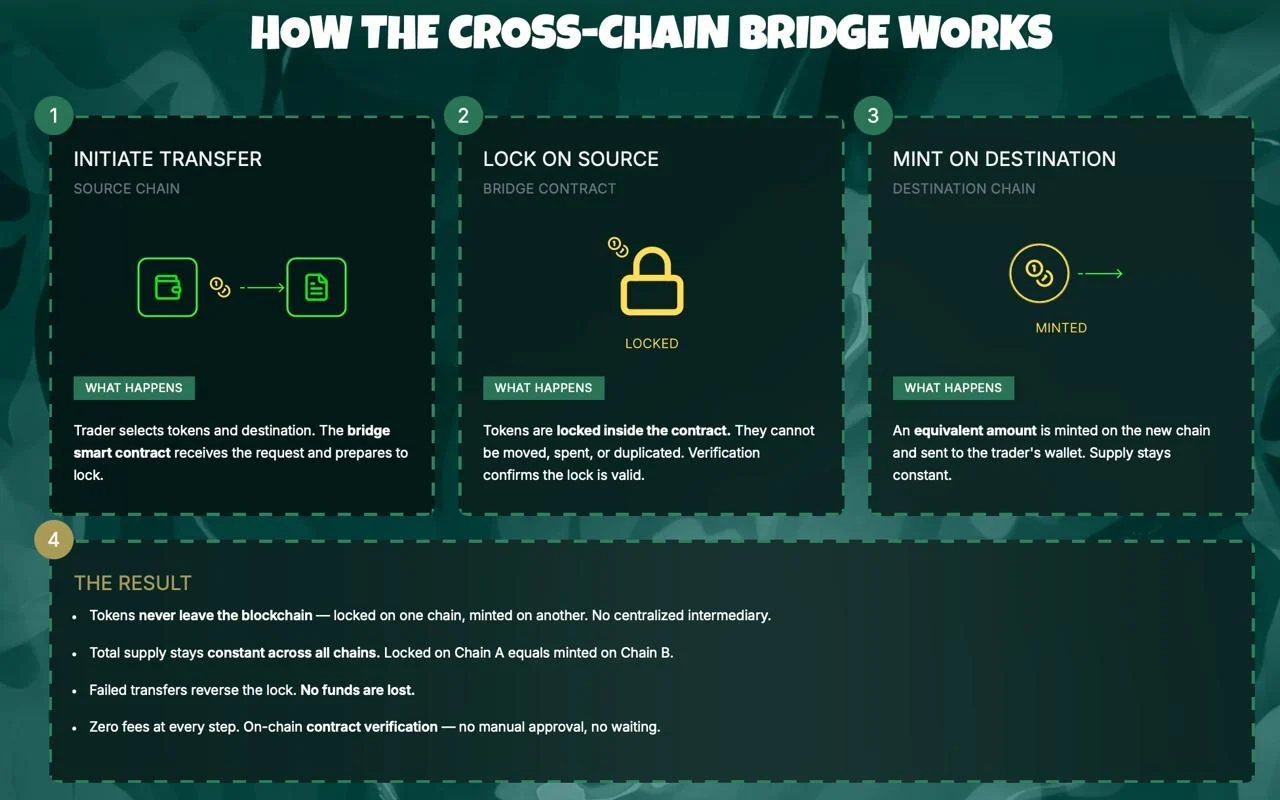
The presale passed $9.29 million with the Binance listing days out, and the built in bridge carries tokens between Ethereum, BNB Chain, and Solana without charging either side. The same founder who drove Pepe to an $11 billion run on a 420 trillion token supply with no utility behind it is now wiring a real exchange under this coin. Every contract cleared a full SolidProof audit, a former Binance engineer sits on the build squad, and 180% APY staking compounds positions that moved early.
Pepe touched $11 billion on nothing but a meme. Reproducing that outcome from $0.0000001865 lands 267x, and Pepeto ships the exchange tools Pepe never had. Wallets buying in now are locking positions BTC at this size would need months to approach.
Bitcoin Price Analysis: Can BTC Reach $100,000 After Reclaiming $75K on Ceasefire Progress?
Bitcoin trades at $75,851 on April 21 per CoinMarketCap, holding above the $74,000 zone traders flagged as the cleanest resistance to clear this week.
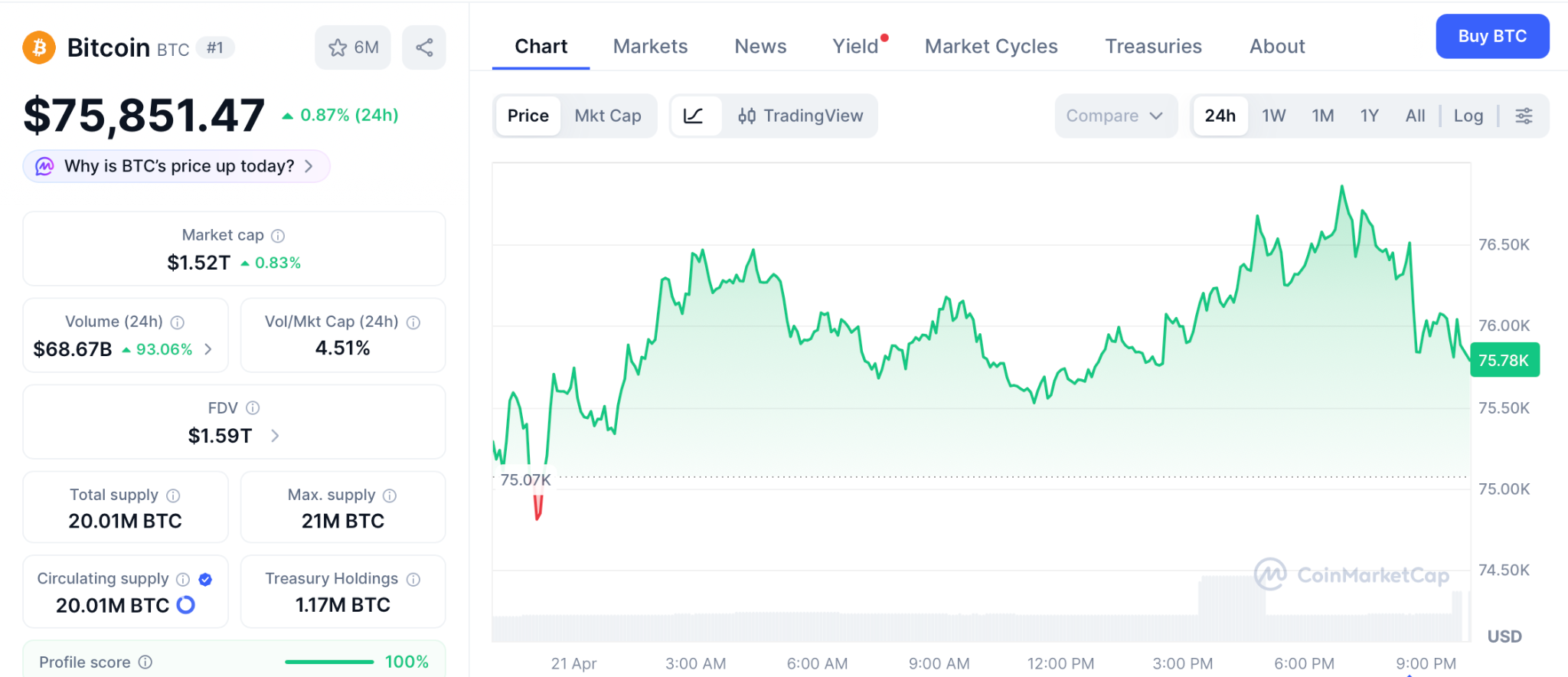
Standard Chartered still carries a year end target above $200,000 and Fundstrat models $130,000, with Benzinga pointing to the $94,000 yearly open as the next break if current momentum holds.
Even the $130,000 call locks a 72% return that needs the full cycle. Bitcoin price analysis produces real gains over long timelines, but that pace cannot match the 267x a presale packs into one listing day.
Conclusion
The Bitcoin price analysis case is solid, the ceasefire rally adds weight to it, and ETF flows back the direction, yet the biggest returns need an entry that delivers multiples a $1.49 trillion cap no longer can. Pepeto is that entry, the setup that gives what BTC at this size can no longer produce, and the Binance listing shrinks the window down to days.
Wallets buying at presale pricing today are stacking the positions the rest of the market will spend this cycle wishing they had taken, which is why sharp capital is already moving through Pepeto right now, while the entry still exists.
Click To Visit Pepeto Website To Enter The Presale

FAQs
What is the Bitcoin price forecast for 2026 after the ceasefire rally?
Standard Chartered carries a target above $200,000 and Fundstrat models $130,000 for Bitcoin in 2026. Spot bitcoin ETF flows rebuilt after March ended a four month outflow run with $1.32 billion in inflows per Benzinga.
Why are analysts pairing Pepeto with large cap entries like Bitcoin right now?
Pepeto is compared to large caps because it carries a presale to Binance listing path where 267x is still on the table at $0.0000001865. The Pepe cofounder, a SolidProof audit, and a live zero fee exchange put it ahead of tokens with no working product.
Disclaimer: This is a Press Release provided by a third party who is responsible for the content. Please conduct your own research before taking any action based on the content.

pinco casino , ən populyar slot oyunları ilə tanınan veb-sayt, oyunçu məqsədlərinə uyğun olaraq əlaqəli proqramlar və promokodlar təqdim edir. Pinco casino promo code və pinco promo code ilə oyunçuların oyun oynayışında daha yaxşı şansları olacaq. Pinco casino, oyunçu məqsədlərinə uyğun olaraq əlaqəli proqramlar və promokodlar təqdim edir. Pinco game tərəfindən təqdim olunan slot oyunları, oyunçu məqsədlərinə uyğun olaraq əlaqəli proqramlar və promokodlar təqdim edir. Pinco casino, oyunçu məqsədlərinə uyğun olaraq əlaqəli proqramlar və promokodlar təqdim edir. Pinko və ya пинко adlandırıldığı bu veb-sayt, oyunçu məqsədlərinə uyğun olaraq əlaqəli proqramlar və promokodlar təqdim edir.
Slot Oyunlarının Növü və Populyarlıqları
Pinco Online Kazino, pinco casino promo code ilə birlikdə, bir çox slot oyunlarının növünü sunar. Bu oyunlar, ciddi oyunçu və yeni oyuncular üçün həmişə uyğun və populyardir. Pinco casino promo code ilə qazanma şansınızı artırmaq olar. Slot oyunlarının növü, oyunların temsil edilən konseptlərinə, grafiklərinə və oyununuzun qazanma şansına görə fərqləşdirilir.
Pinco slot oyunları arasında klasik 3-reel və 5-reel slotlar, video slotlar, progressive jackpots və tema ilə bağlı slotlar yer alır. Klasik 3-reel slotlar, ən yaxşı və ən populyar növ slotlar arasındadır. Onlar, ən sade və ən qarşılıqlı oyunlar arasındadır. 5-reel slotlar, daha çox simvol və daha çox qazanma şansı ilə daha ziyafəlidir. Video slotlar, daha ətraflı və daha qarşılıqlı oyunlar ilə tanınır. Progressive jackpots, qazanma şansını artırmak üçün ən çox qazanma şansı olan slotlar arasındadır.
| Klasik 3-reel | 3 | Orta | Çox | 5-reel | 5 | Çox | Çox | Video | 5 və daha çox | Çox | Çox | Progressive Jackpots | 5 və daha çox | Ən çox | Çox |
Pinco Online Kazino, pinco casino promo code ilə birlikdə, bu oyunların populyarlıqlarını artırmaq üçün məhsullarını təqdim edir. Pinko az və pinco casino ilə birlikdə, oyunçu məqsədlərinə uyğun və populyar slot oyunlarını sunur. Pinco promo code ilə qazanma şansınızı artırmaq olar. Slot oyunlarının növü, oyunçu məqsədlərinə, oyunçu tələblərinə və oyunçu məntiqələrinə görə fərqləşdirilir.
Pinco Online Kazino-da Qarşınılan Slot Oyunları
Pinco Online Kazino-da qarşınılan slot oyunları, oyunçu mütənəqqil olmaq üçün təhlükəsiz və sürətli oyun istismar etmək üçün idealdir. Pinco game və pinco casino promo code ilə oyunçu, oyunların ən yaxşı versiyalarını oynayə bilər. Pinco, oyunçu mütənəqqil olmaq və qazanma şansını artırmaq üçün pinco promo code ilə qarşısınıqlanır. Pinko az və pinco casino promo code ilə oyunçu, oyunların yeni və yenilənmiş versiyalarını təqdim olunan slot oyunlarından istifadə edə bilər.
Pinco Slot Oyunlarının Nəticələri
Pinco Online Kazino-da qarşınılan slot oyunları, oyunçu mütənəqqil olmaq və qazanma şansını artırmaq üçün idealdir. Pinko az və pinco casino promo code ilə oyunçu, oyunların yeni və yenilənmiş versiyalarından istifadə edə bilər. Pinco game ilə oyunçu, oyunların ən yaxşı versiyalarını oynayə bilər və qazanma şansını artırmaq üçün pinco promo code ilə qarşısınıqlanır. Pinko və pinco casino promo code ilə oyunçu, oyunların ən yaxşı versiyalarını oynayaraq, mütənəqqil olmaq və qazanma şansını artırmaq imkanına sahib olur.
Oyunların Qalibliyi və Qaliblikasılığı
Pinko Casino-da oynanılan slot oyunlarının qalibliyi və qaliblikasılığı, oyunların təhlili və statistiklərinə baxara baxara müəyyən edilir. Pinko Casino-da ən populyar slot oyunlarından biri “Pinco Game”dir. Bu oyun, qaliblikasılığı və qalibliyi ilə tanınır. Pinko Casino-da oynanmaq istəyən oyunçuların çox sayda qaliblikasılıq şansı var. Pinko Casino promo code və pinco casino promo code ilə həyata keçirilən kampaniyalarla birlikdə, oyunların qaliblikasılığı artırılır.
Pinco Casino-da oyunların qalibliyi və qaliblikasılığı ilə bağlı statistiklər, oyunların populyarlışına və qaliblikasılığına görə dəyişir. Pinko Casino-da oyunların qaliblikasılığı, oyunların tərtibatında və qaliblikasılıq şansları ilə bağlıdır. Pinko Casino-da oyunların qaliblikasılığı, oyunların təhlili və statistiklərinə baxara baxara müəyyən edilir.
- Pinko Casino-da oyunların qaliblikasılığı, oyunların təhlili və statistiklərinə baxara baxara müəyyən edilir.
- Pinko Casino promo code və pinco casino promo code ilə həyata keçirilən kampaniyalarla birlikdə, oyunların qaliblikasılığı artırılır.
- Pinco Casino-da oyunların qaliblikasılığı, oyunların tərtibatında və qaliblikasılıq şansları ilə bağlıdır.
Pinco Casino-da oyunların qaliblikasılığı, oyunların təhlili və statistiklərinə baxara baxara müəyyən edilir. Pinko Casino-da oyunların qaliblikasılığı, oyunların tərtibatında və qaliblikasılıq şansları ilə bağlıdır. Pinko Casino promo code və pinco casino promo code ilə həyata keçirilən kampaniyalarla birlikdə, oyunların qaliblikasılığı artırılır. Pinko Casino-da oyunların qaliblikasılığı, oyunların təhlili və statistiklərinə baxara baxara müəyyən edilir.
Pinco Casino-da oyunların qaliblikasılığı, oyunların təhlili və statistiklərinə baxara baxara müəyyən edilir. Pinko Casino promo code və pinco casino promo code ilə həyata keçirilən kampaniyalarla birlikdə, oyunların qaliblikasılığı artırılır. Pinko Casino-da oyunların qaliblikasılığı, oyunların tərtibatında və qaliblikasılıq şansları ilə bağlıdır. Pinko Casino-da oyunların qaliblikasılığı, oyunların təhlili və statistiklərinə baxara baxara müəyyən edilir.

Trust set up for Alice Ruggles secures renewed funding

HCL Tech’s margins and constant currency growth to remain under pressure: Aditya Shah

Bitcoin price climbs to $77,500 on Trump ceasefire extension, Strategy’s $2.5 billion buy

Manchester United reach agreement with Casemiro over contract clause amid transfer speculation

Steven Gerrard disagrees with Gary Neville over ‘shock’ Chelsea and Arsenal claim | Football

US brings back mandatory military draft registration


-

 News Videos7 days ago
Secure crypto trading starts with an FIU-registered
-

 Fashion4 days ago
Weekend Open Thread: Theodora Dress
-

 Politics4 days ago
Palestine barred from entering Canada for FIFA Congress
-

 Sports5 days ago
NWFL Suspends Two Players Over Post-Match Clash in Ado-Ekiti
-
Entertainment2 days ago
NBA Analyst Charles Barkley Chimes in on Ice Spice McDonald’s Fiasco
-

 Business3 days ago
Powerball Result April 18, 2026: No Jackpot Winner in Powerball Draw: $75 Million Rolls Over
-

 Politics3 days ago
Zack Polanski demands ‘council homes not luxury flats for foreign investors’
-

 Crypto World4 days ago
Russia Pushes Bill to Criminalize Unregistered Crypto Services
-

 Politics1 day ago
Gary Stevenson delivers timely reminder to register to vote as deadline TODAY
-

 Tech3 days ago
Auto Enthusiast Scores Running Tesla Model 3 for Two Grand and Turns It Into Bare-Bones Go-Kart
-

 Tech6 days ago
‘Avatar: Aang, The Last Airbender’ Leaked Online. Some Fans Say Paramount Deserves the Fallout
-
 Business5 days ago
Creo Medical agree sale of its manufacturing operation
-

 Crypto World4 days ago
Russia Introduces Bill To Criminalize Unregistered Crypto Services
-

 Sports6 days ago
British climbers complete new route in Swiss Alps
-

 Sports6 days ago
“Felt Much Better Today”: Josh Hazlewood Opens Up On His Recovery Win Over LSG
-
Crypto World3 days ago
Kelp DAO rsETH Bridge Hack Drains $292M as DeFi Losses Top $600M in Two Weeks
-

 Tech6 days ago
Ford EV and tech chief leaving automaker
-

 Business6 days ago
Cheaper Doritos and Lays helps PepsiCo win back struggling snackers
-
 Entertainment6 days ago
Clavicular Says Streaming May Not Work Without Substances
-

 Entertainment6 days ago
Ruby Rose Accuses Katy Perry Of Sexual Assault, Police React
You must be logged in to post a comment Login