
Crypto World
Coldcard Bitcoin losses rise to $88.6M in third wave



Galaxy Research raised its estimate of Bitcoin drained from addresses linked to the Coldcard firmware flaw to 1,367.05 BTC, worth about $88.6 million, on Aug. 1.
Summary
- 1,367.05 BTC was drained across 4,585 addresses in three suspected Coldcard attack waves, Galaxy reported.
- July 30’s first wave removed 1,082.65 BTC from 1,196 addresses in just 41 minutes total.
- Firmware updates fix new seed generation but cannot repair vulnerable seeds created on earlier releases.
The research unit identified 4,585 affected addresses across three suspected attack waves, replacing its earlier estimate of 1,082.65 BTC from 1,196 addresses.
The revised figure means the $70.2 million estimate reported after Galaxy’s first analysis is no longer current. Galaxy described the total as its “estimated observed size,” leaving open the possibility that further transactions could be found. The company has not proved that every address came from a vulnerable Coldcard seed.
Galaxy raises Coldcard estimate after third wave
Galaxy’s first mapped wave occurred between 1:10:20 a.m. and 1:51:26 a.m. UTC on July 30. It traced 1,082.65 BTC from 1,196 addresses across blocks 960,183 through 960,191. The transactions appeared about 30 hours before Coinkite issued its initial public advisory.
A second wave on July 31 drained 76.16 BTC from another 1,478 addresses. Galaxy later identified a third wave that removed 207.7294 BTC from 1,912 addresses. Together, the three groups brought the observed total to 1,367.05 BTC across 4,585 addresses.
The first wave used the same 30 satoshis per virtual byte fee and transactions without change outputs. Those traits helped researchers identify the related movements onchain. Galaxy warned that later attacks might use different patterns, making the complete loss harder to measure.
Three waves used different transaction patterns
Galaxy said the first two waves shared collector addresses, destination types and derivation-path behavior. The events also occurred about 27 hours apart. Those similarities suggested one operator may have conducted both sweeps, although the blockchain cannot establish the attacker’s identity.
The third wave behaved differently. Funds from each victim moved to separate pay-to-witness-script-hash destinations, while several victims were grouped into each sweep transaction. The activity also checked only the default derivation path. Galaxy said it was confident each wave represented one operator, but would not claim that one attacker controlled all three.
Therefore, descriptions of a single hacker remain an inference rather than a confirmed fact. Galaxy called the third group “what we suspect are hacks of Coldcard-generated addresses.” The wording reflects the limits of onchain attribution.
Coinkite said a series of firmware integration errors prevented the intended hardware random-number generator from contributing properly to seed creation. A MicroPython software fallback supplied predictable output after a March 2021 code change. Block’s independent technical report described the same random-number-generator path and said active exploitation was underway.
Coinkite estimated about 40 bits of effective search space for affected Mk2 and Mk3 seeds. Later Mk4, Q and Mk5 models included extra secure-element entropy, but the company estimated roughly 72 bits rather than the intended 128 bits. These figures remain technical estimates and may change as testing continues.
The affected Mk2 and Mk3 range covers firmware 4.0.1 through 4.1.9. Seeds created on Mk4 and Mk5 before standard version 5.6.0, and Q seeds created before version 1.5.0Q, are also affected. Separate fixed Edge releases are available.
Existing seeds require migration, not only updates
Coinkite released hotfixes for every affected model and said it takes “full accountability” for the bug. However, installing new firmware only corrects future seed generation. It cannot add entropy to a recovery phrase that already exists.
The official Coldcard advisory tells users to install the fixed firmware, generate a completely new seed, verify its backup and receiving address, and send a small test transaction before moving the remaining balance. Users should keep the previous backup until the migration is confirmed.
Coinkite said seeds created with at least 50 fair, independent and private dice rolls are not considered exposed by this issue alone. A strong, unique BIP-39 passphrase adds another barrier, but the company still advises migration. Short, reused or predictable passphrases may not provide adequate protection.
However, the 594.48 BTC sweep identified by AnchorWatch’s Rob Hamilton. In related coverage, a later technical review examined how the firmware build error weakened Coldcard seeds for more than five years.
Coinkite’s investigation remains open, and the company has promised a formal technical review. Galaxy may also revise the observed loss again if new address patterns emerge. Until those reviews are complete, $88.6 million is the latest public estimate, not a final confirmed total. No verified Bitcoin price reaction has been attributed to the Coldcard incident so far.



BNB Chain said on Aug. 1 that it was pursuing legal action against a former employee who allegedly retained unauthorized access to a seed phrase and later used the associated wallet address with a new memecoin.
Summary
- BNB Chain says a former employee retained unauthorized seed phrase access after leaving the company.
- Four wallets allegedly bought 79.67% of ASTEROID’s supply for $10,000 before later selling most tokens.
- Lookonchain estimates 1,103 BNB in sales produced approximately $628,000 in profit for the alleged operator.
The network said it was cooperating with authorities but did not identify the individual, jurisdiction, agency or court.
The wallet was created for a company video tutorial showing how to generate a token, according to BNB Chain’s statement. The organization said the former employee later generated a new private key from the retained seed phrase. It denied creating, authorizing, promoting or participating in the new token.
BNB Chain distances itself from ASTEROID
BNB Chain described the address’s later use as independent activity and said the token was not affiliated with or endorsed by the ecosystem. Its announcement did not provide a complaint, case number, named regulator or details about where the planned legal action would be brought.
Changpeng “CZ” Zhao reposted the statement and called the former employee “basically a scammer,” while telling users to “Stay SAFU.” His description is an allegation, not a court finding. BNB Chain did not disclose whether it is seeking asset recovery, damages or criminal charges.
Four wallets allegedly controlled nearly 80% of supply
On-chain analytics account Lookonchain linked the launch to a token called Asteroid Shiba, or ASTEROID. It alleged that four newly created wallets spent about $10,000 to acquire 796.7 million tokens, equal to 79.67% of the stated one billion-token supply.
Lookonchain said the wallets later sold 718.8 million ASTEROID for 1,103 BNB, valued at about $638,000, producing an estimated $628,000 profit. It published the four addresses for review on BscScan. However, blockchain records show wallet activity, not the legal identity controlling it. The employee attribution therefore remains an allegation supported by BNB Chain’s statement and Lookonchain’s analysis.
A seed can generate the private keys used within a deterministic wallet. Removing one private key from a device does not invalidate a retained copy of the underlying seed, which can be used to derive wallet keys again. The case raises questions about how tutorial wallets and recovery phrases were handled when employees left.
BNB Chain has not disclosed when the employee departed, how long the seed remained accessible or when it discovered the retained access. It also has not said whether other tutorial wallets are under review.
Crypto.news reported in 2025 that Binance suspended an employee following an investigation into alleged token front-running involving knowledge from a previous BNB Chain role. The latest statement does not say whether the incidents involve the same person.
Separately, as crypto.news reported, investigators have used fresh wallet clusters and concentrated ownership to examine suspected memecoin manipulation. Such patterns can establish connections between addresses, but identity claims may still require exchange records or other off-chain evidence.
Legal action and wallet tracing come next
BNB Chain said it is working with relevant authorities, but its statement did not name an agency that had opened an investigation. A formal complaint or enforcement notice would clarify the legal claims, venue and requested remedies. Until then, the company statement and on-chain analysis remain the main public records.
The wallets and any destinations receiving the 1,103 BNB may provide a trail for investigators. Recovery would depend on whether funds reach identifiable exchange accounts or services able to respond to lawful requests. BNB Chain has not announced a freeze, recovery or repayment.
No token-price reaction is included because multiple assets use the ASTEROID name and BNB Chain did not publish a contract address. Using market data for another token could misstate the event. The next verified development would be a company update, regulator notice or public court filing.
The summer is not the most exciting period in the cryptocurrency markets, and the past month or so proved it. Nevertheless, Ethereum managed to become one of the few (re)rising stars, surging by roughly 20% and reaching a local peak.
History suggests that August has been quite the controversial month for the largest altcoin, and we will explore that data to try to see what could be hiding around the corner in the next 30ish days.
ETH Saw Big July Gains
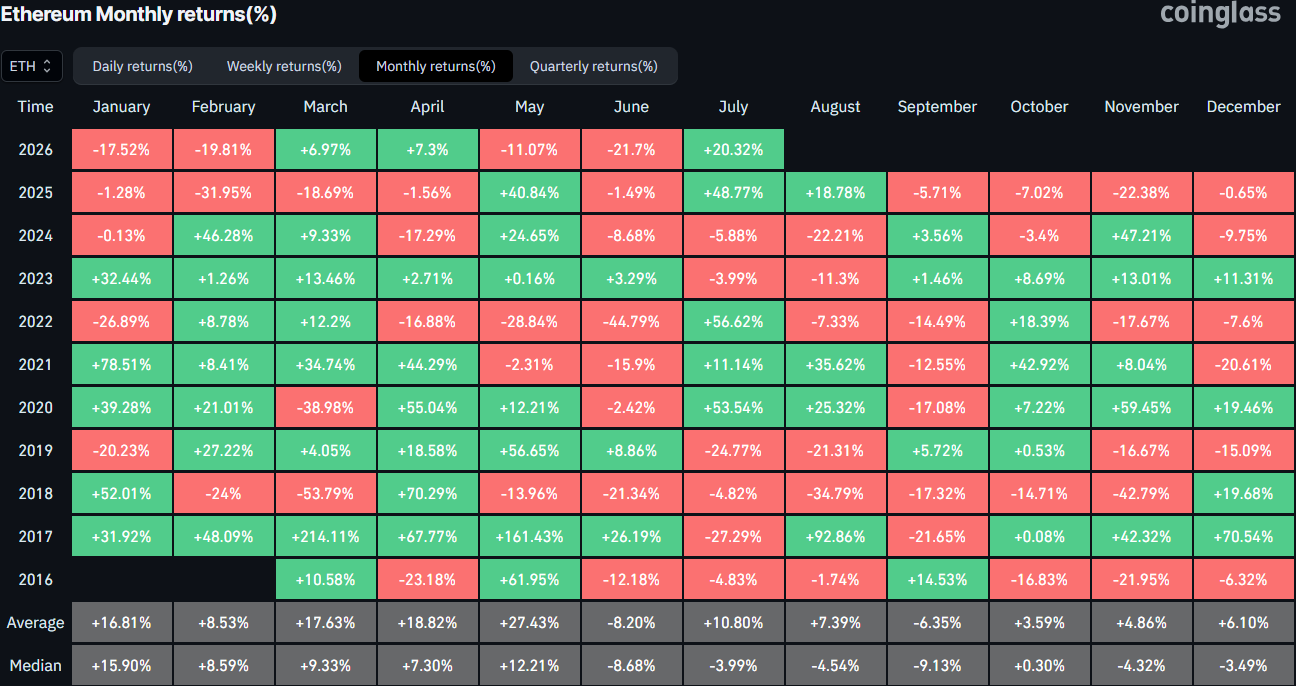
The second-largest cryptocurrency by market cap had a violent end to 2025 and a similarly painful start to 2026. Its troubles began after the all-time high marked in August last year, when it was rejected and marked six consecutive monthly closures in the red. The most painful were November (-22.38%), January (-17.52%), and February (-19.81%).
A minor relief rally followed in March and April with gains of around 7% each. However, the bears returned in May with an 11% drop, while June was extremely bearish for the entire market and ETH dumped by 21.7%. As such, the expectations for July were high for a rebound. Historically, it hasn’t been Ethereum’s best month, but all that were in the green saw double-digit gains.
July 2026 didn’t disappoint. The altcoin rebounded from the early slumber when it dipped toward $1,500 and rocketed to $1,980 at one point. Although it was rejected there, it ended the month at around $1,900, which meant a solid surge of approximately 20%. This performance dwarfed BTC’s monthly gains, as the market leader jumped by a more modest 9%.
What’s Next in August?
Although there are some warning signs about ETH’s short-term price future, August has delivered some major gains throughout the years. Obviously, the 2017 edition stands out when the token skyrocketed by nearly 93%. 2020 brought a respectable 25.32% surge, followed by another 35.62% pump in 2021. The gains in August 2025 were also double digits, and ETH managed to break its previous ATH record during that month.
The opposite side of the coin is that the other six Augusts since 2016 have been in the red. The most painful examples that stand out were during the 2018 bear market when ETH slumped by almost 35%, another 21.31% leg down a year later, and the 2024 drop of 22.21%.
The post Ethereum Just Had Its Best Month in a Year: Can ETH Keep Rallying in August? appeared first on CryptoPotato.


BNB Chain said a former employee allegedly used a company tutorial wallet to create a memecoin that the company says it did not authorize or endorse.
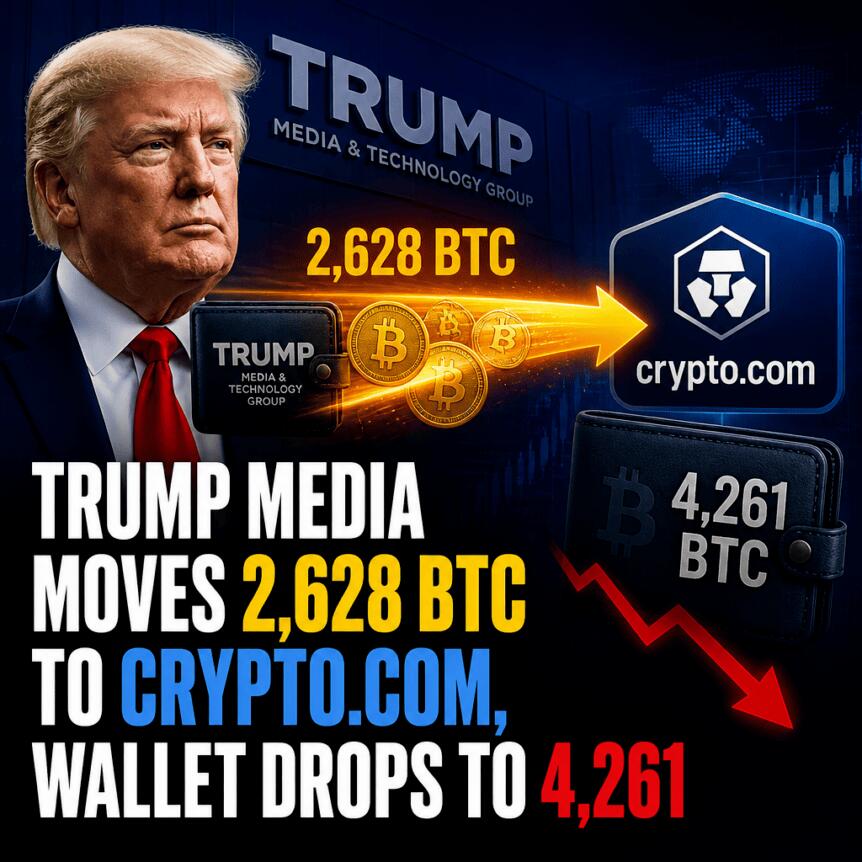
Trump Media & Technology Group, the parent company behind the Truth Social platform, has continued trimming its Bitcoin exposure, according to on-chain tracking shared by Lookonchain. The latest activity adds to a months-long pattern of sales that have significantly reduced the company’s reported BTC balance.
In transfers identified by Lookonchain using Arkham data, Trump Media-linked wallets sent 2,628 BTC to Crypto.com. The move is reported to be worth roughly $165 million, extending a selling cycle that began about seven months ago.
Key takeaways
- Trump Media-linked wallets reportedly transferred 2,628 BTC (about $165M) to Crypto.com, per Lookonchain’s analysis of Arkham data.
- Lookonchain estimates Trump Media has sold a total of 7,281 BTC over the past seven months, worth roughly $545M.
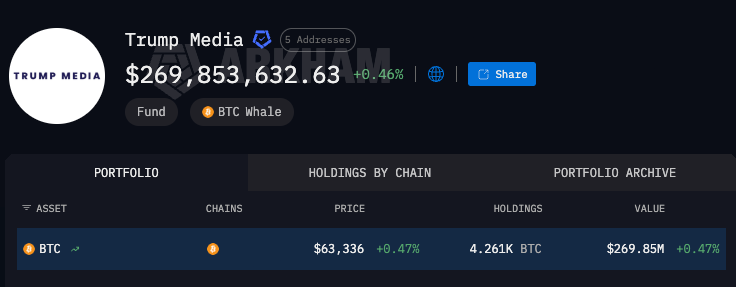
- Arkham wallet data cited by Lookonchain shows remaining holdings of 4,261 BTC, worth about $269.8M at the time of reporting.
- Current scrutiny is taking place alongside broader legislative debate over the CLARITY Act, which has drawn attention for its ethics provisions around digital asset activity.
New Crypto.com transfers cut into remaining Bitcoin
Lookonchain reported that Trump Media has executed another batch of Bitcoin sales via transfers to Crypto.com. The analysis attributes the transactions to Trump Media-linked wallets and cites Arkham’s wallet and transaction information.
In this most recent set of moves, Arkham data referenced by Lookonchain points to two transfers: one for 2,429 BTC and another for 198.9 BTC.
Taken together, Lookonchain said these transfers total 2,628 BTC, valued at about $165 million based on the prevailing price assumptions used in its reporting. This latest reduction follows earlier transfers to Crypto.com reported on May 22, when the company-linked wallets moved a combined 2,650 BTC, worth roughly $205 million.
Seven-month selling spree shrinks reported holdings
Lookonchain frames the most recent transfer as the continuation of a broader liquidation strategy. The tracker said Trump Media purchased 11,542 BTC at an average price of $118,522 before beginning to sell portions of its holdings around seven months ago.
Based on the same dataset, Lookonchain estimates cumulative sales of 7,281 BTC over that period, worth approximately $545 million. The analysis also calculates an average selling price of $74,855 per BTC for those transactions.
After the latest outflows, Arkham data referenced in the report indicates Trump Media’s remaining Bitcoin holdings stand at 4,261 BTC, valued at about $269.8 million at the time of publication. That implies the company’s reported BTC balance has fallen by roughly 63% compared with the initial purchase total cited by Lookonchain.
Why the timing matters amid ethics and ownership debates
Beyond the on-chain mechanics, the sales arrive as lawmakers debate the Digital Asset Market Clarity (CLARITY) Act, a proposal that has attracted scrutiny for its approach to ethics rules and the question of whether officials’ digital asset activity could create conflicts of interest.
Critics have pointed to a range of Trump-linked crypto initiatives discussed in the broader public policy debate, including memecoins such as Official Trump (TRUMP) and Melania (MELANIA), as well as World Liberty Financial’s governance token WLFI and a USD1 stablecoin. The controversy centers on the overlap between political influence and private crypto holdings or products.
Recent CLARITY Act discussions, as described in coverage referenced by Cointelegraph, have focused on tightening ethics provisions—particularly rules governing when officials could issue or sponsor digital assets. However, as the source notes, the legislation remains under consideration and does not mandate that companies sell existing holdings.
That distinction is important for investors and compliance watchers: even if a law ultimately changes future behavior for officials or connected entities, it may not retroactively affect the ability of companies to keep, liquidate, or otherwise manage already-held crypto.
What to watch next for Trump Media-linked wallets
For market participants, the key signal in this story is not simply that Bitcoin is being sold, but how steadily it is being done and through which counterparties—here, Crypto.com—based on wallet and transaction clustering reported through Arkham data by Lookonchain.
Readers should watch for whether additional transfers continue to appear from the same Trump Media-linked wallet set, and whether the remaining 4,261 BTC balance changes further. At the same time, political and regulatory attention around the CLARITY Act suggests that disclosure, governance, and ethics standards for digital asset participation may remain a live topic even if near-term changes do not compel immediate sales.
Crypto World
XRP Price Prediction: Japan Just Made It Insanely Easy to Get Free XRP with a Credit Card

Japan just handed XRP holders a mainstream on-ramp that many Western markets still cannot match, and it’s bullish for Ripple’s price prediction. However, the pullback tells only part of the story. Tokyo’s latest crypto move could matter more than today’s price action.
Effective July 31, 2026, SBI VC Trade and Orient Corporation launched a first-of-its-kind integration. Orico credit card holders can now convert Orico Points into BTC, ETH, or XRP through the VCTRADE platform. The redemption rate is 1,200 Orico Points for ¥1,000 worth of crypto.
Meanwhile, Orico cards earn points at a 1.0% base rate, rising to 2.0% for new cardholders during their first six months. It marks the first time crypto has become a redemption option within the Orico Points program. The launch expands SBI’s push to connect traditional finance with digital assets.
A loyalty program that turns everyday spending into XRP exposure helps normalize the token for millions of Japanese consumers. That could gradually narrow the gap between retail interest and actual blockchain activity. While price remains volatile, easier access often supports adoption over the long run.
Discover: The Best Token Presales
XRP Price Prediction: Break $2 Again as Japan Adoption Accelerates?
XRP trades near $1.05 after a volatile week, leaving bulls stuck inside another familiar range. Recent weakness reflects cautious market sentiment more than XRP-specific selling. Meanwhile, relatively light volume suggests consolidation instead of heavy distribution.
Support now sits between $1.00 and $1.02, where buyers have repeatedly defended the price. A daily close below $1.00 would weaken the current structure and increase downside risk. Meanwhile, resistance stands between $1.08 and $1.10, where recent recovery attempts have faded.

Over the next two days, XRP is likely to trade between $1.00 and $1.10 unless a fresh catalyst shifts sentiment. A move above $1.10 could open the door to $1.15. However, losing the $1.00 support may trigger another test of the $0.95 region.
Longer term, bullish forecasts above $2.00 still depend on sustained institutional adoption. Japan’s new loyalty to the crypto initiative could strengthen that case over time. Still, investors will likely wait for meaningful user activity before pricing in a lasting breakout.
Trade XRP on Bybit and Get a Chance to Win Our $1,000 USDT Airdrop
Bitcoin Hyper Targets Early Mover Upside as XRP Tests Key Levels
XRP at today’s price is a legitimate hold for exposure to Japan’s institutional adoption story, but the upside math at this market cap requires a multi-month timeline and macro prediction. Traders looking for asymmetric early-stage returns are increasingly eyeing infrastructure plays that haven’t yet priced in their ceiling.
Bitcoin Hyper ($HYPER) is positioning itself as exactly that kind of infrastructure bet. The project is the first-ever Bitcoin Layer 2 with Solana Virtual Machine (SVM) integration, meaning smart contract execution at sub-Solana latency speeds, built on Bitcoin’s security layer. That’s a genuinely different value proposition from anything currently live on-chain.
The presale has raised $32.9 million at a current price of $0.0136839, with staking already live for participants. The combination of a hard technical USP, a nine-figure fundraise still in presale, and BTC’s institutional tailwinds makes $HYPER worth putting on the research list.
Discover: The Best Crypto to Diversify Your Portfolio
The post XRP Price Prediction: Japan Just Made It Insanely Easy to Get Free XRP with a Credit Card appeared first on Cryptonews.
Jay Clayton becomes America’s top intelligence official on Monday. He is the same man who, as SEC chairman, sued Ripple for $1.3 billion.
Bill Pulte announced the handover on Saturday. He has held the DNI job on an acting basis since June.
What Jay Clayton’s DNI Move Means for Ripple
Clayton ran the SEC until December 2020. On his final full day, the agency sued Ripple.
The complaint named two executives as well. It said Brad Garlinghouse and Chris Larsen sold about $600 million of XRP themselves.
Judge Analisa Torres gave each side part of what it wanted. Only Ripple’s sales to large institutions broke the law.
She fined the company $125,035,150. She also ordered it not to repeat those sales.
Both sides gave up their appeals on August 7, 2025. That ended the four-year case, and the fine stood.
Now Clayton leaves finance behind for good. His new job has no power over the SEC, crypto rules, or XRP.
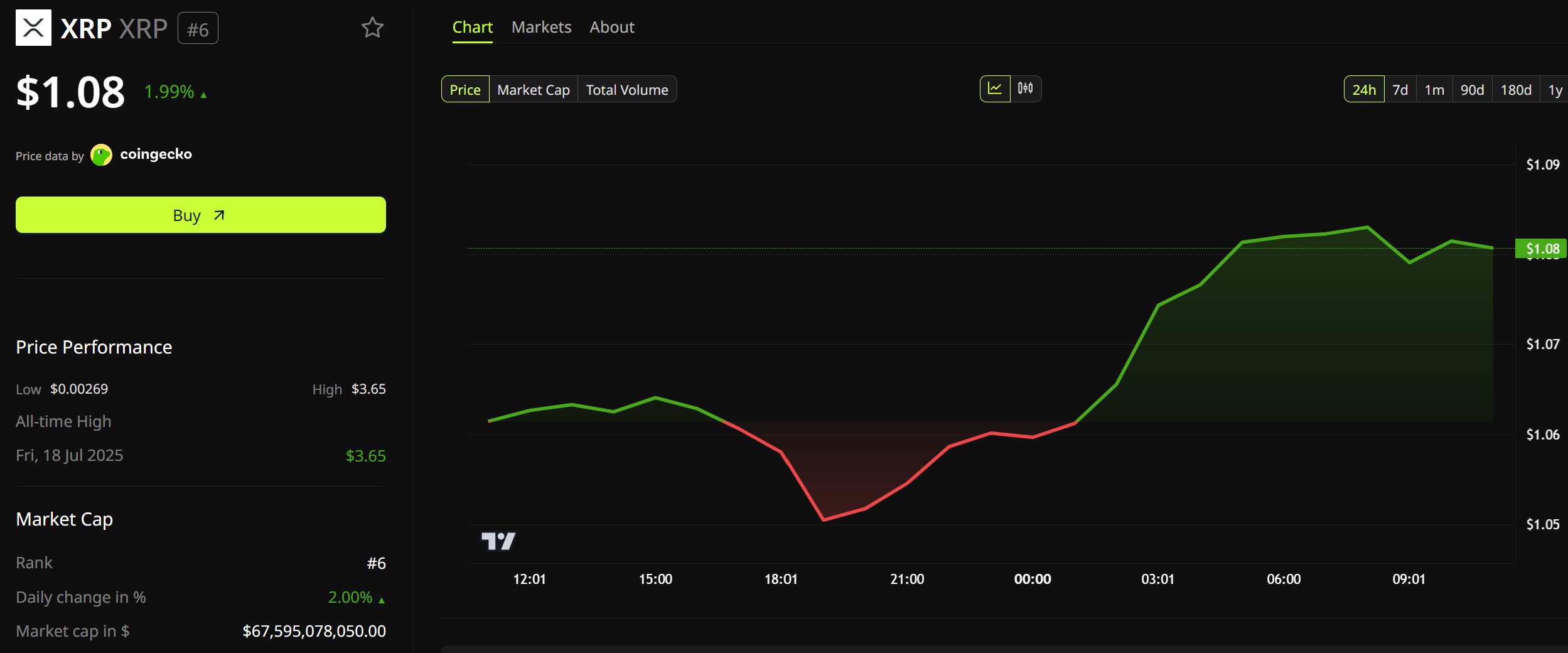
That answers the question BeInCrypto asked at his June DNI nomination. XRP barely moved. It traded near $1.08 on Sunday, up 1.9% on the day.

The token is still down 64% over the past year.
Pulte Returns Full Time to Housing Finance
Pulte held two big jobs at once for about seven weeks. He ran the Office of the Director of National Intelligence (ODNI). He also stayed in charge of the Federal Housing Finance Agency (FHFA).
However, Pulte spent much of that time cutting staff.
Hours before the Senate confirmed Clayton 51-47, Pulte announced a fifth round of firings on X (Twitter). He called it an “approximately 30% Staff Reduction from Weeks Ago.”
He did not say how many people lost their jobs, Nextgov reported.
In his farewell message, Pulte treated the shrinking as the point of his stint.
“I am eternally grateful to President Trump for the opportunity to serve as Director of National Intelligence, while he completed historic declassifications and we right sized the ODNI,” said Pulte, acting Director of National Intelligence.
Follow us on X to get the latest news as it happens
The cuts began before him. Tulsi Gabbard planned to shrink ODNI staff by 40% and its budget by $700 million before she resigned in June.
Congressional aides told the Washington Post that roughly 200 staff left or moved after June 1.
Clayton may not carry on. He told senators he wants a “fairly lean” office, but agreed to look again at some cuts.
“There needs to be a place of oversight, a place to resolve conflict. I look at it as a ‘board of directors’ role,” Clayton said in the hearing.
For crypto readers, Pulte is the name that matters more. He told Fannie Mae and Freddie Mac to count crypto in mortgage assessments in June 2025.
In March he went further and let crypto reserves back mortgages. From Monday, housing is his only job again.
The post Ripple Lawsuit Architect Takes Over as US Director of National Intelligence appeared first on BeInCrypto.
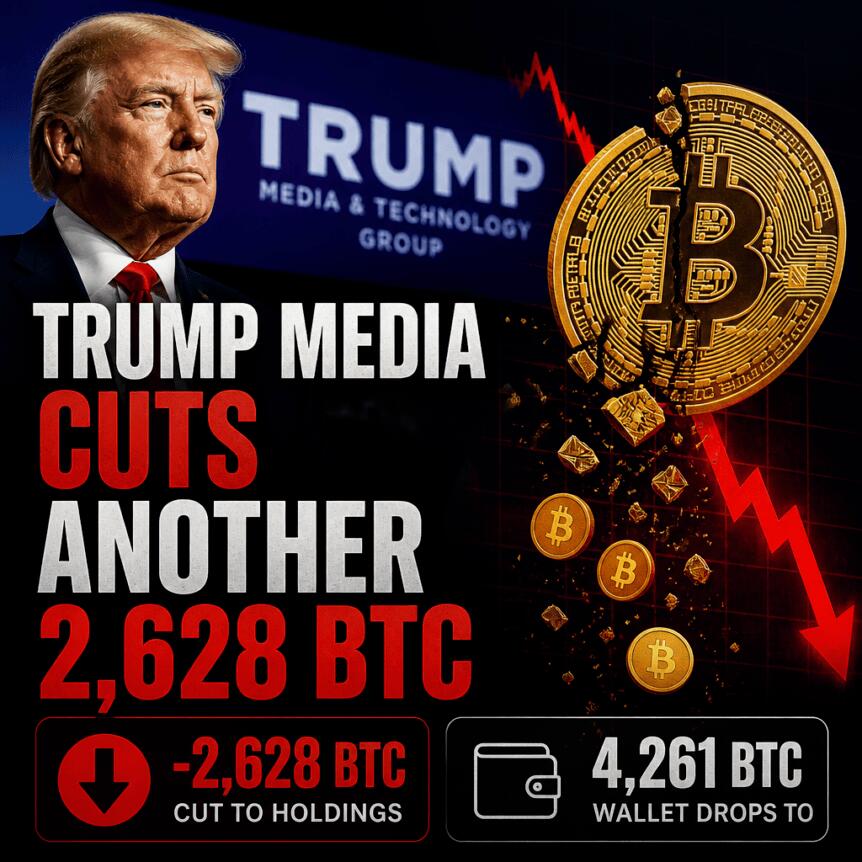
Trump Media & Technology Group, the parent of Truth Social, has continued to reduce its reported Bitcoin exposure with another batch of transfers to exchange infrastructure. According to Lookonchain, the company sold 2,628 BTC—valued at roughly $165 million at the time of the transfers—via movements to Crypto.com, based on blockchain data compiled from Arkham.
The latest activity adds to a broader pattern of selling observed over the past seven months, shrinking the company’s reported holdings and feeding into ongoing political scrutiny of Trump-linked crypto projects and the ethics questions surrounding digital asset ownership.
Key takeaways
- Trump Media-linked wallets transferred 2,628 BTC (about $165 million) to Crypto.com, according to Lookonchain’s analysis using Arkham data.
- Over the past seven months, reported Bitcoin sales total 7,281 BTC (about $545 million), per Lookonchain.
- Arkham wallet data shows remaining holdings of 4,261 BTC (worth about $269.8 million at the time of reporting).
- Recent transfers include an Arkham-documented transaction for 2,429 BTC and another for 198.9 BTC moving to Crypto.com.
- The selling comes amid congressional discussion of the CLARITY Act, which targets ethics and digital asset rules but does not compel companies to liquidate existing holdings.
Another Crypto.com-linked transfer reduces reported BTC
In a Sunday post on X, Lookonchain said Trump Media sold 2,628 BTC through transfers to Crypto.com. The analysis was based on on-chain visibility attributed to Trump Media-linked entities, with Arkham used as the data layer for identifying the wallet activity.
Lookonchain further reported that Trump Media had purchased 11,542 BTC at an average price of $118,522 before starting to sell portions of its holdings about seven months prior to the latest transactions.
How much Bitcoin has been sold—and what remains
Lookonchain’s tally places total reported sales over the same seven-month window at 7,281 BTC, valued around $545 million, with an average selling price of $74,855 per BTC based on its methodology.
Arkham’s wallet figures cited by the analysis indicate that Trump Media’s remaining Bitcoin holdings were 4,261 BTC at the time of publication, worth approximately $269.8 million.
The most recent movements to Crypto.com, according to Arkham wallet data referenced in the report, included two notable transfers: one transaction of 2,429 BTC and another of 198.9 BTC. These transfers follow earlier activity that Lookonchain linked to the same selling program, including two movements recorded on May 22 totaling 2,650 BTC (worth about $205 million at the time).
Why repeated selling matters for investors watching disclosures
For market participants, the practical significance of these transactions is less about the immediate price impact of any single sale and more about consistency, transparency, and how quickly a large holder can reduce exposure. When a corporate-linked balance sheet shows continued liquidation of a major volatile asset like Bitcoin, investors often interpret it as a shift in treasury strategy, liquidity planning, or a risk-management decision.
Just as importantly, the reported activity draws attention to how on-chain transfers by identifiable entities can affect expectations around future flows. If more transfers to exchange-linked addresses continue, traders may look for repeated liquidity events that can complicate execution for both spot and derivatives participants—particularly if the market perceives the sales as part of a longer unwinding rather than one-off diversification.
CLARITY Act debate keeps ethics questions in focus
Beyond the on-chain movements, the latest Bitcoin sales land at a time when lawmakers are weighing the Digital Asset Market Clarity (CLARITY) Act. In the broader debate, attention has turned to ethics provisions, conflicts of interest, and how public officials should handle relationships with digital asset issuers and related ventures.
Critics have pointed to a cluster of Trump-linked crypto interests discussed in policy circles, including the Official Trump (TRUMP) and Melania (MELANIA) memecoins, as well as World Liberty Financial’s WLFI governance token and USD1 stablecoin. The issue raised by opponents is the overlap between political influence and private crypto holdings—particularly where governance or issuance incentives could be perceived as benefiting affiliated interests.
While current CLARITY Act discussions have focused on tightening ethics rules—such as restrictions on officials issuing or sponsoring digital assets—the legislation remains under consideration and, according to the report’s framing, does not require companies to sell existing crypto holdings.
That distinction is likely to matter in how the market interprets these developments. Even if policymakers move toward stricter disclosure or conflict-of-interest standards, treasury actions already in motion—like the sell-through described by Lookonchain and supported by Arkham wallet data—may continue on a timetable driven by corporate liquidity decisions rather than by immediate regulatory requirements.
What to watch next
Readers should watch for whether additional exchange-linked transfers continue from the same Trump Media-linked wallets and whether lawmakers’ CLARITY Act deliberations progress in a way that clarifies disclosure and ethics obligations for officials and affiliated entities. Until then, the main signal remains the on-chain pattern: reported Bitcoin balances appear to be shrinking in measured batches, supported by repeated wallet movements documented through Arkham and aggregated by Lookonchain.
Michael Saylor says the $5 billion Bitcoin sale story that tore across X (Twitter) this weekend was never news at all. Every dollar of it, he says, was made public a month ago.
The claim spread fast. MicroStrategy (now Strategy) had just won approval to sell up to $5 billion in Bitcoin (BTC), the posts said. Saylor called it old news in a new wrapper.
Where the $5 Billion Number Came From
MicroStrategy announced a new capital plan on June 29, 2026. Inside it sits a BTC Monetization Program. The program lets the company sell Bitcoin. It never makes it.
The plan set four spending limits.
- $1.25 billion to rebuild its cash reserve
- $1 billion to buy back preferred shares
- $1 billion to buy back common stock
- About $1.76 billion a year in dividend and interest bills
Add them up and you get $5.01 billion. That is the viral number. It went public five weeks ago.
Why did the cash reserve need rebuilding? It had shrunk to $871 million by May 25. MicroStrategy had just spent $1.38 billion of cash clearing debt.
BeInCrypto covered the shift toward active management when the plan landed.
The Never Sell Rule That Never Existed
So why did anyone think MicroStrategy would never sell?
Because Saylor said so. He posted “Never sell your Bitcoin” in February 2025. Followers treated the line as law.
The company had already moved on. Chief Executive Phong Le said on May 26 that selling Bitcoin was part of the toolkit. He said investors heard it on the first quarter earnings call.
That was five weeks before June 29. MicroStrategy’s first sale since 2022 came days later, to cover a dividend.
Saylor now separates his own advice from company policy.
Follow us on X to get the latest news as it happens
We have never had a “never sell” policy. The program does not require any BTC sale, and we expect to remain a net buyer of Bitcoin over time.
Watcher Guru, the account behind the viral post, has since deleted it.
What the Numbers Actually Show
Timing is the whole fight. MicroStrategy reported an $8.22 billion loss on July 30. Almost all of it was on paper. Bitcoin fell, so the value of its stack fell too.
Calling a June decision a reaction to a July loss gets the order backwards.
The trading says plenty. MicroStrategy bought 85,296 Bitcoin between April and June. It sold 1,395. That is 61 bought for every one sold. The stack still grew 11% to 846,000 BTC.
Sales this year hit $218.4 million by July 26. All of it paid dividends. That is 0.4% of a stack worth $54.8 billion.
Selling is picking up, though. Roughly $135 million of that came in July alone. That beats the whole second quarter. MicroStrategy has also paused its Bitcoin purchases for five weeks.
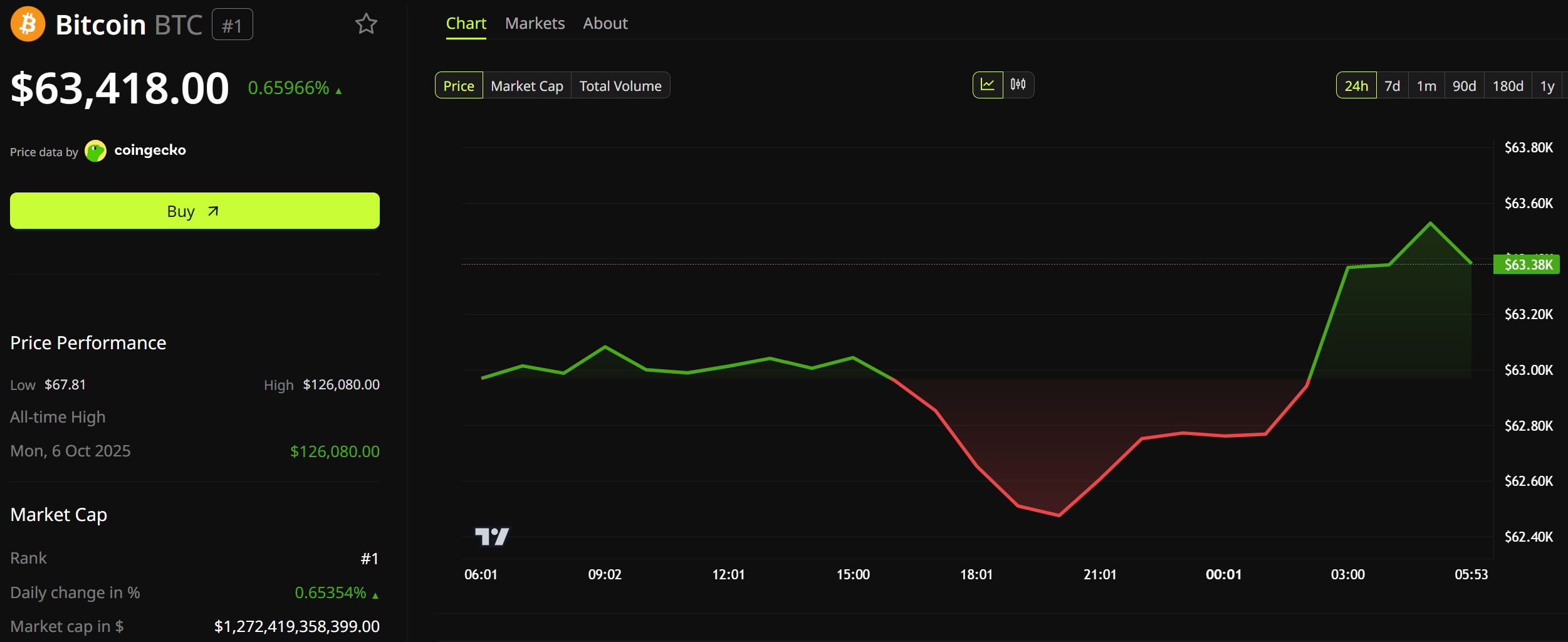
Bitcoin traded near $63,378 on Sunday, about half its October record. Staying a net buyer now rests on cheap money, not belief.

The post Michael Saylor Shuts Down Viral $5 Billion MicroStrategy Bitcoin Sale Claims appeared first on BeInCrypto.


A crypto industry-aligned political action committee has pushed its spending above $2 million in Michigan’s 13th Congressional District, according to final-week Federal Election Commission disclosures.
Summary
- Protect Progress spending surpassed $2 million backing Thanedar and opposing McKinney before Tuesday’s primary vote.
- $884,240 in new advertisements supported Thanedar, while more than $150,000 targeted McKinney with opposition messaging.
- August 4 voters will decide the Democratic nominee after over one million Michiganders voted early.
Protect Progress is supporting Democratic incumbent Shri Thanedar and opposing challenger Donavan McKinney before the Aug. 4 primary.
Protect Progress is affiliated with the Fairshake network, which has received major funding from companies including Coinbase and Ripple. The latest filings added $884,240 in media supporting Thanedar and more than $150,000 in spending against McKinney. The additions effectively doubled the amount reported about a week earlier.
Crypto PAC spending tops $2M before Michigan vote
Protect Progress is registered with the FEC as an active independent expenditure-only committee, commonly called a super PAC. Its spending supports or opposes candidates but does not represent money transferred directly to their campaigns. The latest expenditure notices are available through the committee’s official FEC filings.
The committee’s processed FEC summary may not immediately show every last-minute purchase. The agency states that its independent expenditure table excludes separate 24-hour and 48-hour notices, which committees use to disclose spending close to an election. One of the latest Michigan notices was filed through this FEC disclosure.
The scale is notable beside the candidates’ own finances. McKinney’s campaign reported $1.23 million in total disbursements through July 15. Protect Progress’s outside spending has exceeded that amount, although the figures cover different reporting periods and forms of political activity.
Thanedar’s crypto votes drew industry support
Thanedar voted for the stablecoin-focused GENIUS Act and the Digital Asset Market Clarity Act in the House. In an official statement, he described the measures as steps toward clearer rules, consumer safeguards and wider financial access, while acknowledging that the bills were “not perfect.”
The House-approved CLARITY Act remains under consideration in the Senate. Protect Progress has not stated in its FEC notices that any specific vote caused its spending decision. However, the committee generally supports candidates viewed as favorable toward digital asset legislation.
As previously reported, Protect Progress had disclosed more than $986,000 in Michigan spending by July 23. The latest filings pushed the total above $2 million during the final two weeks of the primary.
McKinney makes the spending a campaign issue
McKinney has used the outside funding to criticize Thanedar’s crypto policy record. In a July 21 statement, he alleged that “the crypto lobby is paying my opponent back” for votes that benefited President Donald Trump’s digital asset interests.
That statement represents a campaign allegation. FEC records confirm that Protect Progress paid for independent advertisements, but they do not establish McKinney’s claimed motive or demonstrate coordination with Thanedar’s campaign. Federal rules require super PAC expenditures to remain independent of supported candidates.
The Michigan spending forms part of a broader national strategy by Fairshake and its affiliates. Public Citizen estimated that crypto companies had supplied about $189 million during the 2026 election cycle, with Fairshake-linked groups accounting for more than $82 million in expenditures. Those totals represent the watchdog’s analysis rather than an FEC finding that every dollar came from one industry source.
Aug. 4 result will test the spending strategy
Michigan voters will choose the Democratic nominee on Tuesday, Aug. 4. More than 1.03 million residents had voted by the morning of July 31, according to the Michigan Department of State. Statewide early voting continued through Aug. 2, with some jurisdictions offering voting on Aug. 3. Completed absentee ballots must arrive by 8 p.m. on election day.
The result will offer a near-term test of whether Protect Progress’s final advertising surge helped Thanedar. However, it will not prove that PAC spending alone determined the outcome because turnout, candidate organizations and local concerns also shape congressional elections.
Additional FEC notices or amendments may appear after voting ends. The official canvass will confirm the nominee, while later campaign-finance reports should provide a fuller account of the committee’s total Michigan spending. No verified crypto market reaction has been tied to the race.
Trump Media & Technology Group, the company behind Truth Social, has made another major move involving its Bitcoin holdings, extending a series of recent sales.
The company sold 2,628 Bitcoin (BTC) worth about $165 million through transfers to Crypto.com, blockchain analytics platform Lookonchain said in a Sunday X post, citing data from Arkham.
Lookonchain said Trump Media bought 11,542 BTC at an average price of $118,522 before beginning to sell portions of its holdings seven months ago.
The Bitcoin sales come as Trump-linked crypto ventures face broader scrutiny, with lawmakers debating the Digital Asset Market Clarity (CLARITY) Act and questions around ethics and digital asset ownership.
Trump Media’s Bitcoin holdings shrink 63%
The latest transfers bring Trump Media’s total reported Bitcoin sales over the past seven months to 7,281 BTC, worth about $545 million, according to Lookonchain’s analysis, which calculated an average selling price of $74,855 per BTC.
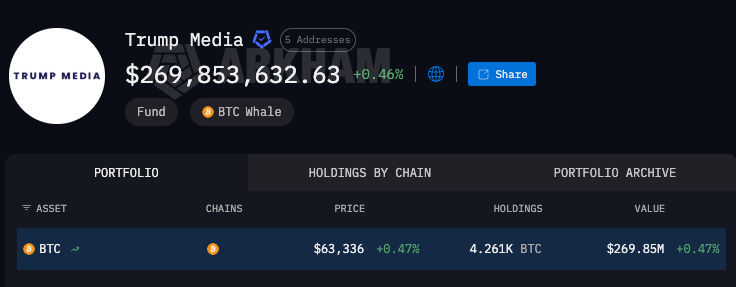
According to Arkham, the company’s remaining Bitcoin holdings stood at 4,261 BTC at publishing time, worth $269.8 million.
Source: Arkham
Arkham’s wallet data showed two recent transfers from Trump Media-linked wallets to Crypto.com, including one transaction of 2,429 BTC and another of 198.9 BTC.
The latest transfers follow two earlier Bitcoin movements to Crypto.com recorded on May 22, when Trump Media-linked wallets transferred a combined 2,650 BTC worth about $205 million.
Trump-linked crypto interests face ethics scrutiny
The Bitcoin sales come as lawmakers debate the CLARITY Act, which has drawn scrutiny over ethics rules, digital asset ownership and potential conflicts of interest involving public officials, including concerns raised by critics about US President Donald Trump’s crypto ventures.
Critics have pointed to Trump-linked crypto ventures, including the Official Trump (TRUMP) and Melania (MELANIA) memecoins, as well as World Liberty Financial’s WLFI governance token and USD1 stablecoin, in discussions over the overlap between political influence and private crypto interests.
Related: Senator Schumer proposes agency to address corruption, including Trump’s crypto ventures
Recent CLARITY Act discussions have focused on tightening ethics provisions, including rules around officials issuing or sponsoring digital assets, but the legislation remains under consideration and does not require companies to sell existing crypto holdings.
Magazine: Here’s why the CLARITY Act’s ethics deal may be so hard to reach

BNB Chain sues ex-employee over $628K memecoin trade

‘Severance’ Meets ‘Fallout’ in Apple TV’s 3-Part Sci-Fi Series

Police failed to arrest vile abuser before he sexually assaulted and murdered new girlfriend’s young daughter


-
 Sports7 days ago
Commonwealth Games boxing: Jadumani Singh seals dominant 5-0 win over Pakistan’s Sumama Rehman to enter quarter-finals | Commonwealth Games News
-

 Business4 days ago
Why Trees Belong on the Risk Register
-

 Fashion2 days ago
Weekend Open Thread: Wit & Wisdom
-

 Tech6 days ago
Intel is reversing course and bringing hyper-threading back to its server chips
-

 Politics2 days ago
Meta enters AI-training agreement with far-right ‘propaganda rag’ Newsmax
-

 Politics6 days ago
Luke Littler dismantles Gerwyn Price to retain title in Blackpool
-

 Crypto World21 hours ago
MicroStrategy Post-Earnings CLARITY Act Push Could Add New Catalyst for Its Stock
-

 Politics5 days ago
The Part of the Electric Transition Nobody Wants to Discuss
-
 Entertainment5 days ago
‘Stargate’ Creator’s New Sci-Fi Series Returns for Season 3 Tomorrow
-

 News Videos7 days ago
BITCOIN JUST ENTERED THIS CRITICAL ZONE…
-

 Business4 days ago
Major shareholder moves on Canyon
-

 Politics7 days ago
Spain sweeps the board at 2026 World Cup with individual awards
-

 News Videos3 days ago
Bitcoin Enters the 3rd Stage of the Bear Market
-

 Crypto World1 day ago
XRP Ledger v3.3.0 brings five institutional features
-

 Crypto World5 days ago
Kraken Enables Retail Access to Jersey Mike’s IPO via Tokenized Shares
-

 Tech5 days ago
New macOS Sequoia & Sonoma security updates for older Macs
-

 News Videos5 days ago
Claude: Build Financial Dashboards in Minutes (2026)
-

 Politics3 days ago
Luke Littler’s dominance sparks GOAT debate
-

 Sports2 days ago
Seema Kaliramna Wins Discus Throw Bronze, Takes India’s CWG Medals Tally To 17
-

 Business5 days ago
Johnson & Johnson agrees to $5.5B settlement over talc cancer claims
You must be logged in to post a comment Login