


Connect with us

Crypto World

Cooper Companies Stock Slammed On Two Surprising Earnings Pockmarks

Published

on

Cooper Companies Stock Slammed On Two Surprising Earnings Pockmarks

Investors hammered Cooper Companies (COO) on Thursday after the medtech’s fiscal third-quarter sales lagged Wall Street’s expectations, leading to a guidance cut. Specifically, the CooperVision segment — which sells contact lenses — missed expectations by 4.5%, William Blair analyst Steven Lichtman said in a report. The miss was due to destocking. Further, the company opted against selling its CooperSurgical business…

Copyright ©2026 Investor’s Business Daily, LLC. All rights reserved. 87990cbe856818d5eddac44c7b1cdeb8

Source link

Continue Reading
Click to comment

You must be logged in to post a comment Login

Leave a Reply

Crypto World

MetaMask Goes Solo as Consumer Platform

Published

on

Editorial illustration of a wallet-shaped vessel splitting into two streams, one flowing toward a household table and the other toward a vault door

Join Our Telegram channel to stay up to date on breaking news coverage

MetaMask will become its own company by the end of 2026, and its owner is betting the wallet built for crypto can grow into a mainstream consumer finance platform.

Consensys Software Inc. announced on September 9 that it will split into two independent companies. The existing company rebrands as MetaMask, focused on the consumer platform, while a newly formed company takes the Consensys name along with the protocols and institutional infrastructure businesses, including Linea, Besu and Teku. Consensys co-founder Joe Lubin serves as chairman and CEO of MetaMask and executive chairman of the new Consensys. Mike Kriak leads the new Consensys as CEO, with David Cunningham as president.

For MetaMask, the split formalises a shift that has been underway for months. The company said in the announcement that the wallet will keep its focus on consumer self-custody while expanding beyond crypto into payments, savings, investing and traditional financial products.

Advertisement

The consumer buildout

The buildout began in 2025, when MetaMask launched its mUSD stablecoin on Ethereum and Linea. It added Bitcoin support in December after adding Solana. In February, eligible users outside the United States gained access to 200 tokenized US stocks, ETFs and commodities through Ondo Global Markets, and the Mastercard-enabled MetaMask Card reached 49 US states that month, expanding a product already live in Europe, Canada, Mexico, Brazil and Argentina.

In June, MetaMask launched Money Account, which lets users earn up to 4% variable APY on eligible mUSD balances and spend the funds through MetaMask Card. The company’s product leadership has framed the direction plainly: senior director of product Johann Bornman said at the time that the company was working toward a “neo-banking experience.”

Lubin said in the announcement that MetaMask has grown into “a platform where people don’t just hold their assets, but manage their money in its many diverse forms and aspects.”

The scale behind the bet is company-reported rather than independently checked: MetaMask says it has more than 100 million downloads across roughly 190 countries and has handled trillions of dollars in cumulative transaction volume.

Advertisement

The separation is expected to complete by the end of 2026. The company did not disclose financial details of the separation, and stayed mum on a possible IPO and token.

Join Our Telegram channel to stay up to date on breaking news coverage

Source link

Advertisement
Continue Reading

Crypto World

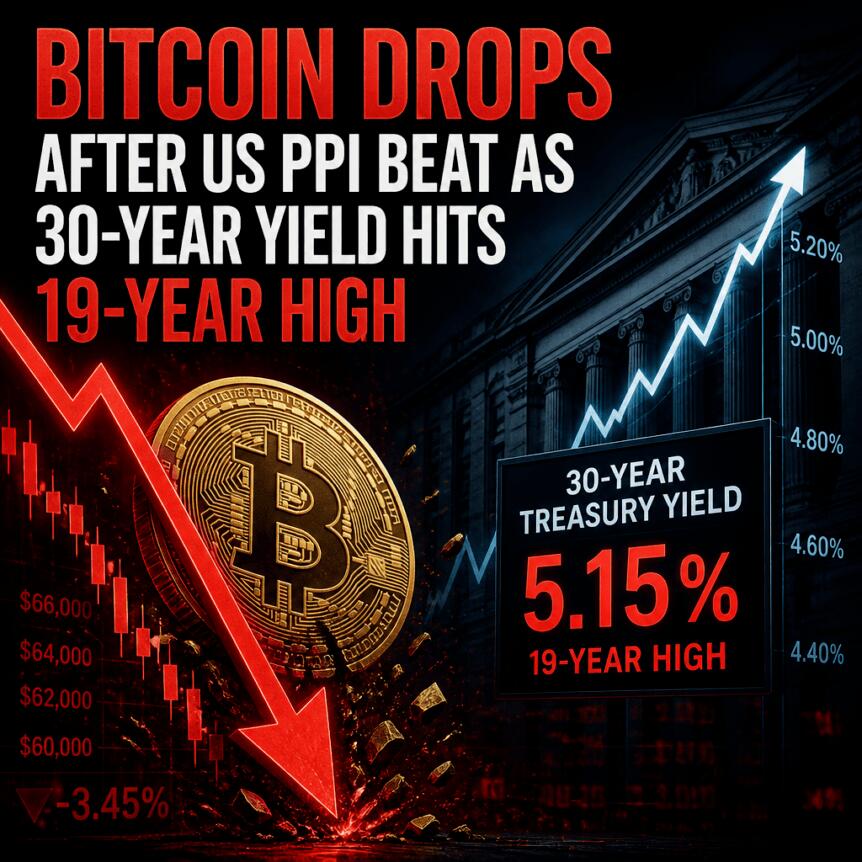
Bitcoin Drops After US PPI Beat as 30-Year Yield Hits 19-Year High

Published

on

Crypto Breaking News

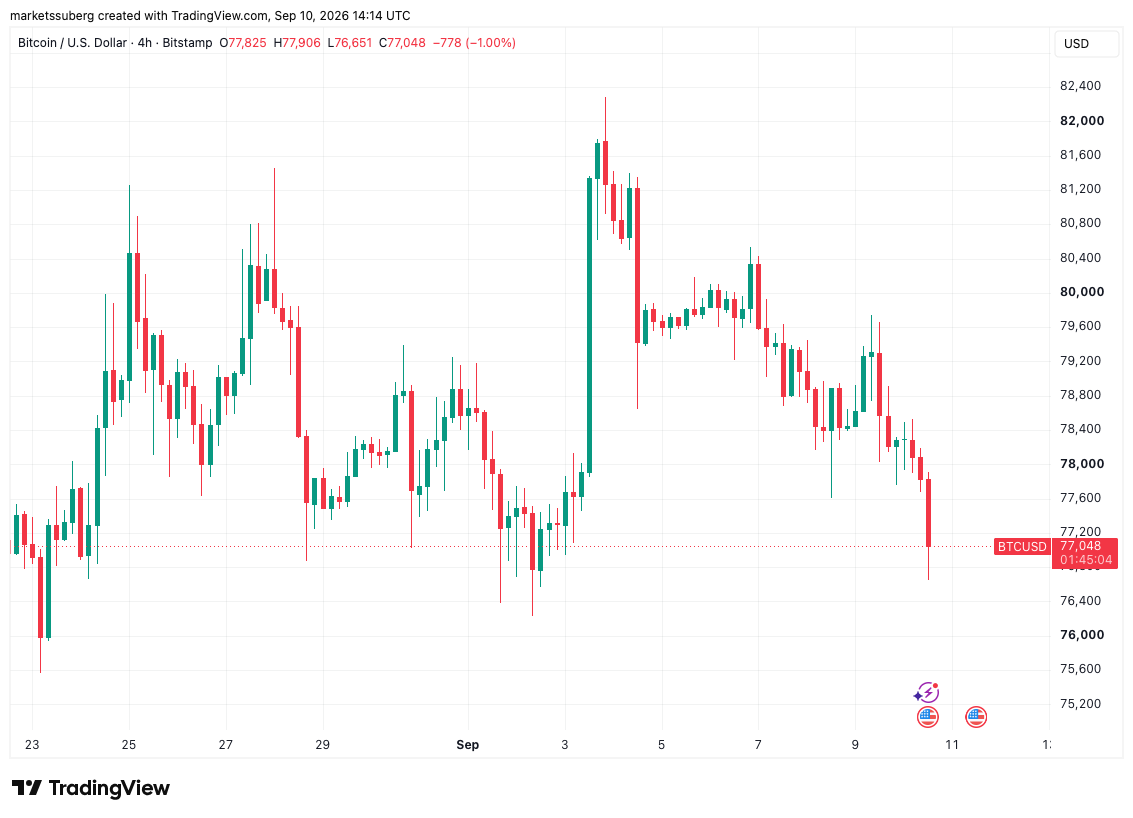
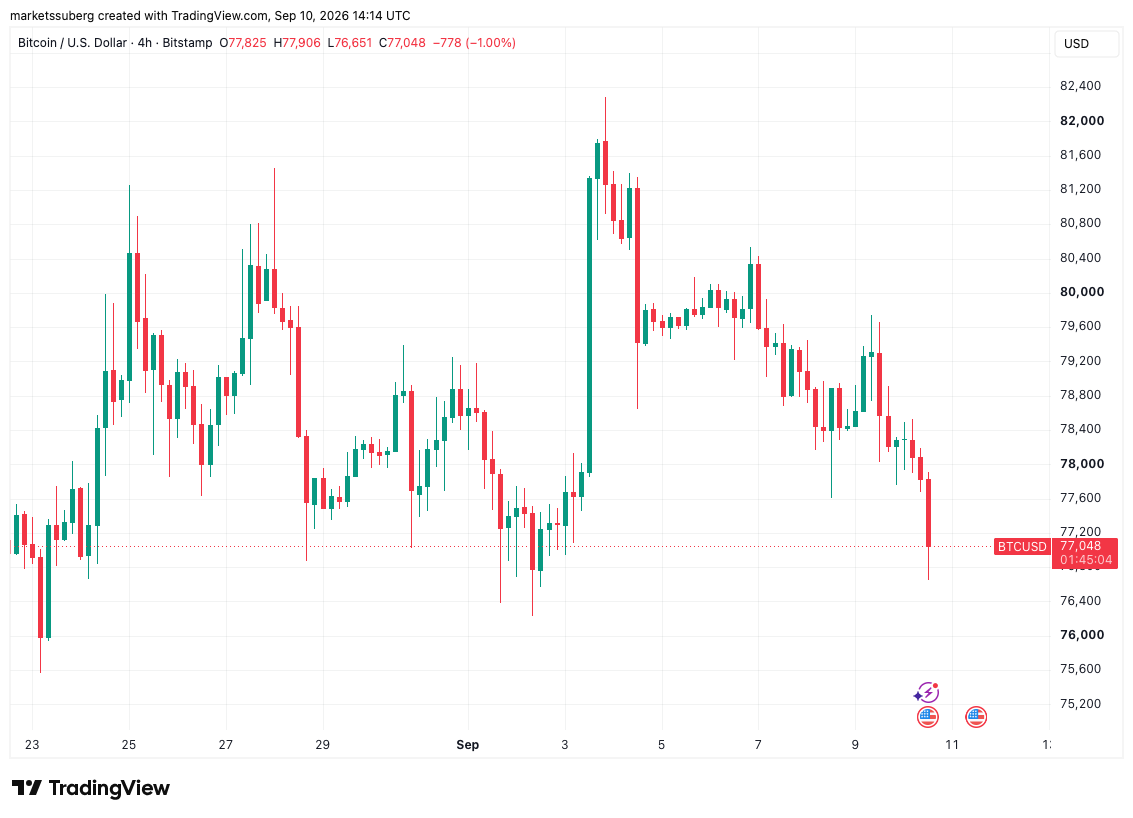
Bitcoin slipped below $77,000 around the start of Thursday’s Wall Street session, dragged down by a sharp reversal in broader risk sentiment. Macro pressure intensified as fresh US inflation data and a surge in oil prices pushed yields higher, tightening the conditions that typically support non-yielding assets like BTC.

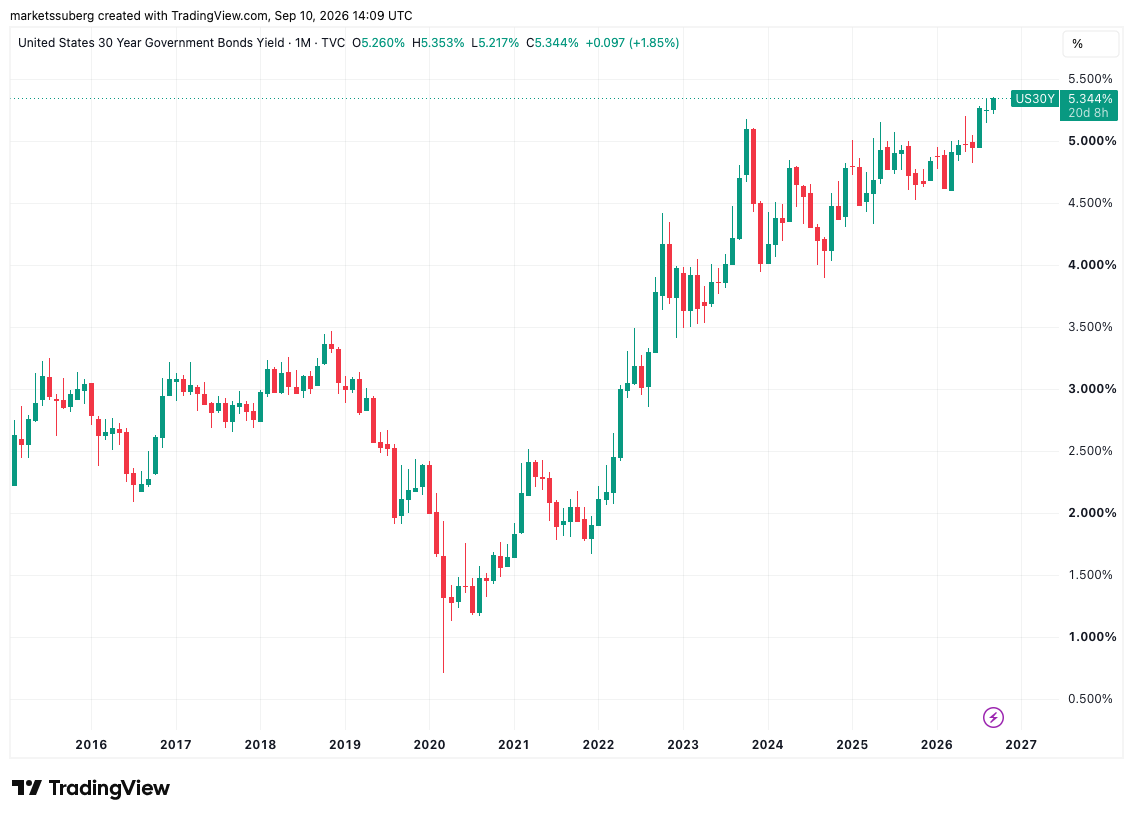
Market pricing also reflected renewed concern over Federal Reserve policy. The US 30-year bond yield climbed to 5.353%, the highest level since June 2007, even after the Treasury repurchased $6 billion in Treasurys as part of stepped-up debt buyback operations.

Key takeaways

  • Bitcoin’s move below $77,000 coincided with risk assets weakening after US PPI printed hotter than expected.
  • August US Producer Price Index rose 5.4% year-on-year, reinforcing expectations of tighter financial conditions.
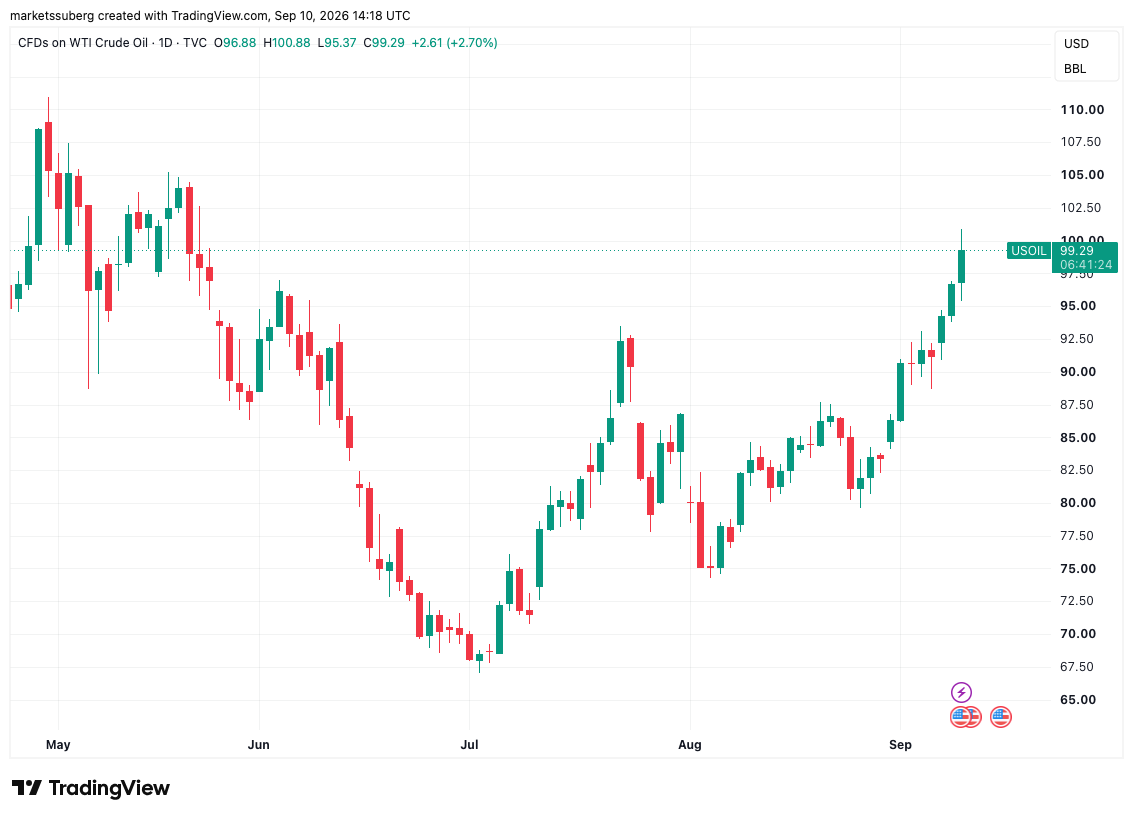
  • WTI crude broke above $100 per barrel for the first time since May 21, lifting inflation sensitivity across markets.
  • Long-dated US yields rose despite a $6 billion Treasury buyback, with the 30-year yield reaching 5.353%.
  • CME Group FedWatch showed the probability of a 0.25% Fed hike at the September 16 meeting increasing to 69.8%.

Hot inflation and oil spill into crypto’s risk trade

According to TradingView, BTC/USD was on track for roughly 2% losses on the day as equities weakened and macro variables tightened. While Bitcoin’s short-term trading is often driven by liquidity and broader risk appetite, Thursday’s catalyst mix was hard to ignore: hotter inflation expectations and renewed energy-driven price pressure.

Earlier in the session, escalation in the Middle East pushed crude higher. WTI crude moved above $100 per barrel for the first time since May 21, while Brent crude topped $105, approaching a 16-week high. Higher energy prices can quickly filter into inflation expectations, which then feed into bond yields and interest-rate forecasts—key inputs for investors rotating between growth and defensive assets.

That link is especially relevant for crypto markets because higher real yields and expectations of firmer central bank policy typically reduce the relative attractiveness of risk assets. With no cash flows or coupon to offset discount-rate moves, Bitcoin often trades as a high-beta proxy for global liquidity conditions.

Advertisement

Yields press higher despite Treasury intervention

The bond market’s momentum was central to the risk-off tone. The US 30-year yield rose to 5.353%, a level last seen in June 2007, while the 10-year yield hit its highest levels since November 2023 at 4.924%. Notably, this came even after the Treasury carried out the first of its stepped-up debt buyback operations, repurchasing $6 billion worth of Treasurys on Wednesday.

The contrast matters: if intervention doesn’t dampen yield pressure, investors can interpret that as a sign that underlying demand for long-duration risk is weakening—or that inflation and rate expectations are dominating the narrative. In other words, the “help” from buybacks was outweighed by macro forces.

Trading-focused commentary echoed the idea that markets were fighting the Treasury. The Kobeissi Letter, commenting on X, warned that “the bond market is quite literally fighting the US Treasury.”

PPI reinforces Fed hike odds as markets look to CPI

US inflation data added another layer of pressure. The August Producer Price Index came in at 5.4% year-on-year, exceeding expectations by 0.1 percentage points. The Bureau of Labor Statistics said July’s headline PPI print was also revised higher.

Advertisement

In the BLS release, the agency highlighted that the index for final demand less foods, energy, and trade services rose 0.3% in August after moving up 0.4% in July. Over the 12 months ending in August, prices for that measure advanced 4.7%, according to the same official news release from the US Bureau of Labor Statistics: https://www.bls.gov/news.release/ppi.nr0.htm.

Markets responded quickly. CME Group’s FedWatch Tool showed expectations for a 0.25% rate hike at the Fed’s Sept. 16 meeting rising to 69.8% at the time of writing, up from 61.2% the previous day. That shift underscores how sensitive risk assets can be when inflation prints keep pushing the central bank path toward additional tightening.

Earlier coverage from Cointelegraph had already pointed to rising concerns over Fed policy after stronger-than-expected nonfarm payrolls data sent Bitcoin back below $80,000. Thursday’s PPI adds to that same tightening narrative rather than easing it.

What to watch into the next inflation report and central bank moves

Friday is set to bring another major US inflation release: the Consumer Price Index (CPI). As Cointelegraph noted in earlier coverage, CPI is expected to be the last major inflation print before the Fed rate decision. For Bitcoin traders and investors, that matters because CPI can either validate the market’s “higher-for-longer” fears or introduce enough cooling to shift expectations back toward easing.

Advertisement

Meanwhile, policy tightening is not limited to the US. On Thursday, the European Central Bank approved a 0.25% rate hike, its second such move in 2026. While the ECB’s rate actions don’t directly determine US Fed policy, additional tightening outside the US can reinforce a global “less liquidity” backdrop, which generally weighs on high-duration, risk-sensitive markets.

Bitcoin’s drop below $77,000 therefore looks less like a single-coin story and more like the outcome of a broader macro re-pricing: oil-driven inflation concerns, accelerating bond yields, and a Fed path that investors are increasingly pricing as restrictive.

Going forward, the key uncertainty for crypto is whether the next CPI reading cools the inflation picture enough to stabilize yields—or whether oil and producer-price momentum keep expectations for Fed hikes elevated. Until that becomes clearer, BTC is likely to remain highly responsive to macro headlines rather than crypto-specific catalysts.

Risk & affiliate notice: Crypto assets are volatile and capital is at risk. This article may contain affiliate links. Read full disclosure

Advertisement

Source link

Continue Reading

Crypto World

Thousands of Food-Packaging Chemicals Lack Safety Data

Published

on

Thousands of Food-Packaging Chemicals Lack Safety Data

We don’t often look with suspicion at the plastic wrapping a block of cheddar, the waxed carton containing milk, or the plastic bottle of ketchup. We expect food packaging to be more or less inert—breakfast isn’t supposed to come with a side of chemicals, after all. 

But evidence suggests that many food-contact materials, as food packaging is known, leach chemicals into the products they house. The most famous of these is likely bisphenol A (BPA), an ingredient in plastic that is a potent endocrine disrupter. In 2025, the E.U. banned BPA’s use in food-contact materials, and in the U.S. it’s banned in baby bottles, sippy cups, and formula packaging.

But when one chemical is demonized, its replacement may not be any safer, says Helene Weisinger, a chemist at the Swiss nonprofit Food Packaging Forum. (BPA, for instance, is often replaced with BPS, which turns out to have similar issues.) It’s “chemical whack-a-mole,” Weisinger says. 

In a recent paper in Environmental Science and Technology, she and her colleagues propose a new system for avoiding this situation, in which chemically similar substances are grouped together and may be banned or regulated together, rather than one by one—an idea that could simplify what’s proving to be a difficult process. 

Advertisement

A lack of safety information about food packaging

The chemicals we encounter in daily life aren’t well understood. “There’s 350,000 chemicals that are put on global markets, and for a lot of those, we have relatively little information about their toxicity. They’ve not been exhaustively tested,” says Olwenn Martin, an associate professor in health and environment at University College London who was not involved in the new research. “That’s something that, in my world, is well known, and probably for the general public would come as a bit of a shock.”   

Chemicals used in food packaging are little different; the health effects of relatively few are well-understood. Out of about 15,000 chemicals used in food-contact materials, 1,222 have known major health risks, the researchers state in the new paper, while there is little information on most of the others. “People kept asking us, ‘We can’t do measurements for 15,000 chemicals. What should we really be concerned about?’ And that is kind of how we started off with the study,” says Weisinger.

The team sorted known food-contact chemicals into structurally related groups, identifying 38 groups where many of the members had clear health risks. Each group contained numerous compounds whose health effects are still a question mark, which the researchers point out should be addressed in future studies. But even in the absence of further toxicological work, says Martin, this information could be used to regulate similar chemicals en masse, helping to avoid chemical whack-a-mole.

Advertisement

“The backlog is such that it would take hundreds, if not thousands, of years to test all of these chemicals at current rates, and even regulatory bodies are looking at different ways of doing this,” she says. “One of the ways is by grouping chemicals: looking at chemicals that are fairly similar—structurally or through other means—to be able to make assumptions about chemicals in this group and regulate them as a group.” 

Regulating chemicals can make a big difference in reducing people’s exposure, if done correctly, says Martin Wagner, a biologist at the Norwegian University of Science and Technology who studies the health effects of plastics and who was not involved in the new research. As a result of stricter rules in Europe against BPA and other dangerous substances, “we’re seeing in European populations that levels of exposure to phthalates and to regulated bisphenols, BPA and so on, are dropping, which is a good thing, “ he says. “But at the same time, we see that the level of exposure in Europeans to all these alternative chemicals is increasing.” Banning entire groups of chemicals might stop this kind of unfortunate substitution.

The push to put safety first

Even if governments grouped chemicals to lighten the regulatory load, there are still many substances to be assessed—some of them that even the people making the materials may not know about. “The problem with food-contact materials and with plastics is that these are really incredibly complex materials, and our research in the lab is showing they contain a lot of unknown chemicals,” says Wagner. 

Advertisement

Plastics manufacturing, for instance, involves chemical steps that are known to generate other products, and contaminants are not uncommon in the materials used to make food-contact materials. “We call them non-intentionally added substances,” says Wagner. “We have no way of making sure that all these compounds are safe. Yet we know that these are leaching into food, into water. So people are very likely to be exposed to that complex mixture of compounds with very little oversight.”


Source link

Continue Reading

Crypto World

What Will Happen to Bitcoin (BTC) if Trump Distributes $5,000 to Each American: 3 AIs Speculate

Published

on

US President Donald Trump proposed a $5,000 “dividend” payment to every adult American citizen if Republicans keep control of Congress after the midterm elections.

The country has around 245 million citizens aged 18 and above, making the program’s estimated cost a whopping $1.2 trillion. The idea sparked major controversy, with some X users claiming part of that sum could flow into the cryptocurrency market and potentially create a major altseason. It is also worth watching how this stimulus package could affect Bitcoin (BTC). Here’s what three of the most popular AI-powered chatbots said on the matter.

You can also check our dedicated video on the matter and much more.

Rise Sharply at First and Then?

According to ChatGPT, if Trump actually gives $5K to each adult American, BTC would probably experience a strong initial pump. OpenAI’s platform does not expect people to spend most of the stimulus to gain exposure to the primary cryptocurrency, but it noted that even if they distribute a small amount of that sum, they could still move the price up.

Advertisement

The chatbot also claimed the announcement alone could trigger huge speculation, as traders would probably “front-run the payments” by buying Bitcoin, altcoins, technology stocks, and other risk assets before the money reached bank accounts.

“BTC could therefore rally well before the actual distribution,” it predicted.

ChatGPT assumed that the real danger would come after the initial enthusiasm. If the program were financed through additional government borrowing and introduced while the economy is still struggling, it could lead to higher inflation and amendments to the Fed’s monetary policy.

“This creates two opposing forces for Bitcoin. Inflation and currency debasement strengthen its “digital gold” narrative, but higher yields and tighter monetary policy generally hurt speculative assets. Bitcoin might therefore surge initially, then experience a sharp correction if the bond market or Fed pushed back,” ChatGPT concluded.

Perplexity stated that such a decision would be “mildly bullish” for BTC in the short term but not “a standalone bull market trigger.” Like ChatGPT, it said the long-term effect would largely depend on the Federal Reserve’s actions and the overall condition of the American economy.

Like Last Time?

Google’s Gemini made an interesting comparison between Trump’s idea and the stimulus packages distributed to Americans during the COVID-19 pandemic. In 2020-2021, locals received several rounds of benefits to help them cover basic needs after the spread of the disease caused lockdowns and major unemployment.

Advertisement

The chatbot noted that back then, some people used part of the distributed cash to purchase BTC, which eventually triggered a bull run. Recall that the leading digital asset collapsed below $5,000 in March 2020, while approximately a year and a half later it skyrocketed to a new record of almost $70,000.

“A $5,000 payout per American would total $1.2 trillion – exceeding all three COVID checks combined. If passed, it would likely trigger an even more substantial rally for BTC than the one from 2021,” Gemini predicted.

The post What Will Happen to Bitcoin (BTC) if Trump Distributes $5,000 to Each American: 3 AIs Speculate appeared first on CryptoPotato.

Source link

Advertisement
Continue Reading

Crypto World

MoneyGram unveils stablecoin-backed card as digital dollars move into everyday spending

Published

on

MoneyGram's CEO says blockchain works best when customers don't know it's there


The remittance giant is rolling out a Visa card that lets customers hold dollars and spend from a stablecoin-backed balance.

Source link

Continue Reading

Crypto World

Bitcoin Slips Under $77,000 as High US PPI, Oil Drive Risk Assets Lower

Published

on

Bitcoin Slips Under $77,000 as High US PPI, Oil Drive Risk Assets Lower

Bitcoin (BTC) dipped below $77,000 around Thursday’s Wall Street open as risk assets faced resurgent macro headwinds.

Key points:

  • Bitcoin saw downside on the back of higher-than-expected US PPI inflation data, which hit 5.4% in August.
  • Middle East strikes sent WTI crude oil over $100 per barrel for the first time since May.
  • The US 30-year bond yield shrugged off a $6 billion buyback operation to hit its highest level since June 2007.

US bond yields surge despite $6 billion intervention

Data from TradingView showed BTC/USD on track for 2% losses on the day, following weakness in US equities.

BTC/USD one-hour chart. Source: Cointelegraph/TradingView

Ongoing escalation in the Middle East fueled a fresh surge in oil prices, with WTI crude passing $100 per barrel for the first time since May 21. Brent crude passed $105 per barrel on the day, nearing a new 16-week high.

Advertisement

CFDs on WTI crude oil one-day chart. Source: Cointelegraph/TradingView

Against a backdrop of increasing inflation due to higher oil prices, markets also faced a fresh breakout in long-dated US bond yields. These came despite the Treasury executing the first of its stepped-up debt buyback operations and repurchasing $6 billion worth of Treasurys on Wednesday. 

The US 30-year yield reached 5.353% on the day, a level last seen in June 2007, while the 10-year yield hit its highest levels since November 2023 at 4.924%.

US 30-year bond yield one-month chart. Source: Cointelegraph/TradingView

Advertisement

Commenting, trading resource The Kobeissi Letter warned of knock-on effects from high borrowing costs for both government and consumers.

“The bond market is quite literally fighting the US Treasury,” it wrote in a reaction on X.

Hot US PPI data adds to crypto’s macro headache

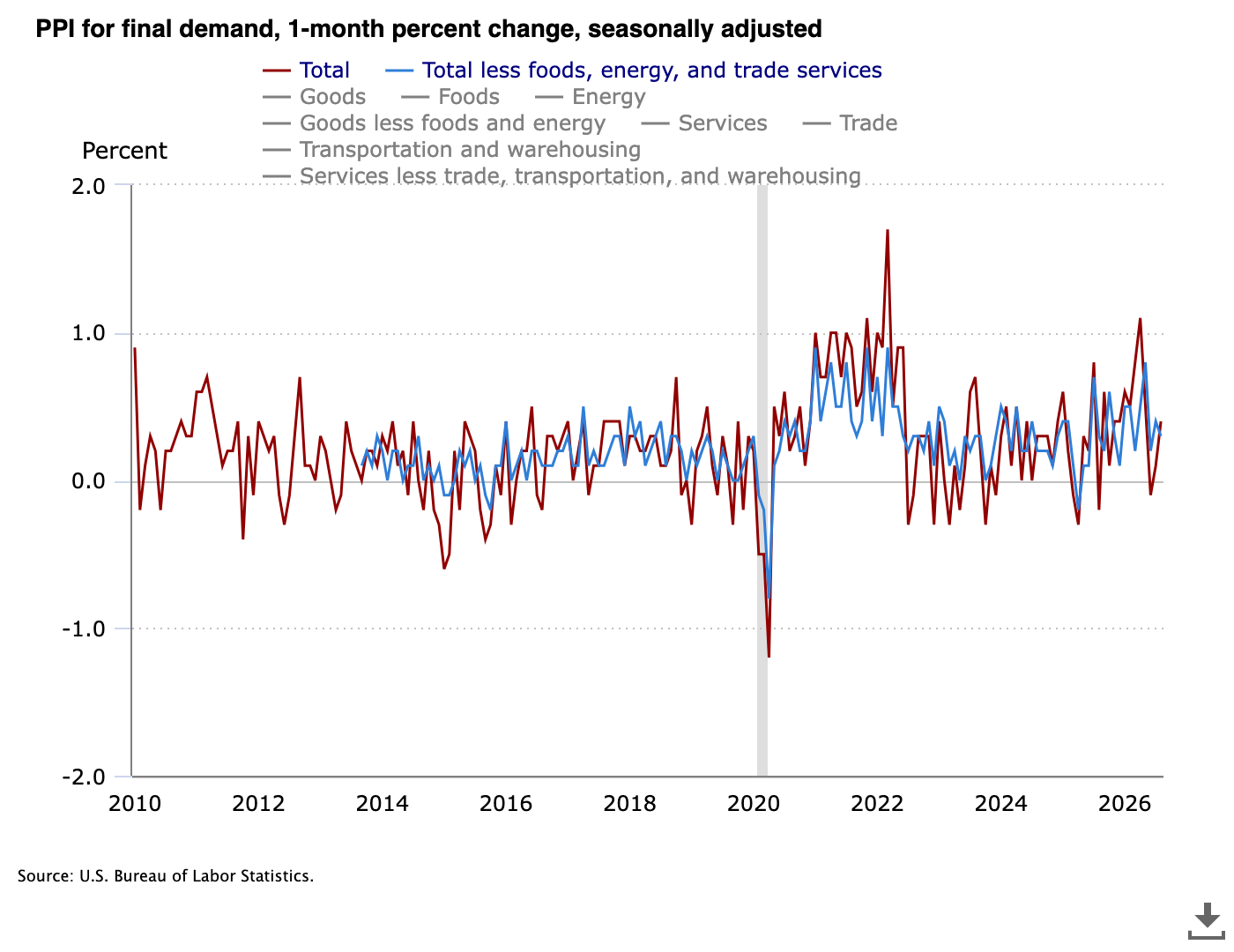
The August print of the Producer Price Index (PPI) underscored increased inflation, coming in at 5.4% year-on-year, 0.1% higher than expected. July’s headline PPI print was likewise revised higher.

Related: Bitcoin sell-side risk returns to rare lows as $80K sellers fade from view

Advertisement

“The index for final demand less foods, energy, and trade services rose 0.3 percent in August after moving up 0.4 percent in July. For the 12 months ended in August, prices for final demand less foods, energy, and trade services advanced 4.7 percent,” an official news release from the US Bureau of Labor Statistics (BLS) stated.

US PPI one-month % change. Source: BLS

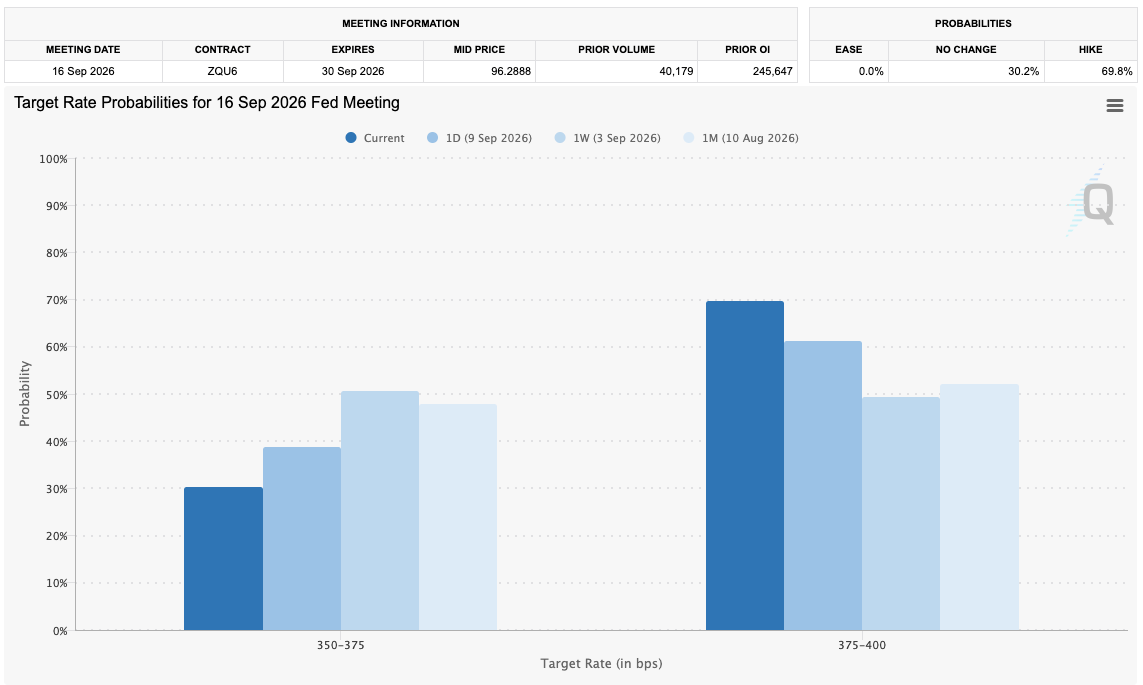
Market expectations of interest-rate hikes from the Federal Reserve jumped on the data. CME Group’s FedWatch Tool showed the odds of a 0.25% hike at the Fed’s Sept. 16 meeting at 69.8% at the time of writing versus 61.2% the day prior.

Fed target-rate probability comparison for September FOMC meeting (screenshot). Source: CME Group

Advertisement

As Cointelegraph reported, concerns over Fed policy tightening had already increased on the back of stronger nonfarm payrolls data. Friday will see the release of another key US inflation report, the Consumer Price Index (CPI), which will form the last major inflation print before the Fed rate decision.

On Thursday, the European Central Bank enacted its own 0.25% hike, the second such move in 2026.

Source link

Advertisement
Continue Reading

Crypto World

Bitcoin Bancorp snaps up thousands of defunct Bitcoin Depot ATMs for $620,000

Published

on

Bitcoin Bancorp snaps up thousands of defunct Bitcoin Depot ATMs for $620,000


Just over a quarter of Bitcoin Depot’s more than 9,200 kiosks have been sold for less than $1 million, court records show.

Source link

Continue Reading

Crypto World

Gold ETFs Just Had Their Second-Biggest Month Ever With $18 Billion Inflow

Published

on

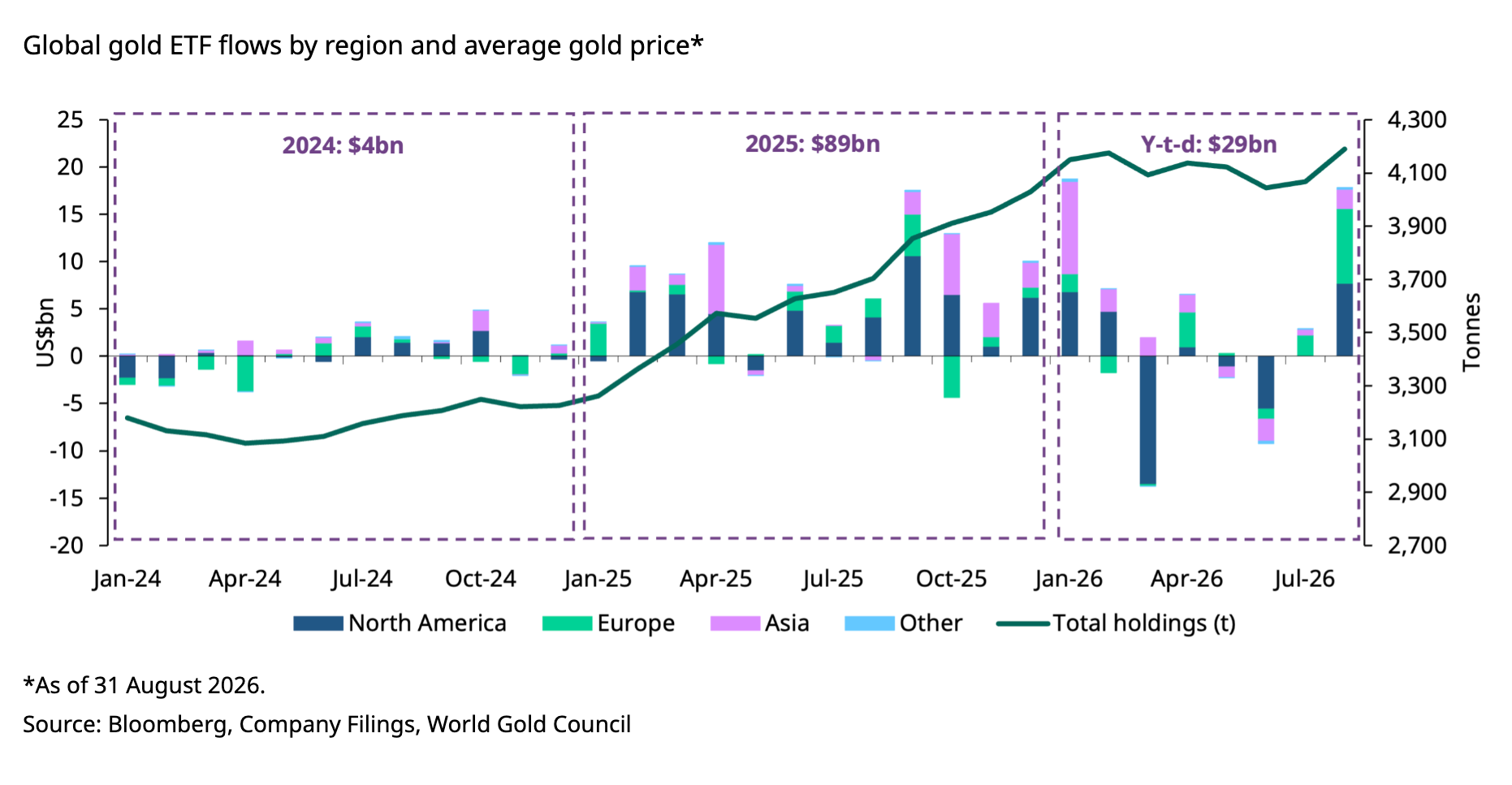
Gold ETF Flows Over The Years.

Global gold exchange-traded funds (ETFs) pulled in $18 billion in August, the second-largest monthly inflow on record, lifting collective holdings to an all-time high of 4,189 tonnes.

The World Gold Council published the figures this week. Total assets under management (AUM) rose 16% month over month to $615 billion, helped by a higher gold price.

Western Buyers Return to Gold in Force

European funds drove the month with $7.9 billion of buying, their strongest on record, according to Council data. The UK supplied $4.4 billion of that total, its second-largest month ever. France added $1.5 billion, a national record.

North American funds attracted $7.7 billion. This marked their third-largest monthly haul. Demand stayed muted early on before accelerating during the week of August 17, when funds absorbed roughly $4 billion in five trading days. This came around the same time as the Treasury expanded its debt buyback.

Advertisement

That burst mattered for the annual picture. It offset the region’s record $13 billion outflow in March and pushed North American flows back into positive territory for the year.

Asian funds added $2 billion, their best month since February. China again led the region, where stabilising local prices drew investors back. The country’s central bank has extended its own buying streak.

Global ETF flows had already turned higher in July. Year to date, global inflows total $29 billion, or 160 tonnes.

Gold ETF Flows Over The Years.
Gold ETF Flows Over The Years. Source: World Gold Council

The Council tied the surge in inflows to three likely drivers. It cited US intervention to support the yen on July 31, the Treasury’s August 19 buyback move, and price momentum after gold cleared key technical levels.

Follow us on X to get the latest news as it happens

Advertisement

Traders Pile Back Into the Metal

Activity across the wider gold market rebounded. Average daily trading volumes climbed 21% month over month to $430 billion, with gains in every major segment.

Gold ETF trading volumes jumped 83% to $8.7 billion per day. North American-listed funds accounted for more than 73% of that activity.

Positioning followed. COMEX net long positions rose 39%, or 212 tonnes, to 753 tonnes. Managed money added 96 tonnes, taking its net longs to 470 tonnes.

Now, September data will show whether Western buyers keep adding at August’s pace.

Advertisement

Subscribe to our YouTube channel to watch leaders and journalists provide expert insights

The post Gold ETFs Just Had Their Second-Biggest Month Ever With $18 Billion Inflow appeared first on BeInCrypto.

Source link

Advertisement
Continue Reading

Crypto World

Crypto for Advisors: Hyperliquid and the future of finance

Published

on

Crypto for Advisors: Hyperliquid and the future of finance


Crypto for Advisors: Hyperliquid and the future of finance

Source link

Continue Reading

Crypto World

Gold and Crypto Fall as Hot US Inflation Rattles Markets

Published

on

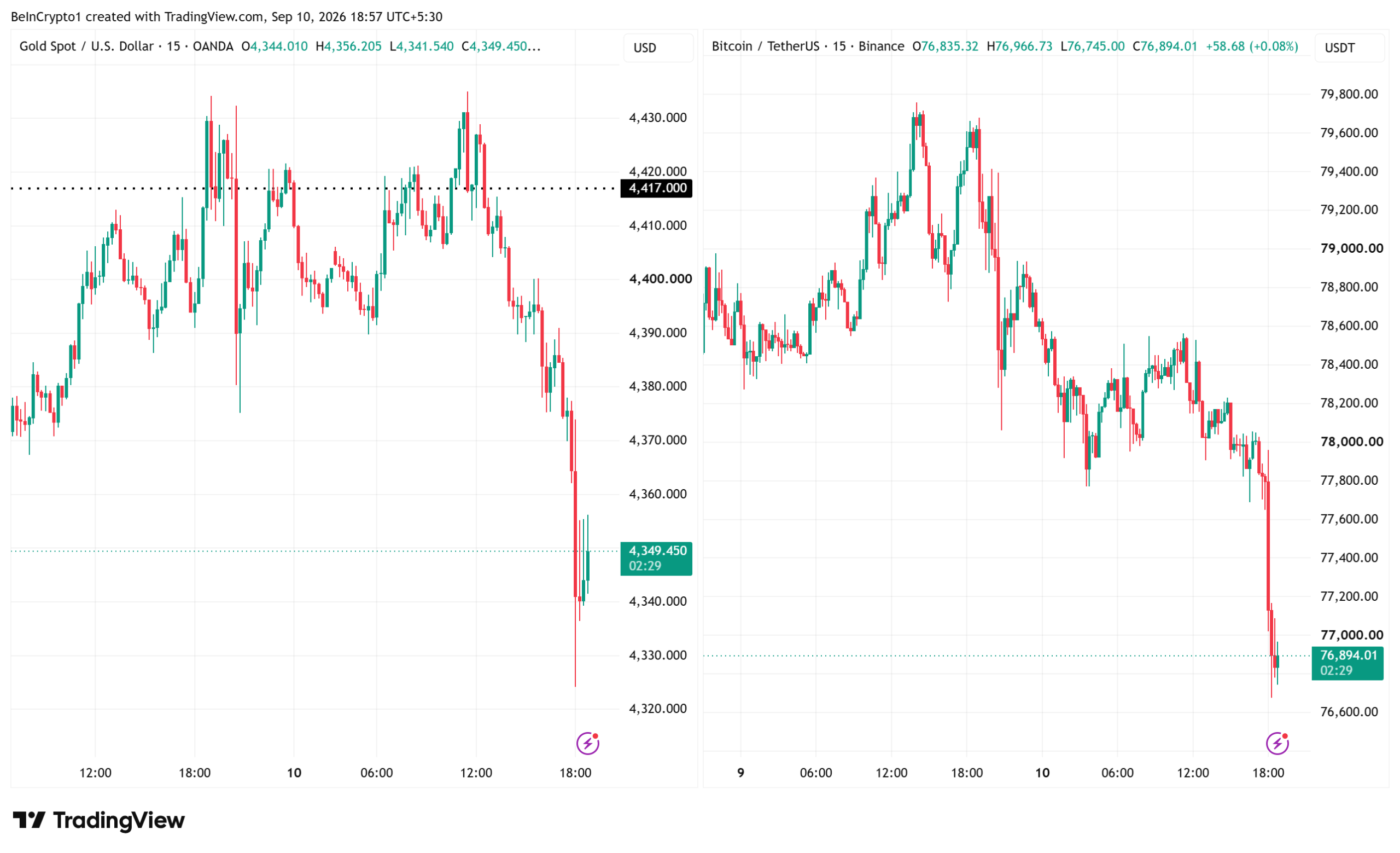
Bitcoin and Gold (XAU/USD) Price Performance. Source: TradingView

Another hot US inflation report arrived on Thursday, September 10, and all financial markets took a hit, including Gold, Bitcoin, and the S&P 500.

It seems like even traditional safe-haven assets like gold are not acting as an inflation hedge. The bond market recently delivered a reminder that inflation hedges can struggle when rising prices also mean higher interest rates.

Gold’s Inflation Trade Breaks

US producer prices rose 0.4% in August, matching forecasts. The annual rate reached 5.4%, slightly above the 5.3% expected.

Gold is supposed to benefit when inflation erodes the value of cash. Instead, spot XAU/USD fell more than 1%, dropping toward $4,350 after trading above $4,400.

For forex traders, that move hurts. A standard gold lot represents 100 ounces. A $100 drop means roughly $10,000 in losses on a one-lot long position, excluding trading costs.

The real damage came from bonds. The 10-year Treasury yield pushed above 4.9%, its highest since October 2023. The 30-year reached roughly 5.35%.

Higher yields make cash and government debt more attractive. Gold pays no yield. Bitcoin pays no yield either.

Advertisement
Bitcoin and Gold (XAU/USD) Price Performance. Source: TradingView

CME FedWatch pricing moved toward a 70% chance of a September rate hike after the data, up from roughly 62%.

Why Hot Inflation Hurt Gold

The detail inside the report mattered. The Bureau of Labor Statistics said: “Prices for final demand goods advanced 1.1 percent, and the index for final demand services increased 0.1 percent.”

More than three-quarters of the goods increase came from energy. That made the report look more like an energy shock than a broad inflationary surge.

The dollar also strengthened as rate-hike bets rose, adding another headwind for dollar-priced gold.

Advertisement

BeInCrypto had warned earlier this week that Treasury yields near 5% could start competing directly with Bitcoin and gold for institutional capital.

The next test comes Friday with US CPI (Consumer Price Index). Another hot reading would put more pressure on the Fed to hike — and test how far “inflation hedges” can fall when inflation itself becomes the problem.

September Rate Hike Probabilities
September Rate Hike Probabilities. Source: CME FedWatch Tool

The post Gold and Crypto Fall as Hot US Inflation Rattles Markets appeared first on BeInCrypto.

Source link

Advertisement
Continue Reading

Trending

Copyright © 2025