
Crypto World
Copper Hits Highest Close in History as Debasement Trade Lifts Metals and Crypto Alike

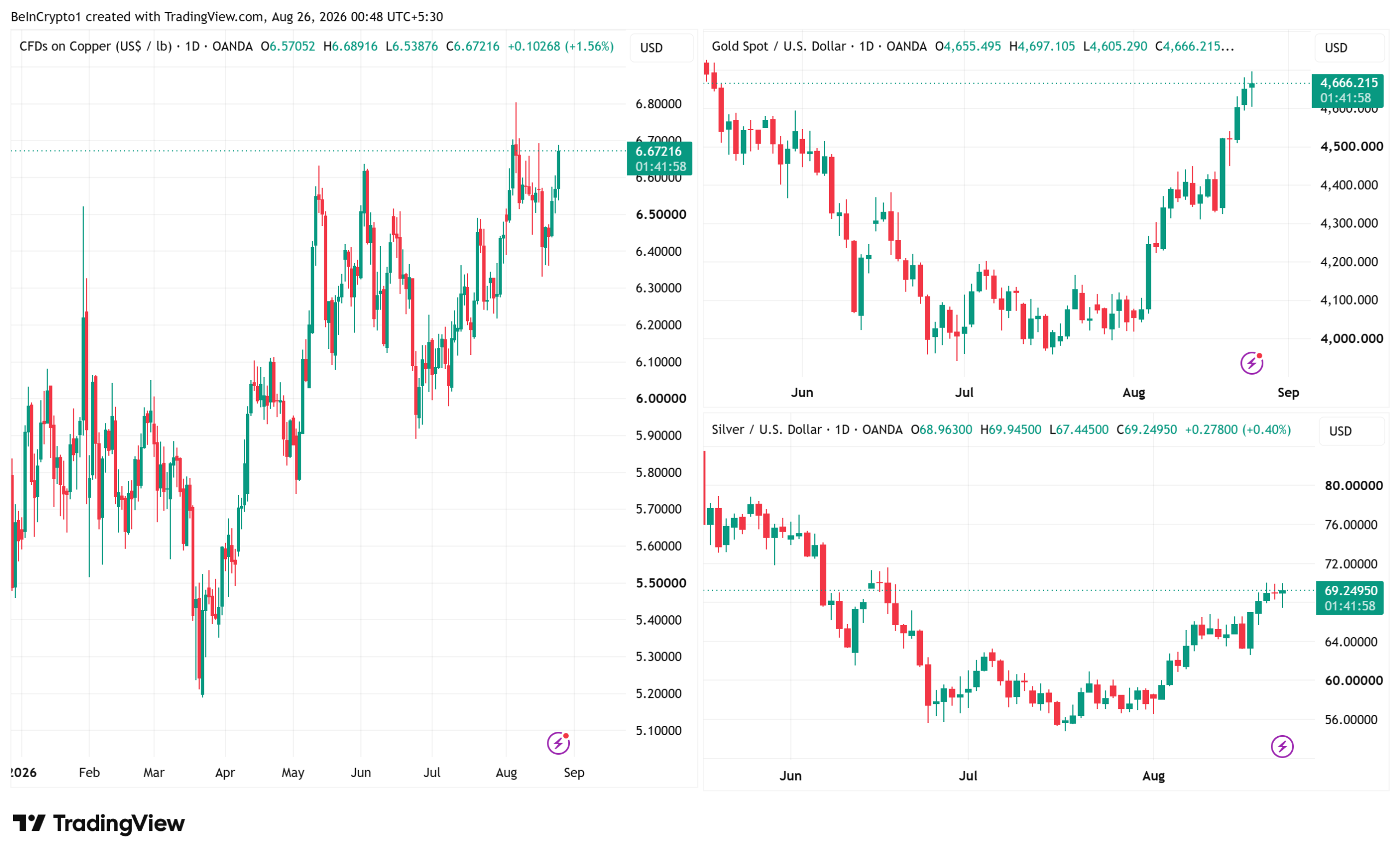
Copper futures settled at $6.71 per pound on Comex on Tuesday, the highest closing price in the metal’s history. The debasement trade is lifting metals and crypto together.
The trade describes investors rotating into scarce assets on bets that US debt management will erode the dollar. Gold, silver, and Bitcoin (BTC) are all climbing on the same fear.

Treasury Buybacks Revive the Debasement Trade
September copper futures ended the day at $6.71, up roughly 1.6%, according to Trading Economics. Market data firm Barchart had flagged the contract as on course for its strongest closing price in history during the session.
Supply strain explains part of the move, with reports indicating that London Metal Exchange stockpiles fell 14% since late July to 214,550 tonnes. Chile also trimmed its output forecast for a second straight quarter, and an outage at Indonesia’s giant Gresik smelter tightened the market further.
Those shortages powered copper’s record-breaking run earlier in August. The monetary backdrop has since taken over as the main driver.
The US Treasury last week doubled its maximum bond buyback size to at least $4 billion from $2 billion. Critics read the expanded buyback program as stealth easing that shifts pressure onto the currency.
The dollar index sits near three-month lows after its third losing week in four. Gold, meanwhile, traded around $4,666 an ounce and is tracking its best month since 1999. The metal has risen for five straight weeks, gaining more than 5% last week alone, while silver held near $69.
Deutsche Bank analyst Michael Hsueh sees room for a push to $4,800, which would extend gold’s three-month high.
“The government’s financial condition is at an inflection point,” Bridgewater Associates founder Ray Dalio indicated.
Follow us on X to get the latest news as it happens
Bitcoin Rides the Same Wave Toward $80,000
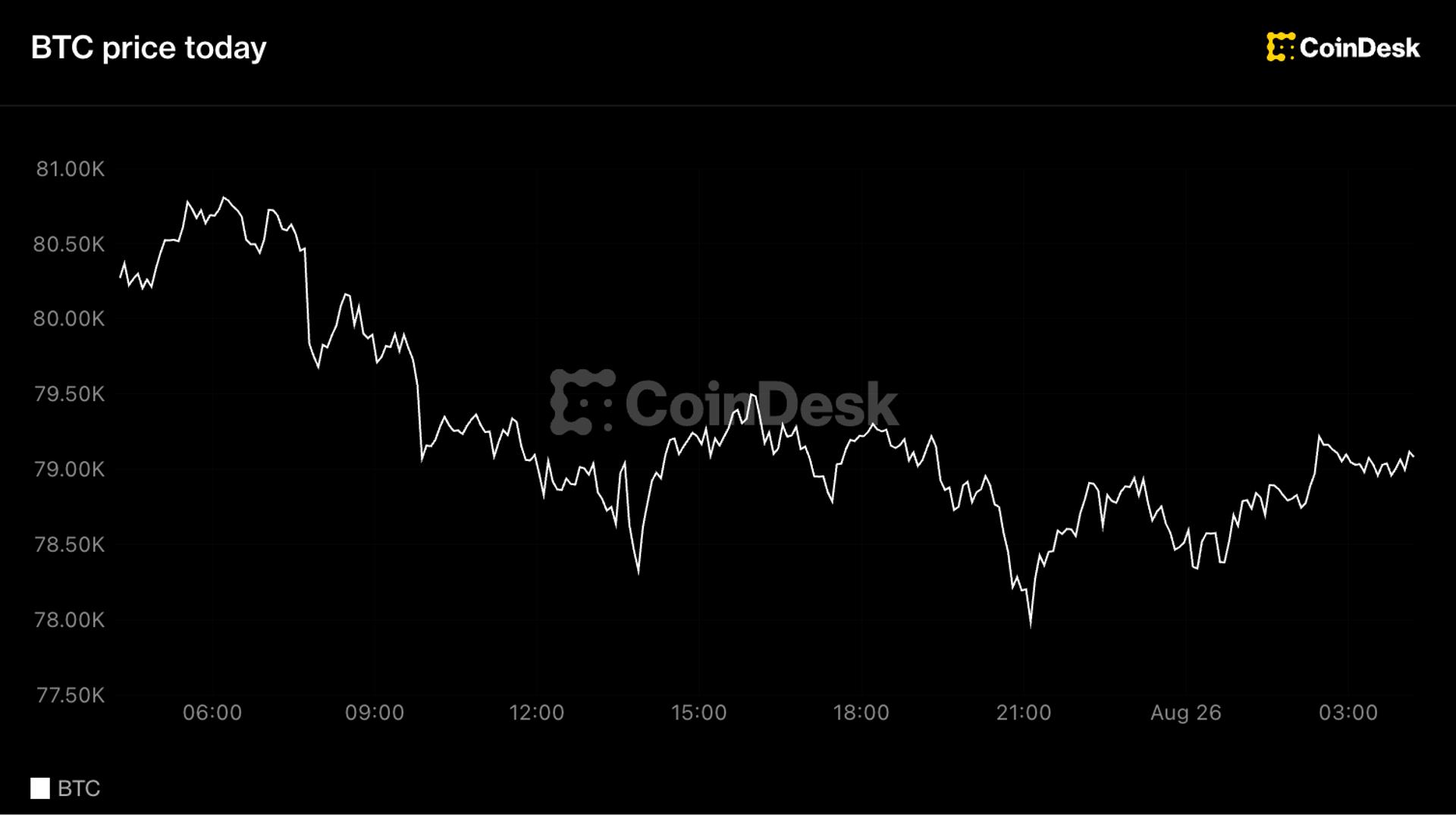
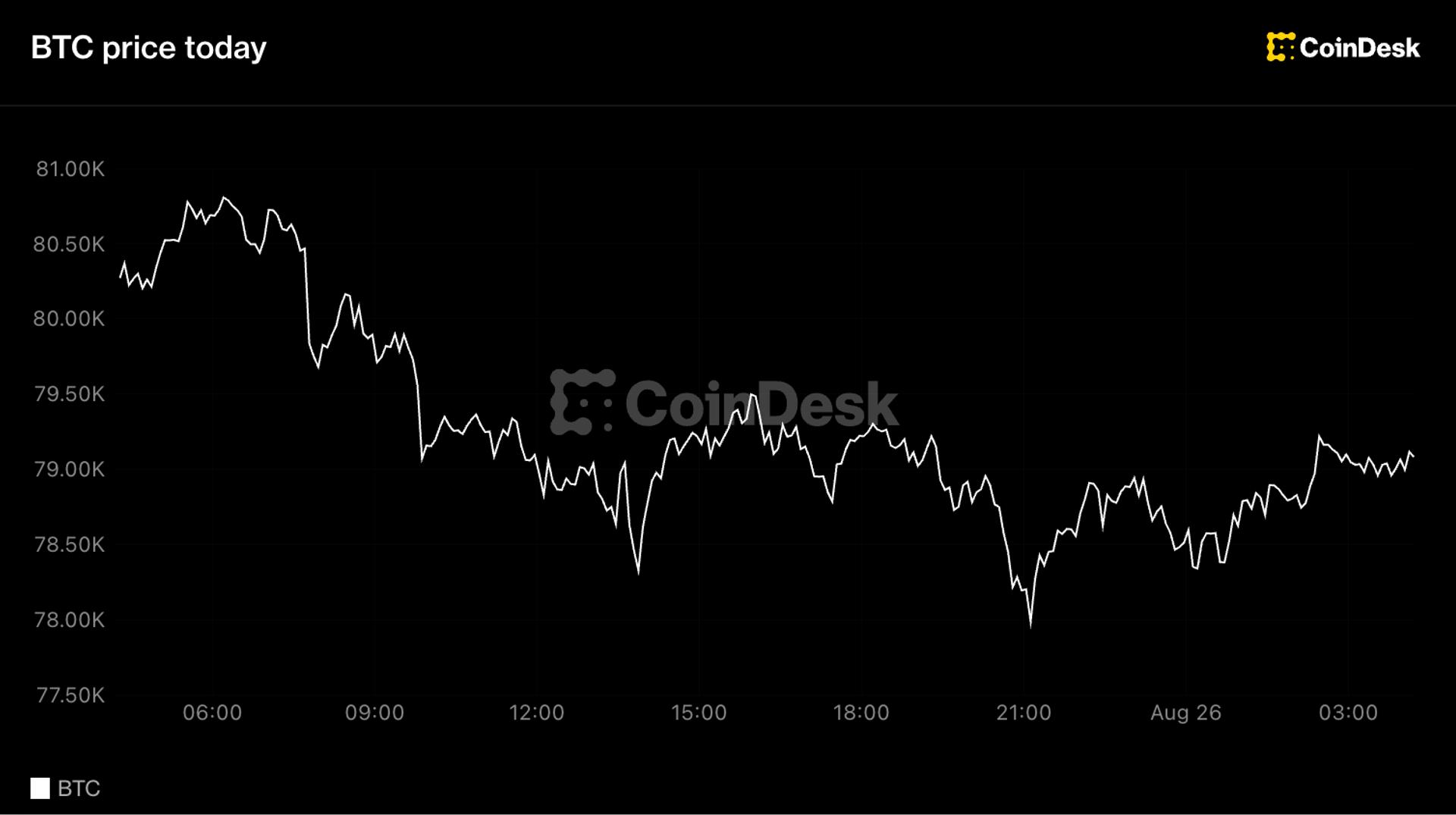
Bitcoin has moved in lockstep with the metals. BTC trades near $78,900, up about 0.23% in 24 hours, according to BeInCrypto Markets data.

The largest cryptocurrency briefly topped $81,000 earlier on Tuesday, its strongest level since May. Its 22% jump last week ranked as its sharpest three-day rally in years.
The Treasury announcement also caught bearish traders off guard. CoinGlass data showed more than $4 billion in short positions liquidated during the breakout.
Stephen Coltman, head of macro at asset manager 21Shares, told CNBC the buyback mattered more for its message than its size.
“The [signaling] effect was very powerful.”
Therefore, one policy decision now anchors three separate rallies. Copper adds a supply squeeze, gold adds central bank credibility fears, and Bitcoin adds a short squeeze on top.
Whether the run continues may depend on the dollar’s next move. Traders will watch upcoming Treasury buyback operations for any sign the pressure on the currency deepens or fades.
The post Copper Hits Highest Close in History as Debasement Trade Lifts Metals and Crypto Alike appeared first on BeInCrypto.

TIME, in partnership with Statista, the leading global provider of market and consumer data and rankings, has published the second annual “Best Employers” ranking. Employers can help shape the workforce in a country. However, employee workplace satisfaction not only impacts company culture, but can influence productivity, innovation, profitability, and industry reputation. Here’s how the winners were selected.
Methodology
The research project “Best Employers of 2026” was based on surveys conducted using several online access panels to guarantee a representative sample of employees across each country, starting with Brazil, India, and Australia. In Australia, 200,000 employer evaluations were conducted for companies from all sectors employing at least 200 people in the country. In India, 760,000 employer evaluations were conducted from companies employing at least 500 people in the country. In Brazil, more than 900,000 employer evaluations were conducted from companies employing at least 500 people in the country. Participants were asked, through an open-ended question with an auto-complete function, to name their current employer. This method ensures neutrality and prevents companies from influencing the selection of respondents.
Data collection
The survey was conducted using several online access panels to guarantee a representative sample of employees across the country. Participants were asked, through an open-ended question with an auto-complete function, to name their current employer. This method ensures neutrality and prevents companies from influencing the selection of respondents.
Scoring model
The final score combines two types of evaluations: employees’ willingness to recommend their own employer (direct score) and their willingness to recommend other employers in the same industry (indirect perception score), using data from 2025 and 2026.
Direct score: Respondents were asked to rate their willingness to recommend their employer to friends and family. The responses were graded on a scale from 0 to 10, where 0 means “I wouldn’t recommend my employer under any circumstances” and 10 means “I would definitely recommend my employer”.
Indirect score: Employees were also asked about their willingness to recommend other employers within their industry. Respondents were shown an industry list of employers and asked to give an opinion on those that stood out, either positively or negatively (Response options: “would recommend”, “would not recommend”, “no opinion”). Additionally, an open-ended question allowed respondents to name other employers. Greater weight is given to direct recommendations, as they provide the strongest reflection of employee satisfaction.
Ranking and recognition
This ranking reflects not only how employees view their own workplace but also how companies are perceived across their sector, creating a balanced and independent view of the top employers.


Thirty-nine U.S. state banking associations announced the formation of BankChain Alliance on Aug. 25, with plans to launch an industry-owned blockchain network during 2027.
Summary
- Thirty-nine state banking associations formed BankChain Alliance to develop a nationwide blockchain network for banks.
- BankChain targets a 2027 launch but has not selected or publicly identified its technology partner.
- The proposed network would support tokenized deposits, stablecoins, programmable payments and automated financial settlement services.
- Participating associations represent thousands of institutions, though no individual banks have publicly committed to ownership.
- The Clearing House separately plans tokenized deposit settlement linked with existing RTP and CHIPS networks.
The proposed network will support tokenized deposits, stablecoins, smart payment tools and automated settlement, according to the alliance’s official announcement.
BankChain targets smaller and regional banks
The participating associations represent thousands of financial institutions across 39 states. A published membership list includes banking groups from Florida, Texas, New York, Pennsylvania, Ohio, Washington and several rural states.
BankChain said banks of every size would be invited to acquire ownership interests. The structure is intended to give smaller institutions access to blockchain infrastructure without requiring each bank to develop a separate network.
Kathy Kraninger, president and CEO of the Florida Bankers Association, serves as BankChain’s interim chair. She previously led the Consumer Financial Protection Bureau.
BankChain is “targeting a 2027 launch,” according to the alliance. It has not disclosed a firm activation date, testing schedule or participating banks.
The announcement described the project as industry-owned, designed and governed. However, it did not explain voting rights, ownership limits, funding commitments or how the alliance would resolve disputes between participating institutions.
Technology and governance remain undecided
BankChain is selecting a technology partner and said the resulting platform would connect with other blockchain networks. It did not name finalists or specify whether the system would use a public, private or permissioned ledger.
The alliance also has not disclosed its consensus mechanism, transaction capacity, validator requirements or cybersecurity framework. Those details will determine which institutions control transaction validation and how customer information remains private.
The network’s proposed services include both tokenized deposits and stablecoins. These products can appear similar onchain but have different legal structures.
Tokenized deposits generally represent liabilities of individual banks and remain recorded on their balance sheets. Stablecoins are separate tokens backed by reserve assets and may be issued by banks, trust companies or other permitted entities.
The Federal Deposit Insurance Corporation has proposed treating eligible tokenized deposits consistently with conventional deposits. Banking groups argued that using blockchain for recordkeeping should not alter deposit-insurance status when existing legal requirements are satisfied.
BankChain enters a crowded banking market
The Clearing House announced a separate bank-led onchain money initiative in June. Its supporters include JPMorgan Chase, Bank of America, BNY, Citi, Wells Fargo, BMO, HSBC and several regional lenders.
That project would enable interbank settlement of tokenized deposits and connect blockchain transactions with The Clearing House’s RTP and CHIPS systems. The organization’s existing payment networks clear and settle more than $2 trillion daily.
Other banks are pursuing narrower models. Custodia and Vantage have tested a token combining bank deposits and stablecoin functionality through the Hazel network.
BMO is separately preparing round-the-clock tokenized cash and deposit services using CME Group infrastructure and Google Cloud Universal Ledger.
What BankChain must complete before 2027
The alliance’s next step is selecting and announcing its technology provider. It must then establish governance rules, compliance controls, ownership terms and technical standards before onboarding banks.
BankChain will also need to determine how participating institutions issue tokenized deposits, verify customers and settle obligations between banks. Connections with public blockchains would require additional controls for privacy, sanctions screening and transaction monitoring.
No individual bank has publicly committed to using BankChain, and the alliance has not announced a pilot. The scale suggested by its 39 associations therefore represents potential reach rather than confirmed network participation.
A 2027 launch will depend on completing those decisions, securing bank commitments and satisfying federal and state regulatory requirements. Until then, BankChain remains an industry-backed development project rather than an operating payment network.
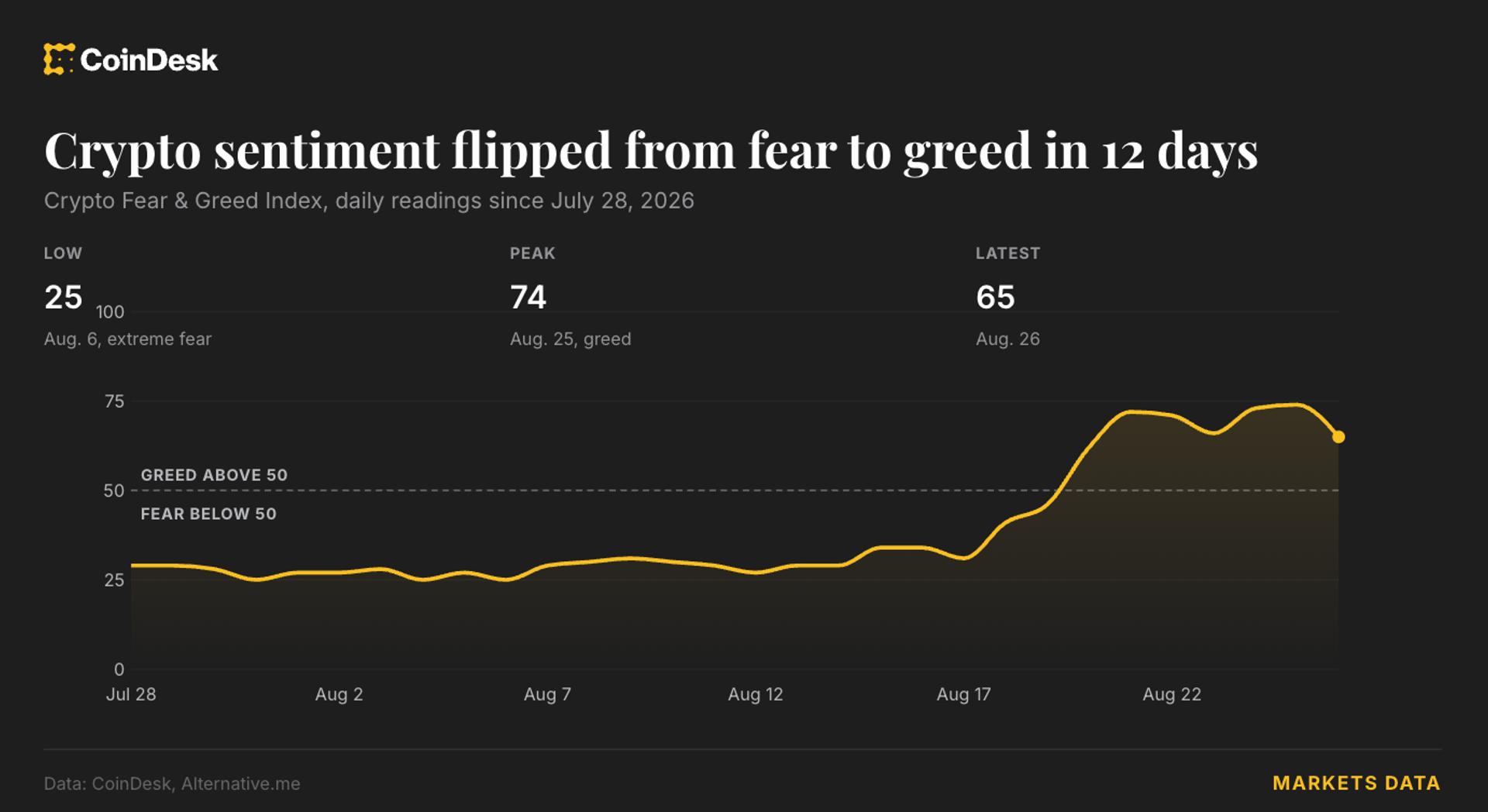
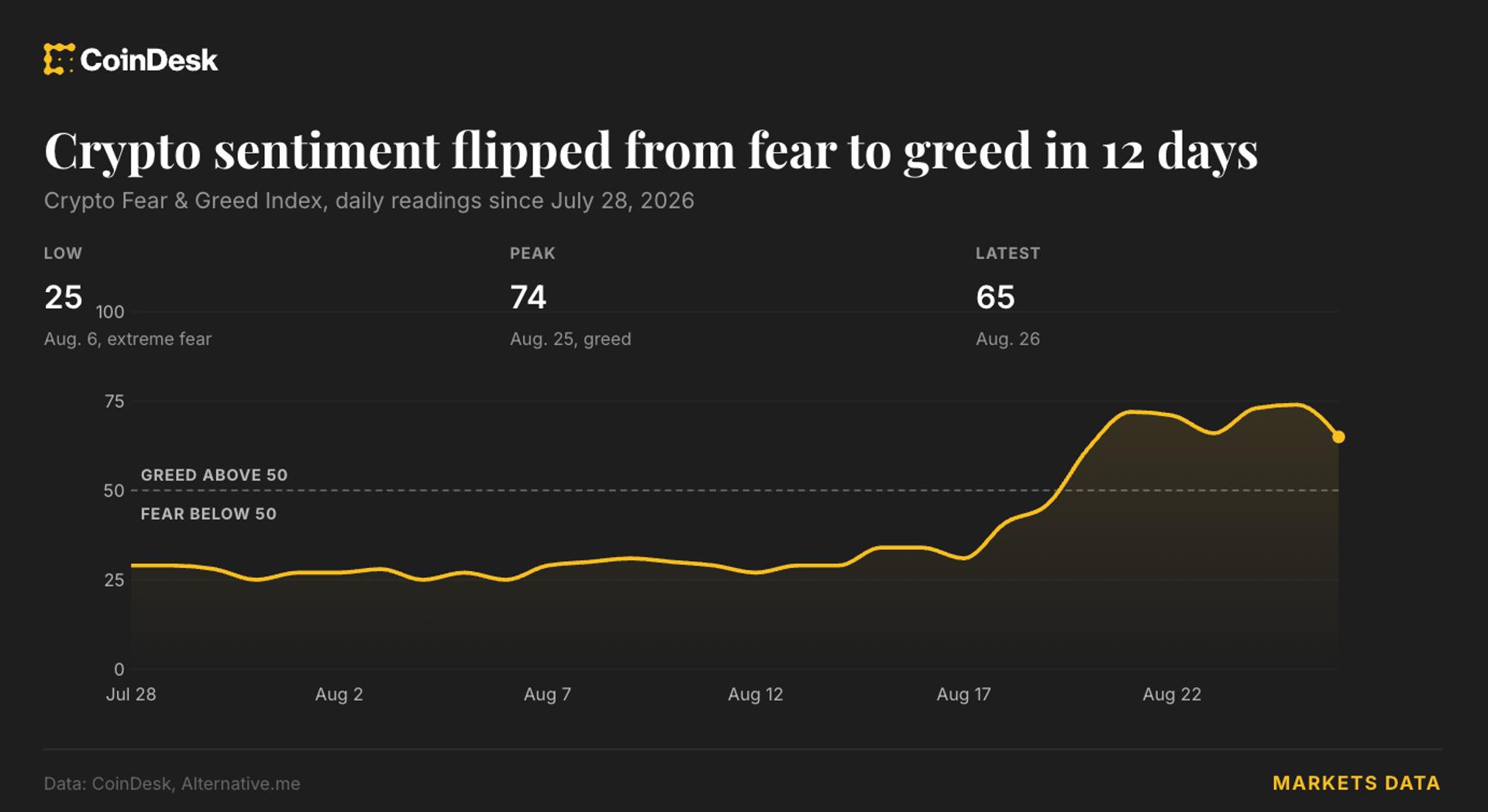
The Fear & Greed Index reached 74 on Tuesday after sitting at 27 less than two weeks ago, showing how quickly traders have gone from caution to chasing risk.
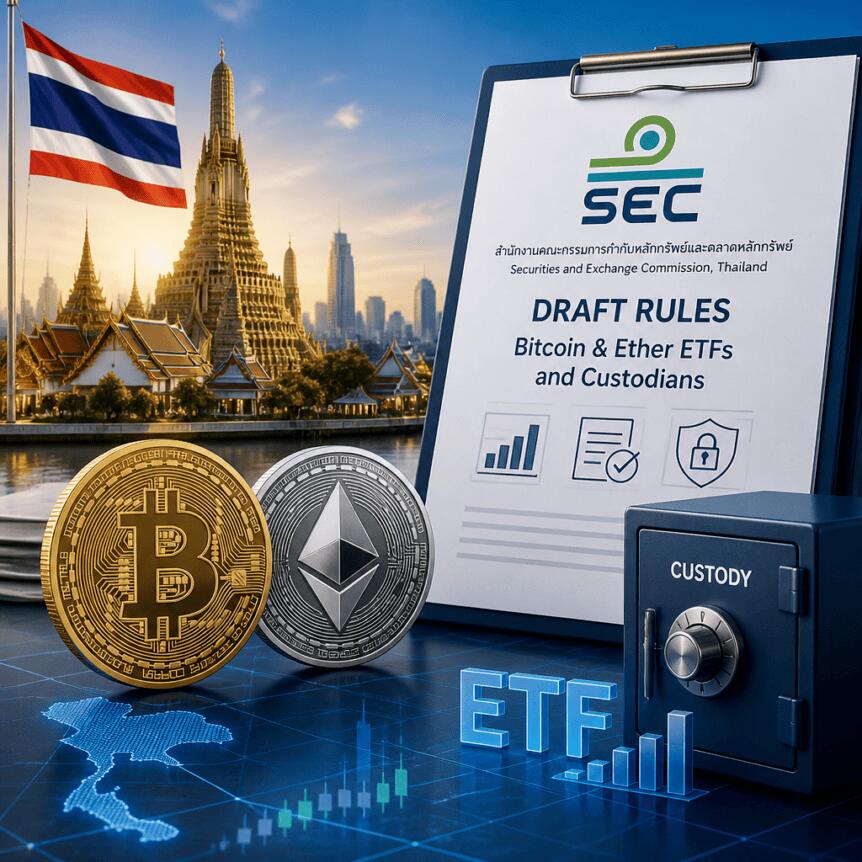
Thailand’s Securities and Exchange Commission (SEC) is moving closer to a formal regulatory pathway for spot Bitcoin and Ether exchange-traded funds (ETFs), shifting from high-level concepts to draft rules and inviting public feedback. In parallel, the regulator is revising how it approaches the use of foreign digital-asset custodians for funds that invest in crypto.
According to the Thai SEC, the agency is seeking comments on two separate consultation papers. One outlines draft regulations for Thai-listed spot crypto ETFs, while the other sets out the qualification principles for foreign digital-asset custodians used by mutual and private funds investing in digital assets. The consultation period runs until Sept. 20.
Key takeaways
- Draft Thai ETF rules would initially limit eligible underlying assets to Bitcoin and Ether only.
- Spot Bitcoin and Ether ETFs would trade exclusively on the Stock Exchange of Thailand (SET).
- ETFs would need to maintain an average net exposure of at least 80% of net asset value to the tracked crypto asset over each accounting year.
- The SEC’s revised custody approach keeps onshore custodians as the default in early stages, while allowing qualified foreign custodians only when the SEC deems it necessary and appropriate.
Draft spot Bitcoin and Ether ETF framework heads to consultation
In its Monday announcement, the SEC said it is progressing the framework for locally listed spot Bitcoin and Ether ETFs from earlier proposed principles to draft regulatory text. The draft ETF regulations build on an April consultation covering the broader framework, the SEC noted, saying most respondents supported the overall direction but raised concerns—particularly around custody arrangements.
Under the proposed structure, each Thai-domiciled ETF would track a single crypto asset—meaning a product tied to Bitcoin would be different from one tied to Ether. During the initial phase, the SEC would not allow alternative crypto-linked products that reference foreign ETFs, such as depositary receipts tracking them.
For investors, the emphasis on single-asset tracking is designed to keep the fund’s exposure focused and easier to monitor against the relevant benchmark. The SEC’s exposure requirement—minimum 80% average net exposure to the referenced asset over each accounting year—also signals that the regulator expects the funds to behave like straightforward spot trackers rather than multi-asset or structurally complex vehicles.
Where Thai ETFs would trade and how funds could access them
The draft rules specify that Bitcoin and Ether ETFs would trade exclusively on the Stock Exchange of Thailand (SET). This point matters for market participants because it concentrates secondary trading under a single venue and aligns the product with the mechanics of Thailand’s established exchange infrastructure.
The SEC also clarified how crypto ETFs could be used by other local investment vehicles. The draft rules would allow mutual funds and private funds to invest in Thai-domiciled crypto ETFs, in addition to foreign crypto ETFs that these funds are already permitted to hold under existing investment limits.
However, the SEC drew a boundary around what counts as eligible exposure during the opening phase. Even if foreign ETF access is otherwise permitted through existing rules, the SEC said it would not allow products based on foreign crypto ETFs—specifically including depositary receipts that track them—at least at the start.
Revised stance on foreign custody for mutual and private funds
The second consultation paper addresses custody, and the SEC’s wording reflects a more cautious approach than some market participants may have expected. The regulator said the revised approach would keep onshore digital-asset custodians as the primary custodians for crypto ETFs during the initial phase.
“Under the revised approach, crypto ETFs will continue to be primarily required to use onshore DA [digital asset] custodians, while the SEC may permit the use of qualified foreign DA custodians when necessary and appropriate in light of prevailing circumstances,” the SEC said.
That “necessary and appropriate” language effectively gives the SEC room to evaluate specific custody situations rather than automatically allowing foreign custodians. It also suggests the regulator is trying to balance institutional needs for operational flexibility with Thailand’s preference to anchor high-stakes crypto safeguards within its own regulatory perimeter—at least early on.
For mutual and private funds, the SEC’s separate foreign-custodian proposal adds additional requirements. Foreign custodians used for these funds would need to be supervised by a regulatory authority with legal powers. They would also have to operate under regulatory and investor-asset protection standards that the SEC considers adequate.
In practice, the SEC is setting a qualification test rather than a blanket approval system. This matters because custody is often the operational bottleneck for regulated crypto investment products: investors may accept a new regulatory wrapper for spot exposure, but they require credible safeguarding and compliance structures behind the scenes.
Why Thailand’s approach matters for institutions
Thailand’s SEC is positioning the ETF framework as part of the country’s ambition to become a global digital asset hub for institutions. The consultations show that the SEC’s priority is not only launching ETFs, but structuring them in a way that addresses the concerns most frequently raised in early stages of crypto product regulation: custody standards, product design, and limits on how crypto exposure can be packaged.
Notably, the SEC’s draft regulations also reflect lessons from the April feedback cycle. The regulator said most respondents supported the framework’s general direction, but custody-related comments pushed it to revise its approach—an important sign that investor protection remains the central theme as Thailand formalizes spot ETF rules.
Market participants should watch how commenters respond to the SEC’s custody stance. If the industry pushes for broader acceptance of foreign custodians, regulators may respond with clarifications on what “necessary and appropriate” will mean in practice and what evidence custodians must provide to meet Thai SEC adequacy expectations.
With both consultation papers open until Sept. 20, the next phase will determine how the SEC finalizes the ETF rulebook and what flexibility—if any—extends beyond Thailand-based custodians as product launches approach. Readers should focus on the custody requirements and how the exposure limits and product eligibility rules evolve in response to public submissions.
Thirty-nine US state banking associations have formed the BankChain Alliance to build a nationwide, industry-owned blockchain network for banks, targeting a 2027 launch.
On Tuesday, the alliance announced that the network intends to support smart payment tools, tokenized deposits, stablecoins and automated settlement. BankChain said it plans for the network to be interoperable with other blockchains and said it was selecting a technology partner.
The participating associations represent thousands of financial institutions across the US. BankChain said it will invite banks nationwide to take ownership of stakes. However, the announcement did not mention individual banks that have committed to joining or disclose how the network will be governed or funded.
BankChain joins several US bank-led networks announced or advanced since late 2025, spanning major, regional and community lenders building shared infrastructure for moving deposits and payments onchain within the regulated banking system.
Cointelegraph reached out to BankChain for more information but did not receive a response before publication.
US banks build shared onchain payment networks
In June, The Clearing House announced an onchain money initiative supported by JPMorgan Chase, Bank of America, Citi, BNY and Wells Fargo. The proposed network would clear and settle tokenized deposits between banks and connect blockchain activity with its existing payment systems.
Unlike independently issued stablecoins, tokenized deposits represent claims on individual banks and retain their treatment as commercial bank money. The structure allows banks to offer programmable and round-the-clock transfers while keeping customer funds on their balance sheets.
Related: World Liberty Financial launches USD1 natively on Canton Network
Regional lenders are pursuing a separate network through Cari, which was developed with Huntington, First Horizon, M&T Bank, KeyBank and Old National. Cari launched a minimum viable product in March and had attracted more than 30 participating banks by July.
Community banks have also formed the DTX Consortium through the Independent Bankers Association of Texas. IBAT said in June that membership had exceeded 50 banks as the group prepared a tokenized-deposit pilot.
Stablecoin developers are also turning to consortium models. In June, Open Standard named more than 140 payments, banking, technology and crypto companies in connection with Open USD, a dollar-backed stablecoin expected to launch later in 2026.
The project plans to offer businesses fee-free minting and redemption while distributing reserve earnings to participating companies.
Magazine: Hugging Face hack exposes the open-weight AI cybersecurity paradox
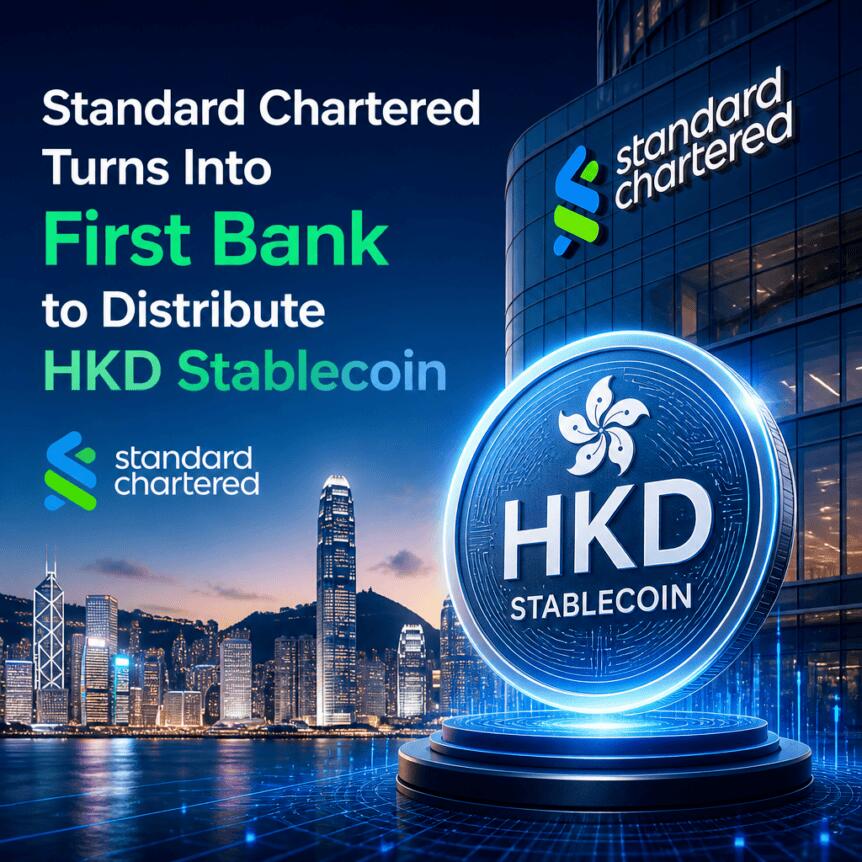
Standard Chartered Bank (Hong Kong) (SCBHK) says it has become the first authorized bank to distribute HKDAP, a regulated Hong Kong dollar-backed stablecoin issued by Anchorpoint Financial.
In a press release issued Monday, SCBHK stated that it is beginning discussions with eligible institutional clients and partners on potential use cases. These include tokenized fund settlements, treasury operations and cross-border payments, rolled out in phases.
Key takeaways
- SCBHK becomes the first licensed banking distributor for HKDAP, bringing a regulated HKD stablecoin closer to traditional banking rails.
- Anchorpoint’s HKDAP is already entering the market via beta access through HashKey Group and OSL, and SCBHK’s distribution follows soon after.
- Near-term plans include intragroup settlements across SCBHK’s banking network, with broader product applications expected later.
- In the fourth quarter, SCBHK plans to support HKDAP-based subscriptions and settlements for tokenized money market funds with asset managers.
- The launch aligns with Hong Kong’s Stablecoins Ordinance, which took effect Aug. 1, 2025, and the HKMA’s licensing framework for reserve backing and AML controls.
From beta access to bank-led distribution
The move expands HKDAP availability into conventional banking nearly two weeks after Anchorpoint began beta access for the stablecoin via HashKey Group and OSL. By shifting distribution into a regulated bank channel, SCBHK is positioning itself as a bridge between institutional demand and tokenized settlement workflows.
SCBHK also indicated it expects to introduce additional commercial applications over the coming months. While the bank did not spell out a full product roadmap in the announcement, its initial focus suggests it is prioritizing settlement-grade use cases where stablecoin behavior and compliance requirements matter most.
Planned HKDAP use: funds, treasury, and payments
According to SCBHK, its distribution strategy will target concrete operational needs. For clients, the bank highlighted applications such as:
- Tokenized fund settlements, where stablecoin-based payment legs could be paired with tokenized assets.
- Treasury operations, potentially enabling more efficient movement and management of HKD-linked value.
- Cross-border payments, where stablecoin rails are often explored as a complement to traditional correspondent banking.
Beyond those categories, SCBHK provided more specific near-term and mid-term intentions. It plans to introduce HKDAP-based subscriptions and settlements for tokenized money market funds with both international and local asset managers in the fourth quarter. It also intends to use HKDAP for intragroup settlements across its banking network in the near term.
For market participants, this sequencing is notable: bank internal settlement pilots typically help institutions validate operational mechanics before rolling out external-facing products that require coordination across multiple counterparties and market infrastructure providers.
Why the regulatory channel matters for Hong Kong dollar stablecoins
Anchorpoint’s HKDAP is issued under Hong Kong’s evolving stablecoin framework. The Stablecoins Ordinance took effect on Aug. 1, 2025, with the Hong Kong Monetary Authority (HKMA) publishing supervisory guidelines and establishing a public register of licensed issuers ahead of the implementation.
Earlier this year, on April 10, the HKMA granted its first stablecoin issuer licenses to Anchorpoint and to HSBC’s Hong Kong banking arm. Those authorizations were issued under rules designed to cover reserve backing, redemption processes, governance arrangements and Anti-Money Laundering (AML) controls.
Against that backdrop, SCBHK’s distributor role is significant because it formalizes access through a conventional regulated intermediary. In her comments, SCBHK CEO Mary Huen linked the bank’s interest pipeline to the issuer licensing milestone, saying that since Anchorpoint received its stablecoin issuer licence, clients have shown strong interest in how HKDAP could support business needs.
Anchorpoint’s backers and the timeline behind HKDAP
Anchorpoint Financial is a joint venture formed by Standard Chartered’s Hong Kong arm, telecommunications company HKT and Web3 investment company Animoca Brands. Standard Chartered is Anchorpoint’s largest shareholder, and the licensed issuer operates as a subsidiary of the bank.
In February 2025, the partners announced plans for an HKD-backed stablecoin after participating in the HKMA’s stablecoin issuer sandbox starting in July 2024. Later, in August 2025, they formally established Anchorpoint Financial and moved toward obtaining an issuer licence.
SCBHK’s announcement therefore sits at the intersection of two developments: Hong Kong’s licensing regime for stablecoin issuance and the practical effort to distribute and deploy a Hong Kong dollar stablecoin through regulated banking channels. That combination is likely to influence how quickly institutional counterparties feel comfortable integrating HKDAP into settlement workflows, especially for tokenized fund products.
Related coverage from earlier reporting noted Hong Kong’s warning about fake stablecoins impersonating major brands, underscoring how licensing and regulated distribution can help reduce confusion for market participants seeking legitimate products.
For readers tracking Hong Kong’s tokenized finance trajectory, the next signals to watch are whether SCBHK’s fourth-quarter plans for money market fund subscriptions and settlements progress as described, and how quickly HKDAP expands from intragroup testing into broader client deployments across treasury and cross-border payment use cases.


RockawayX has begun seeking $150 million for a new fund focused on undervalued tokens and crypto-related stocks after acquiring Relayer Capital.
Summary
- RockawayX is seeking $150 million for a new liquid opportunities fund.
- Relayer Capital founder Austin Barack will reportedly manage the investment vehicle.
- Relayer returned about 70% in 2026, according to sources cited by Forbes.
- RockawayX says it oversees about $2 billion across several investment and infrastructure divisions.
RockawayX targets undervalued tokens and crypto stocks
On Aug. 25, Forbes reported that RockawayX is seeking $150 million for a new liquid opportunities fund following its acquisition of crypto hedge fund Relayer Capital.
Citing people familiar with the matter, the report said the fund will invest in “undervalued tokens and crypto-related equities.” The planned strategy would give RockawayX exposure to assets that can be traded more easily than private investments held through its existing venture funds.
RockawayX has not publicly announced the acquisition or disclosed the transaction’s financial terms. The company also has not confirmed the fundraising timetable, minimum investment, fee structure, or jurisdictions in which the new fund will be offered.
Relayer founder Austin Barack will remain with RockawayX and manage the vehicle, according to Forbes. Before starting Relayer in 2024, Barack worked as a partner at CoinFund, where his responsibilities included venture and liquid investments.
Relayer describes itself as a thesis-driven cryptoasset investment fund supporting blockchain infrastructure, protocols, and applications. Its public company profile lists Barack as its founder and managing partner and identifies him as the firm’s only employee.
Relayer’s reported 70% return supported the acquisition
Relayer returned approximately 70% during 2026, according to the unnamed sources cited in the report. Positions in Hyperliquid and the decentralized artificial intelligence platform Venice AI reportedly contributed to its performance.
Forbes said Hyperliquid’s HYPE token had gained 219% during the year, while Venice AI’s VVV token had risen 1,006%. At the time of the report, HYPE had a market value of approximately $18 billion, and VVV was valued at more than $800 million.
Neither RockawayX nor Relayer has released audited results confirming the reported 70% return. Details such as the fund’s starting asset value, position sizes, and whether the performance figure accounts for fees also remain undisclosed.
Hyperliquid operates an on-chain derivatives exchange that offers perpetual futures and spot trading. Its token reached a fresh all-time high above $83 in August after a strong weekly advance, while rising trading activity and demand for perpetual futures supported the move.
Venice AI provides private access to generative artificial intelligence tools and uses VVV as its native token. Barack discussed Venice and other decentralized AI projects during a May interview about the investment case for crypto-linked AI infrastructure.
The fund’s reported focus would differ from RockawayX’s venture strategy because liquid tokens and public equities can be bought or sold without waiting for a private company exit or token vesting schedule. Price swings, limited token liquidity, and changes in listed crypto stocks could still affect the value of its positions.
RockawayX has expanded beyond venture investing
RockawayX says it oversees approximately $2 billion across its investment, liquidity, and blockchain infrastructure divisions. The Prague-founded firm operates venture funds, a market-neutral credit strategy, validator infrastructure and an on-chain liquidity business.
Its existing market-neutral fund has operated since April 2022 and has delivered a 42.59% absolute return since inception, net of fees, according to RockawayX’s fund disclosures. The open-ended vehicle offers monthly liquidity and charges a 1.6% management fee and a 15% performance fee.
RockawayX lists the fund as available only to qualified investors. Its approved distribution markets include Liechtenstein, Switzerland, the Czech Republic, Austria, Germany, France, Slovakia, and the Netherlands.
No comparable eligibility information has been released for the new $150 million fund. Forbes also did not say whether U.S. investors would be allowed to participate, although its planned investments in crypto-related equities could include exposure to publicly traded companies available through U.S. markets.
Alongside its liquid strategies, RockawayX closed a $125 million second venture fund in the first quarter of 2025. The fund backs early-stage blockchain companies and protocols, with an emphasis on Solana, decentralized finance, and infrastructure.
RockawayX said its first venture fund had produced a 2.1-times distributed-to-paid-in ratio and a 5.4-times multiple on invested capital. Its investments included Solana, Wintermute, and Morpho Labs.
Explaining the 2025 raise, founder and CEO Viktor Fischer said the first fund had returned cash to investors while retaining exposure to other portfolio positions.
“We closed this raise because our 2021 fund has delivered cash returns to LPs, while retaining long-term upside in key positions,” Fischer said.
In May, RockawayX and Forward Industries also backed a $5 million round for OnRe, a Solana-based reinsurance infrastructure company. Forward Industries separately planned to invest up to $25 million in OnRe’s yield-bearing token.
RockawayX moved into crypto-vault management through another acquisition in February, Forbes reported. The acquired business manages noncustodial smart contracts that pool capital and deploy it across yield strategies, with deposits reportedly exceeding $200 million since the transaction.
Crypto venture firms add AI and robotics exposure
RockawayX’s planned fund remains centered on digital assets while several major crypto venture firms have added other technology sectors to their mandates.
Paradigm closed a $1.2 billion fourth fund in July to invest in crypto, artificial intelligence, robotics, and other technology businesses. As crypto.news reported in July, the firm said it would continue backing crypto companies while investing in areas including aerospace, manufacturing and open-source AI.
Framework Ventures took a similar route with a $400 million fourth fund announced in June. Approximately half of the capital had already been committed when the fund was disclosed, with its investment mandate covering crypto, AI, robotics and energy. The firm received support from investors, including sovereign wealth funds, endowments, nonprofit organizations, and funds of funds.
RockawayX’s expansion has also followed the breakdown of its proposed combination with Nasdaq-listed Solmate Infrastructure. The companies announced a nonbinding all-stock transaction in December 2025 that was expected to combine RockawayX’s infrastructure, liquidity and asset-management operations with Solmate’s Solana treasury business.
A regulatory filing associated with the proposal valued RockawayX’s first venture fund at approximately $771 million and its second fund at $162 million as of Sept. 30, 2025. Its credit fund held about $103 million as of Oct. 31, while approximately $1.1 billion was staked through RockawayX validators.
Part of the staked amount overlapped with the venture assets because the validator total included approximately $107 million from Fund I. The filing, therefore, does not support adding every figure together as separate assets.
After acquisition talks collapsed, RockawayX-linked investment vehicle RBCH sued Solmate directors in New York state court, alleging self-dealing and shareholder dilution. Solmate denied the allegations and filed separate claims against RockawayX and Fischer concerning the failed negotiations, while RockawayX rejected Solmate’s accusations as retaliatory. Both cases remain pending.
XRP has flipped the script this week, emerging as one of the market’s strongest performers after weeks of lackluster performance. The crypto asset briefly tapped $1.76 before stabilizing near $1.50.
A sharp rise in network participation has now added fresh weight to the rally.
Higher Levels
Ali Martinez reported that active addresses climbed from 47,180 to 356,070, an astonishing 654.71% increase in days. A spike of this size usually reflects a sharp rise in participation and can come alongside increased volatility in the token’s price.
If this is really the start of a new XRP trend, analyst Casi Trades said that the $1.20 level could soon become a thing of the past. She expects the asset to first move toward $1.78, followed by a pullback to roughly $1.30 before another push to $2.57.
The full five-wave structure could eventually take XRP to around $2.90, according to the analysis, completing Wave 1 of a much larger macro Wave 3. A later correction may bring the asset back toward $1.65, which could turn the resistance seen today into support. In that scenario, the important point is not just how high XRP could go, but whether the token ever gets another chance to trade below $1.20.
As the Ripple token cleared seven months of resistance with a roughly 70% gain in one weekly candle from the accumulation zone, Crypto Patel said that the focus is now turning to $1.55. Holding above that level could set up another bullish move, while a break below may lead to retracement or re-accumulation. The $5-$10 range remains the long-term target.
Strong Week For ETFs
On the institutional front, US-based spot XRP ETFs began last week quietly, recording zero flows on Monday, but the numbers quickly changed. Flows reached $5.81 million on Tuesday before coming in at $2.35 million on Wednesday.
From there, activity picked up following the US Treasury Department’s announcement that it would double the maximum size of liquidity-support buybacks for longer-dated government debt. Thursday saw $13.24 million, while Friday reached $18.38 million, which was the strongest level since mid-May.
The buying trend has continued into this week. $13.82 million in inflows were recorded on August 25th. Bitwise’s fund led the chart with $8.25 million, followed by Franklin and Canary’s ETFs with $4 million and $1.57 million, respectively.
The post Ripple (XRP) Just Posted a Huge Network Jump: Here’s the Level That Matters Now appeared first on CryptoPotato.


Japan is preparing to study a blockchain settlement system capable of processing stock and government bond transactions around the clock, according to an Aug. 26 report from Nikkei.
Summary
- Japan plans a study group examining blockchain settlement for government bonds and publicly traded stocks.
- Financial regulators, the Finance Ministry, BOJ and financial institutions would participate under the reported proposal.
- A development plan could arrive in early 2027, with operations potentially beginning during the 2030s.
- Japanese stock transactions currently settle after two days, while government bond trades settle next-day domestically.
- BOJ already operates a sandbox testing blockchain settlement using central-bank current account deposits for institutions.
The Financial Services Agency, Ministry of Finance, Bank of Japan and participating financial institutions are expected to establish a study group during summer 2026. The group would aim to complete an initial development plan in early 2027.
None of the three government institutions had published a formal announcement confirming the reported study group when checked Wednesday.
Japan’s blockchain settlement plan targets existing delays
Japanese stock transactions currently use a T+2 settlement cycle, meaning cash settlement occurs two business days after a trade. Japanese government bond transactions generally settle on the following business day.
The proposed blockchain infrastructure would connect the securities transfer and corresponding cash payment more closely. Investors could gain access to sale proceeds faster and potentially reinvest the funds almost immediately.
A development plan is expected to examine the blockchain architecture, responsibilities assigned to public and private participants and the system’s implementation timetable. International remittances could eventually become another use case.
The infrastructure “could” become operational in the early 2030s if the plan receives formal approval, according to Nikkei. No final implementation decision has been announced.
Real-time settlement can reduce the period during which counterparties remain exposed to each other. However, removing settlement delays also reduces the time available to secure cash or securities, creating new liquidity and operational requirements for market participants.
BOJ is already testing central-bank money on blockchain
The reported initiative builds on existing Bank of Japan experiments. Governor Kazuo Ueda said in March that the central bank was testing settlements using commercial banks’ current account deposits on blockchain infrastructure.
The sandbox project is examining how blockchain networks could connect with existing systems. Its potential use cases include domestic interbank transfers and securities settlement.
BOJ Executive Director Kazushige Kamiyama later described the work as an examination of tokenized central-bank account deposits, sometimes called wholesale central bank digital currency. The design could support delivery-versus-payment settlement, where securities and cash move simultaneously.
This work remains separate from Japan’s retail digital-yen pilot. The BOJ continues technical research on a retail central bank digital currency, but the government has not decided whether to issue one.
Tokenized securities already operate in Japan
Japan’s private financial sector has already developed blockchain platforms for regulated securities. Progmat recently migrated ¥452 billion in managed tokenized securities to a dedicated Avalanche network.
SBI Holdings and Startale are also building Strium, a blockchain designed for round-the-clock tokenized securities trading. A public test network is planned for 2026.
These private systems demonstrate the issuance and transfer of tokenized assets. The government proposal is broader because it could involve the infrastructure supporting mainstream Japanese stocks, government debt and central-bank money.
Japan’s three largest banks are separately preparing a shared yen stablecoin framework. The project targets live transactions by March 2027 and follows an FSA-supported corporate payment pilot.
The 2027 plan will determine the project’s scope
The planned study group must decide whether Japan will create a new blockchain, connect several regulated networks or link distributed ledgers with existing market systems.
It will also need to address governance, cybersecurity, transaction privacy, operational resilience and procedures for reversing erroneous or unauthorized transfers. Around-the-clock operation would require financial institutions and regulators to maintain support beyond current market hours.
The next confirmed milestone would be an official announcement naming the participating institutions and the study group’s mandate. Its early-2027 development plan should then clarify technical architecture, funding, testing stages and any legislative changes.
Until those documents appear, the timetable and early-2030s launch remain reported targets rather than approved government deadlines.
Every major token fell over 24 hours except HYPE, though bitcoin holds a 23% weekly gain and XRP almost 45%.

How TIME and Statista Determined the Best Employers of 2026

Dolly Parton’s Final Interview Takes Sad Turn After Her Death
Cettire FY26 slides: profitability surges as emerging markets grow





-

 Fashion4 days ago
Weekend Open Thread: Madewell – Corporette.com
-

 Business4 days ago
Musk’s Tesla, SpaceX Confirm $16.8 Billion ‘Terafab’ Chip Plant as World’s Largest Building in Texas
-

 Crypto World4 days ago
anatomy of crypto’s biggest liquidation event since 2021
-

 Crypto World1 day ago
A $30 Billion AI Fund Implodes, Now the SEC Is Investigating Wall Street’s Role
-

 Politics4 days ago
6 months on, Irish renters crushed by effects of government housing bill
-
 NewsBeat4 days ago
The ‘Lucky Dip Gang’ causing carnage for clicks: After five thugs were killed speeding in the wrong direction on a motorway, GUY ADAMS investigates a sick new trend… and why police aren’t even allowed to pursue them
-

 Tech7 days ago
GLM-5.3 hits the API at $1.4/$4.4 per million tokens
-

 Business3 days ago
Mystery AI Model ‘Ox Alpha’ Draws Developers With Free Access as Chinese Lab Origins Remain Debated
-

 News Videos6 days ago
Don’t Leave Your Financial Future To Chance | August 19, 2026
-

 Business7 days ago
Marvell Shares Jump 7% as Google Chip Deal Confirms Custom AI Silicon Partnership, Analysts
-

 Business5 days ago
Five Below: Kids Discount Retailer Reaps Rich Rewards
-

 Business1 day ago
Moderna CEO warns China is pouring state money into mRNA technology
-

 Business5 days ago
UK firms in critical financial distress rise 9% to 53,756
-

 Business1 day ago
NVIDIA Stock Drops Nearly 2 Percent to $210 on Seventh Losing Day Ahead of Critical AI Earnings
-

 Fashion7 days ago
Jimmy Choo Autumn 2026 collection
-

 Sports3 days ago
Deshaun Watson fires back at Browns fans after being booed: ‘It’s a disrespectful thing’
-
 Entertainment6 days ago
10 Most Perfect Fantasy Shows of the Last 25 Years
-

 Tech6 days ago
OpenAI confirms ChatGPT is down as logins and signups fail
-

 Business6 days ago
PayPal and Venmo now accepted for tuition at several universities
-

 Crypto World6 days ago
Optimism-funded team's deciding vote shifts $49 million in OP tokens away from users
You must be logged in to post a comment Login