
Crypto World
Creators pump and dump Dolly Parton memecoins

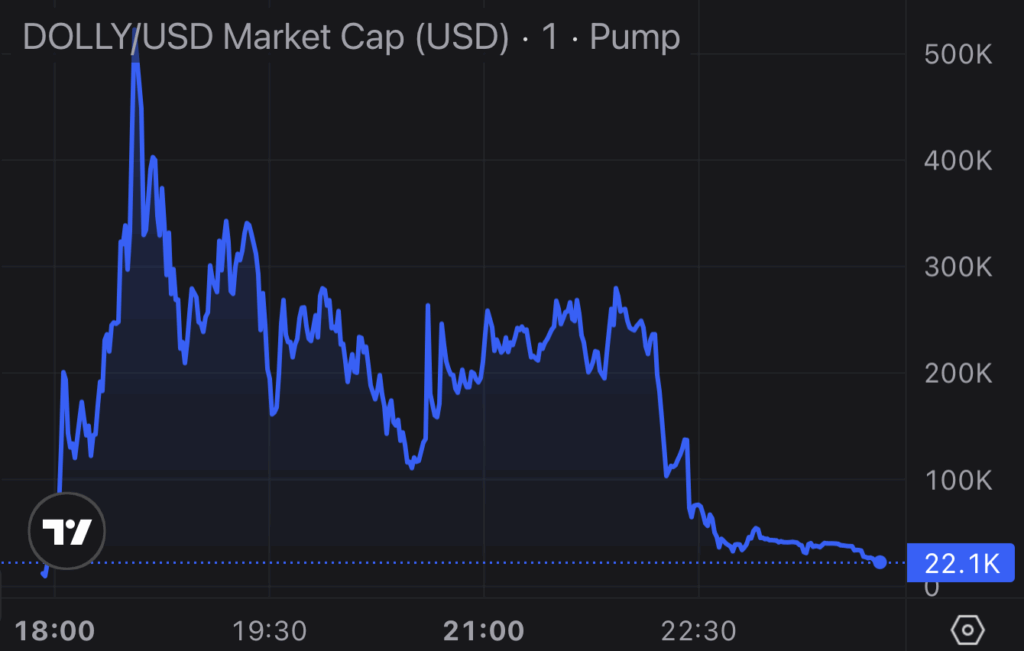
Yesterday, the crypto community decided to commemorate the life of country music star Dolly Parton by pumping and dumping memecoins using her name and photos.
Her nephew announced her passing on Tuesday afternoon. Within minutes, unauthorized Solana memecoins bearing her likeness were trading on at least a dozen trading pairs across crypto markets.
Crypto influencers have a concerning history of turning real-world deaths into trading opportunities, including memecoins created after the death of Hulk Hogan, Ozzy Osbourne, Charlie Kirk, Charlie Munger, Henry Kissinger, Liam Payne, and others.
Creators mint most memecoins on Pump Fun, a Solana-based launchpad that lets anyone create a tradable token for less than $100 within minutes.
Xxxxxx
Neither Parton, her family, Dollywood, or her estate have discussed any crypto projects.
All memecoins, including RIP Dolly Parton, DollyParton, Dollar Parton, and Dolly, are unauthorized creations by third parties and most crashed within minutes of their creation.
Despite millions of dollars in combined trading volume, most of these assets had collapsed to market capitalizations of a few thousand dollars by yesterday evening.
None of these tokens have any utility or connection to Parton or her charitable causes. Their value exists only as long as the holder can sell it to someone else.
Parton’s only sanctioned blockchain venture was “Dollyverse,” a 2022 SXSW Web3 experience and NFT drop built with Fox Entertainment’s Blockchain Creative Labs on Eluvio.
Read more: Charlie Kirk’s killing turned into memecoin spectacle
Pay your respects with an ICO
Because minting costs are negligible and bonding curve mechanisms let a token go from $0 to a live, tradable market in the time it takes to fill out a form, memecoin launchpads have become the most popular way to conduct an initial coin offering.
Protos has previously documented that over 99.99% of the 1.7 million memecoins launched on PumpFun never sustained even a $1 million market capitalization.
A CoinGecko analysis of over 18.6 million token launches found that more than two-thirds of all PumpFun tokens stop trading the same day they launch.
Got a tip? Send us an email securely via Protos Leaks. For more informed news and investigations, follow us on X, Bluesky, and Google News, or subscribe to our YouTube channel.


Ethereum trades at $2,450 as it continues probing the $2,500 price ceiling it’s failed to convincingly break for the third straight session. At the same time, the Crypto Fear and Greed Index hit 74, its highest print since October 5, 2025.
That earlier October reading? Bitcoin set an all-time high the very next day. But this time, the setup looks shakier: a US Treasury decision to double long-end debt buybacks triggered a short squeeze that liquidated $2.74 billion and wiped out 172,202 traders in a single session.
That disconnect between price and conviction is exactly what traders need to understand before chasing ETH through resistance. Institutional holders aren’t panicking, but they aren’t piling in yet.
Discover: The Best Crypto to Diversify Your Portfolio
Can Ethereum Price Punch Above $2,500 This Week?
ETH sits at $2,450, with intraday action ranging between $2,410 and $2,470 in a tight band that puts $2,500 within reach but not yet conquered. Volume remains elevated, with Coingecko clocking roughly $18.6 billion in 24-hour turnover, or about 6% of ETH’s market cap, signaling real participation rather than a thin, low-liquidity drift.
Pivot data pegs immediate resistance at $2,470–$2,490, with the psychological $2,500 level sitting just above that cluster. Support holds near $2,455 and $2,445, with a deeper floor at $2,440 if momentum fails.

For the Ethereum price to run, it needs a clean close above $2,500, which opens room toward $2,530–$2,540, extending the week’s ~28-30% run. ETH might also grind sideways in the $2,440–$2,490 channel while the market digests the Fear and Greed spike.
However, a rejection at resistance sends price back toward $2,440 support, especially if broader sentiment cools further from its current 65 reading.
Trade Ethereum on Bybit and Get a Chance to Win Our $1,000 USDT Airdrop
Bitcoin Hyper Targets Early Mover Upside as Ethereum Tests Key Levels
ETH holders sitting on a 28-30% weekly gain have earned the right to feel good. But here’s the uncomfortable math: at a $2,450 price point and a market cap north of $295 billion, doubling from here requires nearly $300 billion in fresh capital.
The math data is not a knock on Ethereum, but it’s the reality of scale. Early-stage infrastructure plays don’t carry that gravitational drag, which is why traders rotate capital toward presales precisely when majors stall at resistance like this.
Bitcoin Hyper ($HYPER) is building the first Bitcoin Layer 2 with native SVM integration, aiming for execution speeds faster than Solana itself while inheriting Bitcoin’s base-layer security. The pitch: fix Bitcoin’s three structural weaknesses, like slow settlement, high fees, and zero programmability, without abandoning the network’s trust model.
The project has raised $33 million at a current token price of $0.0136852, with staking rewards available for early participants. Its decentralized canonical bridge and low-latency processing layer are the technical backbone of the pitch.
Research Bitcoin Hyper before the presale closes.
Discover: The Best Token Presales
The post Ethereum Price Hits $2,500 Resistance Wall as Fear and Greed Reaches Extreme Levels appeared first on Cryptonews.


A federal judge has adjourned Roman Storm’s Tornado Cash retrial to April 26, 2027, as the developer’s pending motion for acquittal is weighed.
Judge Katherine Polk Failla signed the two-page order on August 25 in the Southern District of New York. The later date came at Storm’s own request rather than from prosecutors.
Why the Tornado Cash Retrial Slipped to 2027
Storm requested a date in late April 2027 from the court, according to the order. Failla granted it, citing his pending motion for acquittal. Storm still has a Rule 29 motion for acquittal pending. His lawyers want the guilty verdict thrown out, arguing prosecutors never presented enough evidence to support it.
Meanwhile, the judge excluded time under the Speedy Trial Act through April 26, 2027. The Speedy Trial Act is a US federal law that requires the government to bring a criminal defendant to trial within a specified period rather than allowing a case to remain pending indefinitely.
“The ends of justice would be served by excluding time under the Speedy Trial Act through April 26, 2027, and that this would outweigh the interests of the public and the defendant in a speedy retrial,” the order read.
Follow us on X to get the latest news as it happens
Failla amended the pretrial schedule at the same time. Government expert disclosures are due on February 5, 2027, and defense disclosures are due on March 5, 2027.
Daubert motions and motions in limine are due March 30, 2027. A final pretrial conference is set for April 20, 2027.
A jury in the Southern District of New York found Storm guilty on August 6, 2025, of conspiring to operate an unlicensed money transmitting business. Prosecutors had pushed for a retrial on two unresolved charges, proposing an October 2026 start date.
Subscribe to our YouTube channel to watch leaders and journalists provide expert insights
The post Roman Storm Won’t Face a Tornado Cash Retrial Until 2027 appeared first on BeInCrypto.
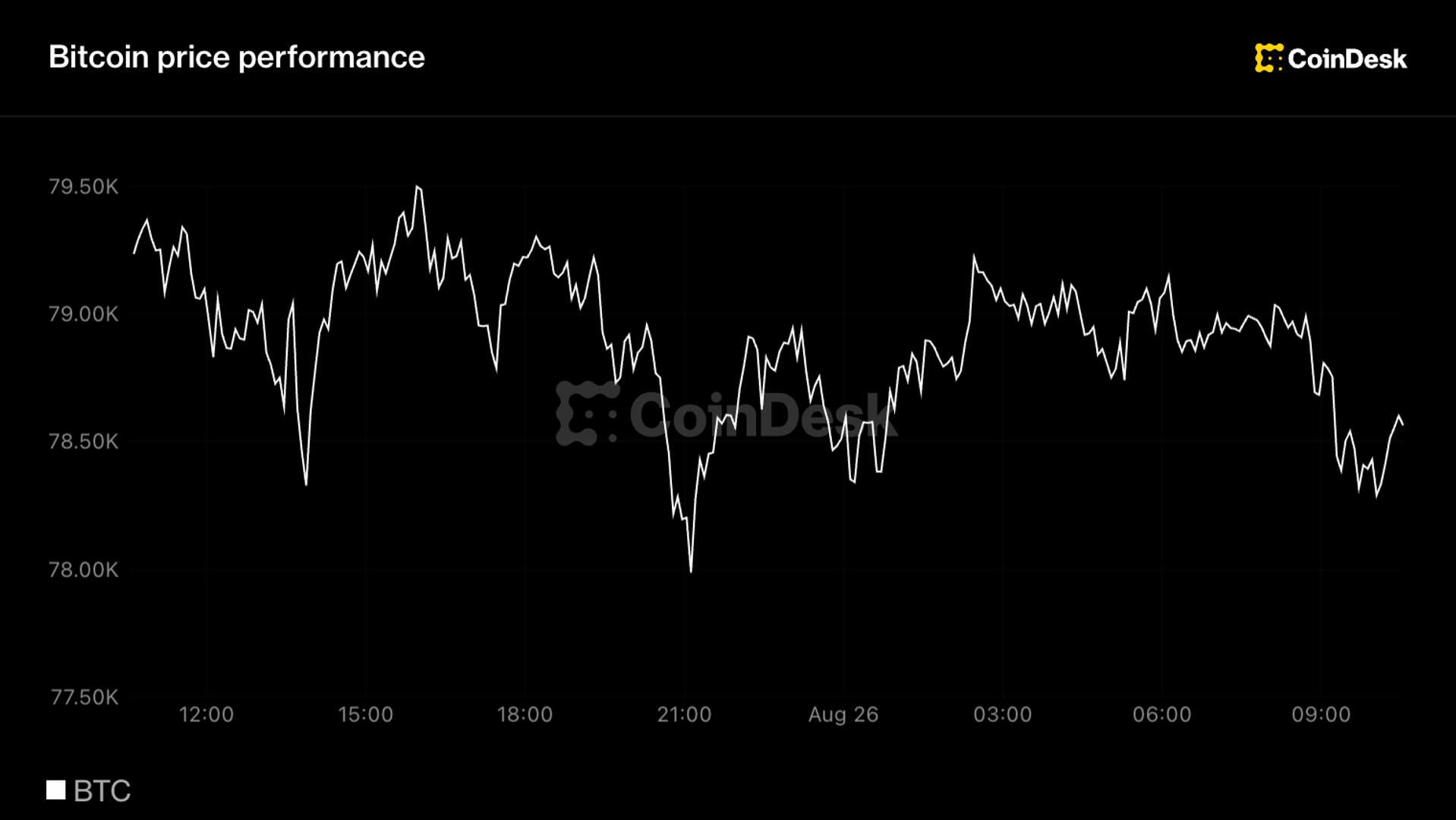
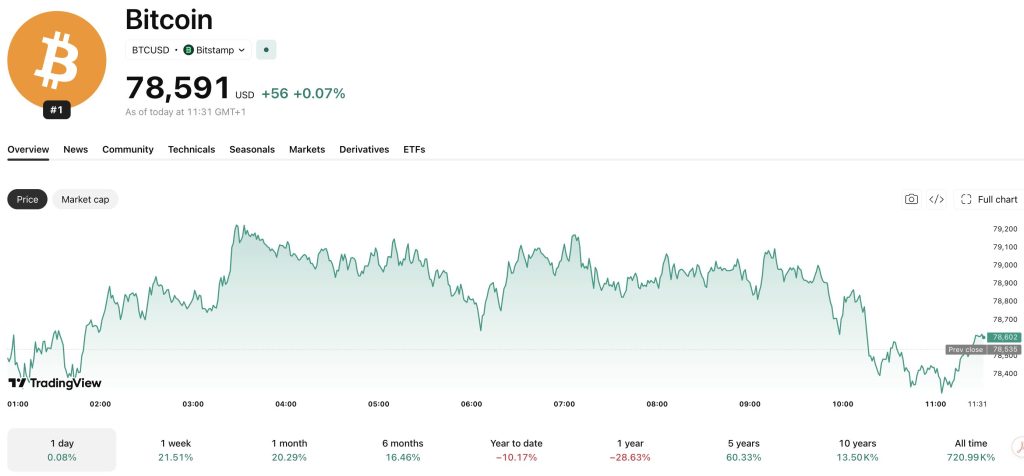
The price of bitcoin fell to $79,000 on Wednesday after gaining 23% in seven days as August ETF inflows climbed above $3 billion.
In BlackRock Bitcoin news, the World’s largest asset manager has reduced the reported minimum for in-kind creations and redemptions involving its iShares Bitcoin Trust (IBIT) from $25M to $1M, reports suggest that the change was reflected in an updated SEC filing.
This news comes as BTC USD is trading at $78,800, down -1.4% overnight but still up +22% over the past week following a huge rally that saw it climb from $64,400 to nearly $80,000, single-handedly reinvigorating the crypto market.
BlackRock Bitcoin News: What the Reported Change Means
According to FinanceFeeds, in-kind creation and redemption allow authorized participants to exchange Bitcoin and IBIT shares rather than settle those transactions in cash.
The report said the lower minimum expands access to the process for mid-sized institutional participants, including registered investment advisers, family offices, and smaller trading firms operating through authorized participants.
FinanceFeeds also reported that retail investors cannot redeem IBIT shares directly for Bitcoin and that the change concerns the fund’s creation and redemption process rather than open-market purchases of IBIT shares.
IBIT’s Reported Scale

BlackRock’s IBIT product page listed an indicative basket of 22.65 Bitcoin, with a basket amount of $1,788,793.04, as of August 25, 2026. The page also listed a net asset value of $44.7252 per share and a sponsor fee of 0.25%.
The product page showed Bitcoin holdings with a market value of $60,696,470,292.63 as of August 24, 2026. It listed 768,039.86710 Bitcoin and $18,840.14 in US dollar cash. BlackRock cautions that holdings are subject to change and that the values shown for holdings are based on a third-party vendor’s pricing.
For performance, BlackRock listed IBIT’s year-to-date NAV total return at -9.86% as of August 24, 2026. For the one-year period ended June 30, 2026, the product page listed a total return of -45.62%, compared with -45.48% for its benchmark.
Trade BTC and Other Tokens on Bybit and Get a Chance to Win Our $1,000 USDT Airdrop
What to Watch in Future Disclosures
In other BlackRock Bitcoin news, FinanceFeeds identified the ratio of in-kind to cash creations in future quarterly disclosures as a measure to watch following the reported minimum change. A future filing could show whether in-kind activity changed during the period.
IBIT seeks to track the price of Bitcoin and offers exposure to Bitcoin through an exchange-traded product, according to BlackRock. The firm says investors should carefully consider the risk factors and other information in the prospectus before making an investment decision.
Bitcoin ETF Flows in August: BlackRock Leading the Way

US spot Bitcoin ETFs are having their best month in nearly a year. On Tuesday, August 25, the funds pulled in $314.37M in net inflows, marking a seventh straight day of gains. That streak has pushed August’s total inflows to $3.03Bn, putting the month just $390M behind October 2025’s record with a handful of trading days left.
The rebound has been dramatic. Year-to-date net outflows have been cut by more than half, down to $2.26Bn, while total net assets across the funds reached $99.05Bn and cumulative net inflows climbed to $54.36Bn.
BlackRock’s IBIT remains the dominant force, accounting for roughly 62% of Monday’s category-wide inflows on its own. The surge coincides with Bitcoin’s push toward $80,000, though the asset was trading near $78,880, down about 2% over the prior 24 hours at the time of the latest report- a reminder that even strong ETF demand hasn’t fully insulated price action from volatility.
Discover: The Best Token Presales
The post IBIT Opens In-Kind Bitcoin Process to More Institutions appeared first on Cryptonews.

And yet the SAVE Act is only one front of the attack on our democracy. There are other examples of disturbing ways that the Trump Administration is fearmongering about immigrants, effectively sowing mistrust in our electoral systems.
Since May 2025, the Department of Justice has demanded that nearly all states and the District of Columbia turn over full, unredacted voter rolls, including driver’s license and partial Social Security numbers. When most of those states refused, DOJ filed lawsuits against 30 of them and D.C. For the states that did provide the data, DOJ then shared it with the Department of Homeland Security to supposedly “scrub aliens from voter rolls.”
Since then, the pressure has only escalated. In July, a day after Trump gave a primetime speech in which he again railed against immigrants, made unsubstantiated claims of noncitizen voting and demanded that states change their election policies, Homeland Security Sec. Markwayne Mullin then threatened state election officials with prison time if they don’t acquiesce to Trump’s demands.
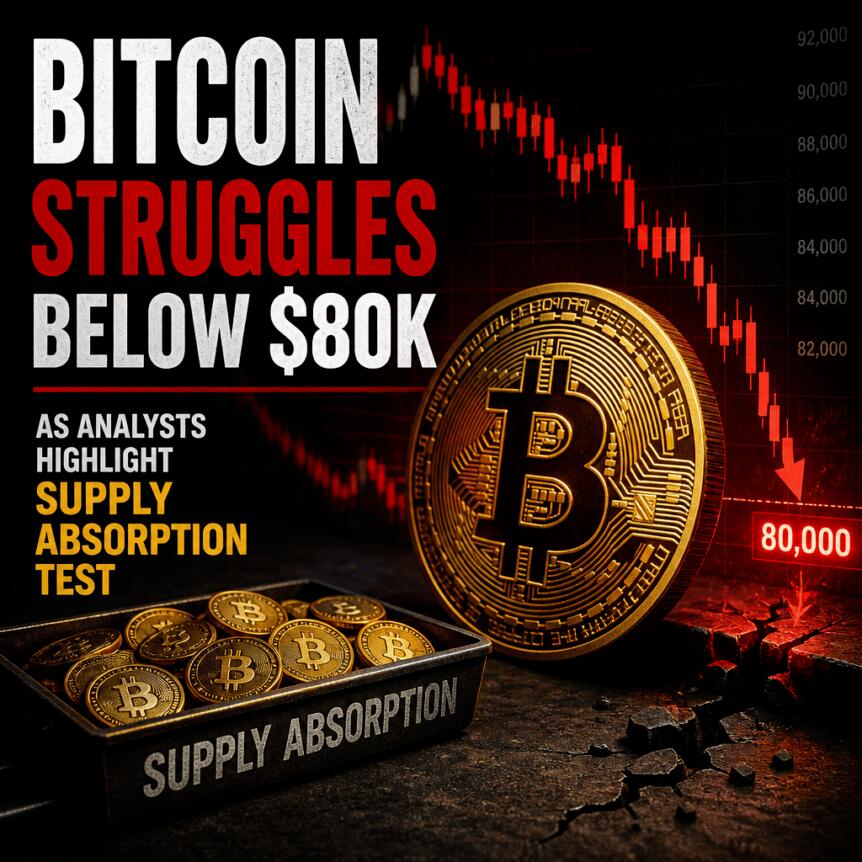
Bitcoin has reclaimed the $80,000 area, but on-chain signals suggest the rally is running into a familiar problem: even when buyers show up, sell-side pressure from investors sitting on profits can reappear quickly.
According to on-chain analytics from CryptoQuant, older “long-term holder” coins have become more active around recent local highs, while a widely watched gauge of U.S. demand—the Coinbase premium—remains slightly negative. Together, the data points to a market that can push upward, but struggles to sustain momentum without stronger fresh buying from the U.S.
Key takeaways
- CryptoQuant data shows the spent output profit ratio (SOPR) for long-term holders rose to 1.48 on Aug. 22, indicating profit-taking-related activity is increasing among older coins.
- The SOPR ratio (short-term holders vs. long-term holders) peaked at 1.4 near $79,500—its highest reading since July 25—before slipping to 0.93, implying relative selling dynamics may be shifting back toward short-term holders.
- All major holder cohorts are reportedly in profit on aggregate, creating conditions where additional upside requires demand strong enough to absorb profitable supply.
- The Coinbase premium index is still negative at -0.015, underscoring that U.S. spot demand has not fully regained strength despite Bitcoin’s local push higher.
Older Bitcoin holders increase on-chain profit-taking signals
CryptoQuant’s monitoring highlights that “older” Bitcoin coins moved on-chain more actively during the latest rise. The firm links this behavior to a period when BTC/USD gained more than 25% over the past week, according to the related market context cited alongside the analysis.
The specific on-chain indicator at the center of the update is the spent output profit ratio (SOPR). SOPR compares the value of recently spent UTXOs against the value at the time those outputs were created. In CryptoQuant’s read, SOPR ticking up to 1.48 on Aug. 22 points to increased movement involving in-profit coins—an environment that often accompanies selling or at least reallocation of positions.
CryptoQuant also points to a second metric: the SOPR ratio, which divides the SOPR of short-term holders (STH) by that of long-term holders (LTH). Here, STH refers to wallets that hold BTC for up to six months, while LTH refers to wallets holding longer than six months.
As price consolidated around $79,500, the SOPR ratio reached 1.4, the highest reading since July 25. In CryptoQuant’s framing, that peak suggested long-term holders were realizing profits at a higher relative rate than short-term holders at that moment.
However, the picture quickly cooled. CryptoQuant later reported the SOPR ratio had fallen to 0.93, saying the shift implies short-term holders’ realized performance is now relatively stronger than long-term holders’ realized performance.
Why the SOPR trend matters for traders near $80,000
Profit-taking signals often show up with a lag: price can rise while the market is still digesting prior positioning, but once more investors become “in profit” enough to consider exits, upward momentum can stall. CryptoQuant notes that the SOPR ratio has been forming a broad downtrend since early 2025. By the end of June, it reportedly hit 0.62—its lowest levels in three years as BTC/USD traded near $58,000.
That earlier low matters because it sets the stage for what investors should watch now. While Bitcoin has only reversed modestly higher since that period, the market has not been able to remain above $80,000, implying the rebound has met persistent resistance from supply and realized profit behavior.
In a key takeaway from CryptoQuant, the firm emphasizes that the market question is less about whether Bitcoin can “briefly touch” $80,000 and more about whether new demand is sufficient to absorb selling from profitable holders. That distinction is important for both short-term traders and longer-term investors: price can reach a level, but the sustainability of the move depends on whether incremental buyers continue stepping in as profit-taking grows.
U.S. demand still weak as Coinbase premium stays negative
While on-chain SOPR metrics describe behavior among existing holders, the Coinbase premium index helps describe demand conditions—particularly from U.S. participants. CryptoQuant tracks the difference between BTC/USDT pricing on Coinbase versus Binance; when the premium is negative, the indicator suggests the U.S. market is not paying a “premium” relative to global liquidity.
In this latest update, CryptoQuant reports the Coinbase premium has failed to return to positive territory and remains negative. The firm says it moved above zero only briefly on hourly time frames as Bitcoin broke above $78,500, but it has not sustained a positive reading.
As of Wednesday, CryptoQuant lists the Coinbase premium at -0.015, compared with -0.094 at the start of August. Even with that improvement, the index remains below zero—an asymmetry that matters because it suggests that despite improving activity and price strength, the broader U.S. buyer base is not yet strong enough to lift demand sentiment into “buying over sellers” territory.
CryptoQuant frames the next signal plainly: whether the premium can cross above zero and remain positive. The firm argues that if Bitcoin continues recovering while the Coinbase premium turns positive, the market could shift from easing selling pressure toward a phase characterized by stronger renewed U.S. spot demand.
What to monitor next: holder profits versus fresh inflows
For now, CryptoQuant’s data points to a market where holder cohorts are, in aggregate, already in profit—meaning there is potential for realized selling to reappear during pullbacks or consolidation. At the same time, the Coinbase premium suggests U.S. spot demand is still not fully supporting sustained breakout conditions.
Going forward, investors should watch whether the SOPR ratio stabilizes rather than continues sliding, and whether the Coinbase premium can hold above zero. Those two developments—profit-taking dynamics among holders and persistent demand signals from U.S. trading venues—may determine whether $80,000 becomes a new floor or remains a ceiling.
Crypto World
Dallas Fed warns tokenized deposits could strip $700 billion from U.S. banks' lending capacity


Programmable deposits and AI agents may enable instantaneous, automated bank switching for higher yields, driving up bank funding costs.
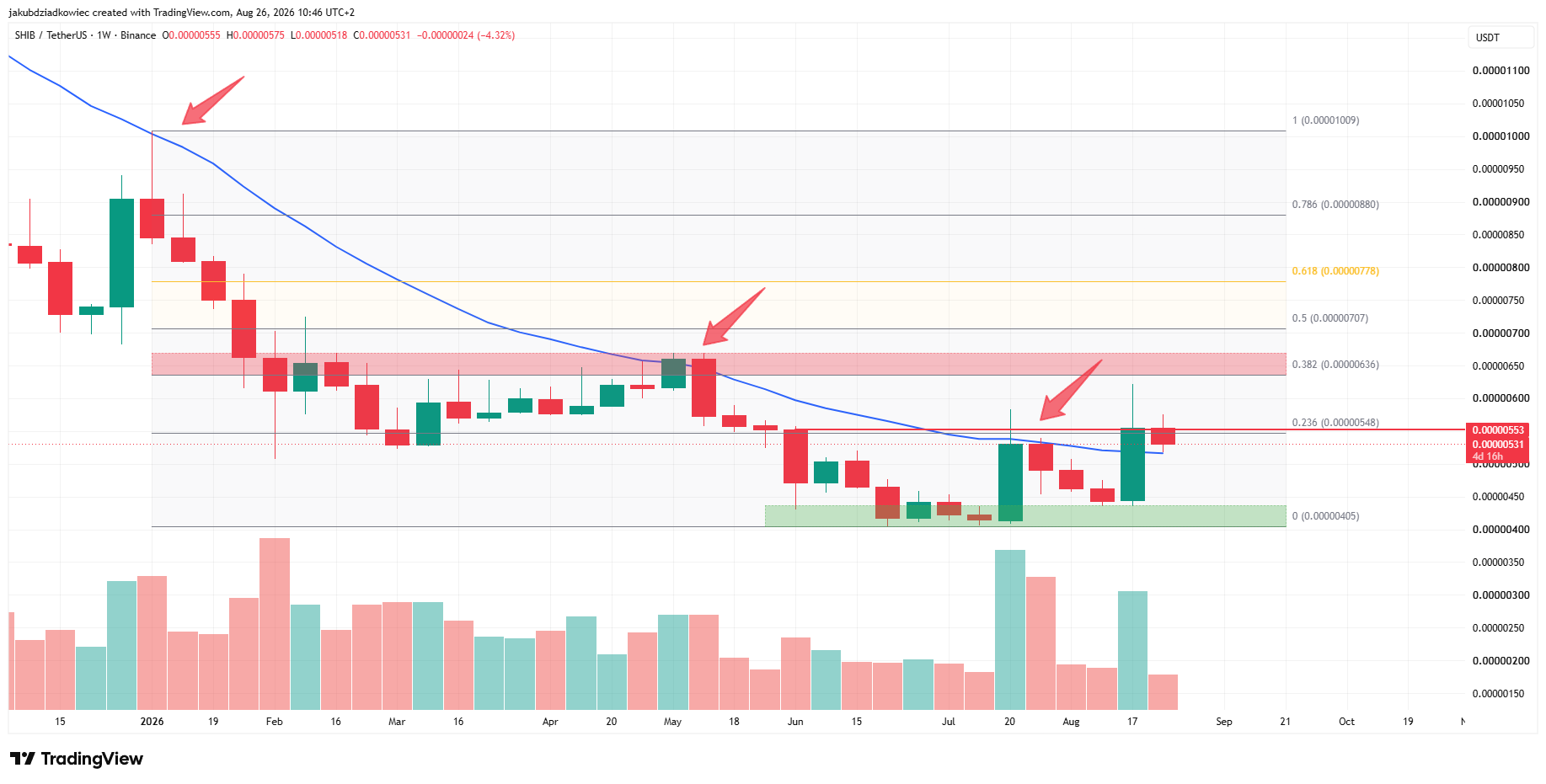
Shiba Inu (SHIB) price has closed above its 20-week moving average for the first time since September 2025, ending an 11-month downtrend.
The break arrived in the same week Japan approved a Nomura-backed exchange to list SHIB. The token now trades at $0.00000528, down 4.27% in 24 hours, while it retests the breakout.
Japan Says Yes to Shiba Inu
Japan’s Financial Services Agency registered Laser Digital Japan as a crypto asset exchange service provider. The subsidiary of Nomura’s digital assets arm secured the first new exchange approval in the country in four years.
SHIB is one of six launch assets. It sits beside Bitcoin (BTC), Ethereum (ETH), XRP, Bitcoin Cash (BCH), and Litecoin (LTC), and it is the only meme coin on that list. The token joined the Japan Virtual and Crypto Assets Exchange Association Green List in November 2025.
Meanwhile, whales moved in the same direction. An unidentified wallet withdrew 280.8 billion SHIB from OKX on August 24, worth roughly $1.56 million. Exchange reserves fell to 86.98 trillion tokens. SHIB ranks 31st by market capitalization at $3.11 billion.
Shiba Inu Price Breaks an 11-Month Downtrend
The weekly chart shows the trend change clearly. SHIB rejected the 20-week moving average near $0.00001000 in January and again near $0.00000650 in May. It has now closed above it.
Structure improved underneath. A June low near $0.00000405 was followed by a higher low near $0.00000445 in early August. The week of August 17 gained about 25% on heavy volume.

However, that candle wicked to roughly $0.00000620. It stopped just short of the 0.382 Fibonacci resistance at $0.00000636, a level that has capped every rally since February.
One Level Decides It
The daily chart places SHIB inside an ascending parallel channel. Price tagged the upper band near $0.00000600 on August 21, then reversed.
Support at $0.00000531 now matters most. It marks the channel midline, the July 26 swing high, and the 20-week moving average at once. Below it sits the $0.00000499 level, and the channel base near $0.00000450.
Reclaiming $0.00000553 would open $0.00000600 and then $0.00000636. The relative strength index has cooled to 58. Its twin peaks near 77 suggest momentum did not expand on the second push.

Therefore, two caveats temper the case. A recent 441% burn rate spike removed only about $230 worth of SHIB, and Shibarium activity remains near 1,180 daily transactions.
A team member has teased news from Shytoshi Kusama and Kaal Dhairya before August 31. Neither has confirmed it. That window closes inside the weekly candle that settles this retest.
The post Shiba Inu (SHIB) Breaks 11-Month Downtrend After Japan Approval appeared first on BeInCrypto.


The FSA, Finance Ministry, BOJ and financial institutions plan to study the infrastructure and produce a development plan by early 2027.


Ethereum developers warned on Aug. 24 that planned gas changes in the Glamsterdam upgrade could disrupt a small group of Layer 1 smart contracts.
Summary
- Ethereum developers warned Glamsterdam gas repricing could break a small group of Layer 1 contracts.
- EIP-8037 raises state-creation costs, while EIP-8038 reprices storage and account access across Ethereum’s execution layer.
- Most flagged failures can be resolved by increasing transaction gas limits, according to Ethereum developers.
- Contracts using 2,300-gas stipends, fixed call limits or gasleft logic face the greatest compatibility risks.
- Developers can test contracts immediately on Platåberget before public testnet and eventual mainnet deployment begins.
The Ethereum Foundation urged developers to test contracts and update fixed gas assumptions before mainnet activation.
The warning concerns EIP-8037 and EIP-8038, which are scheduled for inclusion in Glamsterdam. Developers said most contracts remained unaffected during transaction replays, while many flagged cases could be corrected by raising their gas limits.
Ethereum gas repricing changes state costs
EIP-8037 changes how Ethereum charges for creating state, including new accounts, storage slots and deployed contract bytecode. It introduces separate state-gas accounting intended to prevent rapid blockchain-state growth as Ethereum increases network capacity.
EIP-8038 raises costs for accessing existing state. The proposal covers operations including SLOAD, SSTORE, cold account access, EXTCODESIZE and EXTCODECOPY.
Ethereum developers last broadly adjusted state-operation prices during the Berlin upgrade in 2021. Since then, Ethereum’s state has expanded, while validators have supported higher block gas limits.
The Ethereum Foundation said repricing resource-heavy operations is necessary before the network can safely raise capacity further. Developers designed the new schedule around a performance target that could support roughly three times the current base throughput.
Hardcoded gas assumptions create compatibility risks
Developers replayed historical Ethereum mainnet transactions under Glamsterdam’s proposed pricing schedule. They sorted the results into unchanged transactions, successful transactions with different gas usage, failures fixable through higher limits and potentially broken transactions.
The last group continued to fail even after researchers raised the supplied gas substantially. The Foundation’s warning identified fixed gas stipends, hardcoded call limits, logic based on gasleft() and presigned transactions with fixed limits as recurring risk factors.
Contracts that use Solidity’s historical 2,300-gas stipend through transfer or send may require particular attention. Operations that previously completed within that allowance may consume more gas under the new state-access schedule.
The Foundation has not publicly identified every affected application. It said direct outreach to the most affected builders was already underway and described the potentially broken group as small.
Wallets and gas estimators also require updates
The warning extends beyond smart contracts. Wallets, RPC providers, indexers and node tools must update their gas-estimation systems to recognize the revised cost rules.
Software using cached constants could underestimate the gas needed for a transaction and cause it to fail. Both proposals require tools using eth_estimateGas and related functions to account for the revised state costs.
As crypto.news previously reported, Glamsterdam could also disrupt wallets and gas tools that assume ordinary transfers always require 21,000 gas. Transfers to existing accounts retain that figure, while transfers creating new accounts will incur an additional state charge.
Regular users do not need to make manual changes, according to the Foundation. Updated wallet and infrastructure providers should apply the necessary gas estimates automatically.
Developers can test fixes on Platåberget
Ethereum developers launched the Platåberget testnet to provide a long-running environment for Glamsterdam testing. The network, also called glam-devnet-8, already runs the new repricing schedule.
Contract maintainers can enter an address into Ethereum’s checker to identify historical transactions that diverge under the proposed rules. Developers should raise supplied gas limits when that resolves the issue or review individual call sites when failures persist.
In related coverage, Ethereum’s Glamsterdam work has moved Layer 1 scaling back into focus through gas repricing, block-level access lists and changes to block construction.
The next stage will involve additional devnet testing, followed by forks on Sepolia and Hoodi. Ethereum’s roadmap targets Glamsterdam for Q4 2026, but developers have not announced a fixed mainnet activation date. The final schedule depends on stable client implementations and successful public-testnet deployments.

Homes evacuated in Crossfield Crescent, Fulford, York

British Industrial Competitiveness Scheme opens to forges
Ethereum Price Hits $2,500 Resistance Wall as Fear and Greed Reaches Extreme Levels





-

 Fashion5 days ago
Weekend Open Thread: Madewell – Corporette.com
-

 Business4 days ago
Musk’s Tesla, SpaceX Confirm $16.8 Billion ‘Terafab’ Chip Plant as World’s Largest Building in Texas
-

 Crypto World4 days ago
anatomy of crypto’s biggest liquidation event since 2021
-

 Crypto World2 days ago
A $30 Billion AI Fund Implodes, Now the SEC Is Investigating Wall Street’s Role
-

 Politics4 days ago
6 months on, Irish renters crushed by effects of government housing bill
-

 Crypto World13 hours ago
SpaceX stock could rise 75% to $240, JPMorgan says
-
 NewsBeat4 days ago
The ‘Lucky Dip Gang’ causing carnage for clicks: After five thugs were killed speeding in the wrong direction on a motorway, GUY ADAMS investigates a sick new trend… and why police aren’t even allowed to pursue them
-

 Business3 days ago
Mystery AI Model ‘Ox Alpha’ Draws Developers With Free Access as Chinese Lab Origins Remain Debated
-

 News Videos6 days ago
Don’t Leave Your Financial Future To Chance | August 19, 2026
-

 Business7 days ago
Marvell Shares Jump 7% as Google Chip Deal Confirms Custom AI Silicon Partnership, Analysts
-

 Business6 days ago
Five Below: Kids Discount Retailer Reaps Rich Rewards
-

 Business2 days ago
Moderna CEO warns China is pouring state money into mRNA technology
-

 Business5 days ago
UK firms in critical financial distress rise 9% to 53,756
-

 Business2 days ago
NVIDIA Stock Drops Nearly 2 Percent to $210 on Seventh Losing Day Ahead of Critical AI Earnings
-

 Sports3 days ago
Deshaun Watson fires back at Browns fans after being booed: ‘It’s a disrespectful thing’
-

 Fashion7 days ago
Jimmy Choo Autumn 2026 collection
-
 Entertainment7 days ago
10 Most Perfect Fantasy Shows of the Last 25 Years
-

 Tech6 days ago
OpenAI confirms ChatGPT is down as logins and signups fail
-

 Crypto World6 days ago
Optimism-funded team's deciding vote shifts $49 million in OP tokens away from users
-

 Business6 days ago
PayPal and Venmo now accepted for tuition at several universities
You must be logged in to post a comment Login