
Crypto World
Crypto Bridge Protocol CrossCurve Exploit

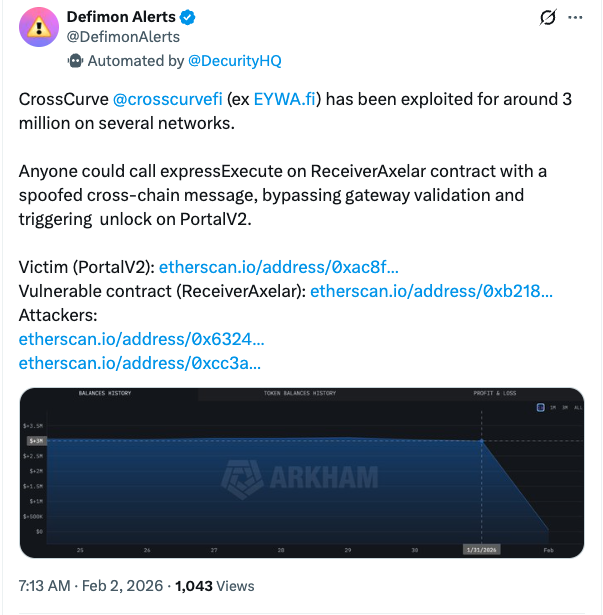
Crypto bridge CrossCurve has told users to pause interacting with its protocol while it conducts an investigation into a smart contract breach.
Crypto protocol CrossCurve said its cross-chain bridge has been attacked, with reports that $3 million has stolen across multiple networks.
CrossCurve posted to X late on Sunday that its bridge was “under attack, involving the exploitation of a vulnerability in one of the smart contracts used.”
“Please pause all interactions with CrossCurve while the investigation is ongoing,” it added.
The blockchain security-focused X account Defimon Alerts said CrossCurve was exploited for around $3 million “on several networks.”
It added that one of CrossCurve’s smart contracts allowed anyone to spoof a message to bypass validation and unlock tokens.
“Anyone could call expressExecute on ReceiverAxelar contract with a spoofed cross-chain message, bypassing gateway validation and triggering unlock on PortalV2,” Defimon Alerts said.

Curve Finance, which has partnered with CrossCurve, posted on X that users who allocated to CrossCurve pools “may wish to review their positions and consider removing those votes.”
Related: Step Finance treasury wallets breached, $27M in SOL drained as STEP crashes 90%
“We continue to encourage all participants to remain vigilant and make risk-aware decisions when interacting with third-party projects,” it added.
Magazine: Meet the onchain crypto detectives fighting crime better than the cops
This is a developing story, and further information will be added as it becomes available.

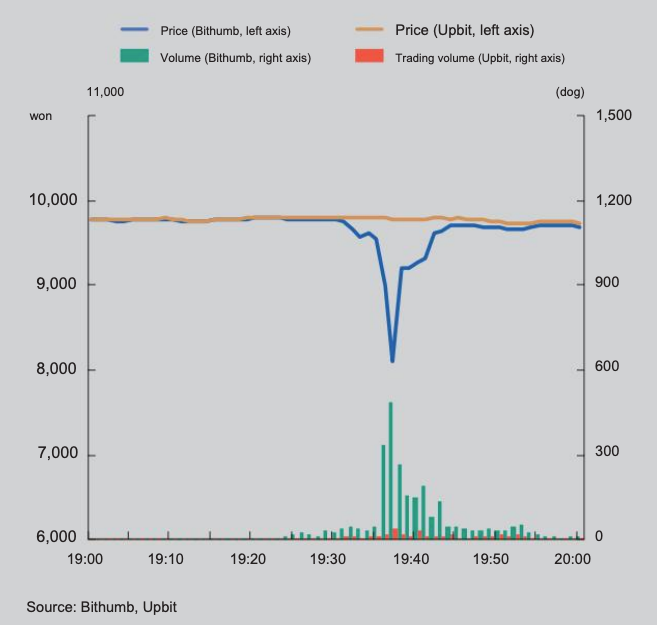
South Korea’s central bank says crypto exchanges should have their own “circuit breakers” that halt trading to prevent a repeat of the market fallout after Bithumb mistakenly sent more than $40 billion in Bitcoin to its customers in February.
The Bank of Korea said in a payments report on Monday that lawmakers should consider introducing mechanisms similar to the Korea Exchange’s trading curbs to suspend trading if crypto prices suddenly fluctuate.
“Currently, the virtual asset industry lacks internal control mechanisms and faces lower regulatory intensity compared to established financial institutions,” the bank said.
“Consequently, as similar incidents could occur at other virtual asset exchanges, it is necessary to strengthen relevant regulations to prevent them in advance,” the report added.
It comes as South Korean lawmakers are currently looking to pass laws to further regulate crypto, which the Bank of Korea said should include its suggested measures “to enhance the safety and transparency of virtual asset exchange operations.”
In early February, Bithumb erroneously sent customers 620,000 Bitcoin (BTC), worth around $42 billion at the time, instead of 620,000 Korean won, worth $400.
The price of Bitcoin on Bithumb fell as users rushed to sell, causing others to panic-sell and further driving down its price, according to the bank’s report.

Bithumb halted trading and reversed its Bitcoin sends within minutes, but the exchange said that 1,788 BTC, worth around $125 million, had been sold before it could act, and it covered the shortfall using company reserves.
Related: South Korea tightens crypto withdrawal-delay exemptions after scam losses
The Bank of Korea suggested that crypto exchanges should be required to have systems capable of detecting and preventing “erroneous payments caused by human error.”
It added that exchanges should also have systems to automatically verify a platform’s internal assets compared to those on the blockchain to flag discrepancies.
Magazine: South Korea gets rich from crypto… North Korea gets weapons


Solana (SOL) treasury companies have shed between 75% and 92% of their stock value since late 2025, as the token’s 34% year-to-date decline punishes concentrated digital asset strategies.
Analyst Ted Pillows compared the price action of these firms to that of meme coins on the Solana network, warning investors that the selling may not be over.
“They are already down 80%-90%, but could go down another 30%-50% before the bottom,” he said.
Forward Industries (FWDI), the largest institutional SOL holder with 6.9 million tokens, has seen its stock plunge over 89% from a multi-year high near $46 recorded in September.
CoinGecko data showed that the company purchased SOL at an average price of around $230. Yet, with the token now trading near $82, the company carries over $1 billion in unrealized losses.
Subscribe to our YouTube channel to watch leaders and journalists provide expert insights
Other firms face similar pain. Sol Strategies (STKE), which was listed on Nasdaq in September, has dropped over 92% since then. Sharps Technology’s stock (STSS) is down roughly 89%, with the company carrying $225.45 million in paper losses. DeFi Development Corp (DFDV) has fallen around 75%, with $56.43 million in unrealized losses.
Pillows also highlighted that Ethereum treasury firms are showing relative near-term strength, potentially attracting buying pressure into ETH.
However, he cautioned that this is likely a temporary reprieve before both ETH and its associated treasury stocks also move to new lows.
Follow us on X to get the latest news as it happens
Ultimately, sustained crypto asset recovery would ease balance-sheet pressure across the sector. Without one, treasury firms face growing questions about whether concentrated single-asset strategies can survive prolonged drawdowns.
The post Solana Treasury Stocks Mirror Meme Coin Crashes, Analyst Warns of 50% More Downside appeared first on BeInCrypto.

Key Highlights
- ARK Invest acquired 85,485 shares of Palantir valued at approximately $11.15M distributed across five ETFs
- The firm divested 44,446 AMD shares totaling roughly $10.52M, scaling back semiconductor holdings
- Palantir shares declined approximately 2% Friday following Thursday’s 7% retreat
- Michael Burry flagged Palantir as “bubble”-valued, pointing to Anthropic’s competitive momentum
- Wedbush analyst Daniel Ives countered Burry’s position, reaffirming Buy rating with $230 target
Cathie Wood’s investment management firm, ARK Invest, executed significant portfolio adjustments during April 10-11, 2026. The fund manager purchased Palantir Technologies stock while simultaneously reducing its Advanced Micro Devices holdings, based on the company’s published daily transaction reports.
ARK accumulated 85,485 Palantir shares representing approximately $11.15 million in value. The acquisition was distributed among five exchange-traded funds: ARKK acquired 46,455 shares, ARKQ added 15,127, ARKW purchased 11,865, ARKF bought 5,973, and ARKX obtained 6,065.
Palantir Technologies Inc., PLTR
Concurrently, ARK divested 44,446 shares of Advanced Micro Devices, representing approximately $10.52 million in total value. These sales were similarly allocated across the identical five fund portfolios.
These transactions indicate ARK’s strategic pivot from semiconductor hardware investments toward artificial intelligence software platforms.
Market Turbulence Hits Palantir
Palantir’s stock experienced significant headwinds during the week preceding ARK’s purchase. The shares retreated approximately 2% Friday after suffering a 7% decline the previous session.
A portion of this downturn stemmed from commentary by Michael Burry, the prominent investor famous for “The Big Short” trade. Burry published remarks on X suggesting Palantir’s market valuation has entered “bubble” levels.
Burry contended that Anthropic, the emerging AI company, is capturing market share from Palantir through its innovative “Mythos” model and accelerated expansion. Cathie Wood apparently viewed the price weakness as an attractive entry point.
ARK additionally liquidated 75,389 shares of Strata Critical Medical worth $305,325, extending a pattern of reducing exposure to that equity during recent sessions.
Wall Street Opinions Remain Split
Burry’s perspective doesn’t enjoy universal support. Wedbush analyst Daniel Ives characterized Burry’s viewpoint as a “fictional narrative.”
Ives maintained his Buy recommendation on Palantir while keeping his price objective at $230. He highlighted Palantir’s impressive 137% expansion in U.S. Commercial revenue as proof that the company’s competitive advantages remain intact.
Benchmark analyst Yi Fu Lee takes a more reserved stance. Lee suggests that Palantir’s elevated valuation metrics require continued strong operational performance to support current stock prices.
The Street consensus on Palantir currently stands at Moderate Buy. This rating reflects 14 Buy recommendations, 5 Hold ratings, and 2 Sell calls.
The mean price objective following the recent market turbulence reaches $194.61, implying roughly 52% appreciation potential from Friday’s closing price.
Advanced Micro Devices shares advanced 3.55% during the same trading session when ARK executed its sale.

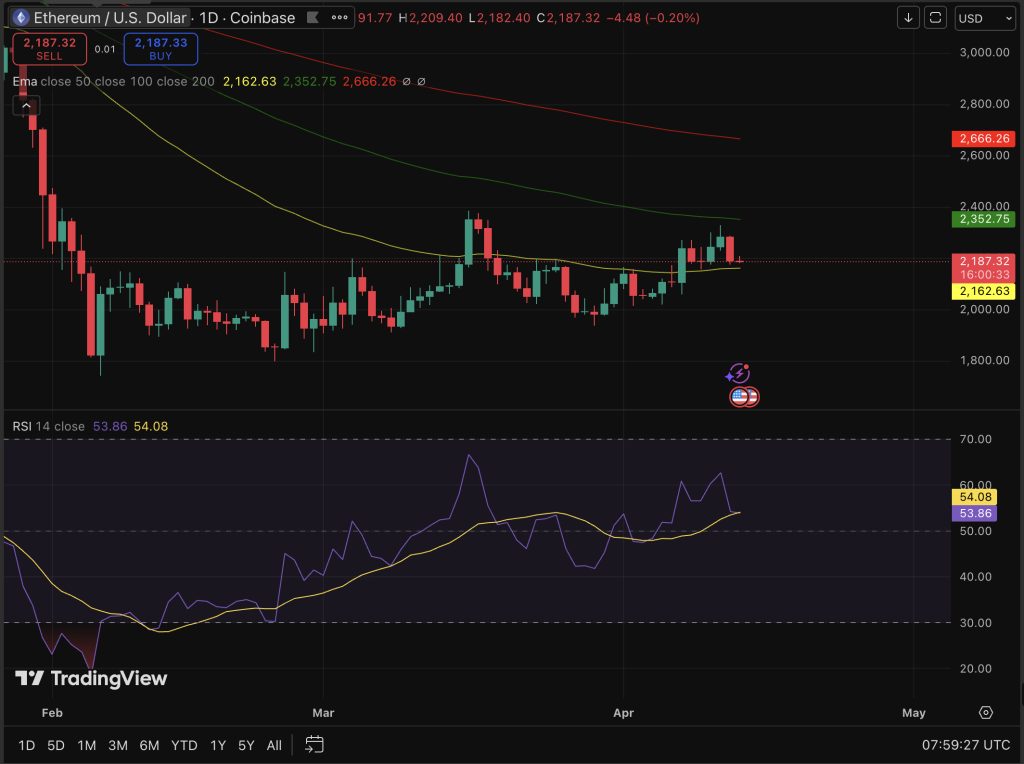
Ethereum price is trading just below $2,200, with a macro chart prediction forming since 2017 signals the next move could be violent to the upside. An X analyst has flagged a golden triangle structure on ETH’s 3-week chart, a setup nearly a decade in the making that projects a parabolic rally above $12,000 by 2027–2028. The full target range may surprise even committed bulls.
The pattern is defined by two converging trendlines: a rising lower boundary anchored from the March 2020 Covid crash low and a flat upper resistance connecting the rally peaks of 2021, 2024, and 2025.
ETH has respected both boundaries repeatedly across multiple market cycles, with each touch producing a meaningful bounce. Currently, price is pressing the lower trendline again, forming what appears to be a higher low versus the 2025 bottom in a structure historically associated with breakout setups.
Separately, analyst CryptoFeras identified a rising diagonal support on the 3-day chart connecting cycle lows from 2022, 2023, and 2025, each of which preceded substantial multi-hundred-percent rallies.
Although the market backdrop complicates the picture, the Fear & Greed Index sits at 15–16, deep in extreme fear territory, while Ethereum’s deflationary supply dynamics and growing institutional flows via BlackRock’s ETHA provide structural support.
Discover: The best pre-launch token sales
Ethereum Price Prediction: $7,500 Before the End of 2026?
ETH is currently consolidating in the $2,000–$2,200 range following a sharp drawdown to $2,000 earlier this month. Volatility sits at 3.89% in a medium intensity level, with 60% green days across the trailing 30 periods, suggesting sellers are losing consistent momentum despite the fear-heavy sentiment.
Key levels define the near-term map. Support clusters at $2,162 (50-day SMA) and $1,760 (2026 year-to-date lows), with a deeper floor at $1,400 if macro conditions deteriorate sharply.
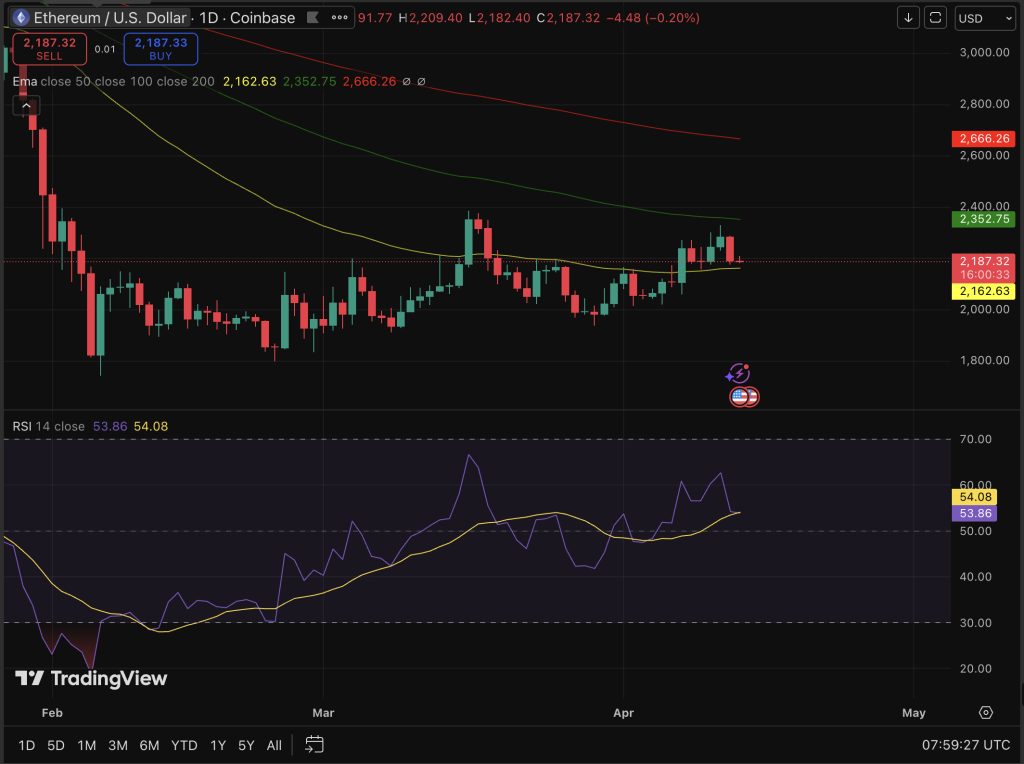
Resistance sits at $2,451 (5-day high) and $2,666 (200-day SMA), the latter being the critical reclaim zone for any sustained recovery thesis. RSI reads 54, neutral, but directional indicators on the daily and weekly timeframes are both flagging buy signals.
If ETH can hold $2,090 SMA support, it could reclaim $2,400, and the golden triangle breakout initiates a run toward Standard Chartered’s revised target of $7,500 by end-2026 and $15,000 by 2027.
The pattern is compelling. Whether price validates it in weeks or months remains an open question.
Discover: The best pre-launch token sales
Bitcoin Hyper Targets Early-Mover Upside as Ethereum Tests Key Levels
ETH at $2,100 offers meaningful upside potential, but reaching $7,500 still requires a 3.5× move from current prices, and Standard Chartered’s timeline stretches to late 2026. For some of us watching the crypto market structure and seeking asymmetric early-stage exposure, the current cycle is surfacing infrastructure plays operating at a fraction of established asset valuations.
Bitcoin Hyper is one generating notable presale traction. The project positions itself as the first-ever Bitcoin Layer 2 with SVM (Solana Virtual Machine) integration, delivering smart contract speed and programmability on Bitcoin’s security layer, targeting sub-second finality faster than Solana itself.
The presale has raised more than $32 million at a current token price of still just $0.0136, with staking available during the presale period. The core proposition addresses Bitcoin’s three structural limitations, like slow transactions, high fees, and absent programmability, without sacrificing BTC’s trust model.
The post Ethereum Price Prediction: Golden Triangle Since 2017 To Send ETH Parabolic appeared first on Cryptonews.

Whale activity around the TRUMP memecoin has intensified in the lead-up to a high-profile luncheon for top holders at Mar-a-Lago, even as the token’s price retraces from a March spike. On-chain data tracked by analytics firms shows several large transfers and new stash increases among the largest wallets, underscoring the ongoing tension between demand from retail participants and the concentration of supply among a handful of holders.
blockchain analytics firm Lookonchain highlighted the latest moves, including a whale who withdrew 105,754 OFFICIAL TRUMP (TRUMP) from Binance to augment a stash of about 1.13 million TRUMP — roughly $3.2 million at current prices — reported on Sunday. Earlier in the week, another large holder pulled 850,488 TRUMP from Bybit. On Solscan, a different wallet increased its TRUMP balance to more than 368,000 after an exit from BitMart, while a fourth wallet boosted holdings to above one million TRUMP following a Bybit withdrawal. These movements come as the top holders are slated for a private luncheon at Trump’s Mar-a-Lago estate on April 25, with the event billed as featuring the former president as keynote speaker and a private reception for the top 29 holders.
Critics have argued that the event blurs political power with fundraising and personal gain, a concern echoed by lawmakers who have proposed measures aimed at curbing profits from memecoins tied to political figures. The White House has not commented on the memecoin’s fundraising optics, but the policy debate around memecoins remains a constant background theme in coverage of this asset class.
TRUMP price drift and what it implies for holders
The token’s price has cooled considerably since its March surge tied to the luncheon announcement. TRUMP traded near $2.80 on Monday, down more than 33% from its March peak of about $4.35. Data from CoinGecko shows the retracement, even as on-chain activity suggests ongoing accumulation among the largest holders.
Analyst commentary from Dominick John at Zeus Research framed the move this way: the price decline appears driven by retail selling against a backdrop of thin liquidity, which makes it easier for modest selling pressure to push prices lower. He also noted that the insider supply overhang means even small distributions from concentrated wallets can absorb new bids, dampening upside momentum for the token.
CoinCarp’s data reinforces the sense of pronounced concentration: the platform lists 642,882 TRUMP holders, with more than 91% of the supply held by the top 10 wallets and over 97% held by the top 100 wallets. In other words, the distribution of supply remains highly centralized, a factor that can both stabilize and cap upside depending on how those wallets choose to act in any given moment.
Past milestones, present dynamics, and potential catalysts
Trump’s first “crypto gala” dinner in May 2025 marked a previous burst in TRUMP’s price, with the token peaking around $15.59 roughly a month before the event and then retreating in the run-up. In the months since, the price path has been markedly less pronounced, though traders and analysts have pointed to potential catalysts that could rekindle momentum. John at Zeus Research suggests that a broader market backdrop paired with event-driven announcements could help establish a usable floor for the token and stir reflexive upside among participants.
“One catalyst to watch is the potential for event-driven launches, such as a proposed Trump Billionaire Game, which could generate social buzz and translate into short-term upside momentum,” John said. He cautioned that the same concentration of supply could moderate gains if the large holders decide to distribute, even in the face of favorable headlines.
Looking ahead, the upcoming luncheon and any related corporate or political announcements could act as a sentiment lever for the TRUMP token. If institutional interest begins to show in early accumulation or if broader memecoin activity heats up around the same time, a floor could form, enabling a more resilient bounce. But observers caution that absent a broader rebalancing of the supply base, gains may remain predominantly tied to the whims of the top holders rather than a healthy, broad-based retail demand story.
From a market structure perspective, the potential for new, high-profile launches tied to Trump’s brand in the crypto space could add a novel driver for short-term upside. Still, investors should contend with a highly concentrated holder base and liquidity that can tighten quickly during pullbacks, a dynamic that has underscored past price fluctuations.
Beyond price, regulatory scrutiny continues to loom. Democratic lawmakers have signaled an intent to curb profits from memecoins associated with political figures, a thread that could influence both participation and sentiment in the space over the medium term. As policymakers weigh proposals, traders and builders will be watching for any clarity on how such tokens should be treated under securities or commodity frameworks and whether targeted restrictions could alter the economics of large-scale memecoin holdings.
The TRUMP token’s appeal appears to rest as much on social momentum and media visibility as on fundamentals. The luncheon at Mar-a-Lago, the album of on-chain movements by large wallets, and the narrative around political branding in crypto all contribute to a multifaceted story that transcends a single price point. For readers, the key takeaway is to watch how the top holders’ decisions, new event-driven catalysts, and regulatory signals intersect to shape the token’s trajectory in the near term.
In practice, the evolving mix of on-chain activity and market sentiment suggests that the next few weeks could be telling for TRUMP. If the pool of actively trading retail investors expands or if a credible new catalyst surfaces, the token could test a new range. If, however, the concentration among the top wallets remains a dominant feature, upside may be limited unless a decisive large-holder move triggers broader participation.
As always, readers should stay tuned to on-chain trackers and exchange flow summaries for the latest movements, while watching for any official commentary on the event’s political optics and potential regulatory implications that could influence investor appetite for memecoins tied to public figures.
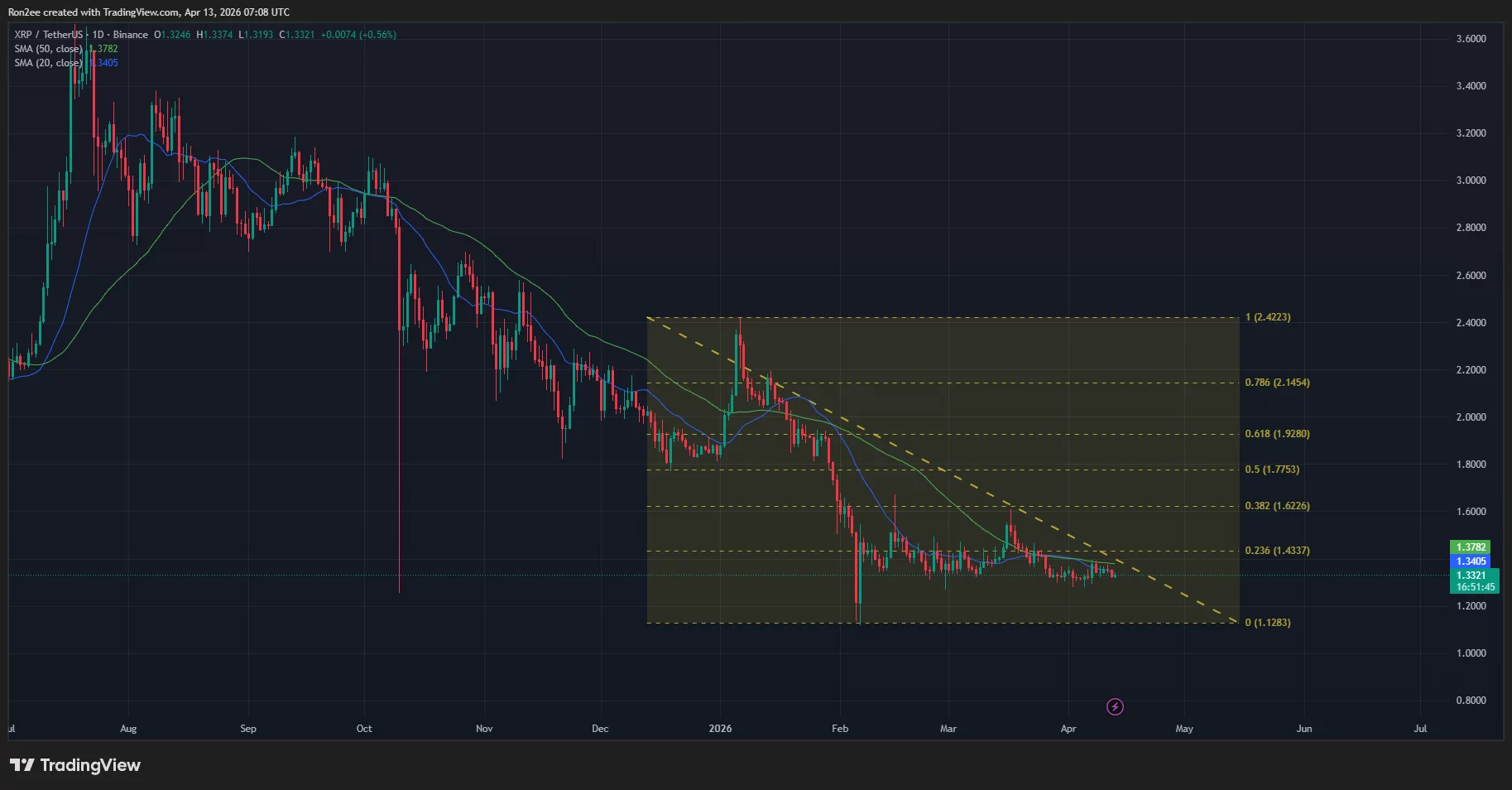
XRP price has remained in a consolidation phase for the past two weeks as investors remain in a risk-off mood, weighed by the uncertainty of when ongoing geopolitical tensions ease.
Summary
- XRP price remains range-bound between $1.25 and $1.40 for over two weeks, down nearly 16% from its March high as risk-off sentiment persists.
- Rising exchange inflows and $6 billion in whale selling since October signal continued selling pressure, while futures open interest remains subdued.
- Bearish technicals point to a potential drop toward $1.12, though some analysts see a long-term breakout that could drive a major upside move.
According to data from crypto.news, XRP (XRP) price has been trading within the $1.25 to $1.40 range for more than two weeks. Trading at $1.33 at press time, the 4th largest crypto asset by market cap has fallen nearly 16% from its March high.
XRP price crashed shortly after the U.S. SEC and CFTC jointly classified XRP as a digital commodity on March 17, ending years of legal uncertainty from the SEC lawsuit and shifting primary oversight to the CFTC.
Despite the bullish news, once it surfaced, many investors sold the news to lock in profits, which created very strong selling pressure on the XRP token.
Third-party data shows whales have been systematically selling their holdings since October last year. These whales have dumped an estimated $6 billion worth of XRP since then, as they used every price bounce as an opportunity to exit their positions.
The token’s price has also been suppressed by the tension in the Middle East, which has lowered investor risk appetite and impacted the broader crypto market.
It continues to remain at risk of more downside as investors continue to move their XRP holdings to exchanges. Data from CoinGlass shows that nearly $160 million worth of XRP has been moved to exchanges over the past two days. If these investors were to sell their coins, it could trigger a deeper correction.
This comes as the open interest in the XRP futures market has been stalling around $2 to $3 billion for more than a month now, significantly lower than the $9 billion level recorded in October last year, a sign that derivatives traders have lost interest in the token.
The daily XRP chart suggests that the token could be set for more downside in the short term. Notably, the 20-day SMA has formed a bearish crossover with the 50-day SMA, a sign that momentum is turning bearish.
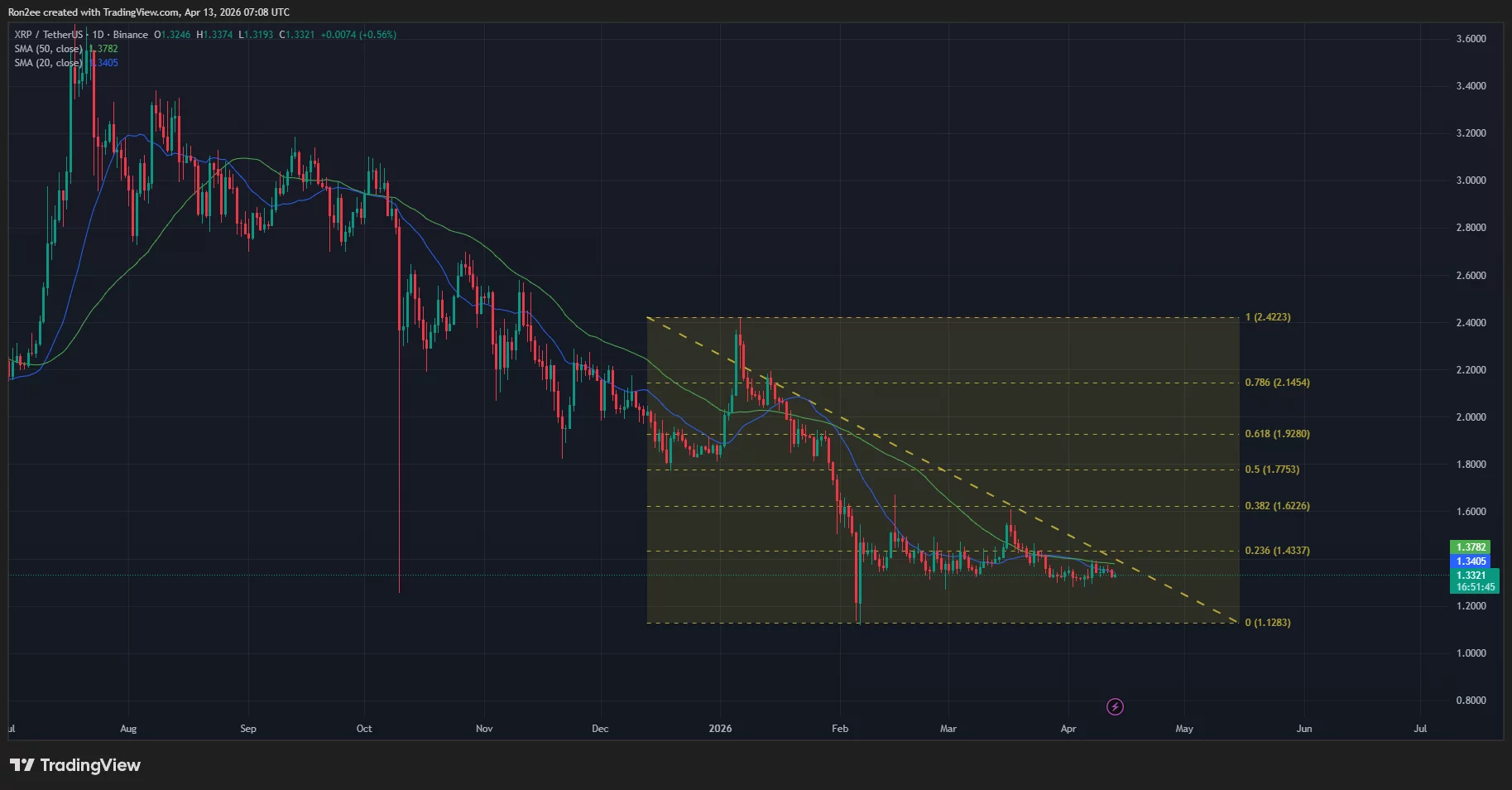
XRP price has also slipped below the last line of defense at $1.43, which represents the 23.6% Fibonacci retracement level drawn from the Jan. 6 high to the Feb. 5 low.
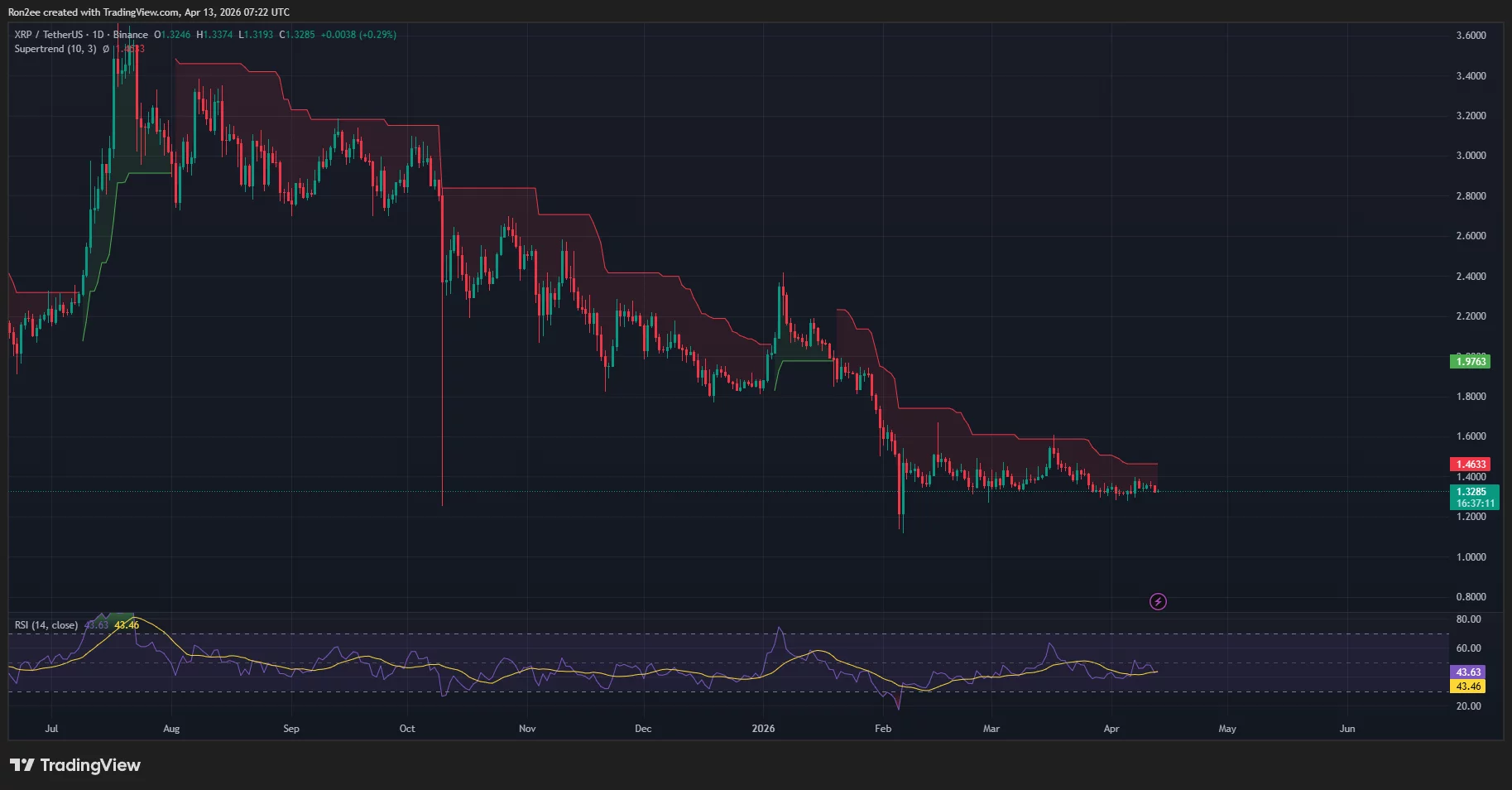
Adding to this, the supertrend indicator has flipped red, and the RSI has dropped below the neutral threshold. Hence, XRP price stands at risk of dropping to the Feb. 5 low of $1.12, with the breach of this support potentially further accelerating the slide towards the $1.00 psychological level.
Despite the bearish outlook presented by the XRP chart in the short term, some analysts maintain a bullish perspective over a longer time frame.
In a recent X post by analyst Ali Martinez, he expects the XRP token to rebound by over 500% over the coming months if it successfully breaks out of a descending triangle pattern that has been developing on the monthly timeframe for nearly nine years. See below:
Disclosure: This article does not represent investment advice. The content and materials featured on this page are for educational purposes only.
Crypto hacks are nothing new, but cases where attackers take big risks and walk away with peanuts aren’t common. That rare scenario played out on Sunday.
An attacker exploited a vulnerability in Hyperbridge’s cross-chain gateway that connects different blockchains, minting 1 billion Polkadot tokens ($1.19 billion) on Ethereum and dumping them for approximately $237,000 worth of ether.
The exploit adds to a growing list of bridge vulnerabilities in 2026. Last month saw a $270 million Drift Protocol drain on Solana, while a social engineering attack, rather than a code exploit, similarly involved compromised infrastructure.
The Sunday exploit targeted the bridge contract, not Polkadot’s core network. Polkadot’s native token DOT was unaffected. The vulnerability sat in how Hyperbridge’s EthereumHost contract validates incoming cross-chain messages before passing them to the TokenGateway.
Bridges, which help move coins from one blockchain to another, remain the weakest link in cross-chain architecture because they hold admin-level control over token contracts on destination chains, meaning a single validation failure can grant an attacker the ability to mint unlimited supply.
Here’s how attack unfolded
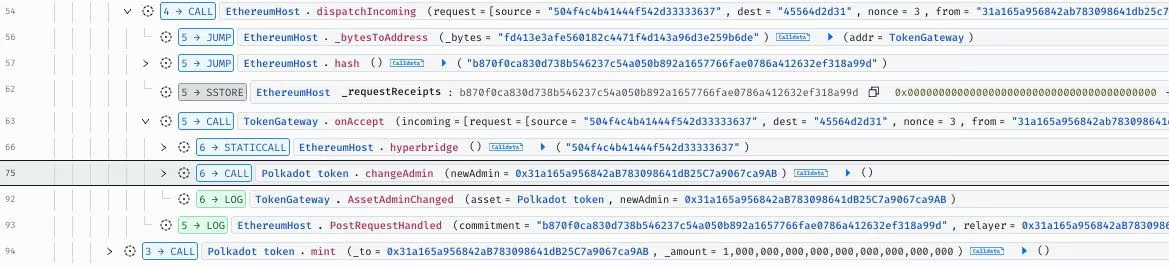
On-chain traces show that the attacker submitted a forged message via dispatchIncoming, which was routed to TokenGateway.onAccept.
The request receipts check, which should have verified the message against a valid cross-chain state commitment from Polkadot, stored an all-zeros commitment value, suggesting the proof validation was either absent or circumventable for this specific call path. The gateway processed the message as legitimate.

The accepted message executed changeAdmin on the bridged Polkadot token contract, transferring admin rights to the attacker’s address. With admin control, the attacker minted 1 billion tokens in a single transaction and routed them through Odos Router V3 into a Uniswap V4 DOT-ETH pool, extracting roughly 108.2 ETH across what appears to be multiple swaps at slightly different prices.
Liquidity worked against the attacker
Weak liquidity/depth, or the market’s ability to absorb large orders at stable prices, is usually a major issue for whales. But, in this case, it worked against the attacker, capping its profit.
The bridged DOT pool on Ethereum held limited depth, meaning 1 billion tokens overwhelmed the available liquidity and the attacker received a fraction of a cent per token.
On a deeper pool or a higher-value bridged asset, the same vulnerability would have produced significantly larger losses. DOT trades just under $1.20 as of Asian morning hours on Monday.
CertiK flagged the exploit, confirming the attack vector was the Hyperbridge gateway contract and that the attacker profited approximately $237,000 from minting and selling the bridged tokens.
Hyperbridge has not publicly commented on the exploit or disclosed whether other bridged token contracts using the same gateway are vulnerable to the same forged-message attack vector.

For decades, the internet has been a giant messaging system. Data moves. Requests route. Packets find their way across invisible rails.
Now something strange is happening: money is starting to behave the same way.
Not metaphorically. Literally structurally.
We’re watching decentralized finance evolve into a parallel internet layer—one that doesn’t just use the web, but mirrors its architecture.
And once you see it, you can’t unsee it.
The Internet Was Built for Data. DeFi Is Rebuilding It for Value.
Traditional finance looks nothing like the internet.
It’s slow. Centralized. Permissioned. Every transfer is a bureaucratic event dressed up as a transaction.
But DeFi flips the model.
On networks like Ethereum, value becomes natively digital, programmable, and composable. It doesn’t “move” through institutions—it routes through protocols.
That’s the key shift:
The internet moved information. DeFi moves capital.
And once capital becomes “packetized,” everything changes.
Financial Routing Protocols Are Replacing Banks
In the traditional web, routers decide how packets travel.
In DeFi, protocols decide how money flows.
Decentralized exchanges like Uniswap act like liquidity routers. Lending markets behave like bandwidth allocation systems. Yield strategies resemble automated traffic optimization.
There’s no single bank deciding your path.
Instead, there’s a constantly updating network of smart contracts negotiating where your capital goes next.
It’s not finance anymore.
It’s routing logic.
Capital Becomes Packets
This is the mental model shift most people miss.
In Web2:
- Data = packets
- Infrastructure = servers + routers
- Optimization = latency, bandwidth
In DeFi:
- Capital = packets
- Infrastructure = liquidity pools + chains
- Optimization = yield, risk, execution speed
Your money stops being static.
It starts behaving like a traveling signal—split, recombined, rerouted, and optimized in real time.
Even concepts like “portfolio” start to feel outdated. You don’t hold assets—you route exposure.
Wallets Are No Longer Accounts. They’re Nodes.
A wallet used to mean: your account at a bank.
In DeFi, a wallet is something else entirely.
It is a node.
On ecosystems like Solana or Ethereum, a wallet doesn’t just store value—it participates in a live financial mesh:
- signing transactions
- interacting with protocols
- staking capital into networks
- bridging across chains
- voting in governance systems
Each wallet becomes a small financial server in a global, permissionless machine.
The implication is uncomfortable:
You are no longer a customer. You are infrastructure.
DeFi as a Network Layer, Not an App Layer
Most people still think DeFi is “apps on the internet.”
That’s outdated.
The better analogy is the OSI layers:
- Internet = data transport layer
- Web2 = application layer
- DeFi = value transport layer
It sits underneath applications, quietly handling how value moves between systems.
You don’t “use DeFi” in the same way you don’t “use TCP/IP.”
You build on it. You route through it. You depend on it without thinking about it.
That’s what a real infrastructure layer looks like.
The Rise of Autonomous Financial Traffic
Once value becomes programmable and composable, something weird emerges:
Self-optimizing money flow.
Strategies already exist that:
- Rebalance across yield markets automatically
- Bridge assets based on gas costs
- Route swaps through optimal liquidity paths
- Stack protocols like financial Lego
The system starts behaving less like a market and more like an adaptive network.
And unlike traditional finance, there’s no central optimizer.
The network optimizes itself.
Sometimes efficiently. Sometimes chaotically. Always irreversibly.
The Uncomfortable Truth
If this trajectory continues, DeFi won’t just disrupt finance.
It will redefine what “financial systems” even mean.
Banks won’t disappear overnight. But they may slowly become irrelevant at the protocol level—like fax machines in an API world.
And the real shift isn’t technological.
It’s conceptual:
Money is becoming native internet traffic.
Not stored. Not processed manually. Not moved through institutions.
Routed.
Closing Thought
We spent 30 years building the internet for information.
Now we’re rebuilding it for value.
And once capital flows like data, the boundary between “internet” and “financial system” stops making sense.
At that point, there is no web and no banking system.
There’s just a single, unified network.
And DeFi is already wiring it together.
REQUEST AN ARTICLE
Key Highlights
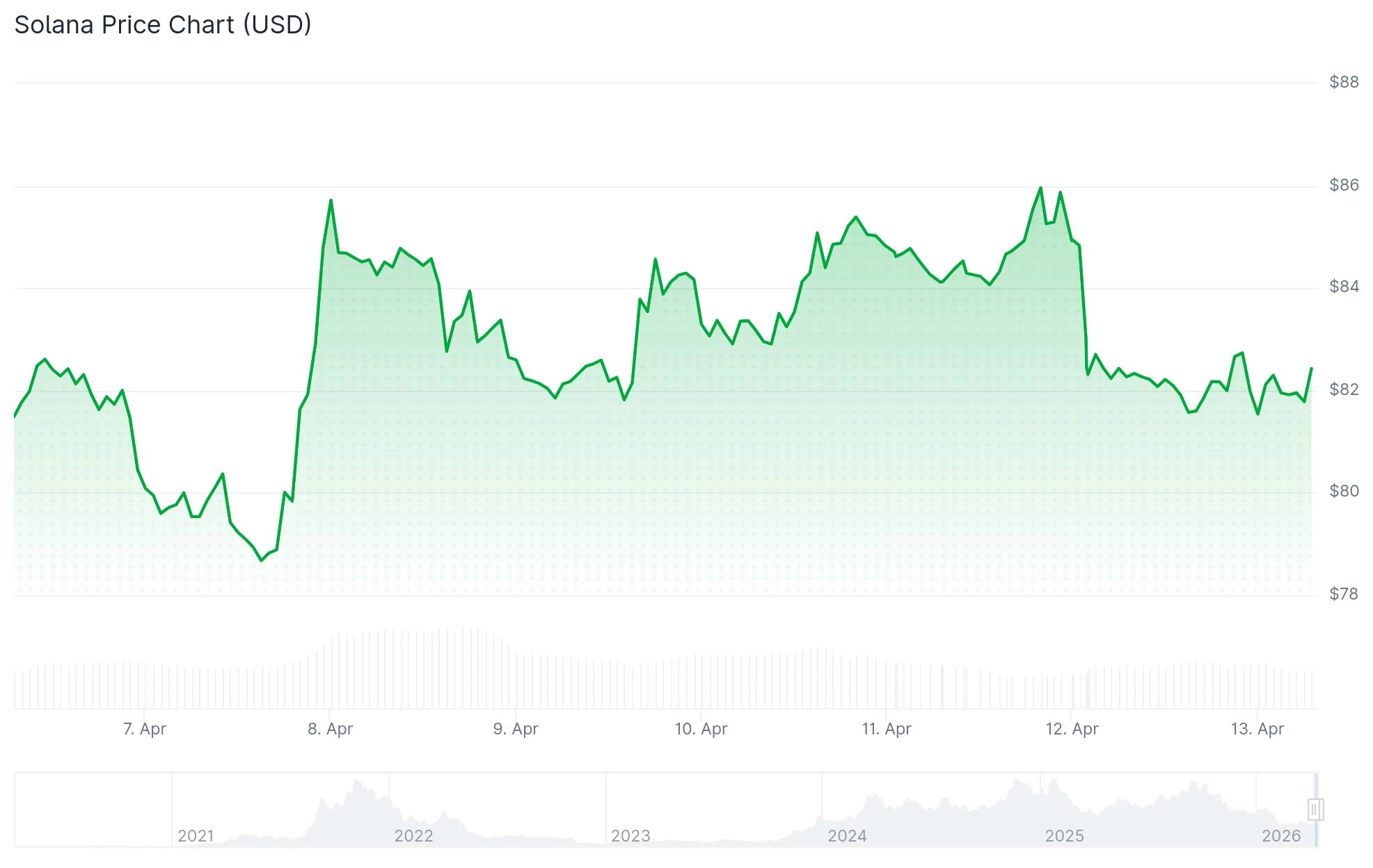
- SOL currently consolidates around $80 facing resistance near $87
- Technical indicators suggest potential move to $88–$90 using Fibonacci analysis
- Weekly timeframe maintains bullish scenario targeting $1,000
- Solana ETFs experienced withdrawals exceeding $17 million during the past week
- Derivatives market shows open interest dropping to $4.72 billion amid declining participation
Solana maintains its position near the $80 threshold at the start of this week after experiencing a 4% decline on Sunday. This downward movement occurred in tandem with a widespread correction across cryptocurrency markets. Trading has remained confined within a defined range, as bullish momentum faces challenges breaking through critical overhead resistance.
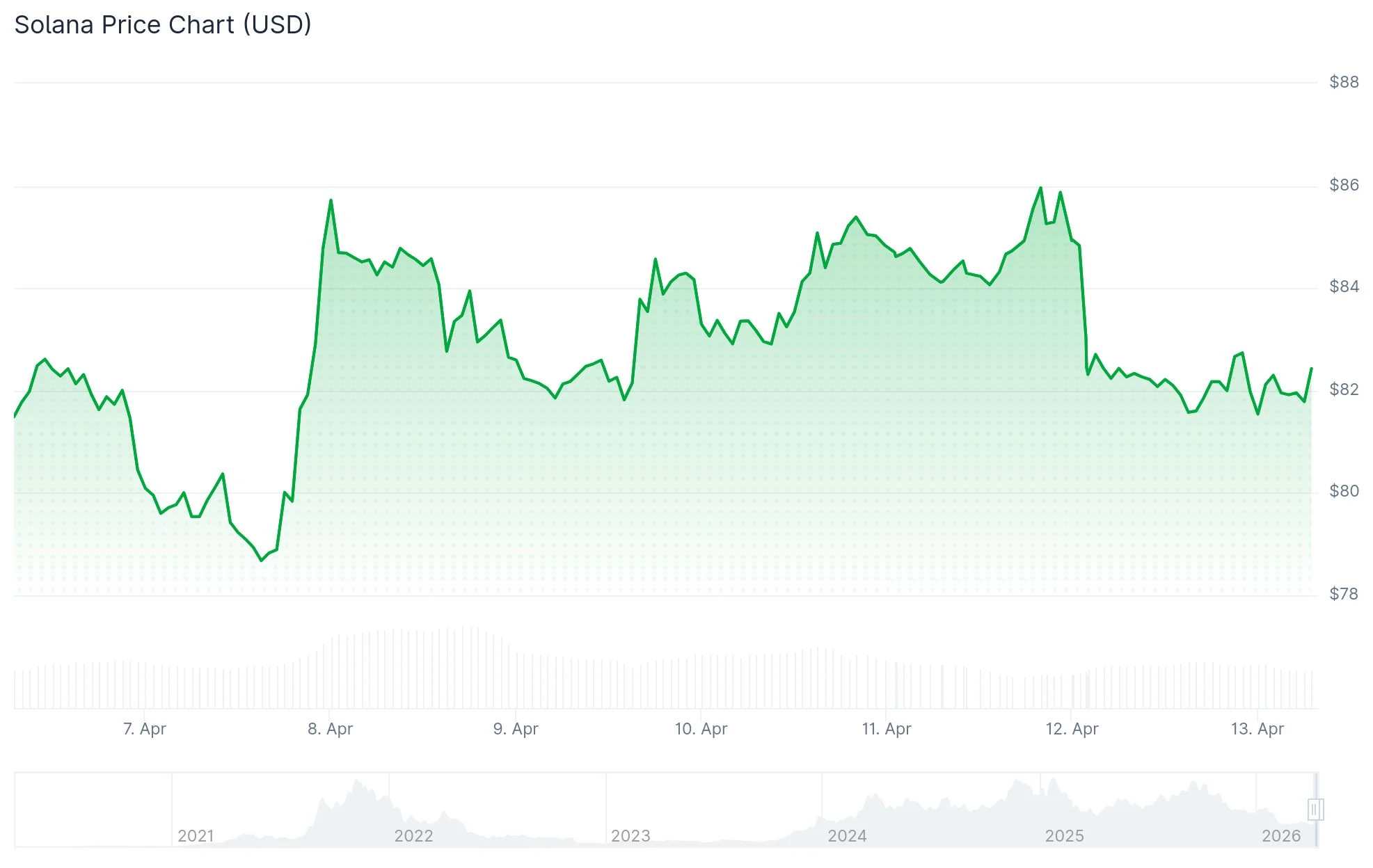
The 50-day exponential moving average currently positions itself at $87.43, coinciding with a falling trendline. This technical level has consistently rejected bullish attempts. Additional resistance emerges from the 100-day EMA at $99.19 and the 200-day EMA at $118.32, creating multiple layers of overhead barriers.
Analyzing shorter timeframes, technical analyst MCO Global identifies a systematic progression toward a Fibonacci-derived target zone spanning $88.13 to $90.01. Multiple wave projections converge on this identical range, establishing it as the next logical upside destination should the current recovery pattern persist.
Downside protection exists between $71.92 and $77.92. The critical support floor rests at $77.60, corresponding to the February 5 low. Failure to maintain this level could trigger further weakness toward $67.50.
Institutional Withdrawals Weigh on Sentiment
Solana ETF products witnessed withdrawals surpassing $17 million throughout the week. A substantial redemption early in the period accounted for the majority of this total. Friday brought $11.45 million in fresh capital, reducing the weekly net outflow to $5.62 million.

This represents the third consecutive week of negative net flows for Solana exchange-traded funds. The pattern suggests diminishing institutional demand for SOL exposure at present valuation levels.
Derivatives metrics show open interest contracting to $4.72 billion on Monday from $4.88 billion previously. Funding rates maintain a marginally positive reading, indicating long positions continue to slightly outnumber short positions.
The Relative Strength Index registers below the neutral 50 level, signaling subdued buying pressure. While the MACD indicator trades beneath zero, preliminary signs suggest the bearish momentum may be losing intensity. However, no definitive reversal pattern has materialized.
Weekly Chart Preserves Higher Targets
Technical analyst James Easton highlights the weekly timeframe, suggesting the fundamental structure remains uncompromised. According to his assessment, Solana continues trading within an established ascending channel without violating the broader pattern.
He identifies an ambitious long-term bullish objective at $1,000, contingent upon SOL avoiding significant structural breakdown and ultimately recapturing positive momentum. Through this lens, the current price weakness appears consistent with consolidation rather than trend failure.
The weekly MACD continues displaying muted characteristics without evidence of upward momentum revival. This suggests the extended timeframe bullish scenario remains theoretically viable but requires continued patience from market participants.
Solana’s latest trading data confirms price stability just above $80, with market participants focusing attention on the $87–$90 resistance zone.

Key Takeaways
- The Aave community greenlit a $25M stablecoin funding package for Aave Labs with approximately 75% voting approval
- An additional 75,000 AAVE tokens (valued at roughly $6.8M) were approved with a 48-month vesting schedule
- This decision implements the “Aave Will Win” strategy, transitioning Aave Labs to DAO-supported funding
- Under the revised arrangement, all product revenue generated by Aave will be directed to the DAO treasury
- The Aave Chan Initiative represented the strongest opposition, voting against with 166,200 AAVE
The Aave decentralized autonomous organization concluded a governance vote on Sunday, greenlighting a $25 million stablecoin funding package for Aave Labs alongside an allocation of 75,000 AAVE tokens valued at approximately $6.8 million. Final results showed 522,780 AAVE supporting the measure versus 175,310 opposing it, equating to roughly three-quarters approval.
This governance action, titled the “Aave Will Win Framework: Primary Funding Request,” represents the initial executable component of an expanded strategic vision presented by Aave’s creator, Stani Kulechov.
The approved stablecoin distribution follows a tiered structure. Aave Labs will immediately access a 5 million aEthLidoGHO allocation, followed by a 5 million distribution streamed across six months, and an additional 15 million streamed throughout 12 months. The accompanying 75,000 AAVE tokens will unlock progressively over four years from the DAO’s Ecosystem Reserve holdings.
The Aave Chan Initiative, established by Marc Zeller, registered the most significant opposition vote at 166,200 AAVE. This organization had previously disclosed plans to withdraw from its DAO responsibilities by July due to governance quality concerns.
Leading supporters included a wallet associated with ParaFi Capital contributing 190,000 AAVE, delegate “luggis.eth” with 123,580 AAVE, and governance organization Areta committing 75,775 AAVE.
Operational Shifts Under the Approved Framework
The approved structure redirects all revenue streams from Aave’s product ecosystem — encompassing aave.com swap services, Aave Pro, Aave App, and Aave Kit — directly into the DAO treasury. This revenue flow compensates for the DAO’s direct operational funding of Aave Labs.
Moving forward, Aave Labs will concentrate exclusively on Aave-specific product development. The framework additionally confirms Aave V4 as the protocol’s permanent technical foundation. Aave V4 went live on Ethereum mainnet during late March.
In an X platform statement, Kulechov characterized this vote as “the most important proposal in Aave’s history.” He detailed forthcoming initiatives including consumer-facing products, fintech partnership integrations, and pursuing regulatory authorization worldwide to facilitate fiat currency onboarding.
Recent Challenges Within Aave’s Contributor Ecosystem
This governance decision follows a challenging phase for Aave’s contributor community. BGD Labs, a significant technical contributor, terminated its involvement on April 1, citing concerns over centralization trends.
Risk assessment partner Chaos Labs similarly announced its departure last week. Co-founder Omer Goldberg explained that their allocated $3 million budget for 2025 fell substantially below the projected $8 million requirement to effectively support both V3 and V4 protocol versions.
The preliminary temperature check for this framework conducted in early March barely achieved majority support at 52.58%. Detractors suggested that wallets connected to Aave Labs had swayed that preliminary outcome.
Sunday’s binding governance vote demonstrated substantially stronger backing at 75%, reflecting considerable improvement from the initial assessment.
Supplementary funding allocations for growth initiatives and development tied to specific product rollouts — such as the Aave App, Aave Card, and Aave Kit — will proceed through independent governance proposals.
Aave maintains its position as the dominant decentralized lending platform measured by deposit volume. Its total value locked surpasses $25 billion, based on DeFiLlama analytics. AAVE’s token price declined nearly 5% during the 24-hour period surrounding the vote but experienced a modest recovery following passage.
Funding implementation was scheduled for Monday afternoon, initiating the transfer stream to an Aave Labs-managed wallet address.

Instagram Users Can Now Edit Comments Within 15 Minutes

Molly Rainford and Tyler West open up on wedding planning ‘struggle’
ITM Power grants deferred bonus awards to executives


-

 Politics3 days ago
US brings back mandatory military draft registration
-

 Fashion3 days ago
Weekend Open Thread: Veronica Beard
-
 Sports3 days ago
Man United discover Nico Schlotterbeck transfer fee as defender reaches Dortmund agreement
-

 Tech5 days ago
How Long Can You Drive With Expired Registration? What Florida Law Says
-

 Politics18 hours ago
World Cup exit makes Italy enter crisis mode
-

 Crypto World4 days ago
Canary Capital Files SEC Registration for PEPE ETF
-

 Fashion7 days ago
Massimo Dutti Offers Inspiration for Your Summer Mood Board
-

 Business2 days ago
Tesla Model Y Tops China Auto Sales in March 2026 With 39,827 Registrations, Beating Cheaper EVs and Gas Cars
-

 Fashion6 days ago
Let’s Discuss: DEI in 2026
-

 Crypto World5 days ago
Bitcoin recovers as US and Iran Agree a Ceasefire Deal
-

 Politics3 days ago
Malcolm In The Middle OG Turned Down ‘Buckets Of Money’ To Appear In Reboot
-
 NewsBeat10 hours ago
Pep Guardiola and Gary Neville agree over Arsenal title problem that benefits Man City
-

 Business3 days ago
OpenAI Halts Stargate UK Data Centre Project Over Energy Costs and Copyright Row
-

 Business2 days ago
Ireland Fuel Protests Enter Day 5 as Blockades Spark Shortages and Government Prepares Support Package
-

 Tech7 days ago
Haier is betting big that your next TV purchase will be one of these
-

 Tech7 days ago
Gamer Restores the Original PlayStation Portal From Two Decades Ago
-

 Tech7 days ago
Save $130 on the Samsung Galaxy Watch 8 Classic: rotating bezel, sleep coaching, and running coach for $369
-

 Politics3 days ago
LBC Presenter Mocks Trump Over Iran War Failures
-

 Crypto World2 days ago
Federal judge blocks Arizona from bringing criminal charges against Kalshi
-

 Tech7 days ago
Garmin Approach S50 review: a mid-range banger that shoots well below its handicap
You must be logged in to post a comment Login