

Crypto World
Crypto News, July 13: Stablecoin Market Cap Drops Amid Memecoin Rotation as CLARITY Act Advances, Bitcoin and Ethereum Price Hold Firm


The stablecoin market has lost more than $10 billion since May, but it might not be a warning sign. Instead, money is flowing into memecoins as investors chase higher returns on Robinhood chain. Bitcoin, Ethereum, and the CLARITY Act are now driving price sentiment, with lawmakers expected to unveil an updated version of the bill next week.
Japan added to the optimism during WebX 2026. Prime Minister Sanae Takaichi pledged stronger backing for Web3 through funding and friendlier policies. Fundstrat’s Tom Lee also grabbed headlines after calling Ethereum the settlement layer for the AI economy, a view that continues attracting institutional attention.
— Coin Bureau (@coinbureau) July 13, 2026
 HUGE: JAPAN PM SANAE TAKAICHI REAFFIRMS SUPPORT FOR STARTUPS AND WEB3 AT WEBX 2026
In a video address at WebX 2026, Japanese Prime Minister Sanae Takaichi pledged to strengthen support for Web3 startups through increased funding from government-backed institutions and further… pic.twitter.com/N9vMDTUKK2
Don’t Miss Out on Our $1,000 USDT Airdrop on ByBit
CLARITY Act Progress Lifts Bitcoin Price Sentiment
The CLARITY Act could reach Congress as early as July 17, giving the crypto industry one of its biggest regulatory moments in years. Supporters believe the proposal will finally define which digital assets fall under securities laws and which qualify as commodities. If passed, the CLARITY Act could remove one of the biggest crypto obstacles.
Nevertheless, the Bitcoin price slipped below $63,000 over the weekend amid geopolitical tensions that rattled markets. The drop triggered more than $14 million in long liquidations, yet buyers quickly stepped in before losses snowballed. By Sunday, Bitcoin had settled back into the $63,000 to $64,000 range.

Fresh demand is also showing up elsewhere, with the Coinbase Premium Index climbing back toward neutral after spending 55 straight days in negative territory, showing U.S. buyers are becoming more active again. Not just that, spot Bitcoin ETFs also recorded net inflows after nine weeks of withdrawals, giving bulls another reason for confidence.
As of today, however, Fidelity’s Jurrien Timmer still expects one more shakeout before the next rally, with $60K acts as the bottom. Michael Saylor also fueled speculation of another purchase after sharing his latest Bitcoin tracker update. Another orange dot from him might come soon, as usual.
Another talking point is BIP 110, a proposal that would limit arbitrary data stored in Bitcoin transactions. Critics, including Adam Back and Michael Saylor, argue the change could split the community without solving a meaningful problem. So far, traders have shown little concern as attention stays fixed on the CLARITY Act.
Discover: The Best Crypto to Diversify Your Portfolio
Ethereum Price Draws Institutional Attention
Ethereum price has been moving in a tight range around $1,800 despite a quieter weekend across the crypto market. Price action has slowed, but institutional interest has not.
Speaking at WebX 2026, Tom Lee described Ethereum as the foundation for the coming AI economy. He pointed to growing adoption from financial firms, the Robinhood Chain launch, and improving macro conditions as reasons that Ethereum price may be entering a new cycle.
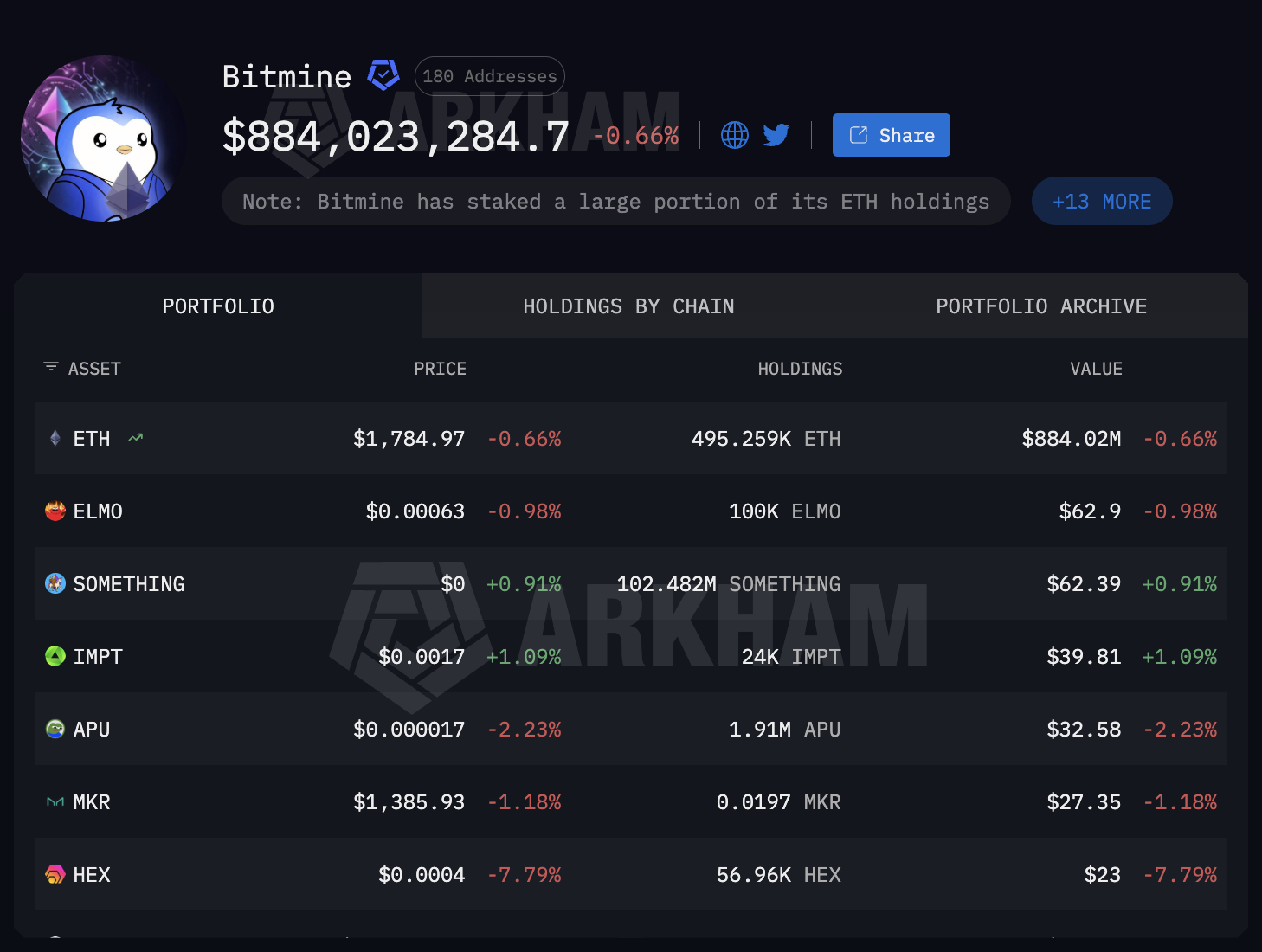
Not just the talk, Tom Lee’s firm, Bitmine, now holds 5.74 million ETH, or about 4.8% of the total supply, and plans to increase that stake. Agreeing with Lee,Ethereum whales also bought another $20.6 million worth of ETH even after several days of exchange outflows.
But that’s not all, ETH network development has also stayed active. The Ethereum Foundation confirmed one of its AI agents detected a validator crashing bug before human researchers verified the issue. A separate Cambridge study found Ethereum’s shift to Proof of Stake reduced electricity consumption by more than 99.9%, strengthening its case among institutions focused on sustainability.
So, with all that news, what should we be expecting this week?
The next few days could prove important for the market. We are watching the CLARITY Act for signs of regulatory progress while tracking institutional buying across both major coins. If those trends continue, Bitcoin and Ethereum price could build on their recent resilience. For now, the move out of stablecoins looks less like an exit from crypto and more like traders rotating into assets with higher upside, while the Ethereum price keeps finding support from long-term buyers.
Discover: The Best Token Presales
Don’t Miss Out on Our $1,000 USDT Airdrop on ByBit
The post Crypto News, July 13: Stablecoin Market Cap Drops Amid Memecoin Rotation as CLARITY Act Advances, Bitcoin and Ethereum Price Hold Firm appeared first on Cryptonews.



Robinhood Chain has renewed debate over how much value Ethereum captures from Layer 2 networks.
Summary
- Robinhood Chain generated $843,000 in fees while paying Ethereum about $1,600 for settlement and availability.
- Critics say the revenue gap weakens Ethereum’s value capture despite rising activity across Layer 2s.
- Supporters argue Robinhood’s tokenized stocks could bring millions of new users into Ethereum-based financial markets.
Ethereum Daily said users paid about $843,000 in fees, while the chain sent roughly $1,600 to Ethereum for data availability and settlement.
Lorenzo Valente, a crypto analyst and contributor at ARK Invest, used an earlier snapshot showing about $816,000 in revenue and $1,538 in Ethereum costs. He estimated that Robinhood retained 89%, Arbitrum received 10%, and Ethereum captured 0.15%. The different totals likely reflect when each account collected the data.
Fee split renews debate over Ethereum’s Layer 2 model
Valente said the figures support two views of ETH. Higher activity can increase the asset’s use as gas, collateral and settlement money. However, Layer 2 networks may keep most user fees, leaving Ethereum with limited direct income from the transactions they process.
“Ethereum won this deal on merit. It’s just not pricing it right,” he wrote.
Robinhood Chain uses Arbitrum technology and posts data to Ethereum. Its licensing structure sends 10% of protocol net revenue to the Arbitrum ecosystem, including 8% for the DAO treasury and 2% for developer support.
Tokenized stocks strengthen the distribution case
Ethereum Daily argued that direct fees show only part of Robinhood Chain’s potential value. Robinhood launched Stock Tokens through Robinhood Wallet in more than 120 countries. Eligible users can trade them around the clock and use them in decentralized applications, including lending pools and collateral markets.
That reach could bring traditional investors into onchain markets through Apple and Nvidia-linked products. Users who begin with tokenized equities may later use decentralized exchanges, stablecoins, lending services and perpetual futures. The outcome still depends on demand, liquidity and continued product access.
Joseph Lubin supports low Ethereum fees
Ethereum co-founder Joseph Lubin defended the low-fee model. He wrote, “Ethereum L1 revenue fees should stay low to foster growth.” Lubin expects more companies to build across Ethereum mainnet, Layer 2 networks and private Ethereum-compatible chains in coming years.
His case focuses on wider ETH demand rather than immediate settlement income. More networks may use ETH for gas, collateral and staking. Mainnet transactions can also burn ETH. Still, the approach leaves an open question over whether Ethereum receives enough revenue from businesses operating above it.
Robinhood Chain records fast early growth
Robinhood launched the public mainnet on July 1 as an Ethereum Layer 2 built with Arbitrum. The company designed the network for real-world assets, trading and decentralized finance. Uniswap, Chainlink, Morpho and other providers supported the chain at launch.
As previously reported, Robinhood Chain passed $70 million in bridged Ether and $100 million in total value locked. Daily Uniswap volume later reached about $500 million, while the network processed millions of transactions. Lending products and incentive-linked strategies supplied early liquidity.
Separately, a crypto.news review found that the network produced $570 million in early trading volume against about $21.7 million in launch-day liquidity. The figures showed strong initial activity while raising questions about liquidity depth and whether usage will continue after early rewards decline.
The debate separates direct fee capture from wider network value. Ethereum receives a small share of Robinhood Chain’s user fees, while Arbitrum and Robinhood retain more. Ethereum may still gain through ETH use, settlement demand and new onchain users, but those benefits depend on sustained activity.


Bitcoin traded near $62,600 on Tuesday, down 0.3% over 24 hours and roughly flat on the week, per CoinDesk data. The market is steady on the surface but the macro backdrop underneath it has turned.
President Trump reinstated the U.S. blockade of Iranian ships through the Strait of Hormuz and demanded a 20% fee on all other cargo moving through the waterway, reviving a conflict that a June peace deal had appeared to settle.
Brent crude rose as much as 2.8% to about $85 a barrel, its second day of gains, and traders lifted bets on a Fed rate hike.
That combination runs directly against crypto. Oil pushing higher feeds the inflation pressure that kept the Fed hawkish through June, and the easing of that pressure was much of what let bitcoin recover from its late-June lows near $58,000. The peace trade is now unwinding, and rate-hike odds are climbing back.
Bitcoin has spent a month between roughly $59,000 and $66,000, and the majors are mixed. Ether held near $1,783 and is up on the week, while Solana, XRP and Hyperliquid are all down 5% or more over seven days.
Today’s June inflation print is the more immediate test. A soft number would ease the rate-hike pressure the Iran news just revived. A hot one, especially with oil climbing, would stack a second hawkish signal onto the first, two weeks before the Fed meets July 28 and 29.
Most crypto brands disappear because they cannot make anyone feel the difference, not because their technology is weak, according to Jordi Urbea, CEO of Ogilvy Spain. He says sameness, not code, is the real killer.
Urbea spoke with BeInCrypto at the Ibiza Tech Forum 2026. He has spent 25 years helping brands stand out. His verdict on crypto marketing is blunt, and the data backs it up.
Every Crypto Brand Looks the Same
In an expert council interview with BeInCrypto, Urbea argued that crypto advertising has collapsed into one template. Swap the logo, he says, and the message barely changes.
“If you look at the crypto sector and all the advertising, the ads are exactly the same. You change the logo, and it’s the same.”
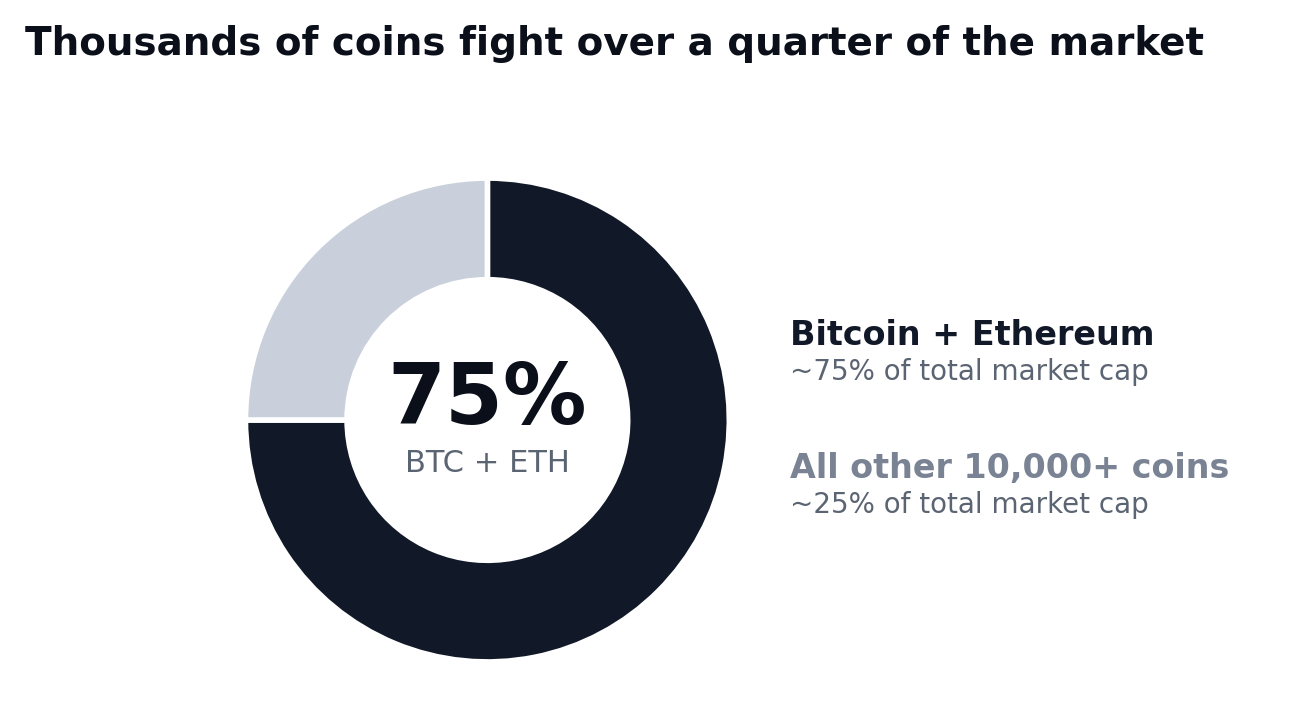
The numbers explain why sameness spreads so easily. Between 150 and 300 new coins launch every week, and roughly 10,700 remain active. Yet Bitcoin and Ethereum hold close to 75% of the total market value.
So thousands of near-identical projects compete for a shrinking slice of attention. In that crowd, a copied message vanishes on contact.

“It’s very strange to find one company that says, ‘This crypto is completely different.’ The rest are just repeating, message by message. And people say it’s boring, it’s all the same.”
Great Technology, No Story
For Urbea, the failure is rarely technical. He has watched strong projects die for a simpler reason.
“For many years I collaborated with many startups, and most of them disappeared because they couldn’t explain the difference between one brand and another. There are people with amazing technology and amazing ideas, but they don’t have the capacity to explain it.”
Startup data backs him almost exactly. CB Insights found the top reason companies fail is no market need, cited in about 42% of cases. Marketing and go-to-market problems account for a further large share.
Running out of money tops some lists at 70%, yet that is the final symptom. The root cause usually sits upstream, in a value no one managed to communicate.

Crypto shows the pattern at an extreme scale. More than 53% of all tokens launched since 2021 have already failed, and 2025 was the deadliest year on record.
Most of those projects were not undone by broken code. They simply never gave the market a reason to remember them.

The Follow-the-Leader Trap
Urbea believes imitation is the mechanism behind the sameness. Teams copy whatever seems to work for a rival.
“In some cases people repeat the formulas that work for others. ‘It goes well for that company, so I’ll repeat it.’ Follow the leader and repeat. But by the tenth message, your brand disappears, your message disappears, and you’re a big ship lost in the night.”
Marketing science adds a useful twist here. Byron Sharp and the Ehrenberg-Bass Institute argue brands grow by being distinctive rather than merely different, because buyers choose fast and rarely study fine detail.
That view sharpens Urbea’s point instead of breaking it. Copying rivals erases the distinctive assets, the voice, colors, and language that let a brand register at all. Without them, recall collapses.
The same logic haunts Web3 marketers who chase trends. When every campaign borrows the same hooks, none of them stick.
Building a Brand Nobody Can Copy
Jordi Urbea has a direct remedy. Stop borrowing formulas and build your own.
“If you create your space, you create your language, you create your own way to work. That is my humble advice.”
The payoff is measurable. Kantar analyzed 40,000 brands and found a strong link between relative uniqueness and the amount consumers are willing to pay. Distinctive brands command higher margins and lower price sensitivity.
Research also shows that fresh, varied advertising lifts recall, while repetition fades fast. A distinct voice is therefore an asset, not a cost.
For crypto founders, the lesson mirrors classic marketing wisdom. Technology may open the door, but identity is what keeps a brand alive.
As automation floods every channel with more content, Urbea’s warning grows louder. In a market of copies, the only safe move is to be impossible to copy.
The post Why Most Crypto Brands Disappear, According to Ogilvy Spain’s CEO appeared first on BeInCrypto.
The US government just staged its seized crypto for an exchange, and it took an extra hop to get there.
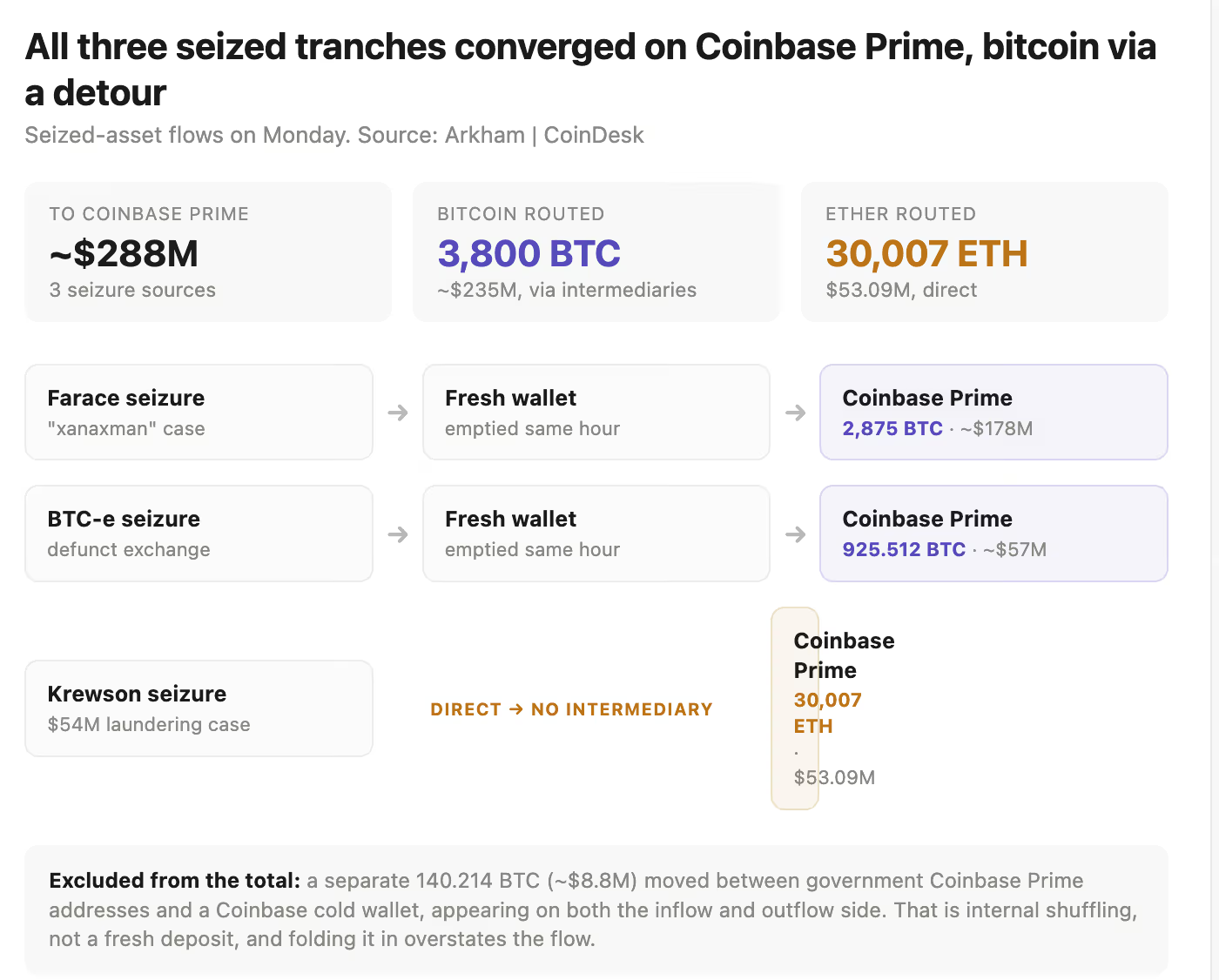
Wallets tied to the government moved about $288 million in seized bitcoin and ether onto Coinbase Prime over roughly half a day on Monday, blockchain data from Arkham shows. The ether went direct, while the bitcoin took a detour through fresh intermediary wallets first.
The movements are despite an executive order in March 2025 by President Donald Trump, which designated seized bitcoin for the country’s Strategic Bitcoin Reserve and said it should not be sold.
A government wallet tied to Ryan Farace, the “xanaxman” case, sent 2,875 BTC worth roughly $178 million to a new address, which forwarded the full 2,875 BTC to a Coinbase Prime deposit wallet minutes later.
A second wallet linked to defunct exchange BTC-e sent 925.512 BTC worth $57 million through the same pattern, in from the seizure address, straight out to Coinbase Prime. Both intermediary wallets were emptied out.

The ether skipped the middle step, however. A wallet connected to Brian Krewson, the Oracle employee named in a $54 million laundering scheme, sent 30,007 ETH worth $53.09 million directly to a Coinbase Prime deposit address.
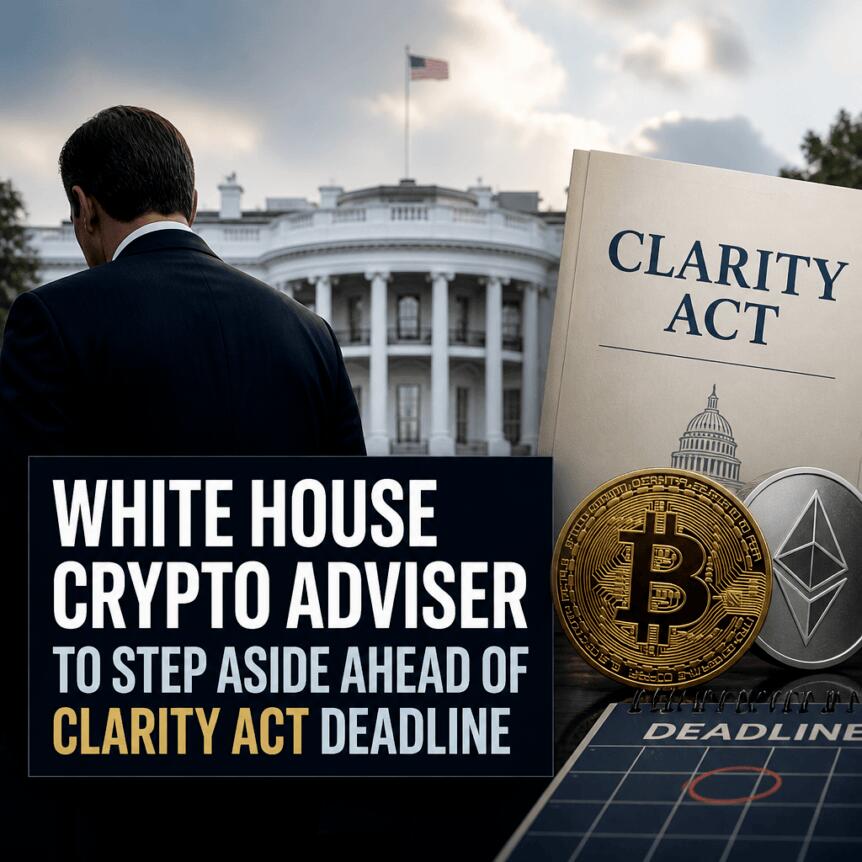
Patrick Witt, the White House point person for the Digital Asset Market Clarity Act, is set to take a leave of absence at the end of July to begin several months of military training, according to Crypto In America. Witt is expected to finish his White House duties on July 24 before reporting for Judge Advocate General (JAG) training with the Georgia Army National Guard.
The timing matters politically: the CLARITY Act is moving through a narrow window in the Senate before lawmakers depart for the Aug. 8 recess, a deadline that supporters have framed as critical for the bill’s odds this session. With Witt stepping away, attention is turning to how the White House’s advisory team will manage ongoing negotiations while the Senate considers the proposal.
Key takeaways
- Patrick Witt plans to wrap up his role by July 24 before starting JAG training with the Georgia Army National Guard.
- Witt’s absence comes as the CLARITY Act faces a tight Senate calendar before the Aug. 8 recess.
- Crypto In America reports that Harry Jung, the President’s Council of Advisors for Digital Assets deputy director, is expected to cover Witt’s responsibilities during training.
- Witt has helped broker talks between crypto and banking stakeholders, including issues tied to stablecoin yield and ethics provisions.
- Witt intends to stay engaged with the process during his training, though day-to-day coverage will likely shift.
Leave of absence as CLARITY hits a Senate deadline
Crypto In America reports that Witt’s military leave will begin after he completes work on July 24. The report describes the subsequent JAG training as qualifying him to serve as a legal officer in the Guard.
While the move is personal, it lands during a period when lawmakers are weighing whether they can advance the CLARITY Act in time. The bill, which would establish what supporters describe as the first comprehensive U.S. regulatory framework for crypto, must clear a narrow path through the Senate before the Aug. 8 recess. Many observers view that break as a point after which legislative momentum becomes harder to sustain.
Digital Chamber CEO Cody Carbone said Witt had previously informed stakeholders about the upcoming military leave. In a comment relayed by Crypto In America, Carbone said Witt had been “forthcoming and honest with every stakeholder” about taking the leave later in July.
Witt’s role in shaping market structure negotiations
Before stepping away, Witt has been described as a central figure in negotiations between representatives from the crypto industry and banking sector. Crypto In America says his involvement has extended to specific areas of the market structure bill, including questions surrounding stablecoin yield and disputes tied to ethics provisions.
Those topics are among the most sensitive parts of any attempt to align crypto rules with traditional financial oversight. Stablecoin yield-related provisions can determine how token holders may earn returns and how issuers structure incentives, while ethics provisions can influence how market participants and institutions manage conflicts of interest.
For investors and builders, the practical takeaway is that the regulatory text under discussion is unlikely to be shaped in a vacuum. Instead, it reflects ongoing negotiation between stakeholders with different incentives—an effort Witt helped coordinate. As the bill approaches a potential Senate push, the continuity of that negotiating function becomes more important.
Who will cover Witt’s responsibilities
According to Crypto In America, the President’s Council of Advisors for Digital Assets deputy director, Harry Jung, is expected to take on Witt’s responsibilities during his training. At the same time, sources cited by Crypto In America say Witt plans to remain involved in the process while he is away.
Cointelegraph attempted to seek comment from both the White House and Witt directly, the report notes. The outcome of that outreach is not included in the provided text, but the expectation is clear: someone else will likely manage the day-to-day coordination even if Witt stays engaged at some level.
That shift could affect the speed and tone of talks as the Senate calendar tightens. Even when a figure remains “in the process,” institutional momentum often depends on who is most actively present during negotiations and as legislative language is finalized.
What to watch during Witt’s training
With Witt stepping away just as the CLARITY Act approaches the Senate’s pre-recess window, the immediate watchpoints are whether the advisory team maintains its negotiating cadence and how remaining issues are handled as lawmakers move toward a vote.
Readers tracking the bill should focus on whether there are substantive changes to language related to stablecoin yield and the ethics provisions that Witt previously helped navigate, and whether Jung’s involvement results in new compromises—or indicates that negotiations are already mostly settled before the July transition. The next few legislative weeks before the Aug. 8 recess may offer the clearest signal of whether the CLARITY Act can keep moving without Witt’s direct presence.
HashKey Exchange, Shanghai Commercial Bank and Visa launched a co-branded credit card in Hong Kong.
Summary
- HashKey members can earn up to 4% rewards, converted monthly into HKD cash vouchers automatically.
- Cardholders may use vouchers to buy supported cryptocurrencies or offset trading fees on HashKey Exchange.
- Shanghai Commercial Bank issues the card, while Visa provides global payment acceptance and transaction infrastructure.
Eligible HashKey Exchange members can apply for the Shanghai Commercial Bank HashKey Visa Signature Credit Card through the two companies’ mobile applications.
The card links everyday spending with rewards that customers can use on the licensed exchange. The program does not pay cryptocurrency directly. Instead, it converts reward points into HashKey HKD Cash Vouchers monthly. Users can apply the vouchers toward crypto purchases or trading fees.
Card offers up to 4% rewards during promotion
Shanghai Commercial Bank’s card product page lists 2% rewards on eligible local spending and 4% on eligible overseas spending during the promotion. New customers may also receive up to HK$1,200 in HashKey HKD Cash Vouchers or HK$1,000 in spending credit, subject to the offer’s terms.
Cardholders earn one point for every HK$1 spent. On each monthly statement date, the program converts 250 points into HK$1 in HashKey HKD Cash Vouchers. Customers receive the vouchers in their HashKey accounts and can use them to buy any supported cryptocurrency or offset transaction fees.
Shanghai Commercial Bank issues and manages the card
Shanghai Commercial Bank issues the card and handles all banking and credit services. HashKey’s credit card disclosure says the exchange does not provide credit or banking services. The bank also decides whether to approve each application.
Applicants must hold a HashKey account, live in Hong Kong and be at least 18 years old. The application starts in the HashKey mobile app before redirecting users to Shanghai Commercial Bank’s app. The card also lights up during contactless payments.
HashKey targets practical digital asset use
HashKey Exchange Business Group CEO Haiyang Ru said the partnership seeks to expand regulated digital asset use beyond trading. He said the company wants to move “beyond speculative trading” by linking digital assets with broader financial services.
Visa Hong Kong and Macau general manager Paulina Leong said the companies aim to connect digital asset services with familiar payment methods. Visa supplies the payment network, while the bank and HashKey manage the card, rewards and customer accounts under their separate regulated roles.
The product follows an October 2025 announcement that Shanghai Commercial Bank and HashKey planned to develop a co-branded Visa card. The July launch moves that plan into a product open for applications by eligible exchange members.
Launch joins Asia’s growing crypto rewards card market
HashKey was among the first exchanges licensed to serve retail crypto customers in Hong Kong. As reported by crypto.news, the platform began licensed retail operations in August 2023 and supports direct bank transfers in Hong Kong dollars and U.S. dollars.
The card arrives as HashKey expands as a publicly listed digital asset company. In June, its board approved a share repurchase plan worth up to HK$100 million after its stock rose from recent lows.
Elsewhere, other Asian finance groups have also linked card spending with digital asset rewards. As previously reported, SBI and Visa introduced a Japanese credit card program tied to Bitcoin, Ether and XRP rewards in May.
The HashKey program uses a different structure. Customers receive HKD-denominated vouchers and choose whether to use them for crypto purchases. That model keeps the credit card, reward conversion and exchange transaction as separate steps, rather than paying cryptocurrency directly at checkout.


Key takeaways
- Stellar (XLM) extends losses as renewed U.S.-Iran tensions fueled a risk-off market environment.
- XLM is currently hovering near critical support around $0.177.
- XLM could test support near $0.173 if selling pressure intensifies.
Stellar (XLM) remains under pressure on Tuesday as investors reduced exposure to risk assets following escalating geopolitical tensions between the United States and Iran.
The broader cryptocurrency market weakened after renewed military developments in the Middle East increased uncertainty, pushing investors toward safer assets while weighing on altcoins.
US-Iran escalation dampens investor confidence
According to reports, the U.S. Central Command (CENTCOM) confirmed that American forces carried out additional strikes on Iranian military targets while maintaining more than 50,000 U.S. troops across the Middle East.
Iranian state-affiliated media also reported strikes in southern Iran, while the Islamic Revolutionary Guard Corps (IRGC) said it had disabled two supertankers in the Strait of Hormuz, accusing them of violating navigation warnings.
The IRGC warned that continued military activity in the region could delay the reopening of the strategic waterway and disrupt global energy supplies.
The heightened geopolitical tensions pushed West Texas Intermediate (WTI) crude oil above $80 per barrel, reinforcing a broader risk-off mood across financial markets and placing additional pressure on cryptocurrencies such as XLM.
Futures market data indicates traders are becoming increasingly cautious on both assets.
According to CoinGlass, XLM open interest dropped to approximately $182.21 million, extending the decline from elevated levels recorded in June.
Falling open interest alongside declining prices often signals that traders are closing positions rather than opening new ones, reflecting weakening market participation and reduced confidence.
Funding rates have also turned negative for XLM and now read -0.0021%. Negative funding rates indicate that short sellers are paying long-position holders, highlighting increased demand for bearish positions in the perpetual futures market.
Stellar (XLM) price analysis: Momentum remains weak
Stellar also continues to struggle as it trades near $0.179, below its major moving averages.
Current resistance levels include the 50-day EMA at $0.186, the 100-day EMA ($0.190), and the 200-day EMA ($0.196)
The RSI remains near 41, reflecting subdued momentum, while the MACD continues to trend in negative territory, suggesting buyers have yet to regain control.

The first major support is located near $0.177, followed by the 78.6% Fibonacci retracement level around $0.173.
If bearish momentum strengthens, XLM could decline toward a broader support zone near $0.142.
Should buyers return, resistance awaits at $0.186, $0.190, and $0.196, with additional upside barriers near $0.200, $0.218, $0.237, and $0.260.


White House crypto adviser Patrick Witt will take a months-long leave at the end of July to complete mandatory military legal training with the Georgia Army National Guard.
Summary
- Patrick Witt will leave the White House for mandatory Georgia Army National Guard legal training.
- Harry Jung is expected to assume Witt’s duties as CLARITY Act negotiations approach their deadline.
- Witt plans to remain involved during training, although his full-time return remains unclear after completion.
The move comes as Senate negotiators work to advance the CLARITY Act before the chamber leaves Washington for its summer break.
Crypto In America reported that Witt is expected to finish his White House work on July 24 and begin Judge Advocate General training on July 27. The program would qualify him to serve as a JAG officer. Witt and the White House had not commented publicly when the report was published.
Witt leaves during a key CLARITY Act phase
Witt serves as executive director of the President’s Council of Advisors for Digital Assets. He has acted as the administration’s main contact for lawmakers, banks, crypto companies and law enforcement groups working on the market structure bill.
The report said Witt helped manage talks over stablecoin rewards, government ethics rules and protections for decentralized software developers. Those areas remain part of Senate negotiations. Witt previously postponed his training from April as discussions continued, but a second delay was reportedly unavailable.
Harry Jung expected to assume responsibilities
Deputy director Harry Jung is expected to take over Witt’s main responsibilities during the leave. Jung has worked beside Witt during negotiations and attended many of the same meetings, according to people familiar with the transition.
Witt plans to remain involved where possible while completing training. However, the report said it remains unclear whether he will return to the White House role full time afterward. His departure will also affect work on the Strategic Bitcoin Reserve, GENIUS Act implementation and proposed crypto tax changes.
Senate calendar narrows bill’s path
The Senate’s official 2026 schedule lists a state work period from Aug. 10 through Sept. 11. That makes Aug. 7 the final scheduled session day before the break. Supporters have treated that date as a major target because the midterm campaign period may make floor action harder later.
As previously reported, Senate staff still need to combine the Banking and Agriculture committee texts before a full chamber vote. The bill likely needs 60 votes, requiring support from several Democrats. Ethics provisions, anti-money laundering rules and decentralized finance protections remain active disputes.
Witt called the current week “critical” for the legislation in a July 13 post. He said lawmakers had already lost time and “cannot afford to delay any longer.” His planned leave starts less than three weeks before the Senate’s last scheduled session day before recess.
CLARITY Act talks continue without chief negotiator
The CLARITY Act would create federal rules for digital asset markets and divide oversight between the Securities and Exchange Commission and Commodity Futures Trading Commission. It would also set requirements for exchanges, customer assets and crypto intermediaries.
The bill has gained support from law enforcement groups, although some organizations still want changes to developer protections and investigative authority. The Federal Law Enforcement Officers Association backed the measure while seeking tighter language for decentralized finance and federal enforcement powers.
President Donald Trump and Senator Cynthia Lummis have also called for passage before the break. The White House transition to Jung offers continuity, but Witt’s absence removes the administration’s main negotiator during the final scheduled weeks before recess later this summer.


Europe’s crypto market is large enough for licensing to change the competitive map. Chainalysis said regional crypto volumes recovered to a monthly peak of $234 billion in December 2024, while Germany, France, the United Kingdom, and other major European markets each received hundreds of billions of dollars in crypto value between July 2024 and June 2025.
MiCAR has now placed this market behind a stricter authorization filter. The transition period ended on July 1, 2026, and Luxembourg’s CSSF said virtual asset service providers are no longer permitted to offer services in the EU without authorization as crypto-asset service providers, or CASPs.
Le Monde reported that about 230 of 1,200 providers secured the European authorization needed to keep operating, while many others withdrew, sought buyers, or lost access to EU clients.
Europe’s Crypto Access Now Runs Through Authorization
MiCAR replaces Europe’s fragmented national registration model with a common EU rulebook for crypto-asset service providers. ESMA says the regulation covers transparency, disclosure, authorization, and supervision for crypto-asset activity, including asset-referenced tokens and e-money tokens.
That changes how crypto companies reach users. A national registration once gave firms a local route into the market.
Under MiCAR, companies serving EU clients need a CASP authorization tied to a specific legal entity, and ESMA has warned that MiCAR protections apply only to the authorized EU entity, not to affiliated companies elsewhere.
This makes licensing part of distribution. Wallets, exchanges, fintechs, merchants, and stablecoin companies need counterparties able to handle regulated crypto services inside the bloc.
Firms without authorization face limits on marketing, onboarding, and service continuity, while authorized providers can become gateways for partners seeking EU access.
OSL Group’s Austrian MiCAR authorization
OSL announced on July 9, 2026, that its European subsidiary had received CASP authorization from Austria’s Financial Market Authority under MiCAR. The authorization allows OSL EU to provide passport-approved services across the 30 countries of the European Economic Area.
The approved service set covers several core parts of crypto market access. OSL said the Austrian authorization covers custody and administration of crypto-assets, spot trading, on and off-ramp and conversion services, and crypto-asset transfers.
Banxa Adds the Payment Layer
Banxa became part of OSL Group after the take-private transaction was completed in January 2026. The purchaser acquired all issued and outstanding Banxa shares for about C$80.36 million, making Banxa a wholly owned subsidiary.
Banxa now acts as the payment processor and crypto exchange while handling payments, compliance and crypto delivery.
This is important because on and off ramps connect regulated financial systems with blockchain networks, and those flows often touch services covered by CASP rules, including conversion, transfer, and custody.
Payment companies with strong distribution but limited licensing may need authorized partners, while licensed firms may need payment networks to make their approvals commercially useful.
Stablecoins and the Licensing Question
Stablecoins add another reason for payment and custody services to converge. TRM Labs said EUR-denominated stablecoins grew from $69 million in monthly volume in January 2025 to $777 million in March 2026, a 12-fold increase over 15 months, with MiCA clarity and exchange integration among the drivers.
At the same time, stablecoin usage still depends on reliable fiat access. Reuters reported in January 2026 that stablecoin circulation exceeded $270 billion, while Visa’s head of crypto said mainstream merchant acceptance remained limited and stablecoin activity still came heavily from trading rather than consumer payments.
That is where the OSL-Banxa structure offers a useful example:
- Banxa brings payment access and conversion;
- OSL EU brings a regulated European entity covering custody, trading, transfers and conversion services.
Together, they show how firms may try to package stablecoin payments, crypto ramps and asset services under one licensing model.
Authorization Still Leaves Commercial Tests
MiCAR authorization gives providers a route into the EEA, but it does not solve every commercial issue. Crypto payment providers still compete on banking access, payment methods, approval rates, asset coverage, pricing, settlement speed, uptime, and partner support.
The post-MiCAR market may become smaller, but it will also become more demanding. Firms seeking European users will assess whether a provider can support local payment habits, maintain fiat liquidity, process refunds, handle compliance requests, and keep service levels stable during market stress.
OSL’s Austrian approval gives the group a regulated European base after the Banxa acquisition. Its value will depend on how effectively the combined business turns authorization into usable payment and trading services across different European markets.
The Wider Trend
Europe’s crypto market is entering a phase where regulatory status controls access. Before MiCAR, companies could build around national registrations, offshore entities and fragmented local approvals.
After July 1, 2026, authorized CASPs occupy a stronger position in the market because they can offer partners a recognized route into the EEA.
That trend may push more consolidation. Payment companies may seek licensed owners or partners. Exchanges may add payment and stablecoin services. Custody firms may expand into conversions and transfers. Banks, fintechs and merchants may prefer fewer counterparties with wider permissions.
OSL and Banxa show how European crypto access is being rebuilt around licensed entities able to connect fiat payments, custody, trading, transfers and stablecoin services.
In the post-MiCAR market, distribution follows authorization, and payment reach will increasingly depend on who holds the license behind the user experience.
The post MiCAR is Turning European Crypto Payments Into a Licensed Market appeared first on BeInCrypto.
Upbit’s reported 24-hour trading volume surged 1,437% today, as South Korea’s KOSPI index tumbled and equity markets across Asia weakened.
The activity spike coincided with a broad regional selloff. Trading turnover jumped even as major benchmark indices in Seoul, Hong Kong, Tokyo, and Taipei all trended lower.
Trading on Upbit Rockets 1,437% as KOSPI Sinks 4%
The turnover reflects heightened trading activity rather than a confirmed shift of capital out of equities. The dollar total reached $4.24 billion as of press time, according to CoinGecko data.
Upbit ranks as South Korea’s largest cryptocurrency exchange by volume. A surge of this size signals a jump in participation across the platform’s markets.
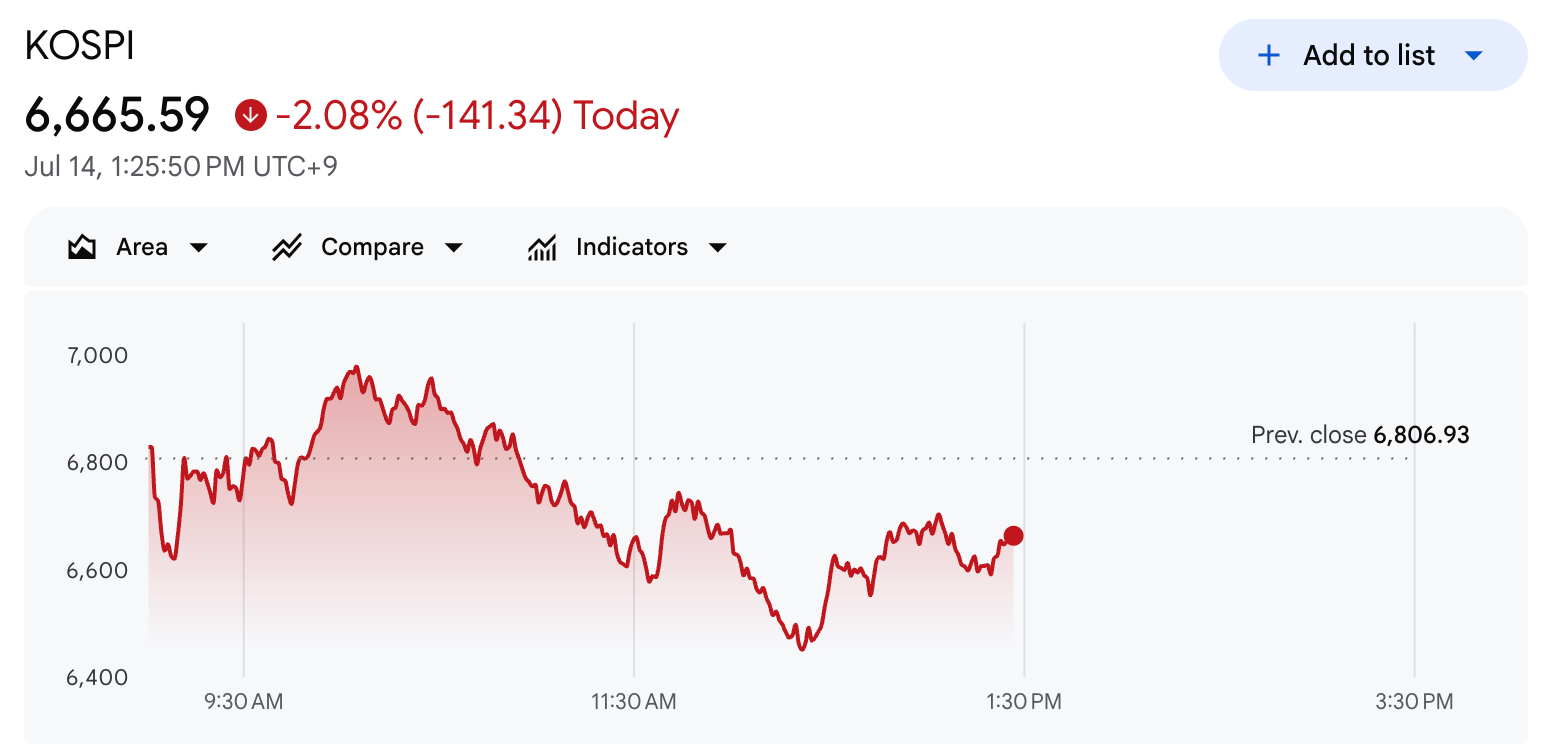
The jump coincided with the KOSPI’s sharp decline on July 14. According to Wu Blockchain, the index fell 4% intraday to 6,534.34 before recovering some ground. It traded down about 2% as of press time.
Follow us on X to get the latest news as it happens

South Korea’s secondary market fared worse. The tech-heavy KOSDAQ Composite dropped 3.97% to 767.66 on the day.
SK Hynix, a major chip supplier, dropped 3.52% after sliding 15% in the previous session. The stock has led losses among Korean technology names.
Nonetheless, Samsung bucked the trend, gaining 2.36% on the day. The split performance points to uneven pressure across the region’s largest technology stocks.
Technology shares carry heavy weight in both Korean indices. Sharp moves in names like SK Hynix and Samsung, therefore, drive much of the daily swing.
Broader Asian markets also weakened. The Hang Seng Index slipped 0.47% to 24,099.89, and Japan’s Nikkei 225 edged down 0.086%. Taiwan’s TAIEX fell 1.93% to 44,503.61.
The coming sessions will show whether the surge marks a lasting increase in Korean crypto trading.
Subscribe to our YouTube channel to watch leaders and journalists provide expert insights
The post Is South Korean Capital Fleeing Stocks for Crypto? Upbit Volume Says Maybe appeared first on BeInCrypto.

What positive change have you watched unfold over many years?
BHP workers to proceed with strike after talks fail, union says

Robinhood Chain generates $843K, pays Ethereum just $1.6K


-

 Fashion5 days ago
Loro Piana Fall 2026 Enters Houston’s Art Scene
-

 Fashion3 days ago
Weekend Open Thread: Nutriplenish Leave-In Conditioner
-
 Tech7 days ago
Anthropic’s new “J-lens” reveals a silent workspace inside Claude that mirrors a leading theory of consciousness
-
 Sports5 days ago
2026 Genesis Scottish Open Thursday TV coverage: Round 1
-

 Sports7 days ago
Joshua Pacio ‘more complete’ ahead of ONE rematch vs Malachiev
-

 Tech6 days ago
Anthropic brings Claude Cowork to mobile and web as usage data shows most users aren’t coding
-

 Sports4 days ago
Super Eagles star Moses Simon opens up on Liverpool transfer regret
-
Sports7 days ago
We have punished the disrespect
-

 Tech5 days ago
Character.AI enters the microdrama arena with its own productions, but there’s a twist
-
 Crypto World7 days ago
Claude AI Created Something Anthropic Never Designed
-

 Crypto World7 days ago
Nasdaq arthritis company holding Moshe Hogeg crypto hits all-time low
-

 Tech2 hours ago
Get Your ESP32 Sunny Side Up With This Solar Dev Board
-

 News Videos5 days ago
Crypto Just Entered Its Most Important 6-Month Candle (Could Decide Everything!)
-

 Tech6 days ago
Keychron is stepping outside keyboards with a $349 Thunderbolt 5 dock aimed at power users
-
 Business6 days ago
ASX 200 Slides Over 0.6% as Rare Earths and Lithium Stocks Tumble Amid Global Semiconductor Sell-Off Today
-
 Business6 days ago
Will Trent shares rebound after Q1 update triggers 13% crash? Here’s what technical charts indicate
-
 NewsBeat5 days ago
Major update after Huntingdon train attack as man enters plea
-
 Tech6 days ago
OpenAI teams with Work Louder to launch Codex-native keyboard, weeks after CEO of Apps told staff ‘not to be distracted by side quests’
-

 Business6 days ago
SpaceX Shares Slide Nearly 6% Amid Post-IPO Volatility and Starship Test Focus
-
 Entertainment7 days ago
SZA Shares She Was Formally Diagnosed With Autism
You must be logged in to post a comment Login