

Crypto World
Crypto Price Analysis May-15: ETH, XRP, ADA, BNB, and HYPE

This Friday, we examine Ethereum, Ripple, Cardano, Binance Coin, and Hyperliquid in greater detail.
Ethereum (ETH)
Ethereum has been hovering just below the $2,400 resistance for over four weeks. With bulls unable to break this level, the price has entered a correction. At the time of this post, ETH is found at around $2,270 and is at a similar price to last week.
Since late April, the momentum on Ethereum has turned bearish on the daily timeframe, and the price appears to be catching up with clear lower highs.
Looking ahead, ETH has formed a large bearish channel with the lower limit at around $2,200. If that level is lost in the near future, then this cryptocurrency is likely to fall to $2,000 next.

Ripple (XRP)
XRP had a good week, closing 6% higher. This comes after the price managed to break out of the blue pennant and rushed towards $1.5. With bulls in control, this cryptocurrency has a real chance to test the key $1.6 resistance next.
As long as the price holds above the pennant, the bias remains bullish. Should the price fall back within the pennant, that would be interpreted as a bearish signal. Right now, the most important support is found at $1.4.
Looking ahead, XRP has been making higher lows and higher highs since April, and the buy volume is increasing. These are bullish signals that will be confirmed once $1.6 becomes support.

Cardano (ADA)
ADA is up 3% this week and has attempted to break the $0.28 resistance. However, sellers returned there to stop the rally, and the price entered into a pullback.
Even if the breakout did not materialize on this first try, it is a major change in price action that finally signals it wants to move higher. Should sellers continue to dominate, ADA could test the $0.25 support.
Looking ahead, this recent rally could suggest Cardano has bottomed around the $0.24 support level. If so, buyers will likely aim to send this cryptocurrency higher, even if it takes them more time. Key resistance levels are found at $0.28 and $0.30.

Binance Coin (BNB)
BNB closed the week 6% higher. This has allowed the price to arrive at the $690 key resistance. At the time of this post, bulls and bears are contesting this level. While momentum favors buyers, it needs higher buying volume to succeed.
Since this cryptocurrency found support at $580, the price has been in a steady uptrend, with daily gains. However, the current resistance may put a stop to this trend.
Looking ahead, Binance Coin needs to break above $690 to end its long consolidation that began in February. The price has been bouncing between $580 and $690 with no clear winners to date.

Hype (HYPE)
HYPE rallied 20% in the past 24h on the news that the USDC sitting on Hyperliquid will use a majority of its native yield to purchase HYPE. This comes after a trilateral agreement among Hyperliquid, Circle, and Coinbase to make USDC the exchange’s native stablecoin.
This development will increase the size of HYPE buybacks, as USDC will provide additional liquidity. In light of that, the price quickly rallied in anticipation of additional buying pressure.
Looking ahead, even if HYPE had a fantastic rally, the price failed to re-enter the blue wedge. For this reason, this could be interpreted as a bearish re-test. Losing the support at $43 would confirm this bias.

The post Crypto Price Analysis May-15: ETH, XRP, ADA, BNB, and HYPE appeared first on CryptoPotato.



The Shiller cyclically adjusted price-to-earnings ratio for U.S. stocks is nearing the 1999 peak seen during the dot-com bubble.
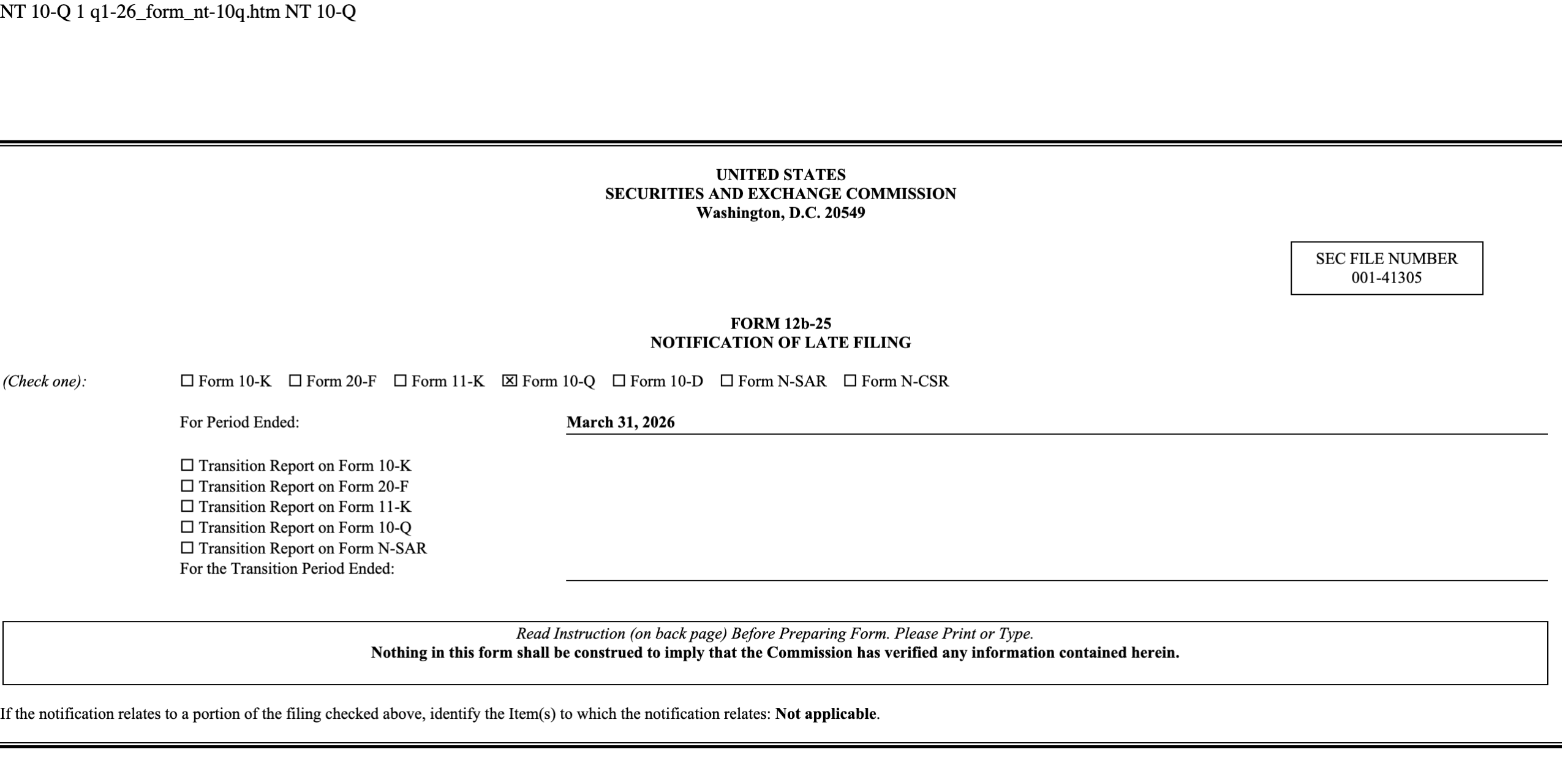
Cryptocurrency ATM company Bitcoin Depot reported “substantial doubts” about the company’s ability to continue operating amid ongoing litigation and a challenging regulatory environment.
In a Form 10-Q filing with the US Securities and Exchange Commission (SEC) on Tuesday, Bitcoin Depot chief financial officer David Gray reported that the company had accrued more than $20 million in legal judgments in the fourth quarter of 2025 and “ongoing litigation matters.” The company also reported “substantial year-over-year declines in revenue” amid US states and municipalities passing laws and regulations banning or restricting crypto ATMs.
“As a result of these factors, management has concluded that substantial doubt exists about the Company’s ability to continue as a going concern,” said the report.
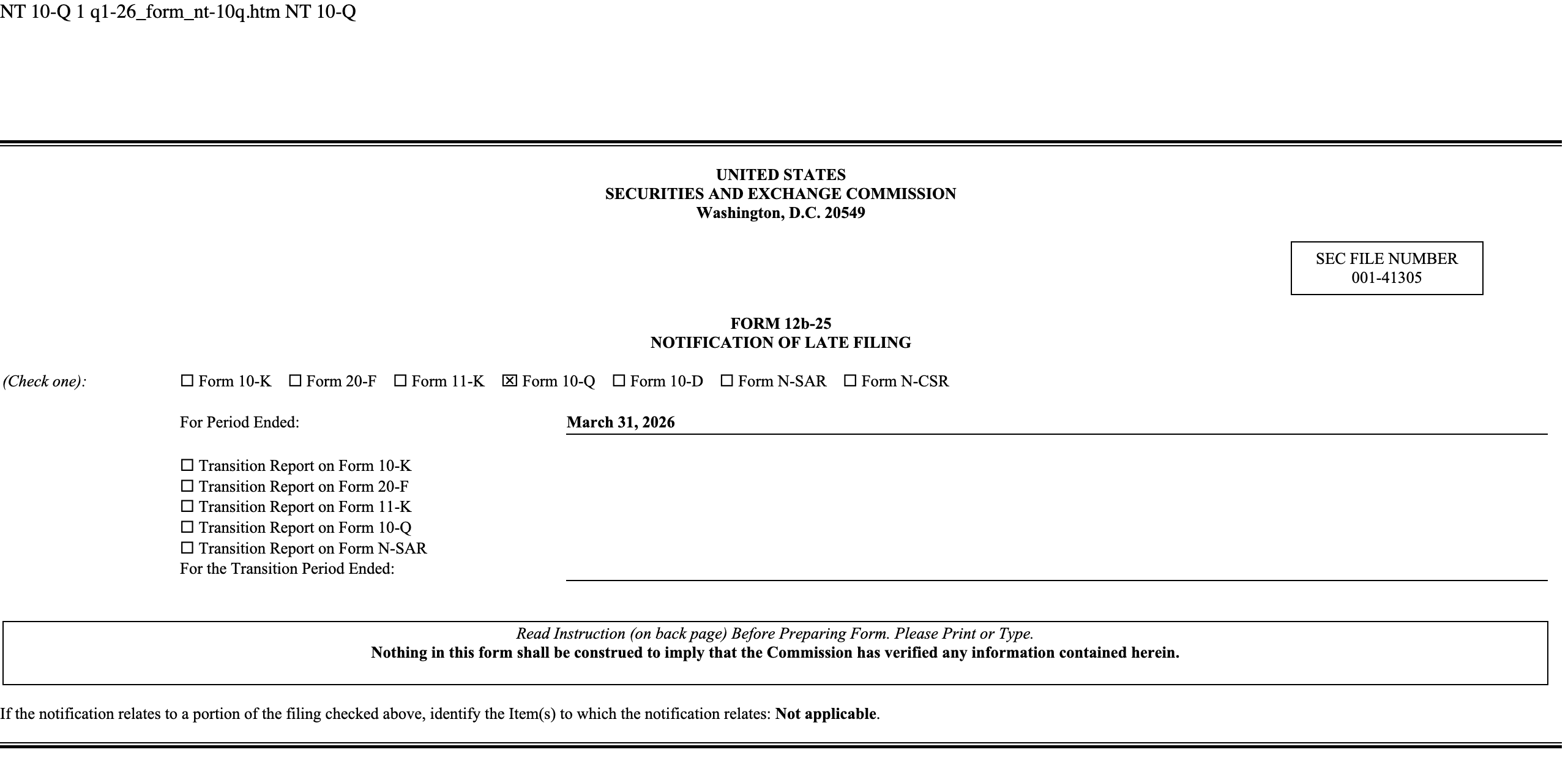
Source: SEC
The litigation affecting Bitcoin Depot included $1.9 million paid to Maine’s Consumer Credit Protection Bureau in January, with the company facing additional lawsuits from Massachusetts, Iowa and other state-level authorities. Individual municipalities have also been passing ordinances or laws restricting crypto kiosks and ATMs amid concerns that residents may be victims of scams.
Related: Crypto ATM losses surge 33% in 2025 as AI superpowers scams: CertiK
According to its SEC filing, Bitcoin Depot reported that its revenue decreased by $80.7 million for the three months ending March 31 compared to that in the first quarter of 2025, “primarily due to a decrease in transaction volume driven by a combination of regulatory impacts and enhanced compliance controls.” The company also reported a net loss of $9.5 million over the same period.
In March, Bitcoin Depot appointed Alex Holmes as CEO, replacing Scott Buchanan, who served in the position for three months. Holmes was the CEO of MoneyGram from 2016 until 2024, where, according to Bitcoin Depot, he had a reputation for “global regulatory compliance.”
Shares of Bitcoin Depot on the Nasdaq under the ticker BTM declined by more than 40% in the previous five days, from $5.01 to $2.93.
Canada weighing countrywide crypto ATM ban
In April, the Canadian government released its Spring Economic Update for 2026, which said policymakers “propose to ban crypto ATMs” in response to scammers and criminals using the machines for money laundering. Under the proposal, Canadians would still be allowed to buy digital assets from brick-and-mortar money services businesses.
Bitcoin Depot reported to have about 220 machines deployed across Canada at the time of publication.
Magazine: ETH stalls at $2.4K five times, SOL to rally to $120: Market Moves


Bitcoin miner turned AI infrastructure operator secures one of the sector’s largest financings as investor demand drives multiple upsizes.
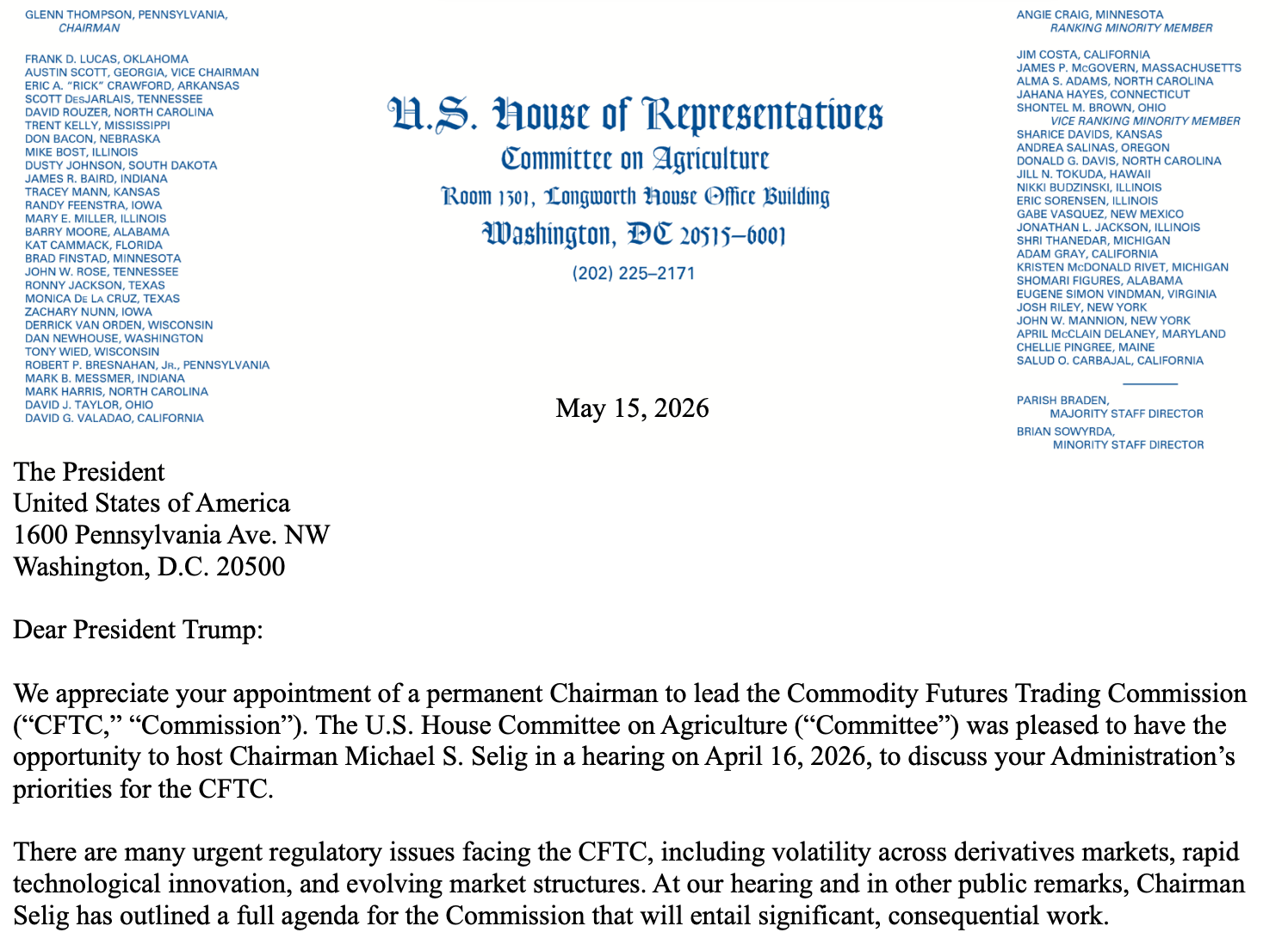
The Republican chair and Democratic ranking member of the US House of Representatives Committee on Agriculture have called on President Donald Trump to fully staff the leadership at a key financial regulator, citing the potential impact of a crypto market structure bill.
In a Friday letter to Trump, House Agriculture Committee Chair Glenn Thompson and ranking member Angie Craig asked the president to “nominate a full panel” of bipartisan leaders for the US Commodity Futures Trading Commission (CFTC). The representatives cited “urgent regulatory issues” facing the US regulator in addition to a “significant rulemaking process” required if the Digital Asset Market Clarity Act (CLARITY) becomes law.
“Ensuring the Commission is well-equipped as the leading derivatives markets regulator in the world is a bipartisan priority for the members of our Committee,” said Thompson and Craig. “A complete commission will allow the agency to best fulfill its mandate of promoting integrity, resilience, and vibrancy of US derivatives markets and will advance US leadership.”
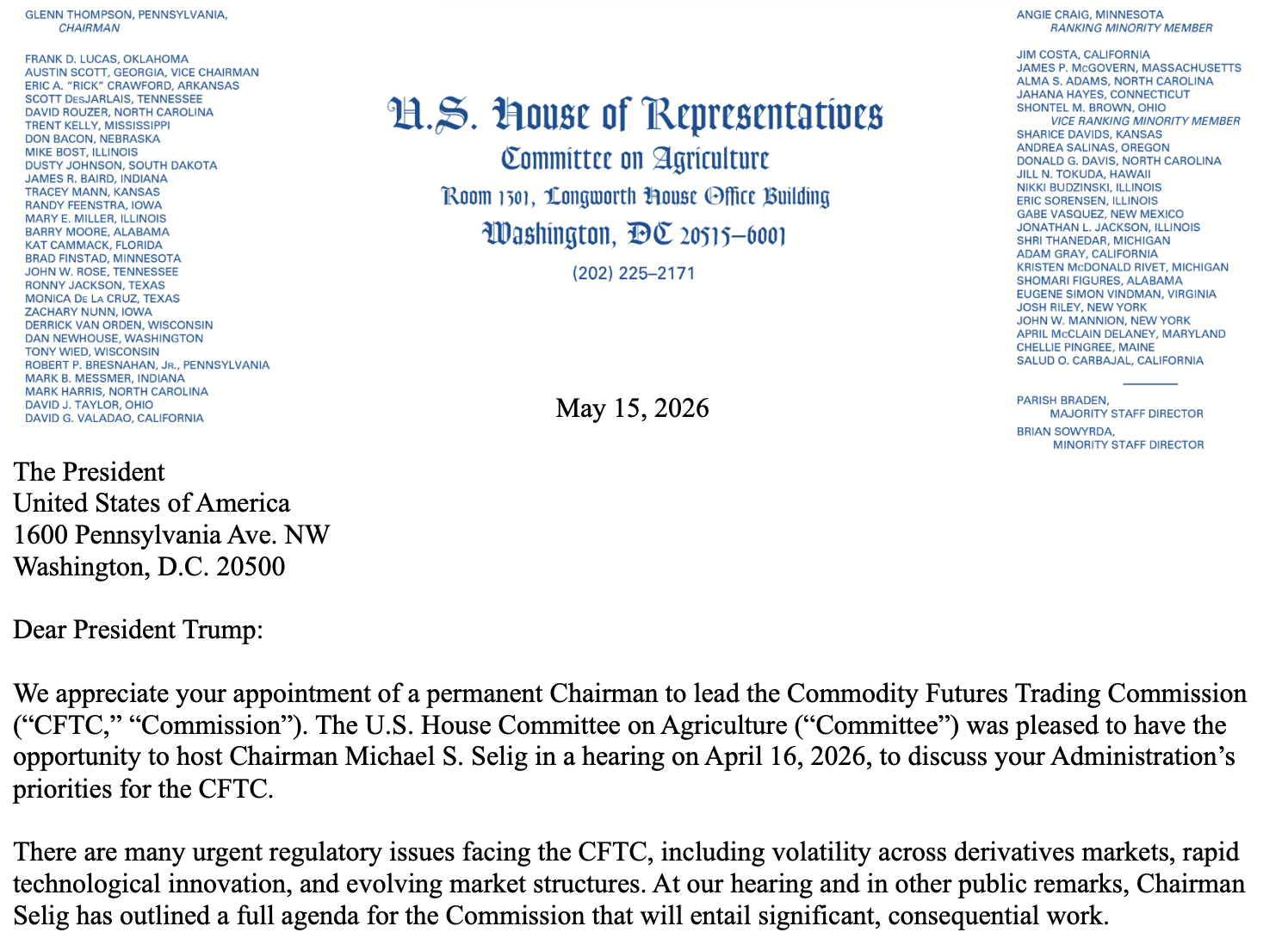
Source: US House Agriculture Committee
Michael Selig is currently the sole commissioner at the CFTC, taking over after the resignation of acting chair Caroline Pham in December 2025. Under Selig, the commission has taken many positions aligning with the administration’s policies, including claiming “exclusive jurisdiction” over prediction markets.
Related: CFTC no-action letter eases event contract reporting rules
In an April hearing with the House Agriculture Committee, Selig said he had no intention of “slow[ing] down” on rulemaking, despite the lack of four other commissioners. The CFTC chair signed a memorandum of understanding with the US Securities and Exchange Commission in March to coordinate oversight of markets, including digital assets.
The CFTC under the CLARITY Act
On Thursday, lawmakers in the Senate Banking Committee voted to advance the CLARITY Act, setting the bill up for a potential floor vote in the chamber. The bill, expected to give the CFTC more authority in overseeing and regulating digital asset markets, would have significant implications for crypto users and companies.
Although the Senate had not scheduled a vote for the bill as of Friday, the dearth of leadership at the CFTC hasn’t gone unnoticed by lawmakers considering crypto market structure. Democratic Senator Amy Klobuchar, who sits on the Senate Agriculture Committee, proposed an amendment to the bill in January requiring that it not take effect “until at least four [CFTC] commissioners” were nominated and confirmed.
As of Friday, Trump had not publicly announced any picks for CFTC commissioners. Any nominations would likely need weeks or months to move through the Senate for consideration and potential votes.
Magazine: ETH stalls at $2.4K five times, SOL to rally to $120: Market Moves

THORChain suspended trading operations after attackers drained over $10 million across several blockchain networks. The exploit affected Bitcoin, Ethereum, BNB Smart Chain, and Base-linked assets through unauthorised withdrawals. Meanwhile, RUNE dropped sharply as trading activity surged across spot and derivatives markets.
THORChain Activates Emergency Halt After Exploit
THORChain paused all swaps and trading operations after security researchers detected suspicious outflows from protocol-linked wallets. The decentralised liquidity protocol triggered its emergency mechanism to reduce further losses and protect liquidity providers. As a result, network validators halted key services across affected chains.
Blockchain investigator ZachXBT reported losses exceeding $10 million on May 15 through multiple compromised wallets. The exploit targeted THORChain router contracts connected to Bitcoin, Ethereum, BNB Smart Chain, and Base infrastructure. Furthermore, researchers traced stolen assets across several token holdings and blockchain addresses.
Security firms identified wallets containing large amounts of Bitcoin, Ethereum, BNB, USDT, USDC, and wrapped Bitcoin assets. Analytics platforms also linked the wallets to rapid fund movements after the exploit occurred. Consequently, THORChain developers and node operators moved quickly to contain broader liquidity risks.
Multi-Chain Exploits Renew Concerns Around DeFi Infrastructure
The latest exploit renewed concerns surrounding decentralised finance interoperability and cross-chain liquidity protocols. THORChain supports swaps between independent blockchains without centralised exchanges or custodians. However, the architecture increases operational complexity and expands possible attack surfaces.
Cross-chain protocols continue attracting hackers because they manage large liquidity pools across multiple blockchain ecosystems. Attackers often target bridge contracts, router systems, and liquidity mechanisms handling cross-chain asset transfers. Therefore, several protocols increased monitoring systems and emergency controls during the past year.
THORChain already faced security challenges in previous years involving smart contract vulnerabilities and operational disruptions. The latest exploit marked another major setback for the protocol during ongoing market volatility. Meanwhile, developers continued assessing the exact technical cause behind the incident.
The attack also followed another major decentralised finance exploit involving KelpDAO earlier this year. KelpDAO reportedly suffered losses exceeding $290 million through a LayerZero-powered bridge vulnerability. That incident also raised concerns about possible contagion risks affecting connected DeFi protocols.
Protocols linked to cross-chain infrastructure remain vulnerable because attackers exploit communication layers between independent blockchain networks. Additionally, rapid transaction execution often complicates response efforts during active exploits. As a result, several platforms introduced automatic shutdown systems and enhanced wallet monitoring tools.
RUNE Drops Sharply While Derivatives Activity Increases
RUNE recorded steep losses after news of the exploit spread across cryptocurrency trading platforms and blockchain communities. The token dropped nearly 12% within hours and reached an intraday low near $0.502. However, trading activity increased sharply as market participants reacted to the security breach.
At the time of reporting, RUNE traded around $0.520 after fluctuating between $0.502 and $0.597 during the session. Trading volume also surged nearly 140% within 24 hours across major exchanges. Consequently, the token ranked among the session’s most active digital assets.
Derivatives activity increased despite falling prices, according to data from CoinGlass. THORChain futures’ open interest climbed above $24.8 million within a short period after the exploit emerged. Binance and Bybit also recorded strong increases in RUNE-linked futures positions.
The sharp rise in futures activity reflected heightened speculative trading following the protocol’s operational halt and security concerns. Traders increased leveraged positions as volatility expanded across cryptocurrency markets during the session. Meanwhile, THORChain teams continued investigating the exploit and monitoring suspicious wallet movements.
The incident added further pressure on decentralised finance platforms already facing regulatory scrutiny and persistent security threats. Cross-chain systems remain important for blockchain interoperability and decentralised asset transfers across networks. However, recurring exploits continue testing confidence in the sector’s long-term operational security.
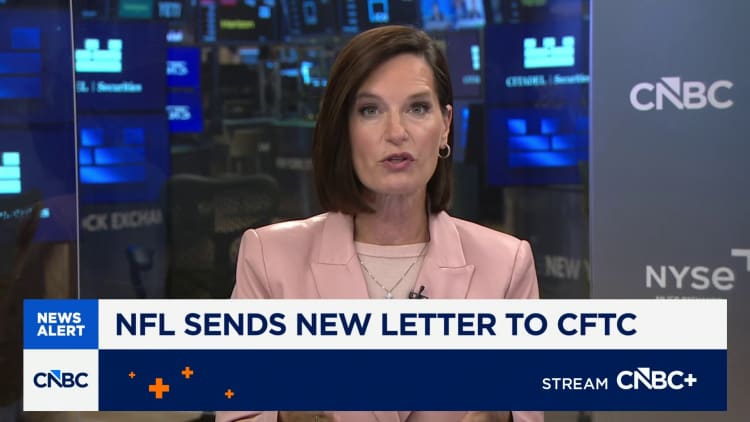

The National Football League outlined to the Commodities and Futures Trading Commission its views on how sports-related prediction markets should be regulated as the industry continues to experience massive growth, according to a letter reviewed by CNBC.
Recommendations include banning certain event contracts and raising the age requirement for participation.
Senior vice president for government affairs and public policy for the NFL Brendon Plack penned the letter on Friday to CFTC Chairman Michael Selig, where regulators are currently in a rulemaking process regarding the markets. Plack said the slew of recommendations are to preserve the ethics of the league.
“These suggestions are aimed at (i) protecting the integrity of the sporting events to which the prediction contracts relate, and (ii) protecting participants in these prediction markets from fraudulent or manipulative behavior,” he wrote.
The NFL wants a number of contracts they deem to be easily manipulable by a singular person banned, like on if a kicker will miss a field goal or a quarterback’s first pass will be incomplete. Contracts on things that are “knowable in advance” like the first play of the game or trading on “inherently objectionable” events like injuries should also be restricted, the NFL said.
Plack also wrote that the league wants “mentions” contracts for broadcasters, where participants put money on different words they think an individual will say on television, prohibited too.
The NFL also called for raising the age requirement for participants in sports-related prediction markets to 21 years old. That would align with typical age requirements for online sports betting, but prediction markets currently allow users starting at 18 years old to trade on their platforms.
Plack consistently refers to state-level gambling regulations as a model to follow when developing guardrails for sports-related prediction market contracts. He even recommends the National Futures Association enter agreements with state gaming regulatory authorities to share data and improve enforcement mechanisms to catch individuals who shouldn’t be allowed to trade.
Michael Selig, President Donald Trump’s nominee to lead the Commodity Futures Trading Commission speaks during a Senate Agriculture, Nutrition, and Forestry Committee hearing on Capitol Hill on Nov. 19, 2025 in Washington, DC.
Andrew Harnik | Getty Images
However, Selig views these markets, including the sports-related ones, as different from gambling. He reiterated to Axios this week that sportsbooks and these contracts are “two separate things.”
The CFTC has taken several states to court over their legal interventions with prediction market platforms. States argue their power to regulate sports betting means they have jurisdiction over these platforms, while the commission argues these contracts are swaps and thus fall under its regulatory power.
Other recommendations from the NFL include a request for the CFTC to create a unique certification process for contracts that are related to an individual player’s performance or susceptible to manipulation. Currently, most event contracts are approved through a self-certification process by the prediction market platforms.
It’s not just public sector regulators struggling with the arrival of these platforms. Sportsbook companies DraftKings and FanDuel parent Flutter have seen their stocks suffer in the past year as prediction markets’ sports business has grown.
Plack also writes the league believes prediction market platforms should enter agreements with sport governing bodies to establish and enforce a list of prohibited participants in sports event contracts, including league employees to minimize chances of insider trading.
The league also believes platforms should be required to ban margin trading, a risky practice where borrowed money is traded, to protect consumers. “The permittance of event contracts that are not fully collateralized, as some have suggested, particularly related to sports markets, could amplify addictive behavior and loss risk,” Plack wrote.
— CNBC’s Contessa Brewer, Jessica Golden and Ananya Chetia contributed reporting
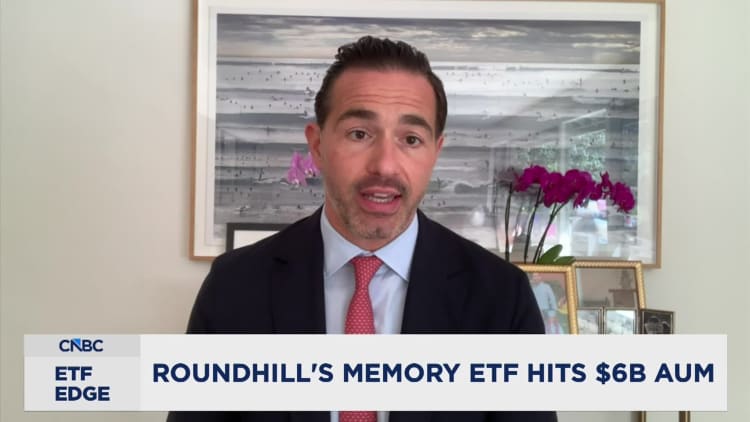

The Roundhill Memory ETF (DRAM) just hit $9.8 billion in assets under management in 43 days— the fastest pace ever for an exchange-traded fund, according to TMX VettaFi.
Ahead of Thursday’s milestone, the CEO of Roundhill Investments told CNBC’s “ETF Edge” the rapid growth is tied to the limited number of companies involved in producing high-bandwidth memory or DRAM chips. They’re considered integral to the artificial intelligence revolution.
“Investors are waking up to the fact that the biggest bottleneck in the AI build-out is actually memory chips,” Dave Mazza said Monday. “There’s an incredible amount of supply and demand imbalance with memory which is one of the reasons why the stocks have been performing so well.”
Mazza notes just a small number of companies are involved in making high-bandwidth memory chips.
“This is an area where memory has historically been incredibly cyclical. We’ve seen boom-and-bust cycles. And, one of the reasons why it was so cyclical is memory is actually found everywhere — in your smart TV to your phone in your car,” he said. “What’s changed is actually data centers and the growth and build-out of AI.”
Mazza estimates the supply and demand imbalance could extend into 2028 due to AI demand and the data center hyperscaler build-out.
‘I’m shocked’
In a special note to CNBC, TMX VettaFi’s Todd Rosenbluth reacted to the DRAM’s popularity, which is considered the hottest ETF since bitcoin mania.
“I’m shocked by the rapid adoption of the ETF, as memory stock demand through an ETF was not pent up like it was for bitcoin exposure,” the firm’s head of research and editorial wrote on Thursday. “Thematic ETFs continue to gain traction by offering exposure to fast-growing companies.”
Citi Research’s Drew Pettit is confident that the strong run will continue.
“The price momentum has earnings momentum backing. So, this is the place where we have seen the best earnings revisions this year in the United States and globally,” the firm’s research director of U.S. equity and ETF strategy told “ETF Edge” in the same interview Monday with Mazza. “If we’re up 300%, but your earnings expectations are up six-to-eightfold for the next few years, it still comes back reasonably priced to us.”DRAM is under pressure during Friday’s trading. But it’s up more than 80% since its inception.
DRAM is under pressure during Friday’s trading. But it’s up more than 80% since its inception.

Key takeaways
- Sui is down 10% on Friday, extending its decline for the fifth consecutive day.
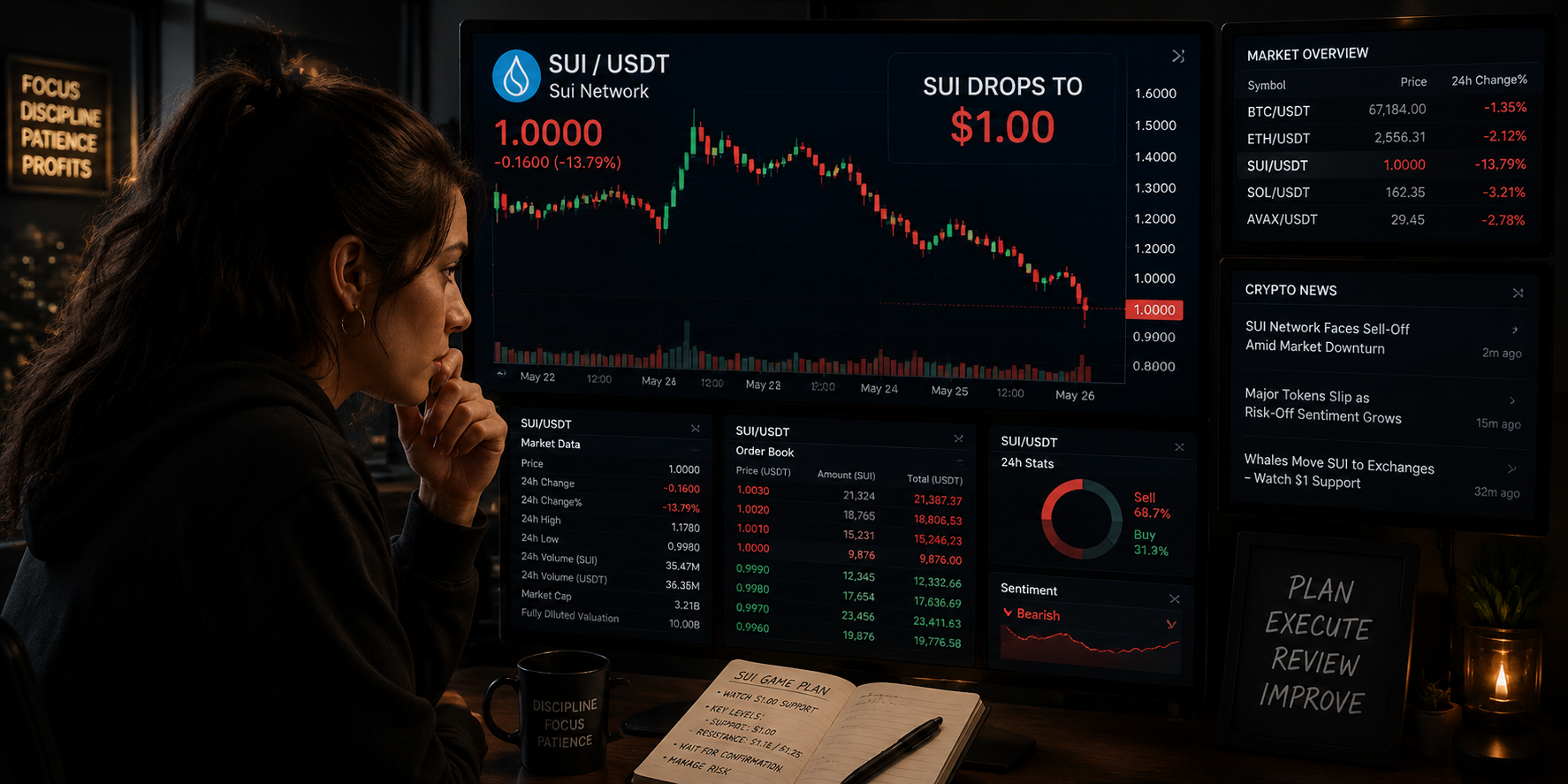
- The technical outlook for SUI is bearish, with a risk of a steeper decline toward $1.00.
Sui (SUI) is down roughly 10% on Friday, continuing a five-day decline this week as retail interest in the token wanes.
The broader market is shifting focus away from underperforming layer-1 assets, and technical indicators suggest a potential double-digit drop toward $1.00.
Weakness in derivatives signals sell-side dominance
SUI is also losing traction in the derivatives market. According to CoinGlass, SUI futures Open Interest (OI) fell 10.5% over the past 24 hours to $727.97 million, reflecting a reduced notional value of outstanding contracts.
In the same period, $7.2 million in positions were liquidated, with $7. million coming from long positions—indicating strong sell-side pressure.
Technical outlook: Will SUI drop below $1?
The SUI/USD 4H chart is bearish and efficient as Sui is down by 10% in the last 24 hours. At press time, SUI is trading below the 50-period Exponential Moving Average (EMA) at $1.1558 and the lower Bollinger Band at $1.1442, showing short-term bearish bias.
The token remains above the 200-period EMA at $1.0270, suggesting that the broader recovery structure is still intact despite waning momentum.
Momentum indicators indicate that the bears are still in play. The Relative Strength Index (RSI) has slipped to 46, below the midline, while the MACD histogram remains in negative territory, implying that rebounds may face persistent selling pressure.
If the bearish trend persists, the bulls would encounter the first support at the 200-day EMA at $1.0270 and the 78.6% Fibonacci retracement at $0.9972.
A daily close below this level could see SUI approach the prior cycle low near $0.8815.

However, if the bulls regain control, SUI could rally towards the first resistance level at $1.2171. An extended rally could see SUI hit the upper Bollinger Band near $1.2900, and the 23.6% Fibonacci retracement at $1.2947.
SUI’s technical structure shows deteriorating momentum, and traders should monitor both spot and derivatives markets for signs of further downside or potential relief rallies.

Regulators are being drawn into a dispute between traditional energy markets and Hyperliquid, the DeFi exchange behind the HIP-3 platform. Intercontinental Exchange (ICE) and the Chicago Mercantile Exchange (CME) have urged U.S. authorities to rein in Hyperliquid’s expansion into commodity markets. Bloomberg, citing unnamed sources familiar with regulatory discussions, reported that executives from ICE and CME view Hyperliquid’s energy-linked on-chain derivatives as exposing energy markets to insider trading, price manipulation, and other risks.
The concerns highlighted by ICE and CME center on the platform’s anonymous and unregulated structure, which Bloomberg describes as a potential vector for sanctions evasion in critical markets such as oil and gas. The report underscores a broader tension: as traditional markets increasingly flirt with on-chain infrastructure, regulators are weighing how to preserve market integrity while not stifling innovation.
Key takeaways
- ICE and CME are pressing regulators to curb Hyperliquid’s foray into energy-linked on-chain derivatives, citing insider trading and price manipulation risks.
- Hyperliquid’s HIP-3, launched in January 2025, enables builder-deployed perpetual futures for any electronically traded asset class by staking 500,000 HYPE tokens.
- Open interest in HIP-3 markets surpassed $2.5 billion by May, signaling growing participation in on-chain commodity instruments.
- The HYPE token has seen notable momentum, rising from roughly $20 to around $44 at the time of publication, with notable short-term upside touted by market observers.
HIP-3 and the floodgates of on-chain commodities
Hyperliquid introduced HIP-3—referred to as “Builder-Deployed Perpetuals”—in January 2025. The model lets any user who stakes 500,000 HYPE, the platform’s native token, construct perpetual futures markets for virtually any electronically traded asset class. In practice, this framework accelerates the migration of traditional market mechanics onto the blockchain, extending the reach of on-chain derivatives into energy-linked products that previously existed only in centralized venues.
The move aligns with a broader industry trend: significant portions of traditional finance are exploring or migrating to on-chain infrastructure, challenging the clear boundary between centralized exchanges and decentralized platforms. HIP-3 markets have drawn substantial attention from traders and liquidity providers, as evidenced by rising open interest and sustained activity, with DeFi data aggregators noting growth through May. The upshot for the market is twofold: expanded access to on-chain derivatives for energy-related assets, and heightened scrutiny from regulators wary of opacity and cross-border implications.
Market response and investor sentiment
Investor reaction to HIP-3 has been pronounced. After HIP-3’s launch, the HYPE token posted significant appreciation. The token surged by more than 58% within three days of the market’s expansion, moving from a roughly $20 threshold to around $38, and was trading near $44 when this report was prepared. Market observers have pointed to the token’s structure, including a 97% allocation of trading fee revenue back into HYPE buybacks, as a driver of demand and price strength over time.
In March, well-known market commentator and investor Arthur Hayes forecast that HYPE could reach as high as $150 per token by August, driven by sustained demand for commodities-linked, on-chain derivatives and the potential to siphon volumes from centralized exchanges. While such forecasts reflect a particular bears-and-bulls perspective, they underscore the degree to which HIP-3 and the broader Hyperliquid ecosystem have captured attention from traders seeking exposure to energy-market dynamics via decentralized channels.
Open interest for HIP-3 markets has continued to climb since inception, with figures showing more than $2.5 billion at the height of May activity, according to DeFiLlama data. This level of liquidity suggests growing confidence among participants in the viability of builder-deployed perpetuals as a mechanism to access energy and other commodity exposures on-chain, even as regulators deliberate how such platforms should be overseen within the broader financial system.
What this means for the crypto and energy markets
The clash between Hyperliquid’s expansion and the concerns voiced by ICE and CME highlights a decisive moment for the intersection of crypto, DeFi, and traditional energy markets. On one hand, HIP-3 represents a deliberate attempt to democratize the creation of perpetual futures, enabling market participants—from retail traders to sophisticated institutions—to design and access new liquidity pools for asset classes previously confined to fiat-native markets. On the other hand, the reliance on a decentralized, semi-anonymous framework raises legitimate questions about market integrity, price discovery, and sanction risk in essential sectors such as oil and gas.
Regulators, for their part, appear poised to weigh potential safeguards or restrictions as Hyperliquid continues to grow. The Bloomberg report suggests that conversations are ongoing, with no immediate regulatory consensus in sight. For investors and builders, the key questions are how HIP-3 markets will be regulated going forward, what risk controls, disclosure standards, or licensing requirements might emerge, and how these dynamics could affect liquidity, funding rates, and on-chain hedging capabilities in energy markets.
Meanwhile, the broader market will be watching how Hyperliquid balances growth with compliance, and whether other traditional financial players will follow the same path toward on-chain commodity exposure. The next developments—regulatory guidance, potential policy shifts, and updates from Hyperliquid about risk controls—will likely shape the pace and shape of continued innovation in on-chain derivatives.
As Hyperliquid’s HIP-3 experiment unfolds, readers should monitor regulatory updates and platform-rules disclosures, as well as metrics on open interest, trading volumes, and the health of the buyback program. The outcome will influence not only the viability of builder-deployed perpetuals but also the broader narrative around the integration of real-world assets with decentralized finance.
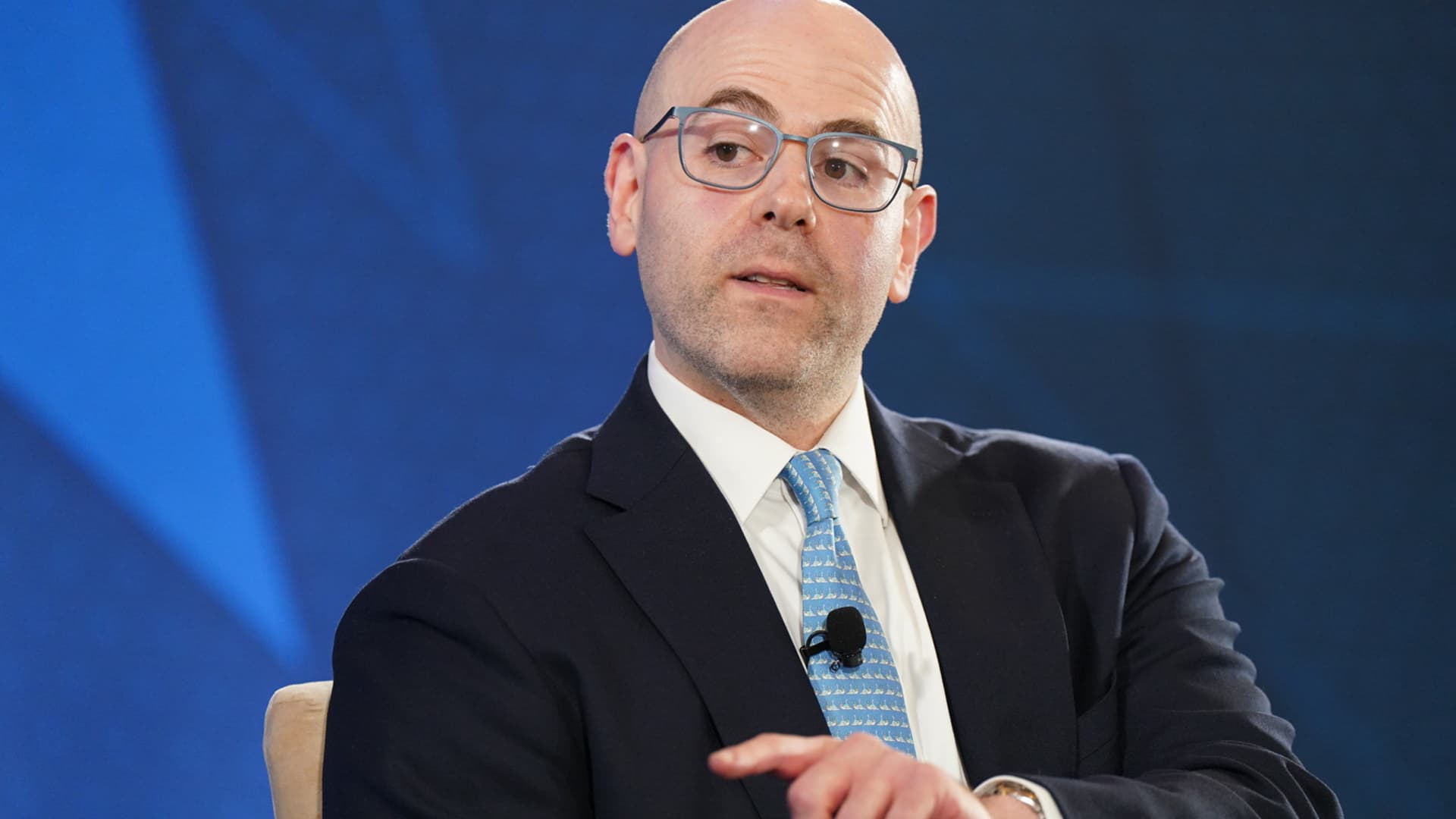
Federal Reserve Governor Stephen Miran speaks with CNBC during the Invest i America Forum on Oct. 15, 2025.
CNBC
Federal Reserve Governor Stephen Miran entered with big ideas about how the central bank should change— radically so, in some cases. As he prepares to step down in the coming days from what will have been the shortest tenure as a governor in 71 years, he appears convinced his ideas are right.
But in a CNBC interview, Miran, 42, made clear that the reality of working at the Fed has tempered his views about how fast those changes can be made. Change is slower than he envisioned.
The Fed is “really a committee,” Miran said. “It’s different than an agency where there’s a very clear executive who just runs the show, and what he or she says goes, and if you don’t like it, you’re out.”
That observation is important for two reasons: First, Miran could return as a governor, potentially before the end of President Donald Trump’s term. Second, incoming Chair Kevin Warsh shares some of Miran’s big ideas.
Warsh was confirmed as the next chair on Wednesday and will take the board seat Miran is vacating. The two won’t overlap.
But Warsh will be forced to reckon with the reality Miran has encountered: a Federal Reserve full of people with their own economic ideas and where institutional change is often glacial.
“You’ve got to convince people,” said Miran, who took his seat in September 2025, filling a position vacated by Adriana Kugler.
Miran said the Fed’s policymakers and staff treated his ideas with an open mind, despite sharp criticisms from outside the building that he represented a threat to Fed independence.
He initially chose not to resign his position as chair of the White House Council of Economic Advisers under Trump while serving at the Fed. He described that as aimed at saving himself the trouble of what could have been a third Senate confirmation in a brief span, but the decision landed poorly amid Trump’s campaign to undermine Powell.
Miran resigned the White House position in February and has no immediate plans to return.
He argues his critics have it backward. He was valuable to the president because he looked at the economic evidence and concluded that interest rates were too high. “I’ve laid out my math,” he said. “I’ve always done what I think is right.”
Miran will end his tenure on the Fed with a rare record of dissenting at every one of the six Fed meetings he attended. That lines up with Trump’s demands for sharply lower interest rates. Even when the Fed cut rates, Miran dissented in favor of larger cuts.
Holding fast
As he exits the Fed, Miran has not much altered his views that rates can and should be much lower.
“If I were writing down dots today, I might have one fewer cut than I did in the last summary of economic projections,” he said. That “dot” on the Fed’s grid of individual members’ rate expectations called for a full percentage point, or 100 basis points, of cuts this year, or three more quarter-point cuts than the median of his colleagues on the Fed.
Miran says he would eliminate just one quarter-point cut now — in other words, calling for rates to be three-quarters of a point lower — because of the cuts the Fed has made already and because “the data has made me a little bit more concerned about inflation.” But he adds, “I still think it’s important to frontload those cuts, because I still don’t think that we should be exerting restraints in the labor market.”
Miran’s push for cuts is based on several other factors, many of them the result of administration policies that he believes will drive down inflation and allow the Fed to run the economy with lower rates.
First is his belief in the positive impact the administration’s deregulation will have on the economy.
“I think that regulations are still underappreciated in terms of how determinative they are for the supply side,” he said. “Saying you’re not allowed to build versus you are allowed to build is night and day … Deregulation pushes up the supply side by allowing producers to produce more with less is disinflationary.”
He estimates deregulation could lop a half a point of future inflation rates, even while he acknowledges the uncertainty created by tariff inflation could hold back some of those gains.
Convincing colleagues
While some of his colleagues still want to take their time studying the concept before incorporating it into policy, he believes he’s made a few converts. “I still think it’s more important than everyone else does, but they’re a lot closer to my view now than they were in September,” he said.
Those colleagues have likely not heard the last word on the potential benefits of deregulation. Fed Chair designee Warsh has called Trump’s deregulatory plans “the most significant since President Ronald Reagan’s.”
Miran’s views on the veracity of the inflation data are another key plank in his arguments for lower rates. In a forthcoming paper, Miran will argue along with two Fed economists that recent software inflation has been artificially inflated by technical factors, distorting headline and core numbers.
Perhaps the most significant of Miran’s ideas is his approach to how he believes a central bank should think about the appropriate policy response to a surge in inflation for a supply shock, such as soaring oil prices now. He says it takes roughly 12 months to 18 months for changes in Fed policy to affect the economy. That sets limits on the kind of price changes that the Fed should be concerned about today, he says.
Consider a clothing company that has had to bump up prices to account for the cost of tariffs, Miran said.
“If you think that a higher tariff is going to boost clothing prices today, there’s nothing you can do about that with monetary policy,” Miran said. The same goes for Iran war’s oil shock, he said. It may push up individual prices today, but the kind of inflation the Fed should care about is an ongoing, upward trend in prices, not one-off events.
“That’s the thing with supply shocks, is that you need to be forecasting more supply shocks,” he said.
The Warsh view
A concern with Miran’s approach is that, if the Fed keeps looking through supply shocks, markets and the public will doubt its inflation-fighting credibility.
It isn’t clear Miran if has persuaded his fellow Fed members to come around to his view. Three dissenters at the most recent meeting said they were worried about inflation.
But they will soon find a louder voice making the same argument around the boardroom table.
Warsh shares Miran’s view that the Fed has gotten tripped in over analyzing micro-level prices, Warsh said at his April 21 confirmation hearing.
“I’m most interested in what’s the underlying inflation rate, not what’s the one time change in prices because of a change in geopolitics or change in beef, but what’s the underlying generalized change in prices in the economy?” he said.
It seems likely Miran will remain an active participant in the Fed debate even after he leaves. He wrote often on monetary policy before he joined the Fed and worked on his research paper on software inflation into the last weeks of his short term.
“I’d love to be back,” Miran said. “But it’s not up to me.” The White House declined to comment on whether Trump is considering it.
Outgoing Chair Jerome Powell has said he will retain his governor’s seat at least until an investigation into renovations at the Fed’s headquarters is completed. Though Powell has not put an end date on when he will leave, and his term runs until January 2028, an early exit would open a board seat.
Were he to return, it would be consequential for Warsh, whom, as Miran has found, will need allies around the table at the Fed.

Spotify’s New All-Time Feature Reveals Your Lifetime Top Artists and Songs in Viral Nostalgia Trip

The U.S. stock market is getting close to dot-com bubble peak valuations
Reese Witherspoon, Ryan Phillippe reunite at son Deacon’s college graduation

Manchester United reach agreement with Casemiro over contract clause amid transfer speculation

US brings back mandatory military draft registration

Steven Gerrard disagrees with Gary Neville over ‘shock’ Chelsea and Arsenal claim | Football


-

 Fashion4 days ago
Coffee Break: Travel Steam Iron
-

 Politics7 days ago
Politics Home Article | Starmer Enters The Danger Zone
-

 Fashion5 days ago
What to Know Before Buying a Curling Wand or Curling Iron
-

 Politics4 days ago
What to expect when you’re expecting a budget
-

 Tech6 days ago
Auto Enthusiast Carves Functional Two-Stroke Engine from Solid Metal
-
 Business6 days ago
Ignore market noise, India’s long-term story intact, say D-Street bulls Ramesh Damani and Sunil Singhania
-

 Fashion6 hours ago
Weekend Open Thread: Theory – Corporette.com
-

 Tech5 days ago
GM Agrees To Pay $12.75 Million To Settle California Lawsuit Over Misuse Of Customers’ Driving Data
-

 Crypto World7 days ago
PROS explodes 48% as Upbit and Bithumb listings ignite demand
-

 Crypto World6 days ago
CZ says US crypto rivals tried to block Trump pardon
-

 Tech4 days ago
GM agrees to $12.75M California settlement over sale of drivers’ data
-
Crypto World3 days ago
Bitcoin Suisse expands with Digital Asset License and Investment Business Act Registration Approval in Bermuda
-

 Crypto World5 hours ago
E-Estate Announces 1 Year Live: Washington DC Summit as Real Estate Tokenization Enters Its Next Phase
-

 Entertainment7 days ago
Bethenny Frankel Says She Loves ‘Torturing’ Men
-
 Crypto World7 days ago
Solana UFO Meme Coins Surge After Pentagon Reveals Alien Files
-

 Politics3 days ago
Pakistan to enter Chinese capital market as war inflation bites
-
 Crypto World7 days ago
Pi Network Hits 421K Mainnet Nodes Ahead of Protocol 23 Smart Contract Launch
-

 Tech18 hours ago
Tech Moves: Microsoft AI leader jumps to OpenAI; former AI2 exec joins Meta; and more
-
 Crypto World1 day ago
Google’s Gemini AI Predicts Incredible Solana Price by the End of 2026
-
 Sports7 days ago
‘Not bothered’ – Michael Carrick gives update on Manchester United head coach role
You must be logged in to post a comment Login