

Crypto World
CZ Denies Viral Rumors of Surfing Accident in Dubai


Changpeng Zhao (CZ) has denied viral rumors of his disappearance after he was allegedly caught in a strong rip current while surfing in Dubai.
The story spread quickly across social media, with traders also rushing in to capitalize on the speculation by launching meme coins on Solana and the BNB chain.
CZ Dispels Surfing Accident Claims
WeChat users circulated the fake news in group chats over the weekend, saying the Binance founder had been surfing near Dubai’s Jumeirah Beach when a sudden rip current dragged him out to sea. The rumors even said that local Coast Guard and rescue teams had deployed speedboats, drones, and helicopters for a search operation in response to police reports.
Zhao has since dismissed the report as “fake news,” taking to his X account to point out the inconsistencies in the social media story. He clarified that while he does participate in kitesurfing, traditional surfing is a completely different sport. The Binance founder later added that whenever he goes kitesurfing, he has a dedicated safety boat following him.
“I don’t surf (kite surfing is a diff sport). Dubai is not even a surfing destination. There is Surf Abu Dhabi, world’s largest surf place, which I havent tried yet,” he wrote.
Accident Rumor Starts Meme Coin Frenzy
Traders were quick to seize the opportunity, launching several meme coins within hours of the news breaking. Tokens appeared on the Solana network, attracting speculators who rushed in to profit from the confusion.
According to data from GeckoTerminal, most of the pools on pump.fun associated with the happening failed to attract substantial liquidity, although one of the meme coins did reach over $114,000 in activity in mere hours. However, the excitement did not last long, as most of these coins lost over 40% of their value after CZ denied the rumor and confirmed he was safe.
The 49-year-old is known for his skeptical view of meme coins, accusing traders of chasing hype by launching tokens tied to his name in the past. Zhao has previously described the trend as “a little weird” and urged developers to focus on building practical blockchain applications instead.
Zhao later emphasized that he had never invested in meme coins following the TST token launch incident last year, which went viral after being promoted as linked to Binance despite having no official connection to the exchange.
The post CZ Denies Viral Rumors of Surfing Accident in Dubai appeared first on CryptoPotato.


Key Takeaways
- SpaceX (SPCX) shares climbed 5.6% in premarket trading Monday, hitting $169.92 following Friday’s impressive 19% Nasdaq launch
- The company’s $75 billion offering represents the largest IPO ever recorded, establishing a market valuation near $2.1 trillion
- Shares are trading at 61 times projected 2026 revenue despite ongoing losses
- CEO Elon Musk indicated on X that annual revenue could surpass $1 trillion within six years
- S&P 500 inclusion remains off the table for a minimum of one year under index eligibility requirements
Space Exploration Technologies made its trading debut Friday on the Nasdaq exchange using the SPCX ticker symbol, finishing the session 19% higher near $161 after launching at $150 per share. During opening-day trading, the stock reached a peak of $176.52.
Space Exploration Technologies Corp., SPCX
Coming into Monday’s session, shares tacked on an additional 5.6% in premarket activity, touching $169.92. The advance coincided with broader market strength, as S&P 500 futures climbed 1.3% following news of an interim peace agreement between the United States and Iran.
The offering generated $75 billion in proceeds, establishing a new benchmark for IPO size. SpaceX finished its inaugural trading day with a market capitalization around $2.1 trillion.
First-day volume exceeded 500 million shares, nearing the approximately 580 million shares that changed hands when Facebook went public in 2012.
If SPCX had qualified for S&P 500 membership, its Monday premarket performance would have placed it fourth among index constituents. Only Micron Technology, Seagate Technology, and Western Digital posted stronger gains.
Building Momentum Early
The three top performers — Micron, Seagate, and Western Digital — have all developed momentum characteristics in recent months, attracting buyers during rallies who anticipate continued appreciation. SpaceX shows early signs of similar investor behavior just two days into public trading.
During a JPMorgan Chase livestream before the listing, Musk revealed that SpaceX has maintained positive cash flow since approximately 2015 and characterized the public offering as launching “a significant growth phase.” He detailed ambitious plans including deploying over 100,000 satellites and establishing artificial intelligence data centers in orbit.
The lofty valuation has drawn skepticism from certain market participants. Current pricing represents 61 times anticipated 2026 sales for a company that remains unprofitable.
Musk took to X on Sunday to suggest SpaceX revenue could exceed $1 trillion by 2030, commenting on a Morgan Stanley projection shared on the platform.
The Expanding Space Industry
Jefferies analysts released research alongside the IPO estimating the worldwide space economy has grown to $600 billion and projects expansion to $1.8 trillion by 2035, with defense applications representing the fastest-growing sector.
The United States government represents approximately 60% of worldwide government space expenditures, totaling roughly $80 billion. The Space Force budget surged 40% year-over-year in fiscal 2026, reaching $40 billion — significantly exceeding NASA’s $24 billion allocation.
SpaceX ranks as NASA’s second-largest commercial partner by contract value, securing $2.1 billion in 2025 agreements spanning launch operations, communications systems, and IT infrastructure.
Jefferies observed that “the U.S. government has effectively outsourced significant space activity to SpaceX, creating an inextricable linkage between federal spending priorities and the company’s business.”
SpaceX remains ineligible for S&P 500 inclusion for at least 12 months following its IPO, according to S&P Dow Jones Indices eligibility criteria.

Crypto traders will hope the week offers a reprieve to months of geopolitical anxiety that has stifled risk assets following Sunday’s announcement of an interim peace deal between the U.S. and Iran.
Bitcoin climbed to nearly $66,000 on Monday, almost 3.5% above Friday’s level, while cryptocurrency-linked equities including Strategy (MSTR) and Galaxy (GLXY) advanced in pre-market trading.
There’s still a note of caution, though. A ceasefire in April fell apart, and U.S. strikes broke another truce last month, with crypto prices taking a hit.
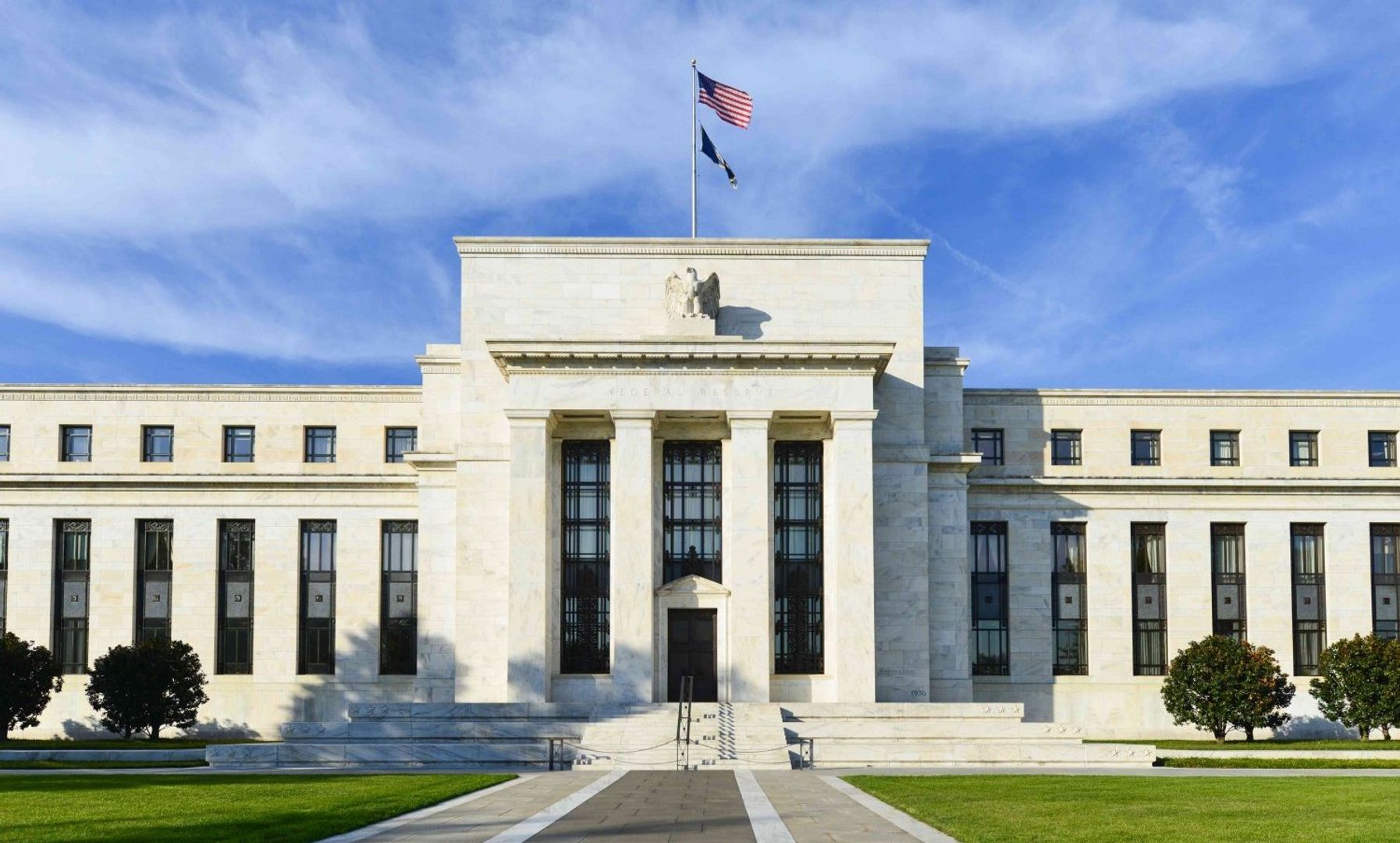
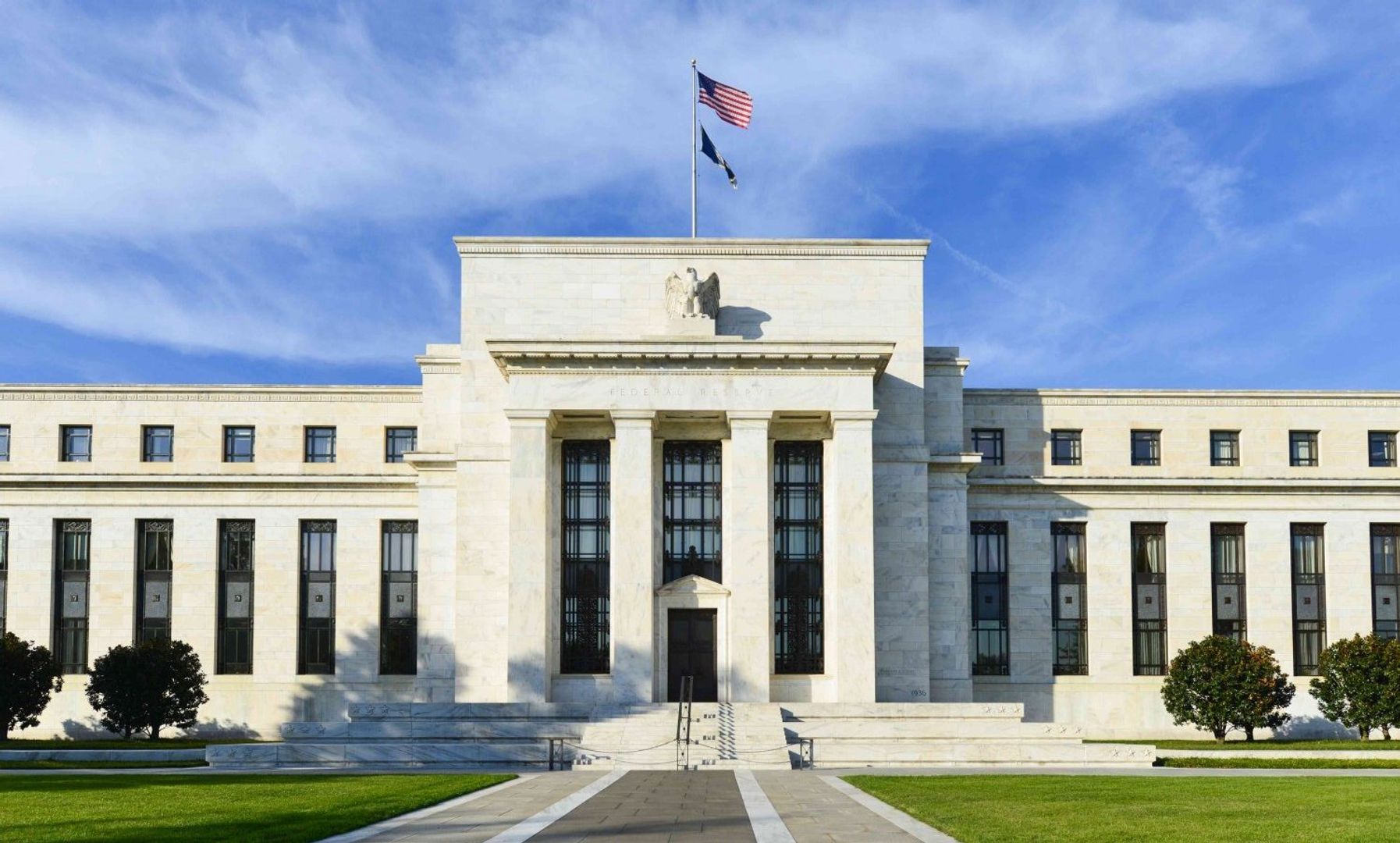
Wednesday sees Kevin Warsh’s first interest-rate decision as Federal Reserve chair. The forecast is for no change in the current level.
The introduction of a fresh dot plot — which charts individual Fed policymakers’ interest-rate projections — combined with a shortened trading week due to Friday’s Juneteenth federal holiday, suggests liquidity will likely decline.
The week’s data calendar and the Fed’s guidance will ultimately determine whether crypto can capitalize on the apparent geopolitical tailwind and build a definitive recovery.
What to Watch
(All times ET)
- Crypto
- June 15: The CFTC opens its 45-day formal public comment window following its Notice of Proposed Rulemaking targeting prediction markets.
- June 16: Industry groups begin formatting formal responses to the U.S. House Ways and Means Committee following its major legislative hearing on digital asset tax proposals.
- Macro
- June 15, 8:30 a.m.: U.S. Empire State Manufacturing Index for June est. 12.0 (Prev. 19.6)
- June 17, 2 p.m.: U.S. Fed Interest-Rate Decision (FOMC) est. 3.50%–3.75% (Prev. 3.50%–3.75%)
- June 18, 8:30 a.m.: U.S. Initial Jobless Claims for period ending June 13 est. 222K (Prev. 229K)
- June 19: U.S. equity markets are closed in observance of the Juneteenth federal holiday
- June 19: U.S., Iran to sign ceasefire agreement.
- Earnings
Token Events
- Governance Votes & Calls
- Cratos is voting on extending the period in which users receive rewards for actions until July 31, having previously approved CIP-41, which extended the daily token reward limit under the current reward standard until June 30. Voting ends on June 18.
- Rocket Pool is voting on rebalancing RPL inflation allocation to increase pDAO protocol funding during and after the Saturn 2 transition. Voting ends on June 19.
- Orderly is voting on delisting eight tokens: BIRB, PAXG, SKY, SNX, AR, FIL, STBL, MYX. Voting ends on June 22.
- Unlocks
- June 16: Arbitrum (ARB) to unlock 1.68% of its circulating supply worth $7.76 million.
- June 20: Kaito (KAITO) to unlock 1.76% of its circulating supply worth $8.39 million.
- Token launches
- June 15: C8ntinuum (CTM) to list on Bitmart.
- June 17: Botchain (METAKPK) to list on Bitmart.
Conferences
After four months of war, the US and Iran reached a deal on June 14. Bitcoin rose 2%, not 20%. The gap between the headline and the price move is a lesson the market learned the hard way, three broken ceasefires ago.
Summary
- Bitcoin’s muted 2% move was not weakness. It was the market pricing an interim deal as interim after several ceasefires had already failed.
- The US-Iran agreement reopens the Strait of Hormuz and lifts the US naval blockade, but it does not resolve Iran’s nuclear program or create a long-term regional security framework.
- Oil reacted more sharply than Bitcoin because the deal directly removes part of the war premium from crude, while Bitcoin still depends more on liquidity, ETF flows, and the Fed.
- The real Bitcoin upside requires proof that the ceasefire holds, the June 19 signing happens, and the oil-to-inflation-to-Fed channel starts improving the macro backdrop.
On June 14, 2026, Donald Trump posted to Truth Social that the deal with Iran was complete, authorized the toll-free reopening of the Strait of Hormuz, lifted the US naval blockade, and signed off with a flourish: “Ships of the World, start your engines. Let the oil flow!” It was the end, on paper, of a four-month war that began in late February with coordinated US and Israeli strikes on Iranian nuclear and military sites, escalated through a closed strait and a naval blockade, and survived three or four collapsed ceasefires along the way. Markets had spent the entire conflict whipsawing on every headline. Here, finally, was the headline that ended it.
Bitcoin rose about 2%, to roughly $65,700, its highest level since the early-June crash. Oil fell harder than Bitcoin rose, with WTI dropping toward $81 and Brent sliding to multi-month lows from the triple digits it touched at the height of the war. Equity futures climbed. By the standard of what the headline announced, the end of a war that had threatened a fifth of the world’s oil supply, a 2% Bitcoin move is restraint bordering on indifference.
Five years ago a development of this magnitude would have produced a double-digit candle and a week of euphoric commentary. In June 2026 it produced a relief bounce and a shrug. That restraint is the story, and it is more interesting than any rally would have been.
Bitcoin did not celebrate the Iran deal because the market has been trained, painfully and recently, not to trust ceasefire headlines, because the deal that landed is thinner than the word “done” suggests, and because the forces actually setting Bitcoin’s price right now sit in Washington and at the Federal Reserve more than in the Strait of Hormuz. This piece works through all three: what the market learned from the ceasefires that broke, what this deal actually contains, why the muted reaction is the rational one, and what would have to happen for the real risk-premium unwind to arrive.
What the deal actually says
The document comes first, because the gap between what was announced and what was agreed explains most of the market’s caution. The June 14 agreement is a memorandum of understanding, not a peace treaty. The distinction is the same one that defined the XRP regulatory story this year, the difference between a provisional arrangement and a binding settlement, and it matters just as much here. Three things are real and immediate in the MOU: the US lifts its naval blockade on Iranian ports, the Strait of Hormuz reopens for toll-free commercial shipping, and both sides agree to extend the ceasefire by 60 days.
Those are concrete, they address the market’s most acute fear, the oil chokepoint, and they are why oil fell within hours. Three other things are conspicuously absent. Iran’s nuclear ambitions remain unresolved, with enrichment and uranium stockpiles pushed into future negotiations that the 60-day window is meant to begin, not conclude. Iranian governance is unchanged, the deal explicitly leaving Tehran’s leadership intact.
https://x.com/WatcherGuru/status/2066281783545442654
And no long-term security framework for the region was created. The agreement reopens a shipping lane and pauses a war; it does not end the conflict’s underlying causes, and it is structured to be signed, on or after June 19 in Switzerland, as a starting point for talks, not their conclusion.
That 60-day clock is the tell. A permanent peace does not come with a two-month expiry. The MOU buys time, reopens commerce, and defers every hard question, which is a genuine achievement after four months of war and a real relief for global trade, but is categorically different from the durable settlement that would justify pricing the war risk out permanently. The market read the document correctly. It priced relief, not resolution.
The ceasefires that taught the lesson
Bitcoin’s muted reaction makes no sense without the year that preceded it, because the market is not reacting to this deal in isolation. It is reacting to this deal after being burned by every prior version of it. Count the failures. A ceasefire after the initial conflict broke down.
An April 2026 truce, extended indefinitely on April 21, sent Bitcoin surging to $78,000 the next day as traders priced out the geopolitical risk premium, and then it collapsed, and Bitcoin gave the entire move back. Trump himself described that ceasefire in May as being on “massive life support.” A further pause broke on June 7 when Iran launched missiles toward Israel; US strikes followed on June 9 after an Apache helicopter was downed over Hormuz; and through it all the market kept rallying on peace headlines and surrendering the gains on the next escalation. By the time the June 14 deal arrived, traders had watched the same movie three or four times, and they had learned its ending.
April’s episode scarred the market most, because it was the cleanest example of the trap. The indefinite extension looked durable, the rally to $78,000 looked justified, and then the truce failed and everyone who bought the peace dividend was underwater within weeks. Coinbase analysts named the pattern explicitly: ceasefire rallies carry trap risk, because traders celebrate the announcement and then watch the deal collapse. After enough repetitions, the rational response to a ceasefire headline is not to buy it but to wait and see whether it holds.
That is precisely what Bitcoin did on June 14. The 2% move is the price of a market that has stopped paying full price for peace it has seen evaporate before. There is a striking data point from the days just before the deal that proves the learning. On an earlier ceasefire announcement, stocks and oil moved while Bitcoin barely reacted at all, sitting near $63,000 as if the news had not happened.
The market had become so wary of premature peace that it declined to price one even when the headline arrived, waiting instead for confirmation that this time was different. A market that will not rally on good news has been hurt by false good news before.
Why muted is the rational response
Set the document beside the history and the small reaction is not pessimism. It is accuracy. A rational market prices the expected value of an outcome, weighting the magnitude by the probability. The magnitude of a true, durable US-Iran peace would be large for Bitcoin: a permanent removal of the war-risk premium, a reopened oil chokepoint, a calmer macro backdrop, and a risk-on shift that historically helps the asset.
But the probability that this MOU becomes that durable peace is visibly uncertain, and the market can see the uncertainty in the document itself, the 60-day clock, the unresolved nuclear question, the unchanged regime, the signing still days away. Multiply a large magnitude by a moderate probability and you get a moderate expected value, which is roughly a 2% move. The math of the muted reaction is the math of a market doing its job.
Prediction markets quantify the doubt directly. Through the negotiation, Polymarket’s odds on a permanent peace by various dates swung with each development and never approached certainty, with the “permanent deal” question trading well below the confidence a true settlement would command and hundreds of millions of dollars wagered on the timing. When the betting market prices permanent peace as a coin flip or worse, a 2% Bitcoin move on an interim deal is not underreaction. It is the spot market agreeing with the betting market.
There is also a specific structural risk the market is pricing: Israel. The MOU is a US-Iran arrangement, and Tel Aviv was excluded from it. Israel’s exclusion does not mean Israel will stay quiet, and a single Israeli strike on Iranian infrastructure could shatter the 60-day ceasefire the way June 7 shattered its predecessor. The deal that reopened Hormuz did not bind the one regional actor most likely to reopen the war, which is a hole large enough to justify caution on its own.
Traders who lived through June 7 know exactly how fast a ceasefire excluding a key party can break.
The forces that actually move Bitcoin right now
Most geopolitical-crypto coverage misses the next part: even a real peace dividend would be competing for Bitcoin’s attention with forces that have nothing to do with Iran, and through the spring those forces were the bigger story. That June crash, which took Bitcoin from above $80,000 to below $62,000, was not, despite the headlines, primarily an Iran event. It was the four-force convergence behind the June selloff. A hawkish Federal Reserve that crushed hopes for rate cuts removed the liquidity support the market had priced in.
Strategy, Michael Saylor’s vehicle, broke a years-long vow and sold Bitcoin, a small sale financially but a large one for sentiment. The longest Bitcoin ETF outflow streak ever recorded, thirteen days, pulled institutional demand out of an already fragile market. And yes, fresh US-Iran strikes shattered a ceasefire and added an acute risk-off shock. Four forces, arriving together into a market stretched thin on leverage, produced a $250 billion cascade.
Iran was one of four, and not obviously the largest. That convergence is the context for why the deal’s resolution moved Bitcoin so little. Removing one of four pressures helps, but the other three are still present. The Fed has not pivoted to cuts.
ETF flows have only recently steadied. The leverage that amplified the crash has been only partly cleared. Against that backdrop, the end of the Iran war removes an acute risk but does not change the monetary and structural setup that actually governs Bitcoin’s liquidity, and liquidity is what Bitcoin trades on over any horizon longer than a headline. The deal took a weight off one side of the scale. It did not change the scale.
This is the durable lesson under the news cycle. Geopolitical events move Bitcoin sharply and briefly; monetary policy and market structure move it slowly and lastingly. The Iran headlines produced the volatility of the past three months, the sharp dips and bounces within 24-hour windows. The Fed and the ETF flows produced the trend.
A trader watching only the war would have been whipsawed; a trader watching the Fed would have understood the actual direction. The muted reaction to the deal is Bitcoin telling you which force it considers more important, and it is not the one on the front page.
What a real risk-premium unwind would require
If a 2% bounce is the price of an interim deal, what would the full move look like, and what has to happen to earn it? First comes durability proven by time. The single biggest reason the market discounts this deal is that it has watched ceasefires break, so the cleanest way for the discount to close is for this one not to break. If the 60-day window passes without a major violation, if Israel holds fire, if the signing on June 19 happens and sticks, then with each week that the peace survives the probability of durability rises and the market can price more of the magnitude.
A risk premium that evaporated and came roaring back twice will not be priced out permanently until the market trusts it, and trust after this year’s betrayals is earned in weeks of quiet, not in a single announcement. Second comes progress on the deferred questions. The nuclear negotiations the 60-day window is meant to start would need to produce something credible, because an unresolved enrichment program is a permanent source of the exact tension that started the war. An interim deal that pauses fighting while the core dispute festers is a deal the market will keep treating as temporary, correctly.
Real de-escalation on the nuclear file would be the signal that this is a settlement, not a timeout. Third, the macro has to turn supportive at the same time. Even a fully durable peace lands into a market governed by the Fed, and a peace dividend collides with monetary policy. If the Iran resolution coincides with, or helps cause, softer oil and therefore softer inflation and therefore a more dovish Fed, the geopolitical and monetary forces would align and Bitcoin could re-rate meaningfully, which is the bullish scenario worth watching and the subject of how the oil channel could feed crypto liquidity.
If instead the Fed stays hawkish regardless, the peace dividend gets muted by the liquidity backdrop the way the June 14 bounce was. The war ending helps most when the Fed is ready to help too.
What it means for traders and holders
For traders, the deal sets up a specific event calendar instead of a single trade. The June 19 signing in Switzerland is the next binary: a clean signing that holds extends the relief, a delay or a collapse brings the risk premium back and likely gives back the bounce. The 60-day ceasefire window is a rolling catalyst, with each week of quiet incrementally bullish and any Israeli strike or Iranian violation acutely bearish. And the G7 summit in France, running through the days around the deal with the agreement atop its agenda, is a venue for either reinforcement or complication.
Trading this means trading the durability, not the announcement, and sizing for the real chance that a fourth ceasefire breaks like the first three. For holders, the practical reading is to weight the Iran story correctly against the macro story. The war ending is good news and removes a real tail risk, but it is not the variable that determines whether Bitcoin trends up or down over the rest of 2026. That variable is liquidity, set by the Fed and expressed through ETF flows and the broad risk appetite that monetary policy drives.
A holder who treats the Iran deal as the all-clear is watching the wrong screen; the all-clear, if it comes, will be written in rate expectations, not ceasefire headlines. The deal is a weight off, not a turn of the trend. For anyone tempted to chase the bounce, the history is the warning. The April rally to $78,000 on a ceasefire that then collapsed is the cautionary template, and the traders who bought that peace dividend learned that a ceasefire rally can be a trap.
The asymmetric move on a confirmed, durable peace is real and worth positioning for, but the way to position for it is to wait for confirmation the market trusts, not to front-run a 60-day MOU that the betting markets price as a coin flip. The discipline that kept Bitcoin’s reaction to 2% is the same discipline worth borrowing.
Connection to broader market dynamics
The Iran deal’s muted reception connects to the larger forces shaping crypto in 2026. The June crash anatomy is the essential backdrop, because it showed that Iran was one of four convergent pressures, not the sole driver, which is why removing it produced a bounce, not a reversal. The Fed’s posture is the dominant force the deal does not touch, and the relationship between a hawkish central bank and a risk asset starved of liquidity explains why even good geopolitical news lands softly right now. The oil channel is the one place the deal really reaches the macro, through Hormuz, softer crude, and the inflation path, which is the transmission mechanism worth tracing in full.
And the broader maturation of Bitcoin as a market is visible in the restraint itself: an asset that once moved double digits on any major headline now weighs probability and competing forces before it commits, which is the behavior of a deeper, more institutional market than the one that existed a few years ago. That also ties into the broader cycle question the deal does not resolve, because the end of one geopolitical pressure does not answer whether liquidity, ETF demand, and leverage have turned decisively. It also sits beside the other macro catalyst on the summer calendar, as regulation and market structure continue to matter alongside geopolitics. And it helps explain how crypto decoupled from equities this year, with crypto responding more to internal leverage, ETF flows, and forced selling than to stock-market direction alone.
A market that learned to wait
What did not happen on June 14 is the most revealing thing about it. A four-month war ended, a vital oil chokepoint reopened, and Bitcoin rose 2%. The asset that built its reputation on volatility met one of the year’s largest geopolitical headlines with something close to composure, and the composure was earned the hard way, through three or four ceasefires that promised peace and delivered relapse. The market did not fail to react.
It reacted accurately, pricing an interim deal as interim, weighting a large magnitude by a moderate probability, and holding the full move back for a peace that proves itself. That is the lesson worth keeping when the next headline hits. Bitcoin’s relationship with this conflict has been a yearlong education in the difference between announcement and outcome, between a ceasefire and a settlement, between the acute shock of a single event and the slow gravity of monetary policy underneath it. The deal on the table is real and good, and it may yet become the durable peace that earns the rally the headline seemed to promise.
But the market will not pay for that peace until it survives, and a Bitcoin that rose only 2% on the news is not a Bitcoin that doubts good fortune. It is a Bitcoin that has learned to wait for it to hold.
Frequently Asked Questions
Did the US-Iran war actually end on June 14, 2026?
The June 14 agreement is a memorandum of understanding that lifts the US naval blockade, reopens the Strait of Hormuz to toll-free shipping, and extends the ceasefire by 60 days, with a signing set for June 19 in Switzerland. It is not a permanent peace treaty: Iran’s nuclear program remains unresolved, the regime is unchanged, and no long-term security framework was set up. The deal pauses the war and reopens commerce while deferring the hard questions to future negotiations.
Why did Bitcoin only rise 2% on the Iran deal?
Three reasons. The market has watched three or four ceasefires collapse over the past year, including an April truce that sent Bitcoin to $78,000 before it gave the move back, so traders no longer pay full price for peace headlines. The deal itself is an interim MOU with a 60-day clock, not a durable settlement. And the forces actually driving Bitcoin’s price right now, the Federal Reserve’s hawkish stance and ETF flows, were not changed by the deal. A 2% move correctly prices a large potential magnitude against a moderate probability that the peace holds.
What does the deal change for oil prices?
The reopening of the Strait of Hormuz, which handles roughly 20 to 25% of global seaborne oil, removes a major supply constraint, and oil fell within hours of the announcement, with WTI dropping toward $81 and Brent sliding to multi-month lows from above $100 at the war’s peak. Lower oil feeds into softer inflation, which over time could shape the Federal Reserve’s rate path, the main channel through which the deal could eventually help crypto.
Could the Iran ceasefire collapse again?
Yes, and the market is pricing that risk. The 60-day ceasefire is the third or fourth attempt at a pause in just over a year, and prior versions broke, most notably on June 7 when Iran launched missiles toward Israel. Israel was excluded from the June 14 MOU, so an Israeli strike could shatter the agreement, and the unresolved nuclear question remains a source of the tension that started the war. Prediction markets price permanent peace well below certainty.
What actually drives Bitcoin’s price if not the Iran war?
The June crash that took Bitcoin from above $80,000 to below $62,000 had four convergent causes: a hawkish Fed, Strategy selling Bitcoin, a record ETF outflow streak, and the Iran strikes, all landing in a heavily leveraged market. Of these, monetary policy and market structure drive Bitcoin’s trend over any horizon longer than a headline, while geopolitical events drive sharp but brief volatility. The Iran deal removed one acute risk but left the Fed and liquidity backdrop unchanged.
Should I buy Bitcoin on the Iran peace news?
This piece does not provide investment advice. The history is a caution: the April ceasefire rally to $78,000 trapped buyers when the truce collapsed, and Coinbase analysts have flagged that ceasefire rallies carry trap risk. The asymmetric upside on a confirmed, durable peace is real, but the disciplined approach is to wait for the deal to prove it holds through the 60-day window and the June 19 signing rather than front-running an interim MOU. The Fed’s path matters more for the trend than the ceasefire does.
As of June 15, 2026. This is a fast-moving geopolitical situation; the ceasefire is an interim arrangement that could change. Verify current developments before relying on this analysis. This article is information, not investment advice.

In this video, we’ll explore the key economic events and market trends, shaping the financial landscape. Get ready for insights into financial markets to help you navigate the week ahead. Let’s dive in!
In this episode of Market Insights, Gary Thomson unpacks the strategic implications of the most critical events driving global markets.
👉 Key topics covered in this episode:
✔️ BoJ Interest Rate Decision
Japan is preparing for a potential interest rate increase as inflation risks become a greater concern for policymakers. Higher rates are expected to support the yen, which remains under pressure, while further policy tightening may continue through the end of the year. How could additional interest rate hikes affect the value of the Japanese yen and the country’s economy?
✔️UK Inflation Rate
Investors are closely watching upcoming UK inflation data, as it could influence expectations for future monetary policy and trigger volatility in the British pound. While no immediate interest rate change is expected, inflation trends remain a key factor in assessing the country’s economic outlook. Could the upcoming UK inflation report have a significant impact on the British pound and future monetary policy decisions?
✔️Fed Interest Rate Decision
Market attention is focused on the Federal Reserve’s upcoming meeting, as investors seek clues about future interest rate decisions. While rates are expected to remain unchanged, comments from policymakers could influence expectations for further tightening and drive volatility in financial markets. Why are investors closely monitoring the Federal Reserve’s statements even though no interest rate change is expected?
To summarise, market sentiment in the coming days will be driven by key economic data and geopolitical developments. Investors remain focused on Iran, global oil supply routes, and energy markets, while uncertainty persists despite signals that the conflict could be nearing a resolution. Traders continue to monitor new information closely and stay flexible in their market approach.
💬 Don’t forget to like, comment, and subscribe for more professional market insights every week.
Watch it now and stay updated with FXOpen.
This article represents the opinion of the Companies operating under the FXOpen brand only. It is not to be construed as an offer, solicitation, or recommendation with respect to products and services provided by the Companies operating under the FXOpen brand, nor is it to be considered financial advice.
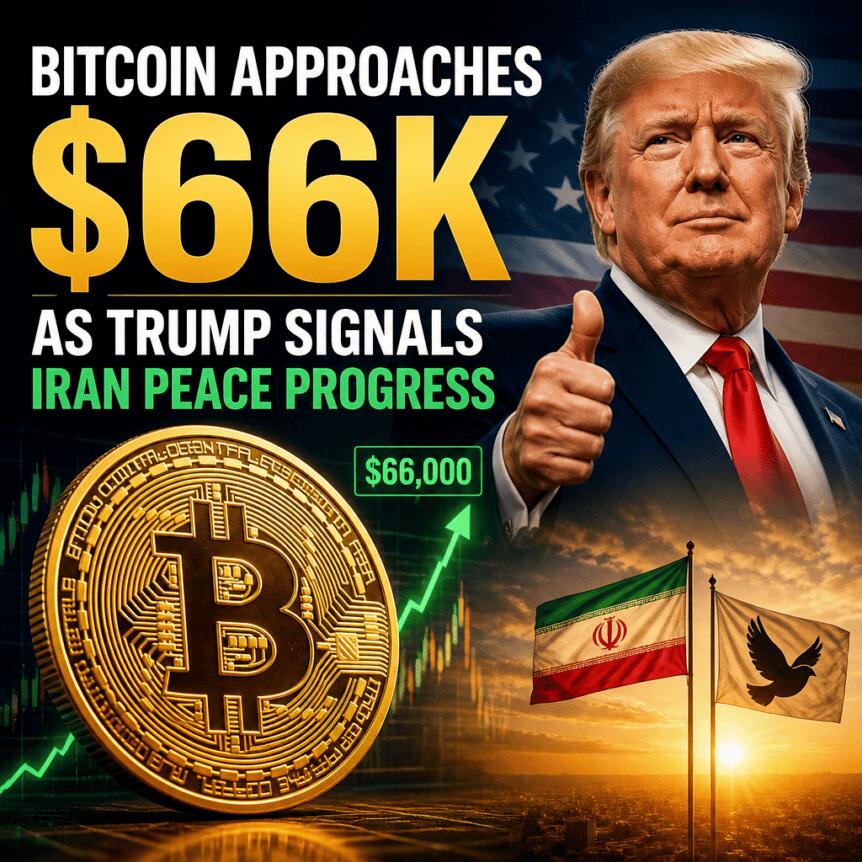
Bitcoin traded just below the $66,000 level on Monday as markets digested fresh claims from US President Donald Trump that the United States has brokered a peace deal with Iran—one that would reopen the Strait of Hormuz and remove the US naval blockade.
The remarks added to a broader “risk-on” tone that had already been building as traders positioned around expectations of reduced geopolitical tension following the escalation that began in February. Still, the path from announcement to implementation remains dependent on signing and final details that were not immediately available.
Key takeaways
- Bitcoin hit $65,881 on Coinbase during Monday morning trading, its highest level over the prior 12 days, driven by expectations of lower geopolitical risk.
- Trump said the deal is complete and authorized both “toll-free opening” of the Strait of Hormuz and removal of the US naval blockade, prompting positive market reaction.
- Observers caution that the market may be pricing headline risk before the deal is formally signed and implemented by both sides.
- Oil prices moved lower alongside the crypto rally—WTI fell about 5% and Brent dropped about 4.6% on the day.
- Additional volatility is possible this week with the Federal Reserve’s upcoming interest-rate decision and the market’s sensitivity to new inflation data.
Headline-driven rally as Hormuz reopening enters the narrative
According to Trump’s posts on Truth Social late Sunday, the “deal with the Islamic Republic of Iran is now complete,” alongside authorization for the “toll-free opening of the Strait of Hormuz” and the “immediate removal” of the US naval blockade. In follow-up messaging, Trump urged that ships prepare to “start your engines” and for “oil” to resume flows.
Bitcoin responded quickly. TradingView data cited in earlier coverage shows BTC reaching $65,881 on Coinbase Monday morning, placing it just shy of $66,000. The move marked the highest trade level in roughly the last 12 days, with BTC having not gone above $66,000 since June 3.
Market reaction did not occur in isolation. Crypto had already been trading around the geopolitical backdrop tied to the Iran-related conflict, which began escalating earlier in the year with US-Israeli strikes. As those risks shifted in traders’ minds, Bitcoin’s sensitivity to “risk premium” appeared to reassert itself.
Why traders link geopolitics to Bitcoin’s risk premium
Andri Fauzan Adziima, research lead at Bitrue Research Institute, told Cointelegraph that a potential agreement could “remove a major geopolitical risk premium,” producing a “clear risk-on move as uncertainty fades.”
He also noted that BTC’s rise above $65,000 came alongside rotation back into crypto, citing both reduced oil pressure and a “broader stability narrative” tied to a pro-crypto political backdrop. Even so, Adziima warned that “last-minute signing issues” could still interfere with the market’s expectations if the agreement fails to clear final steps.
This distinction matters for investors because headline-driven rallies often unwind when details lag. The current uptick appears to be tied more to perceived probability and timing than to a fully verified implementation plan—meaning traders should watch whether confirmations progress beyond statements.
Deal details remain pending despite confirmations
While Trump claimed the agreement is complete, the article said the specific details of the US–Iran deal were not immediately available. Implementation was also described as contingent on Iran signing, which was expected on Friday, with Pakistan named as a mediator in reporting from the Associated Press.
Iranian officials signaled progress on the state side as well. The report referenced confirmation by Iran’s deputy foreign minister, Kazem Gharibabadi, on state television, and said Iran’s Supreme National Security Council secretariat stated that the war “on all fronts” would end immediately and permanently beginning that night and that the US blockade would be terminated “immediately and in full.”
Even with those assertions, the market still faces an important uncertainty: whether the deal’s operational elements—such as maritime access and enforcement—follow through on the timetable implied by Trump’s posts. That is the gap between “deal news” and “deal reality” that can separate a sustained repricing from a short-lived spike.
Oil lower, altcoins participate, and Fed risk looms
The crypto strength extended beyond Bitcoin. The broader crypto market was reported to have gained about 2% in total capitalization, with multiple altcoins outperforming, including Hyperliquid (HYPE), Zcash (ZEC) and Near Protocol (NEAR), some with double-digit daily gains.
At the same time, crude oil moved lower. WTI crude dropped roughly 5% to just over $80 per barrel, its lowest level since early March, while Brent fell about 4.6% to $83.30. The combination of easing energy pressure and a geopolitical de-escalation narrative can be important because both factors influence risk appetite and the inflation outlook investors associate with commodity-driven volatility.
For traders looking ahead, the environment is not only geopolitical. The article pointed to a potential catalyst on Wednesday: the Federal Reserve is scheduled to make its interest-rate decision, the first under new chair Kevin Warsh. While coverage noted the central bank chair appears more receptive to cuts, inflation pressures—including reports that inflation has topped 4% again—could support arguments for keeping rates higher.
Coincidentally, CME Fed Watch was cited as forecasting a 96.6% probability that rates will remain unchanged at 3.5% to 3.75%. That kind of near-consensus pricing can reduce immediate downside expectations around the decision, but it can also amplify market reaction if the Fed’s tone or accompanying indicators shift from what traders have modeled.
For the next trading sessions, the key watchpoints are whether Iran signing and the operational reopening of the Strait of Hormuz progress on schedule, and whether macro events—particularly the Federal Reserve decision amid persistent inflation concerns—change the risk appetite that has recently lifted crypto.
Crypto World
Crypto News, June 15: Iran Peace Deal Roars Bitcoin, Japan $6.4 Billion Crypto ETF Market, WLFI and White House UFC Match

We woke up to a rare Bitcoin green candles as Trump’s Iran peace deal pumps the market, while Japan crypto ETF preparations show big institutional inflows are in queue. That’s not all from today, as a White House UFC event is set to showcase Trump’s flares in spectacular fashion.
Bitcoin jumped back above $65,000, and, hitting $65,800 earlier today, Ethereum reclaimed $1,700, adding about $60 billion to the total crypto market cap amid nearly $250 million in short liquidations.

Trump’s Iran peace agreement sends Bitcoin as it extends the ceasefire by 60 days, reopens the Strait of Hormuz, lifts the U.S. naval blockade on Iranian ports, and permits Iran to resume oil exports. Iran reaffirms its commitment not to pursue nuclear weapons while negotiations begin over its 9,000kg+ enriched uranium stockpile under international supervision.
— Coin Bureau (@coinbureau) June 14, 2026

 THE 4-POINT TRUMP–IRAN PEACE DEAL
According to JD Vance, the deal would:
• Block Iran from obtaining a nuclear weapon
• Reopen the Strait of Hormuz immediately
• Lift the U.S. naval blockade
• Unlock major investment across the region
Agreed upon on Trump’s 80th… pic.twitter.com/heu5YC0D21
The deal, announced by Iran today after Trump’s repeated statements, could likely restart global oil flows and mark the biggest de-escalation in the region since the conflict began. Oil prices slid on the news, giving risk assets like crypto a clear boost.
This Iran deal sends Bitcoin to above the $65,000 level in less than 30 minutes during the Japan vs. Netherlands World Cup game. Trump’s steady pressure and public comments paved the way, with markets pricing in lower geopolitical risk. Iran’s own announcement today shifted the uncertainty. It’s bullish for the market now.
Discover: The Best Crypto to Diversify Your Portfolio
Beyond Iran Peace Deal and Bitcoin Surge: Japan $6.4 Billion Crypto ETF, White House UFC Event, Trump’s Crypto Fingerprints
Japan FSA is preparing a spot crypto ETF and investment trusts. It is known that SBI, Rakuten, Nomura, Daiwa, SMBC, and Mizuho are already building new products. The country itself has 13 million crypto accounts holding $34 billion, with taxes potentially dropping from 55% to 20%. Analysts peg the Japan crypto ETF opportunity at $6.4 billion in inflows once live.
Although the Bank of Japan’s rate hike could pressure risk assets in the short term by raising borrowing costs. The Japan crypto ETF launches would act as a strong counter, flipping fresh institutional capital and giving crypto more legitimacy. Lower taxes plus regulated products could accelerate retail and corporate adoption fast.
Back to the other side of the world, the U.S. President has spent months pushing pro-crypto policies, backing Bitcoin and Ethereum ETFs, and even entertaining the idea of a Strategic Bitcoin Reserve. At the same time, projects tied to the Trump family keep finding ways to benefit from the industry’s growth. Through WLFI, the family has exposure to token sales, stablecoin revenue, and the endless stream of speculation that stacks in the family crypto pockets.
None of this proves wrongdoing. But it does create an awkward setup. Trump is arguably crypto’s most influential political cheerleader while also being one of its biggest beneficiaries.
The White House UFC event is a perfect example. Trump understands attention better than anyone, and crypto runs on attention. Yes, the White House is hosting a UFC event, and World Liberty Financial will contribute $250,000 in USD1 stablecoins to the UFC Freedom 250 fight-night bonus pool. The event lands on the White House South Lawn for President Trump’s 80th birthday, complete with USD1 branding inside the Octagon.
Either way, Trump’s crypto ventures have done remarkably well while plenty of retails have been left holding the bag. This is also why some increasingly view the ecosystem less as a political and more as an extraction machine.
Discover: The Best Token Presales
USDT Delisting, and so on
Outside the White House circus, the industry keeps moving. Binance, Coinbase, Kraken, and Crypto.com have all removed USDT for EU users as MiCA rules take effect. Tether’s decision to skip the licensing process has created short-term headaches, but the market has largely treated it as a regulatory detour.
Meanwhile, Sen. Cynthia Lummis continues pushing for clearer crypto rules. According to her, regulation is necessary to protect investors than simply benefit the industry.
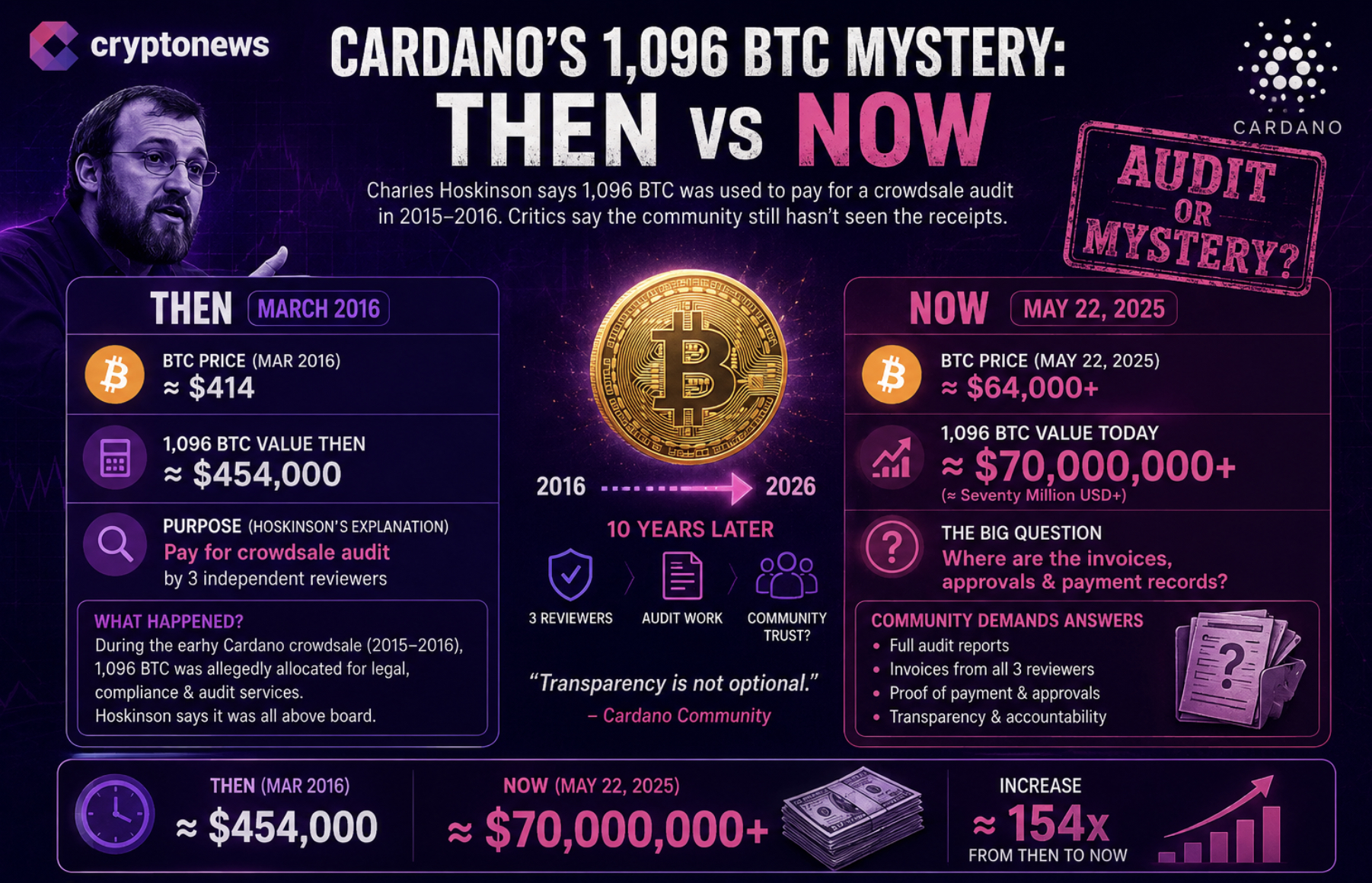
Charles Hoskinson also cleared up the controversy surrounding a 1,096 BTC payment linked to Cardano’s 2016 crowdsale audit. The Bitcoin was worth less than half a million dollars at the time. Today, it’s worth around $70 million. The pain and the operation are painful, but were necessary.
Markets are getting a boost from easing geopolitical tensions, but let’s be honest, Trump remains one of the biggest narratives in crypto right now.
Bitcoin was supposed to remove the need for powerful middlemen. Yet one of the strongest bullish arguments for crypto in 2026 is that the President of the United States has become one of its most effective promoters.
Discover: The Best Crypto to Diversify Your Portfolio
The post Crypto News, June 15: Iran Peace Deal Roars Bitcoin, Japan $6.4 Billion Crypto ETF Market, WLFI and White House UFC Match appeared first on Cryptonews.

Key Highlights
- Belimo shares rallied approximately 8% to CHF 941 following Morgan Stanley’s rating upgrade from “equal-weight” to “overweight”
- Analyst price target increased to CHF 1,100 from CHF 860, fueled by expanding data center cooling requirements
- Data center operations represented 17% of Belimo’s 2025 revenue and contributed roughly 50% to overall company growth
- Analysts forecast data center segment could comprise 38% of total company revenues by decade’s end
- Hyperscaler capital expenditure projections increased 7% for 2026 and 18% for 2027
Shares of Belimo Holding surged approximately 8% during Monday’s trading session, reaching CHF 941, following an analyst upgrade from Morgan Stanley that elevated the Swiss valve manufacturer’s price target from CHF 860 to CHF 1,100.
The rating revision moved from “equal-weight” to “overweight,” with analysts identifying the artificial intelligence-driven data center expansion as the primary catalyst for the bullish outlook.
Data center operations comprised 17% of Belimo’s CHF 1.12 billion total sales in 2025, representing growth from 11% during the previous year. This division generated approximately half of the company’s overall growth during the period, with Morgan Stanley calculating that data center revenue expanded more than 70% on a year-over-year basis in 2025.
Analysts now anticipate that data center operations will drive more than half of company-wide growth for a minimum of three years, ultimately representing 38% of aggregate revenues by 2030.
The Critical Role of Liquid Cooling Technology
The transition from traditional air-based cooling to liquid cooling systems in artificial intelligence data centers forms the foundation of Morgan Stanley’s investment case. This technological evolution drives demand toward Belimo’s premium product portfolio.
Belimo’s Energy Valve commands approximately $1,200 per unit, substantially exceeding the company’s average selling price range of $130 to $150. Control valve sales expanded 31.3% in local currency terms during fiscal 2025, significantly outpacing damper actuators which grew 14.4%.
During the company’s 2025 earnings discussion, management emphasized that within the advanced cooling sector — particularly for processors requiring direct liquid cooling solutions — Belimo maintains “an almost dominant market share.”
Morgan Stanley additionally increased its United States hyperscaler cloud infrastructure spending projections by 7% for 2026 and 18% for 2027 following first-quarter earnings releases. Analysts now forecast 82% year-over-year capital expenditure growth in 2026 to $815 billion, followed by 38% expansion in 2027 to $1.13 trillion.
Financial Performance Projections
Morgan Stanley anticipates Belimo’s revenue will climb to CHF 1.31 billion during fiscal 2026, CHF 1.53 billion in 2027, and CHF 1.78 billion by 2028.
Earnings per share projections stand at CHF 18.33, CHF 22.42, and CHF 26.20 for these respective fiscal years. The firm’s forecasts exceed consensus expectations by 2% for 2026, expanding to 9% above consensus by 2028 and 20% by 2030.
The stock presently trades at 47.7 times Morgan Stanley’s fiscal 2026 earnings projection. Analysts contend that on a growth-adjusted valuation basis, Belimo appears more attractively priced than ABB, Siemens, Halma, and IMI.
Morgan Stanley established a bull case scenario of CHF 1,510 and a bear case projection of CHF 600.
The primary risk identified involves potential architectural changes in data center design that could integrate more liquid-cooling components within coolant distribution units, diminishing Belimo’s independent specification authority.
Monday’s rally positions the stock near its 52-week peak of CHF 975. Belimo’s recent early-2026 trading announcement, which revealed higher sales compared to the corresponding prior-year period, provided additional support for the upgrade.
Crypto World
DoorDash (DASH) Stock Plunges 31% in 2025 Despite Strong Earnings and Bullish Wall Street Outlook

Key Takeaways
- DoorDash stock has declined approximately 31% year-to-date to around $150.58, yet analysts maintain a Strong Buy consensus with an average $240.59 price target
- First-quarter revenue climbed 33% year-over-year to reach $4.04 billion, while earnings per share of $0.42 exceeded analyst expectations by $0.06
- The company is diversifying beyond restaurant delivery, expanding into grocery, retail sectors, and international markets through its Deliveroo acquisition
- Adjusted EBITDA increased 28% to $754 million during Q1, accompanied by $420 million in free cash flow generation
- With 90.64% institutional ownership, DoorDash has secured partnerships with Dollar Tree and renewed its KFC Australia DashPass agreement through 2027
Shares of DoorDash (DASH) are currently hovering around $150.58, representing a significant 31% decline year-to-date and trading near the 12-month low of $143.30. This marks a substantial retreat from the stock’s 12-month peak of $285.50.
However, the underlying fundamentals present a contrasting narrative.
First-quarter total orders surged 27% year-over-year, reaching 933 million. Marketplace Gross Order Value (GOV) expanded 37% to $31.6 billion. The company reported revenue of $4.04 billion, marking a 33% year-over-year increase, while delivering earnings per share of $0.42 that surpassed the $0.36 consensus estimate.
The singular disappointment came from the revenue figure. At $4.04 billion, it fell slightly short of the $4.15 billion analyst consensus, potentially contributing to the stock’s underperformance throughout the year.
Adjusted EBITDA expanded 28% to reach $754 million. The company posted GAAP net income of $184 million. Free cash flow generation totaled $420 million. The adjusted EBITDA margin relative to GOV experienced a modest compression from 2.6% to 2.4%, as DoorDash integrates Deliveroo and maintains investment in expansion initiatives.
Diversification Beyond Traditional Restaurant Delivery
The restaurant delivery segment no longer defines the entire business model. DoorDash is experiencing substantial growth across U.S. grocery, retail, apparel, automotive parts, and hardware categories. The merchant onboarding process has become more efficient, with artificial intelligence-powered tools enabling restaurants to launch operations more than 35% faster.
On the international front, the Deliveroo integration is driving accelerated growth in Monthly Active Users, order volume, and GOV throughout major European territories.
Recent commercial partnerships are providing additional momentum. The platform now features over 9,000 Dollar Tree locations offering more than 10,000 products. In Australia, KFC has extended its DashPass zero-delivery-fee promotion through 2027.
Looking ahead to Q2, DoorDash has provided guidance for Marketplace GOV ranging between $32.4 billion and $33.4 billion.
Institutional investors control 90.64% of outstanding shares. Company insiders have divested $10.9 million in stock over the previous three months, including Director Stanley Tang reducing his holdings by 52.65% during April.
Analyst Sentiment Remains Positive
The analyst community continues to support the stock. Among 36 analysts tracking DASH, 22 assign it a Buy rating, two rate it Strong Buy, and nine maintain Hold positions. Zero analysts recommend selling.
Truist maintains a $330 price target alongside a Buy recommendation. Citigroup has established a $250 target, also rated Buy. Moffett Nathanson projects a $276 price objective. The consensus price target ranges between approximately $240 and $256 depending on the compilation source, suggesting roughly 60% potential upside from present levels.
The valuation framework is prompting analysts to maintain conviction. Trading at approximately $150 with projected EPS of $5.60 for the current fiscal year, the stock carries a multiple of roughly 27.6x earnings. Should Wall Street’s consensus growth projections materialize — approximately 40% EPS expansion in FY2027 and 35% in FY2028 — the forward multiple would compress to approximately 14.6x by 2028 at today’s share price.
This valuation perspective differs dramatically from what the year-to-date price action might suggest.
The 50-day moving average currently sits at $162.74. The 200-day moving average stands at $184.18. Market capitalization totals $65.61 billion, with the company maintaining a debt-to-equity ratio of 0.27.

Key Takeaways
-
Bybit integrates Plume vaults to transform dormant stablecoins into yield-generating fixed income assets.
-
Partnership between Plume and Bybit delivers institutional bond access directly to crypto traders.
-
Exchange users gain access to Stablecoin Yield opportunities via RWA-backed fixed income vaults.
-
Plume’s vault infrastructure connects stablecoin deposits to credit instruments from PIMCO and CMBI.
-
Bybit enhances its RWA Earn portfolio as stablecoin yields incorporate traditional credit markets.
Bybit has integrated Plume’s fixed income vault solutions into its RWA Earn platform, creating an additional pathway for users seeking Stablecoin Yield. This integration enables traders to redeploy dormant stablecoins sitting in their exchange wallets into institutional-grade credit instruments. The initiative marks Bybit’s continued expansion into real-world assets beyond traditional crypto lending mechanisms.
Bybit Delivers Institutional Fixed Income Through Plume Integration
The collaboration between Plume and Bybit streamlines the vault experience for everyday exchange traders. Participants can deposit stablecoins directly through Bybit Earn’s RWA interface without navigating external platforms. Consequently, Bybit establishes a seamless connection to Stablecoin Yield opportunities powered by fixed income instruments.
These vaults channel participant deposits into investment vehicles associated with PIMCO and CMBI. The underlying portfolio encompasses mortgage-backed securities, high-yield corporate debt, and investment-grade bonds from the Asia-Pacific region. This approach bases returns on credit market performance rather than cryptocurrency token volatility.
Bybit has positioned these vaults alongside its existing Earn products, creating intuitive access for stablecoin depositors. The platform also integrates the vaults with its existing custody and credit systems. This configuration delivers Stablecoin Yield while maintaining unified account oversight within Bybit’s ecosystem.
Crypto Exchanges Embrace Real-World Asset Distribution Channels
This product launch arrives amid growing interest from cryptocurrency exchanges in real-world asset offerings for yield-seeking participants. Tokenized government securities, bond-based funds, and credit-focused strategies have proliferated across leading trading platforms. As a result, Stablecoin Yield increasingly incorporates conventional financial market instruments.
Plume has developed multiple distribution channels for real-world assets throughout recent quarters. The platform previously collaborated with Ether.fi on a $100 million RWA vault designed for tokenized returns. That initiative featured credit pools, collateralized loan obligations, and bond ETF participation.
The Bybit integration advances this approach into a broader exchange ecosystem. It simultaneously provides asset managers with alternative access to cryptocurrency users without requiring direct token management. For participants, these vaults offer Stablecoin Yield sourced from securities markets rather than token-based reward mechanisms.
Plume Constructs RWA Infrastructure Around Accessible Yield Generation
Plume’s mainnet architecture emphasizes DeFi functionality integration with real-world asset products. The network supports staking mechanisms, lending protocols, and yield-generating tokens backed by off-chain assets. This Bybit collaboration aligns with Plume’s objective to simplify Stablecoin Yield accessibility.
These vault products also eliminate typical obstacles found in conventional fixed income investing. Traditional participants usually encounter higher minimum investments and extended verification processes for comparable instruments. Bybit and Plume have instead structured Stablecoin Yield through recognizable exchange product interfaces.
The offering maintains inherent risks associated with exchange operations, custody arrangements, and fixed income market fluctuations. Nevertheless, it demonstrates how centralized trading venues can facilitate access to regulated asset exposure via cryptocurrency accounts. Should user adoption increase, additional platforms may introduce comparable Stablecoin Yield solutions for inactive stablecoin balances.


The borrowing pushed the USD1 pool to 93% utilization, meaning retail depositors who had lent USD1 to the pool expecting to withdraw at will could not do so until the loans were repaid. WLFI repaid $25 million of the position, then minted $25 million in fresh USD1 days later, actively managing the token’s supply through April. World Liberty Financial did not respond to a request for comment on the report.
World Liberty is also in litigation with Justin Sun, the crypto tycoon and early buyer of WLFI governance tokens, who sued the company, alleging it improperly froze his holdings. WLFI countersued for defamation.
Some observers said the commercial impact of Sunday’s event is straightforward.
“Paying the fighters in the USD1 stablecoin would have the same economic function as writing them a check,” Todd Phillips, a crypto expert at the Klaros Group, told The Guardian. “Announcing to the world they are doing it in USD1 sounds like they are advertising to the world that USD1 is out there and that it is connected to the UFC and the White House.”
USD1’s circulating supply has grown to around $4.6 billion from $3.3 billion on Jan. 1.
The company has also applied for a banking license from the Office of the Comptroller of the Currency.

Sara Cox To Launch Radio 2 Breakfast Show With Tom Hanks

WWE star Danhausen celebrates after Knicks end 53-year title drought

The Y2K Bug In BSD 2.11 That Survived 2000


-

 Business19 hours ago
No Jackpot Winner as $257 Million Prize Rolls Over to $269 Million Monday Draw
-

 Crypto World4 days ago
Oppenheimer backs SpaceX as $70 billion retail frenzy builds
-

 Crypto World4 days ago
Markets Rally as SpaceX IPO Looms Amid Iran Tensions and Inflation Surge
-

 Fashion3 days ago
Weekend Open Thread: Tuckernuck – Corporette.com
-

 Sports7 days ago
FIFA WC 2026 Group C: Morocco, Scotland challenge Brazil’s hunt for glory | FIFA World Cup 2022
-
 Crypto World7 days ago
Eli Lilly (LLY) Stock Surges 4% Following Breakthrough Sleep Apnea Trial Results
-
Crypto World11 hours ago
Zimbabwe Requires Crypto Businesses to Register Annually Under New FIU Regulations
-

 Entertainment6 days ago
The Ryan Gosling True Crime Thriller On Netflix That Gets Even Stranger, Stream It Now
-
 Sports6 days ago
Bangladesh beat Australia after 20 years in ODIs, register only their second win over six-time world champions | Cricket News
-

 Tech3 days ago
This Week In Security: Microsoft On Microsoft, Register Your Domains, Linux On ARM, And FreeBSD Joins The File Cache Club
-

 Tech2 days ago
NanoClaw integrates JFrog registries to secure AI agent downloads
-

 Crypto World2 days ago
Bitget enters Argentina’s regulated crypto market through PSAV registration
-

 Politics4 days ago
Politics Home | Healey Resignation Is “Colossal Failure Of Government”, Says Former Labour Defence Secretary
-
 Tech5 days ago
‘This is Seattle’s position on AI’: City Council votes unanimously to pause big new data centers
-
 Tech4 days ago
Dutton Ranch star claims they ‘didn’t see any disruption’ on set following Chad Feehan’s exit from Yellowstone spinoff fueled by Taylor Sheridan clash rumors
-

 NewsBeat3 days ago
El Nino has formed in the Pacific and could set records, forecasters say
-
 Entertainment4 days ago
Donnie Wahlberg & More Heat Up Las Vegas at Circa’s Barry’s Downtown Prime
-

 Sports4 days ago
First Time Since 1971: Australia Register Historic Low In ODI Cricket
-
 Tech4 days ago
Opendoor Ends India Operations, Fueling a Bigger Conversation About AI and Outsourcing
-

 Tech7 days ago
Nvidia and Hyundai deepen their robotics push around Atlas
You must be logged in to post a comment Login