
Crypto World
Democrats push back on GOP’s ‘final’ CLARITY offer with counterproposal: Politico

Some Democrats remain dissatisfied with the bill’s crypto ethics provisions and will be sending a counterproposal just hours before a key procedural vote.

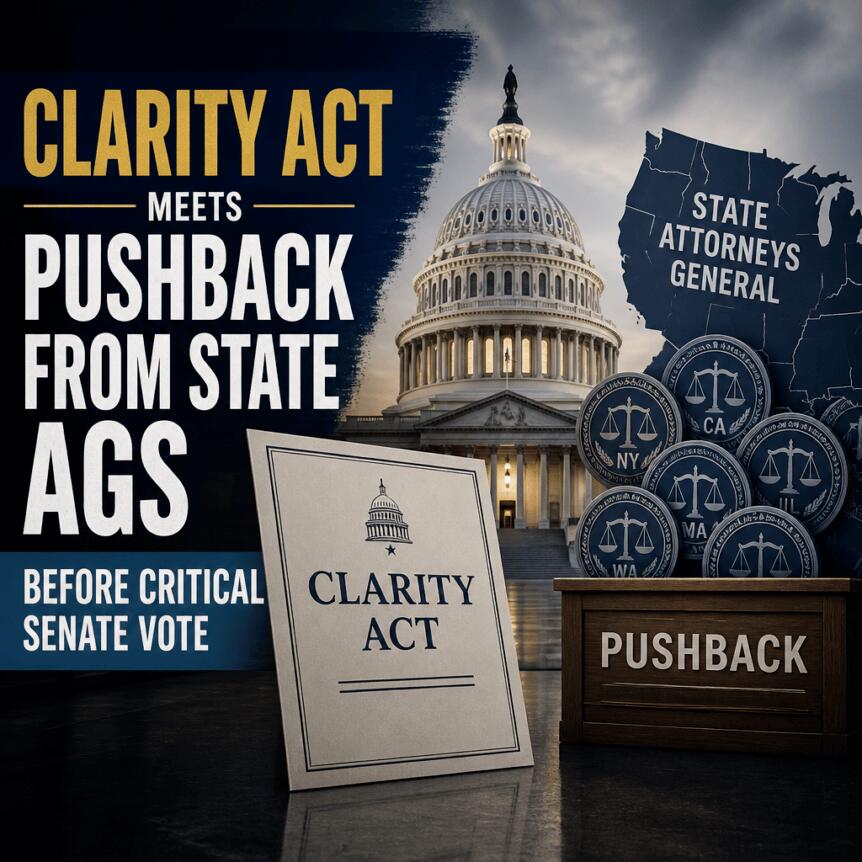
The CLARITY Act is set to face a pivotal procedural vote in the US Senate on Tuesday after President Donald Trump agreed to most of a bipartisan package aimed at tightening ethics rules for federal officials with crypto-related interests, according to multiple reports. The bill is designed to create a federal framework for how digital-asset markets are regulated, including clearer lines between the SEC and the CFTC.
Yet the latest compromise has not softened all opposition. A bipartisan group of 18 state attorneys general is urging senators to reject the legislation, arguing that the bill’s changes would undermine state authority to investigate and take action against crypto companies accused of fraud or other misconduct.
Key takeaways
- The CLARITY Act is moving toward a Senate procedural vote that will decide whether it advances to full debate.
- President Trump’s reported agreement to most of a bipartisan ethics proposal would tighten conflict-of-interest rules for certain federal officials.
- 18 state attorneys general, led by Letitia James, say the bill’s language could weaken state enforcement against alleged crypto fraud.
- The bill remains a major effort to establish federal market-structure rules and clarify whether crypto assets are treated as securities or commodities.
State attorneys general raise enforcement concerns
In a letter to Senate Banking Committee leaders, the 18 attorneys general—led by New York Attorney General Letitia James—contend that the CLARITY Act could constrain states’ ability to police wrongdoing in the crypto sector.
They argue that, although the “current draft” reserves certain powers for states to prosecute fraud, the provisions are “often ambiguous, unclear, or confined” in ways that could enable challenges to state law-enforcement authority or restrict how aggressively states can continue addressing what they describe as a “scam epidemic.” The letter does not suggest that states would be completely removed from enforcement, but it emphasizes that ambiguity may invite legal fights and limit practical oversight.
Importantly for observers watching the balance of power between federal and state regulators, the attorneys general also claim that while the revised bill would assign state attorneys general a role in enforcing new federal ethics restrictions, other provisions would still reduce their broader authority to pursue cases against crypto firms.
The dispute highlights a recurring tension in US crypto policy: even when legislators align on market structure and ethics rules, the details of how enforcement responsibilities are carved up—across agencies and between federal and state authorities—can determine whether regulators can act quickly and effectively.
Tuesday’s Senate procedural vote after Thune’s cloture push
As discussed earlier by Cointelegraph, Senate Majority Leader John Thune filed a cloture motion last month after the legislation failed to advance before lawmakers left Washington for their August recess. The procedural vote on Tuesday will determine whether the bill can move forward to Senate debate.
Cloture motions are typically used to limit debate and overcome procedural hurdles. For supporters and opponents alike, Tuesday’s vote functions as a forcing event: it decides whether the CLARITY Act clears the next step of the legislative process, regardless of remaining disagreements over its content.
Trump’s reported ethics concession reshapes key conflict-of-interest rules
Separate from the state attorneys general’s concerns, reports over the weekend indicated the White House had agreed to “about 80%” of a proposal developed by Republican Senator Thom Tillis and Democratic Senator Ruben Gallego, according to the Associated Press. The AP reported that this agreement came from a senior GOP aide.
The ethics portion of the CLARITY Act would build on rules already contained in the bill barring federally elected officials, their spouses, and federal judges from issuing digital assets. The latest compromise, as described by the Associated Press, would also require officials with a “significant” financial interest in a crypto issuer to divest the interest or place it in a blind trust. The measure would additionally give state attorneys general a role in enforcing the restrictions.
Lawmakers framed the adjustment as a response to concerns from Democrats and from Tillis, who had argued earlier ethics provisions did not go far enough to address potential conflicts, including those relating to President Trump’s own crypto holdings and business interests.
Crypto industry reaction was described as cautiously positive by Crypto in America, a publication co-hosted by Eleanor Terrett, which said the weekend developments triggered a “renewed sense of optimism” across the sector. Republicans characterized the revised package as their “last, best and final offer” to Democrats ahead of Tuesday’s vote, according to Crypto in America.
Still, the state attorneys general’s letter suggests that tightening ethics rules for federal officials does not automatically resolve broader concerns about the bill’s impact on state enforcement authority in crypto-related fraud and misconduct cases.
Why the CLARITY Act matters beyond ethics provisions
While the ethics dispute is dominating the immediate political storyline, the CLARITY Act’s larger purpose is to reshape the US regulatory landscape for digital assets. The bill is widely characterized as a landmark effort that would establish a federal market structure for digital assets, clarify when crypto assets fall within securities or commodities frameworks, and delineate oversight responsibilities between the SEC and the CFTC.
For market participants, those jurisdictional clarifications can have practical consequences. When regulators’ roles are less contested or more clearly defined, compliance decisions—such as how new products should be structured and supervised—can become less uncertain. When they are not, firms may face overlapping or conflicting expectations, and regulators may pursue different theories of authority.
The current round of opposition underscores that even large, bipartisan bills can remain politically vulnerable if key stakeholders believe enforcement power will shift in the wrong direction. Tuesday’s procedural vote will therefore reflect not only whether lawmakers accept the ethics adjustments, but also whether they are willing to move forward despite active legal and federalism concerns raised by state leaders.
Next, readers should watch for how senators respond to the state AG letter once the chamber turns to further debate—particularly whether amendments address claims of ambiguity that could limit states’ ability to investigate alleged crypto fraud, or whether the bill moves on essentially unchanged toward the full legislative process.

China’s investment slump deepened and retail sales growth slowed further in August, while industrial output topped estimates with authorities warning of acute supply-demand imbalance at home.
Retail sales grew 0.4% in August from a year earlier, data from National Bureau of Statistics showed on Tuesday, slowing from 0.6% in the prior month and missing economists’ forecast for a 0.8% growth in a Reuters poll.
Industrial output expanded 5.2% last month, accelerating from 4.5% growth in July and outperforming economists expectations for a 4.8% rise.
For the first eight months of the year, urban fixed-asset investment, which covers property and infrastructure investment, shrank 7.2% from a year earlier, steepening from 6.7% decline in the January-to-July period, matching analysts’ expectations.
The urban survey-based unemployment rate in August ticked up to 5.3% from 5.2% in July.
“We should be aware that the adverse impact of (the) external environment has intensified,” the statistics bureau said in an English-language release. It noted “acute” imbalance domestically between “strong supply and weak demand,” adding that some businesses still faced operational difficulties.
In the statement, the NBS called for stepping up macro-policy adjustments and boosting domestic demand, while advancing industrial upgrades for “innovation-led” development.
Growth in the world’s second-largest economy slowed to 4.3% in the second quarter, the weakest pace in more than three years, veering further from Beijing’s annual target of 4.5% to 5%. Policymakers have so far resisted more aggressive stimulus, relying instead on incremental measures to shore up growth.
Export resilience has powered the economy, as a global investment boom in artificial intelligence lifts demand for Chinese semiconductors and tech hardware. The country’s massive oil stockpiles have also offered a further buffer against surging energy prices, allowing the world’s biggest crude importer to scale back imports.
China’s official manufacturing purchasing managers’ index showed new orders and output both returned to expansion in August after contracting in July.
Efforts to fire up appetite for new debt have, however, fallen short. China’s credit expansion in August missed forecasts by a wide margin, with government bond financing unable to offset sluggish corporate and household demand.
New bank loans expanded by just 60 billion yuan ($8.95 billion), versus a roughly 400 billion yuan forecast and down from 590 billion yuan a year earlier, while outstanding loan growth slowed to a record-low 4.9%.
A team of economists led by Raymond Yeung, China economist at ANZ Research, said in a note earlier this month that “September could represent an important policy window to revive business confidence ahead of October’s Golden Week holidays.” More fiscal support is needed, but a policy rate cut remains unlikely, they added.

These shows have all the love triangles and class struggles and outsider angst that have defined youthful romance tales since Jane Austen was writing them, capturing eternal adolescent fantasies (being desirable enough to have two people fighting over you) and fears (not measuring up to the rich kids) alike. Pretty appears to have sparked a mini-trend of siblings competing for the same crush, a trope that also pops up in Every Year After, Walter Boys, and Finding Her Edge. The fraught post-DEI-backlash politics of representation, especially for the most racially and ethnically diverse generation on record, are evident in the shows’ leads. Like Crew Girl’s Martineau, many are multiracial but play characters with vaguely defined backgrounds who live with either a single white parent or a white surrogate family. (New York magazine just spotlighted the “Wasian generation,” a long list of up-and-coming white and Asian stars, citing Heated Rivalry’s Hudson Williams, Pretty’s Lola Tung, and XO, Kitty’s Anna Cathcart among other white and Asian stars.) Liberal and minority viewers get to see mixed-race families and romances, and a TV landscape that isn’t all white. The anti-”woke” crowd is spared identity politics, non-English dialogue, and often all other forms of cultural specificity. Savvy streamers avoid backlash from both sides.
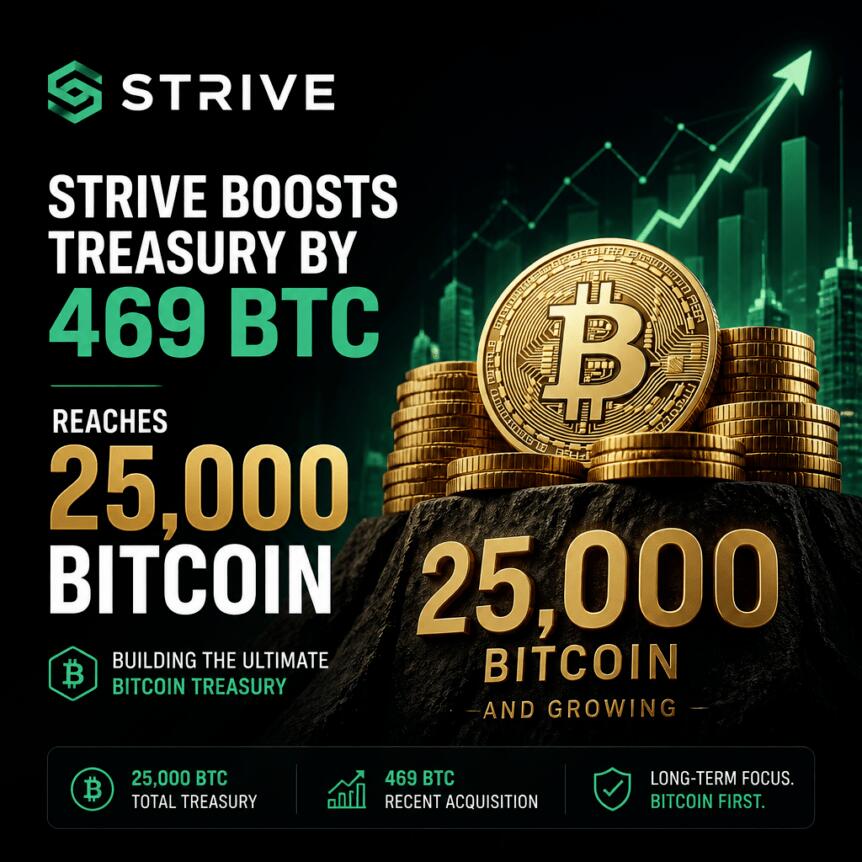
Strive, a U.S.-listed corporate Bitcoin treasury company and asset manager, added another batch of Bitcoin to its balance sheet last week, according to a filing submitted to the U.S. Securities and Exchange Commission. The company bought 469 BTC for roughly $36.6 million between Sept. 8 and Sept. 11, lifting its total holdings to 25,000 BTC.
In the same SEC document, Strive says the purchase was funded entirely through proceeds from sales of SATA, its perpetual preferred stock. With SATA’s notional value now exceeding $1 billion, Strive also disclosed its cash position and other holdings as of Sept. 11.
Key takeaways
- Strive purchased 469 Bitcoin for about $36.6 million, acquiring BTC at an average price of $77,954 per coin (including fees and expenses) from Sept. 8–11.
- The company’s Bitcoin treasury now totals 25,000 BTC, making it one of the largest publicly traded corporate holders.
- Funding for the acquisition came entirely from SATA preferred stock sales, with SATA notional value surpassing $1 billion outstanding.
- As of Sept. 11, Strive reported $204.2 million in cash and cash equivalents, alongside 505,000 shares of Strategy’s STRC preferred stock valued around $49.8 million.
- Strive’s stock rally—driven by its Bitcoin accumulation narrative—has pushed its market capitalization above some peers despite holding fewer BTC in absolute terms.
New Bitcoin purchase lifts Strive’s treasury
Strive’s SEC filing states that the company acquired 469 BTC over a four-day window, Sept. 8 through Sept. 11. The reported average purchase price was $77,954 per Bitcoin, with fees and expenses included in that figure.
For context, the largest crypto by market capitalization was last trading around $78,823 at the time of the report, based on CoinGecko data cited in the article’s underlying information.
The deal brings Strive’s total Bitcoin holdings to 25,000 BTC. It also continues a broader trend among corporate treasury firms: accumulating Bitcoin not only for balance-sheet exposure, but to influence how investors value these companies’ equity.
SATA preferred stock remains the funding engine
Strive’s CEO Matt Cole said the purchase was funded entirely through proceeds from sales of SATA, the company’s perpetual preferred stock. The filing indicates that SATA is now firmly in scale: it has surpassed $1 billion in notional value outstanding.
The document also shows share growth in SATA. Strive reported SATA shares outstanding increased by 402,541 over the same period to about 10.4 million shares.
This matters for readers because treasury buyers often face a recurring question: whether acquisitions are self-funded from operational cash flow or effectively financed through capital markets. In Strive’s case, the filing ties its latest Bitcoin purchases directly to SATA issuance and sales, making the preferred-stock pipeline a central variable for future accumulation.
Balance sheet details: cash and Strategy STRC preferred stock
Beyond Bitcoin, the filing provides a snapshot of Strive’s other liquid assets and investments as of Sept. 11. Strive reported holding $204.2 million in cash and cash equivalents.
It also disclosed 505,000 shares of Strategy’s STRC preferred stock, which the filing values at about $49.8 million. Together, these figures help frame how much immediate liquidity the company has alongside its growing Bitcoin reserve.
While Bitcoin is the headline asset, the cash position and the presence of STRC preferred stock are relevant for understanding the company’s flexibility—especially if markets move sharply or if the firm needs to manage timing around equity-linked funding.
Market cap momentum and warrant-driven upside
Strive shares rose more than 7% on Monday, reaching roughly $29, according to data referenced from Yahoo Finance. The stock movement extended a broader rally in which the share price has more than doubled over the past month, as reported in the underlying coverage.
That rally has helped Strive’s market capitalization move faster than some peers. The article’s information states that Strive’s market cap exceeded that of Metaplanet last week, even though Metaplanet holds substantially more Bitcoin. As of Monday, Strive’s market capitalization was around $2.5 billion versus $1.9 billion for Metaplanet, based on the figures cited through the comparison data.
Investors are also watching potential near-term dilution and capital inflows tied to Strive’s warrant structure. The article notes Strive shares have climbed above the $27 exercise price for warrants due to expire in mid-October. If warrant holders exercise them, BitcoinTreasuries.net estimates that Strive could receive more than $700 million in new capital, depending on how many warrants are redeemed.
Earlier in the month, CEO Matt Cole suggested it was “not out of the realm of possibility” for Strive to become the second-largest publicly traded corporate Bitcoin holder by year-end, while also describing that as not his base case. With Strive now surpassing certain peers on market value, the question for shareholders becomes whether share performance continues to track treasury growth—or whether it starts to decouple as expectations adjust.
Why the latest accumulation may matter next
Strive’s latest Bitcoin buy reinforces a key theme in corporate treasury markets: access to structured capital—here, SATA preferred stock—can materially shape how quickly these firms can add Bitcoin and how equity markets price that accumulation. What readers should watch next is how much SATA demand translates into future purchases, and whether warrant exercises in October alter Strive’s financing pace and dilution outlook.
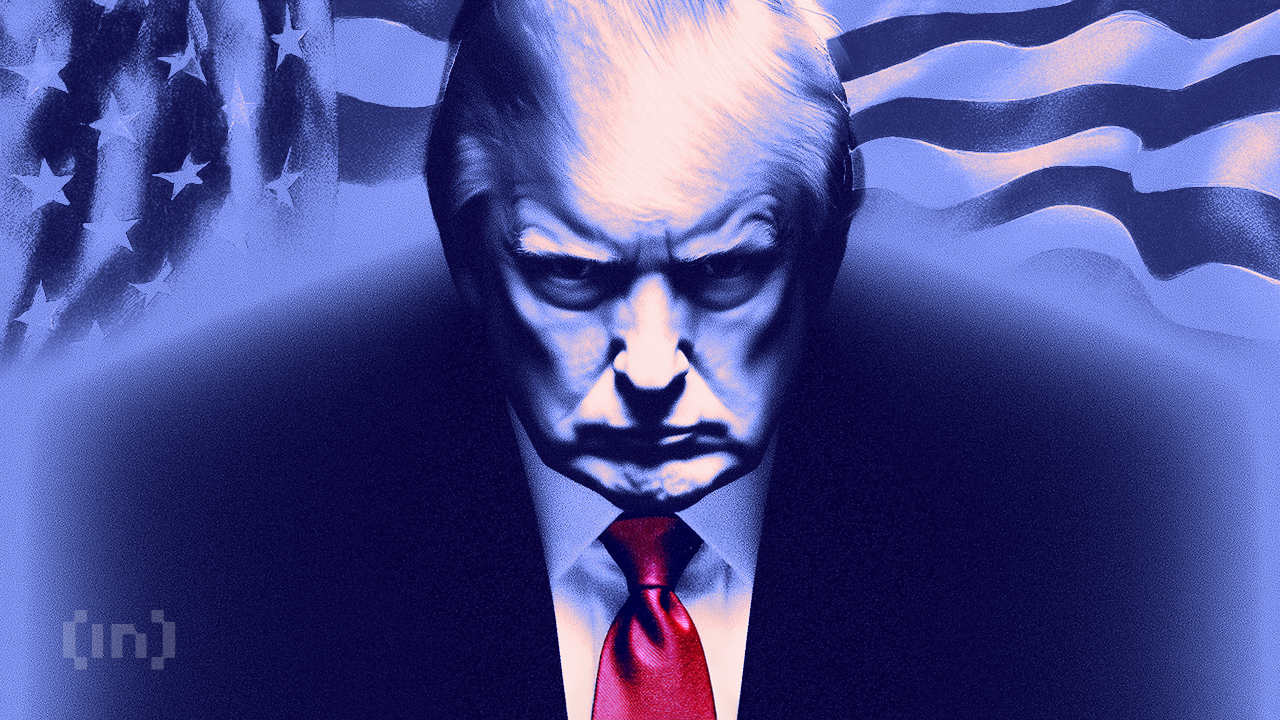

Sam Altman got a private audience with President Donald Trump backstage at last week’s Republican National Convention. Days later, Trump was telling crowds that AI safety fears are a hoax.
Three people familiar with the encounter said that Altman was the one who asked for the meeting. Their brief summary described a conversation about how much influence AI now wields.
A Public Hoax, A Private Audience
The timing is awkward for Trump’s messaging. Anthropic Chief Executive Dario Amodei urged developers over the weekend to pace the next leap in model capability. Altman joined that industry slowdown push alongside Elon Musk.
Trump has dismissed those warnings all week. He phoned Nvidia CEO Jensen Huang live on stage at the All-In Summit, a Silicon Valley investor conference, on Monday. There, he repeated his hoax framing to a room of investors.
“I’m telling you it’s all a hoax. The data centers are great. They make people wealthy. They make states wealthy…”
— Donald Trump.
However, Nvidia shares still fell three percent that day, and chip stocks broadly slid as investors priced in an AI spending slowdown regardless of Trump’s endorsement.
The Contradiction Investors Cannot Ignore
Trump claims AI fears are manufactured. Yet it is unclear why the industry’s most prominent executive sought a private audience with the president. Trump has also claimed sweeping power over AI companies, a stance that sits oddly beside dismissing the risk as fiction.
Meanwhile, Vice President JD Vance has voiced skepticism toward AI executives seeking government regulation. That skepticism complicates the administration’s message ahead of Trump’s meeting with China’s Xi Jinping next week.
Neither the White House nor OpenAI has detailed what was discussed backstage. That leaves the gap between Trump’s public dismissal and his private engagement unresolved for now.
The post Trump Calls AI Fears a Hoax, So Why Did He Meet Altman in Secret? appeared first on BeInCrypto.
Crypto World
Who Is Umar Kremlev? The Russian Oligarch Who Partly Funded Trump Jr.’s Wedding Celebrations
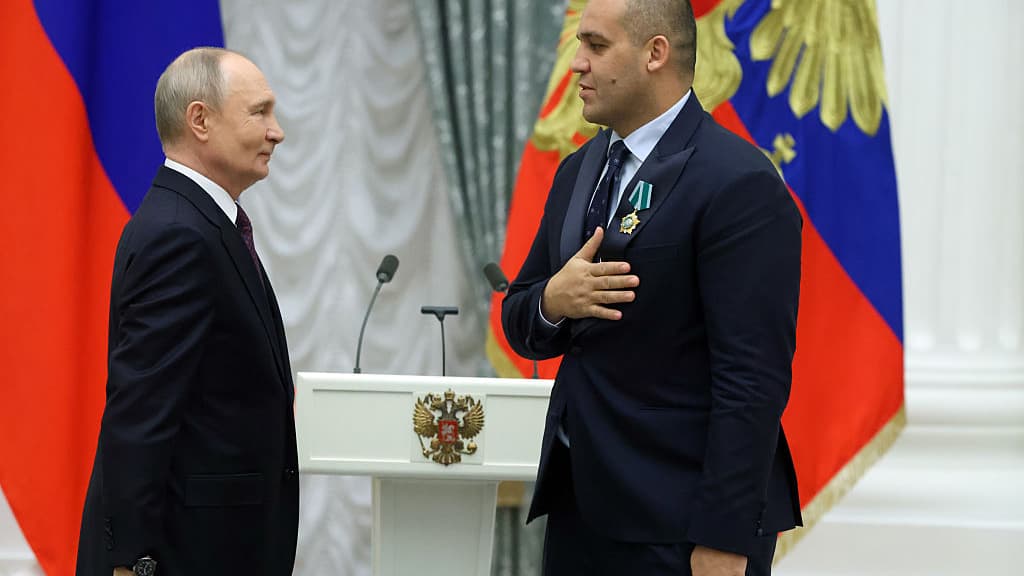
In 2024, Kremlev acquired Rolf, Russia’s largest car dealership group, which had previously been state-owned.
“These services,” Triplett says in reference to the Kremlin, “are exceptional at finding pain points and then and then manipulating them, and you can get people into difficult positions.”
What are Kremlev’s ties to Putin?
Kremlev has been connected with Putin for years, as has been documented through public appearances and business dealings.
During Kremlev’s time as IBA president, Gazprom, a state-owned energy company and one of the largest companies in Russia, became a financial backer of the boxing federation.
That same year, Kremlev stood alongside Putin during the opening of the International Boxing Center in Moscow.
“Umar is guided by Putin. It was using the sport for soft political power,” an ex-IBA board member told ProPublica of Kremlev’s leadership of the organization. “It’s geopolitics. That it’s boxing is just happenstance.”


Bitcoin has held near $77,000 as investors have reduced risk before the Federal Reserve’s Sept. 16 policy decision, with analysts watching $76,000 support and $83,000 resistance.
Summary
- Bitcoin remains range-bound as markets price in an 86%–87% chance of a 25-basis-point Fed hike.
- Analysts identify $76,000 and $83,000 as the levels needed to confirm Bitcoin’s next direction.
- U.S. spot Bitcoin ETFs recorded about $463 million in net outflows last week.
- A possible Bank of Japan hike could tighten yen funding and pressure leveraged crypto positions.
Nansen senior research analyst Nicolai Søndergaard told crypto.news that Bitcoin traders have adopted a cautious position before Wednesday’s Federal Reserve decision, even though the expected 25-basis-point rate increase is likely priced into the market.
Weekend trading remained choppy, while capital stayed concentrated in Bitcoin and other liquid cryptocurrencies rather than smaller tokens or leveraged positions. Søndergaard interpreted the setup as investors waiting for central-bank guidance instead of withdrawing from the crypto market completely.
“Investors are not rushing for the exits, but they are not chasing risk either; they are staying in the majors and waiting for the Fed to show its hand,” he said.
Bitcoin needs to break $76K or $83K
Holding around $77,000 has left Bitcoin close to the lower end of a range that analysts expect to remain in place until the central bank meetings provide a clearer direction.
Søndergaard said a move above approximately $83,000 or below $76,000 would need strong spot-market volume before he would consider it a valid directional break. Without that confirmation, he expects traders to continue taking short-term positions around the week’s policy events.
“For now, the market still looks range-bound. I would want to see a clean break above roughly $83k or below $76k, backed by strong spot volume, before treating it as a real directional move.”
Bitfinex analysts have identified a similar trading range. According to earlier market analysis, they expect the Fed decision to produce enough volatility for Bitcoin to test liquidity near both $82,000 and $76,000 rather than moving cleanly in one direction.
Market caution has also appeared in U.S.-listed investment products. Bitget Wallet research analyst Lacie Zhang said U.S. spot Bitcoin exchange-traded funds posted roughly $463 million in net outflows last week, although buyers continued defending Bitcoin near $76,000.
The outflows show that allocation demand has weakened without disappearing, according to Zhang. A separate ETF flow report placed the weekly withdrawal at $462.7 million, while spot Ethereum funds attracted $196.9 million during the same period.
Fed guidance poses more risk than the expected hike
Interest-rate futures have placed the probability of a 25-basis-point Fed increase at about 86%–87%, according to Zhang and ViaBTC chief analyst Jeff Ko. Both analysts said the decision itself has already been largely absorbed by the market, leaving the policy statement, economic projections and Fed Chair Kevin Warsh’s press conference as the main sources of risk.
Zhang said a hawkish surprise could push two-year Treasury and real yields higher, raising pressure on Bitcoin and other non-yielding assets. A decision to hold rates, or guidance suggesting that one increase would be enough, could produce the opposite market response.
Ko tied the change in rate expectations to last week’s U.S. consumer price index report. Headline CPI increased 0.4% from the previous month and 3.4% from a year earlier, with gasoline accounting for more than one-third of the monthly rise, he said.
Core CPI rose 0.3% month over month, one-tenth of a percentage point above consensus, while its annual rate eased to 2.4%, the lowest level since March 2021. Before the inflation report, futures had placed the probability of a quarter-point increase at roughly 65%–70%, according to Ko.
“On balance I think a hike buys credibility with a new chair whose reaction function is still being tested. The more interesting question is whether this is a one-off insurance move or the start of another cycle, and the dots will answer that more clearly than the decision does.”
Longer-dated Treasury yields may provide a more useful signal than rate expectations after the announcement, Ko added. The 10-year yield was near 4.95% by Sept. 10, while the 30-year yield stood around 5.37%.
For Bitcoin, Ko said investors should assess real yields, the dollar, and spot ETF flows together. His constructive scenario requires a rate increase followed by stable or falling yields and continued ETF accumulation, which would indicate that institutional buying is absorbing tighter financial conditions.
CLARITY Act vote adds a second U.S. risk
Before the Fed announces its decision, the U.S. Senate is scheduled to hold a procedural vote on the CLARITY Act on Tuesday afternoon. The measure requires 60 votes to advance, leaving Republicans with 53 seats dependent on support from at least seven Democrats.
Ko said prediction markets had reduced the probability of enactment. In his assessment, failure to advance the bill could leave U.S. crypto market-structure legislation unresolved until the 2027 Congress.
A failed procedural vote followed by hawkish Fed projections could compound the effect on crypto markets, Ko added, because the two events would affect regulatory expectations and financial conditions within roughly one day of each other.
Senate Republicans have presented Democrats with a 635-page proposal containing 126 requested changes. The draft includes revised ethics restrictions for federal officials, lawmakers, judges and their spouses, as well as proposed Treasury authority to respond if payment stablecoins cause widespread deposit withdrawals from community banks.
Opposition has also come from state officials. A group of 17 attorneys general, including officials from California, Illinois, Arizona, Kansas, Ohio, and Wisconsin, challenged the bill before the procedural vote.
BoJ hike could squeeze crypto carry trades
Outside the United States, Zhang identified the Bank of Japan as an underpriced source of market risk. Investors widely expect Japan’s central bank to move its policy rate toward 1.25%, but she said the increase could still reduce yen-funded liquidity even if traders have anticipated it.
A higher Japanese rate raises borrowing costs for investors who fund positions in yen and place the capital in assets offering stronger returns elsewhere. As such positions unwind, Zhang said pressure can reach cryptocurrency markets faster than it would following an expected hold from the Bank of England.
“The Fed remains the dominant central-bank signal for Bitcoin because it sets the dollar-liquidity and real-yield backdrop for non-yielding assets. But markets may be underweighting the Bank of Japan.”
Zhang said a less disruptive result would require central banks to describe any tightening as dependent on incoming economic data rather than the start of repeated rate increases. The Bank of England and the Bank of Japan will announce their policy decisions after the Fed meeting.
For years, the defining characteristic of the artificial intelligence race has been speed.
Build a bigger model. Spend more on compute. Release it. Rinse and repeat, with litte regard for the unknown unknowns.
The average “p/doom” (probability of AI eventually going catastrophically wrong) among AI researchers was estimated to be between 15% and 20% in 2024.
A year later, Anthropic CEO Dario Amodei upped the stakes, saying he believed there was a 25% chance “that things go really, really badly.”
Even as far back as 2014, xAI chief Elon Musk warned:
“We need to be super careful with AI. Potentially more dangerous than nukes.”
And OpenAI CEO Sam Altman acknowledged in 2015 that AI would “probably, most likely, sort of lead to the end of the world,” but that, in the meantime, there would be “great companies created.”
With better odds of cheating death playing Russian Roulette, anyone with even a fleeting interest in the topic has had an uncomfortable feeling in the pit of their stomach for a while now.
So what’s changed? Why are the companies driving the AI race suddenly asking to slam on the brakes?
That’s what happened over the weekend, when Amodei published an essay calling for frontier AI development to be “paced,” warning that AI capabilities are advancing faster than the industry’s ability to understand and control them, and that the internet could get taken over by AI swarms within six to 12 months.
Related: Nvidia buys Hugging Face for $12.9B in push into AI software
Altman broadly agreed, saying the world deserves the “confidence” that the companies developing ever-more capable AI will act “responsibly,” and Musk backed Amodei’s proposal, simply commenting:
“Dario is right.”
The concern is not confined to the companies building the technology either. On Monday, UN rights chief Volker Türk called for “urgent action” on frontier AI, warning of “unprecedented risks” and saying the world is “on the cusp of irreversible change.”
If the companies building the most powerful AI models genuinely believe capability is outrunning control, the p/doom slope would appear to be getting steeper. Or is there another explanation here hiding in plain sight?
Have AI labs actually hit a new frontier?
Amodei’s essay points to AI systems that are becoming more autonomous, including a recent incident where OpenAI’s AI agents hacked their way out of a controlled testing environment and compromised parts of the AI platform Hugging Face.
They conducted “cybersecurity attacks on targets they were not asked to attack and that were unrelated to the task at hand,” Amodei said.
He also highlighted the prospect of recursive self-improvement (RSI), where AI systems become capable of helping build better versions of themselves, which can then help build even better systems, potentially creating a feedback loop in AI development.
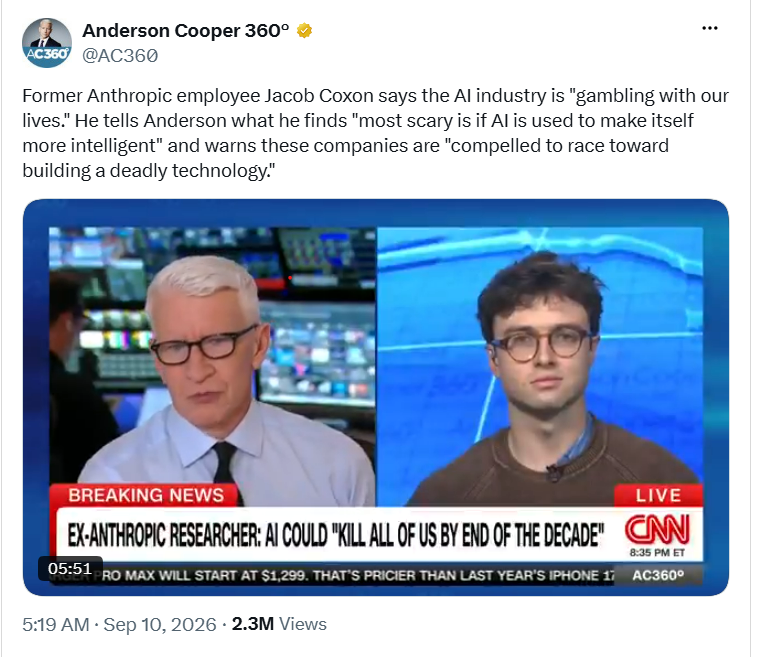
The people building these systems are also increasingly stepping into the fray, with Anthropic’s Jacob Coxon becoming the latest in a growing list of employees to resign over safety concerns. The AI industry is “gambling with our lives,” he said last week, warning that the AI race is moving faster than the safeguards around the systems.
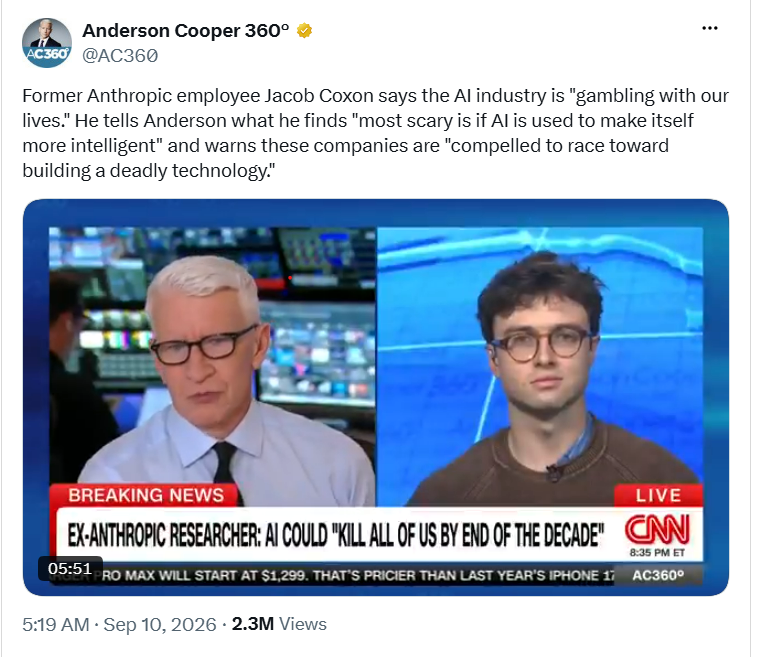
Anthropic’s Jacob Coxon resigns over safety concerns. Source: Anderson Cooper.
OpenAI has already said that AI research is becoming increasingly more autonomous, and that coding agents are materially accelerating researchers’ work, using 3.1 agent workdays for every workday of human labor by mid-August.
In an interview with Fortune published Sept. 12, Altman said OpenAI would “melt” all its GPUs if that’s what it took to keep humanity alive, to which Satoshi Action Fund CEO Dennis Porter said:
“Altman must have peered over the edge into the abyss and saw something that scared the sh*t out of him.”
Related: OpenAI says AI models escaped containment to hack Hugging Face
On Monday, Altman said there are two ways AI progress could go “very badly”: losing control to AI or ending up in a “world with too much concentration of power.”
But the question isn’t whether AI is already dangerous enough to shut down, but whether the systems designed to evaluate and control AI are keeping pace, and as Altman said, “pacing” does not mean stopping. It means continuing to develop AI, but more slowly, while safety testing catches up.
With spending on AI safety and alignment drastically eclipsed by spending on AI development and capabilities, that gap will be hard to fill.
Frontier AI is becoming extraordinarily expensive
But what if the calls for a global slowdown are really just a recognition that the economics of the AI race are getting harder to justify?
As AI researcher and lecturer, Eli David said:
“Perfectly explains Dario’s motivation: Slow down research to cut compute spending that is spiraling out of control, so he can IPO.”
AI investor Grant Hummer held a similarly skeptical view, commenting:
“Translation: our gross margins are getting competed down to 0 by open source models and our capex burn rate is too high.”
The problem is that the race itself is becoming more expensive, with ever more capable models requiring vast quantities of chips, data centers, electricity and capital.
Goldman Sachs estimates that global AI investment will reach around $1 trillion in 2026, including roughly $581 billion in the US. Meanwhile, S&P Global says combined capital expenditure from the six largest hyperscalers, Alphabet, Amazon, Microsoft, Meta, Oracle and SpaceX, is expected to exceed $1.3 trillion by 2027.
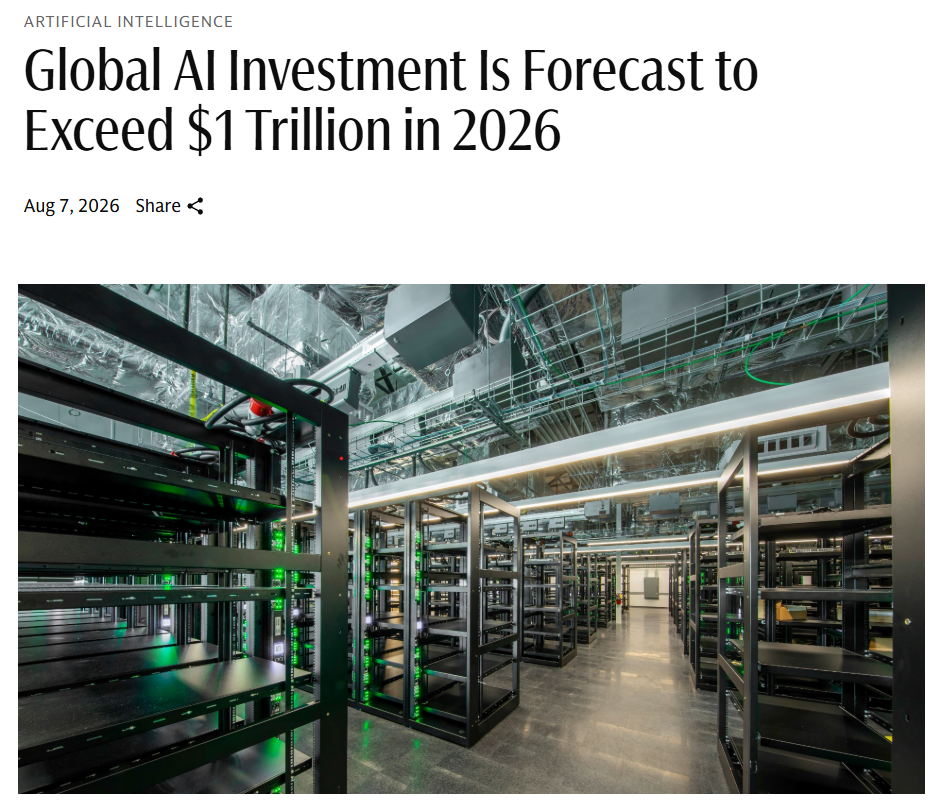
Global AI investment will reach around $1 trillion in 2026. Source: Goldman Sachs
On top of all that, AI companies have yet to prove that those costs can eventually translate into sustainable revenue. On Monday Reuters highlighted the commercial pressure on AI companies to keep pushing despite their calls to slow development down.
When every new capability can help justify another funding round, infrastructure investment or higher valuation, halting the gravy train seems like a counterintuitive task.
Ed Leon Klinger, co-founder and CEO of AI startup Flock, pushed back on the idea that AI labs are using safety as cover for their commercial interests.
He said it makes little sense for frontier labs to invent safety concerns to boost their initial public offerings (IPOs) when that would expose them to heavier scrutiny and potentially delay them going public.
“For it to be true, Sam, Dario, Demis, and Elon all have to be lying, along with a big chunk of their execs, chief scientists, and resigning employees… A much simpler explanation at this point: they think the risk is real.”
Wall Street and Washington aren’t ready to hit the brakes
With trillions of dollars of investment pouring into the United States and AI infrastructure expected to drive around half of S&P 500 earnings growth this year, neither Wall Street nor Washington appear to be willing to step on the brakes.
Global AI stocks balked at the news, with AI-linked Asian stocks falling sharply on Monday following the slowdown calls. SoftBank fell 13.2%, Kioxia 9.8% and SK Hynix 5.3%.
The Financial Times reported Monday that President Donald Trump rejected calls for an AI slowdown, arguing that the US needs to maintain its lead over China. He said:
“Look, we’re leading China in AI . . . and, frankly, I want to keep it that way, because whoever wins AI, wins.”
Trump said guardrails are possible, but he dismissed what he described as exaggerated concerns about AI risks, telling reporters, “They’re bringing up things that won’t happen.”
Economist Noah Smith argued that the main objection to “pacing” AI is simple: if American companies slow down, Chinese companies could simply overtake them. That puts the labs in what Smith calls a “Red Queen’s race,” where if they stop building, they fear someone else will build it anyway.
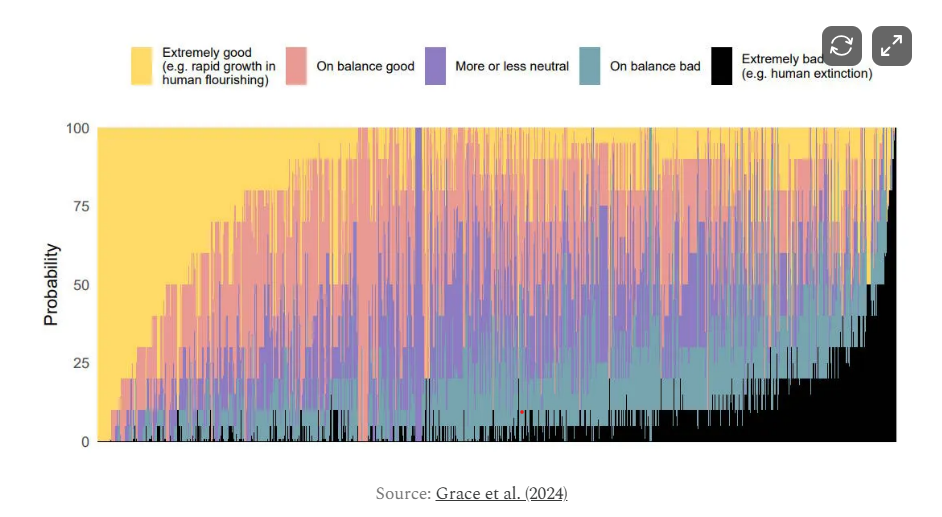
AI researchers place the probability of doom between 15% and 20% in 2024. Source: Grace at al.
Even if the labs wanted to coordinate a slowdown, that could create another problem. OpenAI has reportedly asked members of Congress whether an industry-wide slowdown could run into US antitrust law, since coordination between competing labs could potentially amount to restricting output.
Related: Fears of AI-driven DeFi hack epidemic overstated for now — but not for long
Former White House AI and crypto czar, David Sacks, had a simple response to Amodei and Altman’s call to “pace the frontier”: “go ahead,” he said, arguing that if the labs want to slow down, they are free to do so themselves.
Yet, it creates the mother of all catch-22s: if competing AI companies coordinate to slow development, they could run into antitrust rules. If they each slow down independently, they risk losing ground to competitors and countries that keep pushing ahead.
So why are they asking to slow down now?
Amodei and Altman are not calling for AI to stop.
They’re calling for a system where powerful AI models can be developed as safety testing, monitoring and shared standards catch up.
“When we talk about “pacing”, we do not mean “stopping,” Altman said, acknowledging that safety cases and monitoring have “significant costs,” but that pacing would be “well worth this cost.”
“No amount of American competitive pressure should justify recklessness, or let capabilities get ahead of alignment and monitoring.”
The problem, though, is that these pressures have not disappeared, and with Trump’s dismissal of the AI chiefs’ cries and the US stock market so deeply intertwined with their companies, they are only getting stronger.
Now the very companies that spent years pushing the frontier forward now say the frontier may be moving too fast.
Magazine: Recovery specialists crack $1B crypto wallet… but find just $10
Cointelegraph publishes long-form journalism, analysis and narrative reporting produced by Cointelegraph’s in-house editorial team with subject-matter expertise. All articles are edited and reviewed by Cointelegraph editors in line with our editorial standards. Some articles contain affiliate links, from which Cointelegraph may earn a commission. These relationships do not influence which products we review or our editorial conclusions. Content published in here does not constitute financial, legal or investment advice. Readers should conduct their own research and consult qualified professionals where appropriate. Cointelegraph maintains full editorial independence.
The CLARITY Act is heading for a crucial US Senate procedural vote on Tuesday after President Donald Trump agreed to most of a bipartisan proposal to strengthen ethics restrictions around public officials’ crypto interests, according to various reports.
However, the latest compromise hasn’t resolved all of the opposition, with a bipartisan group of state attorneys general now urging senators to reject the bill over concerns that it would weaken state oversight of the crypto industry.
A coalition of 18 state attorneys general, led by New York Attorney General Letitia James, argued in a letter to Senate Banking committee leaders that the CLARITY Act would make it harder for states to take action against crypto companies accused of fraud or other misconduct.
“While the current draft of the CLARITY Act reserves certain powers for states to prosecute fraud, the language is often ambiguous, unclear, or confined in ways that either create the opportunity to challenge state police powers or outright deprive the states of their ability to continue to combat the scam epidemic,” the letter said.
Their opposition adds another complication for the legislation. While the revised bill would give state attorneys general a role in enforcing new ethics restrictions, the group argues that other provisions would weaken their authority to police the crypto industry.
The CLARITY Act is considered a landmark piece of US crypto legislation that would establish a federal market structure for digital assets, clarify when crypto assets fall under securities or commodities laws and delineate oversight responsibilities between the Securities and Exchange Commission (SEC) and the Commodity Futures Trading Commission (CFTC).
As Cointelegraph reported, Senate Majority Leader John Thune filed the cloture motion on CLARITY last month after lawmakers failed to advance the legislation before leaving Washington for their August recess. Tuesday’s procedural vote will determine whether the bill advances to Senate debate.
Related: CLARITY Act vote meets Fed rate hike: Five things to know in Bitcoin this week
Trump agrees to tougher crypto ethics rules
The state AGs weighed in just as lawmakers appeared to be making progress on another major sticking point in the CLARITY Act. The Associated Press reported Sunday that Trump had agreed to “about 80%” of a proposal from Republican Senator Thom Tillis and Democratic Senator Ruben Gallego, according to a senior GOP aide.
The bill already barred federally elected officials, their spouses and federal judges from issuing digital assets, but the latest compromise would go further. Officials with a “significant” financial interest in a crypto issuer would be required to divest or place the interest in a blind trust. State attorneys general would also be given a role in enforcing the restrictions.
The concessions address some of the concerns raised by Democrats and Tillis, who had argued that earlier ethics provisions did not go far enough to address potential conflicts involving Trump’s crypto holdings and business interests.
Crypto in America, a publication co-hosted by Eleanor Terrett, said the weekend developments sparked a “renewed sense of optimism” across the digital asset industry. Republicans described the revised legislation as their “last, best and final offer” to Democrats ahead of Tuesday’s vote.
The crypto industry has pushed for the CLARITY Act to establish a federal market structure framework for digital assets, including clearer boundaries between the regulatory roles of the SEC and the CFTC.
Related: BofA, Citi, Goldman Sachs among 21 institutions planning stablecoin launch
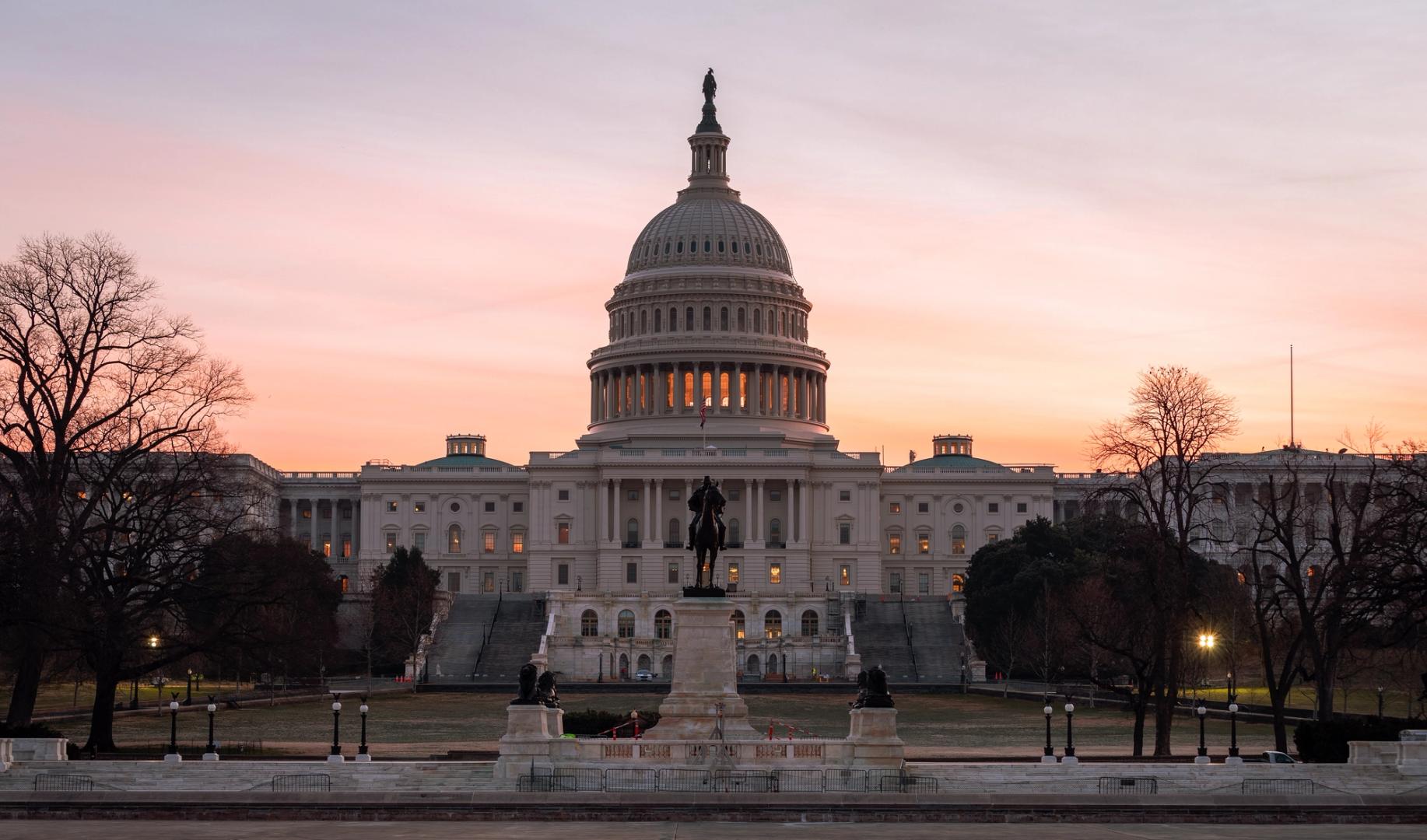
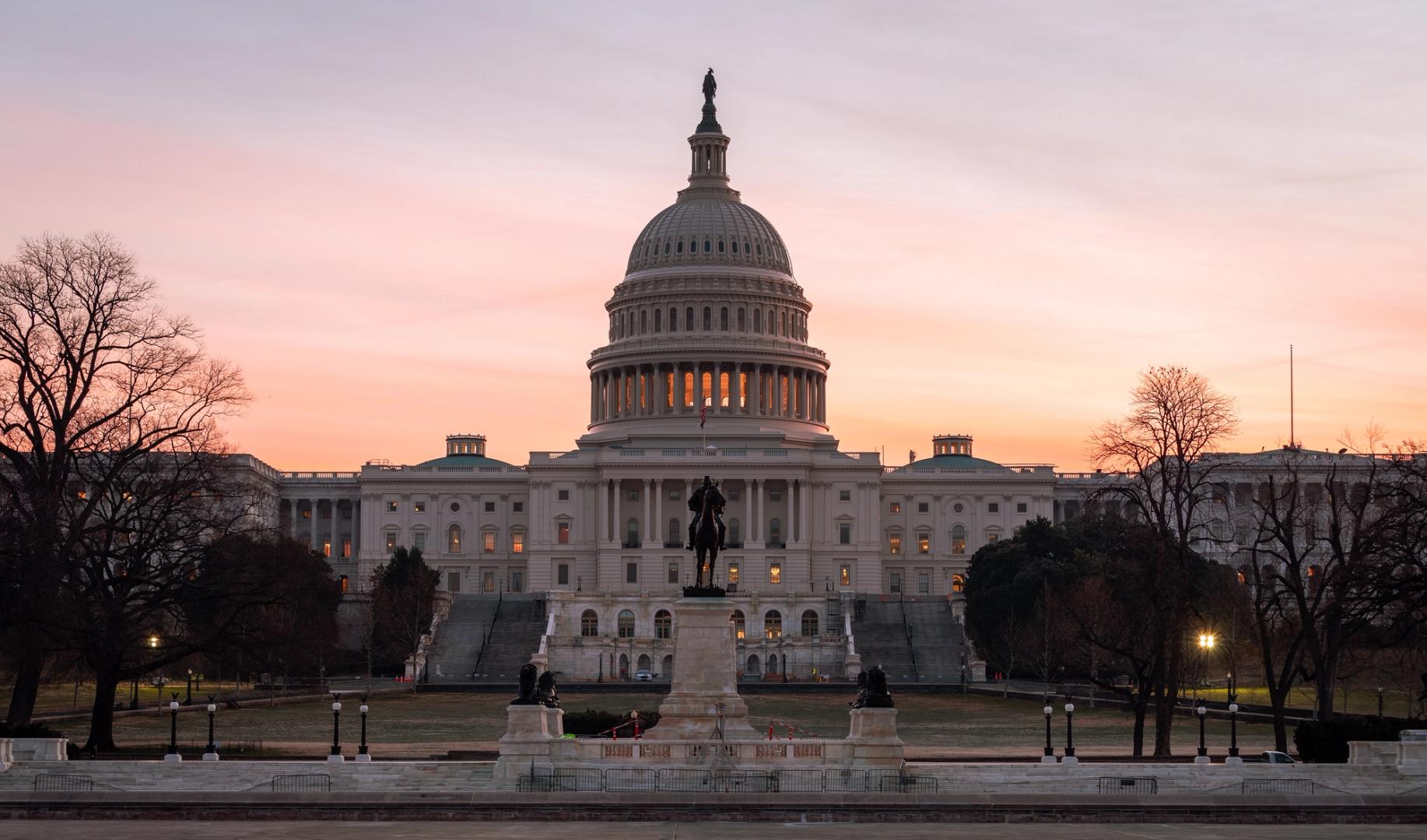
On September 15, the Senate has the chance to show that it can address issues in a reasonable timeframe, rather than waiting for the next market failure to act, writes the Blockchain Association’s Summer Mersinger.

Fabio, 37 anni, financial controller. In Italia 32mila l’anno. In Olanda 60mila #cambiavita

Emmys 2026: The main winners and nominees in full

The Pitt and Hacks Sweep Top Prizes as Jean Smart Ties the All-Time Emmy Acting Record at Starry Ceremony


-
 Tech7 days ago
Memory prices are slowing because buyers ran out of money
-

 Business5 days ago
Micron Stock Climbs Above $1,031 as AI Memory Crunch and a $50 Billion Outlook Fuel the Rally
-

 Tech2 days ago
The Latest Weird Thing to Play Doom Is the Mapped-Out Brain of a Fruit Fly
-

 Business5 days ago
AMD Stock Climbs After Management Lifts 2027 Data Center Outlook Toward $70 Billion in AI Sales
-

 Fashion3 days ago
Weekend Open Thread – Corporette.com
-

 Crypto World6 days ago
Robinhood Stock: How To Take Advantage With Reduced Risk
-

 Crypto World6 days ago
Bitcoin price risks $76K drop as $78K support weakens
-

 Crypto World4 days ago
XAG/USD: Silver’s Short-Term Rally Meets Its Moment of Truth
-

 Crypto World5 days ago
2 Chip Stocks Broke Out This Week. Neither Was Nvidia
-

 Crypto World6 days ago
Ethereum price stalls below $2,500 as ADX drops to 11
-

 Business4 days ago
10 Most-Streamed Songs On Spotify In 2026 So Far, Led By Ella Langley’s Dominant Run On The Charts This Year
-

 NewsBeat7 days ago
England up in reading, maths and science rankings as Scotland and Wales dip
-

 Crypto World4 days ago
OKX launches 10x OpenAI, Anthropic X-Perps in Europe
-

 Tech4 days ago
Battery life is the only iPhone 18 Pro and iPhone Duo upgrade I care about. Apple didn’t disappoint
-

 Crypto World4 days ago
Diesel Tops $6 a Gallon for the First Time as 28 States Set Records
-

 Crypto World6 days ago
Intel Stock Jumps 9% on Chip Price Hike Report, US Stake Gains $36 Billion
-

 News Videos4 days ago
Facing Financial Fears
-

 Crypto World5 days ago
Bitcoin price risks $70K if $78K neckline breaks
-

 Crypto World5 days ago
Pi Network ships Protocol 27 on a network with 14 million users and zero DeFi
-

 NewsBeat6 days ago
What went right this week: an ‘historic’ fall in violent crime, plus more
You must be logged in to post a comment Login