
Crypto World
Do state election betting bans apply to prediction markets?

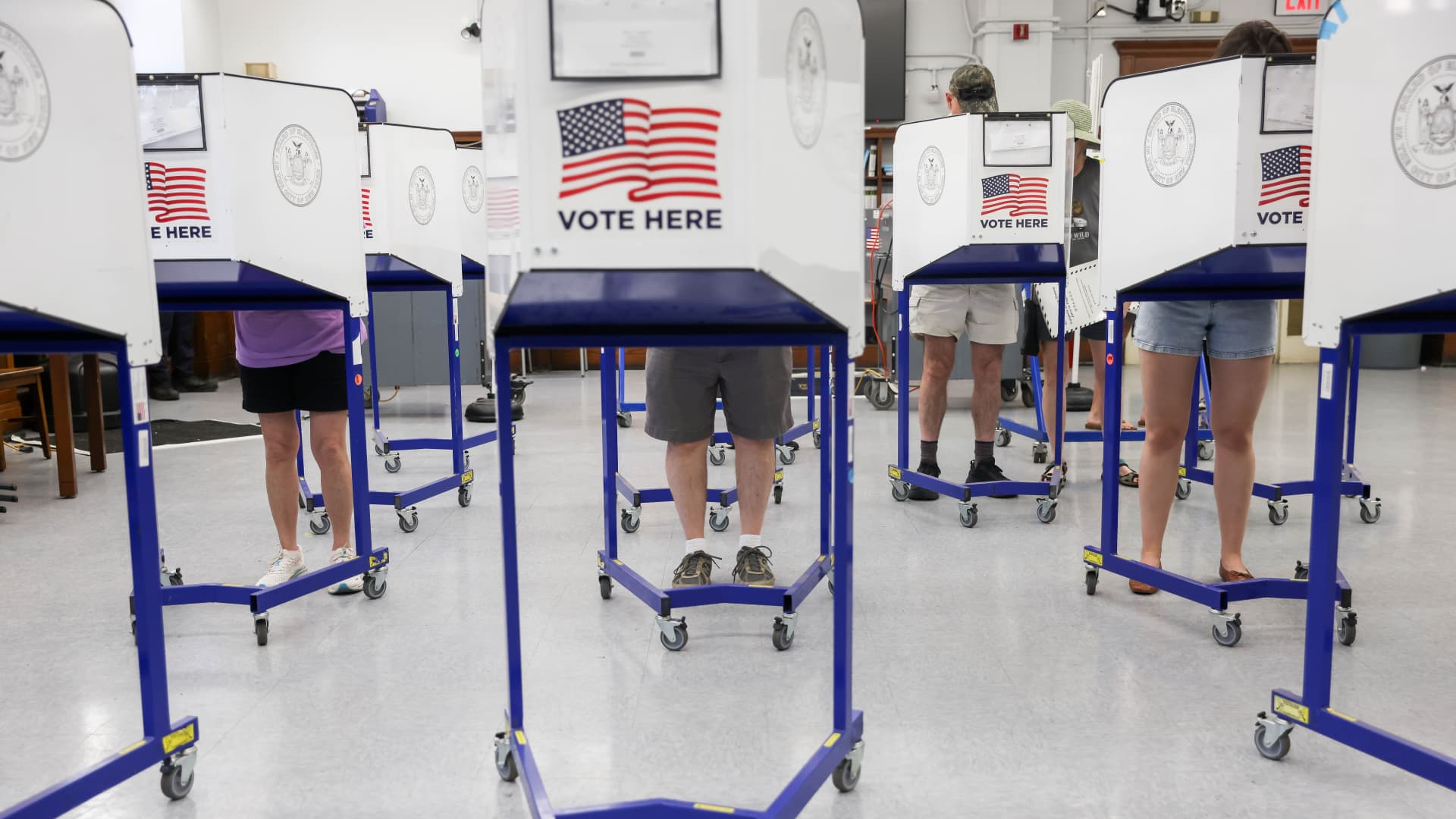
Voters cast ballots at a polling location inside John Jay High School during early voting for a primary election in the Brooklyn borough of New York, US, on Sunday, June 21, 2026.
Michael Nagle | Bloomberg | Getty Images
Wisconsin sent prediction market platforms spinning last month when its election commission released a directive reminding voters that betting on elections — including via trades on event contract exchanges — is illegal in the state, based on a more than 175-year-old law.
What shocked people was the penalty that Wisconsin places on those who break its law: violators lose the right to vote in the election they bet on.
Prediction market platform Kalshi blasted the law. “This is blatantly unconstitutional and illegal,” Benjamin Freeman, head of politics growth at Kalshi, wrote in a post on X. Polymarket told the Milwaukee Journal Sentinel it looked forward to addressing the claims through the appropriate legal process.
Wisconsin isn’t alone. Twenty-three states have laws on the books that ban betting on elections, according to Pew Research Center. New York also doesn’t allow voters to cast a ballot in an election that they’ve bet on, while in most of the other states violators can face fines or jail time for wagering on an election.
However, does the language in state laws apply to trades placed on event contracts? The answer depends on the state, but many aren’t sure.
Hotly contested
In Colorado, betting on an election is a class 2 misdemeanor punishable by up to 120 days in jail or a $750 fine. Lawrence Pacheco, a spokesman for the Colorado state attorney general, was clear in a statement: “Colorado state law bars bets or wagers on elections, and that includes prediction markets.”
But few states were as direct as Colorado. A spokesperson for the New York attorney general said that the office has not made an official interpretation on its election betting statute and whether it applies to prediction market trades.
The office for the Arizona attorney general declined to comment on whether its law applies to election event contracts due to active litigation with prediction market platforms. Phil Bueler, a press secretary for the Tennessee attorney general, said that he cannot comment on what is essentially a request for a legal opinion about a “hotly contested issue.”
In March, the Maryland State Board of Elections in a memo to voters said that users should exercise caution when considering trading elections on prediction market platforms, warning that it could amount to violating the state’s law banning wagering on elections. Then, in July, the state’s administrator of elections Jared DeMarinis wrote a letter to the office of the state prosecutor to investigate whether prediction markets’ election offerings violate Maryland’s law.
“That’s why we did the March letter early,” DeMarinis said in an interview. “This is still in the early stages… and we need to make sure we seek clarity.” He added he is interested — if the current law is interpreted as not applying to prediction market trades — in seeking action from the state legislature to deliver that clarity.
Meanwhile, Nevada bans betting on elections, but court rulings have forced Polymarket and Kalshi to cease operating in the state. Due to court orders in Michigan, which also bans election wagering, Kalshi is currently in a total operational shutdown in the state while Polymarket only blocks residents’ access to its sports-related event contracts.
The Commodity Futures Trading Commission headquarters in Washington, D.C.
Ting Shen | Bloomberg | Getty Images
A new battlefront
States are already fighting with the federal government over regulating prediction markets. The Commodity Futures Trading Commission sees all event contracts as swaps, a derivative that it regulates, and thus believes companies fall under its jurisdiction, preempting any state law. States see the platforms’ offering of sports event contracts as gambling, an activity that they regulate.
However, elections may introduce a new line of defense for the states, according to legal experts. The U.S. Constitution explicitly gives the power of managing elections to the states, so they could argue in front of a court that power extends to regulating any form of placing money on said elections.
“I think the argument for the states having some place at the regulatory table with respect to elections is perhaps stronger from a preemption perspective,” said David Oliwenstein, a partner at Pillsbury and lead of the firm’s securities enforcement practice. “I think that the fact that the states have a clearly defined role… makes it a bit of an easier argument for the states to maintain jurisdiction.”
In 2024, a federal appeals court ruled that event contract platforms can feature election offerings. However, that decision overturned an intervention by the CFTC denying the listing of those contracts rather than offering a legal opinion on any state law regarding election wagering, though the commission used state laws on election bets as part of its reasoning for its denial at the time.
In this photo illustration, Apps for online prediction market sites are shown on an electronic device on Feb. 25, 2026 in Chicago, Illinois.
Scott Olson | Getty Images
“States would have an argument that not only for local races but for even national races, where you have district level outcomes, state level outcomes, where there’s close elections, that there are a variety of collateral consequences to the the prospect of individuals betting on the outcomes of these races,” said Joshua Mitts, a professor at Columbia Law School.
In its lawsuit against Kalshi, New York not only argues that the platform’s sports contracts violate state gambling laws, but also points out the company’s culture and elections event contracts. The spokesperson for the New York attorney general added that the office doesn’t have a particular view on its jurisdiction over election contracts specifically, but rather believes it has the power to regulate all gambling in any form.
Even if states were to introduce this new argument in their battle with the federal government in courts, the CFTC’s argument likely would stay the same. That’s because no matter the topic on a prediction market, the underlying instrument — a swap — doesn’t change.
Kalshi made that point in a statement to CNBC. “The law is clear — regulated prediction markets are subject to exclusive federal jurisdiction,” spokeswoman Elisabeth Diana said.
A Polymarket spokesperson echoed that sentiment. “As courts have recognized, prediction markets on CFTC-registered exchanges are governed by federal law, not a patchwork of state rules.”
The CFTC did not respond to a request for comment.
Ian Thomas, a principal attorney in the commercial litigation practice group at Offit Kurman, agreed with the other legal experts that states could take the position in court that the constitutional right to manage elections gives them power over prediction markets’ related event contracts.
However, with sports making up the majority of prediction market platforms’ volumes, he said it’s unlikely those contracts fade from the central arguments.
“Sports is such a major aspect of these platforms that it really is where everyone’s primary focus is going to be,” Thomas said, “and I think once the question of sports gets resolved, it may lead to a more easy resolution of kind of where the boundaries are on these platforms on other topics.”
Disclosure: CNBC and Kalshi have a commercial relationship that includes customer acquisition and a minority investment.

Bitcoin holders no longer need $25 million to swap coins into the BlackRock Bitcoin ETF. The minimum just fell to $1 million, opening a direct route into iShares Bitcoin Trust (IBIT) without selling first.
Robbie Mitchnick, BlackRock’s head of digital assets, revealed the cut on Bloomberg’s ETF IQ show on August 10. He said the firm wants to push the bar even lower over time.
A Lower Bar for the BlackRock Bitcoin ETF
Bloomberg ETF analyst Eric Balchunas flagged the change after the broadcast. Until now, the door stood open only to the very largest holders.
The swap runs through authorized participants, the big trading firms that create and redeem ETF shares. A holder hands over Bitcoin and receives IBIT shares in return. No sale takes place. The route also works in reverse.
The option itself is young. Spot Bitcoin ETFs launched in January 2024 on a cash-only model. The SEC only permitted in-kind swaps for crypto ETFs in July 2025. BlackRock’s cut now pushes that plumbing far down-market.
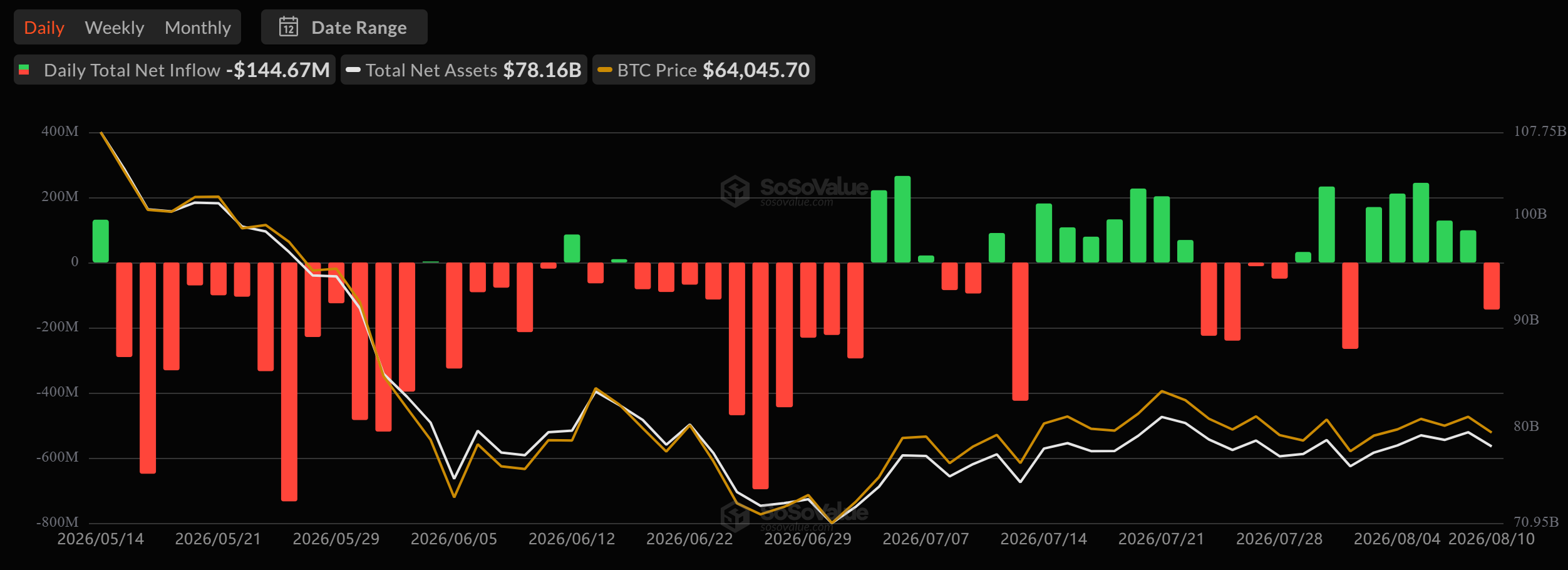
The timing is striking. US spot Bitcoin ETFs drew more than $850 million last week, their best week since April, according to SoSoValue. The funds now hold about $78 billion in bitcoin.

Fear did some of the pushing. Hackers drained roughly $116 million in Bitcoin from over 5,200 Coldcard hardware wallets, per a TRM Labs analysis. The exploit shook faith in self-custody.
Flows stay choppy, though. The funds shed $145 million on August 10 alone. Still, renewed BlackRock client demand suggests the appetite runs deeper than one red day.
Swap Now, Pay Taxes Later
The bigger prize sits in the tax code. IBIT runs as a grantor trust. In plain terms, the IRS treats shareholders as still owning the Bitcoin inside the fund.
That detail changes the math. Selling Bitcoin for cash triggers capital gains. Swapping it into IBIT may not. Clinton Donnelly, the crypto tax specialist behind the CryptoTaxFixer account, spelled out the position in a post.
“Not 100%, but the current tax position is that an in-kind contribution of Bitcoin to IBIT is non-taxable, with your basis and holding period carrying over. The caveat is that this relies on IBIT’s grantor trust treatment, and the IRS has not formally ruled on it.”
Balchunas backed that reading. The tax bill is delayed, not erased, because the original cost basis carries over.
Stock and bond funds cannot copy the move. Most run as open-end funds, not grantor trusts.
Bitcoin (BTC) traded near $63,602 on Tuesday, down 1.2% in a day. If the bar keeps falling, upcoming flow reports may show how much cold-storage bitcoin moves into the wrapper.
The post Bitcoin Holders Get 96% Cheaper Entry Into BlackRock’s ETF Without Selling appeared first on BeInCrypto.

CNN anchor Jake Tapper emphasized on Tuesday the extraordinary circumstances of the clandestine operation in Turkey.
“Obviously the life of the president is paramount, and previous White Houses have used deception to protect the president’s life,” he said in a post on X. “But no officials I’ve spoken to have ever before heard of using an [Air Force One] full of [White House] staff and journalists as a decoy during an imminent threat.”
Ronald L. Rowe Jr., a former acting director of the Secret Service, told the Post that, if the President’s location is kept secret, it is for a reason.
“We need to keep the ‘secret’ in Secret Service,” Rowe told the news outlet. “The public should know what the president is doing on a daily basis, but when it comes to the methods by which the Secret Service keeps the president safe, that should remain out of public view.”
Robert McDonald, who worked with the Secret Service for more than two decades, told TIME that the operation in Turkey appears to be a result of real-time improvisation by the President’s security team. He also cast doubt on the idea that the journalists who were on the former Air Force One were left at risk.
The U.S. Securities and Exchange Commission (SEC) said Monday it will hold an open meeting this Friday, August 14, to consider proposing new rules that would create a tailored offering path for certain crypto investment contracts.
The announcement lands just days after the Senate pushed its next procedural vote on the CLARITY Act to mid-September, leaving federal regulators to press ahead on their own while lawmakers work out what’s left of the bill’s disputes.
What the SEC Is Weighing
Friday’s vote only decides whether the agency issues a proposal, not whether it becomes law. Attorney Anne Kelley pointed out that a formal proposal would still need to clear a public comment period, economic analysis, possible revisions, and a separate final vote, a process that has typically taken major SEC rules somewhere between twelve and eighteen months from start to finish.
Still, she called it “welcome progress,” noting the agency is choosing to act rather than sit and wait on Congress.
In March, the SEC and CFTC issued a joint interpretation that set out a five-category token taxonomy and defined when a crypto investment contract begins and ends.
And while the meeting notice did not mention the interpretation, crypto investor Mark Chadwick believes it will eventually lead to rules that would let projects sell tokens to buyers expecting profit from the team’s work without going through the full weight of IPO-style registration.
Coinbase’s chief policy officer, Faryar Shirzad, wrote that the effort shows “the work of bringing clear rules to digital assets isn’t waiting on Congress.”
Separately, the CFTC said its new Innovation Advisory Committee, with representatives from Coinbase, Ripple, Robinhood, Kraken, Gemini, Polymarket, Kalshi, CME, and Nasdaq, holds its first meeting on August 20.
The CLARITY Act’s Longer Road
Senate Majority Leader John Thune filed cloture early Saturday on the motion to proceed to the CLARITY Act, setting up a procedural vote for September 15, the day after the chamber returns from recess. It’s a test of whether the bill can formally move forward, not a vote on its contents, and it still needs 60 votes to clear.
Bill sponsor Cynthia Lummis didn’t hide her exasperation after the earlier delay, saying, “You all know me and how long and hard I’ve fought for this bill, so you know how frustrated I am.”
Negotiators still have to sort out disagreements over the bill’s stablecoin yield language, an issue that resurfaced after banks pushed to change the wording, plus a bipartisan ethics agreement tied to Trump’s crypto holdings. The President told Punchbowl News he wasn’t against a blind trust but objected to being treated differently from other lawmakers.
Michael Saylor, never one to stray from his usual talking point, said Bitcoin doesn’t need CLARITY even if the country does. Meanwhile, Grayscale has floated its own plan, arguing regulators can still tackle custody, tokenized securities, and trading rules on their own if Congress can’t get the bill done this year.
The post SEC Plans Vote on New Crypto Investment Contract Rules as CLARITY Act Stalls appeared first on CryptoPotato.
Every American knows the popular Fort Knox conspiracy. The US government says hundreds of billions of dollars’ worth of gold is sitting inside it, but skeptics believe some or all of it may no longer be there. But Republican Senator Rand Paul says he verified it.
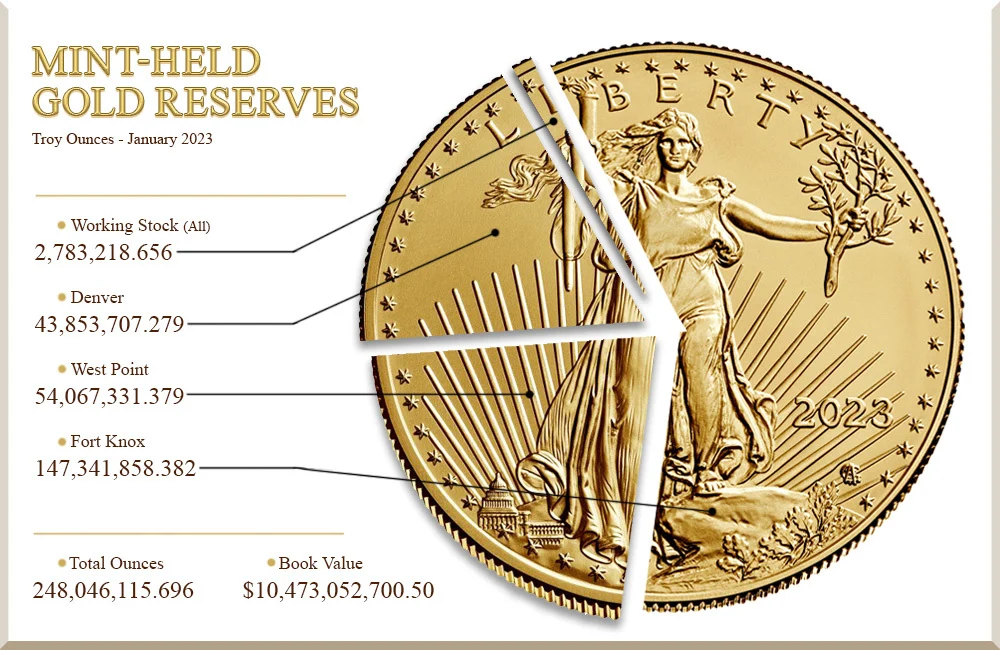
The Kentucky Senator reportedly had a vault tour on Monday, August 10. He says all the Fort Knox gold is there, roughly 147 million ounces.
Fort Knox Gold is There, Rand Paul Says After Going Underground
Almost nobody gets inside Fort Knox. The US Mint says outsiders have seen the vault roughly twice since it opened in 1937. Journalists and lawmakers toured it in 1974 to bury rumors of missing gold. Treasury Secretary Steven Mnuchin looked in 2017.
The Kentucky senator became the latest exception on August 10.
He posted his verdict the same day, then turned the tour into an argument about the dollar itself.
“Gold does not expand when Congress spends. Paper does. That is the difference,” Paul said in the post.
He wrote that the dollar has lost 97% of its purchasing power since the Federal Reserve opened in 1913. By his count, it has also shed 85% since 1971, when President Richard Nixon cut its final tie to gold.
He further claimed the Fed absorbs a third of Washington’s $2 trillion annual deficits.
Official records add a sharper number. The Mint lists 147,341,858 ounces at Fort Knox. The books still value them at $42.22 per ounce, a price frozen in 1973.

That makes the hoard worth $6.2 billion on paper and about $644 billion at today’s roughly $4,372 gold price. The gap between those figures is the core of Paul’s argument and also fueled Trump’s earlier calls for a Fort Knox audit.
How the Fort Knox Gold Conspiracy Ignited Again in 2025
Elon Musk revived this conspiracy in February 2025, publicly asking, essentially: who has actually confirmed the gold wasn’t stolen?
Trump then said his administration wanted to check Fort Knox and suggested going there with Musk. Treasury Secretary Scott Bessent responded that the gold was accounted for.
Then Trump brought the subject back again in May 2026. He said he still wanted to visit Fort Knox and “see if the gold is there,” while suggesting that theft was something worth considering.
Then came another interesting development last month. Bessent said he himself had not visited Fort Knox, although members of his staff had, including the US Treasurer, and said the gold was “present and accounted for.”
It seems that Senator Rand Paul has now assured Republican supporters that the Fort Knox gold is all there, but skeptics will still have a hard time believing such claims without a transparent audit.
The post Does Fort Knox Really Hold America’s Gold? Senator Says He Saw All 147 Million Ounces appeared first on BeInCrypto.


Aster has activated AOS-2, requiring projects to stake 1 million ASTER for four years before validators can approve a new perpetual market.
Summary
- Applicants must stake 1 million ASTER for four years, with no early withdrawal option.
- Successful proposals will move to Aster’s risk team before the contract launches on T+1.
- Projects that fail the validator vote will receive their full ASTER stake back.
- AOS-3 will follow, although Aster has not disclosed its rules or launch date.
AOS-2 opens Aster perpetual listings to applicants
Aster said in an Aug. 11 X post that the standard replaces private listing talks with a public process built around token staking, validator votes, and on-chain records.
Under AOS-2, a project must first meet Aster’s eligibility conditions and stake 1 million ASTER before it can submit a perpetual market proposal. The tokens remain locked for four years, and the applicant cannot leave the program early once the lock begins.
Eligible proposals then move to an on-chain validator vote. Approval does not immediately activate trading because Aster’s risk-control team must first configure the contract and assign the market’s operating parameters.
Once that process is complete, Aster plans to list the perpetual contract on T+1, meaning the next day after the required market setup. The announcement does not state whether T+1 refers to a calendar day or a business day.
A rejected application does not lose its deposit. According to the AOS-2 rules, Aster will return the full 1 million ASTER stake if validators vote against the listing. The announcement does not say how long the voting period lasts, what share of validator support is needed, or when the returned tokens become available.
The four-year lock therefore applies to successful applicants rather than serving as a listing fee. Aster did not disclose whether the locked tokens earn staking rewards, carry governance rights beyond the listing vote, or become subject to penalties if a listed project later fails to meet platform rules.
Aster keeps control of leverage and market risk
Although validators decide whether a proposed market can proceed, Aster’s risk-control system retains authority over leverage and other contract settings. The platform said those rules will be public and each decision will be recorded on-chain.
Risk settings are central to a perpetual contract because traders can maintain leveraged long or short positions without an expiration date. The exchange must set parameters covering margin requirements, liquidation levels, and the amount of leverage available, although Aster’s announcement did not list the exact factors its team will use.
The model divides responsibility between validators and the platform. Token holders participating in validation decide whether an eligible market should receive approval, while Aster determines how the contract will operate once it reaches the listing stage.
AOS-2 follows AOS-1, which opened spot-token listings to projects meeting published conditions. The latest standard applies the same public-entry approach to perpetual contracts, a market where Aster said listings have traditionally depended on private negotiations between projects and exchanges.
Aster has already used direct partnerships to add perpetual markets. In April, crypto.news reported its GENIUS listing, which made the exchange the first decentralized venue to offer a GENIUS perpetual contract.
The April arrangement also included a $200,000 ASTER trading reward pool and followed Aster’s partnership with the Genius trading platform. Under AOS-2, eligible projects now have a stated route to apply without depending solely on a privately arranged partnership.
AOS-2 gives ASTER another staking function
Requiring 1 million ASTER for every application adds a new use for the platform’s native token. The size of the requirement also means the cost of applying will change with ASTER’s market price, even though the number of tokens remains fixed.
Aster has not stated whether applicants may delegate the stake, obtain the tokens through third parties or submit a joint application. Its Aug. 11 announcement also did not disclose whether multiple proposals from the same organization would each require a separate 1 million-token lock.
The requirement arrives after Aster connected ASTER more closely to platform revenue. On June 17, the protocol said it would use 99% of daily fees for open-market token purchases and remove an equal amount from its reserves.
As previously covered on crypto.news, Aster also planned to reduce total supply from 8 billion to 3 billion ASTER through reserve burns. Purchased tokens were assigned to its Loyalty Rewards program, where distribution goes to veASTER holders according to their lock-weighted participation.
Aster separately imposed a 50,000 USDT charge for permissionless spot listings, with the proceeds directed toward ASTER purchases and rewards for stakers. AOS-2 uses a different structure because the perpetual-market deposit is returned when validators reject a proposal and remains locked when the application succeeds.
The staking rule comes as decentralized perpetual exchanges take a larger share of derivatives activity. CoinGecko’s 2026 Crypto Perpetuals Report found that perp DEXs increased their share of open interest from 3.6% in early 2025 to 13.5% in early 2026, according to coverage published in May.
CoinGecko also reported that top perp DEX open interest rose from $1.19 billion at the start of 2024 to $14.99 billion by the end of January 2026. Centralized exchanges still controlled most activity, with Binance and OKX accounting for 33% and 15% of the market during the first four months of 2026.
U.S. users face separate derivatives rules
AOS-2 changes how markets reach Aster, but it does not, by itself, decide who may legally trade the resulting contracts. Access for U.S. residents depends on federal derivatives rules and the platform’s geographic restrictions.
The Commodity Futures Trading Commission regulates U.S. commodity futures, options, and swaps through registered entities, including designated contract markets and derivatives clearing organizations. The agency has also brought cases against offshore platforms accused of offering leveraged crypto derivatives to U.S. customers without registration.
In May 2026, the CFTC approved a Bitcoin perpetual futures contract for listing on a registered U.S. exchange and issued staff advisories covering continuous trading, clearing, and settlement, according to an updated CFTC regulation guide. The agency’s action concerned a regulated domestic product and did not provide general approval for U.S. customers to use offshore perpetual platforms.
Aster’s Aug. 11 announcement did not address U.S. availability, registration with the CFTC, or country-level access rules for markets approved through AOS-2. It also did not identify the assets that may qualify, publish an initial list of applicants, or disclose when the first validator vote will begin.
Aster said AOS-3 will follow AOS-2, but the exchange has not announced what the next standard will cover or when its rules will take effect.
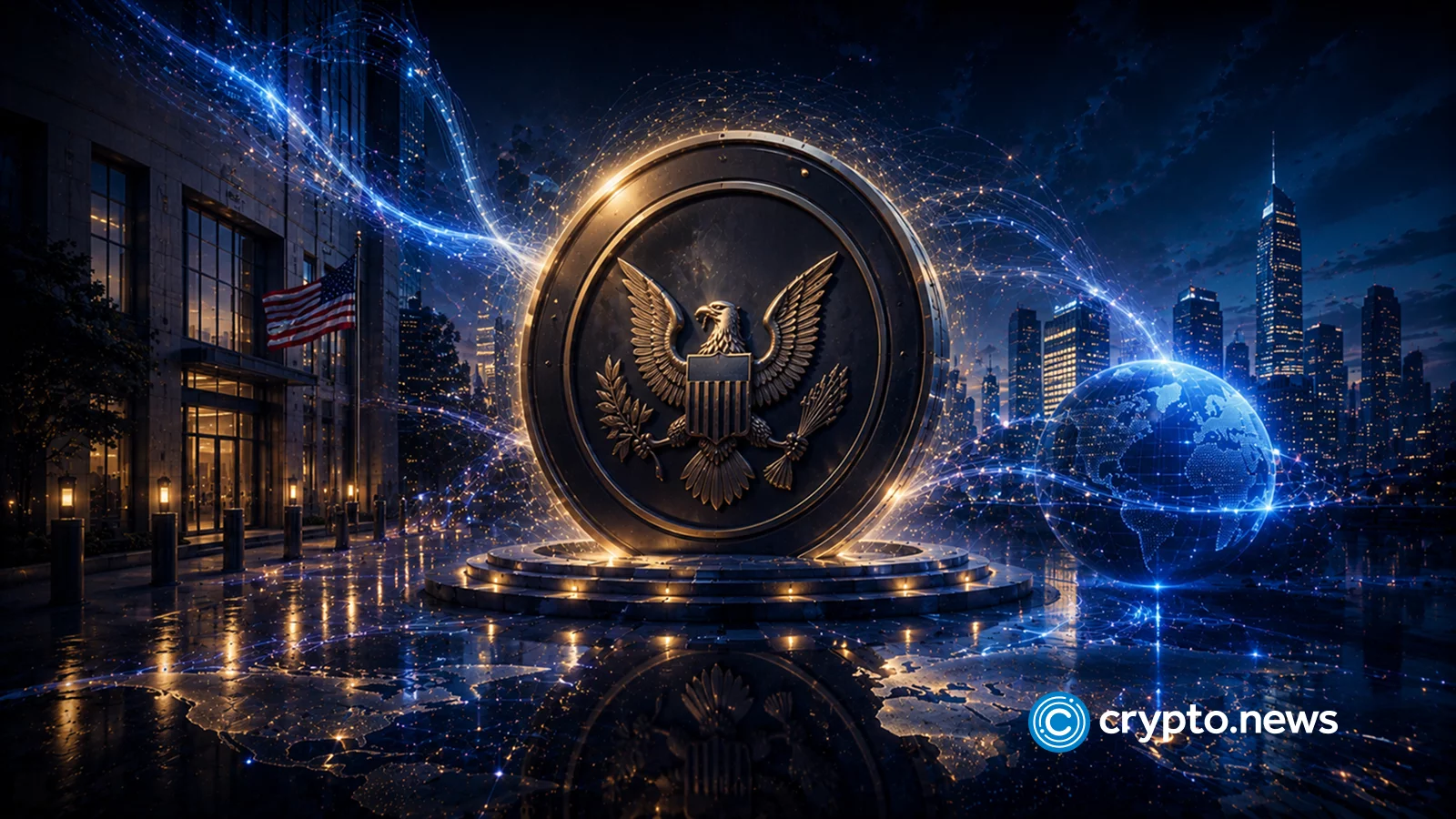
The U.S. Securities and Exchange Commission has outlined a plan to take control of the Consolidated Audit Trail, replace its funding model, and prepare a transition that could run through late 2027.
Summary
- The SEC has ordered staff to assess direct agency control of CAT and the resources required.
- A proposed rule could rescind Rule 613 while retaining CAT’s infrastructure and reporting standards.
- Funding options include congressional appropriations and Section 31 transaction fees.
- The SEC expects the proposed transition to remain underway until late 2027.
The SEC said in an Aug. 10 letter from Chair Paul Atkins to CAT Operating Committee Chair Robert Walley that staff must prepare recommendations for changing how the market surveillance system is funded, governed, and operated.
Under the plan, the agency would examine whether CAT expenses could be covered through congressional appropriations or transaction fees collected under Section 31 of the Securities Exchange Act. Staff will also calculate what personnel, technology, and other internal resources the SEC would need to manage the system.
A separate rulemaking proposal could remove Rule 613 of the Regulation National Market System, the provision that led to CAT’s creation. Rescinding the rule would not eliminate the tracking system or end reporting by market firms.
Instead, Atkins asked staff to consider requiring stock exchanges, the Financial Industry Regulatory Authority, and broker-dealers to send the same CAT data directly to the SEC or an agency-appointed operator. Existing infrastructure and technical reporting standards would remain in use, limiting disruption during the changeover.
SEC takeover would replace CAT’s current governance model
CAT records information about orders and trades across U.S. equity and options markets, giving regulators a single system for examining market activity. Rule 613, adopted in 2012, required national securities exchanges and FINRA to submit a plan for creating and maintaining the database.
Atkins said the current arrangement still has “persistent cost, governance, and funding issues,” even after the SEC reduced the system’s annual operating expenses and narrowed its data collection.
The agency achieved some of those reductions through targeted regulatory exemptions and amendments to the CAT NMS Plan, according to the letter. It also ended the requirement to report personally identifiable information to the system, reducing the amount of sensitive investor data entering the database.
Despite the changes, Atkins said the existing structure requires additional work because CAT remains managed under a joint national market system plan involving exchanges and FINRA. The proposed model would place responsibility more directly with the federal regulator that uses the data for market oversight.
“One theme emerges from the comment file: investors and market participants want the Commission to take more responsibility for managing and funding this project,” Atkins wrote.
His instruction does not transfer control immediately. SEC staff must first prepare recommendations, assess agency resources, and draft a proposal for the commission to consider. Any repeal of Rule 613 and replacement reporting requirements would need to pass through the federal rulemaking process before taking effect.
Hundreds of comments informed the CAT reform plan
The latest instructions follow an SEC concept release issued on April 16, which requested public feedback on CAT and other audit trails used to oversee U.S. securities markets.
According to Atkins, the commission received hundreds of responses, and staff reviewed them after the comment period closed. The feedback covered the system’s management, costs, data requirements, funding, and the role the SEC should play.
Among the options raised during that review was bringing CAT expenses into the SEC budget. Under such an arrangement, Congress would examine the spending through the appropriations process, while Section 31 transaction fees could provide another source of money.
Section 31 authorizes the SEC to collect fees on certain securities transactions. The agency adjusts those fees periodically based on the amount it must collect and the expected volume of covered transactions.
Atkins has asked staff to explore the option rather than adopt it, meaning the letter does not establish a replacement funding formula or determine how costs would be allocated among market participants. Congressional appropriations would also involve lawmakers because the SEC cannot approve its own federal budget.
The SEC expects several parts of the work to proceed at the same time. Since the agency must examine funding, prepare rules, and build its capacity to run CAT, Atkins said the handover would probably not finish before late 2027.
Market participants will have opportunities to comment as the process advances, according to the letter. Atkins said the agency intends to consult investors and firms both while developing the changes and after assuming responsibility, provided the commission approves the required rules.
CAT reform joins an SEC review of U.S. market rules
The CAT instructions form part of an active review of rules governing American securities trading, including provisions that could affect blockchain-based versions of U.S. stocks.
In June, the commission proposed rescinding Rules 611 and 610(e) of Regulation NMS. Rule 611 generally prevents a trading venue from executing a stock order at a worse price when another venue displays a better protected quote, while Rule 610(e) addresses locked and crossed quotations.
As crypto.news reported, Atkins said the proposal was intended to simplify equity market structure and reduce costs after two decades under Rule 611. The proposal entered the public comment process and did not change the rules immediately.
Galaxy Digital research head Alex Thorn said automated market makers may struggle to comply with Rule 611 because decentralized liquidity pools execute trades through bonding curves and cannot check every U.S. exchange before completing each swap. Thorn’s assessment concerned a possible obstacle for tokenized stocks and did not mean the SEC proposal had authorized their onchain trading.
CAT’s future could matter to firms offering tokenized securities because regulated trading venues and broker-dealers would still have federal reporting duties under the structure Atkins described. The proposed repeal of Rule 613 would change the legal and governance framework, but exchanges, FINRA, and broker-dealers would continue submitting transaction data through CAT’s existing specifications.
SEC rulemaking extends to crypto assets and broker-dealers
Digital-asset regulation is also moving through separate SEC projects. In July, crypto.news covered three proposals in the agency’s 2026 regulatory agenda involving crypto offerings, broker-dealers, and market structure.
One project considers exemptions and safe harbors for crypto asset offerings. Another examines how broker-dealer financial responsibility and recordkeeping requirements should apply to digital assets, including possible amendments to Rules 15c3-1, 15c3-3, 17a-3, and 17a-4.
The third project concerns crypto trading on national securities exchanges and alternative trading systems. Unlike the CAT plan, the projects focus on how digital assets could be issued, held, and traded within SEC-regulated markets.
Atkins also said in July that the SEC was prepared to use its existing authority if Congress did not complete the CLARITY Act. However, earlier reporting noted that agency rulemaking cannot independently grant the Commodity Futures Trading Commission nationwide authority over digital commodity spot markets.
The CAT plan does not depend on the CLARITY Act and deals with surveillance of securities orders and trades under the SEC’s existing market mandate. Any rule proposed by staff would still require commission consideration, publication for public comment, and another decision before becoming final.
According to Atkins, the SEC plans to issue regular public updates as staff develops the restructuring. The agency will also seek input from market participants during implementation and after any approved transfer of CAT governance.

Bitcoin slipped in early U.S. trading on Tuesday as investors rotated toward gold, pushing the precious metal to fresh multi-week highs. The move comes as analysts continue to watch whether BTC’s historically observed relationship with gold—often treated as a proxy for “digital gold”—is still holding during periods of heightened macro uncertainty.
Gold rose to $4,435 per ounce, its highest level since June 5, while BTC/USD fell back below $64,000 after failing to sustain a low-timeframe rebound. The broader backdrop included renewed geopolitical risk and firmer oil prices, both of which tend to influence safe-haven demand and risk appetite across asset classes.
Key takeaways
- Gold hit $4,435/oz (highest since June 5), while BTC slipped below $64,000 as “safe haven” interest intensified.
- Analysts point to a still-active positive correlation between Bitcoin and gold on a 90-day rolling basis.
- BTC price action remains capped near the $66,000 area, where a 50-month EMA sits around $65,827 on the daily chart.
- The next major catalyst for risk assets is the U.S. CPI report for July, with traders historically bracing for volatility into inflation releases.
Gold’s rally puts Bitcoin on the sidelines
According to TradingView data cited in the report, BTC/USD ended Monday down about 1.5%. The decline was tied to concerns over the U.S.–Iran conflict and a renewed standoff involving the reopening of the Strait of Hormuz oil route. In parallel, U.S. equities largely traded sideways while oil prices surged, with a fresh move upward noted alongside earlier coverage that described oil nearing a 5% gain on Hormuz-related disappointment.
Against that macro backdrop, gold demand strengthened further. The report highlights gold’s jump to $4,435 per ounce, and references earlier focus on Chinese buying for the metal, already a theme in August. When gold performs strongly during uncertain geopolitical conditions, it can draw incremental capital away from risk assets—at least in the short term—creating cross-asset tension for Bitcoin price.
Retail flows into gold ETFs spotlight the “safe haven” shift
A key detail in the story is where the buying is coming from. The report cites data from The Kobeissi Letter indicating that retail investors have been returning to gold exchange-traded products. Specifically, NYSE ARCA-traded SPDR Gold Shares (GLD) reportedly attracted daily retail inflows of $50 million on Aug. 5, the highest single-day figure since mid-March for the largest U.S. physical gold-backed ETF.
The same cited dataset places Aug. 5 total GLD inflows at $637 million, while U.S. spot Bitcoin ETFs saw a combined inflow of $244.4 million that day. Kobeissi Letter framed the takeaway on X by noting that, through August, investors had added about $1.4 billion to GLD and that gold appetite appeared to have returned.
For Bitcoin investors, the implication is twofold. First, even if Bitcoin can trade like “digital gold,” the immediate flow of funds may still favor conventional safe havens when retail participation in gold ETFs re-accelerates. Second, because retail is often a late-cycle driver of positioning, the re-emergence of retail demand in gold can signal that investors are not yet fully rotating from protection into risk—or at least not doing so in a way that benefits BTC in the same session.
Correlation with gold remains, but BTC’s technical ceiling is unchanged
Even with gold stealing attention, the report argues that Bitcoin’s linkage to gold hasn’t disappeared. Using 90-day rolling metrics presented by on-chain analytics firm CryptoQuant, it states that Bitcoin’s correlation to gold remains positive on that timeframe. CryptoQuant CEO Ki Young Ju also commented on X that the Bitcoin–gold correlation is back to “digital-gold-era levels,” underscoring that the relationship has re-formed after periods when it weakened.
However, correlation alone does not guarantee upside timing. The article points to a separate, more immediate factor: BTC’s technical resistance on lower timeframes. It notes that BTC/USD has been contained by a long-term trend reference point—the 50-month exponential moving average (EMA) at $65,827. Since the beginning of June, the pair has reportedly managed only three daily closes above the 50-month EMA, suggesting a persistent barrier that sellers and leveraged traders are watching.
Range behavior appears to be driving sentiment among short-term market participants. The report cites trader and analyst Michaël van de Poppe saying BTC remains “stuck in this range,” interpreting the recent dip as potentially a liquidity grab from leveraged longs. He also indicated that a bounce toward $64,500 could help prevent any continuation of the sell-off cascade, while a break above $65,800 could raise the odds of a move toward $73,000.
CPI in focus as Bitcoin trades into the next macro test
Wednesday’s U.S. Consumer Price Index (CPI) print for July is the next major volatility trigger highlighted in the report. The piece notes that crypto markets have historically tended to weaken into major U.S. inflation data releases, while also pointing to an earlier example: July’s softer inflation reading reportedly helped spark daily gains of more than 4% in Bitcoin when traders reacted to the change in expectations.
For traders, this sets up a familiar pattern. If CPI comes in hot, markets can reprice rate expectations, often weighing on high-duration assets like BTC. If CPI surprises softer, it can provide the kind of risk-on impulse that supports a breakout attempt—especially if BTC’s resistance zone near $65,800–$66,000 eventually gives way.
As gold remains elevated and retail ETF inflows appear to support the metal’s safe-haven bid, investors will likely keep a close eye on whether Bitcoin can convert its gold correlation into actual upside—particularly after the CPI print. The next question is straightforward: does BTC break and hold above the $65,800–$66,000 region, or does the macro shock steer flows further toward conventional havens like gold?
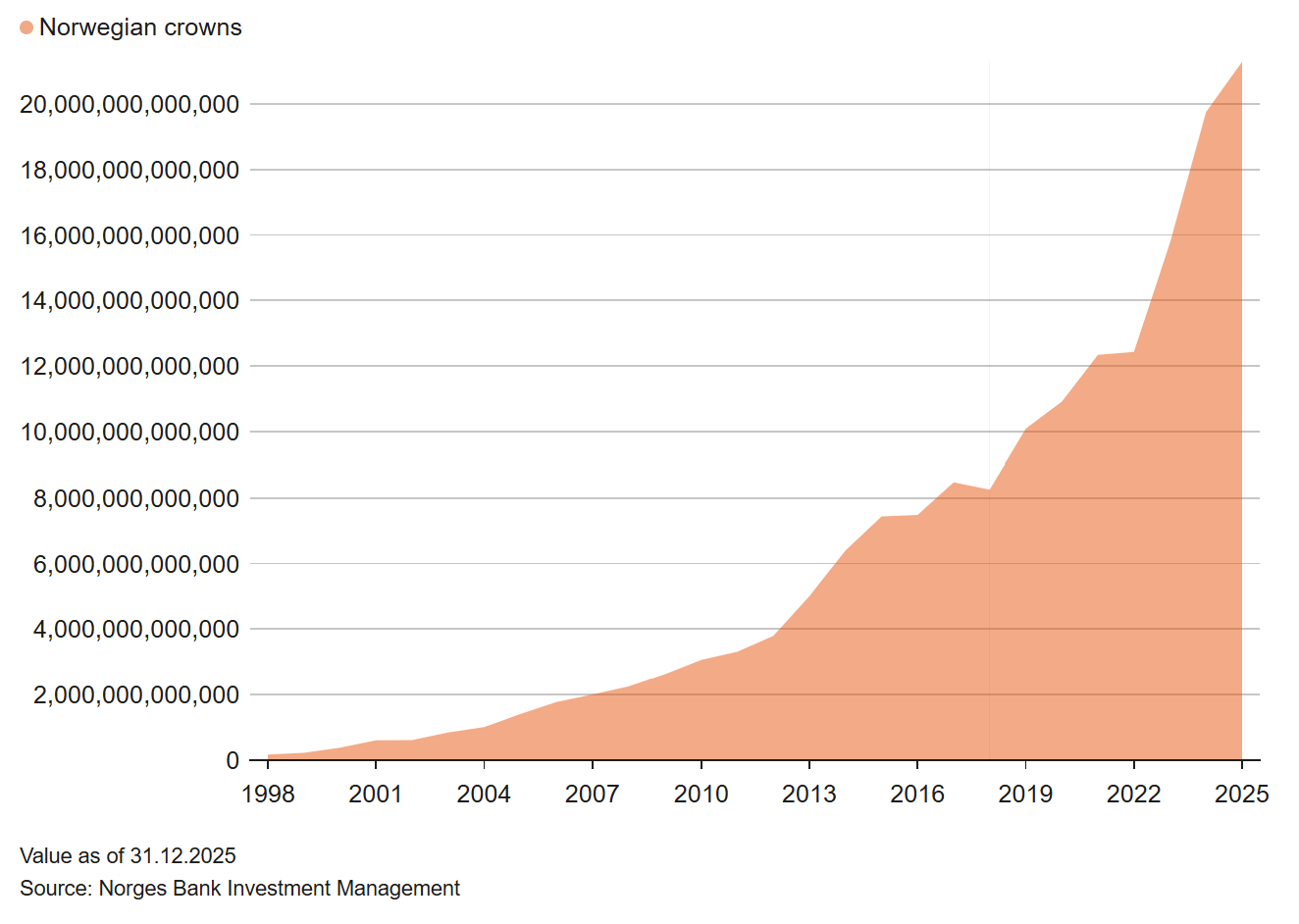
Norway’s $2 trillion wealth fund could one day be worth nothing. The warning came from Nicolai Tangen, the fund’s own CEO, on Tuesday.
Tangen spoke at a political conference in Arendal, southern Norway. Markets keep climbing despite mounting risks, he said, and called that abnormal.
Norway Wealth Fund CEO Puts a Total Wipeout on the Table
The fund is Norway’s national nest egg, long seen as one of the safest pools of money in global markets. It invests the country’s oil and gas income in stocks, bonds, and property abroad.
On average, it owns 1.5% of every listed company on Earth, according to Norges Bank Investment Management (NBIM), which runs it.
The fund crossed $1 trillion in 2017, a milestone driven by rising global stock markets and the strengthening of major currencies against the US dollar.
It has doubled since, now covering about a quarter of Norway’s public spending, up from roughly 10% a decade ago.

Tangen ran a London hedge fund, AKO Capital, before taking charge in 2020. He knows how fortunes vanish. He framed Tuesday’s scenario as preparation, not prediction. Still, he refused to soften the answer.
“I want to contribute to our mental emergency preparedness by asking the question: ‘can the oil fund disappear?’ The answer to that question is ‘yes’ and the worst is that in the world we live in now, it is not completely improbable,” Tangen said in remarks reported by Reuters.
Follow us on X to get the latest news as it happens
Echoes of 1929 While Markets Price In Nothing But Good News
The fund’s own numbers explain the unease. Stocks made up 71.3% of it at the end of 2025, per its annual report. It gained 15.1% that year.
However, the first quarter of 2026 was in the red. Falling US tech giants dragged it down 1.9%, the fund said in its first-quarter update.
NBIM’s own stress tests add teeth. Its latest annual report models a “fragmented world” of tariffs and rival trade blocs. That scenario alone erases 37% of the fund’s value, roughly $740 billion. An AI correction sits on the same list.
History supplies the darker math. Tangen pointed to the run-up to the 1929 crash, including tariffs. US stocks lost nearly 90% between 1929 and 1932. In contrast, the fund’s roughest recent year, 2022, cost it just 14.1%.
The timing gives the warning its bite. It landed the same day Korea’s benchmark KOSPI index dealt retail traders their worst crash since 2008. A day earlier, data showed hedging demand collapsing even as banks raised S&P 500 targets.
Meanwhile, a growing chorus calls AI concentration the biggest market risk.
Still, Tangen conceded the bulls have a point. Companies rebuilt supply chains. Moreover, the economy keeps absorbing shocks that once would have broken it.
“If you were going back two years, if you had predicted tariffs, trade barriers, you would not have expected the market and the economy to be as strong as it is. So it is a resilient economy.”
Should Bitcoin Investors Worry?
The fund does not buy Bitcoin directly. However, it holds indirect exposure to Bitcoin (BTC) through equity stakes in companies that hold BTC on their balance sheets. That stake jumped 83% from the year to mid-2025.
The channel matters in a crash. Bitcoin trades near $63,277, down 1.2% in the past 24 hours. In broad selloffs, it has tended to fall alongside the same tech stocks that dragged the fund down in the first quarter.

So the honest answer is no, not because of one speech. Tangen predicted nothing. The worry case is the setup he described. Stretched valuations, tariffs, and complacency threaten every risk asset, and Bitcoin sits high on that list.
The tension in his message is the real story. The steward of the world’s largest fortune is war-gaming a total loss while markets sit near record highs.
The post World’s Safest Money Could Go to Zero: Should Bitcoin Investors Worry? appeared first on BeInCrypto.

Nasdaq has agreed to acquire LeveL Markets, a major US alternative trading system (ATS), as the exchange operator moves deeper into tokenized and “always-on” trading infrastructure. The deal combines Nasdaq’s push for programmable market structures with LeveL’s institutional execution network, positioning the assets under Nasdaq’s Digital Liquidity Networks unit.
Under the terms announced Tuesday, LeveL Markets will keep operating as a FINRA-regulated ATS with its own management team after the acquisition. Financial details were not disclosed, and the transaction remains subject to regulatory approval.
Key takeaways
- Nasdaq will add LeveL Markets’ institutional execution network to its Digital Liquidity Networks initiative focused on tokenization and always-on trading.
- LeveL will remain FINRA-regulated as an ATS, preserving its regulatory status and management structure post-acquisition.
- The agreement follows Nasdaq’s earlier investment in LeveL (made in 2021) and builds on LeveL’s growth in multi-symbol execution.
- Nasdaq’s acquisition aligns with broader industry moves toward longer trading hours and tokenized equity settlement pilots.
Why Nasdaq wants LeveL Markets
Nasdaq says LeveL Markets handles “hundreds of millions” of shares daily and supports more than 2,500 buy- and sell-side clients. The venue operates across more than 7,000 symbols each day, and Nasdaq credits LeveL’s expansion to increased institutional usage—stating it serves more than 300 institutional buy-side firms and that average daily trading volume rose by 56% in 2025.
The acquisition matters for traders and liquidity providers because ATS infrastructure often determines how quickly and efficiently orders are routed and executed across market participants. By folding LeveL into a dedicated digital unit, Nasdaq is effectively tying execution capacity to its larger ambition: building market plumbing that can support tokenization, programmable settlement, and a more continuous trading experience.
LeveL stays an ATS—at least for now
Nasdaq emphasized that LeveL Markets will continue to operate as a FINRA-regulated ATS following the acquisition. It will also keep its own management team, suggesting Nasdaq wants to preserve operational continuity while integrating the network into its broader digital strategy.
Nasdaq will run the combined effort within its Digital Liquidity Networks unit, led by Roland Chai. Nasdaq also noted that Chai has been overseeing its digital assets strategy since earlier this year, placing tokenization and next-generation market design inside a single execution-focused organization.
While financial terms were not shared, the transaction’s stated dependency on regulatory approval is important. Because ATS operations and cross-market integration can raise oversight questions, the final structure will likely determine how quickly both companies can translate their combined capabilities into live tokenized or extended-hour execution use cases.
Nasdaq’s tokenized markets roadmap and the SEC’s moving target
Nasdaq’s interest in LeveL arrives alongside multiple regulatory and product efforts aimed at tokenized equities and longer trading sessions.
According to filings and updates cited by Nasdaq, the exchange first proposed a framework allowing tokenized securities to trade on its exchange in September 2025. A January 2026 SEC filing updating the proposal states that eligible stocks and exchange-traded products could be traded in tokenized form alongside traditional shares, with Depository Trust Company handling tokenization and blockchain-based settlement through a three-year pilot program. (These details are based on SEC documents referenced in the announcement.)
Nasdaq also pointed to a March partnership effort involving Payward (which operates as Kraken), along with tokenization firm Backed, to develop infrastructure intended to link traditional equities markets with blockchain networks.
Beyond Nasdaq, other market operators are reportedly pursuing similar shifts. Cointelegraph earlier noted that Cboe and the London Stock Exchange are pursuing plans for longer trading hours, while the New York Stock Exchange is developing a separate platform for 24/7 trading and onchain settlement of tokenized securities. Those parallel initiatives suggest competition not only for liquidity but for the technical standards that govern how tokenized assets can be traded and settled.
In July, the SEC announced a September 17 roundtable focused on the shift toward 24-hour US equity trading. Cointelegraph’s coverage of the announcement referenced SEC chair Paul Atkins saying, “We are moving towards a new day – and night – in the US equity markets.” That backdrop reinforces why execution network capacity, not just tokenization software, has become a strategic priority for large venues.
Tokenized equities are growing—now execution networks are the bottleneck
Nasdaq framed the LeveL acquisition as part of its push toward programmable, “always-on” markets. It also tied the strategy to broader growth indicators for tokenized equities.
In the past year, Cointelegraph-referenced data from RWA.xyz suggests tokenized equities expanded more than sixfold. The report indicated distributed value rising to nearly $2.5 billion today from around $381 million in August 2025. While that figure is not a measure of how much of that trading occurs on any single venue, it underscores that the category is moving from concept to measurable capital allocation.
As tokenized equities attract more participants, the operational question becomes whether order routing, market-making participation, settlement mechanics, and compliance workflows can handle continuous or near-continuous trading at scale. That is the gap Nasdaq appears to be trying to close by pairing LeveL’s institutional execution network with its digital infrastructure capabilities.
For investors and market participants, the key issue to watch is not only whether tokenized products can be issued and settled, but whether liquidity can be sustained across trading hours—especially as “always-on” narratives meet the realities of regulation, counterparty risk, and operational readiness.
With the acquisition awaiting regulatory approval, the next milestones to track are the integration plan for LeveL Markets inside Nasdaq’s Digital Liquidity Networks unit and how Nasdaq’s tokenized trading proposal and pilots progress alongside broader SEC engagement on 24-hour equities. Those steps will determine how quickly tokenized markets move from growth in distributed value to reliably distributed liquidity.


Flowdesk has secured a full broker-dealer license in Dubai, allowing its local entity to provide regulated crypto services to qualified and institutional investors in and from the emirate.
Summary
- Flowdesk Omega FZE has received a full broker-dealer license from Dubai’s VARA.
- The authorization covers services for qualified and institutional investors, rather than the general retail market.
- The full license follows an in-principle approval granted in June 2026.
- Flowdesk also holds MiCA authorization in France, giving it regulated access across the European Union.
Flowdesk completes Dubai’s licensing process
Flowdesk said Tuesday that the Virtual Assets Regulatory Authority had granted the full license to Flowdesk Omega FZE, its Dubai-based entity.
The authorization permits the company to conduct regulated broker-dealer activities for qualified and institutional investors located in Dubai or accessing its services from the emirate. Flowdesk did not say that the approval includes services for general retail customers.
Issued after the company received in-principle approval in June, the license completes VARA’s multi-stage application process. An in-principle approval allows an applicant to prepare its operations and meet outstanding requirements, but it does not provide the same authority as a full operating license.
Flowdesk described itself as a liquidity provider and virtual asset trading technology company serving token issuers and institutional market participants. Its services include trading infrastructure and liquidity management across centralized and decentralized crypto markets.
Guilhem Chaumont, co-founder and CEO of Flowdesk Group, said the company had invested in its governance, compliance systems, risk controls, and institutional trading infrastructure during the licensing process.
“This license allows us to bring that same rigor to how we serve institutional and qualified clients in the region,” Chaumont said.
According to VARA’s public licensing register, the regulator lists companies that hold full virtual asset licenses as well as applicants that have received in-principle approval. Entries identify the activities each company is permitted to conduct, preventing an approval for one service from being treated as permission to offer every type of crypto product.
Dubai license targets institutional crypto trading
Flowdesk’s authorization covers broker-dealer services, one of several activity categories regulated separately under Dubai’s virtual asset rules. VARA also oversees exchange, custody, lending, borrowing, transfer, settlement, investment, and management services through activity-specific requirements.
For institutional clients, a regulated broker-dealer can execute trades, arrange transactions, and source liquidity within the boundaries of its license. The exact services available to a client remain subject to VARA’s rulebooks, the company’s operating terms, and the investor classifications stated in the approval.
Dubai has placed particular controls around products offered to professional market participants. In March, crypto.news reported that VARA had introduced a crypto derivatives framework covering client suitability, leverage, margin, asset segregation, disclosures, and risk management.
Under that framework, VARA can intervene during market stress or suspected misconduct by suspending products, raising margin requirements, ordering liquidations, or requiring stronger controls. The derivatives provisions apply to licensed providers offering exchange services and do not automatically expand the permissions granted under Flowdesk’s broker-dealer authorization.
Other crypto companies have also sought access to Dubai’s institutional market. In May, Kraken’s parent company, Payward, received preliminary VARA approval for broker-dealer, investment, and management services.
Kraken said its planned UAE offering would include dirham funding, over-the-counter trading, margin products, and Kraken Prime access, although the May approval still required the company to complete VARA’s remaining conditions before a full rollout.
Bitpanda obtained a Dubai broker-dealer license in March 2025, giving the company permission to offer its digital asset platform to investors in the UAE. Earlier approvals for Crypto.com, Binance, and BitOasis also covered selected activities rather than providing unrestricted permission across every virtual asset service.
Flowdesk adds Dubai approval after MiCA authorization
The Dubai license follows a separate authorization for Flowdesk Europe under the European Union’s Markets in Crypto-Assets regulation.
France’s Autorité des Marchés Financiers granted Flowdesk Europe Crypto-Asset Service Provider authorization in June. Effective from June 30, the approval allows the French entity to provide regulated crypto services across eligible EU markets through MiCA’s passporting system.
Flowdesk Europe operates under registration number A2026-022, according to the company’s announcement. The authorization was built on its previous status as a digital asset service provider registered with the French regulator.
MiCA created common requirements for crypto service providers across the EU, replacing a system in which national registrations did not always permit cross-border operations. Authorized companies must comply with rules covering governance, capital, client asset protection, disclosures, and complaint handling, depending on the services they offer.
Flowdesk’s Dubai and European permissions apply to separate legal entities and regulatory systems. Flowdesk Europe’s MiCA authorization does not grant operating rights in Dubai, while Flowdesk Omega’s VARA license does not provide access to EU customers under MiCA.
The company has received financial backing from investors, including Coinbase Ventures. Funds managed by BlackRock also provided debt financing as part of a funding package that Flowdesk announced alongside an extension from HV Capital.
U.S. broker-dealer rules follow a separate system
For U.S. readers, Flowdesk’s VARA approval does not authorize the company to operate as an American securities broker-dealer or offer regulated brokerage services to U.S. customers.
Broker-dealers conducting securities business in the United States generally register with the Securities and Exchange Commission and become members of the Financial Industry Regulatory Authority, subject to the activities covered by their registration.
Wintermute followed that route on Aug. 6 when its U.S. affiliate registered with the SEC and FINRA. As crypto.news previously reported, Wintermute USA may trade equities and equity options, act as an authorized participant for exchange-traded products, and self-clear digital asset securities transactions.
Wintermute’s registration is limited to proprietary trading, meaning the entity trades for its own account instead of providing brokerage services to retail or institutional customers. Flowdesk’s Dubai permission has a different scope because VARA specifically authorized services for qualified and institutional investors in and from Dubai.
The SEC has also placed digital asset broker-dealer requirements on its 2026 regulatory agenda. In July, the agency listed possible amendments involving net capital, customer protection, recordkeeping, and financial responsibility requirements as they apply to crypto assets.
The three proposed rulemaking projects also cover crypto offerings and the trading of digital assets through national securities exchanges and alternative trading systems. The SEC had not adopted those proposals as final rules when it added them to the agenda.

Romell Glave says ‘it’s my time to dominate’ after winning 100m European gold

Do Wireless Headphones Need 24-Bit/192kHz Lossless Audio? Major Brands Disagree

Bajaj EMI Card | Bajaj EMI Card Apply | Bajaj Finance Card Kaise Banaye


-

 Fashion4 days ago
Weekend Open Thread: Mattifying Sunscreen
-

 Fashion4 days ago
Frugal Friday’s Workwear Report: Cap-Sleeve Pointelle Crewneck Sweater
-

 Sports6 days ago
Jordan Coyle & Cordiamo take Laya Arena Stakes at RDS
-

 News Videos4 days ago
Can Astrology Help Find Gold and Silver Trends? A Financial Astrology Guide
-
 Business6 days ago
US stocks: Dow closes at record on Mideast optimism; SpaceX, AMD drag Nasdaq
-

 Politics6 days ago
Reform UK And Greens Sink To Lowest Favourability Ratings To Date
-

 Tech7 days ago
OpenAI, Anthropic AI agents targeted real people and systems in cyber tests
-

 Business6 days ago
Supply chain issues impact Ingredion
-

 Tech4 days ago
Rinn Pharma & Biopharma to join NordicPharmaTrain network
-

 Business3 days ago
How to Start a Cleaning Business: A Step-by-Step Guide
-
 Crypto World7 days ago
Dow and S&P 500 Hit Records on AI Earnings: When Will the Bubble Burst?
-

 Business3 days ago
BDC Weekly Review: Private BDC Q2 Numbers Are Strong
-

 Business3 days ago
Datadog: Best Of Breed For Multiple Reasons
-

 Business7 days ago
McDonald’s (MCD) Q2 2026 earnings
-

 Fashion7 days ago
The Bright Side of Black and White
-

 Business7 days ago
Apple UK encryption challenge filed against Home Office
-

 Fashion6 days ago
Suit of the Week: Me + Em
-
Sports6 days ago
Spider-Man: Brand New Day ending explained: Is Peter Parker alive?
-
 NewsBeat49 minutes ago
Communication cards help banking customers access services or report scams
-

 Crypto World7 days ago
Robinhood files $200M second venture fund focused on YC startups
You must be logged in to post a comment Login