
Crypto World
DOGE Initiative Resulted in Federal Employees Getting Paid Billions to Not Work, New Government Report Finds



The federal government spent an estimated $9.5 billion paying employees to not work last year, with most of the cost tied to a Department of Government Efficiency (DOGE) initiative to shrink the federal workforce, according to a new report from the Government Accountability Office.
The report, published Tuesday, found that the use of paid administrative leave increased 435% from 2023 to 2025, while associated salary costs rose sixfold. GAO estimated that $6.7 billion—around 70% of the 2025 total—was associated with the Administration’s deferred resignation program. The congressional watchdog analyzed payroll data from 76 agencies representing around 95% of the civilian federal workforce.
In January 2025, the Trump Administration offered roughly 2 million federal workers the option to resign while continuing to receive full pay and benefits through Sept. 30. The government-wide offer was meant to encourage voluntary departures under an arrangement known as deferred resignation. The Office of Personnel Management directed agencies to place employees who accepted the offer on paid administrative leave until their departure. Some agencies later conducted additional deferred resignation programs.
According to federal workforce data, 139,963 federal employees left the government through deferred resignation programs.
The initiative was part of the Trump Administration’s broader campaign under DOGE to cut what it saw as wasteful federal spending. Tech billionaire Elon Musk, who became the public face of DOGE before leaving the Administration in May 2025, initially promised to save the federal government $2 trillion, before lowering the target to $1 trillion. DOGE’s website ultimately claimed $215 billion in estimated savings. That figure has not been independently confirmed. In a separate review of $110 billion in claimed savings, GAO found that some estimates were incorrect or unsupported. (DOGE officially shut down in July, after OPM absorbed most of its functions in November.)
Federal data showed a net decline of 271,363 civilian federal employees—around 12% of the federal workforce—between President Donald Trump’s inauguration and July this year.
Those reductions were not uniform across agencies. Between December 2024 and January 2026, the largest decline was at USAID, where the workforce fell 95%, according to a separate GAO analysis. Staffing declined 46% at the Education Department, 37% at the General Services Administration, 34% at OPM, 33% at the National Science Foundation, and 31% at the Department of Housing and Urban Development. The Department of Homeland Security, by contrast, reduced its workforce by less than 1%.
Some agencies later had to replace workers they paid to leave. The Partnership for Public Service identified 20,557 hires by June 2026 in the same types of roles as employees who left through deferred resignation.
OPM Director Scott Kupor defended the program’s economics in a letter responding to the GAO report. Kupor said OPM expects the workforce reductions to save $20 billion per year, while the $6.7 billion was a one-time cost.
“This distinction is crucial: The savings recur every year, while the administrative leave costs with the DRP were incurred once,” Kupor said.
The Trump Administration has pursued other efforts to reduce the federal government. Trump imposed a government-wide civilian hiring freeze on his first day in office and subsequently directed agencies to hire no more than one person for every four departures, except for positions of national security, immigration enforcement, and other priorities. Agencies were also directed to review whether probationary employees should be retained, prepare plans for large scale layoffs, and consider eliminating positions and functions not required by law.
The government has faced extensive litigation over its workforce cuts. In September 2025, a federal judge ruled that OPM had exceeded its authority by directing agencies to fire thousands of probationary workers, although the judge did not order their reinstatement. Separately, the Supreme Court stayed a lower court injunction in July 2025, allowing agencies to move forward with layoffs while litigation continued. Litigation has since shifted to challenges to individual agency layoff plans.
Earlier this month, U.S. District Judge Susan Illston ruled that a DHS plan to cut staffing at the Federal Emergency Management Agency (FEMA) by 50% was unlawful.
During the October 2025 government shutdown, the Trump Administration took the unprecedented step of threatening permanent cuts, using the funding lapse to accelerate its government downsizing campaign. Federal agencies issued layoff notices to around 4,100 employees and the Administration warned that more than 10,000 jobs could be eliminated. Congress ultimately nullified those layoffs by statute when the shutdown ended in November, and required agencies reinstate employees and provide back pay.
On Tuesday, Sen. Patty Murray (D, Wash.), the top Democrat on the Appropriations Committee, accused the Administration of wasting money while weakening public services.
“Trump spent billions to push out experienced and badly needed experts across government,” Murray said. “This was the most expensive way imaginable to make government worse.”

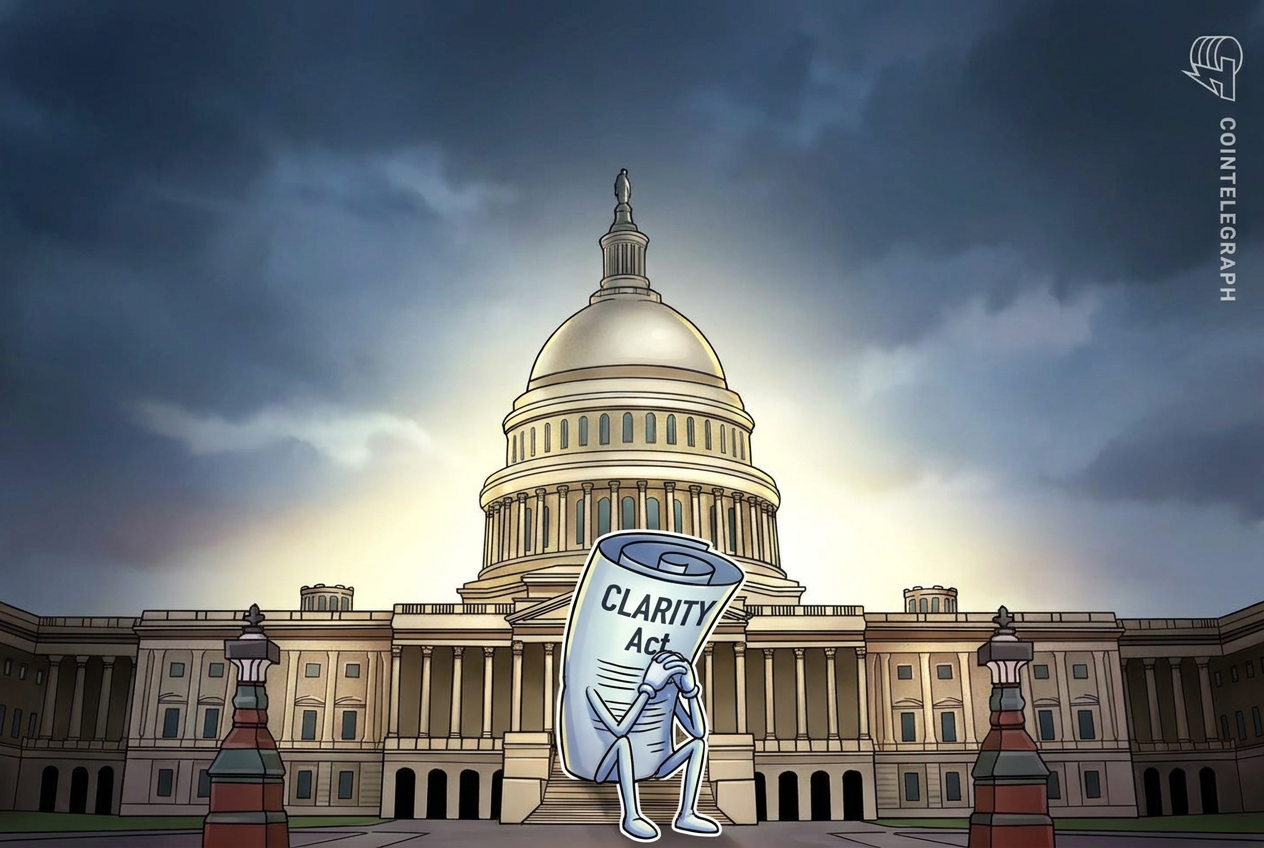
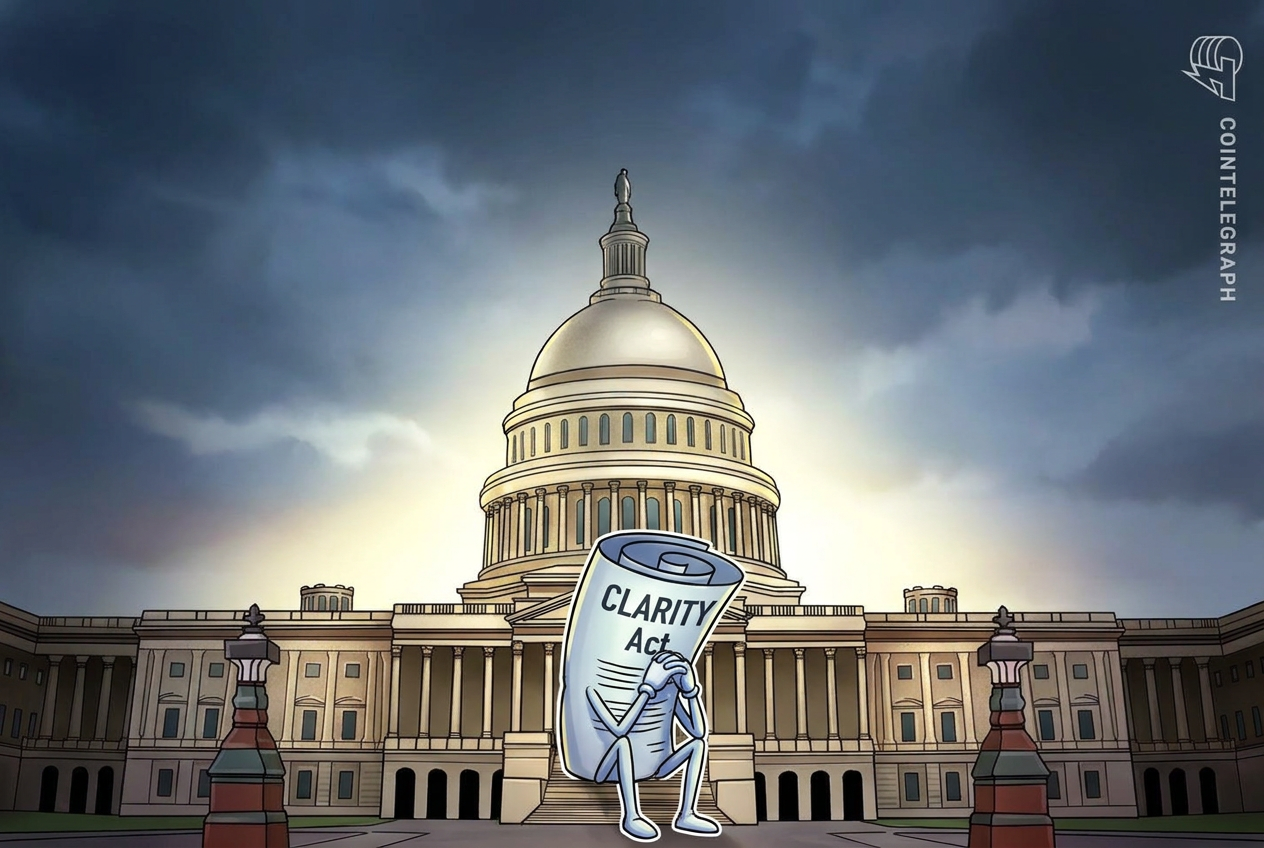
Digital Sovereignty Alliance managing director Adrian Wall said senators from both parties are considering another attempt to advance the crypto market structure bill before the current Congress ends.


The UK Financial Conduct Authority has issued final guidance requiring crypto firms to reassess their permissions before applications open on Sep. 30 for a regulatory regime taking effect in October 2027.
Summary
- FCA applications open Sep. 30, while the new crypto regime takes effect on Oct. 25, 2027.
- Existing registrations and permissions will not automatically carry over to the incoming framework.
- Firms seeking transitional arrangements must apply by Feb. 28, 2027.
- The guidance covers stablecoins, trading platforms, custody, transaction services and staking arrangements.
FCA guidance defines which crypto firms need approval
The Financial Conduct Authority said on Sep. 16 that its final perimeter guidance will help companies decide whether their products and services require authorization under the incoming framework.
Activities within the guidance include issuing qualifying stablecoins, running crypto trading platforms, dealing in digital assets and arranging transactions. Safeguarding cryptoassets and arranging staking services may also require FCA approval, depending on how a company operates.
Rather than relying on a firm’s description of its business, the regulator’s guidance examines the functions it performs. A company may therefore need to assess each service separately when identifying the permissions required for its business model.
Existing FCA registrations will not automatically become authorizations under the new rules. Firms already holding other regulatory permissions may need to request a variation of permission if they plan to conduct one or more regulated crypto activities.
Companies registered under the UK’s anti-money laundering rules must also complete the new authorization process. The existing registration system has a narrower purpose and does not provide the permissions that will be required once the new framework takes effect.
“Getting ready for regulation starts with understanding how the regime applies to your business,” said David Geale, the FCA’s executive director of consumers, payments and competition.
“This guidance gives firms the clarity they’ve asked for so they can prepare with confidence.”
According to the regulator, pre-application meetings and webinars will be available to help companies understand the FCA Handbook, authorization process and prudential requirements.
UK crypto firms face two key application dates
Applications will open on Sep. 30, giving firms more than a year to prepare before the regime begins on Oct. 25, 2027. However, companies seeking access to transitional arrangements face an earlier deadline of Feb. 28, 2027.
Under the FCA’s timetable, the transition mechanism will apply to eligible firms that submit applications by the February deadline. Companies waiting beyond that point may not qualify for the same arrangements when the new rules begin.
The regulator finalized much of its rule package in June after several rounds of industry consultation. Parliament had already approved the Financial Services and Markets Act 2000 (Cryptoassets) Regulations 2026 in February, bringing additional digital asset services inside the FCA’s jurisdiction.
Covering more than market entry, the completed package includes rules for stablecoin reserves and redemptions, crypto custody, operational resilience, consumer treatment and capital requirements. Separate provisions address token admissions and misconduct on trading platforms.
Stablecoin issuers, for example, will need to follow requirements for backing assets, asset protection, disclosures and redemption. Custodians will face rules governing the safekeeping of client cryptoassets, while trading platforms and intermediaries will have obligations tied to their specific services.
The FCA said the government has introduced limited exclusions and clarifications for certain technical service providers. Most crypto businesses are not affected by the changes and can use the current guidance to prepare their applications.
During October, the regulator plans to consult on targeted updates involving qualifying UK stablecoins, proprietary trading, market making and some technology providers. The review will also consider decentralized protocols, custody arrangements involving central securities depositories and financial promotion rules.
Overseas firms may fall inside the UK crypto perimeter
Companies based outside Britain will need to review the framework if they provide regulated services to customers in the country or operate within the UK market.
The FCA’s June policy package identifies overseas businesses serving UK consumers among the firms affected by the regime. American exchanges, custodians, stablecoin businesses and staking providers could therefore need UK authorization even when their main corporate operations remain in the United States.
For U.S. companies, the UK process creates a separate compliance assessment from domestic registration and licensing requirements. Authorization from the U.S. Securities and Exchange Commission, Commodity Futures Trading Commission or a state regulator does not replace FCA approval for regulated activity in Britain.
The two countries are also moving through different legislative processes. In the United States, the failure of a Senate procedural vote on the CLARITY Act has left federal agencies responsible for applying existing rules while lawmakers decide whether to revive the market structure bill. As previously covered by crypto.news, market experts said the stalled legislation leaves questions about the treatment of tokens, exchanges and decentralized finance unresolved.
Britain’s framework, in contrast, has a fixed start date and a defined application window. International businesses serving both markets will still need to map their products against each country’s rules because permission in one jurisdiction does not provide automatic access to the other.
UK digital asset policy extends past authorization
Parliament’s regulatory work has continued alongside the FCA’s implementation schedule. In September, the House of Lords voted 194–138 for an amendment requiring the Treasury to prepare a national digital asset strategy within 12 months of the Financial Services and Markets Bill becoming law.
The proposed strategy would cover cryptoassets, stablecoins, tokenized securities and digital financial infrastructure. As detailed in the House of Lords vote, the amendment would place a formal deadline on the Treasury’s policy work if it remains in the final legislation.
Regulators are separately assessing how tokenized assets should fit within existing financial rules. In September, the FCA sought industry feedback on whether certain tokenized gold products should receive exemptions from rules governing collective investment schemes and alternative investment funds.
The tokenized gold review includes work with the Treasury and Bank of England on the possible use of digital bullion in wholesale markets. No exemption has been approved, while the Bank of England is considering whether eligible tokenized assets, including stablecoins, could serve as collateral under its Sterling Monetary Framework.
The FCA and Bank of England also plan to publish a roadmap for tokenization in wholesale financial markets, covering areas such as securities, collateral, clearing and settlement infrastructure.
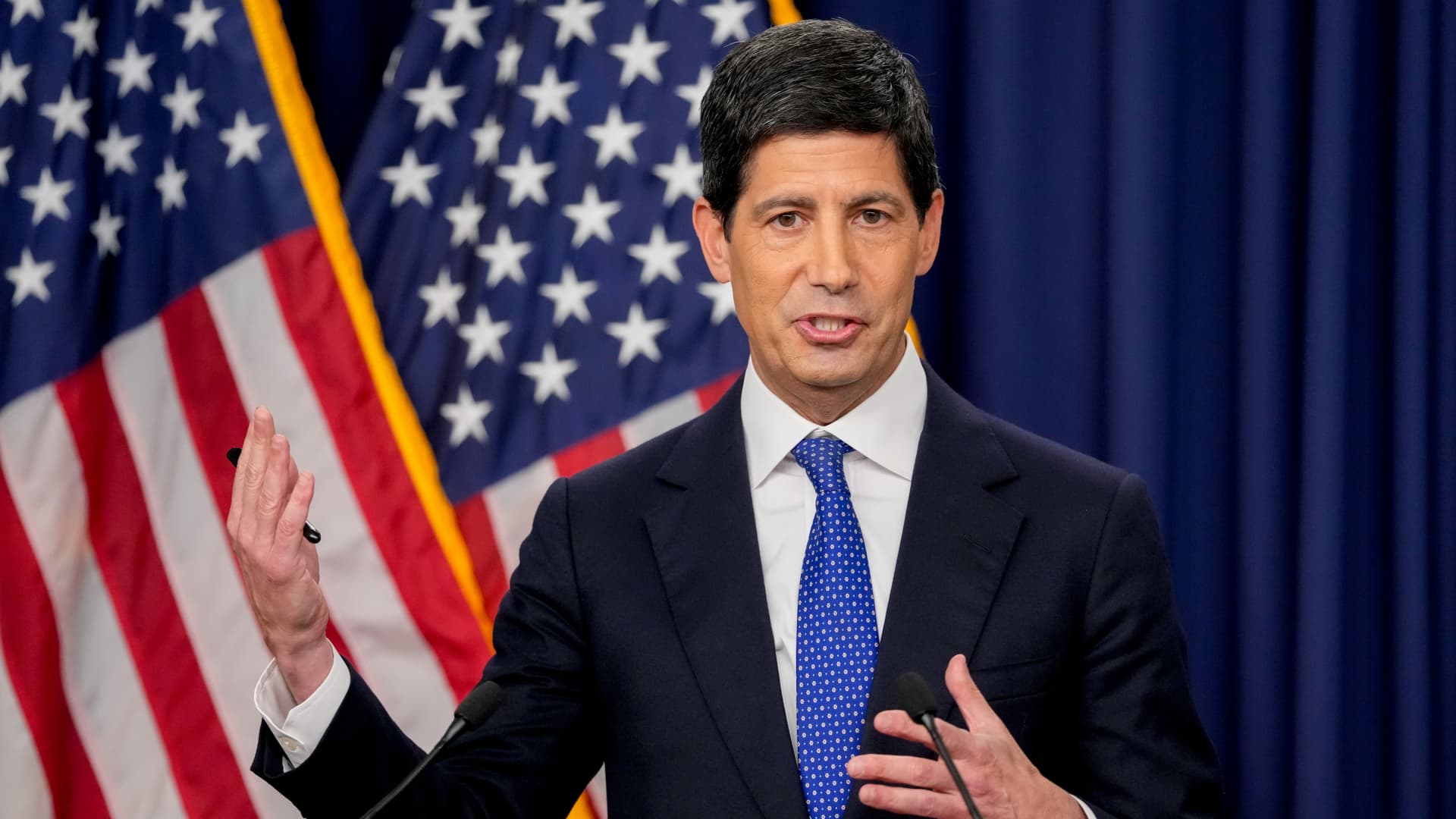
Kevin Warsh, chairman of the Federal Reserve, during a news conference following a Federal Open Market Committee meeting in Washington, Sept. 16, 2026.
Daniel Heuer | Bloomberg | Getty Images
The Federal Reserve on Wednesday delivered a much-expected interest rate hike, and Chairman Kevin Warsh followed with a notably terse news conference at which he stressed policymakers’ staunch commitment to tackling inflation.
Here are five key takeaways:
- A fairly unified message: The Fed’s quarter percentage point rate increase was largely in keeping with market expectations. At least somewhat surprisingly, the vote was unanimous. Given the range of views expressed by policymakers in recent weeks, there was widespread speculation that at least one voter would dissent, with much of the speculation centered on Governor Christopher Waller. In the end, however, all 12 voters on the Federal Open Market Committee agreed with the decision.
- The market didn’t like it: Stocks were in the green heading into the rate decision and bond yields were lower. That didn’t last long. Whether it was Chairman Kevin Warsh’s hawkish tone on inflation or just the general prospect of multiple hikes, stocks sold off sharply after the decision. The Dow Jones Industrial Average tumbled 631 points and the 2-year Treasury yield, the security most sensitive to Fed rate expectations, rocketed more than 7 basis points higher. The sell-off was reminiscent of the reaction to the July FOMC meeting and Warsh news conference.
- Short statement, short presser: In keeping with the prior two meetings under the Warsh regime, the post-meeting statement was terse, to say the least. Clocking in at a meager 130 words, the statement was even shorter than July (166 words), and was tied with the June missive. Warsh followed that with a news conference in which he took reporters’ questions for a grand total of some 22 minutes during a session that lasted barely half an hour total.
- Connecting the dots: The FOMC dot plot of officials’ individual expectations for interest rates showed a fairly cohesive group for 2026 but a wide dispersion afterwards. Sixteen of the 18 participants expected at least one more rate hike this year. For out years, though, there was considerable disagreement. Eight expected another hike in 2027, nine (of 17) saw rates steady or higher in 2028 and 10 figured on no cuts through 2029.
- Bucking the president: Warsh deflected a couple questions with political overtones. That was significant because President Donald Trump has been rattling his anti-Fed saber again, going so far as to threaten to cut off trade with some countries unless the Fed cuts. “I’ve got nothing for you on a discussion with the president,” he said at one point, later adding, “Part of the independence of the Federal Reserve is we stay in our lane. Independence is a two-way street.”
What they’re saying
“This is unlikely to be the end of Fed rate hikes … It’s hard to look at roughly 4% unemployment and a core PCE forecast of 3.5% and say the Fed shouldn’t be focused on inflation. But monetary policy looks like a really costly way to solve this problem right now.” —Mike Madowitz, principal economist at the Roosevelt Institute, a liberal think tank.
“Risk assets were not enamored with the outcome of today’s FOMC. Hopes of limited hikes ahead faded in the face of the Fed’s resolve to address inflation. Still, after the initial reset, we believe Chair Warsh’s clear messaging could actually help support Treasury prices further out the curve.” —Andrzej Skiba, head of the BlueBay U.S. Fixed Income team at RBC Global Asset Management.
“Warsh’s press conference was coherent, confident and consistently hawkish without coming across as crazily so. He balanced a stern but disciplined message on inflation with an upbeat take on growth which he said has been strengthening since the start of the summer.” —Krishna Guha, head of economics and central bank strategy at Evercore ISI.
Solana is holding a major support area even after its latest correction. After reports that the CLARITY Act failed to advance in the US Senate, the crypto asset took a plunge from over $101 to under $96 before a minor recovery.
Ali Martinez found that 72 million SOL previously traded around this level, which makes the zone significant.
Other Signals
Institutional demand is also strengthening through US spot SOL ETFs. It has now recorded nine straight weeks of net inflows, and more than $200 million entered these investment vehicles over the past month. Almost $28 million in inflows were recorded in August alone.
At the same time, exchange supply continues to fall as more than 3 million SOL have been withdrawn from exchanges during the same period.
Network activity remains elevated as well. Solana reached a peak of 12 million new addresses on September 11, and it is still adding roughly 10.8 million new addresses each day. According to Martinez, these factors – the strong support level, ETF demand, lower exchange supply, and continued network growth – indicate that the current correction could be short-lived.
Solana has been seeing growing activity from tokenized stocks, especially after traditional markets close. CryptoRus recently said that 63% of the network’s tokenized-equity activity happens after Wall Street closes. There are now more than 727,000 holders. Additionally, Solana’s TVL rose more than 18%, from around $4.82 billion to roughly $5.7 billion.
Corporate treasuries are building exposure too. DeFi Development Corp. now holds about 2.39 million Solana tokens and SOL equivalents after adding 55,491 since August 27. It has also established a $300 million at-the-market program for its CHAD perpetual preferred stock.
Most of the proceeds will be used to purchase more of the crypto asset. CHAD carries an initial annual dividend rate of 13%. DeFi Development Corp. recently restarted regular purchases of SOL and now has the second-largest Solana treasury, behind Forward Industries.
Volatility Incoming?
Despite the recent choppy price, SOL is almost 30% up over the past month. Market watcher Ella believes that a move back above $100 would take some pressure off the crypto asset. The focus should be on reclaiming $102.5.
However, if $95 breaks, the price could fall toward $93-$94. With the Fed decision still ahead, Ella expects volatility to pick up.
The post Solana (SOL) Correction or Short-Lived Dip? Here’s Why Bulls Aren’t Giving Up appeared first on CryptoPotato.


London-based Velocity has raised an additional $10 million, extending its Series A to $48 million at a $200 million post-money valuation, with participation from Visa Ventures, Circle Ventures, and Ripple. The fresh capital will fund infrastructure connecting stablecoins to existing payment networks, settlement systems, and corporate treasury operations.
The extension follows a $38 million Series A announced in July, which CEO Eric Queathem said was oversubscribed. Haun Ventures, Translink Capital, and Mirana Ventures also joined the extension round, pushing the total investor list well beyond typical crypto-native venture backers into strategic corporate money from a card network and a stablecoin issuer directly.
Velocity’s platform lets payment companies and banks use stablecoins for settlement, liquidity, and treasury operations without ripping out the systems they already run. That’s a deliberate scope: the company is targeting the layer connecting issuers, card networks, acquirers, and merchants, not the wallet consumers see.
Stablecoin circulation has grown past $300 billion, with usage expanding from crypto-exchange dollar transfers into payments, cross-border transfers, and corporate treasury work, the exact seam Velocity is trying to occupy.
Earn $50 and Enter $300K Prize Draw on EdgeX
The Back-End Layer Nobody Fixed
Queathem’s framing draws directly on his time at Worldpay, which settles more than $2 trillion in annual payment volume. His diagnosis: consumer payments got faster and slicker over the past decade and a half, but the machinery behind them didn’t.
“All this capital has flowed into payments over the last 15 years, and it’s been 100% focused on how do you create a better experience on the front end for consumers,” Queathem said. “But no one has fixed the back-end layer.”
Discover: The Best Token Presales
Why Ripple Participates?
Visa’s check is notable precisely because Velocity isn’t pitching stablecoins as a card replacement. The company expects blockchain-based money to sit underneath existing payment rails, absorbing more of the funding and settlement work that happens invisibly to end users.
Visa’s Rubail Birwadker, global head of growth products and strategic partnerships, said stablecoins are playing an increasingly important role in reshaping how value moves across the Visa ecosystem, a statement that reads less like hedging and more like a network trying to own the migration rather than get disrupted by it.
Velocity Chief Growth Officer Matt Larson made the consumer-invisibility point explicit: it probably doesn’t lead to everyone switching to stablecoin wallets. Instead, he expects the funding and settlement flowing around card networks to increasingly shift toward stablecoin rails while the front-end experience stays unchanged.
Queathem’s longer bet is more aggressive; he expects every global business to hold some value onchain within five years, which would create sustained demand for reconciliation and treasury tools bridging blockchain assets with legacy financial systems.
That’s a projection, not a confirmed trend, and it’s worth treating it as one. But the investor list here isn’t speculative money chasing a narrative. It’s a card network and a stablecoin issuer putting capital behind the specific thesis that treasury and settlement infrastructure, not retail wallets, is where stablecoin adoption compounds first.
Ripple participation fits a broader pattern of the company pushing RLUSD and related infrastructure into institutional credit and treasury products rather than retail-facing crypto rails, reinforcing the same back-end thesis Velocity is selling to its bank and payments-company clients.
Trade XRP on Bybit and Get a Chance to Win Our $1,000 USDT Airdrop
The post Ripple Joins Velocity, Targets Payment Back End With $10 Million Extension appeared first on Cryptonews.
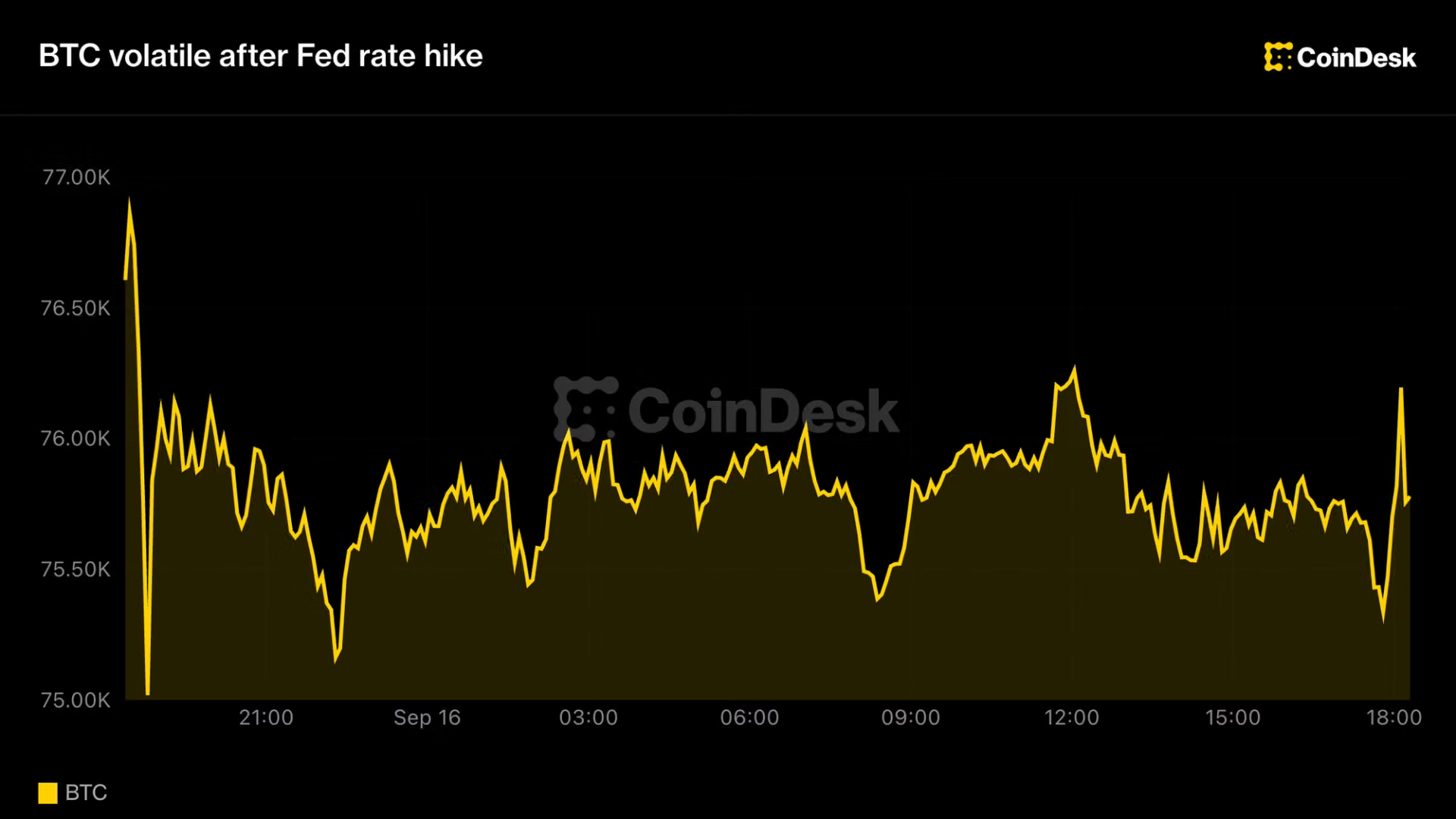
Bitcoin (BTC) traders aren’t exactly panicking about Wednesday’s expected Federal Reserve rate hike, but they aren’t taking many chances either.
Markets are pricing a 92.5% chance the Fed raises rates for the first time in three years after strong employment data and stubborn inflation. Bitcoin has spent the past 24 days stuck between roughly $76,000 and $80,000, with volatility falling to a one-month low.
For some traders, the quarter-point hike is already old news.
“The bond market has done its job and fully priced in tomorrow’s hike,” said Chris Sullivan of Hyperion Decimus. In his view, the bigger shock could come if the Fed doesn’t hike, since that could leave investors wondering what policymakers see that markets don’t.
Crypto investors are still putting some money out of harm’s way.
Talos has seen a 28% net buying tilt toward stablecoins ahead of the meeting, according to research analyst Cooper Duschang. Around previous Federal Open Market Committee meetings, investors showed an average 8% selling tilt toward stablecoins.
Appetite for the two largest cryptocurrencies has moved in the other direction. Bitcoin buying conviction has dropped to 3% from 10%, while ether (ETH) has fallen to 9% from 23%.
“The clearest shift has been into stablecoins,” Duschang said. Investors, he said, appear to be “reducing risk and holding greater liquidity ahead of the Fed.”
The bigger question for Wednesday afternoon is where that sidelined cash goes once the Fed decision is out of the way.
There is some precedent for a muted initial reaction. Bitcoin barely budged around the Fed’s last rate hike in July 2023, Duschang said, with the move largely priced in before the announcement.
The derivatives market isn’t showing much anxiety either. K33 Research said open interest across bitcoin futures and perpetuals remains below its yearly average, with little evidence of the kind of leverage that can turn a routine selloff into a wave of liquidations.
Oil is the wildcard. Crude has risen more than 20% over the past five days, according to Mark Connors, chief investment officer at Risk Dimensions. Higher energy prices could add to inflation even as the Fed tries to contain it with higher borrowing costs.
Connors described another hike as “using a pitchfork to bail out our boat of inflation,” arguing that monetary policy can’t easily fix inflation caused by an oil supply shock.
For bitcoin, Wednesday may therefore be less about whether the Fed delivers the hike everyone expects and more about what Fed Chair Kevin Warsh says comes next.
Duschang will also be watching the stablecoins traders have accumulated. If that money starts moving back onto exchanges after the announcement, traders who spent the run-up getting defensive may be getting ready to put risk back on.

The world’s largest cryptocurrency exchange will end support for several trading pairs across its margin and spot sections.
Many of the involved digital assets have entered red territory today (September 16), but is Binance the sole reason for their poor performance?
The Upcoming Delistings
The company conducts periodic reviews of all listed trading pairs on its platform and removes those that no longer meet key criteria, such as adequate liquidity, solid trading volume, development activity, and more.
Based on this research, it will delist the following cross-margin pairs: ENJ/USDC, GENIUS/USDC, CVX/USDC, and VANA/USDC, as well as the isolated-margin pair GENIUS/USDC.
The actual removal is scheduled for September 18. On the same day, the exchange will terminate access to the BREV/USDC, COOKIE/USDC, LA/USDC, and QNT/USDC spot trading pairs.
“The delisting of a spot trading pair does not affect the availability of the tokens on Binance Spot. Users can still trade the spot trading pair’s base and quote assets on other trading pair(s) that are available on Binance,” the entity clarified.
Most of the cryptocurrencies included in the delisting efforts have posted daily losses, yet Binance doesn’t seem to be the main culprit behind the decline. Perhaps the main factor is the overall market correction, caused by the CLARITY Act failure.
Binance remains a behemoth in the industry and can trigger a major crash, but that typically happens when it terminates all trading services for certain tokens, not just trading pairs. Such was the case in August this year when it said goodbye to Across Protocol (ACX), Hashflow (HFT), PIVX (PIVX), Vulcan Forged PYR (PYR), Vanar (VANRY), and Viction (VIC). All affected coins plunged by double digits after the news.
On the other hand, Binance support can drive a substantial price pump. Just a few weeks ago, the exchange added PONS to its Binance Alpha section, thus contributing to the token’s rally and its brief entry among the top 100 cryptocurrencies.
The Scam Warning
In addition to updating its platform, Binance recently issued a critical scam alert about phishing attacks targeting crypto investors. The team disclosed that attackers send fake text messages that seem official, such as “Your account settings were changed: or “Suspicious login detected,” to trick users into clicking malicious links that could result in painful losses.
“Remember: Binance will never ask you to tap a link in a text message to “verify” or “secure” your account,” the company emphasized.
It also outlined steps that could improve protection. People should never click on unfamiliar links, turn on Withdrawal Address Whitelist in the security settings, and enable Anti-Phishing Code.
The post Binance Unveils Multiple Delistings: Check Out the Affected Cryptocurrencies appeared first on CryptoPotato.


Two Robinhood engineers have been accused of using the platform’s confidential crypto listings to insider trade perpetual futures on the decentralized derivatives exchange Hyperliquid.
The US filed the charges yesterday against 36-year-old Hefu Chai and 30-year-old Huaisong Xiang, accusing them of wire fraud and commodities fraud.
Their knowledge of Robinhood’s plans to support certain cryptocurrencies was allegedly used to trade positions on Hyperliquid, which in turn constituted a breach of duty.
Across 2025 and 2026, each of them allegedly made over $50,000 trading with the undisclosed information.
Read more: Did ‘insider’ secretly short Robinhood on Hyperliquid?
US attorney Jamie McDonald said, “Today’s charges make clear that corporate insiders cannot evade the securities and commodities laws by trading based on misappropriated information in derivatives like perpetual futures, tokenized securities, or other similar financial instruments.”
Robinhood insider trading was tracked in 2025
Onlookers linked yesterday’s filing to the work of pseudonymous researcher Astra Trades.
They uncovered a series of trades in 2025 that saw one user buying dozens of tokens, across a few months, minutes before they were listed publicly on Robinhood.
Astra Trades has also shared suspicious activity that involved well-timed Hyperliquid shorts on Robinhood stock that were placed just before disappointing earnings calls.
It believes it’s the same trader conducting the shorts and token pre-buys.
Not the first crypto insider trading case
In 2023, the US sentenced a former Coinbase employee who received the country’s first-ever crypto insider trading charge.
Ishan Wahi tipped off his brother and friend with confidential upcoming listings. They then purchased these cryptocurrencies before they were listed and sold them for profit around the time of the listings.
A new wave of insider trading has also plagued crypto-based prediction markets.
Suspicions have been raised around markets involving Israeli military action, the kidnapping of Venezuela’s Nicolas Maduro, and the Nobel Peace Prize.
Got a tip? Send us an email securely via Protos Leaks. For more informed news and investigations, follow us on X, Bluesky, and Google News, or subscribe to our YouTube channel.
Deutsche Bank’s (DB) digital asset custody service is set to go live by the end of the year.
Germany’s largest bank said the service, subject to the completion of applicable regulatory checks, will give European institutional and corporate clients regulated custody of digital assets.
The service will support a select range of cryptocurrencies at debut, including bitcoin and ether and stablecoins like USDC and EURC.
“Digital assets are not a replacement for the traditional financial system but an important complement to it,” Deutsche’s co-head of corporate bank, Gerald Podobnik, said in an announcement on Wednesday.
“We see them as new rails that coexist with existing marketing infrastructures. The service will be developed in line with client demand, regulatory requirements and the bank’s risk appetite,” Podobnik added.
Deutsche Bank was reported to be preparing a crypto custody service alongside exchange Bitpanda for debut sometime in 2026 last July.
As institutions and corporates adopt digital assets, they will likely gravitate toward asset-custody services offered by financial institutions they already rely on for their traditional financial portfolios.
Prominent Europe-based banks such as Standard Chartered and BBVA already offer such services.
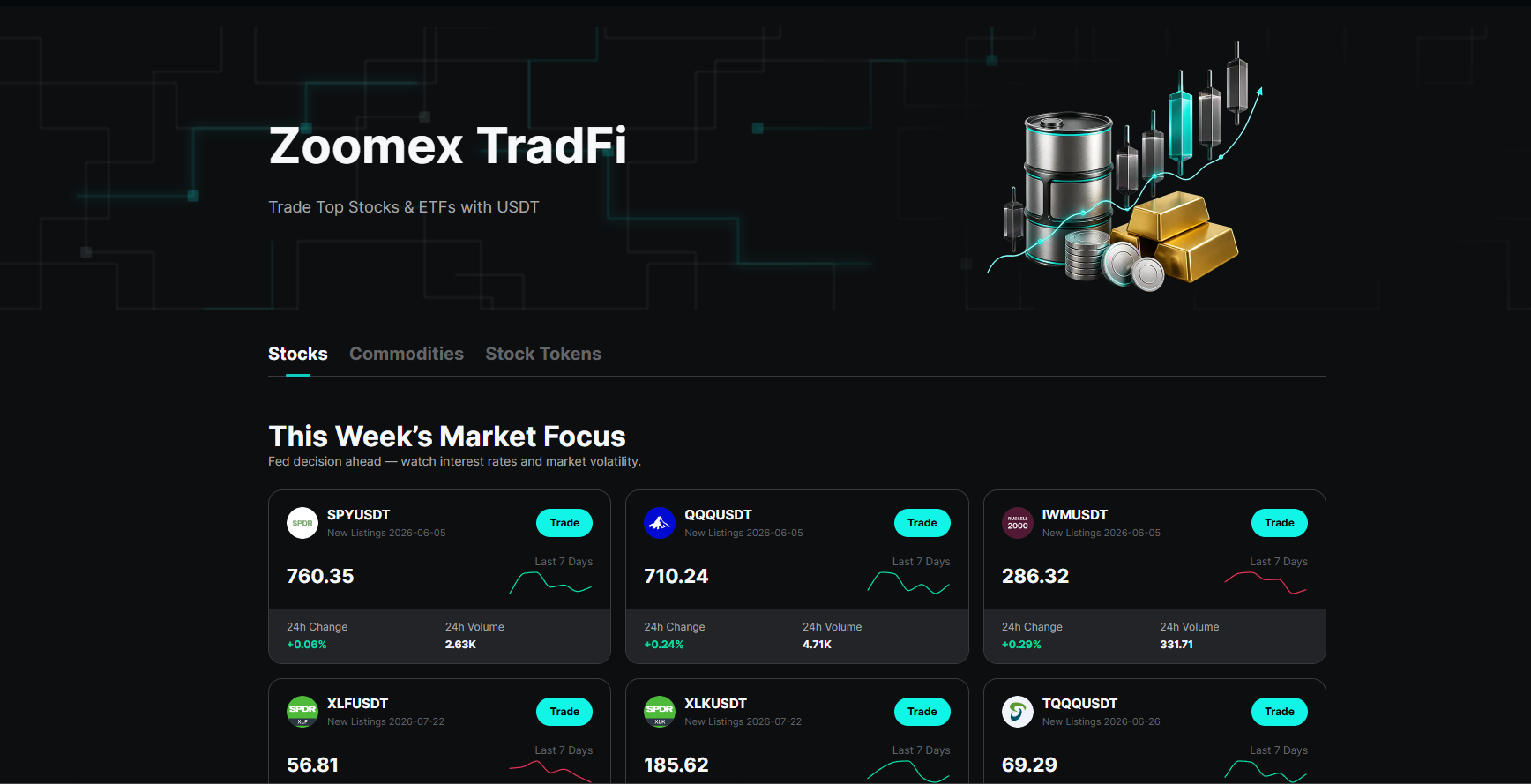
Zoomex’s TradFi Zone includes a set of ETF-linked perpetual contracts alongside its single-stock and commodity lineup, giving users USDT-margined exposure to broad index, sector, and leveraged ETF products through the same interface used for crypto derivatives.
What an ETF perpetual is
A traditional ETF gives investors diversified exposure to an index or sector without picking individual stocks. It trades on an exchange during market hours, settles in fiat, and is bought and sold as a share.
An ETF perpetual contract references the same underlying product but works differently in three respects. It has no expiry, so a position can be held as long as margin requirements are met. It is margined and settled in USDT rather than fiat, which means no currency conversion and no separate brokerage account. And it trades continuously rather than during exchange hours.
That last difference is the practical one. A traditional ETF position cannot be adjusted when the underlying market is closed, which covers roughly two-thirds of every week once evenings and weekends are counted. A perpetual contract referencing the same ETF can be opened, adjusted, or closed at any point.
The trade-off is that a perpetual contract is a derivative, not ownership of the underlying fund. It carries funding payments, margin requirements, and liquidation risk that a spot ETF holding does not.
The contracts available
Zoomex’s ETF perpetual lineup covers several distinct types of exposure.
Broad market index. SPYUSDT references the SPDR S&P 500 ETF Trust, the most widely held ETF tracking the S&P 500, and gives exposure to the broad US large-cap market in a single contract. QQQUSDT references the Invesco QQQ Trust, which tracks the Nasdaq 100 and carries a heavier weighting toward technology than the S&P 500.
Small-cap exposure. IWMUSDT references the iShares Russell 2000 ETF, tracking US small-cap equities. Small caps historically behave differently from large caps across the economic cycle, which is why the contract sits in the lineup as separate exposure rather than as a variation on SPY.
Sector-specific. XLFUSDT references the Financial Select Sector SPDR Fund, covering banks, insurers, and other financial companies. XLKUSDT references the Technology Select Sector SPDR Fund, covering the technology names within the S&P 500. Sector contracts let users take a position on a specific part of the market rather than the index as a whole.
Leveraged. TQQQUSDT references ProShares UltraPro QQQ, a 3x leveraged product tracking the Nasdaq 100. Because the underlying ETF is already leveraged, price movement in this contract is amplified relative to QQQ before any additional leverage a user applies on the platform. It is the highest-risk instrument in the group and behaves differently over multi-day holding periods than an unleveraged product, due to the compounding effects inherent to leveraged ETFs.

How the contracts work on Zoomex
All ETF perpetuals run on the same infrastructure as Zoomex’s crypto perpetuals. There is no separate account, no different interface, and no distinct onboarding flow. Users search the ticker under the TradFi category and open a position the same way they would on any crypto pair.
Contracts are USDT-margined and support both cross and isolated margin modes. Published contract specifications cover leverage caps, tick size, funding rate schedule, and margin requirements, each visible before a position is opened rather than disclosed afterward.
Funding is exchanged at fixed intervals, following the same mechanics that apply to the platform’s crypto perpetuals. Because these contracts track assets that trade on traditional exchanges during limited hours, pricing outside those hours reflects the market’s ongoing assessment rather than a quoted exchange price, which is worth understanding before holding a position across a weekend.
Positions can be opened long or short. The ability to take a short position without a margin account at a traditional broker is one of the structural differences between an ETF perpetual and a conventional ETF holding.
Risk considerations
ETF perpetuals carry the risks common to all leveraged derivatives. Positions can be liquidated if margin requirements are not met, and losses can exceed initial expectations in fast-moving conditions. Funding payments accrue over time and affect the cost of holding a position.
Leveraged ETF products such as TQQQ carry additional considerations. A 3x leveraged ETF is designed to deliver three times the daily return of its index, not three times the return over longer periods. Over multi-day holding periods, compounding means the realised return can diverge meaningfully from three times the index’s move over the same window, particularly in volatile or range-bound conditions. Users considering positions in leveraged ETF perpetuals should understand this behaviour before holding across multiple sessions.
Zoomex publishes contract parameters, funding schedules, and liquidation mechanics for every contract in the TradFi Zone. Users should review these before opening a position, and treat position sizing as a function of account balance rather than of available leverage.
Why ETF perpetuals fit the Zoomex model
ETF perpetuals extend the same logic that underpins the rest of Zoomex’s TradFi Zone. The exchange has not pivoted away from crypto derivatives to chase traditional markets; it has extended the same derivatives engine, matching logic, and risk controls that already serve its crypto perpetuals to a wider set of underlying assets.
For users, that consistency is the point. The same margin mechanics, the same order types, the same risk tools, and the same published rules apply whether a position references Bitcoin or the S&P 500. A user who already understands how a crypto perpetual behaves on the platform does not need to learn a second system to take a position on an index.
Access follows the same Fair Access & Rule-Based Execution framework applied across the product suite. Contracts are not gated behind separate onboarding or tiered eligibility, and execution logic applies identically regardless of position size.
About Zoomex
Founded in 2021, Zoomex is a global cryptocurrency trading platform focused on derivatives trading. The platform serves over 3 million users across 35+ countries and regions, offering access to 700+ trading pairs. Built around ease of use, transparency, fairness, and speed, Zoomex provides a clear and efficient trading experience for users worldwide.
Through its high-performance matching engine, clear asset and order displays, and transparent fee and rule mechanisms, Zoomex helps users better understand their account status, order execution, trading costs, and results. Zoomex maintains registrations, licenses, and regulatory statuses across multiple jurisdictions, including the U.S. MSB, Canada MSB, U.S. NFA, and Australia AUSTRAC, and has completed security audits conducted by blockchain security firm Hacken. The platform also continues to strengthen its trust framework through Proof of Reserves, Security & Transparency, Compliance Information, and Fees / Rules Transparency initiatives.
Beyond trading, Zoomex builds a refined brand experience through elite sports partnerships, including the TGR Haas F1 Team, World Cup-winning goalkeeper Emiliano Martínez, and world-class tennis events such as Wimbledon. The values of speed, precision, discipline, fair play, and rule-based execution are closely aligned with Zoomex’s approach to derivatives trading.
At Zoomex: Easy to Use. Transparent balance. Fair access to your earnings.
The post Zoomex TradFi Zone: How ETF Perpetual Contracts Work appeared first on BeInCrypto.
Today’s Quordle Answers and Hints for September 17, 2026

EastEnders legend Shane Richie in career update amid trial

737 Max production taking ‘a little bit longer’ to stabilize than expected



-

 Fashion5 days ago
Weekend Open Thread – Corporette.com
-

 Business7 days ago
Micron Stock Climbs Above $1,031 as AI Memory Crunch and a $50 Billion Outlook Fuel the Rally
-

 Tech3 days ago
The Latest Weird Thing to Play Doom Is the Mapped-Out Brain of a Fruit Fly
-

 Business7 days ago
AMD Stock Climbs After Management Lifts 2027 Data Center Outlook Toward $70 Billion in AI Sales
-

 Business6 days ago
10 Most-Streamed Songs On Spotify In 2026 So Far, Led By Ella Langley’s Dominant Run On The Charts This Year
-

 Crypto World5 days ago
XAG/USD: Silver’s Short-Term Rally Meets Its Moment of Truth
-

 Crypto World6 days ago
2 Chip Stocks Broke Out This Week. Neither Was Nvidia
-

 Tech6 days ago
Battery life is the only iPhone 18 Pro and iPhone Duo upgrade I care about. Apple didn’t disappoint
-

 Crypto World7 days ago
Pi Network ships Protocol 27 on a network with 14 million users and zero DeFi
-

 Crypto World6 days ago
OKX launches 10x OpenAI, Anthropic X-Perps in Europe
-

 Crypto World5 days ago
Diesel Tops $6 a Gallon for the First Time as 28 States Set Records
-

 Tech7 days ago
Apple Watch Ultra 4 vs Watch Ultra 3: Should you really spend another $799?
-

 News Videos5 days ago
Facing Financial Fears
-

 Business6 days ago
Western Digital Slips 2.7% as AI Storage Rally Cools After Record Cash and Guidance
-

 Crypto World7 days ago
Bitcoin price risks $70K if $78K neckline breaks
-

 Entertainment7 days ago
Case Sees Major Update As Jury Deliberations Begin
-

 Business4 days ago
Rivals Sam Altman and Elon Musk Rally Behind Dario Amodei’s Call for a Slowdown in AI Development
-

 Crypto World2 days ago
Elon Musk Drops a Bombshell: Grok 5 Could Be the AGI Breakthrough
-

 Business6 days ago
Five Leading AI Experts Warn Superintelligence Could Kill Humans and Explain Their Case
-
 Crypto World7 days ago
Ethereum price breakout hinges on a close above $2,535
You must be logged in to post a comment Login