
Crypto World
ETH, XRP, ADA, BNB, and HYPE

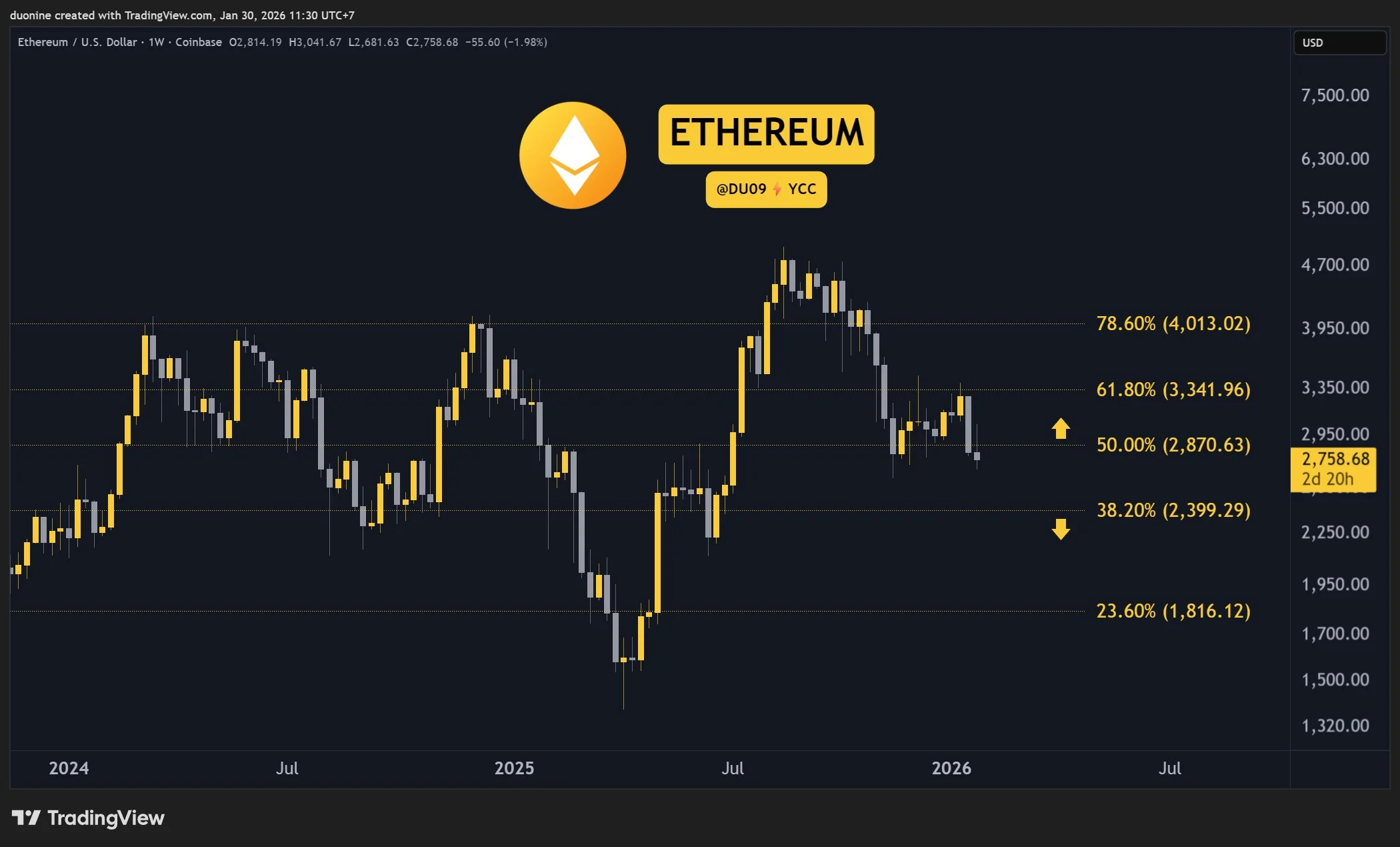
This Friday, we examine Ethereum, Ripple, Cardano, Binance Coin, and Hyperliquid in greater detail.
Ethereum (ETH)
This week, the crypto market entered red territory with Ethereum falling by 7% and losing support at $3,000. With buyers on the defensive, sellers appear to have the upper hand in the days and weeks to come.
The most important support is at $2,400, but to reach that level, bears will need to make a lower low below $2,600 first.
Looking ahead, the momentum remains clearly bearish with buyers unable to regain control of the price action. Thus, the downtrend may continue before a bottom is found.
Ripple (XRP)
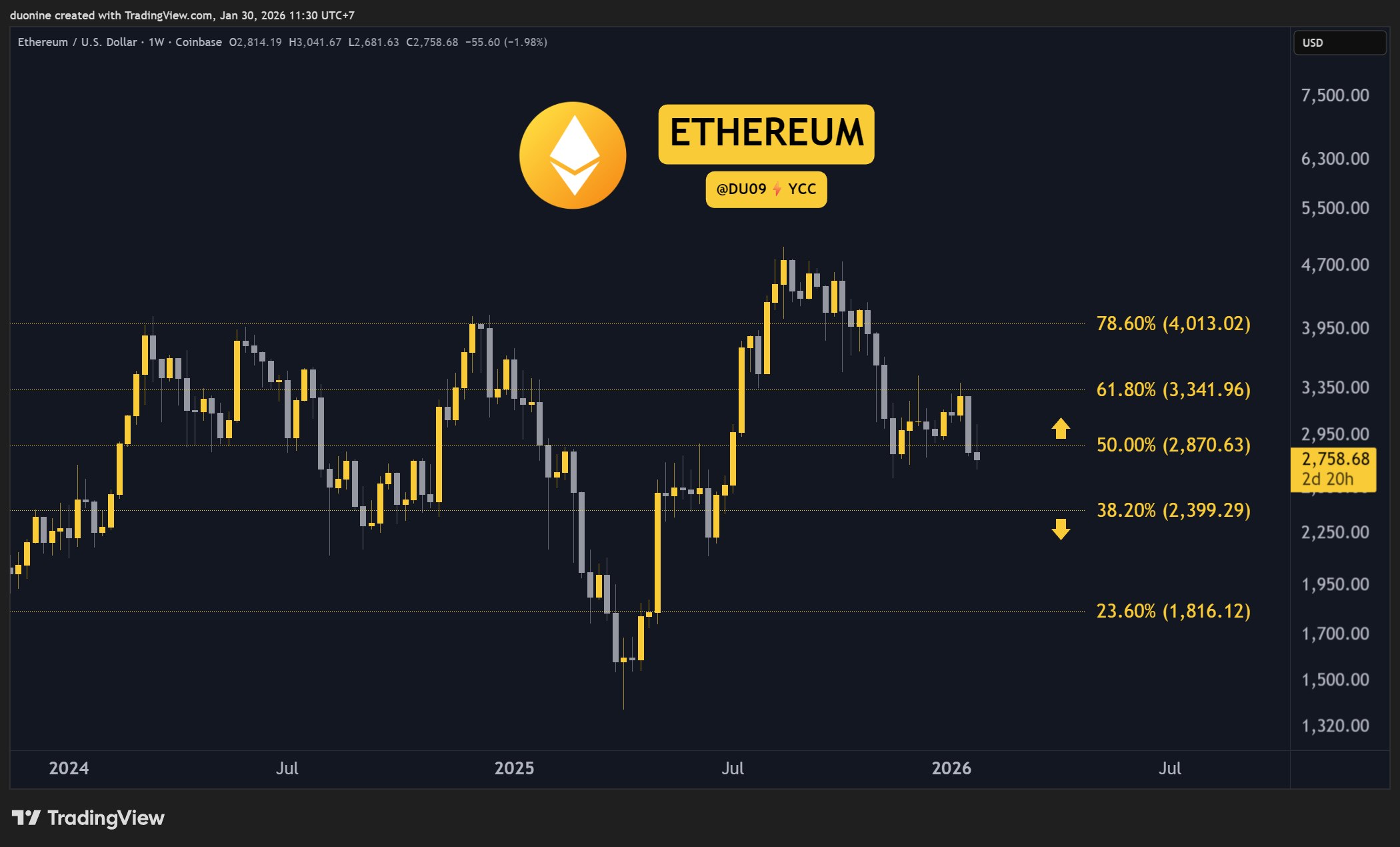
XRP just made a lower low this week and closed with a 8% loss. Since the price lost support at $2, sellers have been encouraged to increase their pressure, and so far, they have been successful.
At the time of this post, the price is around $1.76 and appears well on its way to test the key support at $1.6, which is a good candidate for a bounce. However, a relief rally is likely to be stopped as soon as it approaches $2 again.
Looking ahead, XRP is in a difficult position, as this downtrend could push it to $1.6 or lower later in 2026.
Cardano (ADA)
ADA crashed by 10% this week after buyers left the orderbooks. With no one to stop the selloff, the price fell to $0.33 and may soon be below 30 cents at this rate.
The most significant support is found at 27 cents, which is a level last tested in July 2024. This erases all progress since then and places Cardano in a deep, prolonged bear market.
Looking ahead, there is no relief on the horizon as long as the price is unable to find a bottom. Hopefully, buyers will return under 30 cents to stop the downtrend.

Binance Coin (BNB)
BNB was rejected again at the $900 resistance and closed the week with a 5% loss. With buyers unable to push higher, sellers remain in control and may be keen to revisit the next support at $800.
If support at $800 does not hold, this cryptocurrency is likely to revisit $700, which could act as a reversal point given past price action.
Looking ahead, BNB remains in a downtrend. This makes lower price levels likely despite several attempts by buyers to reverse the trend. Momentum is also shifting more bearish, which may encourage further selling.

Hype (HYPE)
HYPE had a very volatile week after its price pumped by a wooping 68% before retracing somewhat to close the week with a 35% gain, at the time of this post. This is an impressive performance considering most alts are in red nowadays.
This spike comes after several whales ended their selling. This encouraged buyers to return, but so far, this pump still made a lower high being unable to reclaim $35 as support. To turn bullish, that level has to be reclaimed.
Looking ahead, HYPE remains in a clear downtrend on higher timeframes. Nevertheless, this is the first time in months when this cryptocurrency gave a clear signal it may want to reverse and recover the losses booked since September 2025.

SECRET PARTNERSHIP BONUS for CryptoPotato readers: Use this link to register and unlock $1,500 in exclusive BingX Exchange rewards (limited time offer).
Disclaimer: Information found on CryptoPotato is those of writers quoted. It does not represent the opinions of CryptoPotato on whether to buy, sell, or hold any investments. You are advised to conduct your own research before making any investment decisions. Use provided information at your own risk. See Disclaimer for more information.

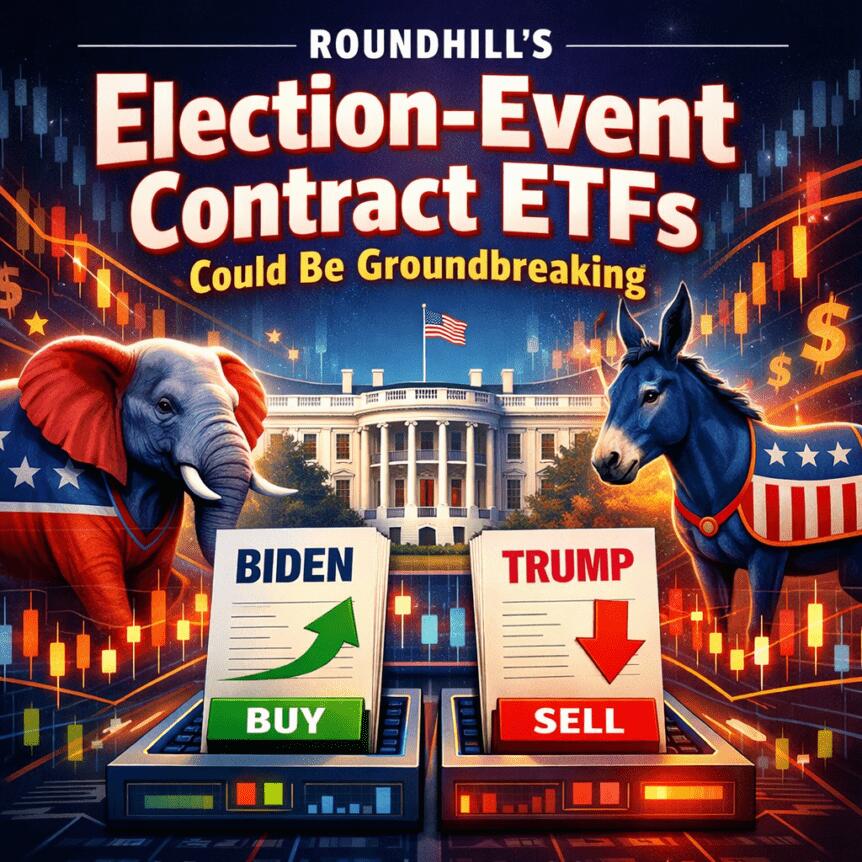
Roundhill Investments, a US-based ETF issuer, has moved to bring six exchange-traded funds tied to event contracts that bet on the outcome of the 2028 US presidential election. The filing with the Securities and Exchange Commission describes ETFs that would use a specialized derivative known as event contracts to speculate on political results. If approved, the products could broaden access to prediction-market-style exposure within a traditional exchange-traded wrapper, a development that ETF observers characterized as potentially groundbreaking. The six funds cover presidential, Senate, and House outcomes across both major parties: Roundhill Democratic President ETF, Roundhill Republican President ETF, Roundhill Democratic Senate ETF, Roundhill Republican Senate ETF, Roundhill Democratic House ETF, and Roundhill Republican House ETF. The filing also flags that regulators continue to weigh how such instruments should be classified and regulated.
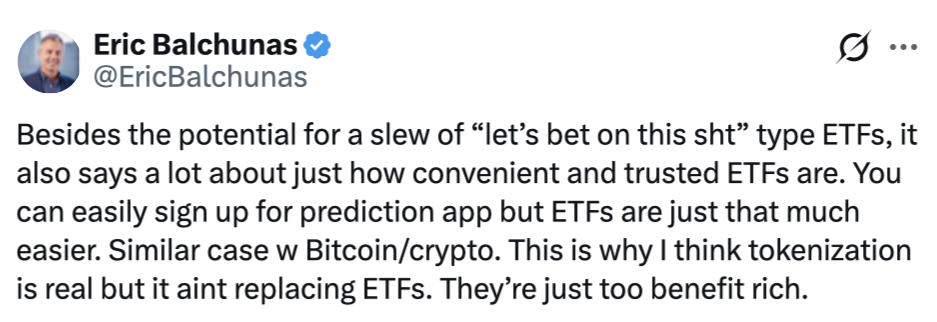
The prospect of an ETF-based route into event contracts has drawn commentary from industry observers. ETF analyst Eric Balchunas noted in a post that, if the SEC were to approve the lineup, the impact could be “potentially groundbreaking.” He argued that the ETF structure could unlock a broader set of prediction-market applications that are more accessible to a wide range of investors than raw prediction markets on bespoke platforms. The filing itself describes the objective of the fund tied to the winning election outcome as capital-focused, while cautioning that the other five funds face materially higher risk where investors could see substantial losses.
The Roundhill filing explicitly describes the structure as investing in, or gaining exposure to, a class of instruments known as event contracts. The approach would apply to the presidential outcomes as well as to control of the Senate and the House, spanning both major parties. In the filing, Roundhill underscores that while the fund aiming to capture the ultimate election result seeks capital appreciation, the remaining five ETFs could lose “almost all” of their value, depending on how market events unfold and how the contracts converge on settlement. The document warns that a rapid convergence between opposing event outcomes could trigger sharp NAV movements, a phenomenon described as highly atypical for conventional ETFs.
The regulatory dimension is front and center. The filing notes that US rules governing event contracts are evolving, and any future classification changes or “restrictions” could affect the funds. The document also flags the possibility that policymakers may limit, suspend, modify, or even prohibit certain political outcome contracts, should concerns around investor protection or market integrity intensify. Investors who are uncomfortable with regulatory uncertainty are urged to avoid purchasing shares. The discussion highlights the broader tension between liquidity, innovation, and consumer safeguards in the growing ecosystem of prediction-market-style financial products.
The debate around prediction markets has gained momentum alongside regulatory signals from US authorities. In early February, reports indicated the Commodity Futures Trading Commission (CFTC) had moved to withdraw a Biden-administration proposal seeking to ban sports and political prediction markets, a sign that a more permissive stance could be emerging for certain forms of event-driven contracts. The regulatory arc remains a key variable shaping how Roundhill’s six ETFs would perform in practice, particularly if classification or restriction decisions shift in coming months. The evolving framework raises questions about how these funds would be priced, settled, and taxed, and whether they would attract meaningful liquidity given the novel nature of the underlying contracts.
Industry observers note that the intersection of traditional equity markets and prediction markets could mark a broader shift in how investors access political risk and price uncertainty. The Roundhill filing arrives as the so-called prediction-market conversation grows more nuanced, with debates about whether such markets should focus on hedging price-exposure risk or remain oriented toward speculative bets on short-term political outcomes. Ethereum co-founder Vitalik Buterin has weighed in on the topic, arguing that prediction markets, if left to their current trajectory, risk over-convergence on short-horizon bets and price swings that are detached from longer-term value creation. In a widely cited post, he called for shifting toward marketplaces that hedge price exposure for consumers, a stance that aligns with ongoing discussions about consumer protection in digital markets. Ethereum (CRYPTO: ETH) has become a focal point in these debates as developers and investors consider how to align incentives with real-world utility. For context, Buterin’s remarks have been echoed in discussions around hedging mechanisms and risk controls in prediction-market ecosystems.
The broader conversation around event contracts and their perceived suitability for mainstream investors continues to evolve. The Roundhill proposal sits at a moment when traditional asset managers are experimenting with derivative-like structures to capture political risk, while regulators voice caution about liquidity, reliability, and the integrity of price discovery. The SEC’s review process for these six ETFs will hinge on whether event contracts can offer transparent settlement, robust risk disclosures, and a structure that can scale liquidity to support a diversified investor base. The filing’s emphasis on the potential for significant NAV volatility in the five riskier funds underscores the need for clear risk management frameworks and investor education as these products progress through the regulatory pipeline. For readers, the main takeaway is that the integration of event contracts into an ETF wrapper could represent a notable pivot in how political risk is monetized, even as the regulatory environment remains a decisive constraint on immediate execution.
As the market watches for ongoing developments, the Roundhill filing serves as a litmus test for whether prediction-market-style derivatives can be reconciled with the governance and investor protections that underpin traditional ETFs. While the six-fund lineup targets different political outcomes, the core insight for investors is the relative risk asymmetry: one fund may pursue capital appreciation from the ultimate election result, while the other five grapple with convergence events that can push net asset value sharply in either direction. The path to approval remains uncharted, and the regulatory equation—balancing innovation with safeguards—will likely dictate the pace and shape of any eventual launch. In the meantime, the discourse surrounding prediction markets enters a more formal, regulated phase, with the potential to broaden access to politically linked derivatives for a broader cohort of investors while inviting heightened scrutiny from policymakers and market participants alike.
Why it matters
The Roundhill filing matters because it tests whether prediction-market concepts can be packaged into the familiar ETF format. If approved, it could provide a regulated, transparent avenue for investors to engage with political risk using a market-based mechanism that has historically lived outside mainstream asset management. By packaging six distinct event contracts into a single lineup, the fund family aims to offer diversified exposure to different branches of government, potentially enabling portfolios to hedge or express views on the political calendar without stepping outside established exchange-traded infrastructure.
For the broader crypto and digital-asset discourse, the development signals a continuing convergence between traditional finance instruments and more experimental market ideas. The emergence of ETF-based event contracts could feed into ongoing debates about how to design markets that are resilient, accessible, and protective of ordinary investors while still enabling innovative risk transfer. The attention from figures like Balchunas and the ongoing commentary from prominent crypto thinkers, including Ethereum’s Vitalik Buterin, underscores the cross-pollination between traditional ETFs and decentralized finance conversations about hedging, price discovery, and consumer protection. As policymakers refine regulatory guidance, proponents argue that a regulated ETF wrapper could deliver improved transparency, settlement mechanics, and liquidity compared with niche, permissioned prediction platforms.
For participants in the prediction-market space, Roundhill’s approach may set a precedent for how event-driven instruments could be evaluated by mainstream markets. Stakeholders will be watching whether the funds can attract sufficient liquidity, how settlement will be determined, and how sensitive the NAV will be to shifting political narratives and polling trajectories. The tension between potential liquidity gains and risk of rapid NAV swings will be central to any future discussions about the viability of these vehicles in a volatile political landscape.
What to watch next
- SEC decisions on the Roundhill ETF filings and the final product terms, including eligibility criteria and settlement procedures.
- Any regulatory updates or guidance on event contracts, including potential reclassifications or restrictions that could affect the funds.
- Regulatory commentary from the CFTC or other bodies regarding prediction markets and related derivatives.
- Market liquidity and investor demand for election-related ETFs as the 2028 cycle progresses.
Sources & verification
- Roundhill’s filing with the SEC detailing six election-event ETFs, including the six fund names and their objectives: SEC filing.
- Eric Balchunas’s remarks about potential impact if approved: X post.
- Regulatory discussions around prediction markets and CFTC coverage, including referenced coverage on the Biden-era proposal status: CFTC stance.
- Vitalik Buterin’s comments on prediction markets and hedging, including his X post: X post, and a related piece on hedging: Buterin hedging discussion.

Nasdaq Falls for Fifth Week in a Row
US-based ETF issuer Roundhill Investments has filed with the US securities regulator to launch six exchange-traded funds (ETFs) tied to event contracts on the outcome of the 2028 US presidential election.
ETF analyst Eric Balchunas said in an X post on Saturday that, if approved, the ETF products would be “potentially groundbreaking.”
“Opens up huge door to all kinds of stuff,” Balchunas said, adding that prediction market applications are easy to sign up to, but ETFs are “just that much easier.”
Roundhill Investments filed with the US Securities and Exchange Commission on Friday to launch six ETF products that allow investors to speculate on the outcome of the 2028 US presidential election.
“In seeking to achieve its investment objective, the Fund invests in, or seeks exposure to, a unique type of derivative instrument known as an event contract,“ the filing said.
The ETFs include the Roundhill Democratic President ETF, the Roundhill Republican President ETF, the Roundhill Democratic Senate ETF, the Roundhill Republican Senate ETF, the Roundhill Democratic House ETF, and the Roundhill Republican House ETF.
Roundhill Investments warns investors of the risks
The filing said the objective of the ETF tied to the winning election outcome is to deliver “capital appreciation,” but warned the other five ETFs could lose almost all their value.

“This convergence will result in a sudden and substantial increase or decrease in the value of the Fund’s NAV, which is highly unique among other investment products,” the filing said.
The filing also warned investors that US regulations on event contracts are “evolving,” and any change in how event contracts are classified or “restricted” may affect the fund.
“Political outcome event contracts have been the subject of heightened regulatory scrutiny and debate, and regulators may conclude that some or all of such contracts should be limited, suspended, modified, or prohibited,” the filing said, adding that investors uncomfortable with regulatory uncertainty should avoid purchasing shares.
CFTC leans towards a favorable stance on prediction markets
On Feb. 5, Cointelegraph reported that the US Commodity Futures Trading Commission had withdrawn a Biden administration-era proposal to ban sports and political prediction markets, which are among the most popular event contracts today.
Related: Trump Media files for two new crypto ETFs tied to Bitcoin, Ether, Cronos
Meanwhile, Ethereum co-founder Vitalik Buterin said he is starting to “worry” about the direction of prediction markets and suggested they shift to marketplaces that hedge against price-exposure risk for consumers.
Prediction markets are “over-converging” to “unhealthy” products that are focused on short-term price betting and speculative behavior as opposed to long-term building, Buterin said in an X post.
Magazine: Brandt says Bitcoin yet to bottom, Polymarket sees hope: Trade Secrets

BlackRock has taken a formal step into decentralized finance by listing its tokenized U.S. Treasury fund on Uniswap, signaling a measured pivot toward on-chain trading of real-world assets. The USD Institutional Digital Liquidity Fund (BUIDL) is being tokenized with the help of Securitize and will be tradable on a public decentralized exchange, a first for the asset manager in DeFi. This collaboration sits within a broader backdrop of continued institutional exploration of crypto rails even as traditional markets wrestle with ETF flows and shifting sentiment. In parallel, Bitcoin (CRYPTO: BTC) and Ethereum (CRYPTO: ETH) posted modest weekly gains of about 2.5% but failed to clear key psychological levels, pressured by a pattern of ETF inflows and subsequent outflows that underscored the fragility of near-term upside in a risk-off environment.
Bitcoin ETFs started the week with some inflows but quickly surrendered ground, registering net outflows of $276 million on Wednesday and $410 million on Thursday, according to data from market trackers. Ether ETFs displayed a similar pattern, with two light days of inflows followed by $129 million and $113 million of outflows on the same two days. The net effect was a market that, while buoyed by a perceived liquidity boost from tokenized assets, remained sensitive to shifting flows and investor appetite for risk-sensitive exposure. The weekly price action did not decisively break above crucial levels, leaving traders weighing the significance of macro liquidity versus on-chain adoption momentum.
Against this backdrop, BlackRock’s move into DeFi stands out as a milestone for institutional participation. The BUIDL fund is described as a tokenized version of a money-market approach to Treasuries, issued across multiple blockchains, including Ethereum, Solana, BNB Chain, Aptos and Avalanche. The asset manager’s public-facing rationale centers on providing transparent, on-chain access to highly liquid, U.S. Treasury–backed instruments for institutions that favor self-custody and programmable settlement. The collaboration is being driven by Securitize, a tokenization platform that previously partnered with BlackRock on the BUIDL launch, and the Uniswap deployment aligns with the exchange’s mission to expand institutional liquidity into DeFi.
Initial trading is described as selective, with eligibility limited to certain institutional investors and market makers before broader access is opened. The official rollout underscores a broader trend: institutions are increasingly testing the on-chain infrastructure that underpins tokenized real-world assets as counterparties seek improved settlement speed, on-chain custody options, and transparent governance. In the wake of this development, industry observers noted that BlackRock’s involvement could set a precedent for other asset managers exploring tokenized securities and on-chain liquidity solutions.
The BUIDL fund is reported to hold more than $2.18 billion in total assets, according to RWA.xyz, and its cross-chain issuance has brought it to multiple networks, including Ethereum, Solana, BNB Chain, Aptos and Avalanche. That breadth matters because it signals an on-ramp for real-world assets to traverse different ecosystems—potentially expanding liquidity across layers and enabling more nuanced risk and yield profiles for institutional participants. In December, BUIDL reached a milestone of surpassing $100 million in cumulative distributions from its Treasury holdings, reflecting the ongoing interest in tokenized treasury income streams and the potential for on-chain yield to complement traditional fixed-income exposure.
Beyond the specific instrument, the broader DeFi landscape remains mired in a tension between innovation and regulatory scrutiny. In a separate development this week, a New York federal court dismissed a Bancor-affiliated patent suit against Uniswap, ruling that the asserted patents described abstract ideas related to calculating on-chain exchange rates and did not meet the standards for patent eligibility. While the dismissal was without prejudice, the ruling represented a procedural win for Uniswap and illustrated the ongoing IP and legal risk environment that surrounds major DeFi protocols. The court’s decision does not end the dispute, but it does provide a window for Uniswap to continue operating while the case can be refined in future filings.
On the crypto market’s more tactical front, Binance completed the conversion of $1 billion in Bitcoin into its SAFU emergency fund, adding another tranche of BTC to its reserve. The exchange disclosed that the SAFU wallet now holds 15,000 Bitcoin, valued at just over $1 billion, acquired at an average cost basis of about $67,000 per coin. Binance had announced the move earlier in the month, stating it would rebalance the fund if volatility pushed its value below a defined threshold. The decision to anchor the SAFU reserve in Bitcoin reinforces the ongoing narrative of BTC as a long-term store of value within the ecosystem’s risk-management framework.
Meanwhile, voices within the blockchain community continued to draw lines around what constitutes “real” DeFi. Ethereum co-founder Vitalik Buterin argued that DeFi’s true value lies in rethinking risk allocation and governance, rather than chasing yield on centralized assets. He cautioned that yield-centric strategies tied to fiat-backed stablecoins can obscure issuer risk and counterparty exposure, a reminder that the sector’s risk dynamics remain a central theme as institutions seek scalable, on-chain alternatives to traditional finance.
The broader DeFi market activity remained resilient in its own right, with data from Cointelegraph Markets Pro and TradingView showing a majority of the top 100 cryptocurrencies finishing the week in the green. Among standout performers, the Pippin (CRYPTO: PIPPIN) token surged as the week’s top gainer in the broader ranks, followed by the Humanity Protocol (CRYPTO: H), which posted notable gains. The week’s digest also highlighted continuing interest around tokenized assets and on-chain credit vehicles, even as volatility persisted and risk sentiment remained tepid.
In short, a week marked by a landmark institutional move into DeFi coexisted with ongoing market frictions—ETF outflows, macro caution and a series of regulatory and IP questions that continue to shape the pace and scope of blockchain-enabled finance. The juxtaposition underscores a sector attempting to bridge the gap between traditional liquidity channels and the new, programmable infrastructure driving tokenized real-world assets across multiple chains.
Hayden Adams
https://platform.twitter.com/widgets.js
Why it matters
The listing of BlackRock’s BUIDL on Uniswap marks a watershed for institutional access to tokenized real-world assets. It demonstrates a willingness among large asset managers to experiment with DeFi infrastructure not merely as a speculative overlay but as a potential avenue for compliant, on-chain trading of regulated securities. If the model proves scalable and cost-efficient, more traditional asset managers could follow, accelerating the normalization of tokenized fixed income within institutional portfolios and potentially expanding liquidity pools for tokenized securities on public exchanges.
From a market dynamics perspective, the week’s ETF flow patterns reaffirm that short-term price action remains highly sensitive to inflows and outflows. While BTC and ETH posted modest gains, the absence of a sustained breakout suggests that the macro backdrop—comprising liquidity conditions, risk appetite, and regulatory signals—continues to constrain upside despite positive structural developments in DeFi adoption. The Bancor-Uniswap ruling also underscores that the legal framework governing DeFi protocols remains unsettled, with patent arguments still in flux and ongoing debates about what constitutes innovation versus abstract idea protection.
For on-chain participants and developers, the Binances SAFU move reinforces the idea that reserve designs are evolving under pressure to balance security, liquidity, and risk management. The repeated emphasis on Bitcoin as a reserve asset signals confidence in BTC as a durable anchor for risk-averse users and institutions seeking transparent, auditable reserves in a rapidly changing landscape. In parallel, Vitalik Buterin’s call for a clearer definition of DeFi’s core value proposition keeps attention on risk-sharing mechanisms and the governance of on-chain ecosystems, moving the debate beyond yield optimization toward sustainable, systemic risk management.
What to watch next
- Broader rollout of BUIDL to additional institutional clients and potential cross-chain expansions in the coming weeks.
- Further tokenization of real-world assets and the adoption trajectory of Securitize’s platform across more issuers.
- Resolution or further filings in remaining IP and patent matters related to DeFi protocols, shaping protocol-level risk profiles.
- Continued monitoring of ETF and on-chain liquidity flows to gauge whether institutional demand for tokenized assets translates into sustained price action.
- Regulatory signals and macro liquidity shifts that could either reinforce or dampen the case for tokenized fixed income and DeFi-enabled settlement rails.
Sources & verification
- Uniswap-Labs and Securitize collaboration to unlock liquidity options for BlackRock’s BUIDL — Business Wire
- BlackRock’s BUIDL tokenization milestone and Uniswap collaboration — Fortune
- Bitcoin ETF and Ether ETF flow data — Farside Investors
- BUIDL asset data and cross-chain issuance — RWA.xyz
- Bear-market inflection point discussion and Kaiko Research notes
Stocks Are Mounting a Comeback

X is moving toward integrating financial services more deeply into its social platform with a feature known as Smart Cashtags. Nikita Bier, the platform’s head of product, signaled in a weekend post that users will soon be able to trade stocks and crypto directly from their timeline, marking a significant step in bringing traditional markets and digital assets closer to social interaction. The timeline for rollout, Bier indicated, includes a sequence of features launching in the next few weeks, suggesting a staged approach rather than a single, sweeping update. The idea builds on X’s previous experiments with Cashtags and reflects broader ambitions to weave commerce and finance into everyday activity on the app, potentially altering how millions interact with markets while they scroll.
The concept isn’t entirely new for X. In 2022 the platform introduced a basic Cashtag system designed to track the prices of major stocks and cryptocurrencies and to present visual financial data for assets such as Bitcoin (CRYPTO: BTC) and Ether (CRYPTO: ETH). That pilot was later discontinued, but the renewed emphasis on in-app trading signals a more ambitious plan to keep price data, discussion, and execution under one roof. The current push appears to be part of a broader strategy to reclaim a central role for financial functionality within the app, rather than relegating it to standalone apps or separate tabs. The public focus on Smart Cashtags and in-timeline trading follows a January teaser that hinted at in-app trading, though the company did not formally confirm the rollout at that time.
Cointelegraph reached out to X for comment about the Smart Cashtags feature and the timing of its launch, but the company did not respond by publication. The moves come as X, under the leadership of Elon Musk, has repeatedly emphasized a vision of the platform evolving into an “everything app”—a space where social interaction, payments, and transactions are seamlessly integrated. Musk has framed this ambition in terms of replacing multiple standalone apps with a single, feature-rich experience, drawing comparisons to WeChat, the Chinese messaging and payments ecosystem that blends social, financial, and commerce functions in one place.
While attention centers on Smart Cashtags, X is advancing another major line of development: X Money. Musk touched on the payments initiative during a recent All Hands presentation hosted by his AI venture, xAI. He outlined that X Money is still in a limited beta phase for roughly two months before any worldwide rollout. The aim, he said, is for X Money to become “the place where all money is” and a primary hub for monetary transactions on the platform. Musk’s comments underscore a strategic push to embed payments so deeply into daily use that the app becomes a de facto financial operating system for its hundreds of millions of users. In his remarks, Musk also emphasized the platform’s substantial reach, noting that X serves roughly 600 million average monthly users and articulating a vision in which a user could conceivably conduct most, if not all, daily digital activities within the app.
The broader context for these developments is the evolving landscape of social platforms that fuse content with financial services. If successful, Smart Cashtags could provide a frictionless entry point for casual users to engage with markets, while more seasoned traders may appreciate the convenience of real-time price feeds, charts, and trading execution within a single interface. The rollout also signals X’s continued experimentation with monetizable features that extend beyond advertising or content curation, shifting the platform toward a more transactional, payments-enabled model. The integration of trading and payments may also influence how brands, creators, and communities monetize engagement as users gain easier access to financial tooling alongside social interaction.
X inches into payments as it attempts to become an “everything app”
Elon Musk provided an update on the launch timeline for X Money, the platform’s payments feature that would enable users to send money to one another, in another high-profile public forum. Speaking at a recent All Hands event run by xAI, Musk indicated that X Money remains in limited beta testing for the next two months, after which a global rollout would follow. The goal is not merely to add another payments tool; it is to establish X Money as the central backbone for all monetary activity on the platform, a foundational capability that could influence how users view and rely on the app for everyday financial tasks. Musk’s framing of X Money as a unifying payment layer reinforces the broader strategy to turn X into an integrated ecosystem where social activity and financial transactions coexist seamlessly.
With roughly 600 million average monthly users, Musk suggested that the potential for such an integration is vast. The assertion underscores the strategic importance of any feature that can convert passive engagement into routine financial interactions. The concept of “everything in one place” has long animated the ambitions of tech leaders who seek to reduce the friction between social media and commerce. If the beta phase demonstrates reliability and security at scale, a worldwide rollout could significantly accelerate how users conduct payments and financial exchanges within the app, potentially affecting user behavior, merchant adoption, and the overall demand for linked financial services on social platforms.
Why it matters
The Smart Cashtags initiative, if realized, could redefine the user journey from curiosity to action on social media. Rather than leaving the app to check prices, follow tickers, or execute trades on separate platforms, users might access real-time information and make transactions in a single, familiar environment. This could lower the perceived barriers to entry for crypto investors and stock traders who are comfortable with the social context, potentially boosting liquidity and engagement around a wider range of assets. The integration would also place pressure on competing social networks and fintechs to offer similar in-app capabilities, raising the bar for how social apps monetize and retain users through integrated financial services.
From a regulatory and risk-management standpoint, the move to in-app trading and payments raises important considerations. In-app trading raises questions about suitability, know-your-customer (KYC) standards, and consumer protection within social platforms. The beta and phased rollout approach may help X observe user behavior, test security controls, and refine compliance workflows before reaching a broad audience. While the exact list of supported assets remains to be clarified, the emphasis on Bitcoin (CRYPTO: BTC) and Ether (CRYPTO: ETH)—the two largest crypto assets by market capitalization—signals that the feature aims to cover both traditional and digital assets in parallel.
What to watch next
- Official confirmation and timing for the Smart Cashtags rollout, including which assets will be tradable at launch.
- Details on the X Money beta scope, duration, and security enhancements prior to a global rollout.
- Regulatory updates or disclosures from X regarding compliance, user protections, and suitability testing for in-app trading.
- Any public statements from X or xAI about partnerships, supported brokers or custody arrangements, and asset coverage beyond BTC and ETH.
Sources & verification
- Nikita Bier’s public post on X regarding Smart Cashtags and a timeline for the rollout.
- The January teaser image signaling a potential in-app trading rollout for Smart Cashtags.
- Cointelegraph reporting on X’s Smart Cashtags development and the 2022 Cashtag system, including reference to BTC and ETH data.
- Elon Musk’s All Hands presentation at xAI discussing X Money and its beta status and rollout plans.
- Official statements and posts from X and xAI related to payments and financial features in development.
Smart Cashtags and in-app trading: what the plan could change for X users
X’s renewed focus on in-app trading via Smart Cashtags represents a meaningful pivot from a primarily social platform to a hybrid financial product. The first wave of changes centers on enabling trades directly from the timeline, a move designed to reduce friction for users who want to act on information they encounter in their feed. The initiative aligns with a broader push to consolidate services within a single app, an approach Musk has long described as a path toward creating an “everything app.” The potential impact on user habits could be substantial: a user who previously opened a separate brokerage or crypto exchange app might instead transition to executing trades while scrolling through posts, creating new kinds of engagement loops and monetizable moments for the platform.
From a user experience perspective, Smart Cashtags would need to balance speed with security and clarity. Real-time price data, simple execution flows, reliable order types, and clear disclosures about risk are essential for adoption. The 2022 Cashtag experiment established a framework for asset price visualization but did not culminate in a full trading experience. The new approach would require robust risk controls, transparent fee structures (if any), and intuitive interfaces that resonate with both casual observers and more active traders. The public discourse around in-app trading on social platforms has grown louder in recent years, and X’s iteration could influence how other apps approach embedding financial functionalities in social feeds.
The broader context also includes X Money, a payments feature Musk described as aiming to centralize monetary transactions within the app. The beta approach—limited for two months before a worldwide rollout—suggests a cautious, iterative path toward the final product. If successful, X Money could reduce the need for switching between apps when sending money, splitting bills, or conducting peer-to-peer transfers. This seamless integration of payments and trading could change demand patterns for both fiat-based and crypto-based transactions, potentially increasing on-platform liquidity and widening the audience for financial services embedded in social experiences. The lines between social engagement, information gathering, and financial activity could blur further as features like Smart Cashtags and X Money mature.
In the longer run, the vision of an “everything app” rests on user trust, reliability, and a coherent experience. The path will likely involve ongoing refinement of the user interface, more granular control over asset types, and stronger safeguards to protect users from mispricing, scams, or missteps in fast-moving markets. As X navigates these challenges, observers will be watching closely for how the platform handles compliance, data privacy, and cross-border considerations—issues that have become central to the broader dialogue around fintech on social platforms. Whether the Smart Cashtags initiative becomes a core daily utility or remains a niche feature will depend on how convincingly the platform demonstrates value, safety, and ease of use to a global audience.

TLDR:
- China’s U.S. Treasury holdings fell to $682.6B, down from a $1.3T peak in 2013.
- China’s share of foreign Treasury holdings dropped to 7.3%, the lowest since 2001.
- Gold reserves reached 2,308 tonnes after 15 straight months of central bank buying.
- Total foreign U.S. Treasury holdings hit a record $9.36T despite China’s reduction.
China’s holdings of U.S. Treasuries declined to their lowest share in foreign reserves since 2001. As of November 2025, Beijing held $682.6 billion in U.S. government debt, while its gold reserves climbed to record levels.
Treasury Holdings Decline to Multi-Decade Low Share
Data shows China’s Treasury holdings dropped to $682.6 billion in November 2025. This marks a sharp fall from its 2013 peak of over $1.3 trillion.
China now accounts for 7.3% of total foreign-held U.S. Treasuries. That share is the lowest recorded since 2001. Despite the decline, overall foreign holdings reached a record $9.36 trillion. Japan and the United Kingdom remain the largest foreign holders.
The reduction has drawn attention across financial markets. However, bond markets have remained stable during the adjustment period. The figures indicate a gradual rebalancing rather than an abrupt market disruption.
On X, user Wimar X claimed that China “dumped $638 billion” in U.S. Treasuries. The post also stated that current holdings are the lowest since 2008. The tweet further suggested China is “exiting the system.”
Official data confirms the decline in holdings. However, total foreign demand for Treasuries remains strong, led by other major economies.
Gold Reserves Rise for 15 Consecutive Months
At the same time, the People’s Bank of China continued adding gold to its reserves. January 2026 marked the fifteenth straight month of gold purchases.
China’s gold holdings reached 2,308 tonnes, valued at about $370 billion. Gold now represents roughly 5% of the country’s $3.3 trillion in total reserves. This is the highest recorded level for China’s gold stockpile.
Some market observers view the shift as a move toward hard assets. Others describe it as standard reserve diversification. The increase in gold has occurred alongside the steady reduction in Treasury exposure.
Even so, China remains one of the largest holders of U.S. government debt globally. The adjustment appears gradual rather than sudden.
The combination of lower Treasury holdings and higher gold reserves reflects changing reserve allocations. Meanwhile, global Treasury markets continue to operate without major volatility.

TLDR:
- Aggregated liquidation data shows rising long and short exposure across major crypto assets.
- Bitcoin’s move to $60K triggered a new phase of positioning in derivatives markets.
- Traders expect consolidation for up to 30 days before a clear trend emerges.
- Expanding liquidation clusters increase the chance of a sharp price swing.
Recent liquidation data across major cryptocurrencies shows mounting pressure in derivatives markets. Aggregated levels for Bitcoin, Ether, BNB, and Dogecoin point to growing long and short exposure. Market participants now watch for a decisive move after Bitcoin’s return to $60,000.
Liquidation Levels Expand Across Major Crypto Assets
Crypto analyst Joao Wedson shared aggregated liquidation levels for Bitcoin, Ethereum, BNB, and Dogecoin over the past seven days. The data shows consistent growth in both long and short positions across these assets.
According to Wedson’s tweet, traders continue building exposure on both sides of the market. As leverage accumulates, liquidation clusters expand above and below current price levels. This structure often sets the stage for sharp price swings once liquidity is triggered.
He noted that the current setup increases the probability of a strong move in the coming days. When long and short positions rise together, the market often seeks liquidity in one direction. As a result, volatility tends to increase after periods of compression.
However, the data does not confirm the direction of the next breakout. Instead, it shows a market preparing for expansion. Traders remain positioned for both downside continuation and recovery.
30-Day Consolidation Expected Before Clear Direction
Wedson also stated that the market may require around 30 days of consolidation after Bitcoin reached $60,000. This cooling period could allow excessive leverage to reset. Until then, price action may remain range-bound.
Many traders continue to expect further capitulation. Others anticipate a steady recovery from recent lows. Even so, Wedson suggested that neither scenario is likely to fully develop without extended consolidation.
The return of Bitcoin to the $60,000 level marked a psychological shift. Yet sustained direction often follows structural balance. Therefore, time may be required before momentum builds decisively.
As positions accumulate, liquidation levels act as reference zones for traders. A breakout above or below these clusters could trigger cascading liquidations. That sequence may define the next major move.
For now, derivatives data reflects tension rather than clarity. Both bullish and bearish participants remain active. Consequently, the market appears positioned for volatility, though timing remains uncertain.

Ethereum co-founder Vitalik Buterin has grown wary of how prediction markets are evolving, warning they risk becoming short-term price betting engines rather than tools that support long-term infrastructure. In a post on X, he argued that the current trajectory shows “over-converging” focus on immediate price moves and speculative behavior. He called for a shift toward onchain prediction markets that serve as hedges against price exposure for consumers, rather than betting mechanisms that amplify fiat-driven volatility. The thrust of his critique centers on moving from pure price bets to broader markets that can stabilize expenditures over time. He suggested a framework that blends prediction markets with AI-driven tools to counter inflationary pressures faced by households and businesses alike. In essence, his stance positions prediction markets as potential risk-management primitives if redesigned with real-world spending in mind.
Key takeaways
- Buterin argues prediction markets are tilting toward short-horizon price betting, which he views as unhealthy for long-term building in crypto and beyond.
- He envisions a model where onchain prediction markets are paired with AI large-language models to hedge consumer price exposure across goods and services.
- The proposed system would create price indices by major spending categories and regional differences, with prediction markets for each category.
- Each user could have a local LLM that maps their expenses and generates a personalized basket of prediction-market shares representing several days of future outlays.
- Supporters say such markets can offer valuable market intelligence and hedging capabilities, potentially improving price stability in a fiat-dominated environment.
- Existing prediction-market platforms like Polymarket and Kalshi are cited as part of the broader ecosystem that could be reoriented toward hedging and risk management rather than speculative bets.
Tickers mentioned: $ETH
Sentiment: Neutral
Market context: The discussion sits at the intersection of onchain finance, risk management, and regulatory scrutiny, as investors and developers weigh how to apply AI tools to price hedging while navigating evolving policy debates around prediction markets.
Why it matters
The idea of coupling onchain prediction markets with AI-assisted personal finance tools signals a broader attempt to retrofit crypto-native mechanisms for real-world stability. If successful, the approach could reframe how individuals and businesses manage price risk—shifting from a speculative posture to a practical hedging framework that protects purchasing power in an inflationary fiat environment. Buterin’s proposal emphasizes a user-centric model in which private data about expenses informs a custom set of market instruments. That alignment between individual spending patterns and market-based hedges could, in theory, yield more predictable budgeting for everyday goods and services.
Critics of prediction markets often point to concerns about manipulation, liquidity distribution, and regulatory risk. But proponents argue that when linked to digital, onchain ledgers and AI-driven personalization, these markets can deliver more resilient price signals and a public-good function by aggregating diverse information. The debate touches broader questions about how decentralized finance should interact with traditional market dynamics and consumer protection standards. In this framing, the role of prediction markets extends beyond forecasting political events or commodity prices to becoming a probabilistic toolkit for household and business planning.
As the ecosystem evolves, the boundary between information services and financial instruments remains a focal point for policymakers and practitioners alike. The discussion around onchain prediction markets is part of a wider push to explore how AI can augment human decision-making in finance, risk assessment, and purchasing power. The outcome will hinge on how convincingly the model demonstrates real-world utility, addresses liquidity and governance challenges, and remains compliant with applicable rules in various jurisdictions.
What to watch next
- The publication of any whitepapers or technical notes detailing the proposed onchain prediction-market architecture and the role of local LLMs in personal expense modeling.
- Emerging experiments or pilot programs that test category-based price indices and category-specific prediction markets in real-world settings.
- Regulatory responses or clarifications around prediction markets and onchain hedging tools, particularly in jurisdictions weighing consumer protection and market integrity.
- Public discussions and research from academics and practitioners about the feasibility and governance of personalized prediction-market portfolios.
- Follow-up statements or interviews from Vitalik Buterin or affiliated teams that expand or refine the proposed framework.
Sources & verification
- Vitalik Buterin’s X post outlining concerns about prediction markets and the proposed shift to hedging mechanisms. Link: https://x.com/VitalikButerin/status/2022669570788487542
- Cointelegraph op-ed discussing onchain prediction markets and the integration of AI LLMs. Link: https://cointelegraph.com/opinion/blockchain-prediction-markets
- Cointelegraph coverage on prediction markets and information markets, including perspectives on market intelligence. Link: https://cointelegraph.com/news/prediction-markets-information-finance
- Cointelegraph coverage of academic perspectives on prediction markets, including comments from Harry Crane of Rutgers University. Link: https://cointelegraph.com/news/prediction-markets-polymarket-polls
- CFTC-related developments regarding proposals on prediction markets, cited in Cointelegraph coverage. Link: https://cointelegraph.com/news/cftc-withdraws-proposal-ban-sports-political-prediction-markets
Rethinking prediction markets as hedging tools with AI
Ethereum co-founder Vitalik Buterin has grown wary of how prediction markets are developing, warning they risk becoming short-term price betting engines rather than tools that support long-term infrastructure. In a post on X, he argued that the current trajectory shows “over-converging” focus on immediate price moves and speculative behavior. He called for a shift toward onchain prediction markets that serve as hedges against price exposure for consumers, rather than betting mechanisms that amplify fiat-driven volatility. The thrust of his critique centers on moving from pure price bets to broader markets that can stabilize expenditures over time. He suggested a framework that blends prediction markets with AI-driven tools to counter inflationary pressures faced by households and businesses alike. In essence, his stance positions prediction markets as potential risk-management primitives if redesigned with real-world spending in mind. He proposed a system in which price indices are constructed across major spending categories, with regional variations treated as distinct categories, and a dedicated prediction market for each.
Buterin elaborates a mechanism where each user—whether an individual or a business—operates a local AI model that understands that user’s expenses. This AI would curate a personalized basket of market shares, effectively representing “N” days of predicted future outlays. The intent is to offer a dynamic hedge against rising costs, allowing participants to hold a mix of assets to grow wealth while maintaining a safety net against inflation via tailored prediction-market positions.
Supporters of prediction markets argue they provide valuable information about global events and financial trajectories, potentially serving as a hedge against a variety of risks. They point to platforms such as Polymarket and Kalshi as examples of how publicly sourced probabilities can supplement traditional data sources. Academic voices, including Rutgers professor Harry Crane, contend that well-structured prediction markets can outpace conventional polls in forecasting accuracy and should be treated as a public good in principle, assuming robust governance and safeguards. Critics, however, worry about misuse, regulatory constraints, and the potential for manipulation if markets are driven by centralized or biased actors. The debate straddles both the philosophy of information markets and the practical design challenges of turning them into reliable hedges for everyday life.
Ultimately, the question is whether a hybrid system—combining onchain markets with AI personalization—can deliver tangible price stability without sacrificing liquidity or inviting abuse. If such a model proves viable, it could redefine how crypto-native financial instruments interact with the real economy, offering tools that help households and firms weather price fluctuations while contributing to a broader ecosystem that values data-driven risk management.
TLDR:
- Lightning Labs released open-source toolkit enabling AI agents to transact with bitcoin independently.
- The L402 protocol allows AI systems to pay for services without requiring accounts or authentication.
- Remote signer architecture separates private keys from agent operations to prevent security breaches.
- Agents can now purchase data feeds and sell services autonomously using bitcoin through micropayments.
Lightning Labs has released an open-source toolkit that enables artificial intelligence agents to send and receive bitcoin payments independently through the Lightning Network.
The technology eliminates the need for human intervention, traditional accounts, or API authentication systems. This development represents a major advance toward autonomous machine commerce, where AI systems can directly purchase data, services, and computational resources without human oversight.
Automated Payment Infrastructure for AI Systems
The new toolkit addresses a critical limitation in current AI agent capabilities. While modern AI systems can write code, analyze information, and execute complex tasks, they cannot easily conduct financial transactions.
Traditional payment methods require human identity verification through credit cards, bank accounts, and regulated payment platforms.
These systems depend on personal documentation and manual approval processes that AI agents cannot navigate.
Lightning Labs explained that agents face a fundamental barrier despite their technical sophistication. The company stated that AI systems still struggle with payments despite being able to read documentation and call APIs effectively.
This gap exists because agents need to transact instantly and programmatically at massive scale, requirements incompatible with conventional financial infrastructure.
The solution centers on L402, a protocol built upon the HTTP 402 “Payment Required” status code. When an AI agent attempts to access paid content or services, the server responds with a Lightning invoice.
The agent pays this invoice and receives cryptographic proof of payment. This proof functions as an access credential, allowing the agent to retrieve the requested resource.
Lightning Labs introduced “lnget,” a command-line tool that automates the entire payment process. When an agent encounters paid content, lnget handles invoice payment in the background without requiring manual steps.
The tool supports multiple Lightning backend configurations, including direct connections to local nodes and encrypted tunnel access through Lightning Node Connect.
Michael Levin, head of product development at Lightning Labs, emphasized the toolkit allows agents to use bitcoin payments without mandatory identification or registration requirements.
Security Architecture and Commercial Applications
Security measures form a core component of the toolkit’s design. The recommended configuration uses a remote signer architecture that separates private key storage from payment operations.
The signing machine holds private keys offline while the agent machine executes transactions. This separation ensures that compromised agent systems cannot expose private keys.
The macaroon-based credential system enables fine-grained permission control. Developers can create credentials limited to specific functions such as payment-only or read-only access.
These bearer tokens can be further restricted without issuing new credentials. The system supports five preset security roles tailored to different agent functions.
On the server side, Aperture enables developers to convert standard APIs into pay-per-use services. This reverse proxy handles L402 protocol negotiation and supports dynamic pricing based on resource consumption.
Backend systems require no Lightning-specific modifications. The combination creates a complete commerce loop where one agent can host paid services while another consumes them.
The toolkit enables direct agent-to-agent transactions at scale. AI systems can now purchase premium data feeds, acquire computational resources, and sell services for bitcoin.
This infrastructure supports micropayments that would be economically unfeasible with traditional payment rails. Lightning Labs positions the technology as foundational infrastructure for an emerging machine economy where autonomous agents conduct billions of programmatic transactions.

10 Nifty500 stocks with upside potential of up to 55%. Do you own any?

Northern Iowa freshman TE Parker Sutherland dies at 18

Android 17 brings seamless app handoff across devices and web

Smart energy pays enters the US market, targeting scalable financial infrastructure

Software stocks enter bear market on AI disruption fear with ServiceNow plunging 10%

Why Israel is blocking foreign journalists from entering

BEST Crypto Coins to Buy During Bitcoin Crash (500x potential)

Here’s how bad income inequality actually is in America! #money #finance #incomeinequality #economy

XRP PRICE RISES BUT WE ARE NOT BACK YET! – IS RETAIL OUT OF CRYPTO – DON’T PRICE YOUR XRP IN USD
-
 Politics6 days ago
Why Israel is blocking foreign journalists from entering
-
 Business6 days ago
LLP registrations cross 10,000 mark for first time in Jan
-

 Sports3 days ago
Big Tech enters cricket ecosystem as ICC partners Google ahead of T20 WC | T20 World Cup 2026
-

 NewsBeat5 days ago
Mia Brookes misses out on Winter Olympics medal in snowboard big air
-

 Business6 days ago
Costco introduces fresh batch of new bakery and frozen foods: report
-

 Tech4 days ago
SpaceX’s mighty Starship rocket enters final testing for 12th flight
-

 NewsBeat6 days ago
Winter Olympics 2026: Team GB’s Mia Brookes through to snowboard big air final, and curling pair beat Italy
-

 Sports6 days ago
Benjamin Karl strips clothes celebrating snowboard gold medal at Olympics
-

 Video2 days ago
The Final Warning: XRP Is Entering The Chaos Zone
-

 Tech2 hours ago
Luxman Enters Its Second Century with the D-100 SACD Player and L-100 Integrated Amplifier
-

 Politics7 days ago
The Health Dangers Of Browning Your Food
-

 Business7 days ago
Julius Baer CEO calls for Swiss public register of rogue bankers to protect reputation
-
![Heathrow has said passenger numbers were 60% lower in November than before the coronavirus pandemic and there were “high cancellations” among business travellers concerned about being trapped overseas for Christmas as Omicron spreads. The UK’s largest airport said the government’s travel restrictions had dealt a fresh blow to travel confidence and predicted it was likely to take several years for passenger numbers to return to pre-pandemic levels. This week ministers said passengers arriving in the UK would have to take a pre-departure Covid test, as well as a post-flight test, because of fears about the spread of the new variant. “[The] high level of cancellations by business travellers concerned about being trapped overseas because of pre-departure testing shows the potential harm to the economy of travel restrictions,” the airport said in an update. Heathrow said the drop in traveller confidence owing to the new travel restrictions had negated the benefit of reopening the all-important corridor to North America for business and holiday travel last month. Eleven African countries have been added to the government’s red list, requiring travellers to quarantine before reuniting with families. “By allowing Brits to isolate at home, ministers can make sure they are reunited with their loved ones this Christmas,” said John Holland-Kaye, the chief executive of Heathrow. “It would send a strong signal that restrictions on travel will be removed as soon as safely possible to give passengers the confidence to book for 2022, opening up thousands of new jobs for local people at Heathrow. Let’s reunite families for Christmas.” Heathrow said that if the government could safely signal that restrictions would be lifted soon, then employers at Heathrow would have the confidence to hire thousands of staff in anticipation of a boost in business next summer. The airport is expecting a slow start to 2022, finishing next year with about 45 million passengers – just over half of pre-pandemic levels. This week Tui, Europe’s largest package holiday operator, said it expected bookings for next summer to bounce back to 2019 levels. However, Heathrow said on Friday not to expect the aviation industry to recover for several years. “We do not expect that international travel will recover to 2019 levels until at least all travel restrictions (including testing) are removed from all the markets that we serve, at both ends of the route, and there is no risk of new restrictions, such as quarantine, being imposed,” the airport said.](https://wordupnews.com/wp-content/uploads/2026/02/shutterstock_1100012546-scaled-400x240.jpg)
![Heathrow has said passenger numbers were 60% lower in November than before the coronavirus pandemic and there were “high cancellations” among business travellers concerned about being trapped overseas for Christmas as Omicron spreads. The UK’s largest airport said the government’s travel restrictions had dealt a fresh blow to travel confidence and predicted it was likely to take several years for passenger numbers to return to pre-pandemic levels. This week ministers said passengers arriving in the UK would have to take a pre-departure Covid test, as well as a post-flight test, because of fears about the spread of the new variant. “[The] high level of cancellations by business travellers concerned about being trapped overseas because of pre-departure testing shows the potential harm to the economy of travel restrictions,” the airport said in an update. Heathrow said the drop in traveller confidence owing to the new travel restrictions had negated the benefit of reopening the all-important corridor to North America for business and holiday travel last month. Eleven African countries have been added to the government’s red list, requiring travellers to quarantine before reuniting with families. “By allowing Brits to isolate at home, ministers can make sure they are reunited with their loved ones this Christmas,” said John Holland-Kaye, the chief executive of Heathrow. “It would send a strong signal that restrictions on travel will be removed as soon as safely possible to give passengers the confidence to book for 2022, opening up thousands of new jobs for local people at Heathrow. Let’s reunite families for Christmas.” Heathrow said that if the government could safely signal that restrictions would be lifted soon, then employers at Heathrow would have the confidence to hire thousands of staff in anticipation of a boost in business next summer. The airport is expecting a slow start to 2022, finishing next year with about 45 million passengers – just over half of pre-pandemic levels. This week Tui, Europe’s largest package holiday operator, said it expected bookings for next summer to bounce back to 2019 levels. However, Heathrow said on Friday not to expect the aviation industry to recover for several years. “We do not expect that international travel will recover to 2019 levels until at least all travel restrictions (including testing) are removed from all the markets that we serve, at both ends of the route, and there is no risk of new restrictions, such as quarantine, being imposed,” the airport said.](https://wordupnews.com/wp-content/uploads/2026/02/shutterstock_1100012546-scaled-80x80.jpg) Business6 days ago
Business6 days agoWeight-loss jabs threaten Greggs’ growth, analysts warn
-
 NewsBeat6 days ago
Residents say city high street with ‘boarded up’ shops ‘could be better’
-
 Crypto World3 days ago
Pippin (PIPPIN) Enters Crypto’s Top 100 Club After Soaring 30% in a Day: More Room for Growth?
-

 Crypto World1 day ago
Bhutan’s Bitcoin sales enter third straight week with $6.7M BTC offload
-

 Crypto World5 days ago
Blockchain.com wins UK registration nearly four years after abandoning FCA process
-
 Crypto World5 days ago
U.S. BTC ETFs register back-to-back inflows for first time in a month
-
 Video3 days ago
Prepare: We Are Entering Phase 3 Of The Investing Cycle
-
Sports5 days ago
Kirk Cousins Officially Enters the Vikings’ Offseason Puzzle