
Crypto World
Ethereum Price Prediction: Can ETH Reach $4,000 Again, While Pepeto Presale Looks Like ETH in 2015

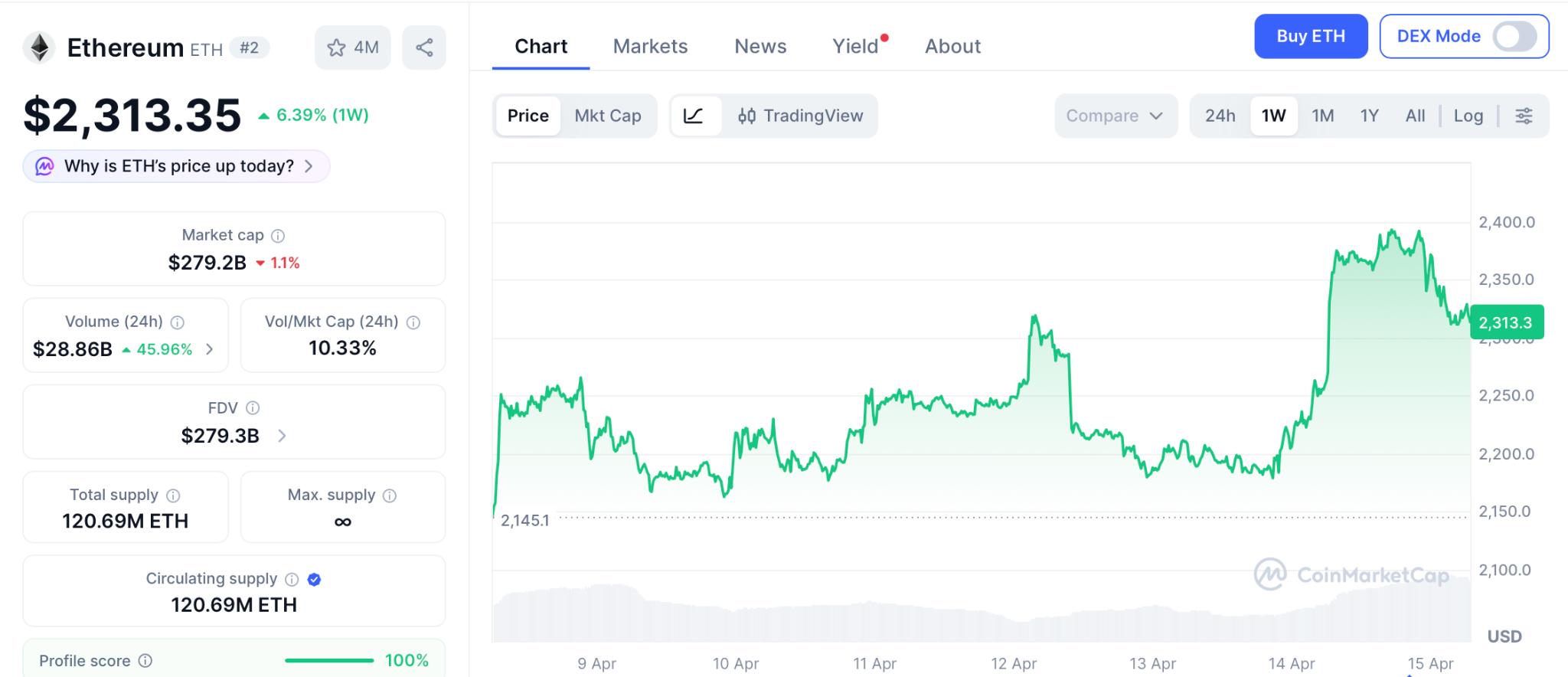
The ethereum price prediction just picked up a catalyst that shifts the math. The Ethereum Foundation launched a $1 million Audit Subsidy Program on April 14, partnering with Chainlink Labs and over 20 audit firms to cut security costs for builders according to CoinDesk. ETH jumped 8% to $2,313 the same day a ceasefire headline lifted the full crypto market.
Pepeto, the presale exchange project from the cofounder who built Pepe into an $11 billion token, keeps pulling wallets that move before headlines hit. While the ethereum price prediction aims at $4,000, the 150x setup around Pepeto creates a direct fight for the same capital.
Ethereum Price Prediction Picks Up Steam as the Foundation Doubles Down on Security
The Ethereum Foundation rolled out its Audit Subsidy backed by a $1 million pool, letting builders access security reviews through Areta’s platform according to CoinDesk. The initiative introduced CROPS principles for censorship resistance, open source, privacy, and security.
ETH trades near $2,313 after rallying 8% on the ceasefire bounce according to CoinGecko. Ethereum launched in 2015 near $0.30, and early buyers who held to the August 2025 peak at $4,946 grabbed over 16,000x. That is the exact math that pulled capital into ETH before anyone knew the name.
That history is impressive, but from $2,313, the ETH outlook counts gains in low multiples.
How the Ethereum Price Prediction, Pepeto Presale, and Security Upgrades Shape April
Pepeto: The Strongest Presale Running Right Now
Most buyers discover a token only after it already ran 10x or 100x. While the ETH forecast keeps traders locked to charts, Pepeto is the exchange built to get you positioned before the rally starts, not after it ends.
The platform is a full trading hub built to protect your capital. The contract scanner screens every token for buried scam code before your wallet gets near it, flagging risks most traders only discover after the money is gone.
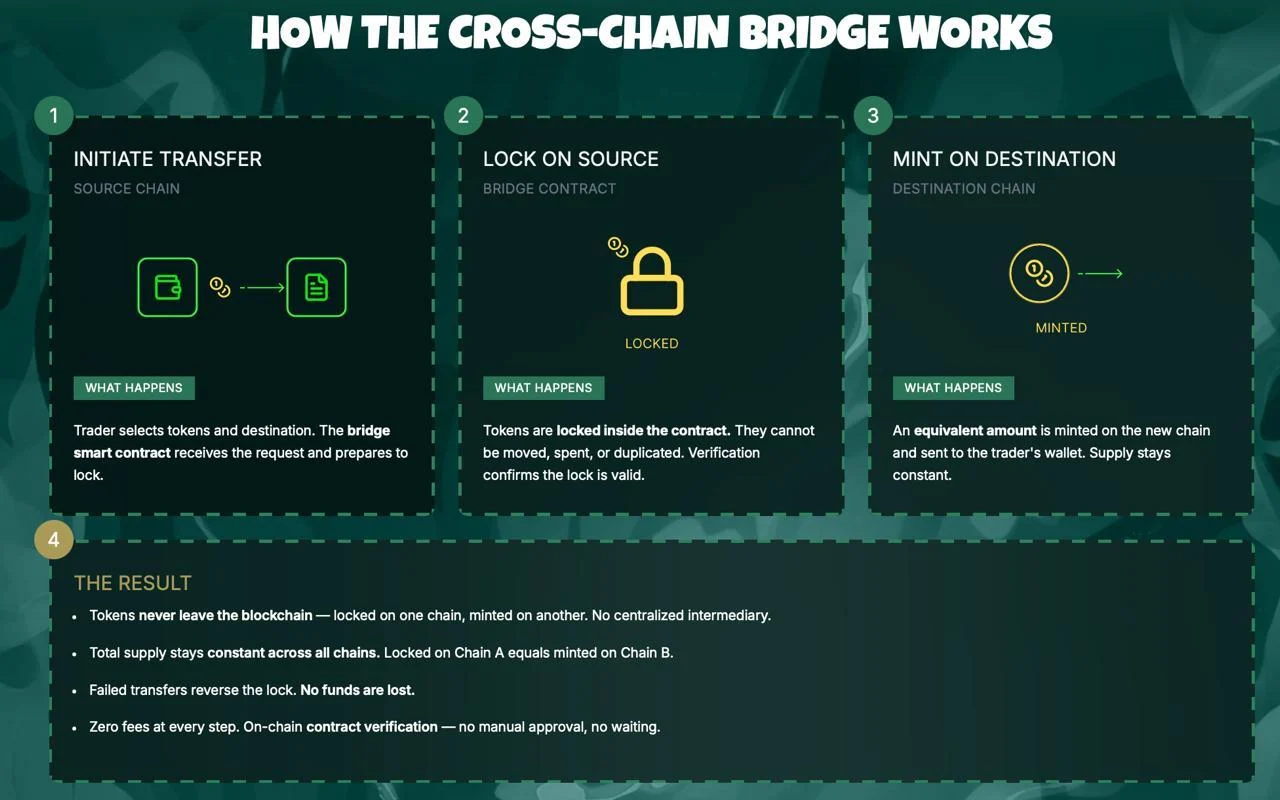
The exchange runs on three live tools. PepetoSwap fills trades at zero cost so your holdings build instead of bleeding. The scanner grades every contract for scam code in seconds. And the multi-chain bridge moves tokens across ETH, BNB, and SOL without taking a single fee.
The presale passed $9.04 million as the Binance listing gets closer. The cofounder who built Pepe to $11 billion is now shipping a real exchange. SolidProof reviewed the full codebase before round one went live, a former Binance team lead runs the technical side, and 183% APY staking grows positions daily at $0.0000001863.
Pepe hit $11 billion on hype alone. Reaching that cap from presale price equals over 150x, and Pepeto ships tools Pepe never had. ETH early buyers grabbed 16,000x by entering at $0.30 when nobody cared, and Pepeto sits in that same early window today. The wallets buying now are locking the positions the ETH forecast would take years to deliver, and every round that closes brings the presale closer to its end.
Ethereum (ETH) Price at $2,313 as Foundation Security Push and Institutional Flows Converge
Ethereum (ETH) trades near $2,313, sitting 52% below its all-time high of $4,946 with a market cap around $285 billion according to CoinMarketCap.
Changelly targets up to $2,618 for April, while CoinDCX projects $2,800 to $3,500 for the year. The ATH at $4,946 proves the token can reach those levels, and Standard Chartered’s $7,500 target gives the recovery real fuel.
But even the bull case at $4,000 is roughly 1.7x from here. That is solid for the second-largest crypto but not the move that changes a life. The ETH outlook pays off over quarters. The presale prints its return the day Binance opens the order book. For traders who want the best of both, the answer is clear.
Conclusion
The ethereum price prediction carries real weight. The Foundation’s security program strengthens the builder layer, and ETH’s rally history shows what early entries produce. But the biggest returns sit in a position bought at the ground floor, where a large cap at $2,313 cannot touch the multiples a presale at fractions of a cent delivers on listing day.
The Binance listing compresses that return into a short window, and wallets buying at presale pricing today hold the positions everyone else will chase once trading goes live. The Pepeto official website is where the ground-floor entry in the hottest exchange launch of this cycle is still available, but the clock is running out and this price will never come back.
Click to Visit Pepeto Website and Enter the Presale

FAQs
What is the ethereum price prediction for 2026 and can ETH reach $4,000?
Changelly targets $2,618 in April while CoinDCX projects $2,800 to $3,500 for the year. The ethereum price prediction toward $4,000 is backed by ETH reaching $4,946 in 2025, and the Foundation’s security push plus institutional ETF flows could fuel the move if macro conditions hold.
Can Pepeto beat the ethereum price prediction from presale pricing?
Pepeto at $0.0000001863 targets over 150x to the cap the same builder already reached with Pepe, a return ETH from $2,313 cannot deliver. The Pepeto official website is where that entry stays open until the Binance listing reprices everything.
Disclaimer: This is a Press Release provided by a third party who is responsible for the content. Please conduct your own research before taking any action based on the content.




The Senate passed a 10-day FISA extension 2026 by voice vote Friday, keeping the surveillance program alive until April 30 after a bloc of 20 House Republicans overnight derailed both a five-year and an 18-month renewal that Speaker Johnson and the White House had spent a week negotiating.
Summary
- Section 702 of the Foreign Intelligence Surveillance Act was set to expire Monday; the Senate’s rare Friday session approved the stopgap, sending the measure to Trump for signature.
- A 10-day extension was the last resort after the House failed 197-228 on a procedural vote for the 18-month plan, following an earlier collapse of a five-year extension with revisions.
- Trump had lobbied hard all week for a clean long-term renewal, posting on Truth Social urging Republicans to “UNIFY” and calling FISA vital to the Iran war campaign.
The Senate cleared a FISA extension 2026 stopgap by voice vote Friday morning, buying Congress until April 30 after an all-night collapse on Capitol Hill left two separate long-term renewal attempts in ruins. The measure goes to President Trump for signature before the program’s Monday expiration.
Section 702 allows US spy agencies including the CIA, NSA, and FBI to collect foreign communications without a warrant, including those of Americans in contact with targeted foreigners. Intelligence officials have called it the single most important national security tool the country has. “FISA is the single most important national security asset we have in the intelligence field,” said Sen. Angus King of Maine, a member of the Senate Intelligence Committee. “It constitutes a very high percentage of the president’s daily brief.”
Johnson entered Thursday evening believing a deal was in hand. Shortly before midnight, GOP leaders unveiled a revised five-year extension designed to win over privacy hawks. It failed. They then tried an 18-month clean renewal that Trump had demanded. That failed 197-228 on the procedural vote, with 20 Republicans joining most Democrats in opposition.
At 2:09 AM Friday, the House passed the 10-day stopgap by unanimous consent. The Senate convened a rare Friday session hours later and approved it the same way.
Trump had pressured Republicans all week through Truth Social posts, CIA Director John Ratcliffe briefed lawmakers directly on Wednesday, and a group of Republicans visited the White House on Tuesday. None of it held the bloc. “We were very close tonight,” Johnson said.
What Happens Before April 30
The core dispute is straightforward: privacy hawks want the government to obtain a warrant before querying Americans’ communications collected incidentally under Section 702. Intelligence officials say that requirement would cripple the program’s operational value.
The two-week window runs directly into the same compressed legislative calendar that is simultaneously managing the CLARITY Act markup, budget reconciliation, and the FOMC on April 28-29. Johnson will need to either negotiate a bipartisan compromise on warrants or muscle through a partisan solution while holding every non-rebel Republican, a task that looks harder after Thursday’s revolt.
As Rep. Ro Khanna of California put it: “We just defeated Johnson’s efforts to sneak through a 5-year FISA authorization tonight. Now, they will have to fight in daylight.” For the midterm calendar that governs everything in Washington in 2026, fighting in daylight means every Republican privacy hawk’s vote will be on record.
Flow Capital Partners is planning to tokenize its private credit fund through Singapore-based DigiFT, Bloomberg reported Friday, as the Hong Kong credit manager looks to tap blockchain-based distribution for its next capital raise.
According to the report, Flow Capital plans to bring its $150 million private credit fund on the blockchain through Singapore-based tokenization platform DigiFT by the end of April, seeking to raise an additional $30 million in tokenized shares by the end of 2026, Jacky Tian, chief investment officer of Flow Capital, said.
The $30 million raise is part of the company’s plans to expand the size of the fund to $250 million with a target net return of 12%. The fund launched in mid 2025, with $125 million in seed capital, according to the company. Cointelegraph has approached Flow Capital and DigiFT for comment.
The move adds to a growing push to use tokenization as a distribution channel for traditional credit products.
Some of the largest TradFi companies have announced similar tokenization initiatives, including asset manager BlackRock, which launched its BlackRock USD Institutional Digital Liquidity Fund (BUIDL), a tokenized treasury fund on Ethereum, in March 2024. Investment banking giant JPMorgan also launched its tokenized money-market fund, My OnChain Net Yield Fund (MONY), on Ethereum in December 2025.
However, industry leaders have raised misconceptions tied to the liquidity of tokenized assets.
Related: Gold, silver and oil drive 65,000% jump in commodity perpetuals
Executives warn tokenization isn’t liquidity
Oya Celiktemur, Ondo Finance sales director for Europe, said tokenization doesn’t magically make hard-to-trade assets liquid.
“I think there’s still this idea that tokenizing something illiquid will somehow magically make it a liquid asset, which is just not true,” said Celiktemur, speaking during a panel discussion at Paris Blockchain Week 2026.
Francesco Ranieri Fabracci, head of tokenization expansion at Tether, made a similar point, arguing that tokenizing an asset won’t make it liquid, but added that some instruments, including bonds, money market funds and stablecoin, will likely see consistent liquidity on blockchain rails.

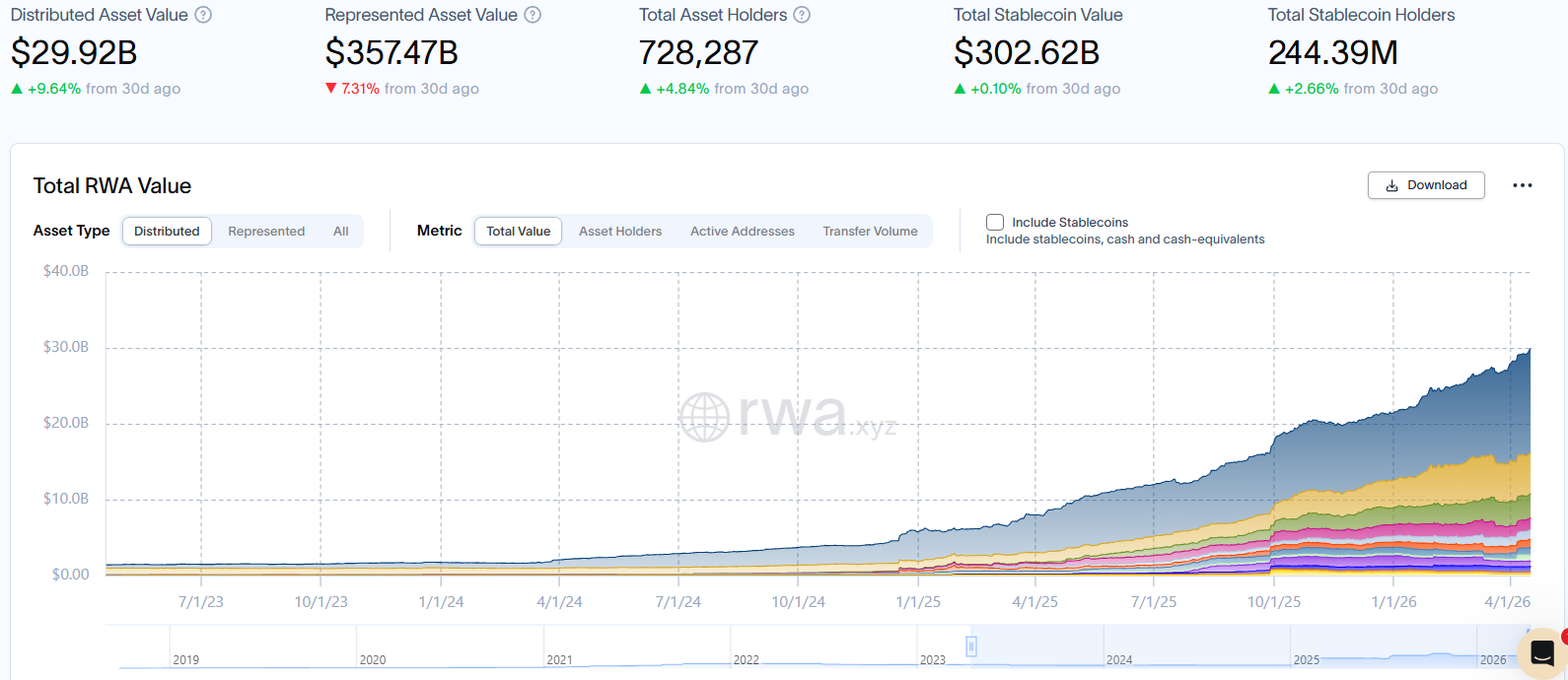
The total value of tokenized assets rose 9.6% during the past 30 days to $29.9 billion on Friday, data from RWA.xyz shows.
Tokenized US treasury debt was the largest sector with $13.7 billion in value, followed by commodities with $5.4 billion and asset-backed credit with $3.2 billion.
Magazine: Can Robinhood or Kraken’s tokenized stocks ever be truly decentralized?


Trump FEMA news took a sharp reversal Thursday when CNN reported the president plans to nominate Cameron Hamilton as FEMA administrator, less than a year after Hamilton was fired in May 2025 for testifying before Congress that the agency should not be eliminated, directly contradicting statements Trump and then-Homeland Security Secretary Kristi Noem had made.
Summary
- Hamilton, a former Navy SEAL who served four tours in Afghanistan, visited the White House Wednesday alongside new DHS Secretary Markwayne Mullin for a meeting with Trump; DHS said it has “no personnel announcements to make at this time.”
- If confirmed, Hamilton would become the first permanent FEMA administrator of Trump’s second term, ending 15 months of acting leadership through three different officials.
- The nomination reflects the administration’s pullback from Noem’s aggressive FEMA overhaul, which cut 30% of the agency’s workforce, cratered morale, and created a multibillion-dollar backlog in disaster funding that drew bipartisan backlash.
Trump FEMA news confirmed a significant policy reversal as CNN reported Thursday that President Trump plans to nominate Cameron Hamilton to lead the Federal Emergency Management Agency, roughly eleven months after Hamilton was removed from the acting administrator role following testimony that defended the agency’s existence against the administration’s own stated plans to dismantle it.
Hamilton was fired on May 8, 2025, a day after telling a House committee: “I do not believe it is in the best interests of the American people to eliminate FEMA.” White House Press Secretary Karoline Leavitt later said Hamilton “testified saying something that was contrary to what the president believes.” Multiple sources subsequently told CNN the decision to fire him had been in the works for weeks.
The agency Hamilton would return to is different from the one he left. Noem’s overhaul hollowed out its senior leadership, cut roughly 30% of the workforce, cratered morale across the organization, and produced what state and local officials nationwide called a multibillion-dollar backlog in approved but unpaid disaster assistance. Republican governors, Republican lawmakers, and emergency management professionals pushed back loudly. Trump fired Noem in March.
New DHS Secretary Mullin has been rolling back Noem-era directives, starting with a rule that required Mullin’s personal approval for any department spending over $100,000. Mullin has traveled to disaster-affected regions and praised FEMA’s capabilities publicly, striking a sharply different tone than his predecessor.
Hamilton in April wrote on X thanking Trump for his original opportunity to lead FEMA. “I wish my tenure had been longer, as there is still much more work to do for reform,” he wrote. “I am confident that under Mullin’s leadership, good things will come.”
Who Hamilton Is
Hamilton served four tours in Afghanistan as a Navy SEAL before supporting crisis response teams and the Bureau of Counterterrorism at the State Department. He then oversaw DHS’s emergency first responder division before being tapped to lead FEMA at the start of Trump’s second term.
His original tenure was defined by drama: a lie detector test ordered by DHS leadership, a leaked policy meeting discussing FEMA’s potential dissolution, and being accidentally tipped off to his own firing when FEMA security received a notification that his access would be terminated.
While Hamilton defended FEMA’s purpose in his 2025 testimony, he also argued the agency had “evolved into an overextended federal bureaucracy attempting to manage every type of emergency, no matter how minor,” a position that aligns with reform without abolition. That framing is more politically durable heading into a hurricane season that begins June 1 and runs until November, the same month as the midterm elections that the administration is preparing every major policy decision around.
The administration’s retreat on FEMA mirrors the same pattern seen on CLARITY Act negotiations and RFK Jr.’s vaccine messaging: positions that proved too aggressive for the electoral environment are being walked back before they become campaign liabilities.
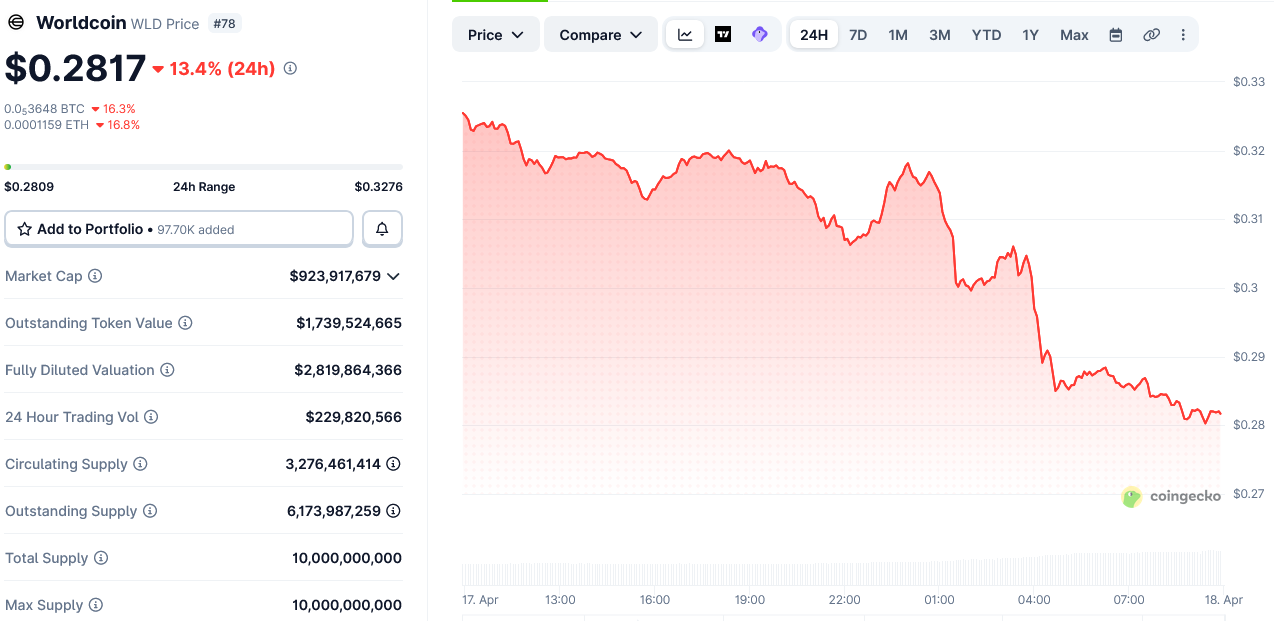
Worldcoin fell 13.4% to roughly $0.28 on Friday as World, the identity-focused company led by OpenAI CEO Sam Altman, unveiled several new integrations for its “proof of human” stack, which uses iris-scanning technology to verify identities.
Video conferencing tool Zoom is integrating World’s Deep Face authentication to prevent deepfakes, while electronic signature platform Docusign is adding World’s ID verification tech to digital agreements, World said on Friday. Dating app Tinder is also expanding its World ID verification to US users.
“As AI agents increasingly act on behalf of real people, the infrastructure to prove a human stands behind each agent becomes critical,” World said.
No more deepfakes on video calls. @worldnetwork identify verification on @Zoom. pic.twitter.com/0ap0IOKR6H
— World (@worldnetwork) April 17, 2026
Alongside the surge in AI-generated content, deepfake technology has been used in increasingly sophisticated impersonation scams, helping fraudsters evade standard ID checks and deceive victims into handing over funds or sensitive data.
While biometric verification has been touted as a solution, critics warn that collecting data at scale raises privacy risks, particularly if controlled by a single company, and could lead to excessive surveillance if misused.
Worldcoin’s (WLD) double-digit fall to $0.28 came as the broader crypto market rose 2.2% on news of the US and Iran easing tensions and opening up the Strait of Hormuz on Friday.
WLD is the native cryptocurrency token of the World Network, used to reward users for verifying their unique identity and to enable transactions and participation within its ecosystem.

World’s ID technology is mostly based on its Orb device, which scans a user’s iris to generate a unique digital identity used to verify they are human without revealing personal data.
Related: Why privacy coins often appear in post-hack fund flows
World has introduced an account-based system with features like key recovery and multi-device support for its proof of human stack, aimed at making verification more secure and portable.
Coinbase recently partnered with World to verify AI agents
Other recent World integrations include Amazon Web Services, Shopify, Browserbase, Exa, VanEck and Coinbase.
Coinbase announced that it would use World’s AgentKit, a developer toolkit that allows AI agents to prove they are linked to a verified, for its x402 AI agents micropayments protocol in March.
Magazine: AI agents will kill the web as we know it: Animoca’s Yat Siu

Fintech company Ramp Network said Friday it launched a multichain self-custodial wallet designed to tackle a common friction point in crypto of needing to rely on outside providers for core actions such as buying, swapping and cashing out.
The company said the wallet allows users to buy, sell, trade and cash out digital assets inside a single application, using Ramp’s own on-ramp, off-ramp and cross-chain infrastructure rather than handing users off to external services, according to an announcement shared with Cointelegraph.
Ramp said the wallet launches with support for Ether (ETH) across eight networks: Ethereum, Arbitrum, Base, Linea, MegaETH, Optimism, Polygon zkEVM and zkSync Era. It will also offer support for additional networks, including Bitcoin, Solana, Binance Smart Chain, Polygon, Apechain, Avalanche, Celo and Gnosis.
Simplifying self-custody remains one of crypto’s biggest product problems. Ramp is betting that bringing payments, swaps and cash access into one app can make non-custodial wallets feel less fragmented without taking control of user assets. Ramp said it uses USDC (USDC) on Base as a core balance for transfers, payments and in-app activity, while assets remain secured through a self-custodial setup using passkeys and optional key export.
Other crypto wallets that offer integrated decentralized exchange (DEX) features for asset purchases and swaps include Metamask, Phantom, Best Wallet and Exodus.

Wallet launches outside the EU
Ramp said the wallet will be available globally, excluding the European Union, due to regulatory requirements.
Ramp Network is authorized as a Crypto Asset Service Provider under the EU’s Markets in Crypto Assets Regulation (MiCA) since December 2025, according to the European Securities and Markets Authority’s MiCA register.
However, launching a product such as a wallet requires “additional regulatory steps,” which are expected to be finalized in the coming months, Przemek Kowalczyk, co-founder and CEO at Ramp Network, told Cointelegraph.
Ramp said it previously operated mainly as the infrastructure layer behind crypto purchases in partner apps, including MetaMask and Trust Wallet, serving more than 10 million users globally.
Related: Fireblocks launches tool for institutions to earn yield on stablecoins
Ramp pitches simpler self-custody flow
Kowalczyk said Ramp built the infrastructure itself so users would not have to leave the app to buy, swap or cash out, while still keeping control of their assets.
“We would not frame this as becoming a new intermediary, but rather as reducing the number of intermediaries involved in a transaction,” Kowalczyk said. “By bringing these flows into a single system, we reduce those handoffs and make the experience more consistent and predictable,” he added.
Kowalczyk argued that this unified wallet infrastructure will enable better execution control and simplify the fragmented wallet experience while users still maintain asset ownership.
Magazine: ‘Account abstraction’ supercharges Ethereum wallets: Dummies guide


Coinglass shows $2.221B of BTC longs below $73,610 and $913M of shorts above $81,264, turning the next $10K band into a $3.1B liquidation minefield for traders.
Summary
- Coinglass data indicate that if Bitcoin falls below $73,610, cumulative long liquidation intensity on major centralized exchanges jumps to about $2.221 billion.
- On the upside, a clean break above $81,264 would put around $913 million of shorts at risk of liquidation, turning a relatively small move into a potential $3.1 billion forced‑flow event.
- The new band extends an April pattern in which Coinglass maps have repeatedly shown billion‑dollar liquidation clusters just a few thousand dollars away from spot, magnifying every breakout or breakdown.
Bitcoin (BTC) is once again wedged between two large liquidation clusters, with leverage stacked just below and above current levels on major derivatives venues. According to the latest liquidation‑levels data from derivatives analytics platform Coinglass, “if BTC falls below $73,610, the cumulative long liquidation intensity on major CEXs will reach $2.221 billion,” while “if BTC breaks above $81,264, the cumulative short liquidation intensity on major CEXs will reach $913 million.”
Coinglass maps new BTC liquidation walls
Coinglass explains that its Bitcoin liquidation heatmap and liquidation‑levels indicator are designed to “estimate price ranges where large‑scale liquidation events may occur” by aggregating high‑leverage long and short clusters across futures and perpetual swaps. The firm stresses that the bars on its heatmap represent relative “intensity” rather than an exact dollar amount guaranteed to be wiped out, but notes that once price collides with a dense band, forced selling or buying can “cause sharp price movements and significantly impact traders’ positions.”
In a recent analysis highlighted by crypto.news, Coinglass’ Bitcoin liquidation map showed a similar setup lower down the chart, with a $1.143 billion long wall below $65,000 and a $754 million short pocket above $68,000, creating nearly $1.9 billion of potential forced flow in a narrow band. At that time, the platform described these areas as “sensitivity zones” that can turn a modest 5–7% move into a disproportionate liquidation cascade as exchanges automatically close margined positions.
The updated $73,610–$81,264 corridor effectively shifts that dynamic higher, suggesting leverage has chased Bitcoin’s rally rather than resetting. Coinglass’ Bitcoin liquidation dashboard shows that, on busy days, more than $200 million of BTC positions can be flushed in 24 hours, with peak liquidation hours often seeing single events above $10 million. Its separate “Top Liquidation Events” page ranks past days where total liquidations exceeded several billions of dollars, illustrating how quickly clustered leverage can turn into historic wipeouts.
By combining the liquidation‑levels indicator with the BTC/USDT liquidation heatmap on Binance, Coinglass says traders can “identify key support and resistance areas, manage risk with informed stop‑loss levels, and gain insights into market sentiment and potential volatility zones.” In practice, that means anyone running high leverage into the $73,610 downside or the $81,264 upside is effectively betting they can front‑run a multi‑billion‑dollar liquidation wave rather than be swept up in it.
As previous crypto.news coverage has noted, similar leverage clustering has already appeared across Bitcoin and Ethereum this month, with ETH liquidation bands around $2,000 and $2,451 threatening more than $2.5 billion in combined longs and shorts at various levels. A recent Bitcoin‑focused story on liquidation maps flagged $65,000 as key support and $68,000 as a squeeze zone before spot pushed higher into today’s range.
Additional crypto.news reporting on derivatives stress includes deep dives into ETH’s near‑$2,000 “trapdoor” heatmap and the $2,451 ETH liquidation wall that threatens $1.47 billion in short positions. For traders tracking Bitcoin specifically, the crypto.news BTC price page provides live quotes, market cap and derivatives metrics alongside levels like $73,610 and $81,264.

TLDR:
- Bitcoin surged over 16% in two weeks, breaking a six-month resistance level and shifting market structure outlook.
- BTC moved above the 100-day SMA after prior rejections that triggered declines of 30% and 39% in past cycles.
- Momentum indicators turned positive with a bullish crossover, while volatility expands after a long compression phase.
- Market developments, including institutional access and profitability shifts, continue to support current price strength.
Bitcoin has staged a sharp recovery, climbing more than 16% in two weeks and reclaiming a key resistance level. The move follows months of pressure, while both technical indicators and broader market developments begin to support a shift in short-term direction.
Bitcoin Pushes Through Key Resistance as Momentum Builds
Recent market commentary from Ali Charts noted that Bitcoin has broken above a resistance level that defined price action for nearly six months.
The analyst pointed out that this marks a notable change, especially as the asset tests the 100-day simple moving average again.
Earlier interactions with this level resulted in steep declines. In October, Bitcoin dropped about 30% after rejection.
A similar pattern appeared in January, when price fell roughly 39% following another failed attempt. This time, price action shows a different response, with Bitcoin moving through the level instead of reversing.
At the same time, broader market developments are shaping the current trend. A recent update reported that Strategy’s Bitcoin holdings have returned to profit, as price climbed above its average acquisition level of $75,577. This shift reflects improved balance sheet positioning for large holders.
In parallel, Charles Schwab plans to roll out direct spot Bitcoin and Ethereum access for retail clients in the coming weeks.
This step may expand access to digital assets for traditional investors, adding another layer of demand to the market.
These developments align with the current market structure, where Bitcoin trades near $77,900. Price has been forming higher lows, which often reflects steady buyer interest. This gradual climb suggests a shift from the earlier bearish structure toward a more stable upward trend.
Technical Indicators Signal Early Trend Transition
The daily chart structure shows a clear transition phase. After a prolonged decline from around $110,000 to $75,000, Bitcoin entered a sideways range between $65,000 and $75,000. During this period, Bollinger Bands tightened, indicating reduced volatility and a possible accumulation phase.
As price exited this range, volatility began to expand again. Bollinger Bands are now widening, which often accompanies stronger directional moves. Bitcoin is currently approaching the upper band near the $78,000 zone, where short-term resistance may appear.
Momentum indicators also reflect a change in direction. The oscillator, similar to a MACD-style setup, previously showed deep negative readings, signaling strong selling pressure. That has since reversed, with the indicator crossing above zero and forming a bullish crossover.
The histogram has turned positive and continues to grow, which suggests increasing upward momentum. This shift is often associated with early stages of trend reversal rather than a temporary bounce.
Even so, resistance remains close. If Bitcoin struggles near the $78,000 to $80,000 range, a pullback toward the mid-band near $75,000 could follow. Stronger support remains near $70,000, where previous demand emerged during consolidation.
If price holds above current levels and breaks resistance, the next areas to watch are $85,000 and $90,000. These levels align with prior structural zones and may attract increased market activity.
The current setup reflects a transition from consolidation into a potential expansion phase. With both technical structure and supporting market developments aligning, the market is attempting to establish a new direction.
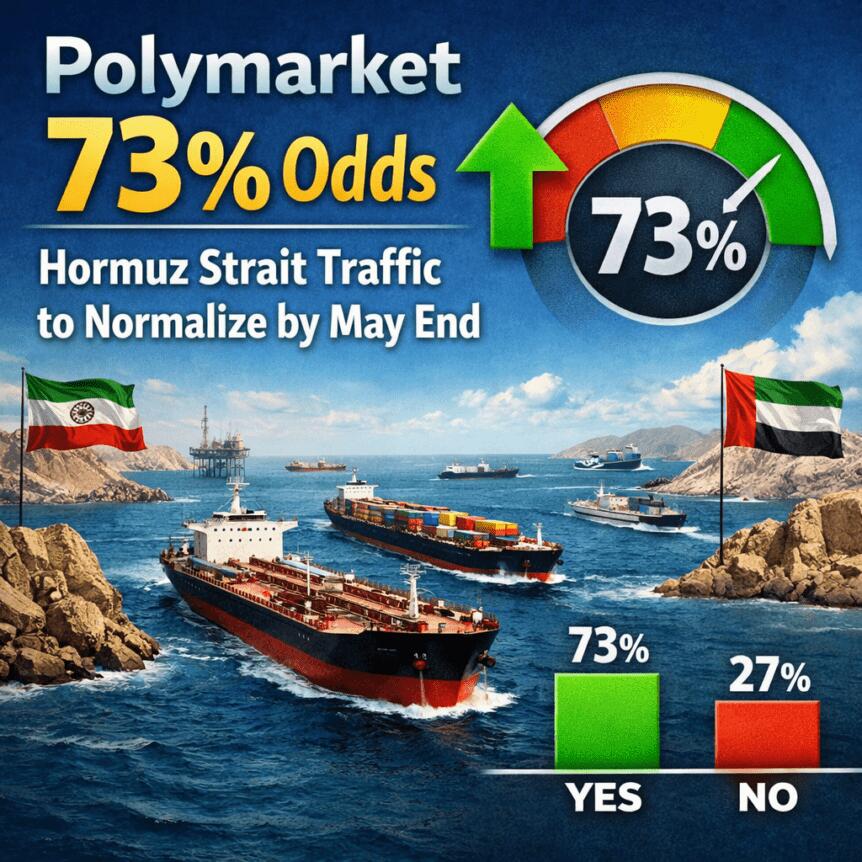
A temporary ceasefire between the United States and Iran sparked a notable, though tentative, market reaction as traders positioned around the Strait of Hormuz. Polymarket’s prediction-market odds on traffic through the strait returning to normal surged, reflecting optimism that the ceasefire could hold long enough to ease regional tensions.
The odds climbed to a high of 82% on Friday after Iranian Foreign Minister Seyed Abbas Araghchi announced that the Strait of Hormuz was open. They later cooled, settling at about 73% as further statements emerged. Araghchi’s message was conveyed in an X post, stating: “The passage for all commercial vessels through the Strait of Hormuz is declared completely open for the remaining period of the ceasefire, on the coordinated route as already announced by the Ports and Maritime Organization of the Islamic Republic of Iran.”
In the meantime, traders on Polymarket had previously priced in a more cautious outlook, with odds of a return to normal activity by the end of April at around 40%. The divergence between these two points highlights the evolving uncertainty around the durability of the ceasefire and its broader impact on global supply chains.
The news came as the war in Iran reverberated through financial markets, influencing both crypto and energy assets as investors reassessed risk premia and geopolitical risk. That backdrop set the stage for a volatile session across digital assets even as traditional energy proxies moved in response to shifting oil supply expectations.
Bitcoin advances on ceasefire news, but the outlook remains fragile
Bitcoin (BTC) registered a notable, albeit brief, lift in response to the ceasefire developments, briefly tapping around $78,000 before retreating to roughly $77,358 at the time of reporting. The move underscored how geopolitical headlines continue to correlate with crypto sentiment, even as the broader macro picture remains unsettled.
“The passage for all commercial vessels through the Strait of Hormuz is declared completely open for the remaining period of the ceasefire, on the coordinated route as already announced by the Ports and Maritime Organization of the Islamic Republic of Iran.”
Market observers highlighted that while the immediate reaction was supportive for risk-on assets, the longer-term trajectory was far from assured. Nic Puckrin, a crypto market analyst, described the ceasefire as fragile and fraught with unresolved core issues. He noted that a sustained absence of tensions, a meaningful drop in oil prices toward roughly $80 per barrel, and softer-than-expected economic data would all help BTC regain a higher level, potentially near $90,000.
“A ceasefire that results in the end of geopolitical tensions, a sustained drop in oil prices toward $80, and ideally also softer-than-expected economic data that calms stagflation fears” are all needed for BTC to reclaim the $90,000 level, he said. The market’s sensitivity to oil dynamics underscores how intertwined crypto and energy narratives have become in periods of heightened geopolitical risk.
Beyond the chart dynamics, the political backdrop remains a key driver. U.S. President Donald Trump stated that the naval blockade on Iran would “remain in full force and effect” until the transaction with Iran is 100% complete, a stance that keeps the risk of renewed escalation in focus for traders and policymakers alike.
Analysts emphasize that a durable resolution would likely require more than a short-term pause: it would demand progress on broader regional issues, verification mechanisms, and a credible path to de-escalation that reduces volatility across asset classes, including risk assets tied to geopolitical risk premiums.
What this means for investors and markets going forward
The current cycle illustrates a central truth about crypto markets in times of geopolitical strain: risk-on flows can emerge on partial news, but the sustainability of price moves hinges on the durability of peace signals and the broader macro regime. If the ceasefire endures and oil markets stabilize, appetite for crypto risk could improve further, potentially lifting BTC back toward earlier highs. Conversely, if tensions re-ignite or if the ceasefire proves short-lived, the same assets may retreat as investors gravitate toward safety and risk-off positioning.
Market participants will also be watching how policymakers respond to evolving conditions. The prospect of delayed rate cuts—if economic data softens and inflation remains sticky—could influence BTC’s risk premium and its ability to attract new entrants seeking inflation-hedge or digital-asset diversification benefits. The interplay between geopolitics, energy prices, and crypto demand will likely shape the trajectory of Bitcoin and related assets through the coming weeks and into mid-2026.
In the near term, traders should monitor several cross-currents: the durability of the ceasefire, any new statements from Iran or its interlocutors, and the oil-price path as markets digest the potential implications for supply and global growth. As with prior episodes, the path forward is unlikely to be linear, with volatility flagging opportunities for traders who can adapt quickly to shifting signals about risk appetite and macro stability.
For investors, the episode underscores the importance of a diversified approach to exposure amid geopolitical uncertainty. Crypto markets remain sensitive to policy signals, while traditional energy dynamics continue to color risk sentiment across multiple asset layers. As the situation evolves, market participants will look for clearer, verifiable concessions and longer-lasting guarantees that could translate into steadier price action for both digital assets and energy-linked markets.
Readers should stay tuned for further developments on the ceasefire’s longevity, any changes to Hormuz traffic flow, and the potential shifts in oil and macro indicators that could recalibrate the risk-reward calculus for crypto portfolios in the months ahead.


An ICE agent charged 2026 with two counts of felony second-degree assault faces a nationwide arrest warrant after allegedly pointing his duty weapon at the heads of two civilians in a moving vehicle during the Trump administration’s Operation Metro Surge, Hennepin County Attorney Mary Moriarty announced Thursday.
Summary
- Gregory Donnell Morgan Jr., 35, a Maryland resident and ICE Enforcement and Removal officer, allegedly pulled alongside a civilian vehicle on a Minneapolis highway shoulder on February 5 and pointed his weapon directly at the driver and passenger.
- This is the first criminal case against a federal immigration officer stemming from Operation Metro Surge, which deployed approximately 3,000 federal agents to the Minneapolis-St. Paul area and was linked to the fatal shootings of two US citizens.
- Moriarty said Morgan acted “well beyond the scope” of federal authority and that “there is no such thing as absolute immunity for federal agents who violate the law in the state of Minnesota.”
An ICE agent charged 2026 with felony assault in Minnesota marks the first criminal case against a federal officer from Operation Metro Surge, the Trump administration’s largest immigration enforcement operation, which deployed about 3,000 agents to the Minneapolis-St. Paul area between December and February and left two US citizens dead.
Gregory Donnell Morgan Jr. allegedly drove an unmarked SUV on a highway shoulder on February 5 past slower traffic, then pulled alongside a civilian vehicle and pointed his duty weapon directly at both occupants while continuing to drive. The victims called 911 and filmed the Utah license plate on the SUV, which investigators traced to a rental linked to Morgan’s ICE partner.
Morgan gave a voluntary interview to Minnesota State Patrol after the incident, telling investigators he feared for his safety when the victims’ car pulled in front of him. He said he drew his weapon and yelled “Police! Stop!” Investigators noted the victims could not hear him because their windows were up and had no way to identify him as a law enforcement officer.
“For a federal agent, our opinion is that illegally driving on a shoulder, pulling up to a car and pointing a gun at the heads of two community members who are not doing anything at the time is well beyond the scope of their authority,” Moriarty said. The charges carry a maximum sentence of up to seven years in prison per count under Minnesota law.
Federal Response and What This Means for Operation Metro Surge
The Department of Homeland Security did not respond to requests for comment. Acting Attorney General Todd Blanche has previously warned that the DOJ could investigate and prosecute state and local officials who arrest federal agents for performing official duties. Moriarty said Thursday that she is “not concerned about blowback” and that her office would hold people accountable under Minnesota law regardless.
Operation Metro Surge was described by DHS as its largest immigration enforcement operation ever. The surge led to thousands of arrests and drew mass protests across the Twin Cities. Two US citizens, Alex Pretti and Renee Macklin Good, were shot and killed by federal officers during the operation. Trump fired Noem in March shortly after the surge ended, and Border Patrol sector chief Gregory Bovino announced his retirement the same month. Minnesota is separately suing the federal government for access to evidence in the three shooting cases.
The Morgan case moved faster than the shooting investigations because, Moriarty said, “virtually none of the obstacles around evidence collection that exist for the January shootings exist in this case.” A video and a license plate produced a clear evidentiary path. The shooting cases involving Pretti and Good remain under investigation.
The charges arrive at a moment when the administration’s immigration enforcement record is becoming a central midterm issue, with Democrats using controversies like this to keep pressure on vulnerable House Republicans whose votes will determine whether the CLARITY Act and other reform legislation can pass before the November election.
For most of 2025, altcoin holders were waiting. Watching Bitcoin climb to a new all-time high near $126,000, they expected what had always followed — the familiar rotation, the altcoin surge, the season that rewards patience with explosive gains. It never came.
Benjamin Cowen, founder of IntoTheCryptoverse, wasn’t surprised. He had a name for what was happening, and it changed everything.
“This is a cycle where Bitcoin topped on apathy rather than euphoria.”
That single phrase explains more about the 2025 cycle than any price target or on-chain metric. And to understand why, you need to follow the data across four charts — from social sentiment, through market structure, all the way to the deepest layers of the global macro economy.
The Top That Looked Normal, But Wasn’t
Bitcoin did exactly what it always does. It peaked in Q4 of the post-halving year, right on schedule, consistent with every prior four-year cycle. On the surface, nothing was broken. Look closer, however, and something was fundamentally different.
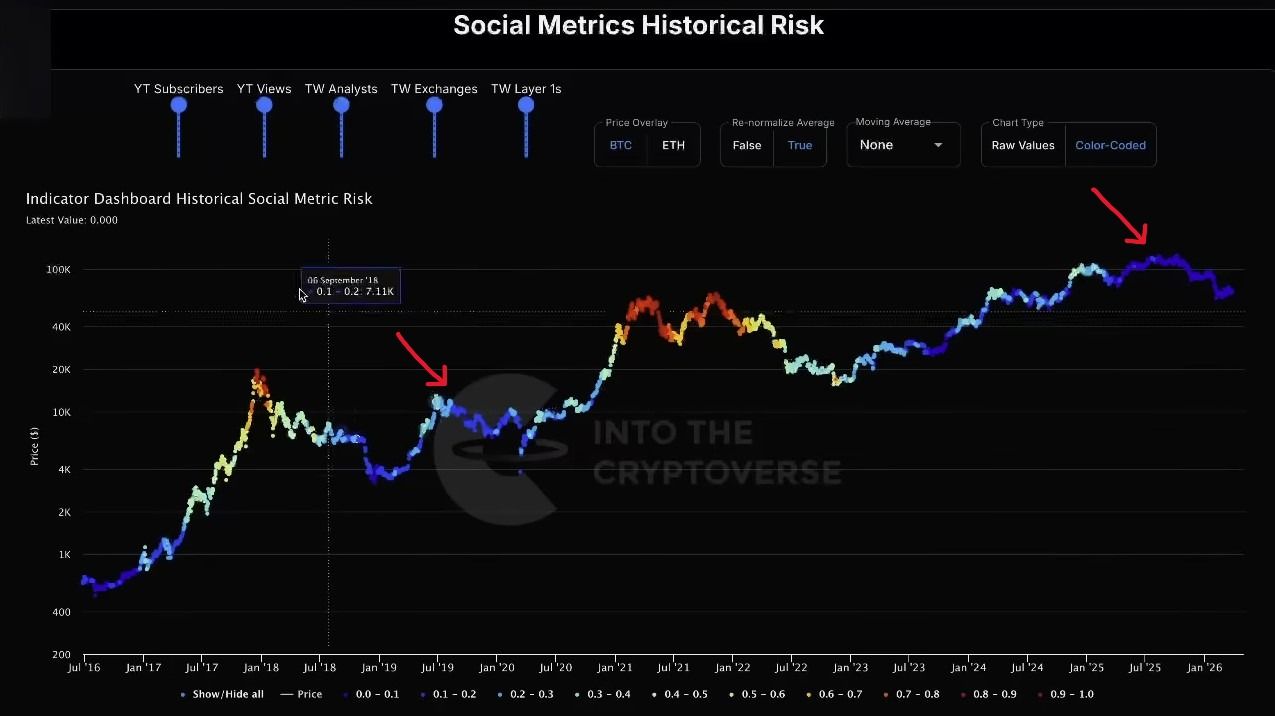
Cowen’s Social Metrics Historical Risk chart tells the story visually. The chart color-codes Bitcoin’s price history by the level of social engagement at each point in time — warm colors (red, orange) for high engagement, cool colors (blue) for low.
In 2017 and 2021, Bitcoin topped in a blaze of red and orange. Social interest was at peak levels. Retail was flooding in. Everyone was talking about crypto.
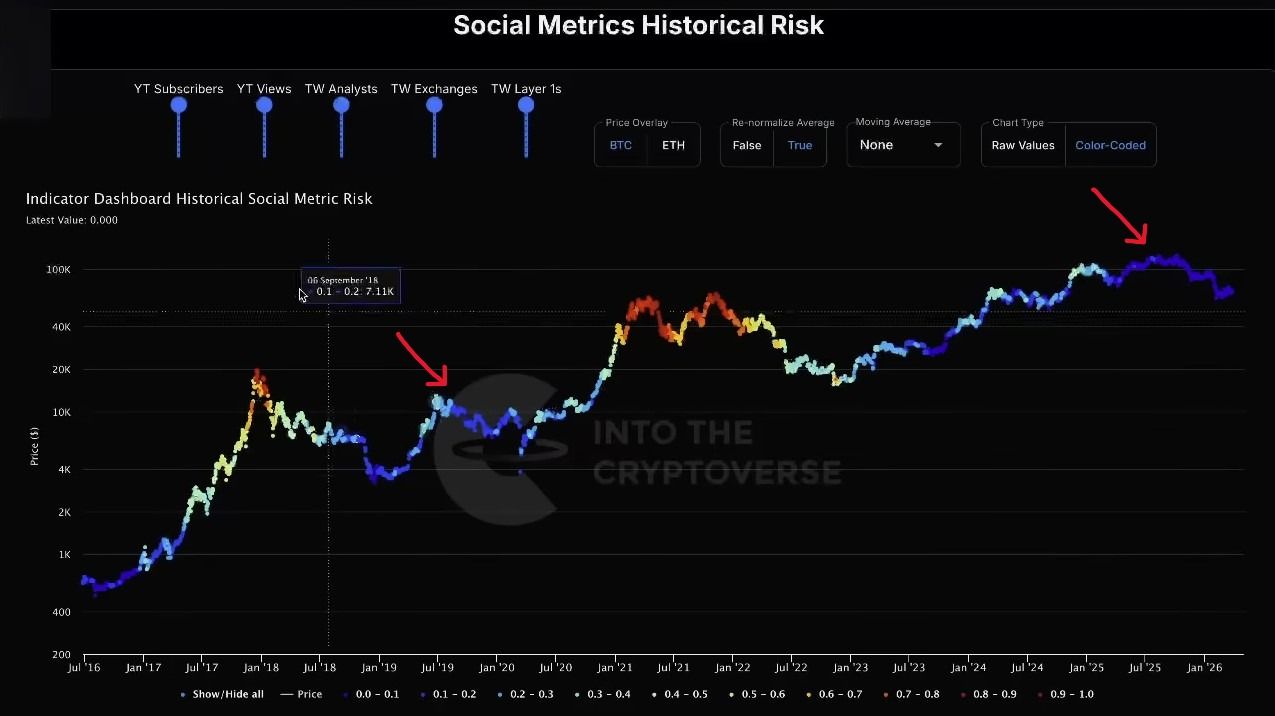
In 2025, Bitcoin printed its all-time high in cold blue. Social engagement was near-historic lows at the exact moment the market reached its peak.
No retail frenzy or mainstream headlines are driving fresh money in. Just a quiet, almost invisible top — what Benjamin Cowen defines as apathy.
“In 2017 and 2021 we topped on euphoria and because we topped on euphoria there was a rotation into the higher risk assets — altcoins. But when you top on apathy you don’t get that same rotation.”
The only other time this happened was in 2019. That observation is where everything begins.
Benjamin Cowen: Why Apathy Kills the Altcoin Season
In a euphoric cycle, the sequence is predictable. Bitcoin tops, early investors take profits, and that capital rotates into higher-risk assets — altcoins. The crowd, still buzzing with excitement, chases the next opportunity. Alt season follows almost mechanically.
Apathy breaks that sequence entirely. When Bitcoin tops on indifference rather than excitement, there is no crowd waiting to rotate.
The retail wave that normally fuels altcoin rallies simply never arrived. And without new buyers entering the market, altcoins have nowhere to go but down.
Cowen puts it with characteristic bluntness:
“But when you top on apathy, like in 2019, you don’t get that rotation. And the reason you don’t get that rotation is that there’s just no one left to sell the altcoins to.”
The consequence is visible in the altcoin total market cap chart. Rather than the sharp post-Bitcoin rotation that altcoin holders were expecting, the chart shows something more painful — a slow, relentless bleed. Altcoins losing ground to Bitcoin not just in the bear market, but throughout the entire cycle, both during the bull run and after it ended.
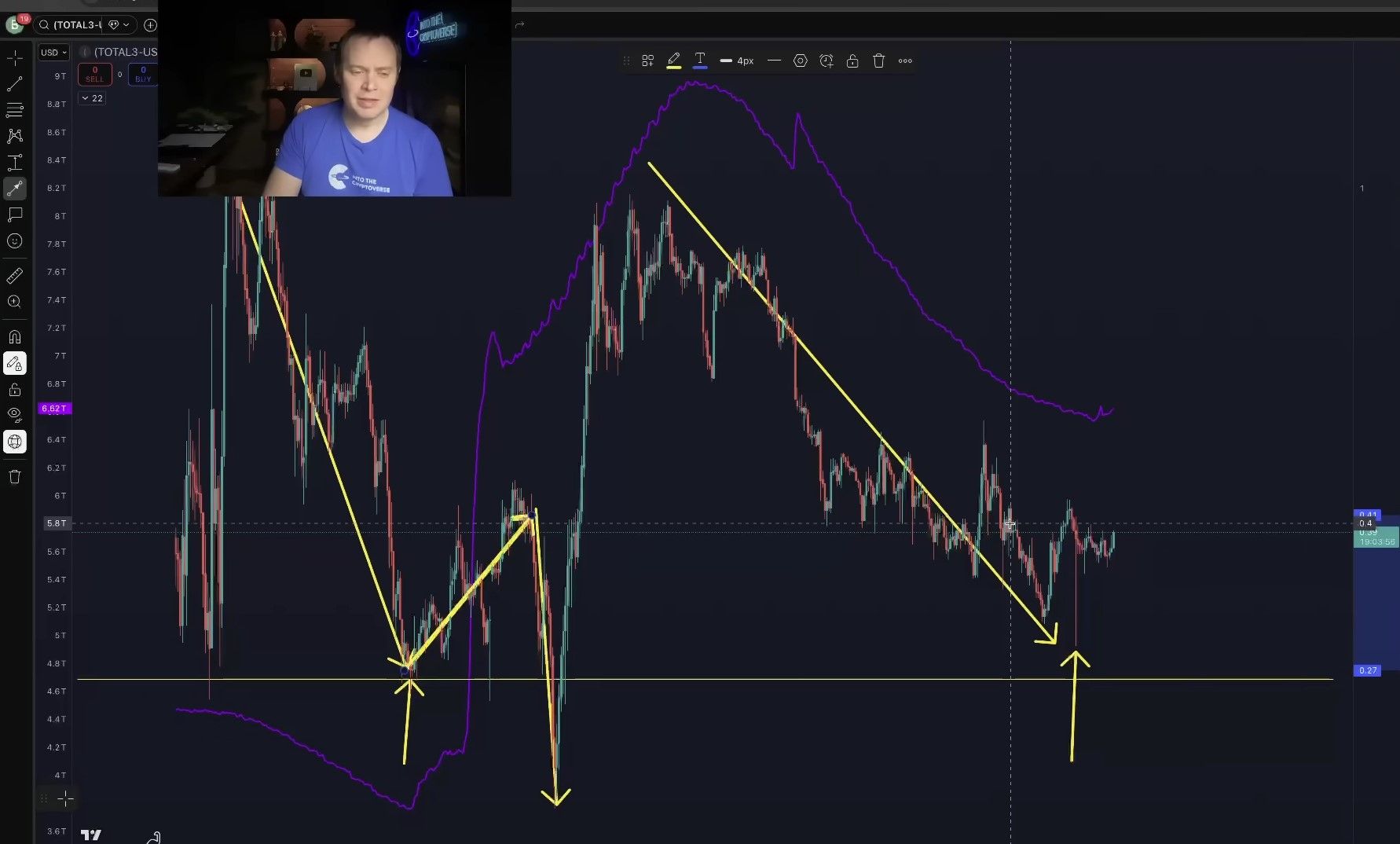
This is not a coincidence or bad luck. It is a direct consequence of the macro environment in which this cycle occurred.
The Macro Context: 2019 and 2025 Show the Same Story
Most crypto analysts treat Bitcoin as its own ecosystem, governed purely by halving cycles and on-chain mechanics. Benjamin Cowen argues that it is only half the picture.
The global business cycle — the broader rhythm of economic expansion, late-cycle stress, and recession — shapes not when Bitcoin tops, but how investors behave when it does.
His Business Cycles chart, built by normalizing a composite of S&P 500 performance, unemployment, interest rates, inflation, and M2 money supply, makes the argument visually.
From Bitcoin’s earliest days through approximately 2019, the macro environment was in an early business cycle phase — the long recovery following the 2008 financial crisis. Risk appetite was structurally high. Investors were willing to climb the risk ladder, moving from equities to Bitcoin to altcoins.
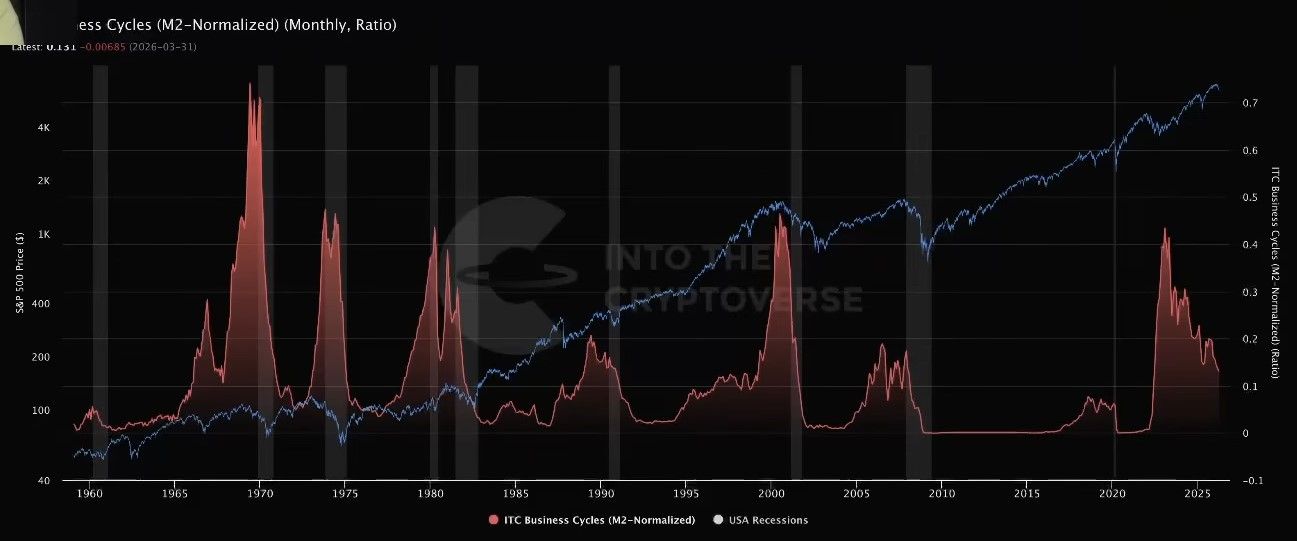
In a late business cycle environment, that risk appetite reverses. Investors don’t reach for more risk — they pull back from it. They consolidate into quality. In crypto terms, that means Bitcoin, not altcoins. It explains why, in both 2019 and 2025, altcoins bled to Bitcoin even as Bitcoin itself was still rising. The macro environment was actively working against the rotation altcoin holders had been counting on.
“The reason why this cycle feels different is because this is a late business cycle environment. And the only other time we had a late business cycle environment where altcoins bled out to Bitcoin even after Bitcoin topped without a rotation was actually in that 2019 phase.”
The Liquidity Risk chart adds a second layer of confirmation. With liquidity risk currently sitting at 0.789 — firmly in the “Very Tight” zone — the conditions mirror those of the 2008 financial crisis and the 2018-2019 period almost precisely. Tight liquidity environments are not environments where investors chase speculative assets. They are environments where capital retreats to safety.
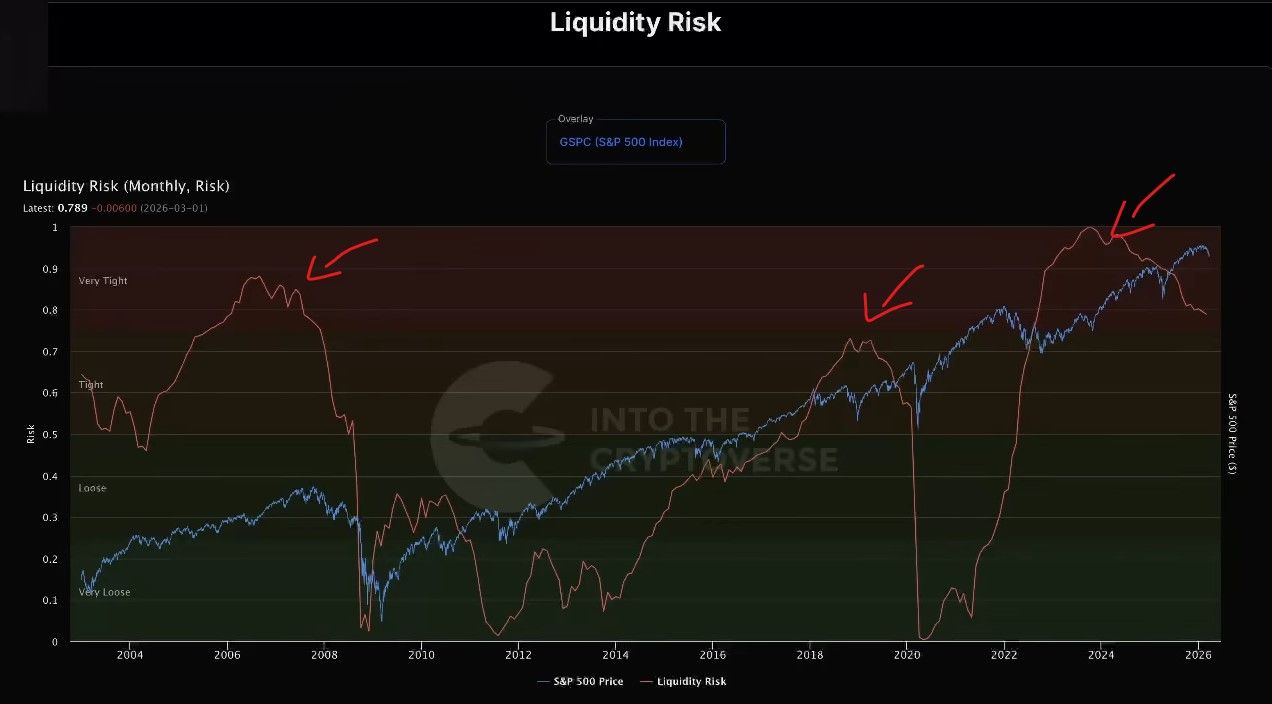
The symmetry between 2019 and 2025 goes deeper still. In 2019, Bitcoin topped in June — two months before quantitative tightening ended in August. In 2025, Bitcoin topped in October — two months before quantitative tightening ended in December. Same pattern, same spacing, larger scale.
“What’s happening now is just a larger version of what happened in 2019. It just happens to all line up.”
What Comes Next for Benjamin Cowen
The 2019 parallel is not a perfect map, but it is the most honest one available. The four-year cycle remains intact — Bitcoin tops when it always tops, and it will bottom when it historically bottoms, approximately one year after the peak. That places the base case for a cycle low in October 2026.
What this cycle has revealed, more clearly than any before it, is that the crypto market does not exist in isolation. The business cycle, liquidity conditions, and investor risk appetite are not background noise — they are the environment in which every crypto decision plays out. In an early cycle, rising risk appetite carries altcoins higher.
In a late cycle, retreating risk appetite leaves them behind.
Benjamin Cowen’s thesis is not a bearish call for its own sake. It is a framework for understanding why this cycle felt different — and why, for those who understood the macro context, it was never really a surprise.
The altcoin season didn’t fail. It was never going to arrive. Not in this environment. Not in this cycle.
The post Benjamin Cowen Reveals Why The Altcoin Season Never Came appeared first on BeInCrypto.

Free NHS dental treatment in Scotland and who qualifies – full list

Irdai keeps FY27 cession rate at 4%, backs GIC Re role

Senate Passes 10-Day FISA Extension


-
 NewsBeat5 days ago
Pep Guardiola and Gary Neville agree over Arsenal title problem that benefits Man City
-

 Crypto World4 days ago
The SEC Conditionalises DeFi Platforms to Be Avoided for Broker Registration
-

 Politics5 days ago
World Cup exit makes Italy enter crisis mode
-

 Crypto World4 days ago
SEC Signals Exemption for Crypto Interfaces From Broker Registration
-

 News Videos3 days ago
Secure crypto trading starts with an FIU-registered
-

 Sports17 hours ago
NWFL Suspends Two Players Over Post-Match Clash in Ado-Ekiti
-

 Crypto World4 days ago
SEC Proposes Certain Crypto Interfaces Don’t Need to Register as Brokers
-

 Business6 days ago
Ireland Fuel Protests Enter Day 5 as Blockades Spark Shortages and Government Prepares Support Package
-

 NewsBeat4 days ago
Trump and Pope Leo: Behind their disagreement over Iran war
-
 NewsBeat6 days ago
JD Vance announces ‘no agreement’ with Iran over nuclear weapons fear
-

 Fashion8 hours ago
Weekend Open Thread: Theodora Dress
-

 Crypto World3 hours ago
Russia Pushes Bill to Criminalize Unregistered Crypto Services
-
Sports6 days ago
Dexter Lawrence, Stefon Diggs, Trading for De’Von Achane
-

 Crypto World5 days ago
Trump whales load up ahead of Mar-a-Lago luncheon.
-
Crypto World5 days ago
Sei Network Enters Quiet Reset Phase as On-Chain Metrics Signal a Slowdown in 2026
-
Business5 days ago
Kering slides after Morgan Stanley downgrade, Gucci woes loom
-
 Entertainment4 days ago
Karol G’s ‘Ultra Raunchy’ Coachella Set Gave ‘Satanic Vibes’
-
 Business1 day ago
Creo Medical agree sale of its manufacturing operation
-

 Sports5 days ago
NWFL opens Pathway for new Clubs ahead of 2026 Season
-
 Entertainment4 days ago
Brand New Day’ Footage Reveals the Devastating Impact of ‘Now Way Home’
You must be logged in to post a comment Login