
Crypto World
Ethereum Proposal Seeks to Cap ETH Staking at 50% of Supply


A group of Ethereum contributors has proposed EIP-8361 as a way to reduce staking incentives to ensure that no more than 50% of the supply is locked up by validators.
That proposal has triggered a heated debate over whether Ethereum should prioritize lower issuance or maintain staking incentives for network participation and DeFi activity.
EIP-8361 Targets Rising Staking Levels
On August 4, Ethereum developer Jerome de Tychey announced the submission of EIP-8361, titled “Tapered Issuance Burn,” alongside contributors including Pintail, Dapplion, Pa7x1, Ladislaus0x, and Justin Drake.
In a series of posts on X, de Tychey argued that Ethereum’s current staking model has no point where incentives naturally slow down. He also noted that the staking ratio passed one-third of the ETH supply in April 2026 and continues to rise.
“The incentive to stake never switches off. Where does it stop? It doesn’t,” he wrote.
According to him, the current reward curve could lead to more than 70 million ETH being staked by January 2028, representing more than 55% of supply. He said the validator entry queue is already operating at maximum churn, adding around 1.75 million ETH per month under current conditions.
The proposal would change the situation by burning part of validator rewards as staking participation rises. The burn rate would gradually increase until it reaches 100% when around half of the ETH supply is staked. Under the proposal, staking yield would eventually fall to zero at a 50% staking ratio.
According to de Tychey, the goal is to eliminate the “artificial yield floor” and let the market decide on staking rewards depending on risk. In his view, staking that is too high may lead to security issues since it will push smaller validators out while concentrating ETH among large custodians and staking providers.
The proposal would not change validator duties or execution-layer income. De Tychey said the change requires only one new permanent constant and a consensus-layer adjustment, with Prysm already having a draft implementation of around 300 lines of code.
Community Reacts
The reaction from Ethereum users and builders has been divided. Lawyer Gabriel Shapiro criticized the proposal, calling it ‘a huge distraction” from efforts that could increase demand for ETH.
Aave founder Stani Kulechov stated that rather than decreasing staking rewards, Ethereum should concentrate on privacy, scaling, security, stablecoins, decentralized finance, and real-world assets. Ether.fi’s Mike Silagadze, on his part, opposed the proposal on the basis that lowering rewards could hurt solo stakers and reduce activity across DeFi applications that rely on staking-based strategies.
A CryptoQuant report from July pointed to record staking levels, with around 40 million ETH locked by validators. The firm noted that long-term holders were continuing to stake ETH even as market sentiment remained weak.
Supporters of EIP-8361 argue that reducing issuance could protect ETH holders from dilution and prevent liquid tokens from becoming the dominant form of ETH exposure. One of them, MilliΞ wrote that if everyone stakes, the effective yield approaches zero because everyone owns the same share of supply.
The post Ethereum Proposal Seeks to Cap ETH Staking at 50% of Supply appeared first on CryptoPotato.

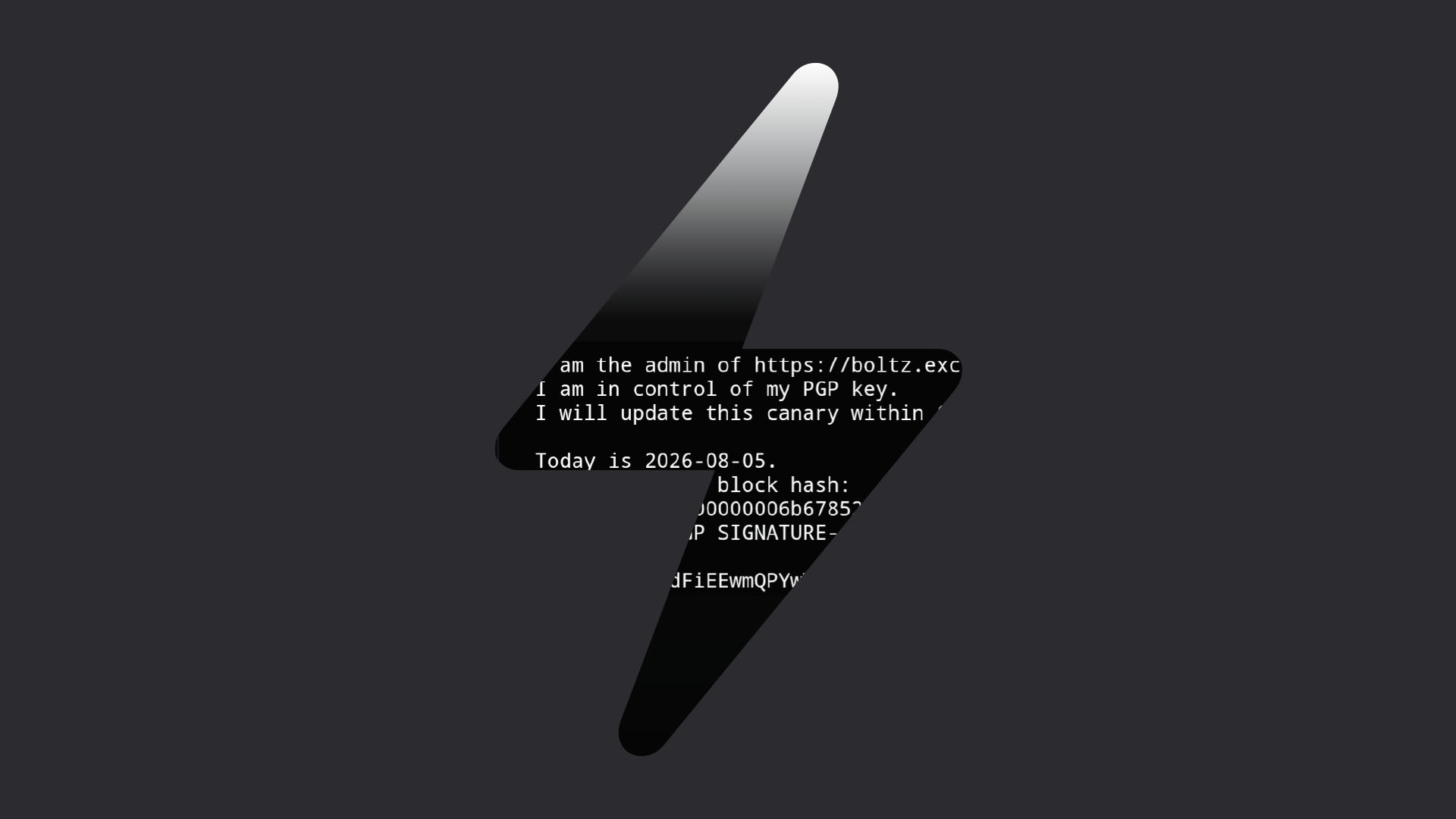
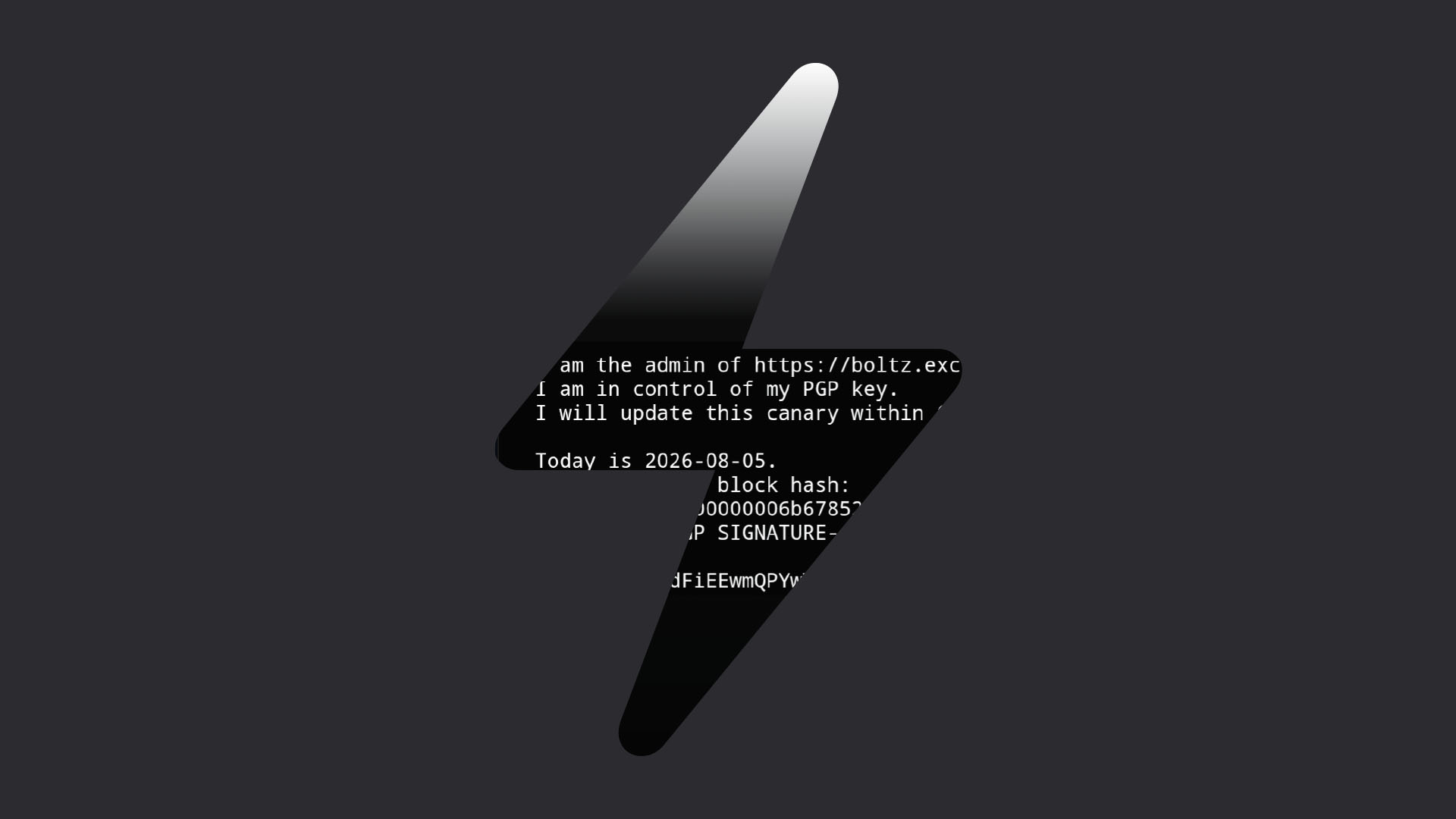
Bitcoin bridge Boltz, which recently suspended its services after repeated attacks from AI-powered hackers, has come under fire after it allowed its warrant canary to lapse for over five days.
The lapse indicates to several critics that Boltz is possibly under government investigation.
A warrant canary is a colloquial term for a recurring public notice that a service has not received a secret legal process.
Because subjects of a legal or criminal investigation often may not lawfully disclose service of legal proceedings once a process server or law enforcement agency begins work, developers proactively and periodically state that they have not received such service by renewing their warrant canary.
A missed renewal of a warrant canary, including silence after a regular time period, is an alarm that something is amiss. Boltz’ own text told readers to “assume the worst” if it failed to renew on-time.
Boltz renewed its warrant canary notice today with a valid, PGP-signed message that claims zero government data demands. A defender said the team simply forgot during the swap freeze.
Not everyone was convinced, and the timing was unfortunate.
Indeed, Boltz is in the middle of a proverbial five alarm fire this week.
It just told users its Boltz Swap Service for bridging BTC between mainchain, Liquid, and Lightning Network, will stay disabled “until further notice.”
It said it had suffered months of “AI-assisted probing” with attackers able to “iterate faster than a team our size can find and patch.”
Critics took the combination of its service suspension plus its warrant canary lapse as a signal of duress.
Read more: Ethereum Foundation ditches ‘warrant canary’
What happened during Boltz’s lapsed warrant canary?
Companies that used the Boltz Swap Service, such as Bull Bitcoin, warned that Lightning payments and liquid-to-BTC swaps in its wallet would fail. Aqua and other Boltz-dependent Lightning wallets hit the same brick wall.
Boltz’ prior signed canary dated itself May 31. It promised a 60-day refresh, a timeframe that closed on July 30.
Swaps went dark on August 3. It didn’t sign a new canary until August 5.
Its renewal message now claims, “0 requests for information of any kind by any third parties including but not limited to government agencies.”
Besides the time lapse, everything else checks out normally. An admin published the valid, PGP-signed notice. As usual, it included a latest BTC block hash for a timestamp.
On social media, Adam Simecka, a vocal critic, cast the stale canary as an “authenticated Deadman Switch.” It warned, he claimed, that “a government agency has taken over Boltz.”
There was probably no AI attack, he opined, claiming that was a ruse for “a state-level attack.”
Later he urged followers to “Ignore any further communication from them,” arguing that its workers were “likely captured and being held at gunpoint (hopefully not literally).”
A Stacker News post flagged the same gap a day earlier. It noted Samourai Wallet’s canary history and quoted Boltz’ own “assume the worst” line from its prior canary.
The alarm rang, and Boltz scheduled it in advance
A defender rejected the coup theory. They highlighted that canary renewals are “a manual process,” and that the absentminded lapse is unremarkable given that Boltz is “offline and fighting for survival.”
The team “simply forgot about the update. Nothingburger,” this defender continued.
Others dismissed panic as sensational, calmly reminding alarmists that the canary had already been updated within a reasonable timeframe.
By design, warrant canaries are blunt instruments. They work with infrequent communication and promise periodic attestations of a negative, even though they are merely words on a computer screen.
When they lapse, that negative reality becomes a possible reality.
Boltz chose the strictest possible warning language in its own version — “assume the worst” — then missed its own deadline.
Even though its renewed canary still says zero government demands, whatever happened during the days in which it lapsed are what everyone is debating today on social media.
Got a tip? Send us an email securely via Protos Leaks. For more informed news and investigations, follow us on X, Bluesky, and Google News, or subscribe to our YouTube channel.
Minneapolis Fed President Neel Kashkari backed gradual interest rate increases as persistent inflation and uncertainty around the Strait of Hormuz complicate the outlook for US monetary policy.
Summary
- Polymarket traders assigned a 46% probability to a 25-basis-point increase in September.
- Kashkari said the Fed should start raising rates gradually to bring inflation toward its 2% goal.
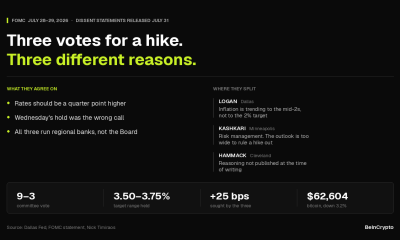
- The Fed held its benchmark rate at 3.50%–3.75% in July despite three dissenting votes.
- Bitcoin traded near $64,700 as crypto investors assessed the risk of tighter US liquidity.
Kashkari calls for gradual Fed rate hikes
Kashkari said during a CNBC interview on Wednesday that the central bank should begin moving interest rates higher as inflation remains above its target.
“I think now is the time to start slowly moving rates up,” Kashkari said.
The Minneapolis Fed president argued that current monetary policy does not appear particularly restrictive. He pointed to strong corporate earnings and continued economic resilience as signs that higher borrowing costs have not placed substantial pressure on demand.
Kashkari clarified that he was not advocating a series of aggressive increases. Instead, he supported incremental moves intended to reduce inflation without causing an unnecessary slowdown in the US economy.
His remarks add to a growing debate inside the Fed over whether rates are high enough to contain renewed price pressures. Kansas City Fed President Jeff Schmid also called for tighter monetary policy on Wednesday, although he did not specify when or by how much rates should rise.
Fed’s July decision exposed a widening policy split
The Federal Open Market Committee maintained the federal funds rate at 3.50%–3.75% during its July 28–29 meeting.
Kashkari, Cleveland Fed President Beth Hammack, and Dallas Fed President Lorie Logan opposed the decision. All three preferred an immediate quarter-point increase, according to the Federal Reserve’s official statement.
Kashkari later said the dissent reflected his view that policymakers should begin a gradual tightening cycle rather than deliver a sharp increase.
The three dissents showed that concern over inflation is spreading among policymakers. The Fed remains committed to returning inflation to 2%, but higher energy costs and resilient demand have made that task more difficult.
Kashkari said the September decision would depend on inflation reports released before the meeting and developments in the US-Iran conflict. Those factors could determine whether the Fed holds rates steady again or delivers its first increase of the year.
Hormuz uncertainty keeps inflation risks elevated
Disrupted shipping through the Strait of Hormuz has increased energy costs and added another layer of uncertainty to the Fed’s outlook. The waterway remains central to global oil and liquefied natural gas shipments.
Iran and Oman have reached a preliminary understanding on the coordinates of a possible shipping route through the strait. However, negotiations remain incomplete, and the proposed arrangement does not guarantee safe passage, Reuters reported.
President Donald Trump said an agreement to reopen the waterway could arrive this week. A reduction in regional tensions could lower energy prices and ease some inflation pressure, but Kashkari said the Fed must assess the incoming information before committing to a September move.
Continued disruption would create the opposite risk. Higher fuel and transportation costs could spread across the US economy, strengthening the case for tighter monetary policy.
Crypto traders still lean toward a September hold
Polymarket traders placed the probability of a 25-basis-point September increase at about 46%, while the chance of no change stood near 53% when observed. Prediction-market prices change continuously and later moved closer to an even split.
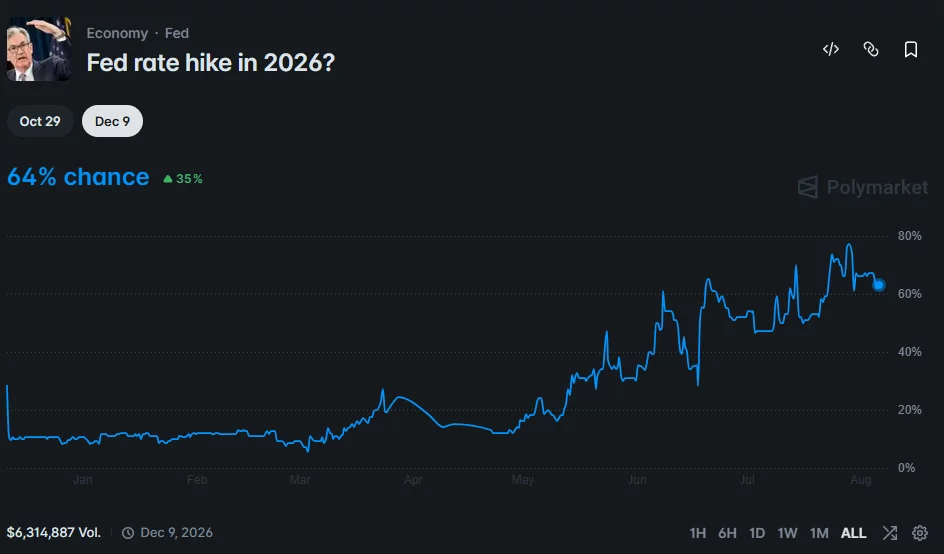
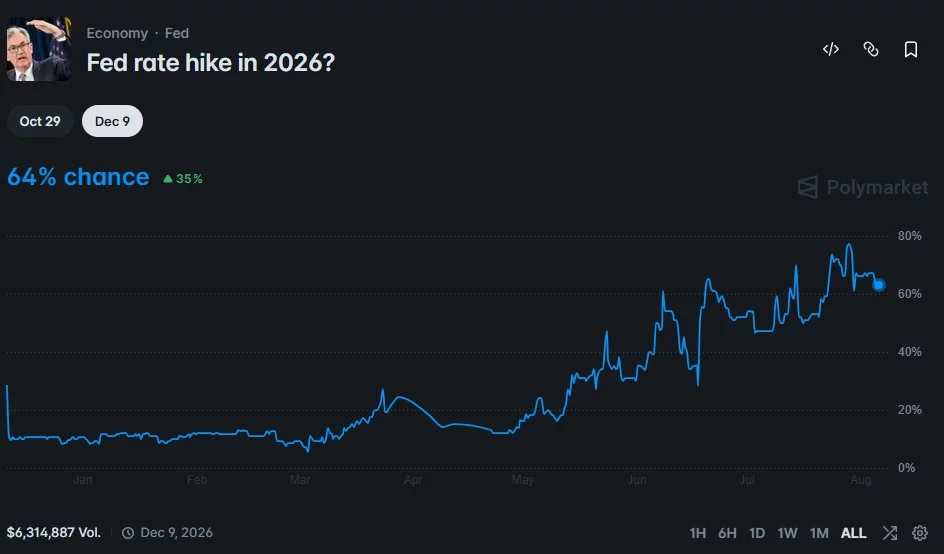
A separate Polymarket contract assigned a 64% probability to at least one rate increase before the end of 2026. That leaves the October and December meetings as possible alternatives if the Fed decides September is too early.
Bitcoin (BTC) traded near $64,700 on Wednesday, holding above its intraday low near $63,900. The move did not establish a direct reaction to Kashkari’s remarks, but the rate outlook remains important for crypto investors.
Higher rates can strengthen the dollar and reduce liquidity available for risk assets, creating pressure on Bitcoin and other cryptocurrencies. A September hold could offer short-term relief, although persistent inflation may keep the prospect of a later increase in focus.
Upcoming inflation data, the July employment report and developments around the Strait of Hormuz will shape expectations before the Fed’s Sept. 15–16 meeting.


Prediction-market traders cut the odds that the CLARITY Act becomes law this year after Senate Majority Leader John Thune declined to file cloture on the motion to proceed to the crypto market structure bill on Tuesday night and instead filed cloture Wednesday morning on a college sports bill and… Read the full story at The Defiant


Strategy will contribute $250 annually to Trump Accounts for eligible children of its U.S. employees, expanding its benefits beyond its core Bitcoin treasury operations.
Summary
- Strategy will provide $250 annually for every eligible employee’s child under 18.
- Eligible children born from 2025 will also receive a one-time $1,000 company contribution.
- The benefit will begin after final Treasury guidance and employer contribution systems become available.
- Strategy still reports 842,138 BTC, despite a later unconfirmed transfer involving 1,030 BTC.
Strategy adds Trump Accounts to employee benefits
Strategy announced on Aug. 5 that it had joined the Invest America Business Pledge, committing to fund Trump Accounts for the children of its U.S. workers.
The company will contribute $250 each year for every eligible child under 18, regardless of the child’s birth year. For children born on or after Jan. 1, 2025, Strategy will also provide a one-time $1,000 contribution matching the U.S. government’s initial deposit, according to the company’s announcement.
Strategy CEO Phong Le said the program could promote financial education and longer-term saving among American families.
“Trump Accounts and the Invest America initiative can help build a stronger financial future for America’s children.”
Le said Strategy’s contributions would supplement the government deposit and give eligible children another source of long-term investment capital.
The Bitcoin treasury company announced the benefit internally during its quarterly Company Day. It plans to provide enrollment information to employees before contributions begin.
Trump Accounts provide $1,000 for eligible children
Trump Accounts, formally known as Section 530A accounts, are tax-deferred investment accounts for children. The accounts invest in low-fee funds tracking the S&P 500 or another index composed mainly of U.S. equities.
Under the federal pilot program, U.S. citizen children born between Jan. 1, 2025, and Dec. 31, 2028, can receive a one-time $1,000 Treasury contribution. Children must have valid Social Security numbers and an account election submitted on their behalf, according to the Internal Revenue Service.
Children outside that birth window can still have Trump Accounts opened before they turn 18, although they do not qualify for the federal seed payment. Strategy’s recurring $250 contribution will apply to eligible children regardless of their birth year.
Employers, family members and other authorized parties may add funds subject to federal limits and tax rules. The structure is intended to give children long-term exposure to U.S. equity markets while restricting access during childhood.
Strategy said its benefit will not start until the Treasury and IRS publish final implementation guidance and the necessary payroll, custodial and recordkeeping infrastructure becomes available.
The company joins Coinbase, Goldman Sachs, Morgan Stanley and other U.S. employers that have pledged contributions to the program.
Strategy’s Bitcoin holdings remain under scrutiny
The employee benefit announcement arrived as investors continued watching Strategy’s evolving Bitcoin treasury activity.
Strategy confirmed that it sold 1,638 BTC between July 27 and Aug. 2 for $104.73 million after fees. The Bitcoin was sold at an average price of $63,957.
The company used about $52.4 million to cover preferred stock dividends and directed roughly $52.3 million toward STRC preferred-share repurchases. Following the sale, Strategy reported holding 842,138 BTC acquired for $63.51 billion at an average cost of $75,419 per coin.
As crypto.news reported, Lookonchain later identified another transfer of 1,030 BTC, valued at about $66.14 million, from wallets it associated with Strategy.
Strategy has not confirmed that the Aug. 5 movement represented another sale. Bitcoin transfers may reflect custody changes, internal wallet restructuring or settlement activity without changing ownership.
Treasury guidance will determine the launch date
Strategy has not provided a firm starting date for the employee contribution program. Its rollout depends on final federal rules and the availability of systems allowing employers to deposit money into the accounts.
The company said it would share enrollment instructions with eligible workers ahead of the launch. The final guidance will also determine how employer contributions are administered and treated for federal tax purposes.
Until then, the $250 annual payments and matching $1,000 contributions remain corporate commitments rather than active employee deposits.
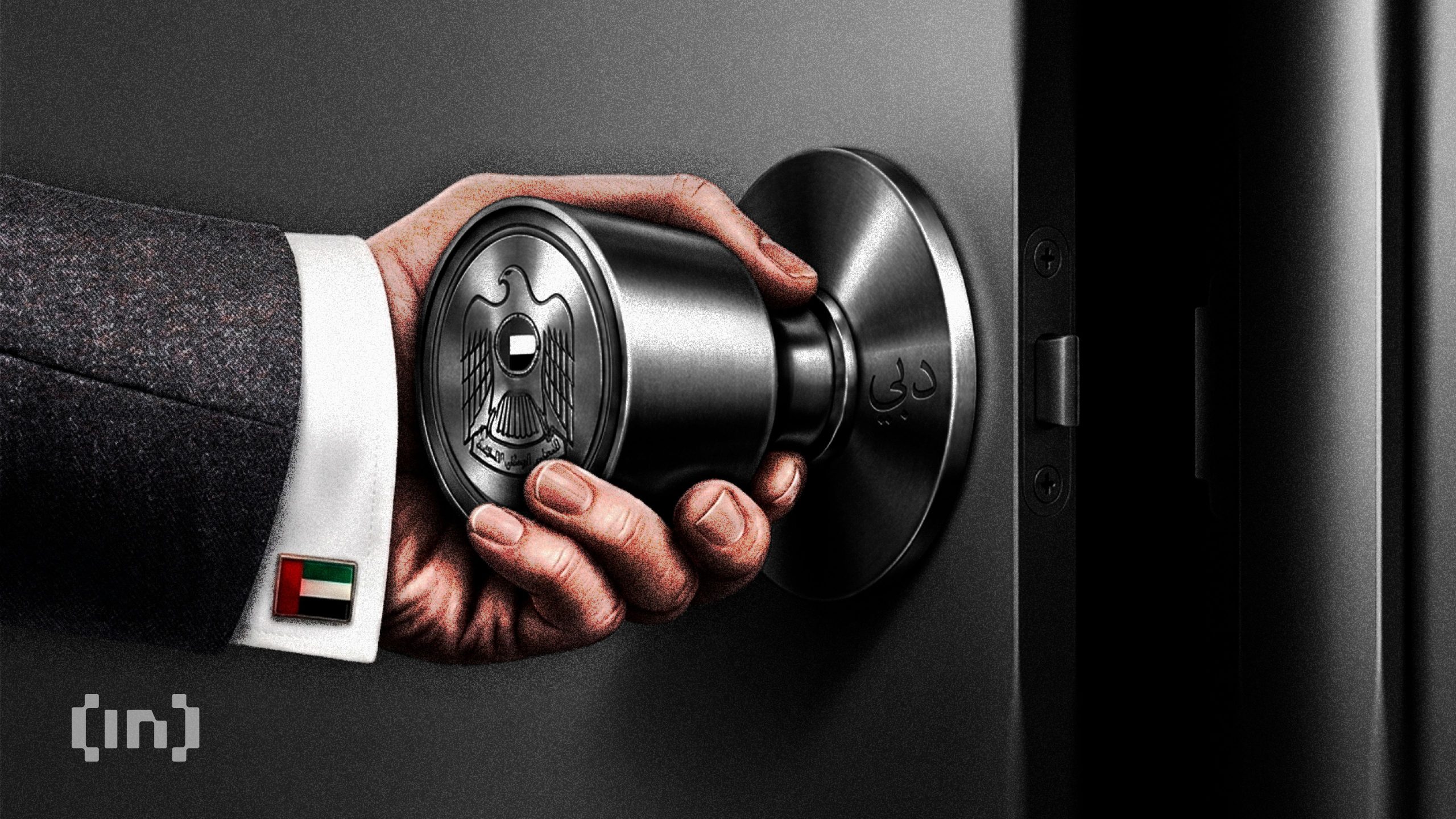

Dubai’s AI border systems cleared 9.4 million travelers between January and June, its immigration authority says. Only a fraction of them walked past a camera without a passport, a boarding pass, or an officer to face.
The technology works. That makes the questions about it harder to wave away. Its speed is measured in seconds. Its safeguards are not measured publicly at all.
Follow us on X to get the latest news as it happens
Dubai AI Immigration Scaled, But the Fast Lane Stayed Small
Dubai’s General Directorate of Identity and Foreigners Affairs (GDRFA) runs the system. It counted 9,464,057 users in the first half of 2026.
Almost all of them passed through Smart Gates, the older e-gate network. That was 9,024,736 crossings.
Just 439,321 people used the fully document-free lane, which GDRFA calls Travel Without Borders, or the Red Carpet. That is 4.6% of the total.
So the walk-past-a-camera experience is real. It is also rare, and it sits in one building. The lane runs at Terminal 3. GDRFA opened it in 2025 and has said it is extending it across departures and arrivals.
Using it takes one step in advance. Travelers link their passport to a biometric photo at a counter once. After that, cameras match the face to that record and pull up the flight automatically.
Up to 10 people can walk through together. Cases the system treats as suspicious are flagged for a manual check by an officer.
“Just by walking through this corridor, you have completed your exit,” said Brigadier Walid Ahmed Saeed, Assistant Deputy Director for Airport Affairs at GDRFA Dubai at the launch.
The speed claim is less settled than it looks. GDRFA says average processing fell from 12.5 seconds to 3.4 seconds, and calls that a 60% cut.
Those three figures cannot all be right. A drop from 12.5 to 3.4 is a 73% cut. A 60% cut from 12.5 would stop at 5 seconds.
Earlier accounts of the same lane cited 6 to 14 seconds per traveler. GDRFA has not said whether the lane sped up or the yardstick moved.
The Questions Scale Makes It Harder to Defer
The idea is not new either. Dubai installed airport e-gates in 2002. In October 2018, it opened a walk-through Smart Tunnel in Terminal 3, billed at the time as a world first.
That tunnel already needed no documents and claimed under 15 seconds. A 2021 upgrade cut the walk to between five and nine seconds. The document-free lane is the latest step in a 24-year program, not a debut.
Accuracy is the first open question. In December 2019, the US National Institute of Standards and Technology (NIST) tested 189 face algorithms from 99 developers.
False positive rates varied by factors of 10 or more across demographic groups. In high-quality passport-style photos, they ran highest for West African, East African, and East Asian faces, and lowest for Eastern Europeans. Women were falsely matched 2 to 5 times more often than men.
GDRFA has not published error rates for its own system.
Data is the second question. A face cannot be reissued like a password. Worldcoin’s iris-scanning network met that objection for years. The digital identity privacy risks raised there now apply to a state border camera.
Biometrics have drawn scrutiny elsewhere. China raised alarms over risks in biometric collection by private operators. Binance engaged a biometric verification partner to comply with Japan’s identity rules before re-entering the market.
Dubai’s rules are lagging behind its cameras. The UAE’s Personal Data Protection Law took effect on January 2, 2022. Its implementing regulations are still unpublished. No regulator clearly supervises private-sector compliance.
On June 14, the UAE created a Federal Authority for Artificial Intelligence and Data. It absorbs the AI Office, the Emirates Data Office, and the telecom regulator’s digital government arm. Writing those missing rules is its inheritance.
Jobs are the third question. Routine passport checks need fewer officers. The work shifts toward the manual checks and keeping cameras running.
Dubai has solved the engineering. That 4.6% share shows how narrow the showcase lane still is. Whether the new authority publishes retention periods and error rates will show how it weighs everything the cameras take.
The post Dubai’s New AI Immigration Cleared 9.4 Million Travelers: The Future of Travel? appeared first on BeInCrypto.


The window for US Congress to pass a comprehensive market structure bill on cryptocurrencies is closing, with the Senate set to go on recess in a matter of days, and lawmakers still have not announced clear plans to vote on the legislation.
In a Wednesday X post, Senator Cynthia Lummis said she anticipated that the Senate would vote on the Digital Asset Market Clarity (CLARITY) Act before the chamber breaks for its month-long August recess. The Wyoming lawmaker has been one of the biggest proponents for the crypto bill, which has split many members of Congress and industry leaders over different provisions on ethics, stablecoins and tokenized equities.
“It’s just time to get people on the record,” said Lummis.
The CLARITY Act, which has been under consideration in the Senate since its passage in the House of Representatives in July 2025 with a 294-to-134 vote, still faces opposition from many Democrats looking for stronger ethics provisions affecting US President Donald Trump’s investments. The president has been under additional scrutiny since he disclosed he earned more than $1.4 billion from investments tied to digital assets in 2025.
Related: CLARITY Act failure could send crypto valuations lower: Bernstein
60-vote hurdle needed to pass CLARITY
As of Wednesday, Senate Democrats’ calendar showed no vote scheduled for CLARITY, giving the chamber only a few business days to resolve the matter. However, Senate Majority Leader John Thune, the Republican lawmaker who would have the authority to schedule a vote, is reportedly still planning to do so before Saturday. The bill would need 60 votes in the Senate to invoke cloture and end a filibuster, allowing it to advance in Congress.
The bill also faces opposition from at least one Republican lawmaker, according to a recent Politico report. Senator Josh Hawley will reportedly withhold voting in favor of the bill until it addresses concerns from banks. Although lawmakers did reach a compromise on the bill with banking groups over stablecoin yield, some industry leaders have continued to push for provisions requiring crypto companies to have comparable licensing and restrictions as banks.
After Friday, the Senate will be on recess until mid-September, pushing consideration of the crypto bill into the lead-up to the 2026 midterm elections.
Magazine: Here’s why the CLARITY Act’s ethics deal may be so hard to reach


Paranoid Bitcoiners are worried that Bitcoin clocks created by Coinkite, the firm behind recently-hacked hardware wallet Coldcard, could be spying on them.
The Blockclock, which features an electro-mechanical display, can be tweaked to showcase up-to-date Bitcoin prices, exchange data, and various other metrics.
However, with the estimated $130 million Coldcard theft showing no sign of stopping, cautious Bitcoiners are becoming suspicious of the seemingly harmless machines.
Much of this suspicion appears to have been stoked by programmer and Bitcoin enthusiast “Wicked” who warned owners to “unplug” their device “immediately,” with very little by way of explanation.
“If you used your COLDCARD near them I would plan to move your funds out of an abundance of caution,” he said.
Read more: Coldcard hacker’s BTC wallet flooded with on-chain messages
Wicked’s post, whether completely seriousness or not, attracted 50,000 views and led to multiple Blockclock owners following the advice.
The growing paranoia even extended to Coinkite’s CTO Peter Gray, with pro-Bitcoin vintner Ben Justman claiming that, having learned that Gray worked on keylogging and remote computer viewing, he “wouldn’t feel safe” keeping the Blockclock.
“I don’t own a Blockclock and who knows if there’s anything wrong with them, but I personally wouldn’t wanna touch anything that touched Coinkite,” said Justman.
Some posts posited the idea that the Blockclock may contain spyware, a theory that was further fueled by parody account Teddy Bitcoin, which claimed that Blockclocks contain “an authentic high-tech Russian military-grade listening device” called the “Ухо-9,” or “Ear-9.”
“This thing is so advanced it can capture private sounds with insane precision, right down to the exact faint hammering of individual letters into steel plates,” the account wrote.
Some users, understandably, doubted Wicked’s claims, suggesting that the paranoia might be exaggerated and telling the programmer to “calm down.”
Bitcoin Magazine editor Shinobi described the paranoia as “Schizo theories about Coldcards wirelessly communicating seeds to them to phone home.”
Wicked replied to one comment asking if it was legit, saying, “No evidence of anything yet but I’m not risking it anymore.”
He’s since made a partial apology, claiming in an X Spaces that he posted about the Blockclock in a “schizo panic fear,” and that after talking to several people he trusts, “that fire in my mind has been doused.”
“My trust in Coinkite products has obviously been affected by all of this,” Wicked added.
Read more: 15 attackers now draining vulnerable Coldcard wallets, report
Coldcard urged users to move BTC
Coinkite is dealing with the fallout from its weak seed phrase generation system that left several versions of its BTC wallet open to hackers.
The firm has since warned Coldcard users to move their BTC elsewhere or risk being drained.
There have been at least 15 attackers taking advantage of the exploit, which have likely targeted thousands of victim wallets.
Protos has reached out to Coinkite for comment and will update this piece should we hear anything back.
Got a tip? Send us an email securely via Protos Leaks. For more informed news and investigations, follow us on X, Bluesky, and Google News, or subscribe to our YouTube channel.
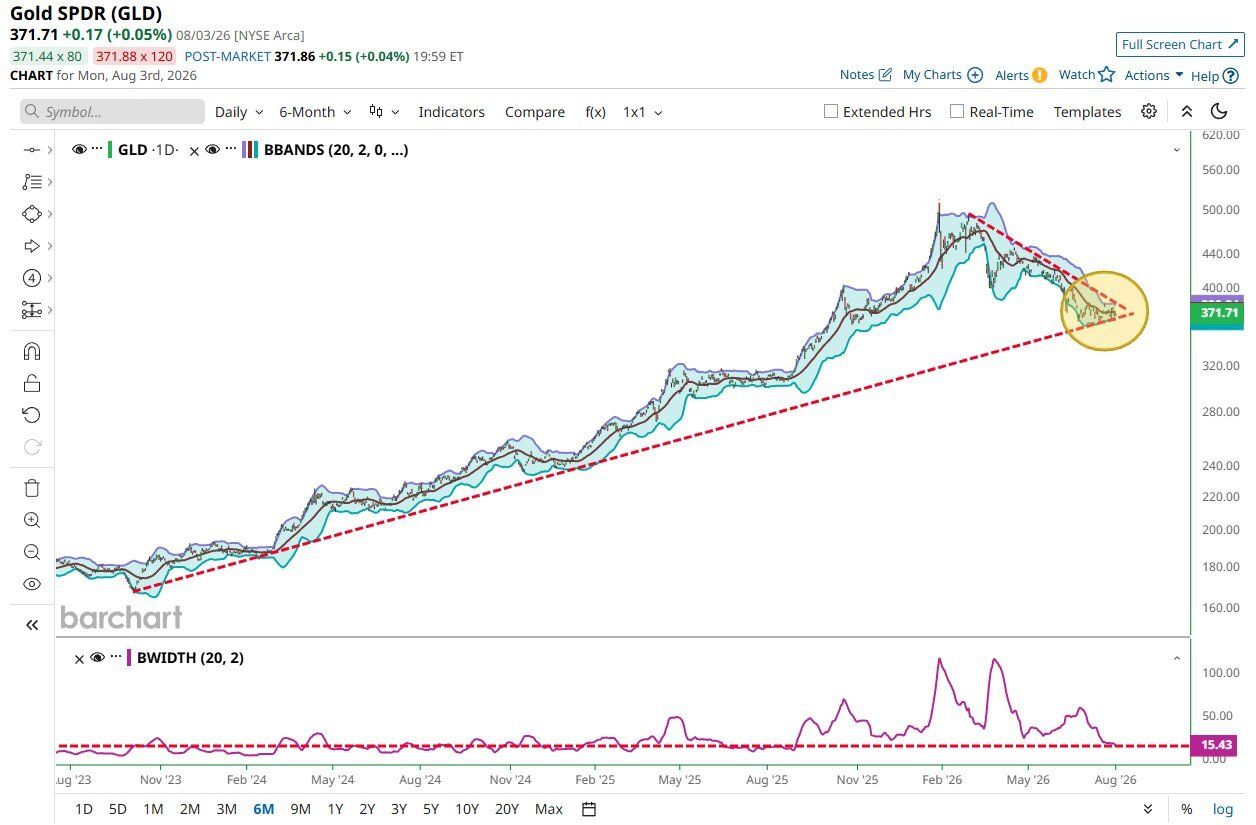
Gold jumped nearly 2% on Wednesday, reaching $4,155. The move broke the descending trendline that capped every rally since February’s all-time high of $5,598.
The breakout lands in a loaded week. Markets see a 63.6% chance of a September Fed rate hike, and Friday’s Nonfarm Payrolls (NFP) report could decide whether the move extends.
Popular trader Ash Crypto estimated that the surge added nearly $1 trillion to the valuations of gold and silver in eight hours.
Tightest Bollinger Squeeze in a Year Finally Fires
On Monday, Barchart flagged extreme volatility compression on the daily chart of SPDR Gold Shares (GLD). The Bollinger Band Width indicator fell to 15.43, its lowest reading since August 2025.
“Gold is coiling and getting ready for a big move. Bollinger Bands are now the tightest since August 2025, right before Gold soared 60% over the next 5 months.”
Barchart wrote on X.
That earlier squeeze resolved into a five-month advance that ended at February’s record high. However, the current coil formed inside a giant triangle. Correction resistance pressed from above while the three-year bull trendline held from below.

A Bollinger squeeze signals that a strong move is near, but it does not reveal the direction. Historically, similar compressions preceded breakdowns, too, including July’s bearish weekly signal.
Wednesday’s jump suggests this one may be resolving upward, in line with the more constructive August outlook.
Gold Price Prediction Puts $4,300 Back in Play
The daily XAU/USD chart confirms the shift. Gold pushed through the trendline drawn from the $5,598 peak and reached the upper Bollinger Band after a year of contraction. The Relative Strength Index (RSI) reads 55 and points higher, leaving room before overbought territory.
The nearest resistance sits between $4,300 and $4,400. That zone contains the 0.382 Fibonacci retracement at $4,333, roughly 4.3% above the current price.
The 52-week moving average near $4,312 strengthens the barrier. Even cautious forecasts leave room above it, after JPMorgan cut its Q4 target to $4,500 in July.

Support remains the $3,900 to $4,000 demand zone, which holds the 0.5 Fibonacci level at $3,942. Buyers defended this area twice since early July, forming a double bottom.
A daily close below $3,900 would invalidate the bullish structure and revive the July sell-off scenario.
Friday’s payrolls remain the main risk. Deutsche Bank expects 65,000 new jobs, and a hotter print could lift FedWatch hike odds and yields. The 30-year Treasury yield above 5.2% already limits gold’s appeal.
Meanwhile, tokenized gold tracked the move, with Pax Gold (PAXG) trading at $4,145, up 2.6% over the past 24 hours, per BeInCrypto data.
If bulls turn $4,166, the July 22 high, into support, the road to $4,333 remains open ahead of the jobs report. A rejection at the broken trendline would push gold back inside the coil it just escaped.
The post Gold Breaks Out From a Downtrend That Started in January 2026, What’s Next? appeared first on BeInCrypto.
Dinari opened tokenized U.S. stock trading to U.S. investors on Tuesday, saying 724 tokenized U.S. stocks and ETFs — including every company in the S&P 500 — can now be bought with USDC from self-custody wallets by eligible investors in the United States. The company said it is the first platform… Read the full story at The Defiant

[PRESS RELEASE – Kingstown, Saint Vincent and the Grenadines, August 5th, 2026]
The former TON executive joins as Director of Strategic Partnerships to form the connections behind ChangeNOW’s next phase.
Former TON executive Martin Masser joins ChangeNOW to build strategic partnerships, ecosystem relationships, and media momentum behind its next phase.
Masser comes with experience across traditional banking, Web2 and Web3, including senior growth and business development roles within the TON space. At ChangeNOW, he will lead strategic relationships with blockchain networks, wallets, fintech companies, payment providers and other infrastructure partners.
His appointment comes as ChangeNOW grows beyond standalone crypto services, transitioning to one connected product where users can buy, store, swap, trade, send, receive and grow digital assets. The industry has already built most of the individual components. What it hasn’t solved is the experience of using them together; clients are still expected to switch between platforms, understand different networks and connect the pieces on their own. ChangeNOW’s super app strategy is designed to move that complexity beneath the product.
“Martin brings a rare mix of commercial relationships, product and media understanding,” said Pauline Shangett, Chief Strategy Officer at ChangeNOW. “He knows what the technology can do, what the business needs and how to make the market pay attention. That is exactly the perspective we need as we build the ChangeNOW super app.”
Masser’s role will focus not on accumulating partnership announcements, but on identifying relationships that can make ChangeNOW’s infrastructure more complete and remove unnecessary steps from the сlient experience.
“The best partnerships create access, adoption and attention. My focus is to build relationships that make the product stronger, simpler and more useful, and then help the market understand why they matter. If you are building wallets, networks, payments, stablecoins, fintech infrastructure, consumer crypto or Web3 products, I want to hear from you,” said Masser.
For consumers, ChangeNOW is combining the core activities of managing crypto within one environment. For businesses, it is developing an integrated set of tools for crypto payments, exchange, stablecoin settlement, digital asset management and Web3 integrations.
As ChangeNOW expands into a crypto super app, its next phase is connecting the right networks, wallets and partners. Masser’s role will be central to building those relationships and turning them into product value, adoption and market momentum.
About ChangeNOW
ChangeNOW.io is a crypto super app built for every crypto move, giving newcomers, professionals, and businesses the tools they need to access Web3 finance in a simple and secure way.
Since 2017, ChangeNOW has grown from a fast, secure, and limitless instant exchange into a trusted platform where storage, swaps, trading, staking, and asset management are covered in one simple experience for millions of clients worldwide.
About Martin Masser
Martin Masser is Director of Strategic Partnerships at ChangeNOW, where he is building partnerships around the company’s expansion into a crypto super app. His career covers traditional banking and capital markets in London and Web3, including his previous role as Head of Growth at TON Foundation. Martin works at the intersection of growth, infrastructure, and partnerships, connecting products and industry players to make crypto services work as one seamless user experience.
The post ChangeNOW Brings Martin Masser Into Its Crypto Super App appeared first on CryptoPotato.

‘I’m raising money in memory of the man I was wrongly convicted of murdering’

Hull school holds uniform sessions ahead of new academic year

Did Bitcoin bridge Boltz silently warn of a government takeover?


-

 Business7 days ago
Why Trees Belong on the Risk Register
-

 Fashion5 days ago
Weekend Open Thread: Wit & Wisdom
-

 Politics5 days ago
Meta enters AI-training agreement with far-right ‘propaganda rag’ Newsmax
-

 Politics3 days ago
Zack Polanski: an incitement to murder Nigel Farage?
-

 Crypto World4 days ago
MicroStrategy Post-Earnings CLARITY Act Push Could Add New Catalyst for Its Stock
-

 Crypto World5 days ago
XRP Ledger v3.3.0 brings five institutional features
-

 News Videos6 days ago
Bitcoin Enters the 3rd Stage of the Bear Market
-

 Politics6 days ago
Luke Littler’s dominance sparks GOAT debate
-

 Sports6 days ago
Seema Kaliramna Wins Discus Throw Bronze, Takes India’s CWG Medals Tally To 17
-

 Crypto World5 days ago
New York sues Kalshi over prediction market gambling
-

 Crypto World3 days ago
Crypto PAC spending tops $2M in Michigan House race
-

 Business5 days ago
Trump Announces Hamas Disarmament Agreement as Iran Strikes Kuwait Air Base and US Attacks Pause Overnight
-

 Business3 days ago
DTCR: Deleveraging And A Hedge Fund Collapse Point To A Possible AI Bottom
-

 Tech4 days ago
ESET tracks rise in malicious AI skills and adaptable malware
-
 Crypto World5 days ago
3 Fed Officials Just Explained Their Rate Hike Vote: Is Inflation Winning?
-

 Tech5 days ago
Gemini Spark can now use Chrome logins and saved passwords to run errands on your behalf
-

 Tech5 days ago
Building A Reproduction PlayStation Motherboard
-

 Sports4 days ago
France Cricket implodes: letters hidden in a drawer and a board at war
-

 NewsBeat6 days ago
Four people die trying to cross Channel in small boats
-

 Crypto World5 days ago
Moneyflip CEO charged in $40K murder-for-hire plot
You must be logged in to post a comment Login