
Crypto World
Florida Rep. Cory Mills Loses Primary After Scandal-Filled Campaign

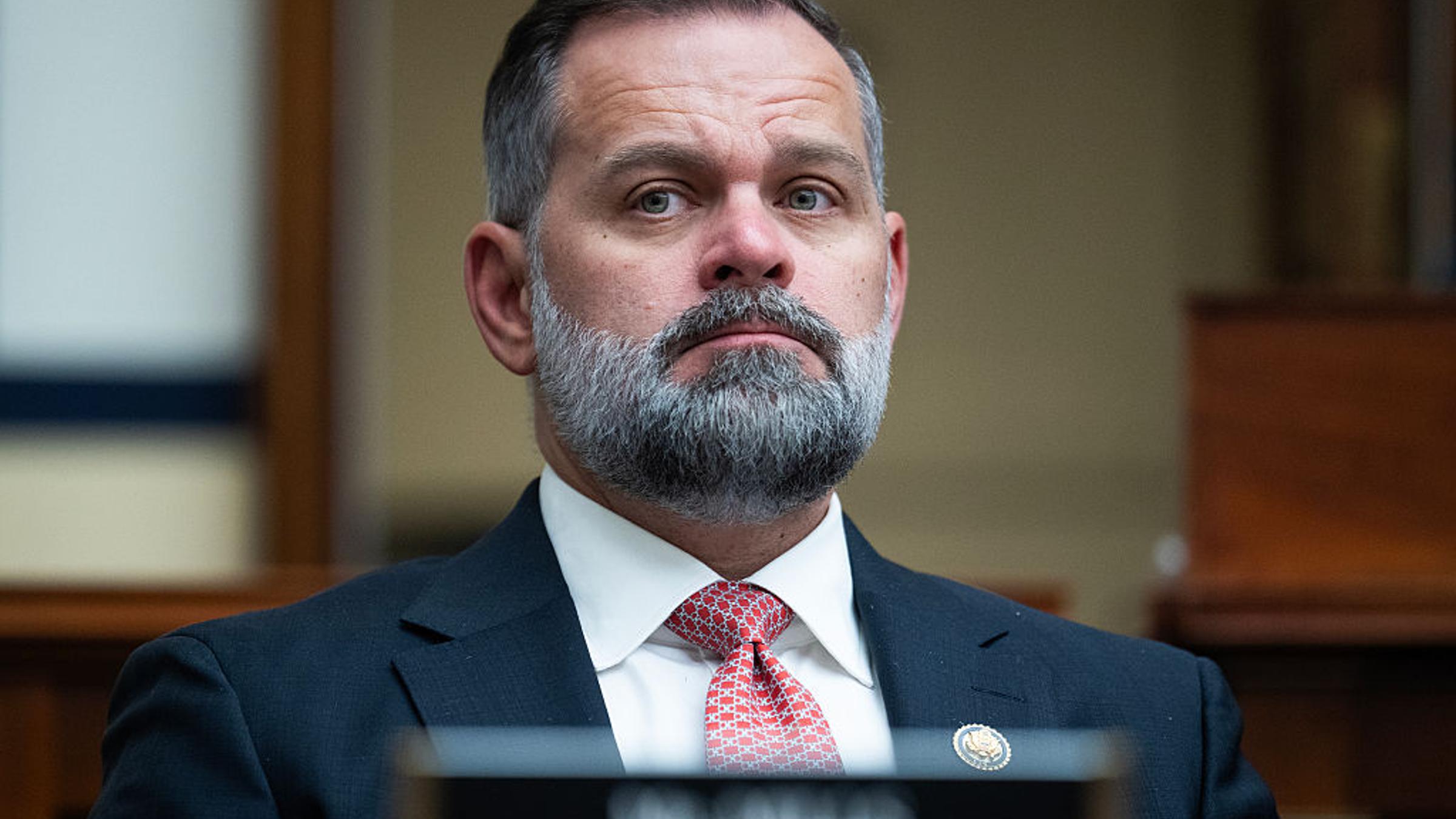
The new map, signed into law by DeSantis in May 2026, redrew 21 of the state’s 28 districts, looking to reduce the number of Democratic-leaning districts from eight to four—affecting Democratic incumbents like Kathy Castor in Tampa, as well as Debbie Wasserman Schultz and Jared Mokowitz in South Florida.
While District 7 was not radically redrawn, Aubrey Jewett, professor of political science at the University of Central Florida, says that since this new map favors Republicans, flipping the 7th District could help offset any losses elsewhere in the state.
Elijah will go up against Democratic candidate and military veteran Bale Dalton in November, who is endorsed by Pete Buttigieg. Jewett says Dalton could be a viable candidate.
And if Dalton were to win, he says: “That might help not only the Florida congressional delegation pick up a Democratic seat, but of course, yeah, maybe at the national level, might offset some of these losses that they’re expecting.”



An Aug. 19 White House meeting involving at least six crypto and prediction-market firms has brought institutional settlement into focus as Lynq CEO Jerald David warns that regulation cannot make cash and collateral move around the clock.
Summary
- At least six crypto and prediction-market firms are expected at the Aug. 19 White House meeting.
- David said institutions still face funding and collateral problems after completing trades.
- US payment systems do not all operate on the same round-the-clock schedule as crypto markets.
- Tokenized cash projects are testing 24/7 settlement, margin, and collateral transfers.
Lynq CEO Jerald David told crypto.news that clearer rules would remove only one barrier facing financial institutions as digital assets, tokenized securities, and traditional markets become more closely connected.
Once an institution completes a trade, it must still fund the position, deliver cash, and move any required collateral. According to David, each step becomes more difficult when firms use several exchanges, counterparties, and forms of money across markets that remain open overnight and through weekends.
“I think regulation is obviously a big part of the conversation, but for institutions there is a very practical layer underneath it,” David said.
The comments come before a reported White House meeting involving crypto companies, prediction-market operators, regulators, and traditional financial firms. As previously reported in August, Coinbase, Ripple, a16z, Chainlink, Paradigm, and Kalshi are among the expected participants.
President Donald Trump, SEC Chair Paul Atkins, and CFTC Chair Michael Selig may also participate, according to people familiar with the plans. Neither the White House nor the regulators had published a formal participant list or detailed agenda when the meeting was reported.
Crypto regulation leaves an operational problem unresolved
Washington’s attention has centered on rules governing issuers, trading platforms, and the agencies responsible for supervising digital assets. David said institutions face another problem beneath the legal framework because funding and settlement systems do not always follow the hours kept by crypto markets.
“Once you make a trade, you still have to fund it, move collateral and settle it. That sounds straightforward, but it gets much harder when you are dealing with multiple venues, counterparties and different forms of money, especially in markets that trade around the clock.”
Crypto exchanges commonly remain open 24 hours a day, including weekends and public holidays. Many banking and securities systems, however, rely on business-day schedules, cutoff times, and separate settlement processes.
According to David, the difference can leave an institution able to enter a trade while lacking immediate access to the cash or collateral needed to complete it. Firms may respond by keeping funds at several venues, although doing so can leave capital unused and increase exposure to individual counterparties.
At the same time, different forms of digital money are entering institutional markets. Stablecoins, tokenized bank deposits, tokenized money-market funds, and conventional bank balances can perform separate roles, but David said institutions need systems that let value move between counterparties when a payment or margin call becomes due.
US rules are progressing faster than settlement systems
The US Treasury added another part of the regulatory framework on Aug. 17 by proposing rules for Section 3 of the GENIUS Act. The proposal would define when a payment stablecoin is issued in the United States and when a digital asset company offers or sells one to a US customer.
Under the proposal, companies would generally need an appropriate federal or state license to issue payment stablecoins in the country from Jan. 18, 2027. From July 18, 2028, digital asset service providers would generally be barred from offering payment stablecoins to US customers unless a licensed issuer issued them.
The department has opened a 60-day public comment period after publication in the Federal Register. A recent Treasury rules report covered how the definitions would also affect foreign issuers and platforms making their tokens available in the United States.
Treasury’s proposal addresses who may issue and distribute payment stablecoins, but it does not create a common settlement network connecting every bank, exchange, broker, and custodian. David’s comments concern that separate operational layer, including the movement of money between regulated entities after a transaction has been agreed.
Federal Reserve infrastructure shows how operating schedules can differ. FedNow processes instant payments continuously for participating financial institutions, while Fedwire handles large-value bank transfers during defined operating windows.
The Federal Reserve says Fedwire currently runs for 22 hours per business day from Monday through Friday, excluding designated holidays. An expansion planned for 2028 or later will add Sundays and weekday holidays, but the service will continue to close for two hours each operating day and will not operate on Saturdays.
Tokenized markets increase demand for 24/7 collateral
Continuous settlement has become more important as US regulators consider allowing more traditional assets to trade on blockchain networks. An Aug. 17 report on the SEC’s tokenized trading plans said the agency was preparing a limited route through which qualified platforms could test round-the-clock trading in tokenized US stocks.
No final exemption, eligibility standard, or launch date has been announced. SEC officials have also maintained that putting shares on a blockchain does not remove them from federal securities laws or existing investor-protection requirements.
For settlement providers, extending trading hours creates a related demand for cash and collateral outside the normal business day. DTCC said in May that financial firms commonly maintain excess collateral and liquidity buffers because assets may not be available exactly when they are needed.
According to DTCC, tokenized collateral could allow firms to mobilize assets on demand instead of placing extra funds at several locations in advance. The market infrastructure provider has also worked with Chainlink on a system designed to support round-the-clock collateral management across traditional markets and blockchain networks.
A separate project involving BMO, CME Group, and Google Cloud shows how banks are approaching the same issue. As covered in March, BMO planned to let institutional clients convert US dollars into tokenized cash for derivatives, margin, and continuous settlement.
The full BMO service was scheduled for the second half of 2026, subject to regulatory approval. CME said the arrangement could let clients move tokenized cash for margin and collateral purposes without waiting for ordinary banking windows.
Pre-positioned liquidity carries costs and risks
David said mismatched operating hours can force institutions to place liquidity at every exchange or counterparty they expect to use. Money held in several locations may be unavailable for another trade, while direct exposure to a venue can increase if the institution must fund an account before executing transactions.
“So even if the regulatory framework becomes clearer, you still have this mismatch between how the market trades and how capital actually moves,” he said.
Lynq operates a private institutional network through tZERO Securities, an SEC-registered broker-dealer. According to the company, participants can make real-time transfers within the network, while client investments are maintained in segregated accounts and users complete know-your-customer and anti-money-laundering checks.
The company said in February that assets held through its platform had passed $89 million and that it worked with more than 30 institutional digital asset firms, including exchanges, custodians, market makers, and over-the-counter trading desks.
Lynq also introduced a collateral-lock feature in March that allows users to designate assets as collateral without transferring them away from the network, according to the company. The feature prevents pledged assets from being used twice while allowing institutions to release and redeploy them after the related obligation ends.


Citi has unveiled its Custody+ platform and confirmed plans to launch institutional digital asset custody later in 2026, beginning with Bitcoin.
Summary
- Citi expects its institutional Bitcoin custody service to go live later this year.
- Custody+ brings digital assets and traditional securities into one custody framework.
- More than 80% of Citi’s asset-servicing events are now processed in real time.
- Citi invests over $2 billion each year in its Services platform strategy.
Business Wire reported on Aug. 18 that Citi Investor Services had launched Custody+, a collection of near- and real-time custody services for institutional clients operating across continuous markets and shorter settlement cycles.
The rollout has also given Citi a firm timetable for its digital asset custody business. According to the bank, the service is expected to become operational later this year and will initially support Bitcoin (BTC).
Rather than running Bitcoin custody through a separate product, Citi plans to build the service on its common digital asset architecture. Institutional clients will be able to access traditional securities and cryptocurrency custody through the same framework, although the bank has not disclosed a launch date or named any clients.
Citi Custody+ combines Bitcoin and securities services
Custody+ replaces a standard custody model with modular services that clients can adapt to their own operating systems and workflows. Citi’s existing custody network serves customers in more than 100 markets, including 62 markets where the bank operates its own infrastructure.
Digital asset custody will sit alongside real-time settlement, liquidity management, foreign exchange services, and market data. Under the proposed structure, an asset manager holding Bitcoin and conventional securities could use one Citi environment for custody services instead of dealing with separate operating systems.
Earlier crypto.news coverage detailed Citi’s plans to connect Bitcoin with the reporting, tax, control, and portfolio systems already used for traditional assets. The February report said the bank was developing key management and wallet infrastructure as part of a 2026 institutional rollout.
Citi had spent two to three years designing the custody service by October 2025, according to Biswarup Chatterjee, the bank’s global head of partnerships and innovation. At the time, Chatterjee said the bank was considering a mix of internally built technology and third-party systems for different assets and client groups.
“We may have certain solutions that are completely designed and built in-house that are targeted towards certain assets and certain segment of our clients,” Chatterjee told CNBC, adding that Citi could use a third-party solution for other assets.
The latest announcement identifies Bitcoin as the first supported cryptocurrency but does not say which assets could follow. Citi has also not specified whether its custody technology will be entirely internal or retain the hybrid model discussed in 2025.
Real-time processing supports Citi’s Bitcoin custody plan
Custody+ has arrived after Citi completed the U.S. rollout of its patented Single Event Processing technology, known as SEP. The system processes asset-servicing transactions through one continuous flow across Citi’s domestic and international custody networks.
More than 80% of the bank’s total event volume is now handled in real time, according to Citi. Within the United States, SEP has cut processing times for voluntary corporate actions by as much as 92%, while 96% of voluntary events are completed in under two hours.
Instant settlement services connect client instructions with final settlement at central securities depositories. Citi said its integrated ledger and real-time data also give clients transaction visibility across the bank’s 62 proprietary custody markets.
Alongside settlement, the platform provides automated hedging and real-time foreign exchange execution. Cash tools include instant position updates, liquidity sweeps, funding services, and cash-balance projections linked to custody transactions.
Chris Cox, head of Investor Services at Citi, said the bank’s Services business invests more than $2 billion annually in its platform strategy, with spending focused on speed, scale and availability.
“Custody+ is a clear example of this investment as we build infrastructure to eliminate latency and drag for institutional investor clients,” Cox said.
Cox added that Citi was combining its international network with data and technology to support institutions that need continuous market access, transparency, and precise transaction processing.
Citi Token Services moves deposits around the clock
Operating alongside the planned Bitcoin service, Citi Token Services already supports the near-instant transfer of tokenized deposits at any time of day across selected Citi markets. The product applies blockchain-based settlement to commercial bank deposits rather than using a publicly issued stablecoin.
Custody+ also includes tax-document processing supported by artificial intelligence. Citi said the technology has reduced document processing times by as much as 70%, while the bank’s Market Guide platform supplies regulatory and operational information to clients in more than 100 locations.
Cloud sharing and application programming interfaces give institutions access to Citi data for their own analytics and AI systems. Under the platform’s white-label option, financial companies can also use Citi’s infrastructure for transaction instructions, workflow management, reporting, and market information delivered to their customers.
“Custody+ is the product of a multi-year commitment to building infrastructure that matches the speed of our clients’ strategies,” Amit Agarwal, head of Custody at Citi Investor Services, said.
Agarwal said the individual services were designed to help clients simplify their operating models as custody operations became more complex.
Citi expands its institutional tokenization business
Beyond Bitcoin, Citi has been developing products that place traditional financial claims on blockchain-based systems. In June, the bank disclosed plans to offer wealthy and institutional clients tokenized depositary receipts linked to shares in private companies.
The private-share platform will initially be offered to investors outside the United States, with Citi serving as both issuer and custodian. The bank reportedly plans to consider U.S. access if regulatory conditions permit.
Under the planned structure, clients would receive regulated exposure to private businesses through Citi-issued instruments rather than purchasing company shares directly. Citi has held talks with large private companies but has not publicly identified the prospective participants.
Private businesses such as OpenAI and Anthropic have attracted investor demand while remaining outside public stock markets. However, the Citi service would be limited to clients who already meet the relevant institutional or wealth requirements.
The bank’s tokenization work also follows a June research report that placed the global tokenized securities market at about $17 billion. Citi’s tokenization market forecast projected a base-case increase to $5.5 trillion by 2030, with estimates ranging from $2.7 trillion to $8.2 trillion.
For the U.S. market, Citi estimated that 10% of Treasury bills and 3% of publicly traded stocks could become tokenized by 2030. The bank also projected that stablecoin growth could generate about $1 trillion in additional demand for U.S. Treasuries.
Citi’s research estimated that moving 10% of everyday U.S. investors to digital trading platforms could create $2.6 trillion in demand for digital stocks. Its forecast covered tokenized Treasury bills, equities, funds and other financial instruments, while the newly announced Custody+ platform will initially extend native digital asset custody only to Bitcoin.
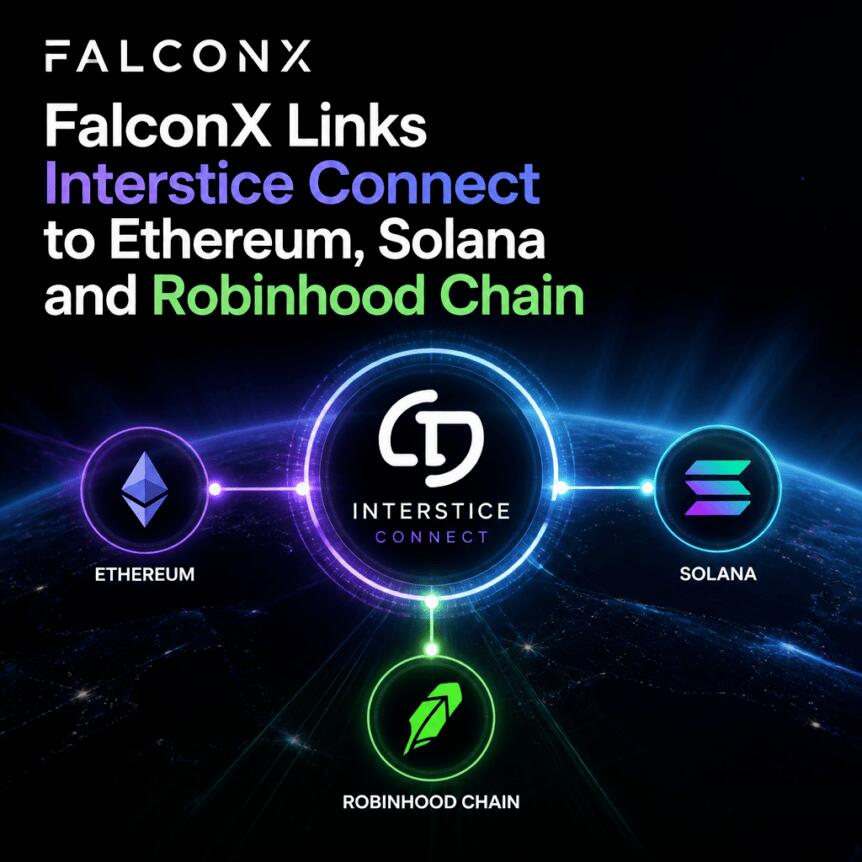
Interstice Digital has introduced a non-custodial cross-chain swap engine designed to connect the Canton Network with major public ecosystems, including Ethereum and Solana, using FalconX as its liquidity layer. The company says the system can route token swaps across all four networks without Interstice holding users’ assets or submitting transactions on their behalf.
The announcement positions Canton—an institutional-focused blockchain with privacy and permissioning controls—as a place where tokenized assets can interact with broader liquidity available on public chains. While Interstice did not disclose which tokens are supported at launch or provide any transaction volume metrics, the integration adds another piece to Canton’s push to make tokenized finance more usable for market participants.
Key takeaways
- Non-custodial design: Interstice says it will not take custody or transact on users’ behalf.
- Cross-chain routing across major networks: Canton is set to be connected with Ethereum, Solana, and Robinhood Chain via FalconX.
- FalconX supplies liquidity for swaps: FalconX, described as a digital asset prime brokerage for institutions, underwrites the engine’s liquidity.
- Institutional tokenization momentum continues on Canton: Prior activity on the network includes tokenized US Treasuries and institutional stablecoin deployments.
How Interstice’s cross-chain swap engine is meant to work
According to Interstice’s announcement, the swap engine is built as a non-custodial mechanism. In practical terms, this means Interstice is not designed to hold user funds, and it is not presented as a service that executes trades on behalf of users. Instead, the engine is intended to enable cross-chain swaps while users retain control of their assets.
Liquidity is provided through FalconX, which the company describes as serving institutional investors through a prime-brokerage framework. The engine’s stated goal is to give users a path between tokenized assets on Canton—where institutional finance use cases have been expanding—and liquidity on public blockchains such as Ethereum and Solana.
Interstice did not specify which assets will be supported first. It also did not publish any swap volume figures tied to the engine, leaving market participants to assess adoption only after more operational details emerge.
Canton’s institutional focus: tokenized settlement and privacy controls
Canton Network is described as a blockchain built for institutional finance, emphasizing privacy and permissioning to align with regulated transaction needs. The network’s ecosystem includes major financial institutions, and several publicized projects suggest that Canton is moving beyond experimentation toward more established workflows for tokenized assets and settlement.
The swap engine’s relevance to investors and market participants is straightforward: the more a tokenized asset ecosystem can connect to external liquidity, the more practical it becomes for trading and hedging. Canton’s value proposition has largely centered on regulated tokenization and settlement. Interstice’s announcement attempts to address the next bottleneck—how those tokenized assets can interact efficiently with liquidity pools and trading venues on mainstream public chains.
Recent activity on Canton underscores the push toward tradable tokenized assets
The cross-chain swap engine arrives as traditional financial institutions increase their engagement with Canton-based tokenization and blockchain settlement.
In July, electronic trading platform Tradeweb executed an onchain US Treasury trade on Canton. In that transaction, Franklin Templeton transferred a tokenized Treasury security to Virtu Financial in exchange for tokenized cash. Tradeweb said it was the first real-time purchase and sale of a tokenized US Treasury settled against USDCx, a USDC-backed stablecoin issued on Canton. Other participants included Societe Generale, Digital Asset, and Blockdaemon. Earlier coverage from Cointelegraph described the broader mechanics of that real-time flow, including how Tradeweb handled execution and price discovery while Canton synchronized settlement across the tokenized security and tokenized cash leg.
Beyond tokenized Treasuries, Societe Generale has also deployed euro- and dollar-denominated stablecoins on Canton for tokenized collateral, repo financing, and institutional settlement. Separate reporting noted that Visa tested private stablecoin settlement on the network, reflecting growing interest in privacy-preserving settlement models for stablecoins.
Additional initiatives mentioned alongside Canton’s ecosystem include a Japanese government bond collateral pilot involving Mizuho and Nomura, and S&P Dow Jones Indices placing its iBoxx US Treasuries Index on Canton. Collectively, these efforts suggest that Canton is building a portfolio of tokenized instruments—collateral, stablecoins, and indices—where cross-chain interoperability becomes increasingly valuable.
Why the FalconX liquidity layer matters—and what to watch next
Cross-chain swaps can look simple on paper, but liquidity is often the determining factor for whether users can actually execute trades without friction. Interstice’s decision to use FalconX as the liquidity provider signals an attempt to reduce that gap between tokenized assets on Canton and tradable liquidity on public chains.
Still, important details remain unclear. Interstice has not disclosed which specific assets will be supported first, nor has it offered any early metrics that would help gauge real-world demand or execution quality. For traders and institutions evaluating Canton’s expansion, those missing specifics will likely matter more than the headline functionality.
Going forward, market participants should watch for (1) the initial asset list and stablecoin or token types included in the swap routing, (2) operational transparency such as settlement behavior and failure modes, and (3) whether the engine’s integration leads to measurable increases in active liquidity or repeat settlement activity between Canton-based tokenized assets and public chain venues.
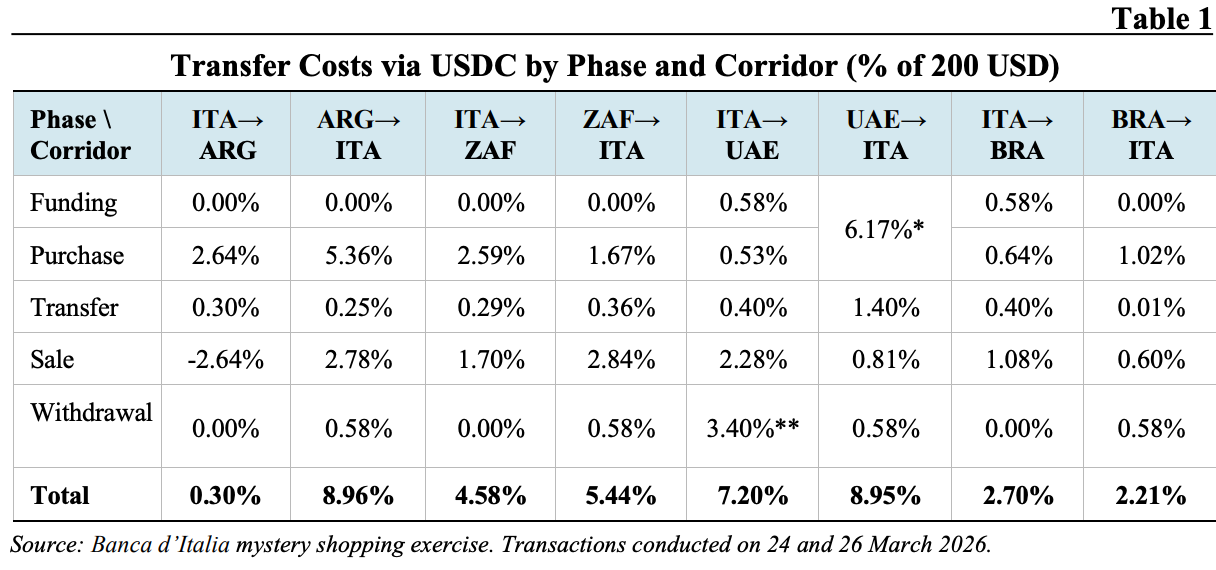
A new mystery shopping study from the Bank of Italy, Italy’s central bank, found stablecoins offer no systematic cost advantage over traditional remittance channels.
The Bank of Italy sent 200 USD Coin (USDC) across ten real-world corridors. The routes linked Italy with Argentina, Brazil, South Africa, the United Arab Emirates, and Japan.
Fiat Conversion, Not Blockchain, Drives Costs
Total transfer costs ranged from 0.3% to nearly 9% of the amount sent, the study found. That range straddles the United Nations’ target of cutting remittance costs below 3% by 2030.
Researchers tracked five phases of each transfer, from funding an exchange account to withdrawing cash at the destination. The on-chain blockchain transfer itself averaged just 0.4% of total cost.

Funding, currency conversion, and withdrawal drove almost all of the expense instead. Those are the steps that still run through banks and exchanges rather than the blockchain.
A United Arab Emirates to Italy transfer illustrates the problem. The sender had no bank transfer option and had to fund the trade with a credit card instead. That card carried a 3.8% surcharge, which pushed the total cost to nearly 9%.
The World Bank puts the global average remittance cost at 6.4%, well above the UN’s 3% target. Against the World Bank’s country-specific benchmarks, however, stablecoins beat traditional costs in every corridor the study tested except the UAE.
The Bank of Italy also compared USDC against Wise, a money transfer operator, on the same routes. Stablecoins came out cheaper on three corridors and more expensive on four others, undercutting any claim of a consistent edge.
Domestic Payment Rails Determine Speed
Execution times varied just as widely as costs. Transfers settled in under 20 minutes wherever instant payment systems existed. Brazil’s Pix network and the euro area’s TARGET Instant Payment Settlement (TIPS) service both qualified.
South Africa lacked that kind of infrastructure. A stablecoin transfer there took one to two business days, the same timeline as a conventional bank wire.
The findings complicate a narrative that stablecoins are already quietly replacing bank payment rails. The Bank of Italy’s researchers argue the technology still relies on the banks it aims to bypass.
The study also reviewed global stablecoin rules. It named Europe’s Markets in Crypto-Assets Regulation (MiCA), the bloc’s framework for crypto-asset issuers, among the more comprehensive regimes.
A related review of Europe’s post-MiCA crypto market found Circle remains the dominant compliant stablecoin issuer.
Strict regulation carried its own cost, though. The Bank of Italy found that Japan’s rules pushed users toward unregulated wallets rather than curbing demand. Whether looser on-ramp rules could close that gap remains an open question for policymakers.
The post Bank of Italy Study Finds Stablecoins No Cheaper Than Traditional Remittances appeared first on BeInCrypto.
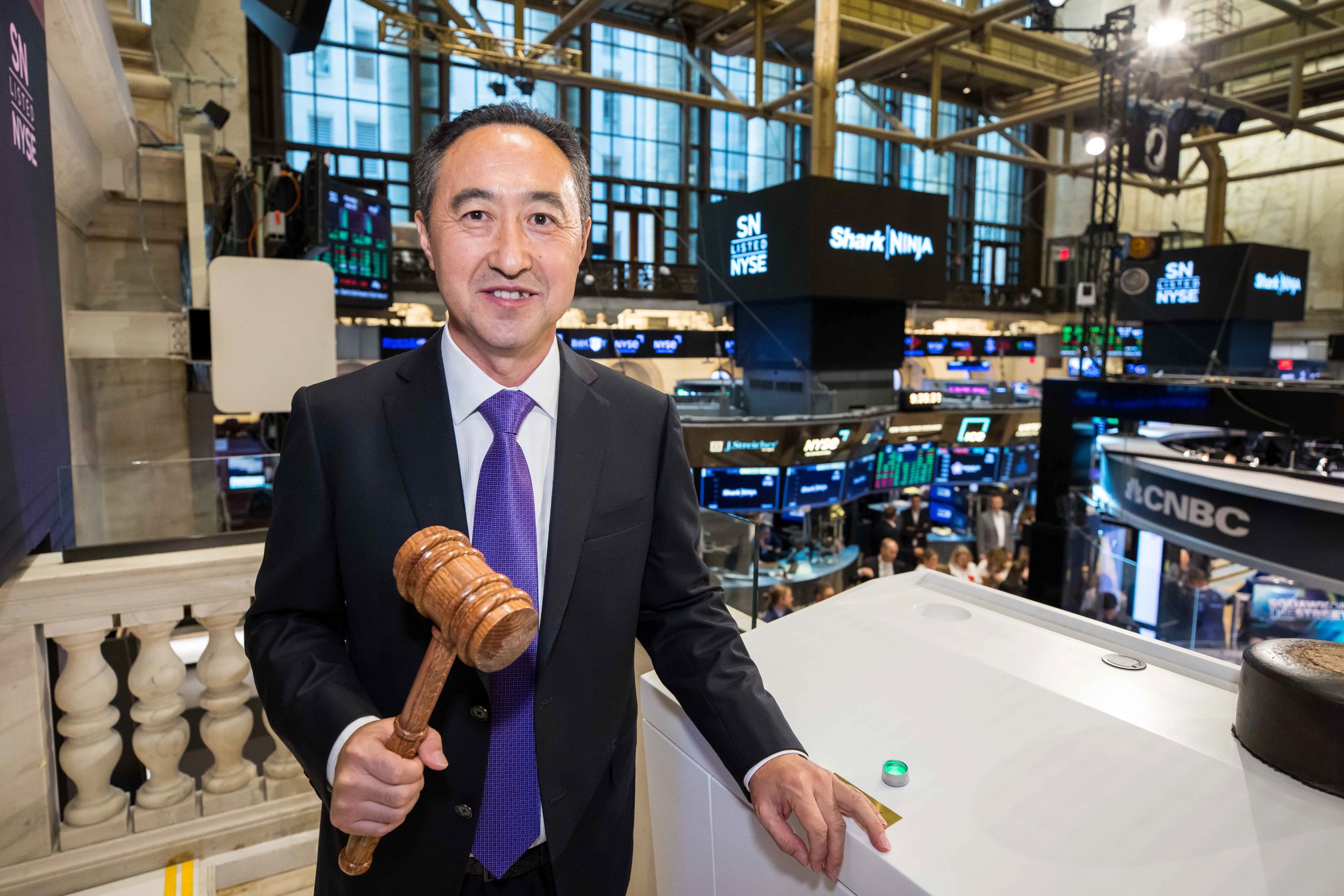
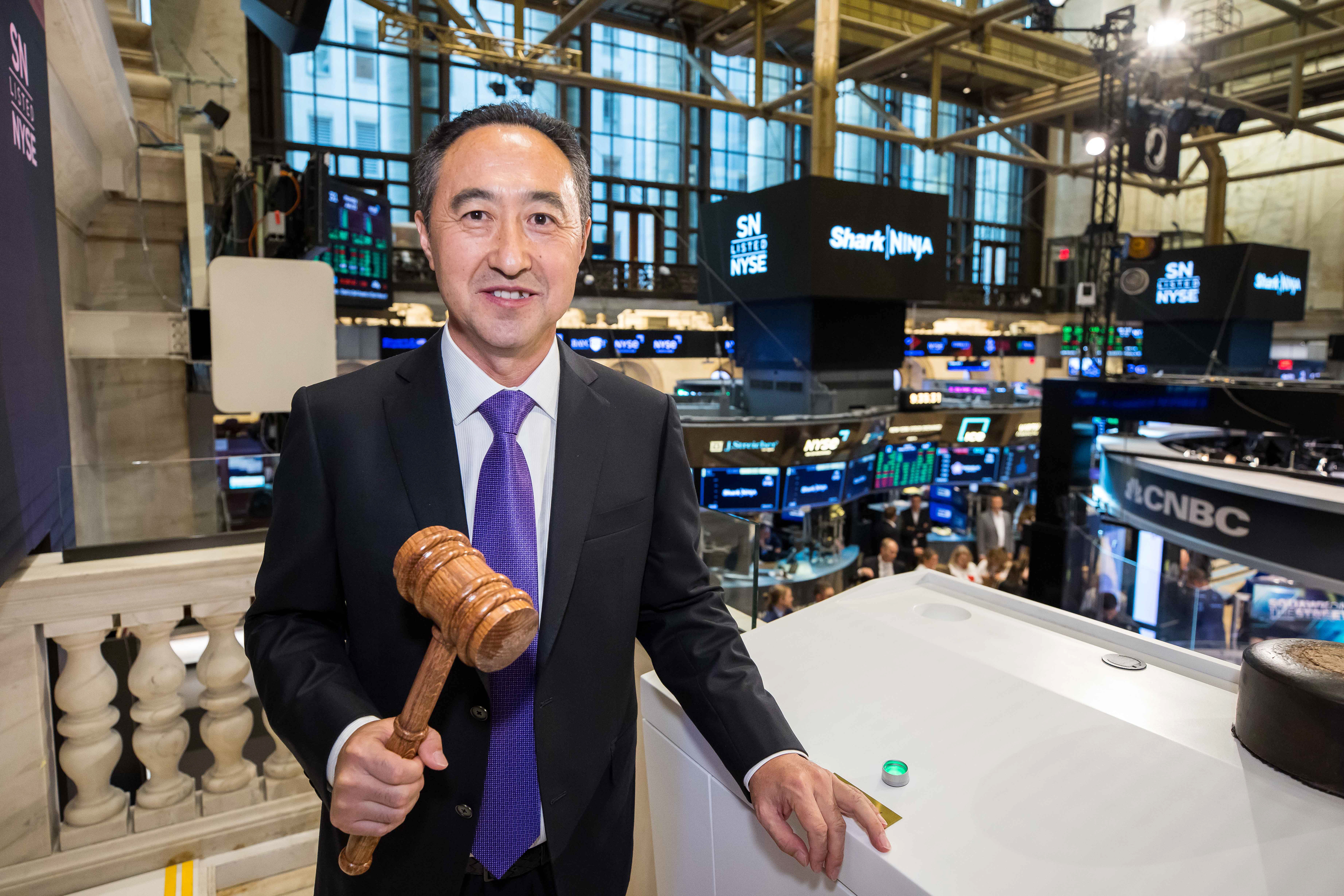
Many self-made billionaires conceal their humble beginnings. CJ Wang has put his front and center of his penthouse Hong Kong office: a small stone mill for grinding soybeans.
Mao Zedong’s tumultuous Cultural Revolution was just winding down when Wang started school in what is today Yantai city of China’s eastern Shandong province. (Where, incidentally, TIME founder Henry Luce was born in 1898.)
Like most neighborhood kids, Wang was obliged to help with household chores after class, especially churning soymilk by endlessly hauling his uncle’s giant stone mill around. It was labor that made the young Wang’s arms ache, though the eventual payoff would be a business empire worth tens of billions of dollars.
After graduating in electrical engineering from Beijing Jiaotong University, Wang became a teacher like his parents. “It was what my family did so I just naturally fell into teaching,” he says, gazing out at sweeping views of Victoria Harbour. “But I always wanted to do something bigger and carve my own path.”
In 1994, as Chinese reformer Deng Xiaoping’s market liberalization unleashed a heady entrepreneurial spirit across the People’s Republic, Wang quit his job at a vocational college and invented the world’s first automatic soymilk maker. “It was far from perfect, and wasn’t an ideal product, but it was already a huge leap forward,” Wang says.
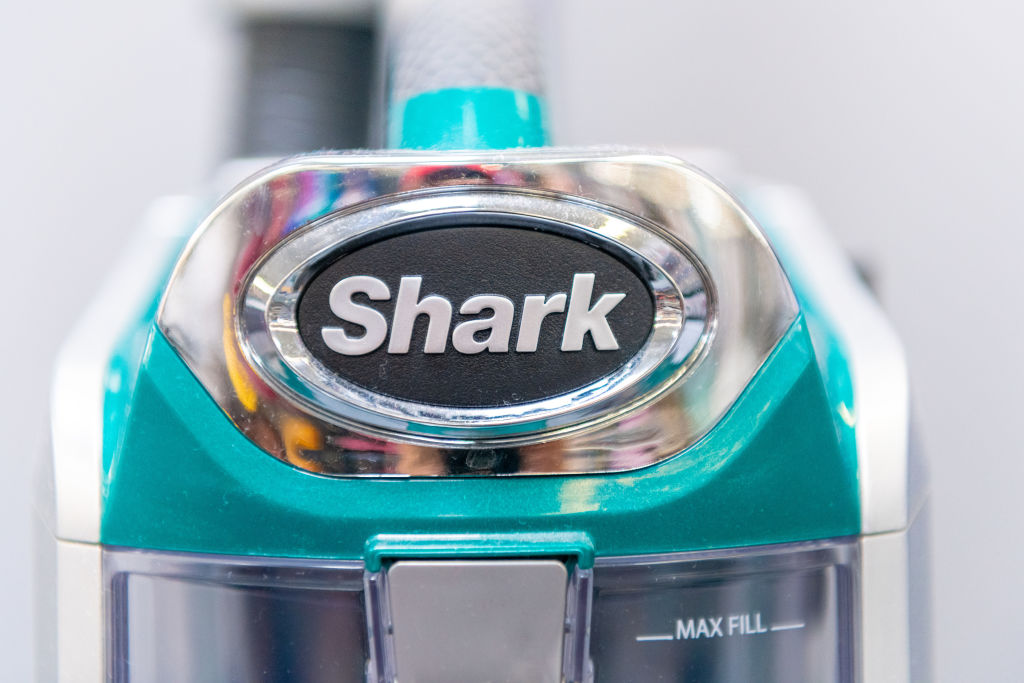
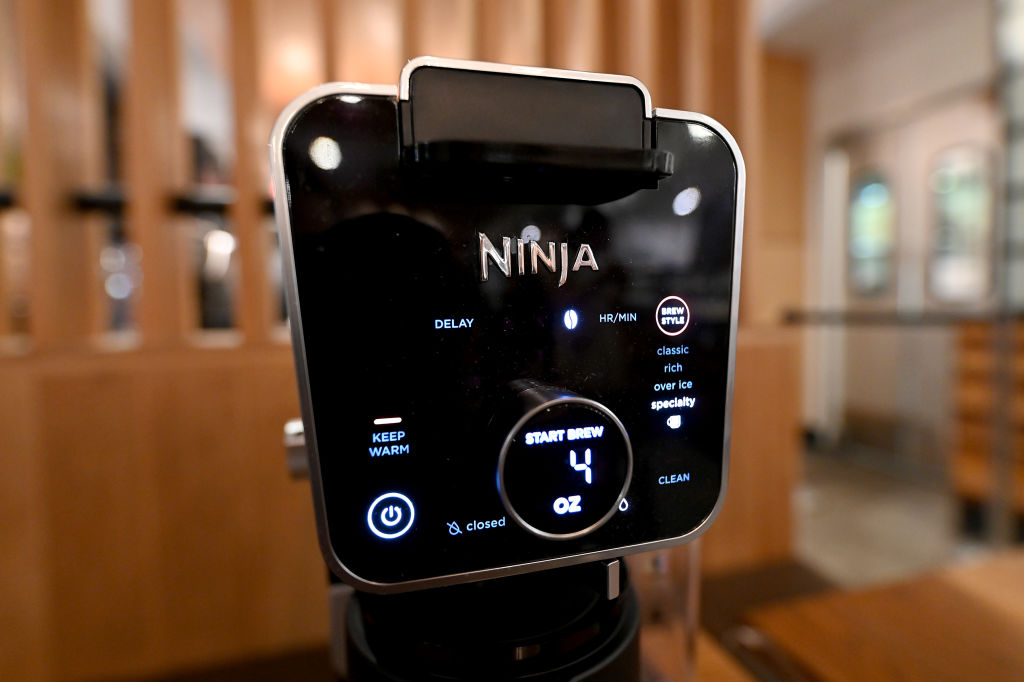
That same year Wang founded Joyoung, which soon became a household name in China for low-cost, dependable consumer products from blenders to rice cookers. While Americans may not recognize Joyoung, they are probably familiar with Wang’s other major venture: SharkNinja, which he acquired in 2017 and today serves as chairman, having transformed the Massachusetts-based firm into a $26 billion trailblazer for disruptive household appliances.
“I really saw SharkNinja as an American version of Joyoung,” he says. “I really felt like I understood the business.”
In our interview, Wang’s first ever with international media, he comes across as shy and softly spoken, betraying none of the performative bravado of many billionaire founders. He is, he confesses, a very private person, whose few passions outside of work include Macallan whisky and golf. (He has a 15 handicap). So why has he decided to chat today?
“I just want to be ahead of the curve to proactively tell my story to mitigate any speculation,” he says. “Because there’s just not much out there about me.”
In an age of relentless scrutiny, even immense wealth offers no refuge from the public eye. The elephant in the room is the dire state of U.S.-China relations, with tariffs and export restrictions casting a pall on what had once been a synergistic business climate. Chinese investment into the U.S. grew steadily until peaking at $46.5 billion in 2016, with Chinese investors hoovering up everything from Smithfield Foods and AMC Theatres to New York City’s Waldorf Astoria hotel.
However, re-tightened capital controls in China and expanded CFIUS regulatory reviews in the U.S. dovetailed to bring the honeymoon to an end. Last year, Chinese foreign direct investment into the U.S. was just $2.5 billion—down 94% from its peak—with the investment climate further chastened by ongoing geopolitical friction, supply chain reshoring, and tit-for-tat import duties.
U.S. lawmakers from both sides of the aisle have increasingly framed capital flows from China into U.S. farmland, manufacturing, and technology as national security vulnerabilities rather than economic opportunities. Last year, President Donald Trump promised “new rules” to “stop China from buying up America.”
In today’s febrile political environment, the risk Wang faces is that his Chinese background and natural introversion could be misinterpreted as shadowy or even sinister—a notion he is at pains to dispel.
“SharkNinja is a very American company,” says Wang. “But people just start making assumptions. I want people to know who I am and my motivations for the good of the company, so there’s no speculation about that.”
If today’s political climate is problematic, popular culture hasn’t been much kinder. The 2019 Netflix documentary American Factory relished in the culture-clash antagonisms between American workers and Chinese managers of the Fuyao auto-glass factory in Dayton, Oh., which took over a long-shuttered GM plant.
Then there is Chinese fast-fashion phenomenon Shein, whose direct-to-consumer sales have been blamed for decimating high streets and sparked protests and legal objections across Europe and North America over its alleged labor abuses and environmental footprint.
However, Wang argues the experience of SharkNinja—the Shark half produces household appliances and beauty products; Ninja does kitchen gadgets—offers a stark counterpoint as an example of a successful “refounding” to clarify and reenergise a company’s mission statement and propel it to new heights.
After more than two decades of building Joyoung into a trusted brand in China—as well as establishing an eponymous philanthropic foundation—Wang started to cast his eyes overseas. However, Joyoung was virtually unknown in the West. Rather than spend years building recognition abroad, he chose a faster route: buy an established player.
Wang looked at several options but was captivated by SharkNinja. After a quick trip to Boston, he saw a company that felt reassuringly familiar: strong products, entrepreneurial leadership, and plenty of room to grow. Wang was especially impressed by CEO Mark Barrocas, whom he asked to remain after the acquisition—a condition that helped smooth the deal. (Original founder Mark Rosenzweig also still regularly consults for the company.)
Given that Barrocas is renowned for micromanagement, Wang’s hands off style led to a very amicable partnership. One manager told TIME that Wang turns up at the firm’s U.S. headquarters with such little fanfare that it takes baffled reception staff a few minutes to work out that the guy in front signs all their paychecks.
“My role is always from a very high-level, strategic standpoint,” says Wang. “All the day-to-day stuff is the American team. I’ve had a really good working relationship with Mark from the very beginning.”
But SharkNinja also had clear weaknesses. Its product range was narrow: Shark depended heavily on vacuums, while Ninja relied largely on blenders. Its sales model leaned on fading television infomercials, with little social-media presence or diversified distribution. And its manufacturing was concentrated among only a few Chinese suppliers, limiting flexibility and innovation.
Wang believed Joyoung’s experience could unlock the company’s potential. His plan centered on three moves: broaden the product portfolio, strengthen the supply chain, and modernize sales channels. Today, the company funnels around 10% of revenue into advertising, including celebrity endorsements from the likes of Tom Brady and Kevin Hart.
Imaginative marketing is very close to Wang’s heart. After debuting his first soymilk maker, Wang personally hawked his fledgling creation in markets and malls. But then a friend who worked in the media suggested he publish an article about how people can now make soy milk in a matter of minutes in their own home. “That gained a lot of attention, and I realized the power of marketing to sell your products,” Wang recalls. That friend, meanwhile, “became my wife,” he grins.
Wang also wanted SharkNinja to adopt his passion for engineering by building its own R&D capabilities. At the time of the acquisition, SharkNinja’s innovation model was thin. Its leaders could identify product opportunities, but design and engineering were largely outsourced to a small group of Chinese suppliers, who had a “stranglehold” on development, says Wang. The company had little in-house industrial design or research capability—and therefore limited control over how quickly ideas became products.
Wang had the manufacturing chops and contacts to change that. Today, SharkNinja employs roughly 1,200 R&D staff across Boston, London, Shenzhen, and Hangzhou. That investment has helped expand the business from a handful of core appliances into more than 40 product categories, with two or three added each year. Shark moved beyond vacuums into beauty and broader home-care products; Ninja grew from blenders into a full kitchen portfolio.
Behind those products is a simple discipline: start with consumer frustration. SharkNinja mines reviews and complaints to find friction, then engineers around it. Innovation does not end at launch. Teams keep refining cleaning, convenience and usability—turning each solved problem into a better product, and each better product into another platform for growth.
The hits followed. The Foodi combined pressure cooking and air frying in one appliance. The CREAMi brought homemade ice cream into the home while sparking a viral “Can it CREAMi?” craze of TikTok stars competing to produce ever more wacky recipes, featuring Dr Pepper, dill pickles, and even tomato soup. The Ninja SLUSHi was a similar sensation for frozen drinks, selling out 10 times in the U.S., with a global waitlist of over 170,000. A post featuring the Shark TurboBlade fan, meanwhile, received more than 75 million views on TikTok and Instagram.
“One of the keys to success is innovation,” says Joe Derochowski, vice president of home and home improvement for market research firm Circana. “The second key is you’ve got to tell people about that innovation in their language—how it fits into their lives.”
There have been setbacks, of course. SharkNinja recently settled lawsuits with competitors Dyson and iRobot over alleged patent infringements. Over 1.8 million Foodi units were recalled last year after a malfunction led to 106 reports of burn injuries and multiple lawsuits. In November 2024, short seller Grizzly Research accused Wang of “taking advantage of the company to the detriment of public shareholders” and presiding over “some of the worst practices of old-school China hustle stock.” The market didn’t buy it, however, and the firm’s value has more than doubled since.
“He’s been an absolutely extraordinary partner for the business over the last nine years,” Barrocas says of Wang. “He’s very thoughtful, asks a lot of questions, very strategic, and takes a very long-term view of things. He wants to build a sustainable, lasting business.
Barrocas’s praise of his boss is, of course, unsurprising. Not least when Barrocas—who retains a 1% stake in SharkNinja—just last week took advantage of its stellar stock performance to net himself over $100 million pretax by divesting nearly 600,000 shares.
Still, an objective case for Wang’s positive influence doesn’t want for evidence. Today, SharkNinja has over 4,100 employees centered on the U.S. but also spanning the globe—up fourfold from when Wang took over. Annual revenue, meanwhile, has soared from $1.3 billion to $6.4 billion over the same period.
Wang hopes that SharkNinja will continue to ease American consumer friction long into the future, and that his Chinese nationality won’t be a hitch. “Nobody wants to see U.S.-China relations improve more than me,” he says.
Recent signs haven’t been hopeful. In June, the U.S. designated several more Chinese firms including BYD—the world’s top EV maker—as “Chinese military companies.” The accusation rests on alleged links to Chinese industrial-policy agencies and a military-civil-fusion industrial zone. No evidence was provided that BYD directly supplies the People’s Liberation Army.
While BYD is also primarily a consumer-focused firm, Wang is quick to draw a distinction with SharkNinja, which, despite his 36.9% controlling stake, is both listed and headquartered in the U.S. “I don’t think we’ll suffer much from trade restrictions, or become a blacklisted company,” says Wang. “But we always remain diligent and continue to adapt the business to make sure that everything is smooth.”
But like any responsible business leader, Wang is preparing for the worst: nearly all of SharkNinja’s U.S. inventory is now sourced outside China, principally from Southeast Asia. “The company is diversifying to make sure we can continually supply consumers with products at the right price and right quality to keep up with shifting political trade restrictions,” says Wang.
Not that extricating supply chains from China is sufficient in today’s nativist political climate. Following Trump’s “Liberation Day” announcement in April last year, which imposed a 10% baseline tariff on nearly all imports and proposed steeper levies on major trading partners,
SharkNinja’s stock plunged more than 20% as even its diversified supply chain faces a barrage of new import duties.
The following month, Barrocas revealed the firm was scouting a U.S. factory to produce certain low-labor products, such as coolers and certain vacuum cleaners, though February’s Supreme Court striking down of Trump’s emergency tariffs has reduced the imperative of reshoring.
“The risk for SharkNinja is not existential as it is for companies like Shein that are impacted by tariffs in a big way,” says Ravi Dhar, a professor at the Yale School of Management. “[Because] the product is more than manufacturing—it is design, deep consumer insights into pain points and unmet needs and that will remain valuable.”
Trump has nevertheless offered conflicting signals. In January, he welcomed Chinese companies willing to build U.S. plants and hire American workers. “If they want to come in and build a plant and hire you and hire your friends and your neighbors, that’s great,” Trump told the Detroit Economic Club. In May, he separately defended Chinese investment in American farmland, provoking a backlash from his MAGA base.
Wang can only hope that this tentative embrace of collaboration sticks. “SharkNinja has experienced tremendous growth, which I see as the power of Chinese and U.S. business cultures coming together to create a company that plays on the strengths of both countries,” says Wang. “It’s a very positive story of the combination of China and the U.S.”


Bitcoin has risen above $64,600 after U.S. President Donald Trump said Washington is not holding talks with Iran, while conflicting claims over the Strait of Hormuz kept oil above $91 per barrel.
Summary
- Bitcoin traded at $64,611 after moving between $64,005 and $64,926 during the session.
- Trump said no U.S.-Iran talks are underway or scheduled as the conflict enters its sixth month.
- Iran maintained that the Strait of Hormuz will remain closed until Washington meets its interim commitments.
- Strategy reported no Bitcoin purchases or sales last week after selling BTC for two consecutive weeks.
In an Aug. 18 Truth Social post, Trump said the United States and Iran were not holding discussions and had no negotiations scheduled, contradicting recent reports that diplomatic contacts could produce another temporary agreement.
“The Naval Blockade remains in full force and effect. The Hormuz Strait is open and operating,” Trump wrote.
The president also said all water mines in the strait had been removed or detonated. Iran disputed his account, with chief negotiator Mohammad Baqer Qalibaf saying Tehran would keep the waterway closed until the United States fulfilled conditions contained in a June interim agreement, according to Reuters.
According to Iran’s chief negotiator, Mohammad Baqer Qalibaf, Tehran’s conditions include lifting the U.S. blockade of Iranian ports, removing oil sanctions, releasing frozen Iranian assets, and ending U.S. military threats and operations. The memorandum, signed on June 17, established a 60-day period for negotiations toward a broader agreement that would include Iran’s nuclear program.
Its negotiating window has now expired without an extension.
Trump says Hormuz is open as Iran rejects the claim
Trump’s account of normal operations in the Strait of Hormuz remains at odds with shipping activity and statements from Tehran.
Although some vessels continue to pass through the route, Reuters reported limited traffic and a recent incident in which a ship was struck by an unidentified projectile. Data cited by Fox News showed 28 confirmed crossings from Friday through Sunday, compared with an average of about 130 ships per day before the war began in February.
Iranian officials have said passage will remain restricted until Washington honors the June agreement. Trump, however, said on Aug. 17 that Iran wanted a deal but would not accept the terms he considered necessary.
The dispute followed an earlier Truth Social post in which Trump shared a map labeling the strait as “New U.S. Territory.” Iran rejected the territorial claim, while Trump maintained that U.S. naval forces controlled the passage.
U.S. and Israeli forces launched attacks on Iran in late February, starting a conflict that is approaching its sixth month. According to Reuters, Tehran adopted what one senior official described as a “fully offensive” position on Aug. 17 after diplomacy failed to produce another agreement.
No new major Iranian attack had been reported immediately after the statement.
The Strait of Hormuz carried roughly one-fifth of global oil and liquefied natural gas supplies before the conflict. Any sustained restriction therefore affects crude availability, shipping costs, and energy prices paid by American households and businesses.
Bitcoin price recovers while oil stays above $91
Bitcoin (BTC) was trading at $64,611 at the time of writing, up about 0.6% from its previous close. The cryptocurrency had moved between an intraday low of $64,005 and a high of $64,926, placing the psychological $65,000 level within reach.
The advance came even as oil prices increased for a third consecutive session. Reuters reported that Brent crude rose 0.7% to $91.46 per barrel, while U.S. West Texas Intermediate gained 0.9% to $85.25.
Earlier in August, Bitcoin faced downside pressure when attacks on tankers near Hormuz lifted energy prices and strengthened demand for the U.S. dollar. BTC fell as low as $62,466 on July 31 after failing to hold above $65,000, while its four-hour chart placed the $62,000–$63,000 area at the center of the market’s next move.
The current recovery has brought Bitcoin back toward the same resistance region. A sustained break above $65,000 has not yet occurred, with Tuesday’s high stopping at $64,926.
For U.S. investors, the oil move matters because higher fuel and transport costs can feed into inflation data. Federal Reserve officials consider inflation when deciding interest rates, while elevated borrowing costs can reduce investor demand for assets such as Bitcoin and technology stocks.
U.S. equities remained under pressure during Tuesday’s session. The Nasdaq Composite fell about 1.4%, the S&P 500 lost 0.6%, and the Dow Jones Industrial Average slipped 0.1%, according to The Wall Street Journal. The publication also reported that the 10-year Treasury yield reached 4.72%, while the 30-year yield climbed to 5.33%, its highest level since 2007.
Strategy pauses Bitcoin sales after two weeks
Bitcoin also received relief from the absence of another sale by Strategy, the largest publicly traded corporate holder of the asset.
According to an Aug. 17 filing with the U.S. Securities and Exchange Commission, Strategy made no Bitcoin purchases or sales between Aug. 10 and Aug. 16. Its holdings remained unchanged at 840,447 BTC, acquired for an aggregate $63.36 billion at an average price of $75,385 per coin.
As crypto.news reported on Monday, the company raised $333.7 million by selling 3.46 million common shares during the week but did not use the proceeds to acquire more Bitcoin.
Strategy’s filing ended two consecutive weeks of BTC disposals. During the previous week, the company sold 1,690 BTC for about $108.6 million after selling roughly $105 million of Bitcoin one week earlier.
Because Strategy trades on the Nasdaq under the MSTR ticker, its Bitcoin decisions affect U.S. shareholders who use the stock as an indirect form of crypto exposure. The company’s latest filing also showed that its average Bitcoin purchase price remained above BTC’s current market value.
Strategy used its recent financing activity to increase its U.S. dollar reserves and repurchase preferred shares. Its Aug. 17 filing said the company bought back about $132.2 million of STRC preferred stock during the week.
White House meeting puts U.S. crypto rules in focus
Washington’s digital-asset policy calendar has supplied another point of interest for Bitcoin traders.
A White House meeting scheduled for Aug. 19 is expected to include representatives from Coinbase, Ripple, a16z, Chainlink, Paradigm, Kalshi, and the Digital Chamber. SEC Chair Paul Atkins and CFTC Chair Michael Selig are also expected to participate, according to people familiar with the plans.
The administration had not published a formal agenda or confirmed the final participant list at the time of reporting. Trump’s attendance had also not been officially announced, although Semafor reported that he was expected to take part.
The White House gathering comes as the Digital Asset Market CLARITY Act remains stalled in the Senate. The legislation would divide federal oversight of digital assets between the SEC and CFTC, placing qualifying digital commodity spot markets under the CFTC while keeping crypto securities within the SEC’s authority.
The House passed its version in July 2025 by a 294–134 vote. Senate progress has slowed over disagreements involving government ethics, decentralized finance, stablecoin rewards, and financial crime controls.
Polymarket traders placed the bill’s chance of becoming law in 2026 at about 20% on Aug. 17, down from more than 80% earlier in the year. Separately, the platform’s odds of at least one Federal Reserve rate increase in 2026 fell to 49% from a recent level above 60%.
Earlier in August, rate-hike odds reached 64% after Federal Reserve Bank of Minneapolis President Neel Kashkari warned that inflation remained too high. The Federal Reserve held its target range at 3.50%–3.75% in July, when three officials supported a quarter-point increase.

This is no ordinary nap. As I drift off, vibrations strum my fingertips, and low tones play in the earbuds. Between these stimuli, strange thoughts move through my semi-conscious mind, the kind of free association that feels normal in sleep and bizarre in life. Names, words, rabbits, phone booths, train announcements—but just when I start to go under, the lights, tones, and vibrations kick in and wake me back up. I try to keep responding; after a long, dark interval, I am so tired that I stop, and then I am dreaming.
I am with my son, digging in the back garden of a brick row house. We are burying something in the lawn. I respond to a few stimuli, then I have the impression that someone in a position of authority—a man with a mustache?—is reprimanding me for failing to keep something level. Then I am awake. The electrodes taped to my face are suddenly palpable.

The U.S. Securities and Exchange Commission (SEC) has unveiled proposed rule changes aimed at giving clearer regulatory treatment to certain crypto assets that the agency views as investment contracts. The announcement comes after Congress failed to advance a major market-structure bill before lawmakers entered a month-long recess, leaving the industry to navigate overlapping agency approaches.
In a Tuesday notice, the SEC said it is proposing a “clear and fit-for-purpose framework” for specific investment contracts involving crypto assets. The regulator framed the proposal as a “tailored securities offering regime” designed to let compliant issuers raise capital while maintaining investor protections.
Key takeaways
- The SEC’s proposal would create a tailored offering pathway for some crypto-related investment contracts, emphasizing investor protection obligations.
- There is no “innovation exemption” in the proposal—an element some market participants had expected to be included for tokenized or crypto-adjacent equity products.
- The SEC outlined token issuance limits under exemptions and stated that issuers would need to provide financial statements and ongoing reporting.
- The comment period is set at 60 days after the proposal is published in the Federal Register.
- The announcement lands amid stalled progress on the Digital Asset Market Clarity (CLARITY) Act, raising the prospect of continued regulatory patchwork.
SEC proposes a tailored securities offering regime for certain crypto assets
The SEC said the rules are intended to offer a “clear and fit-for-purpose framework” for “certain investment contracts involving crypto assets.” According to the agency, the approach would preserve investor protections while providing a more defined compliance route for issuers.
SEC Chair Paul Atkins linked the SEC’s rulemaking effort to the need for legislation, arguing that durable “rules of the road” require congressional action rather than agency-driven fixes that could later be overturned. In remarks cited alongside the proposal, Atkins said legislation remains “indispensable” for future-proofing regulatory guidance.
No innovation exemption—and new rules arrive as CLARITY stalls
A notable omission from the SEC’s proposal is an “innovation exemption” that had been expected by some observers, including in reporting about a possible carve-out for innovation-related structures tied to tokenized stock trading. The absence of that exemption makes the new SEC approach feel more incremental: rather than relaxing classification risk for a broader class of crypto-linked products, the proposal concentrates on providing a structured securities offering pathway where the SEC views investment-contract risk as present.
The timing also matters. The SEC’s notice followed closely after the U.S. Senate failed to advance the CLARITY Act, a bill widely discussed as a way to clarify how federal agencies would oversee and regulate crypto. With that legislation not moving forward, agencies have less congressional direction and more room to pursue their own frameworks—often creating uncertainty for market participants.
Exemptions, token issuance limits, and reporting obligations
According to the proposal, the SEC would provide exemptions for entities that issue tokens under defined caps. The notice describes limits of up to $5 million in tokens over a four-year period and up to $75 million during a 12-month period.
In addition, the SEC said it would include a safe harbor meant to exempt cryptocurrencies from being treated as “investment contracts.” While the details of how that safe harbor would apply are central to investor and issuer decision-making, the SEC’s stated goal is to reduce classification uncertainty for at least some categories of assets.
The SEC also indicated that token issuers would be required to make financial statements and would be subject to ongoing reporting requirements. For issuers evaluating whether they can structure token offerings in a way that reduces regulatory risk, these recurring disclosure duties could be as important as the stated issuance limits.
The SEC’s proposal is open for public feedback: the agency said the public will have 60 days to comment after the rules are published in the Federal Register.
Regulatory coordination pressure: SEC proposal before CFTC crypto meeting
The SEC’s action arrives ahead of a scheduled meeting of the U.S. Commodity Futures Trading Commission (CFTC) on crypto, AI, and prediction markets. The CFTC has said it planned to address areas where regulatory action can “complement” future congressional legislation.
This sequencing underscores the current dynamic in U.S. crypto regulation: when Congress does not deliver comprehensive market-structure reforms, agencies fill the gap—sometimes in ways that are difficult for issuers and exchanges to anticipate or map to a consistent national framework.
SEC Chair Atkins had been scheduled to speak at the Wyoming Blockchain Symposium on Tuesday, but canceled amid the SEC announcement. Separately, White House crypto adviser Patrick Witt told attendees at the event that regulators could act more aggressively if Congress cannot move forward on CLARITY—another signal that the regulatory environment may continue shifting even without new statutes.
CLARITY prospects as Senate calendar narrows
As the SEC moves forward with its own rulemaking, the prospects for the CLARITY Act depend on a tight legislative window. Before the Senate broke for August state work periods, Majority Leader John Thune filed cloture to take up the CLARITY bill when lawmakers return in mid-September.
After the August recess, senators reportedly have just 14 days in session before another break ahead of the November election. If a floor vote cannot be secured within that timeframe, the Senate would have another 22 days in session before 2027, when new members of Congress would be sworn in. That calendar structure could affect how quickly—if at all—CLARITY is resolved during the current Congress.
What to watch next
Issuers and investors should focus on how the SEC justifies the boundaries of its safe harbor, the mechanics behind the token issuance caps, and what ongoing reporting the proposal would require. With CLARITY still uncertain and comment periods now looming, the next signals to watch are how industry participants respond in filings—and whether the CFTC’s upcoming agenda further clarifies how crypto markets will be regulated across agencies.
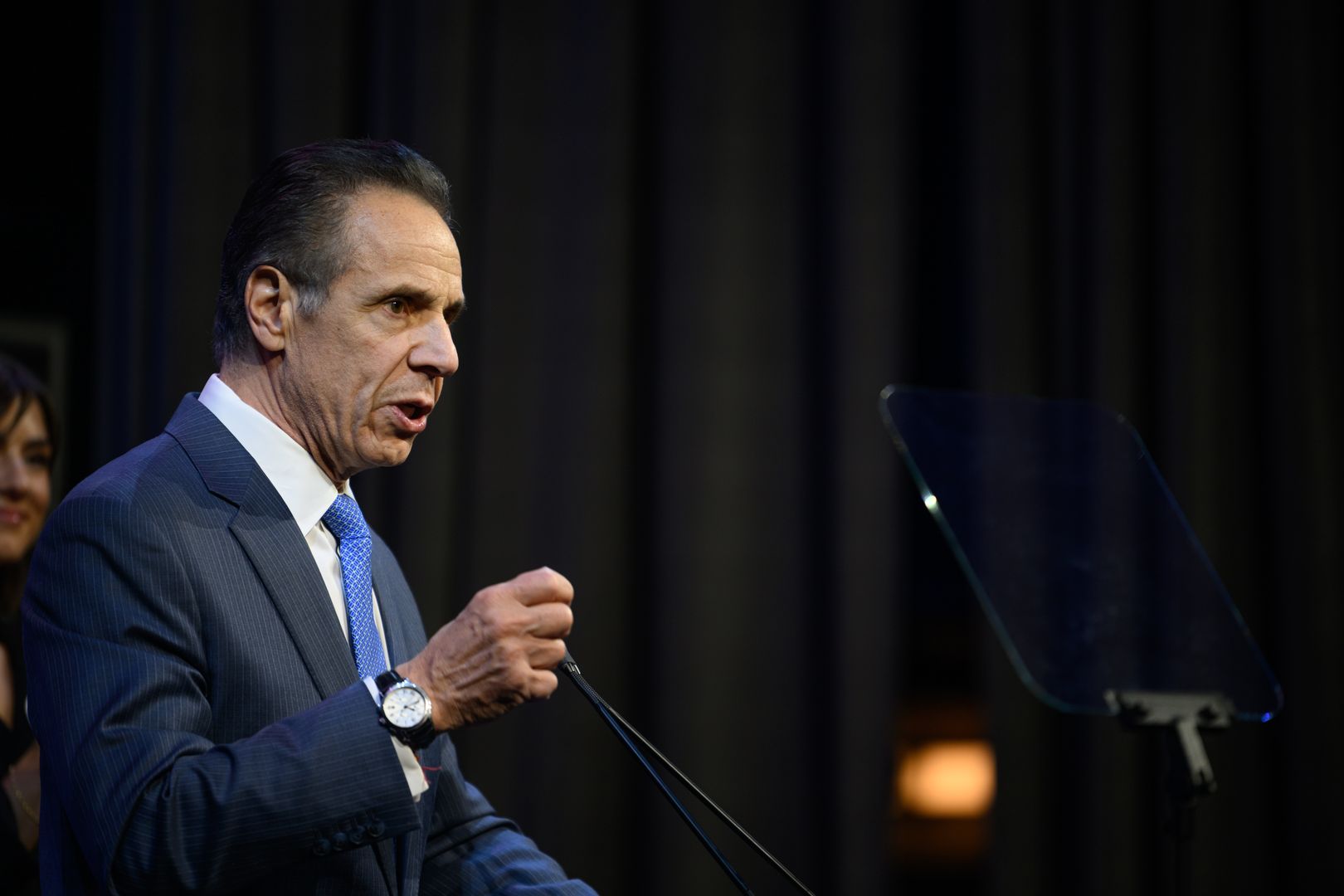
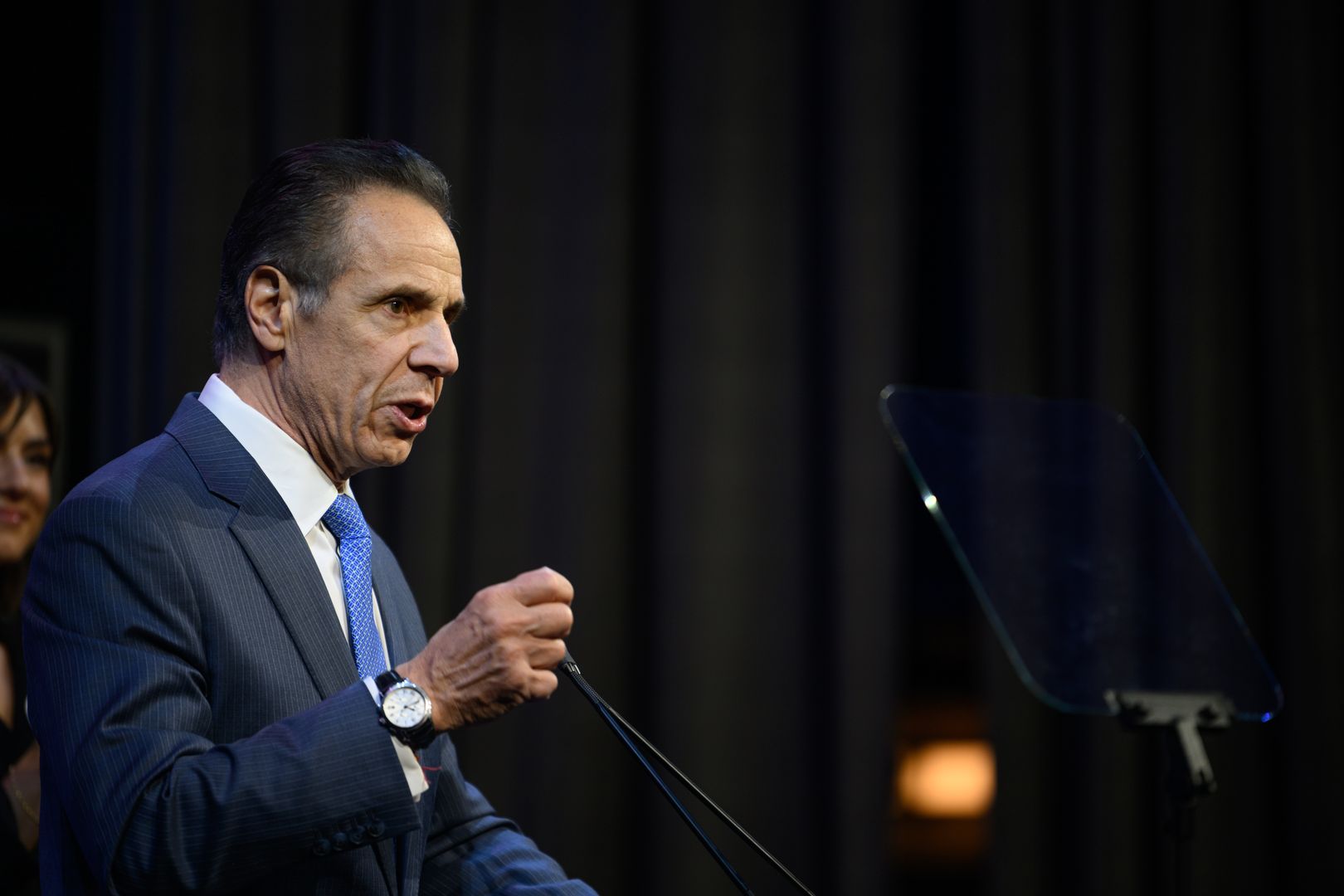
Former New York Gov. Andrew Cuomo says the CLARITY Act is key to linking crypto and traditional markets.
Bonds are slamming stocks just days after Wall Street set fresh records. A global bond selloff is now pushing borrowing costs to multi-decade highs.
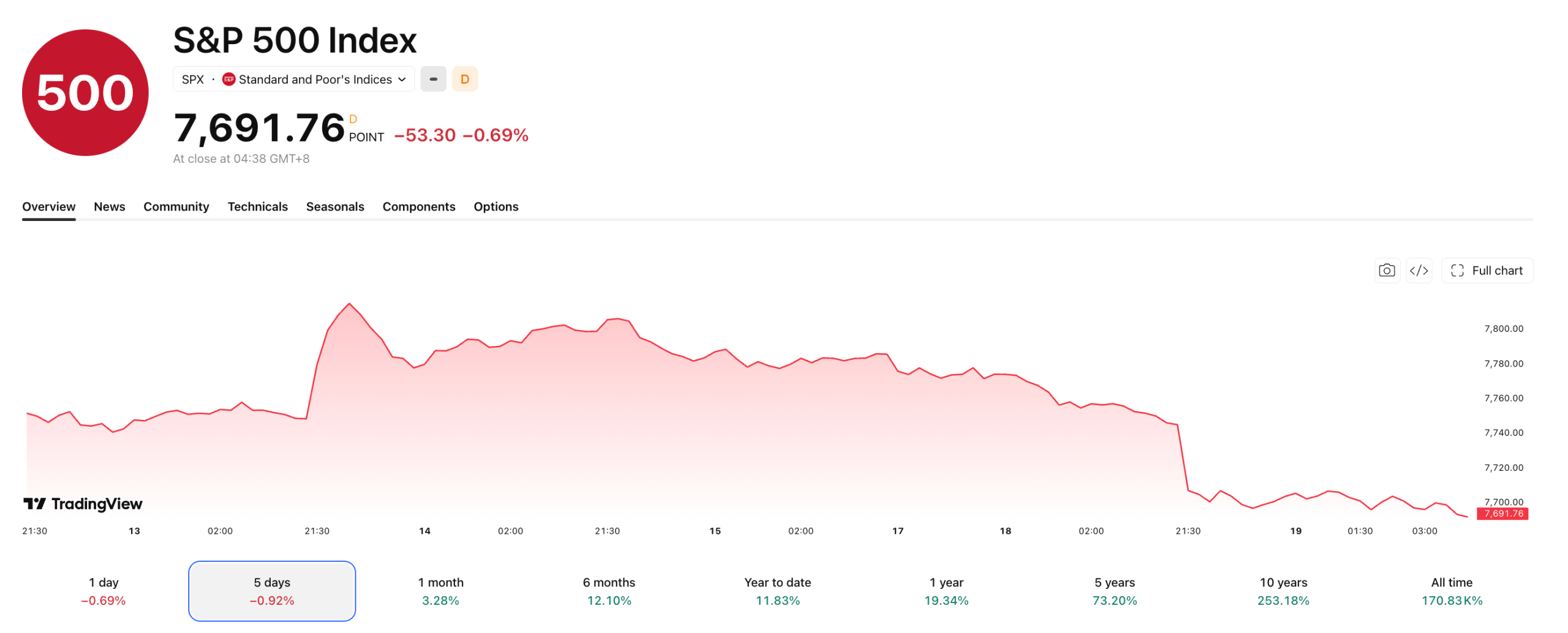
The S&P 500 and Nasdaq Composite fell to two-week lows on Tuesday. In contrast, long-dated Treasury yields jumped to their highest levels in nearly two decades.
Records, Then a Reversal
The S&P 500 closed at a record 7,798.99 on Aug. 13. Cooling inflation data and strong AI-linked earnings had powered that rally.

The Dow Jones Industrial Average had also set an AI-earnings record close alongside the S&P 500 on Aug. 5. However, the mood flipped just days later.
The Nasdaq Composite slid to a two-week low as semiconductor stocks tumbled, denting a record-setting 2026 rally.
How Bonds Are Slamming Stocks
The US 10-year Treasury yield climbed to 4.748%, its highest since January 2025. The 30-year yield reached 5.33%, its highest level in 19 years.
The rout is not just American. Japan’s 10-year government bond yield reached a 30-year high of 2.945% this week.
The gap between short-term and long-term US yields is now the widest in four years. That steepening signals investors are demanding more compensation for long-run risk.
Renewed doubts over a Middle East peace deal pushed oil prices higher, fanning inflation fears. Meanwhile, a record wave of corporate bond issuance is competing with government debt for investor cash.
Issuance has totaled nearly $1.7 trillion so far in 2026, according to SIFMA data. That pace is on track to top last year’s record of $2.2 trillion.
A Moving Market is Worth a Look
Meanwhile, South Korea’s KOSPI fell 1.5% and Japan’s Nikkei dropped 2.5% in sympathy. The Philadelphia SE Semiconductor Index tumbled 5% as investors reassessed AI-linked valuations.
In contrast, the pullback lends weight to Fundstrat’s Tom Lee. He has said a 10% market correction may be needed before the S&P 500 can sustainably clear 8,000.
Wednesday’s Federal Reserve minutes may decide whether this pause holds or the selloff deepens. Investors are already positioning for that Fed minutes preview, the next major catalyst for both stocks and bonds.
The post Wall Street Notches Records, Then Bonds Slam Stocks Back Down appeared first on BeInCrypto.
Drunk passenger’s Nazi tirade on Jet2 flight ‘ruins holidays’ for 300 passengers
Christian Norgaard explains ‘risk’ of joining Arsenal FC as transfer ‘regret’ revealed after exit

Tech sell off drags Wall St down as bond yields climb





-

 Fashion4 days ago
Weekend Open Thread: Ann Taylor
-
 Sports5 days ago
This U.S. Amateur is a glimpse into golf’s future in more ways than you think
-
 Tech5 days ago
11 Ways to Rank Your Videos
-

 Sports4 days ago
Birmingham 2026: Day 6 Timetable for Irish Athletes
-
 NewsBeat4 days ago
Myanmar says over 300,000 Rohingya refugees verified for repatriation as exodus enters ninth year
-

 Politics4 days ago
SEQ Code: The Three Letter Boarding Pass Code That Could Give You The Worst Seat
-
 Entertainment7 days ago
Keke Palmer Subtly Hints At Sean Evans Drama With Cryptic Post
-
 Crypto World7 days ago
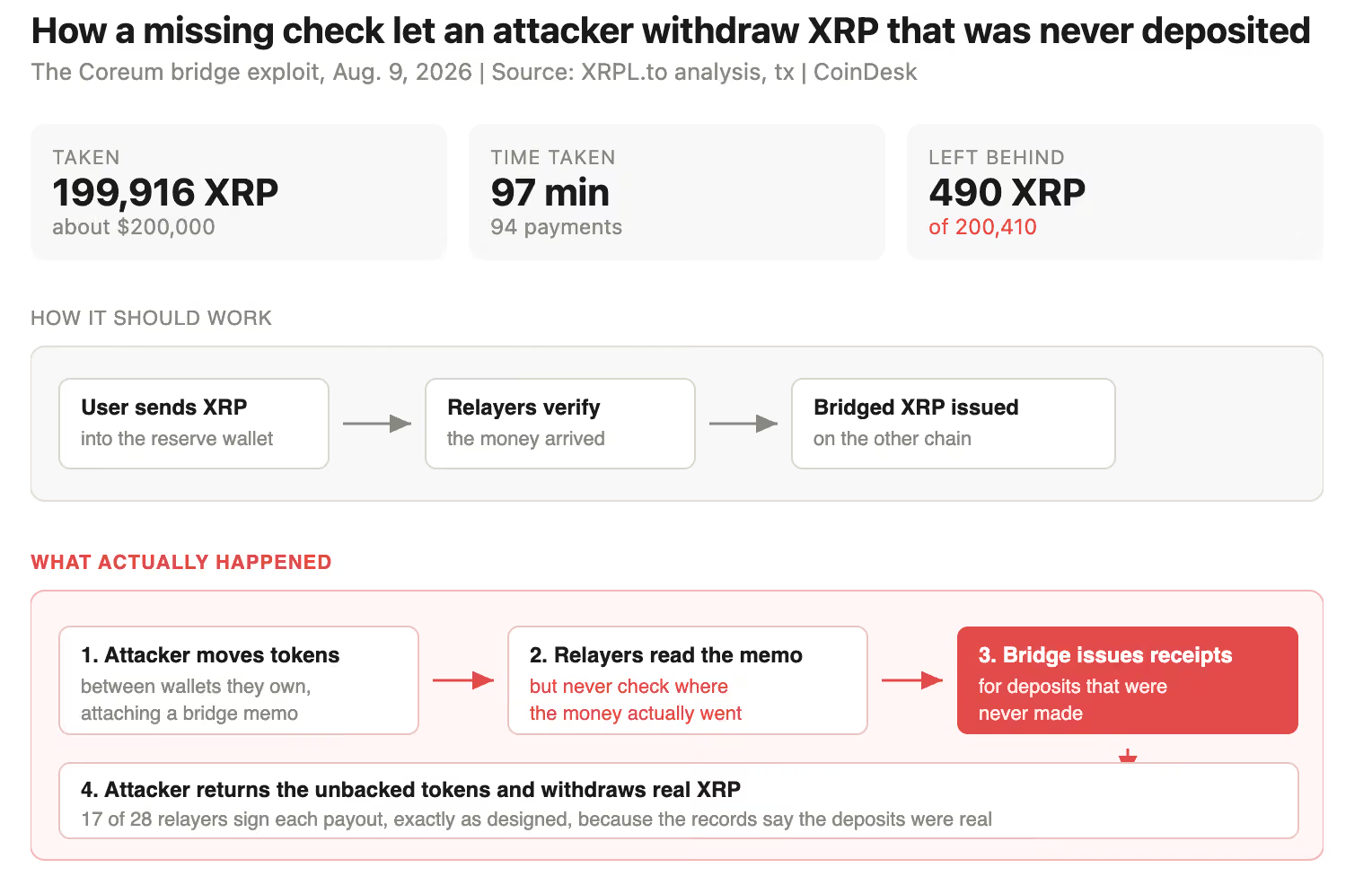
XRP bridge drained after software mistook fake deposits for real ones
-

 Tech5 days ago
DeepSeek Harness launches as open source rival to Claude Code, alongside V4-Pro on API with higher prices
-

 Sports6 days ago
DeQuan Jones in ‘high spirits’ after successful leg surgery
-
 Crypto World6 days ago
Perplexity AI Predicts an XRP Scenario Few Analysts Are Discussing
-

 Tech7 days ago
SpaceXAI’s Grok Bot turns agents into persistent digital coworkers that can operate your apps for $120-per-month
-

 Crypto World1 day ago
OCC Greenlights Trump Family Crypto Firm for Trust Charter
-

 Politics7 days ago
How Average Are You In The UK?
-
 Entertainment6 days ago
2026’s Most Ambitious Fantasy Movie Officially Scores Sequel Update
-
 Entertainment6 days ago
All 10 Hayao Miyazaki Fantasy Movies, Ranked
-

 Fashion7 days ago
A Fresh Take on Utility
-
 Entertainment6 days ago
Travis Kelce Breaks Silence On ‘Crazy’ Taylor Swift Wedding
-
 Entertainment5 days ago
10 Netflix Shows That Quietly Became Modern Classics
-

 Fashion7 days ago
Why Botanical Fashion Never Goes Out of Style
You must be logged in to post a comment Login