
Crypto World
Gate brings F1 Red Bull spectacle to Hong Kong waterfront for 13th anniversary



Gate is rolling an F1 Red Bull parade and “Racing the Future” exhibition through Hong Kong as part of its 13th‑anniversary push to fuse crypto branding with motorsport.
Summary
- Gate is staging an F1 Red Bull Racing parade around Victoria Harbour as part of a Hong Kong activation with the team.
- From April 18–24, the partners will host a “Racing the Future” exhibition at K11 MUSEA, showcasing the new 2026 Red Bull car, gear and interactive zones.
- A Blue Carpet ceremony and “Gate 13” anniversary gala at the Rosewood Hong Kong on April 20 will gather more than 300 industry guests and partners.
Gate is leaning on Formula 1 star power to anchor its 13th‑anniversary celebrations, rolling a branded Red Bull Racing parade car through Hong Kong’s Victoria Harbour district and wrapping it in a week‑long exhibition and gala. The company, an official sponsor and exclusive crypto‑exchange partner of Oracle Red Bull Racing, said the showcase is designed to bring “top‑tier racing culture into urban landmark scenes” while boosting its brand with local fans and global crypto users.
According to event materials, the F1 display car will follow a designated route around Victoria Harbour, giving spectators a close‑up view of the team’s 2026 machine as it passes through high‑traffic waterfront spots. Gate described the parade as a key offline moment in its cross‑industry tie‑up with Red Bull, positioned to “attract market and public attention” at a time when exchanges are fighting for mindshare in Asia’s post‑ETF bull market.
From April 18 to 24, Gate and Red Bull will host a “Racing the Future” outdoor exhibition at the K11 MUSEA promenade, where visitors can see the new 2026 Red Bull Racing car and core equipment, including race gear tied to drivers such as Max Verstappen and junior teammate Isack Hadjar. The event will feature a 13‑year “milestone wall” recounting Gate’s history, screenings of a new brand film and interactive zones that blend “top racing engineering and the aesthetics of speed.”
Organizers say the exhibition will be free but capacity‑controlled, with pre‑registration recommended for priority entry between 10 a.m. and 10 p.m. local time. One day of the run — April 20 — will be partially closed to the public to accommodate a private activation woven into Gate’s anniversary program.luma+1
That same day, the company will host its “Gate 13 Blue Carpet Ceremony,” formally unveiling the F1 display car and spotlighting its collaboration with Oracle Red Bull Racing and other lifestyle partners. In the evening, Gate will move the action indoors to the Rosewood Hong Kong for its “GATE GALA 13” anniversary dinner, where founder and CEO Dr. Han is scheduled to appear alongside more than 300 guests from leading institutions, partners and KOLs.
Gate’s Red Bull tie‑up dates back to a 2025 multi‑year sponsorship agreement that put its logo on the team’s cars, driver suits and pit equipment, replacing a prior $150 million deal with Bybit. The crypto exchange has since leaned heavily on the partnership in its marketing, echoing a wider trend of trading venues using elite sports sponsorships — from F1 to football — to rebuild trust and visibility after the last cycle’s blow‑ups.f1grandprix.
In previous crypto.news coverage, reporters have charted how exchanges from Binance to OKX and regional players have chased brand awareness through sports deals and experiential events, particularly in markets like Hong Kong that are racing to position themselves as regulated hubs for digital assets. Similar stories have highlighted how those efforts often converge around flagship weeks such as Paris Blockchain Week or Hong Kong’s FinTech Week, blending industry conferences with public‑facing stunts meant to pull crypto deeper into mainstream culture.



A Solana-backed super PAC is spending $8m to boost pro-crypto Jon Husted against Sherrod Brown, as crypto war chests like Fairshake and Fellowship reshape 2026 races.
Summary
- Sentinel Action Fund will spend $8 million backing Republican Jon Husted against Sherrod Brown in Ohio.
- The super PAC is bankrolled by the Solana Institute, Multicoin Capital and major Wall Street donors.
- Crypto PACs like Fairshake and Fellowship now wield war chests nearing $200 million ahead of November.
Sentinel Action Fund, a U.S. super PAC backed by the Solana Institute, will deploy $8 million with its advocacy arm Right Vote to support Republican Jon Husted in Ohio’s November Senate race against Democrat Sherrod Brown. The group said in a Wednesday statement that the spend is aimed at boosting a candidate it views as “strongly supports crypto” against one it accuses of blocking digital asset innovation.
Husted has repeatedly called for a “pro‑innovation framework for digital assets,” arguing that crypto and blockchain represent the “next wave of economic opportunity for working families.” In contrast, Brown has pushed for a crackdown on the use of crypto to fund terrorism and evade sanctions, and he lost his Senate seat in the 2024 race to crypto‑friendly Republican Bernie Moreno, who was heavily backed by industry money.
Sentinel’s crypto funding is anchored by a $750,000 donation from the Solana Institute and $250,000 from venture firm Multicoin Capital, according to Federal Election Commission records. “Brown has stood in the way of pro‑innovation policies when it comes to digital assets,” Sentinel Action Fund president Jessica Anderson said, casting the PAC’s intervention as part of a wider fight over the regulatory direction of U.S. crypto policy.
The PAC has also drawn checks from Blackstone CEO Stephen Schwarzman and Fisher Investments chairman Kenneth Fisher, underscoring the extent to which traditional finance is now funding explicitly pro‑crypto political vehicles. Sentinel’s Ohio play is its third endorsement of the 2026 cycle, after it backed Maine Senator Susan Collins and Michigan Republican Mike Rogers, both considered friendly to digital assets.
Crypto super PACs more broadly have amassed substantial firepower heading into November. Fairshake, which is backed by firms such as Coinbase and a16z, has built a $193 million war chest and pledged to oppose “anti‑crypto politicians” as Congress moves toward a key vote on comprehensive digital asset legislation.
Another pro‑crypto vehicle, Fellowship PAC, recently received a $10 million donation from Cantor Fitzgerald, the Wall Street firm formerly owned by current U.S. Commerce Secretary Howard Lutnick, according to FEC filings. The group has named Tether U.S. executive Jesse Spiro as chairman to lead “its next phase of expansion” and will soon publish its first slate of endorsed candidates, signalling that stablecoin issuers are stepping more directly into U.S. electoral politics.
In previous crypto.news coverage of U.S. policy battles over stablecoins and market structure, reporters have highlighted how Solana‑linked entities, ETF issuers and exchange groups are increasingly turning to political spending as they seek friendlier rules for onchain finance.
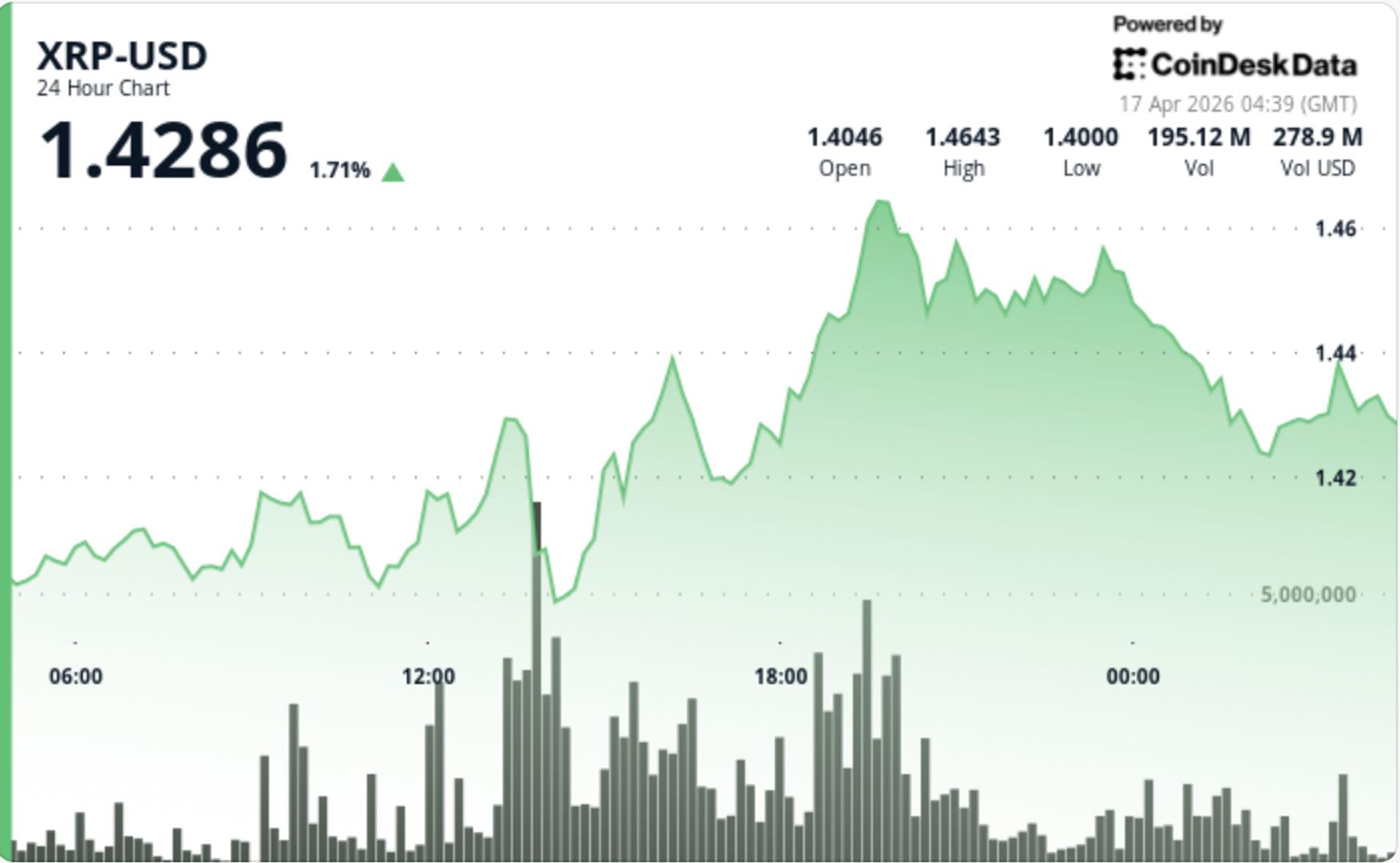
XRP is quietly outperforming the market, but it still hasn’t done enough to break out. The move higher looks steady rather than aggressive, which points to accumulation, but without stronger volume, it’s not a convincing shift yet.
News Background
• XRP is the top weekly performer among major cryptocurrencies, gaining around 6.4% and outperforming bitcoin, ethereum, and BNB over the same period.
• The move comes as broader crypto markets remain mixed, with capital rotating selectively into higher-beta assets rather than driving a full market-wide rally.
Price Action Summary
• XRP climbed to around $1.43, holding a steady upward structure across the week.
• The move developed gradually, with no sharp spikes, indicating controlled accumulation rather than speculative momentum.
• Price remains capped below the $1.44 resistance zone despite multiple attempts to break higher.
Technical Analysis
• The key signal is relative strength. XRP is outperforming peers even without strong volume support.
• Volume remains subdued at roughly 70% of its weekly average, which limits conviction behind the move.
• The structure shows higher lows, but resistance continues to absorb upside near $1.44.
• This combination typically signals consolidation rather than a confirmed breakout.
What traders should watch
• $1.44 remains the key resistance. A clean break is needed to validate upside continuation.
• $1.40 acts as near-term support. Holding above it keeps the structure intact.
• Continued low volume risks a pullback, especially if broader market momentum fades.

TLDR:
- Class action alleges Circle allowed USDC flows after Drift Protocol $280M exploit on Solana
- Filing claims attackers moved $230M via USDC and CCTP bridge without intervention for hours
- Drift Protocol halted trading after exploit while ecosystem actors froze portions of stolen assets
- Hackers routed funds from Solana to Ethereum, using bridges and swaps to obscure transaction trails
A class action lawsuit filed in Oakland has targeted Circle Internet Financial over its role in a major crypto exploit.
The case stems from the April 1, 2026 Drift Protocol hack that drained roughly $280 million in digital assets. Plaintiffs claim attackers moved about $230 million through USDC and Circle’s CCTP bridge without any effective intervention.
The filing seeks damages for affected investors and raises questions about whether frozen funds could have limited losses.
Circle Sued Over Drift Protocol Hack Allegations Over USDC Freeze Response
Gibbs Mura, A Law Group, filed the class action on April 14, 2026 representing Drift Protocol investors.
The complaint positions Circle Internet Financial and Circle Internet Group as defendants in a case tied to one of the largest crypto exploits recorded in 2026 on the Solana network. Moreover, the filing focuses on how stablecoin infrastructure handled transaction flows during the aftermath of the breach.
The lawsuit states that within an hour of the hack, crypto users on X flagged the incident widely. Several market participants urged immediate intervention as stolen funds began moving across chains.
According to the filing, some ecosystem operators froze portions of the assets while activity continued through Circle’s USDC infrastructure.
Investigators referenced in the complaint describe the attackers as potentially linked to North Korea. The assets were routed from Solana to Ethereum in an effort to reduce traceability.
Once on Ethereum, funds were converted into Ether and moved through multiple decentralized applications.
Plaintiffs argue Circle had visibility into the ongoing movement of stolen assets.
The complaint claims the company retained the technical ability to restrict or freeze USDC-related flows. Despite that capability, the filing alleges no effective disruption occurred during the key offloading window.
Drift Protocol $280M Exploit and CCTP Bridge Scrutiny
On April 1, attackers reportedly seized control of Drift Protocol’s asset transfer systems in roughly 12 minutes.
The breach enabled rapid draining of funds across multiple wallets. It marked one of the most significant DeFi security incidents of the year on Solana.
After the initial theft, attackers shifted assets from Solana to Ethereum.
The move aimed to complicate tracking and delay recovery efforts. On Ethereum, funds were converted into Ether and distributed through multiple applications.
The complaint highlights an eight-hour offloading phase involving USDC and Circle’s Cross-Chain Transfer Protocol.
Roughly $230 million moved during this window, according to the filing. Plaintiffs argue monitoring systems should have flagged or restricted the flows during active exploitation.
Drift Protocol halted all trading immediately after detecting the breach. The team also issued alerts to users and froze platform activity.
Some ecosystem participants also restricted portions of the stolen funds, but Circle allegedly continued processing related transactions.



Polkadot price rebounded over 10% on Thursday as it recovered from a sharp drop earlier this week.
Summary
- Polkadot price rebounded over 10% after a sharp sell-off triggered by a bridge exploit that did not impact its core network security.
- The token found support near $1.15 as RSI signaled oversold conditions, prompting a relief bounce and improved market sentiment.
- A break above $1.31 resistance could open the door for further upside toward the $1.42 level in the short term.
According to data from crypto.news, Polkadot (DOT) price rose 10.4% to an intraday high of $1.29 on April 16, while bringing its market cap back above $2.16 billion. The bounce follows after the token fell nearly 13% this week.
Polkadot price bounced after rumors of a systemic network failure triggered a sell-off earlier this week. Notably, a security breach on the Hyperbridge gateway allowed an attacker to mint 1 billion bridged DOT tokens on the Ethereum network.
Despite an immediate knee-jerk reaction from the market, the panic-driven selloff subsided once investors realized the exploit did not compromise Polkadot’s native Relay Chain or its core security architecture. This clarity allowed the community to view the incident as an isolated bridge issue rather than a fundamental flaw in the Polkadot ecosystem.
Consequently, major exchanges like Upbit and Bithumb are moving back towards resuming normal services after a temporary suspension to protect users from potential volatility. This has significantly reduced the immediate liquidity bottleneck and restored a sense of normalcy to the trading environment.
Meanwhile, following the 27% drop over the past month, Polkadot price has reached a critical psychological bottom at $1.15 yesterday.
The Relative Strength Index, an indicator used to measure the speed and change of price movements, fell to 33.80, signaling that the token had entered a deeply oversold territory and was due for a relief bounce.
As of now, intraday price action has been strong, with DOT testing immediate resistance at $1.31. A successful close above this level could trigger bulls to target the $1.42 zone as the next logical destination for this recovery.
Disclosure: This article does not represent investment advice. The content and materials featured on this page are for educational purposes only.


Summary
A Solana (SOL) trader has turned just $8.50 into $9,928 by buying and staking the memecoin BELIEF, locking in a 1,169x return that underscores the ferocity of risk-taking on the network.
On-chain tracker Lookonchain said the wallet, labeled “7Be6hv,” spent 0.1 SOL worth $8.50 to acquire 6,636 BELIEF before compounding the position through staking.
According to Lookonchain, the address “spent 0.1 $SOL ($8.5) to buy 6,636 $BELIEF and staked it, earning 25.06 $SOL ($2,160) and 2.9M $BELIEF ($7,768 now) in staking rewards.”
“By buying and staking $BELIEF, he turned $8.5 into $9,928,” the on-chain analytics account added, sharing a Solscan link to the wallet’s activity.
The BELIEF trade is tied to Printr, a Solana-based token-launching protocol whose supporters have branded the token “printr” money and praised “proof of belief” staking in replies to the viral post. One user joked “they weren’t joking when they called it printr,” while another said “proof of belief can be so rewarding,” capturing the speculative mood around the ecosystem.
Solana remains one of crypto’s most actively staked networks, with more than two-thirds of SOL supply locked and yields often in the mid-single digits, according to the Solana Foundation and exchanges such as OKX. As staking has scaled, network activity has surged, with Solana recently processing around $650 billion in monthly stablecoin volume and overtaking Ethereum and Tron in that metric, as reported by crypto.news.
Episodes like the BELIEF windfall come against a backdrop of debate over whether Solana’s current staking rewards, near 6% annually for many delegators, are “needlessly high” and should be reduced to curb token inflation, according to a recent proposal highlighted by DL News. At the same time, crypto.news has noted that SOL’s price remains trapped around the $80–$100 range even as on-chain usage climbs, underscoring the gap between speculative wins on long-tail tokens and broader market performance.
The crypto news today turned bullish fast. Solana posted $1.1 trillion in on-chain activity during Q1 2026, a 6,500% jump from the prior quarter per Artemis data, yet SOL still trades near $83.83 while sitting 71% below its all-time high. Zcash gained 45% in seven days as privacy coin demand exploded after Foundry Digital launched an institutional mining pool.
But the name pulling the most capital is Pepeto, where a live exchange runs with a Binance listing confirmed and more than $9.04 million in presale funds keeps climbing. Analysts point to 100x once trading opens, and every tool on the platform already works for the wallets that got in early.
Solana’s total economic value crossed $1.1 trillion for Q1 2026 according to Artemis, the highest quarterly figure any Layer 1 outside Ethereum has ever posted.
When a blockchain moves more value in three months than most nations do in a year, the bullish case writes itself. Capital keeps rotating toward projects with working products, and presale pricing is where the biggest cycle gains get locked in.
Top Crypto News Today Tokens: Pepeto, Solana, and Zcash Compared
Pepeto: The Live Exchange Behind the 100x Target in the Crypto News Today
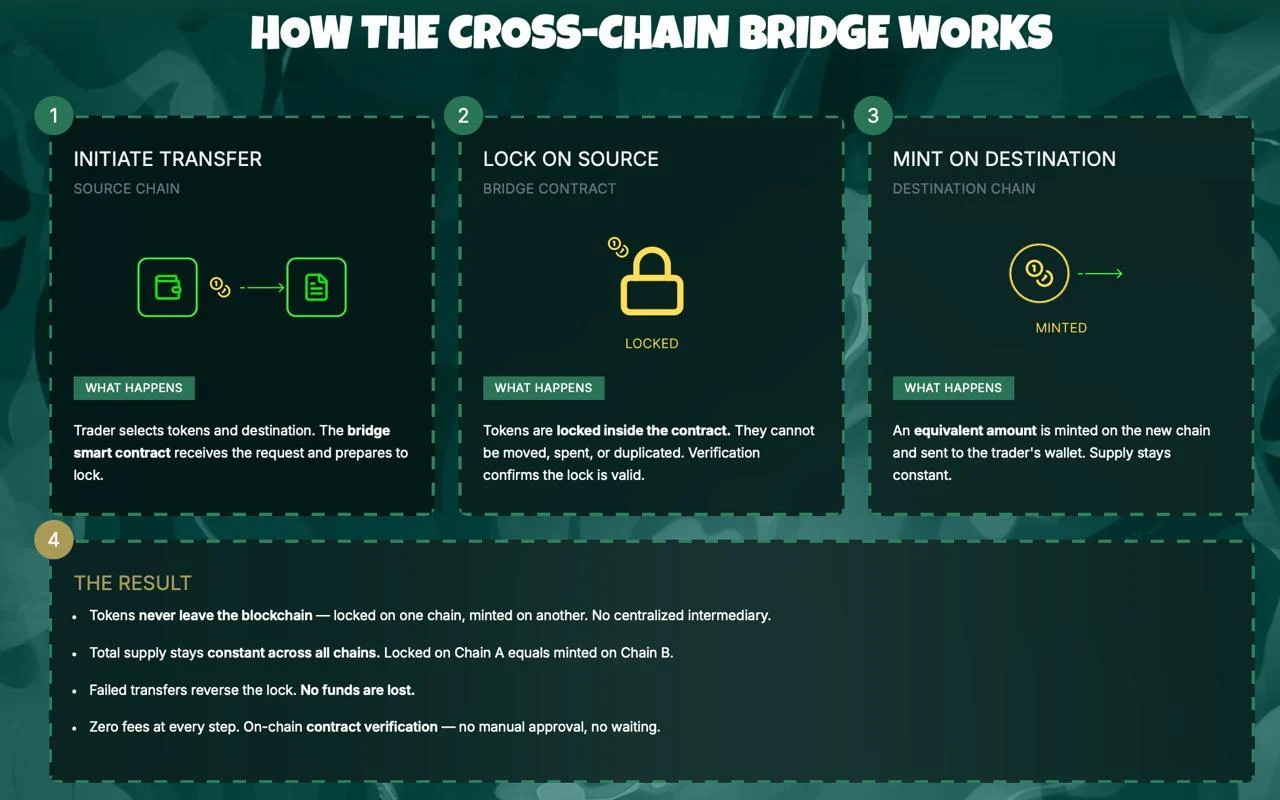
Solana just proved that real usage brings real capital, and the projects already running tools are the ones that ride the wave. Pepeto operates a full exchange where users swap, bridge, and screen tokens without paying a single fee, and that daily utility is exactly why analysts call it a 100x play and the hottest presale of the entire cycle. This is the entry that changes portfolios.
Every swap on PepetoSwap costs nothing, every cross-chain transfer lands at full value across Ethereum, BNB Chain, and Solana, and the contract screener grades each token before your wallet goes near it, blocking traps that wipe portfolios during wild swings.
The cofounder behind Pepe, a token that hit $11 billion with zero tools behind it, built this exchange alongside a Binance veteran, and SolidProof cleared every contract before the presale went live. Staking at 183% APY compounds holdings each day as the listing date gets closer.
At $0.0000001862 with $9.04 million raised during extreme fear, analysts target 100x because a working exchange from the Pepe founder with a confirmed Binance listing is a setup this cycle has only delivered once. Every wallet inside before listing day owns the entry that latecomers will never get. After the listing, this price dies and the 100x belongs to the addresses already in.
Solana (SOL) Price at $83.83 as Q1 Economic Activity Hits $1.1 Trillion
Solana (SOL) trades at $83.83 per CoinMarketCap, down 2.4% in the last 24 hours and sitting 71% below its $293 all-time high. The $1.1 trillion in Q1 activity and Solana ETF assets crossing $1 billion show adoption is accelerating fast. Support holds near $80 with resistance at $97, and Changelly targets $107 by the end of 2026.
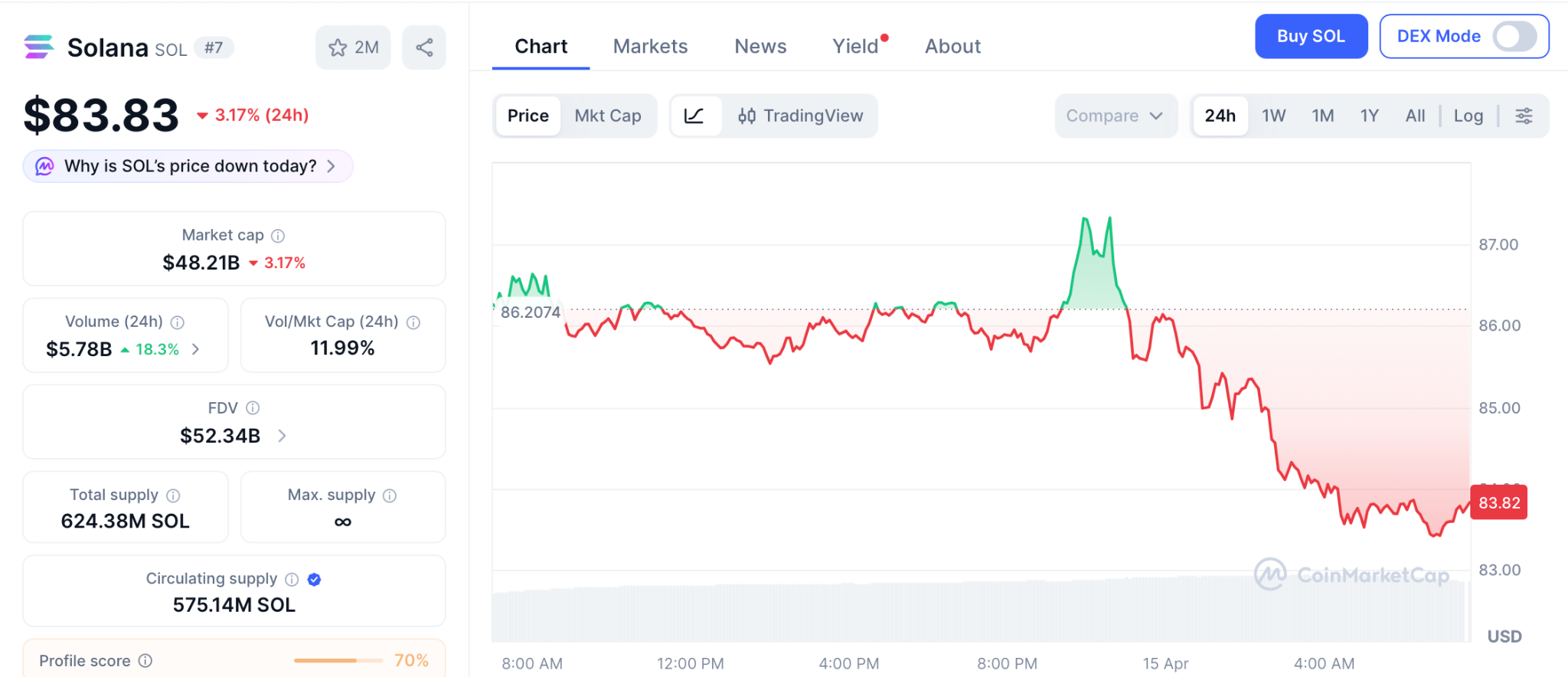
Even that optimistic Solana forecast gives roughly 1.3x from here, a number that disappears next to what a token priced under one millionth of a dollar can deliver at listing.
Zcash (ZEC) Price at $353 as Privacy Coin Demand Sends ZEC Up 45% in One Week
Zcash (ZEC) trades near $353 per CoinMarketCap, up over 45% in seven days after Foundry Digital launched its compliance-ready mining pool and shielded pool value hit a record $5.18 billion. Grayscale’s spot Zcash ETF filing adds fuel, and targets reach $500, a solid 1.4x from here.
Strong momentum for Zcash, but presale distance is where the real returns get made. Pepeto carries the math that a $6 billion cap Zcash will not produce from this price.
Conclusion
Solana just recorded $1.1 trillion in quarterly activity, Zcash posted a 45% weekly rally on institutional mining demand, and the crypto news today is running hot. But the wallets that turned $1,000 into six figures on early Pepe all did the same thing: they spotted a working product at presale price and moved before the listing changed everything.
The Pepeto official website is where the presale stays open. Once the Binance listing hits, this price is dead and every wallet that sat out pays a massive premium for the same token. The 100x target only works for addresses that got in at presale. Miss this, and you spend the rest of 2026 watching the profits you left on the table.
Click To Visit Pepeto Website To Enter The Presale

FAQs
What is the best crypto news today pick for 100x potential in 2026?
Pepeto stands out as the top 100x candidate in the crypto news today because it runs a zero-fee exchange with a contract screener, cross-chain bridge, and confirmed Binance listing, all cleared by SolidProof. The presale price is $0.0000001862 with $9.04 million raised while Solana and Zcash offer under 2x from current levels.
How does the Zcash price rally compare to what Pepeto offers right now?
Zcash (ZEC) gained 45% in one week and trades near $353, but targets cap around $500 for roughly 1.4x. Pepeto at presale price with 183% APY staking and a confirmed Binance listing carries 100x distance that large caps cannot match at their current size.
Disclaimer: This is a Press Release provided by a third party who is responsible for the content. Please conduct your own research before taking any action based on the content.


A new Cato Institute paper argues that U.S. capital gains rules make “bitcoin taxes make no sense,” burying everyday BTC payments in paperwork and locking the asset into a hoarding role instead of money.
Summary
- Cato Institute’s Nick Anthony argues US capital gains rules make daily bitcoin spending “make no sense.”
- Treating BTC as property forces users to track tax lots on small purchases, from coffee to groceries.
- Cato urges scrapping gains on crypto payments or adopting a higher de minimis threshold than the current $200 proposal.
The Cato Institute is calling for a reset of how the United States taxes bitcoin, arguing that current rules make it almost impossible to use the asset as everyday money. In a new blog post, research fellow Nicholas Anthony writes that “bitcoin taxes make no sense,” because every transaction is treated as a taxable event under capital gains rules.
Anthony notes that under existing guidance, bitcoin is treated as property, not currency, meaning users must calculate gains or losses each time they spend BTC (BTC), no matter how small the purchase. “It’s never been easier to use bitcoin as money,” he said, “yet, at the same time, the tax code puts an incredible burden on law‑abiding citizens.”
In his analysis, Anthony describes how something as trivial as buying a cup of coffee with bitcoin every day can snowball into “over 100 pages of tax filings” over time. For each transaction, users must record the date they acquired the BTC, the price paid (cost basis), the date they spent it, and the dollar value at the time of the purchase, then report it all on Form 8949 and Schedule D.
Beyond sheer paperwork, Anthony argues the structure “discourages real‑world use” and nudges people to hoard BTC rather than spend it, because capital gains rules are designed to reward long‑term holding. In his words, current policy has “effectively paralyzed Bitcoin’s use as a currency” even as wallet infrastructure and merchant tools make payments technically straightforward.
The think tank sketches several policy fixes, ranging from eliminating capital gains on cryptocurrency payments entirely to carving out exemptions for day‑to‑day spending. Anthony points to the long‑running Virtual Currency Tax Fairness Act proposal, which would exempt gains under $200 per transaction, but calls that threshold “too low” to match typical consumer behavior in a high‑inflation environment.
Cato’s intervention lands in the middle of U.S. tax season, as the Internal Revenue Service rolls out expanded crypto reporting rules that will see broker‑reported digital asset sales matched against Form 8949 entries and new 1099‑DA disclosures. At the same time, lawmakers are still debating de minimis exemptions, with some revised bills shifting relief toward regulated stablecoins, prompting criticism from bitcoin advocates who say Washington is “picking winners and losers” in the crypto market.
In previous crypto.news reporting on U.S. crypto tax bills and de minimis proposals, coverage has highlighted similar tensions between encouraging innovation and maintaining oversight, as well as concerns that complex filing rules could push retail users offshore or into non‑compliance.
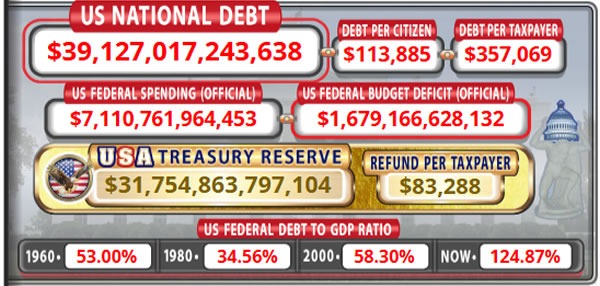
Former Treasury Secretary Henry Paulson has urged US authorities to prepare a contingency plan for a potential future collapse in demand for US Treasurys, warning that the fallout would be “vicious.”
“We need an emergency break-the-glass plan, which is targeted and short-term, on the shelf, so it’s ready to go when we hit the wall,” Paulson told Bloomberg in an interview on Thursday.
“People say, when are you going to hit the wall? I obviously don’t know, it’s impossible to know. When we hit it, it will be vicious, so we have to prepare for that eventuality.”
The US Treasury market acts as the bedrock of the global financial system, serving as a “risk-free” benchmark with other assets, such as corporate bonds, mortgages, and stocks, being priced relative to Treasurys. Instability could cause ripple effects in the global economy.
For years, economists have warned of a potential “doom loop” where investors start demanding higher yields on Treasurys due to risks tied to the government’s burgeoning debts, which are currently more than $39 trillion.
This could cause an increase in interest payments, currently 4.3% on 10-year notes, which would widen the deficit. But if the Treasury cannot raise what it needs to pay interest, many assume the Federal Reserve would become the principal buyer, Bloomberg reported.

A double-edged sword for crypto
There could be several potential impacts on crypto markets if the $31 trillion US Treasury market were to melt down.
A Treasury market crisis could potentially trigger a flight to alternative stores of value such as Bitcoin (BTC) or gold. This may happen if the Fed is forced to monetize debt, stoking inflation fears and undermining confidence in the dollar.
However, the world’s largest stablecoin issuer, Tether, is predominantly backed by Treasurys, with 63% of its total reserves comprising US Treasury bills and 10% overnight reverse repurchase agreements, according to the Tether transparency report.
Related: Ethereum stablecoin supply hits $180B all-time high: Token Terminal
Research lead at the Bitrue trading platform, Andri Fauzan Adziima, told Cointelegraph that this remains a “watch-list macro tail risk,” but if it happens, there could be short-term pain via “spiking yields, tighter global liquidity, and risk-off selling that hits BTC and altcoins hard while amplifying stablecoin risks.”
“Tether alone holds over $120 billion in Treasurys, making it vulnerable to redemption runs or depegs if confidence erodes and it faces fire-sale pressure.”
However, in the longer-term, it might “accelerate a flight to non-sovereign stores of value, positioning Bitcoin as ‘digital gold’ amid eroding trust in US debt/dollar dominance,”
It is potentially bullish if the crisis highlights fiat vulnerabilities without an immediate systemic meltdown, he said.
US Treasury conducts largest debt buyback
The US Treasury conducted its largest single debt buyback on Thursday, accepting $15 billion worth of older securities maturing from 2026 to 2028.
Such buybacks enhance Treasury market liquidity by retiring less-traded bonds and providing liquidity and cash to holders who may redeploy it elsewhere in the financial system.
Magazine: Forget stablecoin yield, how does the CLARITY Act treat DeFi?


Bitcoin traded around $74,700 in Asian morning hours Friday, down 0.4% over 24 hours but still up 3.5% on the week, as a 10-day rally in global equities paused ahead of next week’s U.S.-Iran ceasefire expiry.
Ether gave back 1.4% to $2,327 but still leads the majors on the weekly tape at 6%, extending the outperformance that emerged earlier this week. XRP held $1.43 with a 6.4% weekly gain, solana ticked up 2.7% to $87.67, BNB added 0.7% to $629.89, and dogecoin was up 5.6% on the week at $0.0976.
The MSCI All Country World Index closed at a record high Thursday before slipping 0.1% in Asia. The S&P 500 also hit an all-time high. Brent crude fell 1.2% to $98.20 after President Donald Trump said prospects for a permanent Iran ceasefire were “looking very good.”
Trump claimed, without evidence, that Tehran had agreed to give up its nuclear ambitions, turn over nuclear material, and reopen the Strait of Hormuz as part of the deal. Iran has not confirmed those concessions.
A 10-day ceasefire between Israel and Lebanon was announced separately on Thursday, with Israeli Prime Minister Benjamin Netanyahu confirming the truce in a video message. Markets are trading the headlines as if the deal is closer than it is, which is part of why equities have unwound most of the war premium while crude remains near $98 and the Strait of Hormuz is still effectively shut.
However, the setup underneath the flat bitcoin price action is what some traders are paying attention to.
Bitcoin perpetual funding rates have turned deeply negative in recent sessions, reaching levels last seen in 2023. Funding is the periodic payment perpetual futures traders exchange with each other to keep contract prices aligned with spot. When it goes negative, shorts are paying longs, which only happens when the market is heavily positioned against price.
“Funding rates this negative tell you the market is heavily short,” Daniel Reis-Faria, CEO of ZeroStack, said in a note shared with CoinDesk. “If Bitcoin continues to move higher despite that, a lot of those positions could get liquidated, and the move can accelerate quickly.”
Reis-Faria expects bitcoin could reach $125,000 in the next 30 to 60 days if the short base gets squeezed out.
“It’s a reminder that no matter how much shorting is in the market, the amount of buy pressure, especially from large companies, can squeeze those positions out,” he said.
The contrarian read from on-chain analyst CryptoVizArt is that bitcoin’s “True Market Mean,” a metric that estimates the average cost basis of active investors by filtering out lost and dormant coins, suggests the average active holder is currently underwater.
Since 2016, meaningful stretches below the True Market Mean have aligned with bitcoin’s worst periods, including the 2018-19 bear (-57% max drawdown, 282 days) and the 2022-23 unwind after the Luna and FTX collapses (-56%, 339 days).
The two reads do not have to be in conflict. A short squeeze from negative funding and a structural drawdown from underwater holders can both be true, with the former triggering the kind of outsized rally that ultimately gets sold into by the latter.
Which scenario dominates likely depends on whether the U.S.-Iran ceasefire extension holds past next week.
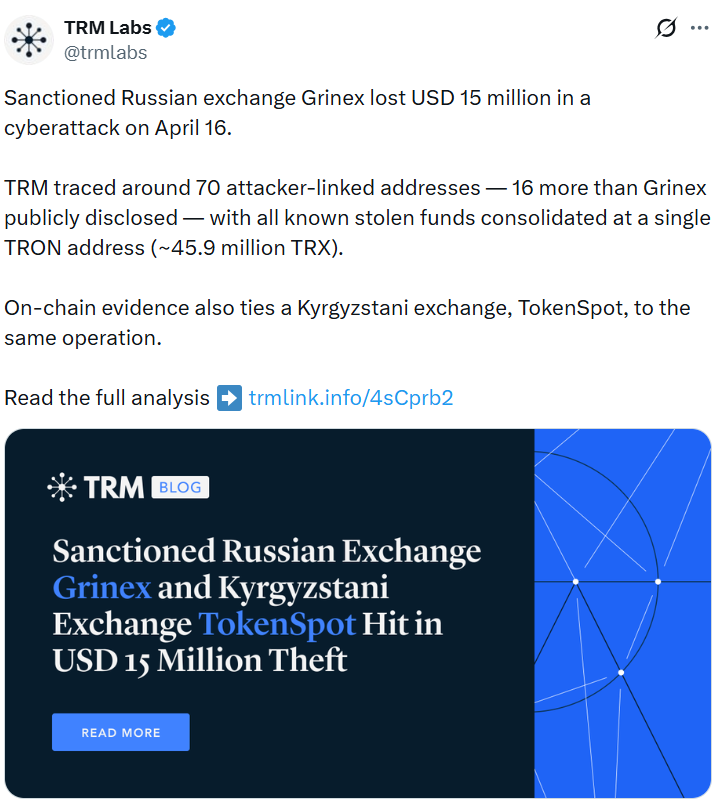
Sanctioned crypto exchange Grinex said it has suspended trading after losing more than 1 billion Russian rubles ($13.7 million) to an attack bearing signs of involvement by foreign intelligence agencies.
The exchange, which is registered in Kyrgyzstan but has been linked to Russia’s crypto ecosystem and alleged sanctions evasion, said on Thursday that the funds were taken from 54 addresses and that the digital footprint and nature of the attack indicate an “unprecedented level of resources and technology available only to entities of hostile states.”
“Due to the attack, the Grinex exchange has been forced to suspend operations. All available information has been transferred to law enforcement agencies. A criminal complaint has been filed at the location of the infrastructure,” it added.
Grinex had been widely seen as the successor to the similarly sanctioned Garantex exchange. Both have been accused by US authorities of assisting Russia and other entities in evading sanctions and laundering funds for Russia-linked hackers.
Elliptic founder Tom Robinson has accused it of being the primary platform for trading A7A5, a ruble-backed stablecoin linked to sanctions evasion.
A Grinex spokesperson told Cointelegraph last year that it strongly condemns any form of illegal activity, including sanctions evasion and money laundering.
Another exchange might have been hit by the same attacker
Grinex may not have been the only exchange targeted. Blockchain intelligence company TRM Labs said on Thursday that two wallets from TokenSpot, a Kyrgyzstan-based exchange with on-chain links to Grinex, sent around $5,000 to the same consolidation address used by the Grinex attacker.
TokenSpot’s Telegram channel announced technical work and a brief platform outage on April 15, followed the next day by an announcement that it had resumed full operations.

At the same time, TRM Labs said it has identified 16 additional addresses linked to the incident in addition to those Grinex publicly disclosed. The consolidation address where all the funds have been sent contains 45.9 million TRON (TRX), worth nearly $15 million.
Hacker might have stolen $15 million in USDT
Blockchain analytics firm Elliptic said it tracked about $15 million in USDt (USDT) leaving Grinex accounts. The funds were then sent to accounts on the Tron or Ethereum blockchains.
Related: Ukraine arrests FBI-wanted cybercrime suspect, seizes $11M in assets
“This USDT was then converted to another asset, either TRX or ETH. By doing so, the thief avoided the risk of the stolen USDT being frozen by Tether,” the company said.
This is not the first time an exchange accused of helping entities evade US sanctions has been targeted. Iran-based exchange Nobitex had $81 million drained in June 2025, with a pro-Israel hacker group claiming responsibility.
Magazine: Singapore isn’t a ‘crypto hub’ — it’s something better: StraitsX CEO

Solana-backed crypto PACs sharpen $8m attack on Ohio Senate race

McDavid wins sixth Art Ross, MacKinnon snags Maurice ‘Rocket’ Richard Trophy

NEOGEO AES+ Console Marks Return of the King, Set for Release in November


-

 Politics6 days ago
US brings back mandatory military draft registration
-
 Sports6 days ago
Man United discover Nico Schlotterbeck transfer fee as defender reaches Dortmund agreement
-

 Fashion6 days ago
Weekend Open Thread: Veronica Beard
-

 Politics7 days ago
Malcolm In The Middle OG Turned Down ‘Buckets Of Money’ To Appear In Reboot
-

 Politics5 days ago
World Cup exit makes Italy enter crisis mode
-

 Business6 days ago
Tesla Model Y Tops China Auto Sales in March 2026 With 39,827 Registrations, Beating Cheaper EVs and Gas Cars
-

 Crypto World3 days ago
The SEC Conditionalises DeFi Platforms to Be Avoided for Broker Registration
-

 Crypto World3 days ago
SEC Signals Exemption for Crypto Interfaces From Broker Registration
-

 News Videos2 days ago
Secure crypto trading starts with an FIU-registered
-
 NewsBeat4 days ago
Pep Guardiola and Gary Neville agree over Arsenal title problem that benefits Man City
-

 Business6 days ago
Ireland Fuel Protests Enter Day 5 as Blockades Spark Shortages and Government Prepares Support Package
-

 Business7 days ago
OpenAI Halts Stargate UK Data Centre Project Over Energy Costs and Copyright Row
-

 Crypto World6 days ago
Federal judge blocks Arizona from bringing criminal charges against Kalshi
-

 Politics7 days ago
LBC Presenter Mocks Trump Over Iran War Failures
-

 NewsBeat3 days ago
Trump and Pope Leo: Behind their disagreement over Iran war
-

 Crypto World3 days ago
SEC Proposes Certain Crypto Interfaces Don’t Need to Register as Brokers
-
 NewsBeat5 days ago
JD Vance announces ‘no agreement’ with Iran over nuclear weapons fear
-

 Business6 days ago
IMF retains floor for precautionary balances at SDR 20 billion
-

 Business6 days ago
Former Liverpool CEO eviscerates FIFA for World Cup ticket pricing
-
Crypto World4 days ago
Sei Network Enters Quiet Reset Phase as On-Chain Metrics Signal a Slowdown in 2026
You must be logged in to post a comment Login