
Crypto World
Gold Climbs to Six-Week Highs on China Demand as Bitcoin Lags S&P 500


Bitcoin traded largely unchanged near the $64,000 level at the start of the Wall Street session on Wednesday, showing little follow-through despite a broad risk-on push in traditional markets. The muted action stood in contrast to gold’s renewed strength, as the precious metal climbed to its highest levels in about six weeks.
While US equities continued to build on recent record highs, investors appear to be treating Bitcoin more cautiously—at least for now—amid signals that have to line up before a durable rebound can take hold.
Key takeaways
- BTC held steady around $64,000 as gold rose 2.8% to $4,213 per ounce, its highest since June 22.
- Gold’s strength has been linked to Chinese demand, including reported inflows into China-based gold-backed ETFs.
- US stocks maintained momentum, with the S&P 500 reaching 7,793 and a majority of constituents trading above their 50-day moving average.
- Bitcoin’s recovery still appears contingent on multiple factors, including spot Bitcoin ETF inflows, easing bond yields, and fewer expectations of Federal Reserve rate hikes.
Gold regains footing as China demand returns to focus
Market data reviewed by TradingView pointed to a notable divergence: precious metals and US equities were advancing, while Bitcoin lacked directional momentum. Gold was a clear leader, gaining 2.8% to $4,213 per ounce—its highest level since June 22.
Bloomberg attributed the push higher to Chinese buying and reported 14 consecutive days of inflows for domestic gold-backed exchange-traded funds. The broader backdrop has also been shaped by the World Gold Council’s description of China ETF flows earlier this year: the organization’s data indicates June delivered the worst month of outflows on record, yet year-to-date inflows still stand at 40 billion yuan (about $5.6 billion). Even with June’s weakness, the first half remains the second-best on record for inflows.
The World Gold Council noted that demand has stayed resilient amid geopolitical and economic uncertainties, while ongoing purchases by the People’s Bank of China have offered additional support for sentiment. The organization cited central bank activity totaling 82 tonnes over the 20 months through June.
US equities extend gains while Bitcoin lags
Risk assets in the US remained strong on the day. The S&P 500 pushed higher to 7,793, building on Tuesday’s all-time highs noted in earlier Cointelegraph coverage. That tone in equities came alongside a market breadth read from Bloomberg ETF analyst Eric Balchunas, who said 66% of S&P 500 stocks were above their 50-day moving average and 57% were outperforming a benchmark tracker.
For Bitcoin, the result was a second consecutive session of relative underperformance versus the optimism seen in US stocks. Instead of aligning with the day’s broader “buy the dip” behavior, BTC stayed pinned in a tight range, reinforcing the view that the market’s appetite for recovery is still fragile.
Analysis flags a recovery that needs several conditions to align
Bitcoin’s price action has largely centered on the $64,000 area on shorter time frames, with traders continuing to reference the broader “bear market” structure they believe is still in place. One of the more widely discussed technical themes comes from trader and analyst Rekt Capital, who argued that if the current support zone produces weaker rallies, BTC could form lower highs and eventually break down into the $58,000–$66,000 range.
On the fundamental and macro side, CryptoQuant’s research—published Tuesday—outlined three prerequisites it suggested for a more durable rebound: persistent inflows to US spot Bitcoin ETFs, cooling in US bond yields, and a reduced expectation of additional Federal Reserve rate hikes. In other words, Bitcoin may need both crypto-specific demand and a friendlier macro environment to sustain momentum beyond short-lived relief moves.
CryptoQuant also pointed to a market microstructure condition via the Coinbase Premium, which measures the price difference between Coinbase and Binance’s BTC/USDT pairs. The firm said that metric also needed to return to positive territory, reiterating earlier analysis from June. Cointelegraph previously reported that the Coinbase Premium had been negative for nearly 80 days, and the latest framing maintains that this imbalance has not yet corrected.
What investors should watch next
For BTC, the near-term question is whether gold-driven risk hedging and equity strength can translate into sustained crypto demand—or whether Bitcoin remains constrained until ETF inflows, bond yields, and rate expectations shift in sync. Watch for evidence that the Coinbase Premium improves alongside any acceleration in US spot Bitcoin ETF inflows, because multiple analysts now treat that combination as a prerequisite for a more credible recovery.

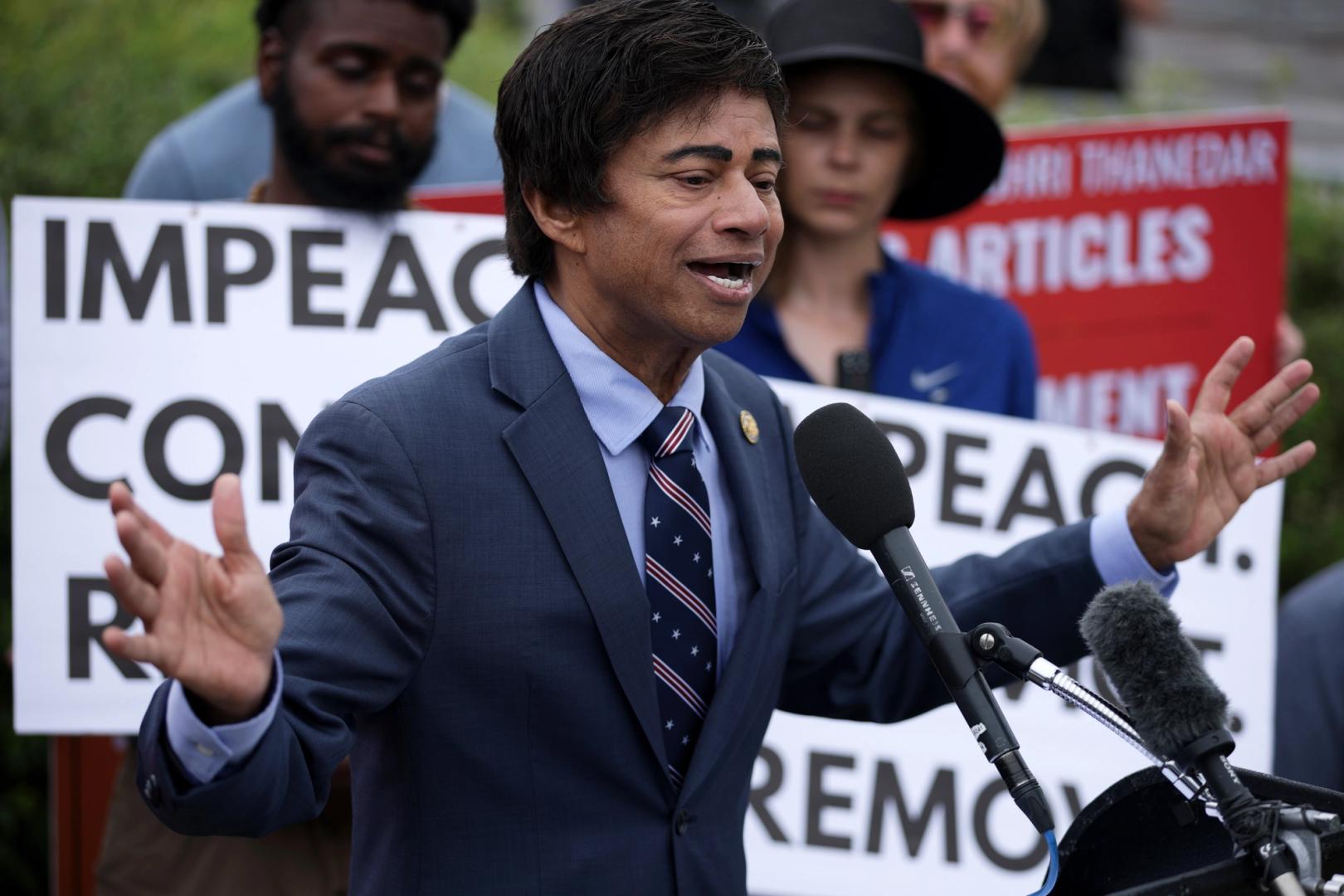
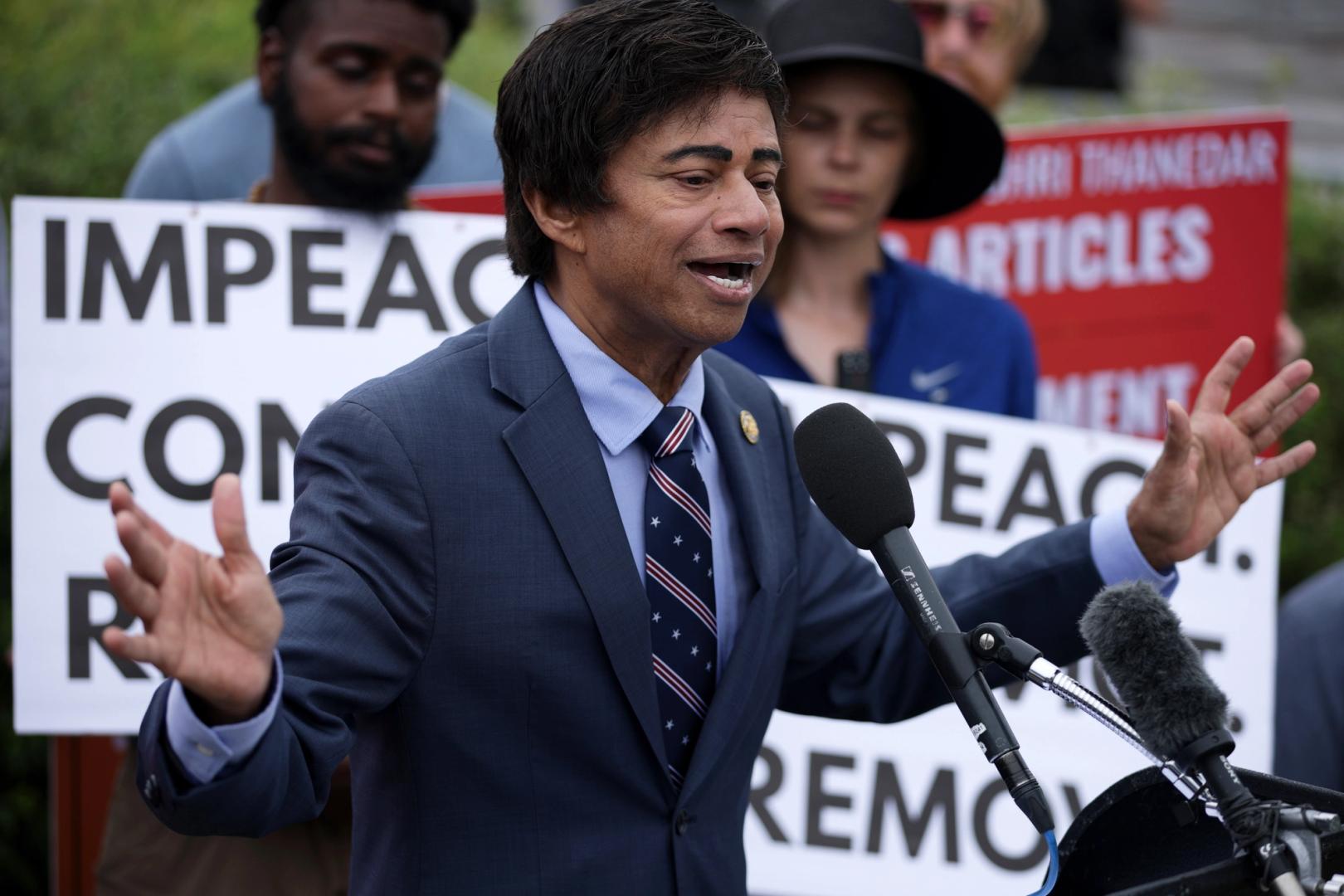
The latest U.S. congressional primary elections this week saw another unusual setback for the crypto industry’s largest campaign fund when incumbent Representative Shri Thanedar got shut down by progressive challenger Donavan McKinney for a Democratic nomination in Detroit.
It cost the Fairshake political action committee more than $2 million, and the industry loses an incumbent ally in the House of Representatives who co-sponsored its version of the Digital Asset Market Clarity Act and had also been active in other crypto legislation. His democratic socialist opponent is a blank slate on crypto issues, but he drew endorsements from Senator Bernie Sanders and progressive Michigan Senate candidate Abdul El-Sayed, who also won his primary.
The super PAC’s spending on Thanedar represented its biggest financial commitment among the primaries in Michigan and Washington conducted on Tuesday. However, the spending from Fairshake and its affiliates prevailed in five other primaries, mostly backing incumbents: Bill Huizenga in Michigan (a Republican who was also a Clarity co-sponsor) and Democrats Suzan Delbene, Kim Schrier and Marilyn Strickland in Washington. Plus, the industry backed Amanda McKinney, a pro-crypto Republican endorsed by President Donald Trump, in a Washington GOP race.

DefiLlama has added Forgd’s market-maker leaderboard to its analytics platform, aiming to give traders, token teams, and liquidity researchers a more standardized view of how market makers perform across exchanges and individual tokens.
According to Forgd, the leaderboard aggregates data on spreads, market depth, trading volume, and uptime. The integration provides DefiLlama users with a dashboard that ranks market makers using consistent measurements for pricing quality, liquidity depth, reliability, and execution—rather than relying on fragmented, exchange-by-exchange metrics.
Key takeaways
- DefiLlama integrates Forgd’s leaderboard to surface market-maker performance indicators such as spreads, depth, volume, and uptime.
- Forgd claims broad coverage, with data spanning more than 500 token projects and 35 market-making firms using its tooling.
- Comparisons aim to be standardized, enabling users to benchmark liquidity providers across venues and token markets.
- Scores are not a pure “trading performance” grade, Forgd says: lower ratings may reflect incomplete “performance verification” opt-in rather than poor execution.
What DefiLlama’s new leaderboard adds
DefiLlama is widely used by the crypto community to track on-chain and protocol-level activity, liquidity, and cross-market performance. With the new integration, the platform extends beyond token analytics into a layer focused on the mechanics of market making—how liquidity is provided in practice.
Forgd told Cointelegraph that its dashboard ranks crypto market makers using standardized criteria, including pricing-related metrics (such as spreads), the capacity of markets to absorb trades (market depth), and reliability measures (uptime). By tying those inputs to an index, users can compare market makers in a way that is meant to be consistent across active engagements.
How the underlying data is sourced
Forgd says the leaderboard is built from data spanning more than 500 token projects and involves 35 market-making firms that use Forgd’s tools to monitor liquidity across their active engagements.
The company also positioned the leaderboard as a tool for token projects when it first launched in May—helping teams select, evaluate, and monitor liquidity providers. With the DefiLlama integration, the same dataset is now intended to be more broadly accessible to anyone using DefiLlama’s interface for market research.
Why liquidity teams and traders may care
In practice, liquidity quality is not just about how much trading volume exists—it’s also about how efficiently orders can be filled without excessive price impact and whether liquidity remains available under stress.
Ryan Celaj, DefiLlama’s head of research, said the integration adds another evaluation signal for market structure that complements commonly tracked metrics like volume and liquidity. In other words, two tokens with similar headline liquidity can differ meaningfully in how consistently market makers support them and how tight spreads remain as activity fluctuates.
For token teams, the promise is straightforward: an easier way to compare market makers on criteria that map more directly to trading experience. For traders and analysts, it offers a way to evaluate market resilience—especially when liquidity conditions change across venues or during periods of volatility.
Important caveat: scores may reflect verification coverage
While the leaderboard provides grades meant to summarize multiple dimensions of performance, Forgd cautioned that these ratings are not solely a reflection of how a firm trades.
“A lower grade on the index is not necessarily a judgment of a firm’s trading,” Forgd CEO Shane Molidor told Cointelegraph. He explained that the index can also reflect whether market makers have “fully opted into performance verification.” In that case, the scoring may partly track the amount of verified data a firm supplies to Forgd rather than an objective decline in execution quality.
This distinction matters for anyone using the leaderboard for decision-making. If a firm’s dataset is thinner because it has not completed verification, a low score could be as much about data availability as about market-making effectiveness. Traders and liquidity teams may therefore want to look beyond the headline rating and consider how much verified activity is reflected in a firm’s placement.
What’s next and what to watch
With Forgd’s leaderboard now embedded into DefiLlama, the main question for users is how quickly the integration improves cross-market comparability and whether verification coverage grows over time—potentially changing which firms appear toward the top. Investors and market participants should watch for how consistently uptime, depth, and spread metrics track real trading conditions, and whether new listings and opt-ins expand the reliability of the underlying index.
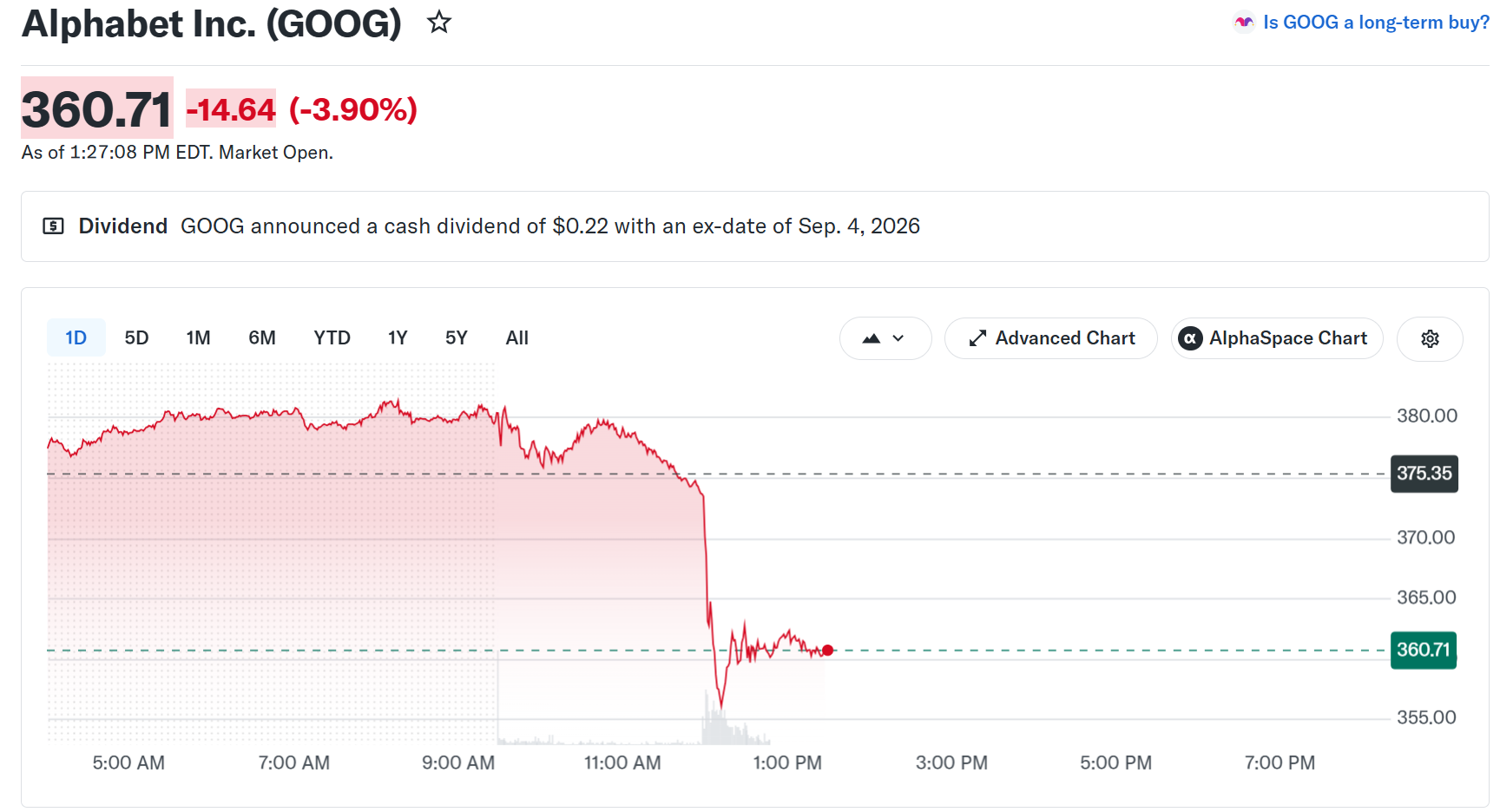
Alphabet stock (GOOG) fell as much as 5% on Wednesday after four of Google’s most-cited researchers quit on the same day. Chief scientist Jeff Dean is leaving after 27 years.
The same announcement pushed Demis Hassabis out of daily control of Google DeepMind. Koray Kavukcuoglu now runs Gemini.

Google AI Leaders Quit as Talent Losses Mount
The damage arrived inside an hour. Shares touched $381.81 before the news landed. They bottomed at $355.16 after it. That is a swing of almost 7% in one session.
The stock later steadied near $360.71, down 3.9% from Tuesday’s close of $375.35. Alphabet is worth $4.61 trillion. Wednesday’s slide erased close to $190 billion of that. At the low the figure was nearer $260 billion.
The stock still trades about 11% below its 52-week high of $404.47.
Investors have run this play before. Alphabet closed 5.1% lower on June 22, its worst session in a year, after two researchers left days apart.
Noam Shazeer went to OpenAI. He was the second of eight authors on the 2017 paper that introduced the transformer. Almost every chatbot in use today is built on that design.
John Jumper joined Anthropic. He shared the 2024 Nobel Prize in Chemistry with Hassabis for predicting protein structures. One of those two laureates has left Google. The other has now stepped back from running its AI lab.
Discovery Loop Wants to Automate Research Itself
Dean is founding Discovery Loop with Sanjay Ghemawat, Oriol Vinyals and Quoc Le. The company says the four include three of the most-cited names in artificial intelligence. Two also rank among the most-cited in distributed systems.
Dean joined Google in mid-1999 as its 30th employee. He and Ghemawat built MapReduce in 2004 and Bigtable in 2006. Those systems let Google index the web at scale.
“we are founding Discovery Loop … a Public Benefit Corporation whose mission is to automate machine learning, science, and engineering to accelerate discoveries and progress,” Dean shared.
A public benefit corporation is a for-profit firm whose directors must weigh a stated mission alongside profit.
The plan starts narrow. Discovery Loop will automate machine learning research and test the tools on itself first. Medicine, solar energy and cybersecurity come later.
Google is not cutting ties, the company’s CEO, Sundar Pichai, noted.
Hassabis Moves Up as Kavukcuoglu Takes DeepMind
Hassabis becomes chair of Google DeepMind and chief scientist of Alphabet. He keeps leading Isomorphic Labs, the drug discovery arm. He is not leaving the company.
Kavukcuoglu steps up as senior vice president after 13 years at the lab, where he was chief technology officer. He now owns Gemini model development, frontier research and the Gemini app.

The reshuffle partly unwinds a structure built three years ago. Google merged DeepMind and Google Brain in April 2023 to pool its AI work. Dean became chief scientist in that merger. He is now gone, and the unit has lost its chief executive.
The business is not the problem. Alphabet reported revenue of $119.8 billion for the quarter ended June 30, up 24%. Google Cloud grew 82% to $24.8 billion. Operating margin widened to 34%.
That gap is the story. Big Tech beat estimates and still sold off in July. Investors are pricing the next model, not the last quarter.
The Gemini app has passed 950 million monthly users, and Hassabis told staff that Gemini 4 is coming. Google’s AI race strategy split from rivals well before this week.
Gemini 4 is now the test. It will be the first flagship model Google ships without the researcher who has shaped its AI since 2011.
The post Google Stock Falls 5% as 4 AI Leaders Quit, Including the Most-Cited Researchers appeared first on BeInCrypto.

Large “smart money” holders are adding to their Bitcoin and Ether positions as crypto valuations drift toward levels commonly associated with late-stage bear markets, according to CryptoQuant’s latest Smart Money report, reviewed by Cointelegraph.
The blockchain analytics firm argues that the key signal is not just that whales are holding more, but that their balances have continued to rise during price weakness—an accumulation pattern that, historically, can line up with market bottoms even though it does not guarantee an immediate reversal.
Key takeaways
- CryptoQuant says Bitcoin whale balances (excluding exchanges and mining pools) rose to about 3.06 million BTC, up from roughly 2.87 million BTC in December 2025.
- The firm links the acceleration in Bitcoin accumulation to a period after BTC fell below $60,000 in June.
- For Ethereum, wallets holding 10,000–100,000 ETH collectively reached a record 19.6 million ETH, while very large holders added around 1.8 million ETH since mid-2025.
- In XRP markets, CryptoQuant notes “big whale” spot order sizes remained elevated, while a neutral 90-day taker cumulative volume delta points more toward passive absorption than aggressive buying.
- CryptoQuant also cites realized price—an estimate of the market’s average on-chain cost basis—as support for a potential move toward a bottom, though it warns further downside remains possible.
Whales build positions during weakness
CryptoQuant’s Smart Money report focuses on large-holder behavior as a potential guide to market direction. The underlying premise is that when major holders increase balances while prices are under pressure, they can effectively reduce liquid supply and concentrate ownership among fewer entities.
For Bitcoin, CryptoQuant reports that whale holdings excluding exchanges and mining pools climbed to approximately 3.06 million BTC, compared with about 2.87 million BTC in December 2025. The report highlights that accumulation accelerated after Bitcoin dipped below $60,000 in June, suggesting that at least some large investors continued to add despite worsening price conditions.
On Ethereum, CryptoQuant’s distribution-based view shows parallel strength. Wallets holding between 10,000 and 100,000 ETH collectively amassed a record 19.6 million ETH. Meanwhile, wallets with more than 100,000 ETH added roughly 1.8 million ETH since mid-2025, according to the report.
What the “smart money tell” implies—especially for bottoms
Beyond raw balances, CryptoQuant points to valuation metrics tied to cost. In particular, it references realized price—often used in on-chain analysis as an estimate of the average price at which coins last moved on-chain. The firm frames the spread between current prices and realized price as a sign the market may be approaching a bottom.
At the time of writing, CoinGecko data showed Bitcoin trading at $63,935, above its realized price of $52,900. Ether was quoted around $1,858, below its realized price of roughly $2,450. XRP traded near $1.10 versus a realized price around $0.75.
CryptoQuant’s assessment is that rising whale balances into price weakness are “the clearest smart-money tell,” and that similar accumulation patterns have historically preceded market bottoms. However, the firm also cautions that the market remains vulnerable to further downside, underscoring that whale accumulation can coincide with bottoms without guaranteeing the timing of a trend reversal.
Cross-market nuance: XRP shows absorption more than conviction
CryptoQuant’s report extends beyond Bitcoin and Ether to look at XRP market microstructure. It says average spot order sizes stayed in its “big whale” category while XRP traded between $1 and $1.20—indicating that large participants remained active in placing orders.
Yet CryptoQuant adds an important nuance: a neutral 90-day taker cumulative volume delta suggests passive absorption rather than aggressive buying. In practical terms, the indicator implies that while whales may be leaving significant liquidity footprints, the flow of taker-side demand has not been strongly one-directional, which can matter for how quickly price can respond to renewed buying pressure.
Context from other analysts on whether a bottom is forming
CryptoQuant’s on-chain framing is arriving alongside other research suggesting potential bottoming behavior. On Monday, 10x Research said Bitcoin could confirm a bear-market bottom if it posts a monthly close above $63,000, according to coverage on Cointelegraph.
Separately, K33 highlighted in a July 7 report that Bitcoin has historically reached cycle lows within weeks after more than half of circulating supply was held at a loss. This type of supply-at-loss perspective differs from realized price, but both approaches share a common theme: bottoms often appear when broader holder pain and valuation disadvantage have pushed into extremes.
Taken together, these views suggest a market that may be searching for stabilization rather than already having fully turned. CryptoQuant’s emphasis on late-stage bear valuations and its repeated warning about further downside reflect that tension: the evidence for “smart money” accumulation may be strengthening, but the path from accumulation to sustained recovery is not automatic.
Investors and traders watching this setup should focus on whether whale balance growth continues alongside improving price/realized-price relationships, and whether other bottoming conditions—such as the kind of monthly-close thresholds or supply-at-loss measures cited by separate research—start to align. Until then, CryptoQuant’s own message remains the most important watchpoint: accumulation during weakness can be a bottom signal, but it does not rule out additional volatility or downside.


Western Union has partnered with stablecoin infrastructure provider Rain to launch Stablecard, a digital wallet and Visa-branded card that enables users to hold and spend a US dollar-backed stablecoin, marking one of the company’s biggest moves into blockchain-based payments.
On Wednesday, Western Union said Stablecard allows users to hold, receive, transfer and spend USDPT, a US dollar-backed stablecoin issued by Anchorage Digital Bank on the Solana blockchain.
Stablecard launched in 37 markets, with Western Union aiming to expand availability to more than 60 markets by the end of the year. Users can receive Western Union money transfers directly into a USDPT wallet, transfer funds to compatible crypto wallets and exchanges and spend their balances anywhere Visa is accepted, including through Apple Pay and Google Pay.
The launch reflects Western Union’s effort to expand its role in the global remittance market as stablecoins gain traction for cross-border payments. The product is aimed at remittance recipients and consumers in countries with volatile local currencies, offering them the ability to hold savings in a dollar-backed digital asset while spending through existing payment networks.
Western Union unveiled USDPT in May as part of its broader digital asset strategy, describing it as a stablecoin designed to align with the framework established under the GENIUS Act, the recently enacted US law that sets federal rules for the issuance and oversight of payment stablecoins. The company has already expanded the token’s ecosystem through exchange partnerships, with Bybit adding support for USDPT trading and transfers in June.
Related: Mastercard expands support to USDC, PYUSD, RLUSD stablecoin settlement
Stablecoins push deeper into global money transfers
Stablecoins are increasingly reshaping cross-border payments as users seek faster and lower-cost alternatives to traditional remittance services, particularly in Africa and South America.
The trend has prompted established money transfer companies to expand into digital assets. Western Union rival MoneyGram recently launched MGUSD, a US dollar-pegged stablecoin on the Stellar network. The token is designed to integrate with the MoneyGram app through a self-custodial wallet, allowing users to hold dollar-denominated balances, send funds globally and convert them into local currencies when needed.
However, stablecoins are not a universal solution for remittances. A recent Bank of Italy study found that stablecoin-based remittances did not consistently outperform traditional payment channels on cost or speed. The researchers attributed much of the remaining friction to fiat currency on- and off-ramps, where converting between bank deposits, cash and digital assets accounted for most transaction costs and settlement delays.
Related: US, UK reaffirm support for stablecoins, tokenization in joint financial regulation talks

What to say to someone you’re worried about
Once you’ve decided to speak up, your first instinct might be to name the most obvious thing: the weight loss. Try not to. Vanessa Scaringi, a psychologist and eating disorder specialist in Cincinnati, says clinicians often steer families toward talking about behaviors instead: the skipped book club, the lunch that keeps coming home uneaten, the friend who’s stopped showing up anywhere food might be served. “Behaviors are safer,” she says.
That’s partly because a comment about someone’s body rarely lands as intended. “It could shut someone down,” Scaringi says. Worse, it might register as praise. “Sometimes it actually feeds the eating disorder, where it’s like, ‘Oh, mission accomplished.’”
But avoiding comments about weight doesn’t mean being so vague that the person has no idea what you’re talking about. Point to something specific and observable, Scaringi suggests: “You haven’t come to anything involving food in two months” or “You seem much more rigid about eating than you used to be.” Emma recommends leading with curiosity rather than a conclusion: “I’ve noticed some changes, and I’m wondering how you’re doing,” as opposed to “I think you have an eating disorder.” The first opens a conversation, while the second can feel like an accusation or diagnosis.

Michigan’s 13th Congressional District Democratic primary delivered a high-profile rebuke of an incumbent widely seen as friendly to the cryptocurrency industry. State Rep. Donavan McKinney defeated two-term U.S. Rep. Shri Thanedar, winning 51.9% of the vote to Thanedar’s 48.1%, according to The New York Times.
The race became a focal point for criticism that crypto-aligned political spending was aimed at rewarding incumbents. The campaign also underscored how crypto-backed political action committees (PACs) continue to invest heavily in state-level primaries ahead of the November general election.
Key takeaways
- Donavan McKinney won Michigan’s 13th District Democratic primary over incumbent Shri Thanedar, 51.9% to 48.1%, per The New York Times.
- A crypto-backed PAC, spending over $2 million on media, supported Thanedar in an attempt to secure his re-election.
- McKinney’s campaign framed the contest as “payback” from the industry, citing Thanedar’s pro-crypto legislative record and alleging large political donations following former President Donald Trump’s time in office.
- Protect Progress, the super PAC backing Thanedar, is affiliated with Fairshake, which has previously directed major spending into election cycles involving crypto policy battles.
- McKinney’s likely November opponent is Republican Taras Nykoriak after the primary process moved both parties forward.
A contested primary built on crypto-policy accusations
Thanedar’s defeat is notable because he ran as an established member of the House while simultaneously attracting significant crypto-aligned political support. During the primary, a super PAC tied to the crypto sector poured more than $2 million into media to help re-elect him, as reported by Cointelegraph, citing coverage of the race’s spending.
McKinney, described by many observers as a progressive challenger, positioned his campaign around concerns that Washington prioritizes corporate interests over constituents. In the Democratic primary, he accused the cryptocurrency industry of paying “my opponent back” for efforts he linked to Thanedar’s voting record and alleged benefits received during Trump’s time in office.
That messaging resonated with voters enough to overcome the incumbent’s advantage. McKinney’s campaign later received support from prominent progressive Democratic groups, including the Democratic National Committee and the Democratic Socialists of America, as referenced by the DNC.
Who funded the pro-incumbent push
According to reporting referenced in this coverage, Protect Progress—the super PAC responsible for funding ads supporting Thanedar and attacking McKinney—is affiliated with Fairshake. Fairshake has been backed primarily by crypto companies including Coinbase and Ripple, and the network has spent heavily on campaigns where candidates’ positions on crypto regulation and enforcement have been central.
The broader pattern matters because Fairshake and allied committees have already demonstrated a willingness to escalate media spending well beyond general elections. In the 2024 election cycle, the group and its affiliates reportedly spent over $170 million on races involving candidates seen as pro- and anti-crypto, and then continued deploying resources across additional primaries in 2026, as described in earlier coverage by Cointelegraph.
In Michigan, those efforts did not translate into an incumbent victory—an outcome that could influence how investors and political watchers interpret the effectiveness of crypto-backed messaging in competitive primaries.
Legislation, campaign finance, and the “conflict” narrative
The clash also centered on legislative alignment and claims of conflict. The incumbent, Thanedar, reportedly voted in favor of multiple pieces of crypto-related legislation, including the GENIUS Act and the CLARITY Act, according to the source material.
At the same time, the race included allegations tied to Thanedar’s personal financial activity. As reported by The Intercept, he reportedly lost more than $600,000 in the second quarter of 2026 after investing $3.7 million of campaign funds into crypto companies. Those facts were part of a larger argument, echoed by McKinney, that political influence around crypto policy can blur lines between governance and profit.
McKinney framed the election in blunt terms in a Wednesday post on X, arguing that Washington has served billionaires and corporate interests for too long and reiterating his intent to serve his constituents rather than special interests.
What comes next for McKinney and the broader election map
With the primary now settled, McKinney moves toward the November general election against Republican Taras Nykoriak. According to the reporting, Cointelegraph attempted to obtain comment from McKinney’s campaign on Wednesday but did not immediately receive a response.
The Michigan result also fits into a larger picture of crypto political engagement across the country. In Washington’s 4th District—another contest shaped by crypto-aligned spending—an affiliate of Fairshake, Defend American Jobs, reportedly spent more than $65,000 on media to support a Republican candidate (Amanda McKinney, not related to the Michigan representative). That candidate will face Democrat John Duresky in November after both advanced with more than 30% of the vote in the primary.
For readers tracking how crypto policy may change in the next Congress, these contests matter because incumbents and challengers alike are increasingly forced to address not only regulation proposals but also the legitimacy and transparency of campaign spending tied to the industry.
With McKinney headed for November and crypto-aligned groups already signaling continued willingness to fund primary battles, the key question for investors and political observers is whether the Michigan result shifts the balance of influence—particularly within competitive primaries—or simply reallocates spending strategies toward more favorable districts as general-election pressure ramps up.
Crypto World
Bitcoin, broader market fail to keep pace as global equities hit record highs: Crypto Markets Today
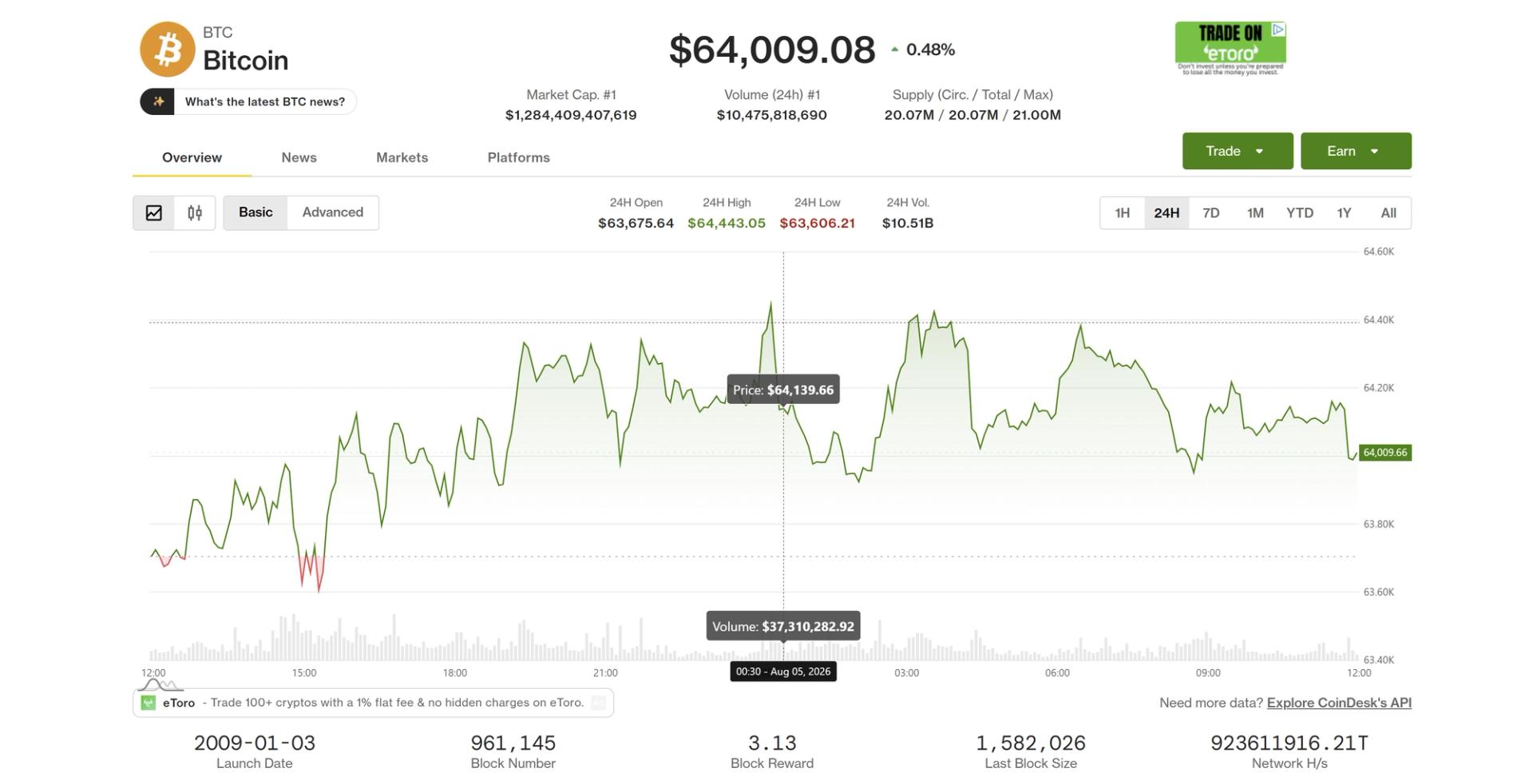
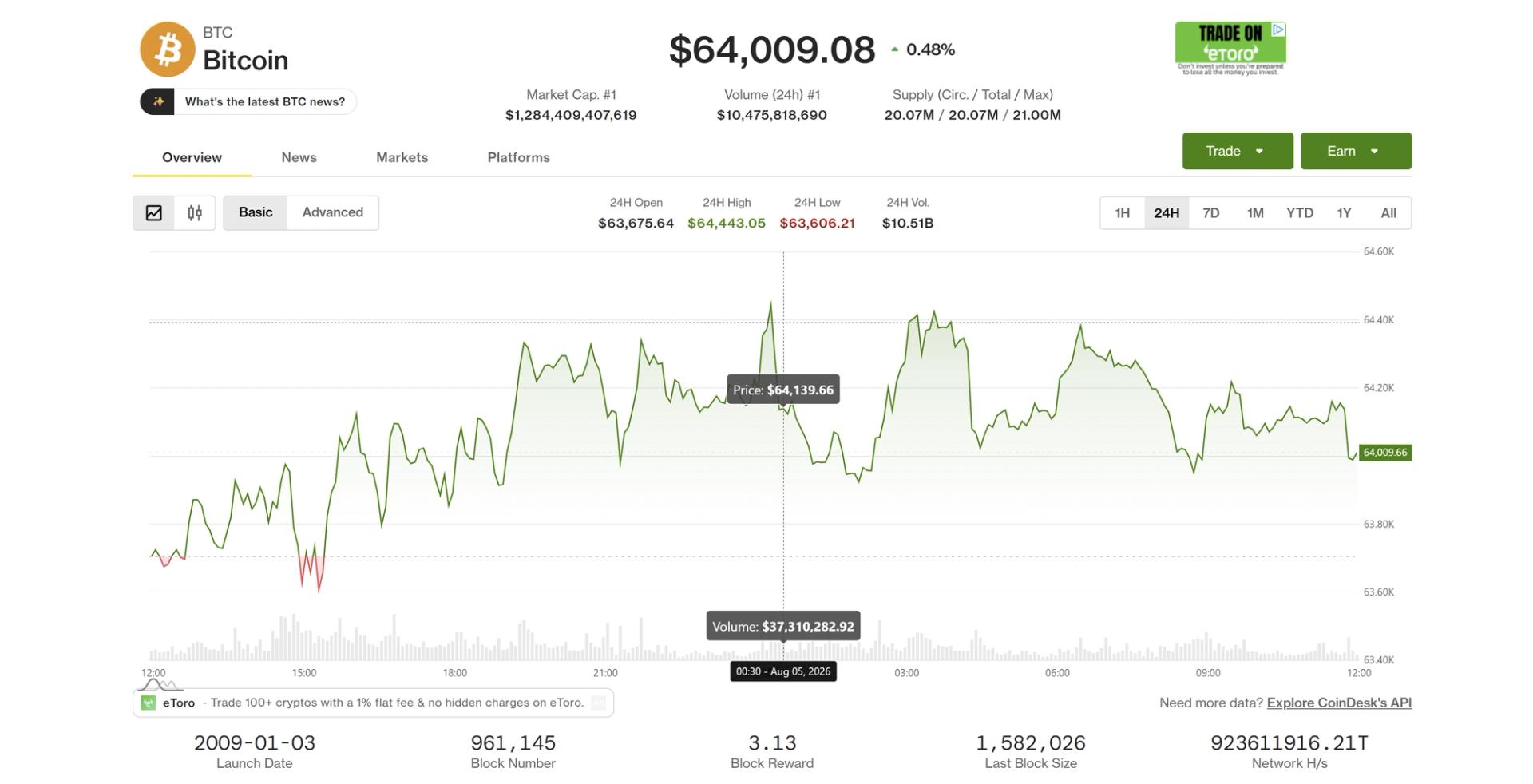
Bitcoin was little changed, adding 0.16% since midnight UTC to trade near $64,000, even as global equities hit new highs, fueled by optimism over AI and progress toward reopening the Strait of Hormuz, which pushed oil prices lower.
MSCI’s All Country World Index rose 0.4% toward another record close, its Asia Pacific benchmark gained 2.2%, and Australian shares hit a new peak after the S&P 500 and Dow Jones Industrial Average closed at all-time highs Tuesday.
The broader CoinDesk 20 (CD20) is unchanged since midnight, with 11 components rising and nine declining.
The divergence points to crypto-specific weakness. U.S. spot bitcoin ETFs recorded $5.4 billion of net outflows in the first half of the year as capital rotated into AI-linked assets.
“Institutional and retail interest in crypto as an investment has cooled as AI absorbs a disproportionate share of capital and attention; most sectors, not just crypto, have underperformed AI over the past year,” DWF Labs wrote in a report.
Today’s direction may find a catalyst in U.S. employment figures and ISM services PMI due later.
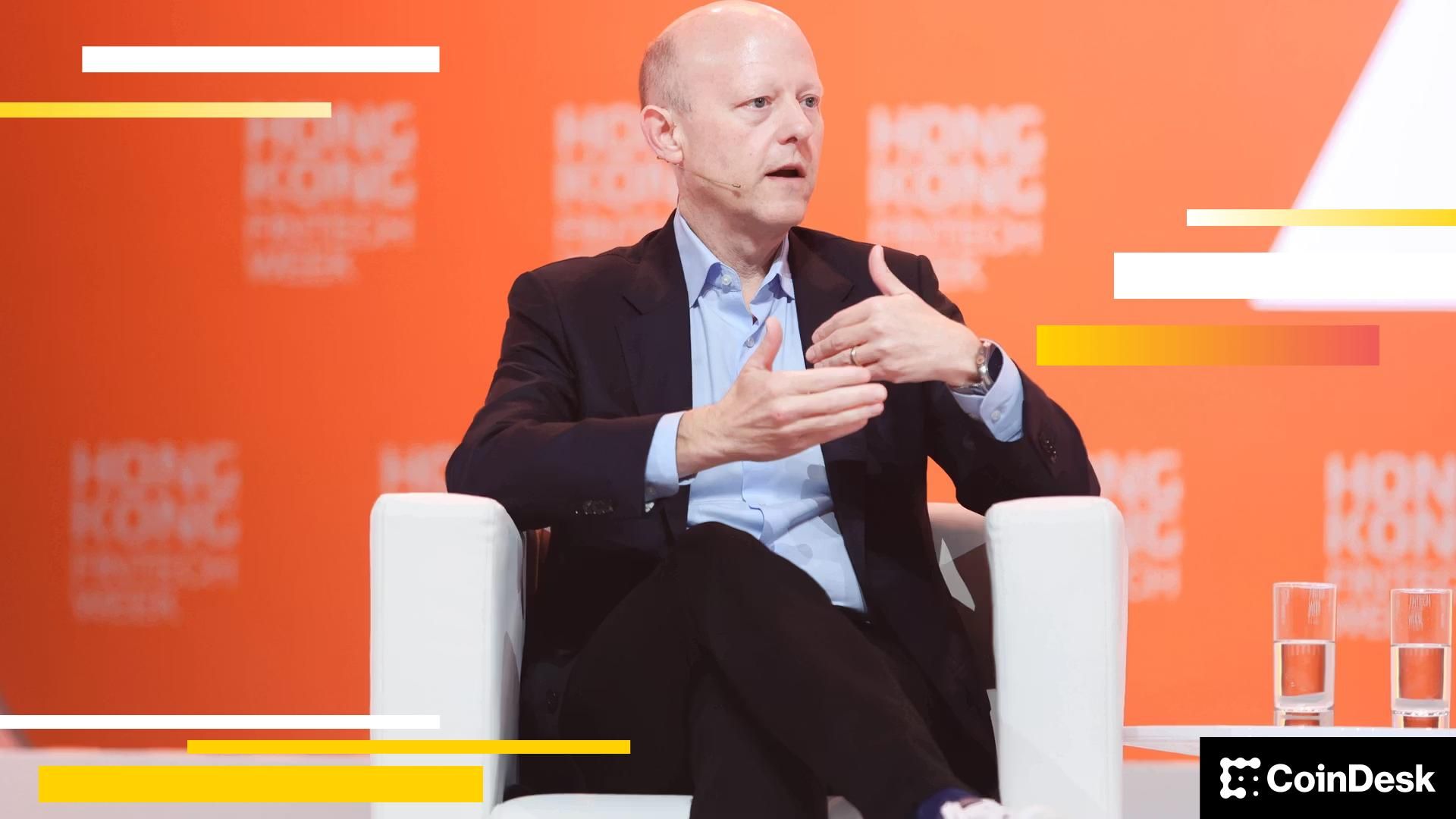
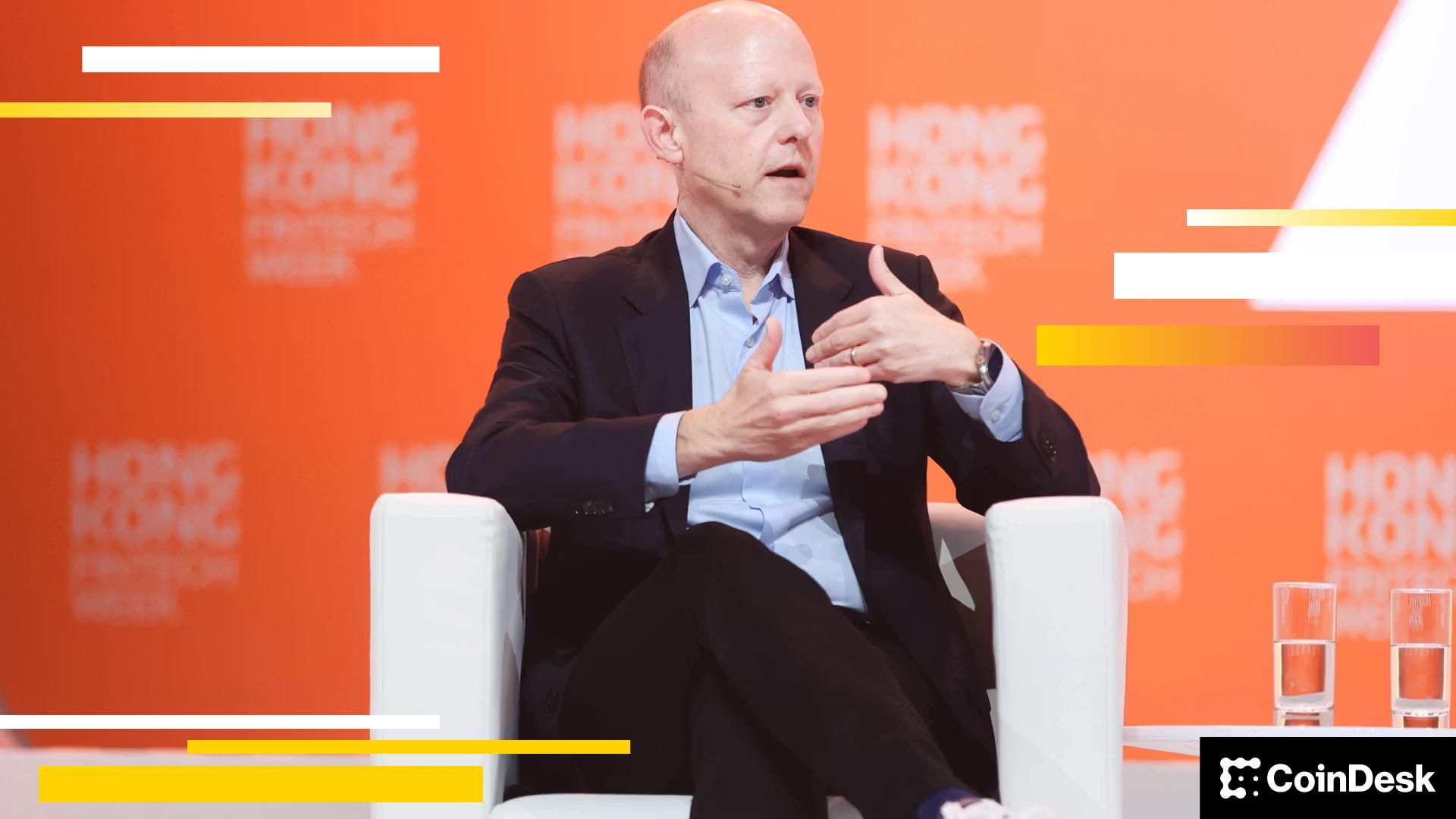
Circle Internet (CRCL) shares fell about 3% in premarket trading Wednesday after an initial jump after the stablecoin issuer reported second-quarter earnings. While the company topped profit expectations, revenue came in slightly below Wall Street forecasts.
Circle posted adjusted earnings of 18 cents a share, beating analysts’ consensus estimate of 16 cents, while revenue and reserve income rose 7% from a year earlier to $701 million, missing expectations of $712 million. Net income from continuing operations reached $48 million, topping analysts’ estimates of $43 million, while adjusted EBITDA climbed 8% to $143 million.
USDC, Circle’s dollar-backed stablecoin, continued to expand. Circulation reached $73.3 billion at the end of June, up 19% from a year earlier, but down from its 2026 peak of nearly $80 billion. Onchain transaction volume surged 151% to $14.8 trillion during the quarter.
“Our quarterly financial results reflect the current rate environment and a crypto market that has slowed,” CEO Jeremy Allaire said in a statement. “But the institutions using USDC today, like BlackRock, BNY and Standard Chartered aren’t piloting, they are expanding.”
The earnings also offered the clearest update yet on Arc, Circle’s blockchain network scheduled to launch its public mainnet on Sept. 16.
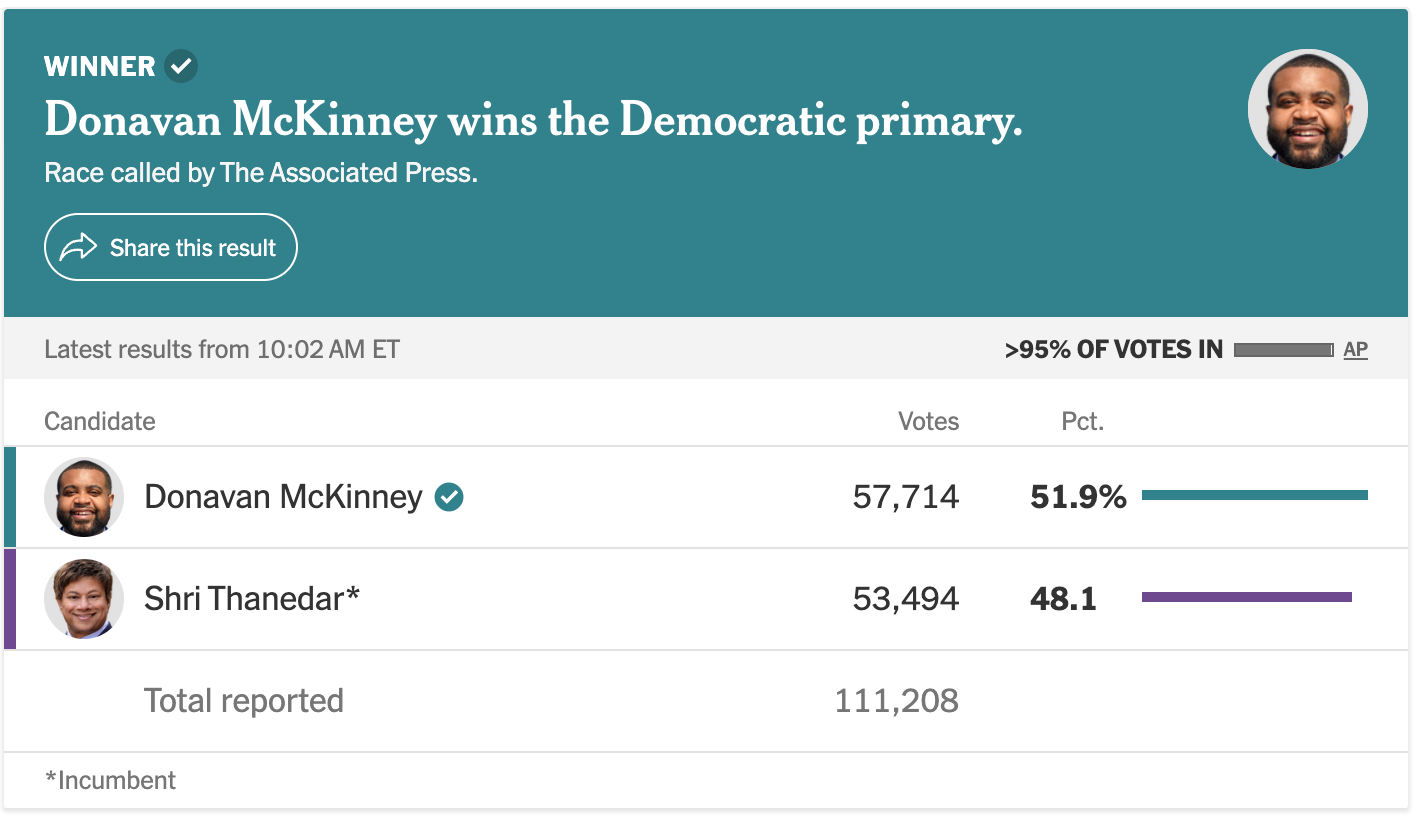
Michigan State Representative Donavan McKinney won a Democratic primary against incumbent House Representative Shri Thanedar in a race that raised accusations of payback by the cryptocurrency industry.
McKinney won the primary for Michigan’s 13th Congressional District with 51.9% of the vote against Thanedar’s 48.1% as of Wednesday, the New York Times reported. The primary saw a cryptocurrency-backed political action committee (PAC) spending more than $2 million on media in an attempt to re-elect Thanedar, who has voted in favor of many bills favoring the industry while in Congress.
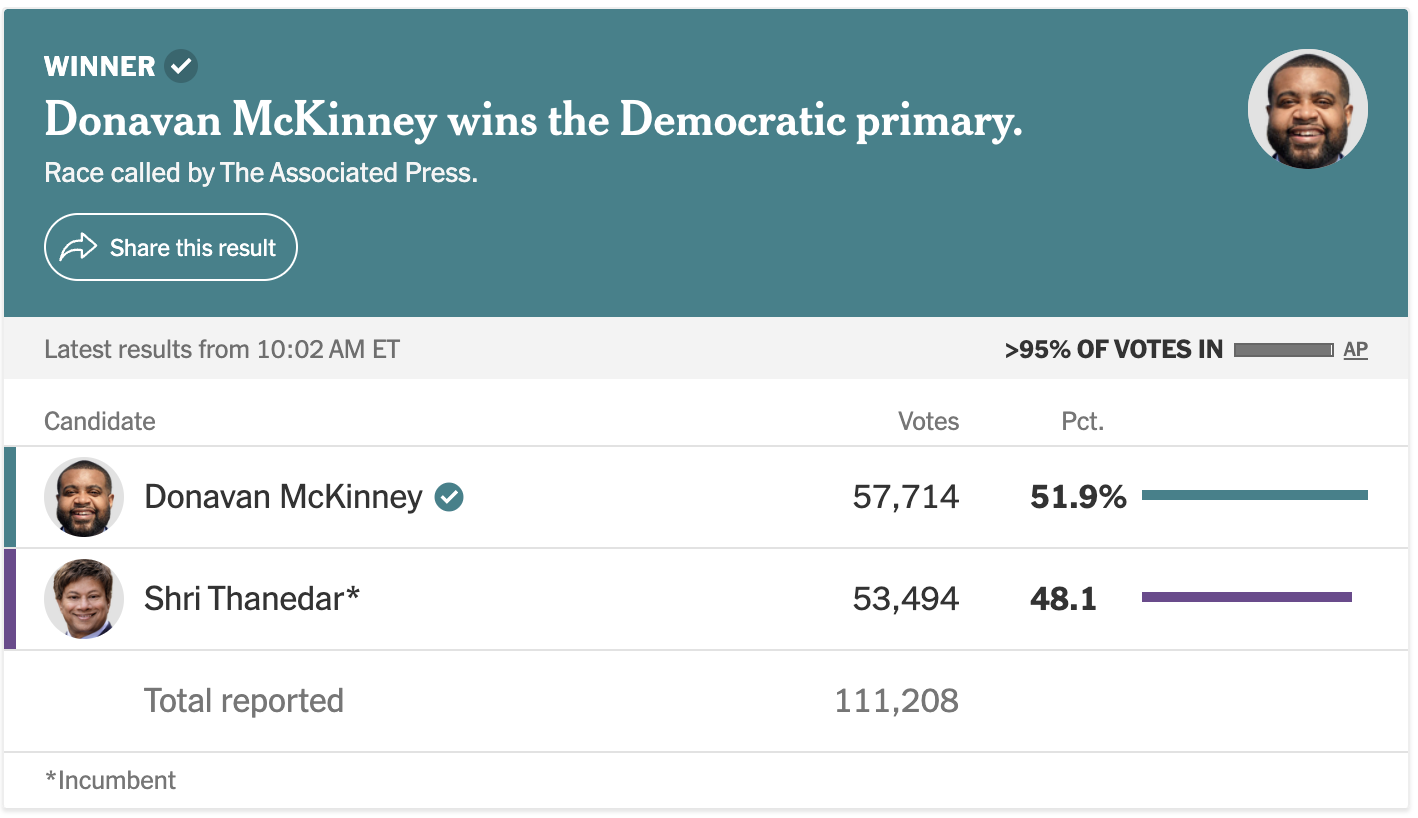
Election results for Democratic primary in Michigan’s 13th congressional district. Source: The New York Times
McKinney, considered by many to be a progressive challenger to two-term Thanedar, has already received support from the Democratic National Committee and the Democratic Socialists of America on his primary victory. During the campaign, he accused the crypto industry of “paying my opponent back for helping Trump make over $1 billion since taking office,” likely referring to Thanedar’s voting record.
Protect Progress, the super PAC responsible for funding the ads supporting Thanedar and opposing McKinney, is affiliated with Fairshake, a group backed primarily by crypto companies Coinbase and Ripple. After spending more than $170 million in the 2024 US election cycle on similar races involving pro- and anti-crypto candidates, Fairshake and its affiliates have poured additional millions of dollars into media for politicians in this year’s primaries in several US states ahead of the November general election.
Related: Nigel Farage to resign from UK Parliament amid crypto “gift” scandal, will stand in by-election
In addition to voting for bills like the GENIUS Act and CLARITY Act in the House of Representatives, Thanedar also reportedly lost more than $600,000 in the second quarter of 2026 after investing $3.7 million of campaign funds into crypto companies.
”Washington has spent too long serving billionaires and corporate interests,” said McKinney in a Wednesday X post. ”I will always only serve the people I represent.”
McKinney will face off against Republican candidate Taras Nykoriak in the November election. Cointelegraph sought a comment from McKinney’s campaign on Wednesday but did not receive an immediate response.
PAC-supported candidate wins Washington primary
In addition to Protect Progress’ efforts in Michigan, the Fairshake affiliate Defend American Jobs spent more than $65,000 on media to support Republican Amanda McKinney (no relation to the Michigan candidate) in Washington’s 4th congressional district. McKinney will face off against Democrat John Duresky in November, with both candidates securing more than 30% of the vote in Tuesday’s primary to advance to the general election.
Magazine: Here’s why the CLARITY Act’s ethics deal may be so hard to reach

IBM’s agentic AI platform is under active attack

GREAT NEWS XRP RIPPLE SPCX REGS

Locals angry as ‘vital promise’ of new pub falls through


-

 Business7 days ago
Why Trees Belong on the Risk Register
-

 Fashion5 days ago
Weekend Open Thread: Wit & Wisdom
-

 Politics5 days ago
Meta enters AI-training agreement with far-right ‘propaganda rag’ Newsmax
-

 Politics3 days ago
Zack Polanski: an incitement to murder Nigel Farage?
-

 Crypto World4 days ago
MicroStrategy Post-Earnings CLARITY Act Push Could Add New Catalyst for Its Stock
-

 Crypto World5 days ago
XRP Ledger v3.3.0 brings five institutional features
-

 News Videos6 days ago
Bitcoin Enters the 3rd Stage of the Bear Market
-

 Politics6 days ago
Luke Littler’s dominance sparks GOAT debate
-

 Sports6 days ago
Seema Kaliramna Wins Discus Throw Bronze, Takes India’s CWG Medals Tally To 17
-

 Crypto World5 days ago
New York sues Kalshi over prediction market gambling
-

 Crypto World3 days ago
Crypto PAC spending tops $2M in Michigan House race
-

 Business5 days ago
Trump Announces Hamas Disarmament Agreement as Iran Strikes Kuwait Air Base and US Attacks Pause Overnight
-

 Business3 days ago
DTCR: Deleveraging And A Hedge Fund Collapse Point To A Possible AI Bottom
-

 Tech4 days ago
ESET tracks rise in malicious AI skills and adaptable malware
-

 Tech5 days ago
Gemini Spark can now use Chrome logins and saved passwords to run errands on your behalf
-
 Crypto World5 days ago
3 Fed Officials Just Explained Their Rate Hike Vote: Is Inflation Winning?
-

 Tech5 days ago
Building A Reproduction PlayStation Motherboard
-

 Sports4 days ago
France Cricket implodes: letters hidden in a drawer and a board at war
-

 NewsBeat6 days ago
Four people die trying to cross Channel in small boats
-

 Crypto World4 days ago
Moneyflip CEO charged in $40K murder-for-hire plot
You must be logged in to post a comment Login