

Crypto World
Goldman Sachs Reduced Its Gold Price Target for the End of 2026

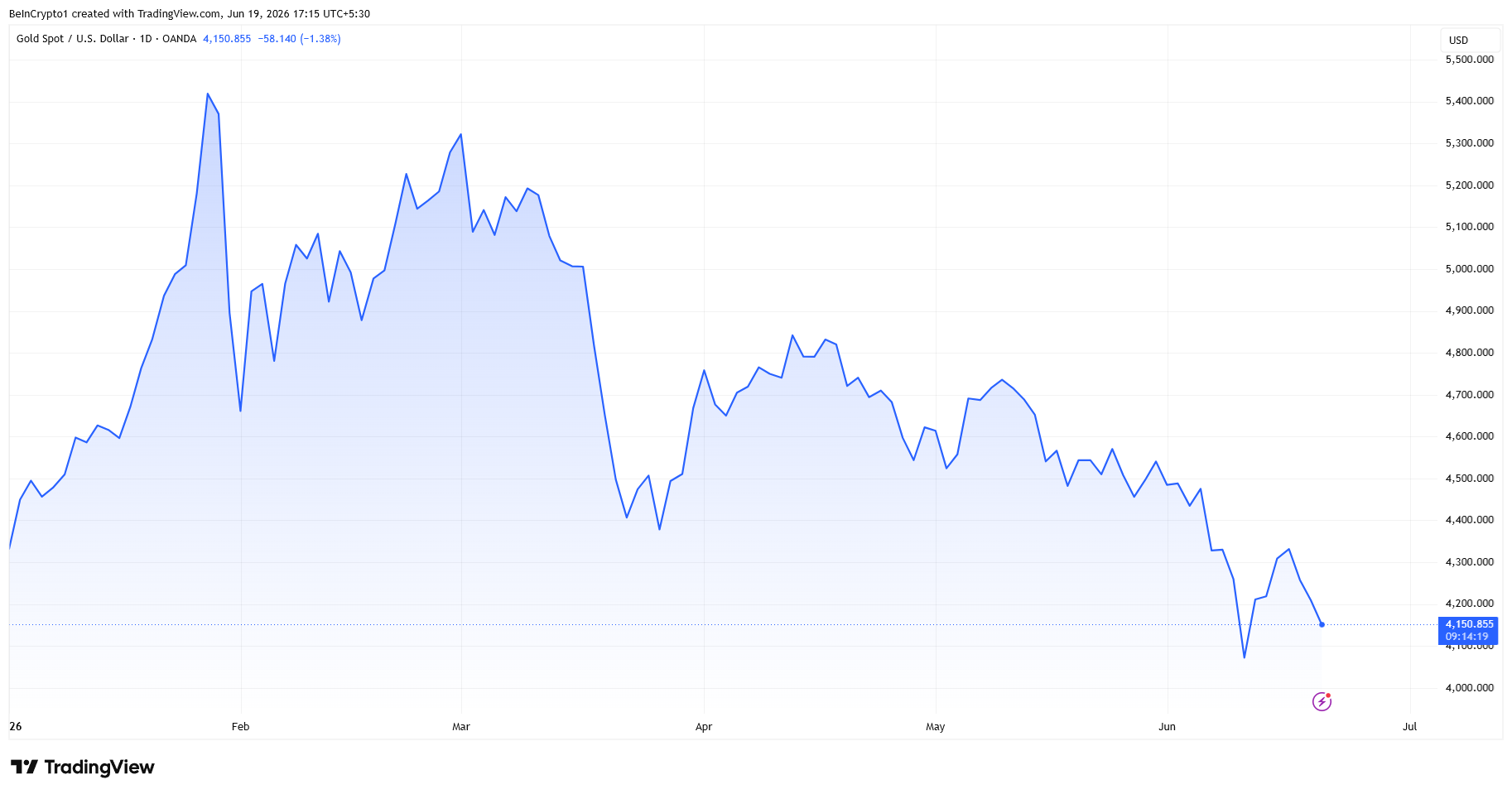
Goldman Sachs has lowered its year-end gold forecast by $500 to $4,900 an ounce. This revised forecast comes as hopes for a 2026 rate cut fade.
The revised target still implies gains in the second half, though smaller than the bank previously projected. Analysts Lina Thomas and Daan Struyven outlined the change in a research note.

Why Goldman Lowered Its Gold Forecast
The downgrade stems mainly from a weaker outlook for inflows into gold-backed exchange-traded funds. World Gold Council data showed that global gold-backed ETFs experienced outflows of roughly $2 billion in May.
Europe alone attracted fresh inflows that month. Asian funds, meanwhile, logged their first monthly outflow since August 2025, with $1.2 billion leaving. At the same time, investor sentiment has also turned bearish.
Follow us on X to get the latest news as it happens
The weaker ETF demand comes as markets scale back expectations for Federal Reserve rate cuts. Earlier this week, Goldman economists pushed back their US rate-cut forecast to June and December of next year. They had earlier expected reductions in December 2026 and March 2027.
“Our gold price views remain structurally constructive but tactically cautious, with near-term downside risk and medium-term upside risk,” the analysts said.
The Hawkish Fed Backdrop
Meanwhile, the Fed held its benchmark rate at 3.50% to 3.75% this week, but there was growing support for hikes. Nine officials now project at least one hike in 2026.
Should the Fed actually raise rates, Goldman sees gold sliding to $4,400 by year-end as its appeal as a policy hedge fades. Rob Kaplan, a Goldman vice chairman and former Dallas Fed president, told Bloomberg that a hike may come as soon as September.
Still, central bank demand provides a floor. Official buyers turned net gold purchasers again in April, adding 19 tons. Moreover, according to WGC’s survey, roughly 45% plan to grow their reserves in the coming year.
Subscribe to our YouTube channel to watch leaders and journalists provide expert insights
The post Goldman Sachs Reduced Its Gold Price Target for the End of 2026 appeared first on BeInCrypto.

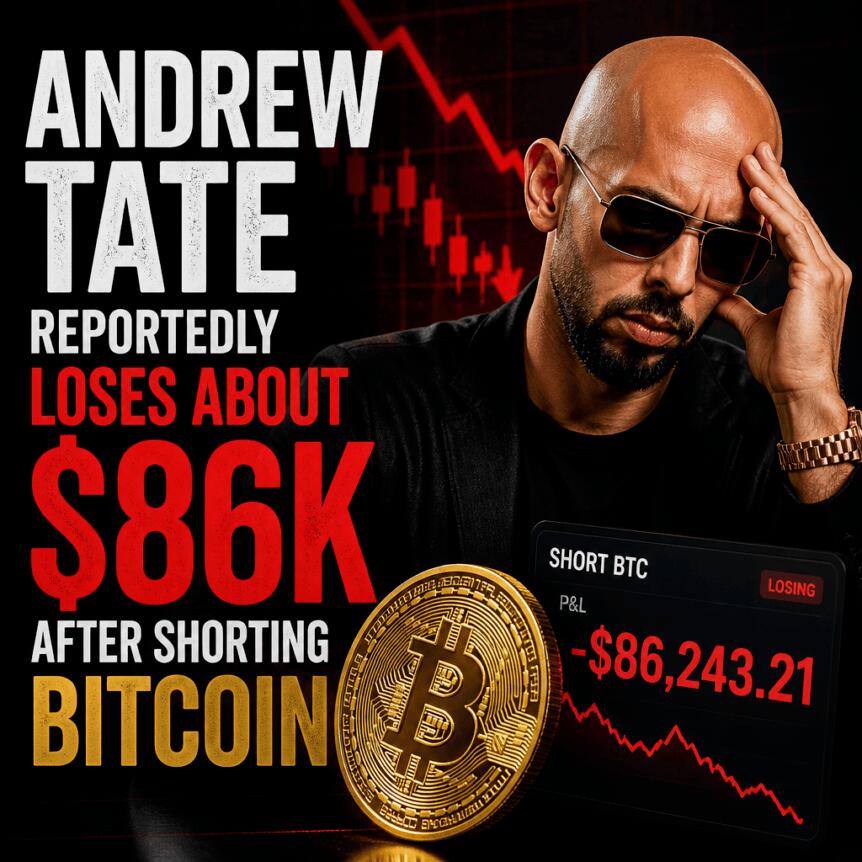
Online education entrepreneur Andrew Tate has reportedly suffered a sharp drawdown on Hyperliquid after a highly leveraged series of Bitcoin futures positions went wrong over the span of Wednesday into Thursday.
According to wallet-tracking data from HyperDash, a Hyperliquid account linked to Tate opened a large 57.36 BTC long near $66,000, then reversed into a sizable short as the market moved—only to continue realizing losses as the BTC/USD move played out.
Key takeaways
- A Hyperliquid wallet reportedly associated with Andrew Tate fell from about $100,000 to roughly $14,000 within a day.
- The account’s first reported move was a 57.36 BTC long valued at about $3.79 million, apparently backed by around $100,000 in USDC (implying roughly 40x leverage).
- After the long unraveled, the same wallet opened a 14.33 BTC short near $64,817, which also ran into adverse price action and triggered short-liquidation fills.
- By June 18, the account balance was reportedly about $14,000—meaning it largely wiped out the initial deposit.
- HyperDash’s “all-time” view reportedly shows about $803,800 in perpetual futures losses for the account, extending a drawdown trend that started earlier in 2025.
From a 40x long to cascading realized losses
HyperDash data shows the wallet opened a 57.36 BTC long on Wednesday with an entry price near $66,000. The position size was roughly $3.79 million, while the margin backing was about $100,000 in USDC, indicating aggressive leverage in the neighborhood of 40x.
The trade began to unwind on Thursday as Bitcoin slid toward the mid-$64,000 area. By the time the long had fully run its course, the position recorded cumulative realized losses of about $68,600—an outcome that highlights how quickly a leveraged futures position can crystallize losses even when the underlying asset moves only a few percent.
As the account continued to respond to market changes, the strategy shifted again rather than standing aside: the wallet then moved from long exposure to short exposure.
Reversal into a short, followed by liquidation fills
After the long was dismantled, the wallet opened a 14.33 BTC short position valued at roughly $1 million at about $64,817, according to HyperDash.
That short was also pressured as Bitcoin rebounded. The account reportedly recorded multiple liquidation fills—five short liquidation fills are referenced in the tracking timeline—suggesting the market moved against the position faster than the margin cushion could absorb.
By June 18, the wallet balance was reported at around $14,000, implying that most of the original deposit had been lost during this short window of activity.
Why the speed of these losses matters for traders
This episode underscores a key feature of perpetual futures trading on leverage-heavy venues: outcomes can change dramatically over a small price range.
Here, the underlying asset’s movement between the low-$60,000s and mid-$60,000s translated into large notional exposure and rapid margin erosion. The wallet’s reported path—long liquidation, immediate reversal into a short, and further liquidation fills—illustrates how repeated leverage application can compound drawdowns instead of offsetting them.
For investors and traders watching on-chain/perps activity, the lesson is less about the direction of BTC and more about the mechanics of sizing and leverage: when margin is small relative to exposure, liquidation becomes a practical certainty rather than a remote tail risk.
A longer drawdown pattern on Hyperliquid
The June liquidation streak did not appear in isolation. The reported Hyperliquid issues tied to Tate stretch back further.
Earlier coverage and HyperDash-linked reporting cited a 40x BTC long position that was liquidated for about $235,000 on Nov. 14, 2025. That same reporting notes that by Nov. 18, additional longs entered around $90,000–$95,000 were wiped out, leaving the account reportedly close to zero.
In addition, another episode referenced that Tate lost roughly $67,500 on World Liberty Financial (WLFI) positions in September 2025, around the time a token unlock event triggered a sharp drop. The same source pattern indicates he re-entered the trade almost immediately and lost again.
As of Friday, HyperDash’s performance tab for the account reportedly showed perpetual futures losses of about $803,800. The article attributes this drawdown to a period that began in early 2025 and deepened after the latest June liquidation activity.
Going forward, readers should watch whether the account changes its risk profile—specifically, whether position sizes and implied leverage decline after the near-total wipeout—or whether the pattern of rapid reversals continues during periods of heightened BTC volatility.


A stablecoin is crypto that is supposed to be worth exactly one dollar, always. That sounds simple, but how a token holds a steady value, and whether it actually can, is one of the most important and misunderstood questions in crypto. Here is the complete answer.
Summary
- Stablecoins are designed to maintain a $1 value, giving users a way to move and hold funds on blockchains without the price swings common in cryptocurrencies.
- USDT, USDC, and RLUSD use dollar backed reserves to maintain their peg, while other stablecoins rely on crypto collateral or algorithmic mechanisms.
- A stablecoin’s reliability depends on the quality of its backing, with depegs, issuer risks, and regulatory requirements remaining key factors for users to consider.
A stablecoin is a cryptocurrency designed to hold a steady value, almost always pegged to one US dollar, so that one unit is meant to always be worth one dollar regardless of what the rest of the crypto market is doing.
If Bitcoin is like a stock that swings every day, a stablecoin is meant to behave like the cash in your wallet, a digital dollar that moves on blockchain rails. This stability is what makes stablecoins quietly essential: they are the bridge between volatile crypto and stable money, the safe harbor traders move into when markets crash, the dollars that flow through decentralized finance, and increasingly a payment rail that moves enormous volumes of money around the world.
As of 2026, stablecoins represent a market worth hundreds of billions of dollars and, by some measures, already move more annual volume than major card networks.
This guide explains stablecoins in plain English: what they are and why they matter, the three fundamentally different ways a stablecoin can hold its peg to a dollar, the major stablecoins including USDT, USDC, and RLUSD and how they differ, the mechanisms that keep the value steady, the real risks including the depegs that have destroyed billions, the regulation now taking shape around them, and how to use them sensibly.
It assumes no prior knowledge, and it takes the risks seriously instead of treating stablecoins as the risk-free digital cash they are sometimes presented as, because the single most important thing to understand about a stablecoin is that its stability is only as good as whatever is backing it, and not all stablecoins are backed equally.
What a stablecoin is, and why it matters
To understand why stablecoins exist, you have to understand the problem they solve, which is the central inconvenience of cryptocurrency.
Most cryptocurrencies are volatile, swinging in value by large percentages in short periods, and that volatility, while attractive to speculators, makes them impractical for many everyday purposes. You cannot easily price a coffee in an asset that might be worth ten percent less by the afternoon, you cannot comfortably hold your savings in something that swings wildly, and you cannot smoothly trade in and out of positions if the only alternative to a volatile coin is another volatile coin.
A stablecoin solves this by offering the benefits of cryptocurrency, fast, borderless, programmable digital money that moves on a blockchain, without the volatility, because its value is anchored to a stable asset, almost always the dollar. It is digital cash that lives on the same rails as the rest of crypto.
This stability makes stablecoins useful in several distinct ways, which is why they have become foundational. For traders, a stablecoin is where capital waits: when a trader wants to exit a volatile position without converting back to traditional banking, they move into a stablecoin, locking in their value in dollar terms while staying inside the crypto ecosystem, ready to redeploy instantly.
For decentralized finance, stablecoins are the essential unit of account and the most important form of collateral and liquidity, because lending, borrowing, and trading protocols need a stable value to function, and a volatile token would make them unworkable. For payments and transfers, stablecoins enable fast, low-cost movement of dollar value across borders without the delays and fees of traditional banking, which is why they are increasingly used for remittances, settlement, and cross-border commerce.
A stablecoin, in short, is the dollar made native to crypto, and that simple capability turns out to be one of the most important things in the entire ecosystem, the stable foundation on which much of the rest is built.
The three ways a stablecoin holds its peg
Not all stablecoins work the same way, and the differences are the single most important thing to understand, because how a stablecoin maintains its dollar peg determines how safe it is. There are three fundamentally different mechanisms.
The first and largest category is fiat-backed stablecoins, which hold their value through real-world reserves. The idea is simple: for every stablecoin in circulation, the issuing company holds one dollar, or a dollar’s worth of safe assets like cash and short-term government bonds, in reserve. When you want to redeem your stablecoin, you can exchange it for an actual dollar from those reserves, and it is this redeemability, the promise that each token is backed one-to-one by a real dollar you can claim, that keeps the price anchored at a dollar.
USDT and USDC are the dominant examples, and they work this way: a regulated or semi-regulated entity holds the dollars, issues tokens against them, and redeems them on demand. The strength of this model is simplicity and directness, real dollars backing real tokens; the tradeoff is centralization, because you must trust the issuer to actually hold the reserves it claims and to honor redemptions, which is why reserve transparency matters so much for these coins.
The second category is crypto-collateralized stablecoins, which back their value with other cryptocurrencies instead of dollars. Because crypto is volatile, these stablecoins use overcollateralization: to mint a dollar’s worth of the stablecoin, you must lock up more than a dollar’s worth of crypto, often around a hundred and fifty dollars of an asset like Ether for a hundred dollars of stablecoin, in a smart contract.
That extra cushion absorbs the price swings of the underlying crypto, and if the value of the locked collateral falls too far, the system automatically sells some of it to keep the stablecoin fully backed. DAI is the classic example. The strength of this model is decentralization, since it runs on smart contracts instead of relying on a company holding bank reserves; the tradeoff is capital inefficiency, because you must lock up more value than you receive, and exposure to the volatility of the crypto collateral if markets crash sharply.
The third category is algorithmic stablecoins, which try to hold their peg through code instead of through any reserves at all, using algorithms that automatically expand or contract the token’s supply to push its price toward a dollar. These are the riskiest and least proven, and the category suffered a catastrophic failure in 2022 when a major algorithmic stablecoin called TerraUSD collapsed, losing its peg and destroying tens of billions of dollars in value in days, because the algorithmic mechanism could not hold under stress and unraveled in a death spiral.
That collapse is why most people today prefer fiat-backed or crypto-collateralized stablecoins, and why algorithmic models are treated with deep suspicion. The three mechanisms, real dollars in reserve, overcollateralized crypto, and algorithmic supply adjustment, represent a spectrum from simplest and most centralized to most experimental and most dangerous, and knowing which mechanism a stablecoin uses is the first thing to check before trusting it to hold a dollar.
The major stablecoins: USDT, USDC, RLUSD, and more
With the mechanisms understood, the specific major stablecoins become easy to place, and knowing the differences among them helps you choose which to trust.
USDT, issued by Tether, is the largest stablecoin by far, with a market value well over a hundred billion dollars, and it is used in a large share of all crypto trades, making it the dominant medium of exchange across global exchanges. It is fiat-backed, holding reserves of cash, government bonds, and other assets, and it publishes periodic attestations of those reserves. USDT’s strength is its enormous liquidity and ubiquity, it is accepted nearly everywhere in crypto, while its history of questions about the exact composition and transparency of its reserves has made it the most debated stablecoin, even as it continues to dominate.
USDC, issued by Circle, is the second largest, also fiat-backed, and is generally regarded as the more transparency-focused and regulation-friendly option, backed by cash and short-term US government bonds with regular reserve reporting from major accounting firms. USDC is often preferred by institutions and in the United States precisely for that transparency and regulatory posture, trading some of USDT’s raw ubiquity for a stronger reputation on reserves.
RLUSD, issued by Ripple, is a newer entrant that has grown into a significant stablecoin, reaching well over a billion dollars in value and ranking among the larger stablecoins. It is a dollar-backed stablecoin built with a focus on regulatory compliance and institutional and payment use, live across many networks and integrated into payment infrastructure, including a notable integration with a major card network’s settlement system.
RLUSD represents the wave of newer, compliance-first stablecoins entering as the sector matures and as regulation takes shape, positioning itself for institutional settlement and payments rather than primarily for trading. Beyond these three, the landscape includes DAI and similar crypto-collateralized coins, other fiat-backed entrants from payment companies and exchanges, and yield-bearing stablecoins that pass through returns from their reserves to holders.
The pattern across the major stablecoins is that the largest and safest tend to be fiat-backed with transparent reserves, that USDT leads on liquidity while USDC leads on transparency, and that newer compliance-focused coins like RLUSD are entering to serve institutional and payment needs as the regulated era arrives.
How the peg actually holds
It is worth understanding the mechanism that keeps a fiat-backed stablecoin at a dollar, because it is more dynamic than simply holding reserves and it explains both the stability and the fragility.
The core of the peg is redeemability and arbitrage. For a fiat-backed stablecoin, the issuer promises to redeem each token for a dollar, and this promise creates a powerful market force that holds the price near a dollar even as the token trades freely. If the stablecoin’s market price drifts below a dollar, traders can buy it cheaply and redeem it with the issuer for a full dollar, pocketing the difference, and this buying pushes the price back up toward a dollar; if the price drifts above a dollar, the issuer can mint and sell new tokens, or traders can, increasing supply and pushing the price back down.
This arbitrage, the profit opportunity that appears whenever the price strays from the peg, is what continuously pulls the price back to a dollar, as long as the underlying promise of redeemability is credible. The peg is held not by magic but by the constant economic incentive for traders to profit from any deviation, which only works if everyone believes the tokens are truly backed and redeemable.
This is precisely why the credibility of the backing is everything. The arbitrage that holds the peg depends on the belief that each token can actually be redeemed for a real dollar, so the moment that belief weakens, if people doubt the reserves exist or fear the issuer cannot honor redemptions, the mechanism can break down, because no one will pay a dollar for a token they fear is not actually backed. A stablecoin’s peg, in other words, rests on confidence in its backing, and that confidence is the thing that can evaporate in a crisis.
For crypto-collateralized stablecoins, a similar dynamic holds, maintained by the overcollateralization and automatic liquidation in the smart contract, while for algorithmic stablecoins the peg rests entirely on the algorithm and on market confidence in it, with no hard asset backing to fall back on, which is why they are the most fragile. Understanding that the peg is a confidence-and-arbitrage mechanism rather than a guarantee is the key to understanding why stablecoins can fail.
The real risks: depegs and what they teach
Stablecoins are often treated as the safe, boring corner of crypto, but they carry genuine risks, and the history of depegs, moments when a stablecoin loses its dollar peg, is the most important thing to study before trusting one.
A depeg happens when a stablecoin’s price falls away from its intended dollar value, and depegs range from brief, minor wobbles to total, permanent collapses. The most catastrophic was the 2022 failure of TerraUSD, an algorithmic stablecoin that lost its peg and spiraled to near zero, destroying tens of billions of dollars in days, a collapse that showed how an algorithmic peg with no hard backing can unravel completely under stress.
But even backed stablecoins can depeg temporarily: a major fiat-backed stablecoin briefly lost its peg in 2023 when some of its cash reserves were caught in a collapsing bank, and the price dropped meaningfully until confidence was restored when the funds proved safe, showing that even well-backed coins are exposed to the quality and accessibility of their reserves. These episodes teach a clear lesson: a stablecoin is only as stable as its backing, and the safety of that backing, what it consists of, whether it truly exists, whether it can be accessed, is the real determinant of a stablecoin’s reliability.
The specific risks worth understanding flow from this. Reserve risk is the danger that a fiat-backed stablecoin’s reserves are not what they claim, are of poor quality, or cannot be accessed when needed, which is why transparency and the quality of reserves matter so much. Counterparty and centralization risk is the danger that the issuing company fails, freezes redemptions, or acts against holders, since with a centralized stablecoin you are trusting that company. Smart-contract risk affects crypto-collateralized stablecoins, where a flaw in the protocol’s code could undermine the system.
Algorithmic risk is the danger, proven catastrophic, that a code-based peg simply fails under stress. And regulatory risk is the possibility that changing rules affect a stablecoin’s operation or availability. The practical takeaway is that stablecoins are not uniformly safe, that fiat-backed coins with transparent, high-quality reserves are generally the most reliable, that crypto-collateralized coins carry smart-contract and collateral risk, and that algorithmic coins carry the gravest risk of all.
Treating any stablecoin as guaranteed to hold a dollar is a mistake the depeg history exists to correct.
The regulation taking shape
Stablecoins have grown large enough that governments are now regulating them seriously, and this regulatory wave is reshaping the sector in ways worth understanding.
As stablecoins became a significant part of the financial system, moving enormous volumes and holding large reserves, regulators recognized that a stablecoin failure could harm many people and even pose risks to financial stability, and they began building frameworks to govern them. In the United States, legislation has moved to set rules for stablecoin issuers, including requirements around reserves, redemption, and oversight, aiming to ensure that stablecoins are truly backed and that issuers operate responsibly.
In Europe, a comprehensive framework has set rules for stablecoins as part of a broader crypto regulation. The general thrust of this regulation is to require that stablecoins, especially the large fiat-backed ones used for payments, hold high-quality reserves, honor redemptions, disclose their backing, and operate under supervision, which is intended to make them safer and more trustworthy as they become part of mainstream finance.
This regulatory shift matters for users in concrete ways. Regulation tends to favor the transparent, well-backed stablecoins and to pressure or exclude the opaque or riskier ones, which over time should make the stablecoins available to ordinary users safer, because the ones that survive regulation will be those that truly hold the reserves they claim. It also drives the emergence of compliance-focused stablecoins built specifically to meet the new rules, part of why newer entrants emphasize regulatory alignment.
The tradeoff is that regulation brings more oversight, more identity requirements, and a more controlled experience than the early, lightly governed days of stablecoins. For most users, the regulatory wave is a net positive for safety, pushing the sector toward truly backed, transparent, redeemable stablecoins and away from the opaque and the experimental, even as it brings the compliance overhead that regulated financial products carry.
Understanding that regulation is actively reshaping which stablecoins are trustworthy is part of understanding the sector as it stands in 2026.
How to use stablecoins sensibly
For anyone using stablecoins, a few principles drawn from everything above turn the theory into practical safety.
The first principle is to favor transparent, fiat-backed stablecoins with high-quality, well-disclosed reserves for most purposes, because they are the most reliable, and to understand the backing of any stablecoin before trusting it with significant value. Knowing whether a stablecoin is fiat-backed, crypto-collateralized, or algorithmic, and how transparent its reserves are, is the single most useful thing you can know about it, because that mechanism is what determines whether it will hold its dollar when stressed.
The second principle is to remember that no stablecoin is entirely risk-free, that even backed coins can depeg temporarily and centralized ones carry counterparty risk, so holding very large amounts in a single stablecoin, or treating any stablecoin as identical to insured bank money, overstates their safety. Spreading exposure and staying aware of the issuer’s reserves and reputation is sensible for larger holdings.
The third principle is to use stablecoins for what they are genuinely good at, parking value out of volatility, moving money across borders, transacting in DeFi, and serving as a stable unit within crypto, while recognizing they are not an investment that grows, since a stablecoin is designed to stay at a dollar, not to appreciate.
Yield-bearing stablecoins that pass through reserve returns exist, but any yield carries its own risks that should be understood rather than assumed safe. And whatever stablecoin you use, the same crypto security basics apply: protect your wallet and keys, since a stablecoin is still a crypto asset that can be stolen if your security fails. Used with these principles, favoring transparent backing, respecting the risks, using them for their real purpose, and securing them properly, stablecoins are a useful tool, the stable dollar layer of crypto.
None of this is financial advice; it is a frame for using stablecoins with an accurate understanding of what they are and what can go wrong.
The dollar, made native to crypto
A stablecoin is, at its simplest, a cryptocurrency built to be worth one dollar, always, bringing the stability of cash to the speed and reach of blockchain. That capability, a stable digital dollar that moves on crypto rails, turns out to be foundational: it is where traders shelter from volatility, the unit that makes decentralized finance work, and a payment rail moving enormous sums across borders.
The largest stablecoins, USDT and USDC, hold their value with real dollar reserves, newer entrants like RLUSD bring a compliance-first approach for institutional and payment use, and together they have grown into a market worth hundreds of billions that increasingly touches mainstream finance.
But the central lesson is that a stablecoin is only as stable as whatever backs it, and the three mechanisms, real reserves, overcollateralized crypto, and algorithms, are not equally safe. Fiat-backed coins with transparent, high-quality reserves are the most reliable; crypto-collateralized coins add smart-contract and collateral risk; and algorithmic coins, as the 2022 collapse of TerraUSD proved by destroying tens of billions, carry the gravest danger of all. The peg holds through redeemability and arbitrage as long as confidence in the backing survives, and it can break when that confidence fails.
Regulation is now reshaping the sector toward the transparent and well-backed, which should make the surviving stablecoins safer over time. Used with an understanding of what backs them and respect for their real risks, stablecoins are one of crypto’s most useful inventions, the dollar made native to the blockchain, valuable precisely because, when they are built right, they are boring.
Frequently Asked Questions
What is a stablecoin in simple terms?
A stablecoin is a cryptocurrency designed to hold a steady value, almost always pegged to one US dollar, so one unit is meant to always be worth a dollar regardless of crypto market swings. It brings the speed, reach, and programmability of crypto to a stable, dollar-like value, functioning as digital cash on blockchain rails. Stablecoins are used to shelter from volatility, power decentralized finance, and move money across borders, and the market is worth hundreds of billions of dollars.
How do stablecoins hold their value at a dollar?
Through one of three mechanisms. Fiat-backed stablecoins like USDT and USDC hold real dollar reserves, redeemable one-to-one, and arbitrage keeps the price near a dollar. Crypto-collateralized stablecoins like DAI lock up more than a dollar of crypto per token, with automatic liquidation maintaining the backing. Algorithmic stablecoins use code to expand or contract supply, with no hard reserves, which makes them the riskiest. The peg ultimately depends on confidence that the backing is real and redeemable.
What is the difference between USDT, USDC, and RLUSD?
USDT (Tether) is the largest and most liquid stablecoin, used in a large share of crypto trades, fiat-backed but historically the most debated over reserve transparency. USDC (Circle) is the second largest, also fiat-backed, and generally regarded as more transparency-focused and regulation-friendly, often preferred by institutions. RLUSD (Ripple) is a newer, compliance-first dollar-backed stablecoin focused on institutional and payment use, integrated into payment infrastructure. All three are fiat-backed; they differ mainly in liquidity, transparency, and focus.
Can a stablecoin lose its value?
Yes. A stablecoin can “depeg,” losing its dollar value, ranging from brief wobbles to total collapse. The 2022 failure of the algorithmic stablecoin TerraUSD destroyed tens of billions of dollars as its peg spiraled to near zero. Even backed stablecoins can depeg temporarily, as one major coin did in 2023 when some reserves were caught in a failing bank. A stablecoin is only as stable as its backing, so the quality and credibility of its reserves determine its reliability.
Are stablecoins safe?
Not uniformly. Fiat-backed stablecoins with transparent, high-quality reserves are generally the most reliable, but no stablecoin is entirely risk-free. Risks include reserves not being what they claim, the issuing company failing or freezing redemptions, smart-contract flaws in crypto-collateralized coins, the proven danger of algorithmic models failing, and regulatory changes. Treating any stablecoin as identical to insured bank money overstates their safety. Understanding what backs a given stablecoin is the key to judging it.
Why are stablecoins being regulated?
Because they have grown large enough that a failure could harm many people and affect financial stability. Governments are building frameworks, including US legislation and Europe’s comprehensive crypto rules, requiring stablecoin issuers to hold high-quality reserves, honor redemptions, disclose backing, and operate under supervision. The aim is to ensure stablecoins are truly backed and responsibly run. This tends to favor transparent, well-backed coins and pressure opaque or risky ones, making the surviving stablecoins safer over time.
This guide is educational information, not financial advice. Stablecoins carry real risks, including depegs and issuer failure. Understand what backs any stablecoin and secure your assets before relying on it.

Binance’s renewed accessibility in the Philippines through a local arrangement with BlockShoals Technologies is being framed as a matter of regulatory jurisdiction rather than licensing clearance by the country’s central bank, according to a legal adviser speaking at Philippine Blockchain Week 2026. The position hinges on a key distinction: the parties describe the structure as limiting activities to regulated crypto trading access under the Securities and Exchange Commission (SEC), while excluding peso transfers and other functions that would fall under Bangko Sentral ng Pilipinas (BSP) oversight.
In separate feedback to Cointelegraph, the BSP stated that neither Binance nor BlockShoals is authorized to operate as a virtual asset service provider (VASP). The exchange’s approach also references participation in the SEC’s Strategic Sandbox (StratBox), which regulators say does not remove firms from applicable licensing obligations or cross-agency compliance requirements.
Key takeaways
- The SEC framework is presented as covering Binance’s crypto trading access in the Philippines, while BSP oversight is linked to peso transfer and other central-bank–regulated activities.
- The BSP said it has not authorized either Binance or BlockShoals to operate as a VASP, and noted ongoing coordination with the SEC.
- Participation in the SEC’s Strategic Sandbox does not eliminate requirements to comply with laws and any licensing conditions imposed by relevant regulators.
- Binance’s renewed accessibility follows earlier SEC actions in 2023–2024 related to registration and licensing concerns, including requests to block website access.
Jurisdictional split: SEC trading access vs. BSP-regulated payments
Marie Antonette Quiogue, head of legal at BlockShoals, argued that Binance’s local offering can operate without a VASP license from the BSP, provided the arrangement does not include activities the BSP regulates. In her account, trading access falls under SEC jurisdiction, whereas peso movement—described as “clearly under the jurisdiction of the BSP”—is not part of the proposed workflow.
Quiogue said BlockShoals acts as a crypto asset intermediary that connects Philippine users to Binance’s global trading platform. She acknowledged that neither Binance nor BlockShoals has applied for a local VASP license. The legal adviser did not dispute the BSP’s characterization that the entities lack VASP authorization, but maintained that the absence of such a license does not, by itself, preclude services that are governed by the SEC.
She also emphasized that if the companies introduce products or activities that fall under a different regulator’s remit, they must obtain the relevant authority. This point is operationally significant for compliance teams: it implies that the scope of the product offering—particularly any integration that could be interpreted as facilitating payment flows—could determine whether additional permissions are required.
BSP warning: sandbox participation is not a substitute for licensing
The BSP’s position, as relayed to Cointelegraph, was direct: neither Binance nor BlockShoals is authorized to operate as a VASP. The BSP further stated that entry into a regulatory sandbox does not exempt an entity from meeting applicable legal and regulatory requirements, including licensing obligations assigned to the relevant authorities.
The regulator said it was coordinating with the SEC regarding the matter. For institutional observers, this matters because sandbox participation is often used to allow experimentation while compliance frameworks are being developed; however, regulators in many jurisdictions clarify that sandbox status does not create a legal safe harbor for conduct outside the sandbox’s defined scope or outside the permissions granted by other agencies.
Unresolved questions typically arise around boundaries—particularly where technology, payments, and customer onboarding processes can be interpreted as payment facilitation, asset custody, or other regulated services. In this case, the dispute is not framed as customer trading activity alone, but rather whether the operational model introduces regulated peso transfer or other BSP-governed functions.
SEC StratBox structure and how it is being used
Quiogue said the arrangement is presented as part of the SEC’s Strategic Sandbox, or StratBox. The structure is described as: BlockShoals, operating under the SEC’s crypto asset intermediary framework, introduces users to Binance’s platform, while the parties avoid “moving pesos.”
From a policy perspective, the framing highlights a common regulatory architecture in crypto: trading and certain market-facing activities are sometimes handled by securities or investment regulators, while payment-related issues and fiat conversion are addressed by central banks or financial authorities. The practical compliance impact is that firms must map product flows to regulator-specific concepts (for example, what constitutes a payment service, a VASP activity, or another regulated financial function).
Quiogue also stated that authorization must be sought from the “relevant regulator” when services fall outside the SEC’s remit. This statement signals that the parties’ legal risk is likely to increase if new services are rolled out that involve elements potentially characterized as regulated by other Philippine agencies.
Background: earlier SEC actions and attempts to restrict access
Binance’s situation in the Philippines has been under scrutiny for some time. According to records cited by Cointelegraph, the SEC issued warnings in November 2023 that Binance was not authorized to sell or offer securities in the country because it had not obtained necessary licenses and registrations. The SEC’s notice also tied its concerns to Binance’s corporate and offering status within the jurisdiction.
In March 2024, the SEC said it asked the National Telecommunications Commission to block access to Binance’s website and related webpages, and internet providers subsequently restricted access following the order. At the time referenced by Cointelegraph’s reporting, Binance’s platform was again accessible to users in the Philippines.
This sequence underscores a compliance and enforcement dynamic frequently seen in cross-border crypto operations: regulators may challenge the legal basis for offering services to residents, then require structural changes or legal clarifications to resume access. The present dispute appears to revolve around whether the reconfigured arrangement sufficiently addresses licensing gaps or jurisdictional conflicts, particularly in relation to BSP-controlled payment functions.
What to watch next
Key developments to monitor include whether the SEC and BSP reach a formal alignment on the scope of permitted activities under the current StratBox-linked arrangement, and whether the parties’ operational model changes in ways that could bring peso transfer or other payment-regulated functions into the transaction flow. For compliance teams, the central question remains practical: how each element of onboarding, payments, and customer interaction is interpreted under Philippine licensing and cross-agency oversight frameworks.


- Shiba Inu (SHIB) trades near $0.00000476 with weak short-term momentum.
- Shiba Inu burn activity has dropped to about $5 worth of SHIB daily.
- SHIB’s price remains below all major EMAs, maintaining a bearish trend.
Shiba Inu is trading at $0.00000476, holding a tight range between $0.000004638 and $0.000004789 over the past 24 hours.
The memecoin has remained under pressure in recent sessions, with a -0.4% daily change, extending a broader weakness that has seen it fall 17% over the past 30 days and nearly 59% over the past year.
Market activity, however, remains elevated, with 24-hour trading volume at roughly $54.7 million.
SHIB price structure tightens as support zone comes under pressure
Shiba Inu is testing a support region around $0.0000046, while a deeper support level sits at $0.00000430.
On the upside, resistance is forming near $0.0000048, with a further barrier at $0.00000491.
Notably, SHIB is trading below all major daily exponential moving averages (EMAs), including the 10-day, 20-day, 50-day, 100-day, and 200-day EMAs.
This alignment places the broader trend firmly in bearish territory, with no short-term average currently supporting price from below.
In addition, out of 23 tracked technical indicators, 13 are bearish, 9 neutral, and only 1 bullish, giving bears roughly 57% control of the signal distribution.
The RSI (14) sits around 35.47 on the daily chart, while the weekly reading is near 35.68, both pointing to nearly oversold conditions.
While this does not confirm a reversal, it does suggest the market is approaching levels where short-term reactions have historically occurred.
A close below $0.00000455 would expose SHIB to lower support levels, while a recovery above $0.0000048 would be required to shift short-term momentum toward $0.00000507.

Burn activity and Shibarium engagement decline
Shiba Inu token burn activity has weakened significantly.
Data from the Shibburn website shows that daily burns have fallen to extremely low levels, with estimates indicating only around 1 million SHIB burned per day, valued at roughly $5.
Weekly burn totals remain similarly small, around 15 million SHIB, worth approximately $75.
At current levels, the burn activity has minimal effect on SHIB’s total supply dynamics.
The scale of the supply reduction is too small to influence price behaviour in the short or medium term, especially during periods of weak demand.
Shibarium activity has also shown limited market impact recently.
While the Layer-2 network continues to process transactions, there has been no measurable effect on SHIB price stability or upside momentum in recent trading sessions.
The lack of strong network-driven demand has left price action largely dependent on broader market sentiment and technical levels.
Exchange flows show accumulation, but price response remains weak
Exchange flow data presents a mixed picture.
CryptoQuant has stated that total SHIB exchange reserves have dropped below 80 trillion tokens.
Net outflows of approximately 266 billion SHIB in 24 hours have been recorded, suggesting that holders are moving tokens off exchanges, a behaviour often associated with accumulation or longer-term holding.
Despite this, the Shiba Inu price has not reacted strongly to the shift in flows.
SHIB continues to trade near the lower end of its recent range, indicating that buying pressure has not yet outweighed broader selling activity.
This divergence between on-chain accumulation and price response highlights a market that is still waiting for stronger confirmation from demand-side activity.

Prediction market platform Kalshi is reportedly in early, informal discussions with investment banks about pursuing an initial public offering (IPO), according to sources cited by The Information. The report comes as regulators in the United States intensify scrutiny of sports-related contract trading on prediction market platforms.
Separately, Kalshi’s business momentum appears to be tied closely to sports betting contracts. Dune data indicates sports-related markets make up the majority of Kalshi’s weekly notional trading volume, even as legal challenges by US states continue to expand.
Key takeaways
- Kalshi is reportedly in early talks with investment banks about an IPO, after surpassing $2 billion in annualized revenue.
- Sports betting contracts drive most of Kalshi’s weekly notional trading volume, raising regulatory exposure as lawsuits grow.
- Dune data shows sports-related betting accounts for about 53% of Kalshi’s weekly notional volume; Polymarket’s sports share is about 69%.
- US states continue to sue prediction market operators, with the CFTC also weighing in through regulatory actions and court efforts.
- Regulators argue event-based sports contracts require state-level licensing, while prediction markets contend they fall under federal commodities “swap” rules.
IPO discussions emerge alongside revenue growth
Kalshi’s reported IPO path is being discussed informally, with unidentified sources telling The Information that the platform is in early-stage conversations with investment banks. The catalyst, per the report, is that Kalshi has surpassed $2 billion in annualized revenue.
Kalshi did not comment on the IPO speculation, according to a spokesperson cited by the report.
For investors and market participants, the timing matters: prediction market platforms are operating in a regulatory gray area where legality often hinges on how specific contracts are categorized. Any move toward a public listing typically increases pressure for clearer regulatory treatment, stronger compliance frameworks, and more predictable oversight—especially in the face of active litigation.
Sports contracts remain the engine of trading volume
While Kalshi has positioned itself within the broader prediction market category, sports-linked contracts dominate its trading activity. According to Dune data, sports betting represents about 53% of Kalshi’s weekly notional trading volume.
Kalshi’s sports concentration mirrors trends at rival platform Polymarket. Cointelegraph previously noted that sport-related betting accounts for about 69% of Polymarket’s weekly trading volume, according to data cited from Dune and related market analysis.
This matters because sports markets have become a focal point for legal disputes. The more a platform’s volume depends on sports event contracting, the more its growth strategy can be affected by court rulings, licensing requirements, or regulatory interpretations that vary across states.
Growing state lawsuits and the federal-vs-state regulatory fight
The IPO chatter arrives amid escalating legal conflict in the US. Cointelegraph reported earlier that Kentucky became the latest state to sue multiple prediction market operators, including Kalshi and Polymarket, alleging they are “operating unlicensed and illegal sports betting and gambling platforms.”
As coverage from Cointelegraph noted, at least 17 other states have also taken prediction market operators to court, prompting involvement from the US Commodity Futures Trading Commission (CFTC).
The core dispute centers on classification. State authorities argue that sports event contracts need licenses under existing state gambling frameworks. Prediction market operators counter that their event contracts should be treated as swaps regulated under federal commodities law.
The CFTC has argued that event contracts can qualify as “swaps” because they are based on binary outcomes. In May, the agency issued a no-action letter intended to ease certain reporting requirements tied to event contracts, according to Cointelegraph’s report on the CFTC’s guidance.
Cointelegraph also reported that the CFTC has sued at least five states to cement its authority over prediction markets, naming Wisconsin, New York, Arizona, Connecticut, and Illinois in that coverage.
What’s changed since Kalshi’s recent funding and valuation jump
Kalshi’s reported IPO discussions build on a recent surge in market attention. Cointelegraph reported on May 7 that Kalshi doubled its valuation to $22 billion after closing a $1 billion Series F funding round led by Coatue Management.
That update provides context for why an IPO conversation could surface now: a higher valuation and additional capital can accelerate expansion, strengthen compliance and infrastructure, and make public-market fundraising feasible. But it can also sharpen scrutiny, particularly when regulators are challenging the legality of a platform’s most important products.
In other words, Kalshi’s trajectory is shaped by two forces moving in parallel: commercial momentum driven largely by sports-linked trading, and a regulatory environment that increasingly tests whether the platform’s contracts fit within federal commodities oversight or state gambling rules.
With the legal landscape still evolving—and state and federal positions continuing to clash—investors watching Kalshi’s next steps will likely focus less on the IPO headline itself and more on what happens to the platform’s sports-contract exposure as courts and regulators continue to act.
For the near term, readers should watch for any formal confirmation around underwriting talks and, more importantly, for legal developments that could change how sports event contracts are treated—whether through additional state rulings, further CFTC actions, or clarifying regulatory guidance.
Senator Bill Hagerty told FOX Business on June 18 that he still hopes the Digital Asset Market Clarity Act can clear the Senate before the July 4 recess, even while conceding the bill may slip past Independence Day.
His optimism lands against a wall of procedural reality: the CLARITY Act has not yet received a Senate floor vote, still needs to clear a 60-vote cloture threshold, and requires reconciliation between two competing Senate committee texts before any House-Senate alignment can even begin.
The gap between Hagerty’s stated hope and the legislative calendar is measurable. Congress has fewer than 9 working days before the July 4 recess.
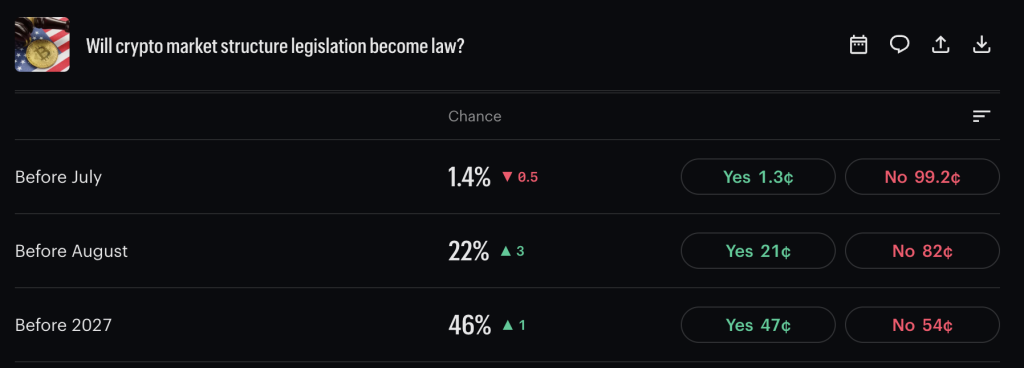
Prediction markets on Kalshi currently price Senate passage by August 2026 at roughly 22%, which reflects the broader analyst read: passage this summer is possible, passage before July 4 is a different question entirely.
The House passed its version of the bill on July 17, 2025, by a 294–134 margin, a bipartisan result that gave the legislation genuine momentum.
The Senate Banking Committee followed with a 15–9 approval on May 14, 2026, advancing the bill to the Senate’s legislative calendar. That step made floor action procedurally possible. It did not make it imminent.
At its core, the crypto legislation would establish a CFTC-led regulatory regime for digital commodities – classifying assets like Bitcoin and Ethereum under CFTC oversight while assigning the SEC narrower jurisdiction over certain broker-dealer and exchange activity.
That division of authority is the bill’s central policy architecture, and it carries real market implications: Standard Chartered has estimated that passage could unlock $8 billion in XRP ETF inflows alone, based on the regulatory certainty the framework would provide.
Three Obstacles Between the Clarity ACT Bill and a Senate Vote
The 60-vote cloture threshold is the first hard constraint. The Senate Banking Committee’s 15–9 approval demonstrates committee-level support, but converting that into 60 floor votes requires bipartisan buy-in that has not yet been publicly secured.
That threshold does not move regardless of how aligned lawmakers and industry are on the bill’s substance.
The second obstacle is inter-committee reconciliation. The Senate Banking Committee text and a separate Senate Agriculture Committee text must be merged into a single floor-ready bill.
Those two committees share jurisdiction over the CFTC-SEC authority split at the heart of the legislation, and any manager’s amendment resolving their differences needs to be filed before a floor vote can be scheduled. That step alone typically takes weeks of staff-level negotiation.
The third, and currently most active, obstacle is the ethics provision dispute. David Nage, managing director and portfolio manager at Arca, said after meetings with Senate offices that lawmakers and industry participants are roughly 80–85% aligned on the bill’s substance, and that stablecoin yield provisions, despite continued criticism from JPMorgan CEO Jamie Dimon, are no longer the primary friction point.
JUST IN: — Bitcoin Magazine (@BitcoinMagazine) June 18, 2026
 The Federal Reserve proposes a stablecoin issuer identification program
This is the first GENIUS Act rulemaking from the Fed. pic.twitter.com/Obej8CfbZy
What remains is a conflict-of-interest fight over how to restrict senior government officials from participating in crypto-related business activities while in office.
Senator Kirsten Gillibrand has reportedly conditioned her support on explicit ethics language barring senior officials from profiting off crypto holdings, warning of withheld votes without the clause.
That is not a minor drafting issue, it is a named senator with leverage over the 60-vote math making a specific demand. Nage characterized the remaining disagreement as a political and implementation question rather than a dispute over market structure, but political questions are precisely the kind that stall floor scheduling.
A coalition of gaming associations, tribal governments, and labor unions has separately pressed the Senate to include language banning prediction markets from offering sports and casino-style event contracts under the CLARITY Act framework, another contentious provision that adds to the reconciliation load before any floor vote is viable.
The post Senate CLARITY Act Faces 3 Blockers With Under 9 Days Until July 4 Recess appeared first on Cryptonews.

Binance’s troubled progress toward securing a MiCA license in Greece has sparked scrutiny over whether EU institutions beyond the formal licensing authorities could be influencing outcomes. The issue comes at a critical point in the MiCA rollout, with a hard transitional deadline approaching on July 1 that will determine which crypto-asset firms can continue operating across the EU under the new regulatory framework.
According to reports cited by Cointelegraph, speculation has grown that communication from European Central Bank (ECB) leadership may have affected political support for the exchange. Lawyers contacted by Cointelegraph, however, emphasized that MiCA’s design places the licensing decision with national competent authorities (NCAs), while also leaving room for other EU institutions to provide input.
Key takeaways
- Under MiCA, crypto-asset service provider (CASP) licenses are issued by national regulators, not directly by ECB or other EU-level bodies.
- Legal analysis suggests MiCA does not bar EU institutions such as the ECB from providing an opinion or sharing concerns with an NCA during a CASP review.
- In Binance’s reported Greece case, the relevant authority is the Hellenic Capital Market Commission (HCMC), while ESMA’s role is supervisory and not equivalent to granting the CASP license.
- ECB rhetoric on stablecoins has elevated the policy stakes, even though stablecoin-specific provisions in MiCA are distinct from the exchange licensing chapter.
- The situation highlights the compliance risk for EU market participants as the transitional period ends and licensing decisions become binding for continued operation.
MiCA licensing: national decisions with EU-level input
MiCA establishes a licensing regime for CASPs that is executed through national competent authorities. The regulation assigns authorization responsibilities to NCAs, meaning that an EU institution like the ECB does not, by itself, grant or deny an exchange license.
In Binance’s case, the licensing authority in Greece is the Hellenic Capital Market Commission (HCMC). Binance said in January that it had applied for a MiCA license in Greece. In the days that followed subsequent reporting about the application, Binance also indicated that the application had been reviewed for MiCA compliance and that it had been subject to an ESMA-level review as well, while maintaining that authorization would be decided at a future board meeting.
Legal practitioners contacted by Cointelegraph stressed that MiCA’s wording does not prevent other EU institutions from communicating with national regulators during the review. David Lesperance, founder at Lesperance & Associates, told Cointelegraph that “nothing in the MiCA framework would prevent a third party like the ECB from offering its opinion to that national authority on Binance’s application.”
Similarly, Yuriy Brisov of Digital & Analogue Partners noted that MiCA does not explicitly restrict the ECB from advising or sharing concerns with an NCA. At the same time, he pointed out an important structural detail: ECB involvement is expressly defined in specific parts of MiCA, especially regarding stablecoin issuance, rather than in the CASP licensing provisions that apply to exchanges.
In practice, this distinction matters for compliance and governance. Firms seeking MiCA authorization must address requirements assessed by the NCA, but they may also face broader regulatory scrutiny where EU institutions publicly or informally signal policy concerns that could affect how national regulators evaluate risk.
What the Greece reports suggest—and what remains unclear
Reports cited by Cointelegraph stated that Greece’s market regulator was preparing to reject Binance’s MiCA application. A subsequent report alleged that ECB President Christine Lagarde had signaled, through communication with Greece’s prime minister, that Binance should not be welcomed in Europe. These accounts were reported as the end of MiCA’s transitional period approached, increasing the practical importance of the final authorization outcome for firms’ continued EU operations.
However, public clarity around the exact decision status of the application has been limited. Brisov noted that the HCMC had not published a decision on Binance’s application. Cointelegraph also reported that ESMA does not itself authorize CASP licenses under MiCA, reinforcing that the decisive authority remains at the national level.
For institutional stakeholders, the unresolved question is not only whether an NCA will approve or reject a specific applicant, but also how cross-institutional signaling may shape the direction and tone of the licensing process. Even where legal authority is clearly assigned, the regulatory ecosystem often includes multi-layer interactions that can influence supervisory expectations, risk tolerance, and the evidentiary standards applied to applicant reviews.
ESMA and HCMC did not immediately respond to Cointelegraph’s requests for comment. The ECB and France’s securities regulator, Autorité des marchés financiers (AMF), also declined to comment.
Stablecoins and the ECB’s policy position: why it colors the debate
While the immediate dispute centers on a CASP license in Greece, the policy background is strongly linked to stablecoins. The ECB has repeatedly expressed concerns about privately issued stablecoins and has argued for payment and settlement infrastructure that is anchored in central bank money or otherwise tightly integrated with regulated financial systems.
According to reporting referenced by Cointelegraph, the alleged Lagarde intervention was tied, at least in part, to the stablecoin question. ECB officials have also argued in public remarks that Europe should prioritize regulated settlement systems rather than rely on private stablecoins. In separate commentary, ECB leadership has warned that stablecoins could reinforce the dominance of the US dollar.
This policy emphasis has compliance implications for exchanges and liquidity providers because stablecoin activity can affect how regulators assess systemic risk, market integrity, and the potential for regulatory arbitrage across jurisdictions.
Separately, market positioning is frequently cited in discussions of regulatory significance. Cointelegraph reported that CryptoQuant data indicated Binance held a large share of centralized-exchange stablecoin reserves, including USDT and USDC. The underlying point for institutional readers is not the particular figure itself, but the broader relevance: entities with large stablecoin footprints may become central to regulators’ expectations even when the formal decision concerns an exchange licensing application rather than stablecoin issuance permissions.
Cross-border compliance at the July 1 deadline
MiCA’s transitional period is designed to bring market participants into a harmonized regulatory regime. For exchanges and other CASPs, the July 1 deadline can determine whether continued EU operations require renewed authorization, restructuring, or cessation of certain activities under the new licensing framework.
This case illustrates a recurring compliance challenge across the EU: while legal responsibilities and licensing powers sit with NCAs, the regulatory environment is shaped by the priorities of EU-level institutions. Where institutions focus on stablecoins, payment settlement architecture, or financial stability, national regulators may adjust how they interpret MiCA’s risk-based requirements for CASPs—especially where an applicant’s business model intersects heavily with stablecoin liquidity and on- and off-ramp ecosystems.
Cointelegraph also reported that France could be another potential route for Binance, though it noted that no formal French application had been filed at the time of reporting. The broader compliance takeaway for firms operating across multiple EU jurisdictions is to avoid treating MiCA authorization as a purely jurisdiction-specific process; the effective evaluation can reflect an interplay of national supervision and EU policy priorities.
Closing perspective
As MiCA authorization outcomes tighten around the July 1 deadline, the Binance Greece situation underscores that the licensing process is not only a legal question of MiCA compliance checklists, but also a test of how EU regulatory institutions coordinate—formally and informally—around financial stability, stablecoin policy, and cross-border market integrity. Observers will likely focus next on whether the HCMC issues a decision and how other jurisdictions handle similar applications under the harmonized but politically charged MiCA landscape.
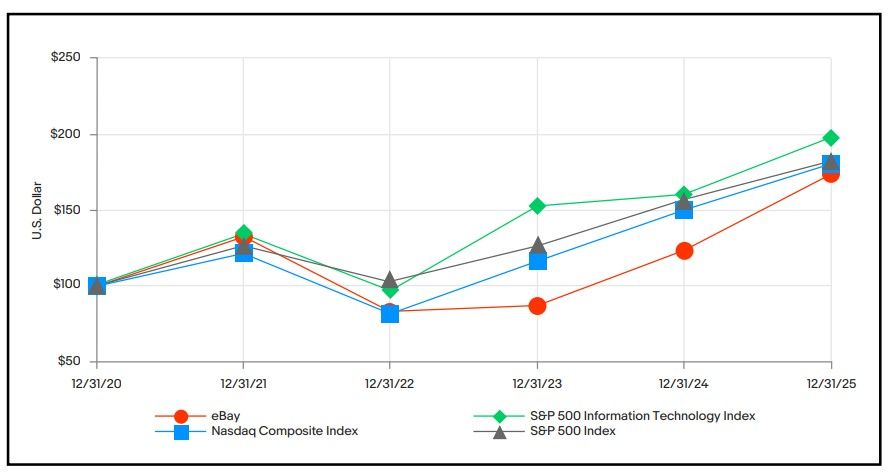
eBay shareholders rejected a governance proposal at the company’s virtual annual meeting that would have lowered the threshold to call a special shareholder meeting from 20% to 10%.
The outcome directly affects GameStop CEO Ryan Cohen, who holds a stake of nearly 9% in eBay. At 10%, Cohen would have had the power to force a special shareholder meeting independently, without needing to build a wider coalition.
The standoff has produced conflict outside the boardroom as well. eBay suspended Cohen’s personal seller account shortly after the takeover bid surfaced. The ban has since been lifted, but the episode fueled a public feud with the company.
Proposal 4 Fails, Closing a Key Governance Path
Proposal 4 failed decisively. Preliminary voting results indicate that about 210 million shares voted against the measure, while roughly 157 million voted in favor. eBay’s board had recommended a vote against the proposal ahead of the meeting.
The result closes one of the governance paths Cohen had available. GameStop proposed acquiring eBay at $125 per share earlier this year. That price represented a 46% premium to eBay’s unaffected closing price on Feb. 4, 2026.
The bid comprised a mix of cash and GameStop stock, valuing the e-commerce company at roughly $56 billion. Nevertheless, eBay’s board rejected the offer as “neither credible nor attractive” and declined to enter negotiations.

Cohen has not held back in his criticism of eBay’s management. He has publicly challenged the company’s $2.4 billion marketing budget, arguing the spending has done little to improve core functionality. He has also described eBay as a well-run asset that management has failed to capitalize on.
The acquisition push has moved markets, too. GameStop stock jumped 9% when the bid first became public. That reflected how tightly investors connect Cohen’s ambitions to GameStop’s transformation narrative.
The broader stakes extend beyond both companies. A successful hostile bid would mark one of the more unusual corporate acquisitions in recent memory. It would see a video game retailer seeking to absorb a global e-commerce platform worth far more than itself.
A Possible GameStop Hostile Tender Offer?
With that governance option now closed, attention has turned to the possibility of a hostile tender offer. That approach would let Cohen take the bid directly to eBay shareholders, bypassing the board’s authority entirely. A tender offer would also test how eBay investors respond, independent of the board’s recommendation.
With formal governance routes now exhausted, a direct appeal to eBay’s shareholders remains Cohen’s most viable option. Whether he moves quickly or waits for better conditions may determine how far this confrontation goes.
The post GameStop and eBay Tensions Rise After Key Shareholder Vote Fails appeared first on BeInCrypto.
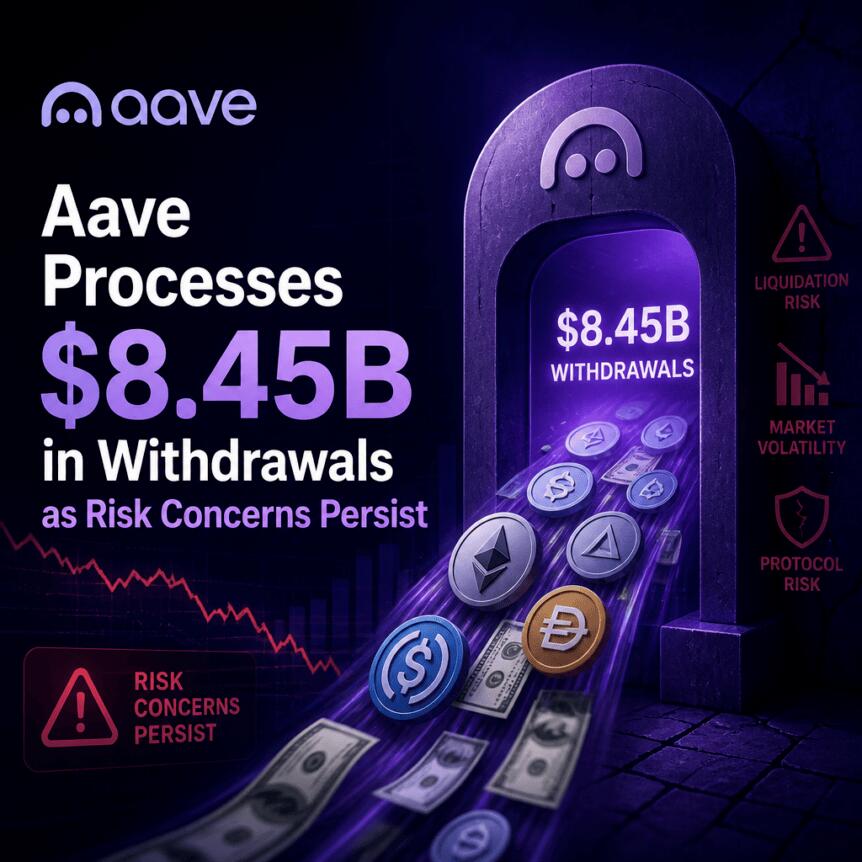
In April 2026, Aave faced one of the sharpest liquidity shocks in recent DeFi history. According to Galaxy’s analysis referenced in the coverage, users withdrew roughly $8.45 billion from the protocol in the aftermath of the KelpDAO rsETH bridge exploit. The key point for investors and users: Aave’s contracts were not compromised, but connected markets still experienced severe stress.
The episode quickly became a referendum on what “survival” really means for decentralized lending. Aave continued operating, yet analysts and risk observers argued that a functioning core does not automatically translate into comprehensive safety—especially when collateral, borrowing demand, and liquidity are tied to external assets and across multiple protocols.
Key takeaways
- Aave was not hacked; the turmoil followed an external rsETH bridge incident that propagated into Aave via collateral and liquidity linkages.
- Roughly $8.45 billion flowed out after the April 2026 rsETH exploit, illustrating how quickly DeFi can experience bank-run-like dynamics.
- Aave relied on built-in risk tooling and emergency controls to contain damage as some pools hit full utilization, limiting immediate withdrawals.
- Surviving a single stress event does not settle debates about DeFi systemic risk, including concentration and fast-moving user behavior.
- For users, protocol size and transparency are not substitutes for understanding the assets behind lending markets and governance changes.
A stress event triggered outside Aave
The pressure did not originate in Aave’s own code. It began with the KelpDAO rsETH bridge exploit in April 2026, where attackers stole about $292 million worth of rsETH from KelpDAO’s LayerZero bridge. That theft intensified concerns that some rsETH holdings might not be fully backed.
Those concerns mattered to Aave because rsETH was used beyond its source ecosystem. As the token’s perceived backing came into question, the risk spread to DeFi markets that accepted rsETH as collateral. In practical terms, when collateral loses credibility, lenders face increased exposure to bad debt, while borrowers and depositors tend to reposition to reduce risk—often by withdrawing.
That is where liquidity stress accelerated. As more users attempted to exit, some Aave markets saw utilization climb toward the ceiling. When pools approach or reach full utilization, withdrawals become harder for certain participants because the liquidity needed to satisfy redemptions is already deployed. In other words, the episode looked like a DeFi version of a bank run—not because Aave failed to follow its internal rules, but because DeFi markets can react instantly and continuously on-chain.
What Aave’s founder argues—and why it isn’t the end of the debate
Aave founder Stani Kulechov framed the event as evidence of resilience: the core protocol logic continued to work as designed even amid high stress. That distinction is important. Aave did not suffer a direct exploit of its own contracts; however, the surrounding markets were still forced into emergency modes as external asset disruption rippled through collateral and borrowing channels.
Supporters point to the transparency and determinism of DeFi lending—features that differ from traditional banking crises. Collateral and risk settings are visible on-chain, liquidation mechanisms follow predefined smart contract rules, and participants can inspect activity in real time. In theory, such properties reduce some information asymmetries that have historically contributed to conventional financial breakdowns.
Yet independent analysts, as reflected in the coverage, took a more cautious view. The core argument is not that Aave failed to function; it is that “functioning under stress” may not be sufficient to prove that the system is safe in the broader sense. If adverse shocks continue to arrive from connected components—bridges, collateral issuers, or other DeFi venues—then Aave’s ability to limp through one crisis does not guarantee it will navigate the next without more severe outcomes.
Survival versus safety: the role of concentration and network effects
Critics warn against treating a single successful defense as full validation. Stress events can be interpreted through multiple lenses: strong design helps, but favorable conditions and the specific nature of the shock also matter. In the rsETH case, the market still experienced liquidity strains severe enough to require emergency action, including freezes and risk parameter adjustments.
Another concern highlighted in the coverage is concentration risk. Independent observers noted that large exposures can be spread across many DeFi platforms at once. If a small number of actors control outsized positions, their decisions—such as exiting or closing during volatility—can amplify instability system-wide. The same concentration dynamic has been a longstanding concern in traditional finance, and DeFi’s composable architecture can translate it into a faster-moving ecosystem.
Beyond actor concentration, DeFi’s composability is a double-edged sword. Interoperability helps protocols grow and coordinate liquidity across the ecosystem, but it also creates more pathways for stress to spread. When a lending market depends on collateral that is itself linked to leveraged positions and other connected systems, the resulting network can become harder to unwind during shocks. The condition of the wider DeFi system therefore cannot be separated from a single protocol’s performance.
Unlike regulated banks that can run supervised stress tests under defined frameworks, DeFi’s stress tests happen live—using real user funds, real collateral, and no rehearsals. That doesn’t mean DeFi lacks testing; it means the “test” may occur while markets are already under strain.
How Aave’s risk controls shaped the outcome
Even though the incident began elsewhere, Aave’s internal safeguards influenced what happened next. The platform manages borrowing and liquidation through structured limits such as loan-to-value parameters and liquidation thresholds, while also using mechanisms like supply caps and borrow caps to control how much exposure can build around specific assets.
Aave also uses features designed to reduce cross-asset contagion. Isolation Mode can restrict the impact of higher-risk collateral, while Efficiency Mode (E-Mode) applies special settings for assets that typically move together. Governance, with support from risk advisers, is intended to adjust these parameters as needed—though, as observers note, governance changes can take time, and risk models may not fully anticipate rapid spillover during novel conditions.
During the withdrawal surge, these measures generally held, with core protocol functions continuing to operate. Still, utilization reached 100% in major pools in the coverage description, which helps explain why some withdrawals could not be processed smoothly. The takeaway is not that controls prevented all harm; it’s that they likely narrowed the scope of what might otherwise have become a complete failure.
What users and builders should watch next
The rsETH episode shows that Aave can survive extreme liquidity stress without a direct protocol exploit, but it also highlights how external asset failures can quickly propagate through collateral and liquidity connections. Going forward, readers should focus on how quickly risk parameters can be adapted through governance, how effectively protocols manage external collateral dependencies, and whether the ecosystem’s concentration and composability risks are addressed with the same urgency as smart-contract security.
Crypto World
Nvidia (NVDA) Captures Top Data Center Ethernet Switching Position in Historic Market Shift

Key Takeaways
- Nvidia secured the leading position in data center Ethernet switching revenue during Q1 2026 — marking its first time at the top
- The company’s switching revenue surged 192.7% compared to the previous year, reaching $2.1 billion and capturing 21.5% market share
- Spectrum-X platform fueled this growth, securing major contracts with hyperscalers and AI-focused cloud service providers
- Total Ethernet switch market expanded 39.8% to $15.4 billion; data center category grew 61% to reach $10 billion
- Arista maintained a strong second-place position in data centers; Cisco continues dominating the broader Ethernet switching landscape
Nvidia recorded $2.1 billion in switching revenue during Q1 2026, representing a remarkable 192.7% increase year over year. This performance propelled the company to claim the leading position in data center Ethernet switching by revenue — a segment where it wasn’t even the frontrunner twelve months earlier.
These figures emerged from IDC’s Quarterly Ethernet Switch Tracker, published this Thursday.
NVDA shares climbed 2.95% during trading.
The driving force behind this dramatic expansion is Spectrum-X, Nvidia’s comprehensive AI networking solution. This platform combines Spectrum Ethernet switches, BlueField DPUs, and LinkX cables into a unified system specifically engineered for massive GPU cluster deployments.
This integration strategy is proving decisive in competitive situations. Hyperscalers and AI-focused cloud platforms constructing AI factories require networking infrastructure capable of supporting the demands of contemporary training and inference operations. Spectrum-X was purpose-built to address precisely these requirements.
Paul Nicholson, Research VP at IDC, stated emphatically: “NVIDIA’s rise to #1 in datacenter Ethernet switching in a single year is one of the most significant vendor landscape shifts IDC has tracked in enterprise networking.”
He continued, noting that Spectrum-X is “winning AI factory deals that incumbent networking vendors cannot match with standalone hardware alone.”
Widespread Market Expansion
The data center switching category delivered robust performance beyond just Nvidia — the entire segment demonstrated strength. IDC’s research showed the category expanded 61% year over year, reaching $10 billion in Q1. Meanwhile, the complete Ethernet switch market increased 39.8% to achieve $15.4 billion.
AI infrastructure investments are powering this growth. Hyperscalers and major enterprises alike are implementing AI technologies at scale, creating substantial demand for high-speed, minimal-latency networking solutions. The campus and branch category also recorded impressive performance, climbing 12.3% to $5.4 billion, supported by hardware modernization cycles and increasing component costs.
Arista (ANET) secured the second position in data center switching and similarly gained 2.87% by market close. Cisco maintains its leadership in the comprehensive Ethernet switching market, encompassing campus and enterprise segments alongside data center.
Future Outlook
IDC projects sustained momentum in the Ethernet switch market throughout 2026, fueled by ongoing AI investments from hyperscalers and enterprise customers. Demand for 800G and higher-capacity switching is anticipated to remain strong as inference deployment expands alongside training operations.
Nvidia’s leadership position won’t go uncontested. IDC identified Cisco, Arista, and Broadcom (AVGO) as competitors poised to intensify their competitive strategies within the data center segment.
For the campus market, IDC observed that revenue growth might decelerate if memory supply limitations diminish and reduce the pricing advantages that have recently elevated average selling prices.
IDC additionally highlighted macroeconomic concerns — including tariffs and regional economic uncertainty — as potential factors that could dampen expenditures in certain markets.
During Q1, Nvidia’s data center switching revenue represented 21.5% of the total segment, derived entirely from data center applications rather than campus or branch deployments.


Andy Burnham needed a big win. The Makerfield result means Labour might have reason to hope

SiTime: The Right Company At The Wrong Price (NASDAQ:SITM)

Andrew Tate reportedly loses about $86K after shorting Bitcoin


-

 Business5 days ago
No Jackpot Winner as $257 Million Prize Rolls Over to $269 Million Monday Draw
-

 Fashion7 days ago
Weekend Open Thread: Tuckernuck – Corporette.com
-
 Crypto World5 days ago
Zimbabwe Requires Crypto Businesses to Register Annually Under New FIU Regulations
-

 Crypto World6 days ago
Bitget enters Argentina’s regulated crypto market through PSAV registration
-

 Tech7 days ago
NanoClaw integrates JFrog registries to secure AI agent downloads
-

 NewsBeat7 days ago
FBI searches office of Ohio voter registration group
-
 Entertainment5 days ago
Matt Damon’s Viral Sci-Fi Thriller Has Taken Over HBO Max
-

 Business5 days ago
Anthropic staff to meet White House officials next week, Axios reports
-

 Tech5 days ago
As AI companies race to go public, who else is along for the ride?
-
 Crypto World5 days ago
Bitcoin could crash to $48,000, if this historical pattern is triggered
-

 Politics5 days ago
“Israel’s” ban on ICRC visits ruled illegal, but Knesset moves to stop them permanently
-
 NewsBeat5 days ago
Warning of disruption as Cardiff Crossrail works to start
-

 News Videos5 days ago
Financial Accounting | Last Day Revision Strategy and Booster | CMA Inter – June 2026
-
 NewsBeat5 days ago
Tributes to former deputy head teacher at Cambridge school among death and funeral notices
-
 NewsBeat5 days ago
what doctors are seeing in ebike crashes
-

 Entertainment6 days ago
Deion Sanders Shares Powerful Post After Viral Advice To Deiondra
-
 Entertainment5 days ago
Kate Middleton Glare Goes Viral After Kids Booed At Royal Event
-
 Crypto World5 days ago
XRP ETFs Outperform As Bitcoin And Ethereum Funds Extend Outflow Trend
-
 Crypto World5 days ago
Market Preview: SpaceX (SPCX) IPO Record, Federal Reserve Meeting, and Iran Nuclear Agreement
-

 Business5 days ago
Invesco Quality Income Fund Q1 2026 Commentary
You must be logged in to post a comment Login